DOI:
10.1039/C6RA03937E
(Paper)
RSC Adv., 2016,
6, 23949-23955
New transparent poly(L-lactide acid) films as high-performance bio-based nanocomposites†
Received
12th February 2016
, Accepted 24th February 2016
First published on 25th February 2016
Abstract
A novel conceptual approach to introduce new features and improve the properties of poly(L-lactic acid) (PLLA) in the bulk state has been devised by introducing a specific compatibilizing agent within the bio-based polymeric building blocks. Here, a new polyhedral oligomeric silsesquioxane (POSS)-modified poly(DL-lactic acid) (TriPOSS–PLLA) has been developed, and exhibits a homogeneous amorphous phase and good thermal stability in the solid state owing to structural disorder induced by steric hindrance created by bulky tri-POSS. This newly-developed material behaves as an effective compatibilizer and exhibits dramatic improvements in film transparency, crystallization, mechanical performance and barrier properties compared to commercial PLLA. At the optimized blending ratio of 90 wt% PLLA and 10 wt% TriPOSS–PLLA, the composite film has a high optical transmission (over 90%), two-fold higher tensile strength (48.9 MPa) than pristine PLLA and a 33.4% lower oxygen permeation rate than pristine PLLA. Excitingly, hydrolytic degradation experiments indicated that TriPOSS–PLLA does not affect the overall degradation of PLLA. Thus TriPOSS–PLLA has superior mechanical performance and significantly reduced oxygen permeability; both of these properties are highly desirable for environmentally-friendly products in food packaging technologies and other applications.
Introduction
In recent years, growing environmental awareness has shifted attention from conventional petroleum-based plastic materials to the generation of more environmentally-friendly biopolymers for various applications, including food packaging, the automotive industry and biomedical applications. Among these bio-based polymers, poly(L-lactic acid) (PLLA) is one of the most popular commercial biomaterials due to its excellent biocompatibility, spontaneous degradation characteristics and potential as a high-performance alternative to synthetic polymers.1–4 However, PLLA is stiff, brittle and has a poor ability to undergo plastic deformation below its glass transition temperature (Tg = 60 °C), which results in very poor mechanical properties and limits further practical applications of this biomaterial.5,6 Another major disadvantage of PLLA is its inherently high permeability to oxygen and water vapor. Therefore, improvement of the gas barrier properties of PLLA is urgently required in order to make this material a more competitive alternative to petroleum-based polymers.2,3,7 A number of approaches have been developed to improve the mechanical and barrier properties of PLLA, such as copolymerization,8–11 physical blending12–15 and incorporation of impermeable layered silicate clays as an inorganic phase in a PLLA matrix16–19 as representative methods. Exfoliation of the silicate layers in the PLLA matrix has attracted a great deal of attention in recent years as this method can be easily scaled-up for the fabrication of high-performance PLLA/clay nanocomposites in comparison with existing reinforcement methods. Although this technique has provided a convenient approach to overcome the limitations of PLLA, complete exfoliation and orientation of clays within the PLLA matrix remains a great challenge.
Polyhedral oligomeric silsesquioxanes (POSS) are a new nano-reinforced material designed to solve the problem described above, and have recently been extensively studied as a promising reinforcement for PLLA to improve the thermal stability,20 crystalline abilities21 and mechanical properties of nanocomposites.22 These effects can be attributed to the three-dimensional structure of the POSS nanoparticles and the interactions of the hydrophobic moieties of POSS with PLLA, which allows POSS to serve as a compatibilizer within the PLLA matrix. Through appropriate design of their architectures, POSS/PLLA nanocomposites can be easily tailored to achieve the desired physical properties by incorporating different substituents and functionalities on the POSS cages.23 Although POSS nanoparticles hold great promise for more effective reinforcement of PLLA, there is great concern that the rigid and bulky structure of POSS – as well as its tendency to aggregate into individual crystals and form a macroscale phase-separated morphology in a polymer matrix – limit its practical applications.24 The development of POSS containing amorphous PLLA as a coupling agent to reinforce commercial PLLA is highly desirable. Therefore, we speculate that the introduction of a large amount of functionalized POSS groups into the PLLA end groups may profoundly alter the phase behavior, and enable the formation of a hierarchical organization to obtain a stabilized amorphous material in the bulk state (Scheme 1). Exploitation of amorphous POSS–PLLA composites may have significant value for enhancing the next-generation of environment-friendly biomaterials.
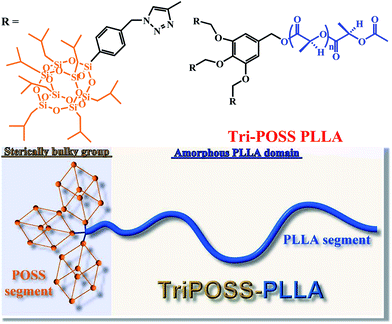 |
| | Scheme 1 Structural and graphical representations of tri-POSS end-capped poly(DL-lactic acid). | |
Our previous studies showed that the incorporation of chromophore-functionalized amorphous POSS into conjugated polymers resulted in enhanced phase miscibility and quantum efficiency in conjunction with a significant improvement in the device performance of polymeric light-emitting diodes.25,26 Recently, we also reported that star-shaped POSS derivatives linked by polar supramolecular units formed polymer-like thin films due to the creation of physically-crosslinked networks.27 In addition, functionalized POSS can also be incorporated into the polymer matrix, enabling fine-tuning of the self-assembled microstructures with long-range orientational order.28 Based on these findings, this study extended the research into POSS to develop amorphous PLLA polymers by proposing a simple pathway for high-quality production of a three-arm POSS-end-capped poly(DL-lactic acid) derivative (TriPOSS–PLLA) using commercially available chemicals. We demonstrate that incorporation of TriPOSS–PLLA into commercial PLLA not only substantially enhanced phase miscibility, crystallization and mechanical properties, but also effectively reduced oxygen permeability. In addition, these compatible blend composite films exhibited a high transparency and retained their natural characteristics during hydrolytic degradation. Thus, this study provides a simple and efficient strategy for the creation of high-performance PLLA nanocomposites that could act as a new class of reinforcement concepts for the development of biodegradable polymers suitable for a wide range of potential applications in the field of polymer engineering.
Experimental section
TriPOSS–PLLA was prepared by azide–alkyne click reaction of tripropargyl PLLA in the presence of N3-POSS using pentamethyldiethylenetriamine/copper(I) bromide as catalyst system. The general materials, synthetic procedures and instrumentation used in this work are described in more detail in ESI.†
Results and discussion
Synthesis and characterization of TriPOSS–PLLA
To synthesize the new organic–inorganic hybrid polymer TriPOSS–PLLA, a five-step reaction was carried out as shown in Scheme S1† and 2. In the first step, tripropargyl (1) was obtained by alkylation of methyl 3,4,5-trihydroxybenzoate with propargyl bromide. During the second and third steps, deprotection of the ester group of (1) yielded the desired carboxylic acid (2), and then the alcoholic product (3) was obtained by reductive reaction of (2) with lithium aluminum hydride. In the fourth step, ring-opening polymerization of lactide initiated by (3) using tin(II) 2-ethylhexanoate as a catalyst produced poly(DL-lactic acid) containing tripropargyl-functionalized chain end (tripropargyl-PLLA) with a molecular weight (Mw) of 15![[thin space (1/6-em)]](https://www.rsc.org/images/entities/char_2009.gif) 000 and acceptable dispersity index (Mw/Mn = 1.38; Fig. S7†). Finally, tripropargyl-PLLA was directly functionalized via a click reaction with mono-benzyl azide POSS (N3-POSS)29 to give TriPOSS–PLLA (detailed synthetic procedures and characterization data are provided in the ESI†). In order to investigate the miscibility behavior of the PLLA and POSS groups, the phase behaviors of tripropargyl-PLLA and TriPOSS–PLLA were investigated by differential scanning calorimetry (DSC) and wide-angle X-ray diffraction (WAXD). Fig. 1a presents the DSC curve for tripropargyl-PLLA, which exhibited a broad melting point (Tm) at 131 °C and a glass transition temperature (Tg) of 41 °C, whereas TriPOSS–PLLA underwent a clear glassy transition (Tg = 45 °C) indicating that attachment of the bulky tri-POSS moieties to the PLLA chain ends inhibited polymer chain packing. As shown in Fig. 1b, tripropargyl-PLLA demonstrated several sharp WAXD peaks in the range of 10–40° due to its crystallinity. Notably, the low-angle peak at 12.26° (d = 0.72 nm) is determined by the short distance between two neighboring PLLA segments, reflecting the formation of alkyne–alkyne (C⋯C van der Waals) and alkyne–oxygen (C–H⋯O) interactions on the d-spacing of tripropargyl-PLLA (Scheme 3).30,31 As expected, these sharp crystal peaks and the d-spacing 0.72 nm intensity peak completely disappeared in TriPOSS–PLLA and were replaced by a broad amorphous halo from 10–40°, indicating that the POSS groups significantly suppress crystallization of the PLLA chains. The absence of crystallinity in TriPOSS–PLLA is also consistent with the absence of melting point in the DSC thermogram (Fig. 1a). In addition, TriPOSS–PLLA exhibited a long period peak of 7.82°, corresponding to a d spacing of 1.13 nm, suggesting the occurrence of longer-distance intermolecular connections between nearest-neighbor PLLA segments (Scheme 3). Moreover, these observations also indicate that this novel strategy of employing tri-POSS nanoclusters in the bulk state specifically and significantly enhances the miscibility of the POSS groups and PLLA chains, which results in the formation of homogeneous composites with continuous physical properties.25,26 Therefore, amorphous TriPOSS–PLLA is potentially suitable for use as a valuable reinforcing material for commercial PLLA and related biodegradable polyesters.
000 and acceptable dispersity index (Mw/Mn = 1.38; Fig. S7†). Finally, tripropargyl-PLLA was directly functionalized via a click reaction with mono-benzyl azide POSS (N3-POSS)29 to give TriPOSS–PLLA (detailed synthetic procedures and characterization data are provided in the ESI†). In order to investigate the miscibility behavior of the PLLA and POSS groups, the phase behaviors of tripropargyl-PLLA and TriPOSS–PLLA were investigated by differential scanning calorimetry (DSC) and wide-angle X-ray diffraction (WAXD). Fig. 1a presents the DSC curve for tripropargyl-PLLA, which exhibited a broad melting point (Tm) at 131 °C and a glass transition temperature (Tg) of 41 °C, whereas TriPOSS–PLLA underwent a clear glassy transition (Tg = 45 °C) indicating that attachment of the bulky tri-POSS moieties to the PLLA chain ends inhibited polymer chain packing. As shown in Fig. 1b, tripropargyl-PLLA demonstrated several sharp WAXD peaks in the range of 10–40° due to its crystallinity. Notably, the low-angle peak at 12.26° (d = 0.72 nm) is determined by the short distance between two neighboring PLLA segments, reflecting the formation of alkyne–alkyne (C⋯C van der Waals) and alkyne–oxygen (C–H⋯O) interactions on the d-spacing of tripropargyl-PLLA (Scheme 3).30,31 As expected, these sharp crystal peaks and the d-spacing 0.72 nm intensity peak completely disappeared in TriPOSS–PLLA and were replaced by a broad amorphous halo from 10–40°, indicating that the POSS groups significantly suppress crystallization of the PLLA chains. The absence of crystallinity in TriPOSS–PLLA is also consistent with the absence of melting point in the DSC thermogram (Fig. 1a). In addition, TriPOSS–PLLA exhibited a long period peak of 7.82°, corresponding to a d spacing of 1.13 nm, suggesting the occurrence of longer-distance intermolecular connections between nearest-neighbor PLLA segments (Scheme 3). Moreover, these observations also indicate that this novel strategy of employing tri-POSS nanoclusters in the bulk state specifically and significantly enhances the miscibility of the POSS groups and PLLA chains, which results in the formation of homogeneous composites with continuous physical properties.25,26 Therefore, amorphous TriPOSS–PLLA is potentially suitable for use as a valuable reinforcing material for commercial PLLA and related biodegradable polyesters.
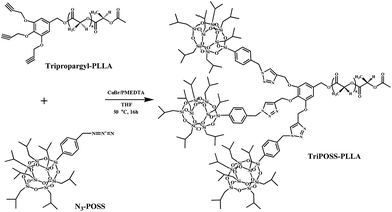 |
| | Scheme 2 Synthetic reaction for TriPOSS–PLLA. | |
 |
| | Fig. 1 (a) DSC curves and (b) WAXD data for tripropargyl-PLLA and TriPOSS–PLLA in the solid state. | |
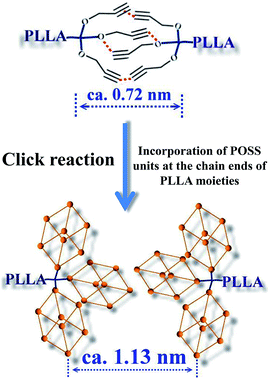 |
| | Scheme 3 A cartoon representation of the non-covalent bond distances between the tripropargyl-PLLA and TriPOSS–PLLA systems. | |
In order to demonstrate the conjectures described above, different amounts of TriPOSS–PLLA were incorporated into commercial PLLA via a simple solvent-blending method. A control composite, an octa-isobutyl POSS (i-POSS)/PLLA blend, was also prepared to enable comparative studies (Scheme S2†). Commercial PLLA has a weight average molecular weight of about 172000 g mol−1 and a molecular weight distribution (Mw/Mn) of 1.58. When TriPOSS–PLLA and i-POSS were blended separately into the PLLA matrix, with TriPOSS–PLLA loading up to 10 wt%, the TriPOSS–PLLA/PLLA film was yellow and transparent with a light transmission of approximately 91% at a wavelength of 600 nm, whereas the 10/90 i-POSS/PLLA film had a white appearance and light transmission of 32% (Fig. 2a). Intriguingly, this implies that amorphous TriPOSS–PLLA plays a dominant role in directly affecting the macroscopic properties of PLLA composites, leading us to further investigate the phase behavior of these composites in the film state using WAXD and DSC. The WAXD patterns between 6° and 25° reflecting the crystalline structures of pure PLLA and the prepared TriPOSS–PLLA composites are illustrated in Fig. 2b. The multiple intense diffraction peaks located at 2θ = 15.2°, 16.9°, 19.3° and 22.6° correspond to the (010), (110/200), (203) and (105) reflections of PLLA.32,33 Surprisingly, the crystal peaks observed in all of the TriPOSS–PLLA/PLLA composites were shifted to slightly lower 2θ values compared to PLLA, implying that TriPOSS–PLLA functions as an effective compatibilizer to alter the crystal structure of PLLA.34 In addition, the disappearance of the intermolecular spacing (1.13 nm) between TriPOSS–PLLA chains reflects the good dispersion of the POSS nanoparticles in the PLLA matrix. In contrast, each set of i-POSS/PLLA composites exhibited characteristic diffraction peaks of i-POSS at 8.1° and 9.0°, indicating that i-POSS exists as a separate phase and tends to form aggregates due to separate crystallization of the poorly compatible PLLA and i-POSS (Fig. 2c). Similar results were also reported in previous studies.21 Compared to these two blend systems, the softness of the incorporated TriPOSS–PLLA promoted strong coupling between the neighboring domains resulting in the formation of highly compatible complex structures in the bulk state, even though structural incompatibilities exist between the POSS and PLLA segments.
 |
| | Fig. 2 (a) Appearance of pristine PLLA, 10/90 i-POSS/PLLA and 10/90 TriPOSS–PLLA/PLLA films. WAXD data for the (b) TriPOSS–PLLA/PLLA and (c) i-POSS/PLLA systems recorded at 25 °C. | |
Fig. 3a displays the DSC traces for the TriPOSS–PLLA/PLLA composites. Pristine PLLA exhibited a clear glassy transition (Tg = 60 °C), sharp meting point (Tm = 166 °C) and heat of fusion (ΔH) of 19.3 J g−1. The DSC curves of the TriPOSS–PLLA/PLLA composites were almost unchanged compared to that of PLLA, indicating that the introduction of TriPOSS–PLLA moieties into the PLLA matrix did not affect the phase behavior of these composites. The trend in Tg follows the trend of the content of TriPOSS–PLLA, confirming the miscibility between TriPOSS–PLLA and PLLA, which perfectly follows the Fox equation (Fig. S12†). Surprisingly, the ΔH values of the composites obviously increased with the content of TriPOSS–PLLA, as shown in Table 1. The ΔH of the 5/95 TriPOSS–PLLA/PLLA composite was 24.6 J g−1, which is substantially higher than that of pristine PLLA (ΔH = 19.3 J g−1). Further increasing the TriPOSS–PLLA content to 10 wt% raised the ΔH value to 30.6 J g−1, implying that TriPOSS–PLLA can significantly improve the crystallization rate of PLLA. Therefore, these enhanced ΔH values can be also attributed to achieving a state of phase miscibility and the reinforcing effect of crystallization within the composites. In contrast, all composites of the i-POSS/PLLA system demonstrated two distinct Tm peaks, corresponding to the i-POSS-rich and PLLA-rich phases, respectively (Fig. 3b). This observation indicates the existence of a microphase-separated state between the aggregated i-POSS domains and PLLA crystal segments, causing the formation of separate crystals or co-crystals. In addition, a new shoulder melting point of PLLA (around 169 °C) gradually appeared with increasing i-POSS content, suggesting that the incorporation of i-POSS significantly alters the melting behavior and crystal structure of PLLA. This result further demonstrates the critical importance of the presence of amorphous POSS-functionalized PLLA, which can strongly enhance the miscibility and crystallization of TriPOSS–PLLA/PLLA relative to pristine PLLA and i-POSS/PLLA composites.
 |
| | Fig. 3 DSC curves for the (a) TriPOSS–PLLA/PLLA and (b) i-POSS/PLLA systems. | |
Table 1 Summary of DSC analysis of Tm and ΔH for TriPOSS–PLLA/PLLA and i-POSS/PLLA nanocomposites
| Compositiona |
Tmb (°C) |
ΔHc,d (J g−1) |
| Weight ratio of matrix polymer/PLLA. Melting point. Heat of fusion. Heat of fusion was determined directly by integrating the area under the DSC curve around the Tm. |
| TriPOSS–PLLA/PLLA (weight ratio) |
| 0/100 |
166 |
19.3 |
| 1/99 |
166 |
19.8 |
| 5/95 |
166 |
24.6 |
| 10/90 |
166 |
30.6 |
|
| i-POSS/PLLA (weight ratio) |
| 0/100 |
166 |
19.3 |
| 1/99 |
166, 169 |
19.8 |
| 5/95 |
166, 169 |
17.6 |
| 10/90 |
166, 169 |
14.0 |
Effects of TriPOSS–PLLA on the mechanical and morphological properties of PLLA nanocomposites
Controlled dispersion of nanomaterials in polymer matrices is a key parameter that improves the mechanical performance of thin films. Thus, blending films were prepared by solution-mixing the neat PLLA polymer with 3–10 wt% of the TriPOSS–PLLA hybrid. Fig. 4a illustrates the stress–strain diagram for various TriPOSS–PLLA/PLLA films. The tensile strength of pure PLLA film was 26.5 MPa, with an elongation at break of 46.8%. For all of the TriPOSS–PLLA/PLLA nanocomposites, the tensile strength of the blend films increased gradually from 32.8 MPa to 48.9 MPa as the TriPOSS–PLLA content increased. In addition, the percent elongation values remained almost unchanged in all composites (Fig. 4a), indicating that incorporation of TriPOSS–PLLA into the PLLA matrices tends to promote plastic behavior. Conversely, the i-POSS/PLLA blend films demonstrated a gradual decrease in elongation and tensile strength as the i-POSS content increased from 3 to 10 wt%, suggesting the occurrence of a phase-separated interface between i-POSS and PLLA that eventually leads to reduced mechanical properties, especially at high i-POSS loading (Fig. 4b). In order to further understand the influence of miscibility and phase separation on mechanical properties, the temperature-dependent mechanical behavior of TriPOSS–PLLA/PLLA and i-POSS/PLLA thin films were investigated by dynamic mechanical analysis (DMA), and the results are shown in Fig. 4c and d, S8 and S9.† For both systems, a significant increase in the storage modulus at low temperature in a “strain glass” state (0–20 °C) was observed for the PLLA composites containing TriPOSS–PLLA or i-POSS (3–10%) in comparison with pristine PLLA (Fig. S8 and S9†); this can be attributed to the reinforcement effect induced by the POSS nanoparticles.21 However, pristine PLLA and all of the TriPOSS–PLLA/PLLA composites displayed two tanδ peaks at 35 °C and 50 °C, corresponding to the Tg values of the primary and secondary molecular motions, respectively, whereas the tanδ peaks of control i-POSS/PLLA composites shifted directly from 50 °C to 35 °C and formation of an apparently single Tg (Fig. 4c and d). These results were consistent with the stress–strain data: the reduction in chain mobility had an appreciable effect on the mechanical properties, indicating that the incorporation of TriPOSS–PLLA moieties into the PLLA matrix inhibited cooperative motion between the polymer chains and did not affect the natural characteristics of the PLLA films. Furthermore, the cross-section morphologies of the thin films were examined by scanning electron microscopy (SEM) and transmission electron microscopy (TEM). A highly miscible morphology was observed on the surface of fractured 10/90 TriPOSS–PLLA/PLLA film. The SEM and TEM images in Fig. 5 and S10† illustrate that TriPOSS–PLLA was well dispersed within the polymer matrix, which had uniformly homogeneous surfaces. In contrast, fractured i-POSS/PLLA film presented the typical POSS-aggregate morphology (Fig. 5 and S10†), implying that the compatibilizer effect of the TriPOSS–PLLA moieties within the polymer structure promote formation of a unique organic/inorganic structure. In addition, these mechanical and morphological studies also revealed that TriPOSS–PLLA/PLLA films exhibit robust and exceptional characteristics, indicative of high-performance nanocomposites.
 |
| | Fig. 4 Stress–strain curves and tanδ results for the (a and c) TriPOSS–PLLA/PLLA and (b and d) i-POSS/PLLA systems. | |
 |
| | Fig. 5 TEM images of thin microtome sections of (a and b) pristine PLLA, (c and d) 10/90 TriPOSS–PLLA/PLLA and (e and f) 10/90 i-POSS/PLLA composites. | |
Bio-based and biodegradable nanocomposites with improved gas-barrier function
To gain further insight into the biodegradability of POSS-containing PLLA nanocomposites, we subjected the PLLA, 10/90 TriPOSS–PLLA/PLLA and 10/90 i-POSS/PLLA films to hydrolytic analysis after different periods of degradation. As shown in Fig. S11,† all samples demonstrated an almost linear rate of weight loss with hydrolysis time. After 56 days of hydrolysis, the molecular weights of the PLLA and 10/90 TriPOSS–PLLA/PLLA films had decreased to 37.5 wt% and 39.8 wt%, respectively; whereas, the molecular weight of the 10/90 i-POSS/PLLA film decreased to only around 49.5 wt%. This result clearly indicates that the 10/90 TriPOSS–PLLA/PLLA hybrid has similar degradation characteristics to pristine PLLA film, indicating that loading of TriPOSS–PLLA does not affect the hydrolytic degradation of PLLA in nanocomposites. In other words, the TriPOSS–PLLA/PLLA complex can be considered to affect composite compatibility, resulting in a homogeneous material with the property of continuous biodegradation. To further assess the degradation ability of POSS-based PLLA nanocomposites, we further investigated the oxygen permeability (OP) of the PLLA, 10/90 TriPOSS–PLLA/PLLA and 10/90 i-POSS/PLLA films. The oxygen gas barrier films were prepared as pieces with an area of 50 cm2 and a film thickness of approximately 0.45 mm using the hot press method under a pressure of 7 Bar at a temperature of 190 °C, and then the OP fluxes of the films were measured. Fig. 6 presents the OP for all samples at 23 °C and 55% relative humidity. Pristine PLLA film had an OP of 210.4 ± 10.05 cm3 per m2 per day. Interestingly, the 10/90 TriPOSS–PLLA/PLLA film had a dramatically lower OP of 140.1 ± 5.5 cm3 per m2 per day, whereas the OP of the 10/90 i-POSS/PLLA film was only slightly lower at 180.2 ± 4.7 cm3 per m2 per day. These results revealed that incorporation of TriPOSS–PLLA into PLLA significantly influences crystallinity and chain orientation, which in turn affects the path of oxygen diffusion and permeation within the composite films. Therefore, these reductions in the OP properties can also be attributed to the reduced free volume and improved phase miscibility within the composite matrix. Overall, incorporation of compatible TriPOSS–PLLA plays a critical role in improving oxygen barrier properties and also significantly enhances the mechanical performance and optical transparency of PLLA.
 |
| | Fig. 6 Oxygen transmission rates for pristine PLLA, 10/90 TriPOSS–PLLA/PLLA and 10/90 i-POSS/PLLA films. | |
Conclusions
In summary, we have demonstrated an effective strategy for developing high-performance PLLA nanocomposites with improved gas barrier properties. Incorporation of bulky tri-POSS-end-capped PLLA into a PLLA matrix provides a simple route for obtaining highly compatible nanocomposites while significantly increasing the degree of crystallization of the PLLA. Due to the ability to fine-tune the TriPOSS–PLLA content and homogeneity of the blend structures using this method, these blending films can be readily tailored to obtain the desired mechanical properties. In particular, incorporation of 10 wt% TriPOSS–PLLA with PLLA resulted in a high optical transmission of over 90%, with a tensile strength (48.9 MPa) two-fold higher than that of pristine PLLA. Excitingly, the observation of hydrolytic degradation suggests that TriPOSS–PLLA does not affect the overall degradation of PLLA. Moreover, the 10/90 TriPOSS–PLLA/PLLA films demonstrated a 33.4% reduction in oxygen permeability as compared with pristine PLLA. While the main focus of the current study was to create a simple, mutually-reinforcing design strategy for transparent PLLA nanocomposites with multifunctional high-performance properties, we envision that this newly-developed technique could open up a wide range of practical applications, especially for biodegradable and recyclable packaging materials. Studies are currently being performed in our laboratory to further evaluate the efficacy and safety of these nanocomposites for the packaging industries and biomedical fields.
Acknowledgements
This study was supported financially by the Ministry of Science and Technology, Taiwan (contract no. MOST 103-2218-E-011-012 and MOST 104-2221-E-011-153).
Notes and references
- R. E. Drumright, P. R. Gruber and D. E. Henton, Adv. Mater., 2000, 12, 1841–1846 CrossRef CAS.
- D. Garlotta, J. Polym. Environ., 2001, 9, 63–84 CrossRef CAS.
- L. T. Lim, R. Auras and M. Rubino, Prog. Polym. Sci., 2008, 33, 820–852 CrossRef CAS.
-
(a) J. M. Anderson and M. S. Shive, Adv. Drug Delivery Rev., 2012, 64, 72–82 CrossRef;
(b) J. Odent, J. M. Raquez, E. Duquesne and P. Dubois, Eur. Polym. J., 2012, 48, 331–340 CrossRef CAS;
(c) J. Odent, P. Leclère, J. M. Raquez and P. Dubois, Eur. Polym. J., 2013, 49, 914–922 CrossRef CAS.
- R. Auras, B. Harte and S. Selke, Macromol. Biosci., 2004, 4, 835–864 CrossRef CAS PubMed.
- A. Harrane, A. Leroy, H. Nouailhas, X. Garric, J. Coudane and B. Nottelet, Biomed. Mater., 2011, 6, 065006 CrossRef PubMed.
-
(a) L. Bao, J. R. Dorgan, D. Knauss, S. Hait, N. S. Oliveira and I. M. Maruccho, J. Membr. Sci., 2006, 285, 166–172 CrossRef CAS;
(b) K. S. Anderson, K. M. Schreck and M. A. Hillmyer, Polym. Rev., 2008, 48, 85–108 CrossRef CAS;
(c) E. M. Davis, G. Theryo, M. A. Hillmyer, R. A. Cairncross and Y. A. Elabd, ACS Appl. Mater. Interfaces, 2011, 3, 3997–4006 CrossRef CAS PubMed.
- M. H. Huang, S. Li and M. Vert, Polymer, 2004, 45, 8675–8681 CrossRef CAS.
- J. K. Oh, Soft Matter, 2011, 7, 5096–5108 RSC.
- X. Pang, X. Zhuang, Z. Tang and X. Chen, Biotechnol. J., 2010, 5, 1125–1136 CrossRef CAS PubMed.
- R. M. Rasal, A. V. Janorkar and D. E. Hirt, Prog. Polym. Sci., 2010, 35, 338–356 CrossRef CAS.
- C. C. Chen, J. Y. Chueh, H. Tseng, H. M. Huang and S. Y. Lee, Biomaterials, 2003, 24, 1167–1173 CrossRef CAS PubMed.
- L. Chen, X. Qiu, M. Deng, Z. Hong, R. Luo, X. Chen and X. Jing, Polymer, 2005, 46, 5723–5729 CrossRef CAS.
- N. López-Rodríguez, A. López-Arraiza, E. Meaurio and J. R. Sarasua, Polym. Eng. Sci., 2006, 46, 1299–1308 Search PubMed.
-
(a) L. Yu, K. Dean and L. Li, Prog. Polym. Sci., 2008, 31, 576–602 CrossRef;
(b) B. Braun, J. R. Dorgan and L. O. Hollingsworth, Biomacromolecules, 2012, 13, 2013–2019 CrossRef CAS PubMed.
- H. M. C. de Azeredo, Food Res. Int., 2009, 42, 1240–1253 CrossRef CAS.
- J. H. Chang, Y. U. An and G. S. Sur, J. Polym. Sci., Part B: Polym. Phys., 2003, 41, 94–103 CrossRef CAS.
- S. R. Chowdhury, Polym. Int., 2008, 57, 1326–1332 CrossRef CAS.
- M. Jamshidian, E. A. Tehrany, M. Imran, M. Jacquot and S. Desobry, Compr. Rev. Food Sci. Food Saf., 2010, 9, 552–571 CrossRef CAS.
-
(a) R. Wang, S. Wang and Y. Zhang, J. Appl. Polym. Sci., 2009, 113, 3095–3102 CrossRef CAS;
(b) E. Ayandele, B. Sarkar and P. Alexandridis, Nanomaterials, 2012, 2, 445–475 CrossRef CAS;
(c) M. Kodal, H. Sirin and G. Ozkoc, Polym. Eng. Sci., 2014, 54, 264–275 CrossRef CAS.
-
(a) H. Pan and Z. Qiu, Macromolecules, 2010, 43, 1499–1506 CrossRef CAS;
(b) J. Yu and Z. Qiu, ACS Appl. Mater. Interfaces, 2011, 3, 890–897 CrossRef CAS PubMed;
(c) K. Chen, J. Yu and Z. Qiu, Ind. Eng. Chem. Res., 2013, 52, 1769–1774 CrossRef CAS.
-
(a) A.-L. Goffin, E. Duquesne, S. Moins, M. Alexandre and P. Dubois, Eur. Polym. J., 2007, 43, 4103–4113 CrossRef CAS;
(b) A.-L. Goffin, E. Duquesne, J.-M. Raquez, H. E. Miltner, X. Ke, M. Alexandre, G. Van Tendeloo, B. Van Mele and P. Dubois, J. Mater. Chem., 2010, 20, 9415–9422 RSC;
(c) J. H. Lee and Y. G. Jeong, J. Appl. Polym. Sci., 2010, 115, 1039–1046 CrossRef CAS;
(d) Y. Sun and C. He, Macromolecules, 2013, 46, 9625–9633 CrossRef CAS.
-
(a) G. Li, L. Wang, H. Ni and C. U. Pittman Jr, J. Inorg. Organomet. Polym. Mater., 2001, 11, 123–154 CrossRef CAS;
(b) J. Wu and P. T. Mather, J. Macromol. Sci., Polym. Rev., 2009, 49, 25–63 CAS;
(c) S. W. Kuo and F. C. Chang, Prog. Polym. Sci., 2011, 36, 1649–1696 CrossRef CAS.
-
(a) L. Zheng, A. J. Waddon, R. J. Farris and E. B. Coughlin, Macromolecules, 2002, 35, 2375–2379 CrossRef CAS;
(b) M. J. Abad, L. Barral, D. P. Fasce and R. J. J. Williams, Macromolecules, 2003, 36, 3128–3135 CrossRef CAS;
(c) E. R. Chan, X. Zhang, C. Y. Lee, M. Neurock and S. C. Glotzer, Macromolecules, 2005, 38, 6168–6180 CrossRef CAS.
- C. C. Cheng, C. H. Chien, Y. C. Yen, Y. S. Ye, F. H. Ko, C. H. Lin and F. C. Chang, Acta Mater., 2009, 57, 1938–1946 CrossRef CAS.
- Y. L. Chu, C. C. Cheng, Y. P. Chen, Y. C. Yen and F. C. Chang, J. Mater. Chem., 2012, 22, 9285–9292 RSC.
-
(a) C. C. Cheng, Y. C. Yen and F. C. Chang, Macromol. Rapid Commun., 2011, 32, 927–932 CrossRef CAS PubMed;
(b) C. C. Cheng, F. C. Chang, S. A. Dai, Y. L. Lin and D. J. Lee, RSC Adv., 2015, 5, 90466–90472 RSC.
- J. H. Wang, C. C. Cheng, Y. C. Yen, C. C. Miao and F. C. Chang, Soft Matter, 2012, 8, 3747–3750 RSC.
- Y. C. Lin and S. W. Kuo, J. Polym. Sci., Part A: Polym. Chem., 2011, 49, 2127–2137 CrossRef CAS.
- K. N. Lehane, E. J. A. Moynihan, N. Brondel, S. E. Lawrence and A. R. Maguire, CrystEngComm, 2007, 9, 1041–1050 RSC.
- M. B. Zaman, M. J. Davis, M. D. Smith and H.-C. zur Loye, Acta Crystallogr., Sect. C: Cryst. Struct. Commun., 2003, 59, m234–m236 Search PubMed.
- H. Xu, C. Teng and M. Yu, Polymer, 2006, 47, 3922–3928 CrossRef CAS.
- T. Kawai, N. Rahman, G. Matsuba, K. Nishida, T. Kanaya, M. Nakano, H. Okamoto, J. Kawada, A. Usuki, N. Honma, K. Nakajima and M. Matsuda, Macromolecules, 2007, 40, 9463–9469 CrossRef CAS.
- I. H. Lin, C. C. Cheng, Y. C. Yen and F. C. Chang, Macromolecules, 2010, 43, 1245–1252 CrossRef CAS.
Footnote |
| † Electronic supplementary information (ESI) available: Synthetic procedures, structural characterizations, general materials and instrumentation. See DOI: 10.1039/c6ra03937e |
|
| This journal is © The Royal Society of Chemistry 2016 |
Click here to see how this site uses Cookies. View our privacy policy here. 


