DOI:
10.1039/C6RA02843H
(Paper)
RSC Adv., 2016,
6, 38541-38547
Generation of hydrogen peroxide and hydroxyl radical resulting from oxygen-dependent oxidation of L-ascorbic acid via copper redox-catalyzed reactions
Received
31st January 2016
, Accepted 30th March 2016
First published on 31st March 2016
Abstract
The generation of hydrogen peroxide (H2O2) and hydroxyl radical (HO˙) during the oxidation of L-ascorbic acid (L-AA) by oxygen with copper as a catalyst was investigated to set up the O2/Cu/L-AA process with benzoic acid (BA) as a probe reagent. The high concentration of H2O2 that is generated undergoes an intramolecular two-electron transfer and is further activated by the intermediate cuprous copper [Cu(I)] to yield HO˙ as a product, resulting in significant degradation of BA. Dehydroascorbic acid, 2,3-diketogulonic acid, and L-xylosone were the predominant detected products of the oxidation of L-AA. However, the generation of H2O2 and degradation of BA were regulated by variations in pH, which results from the contradiction between protonated L-AA that is difficult to chelate with Cu(II) via electron transfer and hydrogen ions (H+), which are indispensable for the generation of H2O2. Furthermore, the concentration of H2O2 and degradation of BA increased with an increase in the dosage of L-AA. Trace amounts of Cu(II) are effective for catalyzing the oxidation of L-AA, whereas the generation of H2O2 and degradation of BA increased with an increase in the dosage of Cu(II). Owing to the formation of Cu(I) chloride complexes or Cu(II) chloride complexes, the addition of chloride (Cl−) could inhibit the generation of H2O2 and degradation of BA.
1 Introduction
Copper (Cu) is an essential transition metal, which is involved in a variety of physicochemical reactions and physiological processes in natural aqueous systems and is vital for the viability of almost all organisms,1,2 principally as a result of redox transformations between cuprous copper [Cu(I)] and cupric copper [Cu(II)].3 As such, numerous previous studies have focused on the oxygen-dependent oxidation of reducing agents catalyzed by the redox cycling of copper and indicated that there are a number of potentially important reactions and products.4,5 For example, Cu(II) is capable of oxidizing hydroquinone, resulting in the formation of the semiquinone anion radical, benzoquinone, and hydrogen peroxide (H2O2) via an oxidant-producing copper redox cycling mechanism.6,7 The presence of a suitable ligand can enable Cu(II) to act as an efficient aerobic redox catalyst for the oxidation of hydroquinone.8 Moreover, copper observably catalyzes the oxidation of 2,3-dihydroxybenzoic acid, which follows the generation of H2O2 and hydroxyl radical (HO˙).9 What these processes have in common is the fact that Cu(I) is widely considered to be a vitally important intermediate.
Cu(I) is also considered to be an important scavenger of O2.10,11 Redox reactions of Cu(I) could result in the generation of reactive oxygen species such as superoxide radical (O2˙−) and H2O2, which may subsequently induce a series of promoted reactions with other constituents of natural aqueous systems.12,13 A significant amount of HO˙14 could be generated by a further reaction between Cu(I) and H2O2. Although Cu(I) is an excellent activator for H2O2 to induce the production of HO˙, Cu(I) has seldom been investigated for activating H2O2 owing to its instability and difficulty in dissolving.15 As is commonly seen, the capacity of a reducing agent to reduce Cu(II) to Cu(I) is a decisive prerequisite for inducing chain reactions that result in the generation of reactive species in copper-catalyzed oxidation processes of reducing agents.
L-Ascorbic acid (L-AA, vitamin C), which has been proved to be an important antioxidant in both plant and animal tissues by preventing oxidation-induced cellular damage, is a water-soluble vitamin that is a necessary component for human health.16 It is able to reduce Cu(II) to Cu(I) and further induce the generation of H2O2.17,18 Moreover, L-AA may overcome the drawbacks of Cu(I) by reducing Cu(II) to Cu(I) to immediately activate the intermediate H2O2 to yield HO˙ as a product. However, the concomitant formation of H2O2 and HO˙ and consumption of oxygen have not been thoroughly studied in water treatment. In particular, the generation and production of HO˙ has received little attention in the previous literature, although HO˙ was recognized as an important intermediate in advanced oxidation processes (AOPs). Other than by traditional AOPs, the generation of HO˙ by the oxidation of L-AA catalyzed by copper occurs without any addition of conventional oxidizing agents such as H2O2, ozone, persulfate, and peroxymonosulfate, but is induced by a very common oxidizing agent, namely, O2, which was seldom reported in the previous literature.
This study aimed to investigate the generation of H2O2 and degradation of BA in the O2/Cu/L-AA process, with a specific focus on the mechanism of the generation of H2O2 and HO˙ during the oxidation of L-AA catalyzed by copper, whereas benzoic acid (BA) was selected as a model compound for indirectly revealing the production of HO˙.19 The products of L-AA in the O2/Cu/L-AA process were examined by the gas chromatography/mass spectrometry (GC/MS) technique. Moreover, the effects of pH, dosage of L-AA and dosage of Cu(II) in the O2/Cu/L-AA process were investigated. Chloride ion was introduced into the O2/Cu/L-AA process to investigate the effect of copper chloride complexes on the O2/Cu/L-AA process.
2 Materials and methods
2.1 Materials
Benzoic acid (BA, ≥99.5%) and copper sulfate pentahydrate (CuSO4·5H2O, ≥99.0%) were of analytical purity and were supplied by Sigma-Aldrich. L-Ascorbic acid (L-AA, ≥99.7%), hydrogen peroxide (H2O2, 30%), tert-butyl alcohol (TBA, ≥99.5%), phosphoric acid, monosodium phosphate (≥99.0%), sodium hydrogen phosphate (≥99.0%), sodium thiosulfate (≥99.0%), sodium chloride (≥99.5%), and potassium titanium oxalate (≥98.5%) were of analytical purity and were purchased from Sinopharm Chemical Reagent Co., Ltd. Methanol (≥99.9%), phosphoric acid, and dichloromethane (≥99.9%), which were purchased from Sigma-Aldrich, were of HPLC grade. Pure oxygen (O2, ≥99.2%) was stored in a special high-pressure gas cylinder.
2.2 Procedures
Most of the experiments were carried out at 25 ± 1 °C in a 500 mL beaker by heating in a water bath under a constant flow of pure O2 through an aerator in Milli-Q water (18.25 MΩ cm). In order to investigate the rate of consumption of oxygen in the processes, part of the experiments were carried out in a 500 mL sealed Florence flask under constant stirring with a PTFE-coated magnetic stirrer. Benzoic acid and Cu(II) (CuSO4) at the desired concentrations were spiked in 500 mL phosphoric acid–phosphate buffer. Each run was initiated by adding the desired dosage of fresh L-AA. The pH changed by less than ±0.2 during the process. Samples were withdrawn at set intervals and quenched by sodium thiosulfate (for BA) or chelated by potassium titanium oxalate (for H2O2) before analysis. The quenching experiments employed tert-butyl alcohol as a quencher, which was introduced in excess immediately after the addition of L-AA. Chloride ion was introduced into the experiments to investigate the effect of chelated Cu(II) on the O2/Cu/L-AA process.
2.3 Analysis
The concentration of BA was analyzed by HPLC (Waters e2695) equipped with a reverse-phase C18 column (4.6 × 150 mm). The binary phase consisted of (A) water with 0.1% H3PO4 and (B) methanol, and the eluent was A and B (58
:
42, v/v) at a flow rate of 1.0 mL min−1. Detection was performed using a 2489 λ UV absorbance detector set at 227 nm for BA.
The products of the oxidation of L-AA were examined by the gas chromatography/mass spectrometry (GC/MS) technique, operating on a QP2010 Plus GC/MS. Prior to determination by GC/MS, a 20 mL sample was extracted using 10 mL dichloromethane three times under acidic (pH ≈ 2.0), neutral (pH ≈ 7.0), and alkaline (pH ≈ 12.0) conditions, respectively. The three extracted layers were mixed, dehydrated and concentrated to 5 mL under a nitrogen atmosphere. The prepared dichloromethane solution was filtered by 0.22 μm polytetrafluoroethylene membranes and stored in amber bottles before analysis.
Furthermore, the pH was measured by a pH meter (PHB-4). After chelation by potassium titanium oxalate, the H2O2 concentrations were measured on a UV-vis spectrometer (Mapada UV-1800) at 400 nm using a 1 cm quartz cuvette, and the concentration of dissolved oxygen (DO) was measured by a dissolved oxygen meter (JPB-607A). Every experiment was carried out three times and the standard deviation obtained was less than 2.0%.
3 Results and discussion
3.1 Generation of H2O2 and HO˙ in the O2/Cu/L-AA process
The generation of H2O2 during the oxidation of 0.8 mM L-AA catalyzed by copper was investigated, and the results are shown in Fig. 1. Surprisingly, the highest concentration of H2O2 increased to 0.48 mM. Simultaneously, more than 40% of BA was degraded in the O2/Cu/L-AA process. It is reasonable to presume that BA was degraded by HO˙, which could be generated for the copper catalyst-mediated decomposition of some reducing agents.6,18
 |
| | Fig. 1 Effect of TBA on the generation of H2O2 and degradation of BA in the O2/Cu/L-AA process. Conditions: [L-AA]0 = 0.8 mM, [Cu(II)]0 = 10 μM, [BA]0 = 10 μM, [TBA]0 = 25 mM, O2 flow rate = 0.4 L min−1, pH = 7 ± 0.2, 25 °C. | |
To identify the contribution of HO˙ to the degradation of BA, TBA was introduced into the O2/Cu/L-AA process, owing to its high reaction rate with HO˙ (k = 6.0 × 10⁸ M−1 s−1).20 As shown in Fig. 1, in the absence and presence of TBA the variations in the H2O2 concentration over time are similar. However, the addition of 25 mM TBA (2500 times the initial BA concentration) almost completely inhibited the degradation of BA. Thus, it could be concluded that the primary reactive oxidant was HO˙ in the O2/Cu/L-AA process.
3.2 Pathway of the generation of H2O2 and HO˙
L-AA is a binary acid with a bifunctional enediol group built into a heterocyclic lactone ring, as indicated by formula (1) in Scheme 1. Owing to resonance stabilization between the oxygen atoms at the 1 and 3 positions, the highly acidic 3-hydroxyl group is easily ionized and the undissociated hydroxyl group at the 2 position of the monoanion may be hydrogen-bonded to the adjoining negatively charged oxygen at the 1 position, as indicated by formula (2). In addition, L-AA is a strong two-electron reducing agent, which is readily oxidized in one-electron steps by metal ions and metal complexes in their higher valence states.18
 |
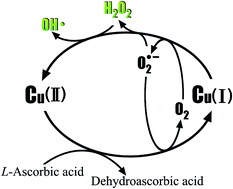
| | Scheme 1 Generation of hydrogen peroxide and hydroxyl radical resulting from the oxygen-dependent oxidation of L-ascorbic acid via copper redox-catalyzed reactions. | |
By using copper as a catalyst, the oxidation of L-AA involves a classical chain reaction, and an inner-sphere mechanism is illustrated in Scheme 1.17,18 The first step of the oxidation of L-AA is the interaction between Cu(II) and formula (2) to form a monoprotonated Cu(II) complex, which is indicated by formula (3). The monoprotonated Cu(II) complex is an ephemeral intermediate and rapidly undergoes an intramolecular one-electron transfer to give an unprotonated Cu(II) complex (formula (4)) or another monoprotonated Cu(II) complex (formula (5)). Formula (5) in turn undergoes a second intramolecular electron transfer to produce dehydroascorbic acid (D-AA, formula (6)), which is the final product of the oxidation of L-AA. Moreover, Cu(I), which is a strong reducing agent, and O2˙− are generated by the intramolecular electron transfer. Nevertheless, under attack by hydrogen ions (H+), formula (4) finally decomposes into D-AA, Cu(II), and H2O2.
Incidentally, Cu(I) and H2O2 form a Fenton-like system in the O2/Cu/L-AA process. Cu(I) is actually a strong activator of H2O2 for inducing the generation of HO˙, but is limited by its instability and difficulty in dissolving. However, as intermediates, Cu(I) and H2O2 could be involved in producing HO˙ in the O2/Cu/L-AA process, especially when the yield of H2O2 is high. The main reactions considered in the O2/Cu/L-AA process are presented as follows in eqn (1)–(5). Owing to their low rate constants, many of the possible reactions in this system were excluded from the main mechanism.6,10,12 Furthermore, the products Cu(I) and H2O2 contribute to promoting the generation of HO˙ via eqn (2) and (3), respectively, and it could be inferred that the consumption of H2O2 occurs via eqn (4) and (5), which explains why the concentration of H2O2 increased first then decreased later in the O2/Cu/L-AA process over time, as shown in Fig. 1.
| | |
Cu(I) + O2 → Cu(II) + O2˙− 0.48 M−1 s−1
| (1) |
| | |
Cu(II) + O2˙− → Cu(I) + O2 6.6 × 10⁸ M−1 s−1
| (2) |
| |
 | (3) |
| |
 | (4) |
| |
 | (5) |
3.3 Products of L-AA
In order to investigate the further oxidation of L-AA catalyzed by copper, the oxidation products of L-AA were identified by GC/MS analysis. As shown in Fig. 2, D-AA (peak area, 31.69%) was the predominant detected compound in the O2/Cu/L-AA process, which is consistent with the two-electron transfer oxidation of L-AA, as seen in Scheme 1. Moreover, 2,3-diketogulonic acid (DKGA, peak area, 16.33%) and L-xylosone (LX, peak area, 9.44%) were found to be the other important constituents. In previous reports,21,22 L-AA is first oxidized to D-AA and then forms DKGA, after which the decarboxylation of DKGA forms LX. It could be inferred that the further oxidation of L-AA by copper as a catalyst may follow the same pathway. Furthermore, several obvious peaks observed in the GC/MS chromatogram could not be identified properly, owing to a lack of authentic standards. However, the presence of several unidentified compounds was observed, which were probably formed from compounds such as L-AA, D-AA, DKGA, LX, etc., that were attacked by HO˙ or other reactive oxidants in the O2/Cu/L-AA process.
 |
| | Fig. 2 GC/MS chromatogram of the products of the oxidation of L-AA in the O2/Cu/L-AA process. Conditions: [L-AA]0 = 1.0 mM, [Cu(II)]0 = 10 μM, O2 flow rate = 0.5 L min−1, pH = 7 ± 0.2, 25 °C, reaction time = 150 min. | |
3.4 Effect of pH
To further investigate the mechanism of the O2/Cu/L-AA process, the effect of pH on the generation of H2O2 and the degradation of BA was studied. As shown in Fig. 3a, in the pH range from 2.8 to 8.3 the generation of H2O2 was obvious and the H2O2 concentrations increased and then declined over time in all processes. In addition, the peak concentration of H2O2 appeared later with a decrease in pH, and the generation of H2O2 was strongly increased at a pH of 4.5. As shown in Scheme 1, the generation of H2O2 may be increased with a decrease in pH if L-AA is partly replaced by the monoanion (formula (2)). Firstly, the formation of the monoprotonated intermediate (formula (3)), which is the reactive species in the O2/Cu/L-AA process, is scarcely possible when the 3-hydroxyl group is not ionized. However, without the attack by H+, it is difficult for formula (3) and formula (4) to form D-AA and H2O2 by electron transfer. It should be noted that about 68% of L-AA was present here in the form of formula (2) with pKa1 = 4.10.23 Thus, the generation of H2O2 was regulated by H+ with the decrease in pH, although the decrease in pH could promote the formation of formula (3).
 |
| | Fig. 3 Effect of pH on the generation of H2O2 (a) and degradation of BA (b) in the O2/Cu/L-AA process. Conditions: [L-AA]0 = 1 mM, [Cu(II)]0 = 10 μM, [BA]0 = 10 μM, O2 flow rate = 0.4 L min−1, pH = 2.8, 4.5, 5.9, 7.0, and 8.3, 25 °C. | |
As shown in Fig. 3b, an increase in the degradation of BA was observed with an increase in pH in the range from 2.8 to 4.5, and then an increase in pH resulted in a decrease in the removal of BA. Obviously, the degradation of BA with variations in pH largely corresponds to the generation of H2O2, as a result of the fact that elevated levels of H2O2 could accelerate the generation of HO˙ via eqn (4) to degrade BA. The generation of O2˙− and Cu(I) was regulated by H+, which is similar to the effect of H+ on the generation of H2O2; this was another way in which pH had an impact on the degradation of BA. Moreover, the degradation of L-AA by HO˙ is not negligible, and the rate constant for the reaction between L-AA and HO˙ increased with an increase in pH.20 Therefore, more L-AA would be present in the form of formula (2) and a smaller amount of H+ was involved in the generation of H2O2 and Cu(I) with an increase in pH, which could be the major causes of the variation in the efficiency of the degradation of BA with an increase in pH in the range of 2.8 to 8.3.
3.5 Effect of L-AA concentration
To further investigate the role of L-AA, the effect of the L-AA concentration on the generation of H2O2 and degradation of BA in the O2/Cu/L-AA process was studied. As shown in Fig. 4, with an increase in L-AA concentration in the range of 0.1 to 3.0 mM the generation of H2O2 was greatly increased, which resulted in an increase in the degradation of BA. Moreover, the degradation of BA was inhibited in the initial phase of the O2/Cu/L-AA process, especially when the dosage of L-AA was high. It should be noted that the degradation of BA was regulated by L-AA. Although an increase in the L-AA concentration could accelerate the generation of H2O2 and Cu(I) to induce the generation of HO˙, a large amount of HO˙ could be quenched by excess L-AA (k = 1.1 × 10¹⁰ M−1 s−1)20 in the initial phase. However, owing to the continual feeding of oxygen into the solution with the oxidation of L-AA, BA could be continually degraded until L-AA was completely oxidized to terminate the process. Hence, in improving the efficiency of the degradation of probe compounds to the greatest extent and reducing the cost, a proper dosage of L-AA should be selected.
 |
| | Fig. 4 Effect of L-AA concentration on the generation of H2O2 (a) and degradation of BA (b) in the O2/Cu/L-AA process. Conditions: [L-AA]0 = 0.1, 0.3, 1.0, 2.0, and 3.0 mM, [Cu(II)]0 = 10 μM, [BA]0 = 10 μM, O2 flow rate = 0.4 L min−1, pH = 7 ± 0.2, 25 °C. | |
3.6 Effect of Cu(II)
The process that uses copper as a catalyst described above, which achieves the two-electron oxidation of L-AA, may be employed in a catalytic process in which Cu(II) is only a minor constituent.17 As shown in Fig. 5a, the generation of H2O2 was significant when the dosage of Cu(II) was only 2 μM, and the H2O2 concentration decreased with an increase in the dosage of Cu(II) in the O2/Cu/L-AA process. A higher dosage of Cu(II) could accelerate the oxidation of L-AA to produce H2O2; therefore, the generation of H2O2 was accelerated in the initial phase with an increase in the dosage of Cu(II), as shown in Fig. 5a. However, an increase in the dosage of Cu(II) could also promote the generation of Cu(I), which could accelerate the decomposition of H2O2 to HO˙ as a product via eqn (4). Precisely because of the increased generation of HO˙, the degradation of BA was increased with an increase in the dosage of Cu(II), as shown in Fig. 5b.
 |
| | Fig. 5 Effect of the dosage of Cu(II) on the generation of H2O2 (a) and degradation of BA (b) in the O2/Cu/L-AA process. Conditions: [L-AA]0 = 1.0 mM, [Cu(II)]0 = 2, 5, 10, 30, 50, and 100 μM, [BA]0 = 10 μM, O2 flow rate = 0.4 L min−1, pH = 7 ± 0.2, 25 °C. | |
In natural aqueous systems, the variety of potential copper-binding ligands is large, the determination of the actual Cu(I) and Cu(II) species present is difficult, and the calculation of constant rates of reaction of these species is essentially impossible. However, the effect of ligands of copper species on the O2/Cu/L-AA process is worth investigating. As shown in Fig. 6a, the generation of H2O2 was increased with a dosage of Cl− in the range of 1 to 10 mM. The addition of Cl− at these dosages could barely form Cu(II) chloride complexes with Cu(II) as a result of the relatively low affinity of Cl− for Cu(II).8 In addition, these dosages of Cl− had a minimal effect on the rate of consumption of oxygen in the O2/Cu/L-AA process, as shown in Table 1. Therefore, it could be concluded that the addition of Cl− in the range of 1 to 10 mM has less impact on the consumption of oxygen and the generation of H2O2 through electron transfer catalyzed by copper. However, Cu(I) chloride complexes (CuCl, CuCl2−, and CuCl3−) are expected to be the predominant Cu(I) species owing to the higher dosages of Cl− in this work and the large stability constants of these complexes.12 The constant rates of the reaction between H2O2 and Cu(I) are inhibited when the Cu(I) species are in the form of CuCl, CuCl2−, and CuCl3−, which could inhibit the generation of HO˙. Although HO˙ can react rapidly with Cl−, the reaction forms ClOH−˙ reversibly, and the formation of Cl˙ is generally only significant at low pH, as shown in eqn (6) and (7).24 This confirms that the addition of Cl− obviously inhibited the degradation of BA, as shown in Fig. 6b.
| | |
HO˙ + Cl− ↔ ClOH˙− kfor = 4.3 × 10⁹ M−1 s−1 krev = 6.1 × 10⁹ s−1
| (6) |
| | |
ClOH˙− + H+ ↔ Cl˙ + H2O kfor = 2.1 × 10¹⁰ M−1 s−1
| (7) |
 |
| | Fig. 6 Effect of chloride ions on the generation of H2O2 (a) and degradation of BA (b) in the O2/Cu/L-AA process. Conditions: [L-AA]0 = 0.5 mM, [Cu(II)]0 = 10 μM, [BA]0 = 10 μM, [Cl−]0 = 0, 1, 3, 5, 10, 30, 100, and 500 mM, O2 flow rate = 0.5 L min−1, pH = 7 ± 0.2, 25 °C. | |
Table 1 Effect of chloride ion on the initial oxygen consumption rate in the O2/Cu/L-AA processa
| [CuSO4], μM |
[Cl−], mM |
Initial rate, μM min−1 |
| Conditions: [L-AA]0 = 0.5 mM, [Cu(II)]0 = 10 μM, [BA]0 = 10 μM, [Cl−]0 = 0, 1, 3, 5, 10, 30, 100, and 500 mM, [O2]0 = 7.24 ± 0.02 mg L−1, pH = 7 ± 0.2, 25 °C. The experiments were carried out in a sealed 500 mL Florence flask. |
| 10 |
0 |
126.6 ± 0.4 |
| 10 |
1 |
127.2 ± 0.8 |
| 10 |
3 |
126.8 ± 0.3 |
| 10 |
5 |
131.3 ± 1.2 |
| 10 |
10 |
128.8 ± 1.3 |
| 10 |
30 |
86.3 ± 0.5 |
| 10 |
100 |
19.1 ± 0.2 |
| 10 |
500 |
7.5 ± 0.1 |
Furthermore, when the dosage of Cl− ranges from 30 to 500 mM, Cu(II) species mainly exist in the form of Cu(II) chloride complexes (CuCl+ and CuCl2)8 and the rate of consumption of oxygen was significantly decreased in the O2/Cu/L-AA process, as shown in Table 1. It could be concluded that a high concentration of Cl− may inhibit electron transfer in the oxidation of formula (2) catalyzed by Cu(II) to form formula (3) resulting in the generation of H2O2, which corresponds to the generation of H2O2, as shown in Fig. 6a. It is clear from these results that at a proper concentration Cl− is an effective coordinating agent for copper redox catalysis for the generation of H2O2, but not for that of HO˙.
4 Conclusions
This study introduced the neglected phenomenon of the extensive generation of H2O2 and HO˙ during the oxygen-dependent oxidation of L-AA catalyzed by the Cu(II)/Cu(I) redox couple. By means of an intramolecular two-electron transfer, a high concentration of H2O2 was generated and further activated by the intermediate Cu(I) to induce the production of HO˙, which resulted in significant degradation of BA in the O2/Cu/L-AA process. Dehydroascorbic acid (D-AA), 2,3-diketogulonic acid (DKGA), and L-xylosone (LX) were the predominant detected products of the oxidation of L-AA based on the GC/MS technique.
Moreover, pH and the form of Cu(II) species and Cu(I) species are important factors that influence the generation of H2O2 and degradation of BA via regulating the electron transfer process. Trace amounts of Cu(II) are effective for catalyzing the oxidation of L-AA. Moreover, the generation of H2O2 and degradation of BA increased with an increase in the dosage of Cu(II) and L-AA. The presence of chloride at a low dosage could increase the concentration of H2O2 via forming Cu(I) chloride complexes to inhibit the activation of H2O2 by Cu(I) species, which decreases the efficiency of the degradation of BA, and a high dosage of chloride could simultaneously decrease the concentration of H2O2 and the efficiency of the degradation of BA via forming Cu(II) chloride complexes to inhibit electron transfer.
In the O2/Cu/L-AA process, L-AA is the driving force as a result of the fact that L-AA can reduce Cu(II) to Cu(I), which is the key intermediate that promotes the chain reactions to produce reactive oxygen species. Based on the role of L-AA in the O2/Cu/L-AA process, it could be inferred that other reducing agents that can reduce Cu(II) to Cu(I) may act similarly to L-AA in the O2/Cu/L-AA process. Nevertheless, it should be noted that the O2/Cu/L-AA process is far from practical. Our work simply introduced an interesting phenomenon and proposed the preliminary interpretation that the oxidation of L-AA by a copper catalyst could promote the production of H2O2 and HO˙.
Acknowledgements
Appreciation and acknowledgments are given to the National Natural Science Foundation of China (No. 51508353), the National Natural Science Foundation of China (No. 51408349), the National Natural Science Foundation of China (No. 51008052) and the Program for New Century Excellent Talents in University (NCET-11-0082).
References
- A. G. Lewis and W. R. Cave, Oceanogr. Mar. Biol., 1982, 20, 471–695 CAS.
- B. R. Stern, J. Toxicol. Environ. Health, Part A, 2010, 73, 114–127 CrossRef CAS PubMed.
- J. A. Mobley, A. S. Bhat and R. W. Brueggemeier, Chem. Res. Toxicol., 1999, 12, 270–277 CrossRef CAS PubMed.
- Y. B. Li and M. A. Trush, Carcinogenesis, 1993, 14, 1303–1311 CrossRef CAS PubMed.
- M. R. Maurya and S. Sikarwar, J. Mol. Catal. A: Chem., 2007, 263, 175–185 CrossRef CAS.
- X. Yuan, A. N. Pham, C. J. Miller and T. D. Waite, Environ. Sci. Technol., 2013, 47, 8355–8364 CAS.
- Y. B. Li and M. A. Trush, Arch. Biochem. Biophys., 1993, 300, 346–355 CrossRef CAS PubMed.
- S. Mandal, N. H. Kazmi and L. M. Sayre, Arch. Biochem. Biophys., 2005, 435, 21–31 CrossRef CAS PubMed.
- R. Liu, B. Goodell, J. Jellison and A. Amirbahman, Environ. Sci. Technol., 2005, 39, 175–180 CrossRef CAS PubMed.
- M. Gonzalez-Davila, J. M. Santana-Casiano, A. G. Gonzalez, N. Perez and F. J. Millero, Mar. Chem., 2009, 115, 118–124 CrossRef CAS.
- V. K. Sharma and F. J. Millero, Environ. Sci. Technol., 1988, 22, 768–771 CrossRef CAS PubMed.
- X. Yuan, A. N. Pham, G. W. Xing, A. L. Rose and T. D. Waite, Environ. Sci. Technol., 2012, 46, 1527–1535 CrossRef CAS PubMed.
- B. M. Voelker, D. L. Sedlak and O. C. Zafiriou, Environ. Sci. Technol., 2000, 34, 1036–1042 CrossRef CAS.
- Y. B. Li, P. Kuppusamy, J. L. Zweier and M. A. Trush, Chem.–Biol. Interact., 1995, 94, 101–120 CrossRef CAS PubMed.
- J. W. Moffett and R. G. Zika, Environ. Sci. Technol., 1987, 21, 804–810 CrossRef CAS PubMed.
- M. W. Davey, M. Van Montagu, D. Inze, M. Sanmartin, A. Kanellis, N. Smirnoff, I. J. J. Benzie, J. J. Strain, D. Favell and J. Fletcher, J. Sci. Food Agric., 2000, 80, 825–860 CrossRef CAS.
- S. Uluata, D. J. McClements and E. A. Decker, J. Agric. Food Chem., 2015, 63, 1819–1824 CrossRef CAS PubMed.
- A. E. Martell, Adv. Chem. Ser., 1982, 200, 153–178 CrossRef CAS.
- X. L. Zhou and K. Mopper, Mar. Chem., 1990, 30, 71–88 CrossRef CAS.
- G. V. Buxton, C. L. Greenstock, W. P. Helman and A. B. Ross, J. Phys. Chem. Ref. Data, 1988, 17, 513–886 CrossRef CAS.
- J. P. Yuan and F. Chen, J. Agric. Food Chem., 1998, 46, 5078–5082 CrossRef CAS.
- R. V. Tikekar, R. C. Anantheswaran, R. J. Elias and L. F. LaBorde, J. Agric. Food Chem., 2011, 59, 8244–8248 CrossRef CAS PubMed.
- F. Malem and D. Mandler, Anal. Chem., 1993, 65, 37–41 CrossRef CAS.
- Y. Yang, J. J. Pignatello, J. Ma and W. A. Mitch, Environ. Sci. Technol., 2014, 48, 2344–2351 CrossRef CAS PubMed.
|
| This journal is © The Royal Society of Chemistry 2016 |
Click here to see how this site uses Cookies. View our privacy policy here.