DOI:
10.1039/C5RA27988G
(Communication)
RSC Adv., 2016,
6, 23260-23264
Controlled synthesis of hollow Si–Ni–Sn nanoarchitectured electrode for advanced lithium-ion batteries
Received
5th January 2016
, Accepted 22nd February 2016
First published on 23rd February 2016
Abstract
A Sn-based intermetallic compound (hollow Si–Ni–Sn nanospheres) with a porous and hollow microspheric structure was fabricated via a versatile template synthesis approach followed by an in situ chemical reaction, and directly used as an anode material for lithium-ion batteries (LIBs). The hollow Si–Ni–Sn nanosphere anode with a unique architecture exhibits high initial discharge capacity and excellent cycling stability. The reversible capacity of hollow Si–Ni–Sn nanospheres is 1065 mA h g−1 and is maintained at 402 mA h g−1 after 50 cycles, which is much higher than that of hollow SiO2@Ni@SnO2 nanospheres. The unique configuration of the Sn-based intermetallic compound presents a beneficial approach to create efficient and practical electrodes for energy storage applications.
Introduction
Lithium-ion (Li-ion) batteries are one of the most extensively researched power sources for various applications from smartphones and laptops to electric vehicles.1–3 Commercial graphite anodes nowadays have been developed very close to their theoretical capacity (known as 372 mA h g−1).4 To meet applications in high-energy LIBs, alternative high-capacity anodes are of great necessity to be explored. Sn-based intermetallic compounds have been widely investigated as substitutes to graphite materials for lithium-ion batteries. Meanwhile, extensive attentions have been paid in past years on SnxMy (M: inactive element),5–7 including Sn–Co,8 Sn–Ni,9,10 Sn–Cu11 and Sn–Sb.12 Among which, Sn–Ni has drawn tremendous research interests for its higher reversible capacity and easy preparation method. However, Sn–Ni generally suffers from a rapid capacity fading due to the large volume changes upon Li-alloy/dealloy processes as anode material.
Exploiting nanostructured materials provides promising means to resolve the challenges associated with alloying and conversion reactions because of the small diffusion length and the facile strain relaxation during structure changes.13 A variety of nanoparticles and nanowires have been investigated as battery electrodes, which exhibited significant improvements.14–16 Besides, hollow micro-/nano-structured materials have drawn growing attentions and have been utilized as anode materials owing to the void space in their hollow structures, which can efficiently buffer against the local volume changes and also alleviate pulverization and aggregation of the electrode materials.17,18
Herein, we report an effective conversion route for controllable synthesis of uniform Si–Ni–Sn nanospheres with hollow structure by template-engaged precipitation of nickel silicates. Thereinto, the Ni and Si are expected to provide additional mechanical strength to prevent the crack, as well as the hollow inside can alleviate internal stress during electrochemical process, which contributes to maintain the integrity of the hollow Si–Ni–Sn nanospheres and thus improves the electrically conductive network and eventually leads to significantly enhanced electrochemical performances.
Results and discussion
Powder X-ray diffraction (XRD) measurements were utilized to investigate the crystalline structure of the synthesized samples. In the XRD curve of Fig. 1(a), the XRD pattern of the SiO2 nanospheres shows a broad peak at 2θ = 23°, corresponding to the reflection of SiO2. As for the diffraction peak of the hollow SiO2@Ni nanospheres Fig. 1(b), all of the peaks can be identified as nickel silicate dehydrate (JCPDS card no. 43-0664). After coated SnO2, in Fig. 1(c), the patterns are identified as SnO2 with the lattice parameters of a cubic structure (JCPDS card no. 41-1445), and the characteristic peaks of nickel silicate dehydrate, which suggests that the complete SnO2 coating layer strongly adheres to the nickel silicate hollow spheres. As depicted in the Fig. 1(d), the diffraction peaks of hollow Si–Ni–Sn nanospheres are in agreement with the standard data of the Ni3Sn2 (JCPDS no. 07-0256), while the obvious peak at 52° corresponding to the (532) plane of Ni3Si2.
 |
| | Fig. 1 XRD patterns of SiO2 nanospheres, hollow SiO2@Ni nanospheres, hollow SiO2@Ni@SnO2 nanospheres and hollow Si–Ni–Sn nanospheres. | |
Further investigations are employed to understand the surface chemical composition of the hollow Si–Ni–Sn nanospheres. The XPS spectrum of the composites is conducted and the results are shown in Fig. 2. In Fig. 2(a), the Ni 2p1/2 (870.0 eV) and Ni 2p3/2 (856.4 eV) peaks are assigned to the Ni2+. Meanwhile, the Sn 3d spectrum in Fig. 2(b) indicates the peaks at binding energies of 495.0 eV (Sn 3d3/2) and 485.1 eV (Sn 3d5/2) corresponding to Sn2+. The observed Ni 2p and Sn 3d photoelectron peaks are consistent with the peaks reported for Ni2+ and Sn2+ in the Ni3Sn2.19,20 Fig. 2(c) displays XPS spectra of the Si 2p spectrum, and the peak at 100.4 arises from Si 2p also indicates the presence of Ni3Si2 in the composites.
 |
| | Fig. 2 X-ray photoelectron spectroscopy (XPS) spectra of (a) Ni 2p, (b) Sn 3d and (c) Si 2p for hollow Si–Ni–Sn nanospheres. | |
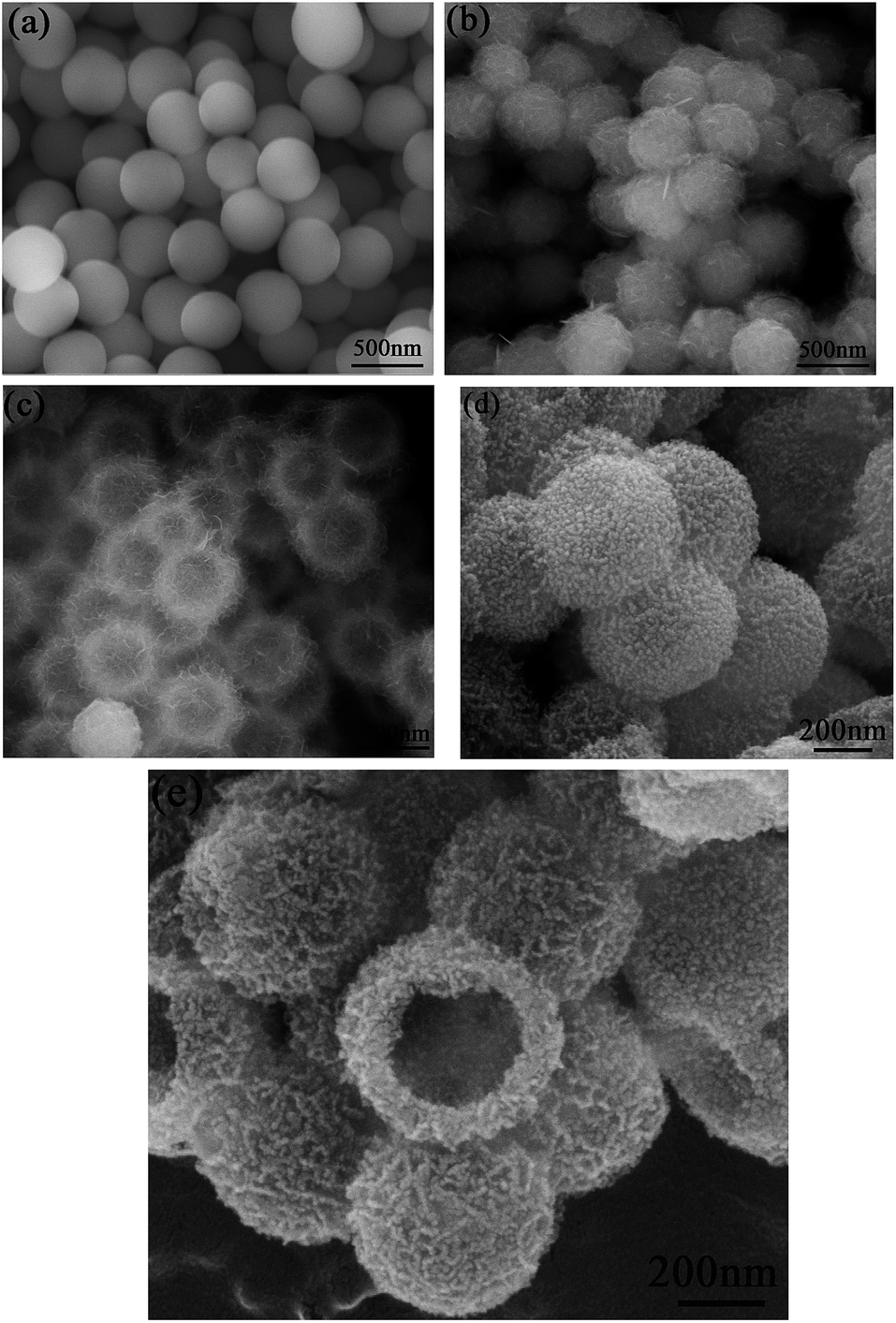
Fig. 3 shows the SEM images of the as-prepared samples. The average diameter of SiO2 spheres with a smooth surface is about 400 nm (Fig. 3(a)). Fig. 3(b) and (c) reveal that the SiO2@Ni nanospheres and hollow SiO2@Ni nanospheres are uniformly distributed with porous surface. Moreover, the conversion from SiO2@Ni nanospheres to hollow SiO2@Ni nanospheres occurs through a perfect transformation process without any apparent collapse of the shells. In addition, the diameter of the obtained spheres is about 600 nm, bigger than that of the SiO2 spheres templates. As shown in Fig. 3(d), after subsequent hydrothermal deposition of SnO2, the nanosphere structure is well retained, and the porous surface of hollow SiO2@Ni@SnO2 nanospheres become relatively rough and uniformly covered. The Fig. 3(e) demonstrates that the hollow Si–Ni–Sn nanospheres maintaining similar structures and sizes as the hollow SiO2@Ni@SnO2 nanospheres.
 |
| | Fig. 3 SEM images of SiO2 nanospheres (a); SiO2@Ni nanospheres (b); hollow SiO2@Ni nanospheres (c); hollow SiO2@Ni@SnO2 nanospheres (d) and hollow Si–Ni–Sn nanospheres (e). | |
More details of crystalline and structure could be obtained in the transmission electron microscopy (TEM), as shown in the Fig. 4. From the Fig. 4(a), the hollow sphere morphology of the hollow SiO2@Ni nanospheres and the rough surface characteristic can be easily observed, which are in good agreement with the SEM results. The TEM observation of hollow SiO2@Ni@SnO2 nanospheres (Fig. 4(b)) clarifies that numerous SnO2 nanoparticles distributed uniformly on the outer surfaces of the hollow SiO2@Ni nanospheres. Besides, the Fig. 4(c) analyses indicate there are no clear differences between the hollow Si–Ni–Sn nanospheres and the hollow SiO2@Ni@SnO2 nanospheres. Fig. 4(d) gives the lattice resolved HRTEM image of hollow Si–Ni–Sn nanospheres. The fringe spacings of 0.29 nm correspond to the interplanar distance of (201) planes of Ni3Sn2 of hollow Si–Ni–Sn nanospheres.
 |
| | Fig. 4 TEM images of hollow SiO2@Ni nanospheres (a); hollow SiO2@Ni@SnO2 nanospheres (b); hollow Si–Ni–Sn nanospheres (c) and HRTEM images of hollow Si–Ni–Sn nanospheres (d). | |
Fig. 5(a) illustrates the galvanostatic charge/discharge voltage profiles of the hollow Si–Ni–Sn nanospheres with a current density of 300 mA g−1 for the first two cycles. As is depicted, the initial discharge and charge specific capacities reach about 1065 and 729 mA h g−1 for the hollow Si–Ni–Sn nanospheres respectively, resulting in a coulombic efficiency of 69%, which is better than many previously reported values, such as bare Sn–Co alloy21 and nano-Ni3Sn2.22 Fig. 5(b) reveals the CV plots of the hollow Si–Ni–Sn nanospheres scanned at 0.2 mV s−1 between 0.01 and 3.00 V (vs. Li/Li+) for the first five cycles. In the first scanning cycle, two cathodic peaks between 0.3 and 1.3 V are observed, but disappeared completely in the second cycle. This can be attributed to some irreversible reactions associated with the formation of SEI film as well as decomposition of electrolyte. In the following cycles, the cathodic peaks keep rather stable at 0.48 V and the anodic peaks keep at 0.68/1.3 V, demonstrating that the discharge/charge processes tends to be stabilized.23 The whole reaction is expected to evolve like this:
| | |
Ni3Sn2 + 8.8Li+ + 8.8e− → 2Li4.4Sn + 3Ni
| (1) |
| | |
Li4.4Sn → Sn + 4.4Li+ + 4.4e− (charge)
| (2) |
| | |
Sn + 4.4Li+ + 4.4e− → Li4.4Sn (discharge)
| (3) |
 |
| | Fig. 5 (a) Galvanostatic lithiation–delithiation profiles of the hollow Si–Ni–Sn nanospheres electrode for the first two cycles, these tests are conducted at a current density of 300 mA g−1 between 0.01 and 2.0 V; (b) cyclic voltammetry of the hollow Si–Ni–Sn nanospheres between 0.01 and 3.0 V at a scan rate of 0.2 mV s−1. | |
Cycling properties of hollow Si–Ni–Sn nanospheres and hollow SiO2@Ni@SnO2 nanospheres with a current density of 300 mA g−1 are displayed in Fig. 6(a). Regarding to the hollow Si–Ni–Sn nanospheres, the capacity decreased within the first 5 cycles before reached a relatively steady value thereafter, and eventually maintained the discharge capacity of 402 mA h g−1 after 50 charge/discharge processes. However, it is observed that the reversible capacity of hollow SiO2@Ni@SnO2 nanospheres is barely satisfactory. The exceptional cycling performance was ascribed to the nanoarchitectured Si–Ni–Sn electrode design in which the porous and hollow structure as well as a small amount of Si and Ni act as an electrochemically inactive matrix to absorb the huge volume variation occurring during the lithiation/delithiation processes. Fig. 6(b) reveals EIS analysis of the electrodes of the hollow Si–Ni–Sn nanospheres and hollow SiO2@Ni@SnO2 nanospheres at 0.5 V from 0.01 Hz to 100 kHz after 50 cycles. In the equivalent circuit diagram, Rs is the electrolyte resistance and Rf represents the SEI resistance. W is associated with the Warburg impedance corresponding to the diffusion process of lithium-ions into the bulk of the electrode materials. CPE1 and CPE2 are two constant phase elements refer to the interfacial resistance and charge-transfer resistance, respectively, Rct is the charge-transfer resistance.23 It is observed that the semicircle of the hollow Si–Ni–Sn nanospheres is smaller than that of and hollow SiO2@Ni@SnO2 nanospheres, indicating a smaller electrochemical reaction resistance and improvement of the electronic contact among the active particles.
 |
| | Fig. 6 (a) Comparative cycling performance of hollow Si–Ni–Sn nanospheres with hollow SiO2@Ni@SnO2 nanospheres; (b) EIS of the hollow Si–Ni–Sn nanospheres and hollow SiO2@Ni@SnO2 nanospheres after cycling (0.01–100 kHz), including the equivalent circuit model of the studied system. | |
Experimental section
Sample of hollow SiO2@Ni nanospheres
Uniform silica spheres were synthesized by the Stӧber method. NiSO4·6H2O (7.5 mmol) was mixed with a 40 mL aqueous solution of ammonia (NH3·H2O, 28%, 10 mL) to form a well-distributed solution under stirring. Then 1.6 g portion of silica spheres were successively added into 20 mL of deionized water before they were mixed with the prepared solution. The final mixture was transferred into a Teflon-lined stainless autoclave (80 mL) and afterward it was heated at 90 °C for 1 h in a water bath under stirring. The autoclave was sealed and maintained in a furnace at 90 °C for 12 h. In order to remove the silica core from the product, the green precipitate was dispersed in 50 mL of sodium hydroxide solution (1 M) and stirred for 16 h. The product then was separated and washed for several times with deionized water and ethanol after the hydrothermal reaction was terminated. After these, the product was dried under vacuum at 60 °C for 12 h to obtain the hollow SiO2@Ni nanospheres.
Sample of preparation of hollow Si–Ni–Sn nanospheres
In a typical experimental procedure, 0.120 g of the nickel silicate nanospheres were dispersed in 96 mL of ethanol–water (37.5 vol% ethanol) mixture by ultrasonication dispersion. Then 2.25 g of urea and 0.329 g of Na2SnO3·4H2O were added into the above solvent, respectively. After about 5 min of ultrasonication, the formed suspension was transferred to a Teflon-lined stainless-steel autoclave for solvothermal treatment at 170 °C for 36 h. After cooling to room temperature, the hollow SiO2@Ni@SnO2 nanospheres were centrifuged and washed with deionized water and ethanol, and dried under a vacuum at 60 °C for 12 h. Finally, the hollow SiO2@Ni@SnO2 nanospheres were calcined at 650 °C for 3.5 h under hydrogen mixed argon (Ar/10% H2) atmosphere, in order to obtain the hollow Si–Ni–Sn nanospheres (the synthesis process of the hollow Si–Ni–Sn spheres is schematically illustrated in Fig. 7).
 |
| | Fig. 7 Schematic illustration of the fabrication process for the hollow Si–Ni–Sn spheres. | |
Preparation of the electrode
Electrochemical performance of the products was evaluated by a CR2016-type coin cell with a multi-channel current static system Land (LAND CT200IA). The anode electrodes were prepared by dispersing the hollow Si–Ni–Sn nanospheres (65 wt%), acetylene black (15 wt%) and PVDF (20 wt%) as a binder in 1-methyl-2-pyrrolidinone (NMP) solution on a copper foil. Li foil was used as the counter-electrode, and polypropylene (PP) film (Celgard 2400) as the separator. The electrolyte solution was 1 M LiPF6 dissolved in a mixture of ethylene carbonate (EC), dimethyl carbonate (DMC) and diethyl carbonate (DEC) with a volume ratio of 1![[thin space (1/6-em)]](https://www.rsc.org/images/entities/char_2009.gif) :1:1.
:1:1.
Materials characterization
The structures of the prepared samples were characterized by X-ray diffraction analysis (XRD) (Rigaku, model D/max-2500 system at 40 kV and 100 mA of Cu Kα). XPS analysis was conducted by X-ray photoelectron spectrometer (K-Alpha; Thermo Fisher Scientific (SID-Elemental), New York, USA). The surface morphology of the composites was performed by a model Tecnai F30 G2 (FEI CO., USA) field emission transmission electron microscope (FETEM) and scanning electron microscope (SEM, SuPRA 55, German ZEISS).
Conclusions
In summary, the hollow Si–Ni–Sn nanospheres were synthesized via a versatile template synthesis approach. The nanospheres were successfully utilized as an electrode material for lithium-ion batteries, exhibiting significantly improved structural stability and cycling performance where the initial discharge and charge specific capacities reach about 1065 and 729 mA h g−1 with an excellent capacity retention rate (about 90% in last 30 cycles test), and superior cycling performance (402 mA h g−1 after 50 cycles), which is higher than the theoretical capacity of graphite (372 mA h g−1). Above all, the facile synthesized hollow Si–Ni–Sn nanospheres anode could be considered as a promising candidate for practical applications among high capacity lithium-ion battery anodes.
Acknowledgements
This work was supported by the Research Fund for the Doctoral Program of Higher Education of China under Grant No. 20136102110046, the Innovation Foundation of Shanghai Aero-space Science and Technology Grant No. SAST201373, the Basic Research Foundation of Northwestern Polytechnical University under Grant No. JC201269 and the Graduate Starting Seed Fund of Northwestern Polytechnical University No. Z2015003.
References
- X. Han, X. Han, L. Sun, Q. Liu, W. Xu, L. Li, P. Wang and C. Wang, CrystEngComm, 2015, 17, 1754 RSC.
- F. Cheng, Z. Tao and J. Liang, Chem. Mater., 2008, 20, 667–681 CrossRef CAS.
- W. J. Zhang, J. Power Sources, 2011, 19, 613–624 Search PubMed.
- G. S. Cao, X. B. Zhao, T. Li and C. P. Lu, J. Power Sources, 2001, 94, 102–107 CrossRef CAS.
- J. M. Tarascon and M. Armand, Nature, 2001, 414, 359–367 CrossRef CAS PubMed.
- A. S. Arico, P. Bruce, B. Scrosati, J. M. Tarascon and W. Van Schalkwijk, Nat. Mater., 2005, 4, 366–377 CrossRef CAS PubMed.
- Y. G. Guo, J. S. Hu and L. J. Wan, Adv. Mater., 2008, 20, 2878–2887 CrossRef CAS.
- J. J. Zhang and Y. Y. Xia, J. Electrochem. Soc., 2006, 153, A1466 CrossRef CAS.
- F.-S. Ke, L. Huang, H.-H. Jiang, H.-B. Wei, F.-Z. Yang and S.-G. Sun, Electrochem. Commun., 2007, 9, 228 CrossRef CAS.
- I. Amadei, S. Panero, B. Scrosati, G. Cocco and L. Schiffini, J. Power Sources, 2005, 143, 227 CrossRef CAS.
- L. Bazin, S. Mitra, P. L. Taberna, P. Poizot, M. Gressier, M. J. Menu, A. Barnabe, P. Simon and J. M. Tarascon, J. Power Sources, 2009, 188, 578 CrossRef CAS.
- H. Mukaibo, T. Osaka, P. Reale, S. Panero, B. Scrosati and M. Wachtler, J. Power Sources, 2004, 132, 225 CrossRef CAS.
- Li-F. Cui, R. Ruffo, C. K. Chan, H. Peng and Y. Cui, Nano Lett., 2009, 9, 495 Search PubMed.
- K. M. Shaju, F. Jiao, A. Debart and P. G. Bruce, Phys. Chem. Chem. Phys., 2007, 9, 1837–1842 RSC.
- M. S. Park, G. X. Wang, Y. M. Kang, D. Wexler, S. X. Dou and H. K. Liu, Angew. Chem., Int. Ed., 2007, 46, 750–753 CrossRef CAS PubMed.
- G. Armstrong, A. R. Armstrong, P. G. Bruce, P. Reale and B. Scrosati, Adv. Mater., 2006, 18, 2597 CrossRef CAS.
- F. Guo, M. Fan, P. Jin, H. Chen, Y. Wu, G.-D. Li and X. Zou, CrystEngComm, 2016 10.1039/c5ce01398d.
- Z. X. Jiang, D. J. Zhang, Y. Li, H. Cheng, M. Q. Wang, X. Q. Wang, Y. P. Bai, H. B. Lv, Y. T. Yao, L. Shao and Y. D. Huang, Appl. Surf. Sci., 2014, 317, 486–489 CrossRef CAS.
- A. Onda, T. Komatsu and T. Yashima, Phys. Chem. Chem. Phys., 2000, 2, 2999–3005 RSC.
- S. K. Overbury, P. A. Bertrant and G. A. Somorjai, Chem. Rev., 1975, 75, 547 CrossRef CAS.
- Z. J. Du and S. C. Zhang, J. Phys. Chem. C, 2011, 115, 23603–23609 CrossRef CAS.
- H. Y. Qin, X. B. Zhao, N. P. Jiang and Z. P. Li, J. Power Sources, 2007, 171, 948–952 CrossRef CAS.
- K. Wang, Y. Huang, D. Wang, Y. Zhao, M. Wang, X. Chen, X. Qin and S. Li, RSC Adv., 2015, 5, 107247–107253 RSC.
|
| This journal is © The Royal Society of Chemistry 2016 |
Click here to see how this site uses Cookies. View our privacy policy here. 

 b,
Mingyue Wanga,
Xuefang Chena and
Haiwei Wua
b,
Mingyue Wanga,
Xuefang Chena and
Haiwei Wua