The m-SiCNW/FKM nanocomposites: fabrication, characterization and properties

Zhenjiang Liab, Juxiu Hua, Yunbo Zhanga, Guanying Songa, Alan Meng*b and Qingdang Lic
aKey Laboratory of Polymer Material Advanced Manufacturing Technology of Shandong Province, College of Electromechanical Engineering, College of Sino-German Science and Technology, College of Materials Science and Engineering, Qingdao University of Science and Technology, Qingdao 266061, Shandong, P. R. China
bState Key Laboratory Base of Eco-Chemical Engineering, College of Chemistry and Molecular Engineering, Qingdao University of Science and Technology, 53 Zhengzhou Road, Qingdao 266042, Shandong, P. R. China. E-mail: alanmengqust@163.com; Fax: +86-53288956228; Tel: +86-53288956228
cCollege of Sino-German Science and Technology, Qingdao University of Science and Technology, Qingdao 266061, Shandong, P. R. China

Received 28th December 2015 , Accepted 23rd March 2016

First published on 30th March 2016


Abstract

Nanocomposites consisting of the fluoroelastomer (FKM) matrix and modified SiC nanowires (m-SiCNWs) as strengthening phase (coded as m-SiCNW/FKM nanocomposites) have been prepared for the first time on an open two-roll mill. SiCNWs were modified by simple chemical treatment using fluoroalkylsilane (AC-FAS, CF3(CF2)7CH2CH2Si(OC2H5)3) as modifier. Fourier transform infrared spectroscopy (FTIR) indicated that AC-FAS was successfully grafted to the surface of the SiCNWs. The water contact angle test confirmed that the surface of m-SiCNWs was hydrophobic. Compared with FKM, the tensile strength, stress at 100% strain, tear strength and thermal conductivity at 100 °C of the nanocomposites with 14 phr m-SiCNWs were improved by 15.3%, 102.0%, 17.6% and 56.9%, respectively. The tensile fracture surface morphology of m-SiCNW/FKM nanocomposites shows that m-SiCNWs were uniformly dispersed, and the interfacial adhesion between m-SiCNWs and FKM matrix was strong. Dynamic mechanical analysis shows that the storage modulus (E′) of the m-SiCNW/FKM nanocomposites was improved, and the Tg shifted to a higher temperature by increasing the m-SiCNW content, indicating the greater reinforcing effect of m-SiCNWs. Payne effect, as an important characteristic of rubber materials, was also investigated. The preparation of m-SiCNW/FKM nanocomposites provides a favorable exploration for the application of one-dimensional (1D) nanofiller in polymer composites.

1 Introduction

Over the past decades, nanofiller/rubber composites have attracted a great deal of attention in the academic and industrial fields. Although they have been studied for a long time, they remain an interesting topic because of the nanofillers' profound enhancement to the rubber's properties.1–3 So far, zero-dimensional (0D) nanofillers and one-dimensional (1D) nanofillers have been widely studied in the academic field, and some of them have already been applied in industry. Silica, as a 0D inorganic filler, is the most widely used in rubber industrial fields. Meanwhile, some other 0D nanofillers, such as nano-sized calcium carbonate,4 titanium dioxide,5,6 zirconia,7 etc., have been gradually used in the polymer field. However, their major disadvantage is the zero aspect ratio, which leads to no hydrodynamic effect even though they are homogeneously dispersed; the enhancement of 0D nanofiller in rubber mainly relies on filler–rubber interaction.8

1D nanofillers with large specific surface area and high aspect ratio are supposed to more readily enhance the elastomer properties.8 SiCNWs, a typical 1D nanofiller, have been attracting much attention due to their excellent physical and chemical properties, such as high strength, high melting point, high thermal conductivity, chemical inertness and resistance to oxidation,9–12 etc. SiCNWs with high aspect ratio and large specific surface area13,14 have been suggested as good reinforcement materials for composites.15 Although several research works on SiCNWs have been reported, most of the research works focus on the fabrication of SiCNWs and applications of SiCNWs in ceramic composites, sensor devices, and field-emission devices,16 and only a small fraction of the literature on the applications of SiCNWs focus on resin composites.17,18 To the best of our knowledge, SiCNWs reinforcing rubbers have rarely been studied, and no detailed analysis has been published so far.

FKM is a synthetic polymer elastomer containing fluorine atoms on its main chain or side chain of carbon atoms. Due to the shielding effect and the very high bond energy of the carbon–fluorine bond (C–F), FKM has a lot of excellent properties, such as chemical resistance, heat aging and weather resistance.19 It is widely used as seal material in industries such as aerospace and automotive equipment. Though several references have reported the application of nanofillers in FKM, such as multi-walled carbon nanotubes,20 graphene,21 nanoclay,22,23 montmorillonite,24 graphene oxide,25 carbon black,26 etc., aiming to improve the mechanical properties of FKM, the effects of SiCNWs on the properties of FKM have not been studied so far.

Inorganic nanofillers usually possess high surface energy and tend to agglomerate, which results in poor dispersion in the rubber matrix. On the other hand, the surface of inorganic nanofillers are often hydrophilic, which results in insufficient interfacial adhesion and inferior interaction between the nanofiller and the rubber matrix.27,28 Hydrophobic surface modification of nanofillers not only improve the dispersion of nanofillers in the rubber matrix but also enhance the interaction between nanofiller and rubber matrix. Zhou et al.27 modified cellulose nanocrystals (CNCs) with 11-mercaptoundecanoic acid, and the m-CNC/NR nanocomposites with 10 wt% modified CNCs showed a 2.4-fold increase in tensile strength, 1.6-fold increase in strain-to-failure and 2.9-fold increase in work-of-fracture compared to NR with unmodified CNCs. Kwang-Jea Kim29 investigated the effect of silica with bis(triethoxysilyl propyl)disulfide (TESPD) in NBR/PVC compound. The results show that the processability, degree of crosslinking and mechanical properties of NBR/PVC compound were improved dramatically with the addition of the TESPD. Generally, SiCNWs, a typical inorganic nanofiller with a large amount of surface hydroxyl groups, presents a super-hydrophilic state resulting in poor compatibility with the polymer and uneven dispersion in the matrix.30 Therefore, it is necessary to carry out hydrophobic treatment for SiCNWs to obtain excellent properties in SiCNW/polymer nanocomposites.

In this work, SiCNWs were modified by chemical treatment using AC-FAS to achieve a hydrophobic and organophilic surface, which will facilitate the adhesion of SiCNWs and the FKM matrix. For the first time, m-SiCNW/FKM nanocomposites with excellent mechanical properties and thermal conductivity have been prepared. The test results indicate that the tensile strength, tear resistance, hardness, tensile modulus and thermal conductivity properties of the m-SiCNW/FKM nanocomposites increased with the increasing proportion of m-SiCNWs, and the reinforcement mechanism of m-SiCNWs is put forward based on the SEM of tensile fracture surface. In addition, dynamic mechanical property was also improved. This study on m-SiCNW/FKM nanocomposites with excellent properties not only provides a useful preference for SiCNWs over other polymers but also lays a foundation for the industrial application of SiCNWs.

2 Experimental part

2.1 Materials

The lab-made SiCNWs were obtained via chemical vapor reaction method.31,32 AC-FAS was purchased from Ark (Fogang) Chemical Industry Co. Ltd., China. FKM (ML2-12), a copolymer of vinylidene fluoride and hexafluoropropylene, was purchased from Jiangsu Meilan Chemical Co. Ltd., China. It has a Mooney viscosity [ML (1 + 4) 121 °C] of 50 ± 10. Other rubber additives were standard grade in the rubber industry.

2.2 Preparation of m-SiCNWs

Firstly, the ethanol solution of AC-FAS with a volume fraction of 2% was prepared, and the pH value of the solution was adjusted to 4.0 using glacial acetic acid. Then, a certain amount of SiCNWs was added to the above-prepared solution. The suspension was magnetically stirred at 40 °C for 2 h. After modification treatment, the solid phase was separated from the supernatant by centrifugation at 10[thin space (1/6-em)]000 rpm for 15 minutes. The SiCNWs were washed with ethanol at least three times to remove excess reactants. The resultant product was dried in an oven at 70 °C for 12 h.30

2.3 Preparation of m-SiCNW/FKM nanocomposites

The recipe for the rubber compounds is listed in Table 1. The m-SiCNWs and carbon black were simultaneously added to FKM and mixed on an open two-roll mill at 25 °C for 6 minutes. Then, MgO and Ca(OH)2 were added and mixed for another 3 minutes. Finally, the vulcanizing agent bisphenol AF (BPAF) and benzyl triphenyl phosphorus chloride (BPP) were added and mixed at 25 °C for 3 minutes. The cure characteristics of the rubber compounds were determined by a moving rotorless rheometer at 178 °C. The rubber compounds were cured in a vulcanizer (Jia Xin Electronic Equipment &Technology Co. Ltd., Shenzhen, China) at 178 °C according to the optimum cure time (t90) determined by a moving rotorless rheometer (MDR 2000, Alpha Technologies, United States). Post-curing of the samples was carried out in an oven at 260 °C for 24 h. The vulcanized samples were stored at room temperature for at least 24 h before testing. SiCNW/FKM nanocomposites were prepared in the same way.
Table 1 Recipe for nanocomposites with different amounts of m-SiCNWs and SiCNWs
Material Contenta (phr)
Recipe for adding m-SiCNWs Recipe for adding SiCNWs
a Parts per one hundred parts of rubber by weight (phr).
FKM 100 100
MgO 15 15
Ca(OH)2 2 2
Carbon black 1.5 1.5
BPAF 3 3
BPP 1.5 1.5
m-SiCNWs 0, 2, 5, 9, 14
SiCNWs 0, 2, 5, 9, 14


2.4 Characterization

X-ray diffractometer (XRD, D/MAX-2500/PC X-ray diffractometer, Rigaku, Akishima-Shi, Japan) was used to analyze the crystalline structure of the SiCNWs. The water contact angle was measured with 5 μL droplets of deionized water using a contact angle measurement system (JC2000C1) at room temperature. The morphology and chemical elements of SiCNWs and tensile fracture surfaces of the nanocomposites were characterized by using a Jeol 7500F scanning electron microscope (SEM) at an accelerating voltage of 5 kV, equipped with energy dispersive spectrometry (EDS). An electron tensile tester (Zwick/Roell Z005, Germany) was used to measure the tensile property and tear resistance of the nanocomposites at a uniform speed of 500 mm min−1 according to GB/T 529-2009 (tensile property) and GB/T 529-2008 (tear resistance), respectively. The Shore A hardness test was carried out on a HS-74 durometer (Chemical Machinery Plant Co. Ltd., Shanghai, China) according to GB/T 531.1-2008/ISO 7619-1: 2004. FTIR absorbance spectra were recorded on a Nicolet FTIR spectrophotometer. The dispersion of the SiCNWs and m-SiCNWs in the FKM matrix was observed with transmission electron microscopy (TEM, JEOL JEM-2100, Japan) at an accelerating voltage of 200 kV, using ultrathin specimens (200 nm) cut by a microtome with a diamond knife. Thermal conductivities of the nanocomposites were measured with LFA 427 Nanoflash (Netzsch, Germany). The samples were prepared in round-shaped forms, with a diameter of 12.7 mm and a thickness of about 1.9 mm. Dynamic mechanical analysis was carried out on a Netzsch DMA 242 in double cantilever beam mode. All tests were conducted in a temperature range from −80 °C to 100 °C at a frequency of 1 Hz with a heating rate of 3 °C min−1. Dynamic rheology analysis was performed on a rheometer RPA 2000 (Alpha Technologies, USA) using a strain sweep test with monitoring strain from 0.280% to 100.000% at 1 Hz frequency.

3 Results and discussion

3.1 Modification of SiCNWs

XRD was performed to investigate the phase compositions. As shown in Fig. 1a, the major diffraction peaks are assigned to the (111), (200), (220) and (311) reflections of cubic β-SiC (unit cell parameter a = 0.4358 nm, JCPDS card no. 29-1129). In addition, there is a diffraction peak of graphite, which shows that a small amount of graphite existed in raw SiCNWs.
image file: c5ra27843k-f1.tif
Fig. 1 Characterization of SiCNWs and m-SiCNWs. (a) XRD patterns of SiCNWs; (b) SEM image and corresponding EDS spectrum (inset) of SiCNWs; (c) SEM image and corresponding EDS spectrum (inset) of m-SiCNWs; (d) FT-IR spectra of SiCNWs and m-SiCNWs; (e) the contact angle of water droplet on SiCNWs; (f) the contact angle of water droplet on m-SiCNWs.

Fig. 1b and c show the morphology of SiCNWs and m-SiCNWs. It can be seen that the SiCNWs are randomly distributed and entangled together, with a small amount of impurities. The SiCNWs were several tens of microns in length and 20–30 nm in diameter, and their surface is smooth. The morphology of m-SiCNWs is almost unchanged as shown in Fig. 1c, which is consistent with our previous work.30 It is important to emphasize that the incorporation of AC-FAS does not lead to the agglomeration of SiCNWs. The EDS of SiCNWs and m-SiCNWs are shown inset in Fig. 1b and c. We can find that the elemental F peak exists in the EDS of m-SiCNWs, which demonstrates that the AC-FAS was coated on the surface of m-SiCNWs.

FT-IR spectra of the SiCNWs and m-SiCNWs are shown in Fig. 1d. In FT-IR spectra, the SiCNWs and m-SiCNWs were normalized by the peak intensity at 804 cm−1 (Si–C) to erase the factors affecting peak intensity. Four peaks at 1242 cm−1, 1211 cm−1, 1155 cm−1 and 1136 cm−1 were observed in the FT-IR spectra of m-SiCNWs, corresponding to the C–F stretching vibration, while these four peaks did not appear in the spectra of SiCNWs, confirming that the AC-FAS was successfully grafted on the SiCNWs. Furthermore, by comparing two peaks at 3450 cm−1 and 1640 cm−1, which correspond to Si–OH stretching vibration, it was found that the peak intensity of m-SiCNWs was significantly lower than that of SiCNWs. It could be inferred that the Si–OH on the surface of SiCNWs was bound by AC-FAS.

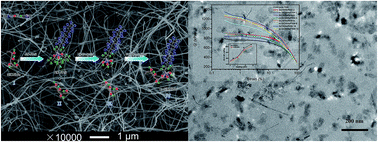
Fig. 1e shows that the water contact angle of SiCNW surfaces is 0°, which shows that SiCNWs are hydrophilic. After SiCNWs were modified with AC-FAS, the water contact angle of m-SiCNWs sharply increased to 122.5°, suggesting that the m-SiCNWs are hydrophobic materials. Fig. 2 shows the schematic representation of the hydrophobic modification mechanism of SiCNWs. There was a strong polar group (Si–OH) on the surface of SiCNWs (Fig. 2I). After the addition of AC-FAS into the SiCNW solution, the ethoxy group of the AC-FAS molecules was hydrolyzed into active hydroxyl groups (Fig. 2II and III). Then, the hydrolyzed fluoroalkylsilane reacted with the hydroxyl groups existing on the SiCNW surface through dehydration condensation to form a Si–O–Si covalent chemical bond (Fig. 2IV), which significantly reduced the strong polar group (Si–OH) on the surface of SiCNWs, thus causing hydrophobicity.


image file: c5ra27843k-f2.tif
Fig. 2 Schematic representation of the SiCNW hydrophobic modification mechanism.

3.2 m-SiCNW/FKM nanocomposites

3.2.1 Vulcanization characteristics. Table 2 shows the vulcanization characteristics of m-SiCNW/FKM and SiCNW/FKM nanocomposites. As shown in Table 2, t10, t90 and torque increased gradually with increasing m-SiCNW content. Usually, Si–OH partially adsorbs onto the surface of curing chemicals, which reduces the curing rate and delays the vulcanization.33 As shown in Fig. 1d, there were still some Si–OH on the m-SiCNWs, so with the increase of m-SiCNWs, the content of Si–OH in the compounds increased, leading to the increase of t10 and t90 of m-SiCNW/FKM nanocomposites. The SiCNW/FKM nanocomposites showed a large increase in t10 and t90 compared to m-SiCNW/FKM nanocomposites. This may be because there is more Si–OH on the surface of SiCNWs than on m-SiCNWs under the same dosage, and its effects of delaying vulcanization are more significant. As shown in Table 2, with the increase of m-SiCNW content, ML increased slightly. This may be due to the movement of FKM molecular chains being restricted by the m-SiCNWs. It can be noticed that MH and MHML of the composites increased with the increase of m-SiCNWs, which can be attributed to the presence of m-SiCNWs with high modulus resulting in the increased stiffness of the m-SiCNW/FKM nanocomposites.34
Table 2 Curing characteristics of m-SiCNW/FKM and SiCNW/FKM nanocomposites
Samples Minimum torque (ML) (Nm) Maximum torque (MH) (Nm) MHML (Nm) Scorch time (t10) (min) Cure time (t90) (min)
Pure FKM 1.45 16.68 15.23 1.19 3.43
m-SiCNWs/FKM-2 1.56 17.95 16.39 1.28 3.74
m-SiCNWs/FKM-5 1.86 19.40 17.54 1.36 3.87
m-SiCNWs/FKM-9 2.14 21.39 19.25 1.48 4.32
m-SiCNWs/FKM-14 2.51 24.08 21.57 1.61 5.62
SiCNWs/FKM-2 0.96 14.99 14.03 1.32 4.89
SiCNWs/FKM-5 1.24 16.04 14.8 1.54 4.96
SiCNWs/FKM-9 1.34 17.09 15.57 1.45 5.03
SiCNWs/FKM-14 1.52 18.54 17.02 1.57 6.01


3.2.2 Mechanical properties and reinforcement mechanism. Table 3 shows the mechanical properties of m-SiCNW/FKM and SiCNW/FKM nanocomposites. The results show that the tear strength, modulus (stress at 100% strain) and hardness of the nanocomposites were enhanced significantly compared to pure FKM by increasing the amount of added m-SiCNWs and SiCNWs, while the tensile strength basically remain unchanged. However, the elongation at break decreased to a greater extent for the m-SiCNW/FKM nanocomposites compared to SiCNW/FKM nanocomposites. The modulus (stress at 100% strain) and tear strength of the m-SiCNW/FKM nanocomposites are improved by about 102.0% and 17.6%, respectively, while the SiCNW/FKM nanocomposites are merely improved by about 58.8% and 13.6% when the adding amount of the filler is 14 phr. The enhanced mechanical properties may be due to the modification of SiCNWs facilitating the interaction between m-SiCNWs and FKM matrix and improving the dispersion of m-SiCNWs in the FKM matrix. The decrease of elongation may be due to the enhanced stiffness of the nanocomposites compared to pure FKM with the increased amount of filler, which is confirmed by the hardness. In addition, with the increase of filler, the free space between the polymer chains is filled and the movement of the chain is restricted, thus lowering the probability of straightening for the rubber chains,35,36 and thereby reducing the elongation.
Table 3 Mechanical properties of m-SiCNW/FKM and SiCNW/FKM nanocomposites
Samples Tensile strength (MPa) Elongation at break (%) M(100) (MPa) Tear strength (kN m−1) Shore A hardness
Pure FKM 12.4 219 5.1 33.0 67
m-SiCNWs/FKM-2 12.3 207 5.8 34.2 72
m-SiCNWs/FKM-5 12.0 188 6.5 35.1 76
m-SiCNWs/FKM-9 13.0 180 8.4 39.2 79
m-SiCNWs/FKM-14 14.3 166 10.3 38.8 86
SiCNWs/FKM-2 13.4 210 4.5 31.5 68
SiCNWs/FKM-5 13.1 191 5.7 34.8 72
SiCNWs/FKM-9 13.5 184 6.7 35.9 78
SiCNWs/FKM-14 14.2 173 8.1 37.5 84


Fig. 3 shows the typical strain–stress curves of m-SiCNW/FKM and SiCNW/FKM nanocomposites. It could be seen that with the increase of m-SiCNWs and SiCNWs, the tensile modulus of the nanocomposites obviously increased compared to pure FKM. It also could be seen that the tensile modulus for m-SiCNW/FKM nanocomposites is higher than that of the SiCNW/FKM nanocomposites.


image file: c5ra27843k-f3.tif
Fig. 3 Stress–strain curves of m-SiCNW/FKM and SiCNW/FKM nanocomposites.

To reveal the possible reinforcing mechanisms, the morphology of the tensile fracture surfaces of m-SiCNW/FKM-9 nanocomposites was investigated by SEM (Fig. 4a and b). There were no agglomerated m-SiCNWs in the tensile fracture surface (Fig. 4a), which is of great importance for making m-SiCNW–reinforced FKM with excellent mechanical properties. The uniformly dispersed bright dots and lines are the ends of the broken m-SiCNWs. Moreover, on closer inspection, most of the m-SiCNWs were broken apart, with the ends strongly embedded in the FKM matrix. This indicates a strong interfacial adhesion between m-SiCNWs and the FKM matrix, and an effective load transfer from the FKM matrix to m-SiCNWs. In addition, a few m-SiCNWs were pulled out from the matrix (pink arrows in Fig. 4). Fig. 4c shows TEM images of SiCNW/FKM-9 nanocomposites with 9 phr unmodified SiCNWs. It can be seen that the unmodified SiCNWs were aggregated into big agglomerates. Fig. 4d shows TEM images of m-SiCNW/FKM-9 nanocomposites with 9 phr modified SiCNWs. It can be observed that the m-SiCNWs were well dispersed in the FKM matrix, indicating that the FAS grafting on the surface of SiCNWs effectively improved their dispersion. It is thus believed that the inherent high strength of m-SiCNWs, good dispersion of m-SiCNWs in FKM matrix, and strong interfacial adhesion between m-SiCNWs and the FKM matrix are responsible for the improvement of FKM mechanical properties.


image file: c5ra27843k-f4.tif
Fig. 4 (a and b) SEM images of tensile fracture surface of m-SiCNW/FKM-9 nanocomposites; (c) TEM images of SiCNW/FKM-9 nanocomposites (with unmodified filler); (d) TEM images of m-SiCNW/FKM-9 nanocomposites (with modified filler).
3.2.3 Thermal conductivity. It is well known that the transport of heat is of great importance in the service life of rubber.37 Fig. 5 shows the thermal conductivity of m-SiCNW/FKM and SiCNW/FKM nanocomposites. It can be clearly seen that both m-SiCNWs and SiCNWs enhance the thermal conductivity of the nanocomposites. The same increasing trend in thermal conductivity is observed at 25 °C and 100 °C. When the content of filler is 14 phr, the thermal conductivity of SiCNW/FKM nanocomposites is increased by 31.3% and 24.8% at 25 °C and 100 °C, respectively, while the thermal conductivity of m-SiCNW/FKM nanocomposites is significantly increased by 63.9% and 56.9% at 25 °C and 100 °C, respectively. It is clear that the increase in thermal conductivity of m-SiCNW/FKM nanocomposites is greater than that in the SiCNW/FKM nanocomposites. This result could be attributed to the high thermal conductivity of SiCNWs9 and the better dispersion of m-SiCNWs in FKM matrix. The enhanced thermal conductivity is helpful to the application of sealing, and thus can increase its service life.
image file: c5ra27843k-f5.tif
Fig. 5 Thermal conductivity of m-SiCNW/FKM and SiCNW/FKM nanocomposites.
3.2.4 Dynamic mechanical analysis. Dynamic mechanical analysis of pure FKM and m-SiCNW/FKM nanocomposites were carried out to correlate the reinforcing effect with the storage modulus (E′) and loss modulus (E′′). Fig. 6a shows the temperature dependence of E′ for m-SiCNW/FKM nanocomposites. It is observed that the storage modulus at both glassy and rubbery states is increased with the addition of m-SiCNWs. The E′ values of all the samples at −50 °C (∼50 °C below Tg) and 50 °C (∼50 °C above Tg) are also listed in Table 4. The percentage increase in E′ above Tg is more obvious than that below Tg. For example, the storage modulus for m-SiCNW/FKM-14 nanocomposites increases 20.1% at −50 °C and 296.9% at 50 °C. Therefore, the reinforcing effect of the m-SiCNWs in rubbery state is more obvious than that in glassy state. The remarkable improvement of modulus in rubbery state indicates a strong interaction between m-SiCNWs and the FKM matrix.
image file: c5ra27843k-f6.tif
Fig. 6 (a) Storage modulus curves and (b) loss modulus curves of m-SiCNW/FKM nanocomposites.
Table 4 Glass transition temperature and properties of m-SiCNW/FKM nanocomposites
Samples Tg (°C) E′ (MPa) at −50 °C Increase (%) E′ (MPa) at 50 °C Increase (%)
Pure FKM −9.9 2004 3.2
m-SiCNWs/FKM-2 −9.5 2004 0 3.8 18.8
m-SiCNWs/FKM-5 −8.5 2223 10.9 5.6 75.0
m-SiCNWs/FKM-9 −8.6 2299 14.7 7.3 128.1
m-SiCNWs/FKM-14 −8.0 2406 20.1 12.7 296.9


Fig. 6b shows the temperature dependence of the loss modulus E′′ of m-SiCNW/FKM nanocomposites. The glass transition extracted from E′′ plot are reliable, since in this case the maximum of the plot is not influenced by the value of E′. The glass transition temperature (Tg) provides an indirect indication of the interfacial interaction38 between m-SiCNWs and the FKM matrix. It can be seen that the glass transition gradually shifts to a higher temperature with increasing m-SiCNWs (inset in Fig. 6b), which may due to the mobility of the FKM molecular chain being restricted by m-SiCNWs. This is consistent with the case usually reported in 2D layered silicate (e.g., clay)–reinforced polymer nanocomposites, where the mobility of polymer chains is greatly restricted by confinement effect from 2D nanoclay platelets, thus usually increasing the Tg of the nanocomposites.39

3.2.5 Payne effect. Payne effect usually refers to the reduction of shear storage modulus with increasing strain amplitude. This effect determines the dynamic performance of the rubber. To the best of our knowledge, no work has been conducted regarding the Payne effect in m-SiCNW/FKM nanocomposites. Fig. 7 shows the strain amplitude dependence of storage modulus (G′) of the pure FKM and the m-SiCNW/FKM and SiCNW/FKM nanocomposites. The results show that the dynamic behavior of the nanocomposites all show nonlinear characteristics—a decrease of shear storage modulus (G′) with increase in the strain amplitude. Pure FKM also shows a slightly nonlinear dynamic behavior; this is due to the incorporation of a small amount of other fillers, such as carbon black. There is a plateau of nearly constant shear storage modulus (G0) at low strain range (<0.054%). With further increase of strain amplitude, G0 abruptly decreases to a low-level storage modulus plateau (G). The quantitative description of Payne effect is expressed by (G0G). The relationship between Payne effect amplitude and the amount of filler is shown in Fig. 7 inset, which shows that the Payne effect amplitude (G0G) increases with the increased dosage of SiCNWs and m-SiCNWs. The SiCNW/FKM nanocomposites showed a large increase in Payne effect amplitude (G0G) compared to m-SiCNW/FKM nanocomposites, especially at higher SiCNW amounts, which indicated a worse dispersion of unmodified SiCNWs in the FKM matrix. The reason for lesser increase of the Payne effect amplitude in m-SiCNW/FKM nanocomposites may be that the modification of SiCNWs facilitates dispersion of m-SiCNWs in the FKM matrix, and as a result, the Payne effect is reduced. At low strain range, the shear stress is not able to break the network of m-SiCNWs; the storage modulus is very high. With further increase in strain amplitude, the filler network is gradually destroyed, causing an abrupt decrease of modulus. Subsequently, the interaction between m-SiCNWs and FKM becomes dominant, and the nanocomposites show a stable behavior.40
image file: c5ra27843k-f7.tif
Fig. 7 Strain amplitude dependence of the storage modulus (G′) of pure FKM and of nanocomposites with different amounts of SiCNWs and m-SiCNWs (the inset is the Payne effect amplitude with different amounts of SiCNWs and m-SiCNWs).

4 Conclusions

In this work, m-SiCNW-reinforced FKM has firstly been investigated. SiCNWs were modified by using AC-FAS, and the coverage of silane coupling agent on SiCNWs makes the hydrophilic SiCNW surface become organophilic, which improves dispersion of m-SiCNWs in the FKM matrix and enhances interfacial interaction between m-SiCNWs and the FKM matrix. The excellent mechanical properties of m-SiCNW/FKM nanocomposites are primarily attributed to the inherent properties of SiCNWs, good dispersion of m-SiCNWs, and strong interaction between m-SiCNWs and FKM. Compared with FKM, the tensile strength, stress at 100% strain, tear strength and thermal conductivity at 100 °C of the m-SiCNW/FKM-14 nanocomposites were improved by 15.3%, 102.0%, 17.6% and 56.9%, respectively. Furthermore, the systematic investigation on the mechanical and thermal conductivity properties of m-SiCNW/FKM nanocomposites provides a new perspective to other SiCNW–rubber systems, such as natural rubber, nitrile rubber, etc.

Acknowledgements

The work reported here was supported by the National Natural Science Foundation of China under Grant No. 51572137, 51272117, 51172115, the Natural Science Foundation of Shandong Province under Grant No. ZR2015PE003, ZR2011EMQ011, ZR2013EMQ006, the Research Award Fund for Outstanding Young Scientists of Shandong Province Grant No. BS2013CL040, the Specialized Research Fund for the Doctoral Program of Higher Education of China under Grant No. 20123719110003, the Tackling Key Program of Science and Technology in Shandong Province under Grant No. 2012GGX1021, the Application Foundation Research Program of Qingdao under Grant No. 13-1-4-117-jch, Shandong Province Taishan Scholar Project and Overseas Taishan Scholar Project. We express our grateful thanks to them for their financial support.

References

  1. C. Zha, W. C. Wang, Y. L. Lu and L. Q. Zhang, ACS Appl. Mater. Interfaces, 2014, 6(21), 18769–18779 CAS.
  2. Q. X. Jia, Y. P. Wu, Y. Q. Wang, M. Lu and L. Q. Zhang, Compos. Sci. Technol., 2008, 68(3–4), 1050–1056 CrossRef CAS.
  3. W. W. Chen, S. W. Wu, Y. D. Lei, Z. F. Liao, B. C. Guo, X. Liang and D. M. Jia, Polymer, 2011, 52(19), 4387–4395 CrossRef CAS.
  4. S. Salkhord and H. S. Ghari, J. Appl. Polym. Sci., 2015, 132(44), 42744 CrossRef.
  5. J. D. Ambrosio, C. V. M. Balarim and G. B. Carvalho, Polym. Compos., 2014 DOI:10.1002/pc.23310.
  6. M. R. Kashani, S. Javadi and N. Gharavi, Smart Mater. Struct., 2010, 19(3), 035019 CrossRef.
  7. D. Yang, W. Zhang, B. Z. Jiang and Y. Guo, Composites, Part A, 2013, 44, 70–77 CrossRef CAS.
  8. J. H. Wei, X. Zhang, J. J. Qiu and B. L. Weeks, J. Polym. Sci., Part B: Polym. Phys., 2015, 53(23), 1691–1700 CrossRef CAS.
  9. S. L. Wang, Y. Q. Wu, L. W. Lin, Y. H. He and H. Huang, Small, 2015, 11(14), 1672–1676 CrossRef CAS PubMed.
  10. J. Z. Guo, Y. Zuo, Z. J. Li, W. D. Gao and J. L. Zhang, Physica E, 2007, 39(2), 262–266 CrossRef CAS.
  11. N. Jiraborvornpongsa, M. Imai, K. Yoshida and T. Yano, Key Eng. Mater., 2014, 617, 195–198 CrossRef CAS.
  12. Y. B. Li, S. S. Xie, X. P. Zou, D. S. Tang, Z. Q. Liu, W. Y. Zhou and G. Wang, J. Cryst. Growth, 2001, 223(1–2), 125–128 CAS.
  13. S. C. Chiu, C. W. Huang and Y. Y. Li, J. Phys. Chem. C, 2007, 111(28), 10294–10297 CAS.
  14. S. B. Qadri, M. A. Imam, C. R. Feng, B. B. Rath, M. Yousuf and S. K. Singh, Appl. Phys. Lett., 2003, 83(3), 548–550 CrossRef CAS.
  15. W. Yang, H. Araki, A. Kohyama, S. Thaveethavorn, H. Suzuki and T. Noda, Mater. Lett., 2004, 58(25), 3145–3148 CrossRef CAS.
  16. J. J. Chen, X. Liao, M. M. Wang, Z. X. Liu, J. D. Zhang, L. J. Ding, L. Gao and Y. Li, Nanoscale, 2015, 7(14), 6374–6379 RSC.
  17. W. Nhuapeng, W. Thamjaree, S. Kumfu, P. Singjai and T. Tunkasiri, Curr. Appl. Phys., 2008, 8(3–4), 295–299 CrossRef.
  18. Y. Wang, J. H. Yu, W. Dai, D. Wang, Y. Z. Song, H. Bai, X. F. Zhou, C. Y. Li, C. T. Lin and N. Jiang, RSC Adv., 2014, 4(103), 59409–59417 RSC.
  19. B. Améduri, B. Boutevin and G. Kostov, Prog. Polym. Sci., 2001, 26(1), 105–187 CrossRef.
  20. K. Pal and J. K. Kim, J. Nanosci. Nanotechnol., 2015, 15(5), 3641–4365 CrossRef CAS PubMed.
  21. M. Khajehpour, S. Sadeghi, A. Z. Yazdi and U. Sundararaj, Polymer, 2014, 55(24), 6293–6302 CrossRef CAS.
  22. M. Maiti and A. K. Bhowmick, J. Appl. Polym. Sci., 2009, 111(2), 1094–1104 CrossRef CAS.
  23. S. Lakshminarayanan, G. A. Gelves and U. Sundararaj, J. Appl. Polym. Sci., 2012, 124(6), 5056–5063 CAS.
  24. M. Maiti and A. K. Bhowmick, Compos. Sci. Technol., 2008, 68(1), 1–9 CrossRef CAS.
  25. Y. Xing, X. Bai and Y. Zhang, Polym. Compos., 2014, 35(9), 1779–1785 CrossRef CAS.
  26. T. M. Aminabhavi and S. F. Harlapur, J. Appl. Polym. Sci., 1998, 68(5), 815–825 CrossRef CAS.
  27. B. P. Kanoth, M. Claudino, M. Johansson, L. A. Berglund and Q. Zhou, ACS Appl. Mater. Interfaces, 2015, 7(30), 16303–16310 Search PubMed.
  28. F. H. Yan, X. B. Zhang, F. Liu, X. H. Li and Z. J. Zhang, Composites, Part B, 2015, 75(15), 47–52 CrossRef CAS.
  29. K. J. Kim, J. Appl. Polym. Sci., 2012, 124(4), 2937–2944 CrossRef CAS.
  30. J. Zhao, Z. J. Li, M. Zhang and A. L. Meng, J. Colloid Interface Sci., 2015, 444, 33–37 CrossRef CAS PubMed.
  31. Z. J. Li, H. J. Li, X. L. Chen, A. L. Meng, K. Z. Li, Y. P. Xu and L. Dai, Appl. Phys. A, 2003, 76(4), 637–640 CrossRef CAS.
  32. Z. J. Li, J. Zhao, M. Zhang, J. Y. Xia and A. L. Meng, Nano Res., 2014, 7(4), 462–472 CrossRef CAS.
  33. M. C. Luo, X. X. Liao, S. Q. Liao and Y. F. Zhao, J. Appl. Polym. Sci., 2013, 129(4), 2313–2320 CrossRef CAS.
  34. G. Sui, W. H. Zhong, X. P. Yang and Y. H. Yu, Mater. Sci. Eng., A, 2008, 485(1–2), 524–531 CrossRef.
  35. T. T. Pham, V. Sridhar and J. K. Kim, Polym. Compos., 2009, 30(2), 121–130 CrossRef CAS.
  36. Z. X. Ooi, H. Ismail and A. A. Bakar, Polym. Test., 2014, 33, 145–151 CrossRef CAS.
  37. W. Y. Zhou, S. H. Qi, C. C. Tu and H. Z. Zhao, J. Appl. Polym. Sci., 2007, 104(4), 2478–2483 CrossRef CAS.
  38. H. B. Lu, H. B. Shen, Z. L. Song, K. S. Shing, W. Tao and S. Nutt, Macromol. Rapid Commun., 2005, 26(18), 1445–1450 CrossRef CAS.
  39. T. X. Liu, I. Y. Phang, L. Shen, S. Y. Chow and W. D. Zhang, Macromolecules, 2004, 37(19), 7214–7222 CrossRef CAS.
  40. S. Araby, Q. S. Meng, L. Q. Zhang, H. L. Kang, P. Majewski, Y. H. Tang and J. Ma, Polymer, 2014, 55(1), 201–210 CrossRef CAS.

This journal is © The Royal Society of Chemistry 2016
Click here to see how this site uses Cookies. View our privacy policy here.