DOI:
10.1039/C5RA27828G
(Paper)
RSC Adv., 2016,
6, 37337-37346
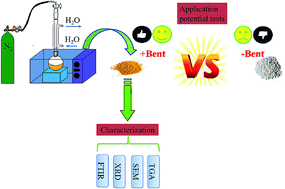
Microwave-assisted one-step synthesis and characterization of a slow release nitrogen fertilizer with inorganic and organic composites
Received
27th December 2015
, Accepted 24th March 2016
First published on 30th March 2016
Abstract
A slow-release fertilizer (SRF) was synthesized in one step based on urea incorporated in a polymer matrix composed of sodium alginate (NaAlg), acrylic acid (AA), acrylamide (AM) and bentonite (Bent) via microwave irradiation. The proposed microwave-assisted method yielded high reaction rates with less reaction time of 5 minutes at 300 W. The raw materials and final products were characterized in terms of the structure and properties through Fourier transform infrared spectroscopy, X-ray diffraction, thermogravimetric analysis, scanning electron microscopy, and uniaxial compression measurements. The application potential was verified on the basis of swelling in different environments, largest water-holding ratio and water-retention capacity of soil, release study in soil, and the effect of the proposed SRF product on the germination rate of cotton seed. Results indicated that the addition of Bent not only contributed to the increase in water absorbency, largest water-holding ratio and water-retention capacity of soil, but also caused the system to liberate the nutrient in a more prolonged manner based on a Case II release mechanism with skeleton erosion. Thus, microwave irradiation would be a possible method to produce SRFs for potential agricultural and horticultural applications.
1. Introduction
Fertilizers, as one of the most important products of the agrochemical industry, are one of the most vital input materials for crop production both in quality and quantity.1 Nitrogen, the essential nutrients for good soil fertility and plant growth, is a key aspect in the productivity of agriculture, although the utilization efficiency is only about 30–50%.2,3 Urea is the most economically viable fertilizer in global agriculture due to its high nitrogen content and comparatively low production costs.2 However, ammonia volatilization and nitrate leaching obtains a high rate of loss and low efficiency for urea, consequently, resulting in large economic losses and severe environmental hazards.4 To improve the utilization efficiency of fertilizers while reducing environmental problems, slow-release fertilizers (SRFs) have emerged as a good alternative. SRFs are designed to release nutrients gradually to match the nutrient requirements of plants and thus it can make the nutrient available in the field for a longer period of time than conventional fertilizers can.1 The use of SRFs has been proved to be an effective method to reduce the economic losses and environmental pollution.5
The growth and quality of plants not only rely on fertilizers but also on water. Many farmlands, especially in arid and semiarid regions, suffer from water shortage. Superabsorbent polymers (SAP) have been extensively investigated as a water-managing material. SAP is a three-dimensionally cross-linked hydrophilic functional material that can absorb aqueous fluids up to thousands of times their original weight without dissolving and can hold liquid even under pressure.6 The utilization of SAP improves the water-holding capacity and fertility of soil.1 However, synthetic polymers derived from petroleum-based polyacrylate or polyacrylamide types with poor degradability dominate the market and cause environmental problems.6 With increasing environmental awareness and diminishing petroleum-based resources, studies have focused on the incorporation of biodegradable, eco-friendly polysaccharides into SAP via green processing.7
Sodium alginate (NaAlg), composed of poly-β-1,4-D-mannuronic acid and α-1,4-L-glucuronic acid, in varying proportions by 1–4 linkages, provides a wide range of commercial applications because this substance can undergo gelatinization and exhibits advantageous properties such as relatively inert behavior in aqueous environments within a matrix and high gel porosity.8–10 In addition, NaAlg has always been used as a matrix to entrap and deliver proteins, drugs, and cells because this substance is soluble in water, renewable, nontoxic, biodegradable, and biocompatible.9 By virtue of these advantages, NaAlg has been extensively investigated in industrial and medical fields. However, NaAlg applications remain unfeasible because of its high price, gas permeability, low modulus, and thermal stability. To solve these problems, researchers synthesized clay/polymer nanocomposites with clays added in high proportions.1 The incorporation of clays not only decreases production costs, but also improves the water-retention ability, swelling ability, gel strength, mechanical and thermal stabilities.1 Thus, demands for economically and environmentally sustainable NaAlg-based clay/polymer materials have increased. For instance, bentonite (Bent), which is mainly composed of montmorillonite (MMT), whose structural unit consists of two tetrahedral sheets (Si–O) separated by an octahedral sheet (Al–O–OH), is a good substrate for SAP with reactive –OH groups on the surface, high specific surface area, high swelling capacity, and a valuable cation exchange capacity.11–14 Furthermore, Bent is environmentally friendly and readily available in large quantities at a low cost.
Microwave irradiation (MW) has been considered as a potential alternative to preparing SAPs. Compared with conventional, time-consuming, thermally induced polymerization by conductive heating with an external heat source, microwave irradiation via a commercial household microwave oven can provide various advantages such as simple experimental apparatus, uniform heating, reaction rate increases, time and energy savings, and convenient process control.7 However, studies are yet to develop on the combination of SAP and SRFs in single formulation on the basis of NaAlg, acrylic acid (AA), acrylamide (AM), Bent, and urea as raw materials via microwave irradiation. Thus, SRF synthesis by a microwave technique should be developed and their properties should be investigated to improve the utilization efficiency of water resources and fertilizer nutrients and compared with conventional fertilizers.
This study mainly aimed to synthesize a Bent-based SRF by using AA, AM, NaAlg and urea via microwave irradiation. The physical and chemical properties of the SRF were characterized using Fourier transform infrared (FTIR) spectroscopy, X-ray diffraction (XRD), thermogravimetric analysis (TGA), scanning electron microscopy (SEM) and uniaxial compression measurements. The water absorbency of the samples in different environments, largest water-holding ratio, water-retention capacity of soil, slow-release behavior of the SRF in soil, and the effect of the proposed SRFs product on the germination rate of cotton seed were also systematically investigated. The release kinetics was also obtained. Results revealed that microwave irradiation may be a significant strategy to produce SRFs that could be widely applicable in modern agriculture and horticulture.
2. Experimental
2.1 Materials
AA was provided by Tianjin Fuyu Fine Chemical Co., Ltd. AA was distilled under reduced pressure before use to remove the polymerization inhibitor and stored in a brown reagent bottle. NaAlg, AM, urea, potassium persulfate (KPS) and N,N′-methylenebis acrylamide (MBA) were purchased from Tianjin Fuchen Chemical Reagent Co., Ltd. All reagents were of analytical grade and all solutions were prepared with distilled water. The raw Bent samples were collected from XiaZiJie deposits in the Xinjiang Uyghur Autonomous Region of China. The Bent used was purified using the method of Sun et al.12 The resultant Bent has a composition (%, by mass) of A12O3 13.06, SiO2 64.62, Na2O 2.66, K2O 2.43, CaO 1.92, MgO 2.38, Fe2O3 4.93, TiO2 0.59, MnO 0.26, and P2O5 0.18, and an ignition loss of 6.20. The MMT content was 93.0 g based on 100 g Bent, the cation exchange capacity was 98.4 mmol based on 100 g Bent and the swelling index was 89.5 mL g−1.
2.2 Preparation of SRFs
In this procedure, 3.0 g of NaAlg was mixed with 100 mL of distilled water in a three-necked flask equipped with an electric blender, a reflux condenser, and a nitrogen line. A NaAlg solution as obtained by stirring at 60 °C in a water bath for 1 h until the NaAlg dissolved completely. Subsequently, 1.5 g of Bent was added to the NaAlg solution while constantly stirring to disperse Bent uniformly. The mixture was then cooled to room temperature. A solution containing 5.0 g of AA, 5.0 g of AM, 3.6 g of urea, 0.1 g of MBA, and 3.3 mL of 0.04 mol L−1 KPS was subsequently introduced to the cooled NaAlg/Bent mixture while agitating for 30 min. All these procedures were performed under a nitrogen atmosphere. Furthermore, the mixture was transferred into a 250 mL round bottom flask and then was placed inside a MW oven (MM823LA6-NS, Midea, China) with the following appropriate modifications. One hole was drilled into the oven to provide a straight tube with a reflux condenser and the hole was jacketed with copper tubing to avoid microwave leakage. The MW oven possessed a 2450 MHz frequency, a maximum 900 W output power, and the oven was equipped with six adjustable power levels and a time controller with a maximum time range of 30 min. The solution was subjected to irradiation at 300 W for 5 min to complete polymerization under a nitrogen atmosphere. The resulting NaAlg-g-p(AA-co-AM)/Bent/urea samples were washed with 70% ethanol and dried to a constant weight in a vacuum oven at 70 °C and were then grounded and passed through 40–80 mesh sieves.
2.3 Characterization
2.3.1 FTIR spectral analysis. The samples were dried under vacuum, grounded to fine powder, mixed thoroughly with KBr powder (1
:
200) and then compressed to form KBr tablets for spectroscopic characterization using a Fourier transform infrared spectrometer (Nicolet Avatar 360, USA) in the wavenumber range of 4000–400 cm−1 with a resolution of 4 cm−1 and number of scans 50.
2.3.2 X-ray diffraction. X-ray diffractograms of samples were recorded with a X-ray diffractometer (D8 Advance, Bruker, Germany) using Cu kα (λ = 1.54056 Å) radiation and operating at 40 kV, 40 mA. The samples were scanned in the 2θ range of 5–90° at a scan velocity of 1.0° min−1.
2.3.3 SEM analysis. A scanning electron microscope (JSM-6700F, Jeol, Tokyo, Japan) was employed to study the surface morphology of samples after coating the samples with gold film to prevent the collapse of the porous structure.
2.3.4 Thermal analysis. Thermogravimetric analysis of samples were examined on a thermogravimetric analyzer (STA 449F3, NETZSCH, Germany) from 25 to 600 °C at a heating rate of 10 °C min−1 under flowing nitrogen.
2.3.5 Measurement of mechanical properties. Uniaxial compression measurements on swollen fertilizer samples with dimensions of 10 mm × 10 mm × 10 mm were performed at 25 °C using an Instron 3366 at a constant crosshead speed of 2 mm min−1. The compressive strength and elastic modulus were calculated automatically using software and the results were the average of at least three measurements.
2.4 Swelling measurement
About 0.1 g of the pre-dried samples were immersed entirely in 250 mL of distilled water, various saline solutions (NaCl, KCl, NH4Cl, MgCl2, FeCl3 and Na2SO4, and Na3PO4) with different concentrations ranging from 0.05 to 0.25 mol L−1 and various pH value solutions ranging from 2.0 to 12.0 at room temperature until the swelling equilibrium was reached. The swollen samples were filtered through a 100-mesh stainless steel screen and weighed. The equilibrium water absorbency Qeq (g g−1) was calculated by eqn (1).| |
 | (1) |
where W1 and W2 are the weights of dried and swollen products, respectively. Qeq was expressed as grams of water uptake per gram of sample.
2.5 Slow release behavior in soil
1 g of SRF was embedded into a nylon bag and then buried 5 cm beneath the surface of the soil in a plastic cup containing 150 g of dry soil and incubated for different periods at room temperature. Throughout the experiment, the moisture content of the soil was maintained at 30% by weighing and adding distilled water if necessary, periodically. After 1, 3, 5, 10, 15, 20, 25, and 30 days of incubation, the bag with remaining SRF were picked out and then estimated for the contents of nitrogen after being dried at room temperature to a constant weight. The remaining amount of nitrogen was determined by an elemental analysis instrument.
With the aim of gaining insights into the slow release kinetics and mechanism in soil, the first order release kinetics,15 Higuchi release kinetics,16 and Ritger–Peppas release kinetics models were employed.17
First order release kinetics model:
| |
 | (2) |
Higuchi release kinetics model:
| |
 | (3) |
Ritger–Peppas release kinetics model:
| |
 | (4) |
where
Mt/
M∞ was the released fraction at any time
t;
K1,
KH and
K were the release rate constants that incorporated characteristics of the carrier and the active ingredient, and
n was the release exponent indicative of the transport mechanism.
2.6 Largest water-holding ratio of soil with SRFs
Different amounts of SRFs with application ratios of 0.1% and 0.2% were mixed well with 200 g of dry soil and placed in a PVC tube with a diameter of 4.5 cm. The bottom of the tube was sealed with 200-mesh nylon fabric and weighed (marked W0). Subsequently, an appropriate amount of distilled water was slowly added from the top of the tube until the soil samples reached saturation. The tube was weighed a second time (marked W1). A control experiment in soil without SRFs was also conducted. The largest water-holding ratio (WH%) of the soil was calculated using eqn (5).| |
 | (5) |
2.7 Measurement of the water-retention of soil with SRFs
The water retention of the soil with SRFs was measured at different treatments: control, 200 g of dry soil only; 200 g of dry soil mixed well with 2.0 g of sample; and 200 g of dry soil mixed well with 4.0 g of sample. Each sample was placed in a glass beaker and weighed (marked W0). The soil samples were slowly drenched with distilled water to saturate the soil with the largest WH% determined in a previous step, and then the beaker was weighed again (marked W1). The beakers were kept under identical conditions at room temperature and weighed every three days (Wi) for 30 days. The water-retention ratio (WR%) of the soil with SRFs was calculated by eqn (6).| |
 | (6) |
2.8 Pot experiments
Pot culture experiments on the cotton plant were carried out with treatments of SRFs and pure urea. Different amounts of SRFs and pure urea with the same nitrogen content were mixed well with 200 g of vermiculite (60% humidity) per pot and then placed into separate germination boxes. Ten cotton seeds were sown in each pot and eight replicates were treated for each treatment. The pots were placed in an artificial climatic box with day/night temperature of 30 °C and 25 °C, respectively, and 400 μmol (m2 s)−1 photons of light was supplied for 14 h during the day time. The germination rate of cotton seeds was calculated after 7 days. The results were the averages of eight measurements.
3. Results and discussion
3.1 Characterization
3.1.1 FTIR spectra. FTIR spectra of the samples are shown in Fig. 1. Some characteristic bands in the Bent spectrum can be ascribed as: 3420 cm−1 for the O–H stretching vibration of water around the interlayer cations, 1634 cm−1 for the bending vibration of physically absorbed water, 1026 cm−1 for the Si–O stretching vibration, 787 cm−1 for the Si–O–Si vibration in cristobalite, 522 cm−1 for the Al–O–Si bending vibration, and 463 cm−1 for the Si–O–Si bending vibration.18 The Al–OH and Mg–OH stretching vibration of Bent at 3623 cm−1 disappeared in both NaAlg-g-p(AA-co-AM)/Bent and NaAlg-g-p(AA-co-AM)/Bent/urea. In addition, the Si–O stretching vibration at 1026 cm−1 and the Si–O–Si bending vibration at 463 cm−1 were visible, with weakened intensity, in these two samples. This finding indicated that the active –OH groups of Bent reacted with AA and AM during polymerization and formed new chemical bonds. In the FTIR spectra of Fig. 1d–f, the characteristic absorption bands of NaAlg at 1098 cm−1 and 1031 cm−1 related to the stretching vibration of the C–OH groups weakened after the reaction, which indicates the participation of –OH groups from NaAlg in the polymerization reaction. The new absorption band detected at 1658–1664 cm−1 in Fig. 1d–f was assigned to the C
O of acrylamide unit. Furthermore, the bands observed at approximately 1718 cm−1 and 1452 cm−1 of the samples in Fig. 1d–f corresponded to the C
O symmetric and asymmetric stretching vibrations of the acrylate unit, respectively. The abovementioned information demonstrated that the grafting reaction of AA and AM with NaAlg occurred.19 In Fig. 1d–f, the bands between 3300 cm−1 and 3500 cm−1 were assigned to the overlapped stretching vibrations of O–H and N–H; the bands at 2941, 2950, and 2946 cm−1 were associated with the combined stretching of CH2 in AA and AM in the SAP structure.1 The following characteristic bands of urea were observed in the NaAlg-g-p(AA-co-AM)/Bent/urea: 3442 cm−1 and 3346 cm−1 for the asymmetric and symmetric stretching vibration of NH2, respectively, 1681 cm−1 for the C
O stretching, and 557 cm−1 for the N–CO–N bending vibration, implying the involvement of urea in NaAlg-g-p(AA-co-AM)/Bent/urea.2
 |
| | Fig. 1 The FTIR spectra of NaAlg (a), Bent (b), urea (c), NaAlg-g-p(AA-co-AM) (d), NaAlg-g-p(AA-co-AM)/Bent (e), and NaAlg-g-p(AA-co-AM)/Bent/urea (f). | |
3.1.2 XRD patterns. Fig. 2 illustrates the XRD patterns of the samples. The NaAlg diffractogram consisted of two lower crystalline reflections at 2θ = 13.39° and 21.79°, while the reflection at 13.39° disappeared and the reflection at 21.79° became broadened in Fig. 2c and d, which was an indicative of graft polymerization of NaAlg with monomers and the weakened ordered structures in NaAlg.20,21 In addition, the intense reflection present in Bent at 8.90°, referring to the basal plane and corresponding to the interlamellar distance d001-value = 9.93 Å, disappeared in the NaAlg-g-p(AA-co-AM)/Bent and NaAlg-g-p(AA-co-AM)/Bent/urea diffractograms, which suggests good exfoliation and nanodispersion of Bent lamellae in the polymer matrix.3 This exfoliation was conducive to the water holding capacity of the sample.22 Furthermore, the reflections characteristic of Bent were observed in Fig. 2d and e, reconfirming the incorporation of Bent in NaAlg-g-p(AA-co-AM)/Bent and NaAlg-g-p(AA-co-AM)/Bent/urea. Moreover, it was noteworthy that the XRD pattern of NaAlg-g-p(AA-co-AM) present two weak broad reflections at 2θ = 22° and 38°, indicating an amorphous nature, while NaAlg-g-p(AA-co-AM)/Bent and NaAlg-g-p(AA-co-AM)/Bent/urea possesses typical crystallite reflections associated with the MMT component.1
 |
| | Fig. 2 X-ray diffraction patterns of Bent (a), NaAlg (b), NaAlg-g-p(AA-co-AM) (c), NaAlg-g-p(AA-co-AM)/Bent (d) and NaAlg-g-p(AA-co-AM)/Bent/urea (e). | |
3.1.3 SEM surface morphology. The surface morphologies of raw materials and final products are shown in Fig. 3. A comparatively smooth, tight and dense surface was observed in the surface morphologies of NaAlg, whereas the NaAlg-g-p(AA-co-AM) displayed a slightly undulant and coarse surface, which indicated the monomers of AA and AM had grafted onto NaAlg. In comparison, the SEM micrograph of NaAlg-g-p(AA-co-AM) and NaAlg-g-p(AA-co-AM)/Bent clearly show more pores with open channels and the surface roughness was increased due to the addition of Bent, which indicated that Bent was well dispersed in the polymer network. This phenomenon contributed to the increased surface area and facilitated the permeation of water into the polymeric network, consequently, endowing the sample with its high water absorbency. As was evident, urea crystals were homogeneously deposited on the surface of NaAlg-g-p(AA-co-AM)/Bent/urea (Fig. 3d).
 |
| | Fig. 3 SEM micrographs of NaAlg (a), NaAlg-g-p(AA-co-AM) (b), NaAlg-g-p(AA-co-AM)/Bent (c) and NaAlg-g-p(AA-co-AM)/Bent/urea (d). | |
3.1.4 TGA. TGA diagrams of the samples are depicted in Fig. 4. The thermal decomposition of NaAlg and NaAlg-g-p(AA-co-AM) involves two and three steps, respectively. This difference suggested that the graft reaction of AA and AM onto NaAlg occurred. The higher decomposition temperature range, slower decomposition rate, and lesser total mass loss of NaAlg-g-p(AA-co-AM)/Bent indicated a higher thermal stability due to the formation of new chemical bonds between Bent and NaAlg-g-p(AA-co-AM). In addition, the inclusion of Bent created a resistant path through the polymer matrix, thus, a transient protective barrier was present.22,23 The NaAlg-g-p(AA-co-AM)/Bent/urea thermogram displayed a slightly lower thermal resistance property than NaAlg-g-p(AA-co-AM)/Bent, but a higher thermal resistance property than urea. This phenomenon occurred because the mass percentage of Bent in the composite decreased as urea was added, and as a result, the decomposition rate was slightly increased. In the thermogram of NaAlg-g-p(AA-co-AM)/Bent/urea, the first step from 25 to 212 °C was attributed to the removal of the absorbed and bonded water, the vaporization and decomposition of urea, the generation of biuret, the dehydration of saccharide rings, and the breakage of C–O–C bonds in the NaAlg chain. The second step from 212 to 327 °C was attributed to the continuous decomposition of urea, the decomposition and self-condensation of biuret, the thermal decomposition of the amide groups of AM and cross-linker on the network, and the CO2 elimination from the polymeric backbone. The third step from 327 to 600 °C was attributed to the elimination of water molecules from the two neighboring carboxyl groups of the polymer chains with the formation of the anhydride, decomposition of the main-chain polymer and carboxyl groups on AA, the destruction of the cross-linked network structure, and further sublimation and decomposition of residual organic matter.6,8,24–29 The TGA results confirmed that the graft reaction of AA and AM on NaAlg occurred and further verified that new chemical bonds were generated between Bent and the NaAlg-g-p(AA-co-AM) network as indicated in the FTIR analysis.
 |
| | Fig. 4 TG curves of different samples. | |
3.1.5 Mechanical properties. Appropriate mechanical strength should be provided for the SRFs for their effective application. The compressive stress vs. strain curves of swollen NaAlg-g-p(AA-co-AM)/urea and NaAlg-g-p(AA-co-AM)/Bent/urea are displayed in Fig. 5. A reduction in the elastic region was observed. It can also be observed that the compressive strength and elastic modulus increased from 1.61 MPa and 0.15 MPa to 6.71 MPa and 0.54 MPa, respectively, with the inclusion of Bent, which acted as a cross-linker, suggesting that the interaction between the active –OH groups of Bent and monomers could effectively improve the mechanical properties due to the formation of a denser and rigid network structure.30,31 The higher mechanical strength properties are beneficial for effective applications of the developed composite fertilizer in agriculture and horticulture.
 |
| | Fig. 5 Compressive stress vs. strain curves of two fertilizer samples. | |
3.2 Water absorbency studies
The pH levels, ion types and concentrations could have a profound effect on the swelling behavior. Therefore, an examination of water absorbency in different environments was of vital importance in view of their agricultural and horticultural applications.
3.2.1 Effect of various cations and anions on water absorbency. Fig. 6 illustrates the effect of ion types and concentrations on the water absorbency of the fertilizers. The water absorbency of NaAlg-g-p(AA-co-AM)/Bent/urea was higher than that of NaAlg-g-p(AA-co-AM)/urea regardless of the type of solutions be it distilled water or salt solutions. This result was in agreement with the SEM findings. This phenomenon was attributed to the high repulsive forces between the COO− groups of the SAP and the negatively charged surface of Bent.1 In addition, the incorporation of Bent restrained the physical inter-twisting of polymer chains and weakened the hydrogen bonding interactions among hydrophilic groups.27,32 Both scenarios may contribute to the decrease in the physical crosslinking degree of the hydrophilic network and lead to the increased expansion of the SAP network, and consequently, the water absorbency increases. The water absorbency of the NaAlg-g-p(AA-co-AM)/Bent/urea and NaAlg-g-p(AA-co-AM)/urea samples in various saline solutions was lower than that measured in distilled water. The reason for this fact was that the charge screening effect, stemming from the additional cations, causes an imperfect anion–anion electrostatic repulsion, resulting in a reduced osmotic pressure difference between the polymer network and the external solution, which in turn prevents water molecules penetrating into inside the network and limiting the swelling process.19,24,33 In various chloride salt solutions, the water absorbency in monovalent saline solutions was considerably higher than that in multivalent saline solutions at the same concentration. This finding can be attributed to the formation of intramolecular and intermolecular complexes resulting from the coordination of the multivalent cations with the carboxylate groups; therefore, additional crosslinking points, which restrained the expansion of the network and decreases the swelling, were formed. In addition, multivalent saline solutions exhibited a higher ionic strength than the monovalent saline solutions.24,33
 |
| | Fig. 6 Effect of various ions and concentrations on the water absorbency of NaAlg-g-p(AA-co-AM)/urea (a) and NaAlg-g-p(AA-co-AM)/Bent/urea (b). | |
Moreover, divalent and trivalent anion salt solutions greatly affected the water absorbency, and the effect of the three anions on the swelling followed the tendency: Cl− < SO42− < PO43−. This is due to the negative charge of the added anions strongly repelling the negative charge of the anions in the polymeric chains. As a result, the added anions barely diffuse into the polymer network. Therefore, the effect law was mainly manipulated by the ionic strength of the salt solutions.24
3.2.2 Effect of pH on water absorbency. The comparative swelling behavior of the samples in the solutions with various pHs was investigated and shown in Fig. 7. The water absorbency of NaAlg-g-p(AA-co-AM)/Bent/urea was higher than that of NaAlg-g-p(AA-co-AM)/urea. This result was in consistent with the previous SEM findings. This result is reasonable because the introduction of Bent generated highly repulsive forces that relieved the entanglement of polymer chains and weakened the hydrogen bonding interaction among molecules. The water absorbency of the samples rapidly increased as pH increased (2 < pH < 4) and slowly increased in the pH range of 4 < pH < 8. By contrast, the water absorbency of the samples decreased when the pH was further increased (pH > 8) and reached a maximum at pH 8. At acidic pH, most of the carboxylate groups were protonated to form –COOH groups, as a result, the main anion–anion electrostatic repulsion was limited and the swelling capacity was decreased.1 In addition, the hydrogen bonds formed between carboxyl groups induced polymer–polymer interactions that predominate over polymer–water interactions, which also resulted in a decrease of swelling capacity.34 When the pH was in the range of 6–8, some carboxyl groups were converted into carboxylate anions and the electrostatic repulsions among the molecular chains predominated. Thus, the network was expanded and the diffusion of water molecules into the network increased until the maximum swelling capacity was achieved at pH of 8.1 However, a swelling loss was observed at pH > 8, which was attributed to the counter ion of Na+ shielding the carboxylate groups and preventing perfect anion–anion repulsions, and as a consequence, the swelling capacity decreased.1
 |
| | Fig. 7 Effect of pH on the water absorbency of two fertilizer samples. | |
3.3 Slow release behavior of SRF in soil
It was noted that the slow-release tendency for both samples in soil were similar (Fig. 8). The fertilizer in NaAlg-g-p(AA-co-AM)/urea and NaAlg-g-p(AA-co-AM)/Bent/urea released 13.4%, 25.8%, 60.3% and 2.34%, 8.27%, 56.1% on the 1st, 3rd, and 30th day, respectively, which indicated NaAlg-g-p(AA-co-AM)/Bent/urea exhibited a more efficient slow release property than NaAlg-g-p(AA-co-AM)/urea. This was ascribed to the addition of Bent creating a highly porous structure and a tortuous path that retarded the diffusion of fertilizers through the network to the medium.1 Therefore, the incorporation of Bent not only produced a porous structure in the sample, but also controlled the release of fertilizer from the sample. Interestingly, many cracks were observed on the surface of the SRF and the SRF became fragile with an increase in burial time, which was mainly due to the disruption of covalently linked (1–4) glycoside bonds of NaAlg and the degradation/decomposition of the polymer skeleton by microorganisms and enzymes in soil.35
 |
| | Fig. 8 The release behavior of two fertilizer samples in soil. | |
3.4 Water-holding ratio of soil with SRFs
The largest water-holding (WH) ratios of soil with different application ratios of fertilizers are shown in Fig. 9. The largest WH ratio of soil without samples was 28.5%, whereas the largest WH ratio reached 42.3% and 50.7% of the soil with different dosages of NaAlg-g-p(AA-co-AM)/urea and 58.4% and 75.4% for the soil with different dosages of NaAlg-g-p(AA-co-AM)/Bent/urea. It was concluded that the largest WH ratio of the soil was remarkably improved by the addition of the samples to the soil and the water content increased as the dosage of the samples in the soil increased. This fact was due to the excellent water absorbance capacities of the polymer matrices. In addition, the experimental data also demonstrated that the introduction of Bent to the fertilizer could prominently enhance the largest WH ratio of the soil with NaAlg-g-p(AA-co-AM)/Bent/urea. The reason may be that the exfoliation and dispersion of Bent, as confirmed in our XRD and SEM analyses, in the polymeric network resulted in the water holding capacity of the sample to increased.22 Consequently, once the samples were applied to the soil, the soil could store and manage more rainwater or irrigation water. As a result, water loss could be efficiently reduced and water utilization efficiency could be improved.
 |
| | Fig. 9 Largest WH ratio of soil samples dosed with different amounts of two fertilizer samples. | |
3.5 Water-retention capacity of soil with SRFs
Fig. 10 presents the water-retention capacity of the soil with and without SRFs. The soil without the samples lost all the absorbed water after 12 days, while the soil with different dosages of NaAlg-g-p(AA-co-AM)/urea lost all the absorbed water after 18 and 24 days. In addition, the water retention rate of the soil dosed with different amounts of NaAlg-g-p(AA-co-AM)/Bent/urea were 5.6% and 19.3% on the 30th day. These results indicated that the addition of samples to the soil could increase the water-retention capacity of the soil and decrease water evaporation. The water-retention capacity of the soil also increased as the dosage of the samples in the soil increased. The reason was that the polymer matrix endows the soil with excellent water absorbency and water-retention capacity and could absorb and store a large amount of water for prolonged used by plants.2 Simultaneously, fertilizer nutrients could also be released slowly with water.2 Therefore, the swollen SRF resembled a micro-reservoir to retain and supply moisture and nutrition to plants, and thus, the utilization efficiencies of water and fertilizer were greatly improved.2,36 Consequently, application of the samples could prolong irrigation cycles, reduce irrigation frequencies and provide protection from drought. Experimentation also indicated that the addition of Bent could significantly enhance the water-retention ability due to the exfoliation and dispersion of Bent into the polymer matrix, as verified in our previous XRD and SEM analyses. Moreover, the soil without the samples became hardened and cracked, while the soil with the samples maintained a continuous configuration to enhance soil aeration and permeability to prevent soil erosion. As a result, a favorable environment was established for crop growth.
 |
| | Fig. 10 Water-retention behaviors of soil samples: soil only (a); soil mixed with 2 g of NaAlg-g-p(AA-co-AM)/urea (b); soil mixed with 4 g of NaAlg-g-p(AA-co-AM)/urea (c); soil mixed with 2 g of NaAlg-g-p(AA-co-AM)/Bent/urea (d); and soil mixed with 4 g of NaAlg-g-p(AA-co-AM)/Bent/urea (e). | |
3.6 Slow release kinetics
The release fractions of the two fertilizers for different models were plotted and the respective kinetic parameters of various models were summarized in Table 1. The goodness of linear fit with the Ritger–Peppas release model was found by the correlation coefficients (R2) for both of two SRFs released into soil. For spherical matrices, according to the classification of the diffusion mechanism when n ≤ 0.43, the urea release mechanism approaches Fickian diffusion, whereas when n ≥ 0.85, Case II transport occurs, leading to a zero order (swelling or erosion controlled) release mechanism. When 0.43 ≤ n < 0.85, anomalous transport was observed involving both Fickian diffusion and polymer chain relaxation.37 As evident from Table 1, all diffusion exponents (n) were greater than 0.85 for both two fertilizers in soil, which was an indication of the Case II release mechanism with skeleton erosion.
Table 1 The respective kinetic parameters of various models for two fertilizer samples released in soil
| Samples |
First order |
Higuchi |
Ritger–Peppas |
| R2 |
K1 |
R2 |
KH × 10−2 |
R2 |
K × 10−2 |
n |
| NaAlg-g-p(AA-co-AM)/urea |
0.865 |
35.22 |
0.916 |
9.15 |
0.945 |
0.266 |
2.195 |
| NaAlg-g-p(AA-co-AM)/Bent/urea |
0.865 |
35.22 |
0.972 |
7.52 |
0.973 |
36.4 |
1.026 |
3.7 Effect of SRFs on the germination rate of cotton seeds
The germination rate of the SRF treatments increased by 18.32% in comparison to that of the pure urea treatments (Table 2). This phenomenon was assigned to the fact that the SRF product not only possessed good slow-release properties, but also excellent water absorbency and water retention capacities, which could supply the cotton seeds with essential nutritional elements and plenty of water during the growth period. Consequently, this decreases the nitrate leaching and improves the availabilities of water and fertilizer and eventually improves the germination rate.38 The proposed SRF product was beneficial for seed germination and could be widely applicable in modern agriculture and horticulture, especially in arid and desert regions.
Table 2 Effects of different fertilizers on the germination rate of cotton seeds
| Fertilizers |
Germination rate (%) |
| Urea |
58.32 ± 1.34 |
| NaAlg-g-p(AA-co-AM)/Bent/urea |
76.64 ± 2.24 |
4. Conclusions
A novel NaAlg-g-p(AA-co-AM)/Bent/urea slow-release fertilizer was successfully prepared via microwave irradiation. With the microwave technique, the reaction rates were enhanced for a reduced reaction time of only 5 minutes at 300 W. FTIR, XRD, TGA, and SEM characterization results, and uniaxial compression measurement results revealed that a grafting reaction occurred as along with incorporation of Bent and urea into the polymer matrix of NaAlg-g-p(AA-co-AM)/Bent/urea with good nanodispersion, exfoliation of Bent into the polymer matrix, excellent thermal stability, a highly porous structure, and good mechanical properties. The swelling behavior was strongly dependent on the type and concentration of salt added to the swelling medium and the solution pH. The incorporation of Bent not only provided an improvement in the swelling capacity, largest water-holding ratio and water-retention capacity of soil, but also remarkably endowed the product to liberate nutrients in a more prolonged manner than without Bent. In addition, the release mechanism was based on a Case II release mechanism with skeleton erosion. The research on germination rate of cotton seeds indicated that the SRF has great feasibility in agriculture. Thus, the sample not only exhibited a good slow-release property, but also an excellent water absorbency and water retention capacity. The proposed products with these properties could effectively improve the utilization of nutrients from fertilizer and water by plants and contribute to sustainable development in agriculture.
Acknowledgements
This study was financially supported by the National Natural Science Foundation of China (21466034), Science and Technology Fund Projects of Shihezi University (2013ZRKXJQ01), and Science and Technology Innovation Team Project of Eighth Division in Xinjiang Group (2015TD03).
References
- A. Rashidzadeh and A. Olad, Carbohydr. Polym., 2014, 114, 269–278 CrossRef CAS PubMed.
- B. L. Ni, M. Z. Liu and S. Y. Lü, Chem. Eng. J., 2009, 155, 892–898 CrossRef CAS.
- A. Bortolin, F. A. Aouada, L. H. Mattoso and C. Ribeiro, J. Agric. Food Chem., 2013, 61, 7431–7439 CrossRef CAS PubMed.
- M. M. Costa, E. C. Cabral-Albuquerque, T. L. Alves, J. C. Pinto and R. L. Fialho, J. Agric. Food Chem., 2013, 61, 9984–9991 CrossRef CAS PubMed.
- M. Y. Guo, M. Z. Liu, Z. Hu, F. L. Zhan and L. Wu, J. Appl. Polym. Sci., 2005, 96, 2132–2138 CrossRef CAS.
- Z. X. Liu, Y. G. Miao, Z. Y. Wang and G. H. Yin, Carbohydr. Polym., 2009, 77, 131–135 CrossRef CAS.
- C. X. Lin, H. Y. Zhan, M. H. Liu, S. Y. Fu and L. H. Huang, J. Appl. Polym. Sci., 2010, 118, 399–404 CrossRef CAS.
- S. B. Hua and A. Q. Wang, Carbohydr. Polym., 2009, 75, 79–84 CrossRef CAS.
- Z. Q. Li, J. F. Shen, H. W. Ma, X. Lu, M. Shi, N. Li and M. X. Ye, Polym. Bull., 2012, 68, 1153–1169 CrossRef CAS.
- W. B. Wang and A. Q. Wang, Carbohydr. Polym., 2010, 80, 1028–1036 CrossRef CAS.
- Z. S. Wu, C. Li, X. F. Sun, X. L. Xu, B. Dai, J. E. Li and H. S. Zhao, Chin. J. Chem. Eng., 2006, 14, 253–258 CrossRef CAS.
- X. F. Sun, C. Li, Z. S. Wu, X. L. Xu, L. Ren and H. S. Zhao, Chin. J. Chem. Eng., 2007, 15, 632–638 CrossRef CAS.
- Q. Y. Chen, F. Tian, J. Feng and Z. S. Wu, J. Shihezi Univ., Nat. Sci., 2015, 33, 346–350 CAS.
- S. H. Qin, Z. S. Wu, A. Rasool and C. Li, J. Appl. Polym. Sci., 2012, 126, 1687–1697 CrossRef CAS.
- S. Benita, Kinetic model identification of drug release from microcapsules using the nonlinear regression search procedure, in Microencapsulation and Artificial Cells, Springer, 1984, pp. 255–258 Search PubMed.
- P. R. Ravi, U. K. Kotreka and R. N. Saha, AAPS PharmSciTech, 2008, 9, 302–313 CrossRef CAS PubMed.
- P. L. Ritger and N. A. Peppas, J. Controlled Release, 1987, 5, 37–42 CrossRef CAS.
- S. Salem, A. Salem and A. A. Babaei, Chem. Eng. J., 2015, 260, 368–376 CrossRef CAS.
- Y. M. Zhou, S. Y. Fu, L. L. Zhang and H. Y. Zhan, Carbohydr. Polym., 2013, 97, 429–435 CrossRef CAS PubMed.
- L. H. Xie, M. Z. Liu, B. L. Ni and Y. F. Wang, J. Agric. Food Chem., 2012, 60, 6921–6928 CrossRef CAS PubMed.
- T. Wan, R. Q. Huang, Q. H. Zhao, L. Xiong, L. L. Qin, X. M. Tan and G. J. Cai, J. Appl. Polym. Sci., 2013, 130, 3404–3410 CrossRef CAS.
- M. Likhitha, R. R. N. Sailaja, V. S. Priyambika and M. V. Ravibabu, Int. J. Biol. Macromol., 2014, 65, 500–508 CrossRef CAS PubMed.
- A. E. Mucientes, F. Santiago, A. M. Carrero and B. Talavera, J. Polym. Eng., 2013, 33, 61–69 CAS.
- M. Y. Zhang, Z. Q. Cheng, T. Q. Zhao, M. Z. Liu, M. J. Hu and J. F. Li, J. Agric. Food Chem., 2014, 62, 8867–8874 CrossRef CAS PubMed.
- A. Sawut, M. Yimit, W. Sun and I. Nurulla, Carbohydr. Polym., 2014, 101, 231–239 CrossRef CAS PubMed.
- T. P. Gao, W. B. Wang and A. Q. Wang, Macromol. Res., 2011, 19, 739–748 CrossRef CAS.
- H. X. Yang, W. B. Wang and A. Q. Wang, J. Dispersion Sci. Technol., 2012, 33, 1154–1162 CrossRef CAS.
- M. Y. Zhang, Z. Q. Cheng, M. Z. Liu, Y. Q. Zhang, M. J. Hu and J. F. Li, J. Appl. Polym. Sci., 2014, 131 DOI:10.1002/app.40471.
- Y. Bao, J. Z. Ma and N. Li, Carbohydr. Polym., 2011, 84, 76–82 CrossRef CAS.
- A. Bortolin, F. A. Aouada, L. H. C. Mattoso and C. Ribeiro, J. Agric. Food Chem., 2013, 61, 7431–7439 CrossRef CAS PubMed.
- T. L. Zhang, F. J. Zhang, S. S. Dai, Z. F. Li, B. G. Wang, H. P. Quan and Z. Y. Huang, J. Appl. Polym. Sci., 2016, 133 DOI:10.1002/app.43219.
- J. L. Wang, W. B. Wang, Y. A. Zheng and A. Q. Wang, J. Polym. Res., 2011, 18, 401–408 CrossRef CAS.
- M. Sadeghi and H. Hosseinzadeh, Turk. J. Chem., 2008, 32, 375–388 CAS.
- W. B. Wang, J. Wang, Y. R. Kang and A. Q. Wang, Composites, Part B, 2011, 42, 809–818 CrossRef.
- Y. H. He, Z. S. Wu, L. Tu, Y. J. Han, G. L. Zhang and C. Li, Appl. Clay Sci., 2015, 109–110, 68–75 CrossRef CAS.
- R. Liang, M. Z. Liu and L. Wu, React. Funct. Polym., 2007, 67, 769–779 CrossRef CAS.
- H. Kaygusuz and F. B. Erim, React. Funct. Polym., 2013, 73, 1420–1425 CrossRef CAS.
- W. Luo, W. A. Zhang, P. Chen and Y. E. Fang, J. Appl. Polym. Sci., 2005, 96, 1341–1346 CrossRef CAS.
|
| This journal is © The Royal Society of Chemistry 2016 |
Click here to see how this site uses Cookies. View our privacy policy here.