
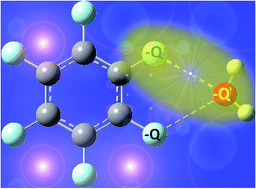
Can an entirely negative fluorine in a molecule, viz. perfluorobenzene, interact attractively with the entirely negative site(s) on another molecule(s)? Like liking like!

Arpita Varadwaja, Pradeep R. Varadwaj*b and Bih-Yaw Jina
aDepartment of Chemistry, National Taiwan University, Taipei, Taiwan 10617
bDepartment of Chemical System Engineering, School of Engineering, The University of Tokyo, 7-3-1, Hongo, Bunkyo-ku, Japan 113-8656. E-mail: pradeep@t.okayama-u.ac.jp; pradeep@tcl.t.u-tokyo.ac.jp

Received 17th December 2015 , Accepted 5th January 2016

First published on 11th January 2016


Abstract

We present in this study the possibility of the formation of attractive intermolecular interactions between various entirely negative sites localized on a variety of atoms in molecules, leading to the formation of the thirteen isolated dimers examined. Each of these dimers is formed upon the attractive engagement of the totally negatively charged, covalently bound fluorine in perfluorobenzene (C6F6) with similarly charged atoms in each of the nine Lewis bases selected, e.g., water (H2O), ammonia (NH3), hydrogen fluoride (HF), formaldehyde (H2CO), fluoromethane (H3CF), fully fluorinated pyridine (C5F5N), pyrimidine (C4F4N2), pyrazine (C4F4N2), and pyridazine ((CF)4N2). The uncorrected binding energies (varying between −0.45 and −2.56 kJ mol−1 with CCSD(T)/6-311G**//M06-2X/6-311++G(d,p)) and intermolecular contact distances (varying between 2.988 and 3.559 Å with M06-2X/6-311++G(d,p)) calculated for these dimers are found to be close to what might be envisaged for any weakly bound dimers, viz., dimers of alkanes and polyhedranes that involve C–H⋯H–C dihydrogen bond contacts with bond dissociation energies in the 0.52–12.38 kJ mol−1 range (Nat. Chem., 2011, 3, 323). The topological charge density results obtained upon the application of quantum theory of atoms in molecules and reduced density gradient noncovalent interaction tools to the static geometries of all the thirteen dimers examined have enabled us to demonstrate that the Oδ−⋯Fδ−, Fδ−⋯Fδ−, and Nδ−⋯Fδ− intermolecular contacts revealed are closed-shell type. The calculated (negative) signs and magnitudes of the electrostatic potentials at various local minima and maxima on the surfaces of the ten monomers examined do not support the above possibilities of attraction between the entirely negative sites, thereby revealing a limitation of the model.

1. Introduction

Understanding the underlying physical chemistry and chemical physics of noncovalent interactions (NCIs) is rapidly expanding in recent years.1 This is not very surprising, because there is a strong interplay between the current state-of-the-art computations and present and past experimental observations;2 the former approach doubtlessly sheds adequate light on elucidating many (unexplained) physicochemical phenomena observed using the latter technique.3 For instance, two decades ago, it was unclear to the scientific community why halogens in molecules could experience long range contacts with versatile Lewis bases in many crystallographically determined structures, even when said bases were completely negatively charged. An answer to this question, as stated by Politzer et al.,2b was provided by Brinck et al. in 1992.2a In this, as well as in subsequent other studies,2 it was demonstrated that the formation of such long-range contacts between two similarly charged halogens, as well as that between a covalently bound halogen and a negative site, might not be unexpected because the halogen atoms in innumerous molecules have positive areas on the outer portions of their electrostatic surfaces.

Nonetheless, NCIs can be classified as hydrogen bonding (attraction of an H atom in group 1 with the negative site),1a tetrel bonding (attraction of the Group 14 elements with the negative site),1c pnictogen bonding (attraction of the Group 15 elements with the negative site),1d chalcogen bonding (attraction of the Group 16 elements with the negative site),1d,e halogen bonding (attraction of the Group 17 elements with the negative site),1b,d,e and van der Waals.43 Dihydrogen bonding,44a dihalogen bonding,44b–d and H–H bonding,37 are also treated as specific types of NCIs. In any respect, interest in these interactions originates not only because they occur in diverse areas of chemistry, biology, material science, and crystal engineering,3–7 but also because they are responsible for the development of smart devices.5b,c They have also proved useful for the design of novel materials for applications in bio- and nanotechnologies.5b,c To provide some examples, the presence of NCIs, among other factors, drives versatile chemical reactions in the solution phase,4a–c underpins protein folding, protein structure and molecular recognition,4d glues the DNA base pairs to result in functional strands like helical architectures,4e transforms compounds such as azopyridine derivatives into liquid crystal,4f–g and produces ordered layered structures through self-assemblies between molecules on substrates.6,7 Because NCIs, especially those formed, for example, between covalently bound halogens and the negative site, play a vital role in manipulating the directional alignment between molecules, they are excellent for crystal packing,3e–f designing drugs for pharmacotherapeutical use,6 building supramolecular architectures4h,7 (e.g., polymeric self-assembled components, and macromolecular entities),5c and developing gel, elastic, conducting, magnetic, and photoresponsive materials.3,5

Thus, owing to the profound importance of NCIs in the many research fields delineated above, we are particularly interested in the fundamental understanding of halogen bonding, also recognized as X-bonding,1b which has many similar fundamental characteristics with hydrogen bonding.1a X-bonds are formed when the halogen derivative in a molecule with a positive region on its electrostatic surface along the outer extension of its covalent bond (called the σhole) engages constructively (attractively) with the negative site present in a Lewis base.1b This feature leads to an understanding that a negatively charged covalently bound halogen derivative can even potentially function as an electrophile (i.e., an acceptor of electron density) for the nucleophile (donor of electron density) upon the formation of an X-bonded interaction.

The aforesaid axially positive outer region on covalently bound halogen in molecules is generally surrounded with a lateral belt of negative electrostatic potential, which has the ability to attract positive sites (electron deficient regions) on other atoms/molecules to form noncovalent/coordination bonding interactions, thereby propagandizing its amphoteric (or anisotropic) nature.45 In any event, an X-bond is structurally exemplified with the –Y⋯X– motif, where Y is the electron rich center on the Lewis base molecule (lone-pairs, and π-electrons, etc.) and X is the halogen derivative, notably the chlorine, bromine, or iodine atom. The N⋯I motif, for instance, ideally exemplifies an X-bond, and is formed when the covalently bound iodine atom in a molecule engages attractively with the electron rich region on the nitrogen atom (on another molecule); the latter contains lone-pair electron densities. This interaction, which is by far the most common in the thyroid hormone,3a,b is also crystallographically observed on numerous occasions, such as the interaction between bis(pyridyl)oxalamides and poly(diiodobutadiyne); in this case, the pyridine groups of the host interact attractively with the iodoalkynes of the guest.8

The binding strengths of the halogen derivatives are recognized to be in this order: Cl < Br < I. This is in line with the corresponding trend observed for the polarizability of the halogen in the series passing from the chlorine through bromine to iodine.2 Fluorine is not included in this trend because it is found not to be positive in innumerous molecules; thus, it is believed that fluorine cannot sustain any X-bonding engagement with a negative site due to its high electronegativity and extremely low polarizability.2b,c,e,9 For example, the fluorine atoms in hydrogen fluoride (HF), and methyl fluoride (H3CF), are completely negative, and they do not form X-bonds. Even so, there are a number of molecular species, viz., FCN, F2, FCCF, and CF3CCF, in which the fluorine in these has boastfully displayed an area of positive electrostatic potential, the so-called fluorine's σhole,10 which resides on the surface of each of these molecules along the outermost extension of its covalent bond.11,12 This positive area, which is deficient in electron density, is then encouragingly competent in forming X-bonding interactions with nucleophiles such as the lone pair regions of the nitrogen and oxygen atoms in ammonia (NH3) and water (H2O), respectively.14a

However, the early quantum chemical results of Brinck et al. have demonstrated that the fluorine atoms in tetrafluoromethane (CF4) and H3CF are such that they are the favorable sites only for the approach of electrophiles.2a A similar argument was also provided for the chlorine atom in chloromethane (H3CCl), meaning that the chlorine in this compound is totally negative, and cannot form X-bonds.2 Recently, Ding et al. have demonstrated that the chlorine in H3CCl can form a halogen bond with OCH2, which is, however, impossible according to the σhole theory because it does not include an area of positive potential along the outermost extension of the C–Cl bond.2h Although the former results (that is, for CF4 and H3CCl) have been cited for over 24 years,2b,c,e,12,13 Varadwaj et al. recently argued using their high level calculations that the above suggestions of Brinck et al.,2a Politzer et al.,2b Murray et al.,2d and Ding et al.2h are incorrect because the fluorine and chlorine atoms in CF4 and H3CCl do inherently have electrophilic regions located along the C–F and C–Cl bond ends, respectively. This justifies the fact that the halogen in each of the two compounds has the capacity to experience attraction when it finds itself in the close proximity to a nucleophile.14 Also, in this context, we would like to point out that it is not strictly necessary to place a negative point charge at some distance from the nucleus of the chlorine atom in H3CCl to demonstrate that it could induce a positive electrostatic potential on the chlorine's surface through polarization.46c

Recently, Johansson and Swart have used quantum chemical calculations to analyze the electron density topological properties of some structurally simple perhalogenated ethanes, X3C–CY3 (X, Y = F, Cl).15 They suggested that when one of the halogens in X3C–CY3 is a chlorine atom, the calculated strength of the halogen–halogen intramolecular interaction can not only be comparable with that of hydrogen bonds, but its nature may also be comparable with unusually strong van der Waals interactions. A similar result was reported by Varadwaj et al.,27f as well by Parra,45c for other systems, in which cases, the lateral portions of the halogen atoms in molecules interacted with each other to form attractive intramolecular interactions. Note that the reliabilities of the halogen–halogen interactions in the aforesaid compounds could not be explained by the Molecular Electrostatic Surface Potential (MESP) model, as the lateral portions of the vicinal halogens in these compounds were entirely negative. This attribution may not be unreasonable because this model does not support attraction between two similarly charged species, as such an arrangement is strongly repulsive according to Coulomb's force law.

Consistent with the above study of Johansson and Swart,15 Kawai et al. only recently made an experimental discovery using scanning tunneling and atomic force microscopy measurement techniques, in which they were able to observe a network of C−Fδ−δ−F–C intermolecular interactions in an ordered two dimensional supramolecular layer formed of fully fluorinated (bis(2,3,5,6-tetra-fluoro-4-(2,3,4,5,6-penta-fluorophenylethynyl)phenyl)-ethyne) (BPEPE-F18) molecules on an Ag(111) surface.7 According to their report, while the fluorine's axial (σhole) region along the outermost extension of the C–F bond axis in said compound is fully described by a negative electrostatic potential, it could preferentially encourage the formation of a directional bonding interaction with the same atom in its binding partner during supramolecular self-assembly. They also reported that the dispersion term to be the main driving force, which enabled the monomers to be arranged in a well-defined manner so as to form an ordered supermolecular complex. They interpreted this to be a major factor that could explain the directional behavior of Fδ−δ−F interactions. Galvanized by this, we recently attempted to investigate whether the covalently bound fluorine in perfluorobenzene (C6F6) can be set to govern similar Fδ−δ−F attractive interactions when it finds itself in the electrostatic field of the same atom in another C6F6 molecule.16 Our Density Functional Theory (DFT) calculated results were indeed along those lines, and the results indicated that the directional bonding between the fluorine atoms was one of the key patterns that organized the monomers in forming ordered conformations of the dimers, trimers, and tetramers of C6F6. Moreover, to our estimation, formation of this type of bonding arrangement between the fluorine atoms in the supramolecular complex observed by Kawai et al.7 is not surprising, as is also observed in several other crystals in the solid state even without the presence of any slab-like substrates such as Ag(111). Nonetheless, the MESP results of the abovementioned study were inadequate to explain the origin of attraction between the two entirely negative fluorine atoms that allow the formation of the C6F6 multimers. This could, however, be described by the decomposed energy terms obtained from the application of the Localized Molecular Orbitals Energy Decomposition Analysis (LMO-EDA) model. In fact, such energy terms could enable us to demonstrate that the attraction between the fluorine atoms are the consequences of polarization and dispersive forces, in agreement with the Hellmann–Feynman theorem.46c It is worth stressing that intermolecular clusters similar to those described above, which are formed between fully/partially fluorinated aromatic or non-aromatic compounds, are not very rare in the solid state.48 A previous theoretical study on dimers of this type involving Fδ−δ−F intermolecular interactions can be found elsewhere.49

In any case, an utmost interest of this study is to explore whether or not the totally negatively charged fluorine atoms in fully (hexa)fluorinated benzene, C6F6, have any specific and adequate tendency to manifest attractive interactions with Lewis bases that have negative sites with relatively large electrostatic potentials. If an answer to this question is yes, then it might indeed be interesting to see: (i) what is the intermolecular distance range between the negative sites in the resulting heteromolecular dimers? (ii) What is the approximate binding energy range? (iii) What are the forces supposedly responsible for their effective stabilization? And, can the binding energy range to obtained comparable with any previously reported weakly bound dimers? To address these fundamental questions, we have selected nine Lewis bases, including water (H2O), ammonia (NH3), hydrogen fluoride (HF), formaldehyde (H2CO), fluoromethane (H3CF), fully fluorinated pyridine (C5F5N), pyrimidine (C4F4N2), pyrazine (C4F4N2), and pyridazine ((CF)4N2) as binding partners (i.e., as Lewis bases) for C6F6. We have performed first principles calculations with the second-order Møller–Plesset theory MP2(full),17 as well as with the global density functional M06-2X,18 both with an affordable 6-311++G(d,p) basis set, to estimate the equilibrium structural/energetic properties of the dimers formed by the C6F6 molecule with each of the nine Lewis bases. We have employed the MESP model to quantitatively estimate the strengths of the most positive and negative local regions on the 0.001 a.u. isodensity mapped electrostatic surfaces of the monomers. The aim of this attempt was to see whether the signs and magnitudes of the electrostatic potential obtained for the active sites can explain the origin of the primary driving forces that compel the similarly charged atoms, each from a given monomer, to attract each other upon the formation of each of the examined dimers. We have employed the LMO-EDA method to provide insight into the various attractive and repulsive energetic components causing the binding energies of the dimers to be negative. In addition, we have applied topological Quantum Theory of Atoms in Molecules (QTAIM) and Reduced Density Gradient (RDG) NCI methodologies to analyze the nature of the most important properties of the charge density at the bond critical point regions in various atomic basin pairs, and to formalize, with meaningful conclusions, the coordinating nature of the various interatomic interactions evolved.

2. Computational details

As already mentioned in the previous section, the MP2(full) and M06-2X methods, together with the valence triple-ζ Gaussian quality 6-311++G(d,p) basis set, were employed to obtain the equilibrium geometries of all the monomers and dimers, where (full) denotes the inclusion of core electrons in the correlation treatment. The geometries of these compounds belong to different point group symmetries, including C1, Cs, C∝υ, C2, or C. The Hessian second derivative calculations were performed with the same levels of theory to glean insight into the natures of the monomer/dimer geometries (i.e., to know whether or not they are stationary points). For most cases, the optimized geometries obtained were not found to be the minima.

Due to limited computational resources, first-principles calculations to obtain the geometries and vibrational frequencies of the dimers of C6F6 with the nine bases were not affordable with the Coupled Cluster theory that involves Single, Double, and Triple excitations, CCSD(T).19 Instead, we performed CCSD(T)/6-311G** single point calculations to obtain the total electronic energy for each of the monomers/dimers on their respective M06-2X/6-311++G(d,p) geometries. We did so because we intended to compare the CCSD(T) binding energies for the dimers with the corresponding ones obtained with MP2(full) and M06-2X. All the calculations were carried out using GAUSSIAN 09.20 The Gaussview 05 (ref. 21) and VMD24 packages were used for molecule visualization, structure, and vibrational normal mode analyses.

The electron delocalization indices,25a–e as well as the important properties of the charge density (viz. the charge density, its Laplacian, and the second eigenvalue of its Hessian matrix, all the intermolecular bond critical points)25e–i were evaluated using AIMAll22 and MultiWfn23 computer codes, both within the QTAIM framework of Bader.25j The RGD NCI indices were obtained within the recently proposed NCI Plotting tool of Johnson et al.26 The 0.001 a.u. (electrons per bohr3) mapped isodensity mapped local most surface maxima and minima values (Vs,max and Vs,min, respectively) of electrostatic potential were obtained on the surfaces of all the monomers via MultiWfn.23 (We used this surface because it has been demonstrated on numerous occasions that it encloses lone pairs, π electrons, and strained bonds, of molecules, as it encompasses about 98% of the total electronic charge.46a–f) The wavefunctions obtained using M06-2X/6-311++G(d,p) geometries of the monomers and dimers were supplied for the evaluations of the QTAIM and RDG properties.

3. Results and discussion

3.1 Geometries

The ball and stick models for the optimized geometries of the thirteen heteromolecular dimers are illustrated in Fig. 1, and the F⋯F, F⋯N, and F⋯O intermolecular distances are listed in Table 1. As can be immediately seen from the data, the intermolecular distances are all between 2.988 and 3.559 Å with M06-2X and, with MP2(full), the same distances are between 2.889 and 3.215 Å. This means that except for H2O⋯F–C6F5 (Fig. 1a) and HF⋯F–C6F5 (Fig. 1e), the intermolecular distances obtained with the latter method are shorter compared to those obtained with the former method (see Diff3 in Table 1 for difference values), an attribute which has previously observed for MP2(full).32c,d For instance, Varadwaj et al. have recently used several computational methods to report a range of values for the N⋯F intermolecular distance in H3N⋯F−CF3, which was formed between the positive end of the fluorine in CF4 and the negative nitrogen end of the NH3 molecule. The MP2(full) and CCSD(T)-F12 methods predicted N⋯F distances for that dimer of 3.34 and 3.49 Å, respectively, which are indeed smaller compared to the range of values predicted between 3.34 and 3.87 Å for the same distance with several DFT and DFT-D functionals.14a
image file: c5ra27039a-f1.tif
Fig. 1 M06-2X/6-311++G(d,p) dimer geometries of hexafluorobenzene (C6F6) with (a and b) water (H2O), (c and d) fluoromethane (H3CF), (e and f) hydrogen fluoride (HF), (g) ammonia (NH3), (h and i) formaldehyde (H2C[double bond, length as m-dash]O), (j) pentafluoropyridine (C5F5N), (k) tetrafluoropyrimidine (C4F4N2), (l) tetrafluropyrazine (C4F4N2), and (m) tetrafluoropyridazine ((CF)4N2). Negative values of QTAIM charges (in e) on selected atoms are displayed for each dimer. The M06-2X [MP2(full)] calculated ∠D⋯F–C (D = O, F, or N) angles (in °) are also displayed for all cases. The O, N, F, C, and H atoms are painted in red, deep-blue, aqua, gray, and gray-white, respectively.
Table 1 Selected structural and energetic properties of the thirteen dimers of C6F6 investigateda
Dimerb vdW sumc r(M06-2X) Diff1d r(MP2(full)) Diff2e Diff3f ΔE(M06-2X) ΔE(MP2(full)) Ratiog ΔE[CCSD(T)]h
a Properties include the sum of the van der Waals radii (vdW sum/Å) of the atoms bonded in D⋯F (D = O, F, or N), the intermolecular bond distances (r/Å), the differential bond distances (Diff1, Diff2, and Diff3/Å), and the binding energies (ΔE/kJ mol−1).b See Fig. 1 for configurational details.c van der Waals radii (vdW sum) for O, N, and F are ca. 1.50, 1.66, and 1.46 Å, respectively.38d Refers to the differential between the M06-2X intermolecular distance r(M06-2X) and the sum of the van der Waals (vdW sum) radii of the noncovalently bonded atoms.e Refers to the differential between the MP2(full) intermolecular distance r(MP2(full)) and the sum of the van der Waals (vdW sum) radii of the noncovalently bonded atoms (in Å).f Refers to the differential, r(MP2(full)) − r(M06-2X), between the M06-2X and MP2(full) intermolecular distances.g Refers to the ratio, ΔE[MP2(full)]/ΔE[M06-2X], between the MP2(full) and M06-2X binding energies.h Refers to the CCSD(T)/6-311G**//M06-2X/6-311++G(d,p) calculation.
H2O⋯F–C6F5 (a) 2.96 2.988 0.03 3.090 0.13 0.102 −2.05 −2.77 1.4 −2.56
H2O⋯F–C6F5 (b) 2.96 3.027 0.07 2.952 −0.01 −0.075 −0.80 −2.76 3.4 −0.44
H3CF⋯F–C6F5 (c) 2.92 3.020 0.10 3.013 0.09 −0.007 −1.30 −2.86 2.2 −2.35
H3CF⋯F–C6F5 (d) 2.92 3.060 0.14 2.889 −0.03 −0.171 −0.75 −3.13 4.2 −0.85
HF⋯F–C6F5 (e) 2.92 3.006 0.08 3.009 0.09 0.004 −1.26 −1.81 1.4 −1.65
HF⋯F–C6F5 (f) 2.92 3.088 0.17 2.950 0.03 −0.138 −0.57 −1.37 2.4 −0.45
H3N⋯F–C6F5 (g) 3.12 3.330 0.21 3.187 0.07 −0.143 −0.35 −2.55 7.2 −0.66
H2CO⋯F–C6F5 (h) 2.96 3.275 0.31 3.201 0.24 −0.074 −0.78 −2.69 3.4 −1.85
H2CO⋯F–C6F5 (i) 2.96 3.237 0.28 3.017 0.06 −0.221 −0.42 −2.49 5.9 −0.68
F5C5N⋯F–C6F5 (j) 3.12 3.303 0.18 3.037 −0.08 −0.267 −1.83 −6.62 3.6 −2.06
F4C4N2⋯F–C6F5 (k) 3.12 3.319 0.20 3.046 −0.07 −0.273 −1.63 −6.27 3.9 −1.93
F4C4N2⋯F–C6F5 (l) 3.12 3.295 0.17 3.048 −0.07 −0.247 −1.88 −6.49 3.4 −2.10
(CF)4N2⋯F–C6F5 (m) 3.12 3.559 0.44 3.215 0.09 −0.344 −2.32 −7.88 3.4 −2.18


The fluorine in the dimers formed between C6F6 and the Lewis bases illustrated in Fig. 1 presents two types of noncovalent interaction topology for the approach of nucleophiles. In the geometries (b), (d), (f), (g), (i), (j), (k), and (l), the fluorine in C6F6 displays a high tendency to form directional bonding interactions with the nucleophiles. In the literature, this kind of intermolecular contact is what is referred to as type-II interaction topology,27 where ∠D⋯F–C (D = F, or N, or O) is close to 180°. In the geometries (a), (c), (e), (h), and (m), the fluorine in C6F6, upon attractive interaction with the negative site in the partner molecule, prefers to display the type-I interaction topology. This topology is largely observed between covalently bound halogen atoms within the domain of single molecules, or between two molecules, or between covalently bound halogens and the main group atoms, in the solid state.27 In the present case, and as expected, ∠D⋯F–C (D = F, or N, or O) varies between 122 and 139°. More geometrical details on the aforementioned topologies can be found elsewhere.16,27f

The F⋯F, or F⋯N, or F⋯O intermolecular distance noted above is longer than the sum of the van der Waals radii of the respective atoms in most cases (see Diff1 and Diff2 in Table 1 for differential values). This indicates that the IUPAC recommended feature, ‘In a typical R–X⋯Y halogen-bonded dimer, the interatomic distance between X and the appropriate nucleophilic atom of Y tends to be less than the sum of the van der Waals radii’, is not strictly fulfilled for all cases, where X = halogen and R = the remaining part of the molecule. This oddity is not very rare.14,16,27f,28

3.2 Atomic charges and molecular electrostatic surface potentials

Fig. 1 lists the integrated QTAIM charges conferred on some selected atomic basins, especially on those that participate to drive the two monomers to form the dimers. Before discussing the nature of the charge rearrangements that are involved in forming the dimers, we note that the signs and magnitudes of the atomic charges obtained with this method do reasonably explain the nature of binding between the atoms that constitute the monomers. For example, and as expected, this method assigns positive and negative charges of 0.568 and −1.136e to each of the two equivalent H atoms and the O atom in isolated H2O, respectively, of 0.342 and −1.027e to each of the three equivalent H atoms and the N atom in isolated NH3, respectively, and of 0.715 and −0.715e to the H and F atoms in isolated HF, respectively. Similarly, it assigns a positive equivalent charge of 0.614e to the C atom and a negative equivalent charge of −0.614e to the F atom in isolated C6F6. Evidently, the atomic charge distributions faithfully reproduce what might be expected when one deals specifically with the charge neutrality feature of each of the monomers, as well as with the bonding topologies between the atoms involved. Nevertheless, compared to the signs and magnitudes of the atomic charges in the monomers noted just above, the charges on the interacting atoms sharing intermolecular interaction(s) in the dimer geometries are very marginally perturbed (cf. Fig. 1); the largest extent of this is that (value < 0.007e) for the fluorine atom in C6F6 for HF⋯F–C6F5. Conspicuously, the very marginal changes in the magnitudes of the atomic charge in the monomers upon the formation of the dimers of C6F6 with the nine bases might not necessitate any significant charge transfers; thus, this may not be treated as a factor indispensable for the formation of such dimers.

Moreover, it is apparent from Fig. 1 that the two electronegative atoms bringing the two monomers together in each of the dimer configurations are negatively charged; one has a magnitude of charge that is somewhat larger than that of the other, as in H2O−0.612−1.131F–C6F5 (Fig. 1a), H2CO−0.608−1.094F–C6F5 (Fig. 1i), and C4F4N2−0.613−1.175F–C6F5 (Fig. 1k), for examples. This suggests that the atomic charges that are similar in sign can even attract each other, thence displaying the possibility of like liking like. A similar phrase, ‘like attracting like,’ was invoked some time ago to describe the attraction that arose between covalently bonded halogen derivatives, as well as that between the covalently bound main group atoms (other than the halogen) in molecules, leading to the formation of dimers.31 In each of these latter cases, which are not similar to ours, the region of positive electrostatic potential (σhole) on the outermost extension of a covalently bound atom in a molecule was interacting with the region of negative electrostatic potential on the same/different atom in another molecule, viz., crystalline ClCl⋯ClCl29 and ClH2P⋯PH2Cl.30 According to Politzer et al.,2j in terms of global atomic charges, an interaction of the above type occurs between two similarly charged species would be repulsive, because it would be “like attracting like”. Interestingly, however, the various monomers involved in the formation of the dimers examined in this study do not contain any positive regions of electrostatic potential on their highly electronegative atoms. However, they were rather cooperative, and were capable of forming the weakly bound Oδ−⋯Fδ−, Fδ−⋯Fδ−, and Nδ−⋯Fδ− contact pairs. For instance, the M06-2X/6-311++G(d,p) computed local minima of electrostatic potential, Vs,min, on the surfaces of the O, O, F and F atoms in H2O, H2CO, H3CF, and C6F6 were calculated to be −38.3, −31.8, −26.2, and −6.5 kcal mol−1, respectively, while the local maxima of electrostatic potential, Vs,max, on the surfaces of the F, F, and F atoms in HF, H3CF, and C6F6 were calculated to be −23.6, −25.8, and −4.8 kcal mol−1, respectively (cf. Table 2 for details about other species). Although the aforestated specific axial and equatorial regions on the electrostatic surface of fluorine in isolated C6F6 are purely negative, this molecule has showed its aptitude to favorably interact attractively with the negative sites in the other monomers to form the dimers illustrated in Fig. 1. This result is similar to that which can be anticipated from the atomic charge model descriptions provided above. As a matter of fact, these results do not support a previous assertion, halogen bonding can readily be understood as the attractive interaction between the positive outer region on the halogen and the negative site,2g nor are they in line with the suggestion that the negative electrostatic potential associated with a σhole precludes the possibility of halogen bonding – unless the electric field of the negative site is strong enough to induce a positive region on the halogen.2b,11 However, to support this latter assertion, Clark et al. recently examined the H2CO⋯Cl–CH3 dimer,47a and they have demonstrated that a charge of −0.2762 (ref. 2i) situated 3 Å from the chlorine nucleus along the extension of the C–Cl bond in H3C–Cl does indeed result in a positive potential on the chlorine (chlorine's σhole), which was absent on it in H3C–Cl because the potential on the chlorine prior to interaction does not reflect the polarization caused by the electric field of the oxygen in H2CO.46c The suggestion is in disagreement with our recent finding on the same system,14b as well as with the related sharp-sighted views provided by others.47b

Table 2 0.001 a.u. (electrons per bohr3) isodensity mapped electrostatic potentials (kcal mol−1) at some selected minima and maxima localized on the molecular surfaces of all the ten monomers investigated, obtained with M06-2X in conjunction with the 6-311++G(d,p) basis seta
Monomers Atom type Vs,maxb Vs,minc
a Square brackets represent to the [MP2(full)/6-311++G(d,p)] values.b Vs,max is the local maximum of electrostatic potential.c Vs,min is the local minimum of electrostatic potential.
H2O O lone-pair region −38.3 [−37.4]
H3N N lone-pair region −41.4 [−40.9]
HF On F of H–F −23.6 [−23.5] −24.4 [−22.3]
H2CO On O of C–O −31.8 [−29.9]
H3CF On F of C–F −25.8 [−25.0] −26.2 [−25.6]
C6F6 On F of C–F −4.8 [−4.2] −6.5 [−6.4]
Tetrafluoropyridine (C5F5N) N lone-pair region −20.2 [−20.7]
Tetrafluoropyrimidine (C4F4N2) N lone-pair region −19.2 [−19.2]
Tetrafluoropyrazine (C4F4N2) N lone-pair region −16.0 [−17.0]
Tetrafluoropyridazine ((CF)4N2) N lone-pair region −26.7 [−27.7]


Politzer and coworkers have advocated on several occasions that “trying to assign a point positive or negative charge to an atom in a molecule (i.e., a monopole) is a fallacy, …., there is no rigorous basis for doing so”,31 and have suggested the MESP model to be unique in explaining why the negatively charged covalently bonded halogen derivative (with a positive region on it) can attract the negative site.2,3,10,11,13 The suggestion cannot, however, be arguably applicable to the presently studied systems. This is obviously due to the fact that there are no electrophiles on the monomers along the C–F bond extensions in C6F6, and that the studied dimers are formed due to the attraction caused by the similarly negatively charged species. Clearly, both the atom centered QTAIM charge and MESP models present an identical physical picture on the overall repulsive nature of the interaction between the two negative sites, thus propounding the limitation of the latter model. Note further that the chemical systems under investigation are not simply the ones that display attraction between the entirely negative sites, there are several dimers of other types whereby similar attractive interactions between the negative sites can also be inferred. (Investigations on such dimers are underway, and we report them elsewhere.) In any respect, it has also been said that “like attracting like” cannot happen with tetravalent Group IV atoms, which do have entirely positive surface potentials.31 However, it might be interesting to see if indeed exceptions to this would appear in future investigations.

3.3 Binding energies and stability preference

The binding energy ΔE for the dimer A⋯B is calculated via eqn (1) by subtracting the total the sum of the total electronic energies [E(A) + E(B)] of the two isolated monomers from the total electronic energy E(A⋯B) of the dimer.
 
ΔE = E(A⋯B) − [E(A) + E(B)] (1)

The numerical estimates of the binding energies for all the dimers obtained with MP2(full) and M06-2X are listed in Table 1. As can be instantly seen from the data, ΔE varies between −0.35 and −2.32 kJ mol−1 with M06-2X and between −1.37 and −7.88 kJ mol−1 with MP2(full); both demonstrate that the most stable dimer is formed between C6F6 and (CF)4N2, Fig. 1m, wherein the two fluorine atoms in the former species are probably bonded with both the nitrogen atoms of the latter species. Moreover, the ratio, ΔE[MP2(full)]/ΔE[M06-2X], calculated between the binding energies of the two correlated methods for each dimer is too large; the values are between 1.4 and 7.0 (cf. Table 1), with the smallest and the largest values corresponding to the dimers of C6F6 with NH3 and with H2O and HF, respectively. The large ratios between the two computational methods give us the impression that dispersion is probably one of the major driving forces responsible for the stabilization of the dimers, as MP2(full), compared to other DFT functionals, accounts for it to some reasonable extent. It must be kept in mind that while MP2 is robust, there are many other chemical systems, organosilicon aromatic compounds and those involving stacked π-interactions, for examples, wherein MP2 dramatically fails to produce the expected results.42a

The MP2(full) trend in the ΔE values for the thirteen dimers noticeable from the data in Table 1 is in this order: (m) > (j) > (l) > (k) > (d) > (c) > (a) > (b) > (h) > (g) > (i) > (e) > (f). This is in sharp disagreement with that found with M06-2X, i.e., (m) > (a) > (l) > (j) > (k) > (c) > (e) > (b) > (h) > (d) > (f) > (i) > (g). The apparent discrepancy in the trends in the binding energies obtained with MP2(full) and DFT(M06-2X) might not be very atypical, since the electron–electron correlation energy (London dispersion energy) accounted for by the former method is known to be generally too high; this may assuredly be one of the reasons why the MP2(full) binding energies listed in Table 1 are relatively large, and why there is an alternation in the stability preference.32,42 Thus, considering that the abovementioned mismatch between the trends in the ΔE values could be due to the MP2(full) method, we performed high level CCSD(T)/6-311G** single points on the M06-2X/6-311++G(d,p) optimized geometries for both the monomers and dimers. The ΔE values estimated for all the dimers are listed in Table 1; an inspection of these data could readily enable us to comment that the magnitudes of the CCSD(T) binding energies are not only very close to the corresponding ones obtained with the M06-2X functional, but are indeed also very small compared to those of MP2(full). Furthermore, the CCSD(T) trend in the ΔE values for the dimers is in the order: (a) > (c) > (m) > (l) > (j) > (k) > (h) > (e) > (d) > (i) > (g) > (f) ≈ (b), which, again, is not similar to either of the aforementioned trends noted with the other two methods. Although the three trends found for the binding energy with the three different computational approaches are dissimilar to each other, this did not prevent the monomers from forming the weakly bound dimers examined.

Nevertheless, the interaction strengths for the dimers of C6F6 with the nine Lewis bases are computed to be very weak. Their energies may be comparable with those reported previously for numerous other dimers formed of the carbon bound halogens, notably of the chlorine, bromine, and iodine atoms with negative sites. For instance, the previously reported binding energy was ca. −9.24 kJ mol−1 for C6H5Br⋯NH3 with MP2/aug-cc-PVTZ33 and ca. −12.30 kJ mol−1 for C6H5I⋯NH3 with MP2(full)/Lanl2DZ*.34 For both these latter two dimers, the positive σhole on the halogen atom in the halobenzene monomer was interacting with the negative nitrogen on the Lewis base. Varadwaj et al. recently reported comparable binding energies of −1.92, −2.95, −2.36, −2.38, and −3.96 kJ mol−1 for the fluorine bonded CF4 dimers of NH3, HCN, HF, H2O, and H2C[double bond, length as m-dash]O, respectively, in which cases, the positive σhole on the fluorine atom in CF4 was interacting with the negatively charged N, N, F, O and O atoms in NH3, HCN, HF, H2O, and H2CO, respectively.14a Other studies reporting comparable magnitudes of binding energy for weakly bound dimers are available elsewhere.25g,36

Now, it would be interesting to scrutinize the primary forces that are responsible for bringing the entirely negatively charged atoms of the two monomers into equilibrium dimer configurations. We have done so by analyzing the decomposed interaction energy terms for a few randomly selected dimers, obtained using the LMO-EDA model on the M06-2X/6-311++G(d,p) energy-minimized geometries of the dimers at the same level. According to this model, the total interaction energy of a dimer is the sum of the energies arising from contributions due to electrostatics (ΔEes), exchange (ΔEex), repulsion (ΔErep), polarization (ΔEpol), and dispersion (ΔEdis). The theory has been coded in GAMESS,50 and the results obtained for the respective components are ca. +1.13, +1.34, +4.90, −4.64, and −5.52 kJ mol−1 for the configuration in Fig. 1a (H2O⋯F–C6F5), ca. +1.51, +1.42, +1.76, −3.26, and −3.43 kJ mol−1 for the configuration in Fig. 1c (H3CF⋯F–C6F5), ca. +1.30, +0.63, +0.46, −1.39, and −1.30 kJ mol−1 for the configuration in Fig. 1d (H3CF⋯F–C6F5), and ca. +1.51, +1.46, +1.78, −3.18, and −3.51 kJ mol−1 for the configuration in Fig. 1e (HF⋯F–C6F5) (−1.94 kJ mol−1). Clearly, the total interaction energies for these four dimers each is ca. −2.79, −2.01, −0.30, and −1.94 kJ mol−1, respectively, which are in reasonable agreement with their respective M06-2X SCF binding energies of −2.05, −1.30, −0.75, and −1.26 kJ mol−1, respectively (cf. Table 1). These impressive results sonorously allow us to comprehend that polarization and dispersion are the main attractive sources contributing totally to the overall stability of the dimers, even though the Coulomb's law of electrostatics does not recognize the existence of such a stability between the similarly charged species.

The Basis Set Superposition Error (BSSE) energies for all the dimers were estimated on their M06-2X and MP2(full) geometries with the counterpoise procedure of Boys and Bernardi.52 Our main interest in estimating the BSSEs was to assess their impact on the binding energies of the dimers. The results obtained are listed in Table 3. One might note from the data that the BSSE is positive for all the dimers; its values with M06-2X are distinctly small and are in comparable magnitudes with the uncorrected binding energies of the corresponding dimers (cf. Table 1 for ΔE values). By contrast, MP2(full) produced very large values of the BSSEs irrespective of the nature of the dimers examined. For instance, MP2(full) predicted a very large value of 8.46 kJ mol−1 for the most stable dimer (cf. Fig. 1m), which is so large that it can supersede the binding energy of said dimer (−7.88 kJ mol−1), reflecting that the correction for BSSE can be as large as 107.4%. Note that this unusually large BBSE energy found with the MP2(full) method (and/or with other wavefunction based methods) is not uncommon.53 To make the statement more precise, we quote Barnes et al., who have reported a BSSE of 28 kcal mol−1 for the [Cr(OC)6] system, whose binding energy is about 110 kcal mol−1.53a In a recent study, it was showed that the counterpoise corrected binding energy with the aug-cc-pVTZ basis set can be in good agreement with the uncorrected binding energy estimated with a relatively smaller basis set, wherein the difference in energy between the two approaches was only 4%.53b This observation was in line with a recent study entitled ‘Can the counterpoise correction for basis set superposition effect be justified?’,53c which recommended that the counterpoise correction method should be applied with caution, especially for smaller basis sets, consistent with the suggestions of other authors.53d–f,14b,16

Table 3 Basis Set Superposition Error (BSSE) energies (kJ mol−1) for the thirteen dimers, estimated with the M06-2X and MP2(full) methods, both in conjunction with the 6-311++G(d,p) basis set
Dimer Label (Fig. 1) No. of intermolecular contacts BSSE (M06-2X) BSSE (MP2(full))
H2O⋯F–C6F5 (a) 2 2.00 4.26
H2O⋯F–C6F5 (b) 1 1.86 4.70
H3CF⋯F–C6F5 (c) 2 1.56 4.61
H3CF⋯F–C6F5 (d) 1 0.96 3.46
HF⋯F–C6F5 (e) 2 1.40 3.65
HF⋯F–C6F5 (f) 1 0.66 2.26
H3N⋯F–C6F5 (g) 1 1.52 4.19
H2CO⋯F–C6F5 (h) 2 1.14 3.71
H2CO⋯F–C6F5 (i) 1 0.76 3.05
F5C5N⋯F–C6F5 (j) 1 2.00 6.79
F4C4N2⋯F–C6F5 (k) 1 1.80 6.39
F4C4N2⋯F–C6F5 (l) 1 1.90 6.50
(CF)4N2⋯F–C6F5 (m) 2 2.53 8.46


Once again, it is noticeable from the data in Table 3 that both M06-2X and MP2(full) predict large values for the BSSE for the most stable conformer of each dimer that comprises two intermolecular contacts, compared to the less stable counterpart that involves only a single intermolecular contact. This result clearly indicates that there is a strong dependence of the BSSE on the relative orientation of the monomers in the dimers, although the original idea was that the basis set must be biased toward the dimer because each monomer in the dimer can “use” the basis functions on the other monomer, which it cannot in a simple monomer calculation.52,53c Apparently, an incorporation of the correction for the BSSE values in Table 3 would transform the negative of the dimers in Table 1 to positive; that is, it would cause the interaction between the monomers to become endothermic. An unequivocal yet analogous result was recently reported by Mani and Arunan;35 in that study, for instance, the authors have reported positive BSSE corrected binding energies in the 2.6 to 15.9, 3.6 to 16.8, and 2.8 to 16.7 kJ mol−1 ranges for the dimers of CH3F with several Lewis bases with MP2/6-311++G(3df,2p), MP2/Aug-cc-pVTZ, and CCSD(T)/6-311++G(3df,2p), respectively, and their reported energies were in the 2.4 to 9.0, 2.9 to 9.7, and 2.2 to 9.7 kJ mol−1 ranges for the dimers of CH3OH with several similar Lewis bases with the corresponding computational methods, respectively.35 Similarly, helium dimer is a classic example for which even extended basis sets produce larger BSSE values than the interaction energy itself,53g consistent with other findings.53e–f

3.4 QTAIM, RDG and delocalization index analyses

Before examining the topological details of the charge density, it is probably crucial to raise the question: does it make sense that the highly negatively charged atoms in each of the nine monomers that host areas of entirely negative electrostatic potential interact attractively with similar areas of negative electrostatic potential on the fluorine in C6F6 to form the thirteen dimers examined? An answer to the question according to the MESP model is simply ‘No’, as this model does not support attraction that can happen between the negative sites. Moreover, let us recall the criterion proposed some years ago for identifying H⋯H interactions between two identical H atoms in molecules or in dimers, for example, biphenyl.37 According to this,37 the H⋯H interaction is attractive, and is formed when both the H atoms participating with each other are either electrically neutral or carry small charges of similar sign. An attribute similar to the above is indeed evident from Fig. 1, in which both the atoms in O⋯F, or in N⋯F, or in F⋯F bear QTAIM charges of similar polarity. Thus, in line with the criterion in (ref. 37), the interaction between the two atoms in each of the above pairs might be treated as noncovalent.

Other than the characteristics outlined just above, we have performed QTAIM and RDG analyses to briefly elucidate the interaction topologies of the charge density between the interacting atoms in each dimer. The theoretical details of these two approaches have been discussed several times previously;25,26 we are therefore not repeating them here. The results obtained through applications of these two approaches on the DFT/M06-2X optimized geometries of the dimers are illustrated in Fig. 2, with the QTAIM molecular graph for each system on the left and the corresponding RDG NCI isosurface critical point graph on the right. As can be clearly seen, the former graphs each illustrate the desired bond paths and (3, −1) bond critical points (bcps) between the covalently bonded atoms, as well as those between the noncovalently bonded atoms. These latter results are in excellent agreement with the RDG, in which the critical bonding region between two atoms in a given noncovalently bonded pair, such as O⋯F, N⋯F, or F⋯F, is favorably described by an approximate disk-shaped circular isosurface in green. For instance, there are two such isosurface critical points between the O and F atoms in the geometries shown in Fig. 2a and h (H2O⋯FC6F5 and H2CO⋯FC6F5, respectively), and that between the two interacting F atoms in the geometry shown in Fig. 2e (HF⋯FC6F5). Moreover, for the other dimers (viz. b, d, f, g, and i–l of Fig. 2), the intermolecular region is described by a singular isosurface critical point, all reminiscent of closed-shell bonding interactions.25,26 The presence (and strength) of these interactions between the negatively charged atoms in the dimer geometries can also be graphically realized by inspecting the RGD vs. Sign(λ2) × ρ plots provided in the supplementary information (cf. Figs S1–S3). In these plots, one might prominently see that in the region where the second eigenvalue of the Hessian of the charge density λ2 is negative (λ2 < 0), a spike appears, which is representative of bonding interaction. Also, where λ2 is positive (λ2 > 0) another spike(s) appears, which is representative of non-bonding and/or repulsive interactions (e.g., steric clashes). For both the regions mentioned above, the charge density ρ determines the interaction strength.26a (Table 4 lists the λ2 values revealed for all types of noncovalently bonded interactions, which, as indicated above, are small and negative.)


image file: c5ra27039a-f2.tif
Fig. 2 QTAIM based molecular graphs for the dimers of hexafluorobenzene (C6F6) with (a and b) water (H2O), (c and d) fluoromethane (H3CF), (e and f) hydrogen fluoride (HF), (g) ammonia (NH3), (h and i) formaldehyde (H2C[double bond, length as m-dash]O), (j) pentafluoropyridine (C5F5N), (k) tetrafluropyrimidine (C4F4N2), (l) tetrafluropyrazine (C4F4N2), and (m) tetrafluoropyridazine ((CF)4N2). Each dot at the center of the six-membered fluoro-substituted benzene ring represents the (3, +1) ring critical point (rcp), and that between each bonded pair of two atomic basins represents to the (3, −1) bond critical point. Displayed are also the RDG = 0.6 a.u. isosurface critical point plots for the corresponding dimers (see the ball and stick models with the green circular volumes between the noncovalently bonded atoms). The red RDG isosurface at the center of each 6-membered delocalized ring is a consequence of repulsion (characterized by λ2 > 0), whereas the green ones between the molecules are a consequence of attraction (characterized by λ2 < 0). The O, N, F, C, and H atoms are painted in red (as in a), deep-blue (as in g), light-pink (as in a), light-blue (as in a), and gray-white (as in a), respectively.
Table 4 The intermolecular (3, −1) bond critical point properties of the charge density (in a.u.) for the thirteen dimers formed of the C6F6 monomer with the negative site localized on each of the nine Lewis bases, obtained through QTAIM analysis with M06-2X/6-311++G(d,p). Included are also the delocalization indices for the weakly bonded interactions involveda
Dimerb ρb λ2 2ρb δ
a The properties include the charge density (ρb), the second eigenvalue of the Hessian of charge density (λ2), the Laplacian of the charge density (∇2ρb), and the delocalization index (δ).b See Fig. 2 for molecular graphs and Fig. 1 for configurational details. For the geometries (a), (c), (f), (h), and (m) of Fig. 1, which involve two equivalent noncovalently bonded interactions, mean values are listed.
H2O⋯F–C6F5 (a) 0.0060 −0.0049 0.0271 0.0306
H2O⋯F–C6F5 (b) 0.0048 −0.0037 0.0239 0.0269
H3CF⋯F–C6F5 (c) 0.0042 −0.0038 0.0234 0.0189
H3CF⋯F–C6F5 (d) 0.0030 −0.0025 0.0186 0.0159
HF⋯F–C6F5 (e) 0.0042 −0.0038 0.0239 0.0194
HF⋯F–C6F5 (f) 0.0027 −0.0022 0.0173 0.0146
H3N⋯F–C6F5 (g) 0.0037 −0.0028 0.0162 0.0261
H2CO⋯F–C6F5 (h) 0.0028 −0.0024 0.0149 0.0147
H2CO⋯F–C6F5 (i) 0.0025 −0.0018 0.0141 0.0149
F5C5N⋯F–C6F5 (j) 0.0032 −0.0024 0.0149 0.0201
F4C4N2⋯F–C6F5 (k) 0.0019 −0.0014 0.0095 0.0116
F4C4N2⋯F–C6F5 (l) 0.0031 −0.0023 0.0145 0.0194
(CF)4N2⋯F–C6F5 (m) 0.0033 −0.0025 0.0152 0.0204


The O⋯F, N⋯F, and F⋯F bcps in the dimers of C6F6 with the Lewis bases are illustrated in Fig. 2. The calculated charge densities ρb at such bcps lie between 0.0019 and 0.0060 a.u. (cf. Table 4). These values are probably comparable with the corresponding reported values of 0.0038 to 0.0325 a.u. for H-bonds,39a of 0.0080 to 0.0168 a.u. for H⋯H bonds,39b of 0.0018 to 0.0029 a.u. for C⋯O bonds,28a of 0.0021 to 0.0034 a.u. for C⋯C bonds,28a and of 0.0080 to 0.0223 a.u. for F⋯F bonds.39a,c The Laplacian of the charge densities at the bcps, ∇2ρb, of the above atom pairs are computed to lie in the range from 0.0095 to 0.0271 a.u. (cf. Table 4). Because its magnitude is very small, and its sign is positive for all such bcps, one might recognize the O⋯F, or N⋯F, or F⋯F pair to be closed-shell type.14,16,25c–j

The delocalization index, δ, a measure of the number of electron pairs exchanged between a given pair of two atomic basins in molecules, was calculated for all possible atom pairs in each dimer within the framework of QTAIM.25a–b Table 4 summarizes the δs for the O⋯F, N⋯F, and F⋯F diatomic pairs. Their magnitude varies precisely between 0.0116 and 0.0306, in line with those reported previously for various noncovalently bound atom pairs (viz., between 0.063 (H3P⋯HSH) and 0.213 (H3N⋯HCl) for H-bonds,40a and that between 0.0236 (H2BH⋯HBr) and 0.1780 (NaH⋯HF) for H⋯H bonds,40b).

Fig. 3a shows the dependence, though not perfectly linear, of δ on ρb, whereas Fig. 3b shows that of λ2 on the latter property for D⋯F interactions, where D = F, N, and O. Similar correlations between QTAIM properties have already been documented elsewhere for other systems.14b,51


image file: c5ra27039a-f3.tif
Fig. 3 M06-2X/6-311++G(d,p) relationship between the delocalization index δ and the (3,−1) bond critical point charge density ρb (a), and that between the second eigenvalue λ2 of the Hessian of the charge density and the latter property (b) for the O⋯F, F⋯F, and N⋯F weakly bonded interactions found in all the thirteen dimers investigated.

4. Conclusions

This study theoretically presented for the first time, using first-principles calculations, the possibility of attractive intermolecular interactions between the entirely negative fluorine in perfluorobenzene and the various negative site(s) feasible in a series of nine different Lewis bases. First, it showed that the Oδ−⋯Fδ−, Fδ−⋯Fδ−, and Nδ−⋯Fδ− intermolecular distances computed regardless of the thirteen dimers examined are either close to or slightly smaller (or larger) than the sum of the van der Waals radii of the atoms interacting directly with each other. Unsurprisingly, this presents an attainment or a failure of the IUPAC geometric criterion, thereby promulgating the fact that the use of this geometric criterion may not be very suitable to account for weakly bound noncovalent interactions.

Second, this study presented the occurrence of preferential directional bonding interactions between various negative sites. The attribute was evidently present in the geometries of the dimers formed between C6F6 and eight different Lewis bases, meaning that the appearance of the type-II interaction topology (with ∠D⋯F–C (D = F, N, and O) close to 180°) was not unsurprising between the noncovalently bonded atoms in these dimers. However, for a few other dimers, where the solely negatively charged atoms in the Lewis bases (e.g., the O, O and F atoms in H2O, H2CO, and HF, respectively) served as bifurcated centers (three-centered), the appearance of the type-I interaction topology was not very surprising. In this latter case, ∠D⋯F–C (D = F, or N, or O) varied between 122 and 139°.

Third, this study showed the binding energies for all thirteen dimers to be weakly with M06-2X, about a factor of 1.4 to 7.2 times smaller than those found with MP2(full). The smallest and largest values of it obtained with the latter method were between −1.37 (for HF⋯FC6F5) and −7.88 kJ mol−1 ((CF)4N2⋯FC6F5). This energy range was found to be somehow larger than that evaluated with the [CCSD(T)] for the corresponding dimers; this is not unexpected, because MP2(full) largely overestimates the correlated energies. In any case, the magnitudes of both the M06-2X and CCSD(T) binding energies for the dimers are comparable with the previously reported dissociation energy of 1.3 kJ mol−1 for the methane dimer, as well as with that of the range, 0.52 to 12.38 kJ mol−1, reported for the H⋯H bonded dimers of alkanes and polyhedranes.36 Thus, in analogy with the interpretations of Echeverría et al.,36 one may now conclude that one of the main driving forces, in addition to the London forces, that causes the attraction between the completely negative sites may be attributed to the polarizabilities of the interacting atoms in the monomers, which has 1/r6 dependence, where r is the intermolecular distance. The conclusion is in line with the results of the LMO based EDA calculations, which demonstrate that whereas the electrostatic energy is repulsive, polarization and dispersion are the dominant forces that bring the negatively charged species together in the dimer configurations.

Finally, using the most popular topological properties of the charge density, as well as the magnitudes of the electron delocalization indices, this study demonstrated that the Oδ−⋯Fδ−, Fδ−⋯Fδ−, and Nδ−⋯Fδ− intermolecular contacts found in all the thirteen dimers are closed-shell type, in excellent agreement with the topological NCI results of the RDG analysis. In addition, we would like to point out that whereas the MESP model was useful in unraveling the driving forces responsible for explaining the noncovalent chemistry of many complexes, it did not give any valuable insight to the understanding of the physical chemistry of the presently examined systems. This is obviously due to the fact that an application of this model to the studied systems does not return the favor of likeness (attraction) between the similarly negatively charged species, in line with Coulomb's force law of electrostatics. Again, this is not unanticipated because this model may be good to explore noncovalent interactions in intermolecular complexes that are predominately stabilized by electrostatics,2b,41,46c wherein dispersion, polarization, charge transfer, and induction play minor roles.

Acknowledgements

The authors are thankful to all the reviewers for their valuable suggestions that have helped improve the quality of the study.

References

  1. (a) G. R. Desiraju, Angew. Chem., Int. Ed., 2011, 50, 52 CrossRef CAS PubMed; (b) G. R. Desiraju, P. Shing Ho, L. Kloo, A. C. Legon, R. Marquardt, P. Metrangolo, P. Politzer, G. Resnati and K. Rissanen, Pure Appl. Chem., 2013, 85, 1711 CrossRef CAS; (c) A. Bauzá, T. J. Mooibroek and A. Frontera, Angew. Chem., Int. Ed., 2013, 52, 12317 CrossRef PubMed; (d) J. George, V. L. Deringer and R. Dronskowski, J. Phys. Chem. A, 2014, 118, 3193 CrossRef CAS PubMed; (e) W. Wang, B. Ji and Y. Zhang, J. Phys. Chem. A, 2009, 113, 8132 CrossRef CAS PubMed.
  2. (a) T. Brinck, J. S. Murray and P. Politzer, Int. J. Quantum Chem., 1992, 19, 57 CrossRef CAS; (b) P. Politzer, J. S. Murray and T. Clark, Phys. Chem. Chem. Phys., 2010, 12, 7748 RSC; (c) P. Politzer, J. S. Murray and T. Clark, Phys. Chem. Chem. Phys., 2013, 15, 11178 RSC; (d) J. S. Murray and P. Politzer, WIREs Comput. Mol. Sci., 2011, 1, 153 CrossRef CAS; (e) P. Politzer and J. S. Murray, Chem. Phys. Chem, 2013, 14, 278 CrossRef CAS PubMed; (f) P. Politzer, J. S. Murray, G. V. Janjic and S. D. Zaric, Crystal, 1024, 4, 12–4 Search PubMed; (g) J. S. Murray, P. Lane, T. Clark, K. E. Riley and P. Plitzer, J. Mol. Model., 2012, 18, 541 CrossRef CAS PubMed; (h) X. Ding, M. Tuikka and M. Haukka, in Halogen Bonding in Crystal Engineering, Recent Advances in Crystallography, ed. B. B. Jason, InTech, 2012,  DOI:10.5772/48592, ISBN: 978-953-51-0754-5, available from http://www.intechopen.com/books/recent-advances-incrystallography/halogen-bonding-in-crystal-engineering; (i) J. S. Murray, K. E. Riley, P. Politzer and T. Clark, Aust. J. Chem., 2010, 63, 1598 CrossRef CAS; (j) P. Politzer and J. S. Murray, in Practical Aspects of Computational Chemistry Methods, Concepts and Applications, ed. J. Leszczynski and M. K. Shukla, 2009, ch. 6, ISBN: 978-90-481-2686-6 (Print) 978-90-481-2687-3, http://link.springer.com/chapter/10.1007/978-90-481-2687-3_6#page-1 Search PubMed.
  3. (a) P. Auffinger, F. A. Hays, E. Westhof and P. Shing Ho, Proc. Natl. Acad. Sci. U. S. A., 2004, 101, 16789 CrossRef CAS PubMed; (b) M. R. Scholfield, C. M. V. Zanden, M. Carter and P. Shing Ho, Protein Sci., 2013, 22, 139 CrossRef CAS PubMed; (c) R. Wilcken, M. O. Zimmermann, A. Lange, A. C. Joerger and F. M. Boeckler, J. Med. Chem., 2013, 56, 1363 CrossRef CAS PubMed; (d) Y. Lu, T. Shi, Y. Wang, H. Yang, X. Yan, X. Luo, H. Jiang and W. Zhu, J. Med. Chem., 2009, 52, 2854 CrossRef CAS PubMed; (e) A. Mukherjee, S. Tothadi and G. R. Desiraju, Acc. Chem. Res., 2014, 47, 2514 CrossRef CAS PubMed; (f) A. Priimagi, G. Cavallo, P. Metrangolo and G. Resnati, Acc. Chem. Res., 2013, 11, 2686 CrossRef PubMed.
  4. (a) M. Boero, T. Ikeshoji, C. C. Liew, K. Terakura and M. Parrinello, J. Am. Chem. Soc., 2004, 126, 6280 CrossRef CAS PubMed; (b) J. M. Berg, J. L. Tymoczko and L. Stryer, Biochemistry, 5th edn, W. H. Freeman, New York, 2002 Search PubMed; (c) S. V. Rosokha and M. K. Vinakos, Phys. Chem. Chem. Phys., 2014, 16, 1809 RSC; (d) R. E. Hubbard and M. K. Haider, Hydrogen Bonds in Proteins: Role and Strength, in Encyclopedia of Life Sciences (ELS), John Wiley & Sons, Ltd, Chichester, Feb. 2010,  DOI:10.1002/9780470015902.a0003011.pub2; (e) C. F. Guerra, F. M. Bickelhaupt, J. G. Snijders and E. J. Baerends, J. Am. Chem. Soc., 2000, 122, 4117 CrossRef CAS; (f) H. L. Nguyen, P. N. Horton, M. B. Hursthouse, A. C. Legon and D. W. Bruce, J. Am. Chem. Soc., 2004, 126, 16 CrossRef CAS PubMed; (g) Y. Chen, H. Yu, L. Zhang, H. Yang and Y. Lu, Chem. Commun., 2014, 50, 9647 RSC; (h) R. Gutzler, C. Fu, A. Dadvand, Y. Hua, J. M. MacLeod, F. Rosei and D. F. Perepichka, Nanoscale, 2012, 4, 5965 RSC.
  5. (a) P. Metrangolo and G. Resnati, Halogen Bonding: Fundamentals and Applications, Springer-Verlag, Berlin, Heidelberg, Germany, 2008 Search PubMed; (b) F. Meyer and P. Dubois, CrystEngComm, 2013, 15, 3058 RSC; (c) G. Berger, J. Soubhye and F. Meyer, Polym. Chem., 2015, 6, 3559 RSC.
  6. (a) Y. Lu, T. Shi, Y. Wang, H. Yang, X. Yan, X. Luo, H. Jiang and W. Zhu, J. Med. Chem., 2009, 52, 2854 CrossRef CAS PubMed; (b) S. Sirimulla, J. B. Bailey, R. Vegesna and M. Narayan, J. Chem. Inf. Model., 2013, 53, 2781 CrossRef CAS PubMed; (c) Y. Lu, Y. Liu, Z. Xu, H. Li, H. Liu and W. Zhu, Expert Opin. Drug. Discov., 2012, 7, 375 CrossRef CAS PubMed.
  7. S. Kawai, A. Sadeghi, F. Xu, L. Peng, A. Orita, J. Otera, S. Goedecker and E. Meyer, ACS Nano, 2015, 9, 2574 CrossRef CAS PubMed.
  8. (a) H. Jin, A. M. Plonka, J. B. Parise and N. S. Goroff, CrystEngComm, 2013, 15, 3106 RSC; (b) A. W. Sun, J. W. Lauher and N. S. Goroff, Science, 2006, 312, 1030 CrossRef CAS PubMed; (c) C. Wilhelm, S. A. Boyd, S. Chawda, F. W. Fowler, N. S. Goroff, G. P. Halada, C. P. Grey, J. W. Lauher, L. Luo, C. D. Martin, J. B. Parise, C. Tarabrella and J. A. Webb, J. Am. Chem. Soc., 2008, 130, 4415 CrossRef CAS PubMed; (d) N. S. Goroff, S. M. Curtis, J. A. Webb, F. W. Fowler and J. W. Lauher, Org. Lett., 2005, 7, 1891 CrossRef CAS PubMed.
  9. M. J. Vallejos, P. Auffinger and P. Shing Ho, in Halogen interactions in biomolecular crystal structures, in: International Tables of Crystallography, Volume F, ed. D. M. Himmel and M. G. Rossman, Wiley, Hoboken, NJ, 2nd edn, ch 23.6, 2012, available at http://www-ibmc.u-strasbg.fr/arn/Westhof/publ_West/doc2011/r2011_MVallejos_Tables.pdf Search PubMed.
  10. T. Clark, M. Hennemann, J. S. Murray and P. Politzer, J. Mol. Model., 2007, 13, 291 CrossRef CAS PubMed.
  11. (a) P. Metrangolo, J. S. Murray, T. Pilati, P. Politzer, G. Resnati and G. Terraneo, Cryst. Growth Des., 2011, 11, 4238 CrossRef CAS; (b) P. Metrangolo, J. S. Murray, T. Pilati, P. Politzer, G. Resnati and G. Terraneo, CrystEngComm, 2011, 13, 6593 RSC.
  12. K. Eskandari and M. Lesan, Chem.–Eur. J., 2015, 21, 4739 CrossRef CAS PubMed.
  13. T. Clark, WIREs Comput. Mol. Sci., 2013, 3, 13 CrossRef CAS.
  14. (a) A. Varadwaj, P. R. Varadwaj and B.-Y. Jin, Int. J. Quantum Chem., 2015, 115, 453 CrossRef CAS; (b) P. R. Varadwaj, A. Varadwaj and B.-Y. Jin, Phys. Chem. Chem. Phys., 2014, 16, 19573 RSC.
  15. M. P. Johansson and M. Swart, Phys. Chem. Chem. Phys., 2013, 15, 11543 RSC.
  16. P. R. Varadwaj, A. Varadwaj and B.-Y. Jin, Phys. Chem. Chem. Phys., 2015, 17, 31624 RSC.
  17. M. Head-Gordon and T. Head-Gordon, Chem. Phys. Lett., 1994, 220, 122 CrossRef CAS.
  18. (a) Y. Zhao and D. G. Truhlar, Theor. Chem. Acc., 2008, 120, 215 CrossRef CAS; (b) Y. Zhao and D. G. Truhlar, Acc. Chem. Res., 2008, 41, 157 CrossRef CAS PubMed.
  19. J. A. Pople, M. Head-Gordon and K. Raghavachari, J. Chem. Phys., 1987, 87, 5968 CrossRef CAS.
  20. (a) M. J. Frisch, G. W. Trucks, H. B. Schlegel, G. E. Scuseria, M. A. Robb, J. R. Cheeseman, G. Scalmani, V. Barone, B. Mennucci, G. A. Petersson, H. Nakatsuji, M. Caricato, X. Li, H. P. Hratchian, A. F. Izmaylov, J. Bloino, G. Zheng, J. L. Sonnenberg, M. Hada, M. Ehara, K. Toyota, R. Fukuda, J. Hasegawa, M. Ishida, T. Nakajima, Y. Honda, O. Kitao, H. Nakai, T. Vreven, J. A. Montgomery Jr, J. E. Peralta, F. Ogliaro, M. Bearpark, J. J. Heyd, E. Brothers, K. N. Kudin, V. N. Staroverov, R. Kobayashi, J. Normand, K. Raghavachari, A. Rendell, J. C. Burant, S. S. Iyengar, J. Tomasi, M. Cossi, N. Rega, J. M. Millam, M. Klene, J. E. Knox, J. B. Cross, V. Bakken, C. Adamo, J. Jaramillo, R. Gomperts, R. E. Stratmann, O. Yazyev, A. J. Austin, R. Cammi, C. Pomelli, J. W. Ochterski, R. L. Martin, K. Morokuma, V. G. Zakrzewski, G. A. Voth, P. Salvador, J. J. Dannenberg, S. Dapprich, A. D. Daniels, Ö. Farkas, J. B. Foresman, J. V. Ortiz, J. Cioslowski and D. J. Fox, Gaussian 09, Revision A.02, Gaussian, Inc., Wallingford CT, 2009 Search PubMed; (b) M. W. Schmidt, K. K. Baldridge, J. A. Boatz, S. T. Elbert, M. S. Gordon, J. H. Jensen, S. Koseki, N. Matsunaga, K. A. Nguyen, S. Su, T. L. Windus, M. Dupuis and J. A. Montgomery, J. Comput. Chem., 1993, 14, 1347 CrossRef CAS.
  21. R. Dennington, T. Keith and J. Millam, GaussView, Version 5, Semichem Inc., Shawnee Mission, KS, 2009 Search PubMed.
  22. T. A. Keith, AIMAll (Version 11.03.14), 2011, available via DIALOG at: http://im.tkgristmill.com Search PubMed.
  23. (a) T. Lu and F. Chen, J. Comput. Chem., 2012, 33, 580 CrossRef CAS PubMed; (b) T. Lu and F. Chen, J. Mol. Graphics Modell., 2012, 38, 314 CrossRef CAS.
  24. W. Humphrey, A. Dalke and K. Schulten, VMD - Visual Molecular Dynamics, J. Mol. Graphics, 1996, 14, 33 CrossRef CAS PubMed.
  25. (a) J. Poater, M. Solá, M. Duran and X. Fradera, Theor. Chem. Acc., 2002, 107, 362 CrossRef CAS; (b) X. Fradera and M. Solá, J. Comput. Chem., 2002, 23, 1347 CrossRef CAS PubMed; (c) C. F. Matta, J. Hernandez-Trujillo and R. F. W. Bader, J. Phys. Chem. A, 2002, 106, 7369 CrossRef CAS; (d) C. F. Matta and J. Hernandez-Trujillo, J. Phys. Chem. A, 2003, 107, 7496 CrossRef CAS; (e) P. R. Varadwaj, A. Varadwaj, G. H. Peslherbe and H. M. Marques, J. Phys. Chem. A, 2011, 115, 13180 CrossRef CAS PubMed; (f) P. R. Varadwaj, J. Mol. Model., 2010, 16, 965 CrossRef CAS PubMed; (g) P. R. Varadwaj and H. M. Marques, Phys. Chem. Chem. Phys., 2010, 12, 2126 RSC; (h) A. Varadwaj and P. R. Varadwaj, Chem.–Eur. J., 2012, 18, 15345 CrossRef PubMed; (i) P. R. Varadwaj, A. Varadwaj and B. Y. Jin, Phys. Chem. Chem. Phys., 2015, 17, 805 RSC; (j) R. F. W. Bader, Atoms in Molecules - A Quantum Theory, Oxford University Press, Oxford, 1990 Search PubMed.
  26. (a) E. R. Johnson, S. Keinan, P. Mori-Sanchez, J. Contreras-Garcia, A. J. Cohen and W. Yang, J. Am. Chem. Soc., 2010, 132, 6498 CrossRef CAS PubMed; (b) J. R. Lane, J. Contreras-García, J. P. Piquemal, B. J. Miller and H. G. Kjaergaard, J. Chem. Theory Comput., 2013, 9, 3263 CrossRef CAS PubMed; (c) J. Contreras-Garcia, E. Johnson, S. Keinan, R. Chaudret, J.-P. Piquemal, D. Beratan and W. Yang, J. Chem. Theory Comput., 2011, 7, 625 CrossRef CAS PubMed.
  27. (a) L. Brammer, G. M. Espallargas and S. Libri, Cryst. Eng. Comm., 2008, 10, 1712 RSC; (b) F. F. Awwadi, R. D. Willett, K. A. Peterson and B. Twamley, Chem.–Eur. J., 2006, 12, 8952 CrossRef CAS PubMed; (c) D. Chopra, Cryst. Growth Des., 2012, 12, 541 CrossRef CAS; (d) S. M. Walter, F. Kniep, E. Herdtweck and S. M. Huber, Angew. Chem., Int. Ed., 2011, 50, 7187 CrossRef CAS PubMed; (e) C. M. Reddy, M. T. Kirchner, R. C. Gundakaram, K. A. Padmanabhan and G. R. Desiraju, Chem.–Eur. J., 2006, 12, 2222 CrossRef CAS PubMed; (f) P. R. Varadwaj, A. Varadwaj and B.-Y. Jin, J. Comput. Chem., 2015, 36, 2328 CrossRef CAS PubMed; (g) R. A. Cormanich, R. Rittner, D. O'Hagan and M. Bühl, J. Phys. Chem. A, 2014, 118, 7901 CrossRef CAS PubMed.
  28. (a) P. R. Varadwaj, A. Varadwaj and B.-Y. Jin, Phys. Chem. Chem. Phys., 2014, 16, 17238 RSC; (b) S. J. Grabowski, Phys. Chem. Chem. Phys., 2014, 16, 1824 RSC; (c) D. A. Smith, L. Brammer, C. A. Hunter and R. N. Perutz, J. Am. Chem. Soc., 2014, 136, 1288 CrossRef CAS PubMed; (d) H. Omorodion, B. Twamley, J. A. Platts and R. J. Baker, Cryst. Growth Des., 2015, 15, 2835 CrossRef CAS.
  29. V. G. Tsirelson, P. F. Zou, T. H. Tang and R. F. W. Bader, Acta Crystallogr., Sect. A: Found. Crystallogr., 1995, 51, 143 CrossRef.
  30. P. Politzer and J. S. Murray, Molecular electrostatic potentials: some observations, in Concepts and methods in modern theoretical chemistry, vol. 1: electronic structure and reactivity, ed. K. Ghosh and P. K. Chattaraj, Taylor & Francis, New York, 2013, pp. 181–199 Search PubMed.
  31. P. Politzer, J. S. Murray and T. Clark, Top. Curr. Chem., 2015, 358, 19 CrossRef PubMed.
  32. (a) P. R. Varadwaj and H. M. Marques, Theor. Chem. Acc., 2010, 127, 711 CrossRef CAS; (b) B. Sutay, A. Tekin and M. Yurtsever, Theor. Chem. Acc., 2012, 131, 1120 CrossRef; (c) P. Hobza and K. Müller-Dethlefs, Characteristics of Non-covalent Dimers and Their Determination by Theoretical and Experimental Techniques (Chapter 2), in Non-Covalent Interactions: Theory and Experiment, RSC Theoretical and Computational Chemistry Series No. 2, 2010,  10.1039/9781847559906; (d) I. Dabowska, P. Jurecka and P. Hobza, J. Chem. Phys., 2005, 122, 204322 CrossRef PubMed.
  33. Y.-X. Lu, J.-W. Zou, Y.-H. Wang, Y.-J. Jiang and Q.-S. Yu, J. Phys. Chem. A, 2007, 111, 10781 CrossRef CAS PubMed.
  34. J.-W. Zou, Y.-J. Jiang, M. Guo, G.-X. Hu, B. Zhang, H.-C. Liu and Q.-S. Yu, Chem.–Eur. J., 2005, 11, 740 CrossRef CAS PubMed.
  35. D. Mani and E. Arunan, Phys. Chem. Chem. Phys., 2013, 15, 14377 RSC.
  36. J. Echeverría, G. Alullón, D. Danovich, S. Shaik and S. Alvarez, Nat. Chem., 2011, 3, 323 CrossRef PubMed.
  37. J. Hernández-Trujillo and C. F. Matta, Struct. Chem., 2007, 18, 849 CrossRef.
  38. S. Alvarez, Dalton Trans., 2013, 42, 8617 RSC.
  39. (a) C. F. Matta, N. Castillo and R. J. Boyd, J. Phys. Chem. A, 2005, 109, 3669 CrossRef CAS PubMed; (b) C. F. Matta, J. Hernandez-Trujillo, T.-H. Tang and R. F. W. Bader, Chem.–Eur. J., 2003, 9, 1940 CrossRef CAS PubMed; (c) I. Alkorta and J. Elguero, Struct. Chem., 2004, 15, 117 CrossRef CAS.
  40. (a) J. Poater, M. Solá and F. M. Bickelhaupt, Chem.–Eur. J., 2006, 12, 2889 CrossRef CAS PubMed; (b) D. Hugas, L. Guillaumes, M. Duran and S. Simon, Comput. Theor. Chem., 2012, 998, 113 CrossRef CAS.
  41. (a) P. Politzer, J. S. Murray and Z. Peralta-Inga, Int. J. Quantum Chem., 2001, 86, 676 CrossRef; (b) A. J. Stone, J. Am. Chem. Soc., 2013, 135, 7005 CrossRef CAS PubMed.
  42. (a) T. Janowski and P. Pulay, J. Am. Chem. Soc., 2012, 134, 17520 CrossRef CAS PubMed; (b) I. C. Gerber and J. G. Ángyán, J. Chem. Phys., 2007, 126, 044103 CrossRef CAS PubMed.
  43. (a) J. P. P. Ramalho, J. R. B. Gomes and F. Illas, RSC Adv., 2013, 3, 13085 RSC; (b) J. Klimes and A. Michaelides, J. Chem. Phys., 2012, 137, 120901 CrossRef PubMed; (c) B. I. Lundqvist, Y. Andersson, H. Shao, S. Chan and D. C. Langret, Int. J. Quantum Chem, 1995, 56, 247 CrossRef CAS.
  44. (a) P. L. A. Popelier, J. Phys. Chem. A, 1998, 102, 1873 CrossRef CAS; (b) V. R. Hathwar, S. M. Roopan, R. Subashini, F. N. Khan and T. N. Guru Row, J. Chem. Sci., 2010, 122, 677 CrossRef CAS; (c) M. Yahia-Ouahmed, V. Tognetti and L. Joubert, Comput. Theor. Chem., 2015, 1053, 254 CrossRef CAS; (d) S. J. Grabowski, Theor. Chem. Acc., 2013, 132, 1347 CrossRef.
  45. (a) Y. V. Nelyubina, M. Yu. Antipin, D. S. Dunin, V. Yu. Kotov and K. A. Lyssenko, Chem. Commun., 2010, 46, 5325 RSC; (b) A. G. Dikundwar and T. N. G. Row, Cryst. Growth Des., 2012, 12, 1713 CrossRef CAS; (c) R. D. Parra, Molecules, 2014, 19, 1069 CrossRef PubMed.
  46. (a) J. S. Murray, P. Lane and P. Politzer, J. Mol. Model., 2009, 15, 723 CrossRef CAS PubMed; (b) P. Politzer and J. S. Murray, Cryst. Growth Des., 2015, 15, 3767 CrossRef CAS; (c) T. Clark, P. Politzer and J. S. Murray, WIREs Comput. Mol. Sci., 2015, 5, 169 CrossRef CAS; (d) P. Politzer, J. S. Murray and T. Clark, J. Mol. Model., 2015, 21, 52 CrossRef PubMed; (e) P. Politzer, J. S. Murray, D. Yepes and P. Jaque, J. Mol. Model., 2014, 20, 2351 CrossRef PubMed; (f) R. F. W. Bader, M. T. Carroll, J. R. Cheeseman and C. Chang, J. Am. Chem. Soc., 1987, 109, 7968 CrossRef CAS.
  47. (a) K. E. Riley and P. Hobza, J. Chem. Theory Comput., 2008, 4, 232 CrossRef CAS PubMed; (b) M. Kolář and P. Hobza, J. Chem. Theory Comput., 2012, 8, 1325 CrossRef PubMed.
  48. (a) D. N. Bol’shutkin, V. M. Gasan, A. I. Prokhvatilov and A. I. Erenburg, Acta Crystallogr., Sect. B: Struct. Crystallogr. Cryst. Chem., 1972, 28, 3542 CrossRef; (b) A. N. Fitch and J. K. Cockcroft, Z. Kristallogr., 1993, 203, 29 CAS; (c) G. Pepe and J.-M. Gay, J. Chem. Phys., 1989, 90, 5735 CrossRef CAS.
  49. R. M. Osuna, V. Hernández, J. T. L. Navarrete, E. Dria and J. J. Novoa, Theor. Chem. Acc., 2011, 128, 541 CrossRef CAS.
  50. General Atomic and Molecular Electronic Structure System (GAMESS). M. W. Schmidt, K. K. Baldridge, J. A. Boatz, S. T. Elbert, M. S. Gordon, J. H. Jensen, S. Koseki, N. Matsunaga, K. A. Nguyen, S. Su, T. L. Windus, M. Dupuis and J. A. Montgomery, J. Comput. Chem., 1993, 14, 1347 CrossRef CAS.
  51. C. F. Matta and J. Hernandez-Trujillo, J. Phys. Chem. A, 2003, 107, 7496 CrossRef CAS.
  52. S. F. Boys and F. Bernardi, Mol. Phys., 1970, 19, 553 CrossRef CAS.
  53. (a) L. A. Barnes, B. Liu and R. Lindh, J. Chem. Phys., 1993, 98, 3978 CrossRef CAS; (b) S. A. C. McDowell and J. A. Joseph, Phys. Chem. Chem. Phys., 2014, 16, 10854 RSC; (c) L. M. Mentel and E. J. Baerends, J. Chem. Theory Comput., 2014, 10, 252 CrossRef CAS PubMed; (d) K. H. Kim, J. C. Kim and Y.-K. Han, Bull. Korean Chem. Soc., 2009, 30, 794 CrossRef CAS; (e) Z. Latajka and S. Scheiner, J. Comput. Chem., 1987, 8, 674 CrossRef CAS; (f) G. Alagona, C. Ghio, R. Cammi and J. Tomasi, Molecules in Physics, Chemistry, and Biology, ed. J. Maruani, Kluwer, Dordrecht, 1998 Search PubMed; (g) Modern Electronic Structure Theory, Part II, ed. D. R. Yarkony, World ScientificLondon, 1995 Search PubMed.

Footnote

Electronic supplementary information (ESI) available. See DOI: 10.1039/c5ra27039a

This journal is © The Royal Society of Chemistry 2016
Click here to see how this site uses Cookies. View our privacy policy here.