
DOI:
10.1039/C5RA26864H
(Paper)
RSC Adv., 2016,
6, 23866-23878
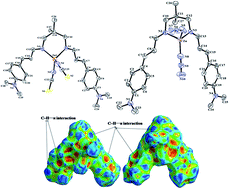
Crystal structures, Hirshfeld surface analyses and thermal behavior of two new rare tetrahedral terminal zinc(II) azide and thiocyanate Schiff base complexes†
Received
16th December 2015
, Accepted 22nd February 2016
First published on 24th February 2016
Abstract
Two new rare terminal zinc(II) thiocyanate and azide Schiff base complexes of [ZnL(NCS)2] and [ZnL(N3)2] have been prepared by reaction between zinc thiocyanate and azide salts and a new bidentate Schiff base ligand entitled N,N′-bis((E)-3-(4-(dimethylamino)phenyl)allylidene)-2,2-dimethylpropane-1,3-diamine (L). The compounds were characterized by FT/IR, 1H NMR, 13C NMR, UV-visible spectroscopy and molar conductivity. The structures of the complexes were determined by single-crystal X-ray diffraction. The structural data showed that the Zn(II) ion in both complexes is in a distorted tetrahedral environment surrounded by two iminic nitrogen atoms of the Schiff base ligand and two isothiocyanate or azide anions. The crystal packing of the complexes shows intermolecular interactions including C–H⋯S, S⋯π and C–H⋯π interactions in the [ZnL(NCS)2] complex and C–H⋯N and C–H⋯π interactions in the [ZnL(N3)2] complex. The C–H⋯π interaction in these complexes is among the strongest reported interactions of this type. Hirshfeld surface analysis was employed to clarify the nature and extent of intermolecular interactions and showed the important role of C–H⋯π interaction in the structures of the two complexes. Moreover, the thermal behaviors of both compounds were investigated in the temperature range 25–800 °C, and the results showed that the ligand absolutely decomposes, but the zinc complexes leave metallic zinc as a final residue. Zinc complex nanostructures were also prepared via a sonochemical process and characterized by FT-IR spectroscopy, X-ray diffraction (XRD) and scanning electron microscopy (SEM).
1. Introduction
Metal coordination compounds have been a subject of particular interest due to their broad range of applications in science and technology.1–3 Among the various complexes, those with Schiff base ligands are important. Mononuclear complexes with versatile anionic ligands such as thiocyanate, azide, cyanate and cyanide are rarely reported because they can coordinate to metallic cations both as terminal ligands and as bridges (end-to-end and end-on).4–8 The mentioned properties of these ligands may lead to various 1D, 2D or 3D structures of the complexes in the solid state.9–11 Especially, thiocyanate anion can bind from nitrogen or sulfur donor atoms, and even participate in the weak intermolecular interactions so that a supra-molecular network may be formed.11–13 Besides of such potentials of these versatile ligands, it has found that some other weak intermolecular interactions including non-covalent and H-bonding interactions have important roles in the molecular structure of materials in the solid state. The role of hydrogen bonding is more important than other non-covalent interaction in self-assembling of the solid state structures. Hydrogen bonds are found both as conventional interactions with participation of electronegative elements and as non-conventional interactions.14,15 C–H⋯S, C–H⋯N and CH⋯X (X is a halogen atom) are some non-conventional hydrogen bonds affecting on supramolecular structures of the inorganic complexes in solid network.16,17 C–H⋯π and π⋯π intermolecular interactions may be another effective weak interactions that can conduct the crystal packing where the hydrogen bonds are weak or not present.18–20 Non covalent interactions play key role in stabilization of enzyme structure so that indirectly effect on its biological properties.21 As well as many other researches in crystal engineering field, current study too adds new findings on C–H⋯S, S⋯π, C–H⋯N and C–H⋯π interactions that effectively guides crystal packing in supramolecular structures of the titled complexes.
Zinc is one of the most important metals in industrial and biological fields. It is an abundant trace element in the body, where it is present in all tissues and fluids.22,23 A literature survey shows that zinc complexes have many applications in biology, catalysis, optic, luminescent sensors and some other fields. For example in biological application, Ejidike et al. reported Zn(II) complex of (4E)-4-[(2-(E)-[1-(2,4-dihydroxyphenyl)ethylidene]aminoethyl)imino]pentan-2-one as good antibacterial/antioxidant agents with respect to free ligand.24 Recently also we reported some new antifungal/antibacterial active zinc Schiff base complexes of bis(4-dimethyleaminocinnamaldehade)-1,2-ethylenediimine and bis(2-nitrophenylcinnam-aldehyde)-1,3-propanediimine as two new N2-bidentate ligands.25,26 In catalysis point of view, Khorshidifard et al., reported a new zinc Schiff base complex as efficient catalyst for the oxidation of organic sulfide.27 In optoelectronic field, a new zinc Schiff base complex was used as an emissive material for fabrication of electroluminescent devices.28 In another report, zinc Schiff-base complexes was used in the construction of organic light-emitting diodes.29 Therefore the preparation of new zinc Schiff base complexes as bulk or nanostructure is likely to be of benefit and may be in demand yet.
In continuation of our previous reports,30–33 herein, synthesis and characterization of two new nano-structured zinc pseudohalide complexes of a bidentate Schiff base ligand entitled as N,N′-bis((E)-3-(4-(dimethylamino)phenyl)allylidene)-2,2-dimethylpropane-1,3-diamine (L) are presented. Furthermore, structural investigation, Hirshfeld surface analyses and thermal study of the zinc complexes are described.
2. Experimental
2.1. Materials
All chemical reagents and solvents were purchased from the Merck, Aldrich and/or BDH chemical companies and were used as received. Zinc thiocyanate and azide salts were freshly prepared based on our previous report.33
2.2. Instrumentation analysis
IR measurements (KBr pellets) in the range of 4000–400 cm−1 were carried out on a JASCO-FT/IR680 instrument. 1H and 13C NMR spectra evaluated in CDCl3 and DMSO-d6 as solvents using a Brucker DPX FT/NMR-400 spectrometer. Thermogravimetric analyses (TG and DTG) were carried out under N2 atmosphere with a heating rate of 10 °C min−1 using a Perkin-Elmer Pyris model instrument. Molar conductivities were performed in DMF (1 × 10⁻³ M) at 25 °C by using Metrohm-712 conductometer. The electronic spectra were recorded using a Perkin-Elmer lambda 25 spectrometer in the range of 200–800 nm at dichloromethane solution. The melting points or decomposition temperatures (°C) were determined on a Kruss Optronik instrument. A Hitachi S-1460 field emission scanning electron microscope was used for obtaining Scanning electron microscopy (SEM) images. X-ray powder diffraction (XRD) spectra were recorded by a STOE type STIDY-MP-Germany X-ray diffractometer with Cu Kα radiation (λ = 1.5418 Å). Single crystal X-ray diffraction were measured on an Oxford SuperNova CCD diffractometer using Mo Kα radiation (λ = 0.7107 Å), the crystals were maintained at 130 K using an Oxford Cryostream low temperature device. The ultrasonically synthesis of the complexes was carried out under the high-power ultrasonic cleaning unit Bandelin Super Sonorex RK-100H with ultrasonic peak output 320 W and HF power 80 Weff for.
2.3. Preparation of Schiff base ligand (L)
The Schiff base ligand; N,N-bis[3-(4-dimethylaminophenyl)-allylidene]-2,2-dimethyl-propane-1,3-diamine was synthesized via condensation between 2,2-dimethyl-1,3-propanediamine and 4,4-dimethylaminocinnamalehyde in a 1
:
2 molar ratio in absolute ethanol under rapid stirring. The reaction mixture was stirred at room temperature for 4 hours to complete the reaction. The yellow precipitate obtained from this reaction was collected by filtration and washed with n-hexane. Afterward the precipitate was dried at room temperature. Yield: 94%. Mp 160–162 °C. UV-vis in CH2Cl2 [λmax; nm (ε; cm−1 M−1)]: 365 (86
150), 470 (62
950). Molar conductivities in DMF [Λ°M; cm2 Ω−1 mol−1]: 1.23. Selected FT-IR data (KBr, cm−1): 3444(w), 2971(w), 2921(w), 2865(w), 2815(w), 1602(vs), 1523(w), 1428(w), 1367(m), 1261(w), 1213(w), 1172(m), 1066(w), 993(w), 950(w), 894(w), 808(w), 527(w). 1H NMR (CDCl3): [δ; ppm]: 7.96(d, 2Hc,c′, J = 8.25 Hz), 7.38(d, 4Hf,f, J = 8.87 Hz), 6.85(d, 2He,e′, J = 15.86 Hz), 6.76(dd, 2Hd,d′, J = 8.21 Hz and 15.85 Hz), 6.69(d, 4Hg,g′, J = 8.90 Hz), 3.39(s, 4Hb,b′), 3.02(s, 12Hh,h′), 1.03(s, 6Ha,a′) ppm. 13C NMR (CDCl3): 164.00, 150.91, 141.79, 128.54, 123.97, 122.50, 112.10, 71.10, 40.27, 36.89, 24.61 ppm.
2.4. Synthesis of zinc(II) complexes
2.4.1. [ZnL(NCS)2] complex. [ZnL(NCS)2] complex was prepared by stepwise addition of an ethanolic solution of Schiff base ligand to an equivalent amount of zinc thiocyanate salt in ethanol (10 mL). Subsequently the reaction mixture was rapidly stirred at room temperature for two hours. The orange product obtained from this reaction was collected by filtration and washed with n-hexane. Afterward the precipitate was dried at room temperature. Yield: 91%. Mp 245–247 °C. UV-vis in CH2Cl2 [λmax; nm (ε; cm−1 M−1)]: 402(86
500), 470(24
000). Molar conductivities in DMF [Λ°M; cm2 Ω−1 mol−1]: 4.45. Selected FT-IR data (KBr, cm−1): 3442(w), 3002(w), 2960(w), 2919(w), 2857(w), 2080(s), 2065(s), 1587(vs), 1523(w), 1436(w), 1373(m), 1278(w), 1162(s), 943(w), 950(w), 894(w), 811(w), 551(w), 464(w). 1H NMR (DMSO-d6): [δ; ppm]: 8.16(d, 2Hc,c′, J = 9.2 Hz), 7.55(d, 4Hf,f, J = 8.80 Hz), 7.33(d, 2He,e′, J = 15.20 Hz), 6.96(dd, 2Hd,d′, J = 9.60 Hz and 15.20 Hz), 6.73(d, 4Hg,g′, J = 8.40 Hz), 3.55(s, 4Hb,b′), 3.01(s, 12Hh,h′), 0.88(s, 6Ha,a′) ppm. 13C NMR (DMSO-d6): 171.35, 152.12, 136.51, 130.62, 130.22, 121.47, 117.25, 111.75, 70.36, 40.13, 36.27, 23.60 ppm.
2.4.2. [ZnL(N3)2] complex. [ZnL(N3)2] complex was prepared in a similar manner as ZnL(NCS)2 complex except that zinc thiocyanate was replaced by zinc azide. Color: orange. Yield: 70%. Mp 234–236 °C. UV-vis in CH2Cl2 [λmax; nm (ε; cm−1 M−1)]: 396(66
500), 466(16
500). Molar conductivities in DMF [Λ°M; cm2 Ω−1 mol−1]: 1.57. Selected FT-IR data (KBr, cm−1): 3435(w), 2958(w), 2923(w), 2863(w), 2061(s), 2036(s), 1590(vs), 1525(w), 1403(w), 1373(m), 1276(w), 1164(s), 946(w), 727(w), 593(w), 497(w), 443(w). 1H NMR (DMSO-d6): [δ; ppm]: 8.19(d, 2Hc,c′, J = 8.87 Hz), 7.52(d, 4Hf,f, J = 8.00 Hz), 7.34(d, 2He,e′, J = 14.40 Hz), 6.90(dd, 2Hd,d′, J = 8.00 Hz and 16.00 Hz), 6.76(d, 4Hg,g′, J = 8.00 Hz), 3.57(s, 4Hb,b′), 3.01(s, 12Hh,h′), 0.89(s, 6Ha,a′) ppm. 13C NMR (DMSO-d6): 171.20, 152.12, 131.03, 130.05, 121.69, 117.77, 111.84, 70.32, 40.08, 35.98, 23.68 ppm.
2.5. Preparation of nano-structured Zn(II) complexes
To prepare the nano-sized Zn(II) complexes by sonochemical process, 20 mL solutions of both zinc thiocyanate and azide salts (1 mmol) in ethanol was positioned in a ultrasonic bath. Into these solutions a 20 mL solution of Schiff base ligand (1 mmol) in ethanol was added dropwise. The obtained precipitates were filtered off, washed with ethanol and then dried in air.
2.6. Hirshfeld surface calculations
Molecular Hirshfeld surfaces were calculated using the CrystalExplorer 3.0 program.34 In Crystal explorer, the internal consistency is important when comparing one structure with another, for the generation of Hirshfeld surfaces all bond lengths to hydrogen (or deuterium) atoms are set to typical neutron values (C–H = 1.083 Å, N–H = 1.009 Å and O–H = 0.983 Å). For a given crystal structure and set of spherical atomic electron densities, the Hirshfeld surface is unique, and it is the property that suggests the possibility of gaining additional insight into the intermolecular interaction of molecular crystals.35,36 The dnorm values are mapped onto the Hirshfeld surface by using a red-blue-white color scheme: where a red highlight shorter contacts, white is used for contacts around the vdW separation and blue is for longer contacts. The 2D-fingerprint plot provides decomposition of Hirshfeld surfaces into contribution of different intermolecular interactions present in crystal structure. 2D fingerprint plots of each Hirshfeld surface are shown as plots of di against de.
3. Result and discussion
3.1. Spectroscopy characterization
Data related to NMR, FT-IR and UV-vis spectra of compounds have been described in Section 2. A schematic representation of Schiff base ligand (L) and its coordination mode to Zn(II) center is shown in Scheme 1.
 |
| | Scheme 1 Atom numbering representation of Schiff base ligand and its coordination mode to metal center. | |
3.1.1. 1H and 13C-NMR. A doublet peak at 7.96 ppm in the ligand 1H-NMR spectrum is assigned to azomethine hydrogen (CH
N). This peak is downfielded to 8.16 and 8.19 ppm in the [ZnL(NCS)2] and [ZnL(N3)2] respectively supporting coordination of the ligand to the metal centers.37,38 The f and f′ aromatic hydrogens of the ligand appeared as a doublet peak at 7.38 ppm, are downfielded in the complexes. Other aromatic hydrogens (g and g′) observed as a doublet signal at 6.69 ppm shift toward downfield region in complexes. The olefinic hydrogens of Hd,d and He,e′ appear as doublet of doublets and doublet signals at 6.76 and 6.85 ppm respectively. After complexation, both signals are downfielded. The singlet peaks at 3.39, 3.02 and 1.03 ppm in the ligand spectrum are attributed to Hb,b′, Hh,h′ and Ha,a′, respectively shifting toward up and down field regions in the complexes. In the ligand 13C-NMR spectrum, a signal at 164.00 ppm is safely attributed to the imine carbon (C4). This signal was observed at 171.35 and 171.20 ppm in [ZnL(NCS)2] and [ZnL(N3)2] supporting chelation via imine group of ligand. The peak at 150.91 ppm in the free ligand spectrum may be attributed to C(10,10′) that is deshielded after coordination. Other aromatic carbons are found in the range of 112.10–123.97 ppm. The olefinic carbons C(6,6′) and C(5,5′) appear at 122.50 and 141.79 ppm respectively that upfielded in the complexes. Aliphatic carbons and methyl groups are observed in the range of 24.61–71.10 ppm that are deshielded in the two zinc complexes. The carbon signal of thiocyanate ion in the ZnL(NCS)2 complex appears at 136.51 ppm.
3.1.2. FTIR and UV-vis spectra. The FT-IR spectra of [ZnL(NCS)2] and [ZnL(N3)2] complexes are shown in Fig. 13. In the FTIR spectrum of the ligand, absence of vibrations at 3281–3357 cm−1 assigned to the NH2 and C
O of starting materials and appearance of a new strong peak at 1602 cm−1 assigned to the C
N bond well confirm synthesis of ligand. In the complexes, vibration of C
N shifts to lower wavenumbers confirming coordination of imine group to zinc ion.39 Coordination of ligand to metal is also supported by the appearance of weak signals at 400–500 cm−1 attributed to the M–N vibrations.40 The signals at 2065 and 2082 cm−1 in the IR spectrum of the zinc thiocyante complex well prove N-coordination of two terminal thiocyanate anions to zinc center.41 In the spectrum of the [ZnL(N3)2] complex, coordination of two terminal azide anions to zinc ion is supported by appearance of sharp signals in the range 2036–2063 cm−1.42 Electronic spectra of the ligand and its Zn(II) complexes in dichloromethane solvent are shown in Fig. 1. In the UV-visible spectrum of ligand, two distinct absorption bands were observed. The first band appeared at 365 nm is attributed to π → π* electronic transitions of ligand (benzene and alkene moiety).43 This band appears at longer wavelengths in the complexes. The second absorption band of ligand attributed to π → π* of imine groups was found at 470 nm. This peak was observed as a shoulder after coordination of ligand.
 |
| | Fig. 1 The electronic spectra of the ligand and its zinc complexes (extinction coefficients (ε): for the ligand: 86 150 and 62 950 cm−1 M−1 for the λmax values of 365 and 470 nm; for ZnL(NCS)2: 86 500 and 24 000 cm−1 M−1 for the λmax values of 402 and 470(sh) nm; for ZnL(N3)2: 66 500 and 16 500 cm−1 M−1 for the λmax values of 396 and 466(sh) nm). | |
3.2. Structural studies
3.2.1. [ZnL(NCS)2] complex. The [ZnL(NCS)2] complex crystallizes in the triclinic space group P
with Z = 2. An ORTEP diagram of this compound is shown in Fig. 2 together with the atom labelling scheme. The X-ray structure determination details and selected bond lengths and angles are given in Tables 1 and 2. The Zn(II) ion is in a distorted tetrahedral environment completed by two imine nitrogen atoms of the Schiff base ligand and two isothiocyanate anions. The degree of distortion of the Zn(II) ion can be expressed by the parameter of τ4 (τ4 = 0.88 for Zn; τ4 = 0 for a square planar geometry and τ4 = 1 for a tetrahedral geometry).44 The bond angles around the zinc atom deviate from the value expected for an ideal tetrahedron, 109°; they range from 94.90 (8) to 118.09 (9)°. This deviation could be due to the restriction induced by the six-membered chelate ring of Zn1–N2–C10–C11–C12–N3. The value of N3–Zn1–N1 chelate angle (94.90 (8)°) is larger than the bite angle in Schiff base ligands based on ethylenediamine coordinated to Zn atom (81.07(17)° in [Zn((2,6-Cl-ba)2en)I2] and 83.44(1)° in [Zn(Phca2en)Br2])45,46 and close to its value in Zn(II) complexes with Schiff base ligands based on 2,2-dimethylpropane-1,3-diamine (93.55° in a N2O2 Schiff base ligand and 93.41° in a N4O2 macrocyclic Schiff base ligand).47,48 Other angles are consistent with those reported for other tetrahedral zinc complexes containing terminal isothiocyanate.49 The Zn–Nimine is longer than the Zn–Nisothiocyanate and the Zn–N distances (1.930(2)–2.022(19) Å) are within the range observed for this type of ZnN4 tetrahedron complexes containing isothiocyanate anions and –C
N– groups.50,51 Both NCS ligands link to the metal in a non-linear mode with Zn–N–CS angles of 167.2(2)° and 157.9(3)°, which is normal for thiocyanates.52 The two phenyl rings of the Schiff base ligand are almost perpendicular with dihedral angle of 79.11°.
 |
| | Fig. 2 The ORTEP diagram of the [ZnL(NCS)2] complex with atomic numbering scheme. The atoms are represented by 50% probability thermal ellipsoids. Hydrogen atoms are omitted for clarity. | |
Table 1 Crystallographic data for two complexes
| Compound |
ZnL(NCS)2 |
ZnL(N3)2 |
| Empirical formula |
C29H36N6S2Zn |
C27H36N10Zn |
| Formula weight |
598.13 |
566.03 |
| Temperature (K) |
130 |
130 |
| Wavelength (Å) |
0.71073 |
0.71073 |
| Crystal system |
Triclinic |
Monoclinic |
| Space group |
P![[1 with combining macron]](https://www.rsc.org/images/entities/char_0031_0304.gif) |
C2/c |
| Unit cell dimensions |
a = 10.4823 (3) Å |
22.0206 (7) |
| b = 11.2379 (4) Å |
10.0698 (3) |
| c = 14.4174 (5) Å |
26.9816 (9) |
| α = 71.223 (3)° |
α = 90° |
| β = 84.650 (3)° |
β = 105.807 (3)° |
| γ = 71.987 (3)° |
γ = 90° |
| Volume (Å3) |
1529.10 (10) |
5756.7 (3) |
| Z |
2 |
8 |
| Calculated density (mg m−3) |
1.294 |
1.306 |
| μ (mm−1) |
0.97 |
0.89 |
| F(000) |
628 |
2384 |
| Crystal size (mm) |
0.43 × 0.08 × 0.03 |
0.33 × 0.26 × 0.16 |
| Theta range for data collection (°) |
3.8 to 30.4 |
3.5–31.7 |
| Index ranges |
−11 ≤ h ≤ 13 |
−30 ≤ h ≤ 17 |
| −10 ≤ k ≤ 14 |
−13 ≤ k ≤ 14 |
| −17 ≤ l ≤ 18 |
−37 ≤ l ≤ 37 |
| Measured reflections |
10 813 |
23 546 |
| Independent reflections |
6987 |
8359 |
| Observed [I > 2σ(I)] reflections |
5852 |
5588 |
| Rint |
0.022 |
0.056 |
| Data/restraints/parameters |
6987/0/349 |
8359/0/349 |
| Goodness-of-fit on F2 |
1.06 |
1.02 |
| R[F2 > 2σ(F2)] |
0.045 |
0.052 |
| wR(F2) |
0.125 |
0.140 |
| Largest diff. peak and hole (e Å−3) |
1.07 and −1.09 |
0.79, −0.71 |
Table 2 Bond lengths (Å) and angles (°) for two complexes
| ZnL(NCS)2 complex |
ZnL(N3)2 complex |
| Bond length (Å) |
Bond length (Å) |
| Zn1–N2 |
2.022(2) |
Zn–N2 |
2.038(2) |
| Zn1–N3 |
2.006(2) |
Zn–N3 |
2.022(2) |
| Zn1–N5 |
1.930(2) |
Zn–N5 |
1.970(2) |
| Zn1–N6 |
1.946(2) |
Zn–N8 |
1.946(3) |
| Bond angle (°) |
Bond angle (°) |
| N2–Zn1–N3 |
94.90(8) |
N2–Zn–N3 |
91.61(8) |
| N2–Zn1–N5 |
118.09(9) |
N2–Zn–N5 |
107.15(10) |
| N2–Zn1–N6 |
109.13(9) |
N2–Zn–N8 |
121.34(10) |
| N3–Zn1–N5 |
117.71(9) |
N3–Zn–N5 |
103.77(9) |
| N3–Zn1–N6 |
110.69(10) |
N3–Zn–N8 |
125.72(10) |
| N5–Zn1–N6 |
105.97(10) |
N5–Zn–N8 |
105.16(11) |
| Zn1–N5–C22 |
167.2(2) |
Zn–N5–N6 |
124.66(19) |
| Zn1–N6–C23 |
157.9(3) |
Zn–N8–N9 |
136.4(2) |
| N5–C22–S1 |
178.9(3) |
N5–N6–N7 |
175.5(3) |
| N6–C23–S2 |
175.5(3) |
N8–N9–N10 |
176.8(3) |
A closer inspection of the effective factors on the crystal packing of this complex shows a series of intramolecular interactions containing C–H⋯S and C–H⋯π interactions. These interactions are related to the non-coordinated S of the thiocyanate groups and the phenyl rings of Schiff base ligand. The geometric parameters for these contacts are summarized in Table 3. There are three C–H⋯S interactions formed between S1 with H25 of the N-methyl group and S2 with the aliphatic hydrogen of H12 and the olefinic hydrogen of H15. The C12–H12B⋯S2 interaction with geometric parameters of H12B⋯S2, 2.845 Å; C12⋯S2, 3.786 Å and the C12–H12B⋯S2 angle, of 163.87° are the strongest interaction of the C–H⋯S type. This interaction results in the formation of a 2D network in structure (Fig. 3). Also, there are two C–H⋯π interactions in crystal packing of this complex (Fig. 4). C10–H10B⋯Cg(1) forms between Cg(1) phenyl ring (centroid of C1–C6) and H10 aliphatic hydrogen and C28–H28A⋯Cg(2) is interaction between Cg(2) phenyl ring (centroid of C16–C21) and H28A of methyl group of aminic substitution. C–H⋯Cg distance (2.570 Å in C10–H10B⋯Cg(1) and 2.683 Å in C28–H28A⋯Cg(2)) is relatively short and close to H⋯C distance (2.5 Å) that locates these interactions among the strongest C–H⋯π hydrogen bonds.53,54 Also, there is a S⋯π interaction between S2 atom and Cg(1) phenyl ring (centroid of C1–C6) with geometric parameters of S⋯Cg(1) = 3.992 Å and symmetry code = x, 1 + y, z.
Table 3 Geometrical parameters of intermolecular interactions in two complexesa
| Interaction |
D–H⋯A |
D–H (Å) |
H⋯A (Å) |
D⋯A (Å) |
A⋯H–D (°) |
Symmetry code |
| *ring codes: Cg(1): C1, C2, C3, C4, C5, C6; Cg(2): C16, C17, C18, C19, C20, C21. |
| [ZnL(NCS)2] complex |
| C–H⋯S |
C25–H25B⋯S1 |
0.960 |
2.912 |
3.504 |
121 |
2 − x, −1 − y, 1 − z |
| C12–H12B⋯S2 |
0.969 |
2.845 |
3.786 |
164 |
1 − x, 1 − y, −z |
| C15–H15⋯S2 |
0.931 |
2.905 |
3.693 |
143 |
1 + x, y, z |
| C–H⋯π |
C10–H10B⋯Cg(1)* |
0.970 |
2.570 |
3.453 |
151 |
2 − x, −y, −z |
| C28–H28A⋯Cg(2)* |
0.960 |
2.683 |
3.573 |
154 |
−x, −y, 1 − z |
![[thin space (1/6-em)]](https://www.rsc.org/images/entities/char_2009.gif) |
| [ZnL(N3)2] complex |
| C–H⋯N |
C12–H12B⋯N5 |
0.970 |
2.654 |
3.476 |
143 |
3/2 − x, 1/2 − y, 1 − z |
| C3–H3⋯N7 |
0.929 |
2.697 |
3.541 |
151 |
1 − x, −y, 1 − z |
| C15–H15⋯N7 |
0.930 |
2.532 |
3.418 |
159 |
x, −1 + y, z |
| C24–H24B⋯N7 |
0.960 |
2.680 |
3.366 |
129 |
1 − x, −1 + y, 1/2 − z |
| C22–H22B⋯N10 |
0.959 |
2.728 |
3.656 |
163 |
1/2 − x, 1/2 + y, 1/2 − z |
| C23–H23B⋯N10 |
0.960 |
2.617 |
3.565 |
169 |
1/2 − x, 1/2 + y, 1/2 − z |
| C–H⋯π |
C10–H10A⋯Cg(1) |
0.970 |
2.889 |
3.647 |
136 |
1 − x, −y, 1 − z |
 |
| | Fig. 3 2D expansion of C–H⋯S interactions in the structure of the [ZnL(NCS)2] complex. | |
 |
| | Fig. 4 C–H⋯π interactions in the structure of the [ZnL(NCS)2] complex. | |
3.2.2. [ZnL(N3)2] complex. The [ZnL(N3)2] complex crystallizes in the monoclinic space group C2/c with Z = 8. An ORTEP diagram of this compound is shown in Fig. 5 together with the atom labelling scheme. The X-ray structure determination details and selected bond lengths and angles are given in Tables 1 and 2. The structure contains a ZnN4 coordination sphere, which includes coordination from two imine nitrogens of the Schiff base ligand and two terminal azide anions. The calculated τ4 index for this complex is 0.80 which indicates a distorted tetrahedral geometry for the metal center. The distortion from an ideal tetrahedral geometry is reflected in the bond angles around the zinc atom that range from 91.61 (8) to 125.72 (10)°. As with the thiocyanate complex this distortion is attributed to the restriction induced by the six-membered chelate ring of Zn–N2–C10–C11–C12–N3 with chelate angle of 91.61 (8)°. Comparison of the four Zn–N bond distances in the two complexes shows that two Zn–N bonds are identical and other two bonds in [ZnL(N3)2] complex are longer. The bond lengths in this complex are comparable with other related complexes with similar geometry.55,56 Two phenyl rings of Schiff base ligand are almost perpendicular with dihedral angle of 83.88°.
 |
| | Fig. 5 The ORTEP diagram of the [ZnL(N3)2] complex with atomic numbering scheme. The atoms are represented by 50% probability thermal ellipsoids. Hydrogen atoms are omitted for clarity. | |
The crystal packing of this structure shows intermolecular interactions including C–H⋯N and C–H⋯π interactions. The geometric parameters for these contacts are summarized in Table 3. Non-coordinated N7 and coordinated N5 of N5–N6–N7 azide group both participate in the formation of C–H⋯N interactions. N5 forms a hydrogen bond with the aliphatic hydrogen H12B and is involved in the formation of a R22(10) ring motif with an adjacent molecule. N7 forms three hydrogen bonds with aromatic hydrogen (H3), olefinic hydrogen (H15) and the N-methyl hydrogen (H24B) from three different molecules. The shortest C–H⋯N interaction is the C15–H15⋯N7 interaction with geometric parameters of H15⋯N7, 2.532 Å; C15⋯N7, 3.418 Å and the C15–H15⋯N7 angle, of 159.53°. Also, the noncoordinated N10 of N8–N9–N10 azide group is involved in the formation of a R12(6) ring motif through C22–H22B⋯N10 [H22B⋯N10 = 2.728 Å, C22⋯N10 = 3.656 Å, C22–H22B⋯N10 = 163.11°] and C23–H23B⋯N10 [H23B⋯N10 = 2.617 Å, C23⋯N10 = 3.565 Å, C23–H23B⋯N10 = 169.24°]. Each molecule forms 12 C–H⋯N hydrogen bonds with eight adjacent molecules. An expanded network of C–H⋯N interactions is shown in Fig. 6. Furthermore, there is a C–H⋯π interaction with the distance of 2.889 Å (Fig. 7), which plays an important role in stabilizing this structure. C–H⋯π interactions in these complexes locate among the strong interactions of this type.53,54 Though it was found that the mentioned interaction in the zinc azide complex is weaker than it in the zinc thiocyanate complex due to longer distance of C–H⋯π.
 |
| | Fig. 6 2D expansion of C–H⋯N interactions in the structure of the [ZnL(N3)2] complex. | |
 |
| | Fig. 7 C–H⋯π interactions in the structure of the [ZnL(N3)2] complex. | |
3.3. Hirshfeld surfaces analyses
The Hirshfeld surface analysis is a powerful method for gaining information about different intermolecular interactions, and to identify and quantify these interactions. The Hirshfeld surfaces of [ZnL(NCS)2] and [ZnL(N3)2] complexes have been displayed in Fig. 8 and 9, showing surfaces that have been mapped over a 3D dnorm and shape index, respectively. The intermolecular interactions listed in Table 3 are summarized effectively in the spots with the large circular depressions (deep red) visible on the dnorm surfaces indicative of hydrogen bonding contacts and other weak contacts. There are several bright red areas on dnorm of [ZnL(NCS)2] complex related to C–H⋯S and C–H⋯π interactions. Four of them are observed as doublet red spots, two red spots related to C–H⋯π interactions, one spot related to C–H⋯S + C–H⋯π and another related to C–H⋯S + C–H⋯Cisothiocyanate. In addition to these doublet red spots, C–H⋯π interactions are observed as several other red spots. Other red spots on dnorm surface are duo to C–H⋯S interactions resulting from interaction of S2 atom with H12B and H15 atoms. Bright red spot around S2 atom is combination of C–H⋯S and S⋯π interactions. The red spots on dnorm surface of [ZnL(N3)2] complex correspond to C–H⋯N and C–H⋯π interactions. The most prominent red spots are related to C–H⋯N interactions and are obviously observed around N7 and H15 atoms. Additionally several smaller red spots related to this interaction can be noticed. C–H⋯π interactions are observable as several red spots and two of them are appeared as doublet around H10B atom and phenyl ring including C1–C6 atoms. On the Hirshfeld surface mapped with shape index function of both complexes, C–H⋯π interactions are appeared as hollow orange areas (π⋯H) and bulging blue areas (H⋯π).
 |
| | Fig. 8 The Hirshfeld surface of (left) [ZnL(NCS)2] and (right) [ZnL(N3)2] complexes mapped over dnorm function. | |
 |
| | Fig. 9 The Hirshfeld surface of (left) [ZnL(NCS)2] and (right) [ZnL(N3)2] complexes mapped over shape index function. | |
2D fingerprint plots of Hirshfeld surface for complexes and relative contributions of different interactions overlapping in the full fingerprint plots are shown in Fig. 10 and 11, respectively. Complementary regions are visible in the fingerprint plots where one molecule act as donor (de > di) and the other as an acceptor (de < di). The fingerprint plots can be decomposed to highlight particular atoms pair close contacts. For both complexes, the H⋯H interactions have the highest contribution (46.6% in [ZnL(NCS)2] and 49.2% in [ZnL(N3)2]) of the total Hirshfeld surface. Despite the high share of this interaction, its role in the stabilization of structure is quite small in magnitude because this interaction is between the same species.57 C⋯H/H⋯C close contacts, attributed to C–H⋯π interactions, comprise 27.8% and 19.8% of the total surface for each molecule in [ZnL(NCS)2] and [ZnL(N3)2], respectively. The high proportion of C⋯H/H⋯C interactions and its appearing as bright red spots on dnorm surface of [ZnL(NCS)2] complex is indicating the importance of this interaction in structure of [ZnL(NCS)2] complex. N⋯H/H⋯N close contacts comprise 28.3% of the Hirshfeld surfaces in [ZnL(N3)2] complex. These interactions are represented by two sharp spikes in the 2D fingerprint plot and are the most important interaction in structure of this complex. The replacement of –N3 with –NCS in [ZnL(NCS)2] complex reduces the portion of C–H⋯N interactions to 6.3%. In exchange, the portion of S⋯H/H⋯S interactions increases to 16.5% of the Hirshfeld surfaces.
 |
| | Fig. 10 2D fingerprint plots of (left) [ZnL(NCS)2] and (right) [ZnL(N3)2] complexes. | |
 |
| | Fig. 11 Relative contributions to the Hirshfeld surface area for the various intermolecular contacts in two complexes. | |
3.4. Thermal analysis
Thermal analyses (TG and DTG) of the Schiff base ligand and its complexes have been used to investigate the thermal stability of them. The TG/DTG diagrams of zinc complexes have been presented in Fig. 12. The mass loss for each compound was calculated within the corresponding temperature range and all thermo-gravimetric data have been collected in Table 4. Lack of weight loss below the 200 °C in the TG plots of compounds confirms the absence of any water in molecular structure of them. Schiff base ligand is completely decomposed during the four thermal stages. According to the structure shown in Scheme 1, the fragments of (CH3)2NC6H4– and two –CH3 (exp. = 36.11%, calc. = 36.31%), –CH3 (exp. = 3.52%, calc. = 3.20%), –NC6H4– (exp. = 22.03%, calc. = 23.32%), –CH
CH–CH
N–CH2CH(CH3)CH2–N
CH–CH
CH– (exp. = 38.35%, calc. = 37.93%) are suggested as isolated fragments during steps of 1–4, respectively. The TG/DTG plot of [ZnL(NCS)2] complex indicates two thermal decomposition steps which the first step corresponds to eliminate two (CH3)2NC6H4–CH = fragments of ligand (exp. = 44.53%, calc. = 45.13%) and the second step displays the decomposition of residual ligand parts and two thiocyanate anions (exp. = 45.21%, calc. = 44.86%). This complex leaves out metallic zinc as final residue. [ZnL(N3)2] complex are thermally decomposed via five steps within the temperature range of 211–768 °C that these thermal steps corresponds to removal nonmetallic parts of compound including Schiff base ligand and azide anions. After losing of 89.01% weight, metallic zinc remains as final segment (exp. = 10.99%, calc. = 11.55%). Furthermore, the thermo-kinetic parameters of decomposition processes of compounds involving activation energy (E*), Arrhenius constant (A), enthalpy (ΔH*), entropy (ΔS*) and Gibbs free energy change of the decomposition (ΔG*) were calculated by using the Coats–Redfern relation based on the thermal curves58 and the results were summarized in Table 5. The E*, ΔH*, ΔS* and ΔG* values of thermal degradation of ligand are in the ranges of 39.83 to 116.93 kJ mol−1, 33.97 to 112.23 kJ mol−1, (−2.48 × 10²) to (−9.49 × 101) J mol−1 K−1 and 1.66 × 10² to 2.33 × 10² kJ mol−1, respectively. The E*, ΔH*, ΔS* and ΔG* values of thermal decomposition of zinc complexes are evaluated in the range of 76.97 to 279.35 kJ mol−1, 71.97 to 275.08 kJ mol−1, (−2.07 × 10²) to (8.73 × 10²) J mol−1 K−1 and −4.53 × 10² to 2.64 × 10² kJ mol−1, respectively. Relatively high values for activation energy, enthalpy and Gibbs-free energy well confirm the high stability of the synthesized compounds. The negative values for entropy of some thermal steps suggests abnormal pathway for thermal decomposition of compounds.59
 |
| | Fig. 12 TG and DTG plots of (left) [ZnL(NCS)2] and (right) [ZnL(N3)2] complexes. | |
Table 4 Thermal analysis data of zinc complexes including temperature range, differential thermal gravimetry (DTG) peak, mass loss, proposed segment and final residue
| Compound |
Temp. range (°C) |
Mass loss (%) exp. (calc) |
Proposed segment |
Final residue |
| Ligand |
185–342 |
36.11(36.31) |
C10H17N |
C17H21N3 |
| 342–367 |
3.52(3.20) |
CH3 |
C16H19N3 |
| 367–481 |
22.03(23.32) |
C6H11N |
C10H14N2 |
| 481–565 |
38.35(37.97) |
C6H14N2 |
— |
| ZnL(NCS)2 |
240–369 |
44.53(45.13) |
C18H22N24 |
C11H14N4S2Zn |
| 369–665 |
45.21(44.86) |
C11H14N4S24 |
Zn |
| ZnL(N3)2 |
211–252 |
5.31(5.42) |
C2H6 |
C25H30N10Zn |
| 252–296 |
7.78(5.95) |
C2H6N |
C23H26N9Zn |
| 296–309 |
2.65(1.97) |
CH3 |
C22H24N9Zn |
| 309–542 |
23.04(25.01) |
C9H8N |
C13H15N8Zn |
| 542–768 |
50.23(50.65) |
C13H16N8 |
Zn |
Table 5 Thermokinetic activation parameters of the thermal decomposition steps of zinc complexes
| Compound |
Decomposition step (°C) |
E* (kJ mol−1) |
A* (1/s) |
ΔS* (kJ mol−1) |
ΔH* (kJ mol−1) |
ΔG* (kJ mol−1) |
| Ligand |
185–342 |
116.93 |
1.31 × 10⁸ |
−9.49 × 101 |
112.23 |
1.66 × 10² |
| 342–367 |
88.08 |
1.26 × 10⁵ |
−1.54 × 10² |
82.82 |
1.80 × 10² |
| 367–481 |
39.83 |
1.60 |
−2.48 × 10² |
33.97 |
2.08 × 10² |
| 481–565 |
106.65 |
2.08 × 10⁴ |
−1.71 × 10² |
99.90 |
2.33 × 10² |
| ZnL(NCS)2 |
240–369 |
167.15 |
3.63 × 10¹² |
−9.79 |
162.45 |
1.68 × 10¹² |
| 369–665 |
146.85 |
1.19 × 10⁶ |
−1.38 × 10² |
139.35 |
2.64 × 10² |
| ZnL(N3)2 |
211–252 |
279.35 |
1.63 × 1026 |
2.52 × 10² |
275.08 |
1.45 × 10² |
| 252–296 |
158.34 |
5.86 × 10¹² |
−5.77 |
153.66 |
1.57 × 10² |
| 296–309 |
131.15 |
7.46 × 10⁹ |
−6.14 × 101 |
126.39 |
1.62 × 10² |
| 309–542 |
76.97 |
5.00 × 1058 |
8.73 × 10² |
71.97 |
−4.53 × 10² |
| 542–768 |
83.29 |
2.76 × 10² |
−2.07 × 10² |
76.37 |
2.48 × 10² |
3.5. Nano-structure zinc complexes
During the past three decades, nanostructured materials have attracted many attentions due to new applications in biology, optoelectronics, sensing, catalysis, energy and materials chemistry. Nano-structure materials may show unique properties that are not observed in the bulk counterparts. Among a variety of methods for synthesis of nano-structure compounds, the sonochemical method has been widely reported over many years, and is now known as one of the most famous technique in nanostructured materials synthesis. Sonochemistry and ultrasonic spray pyrolysis have been introduced as two most powerful ultrasound-assisted synthetic methods for preparation of nanostructured materials. Sonochemical method leads to increase in speed, output and efficient energy usage of the reactions.60 Although, many nanostructure coordination compounds such as nano-scale manganese(II) coordination supramolecular compound, nano-scale strontium(II)-3D coordination polymer and nano-structure lead(II) coordination polymer have been prepared under sonochemical conditions61–63 but sonochemically synthesized nanostructure mononuclear complexes are rare in the literature. Therefore in this work sonochemical method was used for possible synthesis of nanostructured titled complexes.
FT-IR spectroscopy, XRD and SEM have been used for characterization of nano-structured zinc complexes. The FT-IR spectra of zinc complexes synthesized by sonochemical process are similar to those synthesized by conventional method (Fig. 13). XRD patterns of zinc complexes were recorded in the angular range 2θ = 5–90°. Fig. 13 shows the experimental XRD pattern of two compounds prepared by the sonochemical process in comparison with the XRD pattern of them simulated from single crystal X-ray analysis indicating the good match of sonicated [ZnL(NCS)2] complex and difference of [ZnL(N3)2] complex with simulated PXRD. The broadening of the peaks for sonochemically synthesized complexes indicates that the particles are of nanometer dimensions. The average particle size (dXRD) of the complexes calculated by Scherrer's equation64 is 74.68 and 35.42 nm for [ZnL(NCS)2] and [ZnL(N3)2] complex, respectively. The morphology and size of sonochemically prepared compounds were investigated by SEM images. The SEM images of zinc complexes presented in Fig. 13 showing the separated crystal particles for [ZnL(NCS)2] complex and the agglomerated particles for [ZnL(N3)2] complex with diameters of nano-dimension.
 |
| | Fig. 13 [A] FT-IR spectrum of nanostructures produced by sonochemical process and bulk materials, [B] the XRD patterns of simulated from single crystal X-ray data and nano-structure and [C] SEM images of (left) [ZnL(NCS)2] complex and (right) [ZnL(N3)2] complex. | |
4. Conclusion
Two new zinc pseudohalide complexes, [ZnL(NCS)2] and [ZnL(N3)2], have been prepared by reaction between zinc thiocyanate and azide salts, respectively, and bidentate Schiff base ligand (L) and characterized by different physical and spectroscopic techniques. The structure determination of complexes by single-crystal X-ray diffraction show a ZnN4 coordination sphere for both complexes, which includes the coordination from two iminic nitrogens of Schiff base ligand and two terminal thiocyanate or azide anions. The Zn(II) ion in both complexes is in a distorted tetrahedral environment with τ4 index of 0.88 for [ZnL(NCS)2] and 0.80 for [ZnL(N3)2]. The analysis of crystal structure shows intermolecular interactions such as C–H⋯S, S⋯π and C–H⋯π interactions in [ZnL(NCS)2] complex and C–H⋯N and C–H⋯π interactions in [ZnL(N3)2] complex. The C–H⋯π interaction in these complexes is among the strongest reported interactions of this type. The Hirshfeld surfaces analysis has been used for more investigation of intermolecular interactions and the role of C–H⋯π interactions as driving force for crystal structure formation has been demonstrated. Also, relative contribution of intermolecular interactions is analyzed by fingerprint plots of Hirshfeld surface. The TG/DTG analysis showed that ligand is absolutely decomposed during four thermal steps while [ZnL(NCS)2] and [ZnL(N3)2] complexes leave out metallic zinc as final residue after two and five thermal decomposition steps, respectively. Finally, the synthesis of zinc complexes by sonochemical method led to form the nano-structures of these compounds. The nano-structure complexes were characterized by FT-IR spectroscopy, XRD patterns and SEM images.
Acknowledgements
Partial support of this work by Yasouj University is acknowledged.
References
- M. Trivedi, R. Nagarajan, A. Kumar, N. K. Singh and N. P. Rath, J. Mol. Struct., 2011, 994, 29–38 CrossRef CAS.
- M. M. L. Fiallo, E. Deydier, M. Bracci, A. Garnier-Suillerot and K. Halvorsen, J. Med. Chem., 2003, 46, 1683–1689 CrossRef CAS PubMed.
- M. S. Attia, A. M. Othman, M. M. Aboaly and M. S. A. Abdel-Mottaleb, Anal. Chem., 2010, 82, 6230–6236 CrossRef CAS PubMed.
- H. Zhang, X. M. Wang, K. C. Zhang and B. K. Teo, Coord. Chem. Rev., 1999, 183, 157–195 CrossRef CAS.
- H. Grove, M. Julve, F. Lloret, P. E. Kruger, K. W. Tornroos and J. Sletten, Inorg. Chim. Acta, 2001, 21, 115 CrossRef.
- W.-W. Sun, X.-B. Qian, Ch-Y. Tian and E.-Q. Gao, Inorg. Chim. Acta, 2009, 362, 2744–2748 CrossRef CAS.
- S. Shit, P. Talukder, J. Chakraborty, G. Pilot, M. S. Fallah and S. Mitra, Polyhedron, 2007, 26, 1357–1363 CrossRef CAS.
- B.-L. Liu, H.-P. Xiao, E. N. Nfor, Y. Song and X.-Z. You, Inorg. Chem. Commun., 2009, 12, 8–12 CrossRef CAS.
- M. Ohba and H. Okawa, Coord. Chem. Rev., 2000, 198, 313–328 CrossRef CAS.
- T. K. Maji, I. R. Laskar, G. Mostafa, A. J. Welch, P. S. Mukherjee and N. R. Chaudhuri, Polyhedron, 2001, 20, 651–655 CrossRef CAS.
- J. Lu, H. T. Liu, X. X. Zhang, D. Q. Wang and M. J. Niu, Z. Anorg. Allg. Chem., 2010, 636, 641 CrossRef CAS.
- K. Uemura, S. Kitagawa, K. Fukui and K. Saito, J. Am. Chem. Soc., 2004, 126, 3817–3828 CrossRef CAS PubMed.
- Z. Huang, H. B. Song, M. Du, S. T. Chen, X. H. Bu and J. Ribas, Inorg. Chem., 2004, 43, 931–944 CrossRef CAS PubMed.
- C. R. Jones, P. K. Baruah, A. L. Thompson, S. Scheiner and M. D. Smith, J. Am. Chem. Soc., 2012, 134, 12064–12071 CrossRef CAS PubMed.
- O. Takahashi, Y. Kohno and M. Nishio, Chem. Rev., 2010, 110, 6049–6076 CrossRef CAS PubMed.
- H.-Q. Ye, L.-J. Su, X.-X. Chen, X. Liao, Q.-T. Liu, X.-Y. Wu, J.-R. Zhou, L.-M. Yang and C.-L. Ni, Synth. Met., 2015, 199, 232–240 CrossRef CAS.
- C. Evans, Acta Crystallogr., 2010, 66, o502–o503 CAS.
- S. Wanga, X.-H. Ding, Y.-H. Li and W. Huang, J. Mol. Struct., 2015, 1091, 98–108 CrossRef.
- C. Janiak, J. Chem. Soc., Dalton Trans., 2000, 3885–3896 RSC.
- M. Nishio, CrystEngComm, 2004, 6, 130–158 RSC.
- M. Iwaoka and N. Isozumi, Molecules, 2012, 17, 7266–7283 CrossRef CAS PubMed.
- H. Tapiero and K. D. Tew, Biomed. Pharmacother., 2003, 57, 399–411 CrossRef CAS.
- J. M. Berg and H. A. Godwin, Annu. Rev. Biophys. Biomol. Struct., 1997, 26, 357–371 CrossRef CAS PubMed.
- I. P. Ejidike and P. A. Ajibade, Bioinorg. Chem.
Appl., 2015, 2015, 1–9 CrossRef PubMed.
- M. Montazerozohori, S. Zahedi, A. Naghiha and M. Montazer Zohour, Mater. Sci. Eng., C, 2014, 35, 195–204 CrossRef CAS PubMed.
- M. Montazerozohori, S. Yadegar, A. Naghiha and S. Veyseh, J. Ind. Eng. Chem., 2014, 20, 118–126 CrossRef CAS.
- M. Khorshidifard, H. Amiri Rudbari, B. Askari, M. Sahihi, M. Riahi Farsani, F. Jaliliana and G. Bruno, Polyhedron, 2015, 95, 1–13 CrossRef CAS.
- V. Nishal, D. Singh, A. Kumar, V. Tanwar, I. Singh, R. Srivastav and P. Singh Kadyan, J. Org. Semicond., 2014, 2, 15–20 CrossRef.
- W. L. Ping, J. S. Bo, Z. W. Feng, L. Y. Qi and Y. Gui, Chin. Sci. Bull., 2013, 58(22), 2733–2740 CrossRef.
- M. Montazerozohori, S. A. Musavi, A. Masoudiasl, A. Hojjati and A. Assoud, Spectrochim. Acta, Part A, 2015, 147, 139–150 CrossRef CAS PubMed.
- M. Montazerozohori, A. Nazaripour, A. Masoudiasl, R. Naghiha, M. Dusekc and M. Kucerakova, Mater. Sci. Eng., C, 2015, 55, 462–470 CrossRef CAS PubMed.
- M. Montazerozohori, S. A. Musavi, A. Masoudiasl, A. Naghiha, M. Dusek and M. Kucerakova, Spectrochim. Acta, Part A, 2015, 137, 389–396 CrossRef CAS PubMed.
- M. Montazerozohori and S. A. R. Musavi, J. Coord. Chem., 2008, 61, 3934–3939 CrossRef CAS.
- S. K. Wolff, D. J. Grimwood, J. J. McKinnon, D. Jayatilaka and M. A. Spackamn, Crystal Explorer 3.0, University of Westren Australia, Perth, 2007 Search PubMed.
- M. A. Spackman and J. J. McKinnon, CrystEngComm, 2002, 4, 378–392 RSC.
- M. A. Spackman and D. Jayatilaka, CrystEngComm, 2009, 11, 19–32 RSC.
- A. Majumder, G. M. Rosair, A. Mallick, N. Chattopadhyay and S. Mitra, Polyhedron, 2006, 25, 1753–1762 CrossRef CAS.
- M. Montazerozohori and M. Sedighipoor, Spectrochim. Acta, Part A, 2012, 96, 70–76 CrossRef CAS PubMed.
- J. M. Sece, M. Quiros and M. J. G. Garmendia, Polyhedron, 2000, 19, 1005–1013 CrossRef.
- D. X. West and A. A. Nassar, Transition Met. Chem., 1999, 24, 617–621 CrossRef CAS.
- M. Dakovic, Z. Popovic, G. Giester and M. Rajic-Linaric, Polyhedron, 2008, 27, 210–222 CrossRef CAS.
- L. J. Bellamy, The Infrared Spectra of Complex Molecules, Methuen, London, 3rd edn, 1966 Search PubMed.
- A. Balasubramanian and S. Anthonysamy, Inorg. Chem. Commun., 2005, 8, 908–911 CrossRef.
- L. Yang, D. R. Powell and R. P. Houser, Dalton Trans., 2007, 955–964 RSC.
- A. D. Khalaji, G. Grivani, M. Seyyedi, K. Fejfarova and M. Dusek, Polyhedron, 2013, 49, 19–23 CrossRef CAS.
- M. Amirnasr, A. H. Mahmoudkhani, A. Gorji, S. Dehghanpour and H. R. Bijanzadeh, Polyhedron, 2002, 21, 2733–2742 CrossRef CAS.
- C. Arici, D. Ulku, O. Atakol and M. Aksu, Cryst. Res. Technol., 2002, 37, 520–527 CrossRef CAS.
- S. Majumder, L. Mandal and S. Mohanta, Inorg. Chem., 2012, 51, 8739–8749 CrossRef CAS PubMed.
- E. M. Cameron, W. E. Louch, T. S. Cameron and O. Kno, Z. Anorg. Allg. Chem., 1998, 624, 1629 CrossRef CAS.
- X.-Y. Wang, Sh.-Q. Liu, C.-Y. Zhang, G. Song, F.-Y. Bai, Y.-H. Xing and Z. Shi, Polyhedron, 2012, 47, 151–164 CrossRef CAS.
- A. Pramanik, A. Basu and G. Das, Polyhedron, 2010, 29, 1980–1989 CrossRef CAS.
- T. Ito, M. Kato and H. Ito, Bull. Chem. Soc. Jpn., 1984, 57, 2634–2656 CrossRef CAS.
- T. Steiner, E. B. Starikov, A. M. Amado and J. J. Teixeira-Dias, J. Chem. Soc., Perkin Trans. 1, 1995, 2, 1321–1326 RSC.
- T. Steiner, J. Chem. Soc., Chem. Commun., 1995, 95–96 RSC.
- D. Das, B. G. Chand, K. K. Sarker, J. Dinda and C. Sinha, Polyhedron, 2006, 25, 2333–2340 CrossRef CAS.
- S. W. Suh, C.-H. Kim and I. H. Kim, Acta Crystallogr., Sect. E: Struct. Rep. Online, 2011, 67, m135–m136 CrossRef CAS PubMed.
- C. F. Matta, J. Hernández-Trujillo, T.-H. Tang and R. F. W. Bader, Chem.–Eur. J., 2003, 9, 1940–1951 CrossRef CAS PubMed.
- A. W. Coats and J. P. Redfern, Nature, 1964, 20, 68–69 CrossRef.
- A. A. Frost and R. G. Pearson, Kinetics and Mechanism, Wiley, New York, 2nd edn, 1961 Search PubMed.
- J. H. Bang and K. S. Suslick, Adv. Mater., 2010, 22, 1039–1059 CrossRef CAS PubMed.
- V. Safarifard and A. Morsali, Ultrason. Sonochem., 2014, 21, 253–261 CrossRef CAS PubMed.
- A. Tahmasian, V. Safarifard, A. Morsali and S. W. Joo, Polyhedron, 2014, 67, 81–88 CrossRef CAS.
- Y. Hanifehpour, V. Safarifard, A. Morsali, B. Mirtamizdoust and S. W. Joo, Ultrason. Sonochem., 2015, 23, 282–288 CrossRef CAS PubMed.
- J. Yang, C. Lin, Zh. Wang and J. Lin, Inorg. Chem., 2006, 45, 8973–8979 CrossRef CAS PubMed.
|
| This journal is © The Royal Society of Chemistry 2016 |
Click here to see how this site uses Cookies. View our privacy policy here.