Mechanically stable superhydrophobic polymer films by a simple hot press lamination and peeling process

Zhen-Xiu Zhanga, Tao Zhanga, Xin Zhanga, Zhenxiang Xina, Xu Dengb and Prakashan K.*a
aLaboratory of Rubber–Plastics, Ministry of Education, Shandong Provincial Key Laboratory of Rubber–Plastics, Qingdao University of Science and Technology, Qingdao, 266042, China. E-mail: prakashan_k@yahoo.com
bInstitute of Fundamental and Frontier Sciences, University of Electronic Science and Technology of China, Chengdu, 610054, China

Received 22nd November 2015 , Accepted 20th January 2016

First published on 25th January 2016


Abstract

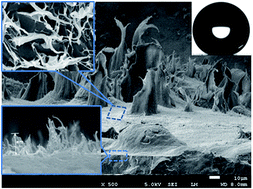
Mechanically stable superhydrophobic polymer films were prepared from a blend of polypropylene (PP) and ultrahigh molecular weight polyethylene (UHMWPE) polymers using a simple hot-press lamination and peeling method. The film's surface morphology, wetting characteristics and resistance against wear abrasion were studied for varying PP/UHMWPE blend ratios. At a minute scale, the superhydrophobic surface was extensively covered with small fibrous protrusions having sizes in the micron to sub-micron range while at larger scales some bigger sized protrusions were also present on the film's surface. The number of bigger protrusions was found to increase with increasing UHMWPE content of the PP/UHMWPE blend films, simultaneously enhancing the wear abrasion resistance and friction characteristics of the films. The bigger sized protrusions on the surface acted as sacrificial protrusions during the wear abrasion of the surface leaving the finer fibrous structures unaffected. The work demonstrated the possibility of producing polymer films with a mechanically stable superhydrophobic surface by a simple hot-press lamination and peeling method which is facile, environmentally friendly and adaptable for mass-production.

Introduction

The discovery that extremely water repelling surfaces like the lotus leaf found in nature have a special microscopic roughness on their surface has prompted extensive research to create similar roughness patterns on artificial surfaces to make them hydrophobic.1–28 The extremely water repelling or in other words superhydrophobic surfaces have potential applications in a number of fields such as anti-icing,2 self-cleaning,3–5 antifogging,6 corrosion resistant surfaces,7,8 agricultural green houses,9 solar cell coatings,10 microfluidics and lab-on-chip11 etc. It is understood that a fine-scale surface roughness and a low surface energy are the two essential requirements for superhydrophobicity. Generally, the surfaces showing a static water contact angle above 150° and a low roll-off angle (usually below 10°) are considered to be superhydrophobic. The contact angle is the angle which the liquid–vapour interface of a liquid droplet makes with its solid–liquid interface when it rests on a flat solid surface; the angle conventionally is measured through the liquid droplet. The roll-off angle is defined as the critical angle at which a liquid droplet begins to roll down on an inclined planar surface.

A myriad of techniques such as the etching techniques (chemical or physical),12 nano-particle based coatings,13 nano-particle surface embedding,14 sol–gel process,15 lithography,16 template-based techniques,17 plasma treatment,18 self-assembly and self-organization,19 chemical deposition,20 layer-by-layer (LBL) deposition,21 colloidal assembly,22 phase separation,23 and electro-spinning24 etc. have been reported for creating superhydrophobic surfaces. But these methods have some disadvantages such as the involvement of cumbersome processes, use of chemicals, difficulty in scaling up, and high cost etc. when considered for mass-production of superhydrophobic surfaces.

We have recently reported a hot-press lamination and peeling method as a simple and facile method for preparation of superhydrophobic polymer films.9 When a hot-pressed laminate of two polymer films were peeled to separate the individual films after cooling the laminate to room temperature, the peeled surfaces were obtained as superhydrophobic because of a special roughness with micron and sub-micron scale structures formed on the surface. The ease of peeling of the hot-pressed laminate, the surface roughness formed on the peeled surfaces, and their wetting properties were dependent on the adhesion level between the two polymer films used for the lamination. This simple method is facile, environmentally friendly and more importantly adaptable for mass-production. The two basic processes of this method, the lamination of two polymer films under a hot-press and the subsequent peeling of the laminate to separate the individual films, are simple to be adaptable for mass-production. By carrying out the film lamination step using an industrial lamination process, like the one utilized for the production of multilayer packaging films, and then automating the peeling step may allow mass-production of superhydrophobic polymer films.

In addition to the easy production, the quality of the surface formed, especially the mechanical stability of the surface, will play a critical role in realizing practical applications for superhydrophobic surfaces. The surface roughness of most superhydrophobic surfaces are inherently fragile because of the small structures with micron and nano-scale sizes and high aspect ratios present on these surfaces.2,27 If the fine-scale surface roughness is damaged the superhydrophobicity of the surface will be affected. One of the strategy explored for limiting the wear abrasion of the fine-scale structures on superhydrophobic surfaces was to fabricate a hierarchical roughness having some relatively bigger and taller structures also among the predominant fine-scale structures on the surface.25–28 When a surface with a hierarchical roughness pattern is subjected to mechanical wear, the bigger and taller structures on the surface may wear out first, in a sacrificial manner, leaving the smaller and shorter protrusions on the surface unaffected. J. Groten et al.27 fabricated a silicone superhydrophobic surface with a dual scale features and found that the resistance of the surface against compressive and shear stresses improved when some “micro-posts” were interposed among the predominant “nanograss structures” on the surface. E. Huovinen et al.28 reported enhanced durability for a polypropylene superhydrophobic surface against mechanical compression and abrasive wear when some bigger protective micropillars were intentionally fabricated among the finer predominant structures on the surface.

Herein we report preparation of a mechanically stable superhydrophobic polymer film prepared from a blend of polypropylene (PP) and ultrahigh molecular weight polyethylene (UHMWPE) polymers by a simple hot-press lamination and peeling method. The wetting properties of the films were determined by measuring the contact angle and the roll-off angles of water droplets on the film surface. The surface morphology was investigated by SEM. The mechanical stability of the film was investigated by subjecting the films to a controlled wear abrasion using a DIN abrader and then checking for the affected surface damage (using SEM) and deterioration in wetting properties of the film. The effect of a hierarchical surface roughness formed on the film and its variation with varying PP/UHMWPE blend composition have on the wetting properties, mechanical stability and friction coefficients of the films are discussed.

Experimental

Materials

The high density polyethylene (HDPE) used was the PH162 grade from LG Chem Ltd., South Korea. The PP used was the grade SB-520 of Honam Petrochemical, South Korea. It had a molecular weight 36 kg mol−1, melt flow index (MFI) 1.8 g/10 min (ASTM D 1238) and density 0.9 g cm−3. The UHMWPE was the grade U050 of Korea Petrochemical Ind. Co., Ltd, South Korea.

Preparation of PP/UHMWPE blend

Different polymer blends of PP and UHMWPE (the PP/UHMWPE blends), varying in the weight ratio of PP/UHMWPE as 90/10, 80/20, 70/30, 60/40 and 50/50, were prepared using a twin-screw extruder (SHJ-20, Nanjing JINJI Machinery Co., Ltd, China). The barrel temperature of the twin-screw extruder at the different zones of the machine were set at 180 °C, 220 °C, 180 °C, 220 °C, and 240 °C from the feed zone to the die and the screw rpm was set at 100. The water quenched extruded strands were granulated and dried in a hot air oven at 80° for 4 hours before preparing films from these granules by hot-pressing.

Hot-press lamination and peeling

First, the individual films of PP/UHMWPE blends and HDPE were prepared by hot-pressing the corresponding polymer granules using a laboratory compression moulding machine at 200 °C temperature by applying pressure of 3 MPa for 2 min. The films prepared were having a thickness of about 0.8 mm. In the hot-press lamination step, a PP/UHWPE blend film was mounted over an HDPE film, preheated between the hot plates of a laboratory compression moulding machine at 200 °C temperature for 90 seconds, and then hot-pressed by applying a compression pressure of 3 MPa for 30 seconds. The resulting laminate was then removed from the hot-press and kept at room temperature for cooling. The cooled laminate was peeled manually to separate the individual films, resulting in the superhydrophobic peeled surfaces. The schematic representation of the hot-press lamination and peeling processes are shown in Fig. 1. As long as the peeling force is larger than the adhesive force between the films, the two films would separate easily creating a roughness on the films surfaces as illustrated in Fig. 1(b).
image file: c5ra24748a-f1.tif
Fig. 1 Illustration of the hot-press lamination and peeling process.

Characterization

The surface morphology of peeled films were investigated by a field emission scanning electron microscope (FESEM, Philips XL-30 FEG). The static contact angle and roll-off angle of water droplets on the film surface were measured using a contact angle measurement system (JC2000D, Shanghai Chengzhong Digital Technology Limited, China). The measurements were done using distilled water droplets with a volume of 5 μL at room temperature and pressure. The average of five measurements taken at different places on each film is reported with the standard deviation. The peel strength of the laminate was measured using a universal testing machine (AI-7000S, GOTECH, China). Films with dimensions 10 cm × 2 cm were peeled at a rate of 50 mm min−1 to obtain the peel strength versus peel displacement curves. The mechanical stability of the films against wear abrasion were evaluated by subjecting the films to a controlled wear abrasion using a DIN abrasion tester (MZ-4060, Jiangsu Mingzhu Testing Machinery Co., Ltd, China). Film specimen with dimensions of 2 cm × 2 cm was fixed onto the specimen holder of a DIN abrasion testing machine whose abrader drum surface was covered with an abrasive paper of grit P1200. The film surface was then subjected to wear abrasion on the machine under a load of 5 N until a 5 cm lateral movement of the specimen holder occurred on the abrader drum of the machine. The static and dynamic coefficients of the films were tested using a Coefficient of Friction Tester (GT-7012-AF, GoTech Testing Machines, Taiwan). A film specimen with dimensions 5 cm × 5 cm was placed under a load of 1 kg and moved over a clean glass surface at a speed of 100 mm min−1 for the measurement.

Results and discussion

Different PP/UHMWPE blend films varying in compositions and HDPE films were laminated using a hot-press and then peeled to prepare superhydrophobic films as described in the Experimental Section. The peeled side of the different PP/UHMWPE blend films and their HDPE counter surfaces were obtained as superhydrophobic with the water contact angles exceeding 150° and roll-off angles being below 10° on these surfaces. The water contact angle and roll-off angle data of the films are presented in Fig. 6 and 7, respectively, and will be discussed later together with the change in the values obtained after a controlled wear abrasion of the film surfaces. The SEM micrographs of the peeled surfaces of the different PP/UHMWPE blend films varying in compositions, are shown in Fig. 2 and those of the HDPE counter surfaces are shown in Fig. 3. The Fig. 2 SEM images taken at a magnification of 5000× present the minute aspects of the surface roughness formed on the peeled films. The presence of numerous fiber like structures with sizes in the micron to submicron scale on the film surface gives it a ‘fiber-mat’ like appearance. The HDPE counter surfaces also show a fibrous morphology (Fig. 3). Though the HDPE counter films were also superhydrophobic, the mechanical stability of their roughness features towards a controlled wear abrasion were significantly poor compared that of the PP/UHMWPE bend films, they are not further discussed in this paper.
image file: c5ra24748a-f2.tif
Fig. 2 SEM images of the peeled surfaces of PP/UHMWPE blend films varying in PP/UHMWPE weight ratios: (a) 100/0 (i.e. PP), (b) 90/10, (c) 80/20, (d) 70/30 (e) 60/40 and (f) 50/50.

image file: c5ra24748a-f3.tif
Fig. 3 The SEM micrographs of the HDPE films peeled from its laminates with different PP/UHMWPE blend films: (a) 80/20, (b) 70/30, (c) 60/40 and (d) 50/50.

The SEM images of the different superhydrophobic PP/UHMWPE bend films, shown in the Fig. 2, do not show much variation with varying compositions because they show the minute sale structures of the surfaces at a magnification of 5000×. However, the variations between different blend compositions are clear in the low magnification (200×) images of the same surfaces shown in Fig. 4. The images in Fig. 4 show that in addition to the smaller fibrous structures, there are some bigger sized protrusions also on the films' surfaces. As seen from the Fig. 4, the sizes of these bigger sized protrusions vary roughly in the range of 10–200 μm. Another significant observation from Fig. 4 is that the number of the bigger sized protrusions increases with increase in UHMWPE content of the blend films.


image file: c5ra24748a-f4.tif
Fig. 4 SEM micrographs of the PP/UHMWPE films with varying compositions taken at a magnification of 100×: (a) 90/10, (b) 80/20, (c) 70/30, and (d) 60/40.

The atomic force microscopy (AFM) is a widely used technique to probe the height profiles of minute surface features present on surfaces and quantify the average roughness value of a surface. But the PP/UHMWPE blend films surfaces were too rough for an AFM analysis. Instead, we have tried to investigate the height profiles of the surface protrusions present on the film's surface by subjecting the cross-sections of the films for SEM investigation. The SEM images obtained for the cross-sections of the different PP/UHMWPE blend films with PP/UHMWPE weight ratios varying as 90/10, 70/30, and 50/50, are shown in Fig. 5.


image file: c5ra24748a-f5.tif
Fig. 5 SEM images of the cross-sections of the PP/UHMWPE superhydrophobic films with varying compositions: (a) 90/10, (b) 70/30, (c) 50/50, (d) 50/50 at high magnification.

The bigger sized, fibrous and non-fibrous protrusions, present on the films' surfaces can be seen in their upright position in Fig. 5(a)–(c). Most of the bigger sized protrusions on the film surface have heights lower than 100 μm, but a few have heights between 100–200 μm. The increase in the number of bigger sized protrusions with increase in UHMWPE content of the blend film can be seen here as well as seen in the Fig. 4. As already described, the film's surface, including that of the bigger non-fibrous protrusions, are extensively covered with minute fibrous protrusions. A height profiles of these minute fibrous structures can be seen in Fig. 5(d), which is a high magnification SEM image of the cross-section of a PP/UHMWPE blend film (50/50 ratio). The thickness of these fibers are mostly in the sub-micron scale. Most of these finer fibrous protrusions have their heights below 1 μm, but a few have heights between 1–2 μm. The extensive presence of these minute and bigger sized protrusions on the film surface is the reason for their superhydrophobicity. When the surface is covered with such a small sized fibrous structures in the size range of micron to sub-micron-scale, the water droplets can rest on the top of these fibers and the interlaying air-pockets in a stable Cassie–Baxter equilibrium state leading to high contact angles and low roll-off angles on these surfaces.29

The special fibrous roughness formed on the film's surface (Fig. 2–5) has its origin in the adhesion and interdiffusion of the polymer chains between the two films laminated using a hot-press lamination process. The unzipping of the inter-diffused and adhered polymer chains, in their frozen state, during the peeling of the laminate results in the fibrous structures on the peeled films. The extent of the adhesion and interdiffusion of the polymer chains between two films of the laminate at their interface is primarily determined by the chemical compatibility between their polymer chains. The ease of peeling of the laminate is inversely related to the extent of the adhesion and interdiffusion of the polymer chains between the films. The ease of peeling and adhesion strength of the different HDPE-PP/UHMWPE laminates have been evaluated by doing a peel test of the laminates using a universal testing machine as described in the Experimental Section. The peeling speed employed was 50 mm min−1. The peel strength versus peel displacement curves obtained for the different HDPE-PP/UHMWPE blend laminates are shown in Fig. 6. The peel strength of the HDPE-PP/UHMWPE laminate increases as the UHMWPE content of the PP/UHMWPE blend film of the laminate increases. This means that there is an increase in adhesion and interdiffusion of the polymer chains between the HDPE film and PP/UHMWPE blend film as the UHMWPE content of the blend film increases. The increase in adhesion and interdiffusion between the polymer chains of the HDPE film and the PP/UHMWPE blend film on increasing the UHMWPE content of the blend film is expected because of the identical chemical nature of the HDPE and the UHMWPE. This increase in the adhesion and interdiffusion of the polymer chains between the HDPE and PP/UHMWPE film with increasing UHMWPE content parallelly caused the increasing number of bigger sized protrusions on the film with increasing UHMWPE content of the film.


image file: c5ra24748a-f6.tif
Fig. 6 The peel strength versus peel displacement curves for the HDPE laminates of the different PP/UHMWPE films varying in composition.

The mechanical stability of the superhydrophobic PP/UHMWPE blend films towards wear abrasion has been evaluated by subjecting the films to a controlled wear abrasion using a DIN abrader machine as described in the Experimental Section. The static water contact angles measured on the films before and after the controlled wear abrasion of the surface are shown in Fig. 7 and the corresponding roll-off angle data in Fig. 8.


image file: c5ra24748a-f7.tif
Fig. 7 Contact angle values of the superhydrophobic PP/UHMWPE blend films before and after controlled wear abrasion of the surface.

image file: c5ra24748a-f8.tif
Fig. 8 Roll-off angle values of the superhydrophobic PP/UHMWPE blend films before and after controlled wear abrasion of the surface.

All the PP/UHMWPE blend films studied here have contact angles above 150° and the contact angle increases only slightly with increasing in UHMWPE content of the blend films. However, the contact angle decreased for all the films after the controlled wear abrasion of the surface. The extent of the contact angle decrease depends on the UHMWPE content of the film. The contact angle decrease was drastic for the blend films having lower UHMWPE contents while it is only marginal for the films with higher UHMWPE contents. The roll-off angles of all the superhydrophobic PP/UHMWPE films were below 10° before the controlled wear abrasion but all increased to above 10° after the wear abrasion. The increase in roll-off angle values after the wear abrasion was more for the blend films having lower UHMWPE contents while it is less for the blend films with higher UHMWPE contents. From the above results it is clear that the damage caused to the fine-scale roughness of the films due to the wear abrasion decreases with increasing UHMWPE content of the film. The PP/UHMWPE film with 50 wt% of UHMWPE retained its superhydrophobicity after the controlled wear abrasion of the surface.

The observed increase in mechanical stability of the roughness features on the film's surface with increasing UHMWPE content of the films can attributed two factors. First, the UHMWPE is a more wear resistant material than PP, therefore an increase in the content of UHMWPE can enhance the wear abrasion resistance of the PP/UHMWPE blend film. The effectiveness UHMWPE in increasing the wear resistance of a PP/UHMWPE blend have been reported by Hashmi et al.30 The second factor contributing to the enhanced wear resistance is the special hierarchal features on the film surface. The surface morphology (Fig. 2, 4 and 5) showed that while the surface is extensively covered with minute fibrous structures, there are also some bigger fibrous and non-fibrous protrusions on the film surface. The increase in the number of these bigger protrusions with increase in UHMWPE content suggests that these bigger protrusions are predominantly constituted by the UHMWPE phase of the blend film. These bigger-sized and more wear resistant protrusions can act as protective protrusions that wear-out first in a sacrificial manner during the wear abrasion of the film leaving the finer fibrous protrusions unaffected. The SEM images of a wear abraded surface of a superhydrophobic PP/UHMWPE blend (50/50 ratio) is shown in Fig. 9, which clearly shows the sacrificial wear-out of the bigger-sized protrusions on the film surface. The enhanced mechanical stability of superhydrophobic surfaces possessing a hierarchical surface roughness have also been reported by other researches as well.27,28 But the significance of this work is that a superhydrophobic surface with protective protrusions were able to form on a polymer blend film effortlessly through a simple and facile hot-press lamination and peeling method.


image file: c5ra24748a-f9.tif
Fig. 9 The SEM micrographs of the wear abraded surfaces of a PP/UHMWPE blend film with 50/50 blend composition.

The static and dynamic coefficients of friction measured on the different superhydrophobic PP/UHMWPE blend films are shown Fig. 10. The friction coefficients decrease continuously with increasing UHMWPE content of the films. This is expected as the UHMWPE has significantly lower friction coefficients compared to PP.30


image file: c5ra24748a-f10.tif
Fig. 10 Variation of the static and dynamic friction coefficients of the superhydrophobic PP/UHMWPE blend films with varying UHMWPE contents.

Additionally, the hierarchical features on the film surface may also have contributed to the sharp decrease in friction coefficients, especially the bigger-sized protrusions on the film surface. During the sliding of the film on a glass surface for the friction coefficient measurement only the bigger-sized protrusions on the film surface may come in direct contact with the glass surface, thereby significantly reducing the contact surface area and friction coefficients. The observed decrease in friction coefficients with increasing UHMWPE content of the films indicates that the film will be less susceptible to adhesive wear when content of UHMWPE is more in the film. Therefore, the superhydrophobic PP/UHMWPE blend films prepared in this study are at the same time less susceptible to and more resistant to surface wear. Four Video files named 1–4 are given as ESI. The Video 1 display peeling of a laminate of a HDPE film and a PP/UHWPE blend film (50/50 ratio) releasing the two superhydrophobic films. The other three Videos 2–4, respectively, display the effects rubbing the film with a dry hand, scratching the film with a knife and rubbing the film on a sand paper (P1200 grit), have on the water repelling nature of a superhydrophobic PP/UHMWPE blend film (50/50 ratio).

Conclusions

Mechanically stable superhydrophobic polymer films were prepared from a blend of polypropylene (PP) and ultrahigh molecular wight polyethylene (UHMWPE) polymers by a simple hot-press lamination and peeling method. The wetting properties measured by contact angles and roll-off angles of water droplets on the film surface showed superhydrophobic nature of the films. The surface roughness of the film characterized by scanning electron microscopy (SEM) showed that the surface of the films were extensively covered with minute fibrous structures with sizes in the micron and sub-micron scale and some bigger fibrous and non-fibrous protrusions were also present. The mechanical stability of the superhydrophobic surface increased with increasing UHMWPE content of the blend films. This was attributed to an increase in number of the bigger fibrous and non-fibrous protrusions on the film's surface with the increasing UHMWPE content. The bigger sized protrusions were acted as sacrificial protrusions during the wear abrasion of the surface, leaving the finer fibrous structures on the film's surface unaffected. The work demonstrated the possibility of producing mechanically stable superhydrophobic polymer films using a facile, inexpensive technique adaptable for mass-production.

Acknowledgements

This research was supported by the China Postdoctoral Science Foundation (Grant No. 2013M531561) and the Promotive research fund for excellent young and middle-aged scientists of Shandong province (BS2013CL018).

References

  1. W. Barthlott and C. Neinhuis, Planta, 1997, 202, 1–8 CrossRef CAS.
  2. L. Cao, A. K. Jones, V. K. Sikka, J. Wu and D. Gao, Langmuir, 2009, 25, 12444–12448 CrossRef CAS PubMed.
  3. A. Solga, Z. Cerman, B. F. Striffler, M. Spaeth and W. Barthlott, Bioinspiration Biomimetics, 2007, 2, S126–S134 CrossRef PubMed.
  4. B. Bhushan, Philos. Trans. R. Soc., A, 2009, 367, 1445–1486 CrossRef CAS PubMed.
  5. C. Xue, S. T. Jia, J. Zhang and J. Z. Ma, Sci. Technol. Adv. Mater., 2010, 11, 1–15 CrossRef.
  6. X. Gao, X. Yan, X. Yao, L. Xu, K. Zhang, J. Zhang, B. Yang and L. Jiang, Adv. Mater., 2007, 19, 2213–2217 CrossRef CAS.
  7. K. C. Chang, H. I. Lu, C. W. Peng, M. C. Lai, S. C. Hsu, M. H. Hsu, Y. K. Tsai, C. H. Chang, W. I. Hung, Y. Wei and J. M. Yeh, ACS Appl. Mater. Interfaces, 2013, 5, 1460–1467 CAS.
  8. C. W. Peng, K. C. Chang, C. J. Weng, M. C. Lai, C. H. Hsu, S. C. Hsu, S. Y. Li, Y. Wei and J. M. Yeh, Polym. Chem., 2013, 4, 926–932 RSC.
  9. Z. X. Zhang, Y. Li, M. Ye, K. Boonkerd, Z. X. Xin, D. Vollmer, J. K. Kim and X. Deng, J. Mater. Chem. A, 2014, 2, 1268–1271 CAS.
  10. X. Deng, L. Mammen, Y. Zhao, P. Lellig, K. Müllen, C. Li, H. J. Butt and D. Vollmer, Adv. Mater., 2011, 23, 2962–2965 CrossRef CAS PubMed.
  11. G. Evangelos, K. Ellinas and A. Tserepi, Microelectron. Eng., 2015, 132, 135–155 CrossRef.
  12. S. M. Li, et al., Chin. J. Inorg. Chem., 2012, 28, 1755–1762 CAS.
  13. Y. Lu, S. Sathasivam, J. Song, C. R. Crick, C. J. Carmalt and I. P. Parkin, Science, 2015, 347, 1132–1135 CrossRef CAS PubMed.
  14. H. Iman, G. M. M. Sadeghi, S. H. Jafari, H. A. Khonakdar, J. Seyfi, M. Holzschuh and F. Simon, Mater. Des., 2015, 86, 338–346 CrossRef.
  15. K. Tadanaga, N. Katata and T. Minami, J. Am. Ceram. Soc., 1997, 80, 3213–3216 CrossRef CAS.
  16. Y. Kwon, N. Patankar, J. Choi and J. Lee, Langmuir, 2009, 25, 6129–6136 CrossRef CAS PubMed.
  17. Y. C. Jung and B. Bhushan, Langmuir, 2009, 25, 9208–9218 CrossRef CAS PubMed.
  18. X. M. Zhang, J. H. Zhang, Z. Y. Ren, X. Li, X. Zhang and D. F. Zhu, Langmuir, 2009, 25, 7375–7382 CrossRef CAS PubMed.
  19. D. K. Schwartz, Annu. Rev. Phys. Chem., 2001, 52, 107–137 CrossRef CAS PubMed.
  20. A. Borras, A. Barranco and A. R. Gonzalez-Elipe, Langmuir, 2008, 24, 8021–8026 CrossRef CAS PubMed.
  21. L. Zhai, F. C. Cebeci, R. E. Cohen and M. F. Rubner, Nano Lett., 2004, 4, 1349–1353 CrossRef CAS.
  22. C. Sun, L. Q. Ge and Z. Z. Gu, Thin Solid Films, 2007, 515, 4686–4690 CrossRef CAS.
  23. X. H. Li, G. M. Chen, Y. M. Ma, L. Feng, H. Z. Zhao and L. Jiang, Polymer, 2006, 47, 506–509 CrossRef CAS.
  24. M. L. Ma, R. M. Hill, J. L. Lowery, S. V. Fridrikh and G. C. Rutledge, Langmuir, 2005, 21, 5549–5554 CrossRef CAS PubMed.
  25. T. Verhao, C. Bower, P. Andrew, S. Franssila, O. Ikkala and R. H. A. Ras, Adv. Mater., 2011, 23, 673–678 CrossRef PubMed.
  26. E. Huovinen, J. Hirvi, M. Suvanto and T. A. Pakkanen, Langmuir, 2012, 28, 14747–14755 CrossRef CAS PubMed.
  27. J. Groten and J. Rühe, Langmuir, 2013, 29, 3765–3772 CrossRef CAS PubMed.
  28. E. Huovinen, L. Takkunen, T. Korpela, M. Suvanto, T. T. Pakkanen and T. A. Pakkanen, Langmuir, 2014, 30, 1435–1443 CrossRef CAS PubMed.
  29. A. B. D. Cassie and S. Baxter, Trans. Faraday Soc., 1944, 40, 546–551 RSC.
  30. S. A. R. Hashmi, S. Neogi, A. Pandey and N. Chand, Wear, 2001, 247, 9–14 CrossRef CAS.

Footnote

Electronic supplementary information (ESI) available. See DOI: 10.1039/c5ra24748a

This journal is © The Royal Society of Chemistry 2016
Click here to see how this site uses Cookies. View our privacy policy here.