Efficient conversion of biomass-derived furfuryl alcohol to levulinate esters over commercial α-Fe2O3

Dezhang Ren, Jun Fu, Lu Li, Yunjie Liu, Fangming Jin and Zhibao Huo*
School of Environmental Science and Engineering, The State Key Laboratory of Metal Matrix Composites, Shanghai Jiao Tong University, 800 Dongchuan Road, Shanghai 200240, China. E-mail: hzb410@sjtu.edu.cn; Fax: +86-21-54742251; Tel: +86-21-54742251

Received 17th November 2015 , Accepted 17th February 2016

First published on 17th February 2016


Abstract

An efficient process for the production of levulinate esters from biomass-derived furfuryl alcohol in liquid alcohol over commercial α-Fe2O3 was firstly investigated. Among the catalysts we tested, α-Fe2O3, a cheap, commercially available and environmentally benign catalyst, exhibited a remarkable catalytic performance for the transformation and gives levulinate esters in good yield compared to the previous studies. The corresponding esters such as methyl levulinate, ethyl levulinate and butyl levulinate were obtained in high yields under optimized reaction conditions. Several influence factors for the formation of levulinate esters were also discussed. A plausible reaction mechanism for the formation of levulinate ester from furfuryl alcohol was proposed. From the viewpoint of practice and economy, the present study provides a potential application for the efficient synthesis of fine chemicals from biomass-derived compounds over cheap, commercially available and environmentally benign catalysts.

1. Introduction

Petroleum oil, which promotes the development of human society, has been diminishing at an alarming rate during the past century. Its over-consumption leads to a host of energy crisis issues and environmental problems. Biomass and its derivatives are warmly welcomed since they are a kind of abundant, renewable and clean organic carbon resource.1–3 To some extent, their effective utilization can relieve the overdependence on petroleum resources.4

Over the past decade, reports on the acid-catalyzed conversion of carbohydrate biomass to levulinate esters (LEs), one of the important compounds, were published at an increasing rate.5–7 LEs can be used as solvent, flavoring agent, fuel additive and intermediates for the synthesis of the value-added chemicals and fuels.8–11 In recent years, the production of LEs from furfuryl alcohol (FA), obtained easily via hydrogenation of biomass-derived furfural (FAL), has been increasingly noticed. Acid catalyst is considered as the key point for LEs production. Strong mineral acids or metal salts as homogeneous catalysts to prompt this reaction were investigated at early stage.12,13 However, theses homogeneous catalysts lead to some problems like difficulties in treatment and separation of highly toxic mixture liquid, inevitable reaction container corrosion. To avoid that, various solid acid catalysts have been developed and studied, such as acidic ion-exchange resins,14 organic–inorganic hybrid solid acid,15 aluminosilicate acid,16,17 carbon or organosilica material.18–20 Moreover, acidic ionic liquid (ILs) is another good choice, several groups reported good selectivity of production of ethyl levulinate and γ-valerolactone (GVL) from FA and ethanol using sulfonic acid functionalized ILs.21,22 However, the above-mentioned catalysts or catalytic processes still existed several defects. For example, expensive and poor thermal stability, low yield of LEs, the complex preparation of catalyst and the synthetic process of feedstock for preparation of catalyst or ILs itself with possible environmental risks and pollution.23 Therefore, development of cheaper, greener and efficient catalyst is imperative.

Previously, our group24–26 and other groups27 reported some interesting results on the conversion of biomass to fuel and industrial chemicals catalyzed by metal and metal oxides. Iron oxides and iron salts are known to have widespread applications, including photocatalytic water-splitting, Fischer–Tropsch synthetic hydrocarbons,28,29 due to its abundant, cheap, easily obtained, low or nontoxicity and environmentally friendly nature. Recently, iron(III) acetylacetonate as catalyst was investigated to produce LEs from FA.30 However, this process used toxic solvent CCl4, and formed corrosive HCl as the reaction progress, and the formed HCl was considered as a real catalyst to prompt the FA conversion. Therefore, to develop a new cleaner route with iron-contain substance as catalyst is a promising option.

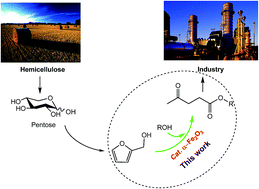
Herein, we report a greener and efficient approach for the conversion of FA to LEs in liquid alcohol mediated by commercial α-Fe2O3 (hematite), one of the important iron oxides and widely distributed in the earth crust. The corresponding esters such as methyl levulinate, ethyl levulinate and butyl levulinate have been effectively obtained in high yields. Several formed key intermediates during the reaction were also discussed (Scheme 1).


image file: c5ra24319j-s1.tif
Scheme 1 Conversion of furfuryl alcohol into levulinate esters over α-Fe2O3.

2. Experimental

2.1 Experimental materials and procedure

Furfuryl alcohol (≥98.5%), methanol (≥99.5%), ethanol (≥99.7%), n-butanol (≥99.5%), ethyl levulinate (99%) and metal powder or oxides including Ni (≥99.5%), Co (≥99%), Cu (≥99.7%), Cr (≥99%), Fe (≥98%), Pd/C (5%), ZrO2 (≥99%), Al2O3 (AR), SiO2 (AR), TiO2 (≥98%), Cu2O (≥90%), CuO (≥99%), Fe3O4 (≥98%), α-Fe2O3 (≥99%), FeCl3·6H2O (AR), Fe(NO3)3·9H2O (AR) were purchased from Sinopharm Chemical Reagent (China). Fe(acac)3 (AR), methyl levulinate (99.0%, GC) was purchased from J&K Scientific Ltd. Butyl levulinate (98%) was obtained from Aladdin Chemical Reagent. CuFe2O4 was prepared according to the literature.31

Most of the experiments were performed in a Teflon-lined stainless steel batch reactor with an inner volume of 30 mL. Typical procedure for the synthesis of levulinate esters was as follows. The catalyst, solvent and furfuryl alcohol were added into reactor, respectively. Before the reactor sealed, the loaded reactor was purged by nitrogen for excluding the effect of air. Then, the reactor was placed into a preheated oven. After a stipulated time, the reactor was taken out from the oven and cooled down to room temperature. The reaction time was defined as the time when the oven temperature was up to 250 °C after the reactor placed.

In this study, 0.23 mmol furfuryl alcohol as starting material was used in all experiments. Due to the limiting temperature of the Teflon container was 250 °C, the SUS 316 reactor was used when the experiment was performed at 300 °C in this study.

2.2 Product analysis

The liquid samples were collected via a filter procedure and analyzed by gas chromatography (Agilent GC7890A, with flame ionization detector) and gas chromatograph-mass spectrometer (Agilent GC7890A-MS5975C), both of which equipped with HP Innowax capillary column (30 m × 0.25 mm × 0.25 μm). The solid samples were collected and analyzed by X-ray diffraction (XRD).

The yield of LEs was calculated on the basis of the following equation.

image file: c5ra24319j-t1.tif

3. Results and discussion

3.1 Catalyst screening

Initially, we screened the catalysts for the alcoholysis of FA in ethanol in the production of ethyl levulinate (EL). All experiments were conducted in the presence of catalysts in 10 mL ethanol at 250 °C for 60 min, the results are summarized in Table 1. It can be seen that the target product (EL) did not appear when no catalyst was used (entry 1). We first tested Fe(acac)3, which is an effective catalyst for the alcoholysis of FA according to the previous report, and no reaction took place, even all the FA was exhausted (entry 2). A magnetic CuFe2O4 containing Cu and Fe atoms did not give the desired product EL (entry 3) either. Interestingly, α-Fe2O3 exhibited an excellent catalytic activity for the transformation and provided a good yield of 73% (entry 4). In Fig. S1, it is clear that the peak of product EL (m/z = 144.1) by GC/MS spectrum was observed. The catalytic role of α-Fe2O3 has been confirmed by XRD patterns and SEM images in Fig. S2 and S3. It can be seen clearly that α-Fe2O3 did not change before and after the reaction. However, the presence of other catalysts, such as Fe3O4, ZrO2 and CuO, did not produce the desired EL, the conversion of FA was also low (entries 5–7). In order to improve the yield of EL, various catalysts were also investigated and no desired products EL were obtained (see Table S1 in ESI). Based on the obtained results, the acidity of commercial α-Fe2O3, CuFe2O4 and Fe3O4 was investigated by NH3-TPD analysis. The result found the acid amount of commercial α-Fe2O3 is 0.1 mmol g−1 while CuFe2O4 and Fe3O4 did not show the acidity. It indicated that commercial α-Fe2O3 acted as acidic catalyst for the reaction. However, the acidity of α-Fe2O3 after repeat reaction was investigated and found that the acid amount was decreased from 0.1 mmol g−1 to 0.06 mmol g−1 and yield was decreased to 38%. This indicated that decreasing the acidity of α-Fe2O3 might lead to the low yield and also reduce its recycle ability.
Table 1 Catalyst screening for the production of EL from FAa
Entry Catalyst Alcohol FA conv. (%) EL yield (%)
a Reaction condition: 0.23 mmol FA, catalyst 5 mmol, ethanol 10 mL 250 °C, 60 min.b 2.5 mmol CuFe2O4 was used.
1 None Ethanol 0 0
2 Fe(acac)3 Ethanol 100 0
3b CuFe2O4 Ethanol 9.9 0
4 α-Fe2O3 Ethanol 100 73
5 Fe3O4 Ethanol 0.5 0
6 ZrO2 Ethanol 0 0
7 CuO Ethanol 4 0


In view of the good result of used α-Fe2O3, the effect of the amount of α-Fe2O3 on the production of EL was checked as shown in Fig. 1a. The experiments were conducted in 10 mL ethanol at 250 °C for 60 min in the amount of catalyst range of 2.5–12.5 mmol. All the FA was exhausted quickly. The yield of EL increased remarkably with the amount of α-Fe2O3 raising from 2.5 to 7.5 mmol. The maximum EL yield of 83% was achieved when the amount of α-Fe2O3 up to 7.5 mmol. However, the yield of EL decreased with the amount of α-Fe2O3 increasing from 7.5 to 12.5 mmol. The decreasing yield might be attributed to the polymerization of FA during the reaction when the amount of α-Fe2O3 was excessive. The detail discussion of polymerization will be given later.


image file: c5ra24319j-f1.tif
Fig. 1 Effect of parameters: (a) amount of α-Fe2O3 (0.23 mmol FA, 10 mL ethanol, 250 °C, 60 min); (b) volume of ethanol (0.23 mmol FA, 7.5 mmol α-Fe2O3, 250 °C, 60 min); (c) temperature (0.23 mmol FA, 7.5 mmol α-Fe2O3, 10 mL ethanol, 60 min); (d) time (0.23 mmol FA, 7.5 mmol α-Fe2O3, 10 mL ethanol, 250 °C).

3.2 Effect of the volume of ethanol

The concentration of substrate is a key factor for most of chemical reactions. In general, polymerization of FA to oligomeric compounds will occur at a high concentration. Thus, the effect of the volume of ethanol for the conversion of FA into EL was investigated. The experiments were carried out in the presence of 7.5 mmol α-Fe2O3 at 250 °C for 60 min with the volume range of ethanol from 4.5 to 15 mL as shown in Fig. 1b. The conversion of FA was 100% with ethanol range from 4.5 to 15 mL. The yield of EL increased gradually when the ethanol volume changed from 4.5 mL to 7.5 mL. The highest yield of EL reached 83% when the ethanol volume was 7.5 mL. Between 7.5 mL and 10 mL, of EL decreased from 83% at 10 mL to 76% at 15 mL. This might be because higher ethanol volume caused higher pressure to accelerate the decomposition of EL.

3.3 Effect of the temperature and time

It is generally known that both reaction temperature and time are also important factors on the reaction efficiency and product yield. Fig. 1c shows the influence of temperature in the range of 100 °C to 300 °C in presence of 7.5 mmol α-Fe2O3 in 10 mL ethanol for 60 min. The yield of EL was rather low (1%) when the reaction was carried out at 100 °C and the conversion of FA was 11.8%, indicating that the reaction for the formation of EL was difficulty happened at low temperature. As the temperature raised from 100 °C to 250 °C, the yield of EL increased significantly from 1 to 83% and the conversion of FA also increased quickly. However, the yield of EL decreased rapidly at 300 °C and only a 15% yield of EL was obtained, many undetermined peaks were observed on the gas chromatogram. This results indicated that side reactions of FA might take place at a higher temperature.

Consideration of the potential polymerization of FA at a higher temperature, the experiment at lower temperature was carried out at 130 °C with the reaction time changed from 2 h to 12 h. The results in Fig. S4 showed that FA was consumed within 2 h, the EL yield raised as the reaction time increased, and the maximum value of EL was 82% at 10 h which is similar to the highest yield of EL at 250 °C at 60 min. From the observation above, it is thought that the temperature from 130 °C to 250 °C for the polymerization process of FA did not give a significant influence. However, a higher reaction temperature can effectively shorten the reaction time.

The influence of the reaction time from 10 to 80 min on the production of EL was shown in Fig. 1d by keeping other conditions constant (α-Fe2O3 7.5 mmol, ethanol 10 mL, 250 °C). The yield of EL increased as the reaction time prolonged to 60 min, and the maximum yield of 83% was obtained. When the time up to 80 min, the yield of EL decreased gradually. To investigate whether the produced EL was decomposed and gave reduced yield at longer time or not, the experiment using EL as feedstock was carried out with 7.5 mmol α-Fe2O3 in 10 mL ethanol at 250 °C for 80 min. The concentration of EL decreased from 14.1 mmol L−1 before reaction to 13.3 mmol L−1 after reaction. Hence, this evidence supports that a longer reaction time, to certain extent, can be negative for the production of EL.

3.4 Scope of various alcohols

With optimized reaction condition in hand, we next assessed the substrate scope of the reaction. The results are summarized in Table 2. The reaction of FA and methanol, instead of ethanol, gave the methyl levulinate (ML) in 73% yield (entry 1). The substrate n-butanol also proceeded well and obtained the corresponding n-butyl levulinate (BL) in 86% yield (entry 3).
Table 2 Reaction of FA with different alcohols to produce levulinate estersa
Entry Alcohol FA conv. (%) Yield (%)
a Reaction condition: 0.23 mmol FA, 7.5 mmol α-Fe2O3, 10 mL alcohol, 250 °C, 40 min.b 7.5 mL methanol was used.c Time was 60 min.d Time was 80 min.
1b Methanol 100 73
2c Ethanol 100 83
3d n-Butanol 100 86


3.5 Intermediates study and proposed mechanism

The mechanism of the conversion of FA to LEs is still not clear for the identification of the different intermediates separated during the alcoholysis processes of FA, and several plausible reaction pathways were proposed in previous studies.15,16,32

In general, the intermediates can contribute to understand the reaction pathway. As shown in Fig. 2, the time profile of the reaction of FA monitoring by GC. From Fig. 2, the completely conversion of FA occurred within 20 min. Peaks of three possible intermediates formed within the first 10 min were observed, which then became smaller and disappeared completely at the end. However, it is obvious that the peak area of product EL increased continuously during the reaction. This observation indicated that the intermediates including 2-(ethoxymethy)furan (EMF), compounds 1 and 2 were converted gradually to product EL after 10 min.


image file: c5ra24319j-f2.tif
Fig. 2 The peaks area change of FA, EL and possible intermediates at different time (0.23 mmol FA, 7.5 mmol α-Fe2O3, 10 mL ethanol, 250 °C).

Fig. 3 also shows the same changes of peaks of FA, EL, and three possible intermediates. With the time increased, peaks of FA, EL and three intermediates can be observed at the first 10 min and then peaks of FA and three intermediates became smaller and smaller until disappeared completely from 10 min to 50 min, only peak of EL could be observed at last.


image file: c5ra24319j-f3.tif
Fig. 3 Gas chromatogram of liquid samples (0.23 mmol FA, 7.5 mmol α-Fe2O3, 10 mL ethanol, 250 °C).

Mass spectrum informations of three possible intermediates by GC/MS are described in Fig. S5. EMF was identified based on the comparison of the mass spectra between our result and previous report.16 2-(alkoxymethy)furan was considered to be a first-step intermediate during the alcoholysis of FA.15 However, other two intermediates with the probable molecular weight of 203 or 173 g mol−1 were hard to be identified.

As we know, water is produced in the alcoholysis process of FA which will cause the dehydration reaction to form diethyl ether16,32 and 2-(ethoxymethy)furan. Next, the effect of water and its amount on the alcoholysis of FA was further discussed. Herein, we carried out the experiments of the alcoholysis of FA with added large amount of water at first (Table 3). As a result, interestingly no catalyst also gave a lower 5% yield of EL (entry 1). It might be because water acted as an acid catalyst to affect the alcoholysis of FA.4 However, its selectivity was low and mixtures, such as EMF, EL, FA and other by-products, were obtained as shown in Fig. S6. The yield of EL decreased quickly from 73% without water (entry 4, Table 1) to 36% with water in the presence of α-Fe2O3 (entry 2, Table 3). Catalysts ZrO2 and Cu2O gave lower yield in ethanol/water system (entries 3–4). These results indicate that large amount of water is favoured for the side reactions and polymerization15,33,34 similar to appearances observed by Dumesic and coworkers.32

Table 3 Influence of water on the alcoholysis process of FAa
Entry Catalyst Alcohol Additive FA conv. (%) EL yield (%)
a Reaction condition: FA 0.23 mmol catalyst 5 mmol, ethanol or ethanol/water (v/v = 1/1) 10 mL 250 °C, 60 min.b FA 1.157 mmol, 200 °C.c 1 g molecular sieve was used.
1b None Ethanol + water 96 5
2 α-Fe2O3 Ethanol + water 100 36
3 ZrO2 Ethanol + water 100 21
4 Cu2O Ethanol + water 100 15
5c α-Fe2O3 Ethanol Molecular sieve 100 30
6c None Ethanol Molecular sieve 0 0


However, it is still debatable whether produced trace amount of water as a reactant participates in the alcoholysis process of FA or not.15,32 Two reactions by using drying agents were conducted to identify. 4 Å molecular sieve (MS), which has been reported as drying agent used to remove water in organic reaction,35 was added into ethanol system to investigate the influence of the trace amount of water. The yield of 30% was obtained (entry 5). When molecular sieve was used in the absence of α-Fe2O3, no reaction took place and no desired product was obtained (entry 6). The presence of α-Fe2O3 + molecular sieve or α-Fe2O3 only gave 30% (entry 5) and 83% yield (best result obtained in this study), respectively. These results indicated that molecular sieve could not catalyze this reaction and α-Fe2O3 acted as an efficient catalyst for EL production. These observation indicate that trace amount of water plays an important role and can promote the alcoholysis process as a reactant.

Based on the observation above, a plausible mechanism of the alcoholysis process of FA to EL is presumably similar to the previous reports.15,32 As is illustrated in Scheme 2, FA first reacted with ethanol to produce intermediate 1, and subsequent loss of ethanol to give 2. Next, the obtained cation 2 underwent nucleophilic conjugate 1,4-addition of ethanol to give species 3. Species 4 was formed by a hydrogen shift from 3. Finally, H2O as nucleophile attacked species 4 to produce 5, and then isomerization to obtain desired EL.


image file: c5ra24319j-s2.tif
Scheme 2 A possible pathway of the alcoholysis process of FA to EL.

4. Conclusions

We explored an efficient method for the production of levulinate esters by the alcoholysis process of biomss-derived furfuryl alcohol over commercial α-Fe2O3. Among the alcohol substrates test, the highest yield of 73%, 83% and 86% of corresponding methyl levulinate, ethyl levulinate and n-butyl levulinate were achieved, respectively under optimal reaction conditions. On the basis of the investigation of intermediates and the role of water and its amount, a plausible mechanism was proposed. The present study provides a fast, efficient and environmentally friendly method for the conversion of biomass-based compounds to value-added chemicals.

Acknowledgements

The authors gratefully acknowledge the financial support from the State Key Program of National Natural Science Foundation of China (No. 21436007). Key Basic Research Projects of Science and Technology Commission of Shanghai (14JC1403100). The Program for Professor of Special Appointment (Eastern Scholar) at Shanghai Institutions of Higher Learning (ZXDF160002). We thank the all reviewers and editors for reviewing the manuscript and providing valuable comments.

Notes and references

  1. G. W. Huber, S. Iborra and A. Corma, Chem. Rev., 2006, 106, 4044–4098 CrossRef CAS PubMed.
  2. N. Ya'aini, N. A. Amin and M. Asmadi, Bioresour. Technol., 2012, 116, 58–65 CrossRef PubMed.
  3. J. S. Kim, Y. Y. Lee and T. H. Kim, Bioresour. Technol., 2015, 199, 42–48 CrossRef PubMed.
  4. F. M. Jin and H. Enomoto, Energy Environ. Sci., 2011, 4, 382–397 CAS.
  5. J. Hegner, K. C. Pereira, B. DeBoef and B. L. Lucht, Tetrahedron Lett., 2010, 51, 2356–2358 CrossRef CAS.
  6. J. J. Bozell and G. R. Petersen, Green Chem., 2010, 12, 539–554 RSC.
  7. C. Chang, G. Xu and X. Jiang, Bioresour. Technol., 2012, 121, 93–99 CrossRef CAS PubMed.
  8. J. Zhang, S. Wu, B. Li and H. Zhang, ChemCatChem, 2012, 4, 1230–1237 CrossRef CAS.
  9. M. Chia and J. A. Dumesic, Chem. Commun., 2011, 47, 12233–12235 RSC.
  10. H. J. Bart, J. Reidetschlager, K. Schatka and A. Lehmann, Ind. Eng. Chem. Res., 1994, 33, 21–25 CrossRef CAS.
  11. Y. Yang, C. Hu and M. M. Abu-Omar, Bioresour. Technol., 2012, 116, 190–194 CrossRef CAS PubMed.
  12. Co B. F. Goodrich, WO8002423-A1, BE883067-A, WO8002423-A, US4236021-A, BR8008666-A, EP28234-A, JP56500451-A, CA1140579-A, IT1141938-B, 1980.
  13. Y.-B. Huang, T. Yang, M.-C. Zhou, H. Pan and Y. Fu, Green Chem., 2015 10.1039/c5gc01581b.
  14. J. P. Lange, W. D. van de Graaf and R. J. Haan, ChemSusChem, 2009, 2, 437–441 CrossRef CAS PubMed.
  15. Z. Zhang, K. Dong and Z. K. Zhao, ChemSusChem, 2011, 4, 112–118 CrossRef CAS PubMed.
  16. P. Neves, S. Lima, M. Pillinger, S. M. Rocha, J. Rocha and A. A. Valente, Catal. Today, 2013, 218–219, 76–84 CrossRef CAS.
  17. P. Neves, M. M. Antunes, P. A. Russo, J. P. Abrantes, S. Lima, A. Fernandes, M. Pillinger, S. M. Rocha, M. F. Ribeiro and A. A. Valente, Green Chem., 2013, 15, 3367–3376 RSC.
  18. P. A. Russo, M. M. Antunes, P. Neves, P. V. Wiper, E. Fazio, F. Neri, F. Barreca, L. Mafra, M. Pillinger, N. Pinna and A. A. Valente, J. Mater. Chem. A, 2014, 2, 11813–11824 CAS.
  19. S. Zhu, C. Chen, Y. Xue, J. Wu, J. Wang and W. Fan, ChemCatChem, 2014, 6, 3080–3083 CrossRef CAS.
  20. B. Lu, S. An, D. Song, F. Su, X. Yang and Y. Guo, Green Chem., 2015, 17, 1767–1778 RSC.
  21. A. M. Hengne, S. B. Kamble and C. V. Rode, Green Chem., 2013, 15, 2540–2547 RSC.
  22. G. Wang, Z. Zhang and L. Song, Green Chem., 2014, 16, 1436–1443 RSC.
  23. T. P. Pham, C. W. Cho and Y. S. Yun, Water Res., 2010, 44, 352–372 CrossRef CAS PubMed.
  24. L. Xu, Z. Huo, J. Fu and F. Jin, Chem. Commun., 2014, 50, 6009–6012 RSC.
  25. Y. S. Adam, Y. Fang, Z. Huo, X. Zeng, Z. Jing and F. Jin, Res. Chem. Intermed., 2015, 41, 3201–3211 CrossRef CAS.
  26. F. Wang, Y. Wang, F. Jin, G. Yao, Z. Huo, X. Zeng and Z. Jing, Ind. Eng. Chem. Res., 2014, 53, 7939–7946 CrossRef CAS.
  27. M. Besson, P. Gallezot and C. Pinel, Chem. Rev., 2014, 114, 1827–1870 CrossRef CAS PubMed.
  28. M. Hermanek, R. Zboril, I. Medrik, J. Pechousek and C. Gregor, J. Am. Chem. Soc., 2007, 129, 10929–10936 CrossRef CAS PubMed.
  29. R. V. Jagadeesh, A. E. Surkus, H. Junge, M. M. Pohl, J. Radnik, J. Rabeah, H. Huan, V. Schunemann, A. Bruckner and M. Beller, Science, 2013, 342, 1073–1076 CrossRef CAS PubMed.
  30. R. I. Khusnutdinov, A. R. Baiguzina, A. A. Smirnov, R. R. Mukminov and U. M. Dzhemilev, Russ. J. Appl. Chem., 2007, 80, 1687–1690 CrossRef CAS.
  31. S. M. Baghbanian and M. Farhang, RSC Adv., 2014, 4, 11624–11633 RSC.
  32. G. M. González Maldonado, R. S. Assary, J. A. Dumesic and L. A. Curtiss, Energy Environ. Sci., 2012, 5, 8990–8997 Search PubMed.
  33. Y. Yang, Z. Du, Y. Huang, F. Lu, F. Wang, J. Gao and J. Xu, Green Chem., 2013, 15, 1932–1940 RSC.
  34. M. Hronec, K. Fulajtárova and M. Mičušik, Appl. Catal., A, 2013, 468, 426–431 CrossRef CAS.
  35. G. Budroni and A. Corma, J. Catal., 2008, 257, 403–408 CrossRef CAS.

Footnote

Electronic supplementary information (ESI) available. See DOI: 10.1039/c5ra24319j

This journal is © The Royal Society of Chemistry 2016
Click here to see how this site uses Cookies. View our privacy policy here.