Phosphorhydrazide inhibitors: toxicological profile and antimicrobial evaluation assay, molecular modeling and QSAR study

Khodayar Gholivand*a, Lida Asadib, Ali Asghar Ebrahimi Valmoozia, Meraat Hodaiic, Mahboobeh Sharifid, Hadi Mazruee Kashanic, Hamid Reza Mahzounia, Mohammad Ghadamyarid, Ali Asghar Kalatea, Ehsan Davaria, Sami Salehia and Mahyar Bonsaiic
aDepartment of Chemistry, Tarbiat Modares University, Tehran, Iran. E-mail: gholi_kh@modares.ac.ir
bDepartment of Chemistry, Islamic Azad University, Science and Research Branch, Tehran, Iran
cDepartment of Chemistry, Islamic Azad University, North Tehran Branch, Tehran, Iran
dDepartment of Animal Science, Guilan University, Rasht, Iran

Received 16th November 2015 , Accepted 4th February 2016

First published on 5th February 2016


Abstract

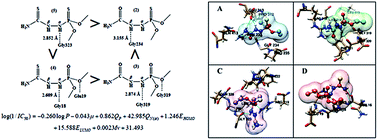
A series of phosphorhydrazide (PHA) derivatives with the (X = O,S) P–NHα–NHβ–C (X = O,S) skeleton (1–23) were synthesized and characterized by spectral techniques. A single crystal X-ray study of 4 and 21 provided confirmation of the hydrogen bonding structures. The synthesized compounds exhibited drastically reduced antibacterial activity against Gram-positive and -negative bacteria compared to the reference drugs. The insecticide activity of the PHAs appraised for the elm leaf beetle demonstrated that (CH3O)2(S)P–NHα–NHβ–C(O)(C4H4O) has more effect than the other compounds in inhibiting α-esterase. Docking analysis showed that hydrogen bonds were formed between the N–Hα protons of the (S)P–NHα–NHβ–C(S), (O)P–NHα–NHβ–C(S) and (O)P–NHα–NHβ–C(O) moieties with Gly323, Gly18 and Gly319 as well as the N–Hβ proton of the (S)P–NHα–NHβ–C(O) moiety and the AChE receptor site (Gly234). According to the QSAR model, the net charge of the N–Hα (QN(α)) nitrogen atom contributes an important electronic function in the inhibition of AChE. A high interrelationship between QN(α) and QP proved that the NH–P(X) moiety has a higher inhibitory activity than the NH–C(X) moiety.

Introduction

Phosphoramidate pesticides with the (X)P–NH–C(X) skeleton such as acephate have been shown to possess high inhibition of human cholinesterase (ChE) through hydrogen bond formation between the N–H hydrogen and the H–O oxygen of Ser in the esteratic site.1–3 Therefore, designing and producing a selective pesticide with high insecticide activity against the insect but low anti-AChE activity in humans is required. Hence, in this study, we investigate the insecticide potency and the inhibition of ChE enzymes by phosphorhydrazide (PHA) analogous with the (X)P–NH–NH–C(X) skeleton. The presence of two nucleophilic nitrogen atoms together with the phosphoryl and carbonyl functional groups led to attractive electronic and structural properties.4–7 The hydrazides of phosphorothioic acid esters, diarylphosphinic acid esters of methylphosphonic and methylphosphonothioic acid exhibit pesticidal, bactericidal and fungicidal activities.8 Quantitative structure–activity relationship (QSAR) equations enabled us to create correlations between the electronic and structural parameters and the inhibition potency.9–12 Integrated molecular docking and QSAR model approaches were used to evaluate the binding interactions between the PHA analogous and the ChE enzymes. To evaluate and control the influence of the physicochemical properties on the inhibitory potency, it is necessary to prepare a large number of PHA derivatives, including those with electron donor and acceptor substituents. In this work, 23 novel PHAs with the general formula (R1R2)P(X)–NHα–NHβ–C(X)(Y), (X = O and S; Y = NH2, (C2H5)NH, (C6H5)NH, C4H4O, C6H5, NC5H4; R1 & R2 = OCH3, OC2H5, C6H5O, C6H5NH, C6H5, NC4H8O and Cl) (1–23) were synthesized and characterized by 31P, 13C, and 1H NMR, IR spectroscopy and X-ray crystallography. The toxicological activities of the PHA derivatives on humane ChE enzymes and insects were determined.13 Xanthogaleruca luteola were collected from elm trees leaves and reared on the leaves of Ulmus densa Litw. Same-aged larvae (third instars) were randomly selected for the bioassay. The synthesized compounds were screened for antibacterial activity against Bacillus subtilis, Staphylococcus aureus, Escherichia coli, Pseudomonas aeruginosa, Candida albicans and Saccharomyces cerevisiae.

Results and discussion

Spectral study

The spectroscopy data and phosphorus–hydrogen (2JPNH), phosphorus–carbon (2,3JPC) coupling constants and δ(31P) of compounds 1–23 are summarized in Table 1. Phosphorus chemical shifts δ(31P) were observed in the range of −11.54 ppm (16) to 74.3 ppm (1). As 31P NMR spectra reveal the effect of X on δ(31P), in the P[double bond, length as m-dash]X moiety the comparison can be made that compounds 1, 2, 4, 11, and 19 containing a P[double bond, length as m-dash]S moiety show a higher upfield shift compared to the compounds with a P[double bond, length as m-dash]O moiety. That is to say, the presence of a sulfur atom leads to the deshielding of the phosphorus atom in these derivatives. The 31P NMR spectra show different splitting patterns; compounds 1, 8, 9, 11, and 15 show multiplet patterns, although the rest appear as doublets. This splitting pattern arises from spin couplings between the phosphorus nucleus and the NH protons, while the doublet of triplets appearing in the spectra of compounds 2, 3, and 4 are achieved from spin couplings between the phosphorus nucleus, NH and two equivalent hydrogen atoms in the ethoxy (OEt) groups. The 2JPNHα was not observed for compounds 10, 12, 15, 22, and 23. Compound 9 reveals that (2JPNHα)hydrazide > (2JPNH)amide > (2JPNH)amine.
Table 1 Selected spectroscopic NMR and IR experimental data of the products
No. δ(31P)P[double bond, length as m-dash]X(O,S) δ(1H)N–H δ(13C)C[double bond, length as m-dash]X(O,S) 2JPNH(hydrazide) νP[double bond, length as m-dash]X(O,S) νC[double bond, length as m-dash]X(O,S) νN–H
1 74.30 7.48 159.11 41.2 814 1654 3440
2 69.89 7.39 159.19 39.9 790 1650 3449
3 6.21 7.02 159.62 32.2 1216 1663 3423
4 4.42 7.59 160.62 28.9 1206 1612 3174
5 68.66 7.89 182.12 35.1 1297 1606 3415
6 2.61 7.82 159.26 38.0 1215 1672 3300
7 −4.52 8.04 150.28 33.7 1191 1609 3290
8 3.22 7.61 159.99 33.9 1202 1665 3200
9 0.74 7.26 161.01 32.7 1182 1672 3300
10 11.17 7.91 167.68 7.95 1080 1654 3431
11 72.90 7.78 34.5 1240 1550 3334
12 22.97 8.18 1191 1681 3420
13 24.08 8.34 12.3 1177 1607 3200
14 −1.13 10.90 1217 1539 3263
15 −1.10 8.90 155.01 1243 1693 3286
16 −2.80 8.08 156.48 37.7 1279 1656 3381
17 −23.52 7.80 156.51 24.0 1246 1701 3292
18 −0.60 8.73 157.37 1226 1687 3368
19 73.31 7.84 38.5 1675 3345
20 −11.54 7.91 1202 1652 3772
21 31.25 157.39 1200 1668 3180
22 0.69 1302 1673 3275
23 −1.06 6.64 1219 1666 3310


A comparison of the 2JPNHα values indicates that the compounds with a P[double bond, length as m-dash]S group (1, 2, and 15) have a larger coupling than molecules with a P[double bond, length as m-dash]O group (3, 4, and 13). The greatest and lowest 2JPNHα values are observed for 1 (2JPNHα = 41.2 Hz) with the (S)P–NHαβHN–C(O) skeleton and 13 (2JPNHα = 12.3 Hz) with the (O)P–NHαβHN–C(S) skeleton. The δ(13C) values for compounds 1–23 are observed in the range of 150.28 ppm (7) to 167.61 ppm (10). 2JPC has a maximum value (2JPC = 8.51 Hz) in compound 2, arising from spin coupling of the CH2 group carbon atom with the phosphorus atom. The 3JPC values in the titled compounds indicate that 3JPC(aromatic) is greater than 3JPC(aliphatic). Also, the ipso C atoms of the phenoxy moiety show a P–C coupling constant. It is noticeable that in 8, the ipso carbon of the aniline group has no coupling with the phosphorus atom. Analysis of the IR spectra indicates that the vibrational bands of compounds 1–23 appear in the range of 1539 cm−1 to 1681 cm−1 for the C[double bond, length as m-dash]O and C[double bond, length as m-dash]S groups, and the fundamental ν(P[double bond, length as m-dash]X) stretching modes are observed in the range of 790 cm−1 to 1302 cm−1.

Crystal structures

Colorless single crystals of both compounds 4 and 21 which are suitable for X-ray diffraction analysis were grown from an ethanol/acetonitrile mixture after slow evaporation at room temperature. The crystal data of the X-ray analysis are given in Table 2.
Table 2 Crystallographic data of compounds 4 and 21
  4 21
Empirical formula C5H14N3O3PS C17H15N2O3P
Formula weight 227.22 326.28
Temperature (K) 100(2) K 120(2) K
Wavelength (Å) 0.71073 0.71073
Crystal system, space group Orthorhombic, Pbca Triclinic, P[1 with combining macron]
[thin space (1/6-em)]
Unit cell dimensions
a (Å) 9.0600(5) 8.2009(8)
b (Å) 9.2136(5) 8.7089(8)
c (Å) 25.3700(14) 11.2790(11)
α (°) 90 78.414(2)
β (°) 90 83.899(3)
γ (°) 90 73.626(2)
V3) 2117.8(2) 756.08(13)
Z, calculated density (mg m−3) 8, 1.425 2, 1.433
Absorption coefficient (mm−1) 0.440 0.199
F(000) 960 340
Crystal size (mm) 0.43 × 0.30 × 0.29 0.24 × 0.21 × 0.15
θ range for data collection (°) 2.76–28.99 1.85–28.99
Limiting indices −12 ≤ h ≤ 12, −12 ≤ k ≤ 12, −34 ≤ l ≤ 34 −11 ≤ h ≤ 11, −11 ≤ k ≤ 11, −15 ≤ l ≤ 15
Reflections collected/unique 23[thin space (1/6-em)]676/2822 [R(int) = 0.0340] 8362/3992 [R(int) = 0.0220]
Completeness to theta 100.0% 99.4%
Absorption correction Semi-empirical from equivalents Semi-empirical from equivalents
Refinement method Full-matrix least-squares on F2 Full-matrix least-squares on F2
Data/restraints/parameters 2822/6/135 3992/0/209
Goodness-of-fit on F2 1.043 0.951
Final R indices R1 = 0.0462, wR2 = 0.1046 R1 = 0.0415, wR2 = 0.1073
R indices (all data) R1 = 0.0500, wR2 = 0.1067 R1 = 0.0527, wR2 = 0.1128
Largest diff. peak and hole (e Å−3) 0.578 and −0.517 0.553 and −0.297


Molecular structures are shown in Fig. 1A and B for compounds 4 and 21, respectively.


image file: c5ra24209f-f1.tif
Fig. 1 ORTEP representation of compounds 4 and 21.

Compounds 4 and 21 crystallize in the orthorhombic crystal system with space group Pbca, and triclinic with space group P[1 with combining macron], respectively. The phosphorus atom has a slightly distorted tetrahedral configuration in both compounds 4 and 21, that is, the surrounding angles around the P atom are in the range of 104.7(3)°–109.98(6)° and 102.25(6)°–111.80(6)°, respectively. The P[double bond, length as m-dash]X bond distance is 1.9356(7) Å in 4 and 1.4855(10) Å in 21. Compound 4 is disordered by two positions, C(4), C(5), O(3) and C(4′), C(5′), O(3′) with occupancies of 0.69 and 0.31. The P–Nα bond distance of 1.654(6) Å in 4 and 1.659(12) Å in 21 is shorter than the single bond P–N distance of 1.77 Å. Also, the C–Nβ bond length in 4 (1.367(2) Å) is longer than the bond length in 21 (1.358(19) Å). It is noteworthy that the bonds P[double bond, length as m-dash]S and N–Hα with C[double bond, length as m-dash]O and N–Hβ are in a syn position in crystal structure 4. These orientations lead to the creation of different hydrogen bonds between the functional groups. The N(3)–H(3)⋯O(1)[double bond, length as m-dash]C, N(1)–H(1)α⋯O(1)[double bond, length as m-dash]C and N(2)–H(2)β⋯S(1)[double bond, length as m-dash]P hydrogen bonds produce a three dimensional network that seems to be a head-to-head ordered bird-like array along the a-axis of the unit cell (Fig. 2A).


image file: c5ra24209f-f2.tif
Fig. 2 Illustration of R22(8) graph sets and a model to describe the hydrogen-bonded cluster as a head-to-head ordered bird-like array in compound 4.

Polymeric chains formed in the crystal lattice with cyclic R22(8) motifs via P[double bond, length as m-dash]S⋯Hβ–N (d = 3.341(17) Å) and C[double bond, length as m-dash]O⋯Hα–N (d = 2.922(2) Å) hydrogen bonds (Fig. 2B). The large atomic radius and low electronegativity of the sulfur atom decreased the strength of the hydrogen bonding between P[double bond, length as m-dash]S and NH. In compound 21, the P[double bond, length as m-dash]O and C[double bond, length as m-dash]O bonds are in a gauche position against the N–Hα and N–Hβ bonds. Two dimers formed in the crystal lattice with cyclic R22(10) motifs in which the monomers are connected to each other via two P[double bond, length as m-dash]O⋯Hβ–N hydrogen bonds with a distance of 2.833(16) Å (Fig. 3A and B).


image file: c5ra24209f-f3.tif
Fig. 3 Illustration of R22(10) graph sets and a model to describe the hydrogen-bonded cluster in compound 21.

Prediction of biological activity

The insecticide potential and anti-AChE activities of seventeen PHA analogues have been obtained by using PASS software and the results are summarized in Table 3. The insecticidal properties of all compounds are predicted in the range of 0.196 to 0.543. Table 3 shows that compounds 1 and 2 with the (CH3O)2(S)P–NHαβHN–C(O) and (C2H5O)2(S) PNHαβHN–C(O) skeletons are two particularly significant candidates for insecticide toxins because they have a low anti-AChE activity in humans and high insecticide properties in the insects.
Table 3 Statistical parameters of the physicochemical properties and experimental and predicted anti-AChE activities of the PAH analogous

image file: c5ra24209f-u1.tif

PAH analogous Biological activity
No. Y R1 R2 X1 X2 Prediction (Pa) Experimental (IC50 mM)
Anti-AChE Insecticide AChE BChE
1 NH2 (CH3O) (CH3O) S O 0.202 0.543 54.40 58.17
2 NH2 (C2H5O) (C2H5O) S O 0.198 0.523 71.04 21.53
3 NH2 (C2H5O) (C2H5O) O O 0.414 0.507 64.00 6.62
4 NH2 (C2H5O) (C2H5O) O S 0.454 0.476 55.68
5 NH2 (C2H5O) (C2H5O) S S 0.240 0.494 35.52
6 NH2 (C6H5O) (C6H5O) O O 0.421 0.532 55.04 34.14
7 NH2 (C6H5O) (C6H5O) O S 0.460 0.503 52.48
8 NH2 (C6H5NH) (C6H5O) O O 0.489 0.322 83.52 30.40
9 NH2 (C6H5NH) (C6H5)C(O)NH O O
10 NH2 (C6H5NH) (C6H5)C(O)NH O S 0.160
11 (C2H5)NH (CH3O) (CH3O) S S 0.349 0.477 127.10
12 (C2H5)NH (C6H5) (C6H5) O S 0.153 0.229 119.84 172.49
13 (C6H5)NH (C6H5) (C6H5) O S 0.198 110.88 64.80
14 (C6H5)NH Cl Cl O S
15 (C6H5)NH Cl Cl O O
16 (C6H5)NH (C6H5O) (C6H5O) O O 0.398 0.507
17 (C6H5)NH (C6H5) (C6H5) O O 0.292
18 (C6H5)NH (NC4H8O) (NC4H8O) O O
19 (C4H4O) (CH3O) (CH3O) S O 0.447 128.22 87.33
20 (C4H4O) (C6H5O) (C6H5O) O O 0.246 0.451 118.21 54.56
21 (C4H4O) (C6H5) (C6H5) O O 0.196
22 (C6H5) Cl Cl O O 80.73
23 (NC5H4) Cl Cl O O 95.87


Anticholinesterase activity

To test the experimental anti-ChE activity of the synthesized compounds, we evaluated the inhibitory potential of the titled compounds against AChE and BChE enzymes by Ellman assay (Fig. 4A and B). The inhibitory ability of the PHA derivatives on the BChE enzyme was better than on AChE. The inhibitory ability of selected compounds against AChE and BChE were in the 35.52 (5) to 128.22 (19) mM range and 6.62 (3) to 172.49 (12) mM, respectively (Table 3). Compound 5 with the P(S)NH–HN(S)C skeleton against AChE and compound 3 with the (O)P–NH–HN–C(O) moiety against BChE displayed the most potent inhibitory activities. Comparison of 2, 3, 4 and 5 with the (C2H5O)2(X1)P–NH–HN–C(X2)NH2 structure revealed that the inhibitory activity of P[double bond, length as m-dash]S (5) > P[double bond, length as m-dash]O (4) including the NH–HN(S)C–NH2 moiety. In contrast, the inhibitory activity of P[double bond, length as m-dash]O (3) > P[double bond, length as m-dash]S (2) including the NH–HN–C(O)NH2 moiety. The inhibitory activity of compound 3 is higher than that of compound 6 with the (R)2(O)P–NH–HN–C(O)NH2 (R = OC2H5, OC6H5) moiety, because the presence of the electron acceptor substituent around the P[double bond, length as m-dash]X group increases the inhibitory potential of the PHA derivatives.
image file: c5ra24209f-f4.tif
Fig. 4 Plot of VI/V0 against log[I] for the inhibitors. VI and V0 are the AChE (A) and BChE (B) enzyme’s activities (OD min−1), and [I] is the inhibitor concentration (μM).

Meanwhile, the presence of an electron acceptor substituent around the C[double bond, length as m-dash]X group decreases the inhibitory activity such that NH2 (1) > C4H4O (19) with the (CH3O)2(S)P–NH–HN–C(S)R (R = NH2, C4H4O) moiety. The comparison of the experimental data (p(IC50) and the predicted anti-AChE activities is shown in Fig. 5B. As shown in Fig. 5A, a linear relationship gives the plot of probable insecticide potential against (p(IC50).


image file: c5ra24209f-f5.tif
Fig. 5 The plot of experimental values against the prediction of anti-AChE activity (A); the plot of probable insecticide potential against the probable anti-AChE activity of the titled compounds (B).

In order to gain a better understanding of the inhibition mechanism, it is necessary to examine the interaction of the PHA derivatives with the ChE structures by molecular docking techniques.

Insecticide potential

Like the vertebrate AChEs, invertebrate AChEs belongs to the α/β hydrolase fold family, with a core of eight β-sheets connected by α-helices. The 3D structures of invertebrate enzymes are folded similarly, and their active sites closely overlap. The main structural differences between them are found in their external loops and in the tilt of the C-terminal helix, which are unlikely to affect the catalytic function directly. The result of initial monitoring showed that four compounds had a mortality effect of more than 80% when we used the 5000 ppm concentration. In the second section, after monitoring four compounds, just two of them were selected for the bioassay (Table 4).
Table 4 Monitoring LC50 from POLO-PC and IC50 related to AChE and the treated larvae
No. Mortalitya (%) (5000 ppm) Mortalityb (%) (2500 ppm) IC50 (95%) LC50 (95%) IC50 (in vivo)
a First monitoring of compounds.b Second monitoring of compounds.
11 75 665 (315.23–1025.85)
12 50 497.28 (214.04–824.62)
13 80 50 230.91 (188.58–388.07)
19 90 65 38.84 (23.14–52.86) 1760.630 (1428.582–2477.581) 982.82 (836.60–1131.04)
20 65 417.67 (181.85–970.17)


Also IC50 values for the AChE were determined for all compounds on the extracted enzyme from third instar larvae of X. luteola that they didn’t treat with any compound. Four concentrations (2500, 1250, 850 and 650) for compound 19 were selected to apply the bioassay in third instar larvae of X. luteola. The mortality data were used to determine the LC50 using POLO-PC and the results are shown in Table 4. Our investigations demonstrated that compound 19 had a better insecticidal effect than the other compounds, as the LC50 was lower. As this compound affected the AChE, the activity of this enzyme was measured at each concentration of treated larvae. The high activity of compound 19 is dependent on increasing the concentration of the inhibitor (Table 4). Also, the IC50 in the treated larvae was measured with the use of POLOL-PC (Fig. 6). Esterase is one of the important enzymes in insects. Most have a de-toxification role when the insects encounter toxic compounds. The alpha and beta esterases were measured from the treated larvae. The results showed that compound 19 could inhibit α-esterase more than the other enzyme, because the AChE in most insects belongs to this group of esterase (Fig. 7A and B).


image file: c5ra24209f-f6.tif
Fig. 6 Relative activity of AChE from the treated larvae after treatment for 24 h.

image file: c5ra24209f-f7.tif
Fig. 7 Relative activity of α (A) and β-esterase (B) from the third instar treated larvae.

Antimicrobial activity

Compounds 12, 14, 17 and 20 were screened to evaluate their antimicrobial activity against Bacillus subtilis (ATCC 465), Staphylococcus aureus (ATCC 25923), Escherichia coli (ATCC 25922), Pseudomonas aeruginosa (ATCC 85327), Candida albicans (ATCC 10231) and Saccharomyces cerevisiae (ATCC 9763) using disk diffusion method (GIZ) and MIC (minimum inhibitory concentration) experiments. The results of the assays are presented in Table 5.
Table 5 Disc diffusion test (GIZ) and minimum inhibitory concentration (MIC) as a criterion of the antibacterial activities of the synthesized compounds
Compound Bacillus subtilis (ATCC 465) Staphylococcus aureus (ATCC 25923) Escherichia coli (ATCC 25922) Pseudomonas aeruginosa (ATCC 85327) Candida albicans (ATCC 10231) Saccharomyces cerevisiae (ATCC 9763)
GIZ MIC GIZ MIC GIZ MIC GIZ MIC GIZ MIC GIZ MIC
a The values indicate the diameters in mm for the zone of growth inhibition (GIZ, (250 μg per disc)).b Minimal inhibitory concentration (MIC) in μg cm−3 observed after 24 h of incubation at 35 °C.c Not tested.
12 0.0 0.00 0.0 0.00 0.00 0.00
14 18.0 <2 13.0 124.0 9.0 512.0 0.00 12.0 256.0 10.0 512.0
17 0.00 0.00 0.00 0.0 0.00 0.00
20 0.00 0.00 0.00 0.00 0.00 0.00
Nystatin 18.0 8.0 23.0 4.0
Gentamicin 28.0 0.125 20.0 0.5 20.0 0.5.0 18.0 1.0
Chloramphenicol 26.0 4.0 22.0 8.0 24.0 4.0 8.0 256.0


The screening data reveal that compound 14 exhibited higher activity towards the tested microorganisms (MIC 2–512 μg cm−3) than the other compounds. The data show that compounds 12, 17 and 20 were inactive against microorganisms. The MIC values of 14 against certain bacterial strains indicate that Bacillus subtilis were more sensitive to the toxicity of the synthesized compound than other bacteria. Furthermore, the activity of derivative 14 was lower than that of the standard antibiotics nystatin, gentamycin and chloramphenicol.

Molecular modeling study

Docking calculations allow predictions of the structures of all the complexes between the enzymes and ligands, thus suggesting the nature of the interactions. The interactions between the PHA derivatives and the AChE receptor were achieved by molecular docking, which can facilitate the selection of appropriate molecular parameters in subsequent QSAR studies.14 The receptor site of AChE consists of at least four sub-sites: (i) anionic sub-sites, (ii) an esteratic site, (iii) an oxyanion-hole and (iv) acyl-pocket sites.15 They are located in the active site gorge of AChE so as to maximize the favorable contacts. The hydrogen bonds (H-bonds) are the main features of the interactions of compounds 2, 3, 4 and 5 with the (C2H5O)2P(X1)NH–HN(X2)CNH2 (X1 and X2 = O,S) skeleton at the active site of AChE (Scheme 2, Fig. 8A–D).
image file: c5ra24209f-s1.tif
Scheme 1 The H-bond of the N–H proton of compounds 2, 3, 4 and 5 with the Gly of AChE.

image file: c5ra24209f-s2.tif
Scheme 2 Preparation of PHA derivatives (1–23).

image file: c5ra24209f-f8.tif
Fig. 8 2D model of the interaction between compounds 2 (A), 3 (B), 4 (C) and 5 (D) and the AChE enzyme.

In Fig. 8A, the N–Hβ proton of compound 2 forms an H–bond with the C[double bond, length as m-dash]O group of Gly234 (d = 3.155 Å). Fig. 8B–D show a 2D representation of the interaction mode of the above compounds in the charged site of AChE. H-bonding was found to occur between the N–Hα hydrogen of compounds 3, 4 and 5 with the oxygen of the O[double bond, length as m-dash]C groups of Gly319 (d = 2.874 Å), Gly18 (d = 2.609 Å) and Gly323 (d = 2.852 Å), respectively. Moreover, the existence of an H-bond between the P-OC2H5 oxygen and the H–N group of Gly319 and Glu19 in compounds 3 and 4 result in the H-bond length of N–Hα⋯O[double bond, length as m-dash]C(Gly) decreasing (Fig. 8B and D). Scheme 1 and the data in Table 1 show that the increasing chemical shifts of the NHα proton for compounds 3, 4 and 5 indicates their enhancing acidity, forming a stronger hydrogen bond with the receptor site and consequently increasing the inhibitory potency in the order of 5 > 4 > 3.

Although the inhibitory activity of compound 5 is high, the length of the H-bond is less than that for compounds 3 and 4. This is due to the side interactions of compounds 3 and 4 with Gly319 and Glu19. Moreover, the acidity of the NH group for compound 2 is higher than compounds 3 and 4, but its inhibitory activity is lower, because compound 2 is attached through the N–Hβ proton to the acceptor site. To continue this work, the QSAR technique was used to find the effective electronic and structural parameters.

QSAR analysis

The docking data provides important basic information including the interaction model, and the effective functional groups as well as the electronic and structural properties of the inhibition mechanism. These data can act as a guide to create and develop the QSAR models. So far, no model in the literature has been suggested to explain the inhibition mechanism of PHAs against ChE enzymes. Here, we explain the inhibition mechanism of human AChE and BChE by theoretical QSAR models. Moreover, the QSAR equation of anti-BChE activity could not be obtained because the number of independent variables is more than the tested compounds (Table 6).
Table 6 Quantum-chemical and theoretical descriptors for 14 compounds computed at B3LYP/6-311+G** level
No. Electronic Hydroph. Steric
QP QN(α) QN(β) QC(1) PP[double bond, length as m-dash]X PC[double bond, length as m-dash]X PN–H(α) PN–H(β) EHOMO ELUMO ω μ log[thin space (1/6-em)]P Mv
1 1.953 −0.797 −0.486 0.783 −2.546 −1.443 1.209 0.868 −0.234 −0.022 0.077 7.007 1.35 127.581
2 1.963 −0.797 −0.486 0.782 −2.562 −1.442 1.208 0.868 −0.231 −0.022 0.076 7.246 1.25 161.607
3 2.447 −0.808 −0.485 0.782 −3.512 −1.447 1.221 0.864 −0.270 −0.022 0.086 7.169 0.89 163.656
4 2.449 −0.805 −0.450 0.283 −3.510 −0.563 1.230 0.831 −0.223 −0.029 0.082 8.447 0.66 172.839
5 1.974 −0.798 −0.450 0.292 −2.616 −0.646 1.222 0.862 −0.238 −0.031 0.087 9.156 2.15 182.117
6 2.440 −0.800 −0.485 0.786 −3.483 −1.444 1.214 0.864 −0.246 −0.028 0.086 7.067 1.37 245.822
7 2.448 −0.796 −0.450 0.292 −3.527 −0.637 1.225 0.864 −0.241 −0.034 0.091 8.446 0.58 178.145
8 2.382 −0.792 −0.497 0.776 −3.437 −1.416 1.204 0.878 −0.221 −0.031 0.083 9.350 0.64 222.825
11 1.966 −0.792 −0.461 0.308 −2.607 −0.654 1.215 0.869 −0.236 −0.029 0.085 8.664 3.12 145.030
12 2.047 −0.799 −0.463 0.310 −3.160 −0.656 1.212 0.867 −0.235 −0.051 0.111 14.551 4.96 255.997
13 2.046 −0.796 −0.455 0.304 −3.157 −0.606 1.210 0.865 −0.234 −0.053 0.113 12.077 6.68 286.695
19 1.964 −0.793 −0.447 0.623 −2.603 −1.273 1.213 0.860 −0.255 −0.063 0.131 9.669 5.35 140.240
20 2.450 −0.796 −0.447 0.626 −3.581 −1.275 1.219 0.860 −0.256 −0.064 0.133 11.011 7.42 199.641
22 1.842 −0.792 −0.464 0.674 −2.874 −1.319 1.224 0.883 −0.275 −0.072 0.148 9.993 1.50 167.672
23 1.841 −0.791 −0.456 0.671 −2.873 −1.298 1.225 0.878 −0.283 −0.084 0.169 6.298 1.19 130.943


An optimal AChE-QSAR equation based on theoretical (DFT) data shown in Table 6 was obtained for fourteen compounds as follows (eqn (1)):

 
p(IC50) = −0.375[thin space (1/6-em)]log[thin space (1/6-em)]P + 0.060μ − 15.329QP + 56.999QN(α) + 163.595QN(β) + 10.029QC − 9.163PP[double bond, length as m-dash]X − 51.570PN–H(α) − 7.880PN–H(β) + 7.083EHOMO + 138.138ELUMO + 0.001Mv + 195.444, n = 14; R2 = 0.970; RAdj2 = 0.607; Sreg = 0.572; r = 0.44, Fstatistic = 2.676 (1)
where n is the number of compounds, r is the correlation coefficient, R2 is the determination coefficient, RAdj2 is the adjusted determination coefficient, Sreg is the standard deviation of regression and Fstatistic is the Fisher statistic.16 Eqn (1) gives the high values of Sreg = 0.572 and Variance Inflation Factor (VIF > 10), resulting in the rejection of the QSAR model. A VIF ≥ 10 indicates a collinearity problem. On the other hand, the VIF value greater than 10 (Table 7) is associated with multicollinearity.

Table 7 VIFa values of experimental and theoretical QSAR equations
Independent variables Eqn (1) Eqn (3) Eqn (4)
a VIF = 1/(1 − Ri2); where, Ri is the multiple correlation coefficient of the ith independent variable on all of the other independent variables.
log[thin space (1/6-em)]P 67.624 2.326 2.780
QP 902.129 2.624 2.189
QN(α) 148.198 3.308 4.050
QN(β) 121.893    
QC(1) 61.948    
PLP[double bond, length as m-dash]X 958.020    
PLC[double bond, length as m-dash]X      
PLN–H(α) 89.233    
PLN–H(β) 170.166    
EHOMO 150.819 46.424 3.389
ELUMO 477.493 1415.791 7.050
ω   1725.849  
μ 67.624 6.551 4.348
Mv 17.899 2.301 2.247


Therefore, the variables with a high VIF are candidates for exclusion from the model.17 Thus the PCA method was used to reduce the independent variables. The principal components (PCs) as a new set of variables (mutually orthogonal) were obtained by this method. Fisher’s weight approach is a method for the reduction and selection of the best descriptors, which have a high correlation between the variables and principal components.18 Eqn (2a) and (2b) were obtained with eight variables from among fourteen descriptors:

 
PC1 = +0.150[thin space (1/6-em)]log[thin space (1/6-em)]P + 0.050μ − 0.369QP + 0.365QN(α) + 0.337EHOMO − 0.426ELUMO + 0.435ω − 0.152Mv (2a)
 
PC2 = −0.312[thin space (1/6-em)]log[thin space (1/6-em)]P − 0.365μ − 0.077QP + 0.027QN(α) − 0.068EHOMO + 0.186ELUMO − 0.140ω − 0.140Mv (2b)

The main variables were found from the principle scores of the normalized eigenvalue of the two principal components. The results from eqn (2a) and (2b) showed that the first and second factor PC on the total variance were 59.5% and 24.3%, respectively. Also, from the above equations, it was deduced that the electronic parameters are predominated from those related to structural parameters. The MLR was performed using these eight descriptors, which resulted in the following equation (eqn (3)):

 
p(IC50) = −0.250[thin space (1/6-em)]log[thin space (1/6-em)]P − 0.246μ − 0.264QP − 86.475QN(α) − 46.380EHOMO − 287.500ELUMO − 219.273ω + 0.004Mv − 69.650, n = 14; R2 = 0.833; RAdj2 = 0.566; Sreg = 0.602; r = 0.113; Fstatistic = 3.117 (3)

The low determination coefficient (R2 = 0.833) and high residuals (Sreg = 0.602) with high VIF (see Table 7) are associated with the collinearity problem. An improvement in eqn (3) was carried out by omitting compounds 8 and 9 from the training set compounds and replacing the ELUMO and EHOMO with variable ω. Consequently, multiple regression performed using the remaining five parameters yielded the following model with an increasing of R2 = 0.934 and a decrease of Sreg = 0.389.

 
p(IC50) = −0.260[thin space (1/6-em)]log[thin space (1/6-em)]P − 0.043μ + 0.862QP + 42.985QN(α) + 1.246EHOMO + 15.588ELUMO + 0.002Mv + 31.493, n = 12; R2 = 0.934; RAdj2 = 0.817; Sreg = 0.389; r = 0.031; Fstatistic = 8.023 (4)

The correlating parameters have VIF < 10 and values of correlation r = 0.031, thus there is no collinearity problem (Table 7). In this equation, the inhibitory potency against AChE is influenced mainly by the electronic parameters with the preferential order QN(α) > ELUMO > EHOMO > QP versus the structural descriptor (log[thin space (1/6-em)]P, μ and Mv). Comparison of the correlation coefficient of the net charge of the Nα atom (+42.985) with random error (+31.493) demonstrates that QN(α) can play a crucial function in the interaction of the PHA derivatives with AChE. Moreover, eqn (4) suggests that ELUMO with the correlation coefficient = +15.588 is the next noteworthy descriptor to improve its inhibitory activity. The significance of ELUMO indicates that the low electrophilicity of the compounds, thereby donating electrons to their lowest unoccupied molecular orbital, would help them to improve the inhibitory activity. These two electronic descriptors (QN(α) and ELUMO) are most responsible for the inhibitory activity and this model shows that increasing QN(α) and ELUMO values can lead to an increase in inhibitory activity against the AChE enzyme. A correlation matrix was used to determine the interrelationship between the independent variables (Table 8).

Table 8 Correlation matrix for p(IC50) and selected parameters in eqn (4)
  log[thin space (1/6-em)]P μ QP QN(α) EHOMO ELUMO Mv
log[thin space (1/6-em)]P 1.000            
μ 0.751 1.000          
QP −0.071 −0.084 1.000        
QN(α) 0.272 0.115 −0.686 1.000      
EHOMO 0.078 0.236 0.233 −0.334 1.000    
ELUMO −0.448 −0.343 0.481 −0.729 0.624 1.000  
Mv 0.504 0.658 0.257 −0.166 0.363 0.023 1.000


Table 8 shows that the majority of the regression coefficients were higher than 0.70, showing that they were closely correlated. Therefore, orthogonalization of the molecular descriptors was conducted. Orthogonalization of molecular descriptors is undertaken to avoid collinearity among variables and model overfitting. The evaluation of the correlation coefficient of ELUMO versus QN(α) (r = −0.729) shows that ELUMO has the higher contribution to the QN(α); this implies that the frontier molecular orbital controlled process plays a very important function in the interaction of the compounds with AChE. Thus, decreasing the energy of the LUMO can greatly increase the QN(α) and subsequently the value of log(1/IC50). From Table 3, we can easily find that the NH2C(X)NH–NHP(X) derivatives have considerably higher activities than the RC(X)NH–NHP(X) (R = (C2H5)NH, (C6H5)NH, C4H4O, C6H5 and NC5H4) derivatives because they have much higher QN(α) and lower ELUMO. Also, in Table 8, a high interrelationship was observed between QN(α) and QP (r = −0.686). Therefore, the NH–P(X) moiety has a much higher inhibitory activity than the NH–C(X) moiety. In eqn (4), we also investigated the influence of structural descriptors log[thin space (1/6-em)]P and μ on the exhibition of p(IC50). Here also, log[thin space (1/6-em)]P alone has very poor statistics with the correlation coefficient of −0.260. This means that lipophilic character has a weak influence on the inhibitory activity. Even the combination of log[thin space (1/6-em)]P and the dipole moment parameter gave strong statistics (r = +0.751). The importance of the dipole in modulating the inhibition activity may be due to polarization of the (thio)phosphoryl (P+–X) and (thio)carbonyl groups (C+–X), where a permanent polarization is seen due to the electronegativity difference between the atoms. This permanent polarization may result in a dipole–dipole type of interaction with the receptor site of the enzyme.

Conclusion

23 novel phosphorhydrazides with the general formula (R1R2)P(X)–NHα–NHβ–C(X) (Y), (X = O and S; Y = NH2, (C2H5)NH, (C6H5)NH, C4H4O, C6H5, NC5H4; R1 & R2 = OCH3, OC2H5, C6H5O, C6H5NH, C6H5, NC4H8O and Cl) (1–23) were synthesized and characterized by spectral techniques and X-ray crystallography. Docking analysis showed reversible noncovalent interactions, especially hydrogen bonds, occurring between the N–Hα and N–Hβ protons of the P(X1)NHα–NHβ(X2)C moiety and the Gly of the AChE enzyme. MLR-QSAR models (to R2 = 0.934 and 2.189 < VIF < 7.050) clarified that the net charge of the N–Hα nitrogen atom contributes an important electronic function in the inhibition of AChE. A high interrelationship in the correlation matrix was observed between QN(α) and QP (r = −0.686). Therefore, the NH–P(X) moiety has a much higher inhibitory activity than the NH–C(X) moiety. The synthesized compounds exhibited decreased antibacterial activity against Gram-positive and -negative bacteria compared to chloroamphenicol, nystatin and gentamicin as reference drugs. The insecticide activity of compounds 11–13 and 19–20 appraised for the elm leaf beetle showed that compound 19 was more effective than the other compounds in inhibiting the α-esterase of the insect AChE enzyme.

Material and methods

Instruments

The enzyme AChE (human erythrocyte; Sigma, Cat. no. C0663) and BChE (bovine erythrocyte, Sigma, Cat. no. B4186), Triton X-100, bovine serum albumin, acetylcholinesterase (AChE, EC 3.1.1.7), alpha-naphthyl acetate, beta-naphthyl acetate, fast blue RR, DMSO, and sodium dodecyl sulfate (SDS) were all from Sigma-Aldrich. Acetylthiocholine iodide (ATCh, 99%, Fluka), 5,5′-dithiobis(2-nitrobenzoic acid)) (DTNB, 98%, Merck), Na2HPO4, NaH2PO4 (99%), (thio)hydrazide, triethylamine (99.5%, Merck), CDCl3 (99%, Sigma Aldrich), (CH3O)2P(S)Cl, (CH3CH2O)2P(S)Cl and (CH3CH2O)2P(O)Cl (97%, Sigma Aldrich) were used as supplied. 1H, 13C, and 31P spectra were recorded using a Bruker Advance DRX 500 spectrometer. 1H and 13C chemical shifts were determined relative to internal TMS, and 31P chemical shifts were determined relative to 85% H3PO4 as the external standard. Infrared (IR) spectra were recorded using a Shimadzu model IR-60 spectrometer using KBr pellets. The melting points of the compounds were obtained with an electrothermal instrument. UV spectrophotometry was carried out using a PERKIN-ELMER Lambda 25. The insecticide and anti-AChE activities of these compounds were predicted by Prediction of Activity Spectrum for Substances (PASS) software (version 1.193)19 and molecular docking was used to obtain ligand–protein interaction information with AutoDock 4.2.3 package software.20 The correlation analysis was performed using the Statistical Package for Social Scientists (SPSS), version 16.0 for Windows.21

Synthesis

Phosphor(thio)hydrazide (PTHA) derivatives were prepared by adding a solution of the (thio)hydrazide compound (1 mmol) and triethylamine (1 mmol) in THF at 0 °C to a solution of (R)2P(O)Cl (1 mmol) in THF. After stirring for 4 h, the solvent was removed under vacuum and the resulting product was washed with distilled solvent. For the thiophosphor(thio)hydrazide (TPTHA) analogues, a solution of the (thio)hydrazide compound (1 mmol) and triethylamine (1 mmol) in THF was added at room temperature to a solution of (R)2P(S)Cl (1 mmol) in THF. After refluxing for 5 h, the solvent was removed under vacuum and the resulting product was washed with distilled solvent. The synthesis pathway of compounds 1–23 is represented in Scheme 2.
NH2C(O)NH–NHP(S)(OCH3)2 (1). Powder sample; mp 82 °C. 1H NMR (500.13 MHz, d6-DMSO, 25 °C, TMS); δ = 7.63 (s, 1H, N–Hamid), 7.48 (d, 2JPNH = 41.2 Hz, 1H, N–Hamine), 5.80 (s, 2H, NH2), 3.61 (d, 3JPH = 13.65 Hz, 6H) ppm. 13C NMR (125.76 MHz, d6-DMSO, 25 °C, TMS); δ = 159.11 (s, C[double bond, length as m-dash]O), 53.15 (d, 2JPC = 4.2 Hz, CH3) ppm. 31P NMR (200.15 MHz, d6-DMSO, 25 °C, H3PO4 external); δ = 74.03 (m) ppm. IR (K-Br) = 3440 (N–H), 1654 (C[double bond, length as m-dash]O), 1043 (P–N). 814 (P[double bond, length as m-dash]S) cm−1.
NH2C(O)NH–NHP(S)(OC2H5)2 (2). Powder sample; mp 122 °C, 1H NMR (500.13 MHz, d6-DMSO, 25 °C, TMS); δ = 7.5 (s, 1H, N–Hamid), 7.39 (d, 2JPNH = 39.9 Hz, 1H, N–Hamine), 5.79 (s, 2H, NH2), 4.00 (m, 4H), 1.20 (t, 3JHH = 7.0 Hz, 6H, CH3) ppm. 13C NMR (125.76 MHz, d6-DMSO, 25 °C, TMS); δ = 159.19 (s, 1C, C[double bond, length as m-dash]O), 61.41(d, 3JPC = 3.91 Hz), 17.70 (d, 2JPC = 8.51 Hz) ppm. 31P NMR (200.15 MHz, d6-DMSO, 25 °C, H3PO4 external), δ = 69.89 (dt) ppm. IR (K-Br) = 3849 (s), 3449 (N–H), 1650 (C[double bond, length as m-dash]O), 790 (P[double bond, length as m-dash]S), 965 (P–N) cm−1.
NH2C(O)NH–NHP(O)(OC2H5)2 (3). Powder sample; mp 171.5 °C, 1H NMR (500.13 MHz, d6-DMSO, 25 °C, TMS); δ = 7.44 (s, 1H, N–Hamid), 7.02 (d, 2JPNH = 32.2 Hz, 1H, N–Hamine), 5.82 (s, 2H, NH2), 4.00 (m, 4H), 1.19 (t, 3JHH = 7.1 Hz, 6H) ppm. 13C NMR (125.76 MHz, d6-DMSO, 25 °C, TMS); δ = 159.62 (s, C[double bond, length as m-dash]O), 61.88 (d, 3JPC = 5.02 Hz), 15.99 (d, 2JPC = 6.9 Hz) ppm. 31P NMR (200.15 MHz, d6-DMSO, 25 °C, H3PO4 external); δ = 6.21 (dt) ppm. IR (K-Br) = 3423 (N–H), 1663 (C[double bond, length as m-dash]O), 1216 (P[double bond, length as m-dash]O), 981 (P–N) cm−1.
NH2C(S)NH–NHP(O)(OC2H5)2 (4). Powder sample; mp 171.5 °C, 1H NMR (500.13 MHz, d6-DMSO, 25 °C, TMS), δ = 8.99 (s, 1H), 7.52 (d, 2JPNH = 28.91 Hz), 3.99 (m, 4H, CH2), 3.06 (d, 2H, NH2), 1.18 (m, 6H, CH3) ppm. 13C NMR (125.76 MHz, d6-DMSO, 25 °C, TMS), δ = 160.62 (s, C[double bond, length as m-dash]S), 62.73 (d, 3JPC = 4.87 Hz), 16.35 (d, 2JPC = 6.65 Hz). 31P NMR (200.15 MHz, d6-DMSO, 25 °C, H3PO4 external), δ = 4.42 (dt) ppm. IR (K-Br) = 3174 (N–H), 1612 (C[double bond, length as m-dash]S), 1206 (P[double bond, length as m-dash]O), 1029 (P–N) cm−1.
NH2C(S)NH–NHP(S)(OC2H5)2 (5). Powder sample; mp 114 °C, 1H NMR (300.13 MHz, d6-DMSO, 25 °C, TMS), δ = 8.60 (s, 1H, NH2), 7.89 (d, 2JPNH = 35.1 Hz), 7.07 (d, 2H, NH2), 4.01 (m, 4H, CH2), 1.20 (t, 6H, CH3) ppm. 13C NMR (75.46 MHz, d6-DMSO, 25 °C, TMS), δ = 182.12 (s, C[double bond, length as m-dash]S), 62.94 (d, 3JPC = 4.67 Hz), 15.70 (d, 2JPC = 8.15 Hz). 31P NMR (121.49 MHz, d6-DMSO, 25 °C, H3PO4 external), δ = 68.66 (d, 2JPNH = 34.2 Hz) ppm. IR(K-Br) = 3415 (N–H), 1606 (C[double bond, length as m-dash]S), 1297 (P[double bond, length as m-dash]O), 1020 (P–N) cm−1.
NH2C(O)NH–NHP(O)(OC6H5)2 (6). Powder sample; mp 170 °C, 1H NMR (500.13 MHz, d6-DMSO, 25 °C, TMS); δ = 5.84 (s, 2H, NH2), 7.19 (t, 2H), 7.25 (d, 4H), 7.37 (t, 4H), 7.82 (d, 2JPNH = 38 Hz, 1H, N–Hamin), 7.97 (s, 1H, N–Hamid) ppm. 13C NMR (125.76 MHz, d6-DMSO, 25 °C, TMS); δ = 159.26 (s, C[double bond, length as m-dash]O), 129.69 (s, 1 Cpara), 124.95 (s, Cmeta), 120.41 (d, Cortho, 3JPC = 4.45 Hz), 150.45 (d, 1Cipso, 2JPC = 7.18 Hz) ppm. 31P NMR (200.15 MHz, d6-DMSO, 25 °C, H3PO4 external); δ = 2.61 (d, 2JPNH = 38.0 Hz). IR (K-Br) = 3300 (N–H), 1672 (C[double bond, length as m-dash]O), 1215 (P[double bond, length as m-dash]O), 966 (P–N) cm−1.
NH2C(S)NH–NHP(O)(OC6H5)2 (7). Powder sample; mp 172 °C, 1H NMR (500.13 MHz, d6-DMSO, 25 °C, TMS), δ = 7.18 (s, 2H, NH2), 7.23 (d, 4H), 7.38 (t, 4H), 8.09 (s, 1H), 8.46 (d, 2JPNH = 33.71 Hz, 1H, N–Hamin), 9.50 (s, 1H, N–Hamid) ppm. 13C NMR (125.76 MHz, d6-DMSO, 25 °C, TMS), δ = 150.28 (s, C[double bond, length as m-dash]S), 129.64 (s, Cpara), 124.36 (s, Cmeta), 120.37 (d, 3JPC = 4.45 Hz, Cortho), 150.45 (d, 2JPC = 7.18 Hz, Cipso), 182.20 (s, C[double bond, length as m-dash]S) ppm. 31P NMR (200.15 MHz, d6-DMSO, 25 °C, H3PO4 external), δppm = −4.526 (d, 2JPNH = 38 Hz) ppm. IR (K-Br) = 3290 (N–H), 1609 (C[double bond, length as m-dash]S), 1191 (P[double bond, length as m-dash]O), 948 (P–N) cm−1.
NH2C(O)NH–NHP(O)(OC6H5)(NHC6H5) (8). Powder sample; mp 166.5 °C, 1H NMR (500.13 MHz, d6-DMSO, 25 °C, TMS); δ = 5.85 (S, 2H, NH2), 6.87 (t, 1H), 7.1 (m, 8H), 7.55 (s, 1H N–Hamid), 7.61 (d, 2JPNH = 33.9 Hz, 1H, N–Hamine), 8.08 (d, 2JPNH = 8.35, 1H N–Haniline) ppm. 13C NMR (125.76 MHz, DMSO, 250c, TMS); δ = 159.99 (s, C[double bond, length as m-dash]O), 150.81 (d, 1C, 2JPC = 6.81 Hz, ipso-phenyl), 141.04 (s, 1C, ipso-aniline), 129.47 (s, 1C, para-phenyl), 128.92 (s, 1C, para-aniline), 120.72 (s, 1C, meta-aniline), 124.04 (s, 1C, meta-phenyl), 120.63 (d, 1C, 3JPC = 4.43 Hz, ortho-phenyl), 117.54 (d, 1C, 3JPC = 7.53 Hz, ortho-aniline) ppm. 31P NMR (200.15 MHz, d6-DMSO, 25 °C, H3PO4 external), δ = 3.22 (m) ppm. IR (K-Br) = 3200 (N–H), 1665 (C[double bond, length as m-dash]O), 1202 (P[double bond, length as m-dash]O), 960 (P–N) cm−1.
NH2C(O)NH–NHP(O)(NHC6H5)(NH–C(O)C6H5) (9). Powder sample; mp 170 °C, 1H NMR (500.13 MHz, d6-DMSO, 25 °C, TMS); δ = 10.21 (s, 1H, N–Hamid), 7.87 (d, 2JPNH = 5.4 Hz, 1H, N–Haniline), 7.81 (d, 2JPNH = 6.95 Hz, 1H, N–H, benzamid), 7.26 (d, 2JPNH = 32.7 Hz, 1H, N–H, semicarbazide), 7.49 (m, 10H, Ar–H), 6.05 (s, 2H, NH2) ppm. 13C NMR (125.76 MHz, TMS); δ = 167.68 (s, C[double bond, length as m-dash]O, benzamid), 161.09 (s, C[double bond, length as m-dash]O, semicarbazide), 141.47 (s, 1C, ipso-aniline), 133.3 (d, 3JPC = 8.86 Hz, 1C, ipso-bezamid), 132.40 (s), 128.61 (d, 1C, benzamid), 127.71 (s, 1C, para-aniline). 31P NMR (200.15 MHz, d6-DMSO, 25 °C, H3PO4 external), δ = 0.74 (m). IR (K-Br) = 3300 (N–H), 1672 (C[double bond, length as m-dash]O, semicarbazide), 1603 (C[double bond, length as m-dash]O, benzamide), 1182 (P[double bond, length as m-dash]O), 971 (P–N) cm−1.
NH2C(S)NH–NHP(O)(NHC6H5)(NH–C(O)C6H5) (10). Powder sample; mp 161.5 °C, 1H NMR (500.13 MHz, d6-DMSO, 25 °C, TMS), δ = 10.31 (s, 1H, N–Hamid), 9.89 (s, 1H, N–H, aniline), 8.54 (s, 1H, NH, benzamid), 7.97 (s, 1H, Ar–H), 7.91 (d, 3JPNNH = 7.95 Hz, 1H, N–H, thiosemicarbazide), 7.59 (m, 1H, Ar–H), 7.49 (t, 4H, Ar–H), 7.15 (t, 4H, Ar–H), 6.87 (t, 2H, NH2) ppm. 13C NMR (125.76 MHz, d6-DMSO, 25 °C, TMS), δ = 167.68 (s, C[double bond, length as m-dash]O, benzamid), 168.00 (s, C[double bond, length as m-dash]S, thiosemicarbazide), 139.77 (s, 1C, ipso-aniline), 132.76 (s, 1C, ipso-benzamid), 128.46 (t), 121.41 (s, C), 118.24 (s, 1C, para-aniline) ppm. 31P NMR (200.15 MHz, d6-DMSO, 25 °C, H3PO4 external) ppm. δ = 11.17 (d). IR (K-Br) = 3431 (N–H), 1654 (C[double bond, length as m-dash]S), 1080 (P[double bond, length as m-dash]O), 965 (P–N) cm−1.
(C2H5)NHC(S)NH–NHP(S)(OCH3)2 (11). Powder sample; mp 110–113 °C, 1H NMR (500.13 MHz, d6-DMSO, 25 °C, TMS); δ = 1.08 (t, 3JHH = 7.05 Hz, 3H, CH3), 3.45–3.51 (m, 2H, CH2), 3.61 (s, 3H, OCH3), 3.65 (s, 3H, OCH3), 7.77 (t, 3JHH = 5.50 Hz, 1H, NH), 7.87 (d, 2JPNH = 36.46, 1H, NH), 8.99 (s, 1H, NH) ppm. 13C NMR (125.77 MHz, d6-DMSO, 25 °C, TMS); δ = 14.5, 38.3, 53.6, 54.9, 181.0 ppm. 31P NMR (202.46 MHz, d6-DMSO, 25 °C, H3PO4 external); δ = 72.9 ppm. IR (K-Br) = 3334 (N–H), 1550 (C[double bond, length as m-dash]S), 1240 (P[double bond, length as m-dash]O), 937 (P–N) cm−1.
(C2H5)NHC(S)NH–NHP(O)(C6H5)2 (12). Powder sample; mp 107–109 °C, 1H NMR (500.13 MHz, d6-DMSO, 25 °C, TMS): δ = 1.04 (t, 3JHH = 7.10 Hz, 3H, CH3), 3.32–3.49 (m, 2H, CH2), 7.48–7.98 (m, 11H, H–Ar and NH), 8.18 (br s, 1H, N–H), 8.82 (s, 1H, N–H) ppm. 13C NMR (125.77 MHz, d6-DMSO, 25 °C, TMS); δ = 14.2, 38.5, 128.4, 128.5, 130.4, 130.8, 130.9, 131.4, 132.0, 132.1, 182.0 ppm. 31P NMR (202.46 MHz, d6-DMSO, 25 °C, H3PO4 external); δ = 22.97 ppm. IR (K-Br) = 3420 (N–H), 1681 (C[double bond, length as m-dash]S), 1191 (P[double bond, length as m-dash]O), 929 (P–N) cm−1.
(C6H5)NHC(S)NH–NHP(O)(C6H5)2 (13). Powder sample; mp 168–170 °C, 1H NMR (500.13 MHz, d6-DMSO, 25 °C, TMS); δ = 7.30–8.31 (m, 15H, H–Ar), 8.34 (d, 2JPNH = 12.3 Hz, 1H, N–H), 9.43 (s, 1H, N–H), 10.07 (s, 1H, N–H) ppm. 13C NMR (125.77 MHz, d6-DMSO, 25 °C, TMS); δ = 118.5, 121.9, 128.4, 128.5, 130.7, 131.7, 132.0, 139.4, 180.1 ppm. 31P NMR (202.46 MHz, d6-DMSO, 25 °C, H3PO4 external); δ = 24.08. IR (K-Br) = 3200 (N–H), 1607 (C[double bond, length as m-dash]S), 1177 (P[double bond, length as m-dash]O), 958 (P–N) cm−1.
(C6H5)NHC(S)NH–NHP(O)(Cl)2 (14). Powder sample; mp 180–182 °C, 1H NMR (500.13 MHz, d6-DMSO, 25 °C, TMS); δ = 7.12–7.18 (m, 1H), 7.31–7.37 (m, 2H, H–Ar), 7.51–7.57 (m, 2H, H–Ar), 10.02 (br, 2H, NH), 10.90 (s, 1H, NH) ppm. 13C NMR (125.77 MHz, d6-DMSO, 25 °C, TMS); δ = 118.4, 122.5, 128.8, 138.2, 180.7 ppm. 31P NMR (202.46 MHz, d6-DMSO, 25 °C, H3PO4 external); δ = −1.13 ppm. IR (K-Br) = 3263 (N–H), 1539 (C[double bond, length as m-dash]S), 1217 (P[double bond, length as m-dash]O), 771 (P–N) cm−1.
(C6H5)NHC(O)NH–NHP(O)(Cl)2 (15). Powder sample; mp 231 °C, 1H NMR (500.13 MHz, d6-DMSO, 25 °C, TMS); δ = 6.99 (t, 1H, phenyl), 7.28 (t, 2H, phenyl), 7.43 (d, 2H, phenyl), 8.90 (b, 1H, N–H), 9.57 (b, 1H, N–H) ppm. 13C NMR (125.76 MHz, d6-DMSO, 25 °C, TMS); 118.34 (s, 1C, phenyl), 122.49 (s, 1C, phenyl), 128.80 (s, 1C, phenyl), 138.79 (s, 1C, phenyl), 155.01 (s, 1C, C[double bond, length as m-dash]O) ppm. 31PNMR (200.15 MHz, d6-DMSO, 25 °C, H3PO4 external); −1.10 (s) ppm. IR (K-Br) = 3286 (N–H), 1690 (C[double bond, length as m-dash]O), 1243 (P[double bond, length as m-dash]O), 501 (P–Cl) cm−1.
(C6H5)NHC(O)NH–NHP(O)(OC6H5)2 (16). Powder sample; mp 203 °C, 1H NMR (500.13 MHz, d6-DMSO, 25 °C, TMS); δ = 6.94 (t, 2H, phenyl), 7.20–7.32 (m, 8H, phenyl), 7.40 (d, 8H, phenyl), 8.08 (d, 1H, 2JPNH = 37.7 Hz, N–H), 8.15 (s, 1H, N–H), 8.49 (s, 1H, N–H) ppm. 13C NMR (125.76 MHz, d6-DMSO, 25 °C, TMS); 118.35 (s, 1C, phenyl), 120.32 (s, 1C, phenyl), 128.60 (d, 2C, phenyl), 129.72 (d, 2C, phenyl), 139.40 (s, 1C, phenyl), 156.48 (s, 1C, C[double bond, length as m-dash]O) ppm. 31PNMR (202.46 MHz, d6-DMSO, 25 °C, H3PO4 external); −2.8 (s) ppm. IR (K-Br) = 3381 (N–H), 1656 (C[double bond, length as m-dash]O), 1279 (P[double bond, length as m-dash]O), 757 (P–N) cm−1.
(C6H5)NHC(O)NH–NHP(O)(C6H5)2 (17). Powder sample; mp 218 °C, 1H NMR (500.13 MHz, d6-DMSO, 25 °C, TMS); δ = 6.95 (t, 1H, phenyl), 7.24 (t, 2H, phenyl), 7.41 (d, 2H, phenyl), 7.50 (td, 4H, 3JHH = 7.7 Hz, 3JPH = 2.8 Hz), 7.55 (t, 2H, phenyl), 7.80 (d, 1H, 2JPNH = 24.0 Hz), 7.92 (dd. 4H, phenyl), 7.98 (s, 1H, N–H), 8.83 (s, 1H, N–H) ppm. 13C NMR (125.76 MHz, d6-DMSO, 25 °C, TMS); 118.46 (s, 1C, phenyl), 121.93 (s, 1C, phenyl), 128.52 (d, 2C, 1JPC = 12.3 Hz, phenyl), 132.01 (d, 2C, 2JPC = 9.3 Hz, phenyl), 139.42 (s, 1C, phenyl), 156.51 (s, 1C, C[double bond, length as m-dash]O) ppm. 31PNMR (202.46 MHz, d6-DMSO, 25 °C, H3PO4 external); −23.52 (s) ppm. IR (K-Br) = 3291 (N–H), 1701 (C[double bond, length as m-dash]O), 1246 (P[double bond, length as m-dash]O), 876 (P–N) cm−1.
(C6H5)NHC(O)NH–NHP(O)(NC4H8O) (18). Powder sample; mp 121 °C, 1H NMR (500.13 MHz, d6-DMSO, 25 °C, TMS); δ = 3.04 (t, 4H, morpholin), 3.77 (t, 4H, morpholin), 6.89 (t, 1H, phenyl), 7.20 (t, 2H, phenyl), 7.47 (d, 2H, phenyl), 8.73 (s, 1H, N–H) ppm. 13C NMR (125.76 MHz, d6-DMSO, 25 °C, TMS); 42.72 (s, 2C, morpholin), 63.30 (s, 2C, morpholin), 117.98 (s, 1C, phenyl), 121.22 (s, 1C, phenyl), 128.48 (d, 2C, phenyl), 139.98 (s, 1C, phenyl), 157.37 (s, 1C, C[double bond, length as m-dash]O) ppm. 31PNMR (200.15 MHz, d6-DMSO, 25 °C, H3PO4 external); −0.60 (s) ppm. IR (K-Br) = 3368 (N–H), 1687 (C[double bond, length as m-dash]O), 1226 (P[double bond, length as m-dash]O), 751 (P–N) cm−1.
(C4H3O)C(O)NH–NHP(S)(OCH3)2 (19). Cream powder sample; mp 78–81 °C, 1H NMR (500.13 MHz, d6-DMSO, 25 °C, TMS); δ = 3.65 (s, 3H, OCH3), 3.68 (s, 3H, OCH3), 6.63 (dd, 3JHH = 3.4 Hz, 3JHH = 1.65 Hz, 1H, H–Ar), 7.19 (d, 3JHH = 3.3 Hz, 1H, H–Ar), 7.86 (br, 1H, H–Ar), 7.84 (d, 2JPNH = 38.5 Hz, 1H, N–H), 9.95 (s, 1H, N–H) ppm. 13C NMR (125.77 MHz, d6-DMSO, 25 °C, TMS); δ = 53.2, 111.8, 114.5, 145.6, 197.3 ppm. 31P NMR (202.46 MHz, d6-DMSO, 25 °C, H3PO4 external); δ = 73.31 ppm. IR (K-Br) = 3345 (N–H), 1675 (C[double bond, length as m-dash]O), 809 (P–N) cm−1.
(C4H3O)C(O)NH–NHP(O)(OC6H5)2 (20). Cream powder sample; mp 198–200 °C, 1H NMR (500.13 MHz, d6-DMSO, 25 °C, TMS); δ = 6.66 (q, 3JHH = 1.7 Hz, 1H, H–Ar), 7.03 (t, 3JHH = 7.3 Hz, 2H, H–Ar), 7.12–7.15 (m, 4H, H–Ar), 7.23–7.28 (m, 5H, H–Ar), 7.91 (d, 2JPNH = 0.9 Hz, 1H, N–H), 10.93 (s, 1H, N–H) ppm. 13C NMR (125.77 MHz, d6-DMSO, 25 °C, TMS); δ = 112, 115.1, 119.9, 123.0, 129.2, 146.2, 152.7, 157.3 ppm. 31P NMR (202.46 MHz, d6-DMSO, 25 °C, H3PO4 external); δ = −11.54 ppm. IR (K-Br) = 3772 (N–H), 1652 (C[double bond, length as m-dash]O), 1202 (P[double bond, length as m-dash]O), 893 (P–N) cm−1.
(C4H3O)C(O)NH–NHP(O)(C6H5)2 (21). Powder sample; mp 156 °C, 1H NMR (500.13 MHz, d6-DMSO, 25 °C, TMS); δ = 6.43 (m, 1H, H–Ar), 6.82 (d, 3JHH = 3.5 Hz, 1H, H–Ar), 7.32 (bm, 2H, H–Ar), 7.38 (b, 2H, H–Ar), 7.47 (m, 2H, H–Ar) ppm. 13C NMR (125.77 MHz, d6-DMSO, 25 °C, TMS); δ = 111.40, 114.62, 127.66, 131.54, 131.97, 145.27, 157.39 ppm. 31P NMR (202.46 MHz, d6-DMSO, 25 °C, H3PO4 external); δ = 31.25 (b) ppm. IR (K-Br) = 3180 (N–H), 1668 (C[double bond, length as m-dash]O), 1200 (P[double bond, length as m-dash]O), 1070 (P–N) cm−1.
(C6H5)C(O)NH–NHP(O)(Cl)2 (22). Powder sample; mp 185 °C, 1H NMR (500.13 MHz, CD3OD, 25 °C, TMS); δ = 7.53 (t, 3JHH = 7.6 Hz, 2H, Ar–H), 7.64 (t, 3JHH = 7.5 Hz, 1H, Ar–H), 7.90 (t, 3JHH = 7.4 Hz, 2H, Ar–H) ppm. 13C NMR (125.76 MHz, CD3OD, 25 °C, TMS); 126.98 (s, 1C, Ar), 128.13 (s, 1C, Ar), 129.74 (s, 1C, Ar), 132.48 (s, 1C, Ar), 166.77 (s, 1C, Ar) ppm. 31PNMR (200.15 MHz, CD3OD, 25 °C, H3PO4 external); 0.69 (s) ppm. IR (K-Br) = 3270 (N–H), 1673 (C[double bond, length as m-dash]O), 1302 (P[double bond, length as m-dash]O), 701 (P–N) cm−1.
(NC5H4)C(O)NH–NHP(O)(Cl)2 (23). Powder sample; mp 150.5 °C, 1H NMR (500.13 MHz, d6-DMSO, 25 °C, TMS); δ = 6.64 (br, 2H, N–H), 7.74–7.75 (dd, 2H, pyridinile), 8.70 (dd, 2H, pyridinile) ppm. 13C NMR (125.76 MHz, d6-DMSO, 25 °C, TMS); 121.06 (s, 1C, pyridinile), 139.75 (s, 1C, pyridinile), 150.16 (s, 1C, pyridinile), 163.87 (s, 1C, pyridinile) ppm. 31PNMR (200.15 MHz, d6-DMSO, 25 °C, H3PO4 external); −1.063 (s) ppm. IR (K-Br) = 3310 (N–H), 1666 (C[double bond, length as m-dash]O), 1219 (P[double bond, length as m-dash]O), 862 (P–N) cm−1.

Crystal structure determination

X-ray data of compounds 4 and 21 were collected using a Bruker SMART 1000 CCD area detector with graphite monochromated Mo-Kα radiation (λ = 0.71073 Å) and refined by full-matrix least-squares methods against F2 with SHELXL97.22 CCDC records 985968 and 817642 contain the supplementary crystallographic data for compounds 4 and 21.

Human ChE assay

Human AChE activity measurements were performed essentially according to the method of Ellman.13 The reaction was carried out at 37 °C in 70 mM phosphate buffer (Na2HPO4/NaH2PO4, pH = 7.4) containing the AChE enzyme (10 μl volume, diluted 100 times in phosphate buffer, pH = 7.4), DTNB (5,5′-dithiobis(2-nitrobenzoic acid)) (10−4 M concentration) and ATCh (1.35 × 10⁻⁴ M concentration). Each compound was dissolved in dimethyl sulfoxide (DMSO), and then added to the buffer for in vitro cholinesterase assays. The highest concentration of DMSO used in the assays was 5%. In independent experiments without the inhibitor, 5% DMSO had no effect on the activity of enzyme. The absorbance change at 37 °C was monitored with the spectrophotometer at 412 nm for 3 min and three replicates were run in each experiment. In the absence of an inhibitor, the absorbance change was directly proportional to the enzyme level. The reaction mixtures for the determination of IC50 values, the median inhibitory concentration, consisted of 100 μl of DTNB solution, x μl of inhibitor, 40 μl of acetylthiocholine iodide (ATCh) solution, (850-x) μl of phosphate buffer and 10 μl of hAChE solution. The plot of VI/V0 (VI and V0 are the activity of the enzyme in the presence and absence of inhibitors, respectively) against log[I] (where [I] is the inhibitor’s concentration) gave the IC50 values of fourteen compounds (Fig. 4A). The activity of BChE (bovine erythrocyte, Sigma, Cat. no. B4186) was determined the same as the AChE activity by measuring the concentration of thiocholine which reacted with DTNB after the hydrolysis of BTCh (Fig. 4B, Table 3).

Insect ChE assay

For sample preparation, the adults were treated with different concentrations, collected and transferred to a freezer (−20 °C). For measuring the enzyme activity, the sample was homogenized in cold double-distilled water using a hand-held glass homogenizer and centrifuged at 10[thin space (1/6-em)]000 rpm for 10 min at 4 °C. After homogenization they were centrifuged at 10[thin space (1/6-em)]000 rpm for 15 min at 4 °C. Acetylcholinesterase activity was determined at room temperature in 50 mM phosphate buffer (pH = 7). 0.01 M DTNB and 0.01 M acetylthiocholine iodide stock solutions of appropriate amounts of the substances were dissolved in phosphate buffer, and these solutions were kept at 5 °C for no longer than 2–3 d. The suitable working concentrations of DTNB and acetylthiocholine iodide were prepared immediately before use by dilution with buffer solution. The supernatant (40 μl) was added to a tube containing 140 μl of the buffer, 20 μl of DTNB and 40 μl ATCH. The concentration of reducing sugars obtained from the catalyzed reaction was measured by the Ellman method.13 Absorbance was measured at 412 nm. The sample was homogenized in 200 μl of phosphate buffer. The homogenates were centrifuged at 12[thin space (1/6-em)]000g for 10 minutes at 4 °C. The supernatants as the enzyme source were pooled and stored at −20 °C for later use. For the enzyme assay, 12.5 μl of supernatant was mixed with an equal volume of substrate (6.4 mM alpha-naphthyl acetate or 6.4 mM beta-naphthyl acetate) and incubated at 30 °C for 3 minutes. Then, 50 μl of fast blue solution (0.07% and SDS 5%) was added and esterase activity was determined in a spectrophotometer at 405 and 454 nm, respectively (Table 4).

Insecticide assay

Compounds 11–13 and 19–20 were dissolved in DMSO and diluted with water (1[thin space (1/6-em)]:[thin space (1/6-em)]3) to obtain a series concentrations of 5000 for monitoring of one compound and 2500, 1250, 850 and 650 ppm for bioassay of 19. The insects Xanthogaleruca luteola Müll were collected from elm trees leaves in the Guilan province of Iran and reared on the leaves of Ulmus densa Litw. Same-aged larvae (third instars) were randomly selected for the bioassay. Third instar larvae were dipped in each solution for 30 s, then put on fresh leaves in a condition-controlled room (23 ± 2 °C, 75% RH). After that mortality was assessed after 24 h, and the data were corrected and subjected to probit analysis (Table 4).

Antimicrobial assay

Using the disk diffusion method (GIZ), the synthesized compounds were examined for in vitro antibacterial activity against six bacteria, two Gram-positive [Bacillus subtilis, Staphylococcus aureus] and three Gram-negative [Escherichia coli, Pseudomonas aeruginosa, Candida albicans and Saccharomyces cerevisiae], by using the filter paper disc method23 in nutrient agar medium. The bacteria were cultured in nutrient agar medium and used as inoculums. Whatmann filter paper discs (diameter 6.5 mm) were saturated with solutions of the test compound (concentration: 5, 10 mg ml−1) or reference drug: chloroamphenicol, nystatin and gentamicin (concentration: 5 and 10 mg ml−1). These discs were then placed on the surface of a sterilized agar nutrient medium that was inoculated with the test bacteria and air-dried to remove the surface moisture. The thickness of the agar medium was kept equal in all Petri dishes. A control disc (saturated with solvent) without the test compound was similarly treated. Thereafter, the discs were incubated at 37 ± 1 °C for 20–24 h. The zone of inhibition of growth was measured, which indicates the inhibitory activity of the compounds on the growth of the bacteria. The average of three diameters was calculated for each sample (Table 5). These compounds were further examined by the broth dilution method to determine their MIC (minimal inhibitory concentration).24 Concentrations of the agents tested in solid medium ranged from 0.5 to 400 μg cm−3. Minimal inhibitory concentrations were read after 24 h of incubation at 35 °C (Table 5).

Docking simulations

Three-dimensional X-ray structures of human AChE (PDB code: 1B41) and BChE (PDB code: 1POI) were chosen as the template for the modeling studies of selected compounds. The PDB files of the crystal structures of the ChE enzyme domain bound to P22303 (1B41.pdb) and P06276 (1POI.pdb) were obtained from the RCSB protein data bank (http://www.pdb.org). Molecular docking to both ChEs was carried out by using the AutoDock 4.2.3 package software.

Statistical analysis for the QSAR model

In order to identify the effect of physicochemical parameters on the AChE inhibition activity, QSAR studies were undertaken using the approach described by Hansch and Fujita.25 The stepwise multiple linear regression procedure is a common method in QSAR studies for selection descriptors. The MLR method performed by the software package SPSS 16.0 was used for the selection of the descriptors. The electronic and structural descriptors are obtained by either quantum chemical calculations, theoretical or experimental studies. The electronic descriptors include the energy of frontier orbital (EHOMO and ELUMO), electrophilicity (ω), polarizability (PL, the charge difference between the atoms in functional groups) and the net atomic charges (Q). Also, the hydrophobic coefficient (log[thin space (1/6-em)]P), dipole moment (μ) and molecular volume (Mv) are the structural descriptors. EHOMO, ELUMO, ω, P, Q, μ and Mv values are obtained from the DFT results. The logarithm of partition coefficient (log[thin space (1/6-em)]P) is measured by the shake-flask and theoretical methods. The toxicities of phosphorhydrazide analogues are expressed in terms of p(IC50) or −log(IC50) as an anti-cholinesterase activity. The descriptor values were related with toxicity using MLR analysis. MLR of the descriptors, selected for biological activity, gives rise to the problem of multicollinearity. This problem can be solved by using principal component analysis (PCA). These linear combinations form a new set of variables, namely principal components (PCs), which are mutually orthogonal. The first PC contains the largest variance and the second new variable contains the second largest variance, and so on. The variable selection in this PCA study was performed using the Fisher’s weights. The descriptors with higher correlation coefficient and lower correlation (|r| < 0.5) to p(IC50) were selected to carry out stepwise MLR analysis and to optimize the QSAR equation.26 The stable geometries of the compounds were further fully optimized using density functional theory (DFT) at the B3LYP/6-311+G** level of theory. Natural population analysis (NPA) was performed at the same level using the Reed and Weinhold scheme.27,28 All quantum chemical calculations were carried out by using the Gaussian 03 program package.29 Statistical analysis of insecticide data were compared by one-way analysis of variance (ANOVA) followed by Tukey’s test when significant differences were found at P = 0.05 using SAS program.30

Acknowledgements

The financial support of Tarbiat Modares University’s Research Council is gratefully acknowledged.

References

  1. A. K. Singh, T. White, D. Spassova and Y. Jiang, Comp. Biochem. Physiol., Part C: Pharmacol., Toxicol. Endocrinol., 1998, 119, 107 CrossRef CAS.
  2. K. Gholivand, A. A. E. Valmoozi, H. R. Mahzouni, S. Ghadimi and R. Rahimi, J. Agric. Food Chem., 2013, 61, 6776 CrossRef CAS PubMed.
  3. S. S. Chaudhaery, K. K. Roy, N. Shakya, G. Saxena, S. R. Sammi, A. Nazir, C. Nath and A. K. Saxena, J. Med. Chem., 2010, 53, 6490 CrossRef CAS PubMed.
  4. K. Gholivand, H. R. Mahzouni, F. Molaei and A. A. Kalateh, Tetrahedron Lett., 2012, 53, 5944 CrossRef CAS.
  5. K. Gholivand, Z. Hosseini, S. Farshadian and H. Naderi-Manesh, Eur. J. Med. Chem., 2010, 45, 5130 CrossRef CAS PubMed.
  6. L. F. Audrieth, R. Gehr and W. C. Smith, J. Org. Chem., 1955, 20, 1288 CrossRef CAS.
  7. E. H. Blair and H. Tolkmith, J. Org. Chem., 1960, 26, 1260 Search PubMed.
  8. M. J. P. Harger, Tetrahedron Lett., 2001, 42, 6749 CrossRef CAS.
  9. W. Sippl, J. Comput.-Aided Mol. Des., 2002, 16, 825 CrossRef CAS PubMed.
  10. A. Amadasi, A. Mozzarelli, C. Meda, A. Maggi and P. Cozzini, Chem. Res. Toxicol., 2009, 22, 52 CrossRef CAS PubMed.
  11. E. B. de Melo, Eur. J. Med. Chem., 2010, 45, 5817 CrossRef PubMed.
  12. N. C. Y. Wang, R. Venkatapathy, R. M. Bruce and C. Moudgal, Regul. Toxicol. Pharmacol., 2011, 59, 215 CrossRef CAS PubMed.
  13. G. L. Ellman, K. D. Coutney, V. R. Andres and M. Featherstone, Biochem. Pharmacol., 1961, 7, 91 CrossRef.
  14. J. Correa-Basurto, C. Flores-Sandoval, J. Marın-Cruz, A. Rojo-Domınguez, L. M. Espinoza-Fonseca and J. G. Trujillo-Ferrara, Eur. J. Med. Chem., 2007, 42, 10 CrossRef CAS PubMed.
  15. N. A. Hosa, Z. Radic, I. Tsigeling, H. A. Berman, D. M. Quinn and P. Taylor, Biochemistry, 1996, 35, 10995 CrossRef PubMed.
  16. D. R. Roy, U. Sarkar, P. K. Chattaraj, A. Mitra, J. Padmanabhan, R. Parthasarathi, V. Subramanian, S. Van Damme and P. Bultinck, Mol. Diversity, 2006, 10, 119 CrossRef CAS PubMed.
  17. J. Singh, B. Shaikl, S. Singh, V. K. Agrawal, P. V. Khadikar, O. Deeb and C. T. Supuran, Chem. Biol. Drug Des., 2008, 71, 244 CAS.
  18. S. Soltani, H. Abolhasani, A. Zarghi and A. A. Jouyban, Eur. J. Med. Chem., 2010, 45, 2753 CrossRef CAS PubMed.
  19. A. Lagunin, A. Stepanchikova, D. Filimonov and V. Poroikov, Bioinformatics Applications Note, 2000, 16, 747 CrossRef CAS.
  20. G. M. Morris, D. S. Goodsell, R. S. Halliday, R. Huey, W. E. Hart, R. K. Belew and A. J. Olson, J. Comput. Chem., 1998, 19, 1639 CrossRef CAS.
  21. SPSS for Windows, Version 10.05, SPSS Inc., Bangalore, India, 1999 Search PubMed.
  22. G. M. Sheldrick, Acta Crystallogr., Sect. A: Found. Crystallogr., 2008, 64, 112 CrossRef CAS PubMed.
  23. D. Greenwood, Antimicrobial chemotherapy. Oxford University Press, New York, 1989 Search PubMed.
  24. J. G. Vincent and H. W. Vincent, Proc. Soc. Exp. Biol. Med., 1994, 55, 162 CrossRef.
  25. C. Hansch and T. Fujita, J. Am. Chem. Soc., 1964, 86, 1616 CrossRef CAS.
  26. G. Schuurmann, R. U. Ebert, J. W. Chen, B. Wang and R. Kuhne, J. Chem. Inf. Model., 2008, 48, 2140 CrossRef PubMed.
  27. A. E. Reed, L. A. Curtiss and F. Weinhold, Chem. Rev., 1988, 88, 899 CrossRef CAS.
  28. S. F. Boys and F. Bernardi, Mol. Phys., 1970, 19, 553 CrossRef CAS.
  29. M. J. Frisch, G. W. Trucks, H. B. Schlegel, G. E. Scuseria, M. A. Robb, J. R. Cheeseman, J. A. Montgomery Jr, T. Vreven, K. N. Kudin, J. C. Burant, J. M. Millam, S. S. Iyengar, J. Tomasi, V. Barone, B. Mennucci, M. Cossi, G. Scalmani, N. Rega, G. A. Petersson, H. Nakatsuji, M. Hada, M. Ehara, K. Toyota, R. Fukuda, J. Hasegawa, M. Ishida, T. Nakajima, Y. Honda, O. Kitao, H. Nakai, M. Klene, X. Li, J. E. Knox, H. P. Hratchian, J. B. Cross, V. Bakken, C. Adamo, J. Jaramillo, R. Gomperts, R. E. Stratmann, O. Yazyev, A. J. Austin, R. Cammi, C. Pomelli, J. W. Ochterski, P. Y. Ayala, K. Morokuma, G. A. Voth, P. Salvador, J. J. Dannenberg, V. G. Zakrzewski, S. Dapprich, A. D. Daniels, M. C. Strain, O. Farkas, D. K. Malick, A. D. Rabuck, K. Raghavachari, J. B. Foresman, J. V. Ortiz, Q. Cui, A. G. Baboul, S. Clifford, J. Cioslowski, B. B. Stefanov, G. Liu, A. Liashenko, P. Piskorz, I. Komaromi, R. L. Martin, D. J. Fox, T. Keith, M. A. Al-Laham, C. Y. Peng, A. Nanayakkara, M. Challacombe, P. M. W. Gill, B. Johnson, W. Chen, M. W. Wong, C. Gonzalez and J. A. Pople, Gaussian 03, Revision D.01, Gaussian, Inc., Wallingford CT, 2005 Search PubMed.
  30. P. V. Hentenryck, SAS’97, Lecture Notes in Computer Science, Paris, France, 1997 Search PubMed.

Footnote

CCDC 985968 and 817642. For crystallographic data in CIF or other electronic format see DOI: 10.1039/c5ra24209f

This journal is © The Royal Society of Chemistry 2016
Click here to see how this site uses Cookies. View our privacy policy here.