Themoxidative stability and char formation mechanism for the introduction of CNTs and MoS2 into halogen-free flame retarding TPEE

Wei Wu*, Maolin Li, Yuhua Zhong*, Mengjingzi Zong, Shengdong Xiao, Xiuhan Li and Fuyan Xie
Sino-German Joint Research Centre of Advanced Materials, School of Materials and Engineering, East China University of Science and Technology, Shanghai, 200237, PR China. E-mail: wuwei@ecust.edu.cn; zhongyuhua890101@hotmail.com; Fax: +86 21-64253480; Fax: +86 21-64250850; Tel: +86 21-64253480 Tel: +86 21-64250850

Received 10th November 2015 , Accepted 11th December 2015

First published on 15th December 2015


Abstract

In this study, we give an insight into the char formation mechanism for the addition of CNTs and MoS2 into halogen-free flame retarding thermoplastic poly(ether ester) elastomers (TPEE). We used real-time Fourier transform infrared spectroscopy (FTIR) to analyze the change in the characteristic peaks of the formulations during the themoxidative process. Thermoxidative stability of the samples has been investigated by thermogravimetric analysis (TGA) under air atmosphere at a heating rate of 10 °C min−1. The catalyzation of carbon nanotubes (CNTs) during the thermo-oxidative process has been demonstrated. The pyrolysis products for different formulations have been studied by pyrolysis/gas chromatography/mass spectroscopy (pyrolysis/GC/MS). Variations in the composition of volatile decomposition products (Mn < 100 g mol−1) have been discussed. The morphology and the graphite degree of the residues remaining at high the temperature have been studied by scanning electron microscopy (SEM) and Raman spectroscopy, respectively. We found that the Mo element can effectively catalyze the char forming process through a cycloaddition interaction of volatile decomposition products. TPEE/P–N/CNTs/MoS2 exhibited the best stable-char structure for the combination of the bone structure of CNTs and the cycloaddition reaction of the pyrolysis gas products with low molecular weight.

1. Introduction

Thermoplastic poly(ether ester) elastomer (TPEE) is a potential polymer material that can replace natural and synthetic rubbers.1 With the combination of advantages including the flexibility of rubber, the strength of plastics, and the processability of thermoplastics, TPEE has been widely used for various applications.2 The development of multifunctional TPEE with excellent performances have been a hotspot research topic. Considerable efforts have been taken to realize this goal such as the incorporation of functional groups into the main chain of TPEE and3–6 the preparation of TPEE alloys and TPEE nanocomposites.7–9 Moreover, TPEE can be easily ignited and it burns with serious melt dripping behavior and the release of combustible decomposition products,10 which limit its application in many fields. Enhancement of the flame-retarding performance for meeting the requirements of industrial application is urgently needed. The formation of compact char during the burning process has proven to be an effective way to enhance the fire retardancy of polymers.11–13 In recent years, the incorporation of nano-fillers with a high aspect ratio can obviously enhance the flame retardancy of polymers on account of the formation of a high-quality char during the burning process.14,15

Carbon nanotubes (CNTs) have attracted considerable interest due to their unique structure, electronic, thermal and mechanical properties,16 and thus have been used in various applications, including drug delivery,17,18 chemical sensing,19,20 electronic sensing21,22 and as reinforced fillers for polymers.23,24 CNTs have been a promising candidate for enhancing the flame retardancy of polymer materials since 2002.25 Published studies have shown that the introduction of CNTs into the polymer can effectively improve the thermal stability and flame retardancy of composites because it can provide a barrier effect for the matrix during the heating process.26–29 Furthermore, the combination of CNTs and other nano-additives exhibit a synergistic effect in char formation at high temperatures.30–33

Moreover, in recent years, molybdenum disulfide (MoS2), a type of two-dimensional (2D) layered material, has attracted increasing attention for various applications, such as in transistors,34 catalysts,35 and composites,36,37 due to its intrinsic structure and unique performances. MoS2 is called as white graphite because of its structure similar to that of graphite. Different layers were associated by van der Waals forces.38–40 Recently, MoS2 was incorporated into polymer materials to enhance their fire resistance and thermal stability.41–44

The dominating synergistic flame-retarding mechanism of CNTs and MoS2 involves the formation of a three-dimensional (3D) network structure in the matrix that can provide a physical nano-barrier effect and act as framework structure during the burning process, resulting in an enhancement of the thermal stability and flame resistance of the nanocomposites. Nano-fillers play the physical role during the char formation process.

However, the chemical interaction of CNTs and MoS2 in the char formation process has not yet been reported. The aim of this study is to give an insight into the thermoxidative decomposition and the char forming mechanism for the combination of CNTs and MoS2 introduced into the halogen-free flame-retarding TPEE. MoS2 can eliminate the negative effect of CNTs on the chemical char forming process. The new flame retarding mechanism would provide guidance in developing the next generation of binary synergistic systems.

2. Experimental

2.1 Materials

TPEE (H3303) was provided by Sunplas (China). P–N flame retardants consisting of aluminum diethylphosphinate (AlPi) and melamine polyphosphate (MPP) were provided by Clariant (Germany) with the mass ratio of AlPi to MPP of 2[thin space (1/6-em)]:[thin space (1/6-em)]1. Carbon nanotubes (CNTs, with purity > 95%, length: 0.5–40 μm, diameter: 10–30 nm, Ni = ∼2.4%, Fe = ∼0.4%) and molybdenum disulfide (MoS2, AP, particle size = ∼3 μm, density: 5.06 g ml−1) were purchased from Shenzhen Nanotech Port Co., LTD and Sigma-Aldrich, respectively. CNTs and MoS2 were used as received without any chemical treatment. Table 1 shows the composition of the different formulations. All the formulations were melted in a twin-roll mill at 190 °C for 10 minutes with a screw speed of 60 rpm. All the materials were hot-pressed under 12 MPa for 5 min at about 190 °C to obtain a sheet of suitable thickness and size for analysis.
Table 1 Composition of formulations in wt%
  Material TPEE P–N CNTs MoS2
1 TPEE 100
2 TPEE/P–N 85 15
3 TPEE/P–N/CNTs 82 15 3
4 TPEE/P–N/CNTs/MoS2 81 15 3 1


2.2 Measurements

2.2.1 Dripping behavior. Samples were measured by UL 94 (ASTM D3801, size of the sample: 130 mm × 13 mm × 1.6 mm).
2.2.2 Residue analysis. High temperature residues were collected from the samples after heating at 800 °C for 10 min. The morphologies of the residues were observed by SEM (S-4800, Hitachi, Japan). The degree of graphitization was calculated from the results of laser Raman spectroscopy (LRS) measurements. Raman spectra were recorded at room temperature on a SPEX-1403 laser Raman spectrometer with a 200 mW argon-ion laser at an excitation wavelength of 514.5 nm.
2.2.3 Thermoxidative stability. Thermogravimetric analysis (TGA) was carried out using a NETZSCH STA 409 PC/PG thermogravimetry analyzer in air atmosphere with a heating rate of 10 °C min−1.
2.2.4 FTIR spectroscopy. The change in the characteristic peaks during the heating process was measured by Fourier transform infrared (FTIR) spectroscopy with a heating device. Samples filmed on a KBr disc were heated from room temperature to 400 °C with a heating rate of 10 °C min−1.
2.2.5 Pyrolysis/GC/MS analysis. To investigate volatile products during the burning test, Formulations 1–4 were analyzed by pyrolysis/gas chromatogram/mass spectrometry (pyrolysis/GC/MS). The samples were pyrolyzed at 600 °C and the gaseous thermal decomposition products were identified by GC/MS (Agilent 6890/5073B). Mass range: 18–500 amu.

3. Result and discussion

3.1 Dripping behavior

The results of UL 94 tests of all the formulations are shown in Table 2. As presented in our previous study, TPEE burned with heavy melt dripping in the UL 94 test. Moreover, the P–N flame retardant could not form the compact char with enough strength that could protect the matrix from preventing the heat and mass transfer.10 Melt dripping behavior still existed by simply adding the P–N flame retardant into TPEE. The addition of 3 wt% CNTs into P–N flame retarding TPEE also could not provide desirable fire resistance without melt dripping behavior. However, the addition of the combination of CNTs and MoS2 into TPEE with P–N flame retardants got the V-0 ranking. The significant difference in the UL 94 test between TPEE/P–N/CNTs and TPEE/P–N/CNTs/MoS2 was highlighted by the result of the dripping behavior. TPEE/P–N/CNTs presented a melt dripping behavior during the first ignition process of the UL 94 tests. TPEE/P–N/CNTs/MoS2 exhibits the best flame retardancy in terms of anti-dripping behavior. The reason for the different results for the UL 94 test for TPEE/P–N/CNTs and TPEE/P–N/CNTs/MoS2 will be discussed in the following parts.
Table 2 Results of UL-94 tests for the investigated formulations
  Material Ranking Dripping
a The specimen burns out with dripping behavior.b No/yes corresponds to the first/second flame application.
1 TPEE No rating a
2 TPEE/P–N V-2 No/yesb
3 TPEE/P–N/CNTs V-2 Yes/yes
4 TPEE/P–N/CNTs/MoS V-0 No/no


3.2 Thermoxidative decomposition and chain formation mechanism

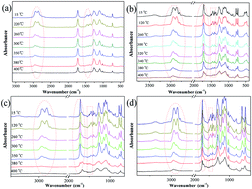
3.2.1 Real time FTIR. Fig. 1 shows the alternation of intensity and wavenumber of characteristic solid phase peaks in the FTIR spectra at a heating rate of 10 °C min−1 in air atmosphere. All the attributions of wavenumbers for the typical bands are presented in Table 3. The changes in the characteristic bands of TPEE during the decomposition process are presented in Fig. 1(a). The intensities of bands at 2956 and 2861 cm−1 (–CH2) decreased rapidly at high temperatures mainly resulting from chain scission of the α-methylene group in the soft segment, which has been demonstrated in our previous study.10 In Fig. 1(b), the characteristic band at 3413 cm−1 is attributed to the action of the intermolecular hydrogen bond of MPP. As the temperature increased, peaks resulting from the release of non-flammable gases, such as ammonium, were not observed at 3300–3600 cm−1. During the heating process, the metal ions interacted with the decomposition products containing carbonyl acid groups. The typical absorption bands of carbonyl (C[double bond, length as m-dash]O) (1715 cm−1) shifted to lower wavenumbers (1683 cm−1) because of the migration of electrons for interactions with the metal ions in the introduced flame retardants. P–N flame retardants changed into metal polyphosphate salts that formed a brittle char with differently sized holes on the surface of the matrix.10
image file: c5ra23727k-f1.tif
Fig. 1 FTIR spectra of solid phase TPEE (a), TPEE/P–N (b), TPEE/P–N/CNTs (c), and TPEE/P–N/CNTs/MoS2 (d) at different temperatures.
Table 3 Assignment of wavenumbers to characteristic peaks obtained for all the formulations [7,19]
Wavenumbers of characteristic peaks (cm−1) Assignment
3413 cm−1 –OH, MPP
2956 cm−1, 2861 cm−1 –CH2, stretching vibration
1715 cm−1 –C[double bond, length as m-dash]O, stretching vibration
1458 cm−1 –CH2, scission vibration
1411 cm−1 Aromatic ring
1270 cm−1 –CO–O esters
1100 cm−1 –CH2–O–CH2– ether
1150 cm−1, 1079 cm−1, 780 cm−1 –P–O
1013 cm−1 –PO43−
727 cm−1 –CH bending vibration of aromatic ring
531 cm−1 O–P–O, MPP
474 cm−1 O[double bond, length as m-dash]P–O, AlPi


However, the characteristic band of CNTs and MoS2 was difficult to be observed because of their low addition amounts and the method of sample preparation for the FTIR test. The changes in the typical peaks for Formulation 3 are shown in Fig. 1(c). With the addition of 3 wt% CNTs into TPEE/P–N composites, TPEE/P–N/CNTs failed the UL 94 tests for melt dripping behavior. The anti-dripping performance of TPEE/P–N/CNTs was even worse than that of TPEE/P–N for the appearance of melt dripping behavior at the first ignition process of UL 94 tests. As is well known, CNTs can effectively increase the viscosity with regards to the formation network structure.45

Only the typical band at 1675 cm−1 was attributed to the electric charge on the metal ion to the carboxyl group. There might be two reasons for the change in the peak. The first one is that the metal cation on the surface of the CNTs and the aluminum ion (Al3+) acts as a Lewis acid site, providing the basis for a coordinative interaction with the carbonyl group of TPEE. The introduction of CNTs can strengthen the Lewis based acid interaction between the additives and the decomposition products. The other reason is that the barrier effect can decrease the release rate of degradation products. Therefore, the aluminum ion (Al3+) can react with decomposition products containing the carbonyl group completely because of the barrier effect provided by the network structure of CNTs. There is another interesting zone at 2800–3000 cm−1. The characteristic peaks of aliphatic groups completely disappear at high temperatures, indicating that the addition of CNTs accelerated the chain scission reaction resulting from the existence of the metal ion on the surface of CNTs; this is in agreement with the composition of CNTs. However, the burning process is a vigorous chemical and physical reaction with the release of heat and volatile gases. The barrier effect provided by the introduction of CNTs can enhance the thermal stability. Moreover, catalyzation by the metal ions on the surface of CNTs can accelerate the chain scission reaction. As a result of the UL 94 tests, we found that the catalyzation by CNTs is the main course of the melt dripping behavior. The introduction of CNTs also cannot result in the formation of compact stable chars to prevent the melt dripping behavior. Then, we moved on to Formulation 4. The alternation of characteristic bands of TPEE/P–N/CNTs/MoS2 during the heating process is presented in Fig. 1(d). There are two obvious distinctive regions in the spectra in comparison with the spectrum for TPEE/P–N/CNTs. The intensity of the typical bands at 2800–3000 cm−1 of the aliphatic groups at 400 °C, indicating the introduction of MoS2, revealed that the decomposition rate of aliphatic groups of TPEE resulted from the decomposition catalyzed by the addition of CNTs. The second unique region was at 1600–1750 cm−1.

As presented in Fig. 1(c), the characteristic peak of the carbonyl group completely shifted to 1675 cm−1 because of the interaction between the metal ions and the carboxyl acid. The special structure of TPEE/P–N/CNTs/MoS2 decreases the decomposition rate during the heating process. Because of the better nano-barrier effect provided by 1-dimensional CNTs and 2-dimensional MoS2 layers, which can promote the interaction between the additive and the decomposition products of TPEE, the characteristic peak of the carbonyl group should shift to lower wavenumbers. The introduction of MoS2 can promote char formation and improve the char residue, as reported by other researchers.41,42

The mechanism has not been demonstrated. If the Mo element might promote char formation through Lewis acid based interactions (Fig. 2(a)), the characteristic peak of the carbonyl group should shift to 1675 cm−1 completely. On the contrary, there are still two typical peaks in the 1630–1750 cm−1 zone, indicating that the char formation process might be changed after the introduction of MoS2. Double-bonded products undergo cycloaddition interactions due to the catalyzation by the Mo element, improving additional carbonaceous char at high temperatures. The mechanism is shown in Fig. 2(b). Thus, TPEE/P–N/CNTs/MoS2 has the best stability, which is in agreement with the results from TGA. These results are attributed to the introduction of MoS2: a better nano-barrier effect for the coexistence of CNTs with MoS2, and MoS2 can promote char formation to avoid the catalysis of decomposition for surface impurities on CNTs. The network structure reduces the release rate of volatile gases and can provide more time for the char formation process.


image file: c5ra23727k-f2.tif
Fig. 2 Mechanism of Mo catalyzation of the char forming process.
3.2.2 Pyrolysis/GC/MS analysis. The thermal decompositions of Formulations 1–4 in the solid phase were investigated by real-time FTIR. Different types of products having carboxylic acid or hydroxyl end groups, such as benzoic acid, tetrahydrofuran and their derivatives, mainly resulted from the degradation step of neat TPEE by the ester-linkage breaking reaction, and are released at high temperatures.10

This study mainly focused on the change of the volatile products due to the introduction of P–N flame retardants, CNTs and MoS2. As shown in Fig. 3, the introduction of the additives did not change the decomposition pathway of TPEE, as seen by comparing the peaks in the GC spectra. Characteristic peaks for all the different types of volatile products were analyzed using Wiley's library. Identification of the volatile products is presented in Table 4. Two characteristic peaks (7, 9) were found for the introduction of nitrogen containing flame retardants, which resulted from the gas flame retarding action of P–N flame retardants. The phosphorus containing products demonstrated that the phosphorus containing flame retardants did not exhibit flame retarding activity in the solid phase. The characteristic mass peaks (Mn < 100) and relative peak area of Formulations 1–4 are presented in Table 5. The relative peak areas of low molecular weight products were decreased after the introduction of additives. The value of the relative peak area of benzoic acid in TPEE/P–N/CNTs is 4.9, resulting from the Lewis-based interactions between the benzoic acid and Ni2+ on the surface of the CNTs; this is in agreement with the result from FTIR. The values of relative peak areas of 1,3-butadiene in TPEE/P–N/CNTs/MoS2 was half of that in neat TPEE, which indicated more 1,3-butadiene remained in the solid phase. The combination of the CNTs and MoS2 effectively decreased the release of 2,3-dihydrofuran and tetrahydrofuran resulting from chain scission of the α-methylene group in the soft segment due to the nano-barrier effect of the 3-dimensional network.


image file: c5ra23727k-f3.tif
Fig. 3 Gas chromatogram of the gaseous pyrolysis products of TPEE (a), TPEE/P–N (b), TPEE/P–N/CNTs (c), and TPEE/P–N/CNTs/MoS2 (d) obtained from heating at 600 °C.
Table 4 The pyrolysis products of Formulations 1–4 at 600 °C
No. Molecular mass (m/z) Retention time (min) Compound
1 44 0.785 CO2
2 54 1.602 1,3-Butadiene
3 70 1.865 2,3-Dihydrofuran
4 72 2.037 Tetrahydro-furan
5 72 2.171 3-Buten-1-ol
6 127 4.351 4-Butoxy-1-butene
7 103 6.16 Benzonitrile
8 100 7.514 2,3-Dimethyl pentane
9 147 9.1 4-Cyanobenzoic acid
10 128 9.49 Benzoic acid
11 59 11.1 Guanidine
12 202 11.6 1,4-Butanediol diglycidyl ether
13 164 11.7 Benzenebutanoic acid
14 186 14.1 Heptan-2-yl butanoate
15 170 17.1 3-Butoxy-2,4-dimethyl-1-pentene
16 250 17.4 2-Hexan-3-yloxycarbonylbenzoic acid
17 100 19.2 cis-3-Methylpent-3-ene-5-ol
18 278 19.4 Dibutyl terephthalate
19 286 21.4 2,2,4-Trimethyl-1,3-pentanediol diisobutyrate
20 100 23.7 z-1-Methoxy-2-pentene
21 396 25.1 Bis(2-ethylhexyl) ester
22 206 26.7 3-Hydroxy-2-methyl-1-phenyl-hexan-1-one
23 334 28.8 2-Ethylhexyl-2-methylpropyl phthalate


Table 5 Characteristic mass peaks (Mn < 100) and relative peak areas of Formulation 1–4
Products Retention time 1 (%) 2 (%) 3 (%) 4 (%)
1,3-Butadiene 1.602 13.72 11.01 8.14 6.06
2,3-Dihydrofuran 1.865 5.762 2.429 2.152 1.927
Tetrahydrofuran 2.037 17.48 9.315 6.3 6.285
Benzoic acid 9.49 5.42 5.44 4.9 5.207


The introduction of MoS2 can decrease the release of volatile product into the gas phase for special nanostructures and the double-bond containing product remained in the condensed phase for the catalyzation of char forming processes. Therefore, TPEE/P–N/CNTs/MoS2 has the best thermal stability and fire resistance.

3.3 Thermoxidative performance

The thermo-oxidative behaviors of all the formulations were investigated by TGA in air atmosphere at a heating rate of 10 °C min−1; the results are presented in Fig. 4. As shown in the figure, all the samples decomposed by a two-step thermal decomposition process, which means the additives did not change the main decomposition pathway of TPEE. The thermo-oxidative behaviors of TPEE and TPEE/P–N have been demonstrated in our previous study.10
image file: c5ra23727k-f4.tif
Fig. 4 Mass loss (a) and mass loss rate (b) curves of samples recorded under air atmosphere at the heating rate of 10 °C min−1.

TPEE had no remaining residues at 700 °C after the complete decomposition process. A special shoulder peak was observed at 300–350 °C, which resulted from chain scission of the α-methylene group of soft segments; this is in agreement with the result from real-time FTIR testing. The temperature of the shoulder peak, the first maximum decomposition temperature and the second maximum temperature all shifted to higher temperatures than those for TPEE. The remaining residues from TPEE/P–N increased to 8.5 wt%. The decomposition products of P–N flame retardant interacted with the decomposition product of TPEE, which effectively decreased the release of volatile products and enhanced the thermal stability and residues at high temperatures.

After the addition of 3 wt% CNTs into P–N flame retarding TPEE, the initial decomposition temperature and the maximum decomposition temperature were higher than that of TPEE/P–N. This resulted from the barrier effect of CNTs. However, the residue of Formulation 3 at the end of the TGA test decreases plainly to 6.81 wt%. Moreover, the mass loss rate obviously increased since the introduction of CNTs. The results suggested that the metal cation on the surface of CNTs catalyze the decomposition process of TPEE during the thermo-oxidative heating process. After the addition of 1 wt% MoS2 into TPEE/P–N/CNTs, the initial decomposition and the maximum decomposition temperature was shifted to higher temperatures. The residues of Formulation 4 increased to almost twice that of Formulation 3. The most interesting thing is that the mass loss rate decreased obviously by simply adding 1 wt% MoS2. This result suggests that the combination of CNTs and MoS2 can enhance the network structure to improve the thermal stability of the nanocomposites for an excellent barrier effect.45

Besides, the increase in the amount of remaining residues at high temperature was attributed to the interaction of the pyrolysis products and MoS2 during the heating process.

3.4 Characterization of residues

The residue after burning the samples in a muffle furnace at 800 °C for 10 min was collected. It was found that no residue remained after high temperature treatment for neat TPEE. This result is in agreement with the results of TGA. Fig. 5 presents the SEM images of the residues from Formulations 2–4. The residue morphology of TPEE/P–N is shown in Fig. 5(a). There are a lot of holes with different sizes present in the image. The inner part of the char has many porous structures, which could be destroyed easily. During the burning process, the release of the volatile products would be through the path of the permeable holes and flaws. These brittle chars cannot protect the materials from melt dripping behavior.
image file: c5ra23727k-f5.tif
Fig. 5 SEM images of the residues from TPEE/P–N (a), TPEE/P–N/CNTs (b), and TPEE/P–N/CNTs/MoS2 (c).

The residue morphology of TPEE/P–N/CNTs is presented in Fig. 5(b). We found that there are still different sized pores existing in the image. The char layer appears to be more compact and integrated than TPEE/P–N. The introduction of CNTs into the composites resulted in the formation of a network. The network structure can slow down the release rate of the composites for a barrier effect at low temperatures. At high temperatures, the CNTs can act as a framework structure for building compact chars. Nevertheless, there are still many small holes in the char, and the catalyzation of metal ions on the surface of CNTs results in melt dripping behavior that reached a V-2 ranking in the UL94 test.

The SEM images of the residues from TPEE/P–N/CNTs/MoS2 are presented in Fig. 5(c). The introduction of MoS2 has a clear improvement in the quality of the residues. The compact structure can effectively stop the melt dripping behavior because it is strong enough to protect the matrix from the burning process. These results indicated that CNTs and MoS2 have a good synergistic char formation effect because the formation of better network structures provides an excellent nano-barrier effect during the burning process.41 The structure can decrease the release of volatile combustible products. Moreover, the CNTs can provide the framework structure and the Mo element can catalyze the char forming process, resulting in a compact and dense char layer on the surface of the matrix.

As is well known, laser Raman spectroscopy has been demonstrated as an easy way to characterize the degree of graphitization of carbonaceous structures after the burning process. As presented in the Fig. 6, there are two bands that exist for Formulation 2–4. The first one is at 1352 cm−1, called as the D band, resulting from the amorphous carbon band, and the second one is at 1600 cm−1, called as the G band, resulting from crystalline graphite. The degree of graphitization of the residual char could be calculated by the ratio of accumulated intensities of the D and G bands (ID/IG)42 where ID and IG are the integrated intensities of the D and G bands, respectively. The residue with the lower ratio of ID/IG indicates a higher degree of graphitization and the better compacted char. Residue char layers with a high degree of graphitization can efficiently decrease the rate of releasing volatile products from the integrated structure during the burning process. A compact and stable char can effectively stop heat and mass transfer and thus protect the materials under the char.


image file: c5ra23727k-f6.tif
Fig. 6 Raman curves of the char residues from TPEE/P–N, TPEE/P–N/CNTs, and TPEE/P–N/CNTs/MoS2 after calcination at 800 °C for 10 min.

The ID/IG ratio follows the order TPEE/P–N/CNTs/MoS2 (1.76) < TPEE/P–N/CNTs (1.81) < TPEE/P–N (2.38). Formulation 4 has the highest ID/IG ratio value, indicating it has the most thermally stable char structure. This result corresponds with the morphology of the char residue. There is not much difference in the ID/IG ratio value between Formulation 3 and Formulation 4 because the Mo element can catalyze the char forming process, resulting in the production of more amorphous carbon on the surface than inside the graphited carbon. Adding the CNTs can enhance the graphitization of the char for the network structure and has a benefit for the inner pressure, which is important to the graphitization process. The combination of CNTs and MoS2 can build a new network structure that can improve the degree of graphitization. Moreover, the Mo element catalyzed the char forming process. The graphited carbon was filled into the pores of the network structure and a large amount of amorphous carbon was dispersed on the surface of the layer, which effectively prevented the melt dripping behavior.

4. Conclusion

In this study, the melt dripping behavior disappeared after adding a combination of CNTs and MoS2 into P–N flame retarding TPEE during the burning process. The TGA results suggested that the addition of CNTs obviously decreased the weight of char residues at high temperatures. Otherwise, the introduction of 1 wt% MoS2 effectively increased the char residue. FTIR indicated that the metal ions on the surface of the CNTs can catalyze the decomposition process of TPEE, while the Mo element can catalyze the cycloaddition interaction of double-bonded product, which can promote additional carbonaceous char at high temperatures. SEM images and Raman spectra showed that a compact char was formed through the introduction of the combination of CNTs and MoS2 into P–N flame retarding TPEE. During the burning process, the Mo element catalyzes the cycloaddition process of volatile decomposition products, which forms amorphous carbon to cover the surface of CNTs. TPEE/P–N/CNTs/MoS2 can effectively build the network to decrease the decomposition rate and the addition of MoS2 can eliminate harmful effects resulting from the introduction of CNTs. CNTs and MoS2 had a synergistic effect on the char forming process and anti-dripping behavior.

Acknowledgements

Financial support from the East China University of Science and Technology is gratefully acknowledged.

References

  1. E. M. Alosime, G. A. Edwards and D. J. Martin, Structure–property relationships in copolyester elastomer-layered silicate nanocomposites, J. Appl. Polym. Sci., 2015, 132(13), 41742 CrossRef.
  2. A. Lilaonitkul and S. Cooper, Properties of polyether–polyester thermoplastic elastomers, Rubber Chem. Technol., 1977, 50(1), 1–23 CrossRef CAS.
  3. Z. X. M. N. Z. Qunzhao and J. Tao, Preparation and properties of PBT/PTMG block poly(ether ester) with different molar ratio of BDO, Chin. J. Mater. Res., 2013, 2, 008 Search PubMed.
  4. A. Szymczyk, E. Senderek, J. Nastalczyk and Z. Roslaniec, New multiblock poly(ether–ester) s based on poly(trimethylene terephthalate) as rigid segments, Eur. Polym. J., 2008, 44(2), 436–443 CrossRef CAS.
  5. J. Guan, M. S. Sacks, E. J. Beckman and W. R. Wagner, Biodegradable poly(ether ester urethane) urea elastomers based on poly(ether ester) triblock copolymers and putrescine: synthesis, characterization and cytocompatibility, Biomaterials, 2004, 25(1), 85–96 CrossRef CAS PubMed.
  6. Y. Su, J. Yu, Y. Wang, J. Zhu and Z. Hu, Effect of hard segment length on the properties of poly(ether ester) elastomer prepared by one pot copolymerization of poly(ethylene glycol) and cyclic butylene terephthalate, J. Polym. Res., 2015, 22(10), 1–10 CAS.
  7. N. Papke and J. Karger-Kocsis, Thermoplastic elastomers based on compatibilized poly(ethylene terephthalate) blends: effect of rubber type and dynamic curing, Polymer, 2001, 42(3), 1109–1120 CrossRef CAS.
  8. G. Broza and K. Schulte, Melt processing and filler/matrix interphase in carbon nanotube reinforced poly(ether–ester) thermoplastic elastomer, Polym. Eng. Sci., 2008, 48(10), 2033–2038 CAS.
  9. X. Huang, S. Lin, J. Shang, W. He and J. Lan, Mechanical, thermal, and ultraviolet resistance properties of poly(ether–ester)/cerium oxide (CeO2) composite fibers, J. Reinf. Plast. Compos., 2014, 33(13), 1207–1215 CrossRef.
  10. Y. Zhong, W. Wu, R. Wu, Q. Luo and Z. Wang, The flame retarding mechanism of the novolac as char agent with the fire retardant containing phosphorous–nitrogen in thermoplastic poly(ether ester) elastomer system, Polym. Degrad. Stab., 2014, 105, 166–177 CrossRef CAS.
  11. G. You, Z. Cheng, Y. Tang and H. He, Functional Group Effect on Char Formation, Flame Retardancy and Mechanical Properties of Phosphonate–Triazine-based Compound as Flame Retardant in Epoxy Resin, Ind. Eng. Chem. Res., 2015, 54(30), 7309–7319 CrossRef CAS.
  12. B. Wang, Q. Tai, S. Nie, K. Zhou, Q. Tang and Y. Hu, et al., Electron beam irradiation cross linking of halogen-free flame-retardant ethylene vinyl acetate (EVA) copolymer by silica gel microencapsulated ammonium polyphosphate and char-forming agent, Ind. Eng. Chem. Res., 2011, 50(9), 5596–5605 CrossRef CAS.
  13. J. Gong, R. Niu, X. Wen, H. Yang, J. Liu and X. Chen, et al., Synergistic effect of carbon fibers and carbon nanotubes on improving thermal stability and flame retardancy of polypropylene: a combination of a physical network and chemical crosslinking, RSC Adv., 2015, 5(8), 5484–5493 RSC.
  14. R. Sonnier, L. Bokobza and N. Concha-Lozano, Influence of multiwall carbon nanotube (MWCNT) dispersion on ignition of poly(dimethylsiloxane)–MWCNT composites, Polym. Adv. Technol., 2015, 26(3), 277–286 CrossRef CAS.
  15. Y. Shi, Z. Long, B. Yu, K. Zhou, Z. Gui and R. K. Yuen, et al., Tunable thermal, flame retardant and toxic effluent suppression properties of polystyrene based on alternating graphitic carbon nitride and multi-walled carbon nanotubes, J. Mater. Chem. A, 2015, 3(33), 17064–17073 CAS.
  16. J. Robertson, Realistic applications of CNTs, Mater. Today, 2004, 7(10), 46–52 CrossRef CAS.
  17. A. Bianco, K. Kostarelos and M. Prato, Applications of carbon nanotubes in drug delivery, Curr. Opin. Chem. Biol., 2005, 9(6), 674–679 CrossRef CAS PubMed.
  18. Z. Liu, K. Chen, C. Davis, S. Sherlock, Q. Cao and X. Chen, et al., Drug delivery with carbon nanotubes for in vivo cancer treatment, Cancer Res., 2008, 68(16), 6652–6660 CrossRef CAS PubMed.
  19. Z. Sun, H. Yuan, Z. Liu, B. Han and X. Zhang, A Highly Efficient Chemical Sensor Material for H∼ 2S: alpha-Fe∼ 2O∼ 3 Nanotubes Fabricated Using Carbon Nanotube Templates, Adv. Mater., 2005, 17(24), 2993 CrossRef CAS.
  20. Y.-T. Jang, S.-I. Moon, J.-H. Ahn, Y.-H. Lee and B.-K. Ju, A simple approach in fabricating chemical sensor using laterally grown multi-walled carbon nanotubes, Sens. Actuators, B, 2004, 99(1), 118–122 CrossRef CAS.
  21. M. Zhang, L. Su and L. Mao, Surfactant functionalization of carbon nanotubes (CNTs) for layer-by-layer assembling of CNT multi-layer films and fabrication of gold nanoparticle/CNT nanohybrid, Carbon, 2006, 44(2), 276–283 CrossRef CAS.
  22. P. Qi, O. Vermesh, M. Grecu, A. Javey, Q. Wang and H. Dai, et al., Toward large arrays of multiplex functionalized carbon nanotube sensors for highly sensitive and selective molecular detection, Nano Lett., 2003, 3(3), 347–351 CrossRef CAS.
  23. G. Mittal, V. Dhand, K. Y. Rhee, S.-J. Park and W. R. Lee, A review on carbon nanotubes and graphene as fillers in reinforced polymer nanocomposites, J. Ind. Eng. Chem., 2015, 21, 11–25 CrossRef CAS.
  24. V. M. Drakonakis, M. Aureli, C. C. Doumanidis and J. C. Seferis, Modulus–density negative correlation for CNT-reinforced polymer nanocomposites: modeling and experiments, Composites, Part B, 2015, 70, 175–183 CrossRef CAS.
  25. G. Beyer, Short communication: carbon nanotubes as flame retardants for polymers, Fire Mater., 2002, 26(6), 291–293 CrossRef CAS.
  26. H. Y. Ma, L. F. Tong, Z. B. Xu and Z. P. Fang, Functionalizing carbon nanotubes by grafting on intumescent flame retardant: nanocomposite synthesis, morphology, rheology, and flammability, Adv. Funct. Mater., 2008, 18(3), 414–421 CrossRef CAS.
  27. Q. Zhang, J. Zhan, K. Zhou, H. Lu, W. Zeng and A. A. Stec, et al., The influence of carbon nanotubes on the combustion toxicity of PP/intumescent flame retardant composites, Polym. Degrad. Stab., 2015, 115, 38–44 CrossRef CAS.
  28. Y. Shen, W. Gong, Y. Xu and B. Zheng, Preparation of multi-walled carbon nanotubes and its application as flame retardant for polypropylene, Micro Nano Lett., 2015, 10(11), 625–629 Search PubMed.
  29. S. Peeterbroeck, F. Laoutid, B. Swoboda, J. M. Lopez-Cuesta, N. Moreau and J. B. Nagy, et al., How carbon nanotube crushing can improve flame retardant behaviour in polymer nanocomposites?, Macromol. Rapid Commun., 2007, 28(3), 260–264 CrossRef CAS.
  30. B. N. Rao, T. Praveen, R. Sailaja and M. A. Khan, HDPE nanocomposites using nanoclay, MWCNT and intumescent flame retardant characteristics, Paper presented at: Properties and Applications of Dielectric Materials (ICPADM), 2015 IEEE 11th International Conference on the, 2015 Search PubMed.
  31. N. A. Isitman and C. Kaynak, Nanoclay and carbon nanotubes as potential synergists of an organophosphorus flame-retardant in poly(methyl methacrylate), Polym. Degrad. Stab., 2010, 95(9), 1523–1532 CrossRef CAS.
  32. L. Ye, Q. Wu and B. Qu, Synergistic effects and mechanism of multiwalled carbon nanotubes with magnesium hydroxide in halogen-free flame retardant EVA/MH/MWNT nanocomposites, Polym. Degrad. Stab., 2009, 94(5), 751–756 CrossRef CAS.
  33. G. Beyer, Filler blend of carbon nanotubes and organoclays with improved char as a new flame retardant system for polymers and cable applications, Fire Mater., 2005, 29(2), 61–69 CrossRef CAS.
  34. H. Liu, M. Si, Y. Deng, A. T. Neal, Y. Du and S. Najmaei, et al., Switching mechanism in single-layer molybdenum disulfide transistors: an insight into current flow across Schottky barriers, ACS Nano, 2013, 8(1), 1031–1038 CrossRef PubMed.
  35. M. Konarova, F. Tang, J. Chen, G. Wang, V. Rudolph and J. Beltramini, Nano-and Microscale Engineering of the Molybdenum Disulfide-Based Catalysts for Syngas to Ethanol Conversion, ChemCatChem, 2014, 6(8), 2394–2402 CrossRef CAS.
  36. S. Wan, Y. Li, J. Peng, H. Hu, Q. Cheng and L. Jiang, Synergistic Toughening of Graphene Oxide–Molybdenum Disulfide–Thermoplastic Polyurethane Ternary Artificial Nacre, ACS Nano, 2015, 9(1), 708–714 CrossRef CAS PubMed.
  37. A. Sorrentino, C. Altavilla, M. Merola, A. Senatore, P. Ciambelli and S. Iannace, Nanosheets of MoS2–oleylamine as hybrid filler for self-lubricating polymer composites: thermal, tribological, and mechanical properties, Polym. Compos., 2015, 1124–1134 CrossRef CAS.
  38. H. Zhang, S. Lu, J. Zheng, J. Du, S. Wen and D. Tang, et al., Molybdenum disulfide (MoS2) as a broadband saturable absorber for ultra-fast photonics, Opt. Express, 2014, 22(6), 7249–7260 CrossRef CAS PubMed.
  39. R. Yan, J. R. Simpson, S. Bertolazzi, J. Brivio, M. Watson and X. Wu, et al., Thermal conductivity of monolayer molybdenum disulfide obtained from temperature-dependent Raman spectroscopy, ACS Nano, 2014, 8(1), 986–993 CrossRef CAS PubMed.
  40. F. Zhou, S. Xin, H. W. Liang, L. T. Song and S. H. Yu, Carbon nanofibers decorated with molybdenum disulfide nanosheets: synergistic lithium storage and enhanced electrochemical performance, Angew. Chem., Int. Ed., 2014, 53(43), 11552–11556 CrossRef CAS PubMed.
  41. D. Wang, L. Song, K. Zhou, X. Yu, Y. Hu and J. Wang, Anomalous nano-barrier effects of ultrathin molybdenum disulfide nanosheets for improving the flame retardance of polymer nanocomposites, J. Mater. Chem. A, 2015, 3(27), 14307–14317 CAS.
  42. K. Zhou, Q. Zhang, J. Liu, B. Wang, S. Jiang and Y. Shi, et al., Synergetic effect of ferrocene and MoS2 in polystyrene composites with enhanced thermal stability, flame retardant and smoke suppression properties, RSC Adv., 2014, 4(26), 13205–13214 RSC.
  43. S.-D. Jiang, G. Tang, Z.-M. Bai, Y.-Y. Wang, Y. Hu and L. Song, Surface functionalization of MoS2 with POSS for enhancing thermal, flame-retardant and mechanical properties in PVA composites, RSC Adv., 2014, 4(7), 3253–3262 RSC.
  44. K. Zhou, W. Yang, G. Tang, B. Wang, S. Jiang and Y. Hu, et al., Comparative study on the thermal stability, flame retardancy and smoke suppression properties of polystyrene composites containing molybdenum disulfide and graphene, RSC Adv., 2013, 3(47), 25030–25040 RSC.
  45. Y. Zhong, M. Li, L. Zhang, X. Zhang, S. Zhu and W. Wu, Adding the combination of CNTs and MoS2 into halogen-free flame retarding TPEE with enhanced the anti-dripping behavior and char forming properties, Thermochim. Acta, 2015, 613, 87–93 CrossRef CAS.

This journal is © The Royal Society of Chemistry 2016
Click here to see how this site uses Cookies. View our privacy policy here.