Meiyun Chen,
Yingqi Chen,
Wentai Zhang,
Sheng Zhao,
Juan Wang,
Jinlong Mao,
Wei Li,
Yuancong Zhao,
Nan Huang and
Guojiang Wan*
Key Laboratory of Advanced Technologies of Materials, Ministry of Education, College of Materials Science and Engineering, Southwest Jiaotong University, Chengdu, 61003, China. E-mail: guojiang.wan@home.swjtu.edu.cn; superwgj@263.net; guojiang.wan@googlemail.com; Fax: +86 28 8760 0625; Tel: +86 28 8763 4146 ext. 802
First published on 22nd January 2016
An ultrathin bisphosphonate film, 1-hydroxyethylidene-1,1-diphosphonic acid (HEDP), was deposited on magnesium for biodegradable implant applications. The small, bioactive HEDP molecule is supposed to be not only bio-safe, but also favorable for creating a highly protective layer for the control of the corrosion/degradation of Mg. In an in situ chemical sequence, the HEDP molecules were covalently surface-immobilized on the alkaline pretreated Mg and then spontaneously deposited by participation in a chelating reaction with Mg ions. An organometallic-like compound layer was thus formed, which was ascertained to be within the nanoscale and complied well with the substrate. The tape test showed that the HEDP film provides excellent adhesion strength. Electrochemical corrosion and in vitro immersion degradation investigations demonstrated that the HEDP coated Mg exhibited significantly slower corrosion rate than untreated Mg in phosphate buffered saline (PBS) solution. Of particular significance is the observation that HEDP coated Mg presented a remarkably suppressed localized corrosion mode. The meliorated corrosion/degradation behavior is credited to both the nature of the organometallic-like HEDP derivative layer, as well as the high quality of the film, with respect to compactness and homogeneity. Our HEDP modified Mg may bode well for application in biodegradable implants.
Enormous efforts have been made to improve the corrosion resistance of Mg, which focus on both bulk-4,14,15 and surface-16–18 modifications. It turns out that bulk modification may provide only limited space for improvement, in that the Mg matrix is inherently prone to anodic dissolution by galvanic corrosion with any other phases, as mentioned above. Surface modification is regarded as being more adaptable because it may offer at least a kinetic barrier to protect Mg against corrosion. Moreover, the surface modifying layers can be more versatile for tuning biocompatibility. Various types of coating materials have been exploited on Mg, such as fluoride,16 zinc phosphate17 and titanium oxide,18 as well as organic or polymeric materials such as poly(1,3-trimethylene carbonate) (PTMC),19 polycaprolactone (PCL),20 and polylactide-co-glycolide (PLGA).21 Among these, inorganic materials are least applicable because they could work as the cathode, relative to the Mg matrix, to aggravate the corrosion reaction. Organic and polymer coatings are better in this regard, because they reduce the likelihood of galvanic corrosion because of their low electrical conductivity. Moreover, their biocompatibility may be more amenable, thanks to the diverse functional groups they usually have. For example, a series of organic phosphonic acids (PAs) [R-PO3H2] and their phosphonate ester derivatives [R-PO3R2] (R = alkyl, sometimes aryl) have been explored as coatings on Mg for bio-metal application.22–26 These organic coatings could potentially fulfill the dual-task of both corrosion-control and biocompatible functionality. Nonetheless, almost all the phosphonic acids utilized are relatively large molecules and their coatings are typically too thick (at least 1 μm, to even thicker than 10 μm). This may undermine the efficiency of mechanical compliance with the implants, which is critically important for those with complex-shapes or small sizes. On the other hand, the large molecules are unlikely to provide good quality coating in terms of compactness and homogeneity, which play a vital role in kinetically protecting Mg against corrosion. In addition, the larger the molecules, the less active groups they expose outward, which means a lower chance to fully employ their functionalities.24–26 More importantly, most of the current research is primarily concentrated on corrosion rate control, while paying little attention to tailoring the mode of corrosion.6,24–27 It is therefore of great importance to make more delicate designs with respect to the surface modification of Mg, to achieve a well-controlled corrosion behavior from the perspectives of both corrosion rate and mode, through a simply thinner layer.28 Some organic phosphonates of small molecules may presumably meet the requirements for creating a thin, compact and homogeneous layer that could efficiently meliorate the manner of the corrosion of magnesium.
1-Hydroxyethylidene-1,1-diphosphonic acid (abbreviated as HEDP, with molecular weight of 206.3 g mol−1) is a small molecule bisphosphonate. It is bio-safe/-friendly and already has wide applications in water treatment and cosmetics;29 more importantly, it also serves as an inhibitor in some instances of corrosion prevention.30 In spite of these properties, to date, there have been no reports on any study making use of HEDP to create surface modifying film on biodegradable metals. As a matter of fact, the HEDP molecule possesses a backbone structure of P–C–P (where C represents carbon and P correlates to a phosphonic group), which makes it analogous to some basic chemical components of human tissue, such as bone and cell membranes, and therefore potentially biocompatible. Furthermore, it offers the possibility of covalently anchoring to metal surfaces, molecule deposition, as well as chelating reactions with metallic ions to form a high quality coating.31
In this study, we propose the construction of a thin and compact organometallic-like layer on the magnesium surface, using the small bisphosphonate molecule, HEDP. As illustrated in Scheme 1, the rationale lies in the chemical surface-immobilization and chelation-enhanced deposition. Briefly, HEDP molecules can be chemically anchored to the alkaline-pretreated Mg substrate surface, first by means of covalent/neutralization reactions between their phosphate groups and the hydroxyl groups of the Mg(OH)2 layer. The spontaneous HEDP molecule deposition would occur subsequently, and this is accompanied by a chelating reaction with the Mg2+ ions released from the Mg substrate by corrosion. Eventually, a firmly fixed thin film of organometallic-like compound is likely to form on the Mg surface. Such a layer is supposed to ameliorate the corrosion behavior of Mg. Herein, the surface characteristics and mechanical adhesion of the prepared layer on Mg were ascertained systematically, and the corrosion behavior, with respect to both rate and mode, was assessed by electrochemical corrosion testing. Furthermore, the degradation performance was evaluated by an in vitro immersion investigation. Excellent mechanical compliance as well as significantly improved efficacy in controlling corrosion and degradation of the Mg bio-metal was accomplished by the prepared film that can be made ultrathin, which is credited to the nature of this layer, as well as its film quality brought about from the film deposition mechanism.
![]() | ||
| Scheme 1 Schematic of the rationale for covalent immobilization and chelation-assisted deposition of 1-hydroxyethylidene-1,1-diphosphonic acid (HEDP) on the magnesium substrate. | ||
For HEDP deposition, the alkaline pretreated Mg specimens were immersed in HEDP solutions (in deionized water) with different concentrations (0.1, 0.5 and 1.0 g L−1) at 60 °C (the pH value was adjusted to 7 by 2 M NaOH) for 12 h. The deposited specimens were then thoroughly rinsed 3 times with deionized water, to wash the loose deposits from the surface, and finally dried in a vacuum oven. The HEDP coated Mg was labeled as Mg-OH@HEDP (0.1), Mg-OH@HEDP (0.5) and Mg-OH@HEDP (1.0) samples, referring to different deposited HEDP concentrations.
Surface morphologies of the samples were further characterized using atomic force microscopy (AFM, SPI 3800, NSK Inc.). The observation was performed in tapping mode and the viewing fields were 10 μm × 10 μm to take images. The average root-mean-square roughness (Rrms) values were calculated along the diagonal lines using the JPKSPM 4.0 software, and they were statistically accounted on 4 random fields for one sample.
The adhesion strength of the HEDP film on the Mg substrate was measured by a cross-cut tape test, according to ASTM 3359-02.32 Grids of parallel cuts with 1 mm intervals were scratched on the coated samples. Scotch tape (3M Brand, USA) was attached firmly over the area of the grids, and after 90 s it was torn abruptly off at an angle as close to 180° as possible. Damage of the film was evaluated visually, using stereoscopic microscopy (OLYMPUS, SZX7-1093) with side illumination. The extent of damage is inversely related to adhesion strength, assigned as percentage of removed area relative to the entire surface. The samples were scored with grades as follows: 5 = almost 0%; 4 = less than 5%; 3 = 5–15%; 2 = 15–35%; 1 = 35–65%; 0 = over 65%. More detailed characteristics regarding the film damage were obtained after visually scrutinizing them under the stereoscopic microscope to determine their adhesion performance.
The chemical bonding states of the coatings were detected by Fourier transform infrared spectroscopy (FT-IR, Nicolet 5700, Thermo Electron Corporation, MA, USA), scanning from 500 to 4000 cm−1, and the data were converted into an absorbance spectrum. Prior to FT-IR detection, all samples were dried in a vacuum oven at 60 °C for 24 h to get rid of the disturbing ambient water absorption. The surface chemical composition and bonding states were further determined by X-ray photoelectron spectroscopy (XSAM800, Kratos Ltd, UK) with Al Ka (1486.6 eV) radiation at 12 kV × 15 mA at a pressure of 2 × 10⁻⁷ Pa. All binding energies in the XPS spectra were calibrated by locating the C 1s peak of the aliphatic carbon at 284.8 eV as reference. The high-resolution core-level XPS spectra were fitted by XPS peak 4.1 software to de-convolute the spectra with Shirley background mode.
Fig. 2 demonstrates the adhesion behavior of the HEDP films deposited on Mg substrate that have undergone the cross-cut tape test. Accordingly, all HEDP coated Mg samples exhibited no obvious macroscopic damage such as peeling-off or spalling of the film surface after removing the sticking tape. This denotes excellent adhesion, which can be scored grade 5 according to the standard of ASTM D3359. There is a slight difference among the three samples deposited at different HEDP concentrations (the higher magnification images). The difference manifests in the scratches as well as in the vicinity, i.e. on both the Mg-OH@HEDP (0.1) and Mg-OH@HEDP (0.5), the scratches look more distinct and remain relatively more intact after tape testing than the Mg-OH@HEDP (1.0), on which the damage to the film appears to be a little more severe, particularly near the edge of the scratches. This may be due to its greater thickness, as well as the relatively lower quality of the film, which will be discussed in the next section.
FT-IR spectra, as illustrated in Fig. 3, provide the chemical evidence for the existence of HEDP film deposited on Mg, relative to the Mg-OH and bare Mg. For alkaline pretreated Mg (Mg-OH), a strong peak, characteristic of the hydroxyl group (–OH), emerged at ca. 3700 cm−1 as compared to the bare Mg. This implies that a chemical conversion layer of Mg(OH)2 was formed with a large number of hydroxyl groups by alkaline pretreatment. On all the HEDP coated Mg samples, a certain number of peaks can be identified as belonging to the HEDP film; these include the P
O stretching at approximately 1200 cm−1, P–OH at approximately 926 cm−1, and the R-PO3H2 group in the range from 1089 to 1320 cm−1. All these peaks correspond well to the pertinent peaks of the reference HEDP powder. Although it seems that most of these peaks appear slightly diminished and shifted in binding energy with respect to the HEDP powder, it is typically normal and they may be ascribed to the deprotonation of the phosphonic acid groups (R-PO3H2, e.g. P–OH and P
O) on HEDP molecules, as well as the small amount of these molecules in such thin films.35,36 It is noteworthy that among the three HEDP coated samples, the relevant peaks became stronger with increased thickness.
![]() | ||
| Fig. 3 FT-IR spectra of the HEDP coated Mg samples as compared with the alkaline treated Mg, untreated Mg and HEDP powder. | ||
The chemical bonding states of the HEDP films are disclosed by XPS results, as shown in Fig. 4. The core–shell high-resolution spectra of P 2p, Mg 2p, O 1s and C 1s were detected for the Mg-OH@HEDP (0.5) sample in comparison with Mg-OH. Accordingly, the P 2p peak (132.5 eV) was detected on the Mg-OH@HEDP (0.5) surface, but was absent on the Mg-OH, further verifying that the deposition of the HEDP molecule was successful. More specifically, the P 2p band likely encompasses a typical phosphonic group peak and a shoulder contribution. The former can be designated to the phosphonic acid of HEDP, which can be further de-convoluted into a P2p1/2 peak (133.9 eV) and a P2p3/2 peak (132.8 eV), whereas the shoulder may be identified as P–O–Mg (131.0 eV).37–40 This attained P–O–Mg bonding denotes that the HEDP deposition was accompanied by the simultaneous chelating reaction with Mg ions. Likewise, the Mg 2p of Mg-OH@HEDP (0.5) apparently presents a new contribution that can be identified as P–O–Mg bonding at ca. 51.0 eV, as compared to Mg-OH. It can be noted that the Mg-O and Mg(OH)2 (or partly MgCO3) were also present on both the HEDP coated Mg and alkaline-pretreated Mg. It may be inferred that some of the Mg ions might also undergo precipitation and oxidation during the HEDP deposition. Concomitantly, for O 1s spectra, the HEDP coated Mg sample shows a noticeably wider band than that of the Mg-OH. This was brought about from the extra contributions, as well as binding energy shifting toward higher values, namely, the new existence of P–O–Mg (532.1 eV) and P–OH (532.2 eV). It can be noted that extra O bonding states associated with MgOH and MgCO3 (531.5 eV), MgO (530.5 eV) and H2O (534 eV) seemingly exist on HEDP-coated and uncoated Mg, which are commonly related to dissolved oxygen and carbon dioxide under ambient conditions.36–40 It would be unrealistic to decipher precisely all these seven contributions, therefore we labeled only their binding energy positions, as illustrated in Fig. 4c. The C 1s spectra (Fig. 4d) reveal more about the surface bonding states. There arose a new shoulder contribution (at 286.0 eV) for the Mg-OH@HEDP (0.5) surface, as compared with the Mg-OH, which can be assigned to the P–C–OH of HEDP molecules.35 Both C 1s bands for the HEDP coated and uncoated samples are centered around the main peak of 284.8 eV, which relates to C–C/C–H.36,39 For the HEDP coated sample, this main peak might partly be from the HEDP backbone, as well as the adventitious carbonaceous contaminants, whereas for Mg-OH this can only be from contamination. The peak at 289.1 eV was found on both HEDP coated and uncoated samples, which should be attributed to MgCO3 that may be generated by reaction of ambient CO2 with Mg ions in the air-formed oxide layer.41 The elemental compositions of the sample surface are listed in Table 1, as calculated by XPS survey results. It appears that only the HEDP coated surfaces present P element. It can be noted particularly that all samples exhibited excessive amount of Mg, which can be projected to the abovementioned multiple reactions of the Mg ions, such as chelation, precipitation, oxidation and carbonation.
| Samples | Composition (at%) | |||
|---|---|---|---|---|
| C | Mg | O | P | |
| Mg | 21.93 | 24.53 | 53.54 | 0 |
| Mg-OH | 25.76 | 22.89 | 51.35 | 0 |
| Mg-OH@HEDP (0.1) | 31.79 | 17.28 | 49.37 | 1.56 |
| Mg-OH@HEDP (0.5) | 31.00 | 16.83 | 50.20 | 1.97 |
| Mg-OH@HEDP (1.0) | 31.35 | 16.20 | 50.74 | 1.71 |
All the abovementioned results support the fact that a high quality ultrathin HEDP film can be built up successfully on magnesium substrate, which may be interpreted by a series of unique reactions that involve the following. Theoretically, phosphonates (PAs) [R-PO3H2] and their phosphonate ester derivatives [R-PO3R2] (R = alkyl, sometimes aryl) tend to be chemically anchored to oxidized/hydroxylated metal surfaces.22,23 In our case, as illustrated in Scheme 1, a transitional layer of Mg(OH)2 was formed first by alkaline pretreatment to reinforce the anchoring effect, and the HEDP molecules can be more efficiently immobilized on the Mg(OH)2 surface through the neutralization reaction between their phosphonic groups and the hydroxyl groups of Mg(OH)2. Therefore, an initial densely packed HEDP monolayer is chemically fixed onto the alkaline pretreated magnesium surface.38 Deposition of HEDP molecules subsequently occurs on this base layer more readily, as a result of the intermolecular interactions (bonded or non-bonded). More importantly, the Mg ions released from corrosion of the Mg matrix will be mobilized by the HEDP molecules deposition, by virtue of so-called chelating. This helps to further prompt the in situ growth of the HEDP film, and also gives rise to a chelate compound, which is reportedly known as a type of stable metal phosphonate or organometallic framework.37–40 Such organometallic-like features render the layer more intensely compact, while the pervasive Mg2+ throughout the in situ developing layer, facilities more homogenous chelating reactions and therefore growth of the film. The small HEDP molecule would certainly be beneficial in making full use of such interactions. It turns out that all these facets might guarantee the establishment of a dense and uniform film of organometallic-like HEDP derivatives on the Mg substrate. The qualities of the coating, such as compactness and homogeneity, play a vital role in corrosion control for the metal substrate.
Fig. 5b shows the PDP curves of Mg-OH@HEDP (0.1, 0.5 and 1.0) samples as compared with the Mg-OH and Mg samples. Values of corrosion potential Ecorr, free corrosion current density icorr and cathodic Tafel slope βc, determined by the Tafel method, as well as breakdown potential (Ebd) are listed in Table 2. It was found that all HEDP coated Mg samples show apparently lower icorr than those of Mg-OH and bare Mg. Outstandingly, the Mg-OH@HEDP (0.5) sample exhibited the lowest salient icorr value (1.27 ± 0.30) × 10−6 A cm−2, which is about two orders lower than that of Mg (6.83 ± 1.55) × 10−4 A cm−2. The Mg-OH@HEDP (0.1) and Mg-OH@HEDP (1.0) also possess icorr values about one order lower than those of Mg-OH and the Mg samples. The protection efficiency (η) was obtained according to the equation as follows:44
![]() | (1) |
| Samples | Potentiodynamic polarization | ||||
|---|---|---|---|---|---|
| Ecorr (VSCE) | icorr (A cm−2) | βc (V dec−1) | η (%) | Ebd (VSCE) | |
| Mg-OH@HEDP (1.0) | −1.36 ± 0.04 | (3.48 ± 1.24) × 10−6 | −0.09 ± 0.04 | 99.5 | −1.17 ± 0.07 |
| Mg-OH@HEDP (0.5) | −1.30 ± 0.02 | (1.27 ± 0.30) × 10−6 | −0.75 ± 0.01 | 99.8 | −1.09 ± 0.04 |
| Mg-OH@HEDP (0.1) | −1.60 ± 0. 05 | (6.33 ± 0.85) × 10−6 | −0.13 ± 0.03 | 99.1 | −1.15 ± 0.05 |
| Mg-OH | −1.44 ± 0.07 | (3.65 ± 0.78) × 10−5 | −0.09 ± 0.03 | — | — |
| Mg | −1.42 ± 0.10 | (6.83 ± 1.55) × 10−4 | −0.37 ± 0.06 | 0 | — |
Beyond simply free corrosion current density, more details from the PDP curves disclose the impact of HEDP film on Mg corrosion protection such as the separate cathodic and anodic regions as well as rate-determining step (RDS). Specifically, for untreated Mg, its PDP shows a rapid acceleration of anodic dissolution with only a mild degree of polarization, which indicates the highly active state of the Mg surface. Therefore, the RDS should be the slowest step of the cathodic hydrogen evolution reaction, in accordance with the literature.45 The Mg-OH behaved similarly in terms of cathodic hydrogen evolution, as well as RDS, although its anodic region presented a slightly passive-like segment due to the partial protection of the Mg(OH)2 layer. For HEDP coated Mg, the sample with the smallest thickness (Mg-OH@HEDP (0.1)) provided remarkably reduced cathodic hydrogen evolution current density compared with that of untreated Mg and Mg-OH. It is worth noting that this reduced cathodic reaction is associated with the apparently negative shift of Ecorr, relative to the Mg and Mg-OH. This is in concert with the OCP results (Fig. 4a). When further anodically polarized, the Mg-OH@HEDP (0.1) presented steadily increasing anodic current density and finally got to a point comparable to that of Mg-OH. This implies that such ultra-thin HEDP layers perform additionally like anchored, efficient inhibitors, even though they may provide just a mild kinetic barrier protection. Interestingly, with increased thickness of the HEDP coating, the Mg-OH@HEDP (0.5 and 1.0) still show suppressed cathodic reaction, but not as strong as the Mg-OH@HEDP (0.1). Nonetheless, of significance is the anodic polarization region of the HEDP modified Mg that began to show greater kinetic barrier type protection against corrosion. It can be noted that both Mg-OH@HEDP (0.5) and (1.0) exhibit a passive-like section on their anodic parts, which register relatively noble values of Ebd. The Mg-OH@HEDP (0.5) demonstrates the highest noble Ebd of −1.09 ± 0.04 VSCE, whereas the Mg-OH@HEDP (0.1) yields a slightly more negative value of −1.17 ± 0.07 VSCE. Such constrained anodic dissolution is contrary to Mg-OH and Mg, which have obviously faster counterparts. In general, the Ebd of coating deposited metals is regarded as an indication of the capability of resisting localized corrosion damage in corrosive media. Principally, a more positive (towards anodic) Ebd implies that the coating is more effective and stable in the suppression of localized corrosion.46 Thus, the Mg-OH@HEDP (0.5) offers the most stable Ebd and predicts the highest resistance to localized corrosion. In theory, the OCP as well as Ecorr shift toward more cathodic potential, brought about by such a film can be credited to the chemical nature of the phosphonic acid, as well as its strong chemical adsorption on the metal surface, which account for its ability to act as a corrosion inhibitor.39,41 On the other hand, this favorable negative rest potential is able to restrain the hydrogen cathodic reaction of RDS due to the NDE effect of Mg corrosion,9,11,13 and therefore reduce the overall corrosion reaction.
Fig. 5c portrays the surface morphologies of the samples after PDP testing, exposing more details in corrosion mode. It was observed that the surface of Mg-OH@HEDP (0.5) remained relatively intact after PDP scanning, with a localized corrosion area less than 5%, and only a tiny amount of products. The other two HEDP modified Mg samples retained well-protected surfaces, although it appears that they undertook a few more attacks as compared to the Mg-OH@HEDP (0.5). By contrast, on both Mg and Mg-OH, severe localized corrosion attacks are visible over more than 90% of the entire surface. Specifically, Mg suffered severe localized corrosion that was widespread on its surface, and Mg-OH experienced filiform-like corrosion damage to its Mg(OH)2 layer. Both such corrosion modes are critically harmful for biomedical implants, in that they will elicit a greater likelihood of premature failure. Thus, for the HEDP coated Mg, their more uniform corrosion profile is of vital importance for the bio-metal to maintain its integrity and durability.
EIS offers a powerful method to decipher the kinetic parameters of the corrosion process.47 Fig. 6 presents EIS spectra of both Nyquist and Bode types for the samples, as well as their fitted plots based on corresponding equivalent electrical circuits. According to the EIS spectra, all the impedance values of HEDP modified Mg (Fig. 6a) are significantly larger than those of Mg-OH and Mg (Fig. 6b). Of noteworthy interest is the fact that both the Mg-OH and Mg exhibit a distinctly separated inductive loop, relative to the capacitive loop, which suggests a sign of severe localized attack, whereas for the HEDP modified Mg, the inductive loops seem to be diminished or blended with the capacitive loop. This implies that a much lower degree of localized corrosion occurred on the modified sample. To more accurately decode their kinetics in the overall corrosion, two equivalent circuit models were applied (embedded EC in Fig. 6a for HEDP coated Mg, and in Fig. 6b for Mg and Mg-OH) to quantitatively fit the EIS spectra. Rs is the solution resistance, Qdl is a constant phase element representing the double layer capacitance, Rct represents the interfacial charge transfer resistance (associated mostly with the corrosion reaction), Qp and Rp relate to the constant phase element capacitance of the newly formed layer (adsorption product or conversion of Mg(OH)2) and the electrolytic diffusion resistance through the layer, respectively. RL and L stand for the resistance and inductance regarding localized galvanic corrosion cell reactions, Qf and Rf refer to the constant phase element capacitance and resistance of HEDP film, respectively. The fitting results are listed in Table 3. An important indicator of the ease of corrosion, roughly referred to as Rct, is associated with the resistance of interfacial charge transfer and accounts mostly for the overall corrosion reactions. It can be noted that the three HEDP coated Mg samples exhibit remarkably higher Rct values than Mg-OH and Mg. In particular, the Mg-OH@HEDP (0.5) has Rct that is two orders larger than Mg and Mg-OH. This is well in agreement with the PDP results. More distinct differences are revealed in the Bode plots (Fig. 6c and d). Accordingly, all HEDP coated Mg reached higher values than Mg-OH and Mg at low frequency, with respect to the impedance modulus, Z. For instance, the module Z of Mg-OH@HEDP (0.5) was as large as about 1.5 × 10⁶ Ω cm2, 2 orders magnitude higher than that of Mg-OH (6.2 × 10³ Ω cm2) and Mg (1.7 × 10³ Ω cm2). As clarified in the phase angle diagram, there appeared three time-constant loops on each sample that attest to their corresponding equivalent electrical circuit models.48 The capacitive loop in the high frequency region denotes the electric double layer, which is accompanied by interfacial charge transfer (mainly the corrosion anodic and cathodic reactions herein); the capacitive loop in the medium frequency region signifies the formed nonmetallic layer (such as the modifying layer and corrosion product), which is parallel to the electrolyte/water diffusion resistance within. The inductive loop in the low frequency region stands for actively unstable surface charging and discharging processes such as localized galvanic corrosion cell reaction.42 It is worth noting that a significant difference exists in the inductive components among the HEDP coated Mg samples and the bare Mg, as well as Mg-OH. For the Mg and Mg-OH, a separated inductive loop is clearly presented at low frequency, which generates a positive phase angle. For the HEDP coated Mg samples, their inductive components are much less distinguished. It may be inferred that they overlapped with the capacitive loops, which does not suffice to shift the phase angle to the positive sense. It can be noted that Mg-OH@HEDP (0.5) has an almost negligible inductive component. Our abovementioned results reveal that HEDP coated Mg underwent much less localized corrosion attack, compared with Mg and Mg-OH. According to the literature,49 a more accurate theoretical passivation resistance Rp can be deduced from the impedance at zero frequency, instead of the Rct. In that case, our HEDP modified Mg samples would provide even larger Rp than Mg and Mg-OH.
| Samples | Nyquist EIS fitting results | |||||||||||
|---|---|---|---|---|---|---|---|---|---|---|---|---|
| Rs Ω cm2 | Qdl × 10−6 sn Ω−1 cm−2 | n1 | Rct × 103 Ω cm2 | Qp × 10−6 sn Ω−1 cm−2 | n2 | Rp Ω cm2 | Qf × 10−5 sn Ω−1 cm−2 | n3 | Rf × 103 Ω cm2 | L × 103 H cm2 | RL × 103 Ω cm2 | |
| Mg-OH@HEDP (1.0) | 10 | 0.65 | 0.67 | 154.2 | 4.1 | 0.75 | 2605 | 7.78 | 0.52 | 2.8 | 598.4 | 21.9 |
| Mg-OH@HEDP (0.5) | 17 | 0.76 | 0.61 | 327.4 | 3.5 | 0.88 | 8583 | 11.53 | 0.76 | 4.2 | 1336.0 | 57.8 |
| Mg-OH@HEDP (0.1) | 19 | 1.86 | 0.66 | 113.0 | 7.2 | 0.85 | 613 | 7.22 | 0.68 | 8.7 | 42.8 | 11.2 |
| Mg-OH | 48 | 15.90 | 0.84 | 3.4 | 12.5 | 0.73 | 1320 | — | — | — | 8.5 | 4.8 |
| Mg | 27 | 5.69 | 0.80 | 1.3 | 52.4 | 0.76 | 211 | — | — | — | 3.6 | 2.9 |
Despite the nature of the compound layer, from the perspective of electrochemistry the kinetic factors may contribute equally. Our obtained thin, albeit high quality HEDP film would effectively hinder the electrolyte penetration pathway into the Mg matrix underneath, and therefore retard the corrosion. It needs to be emphasized that the film quality aspects, such as compactness and homogeneity, might play a more important role in determining the corrosion rate than solely the thickness. This was reflected in the fact that the thicker HEDP coated Mg, prepared under higher HEDP concentration, performed more poorly than the thinner HEDP coated Mg, in our case. This may be explained by the fact that the high concentration tends to speed up the HEDP molecule deposition rate, whereas reducing the chance for sufficient chelating reactions with Mg ions, which needs both space and time. It is therefore likely that the too-fast deposition with high concentration does not necessarily warrant a greater proportion of Mg-chelated HEDP of high quality. Probably, optimal conditions exist that are in keeping with that of Mg-OH@HEDP (0.5). For instance, the appropriate concentration of HEDP might offer a good match between the number of hydroxyl sites on the pretreated Mg surface and the number of the HEDP molecules arriving on the top layer for initial nucleation, which is quite the same in the sequential deposition process but needs to be studied further.
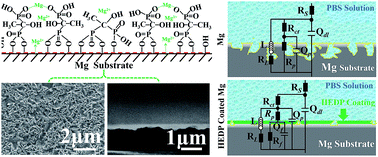
Alongside the reduced corrosion rate, of more practical significance is the suppressed localized corrosion achieved on the HEDP modified Mg. This can be interpreted as is schematically elucidated in Fig. 7. The efficacy of suppression for localized corrosion of the HEDP deposited Mg entails the physiochemical model embedded with the related equivalent electrical circuits, in contrast to the untreated Mg. It appears that the additional retarding components, such as Qf and Rf, as well as the increased magnitude of the shared components (Qdl, Rt and L, RL), lead to good control of the localized corrosion by the protective film (clarified in the SEM observation results on the right in Fig. 7). Interestingly, our results also purport to strongly correlate the localized corrosion with inductive phenomenon found in EIS spectra. In principle, localized galvanic corrosion generates the rapid changing of self-circulating currents, which may induce an inductive loop when subjected to EIS testing. Although there exist multiple explanations concerning the inductive phenomenon, among them are immediate Mg+, porous metastable diffusion as well as active species absorption;10,50,51 these were found and discussed with respect to the bare metal surface only. Our findings on this ultrathin film modified Mg offers an expanded platform for better understanding this phenomenon. It is clearly suggested that the constrained localized corrosion can be well linked to weak inductive contribution.
![]() | ||
| Fig. 7 Schematic showing the efficacy of corrosion control by the HEDP layer on Mg, highlighting suppressed localized corrosion. | ||
Fig. 8c displays the SEM images of the surface morphologies of samples after hydrogen evolution tests to unveil their degradation. Accordingly, the Mg suffered severe degradation, which was characterized by heavily localized attack, as well as the accompanying products. The degradation of Mg-OH seemed to occur mainly underneath the converted Mg(OH)2 layer, which only partially protected Mg against corrosion, as this layer appeared to have been peeled-off gradually. The HEDP modified Mg still had a full coverage of the protective layer as compared to the Mg-OH. Among them, the Mg-OH@HEDP (0.5) remained mostly intact and had a comparatively uniform degradation. The ultrathin and high quality HEDP film thus provides good control over the degradation of Mg with respect to both rate and mode.
The outstanding capability for corrosion/degradation control achieved by our HEDP film can be credited to the nature of the HEDP organometallic compound, as well as its protective efficaciousness. From both thermodynamic and kinetic points of view, HEDP film offers a tenable measure to tailor the corrosion of such highly active Mg, and more importantly, provides long-term stability in controlling its bio-degradation. Thermodynamically, such an organometallic compound apparently renders the modified Mg surface more negative toward cathodic potential. This favorable state associated with cathodic rest potential is able to restrain the hydrogen cathodic reaction because of the NDE effect mentioned above.10,51 This is different for many other metals that depend on passivation to prevent corrosion, which require sufficiently high anodic polarization to produce the passivation protective layer such as the oxide. More importantly, such thermodynamic aspects may ensure excellent corrosion/degradation control simply by means of the ultrathin film, otherwise it must resort to the kinetic alternative by increasing the thickness. Of course, the kinetic effect also plays a decisive part in protection of Mg against corrosion. In this regard, the quality of the film in terms of compactness and homogeneousness is thus pivotal to prohibiting the electrolyte penetration into the Mg matrix. Thus, it can be safely said that our organometallic-like HEDP derivative film can impose synergic effects on Mg corrosion control, and needless to say, the ultrathin attribute, as well as mechanical compliance are fundamentally beneficial to improving the overall performance of biodegradable implants.
| This journal is © The Royal Society of Chemistry 2016 |