
Environmentally friendly high performance homopolymerized epoxy using hyperbranched epoxy as a modifier

Tuan Liu ab, Bing Hanc, Liangdong Zhangb, Min Wua, An Xinga, Xuepei Miaoab, Yan Meng*a and Xiaoyu Li*b
aKey Laboratory of Carbon Fiber and Functional Polymers, Ministry of Education, Beijing University of Chemical Technology, Beijing 100029, P. R. China. E-mail: mengyan@mail.buct.edu.cn; Fax: +86-10-64419631; Tel: +86-10-64452129
bState Key Laboratory of Organic-Inorganic Composites, Beijing University of Chemical Technology, Beijing 100029, P. R. China. E-mail: lixy@mail.buct.edu.cn
cDepartment of Orthodontics, School and Hospital of Stomatology, Peking University, Beijing 100081, P. R. China

Received 27th October 2015 , Accepted 21st January 2016

First published on 26th January 2016


Abstract

A high performance, low cost, and environmentally friendly epoxy is demonstrated for the first time by copolymerizing a small amount of epoxide-terminated hyperbranched polyether (EHBPE) with DGEBA. Unlike typical epoxy systems, which involve large amounts of costly, toxic, and volatile curing agents, homopolymerized epoxy curing systems use only small amounts of catalysts instead of curing agents. However, high performance homopolymerized epoxy has not been reported so far, mainly due to brittleness and somewhat uncontrolled fast curing. Our results show that the addition of small amounts of epoxide-terminated hyperbranched polyether (EHBPE) into DGEBA can lead to simultaneous improvements in strength, toughness, and Tg. At 5 wt% EHBPE loading, the homopolymerized hybrid epoxy shows balanced mechanical performance and is suitable for structural materials. In the first part of the work, the effects of catalyst type and catalyst concentration were optimized using neat DGEBA. In the second part, DGEBA/EHBPE hybrid epoxy systems were cured and tested using those optimized conditions. Compared with neat DGEBA, the addition of 5 wt% EHBPE can increase toughness and tensile strength by 47.6% and 18.8%, respectively; in addition, Tg also increases from 171 to 173 °C.

1. Introduction

Due to the versatility, excellent mechanical properties and processability, epoxy resins are widely used in various applications, including coatings, adhesives, structural composites, and electronic materials.1 For most epoxy curing systems, large amounts of costly curing agents have to be added in order to obtain crosslinked networks; more importantly, most curing agents are often toxic and volatile, and are harmful to the environment and human health.2 In order to address those issues, homopolymerization of epoxy has been treated as a unique way to produce environmentally friendly, fast curing, and cost effective epoxy materials. Compared with typical epoxy curing systems, homopolymerized epoxy systems are curing-agent-free, and small amounts of catalysts are enough to obtain highly crosslinked networks, and no volatile organic compounds (VOC) is released during cure.3,4 The possible advantages of using homopolymerized epoxy systems are at least three folds. First, it does not use curing agents, which is not only environmental friendly but also save the cost of raw materials, because small amounts of catalysts are often cheaper than the curing agents;5–7 second, it has better processability, because it only involves mixing of small amounts of catalysts; third, the curing scheme could be shorter because of the faster curing speed in homopolymerized systems.8,9

Epoxide groups can react with themselves through anionic or cationic homopolymerization when catalyzed by proper catalysts.10 Because of the high reaction rate and possible side reactions, homopolymerized epoxy initiated by most catalysts often lead to incompletely cured network (undercure). In addition, when cured in bulk, the reaction induced heat due to its fast cure may lead to uncontrollable curing process.11 As a result, homopolymerized epoxy is mostly used as fast-curing coatings and adhesives rather than bulk materials. So far, only two effective catalysts, 4-(N,N-dimethylamino)pyridine (DMAP) and 1-methyl-imidazonle (1MI) (Scheme 1), which can lead to highly crosslinked networks in relatively controlled manner, have been reported;12–14 possible reaction mechanisms are shown in Scheme 3a.11 Homopolymerization of mono-functional epoxy only leads to low molecular weight linear polymers. Homopolymerization of bifunctional DGEBA epoxy (Scheme 3b) or multi-functional epoxy can result in highly crosslinked networks. DMAP- and 1MI-initiated homopolymerization of epoxy has been studied; however those efforts were focused on curing mechanisms by means of DSC, FTIR, and rheometer, rather than devoted to making high performance structural materials.15,16


image file: c5ra22474h-s1.tif
Scheme 1 The chemical structures of DGEBA and two catalysts (1MI and DMAP).

Highly crosslinked epoxy materials with high Tg often have inadequate toughness, which limits their applications.17–20 Hyperbranched molecules, which have highly branched structure, internal cavities, and ample terminal groups, have shown great potential as epoxy tougheners.21–24 Most effective hyperbranched tougheners, for example Boltorn™ hyperbranched polyesters, rely on cure-induced phase separation to improve toughness, which lead to decreases in Tg and strength.25–27 However, for several anhydride- and amine-cured DGEBA systems, results showed that addition of approximately 5 wt% epoxide-terminated hyperbranched polyether (EHBPE) can improve toughness without forming phase separation and sacrificing strength and Tg.28–31 Simultaneous improvements in those non-phase-separated networks have been ascribed to the following considerations. First, the highly branched structure of EHBPE leads to higher fractional free volume and thus higher toughness; second, the ample terminal epoxide groups of EHBPE prevent phase separation due to its earlier incorporation into cured networks and higher average crosslink density; third, the local inhomogeneity due to the incorporation of hyperbranched crosslinks could also play important roles. However, the toughening mechanisms for those non-phase-separated networks are far from being fully resolved. In amine- and anhydride-cured epoxy curing systems, the cured network is formed via a step-wise fashion;32–35 however, in catalyzed homopolymerization of epoxy, the cured network is built up through a chain-wise fashion. The difference in curing mechanisms also lead to different network structures.10 Thus, it would be interesting to test the toughening capability of EHBPE in homopolymerized epoxy systems.

In this work, different catalysts and catalyst concentration were optimized for neat DGEBA, then epoxide-terminated hyperbranched polyether (EHBPE) was added into DGEBA at different loadings. Mechanical properties, thermal properties, and fracture behaviors as a function of EHBPE loading were investigated. In addition, possible explanations for the simultaneous improvements are also proposed.

2. Experimental section

2.1. Materials

All chemicals were analytical pure and were used as received unless otherwise stated. Phenol, tetrabutyl ammonium bromide (TBAB), and p-toluenesulfonic acid were purchased from Tianjin Fu-Guang reagent Co. 1,8-Dibromooctane was acquired from Beijing Ouhe Technology Co. 4-Hydroxylbenzaldehyde were obtained from Zhongsheng Huateng Reagent Co., China. 4-(N,N-Dimethylamino)pyridine (DMAP) and 1-methyl-imidazonle (1MI) were purchased from Energy Chemical Co., China. Diglycidyl ether of bisphenol A (DGEBA) was acquired from Yueyang (China) Resin Factory (epoxy equivalent weight, EEW = 190.04 g per equiv.). Methyl sulfoxide-d6 (CD3SOCD3) was purchased from Beijing InnoChem Science & Technology Co. All other solvents and reagents were purchased from Beijing reagent Co. Ltd. N,N-Dimethyl formamide (DMF) was dried before used.

2.2. Synthesis of hyperbranched polyether (HBPE)

HBPE was prepared using a one-step A2 + B3 approach, and the synthesis route is shown in Scheme 2. Triphenol methane32 (B3 monomer, 116.8 g, 0.4 mol), K2CO3 (165.6 g, 1.2 mol), 4.14 g KI, and 450 mL DMF were added into a three-necked flask. Under mechanical stirring, the mixture was heated to 80 °C. 1,8-Dibromooctane (A2 monomer, 81.6 g, 0.3 mol) was dissolved in 150 mL DMF and then added dropwise in 12 h. Then the mixture was allowed to react for another 6 h. After cooling to room temperature, the mixture was acidified and filtered. The filtrate was precipitated into water. The crude product was dissolved in THF and then added into ethanol solution under agitation. The precipitate was collected and dried under vacuum at 90 °C. The resultant HBPE is a red solid with 76% yield. The 1H NMR spectra of HBPE is shown in Fig. 1. 1H-NMR (600 MHz (methyl sulfoxide)-d6, δ): 1.05–1.40 (br, O(CH2)3(CH2)2(CH2)3O), 1.30–1.45 (br, O(CH2)2CH2(CH2)2CH2(CH2)2O), 1.50–1.70 (br, OCH2CH2(CH2)4CH2CH2O), 3.62–3.92 (br, OCH2(CH2)6CH2O), 5.14–5.38 (br, CHPh3), 6.60–6.95 (br, C6H4O).
image file: c5ra22474h-s2.tif
Scheme 2 The synthesis route of HBPE and EHBPE.

image file: c5ra22474h-f1.tif
Fig. 1 1H NMR spectra of HBPE.

2.3. Synthesis of epoxidized hyperbranched polyether (EHBPE)

72.2 g of HBPE and 10.5 g of TBAB were dissolved in 684.8 g of epoxy chloropropane (ECH). Under mechanical stirring, the mixture was heated to 110 °C for 3 h. Then 14.5 g of NaOH and 33.7 g of H2O were added dropwise into the mixture, and the resultant mixture was kept at 100 °C for 2 h. After cooling to room temperature, the mixture was washed with water for three times. The resultant mixtures were precipitated into ethanol. The precipitate was then collected and dried under vacuum at 90 °C. The obtained EHBPE is a yellow high-viscous liquid with a yield of 75%. The 1H NMR spectra of EHBPE is shown in Fig. 2. 1H-NMR (600 MHz, CDCl3, δ): 1.01–1.40 (br, O(CH2)3(CH2)2(CH2)3O), 1.30–1.45 (br, O(CH2)2CH2(CH2)2CH2(CH2)2O), 1.50–1.72 (br, OCH2CH2(CH2)4CH2CH2O), 2.55–2.75 (br, OCH2), 2.70–2.85 (br, OCH2), 5.05–3.30 (br, OCH), 3.62–3.92 (br, OCH2(CH2)6CH2O), 3.78–3.92 (br, OCH2), 4.04–4.28 (br, OCH2), 5.10–5.42 (br, CHPh3), 6.55–7.10 (br, C6H4O).
image file: c5ra22474h-f2.tif
Fig. 2 1H NMR spectra of EHBPE.

2.4. Preparation of neat DGEBA curing systems with 1MI as the catalyst

Different amounts (i.e., 4, 6, 8, and 10 mol% based on epoxide groups) of 1MI were dissolved in DGEBA resins under mechanical stirring at room temperature and then cured in silicone rubber molds. The cure schedule followed a three-step procedure: cured at 90 °C for 1 h, 130 °C for 1 h, and 180 °C for 1 h. After cure, samples were allowed to cool naturally to room temperature.

2.5. Preparation of neat DGEBA curing systems with DMAP as the catalyst

8 mol% (based on epoxide groups) of DMAP initiator was dissolved in DGEBA epoxy resins under mechanical stirring at room temperature and then cured in silicone rubber molds. The cure schedule followed a three-step procedure: cured at 60 °C for 1 h, 90 °C for 1 h, and 180 °C for 1 h. After cure, samples were allowed to cool naturally to room temperature.

2.6. Preparation of DGEBA/EHBPE hybrid curing systems

Different amounts (i.e., 3, 5, 10, and 20 wt% based on total weight of DEEBA resin) of EHBPE and appropriate amounts of THF were dissolved in DGEBA epoxy under mechanical stirring at 60 °C. After homogeneous mixtures were obtained, THF was removed in a vacuum oven at 80 °C. In all hybrids, based on total moles of epoxide groups (DGEBA plus EHBPE), 8 mol% 1MI was added under continuous stirring at room temperature and then cured in silicone rubber molds. The same three-step cure schedule was followed, i.e., cured at 90 °C for 1 h, 130 °C for 1 h, and 180 °C for 1 h. After curing, cured samples were allowed to cool naturally to room temperature.

2.7. Characterization

Nuclear magnetic resonance (NMR) spectra were recorded on a Bruker AV-600 spectrometer (600 MHz). Chemical shifts of 1H and 13C NMR were reported in ppm, and CD3SOCD3 were used as solvents in all NMR measurements. Molecular weights (MWs) of hyperbranched molecules were determined using a Waters 515-2410 gel permeation chromatography (GPC) system which was calibrated using linear polystyrene calibration standards with THF as the eluent. The epoxy equivalent weight (EEW) values were determined by titration which has been describe elsewhere.36

Curing exothermic curves were determined using a DSC-1 (Mettler-Toledo, Switzerland) differential scanning calorimeter at a heating rate of 10 K min−1 under nitrogen atmosphere. Thermal stability was determined by a Perkin-Elmer Pyris1 thermo-gravimetric analyzer (TGA) from 50 to 800 °C at a heating rate of 10 K min−1 in nitrogen atmosphere. Linear coefficients of thermal expansion (LCTE) were determined using a Mettler-Toledo TMA/SDTA841e thermal mechanical analyzer (TMA) in the range of 190 to 50 °C at a cooling rate of 2 K min−1. LCTE values were calculated as

image file: c5ra22474h-t1.tif
where L0 is the initial length of sample at room temperature, L is the length of the sample at test temperature T. Dynamic mechanical properties of cured samples were measured using a TA Q800 dynamic mechanical analyzer (DMA) in the single cantilever mode. The size of the specimen was 35.0 mm × 12.8 mm × 3.2 mm. The temperature range was from 50 to 220 °C, and the heating rate was 5 °C min−1. Small amplitude oscillatory shear measurements were performed on an Anton Paar MCR301 rheometer with 25 mm parallel plate geometry. The temperature range was from 30 to 180 °C, and the test frequency was 1 rad s−1.

Tensile strengths of cured hybrids were obtained on an Instron 1185 tensile testing machine based on ISO 527:1993, and 1BA type test specimens were used. Unnotched impact strength tests were performed on a Ceast Resil impact tester according to ISO 179:1982. For each composition, at least five samples were measured. After impact tests, fracture surfaces of samples were coated with gold and then observed under a JEOL JSM-6700 scanning electron microscopy (SEM) at 20 kV. All measurements were performed at 25 ± 3 °C unless otherwise stated.

3. Results and discussion

Results are reported in two parts, the homopolymerized neat DGEBA curing systems and hybrid epoxy systems containing different amounts of epoxide-terminated hyperbranched polyether (EHBPE).

3.1. Homopolymerized neat DGEBA curing systems

3.1.1. Processability of two different initiated systems. The processability of neat DGEBA curing systems initiated by 1MI and DMAP, respectively, was characterized using DSC and rheometer. As shown in Fig. 3a, the DGEBA/DMAP system has lower onset curing temperature and shows one relatively narrower exothermic peak and a small shoulder at higher temperature. The main exothermic peak is due to the initiation and propagation processes (main reactions), whereas the shoulder may be related to side reactions such as N-dealkylation or β-elimination. The “processing window” could be defined as the temperature range in which the viscosity is below 1 Pa s.37 Thus, the processing window of DGEBA/DMAP system is narrower than that of DGEBA/1MI system (Fig. 3b).
image file: c5ra22474h-f3.tif
Fig. 3 DSC traces (a) and complex viscosity (b) of DGEBA/initiator formulations (at a molar ratio of initiator/DGEBA = 0.08) as a function of temperature during ramp heating; (c) shows the partial enlarged view.

Lower viscosity is more desirable for processing of thermosets, esp. for fiber-reinforced composites. DMAP is a solid and can trigger reaction at room temperature, thus it is difficult to mix it with DGEBA epoxy without having some degree of pre-cure. In contrast, 1MI is a low viscosity liquid and can mix with DGEBA easily. In addition, the onset cure temperature of 1MI-initiated systems is higher than that of DMAP, which not only renders a longer shelf life but also permits faster mixing at higher temperature. Thus, as a catalyst for homopolymerized epoxy systems, 1MI is better than DMAP. In the next few sections, all reported results are based on 1MI-initiated systems.

3.1.2. Dependence of thermal properties on the content of initiators. DSC traces of neat DGEBA containing different amounts of 1MI (4, 6, 8, and 10 mol%, based on total moles of epoxide groups) are shown in Fig. 4a. At 4 mol% and 6 mol%, exothermic peaks are asymmetrical overlapping peaks. When 1MI concentration increases to 10 mol%, the exothermic peak becomes almost symmetrical. The extent of cure (or conversion) vs. temperature as a function of 1MI concentration is shown in Fig. 4b. The reaction rate increases with 1MI concentration, which has been explained by Such et. al.5 According to Such, at low 1MI concentration, H+ can adduct with pyridine-type nitrogen in 1MI and forms 1MI–H+, which decreases the initiation efficiency. As a result, side reactions (e.g. chain-transfer and termination reactions) could become important and lead to an asymmetrical exothermal peak as well as a lower ultimate conversion. However, when 1MI concentration is high enough (i.e. 8 mol% and 10 mol%), side reactions due to the presence of 1MI–H+ become insignificant, and 1MI can effectively trigger reactions and leads to more symmetrical exothermic peaks. The total heats of reaction per mole of epoxide group are shown in Fig. 5. Clearly for this curing system, a critical 1MI concentration of 8 mol% is needed to ensure high ultimate conversion.
image file: c5ra22474h-f4.tif
Fig. 4 (a) DSC traces of neat DGEBA initiated by different 1MI concentration; (b) conversion vs. temperature at different 1MI concentration. 1MI concentration increases along the direction of the arrow.

image file: c5ra22474h-f5.tif
Fig. 5 Total heats of reaction for neat DGEBA as a function of 1MI concentration (1MI/epoxide molar ratio).
3.1.3. Effects of 1MI concentration on DMA results. The storage moduli (E′) and loss tangent (tan[thin space (1/6-em)]δ) of cured neat DGEBA epoxy with different 1MI loadings (4, 6, 8 and 10 mol%), are shown in Fig. 6a and b, respectively. Only one step change is evident in E′, and only one peak of tan[thin space (1/6-em)]δ is shown, suggesting a single Tg. Tg values as defined by the peak temperatures of tan[thin space (1/6-em)]δ, which are listed in Table 1. Clearly, Tg decreases monotonically with increasing 1MI concentration. It is noted that imidazoles can also act as chain terminators during later stages of cure. Thus, higher 1MI concentration can lower Tg. As shown in Fig. 6a, the rubbery plateau modulus (Er) decreases with 1MI concentration. For highly crosslinked epoxy, no theory can accurately quantify the average crosslink density in those highly crosslinked networks. Based on either the classical rubbery elasticity theory or on the empirical equations proposed for epoxy,38 higher average crosslink density is always associated with higher Er. At low 1MI concentrations (i.e. 4 and 6 mol%), cured samples have high average crosslink densities despite the lower ultimate conversions. The lower average crosslink density at higher 1MI concentrations could be related to the formation of shorter primary chains (larger number of active chains competing for the epoxy groups).11 In addition, full width at half maxima (FWHM) of tan[thin space (1/6-em)]δ, which may reflect the uniformity of network and the distribution of Mc (the average MW between crosslinking points), is listed in Table 1. Clearly, FWHM decreases with increasing 1MI concentration, which can be explained by higher possibilities of side reactions and associated defects at low 1MI concentrations.
image file: c5ra22474h-f6.tif
Fig. 6 Effects of 1MI concentration on (a) storage modulus G′, (b) lost tangent (tan[thin space (1/6-em)]δ) of neat DGEBA.
Table 1 Thermal properties of neat DGEBA initiated by 1MI
1MI molar concentration 1MI loading (per 100 g DGEBA) Tga (°C) FWHMb of tan[thin space (1/6-em)]δ (°C) Td5c (°C)
a The peak temperature of tan[thin space (1/6-em)]δ in DMA measurements.b Width of at half peak height in tan[thin space (1/6-em)]δ.c The temperature corresponding to 5 wt% weight loss.
4 mol% 1.7 201.6 38.7 446
6 mol% 2.6 190.5 31.0 433
8 mol% 3.3 171.0 28.7 428
10 mol% 4.3 149.6 25.4 428


3.1.4. Effects of 1MI concentration on mechanical properties. The tensile and impact strengths of neat DGEBA initiated by different amounts of 1MI are shown in Fig. 7. When 1MI concentration increases, the tensile strength increases to the maximum at 8 mol% then decreases; whereas, the impact strength increases linearly up to 8 mol% then begins to level off at 10 mol% loading. Thus, balanced mechanical properties and adequate thermal performance are achieved at 8 mol% 1MI concentration. It is interesting to note that when catalyzed by DMAP, the highest Tg is obtained at 8 mol% concentration; however, no mechanical properties were reported for DMAP initiated system.11 Mechanical properties of cured epoxy depend on the crosslink density (and associated defects), backbone stiffness, and possible internal backfolding of hyperbranched molecules which may affect the net-strand configuration and local free volume. As aforementioned, at low 1MI concentrations, side-reaction induced defects and low ultimate conversion may result in poor mechanical properties. When 1MI concentration increases to 6 mol%, adequate conversion can be achieved. At 10 mol%, too many reactive centers trigger homopolymerization simultaneously and lead to lower average crosslink density. In addition, Tg decreases with 1MI concentration, and the lower Tg is favorable to the toughness at room temperature. Thus, the highest toughness at 10 mol% loading could be related to the less defected network and the lowest Tg. At 8 mol% loading, a fully cured network with adequate crosslink density and marginal side reactions is resulted and shows balanced overall mechanical performance.
image file: c5ra22474h-f7.tif
Fig. 7 Effects of initiator concentration on tensile strength and impact strength.

The mechanical and thermal properties as well as curing time of several DGEBA curing systems (homopolymerized DGEBA and DGEBA cured with different curing agents) are compared in Table 2. The homopolymerized DGEBA system shows high Tg and the highest thermal stability; moreover, it cures the fastest and uses the least amounts of catalyst or curing agent (3.3 g 1MI per 100 g DGEBA). In spite of the balanced performance, the toughness and tensile strength of DGEBA/1MI system can still be improved. In order to do so, EHBPE was added into DGEBA/1MI system, and results are shown in the next section.

Table 2 Properties of typical DGEBA curing systems
Curing agent Weights of curing agents or catalyst (per 100 g DGEBA) Curing time (h) Impact strength (kJ m−2) Tensile strength (MPa) Tgb (°C) Td5c (°C)
a Homopolymerized epoxy with 8 mol% 1MI loading.b The peak temperature at tan[thin space (1/6-em)]δ.c The temperature corresponds to 5% weight loss.
This worka 3.3 g 3 16.8 57.8 171 428
TETA28 12.4 g 16 28.8 66.9 143 380
DDM39 25.3 g 9 15.2 76.1 150 382
NMA33 90.9 g 7 14.6 64.9 182 294
MeHHPA32 85.8 g 7 19.1 69.1 150 359


3.2. Hybrid epoxy systems containing different amounts of EHBPE

3.2.1. Synthesis and characterization of hyperbranched polyether. As shown in Scheme 3, the majority of network strand is the flexible “–C–C–O–” unit. However, the high Tg and Er values imply that the average crosslink density of properly cured homopolymerized epoxy should be high. In order to improve the toughness and strength of homopolymerized neat DGEBA, epoxide-terminated hyperbranched polyether (EHBPE) was added into DGEBA and forms a hybrid linear-hyperbranched epoxy mixture. EHBPE was synthesized by two-step reactions (see Scheme 2). In the first step, phenol-terminated hyperbranched polyether was obtained by reacting A2 (1,8-dibromooctane) with B3 (triphenol methane). In the second step, the terminal phenolic groups of HBPE were converted to epoxy groups and becomes epoxide-terminated HBPE (EHBPE). The number-average molecular weight (Mn) and molecular weight distribution (PDI) are 3.3 × 10³ and 3.3, respectively; the epoxide equivalent weight (EEW) of EHBPE is 454.55 g per equiv., which is determined by titration.
image file: c5ra22474h-s3.tif
Scheme 3 (a) Possible mechanisms for homopolymerization mono-epoxy initiated by 1MI. (b) Homopolymerization of DGEBA epoxy.
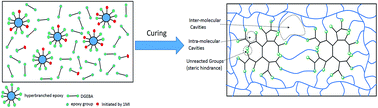
3.2.2. Effects of EHBPE loading on DMA results. The storage moduli (E′) and loss tangent (tan[thin space (1/6-em)]δ) of cured neat DGEBA and hybrids containing 5, 10, 15, and 20 wt% EHBPE as a function of temperature are shown in Fig. 8a and b, respectively. Similar to the cured neat DGEBA, only one Tg is evident in cured hybrids. Below 10 wt% loading, addition of EHBPE leads to a notable increase in Er, implying a higher average crosslink density. However, when excessive EHBPE (15 and 20 wt%) is added, both Er and Tg decrease, which could be related to two factors: on one hand, when excessive multifunctional EHBPE is added, quite a few terminal groups on EHBPE cannot be reacted due to steric hindrance and result in lower Er and Tg (see Scheme 4b);40 on the other hand, the dilution effects due to the introduction of EHBPE, which contains flexible A2 units, may also contribute. In addition, those unreacted terminal epoxide groups may introduce more defects and weak links in the network and thus compromise thermal stability (see Td5 in Table 3).
image file: c5ra22474h-f8.tif
Fig. 8 DMA results of DGEBA/EHBPE hybrids at different EHBPE loadings. Storage modulus (a) and tan[thin space (1/6-em)]δ (b) as a function of temperature at different EHBPE loadings.

image file: c5ra22474h-s4.tif
Scheme 4 (a) The initiation stage of 1MI/DGEBA curing system; (b) cured network of hybrids.
Table 3 Thermal properties of DGEBA/EHBPEs hybrids
Sample Tga (°C) FWHM of tan[thin space (1/6-em)]δ (°C) Er (MPa) Td5b (°C) αg (×10−6 K−1) αr (×10−6 K−1) Δα = αrαg (×10−6 K−1)
a The peak temperature at tan[thin space (1/6-em)]δ.b The temperature corresponding to 5 wt% weight loss.
Neat DGEBA 171.0 28.7 71.9 428 84.9 198.3 113.4
5 wt% EHBPE 172.7 31.0 101.3 424 88.6 187.2 98.6
10 wt% EHBPE 176.4 34.8 127.3 422 92.0 162.3 70.3
15 wt% EHBPE 173.0 30.0 97.8 415 92.9 172.0 79.1
20 wt% EHBPE 170.4 29.9 92.6 408 97.2 178.4 81.2


On the E′ and tan[thin space (1/6-em)]δ curves, only one Tg, which corresponds to Tg of cured epoxy, is observed; Tg of EHBPE, which is ca. 50 °C, is absent. Thus, no signs of phase separation are evident in cured hybrids. Temperature-modulated DSC measurements (data are not shown) also confirmed that the Tg associated with phase-separation was not found. Similar results were also reported by Zhang et al.41,42 and our group.28–35 We note that, when epoxy is toughened by liquid rubber,43,44 core–shell particles,45 and hyperbranched polyesters,25–27 phase separation is often observed in cured networks. In phase-separated networks, effects of toughening are dictated by the phase-separated morphology, which is sensitive to surface treatments, mixing conditions, and cure schemes. Whereas, in non-phase-separated networks, controlling the cured-induced morphology is not a big concern, which allow more flexibility in choosing cure scheme. In addition, in some applications, such as electronic encapsulation materials and fiber reinforced composites, non-phase-separated network is more preferable.

3.2.3. Effects of thermal expansion coefficient on EHBPE loadings. Based on the free volume theory,46 the fractional free volume can be expressed as f(T) = fg + Δα(TTg), where Δα (=αv,rαv,g) is the difference between volumetric coefficients of thermal expansions (CTE) in rubbery and glassy states, and fg is the fractional free volume at Tg. Thus, Δα is closely related to the fractional free volume, which has been confirmed by positron annihilation lifetime spectroscopy (PALS) measurements.47 For isotropic materials, the linear coefficient of thermal expansions (LCTE) is 1/3 of CTE. As shown in Table 3, αg increases steadily with EHBPE loading; whereas, αr first decreases at lower loadings (≤10 wt%) and then increases at higher loadings. As a result, Δα shows the same trend as αr. The decreases in fractional free volume with EHBPE loading could be related to the higher crosslinked density, as supported by DMA results.

For typical epoxy, an increase in crosslink density often leads to decreases in both αr and Δα,48 which agrees with our homopolymerized hybrid epoxy. It is worth noting that, however, when hybrid epoxy are cured with anhydride and amine, Δα increase monotonically with hyperbranched polymer (HPB) loading, which has also been confirmed by PALS.35 In those anhydride- and amine-cured non-phase-separated hybrid epoxies, the higher Δα is related to the extra inter-molecular cavities and intra-molecular free volumes due to incorporation of hyperbranched modifiers, which play an important role in toughening.28 However, for our homopolymerized hybrid epoxies, addition of EHBPE leads to lower Δα. As a result, the observed higher toughness in homopolymerized hybrid epoxy cannot be explained by the higher fractional free volume that has been widely used to explain the improved toughness of several other non-phase-separated hybrid networks. Possible explanations for the improved toughness in our homopolymerized hybrid epoxy will be discussed in later sections.

3.2.4. Dependence of mechanical properties on EHBPE loadings. The tensile strength and impact strength of cured hybrids containing different EHBPE loadings are shown in Fig. 9 and Table 4. Both impact strength and tensile strength show a notable increase at 5 wt% loading and then decrease at 10 wt%; at even higher loading, further slow drop is evident. At 5 wt% EHBPE loading, Tg, impact strength, and tensile strength all show notable improvements. It is worth pointing out that similar optimum performance at 5 wt% loading is also found in several other anhydride- and amine-cured hybrid epoxy systems.28–35 As shown above, below 10 wt% loading, addition of EHBPE could increase the average crosslink density. Thus, the higher tensile strength is not surprising. However, at 20 wt% loading, the drop in tensile strength and toughness could be related to the cure-induced defects due to incomplete cure (see Scheme 4b).
image file: c5ra22474h-f9.tif
Fig. 9 Effects of EHBPE loading on the impact strength and tensile strength.
Table 4 Mechanical properties of DGEBA/EHBPE hybrids
Sample Tensile strength Impact strength
Value (Mpa) Changes Value (kJ m−2) Changes
a ↑ represents the increase of the value.
Neat DGEBA 55.8   16.8  
5 wt% EHBPE 66.3 18.8%↑a 24.8 47.6%↑
10 wt% EHBPE 60.5 8.4%↑ 21.2 26.2%↑
15 wt% EHBPE 58.9 5.5%↑ 20.9 24.4%↑
20 wt% EHBPE 58.4 4.7%↑ 20.6 22.6%↑


It is easy to triple toughness by adding elastomers at the cost of tensile strength, modulus, and esp. Tg. More importantly, rubber toughening is not effective for epoxies with high Tg. Toughness can be doubled by blending thermoplastics with marginal or no decrease in Tg and modulus. However, this method also requires that the epoxy matrix have some degrees of flexibility. In addition, both methods increase viscosity a lot, which compromises processability, and rely on phase separated domains, which is sensitive to curing schemes, to improve toughness. However, in our case, when only 5 wt% EHBPE (the loading is often much lower than elastomers and plastics) is added, the tensile and toughness of hybrids are 19% and 48% higher than those of the neat system, without compromising Tg and forming phase separation. Although the improvements in toughness are not as great as thermoplastics and rubbers, however, a “balanced” toughening is achieved, i.e., the increased toughness is not accompanied by decreases in Tg, tensile strength, and processability.

3.2.5. Morphology of fractured surface and toughing mechanisms. SEM images of fracture surfaces are shown in Fig. 10a (neat DGEBA) and 10b (hybrid with 5 wt% EHBPE). In both figures, cracks are spreading out from one point, and the fracture surface of hybrid is rougher than that of neat DGEBA. Enlarged images of fracture surfaces are shown in Fig. 11a1–a3 (corresponding to different locations in Fig. 10a) and 11b1–b3 (corresponding to different locations in Fig. 10b). In the hybrid epoxy, dimple-like structures and stress-whitened zones are found in the vicinity of cracks (Fig. 11a2); whereas in neat DGEBA, relatively smooth surface is observed (Fig. 11b2). At the end of cracks (Fig. 11a3), large amounts of fibrils are observed, which can absorb energy under impacts. In contrast, in corresponding positions of the neat DGEBA, less fibrils are observed (Fig. 11b3).
image file: c5ra22474h-f10.tif
Fig. 10 SEM images of the impact fracture surfaces of (a) neat epoxy and (b) the hybrid epoxy with 5 wt% EHBPE loading under low magnification.

image file: c5ra22474h-f11.tif
Fig. 11 Enlarged SEM images of impact fracture surfaces at different positions. For the neat system: (a1) the starting point of the crack, (a2) the middle region, and (a3) the end zone. For the hybrid with 5 wt% loading: (b1) the starting point of crack, (b2) the middle region, and (b3) the end zone.

In typical epoxy formula, stoichiometric amounts of curing agents are often added in order to achieve high conversion. In most epoxy systems, the network is formed by a stepwise fashion. During cure, the reactive groups in curing agents react with epoxide groups to form linear chains then begin to branch out, and finally lead to a three-dimensional highly crosslinked network. However, during the curing process of homopolymerization, the network is built up in a chainwise fashion. In the early stages, the catalyst activates epoxide groups to form reactive centers then trigger chain reaction (see Scheme 3a). Compared with DGEBA, EHBPE have more terminal epoxide groups and larger surface area; thus, EHBPE could be more easily activated. A rough estimation based on Mn and EEW shows that, an EHBPE molecule, on average, has more than 10 epoxide groups. It is likely that two or more epoxide groups in one EHBPE molecule maybe be activated at the same time (see Scheme 4a). When EHBPE loading increases, the number of simultaneously activated epoxide groups on each EHBPE molecule also increases. Each propagation center can generate a long primary chain; if several active centers in the same EHBPE propagate simultaneously, a highly crosslinked network could be formed faster. However, if excessive terminal groups in the same EHBPE molecule are activated simultaneously, hindrance effects and side reactions could actually lead to lower average crosslink density, which is confirmed by DMA results.

Epoxide-terminated hyperbranched molecules have shown great potentials as all-purpose tougheners for DGEBA, which can simultaneously improve toughness and tensile strength without forming phase separation. PALS results showed that nano-sized cavities (including both inter- and intra-free volume or cavities) can be introduced by addition of hyperbranched modifiers. In previously reported amine- and anhydride cured non-phase-separated hybrid epoxies, the increased free volume/cavity, which may deform under impacts, is often used to explain the higher toughness. However, in the studied homopolymerized hybrid epoxy, lower fractional free volume is observed; thus, the well-received cavity deformation mechanism does not apply in our case. Considering the complex structure of the cured network, identifying the exact toughening mechanisms is out of the main scope of the paper, thus only some possibilities are outlined. Aside from the cavity deformation mechanism, we have already proposed several other mechanisms for an amine-cured hybrid epoxy.28 Below are some of the possibilities which may still apply to our homopolymerized epoxy systems. First, the flexible alkyl units in EHBPE and the flexible –C–C–O– units in cured network make secondary relaxations available (for example, crankshaft and kink motions) well below room temperature, which could improve toughness. Second, the many arms of hyperbranched crosslinks could more easily redistribute the force to many more directions and alleviate stress concentration. Third, introduction of hyperbranched molecules leads to nano-sized inhomogeneity which percolated through the whole cured network; during cooling, the mismatches in local moduli and CTE could lead to some favorable effects and promotes local shield yielding.

4. Conclusions

Homopolymerized epoxy with high Tg and adequate toughness and strength was achieved by adding 5 wt% epoxide-terminated hyperbranched polyether (EHBPE) into DGEBA. Effects of catalyst type, catalyst concentration, and EHBPE loading on processability and mechanical properties were investigated. Unlike typical epoxy formula which use large amount of costly, volatile, and often toxic curing agents, the reported curing system does not use curing agents and only need small amounts of catalyst and EHBPE. This curing system is environmental friendly because it does not involve volatile and often toxic curing agents; in addition, it also saves costs associated with raw materials and processing. The homopolymerized epoxy shows high Tg and excellent balanced mechanical properties.

Neat DGEBA initiated by 1MI and DMAP are first compared. It is found that 1MI is a better catalyst for homopolymerization of DGEBA. At lower 1MI loadings (4 and 6 mol%), side reactions lead to low conversions and inadequate toughness and strength; at 10 mol% 1MI, cured network has too many shorter primary chains and relatively low crosslink density, which compromises the tensile strength. At 8 mol% 1MI, the fully cured network shows high crosslink density, marginal side reactions and balanced mechanical performance.

In order to improve Tg and mechanical performance of homopolymerized DGEBA, EHBPE was added into DGEBA as a reactive modifier. Addition of EHBPE can simultaneously improve Tg, tensile strength, and toughness without forming phase separation. At 5 wt% EHBPE loading, compared with neat DGEBA, toughness and tensile strength increase by 47.6% and 18.8%, respectively. Unlike other amine- or anhydride-cured non-phase-separated epoxy which involve hyperbranched modifiers, this homopolymerized system shows decreased fractional free volume after addition of EHBPE. Thus, the well-received cavity deformation mechanism does not apply to our homopolymerized system.

Acknowledgements

This work is financially supported by the National Natural Science Foundation of China (No. 51173012) and the research fund of co-construction Program from the Beijing Municipal Commission of Education.

References

  1. H. F. Mark, in Encyclopedia of Polymer Science and Technology, John Wiley & Sons, New York, 2003 Search PubMed.
  2. R. Auvergne, S. Caillol, G. David, B. Boutevin and J.-P. Pascault, Chem. Rev., 2014, 114, 1082–1115 CrossRef CAS PubMed.
  3. W. Chen, M. L. Auad, R. J. J. Williams and S. R. Nutt, Eur. Polym. J., 2006, 42, 2765–2772 CrossRef CAS.
  4. J. LeMay and F. Kelley, in Advances in Polymer Science, Springer, Berlin, 1986 Search PubMed.
  5. S. K. Ooi, W. D. Cook, G. P. Simon and C. H. Such, Polymer, 2000, 41, 3639–3649 CrossRef CAS.
  6. M. Döring and U. Arnold, Polym. Int., 2009, 58, 976–988 CrossRef.
  7. H. Morikawa, A. Sudo, H. Nishida and T. Endo, J. Appl. Polym. Sci., 2005, 96, 372–378 CrossRef CAS.
  8. R. S. Bouer, in Epoxy Resin Chemistry, American Chemical Society, Washington DC, 1983 Search PubMed.
  9. W. J. Cantwell and H. H. Kausch, in Chemistry and Technology of Epoxy Resins, Springer science+Business Media, Dordrecht, 1993 Search PubMed.
  10. J. P. Pascault, H. Sautereau, J. Verdu and R. J. J. Williams, in Thermosetting Polymers, Marcel Dekker, New York, 2002 Search PubMed.
  11. I. E. Dell’Erba and R. J. J. Williams, Polym. Eng. Sci., 2006, 46, 351–359 Search PubMed.
  12. X. Fernández-Francos, W. D. Cook, A. Serra, X. Ramis, G. G. Liang and J. M. Salla, Polymer, 2010, 51, 26–34 CrossRef.
  13. D. Foix, X. Ramis, F. Ferrando and A. Serra, Polym. Int., 2012, 61, 727–734 CrossRef CAS.
  14. J. H. Oh, J. Jang and S.-H. Lee, Polymer, 2001, 42, 8339–8347 CrossRef CAS.
  15. X. Fernández-Francos, D. Santiago, F. Ferrando, X. Ramis, J. M. Salla, A. Serra and M. Sangermano, J. Polym. Sci., Part B: Polym. Phys., 2012, 50, 1489–1503 CrossRef.
  16. X. Fernández-Francos, W. D. Cook, J. M. Salla, A. Serra and X. Ramis, Polym. Int., 2009, 58, 1401–1410 CrossRef.
  17. L. Boogh, B. Pettersson and J.-A. E. Manson, Polymer, 1999, 40, 2249–2261 CrossRef CAS.
  18. Y. L. Liang and R. A. Pearson, Polymer, 2010, 51, 4880–4890 CrossRef CAS.
  19. N. Suzuki, S. Kiba and Y. Yamauchi, Phys. Chem. Chem. Phys., 2011, 13, 4957–4962 RSC.
  20. N. Suzuki, S. Kiba and Y. Yamauchi, J. Mater. Chem., 2011, 21, 14941–14947 RSC.
  21. D. Ratna, R. Varley, R. K. Singh Raman and G. P. Simon, J. Mater. Sci., 2003, 38, 147–154 CrossRef CAS.
  22. B. I. Voit and A. Lederer, Chem. Rev., 2009, 109, 5924–5973 CrossRef CAS PubMed.
  23. D. Zhang, E. Liang, T. Li, S. Chen, J. Zhang, X. Cheng, J. Zhou and A. Zhang, RSC Adv., 2013, 3, 3095–3102 RSC.
  24. X. Wang, J. Zhan, W. Xing, X. Wang, L. Song, X. Qian, B. Yu and Y. Hu, Ind. Eng. Chem. Res., 2013, 52, 5548–5555 CrossRef CAS.
  25. J.-P. Yang, Z.-K. Chen, G. Yang, S.-Y. Fu and L. Ye, Polymer, 2008, 49, 3168–3175 CrossRef CAS.
  26. J. Zhang, Q. Guo and B. Fox, J. Polym. Sci., Part B: Polym. Phys., 2010, 48, 417–424 CrossRef CAS.
  27. D. Foix, A. Serra, L. Amparore and M. Sangermano, Polymer, 2012, 53, 3084–3088 CrossRef CAS.
  28. T. Liu, Y. Nie, R. Chen, L. Zhang, Y. Meng and X. Li, J. Mater. Chem. A, 2015, 3, 1188–1198 CAS.
  29. T. Liu, Y. Nie, L. Zhang, R. Chen, Y. Meng and X. Li, RSC Adv., 2015, 5, 3408–3416 RSC.
  30. X. Miao, Y. Meng and X. Li, Polymer, 2015, 60, 88–95 CrossRef CAS.
  31. X. Miao, Y. Meng and X. Li, J. Appl. Polym. Sci., 2015, 132, 41910–41920 Search PubMed.
  32. L. Luo, Y. Meng, T. Qiu and X. Li, J. Appl. Polym. Sci., 2013, 130, 1064–1073 CrossRef CAS.
  33. J. Lv, Y. Meng, L. He, T. Qiu, X. Li and H. Wang, J. Appl. Polym. Sci., 2013, 128, 907–914 CrossRef CAS.
  34. L. Luo, Y. Meng, T. Qiu, Z. Li, J. Yang, X. Cao and X. Li, Polym. Compos., 2013, 34, 1051–1060 CrossRef CAS.
  35. L. Luo, T. Qiu, Y. Meng, L. Guo, J. Yang, Z. Li, X. Cao and X. Li, RSC Adv., 2013, 3, 14509–14520 RSC.
  36. GB/T 1678–1981: China, 1981.
  37. R. J. Varley and W. Tian, Polym. Int., 2004, 53, 69–77 CrossRef CAS.
  38. L. E. Nielsen and R. F. Landel, in Mechanical Properties of Polymers and Composites, CRC Press, Baca Raton, 1994 Search PubMed.
  39. J.-F. Fu, L.-Y. Shi, S. Yuan, Q.-D. Zhong, D.-S. Zhang, Y. Chen and J. Wu, Polym. Adv. Technol., 2008, 19, 1597–1607 CAS.
  40. R. Mezzenga, L. Boogh and J.-A. E. Manson, Macromolecules, 2000, 33, 4373–4379 CrossRef CAS.
  41. D. Zhang, Y. Chen and D. Jia, Polym. Compos., 2009, 30, 918–925 CrossRef CAS.
  42. D. Zhang, H. Wu, T. Li, A. Zhang, Y. Peng and F. Jing, Polym. Compos., 2011, 32, 36–43 CrossRef CAS.
  43. W. Chonkaew and N. Sombatsompop, J. Appl. Polym. Sci., 2012, 125, 361–369 CrossRef CAS.
  44. J. Parameswaran Pillai, J. Pionteck, R. Habbler, C. Sinturel, V. S. Mathew and S. Thomas, Ind. Eng. Chem. Res., 2011, 51, 2586–2595 CrossRef.
  45. A. Afzal, H. M. Siddiqi, S. Saeed and Z. Ahmad, RSC Adv., 2013, 3, 3885–3892 RSC.
  46. G. Strobl, in The Physics of Polymers: Concepts for Understanding Their Structures and Behavior, Springer-Verlag, Berlin, 2007 Search PubMed.
  47. D. Ratna and G. P. Simon, J. Appl. Polym. Sci., 2010, 117, 557–564 CAS.
  48. Q. Li, X. Li and Y. Meng, Thermochim. Acta, 2012, 549, 69–80 CrossRef CAS.

Footnote

Tuan Liu and Bing Han contribute equally to this work.

This journal is © The Royal Society of Chemistry 2016
Click here to see how this site uses Cookies. View our privacy policy here.