DOI:
10.1039/C5RA24868J
(Paper)
RSC Adv., 2015,
5, 104509-104515
Enantiopure synthesis of 7-(1-pyrindanyl)propargyl ethers as rasagiline analogues via chemical or enzymatic resolution of 1-pyrindan-7-ol†
Received
23rd November 2015
, Accepted 3rd December 2015
First published on 7th December 2015
Abstract
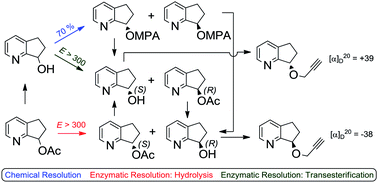
In this work, the enantiopure synthesis of 7-(1-pyrindanyl)propargyl ethers – rasagiline analogues – via chemical and/or enzymatic resolution of the racemic precursor 1-pyrindan-7-ol is described. (R)-Methoxyphenylacetic acid – (R)-MPAA – and (S)-methoxyphenylacetic acid – (S)-MPAA were used as chemical resolution agents, whereas Candida antarctica lipase B (CALB) was employed as kinetic resolution catalyst. The enzymatic resolution was successfully achieved by two different approaches: (1) transesterification of racemic 1-pyrindan-7-ol, which was found to selectively acylate the (R)-enantiomer with high efficiency; (2) hydrolysis of the racemic 7-(1-pyrindanyl)acetate, which was also highly selective to the (R)-enantiomer. The enzymatic hydrolysis was performed in a non-aqueous solvent using a lipase with significant absorbed water content. The configuration of the two enantiomers of 1-pyrindan-7-ol (and consequently of the 7-(1-pyrindanyl)propargyl ethers) were unequivocally determined by X-ray crystallography and/or specific optical rotation.
1. Introduction
Neurodegenerative diseases, such as Alzheimer's and Parkinson's diseases, are incurable, resulting in progressive degeneration and/or death of neuron cells. Neurodegenerative diseases are an important cause of death among the aged population worldwide. Even though progress has been made in the last decade, the current therapies do not fully correspond to the expectations of patients and physicians. Therefore, the discovery of new neuroprotective agents that improve the potential of the existing therapeutic drugs or the introduction of new alternative therapies are mandatory and urgent challenges.
Rasagiline (1, Fig. 1) is a potent, selective and irreversible inhibitor of monoamine oxidase type B (MAO-B) used as a monotherapy in early Parkinson's disease.1 The propargyl group is strongly related with the neuroprotective activity due to its ability to bind covalently to MAO-B and inhibit it.2 In addition, the configuration of the chiral centre of rasagiline (R-enantiomer) is vital for its action as inhibitor of MAO-B. On the other hand, the S-enantiomer of rasagiline show cyto- and cardio-protective effects.3 Recent studies also reveal that rasagiline salts decrease human melanoma tumor growth in vivo.4
 |
| | Fig. 1 (R)-Rasagiline (1) and a rasagiline analogue, 7-(1-pyrindanyl)propargyl ether (2). | |
Concerning the neuroprotective properties of rasagiline, many efforts have focused on exploiting rasagiline derivatives.1,2,5 Our research group has been working in the synthesis of a new class of rasagiline analogs, derived from 1-pyrindane (6,7-dihydro-5H-cyclopenta[b]pyridine).6 When compared with indane, the 1-pyrindane moiety may increase the affinity of the drug to the MAO-B enzyme due to the presence of the nitrogen atom in the aromatic ring. There are pyrindane derivatives which act as receptor antagonists of endothelin.7 In this context, some pyrindane derivatives are being evaluated as therapeutic agents for the treatment of hypertension, congestive heart failure and kidney diseases.8 More research involving pyrindanes reveal a scope of derivatives with potential for application as cardiotonic agents, bactericides and antifungals,9,10 and inhibitors of phosphatase.11
In a previous work, we described the synthesis of racemic 7-(1-pyrindanyl)propargyl ether (2) as a rasagiline analogue.6 Considering the influence of the configuration of the chiral centre of rasagiline in its biological activity, an expeditious methodology for the enantiopure synthesis of 2 is mandatory. Thus, in this work we describe the enantiopure synthesis of 2 via chemical or enzymatic resolution of the racemic precursor 1-pyrindan-7-ol.
The resolution of racemic 1-pyrindan-7-ol (3) may also find application in the area of asymmetric catalysis due to its interesting structure. The simultaneous presence of the pyrindanic nitrogen atom and the hydroxyl group bonded to an enantiopure chiral centre prefigure molecule 3 as a good ligand for metal complexation. In fact, 1-pyrindane derivatives have been studied as asymmetric catalysts.12
2. Results and discussion
The optimized synthesis of racemic 1-pyrindan-7-ol 3 was previously reported by our research group.6 By this method, 2,3-cyclopentenepyridine (4) is oxidized with m-chloroperbenzoic acid to its respective N-oxide (5) in high yields, which is subsequently treated with acetic anhydride to afford compound 6 through Boekelheide rearrangement.13 Hydrolysis of 6 with potassium hydroxide in ethanol yields alcohol 3 (Scheme 1).
 |
| | Scheme 1 Optimized synthesis of alcohol 3.6 Reagents and conditions: (i) m-CPBA, CH2Cl2, r. t., 2 h, 99%; (ii) Ac2O, 100 °C, 2 h, 72%; (iii) KOH, EtOH, r. t., 1 h, 90%. | |
From compound 3, a wide range of derivatives may be prepared, including 7-(1-pyrindanyl)propargyl ether. Thus, it is of crucial importance to achieve the pure enantiomers of 3 as precursors for such derivatives. In order to resolve racemate 3, two approaches were tested: (a) chemical resolution and (b) enzymatic resolution.
2.1. Chemical resolution
The protocol for chemical resolution of 3 comprised its esterification with (R)-methoxyphenylacetic acid – (R)-MPAA – and (S)-methoxyphenylacetic acid – (S)-MPAA – followed by posterior chromatographic separation of the resultant diastereoisomers 7 and 8, respectively (Scheme 2). Two esterification protocols were tested: (a) Mitsunobu reaction14 and (b) Steglich esterification.15 In the Mitsunobu reaction, racemic 3 was reacted with (R)-MPAA in the presence of triphenylphosphine and DEAD during 20 h. Two new compounds were formed and all the starting material was consumed (TLC). After chromatographic separation, the two diasteroisomers 7a and 7b were obtained in 30% and 31% yields, respectively. It is noteworthy that the chromatographic separation was hampered by the presence of triphenylphosphine oxide in the reaction crude.
 |
| | Scheme 2 Procedure for chemical resolution of (±)-3 using (R)-MPAA and (S)-MPAA as resolution agents. | |
In the Steglich esterification, racemic 3 was reacted with (R)-MPAA in the presence of DCC and catalytic amounts of DMAP during 4 hours. After separation by chromatographic column, the two diasteroisomers 7a and 7b were obtained in 32% and 38% yields, respectively. Taking into account both the reaction yields and the simplicity of the process, the Steglich esterification was preferred over the Mitsunobu reaction to proceed with the esterification of (±)-3 with (S)-MPAA, to afford the diasteroisomers 8a and 8b. The specific optical rotation of 7a/7b and 8a/8b were determined and their values are showed in Scheme 2. 1H-NMR spectrum of 7a was found identical to 8a, proving they are enantiomers; in the same way, 7b was confirmed as enantiomer of 8b.
Treatment of each pair of diastereoisomers with KOH then afforded the corresponding enantiopure aminoalcohols 3 in good yields (≈90%). The specific optical rotation of the four samples were consistent ([α]D = +65 for 3 resulting from hydrolysis of 7a/8b and −65 for 3 resulting from 7b/8a). Chiral HPLC analysis confirmed enantiomeric purity higher than 99.3%.
As the diasteroisomers 7/8 were oils, the enantiopure (−)-3 was condensed with the amino acid (S)-Boc-L-Leu-OH to afford the respective ester 9, which was obtained as a white solid. After crystallization it was analyzed by X-ray crystallography and revealed to have (S,S) configuration (Fig. 2).16 By crossing all this information (1H-NMR, [α]D and X-ray analysis), we unequivocally determined the complete configuration of each stereoisomer as are represented in Scheme 2.
 |
| | Fig. 2 X-ray crystallographic structure of compound 9. | |
Amino acid (S)-Boc-L-Leu-OH was also tested as resolution agent of (±)-3, but the resemblance on the Rf of the corresponding diasteroisomers makes it unsuitable for chromatographic separation.
2.2. Enzymatic resolution
The enzymatic resolution of (±)-3 was tested by using Novozym® 435 – Candida antarctica lipase B (CALB) – a serine hydrolase immobilized on an hydrophobic carrier (acrylic resin). Lipases are a class of enzymes that catalyze the breakdown of lipids by hydrolysis of ester bonds; however, in organic media the lipases can also be used to catalyze esterification and transesterification reactions.17 In fact, a survey through the literature shows the esterification and transesterification as the most used lipase-catalyzed reactions for the resolution of the two enantiomers of a racemic alcohol. We herein tested two methods for the kinetic enzymatic resolution of (±)-3: (a) enzymatic transesterification, in which the racemic alcohol 3 was acylated using vinyl acetate as an irreversible acyl donor; (b) hydrolysis of ester (±)-6 (Scheme 3).
 |
| | Scheme 3 Protocols for the kinetic enzymatic resolution of (±)-3: enzymatic transesterification and hydrolysis of (±)-6. | |
The lipase-catalyzed transesterification and hydrolysis reactions were conducted under similar conditions (dry benzene, 18 h, room temperature, 50% w/w Novozym® 435), with exception to the water content: transesterification was performed in the presence of molecular sieves and a hydrated lipase was employed in hydrolysis. The order of magnitude for the reaction enantioselectivities (E) are presented in Table 1, which also lists [α]D values, enantiomeric excesses determined by chiral HPLC (ESI†) and substrate conversion rates (C). It is worth mentioning that the calculation of enantiomeric excesses values (e.e.) through [α]D is consistent with those determined by HPLC.
Table 1 Enantioselectivities (E), [α]D, enantiomeric excesses (e.e.) and substrate conversion rates (C) for the lipase-catalyzed transesterification and hydrolysis reactions
| Reaction |
Conversiona/% |
Alcohol 3 |
Acetate 6 |
Eb |
| e.e./% |
[α]D |
e.e./% |
[α]D |
| C = e.e.s/(e.e.s + e.e.p). E = ln[(1 − c)(1 − e.e.s)]/ln[(1 − c)(1 + e.e.s)].18 |
| Transesterification |
49 |
94 |
−61.9 |
>98 |
−17.1 |
>300 |
| Hydrolysis |
49 |
>98 |
+65.0 |
94 |
+16.2 |
>300 |
The enzymatic transesterification was found to selectively acylate the (R)-enantiomer of 3 with high efficiency, allowing subsequent chromatographic separation of the (S)-enantiomer (−)-3 from (R)-7-(1-pyrindanyl)acetate (−)-6, which was then saponified to (R)-1-pyrindan-7-ol (+)-3 (Scheme 3). On the other hand, hydrolysis of (±)-6 was highly selective to afford the (R)-enantiomer of 3, which was then separated from the non-hydrolyzed (S)-7-(1-pyrindanyl)acetate (+)-6 through chromatographic column. Subsequent saponification of (+)-6 afforded (S)-1-pyrindan-7-ol (−)-3.
Under the mentioned conditions, the transesterification reaction allowed to obtain acetate (−)-6 with e.e. > 98% and the remaining alcohol (−)-3 with e.e. of 94%, giving an enantiomer ratio (E) higher than 300. In its turn, the hydrolysis of racemate (±)-6 afforded (+)-3 with e.e. > 98% and the remaining acetate (+)-6 with e.e. of 94%, leading to similar E. In this way, virtual enantiopure (R)-1-pyrindan-7-ol [(+)-3] could be effectively prepared directly from (±)-6 by substituting step iii represented in Scheme 1 by the lipase-catalyzed hydrolysis protocol.
Obviously, the hydrolysis of esters is not possible in the absence of water. On the other hand, the use of aqueous media is not adequate to most of the organic reactions. Thus, since it is known that some amount of water may be fixed to proteins by hydrogen bonding as a water shell, we decided to use a CALB lipase with increased water content rather that adding water to the reaction mixture. As the enzymes are moisture absorbable, CALB was kept in the fridge during two days in a non-hermetic sealed vial prior to its use as catalyst in the hydrolysis reaction. In fact, there are previous observations suggesting that water absorbed to CALB takes part in the hydrolysis reaction.19
It is also worth mentioning that the selectivity observed for the R enantiomer is in agreement with Kazlauskas rule,20 which states that most lipases resolve secondary alcohols to give the R enantiomers. This is related to the better positioning of the alcohol group in the stereospecific smaller pocket of the enzyme and the bulky group in the large cavity. The excellent selectivity of CALB for the R enantiomer of 6 was demonstrated for the enzymatic hydrolysis: two filtered and dried samples of the reaction mixture after 18 h and 48 h were analyzed by 1H-NMR, which showed similar proportions of alcohol 3/acetate 6. This shows that CALB did not hydrolyze the S enantiomer of 6.
2.3. Synthesis of enantiopure 7-(1-pyrindanyl)propargyl ethers (2)
The enantiopure propargyl ethers (−)-2 and (+)-2 were easily prepared with good yield by bimolecular nucleophilic substitution reaction with propargyl bromide from the respective enantiopure alcohols (+)-3 and (−)-3, respectively (Scheme 4).
 |
| | Scheme 4 Formation of 7-(1-pyrindanyl)propargyl ethers (−)-2 and (+)-2 from the respective enantiopure alcohols (+)-3 and (−)-3, respectively. | |
3. Conclusion
The preparation of combinatorial libraries for the search for new drugs helps both in the identification of prototype compounds as in the optimization of these. Hence, the preparation of a wide range of rasagiline analogs derived from 1-pyrindane is an important route to explore for the identification of bioactive molecules, in particular with neuroprotective properties. However, it is known that the configuration of the chiral centre of rasagiline (R-enantiomer) is vital for its action as inhibitor of MAO-B. With this in mind, enantiopure (R)- and (S)-7-(1-pyrindanyl)propargyl ethers were prepared as rasagiline analogues, by using chemical or enzymatic resolution of their precursor, the previously described 1-pyrindan-7-ol.6 The chemical resolution, in which (R)- and (S)-methoxyphenylacetic acids were used as resolution agents, was found to be more laborious, time consuming and expensive. However, excellent results were obtained, the alcohols (+)-3 and (−)-3 being obtained with fair overall yields and virtually complete enantiopurity (the enantiomeric purity of chemically resolved enantiomers depends on the enantiopurity of the used resolution agent). On the other hand, enzymatic resolution using CALB revealed to be easy, cheaper and simple to perform. However, only the (R)-enantiomer was obtained with high enantiomeric purity. This means that, despite the excellent enantioselectivity of the process, the (S)-enantiomer needs to be further purified by some other method for absolute enantiomeric purity. This applies to both the lipase-catalyzed transesterification of (±)-3 and to the hydrolysis of (±)-6. The preparation of enantiopure (+)-3 and enantioenriched (−)-3 directly from (±)-6 is also an advantage since no additional steps are introduced in the synthetic procedure. Furthermore, the use of hydrated CALB significantly simplified the process because it avoids the need of water addition in the reaction media, the use of aqueous solvents and the need of pH control. Thus, the lipase-catalyzed hydrolysis reaction revealed to be the better option for this resolution process.
We believe this strategy will also find important application in asymmetric catalysis, since it allows a straightforward preparation of the two isolated enantiomers of 1-pyrindan-7-ol derivatives as interesting chiral ligands.
4. Experimental
All chemicals were of reagent grade and were obtained from Sigma-Aldrich or Bachem and used without further purification. CALB (Novozym® 435), was from Novo Nordisk. Flash chromatography was performed on silica gel (Merck 60, 230–240 mesh), and analytical TLC was carried out on pre-coated silica gel plates (Merck 60 F254, 0.25 mm) using UV light and/or an ethanolic solution of phosphomolybdic acid (followed by gentle heating) for visualization. Melting points were determined on an electrothermal melting point apparatus and are uncorrected. 1H- and 13C-NMR spectra were recorded in a Bruker Avance III 400 at Centro de Materiais da Universidade do Porto – CEMUP. The NMR spectra were calibrated using TMS as internal standard. Mass spectra were recorded on a LTQ Orbitrap XL mass spectrometer (Thermo Fisher Scientific, Bremen, Germany) controlled by LTQ Tune Plus 2.5.5 and Xcalibur 2.1.0 (CEMUP). Optical rotations were measured on a thermostated Jasco P-2000 digital polarimeter using a sodium lamp.
Chiral HPLC analyses were performed on a Thermo Scientific UHPLC Dionex UltiMate 3000 BioRS, using a CHIRALCEL® OD-H column.
4.1. Chemical resolution of (±)-3
4.1.1. Esterification of (±)-3 with (R)-MPAA through Mitsunobu reaction. In a round bottom flask, coupled with a dropping funnel and under argon atmosphere, a solution of (±)-3 (0.310 g, 2.29 mmol) in anhydrous CH2Cl2 (10 ml) was prepared and kept into an ice bath. Triphenylphosphine (0.89 g, 3.4 mmol) and (R)-MPAA (0.56 g, 3.4 mmol) were added and then 3.0 ml of a solution of DEAD in THF (40%, 6.8 mmol) was added dropwise from the dropping funnel. The mixture was left to react during 16 h under stirring. Water was added and the phases were separated. The aqueous phase was extracted with CH2Cl2 (2 × 20 ml), the organic layers were washed with water (20 ml) and saturated aqueous solution of sodium chloride (20 ml), combined and dried over anhydrous sodium sulfate. After removal of solvents, the obtained crude was purified by chromatographic column (eluent: Hex/AcOEt 1
:
4). The two fractions corresponding to the two diasteroisomers 7a/7b were collected as white solids with yields of 30% and 31%, respectively.
4.1.2. Esterification of (±)-3 with (R)-MPAA and (S)-MPAA through Steglich protocol. In a round bottom flask, under argon atmosphere, a solution of (±)-3 (0.720 g, 5.33 mmol) in anhydrous CH2Cl2 (20 ml) was prepared and then DCC (1.32 g, 6.39 mmol), (R)- or (S)-MPAA (0.890 g, 5.33 mmol) and a catalytic amount of DMAP (5.0 mg) were added. The system was left to react at room temperature during 4 h. After the disappearance of the starting material (TLC) 50 ml of saturated sodium bicarbonate was added. The phases were separated and the aqueous phase was extracted with CH2Cl2 (2 × 50 ml). The organic layers were then washed with water (50 ml) and saturated aqueous solution of sodium chloride (50 ml), combined and dried over anhydrous sodium sulfate. After removal of solvents, the obtained crude was purified by chromatographic column (eluent: Hex/AcOEt 1
:
4). The two fractions corresponding to the two diasteroisomers 7a/7b were collected as white solids with yields of 32% and 38%, respectively; 8a/8b were also obtained as white solids with yields of 32% and 36%, respectively.
(R)-(R)-6,7-Dihydro-5H-cyclopenta[b]pyridin-7-yl-2-phenylpropanoate (7a). 1H-NMR (CDCl3, 400 MHz), δ (ppm): 2.08 (1H, dddd, J = 14.2, 9.1, 5.2, 4.2 Hz, H6anti), 2.58 (1H, dddd, J = 14.3, 8.7 Hz, 7.4, 5.6 Hz, H6syn), 2.88 (1H, ddd, J = 16.4, 8.7, 5.2 Hz, H5anti), 3.02–3.14 (1H, m, H5syn), 3.42 (3H, s, OCH3), 4.83 (1H, s, OC(O)CH), 6.21 (1H, dd, J = 7.5, 4.2 Hz, H7), 7.11–7.24 (1H, m, H3), 7.29–7.37 (3H, m, 2 × H′meta and H′para), 7.43–7.49 (2H, m, 2 × H′ortho), 7.58 (1H, d, J = 8.0 Hz, H4), 8.46 (1H, s, H2); 13C-NMR (CDCl3, 100 MHz), δ (ppm): 27.8 (C5), 30.3 (C6), 57.5 (OCH3), 78.0 (C7), 82.8 (OC(O)
H), 123.4 (C3), 127.2 (2 × C′meta), 128.5 (2 × C′ortho), 128.6 (C′para), 133.1 (C4), 136.0 (C4a), 137.7 (C′ipso), 148.6 (C2), 159.8 (C7a), 170.5 (O
(O)CH); ESI-HRMS: calculated for [C17H17NO3 + H]+ 284.1281, obtained 284.1282; [α]20D = −34.9 (c1, CHCl3); mp = 219–224 °C.
(R)-(S)-6,7-Dihydro-5H-cyclopenta[b]pyridin-7-yl-2-phenylpropanoate (7b). 1H-NMR (CDCl3, 400 MHz), δ (ppm): 1.73 (1H, dddd, J = 14.3, 8.6, 5.7, 4.6 Hz, H6anti), 2.50 (1H, dddd, J = 14.0, 8.4 Hz, 7.4, 5.6 Hz, H6syn), 2.84 (2H, m, H5), 3.45 (3H, s, OCH3), 4.86 (1H, s, OC(O)CH), 6.21 (1H, dd, J = 7.4, 4.6 Hz, H7), 7.21 (1H, dd, J = 7.7, 4.8 Hz, H3), 7.28–7.37 (3H, m, 2 × H′meta and H′para), 7.38–7.47 (2H, m, 2 × H′ortho), 7.58 (1H, d, J = 8.0 Hz, H4), 8.51 (1H, s, H2); 13C-NMR (CDCl3, 100 MHz), δ (ppm): 27.8 (C5), 30.4 (C6), 57.5 (OCH3), 77.7 (C7), 82.1 (OC(O)
H), 123.6 (C3), 127.3 (2 × C′meta), 128.5 (2 × C′ortho), 128.6 (C′para), 133.6 (C4), 136.3 (C4a), 138.0 (C′ipso), 148.4 (C2), 159.6 (C7a), 170.4 (O
(O)CH); ESI-HRMS: calculated for [C17H17NO3 + H]+ 284.1281, obtained 284.1284; [α]20D = +23.2 (c1, CHCl3); mp = 219–221 °C.
(S)-(S)-6,7-Dihydro-5H-cyclopenta[b]pyridin-7-yl-2-phenylpropanoate (8a). 1H-NMR (CDCl3, 400 MHz), δ (ppm): 2.08 (1H, dddd, J = 14.2, 8.8, 5.2, 4.3 Hz, H6anti), 2.58 (1H, dddd, J = 14.3, 8.8 Hz, 7.5, 5.6 Hz, H6syn), 2.88 (1H, ddd, J = 16.3, 8.8, 5.2 Hz, H5anti), 3.03–3.14 (1H, m, H5syn), 3.43 (3H, s, OCH3), 4.84 (1H, s, OC(O)CH), 6.22 (1H, dd, J = 7.5, 4.3 Hz, H7), 7.18 (1H, dd, J = 7.7, 4.8 Hz, H3), 7.28–7.39 (3H, m, 2 × H′meta and H′para), 7.42–7.49 (2H, m, 2 × H′ortho), 7.59 (1H, d, J = 8.0 Hz, H4), 8.45 (1H, s, H2); 13C-NMR (CDCl3, 100 MHz), δ (ppm): 27.9 (C5), 30.4 (C6), 57.6 (OCH3), 78.0(C7), 82.9 (OC(O)
H), 123.5 (C3), 127.2 (2 × C′meta), 128.5 (2 × C′ortho), 128.6 (C′para), 133.2 (C4), 136.2 (C4a), 137.8 (C′ipso), 148.6 (C2), 159.9 (C7a), 170.6 (O
(O)CH); ESI-HRMS: calculated for [C17H17NO3 + H]+ 284.1281, obtained 284.1280; [α]20D = +35.1 (c1, CHCl3); mp = 220–224 °C.
(S)-(R)-6,7-Dihydro-5H-cyclopenta[b]pyridin-7-yl-2-phenylpropanoate (8b). 1H-NMR (CDCl3, 400 MHz), δ (ppm): 1.73 (1H, dddd, J = 14.2, 8.6, 5.7, 4.5 Hz, H6anti), 2.50 (1H, dddd, J = 14.1, 8.4 Hz, 7.3, 5.6 Hz, H6syn), 2.75–2.93 (2H, H5), 3.45 (3H, s, OCH3), 4.86 (1H, s, OC(O)CH), 6.21 (1H, dd, J = 7.4, 4.6 Hz, H7), 7.20 (1H, dd, J = 7.7, 4.8 Hz, H3), 7.29–7.36 (3H, m, 2 × H′meta and H′para), 7.39–7.46 (2H, m, 2 × H′ortho), 7.57 (1H, d, J = 7.8 Hz, H4), 8.51 (1H, d, J = 5.0 Hz, H2); 13C-NMR (CDCl3, 100 MHz), δ (ppm): 27.7 (C5), 30.3 (C6), 57.5 (OCH3), 77.7 (C7), 82.1 (OC(O)
H), 123.5 (C3), 127.3 (2 × C′meta), 128.5 (2 × C′ortho), 128.6 (C′para), 133.3 (C4), 136.3 (C4a), 137.8 (C′ipso), 148.6 (C2), 159.8 (C7a), 170.4 (O
(O)CH); ESI-HRMS: calculated for [C17H17NO3 + H]+ 284.1281, obtained 284.1285; [α]20D = −23.4 (c1, CHCl3); mp = 219–223 °C.
4.1.3. Hydrolysis of the diasteroisomers 7a/7b and 8a/8b. In a round bottom flask, a solution of diastereomeric pure 7a/7b or 8a/8b (0.400 g, 1.41 mmol) in ethanol (10 ml) was prepared and then 0.16 g (2.8 mmol) of KOH was added. The mixture was stirred for 2 h at room temp. After the disappearance of the starting material (TLC) the solvent was evaporated under reduced pressure, CH2Cl2 (50 ml) and a saturated aqueous solution of ammonium chloride (50 ml) were added and the phases separated. The aqueous phase was extracted with CH2Cl2 (2 × 50 ml). The organic layers were then washed with water (50 ml) and saturated sodium chloride (50 ml), combined and dried over anhydrous sodium sulfate. After removal of solvents, the obtained crude was purified by chromatographic column (eluent: AcOEt) and a white solid was obtained with yields between 87-90%. The NMR spectra of (±)-3, (+)-3 and (−)-3 were found identical.1H-NMR (CDCl3, 400 MHz), δ (ppm): 2.05–2.14 (1H, m, H6anti), 2.52–2.61 (1H, m, H6syn), 2.80–2.88 (1H, m, H5anti), 3.07 (1H, ddd, J = 4.3, 8.9, 13.2 Hz, H5syn), 4.76 (1H, bs, OH), 5.28 (1H, t, J = 6.0 Hz, H7), 7.16 (1H, dd, J = 5.0, 7.6 Hz, H3), 7.59 (1H, dd, J = 0.6, 7.6 Hz, H4), 8.43 (1H, d, J = 4.9 Hz, H2). 13C-NMR (CDCl3, 100 MHz), δ (ppm): 28.4 (C5), 33.6 (C6), 74.8 (C7), 123.6 (C3), 134.4 (C4), 137.5 (C4a), 148.4 (C2), 166.0 (C7a); mp (±)-3 = 80–83 °C; mp (+)-3 = 60–61 °C; mp (−)-3 = 59–61 °C. [α]20D (+)-3 = +65 (c1, CHCl3); [α]20D (−)-3 = −65 (c1, CHCl3).
4.1.4. Synthesis of (S)-(S)-6,7-dihydro-5H-cyclopenta[b]pyridin-7-yl-2-((tert-butoxycarbonyl)amino)-4-methylpentanoate (9). In a round bottom flask, Boc-L-Leu-OH (0.317 g, 1.27 mmol) was diluted in anhydrous CH2Cl2 (20 ml) under argon atmosphere and then DIPEA (0.42 ml, 2.54 mmol) was added and the mixture was allowed to stir for 15 min. After that, TBTU (0.408 g, 1.27 mmol) was added and stirred for an additional 30 min followed by addition of alcohol (−)-3 (0.172 g, 1.27 mmol) and a catalytic amount of DMAP. The mixture was left under stirring at room temperature overnight. The solvent was removed in a rotary evaporator, the crude was diluted with AcOEt (50 ml) and then water (50 ml) was added. The phases were separated and the organic layer was washed with aqueous saturated solution of NaHCO3 (3 × 50 ml) and brine (50 ml). The organic phase was then dried with anhydrous sodium sulfate, filtered and the solvent was removed to dryness. The resulting residue was purified by chromatography on silica gel (eluent: Et2O/Hex 3
:
1) obtaining 9 as a white solid (0.278 g, 63%).1H-NMR (CDCl3, 400 MHz), δ (ppm): 0.92 (d, J = 6.5 Hz, 6H, HL-5), 1.44 (s, 9H, C(C
3)3), 1.55–1.64 (m, 1H, HL-4), 1.66–1.82 (m, 2H, HL-3), 2.20–2.31 (m, 1H, H6anti), 2.65–2.77 (m, 1H, H6syn), 2.95–3.05 (m, 1H, H5anti), 3.14–3.26 (m, 1H, H5syn), 4.30 (td, J = 9.1, 4.2 Hz, 1H, HL-2), 5.11 (d, J = 8.2 Hz, 1H, H7), 6.32 (dd, J = 7.0, 4.7 Hz, 1H, H3), 7.39–7.54 (m, 1H, H4), 7.89 (d, J = 7.0 Hz, 1H, CONH), 8.57 (d, J = 5.0 Hz, 1H, H2); 13C-NMR (CDCl3, 100 MHz), δ (ppm): 21.9 (CL-5), 23.0 (CL-5), 24.9 (CL-4), 28.1 (C6), 28.4 (C(
H3)3), 30.6 (C5), 41.7 (CL-3), 52.4 (CL-2), 77.6 (C7), 79.8 (
(CH3)3), 123.9 (CH), 134.1 (CH), 138.5 (C4a), 148.0 (C2), 155.6 (C), 159.7 (C), 173.3 (
O2CH3); ESI-HRMS: calculated for [C19H29N2O4 + H]+ 349.21218, obtained 349.21211; [α]25D = −7.5 (c1, CHCl3); mp = 75–78 °C.
4.2. Enzymatic resolution
4.2.1. Transesterification. In a round bottom flask, racemic alcohol (±)-3 (0.500 g, 3.70 mmol) was diluted in anhydrous benzene (20 ml) under argon atmosphere and molecular sieves (0.200 g), and then Novozym® 435 (0.250 g, 50% w/w) was added followed by vinyl acetate (0.25 ml, 2.71 mmol). The mixture was stirred for 18 hours, at rt. The lipase was filtered off by simple filtration and the solvent of the filtrate was removed in a rotary evaporator. The resulting residue was purified by chromatography on silica gel (eluent: AcOEt). The early fractions afforded (R)-7-(1-pyrindanyl)acetate (−)-6 as a yellow oil (49%, e.e. > 98%), and the later fractions the non-acetylated (S)-1-pyrindan-7-ol (−)-3 (51%, e.e. 94%) as a white solid. The NMR spectra of (−)-6 is identical to the corresponding racemic form previously reported.6 (−)-3: mp = 59–61 °C, [α]20D = −61.9 (c1, CHCl3); (−)-6: [α]20D = −17.1 (c1, CHCl3).
4.2.2. Hydrolysis of (±)-7-(1-pyrindanyl)acetate (±)-6. In a round bottom flask, racemic ester (±)-6 (0.500 g, 2.82 mmol) was diluted in benzene (20 ml) and then hydrated Novozym® 435 (0.250 g, 50% w/w) was added (Novozym® 435 was previously kept in the fridge during two days in a non-hermetic sealed vial prior to its use). The mixture was stirred for 18 hours, at rt. After the same work-up protocol used for transesterification reaction, the resulting residue was purified by chromatography on silica gel (eluent: AcOEt). The early fractions afforded the non-hydrolyzed (S)-7-(1-pyrindanyl)acetate (+)-6 as a yellow oil (51%, 94% e.e.) and the later fractions (R)-1-pyrindan-7-ol (+)-3 as a white solid (49%, e.e. > 98%). The NMR spectra of (+)-3 is identical to the corresponding racemic form previously reported.6 (+)-3: mp = 60–61 °C, [α]20D = +65.0 (c1, CHCl3); (+)-6: [α]20D = +16.2 (c1, CHCl3). 1H-NMR spectra of two filtered and dried samples of the reaction mixture after 18 h and 48 h are presented in Fig. 14 of ESI.†
4.3. Procedure for the synthesis of (R)- or (S)-2
In a round bottom flask, under argon atmosphere, a solution of enantiomeric pure (R)- or (S)-3 (0.300 g, 2.22 mmol) in anhydrous CH2Cl2 (20 ml) was prepared. 0.50 ml (6.6 mmol) of propargyl bromide and potassium tert-butoxide (0.410 g, 3.33 mmol) were added and the system was let under stirring and inert atmosphere during 20 h. 50 ml of saturated sodium bicarbonate were added, the phases were separated and the aqueous phase was extracted with CH2Cl2 (3 × 50 ml). The organic layers were washed with water (50 ml) and saturated sodium chloride (50 ml), combined and dried over anhydrous sodium sulfate. After removal of solvents, the obtained crude was purified by chromatographic column (eluent: AcOEt). The fractions corresponding to (R)- or (S)-2 were collected, affording oils after evaporation of the solvent, with yields of 73% and 71%, respectively. The NMR spectra of (±)-2,6 (R)-2 and (S)-2 were found identical.
(R)- or (S)-7-(prop-2-ynyloxy)-6,7-di-hydro-5H-cyclopenta[b]pyridine ((R)- or (S)-2). 1H-NMR (CDCl3, 400 MHz), δ (ppm): 2.09–2.16 (1H, m, H6anti), 2.32–2.39 (1H, m, H6syn), 2.42 (1H, t, J = 2.4 Hz, OCH2CC
), 2.77 (1H, ddd, J = 13.3, 8.7, 4.6 Hz, H5anti), 3.00–3.08 (1H, m, H5syn), 4.38 (1H, dd, J = 15.6, 2.4 Hz, OC
aHbCCH), 4.46 (1H, dd, J = 15.7, 2.4 Hz, OCHa
bCCH) 4.98 (1H, dd, J = 7.0, 3.7, H7), 7.10 (1H, dd, J = 7.6, 4.9 Hz, H3), 7.51 (1H, dd, J = 7.6, 0.6 Hz, H4), 8.39 (1H, d, J = 4.9 Hz, H2); 13C-NMR (CDCl3, 100 MHz), δ (ppm): 28.8 (C5), 31.7 (C6), 57.4 (O
H2CCH), 75.1 (OCH2C
H), 81.1 (OCH2
CH), 81.8 (C7), 124.0 (C3), 1334.0 (C4), 138.2 (C4a), 148.9 (C2), 163.4 (C7a); ESI-HRMS: calculated for [C11H11NO + H]+ 174.0919, obtained 174.0917; [α]20D (R)-2 = −38 (c1, CHCl3); [α]20D (S)-2 = +39 (c1, CHCl3); 5. HPLC chiral analyses: both racemates 3 and 6 were individually analyzed in order to determine the retention times of the respective enantiomers. A 0.5 ml min−1 flow of 90
:
10 hexane/isopropanol was used. It was verified that retention times of (±)-3 and (±)-6 were perfectly coincident. Thus, for an accurate evaluation, at the end of each enzymatic reaction alcohols 3 needed to be chromatographically separated from acetates 6 prior to HPLC analyses. Retention times: (R)-3 = (R)-6 = 15.9 min; (S)-3 = (S)-6 = 22.9 min.
Acknowledgements
The work was funded by Fundação para a Ciência e a Tecnologia (FCT)/MEC and FEDER under Program PT2020 (project UID/QUI/50006/2013). CADS, IESD and FRA also thank FCT for the grants SFRH/BPD/80100/2011, SFRH/BD/93632/2013 and SFRH/BD/45545/2008, respectively. We also thank Novo Nordisk, Denmark, for the generous gifts of CALB lipase.
References
-
(a) M. B. H. Youdim, M. Fridkin and H. Zheng, Mech. Ageing Dev., 2005, 126, 317–326 CrossRef CAS PubMed;
(b) O. Rascol, D. J. Brooks, E. Melamed, W. Oertel, W. Poewe, F. Stocchi and E. Tolosa, Lancet, 2005, 365, 947–954 CrossRef CAS;
(c) D. R. Guay, Am. J. Geriatr. Pharmacother., 2006, 4, 330–346 CrossRef CAS PubMed;
(d) V. Oldfield, G. M. Keating and C. M. Perry, Drugs, 2007, 67, 1725–1747 CrossRef CAS;
(e) D. A. Gallagher and A. Schrag, CNS Drugs, 2008, 22, 563–586 CrossRef CAS;
(f) O. Bar-Am, O. Weinreb, T. Amit and M. B. H. Youdim, J. Neurochem., 2010, 112, 1131–1137 CrossRef CAS PubMed;
(g) M. B. H. Youdim, Exp. Neurobiol., 2013, 22, 1–10 CrossRef PubMed.
-
(a) M. B. H. Youdim and M. Weinstock, Mech. Ageing Dev., 2002, 123, 1081–1086 CrossRef CAS PubMed;
(b) M. Naoi, W. Maruyama, M. B. H. Youdim, P. Yu and A. A. Boulton, Inflammopharmacology, 2003, 11, 175–181 CrossRef CAS PubMed;
(c) M. Yogev-Falach, T. Amit, O. Bar-Am and M. B. H. Youdim, FASEB J., 2003, 17, 2325–2327 CAS;
(d) O. Bar-Am, O. Weinreb, T. Amit and M. B. H. Youdim, FASEB J., 2005, 19, 1899–1904 CAS;
(e) C. Binda, F. Hubálek, M. Li, Y. Herzig, J. Sterling, D. E. Edmondson and A. Mattevi, J. Med. Chem., 2005, 48, 8148–8154 CrossRef CAS.
- Y. D. Barac, O. Bar-Am, E. Liani, T. Amit, L. Frolov, E. Ovcharenko, I. Angel, M. B. H. Youdim and O. Binah, PLoS One, 2012, 7, e47890 CAS.
- S. R. Meier-Davis, K. Dines, F. M. Arjmand, R. Hamlin, B. Huang, J. Wen, C. Christianson, J. Shudo and T. Nagata, Cutaneous Ocul. Toxicol., 2012, 31, 312–317 CrossRef CAS PubMed.
- M. A. Siddiqui and G. Plosker, Drugs Aging, 2005, 22, 83–91 Search PubMed.
- C. S. Pereira, S. Salgado, F. Rizzo-Aguiar, X. Garcia-Mera and J. E. Rodríguez-Borges, Synlett, 2013, 24, 837–838 CrossRef CAS.
- Z. J. Song, M. Zhao, L. Frey, J. Li, L. Tan, C. Y. Chen, D. M. Tschaen, R. Tillyer, E. J. J. Grabowski, R. Volante, P. J. Reider, Y. Kato, S. Okada, T. Nemoto, H. Sato, A. Akao and T. Mase, Org. Lett., 2001, 3, 3357–3360 CrossRef CAS PubMed.
- Y. Kato, K. Niiyama, H. Jona, S. Okada, A. Akao, S. Hiraga, Y. Tsuchiya, K. Tomimoto and T. Mase, Chem. Pharm. Bull., 2002, 50, 1066–1072 CrossRef CAS PubMed.
- N. Robert, C. Verrier, C. Hoarau, S. Célanire and F. Marsais, ARKIVOC, 2008, 92–100 CAS.
- A. Altundas, S. Ayvaz and E. Logoglu, Med. Chem. Res., 2011, 20, 1–8 CrossRef CAS.
- S. Kolb, M. L. Goddard, A. Loukaci, O. Mondésert, B. Ducommun, E. Braud and C. Garbay, Eur. J. Med. Chem., 2010, 45, 896–901 CrossRef CAS.
-
(a) M. P. A. Lyle, A. A. Narine and P. D. Wilson, J. Org. Chem., 2004, 69, 5060–5064 CrossRef CAS PubMed;
(b) M. P. A. Lyle, N. D. Draper and P. D. Wilson, Org. Biomol. Chem., 2006, 4, 877–885 RSC.
-
(a) V. Boekelheide and W. J. Linn, J. Am. Chem. Soc., 1954, 76, 1286–1291 CrossRef CAS;
(b) V. Boekelheide and W. L. Lehn, J. Org. Chem., 1961, 26, 428–430 CrossRef CAS.
- O. Mitsunobu and M. Eguchi, Bull. Chem. Soc. Jpn., 1971, 44, 3427–3430 CrossRef CAS.
- B. Neises and W. Steglich, Angew. Chem., Int. Ed. Engl., 1978, 17, 522–524 CrossRef.
- The crystallographic data for the structure 9 have been deposited at the Cambridge Crystallographic Data Center as supplementary publication number CCDC 1404442.†.
- P. Adlercreutz, Chem. Soc. Rev., 2013, 42, 6406–6436 RSC.
- C.-S. Chen and C. J. Sih, Angew. Chem. Int. Ed. Engl., 1989, 28, 695–707 CrossRef.
- M. Braner, S. Zielonka, J. Grzeschik, S. Krah, S. Lieb, D. Petras, X. Wagner, I. Ahmed and S. H. Huttenhain, ChemCatChem, 2012, 4, 2050–2054 CrossRef CAS.
- R. J. Kazlauskas, A. N. E. Weissfloch, A. T. Rappaport and L. A. Cuccia, J. Org. Chem., 1991, 56, 2656–2665 CrossRef CAS.
Footnote |
| † Electronic supplementary information (ESI) available: This material contains NMR spectra for compounds 2, 3, 6, 7, 8, 9, crystal data and structure refinement for 9 and chiral HPLC chromatograms of compound 3 and 6. CCDC 1404442. For ESI and crystallographic data in CIF or other electronic format see DOI: 10.1039/c5ra24868j |
|
| This journal is © The Royal Society of Chemistry 2015 |
Click here to see how this site uses Cookies. View our privacy policy here.