
Microwave assisted rapid conversion of fructose into 5-HMF over solid acid catalysts

Jie Wang, Ting Qu, Minsi Liang and Zhenbo Zhao*
School of Life Sciences and Chemistry, Changchun University of Technology, Changchun 130012, Jilin, China. E-mail: zhaozhenbo@ccut.edu.cn

Received 2nd November 2015 , Accepted 27th November 2015

First published on 30th November 2015


Abstract

In this work, we investigated the dehydration of fructose into 5-hydroxymethylfurfural using solid catalysts with microwave assistance in dimethyl sulfoxide. Five kinds of solid catalyst ZrO2, WOx/ZrO2, MoOx/ZrO2, SO42−/WOx–ZrO2 and SO42−/MoOx–ZrO2 were prepared and characterized by XRD, UV-DRS, FTIR, XPS, TEM, TPD, BET, and Raman and the surface acid amount was obtained by combining pyridine adsorption and UV spectrometry. The SO42−/WOx–ZrO2 catalyst was found be the most active catalyst, and a fructose conversion of 95.80% with 83.90% 5-HMF yield was obtained at 150 °C in a relatively short reaction time of 5 min. The value of the activation energy was comparable with previous values reported in the literature, implying that SO42−/WOx–ZrO2 was efficient for the dehydration of fructose to 5-HMF and that microwave radiation heating had a remarkable accelerating effect on the fructose conversion.

1. Introduction

The decrease of fossil fuel reserves and the deterioration of the environment are driving people to seek sustainable resources. As an abundantly available, cheap, renewable and low sulfur content resource, biomass can not only act as fuel, but can also be converted into chemical intermediates for the production of various chemicals and liquid fuels. In the conversion of biomass, the study of the dehydration of C6-sugars into 5-hydroxymethylfurfural (5-HMF) has received considerable attention.1,2 5-HMF has a furan ring structure, an aldehyde group, a hydroxyl group and a conjugated diene, and therefore it can through hydrolysis, selective oxidation, hydrogenation and esterification methods, etc., be used to obtain a series of derivatives, such as 2,5-diformylfuran, levulinic acid,3 2,5-furandicarboxylic acid,4 etc., which are widely used in the areas of drugs, fuels, and polymeric materials.5,6

In earlier times, many types of acid catalyst such as mineral acids (like H2SO4, HCl, H3PO4),7 organic acids (such as formic acid and acetic acid),8 and strong acid cation exchange resins9,10 were used for the dehydration of fructose. According to the earlier literature,11,12 the reaction mechanism for obtaining 5-HMF from fructose over an acid catalyst is shown in Scheme 1. In addition, ionic liquids have served as both solvents and catalysts for the dehydration of fructose into HMF13,14 and were proven effective, but their synthesis process is complex and they have serious drawbacks in terms of separation and recycling. In contrast, heterogeneous catalysts showed superior behavior in terms of easy recovery and recyclability for the dehydration of sugar.15 R. Kourieh et al. studied the surface acidic properties of WOx/ZrO2 for the aqueous hydrolysis of cellobiose, revealing that WOx/ZrO2 catalysts, well known for their high acid surface chemistry and the presence of acidic sites of different natures (i.e. Lewis acid sites from zirconia and both Brönsted and Lewis sites from WOx), could potentially be good candidates for the near-boiling water phase biomass reaction.16


image file: c5ra22979k-s1.tif
Scheme 1 The reaction mechanism for 5-HMF from fructose.

Several approaches have been reported for the dehydration of carbohydrates: Simeonov et al. synthesized 5-HMF by dehydration of fructose under either batch or flow chemistry conditions;17 Jadhav et al. carried out the dehydration reaction of sugar in superheated water in a stainless tubular reaction cell;18 and De et al. used AlCl3 as a catalyst for fructose dehydration under microwave-assisted heating conditions.19 Above all, microwave technology has been applied by more and more researchers, it has a unique heating mode which could make organic reaction speeds faster than traditional heating methods and reaction yields are high as there are fewer by-products. Qi et al. studied the catalytic conversion of fructose into 5-HMF by microwave heating and compared conventional sand bath heating with microwave heating, revealing that the latter had a remarkable accelerating effect not only on fructose conversion but also on 5-HMF yield; fructose conversion and HMF yields by microwave heating (91.7% and 70.3%, respectively) were higher than those by sand bath heating (22.1% and 13.9% respectively).10

In this work, we introduced W and Mo atoms into ZrO2 and prepared WOx/ZrO2 and MoOx/ZrO2 catalysts. Moreover, we prepared highly catalytic SO42−/WOx–ZrO2 and SO42−/MoOx–ZrO2 solid acid catalysts by wet impregnation. These catalysts were characterized via certain methods, such as X-ray diffraction (XRD), Fourier transform infrared spectroscopy (FTIR), nitrogen adsorption–desorption measurement (BET), transmission electron microscopy (TEM), X-ray photoelectron spectroscopy (XPS), and ammonia-temperature programmed desorption (NH3-TPD), and the surface acid amount was obtained by combining pyridine adsorption and UV spectrometry. Furthermore, we investigated the dehydration of fructose into 5-HMF using these catalysts under microwave assistance in dimethyl sulfoxide (DMSO) in a very short reaction time.

2. Experimental

2.1. Materials

All chemicals used were of analytical grade: fructose (99%, Aladdin®), 5-HMF (98%, Tianjin Fuchen Chemical Reagents Factory), n-butanol (99%, Beijing Chemical Works), zirconium(IV) propoxide (70 wt%, solution in 1-propanol, Sigma-Aldrich), cyclohexane and pyridine (99.5%, Xilong Chemical Co., Ltd.), ammonium molybdate (99%) and ammonium tungstate (85% ∼ 90%, Sinopharm Chemical Reagent Co., Ltd), cetyltrimethylammonium bromide (CTAB) and DMSO (99%, Tianjin Guangfu Fine Chemicals Research Institute), and deionized water (H2O, home-made).

2.2. Catalyst synthesis

The synthesis process for the zirconia support was as follows. First, 2.5 g of CTAB was dissolved in 20 mL n-butanol with stirring at 40 °C for 10 min to obtain a clear solution, and then 0.02 mol of the zirconium(IV) propoxide solution was added to this solution with stirring for about 10 min. In another container, 0.002 mol of the transition-metal source (W, Mo) was dissolved in 10 mL of water, and the formed solution was then added to the above-mentioned solution under vigorous magnetic stirring at room temperature. After stirring for 24 h, the precipitate was transferred to a Teflon lined autoclave, and crystallization was carried out at 80 °C for 24 h, then filtered, and then washed with bi-distilled water several times. The obtained hydroxide precipitate was dried at 100 °C for 5 h and finally calcined at 550 °C for 4 h, the heating rate was controlled at 2 °C min−1.

As for SO42−/WOx–ZrO2 and SO42−/MoOx–ZrO2, these catalysts were prepared similarly to the above-mentioned method. The only difference was that the obtained hydroxide precipitate was dried at 100 °C for 5 h and then impregnated with 1 mol L−1 H2SO4 for 30 min (sample/H2SO4 = 1 g/10 mL), then filtered, washed with hot distilled water at 80 °C several times, dried at 100 °C, and then calcined at 550 °C for 4 h.

2.3. Catalyst characterization

XRD analyses were conducted on a Rigaku D/MAX2500 instrument using Cu Kα radiation. The scattering angle, 2θ, was varied from 10° to 80°, with a step length of 0.02°. Fourier transform infrared (FT-IR) spectra were recorded on KBr pellets by a PerkinElmer (Spectrum Two) infrared spectrometer with a wavenumber from 4000 to 500 cm−1. The morphologies of the catalytic materials were obtained by a transmission electron microscope (TEM: JEM-2000EX, JEOL). In situ high pressure Raman measurements were obtained using a spectrometer (focal length, 500 mm) combined with a liquid nitrogen-cooled CCD (Acton SP-2500 and PyLoN:100B, Princeton Instruments). A single-mode DPSS laser (power output, 50 mW) at 532 nm was used as the excitation light source. XPS analyses were conducted on a Theromo ESCALAB 250Xi instrument. The surface acid amounts of the samples were quantitatively measured via UV spectrometry with adsorbates of pyridine (Py) in cyclohexane solution on a Cary 5000 UV-vis-NIR. The detailed steps have been described previously by Siqian Zhang et al.20 NH3-TPD was performed on a Chembet Pulsar TPR/TPD. In a typical experiment for the TPD measurement, the sample was pretreated at 450 °C for 30 min in helium and then cooled to 100 °C. A flow of 10% NH3/He was then passed over the pretreated materials for 60 min. Following this ammonia adsorption procedure, the reactor was purged with helium for 60 min to remove residual/physisorbed ammonia, and ammonia desorption was carried out at 700 °C with a heating rate of 10 °C min−1. Nitrogen physisorption studies were performed using a Micromeritics ASAP 2010 model static volumetric adsorption instrument. The samples were dried in an oven at 80 °C overnight prior to degassing. Prior to the adsorption experiments, the catalysts were outgassed at 350 °C for 8 h. The pore size distribution was calculated using the Barrett–Joyner–Halenda (BJH) method.

2.4. Procedure for catalytic degradation of fructose

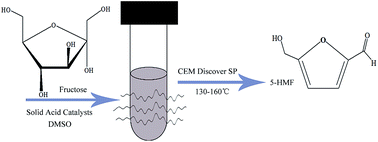
The catalytic reaction for fructose dehydration to HMF was performed in a CEM Discover SP microwave reactor. 5 mL of fructose solution and catalyst were charged in a microwave tube. The tube was placed in the microwave reactor. The microwave power was set to 100 W. The desired temperature and time were set. After the reaction, the tube was allowed to cool at room temperature. The conversion of fructose was analyzed with a LC98IIRI GPC with ZORBAX NH2 column and a refractive index detector. The UV-visible spectrum of pure HMF solution has a distinct peak at 284 nm. The yield of HMF was determined by measuring the absorbance of the HMF product solution at 284 nm using the standard curve method. Repeated measurement of the same solution showed that the percentage of error associated with this measurement was ±0.3%.21,22

3. Results and discussion

3.1. Characterization of the catalyst

3.1.1. XRD patterns and FTIR measurement. Fig. 1 shows the XRD patterns of different catalysts, the samples showed diffraction peaks for 2θ = 30.25°, 35.5°, 50.3° and 60°, it was estimated that zirconia essentially presented in the tetragonal form24 and it had been generally accepted that the tetragonal phase was more important for the formation of acidic centers.23 The bare nanosized ZrO2 mainly existed in the monoclinic phase (m-ZrO2), a stable phase under relatively high temperature; however, once WOx was added, ZrO2 dominantly crystallized in the tetragonal phase (t-ZrO2), a metastable structure at low temperature.24,25 In addition, there was no diffraction line for the crystalline WOx phase in the XRD patterns, implying that WOx in these samples exists in a highly dispersed state on the ZrO2 surface and so do other samples elsewhere.16 The absorption spectra for UV-vis DRS are illustrated in the ESI Fig. 1, and the band-gap energy (Eg) values of the samples are included in Table 1. The Eg of the synthesized samples were lower than ZrO2, indicating that domain size became bigger and the transition-metal source existed in ZrO2,26,27 although the existence of the transition-metal could not be analyzed by XRD.
image file: c5ra22979k-f1.tif
Fig. 1 XRD patterns of different samples.
Table 1 The physical properties of the samples
Catalyst Surface area (m2 g−1) Pore size (nm) Pore volume (m2 g−1) Qi (μmol g−1) Eg (eV)
ZrO2 48.19 14.08 0.17 29.60 5.10
WOx–ZrO2 139.70 7.59 0.22 131.42 3.75
MoOx–ZrO2 64.23 4.74 0.08 76.36 3.19
SO42−/WOx–ZrO2 159.55 8.18 0.32 380.34 3.58
SO42−/MoOx–ZrO2 82.75 5.35 0.11 256.71 2.91


The FT-IR spectra of the different catalysts are shown in Fig. 2. The band at 3438 cm−1 was attributed to the O–H stretching vibrations of the physically absorbed water molecules, the bands at 1632 cm−1 and 1388 cm−1 were attributed to the HOH bending of water molecules associated with the sulfate group.28 The band at 979 cm−1 is characteristic of the stretching vibrations of the W[double bond, length as m-dash]O bond.29 The band at 762 cm−1 was assigned to Mo[double bond, length as m-dash]O stretching modes.30 The sulfated samples exhibited strong bands at 1056, 1120, and 1247 cm−1, which showed bidentate sulfate ions coordinated to the metal.31 These bands were absent in unsulfated samples. The TEM images of the samples, displayed in ESI Fig. 2, revealed a globular structure. Average sized particles were obtained after calcination at 550 °C. The size of the particles in the MOx–ZrO2 and SO42−/MOx–ZrO2 (M=W, Mo) samples were smaller than ZrO2.


image file: c5ra22979k-f2.tif
Fig. 2 FT-IR spectra of different samples.
3.1.2. Raman spectra and XPS analysis. The Raman spectra of the different catalysts are shown in Fig. 3. All of them possessed the typical Raman signals of t-ZrO2 at 641, 476, 312, and 274 cm−1 and only ZrO2 showed obvious bands of m-ZrO2,32 which conformed to the ZrO2 phase detected by XRD characterization. A big Raman band from trace amounts of crystalline WO3 NPS at 833 cm−1 was present in the spectra for the WOx–ZrO2 catalyst sample, which reflected the good dispersion of the tungsten oxide phase on the ZrO2 support;33 the Raman band from trace amounts of crystalline MoO3 NPS at 812 cm−1 was present in the spectra for the MoOx–ZrO2 catalyst sample,34 which reflected the good dispersion of the molybdenum oxide phase on the ZrO2 support. The band at 962 cm−1 was attributed to the stretching vibration of M[double bond, length as m-dash]O (M=W, Mo).23,35 The Raman spectra of SO42−/WOx–ZrO2 and SO42−/MoOx–ZrO2 weren’t measured, because they had a strong fluorescence effect.
image file: c5ra22979k-f3.tif
Fig. 3 Raman spectra of different samples.

The XPS spectra of the different catalysts are shown in Fig. 4. The O1s, Mo3d, Zr3d, S2p, W4f and Zr4p peaks of the samples demonstrated binding energies of 530.4, 232.6, 181.9, 168.7, 36.1 and 30.9 eV, respectively.36,37 This directly confirmed the presence of W or Mo in the materials.


image file: c5ra22979k-f4.tif
Fig. 4 XPS of different samples.
3.1.3. TPD measurement and the BET surface area. The NH3-TPD profiles of the different catalysts are depicted in Fig. 5 to evaluate the acidity of the catalysts. The NH3-TPD profile of SO42−/WOx–ZrO2 has a wide region of stronger acid sites around 450 °C and weak acid sites by the peak around 200 °C. Although SO42−/MoOx–ZrO2 showed a peak distributed at approximately 500 °C, it was small. Nevertheless, other catalysts showed a broad peak for the maximum amount of acid sites around 200 °C. It indicated that the acid strength of SO42−/WOx–ZrO2 was much higher than the others. The amounts of acid sites calculated via UV spectrometry measurement are shown in Table 1, it is obvious that the sulfated samples exhibited a higher surface acid amount than unsulfated samples, corresponding to the NH3-TPD results. The highest acid amount of SO42−/WOx–ZrO2 may be due to the enlargement of the surface area.38–40 Generally, the specific surface areas of the sulfated samples were slightly larger than the unsulfated samples, this may because the interaction between SO42− and the sample stabilized the sample against sintering producing a thermally stable ZrO2 structure.38 Nitrogen adsorption–desorption isotherms and the average pore size distribution curves of the samples are shown in ESI Fig. 3–7. All the isotherms resemble Type IV isotherms based on the IUPAC classification with a large type H3 hysteresis loop, this indicates the presence of mesoporosity. The hysteresis loop was associated with the capillary condensation taking place in the mesopores signifying the preservation of the mesoporous structure even after crystallization at elevated temperature.41 The surface areas and pore size of the samples measured by the BET method are included in Table 1. The specific surface area increased in the following order: ZrO2 < MoOx/ZrO2 < SO42−/MoOx–ZrO2 < WOx/ZrO2 < SO42−/WOx–ZrO2: this result proves that SO42−/WOx–ZrO2 may be an efficient catalyst, corresponding to the following reaction results.
image file: c5ra22979k-f5.tif
Fig. 5 NH3-TPD profiles of different samples.

All the findings presented above were consistent with the following general model (Scheme 2).42–44 The SO42− is an electron-withdrawing group, after it was introduced into material it could increase the formation of acidic centers.


image file: c5ra22979k-s2.tif
Scheme 2 The balance of Brönsted and Lewis acids (M=W, Mo).

3.2. Catalytic activities of various catalysts for fructose conversion and 5-HMF yield

3.2.1. The catalytic performances of different catalysts. The prepared samples were tested for fructose dehydration to 5-HMF at 140 °C with 5 wt% fructose in DMSO for 5 min. The reactions using 10 wt% (catalyst amount with respect to fructose, g g−1 × 100) of catalyst are shown in Table 2. It was found that all of the catalysts were active, and furthermore that the addition of the heteroatom and impregnation with H2SO4 influenced the catalytic activity. The yield increased in the following order: without catalyst < ZrO2 < MoOx/ZrO2 < WOx/ZrO2 < SO42−/MoOx–ZrO2 < SO42−/WOx–ZrO2, corresponding to the specific surface area and surface acid amount. The activity of SO42−/ZrO2 was similar compared to SO42−/MoOx–ZrO2 and SO42−/WOx–ZrO2, but the reaction time was 20 min. The addition of the heteroatom doping could shorten the reaction time, this may be because the heteroatom helped to stabilize the tetragonal phase of zirconia in the catalyst and inhibited the transformation from the metastable tetragonal phase to the monoclinic phase at a high calcination temperature,24,25 and the tetragonal phase was more important for the formation of acidic centers. The SO42−/WOx–ZrO2 catalyst was found to be the most active catalyst, this was attributed to the stable tetragonal phases and the amount of acidic sites in this catalyst. In addition, the SO42−/MoOx–ZrO2 even had a better catalytic effect, although the catalytic effect of SO42−/MoOx–ZrO2 was poorer than SO42−/WOx–ZrO2. Therefore, in this work we mainly studied the dehydration of fructose into 5-HMF using SO42−/WOx–ZrO2 and SO42−/MoOx–ZrO2 under microwave-assistance in dimethyl sulfoxide.
Table 2 Influence of the species of catalysts on the dehydration of fructose
Catalyst Reaction solvent Reaction time/min Reaction temperature/°C Fructose conversion/% 5-HMF yield/% 5-HMF selectivity/% Ref.
None DMSO 5 140 43.93 15.86 36.10 This work
ZrO2 DMSO 5 140 51.13 31.02 60.67 This work
WOx–ZrO2 DMSO 5 140 67.66 53.03 78.38 This work
MoOx–ZrO2 DMSO 5 140 61.74 47.26 76.55 This work
SO42−/WOx–ZrO2 DMSO 5 140 87.52 70.88 80.99 This work
SO42−/MoOx–ZrO2 DMSO 5 140 86.05 67.11 77.99 This work
SO42−/ZrO2 DMSO 20 140 93.60 72.80 77.78 28
TiO2 DMSO 5 140 54.10 21
AlCl3 DMSO 5 140 71.30 19
Ion-exchange resin Acetone–water 10 150 91.70 70.30 76.67 10


3.2.2. Effect of fructose concentration on the dehydration of fructose. Fig. 6 shows the effect of the fructose concentration on the dehydration of fructose. There was a negligible effect on the dehydration of fructose when the fructose concentration was below 5 wt%. The rate of fructose conversion had little effect when the fructose concentration was above 5 wt%, but the HMF yield and the HMF selectivity decreased gradually with increasing initial fructose concentration. This was probably because self-polymerization of HMF or cross-polymerization between fructose and HMF would occur easily at a higher initial concentration of fructose,10 giving rise to the formation of brown-black soluble polymers and insoluble humins.19 In addition, it was obvious that the catalytic effect of SO42−/MoOx–ZrO2 was poorer than SO42−/WOx–ZrO2, but the variation of the trend of the fructose conversion (the HMF yield and the HMF selectivity) was similar. So, in conclusion, we took 5 wt% as the initial fructose concentration in this work.
image file: c5ra22979k-f6.tif
Fig. 6 Influence of fructose concentration on the dehydration of fructose. (Reaction conditions: reaction temperature = 140 °C; catalyst amount = 10 wt%; reaction time = 5 min.)
3.2.3. Influence of the catalyst amount on the dehydration of fructose. Fig. 7 shows the effect of the catalyst amount with respect to fructose conversion, 5-HMF yield and 5-HMF selectivity. The amounts of catalyst used were 5 wt%, 10 wt%, 20 wt% and 30 wt% (catalyst amount with respect to fructose, g g−1 × 100) respectively. In the absence of catalyst, only a 15.86% yield of 5-HMF was attained at 140 °C for a reaction time of 5 min in DMSO, nevertheless the 5-HMF yield reached up to 61.06% (SO42−/WOx–ZrO2) and 54.21% (SO42−/MoOx–ZrO2) when 5 wt% catalyst was added. This firmly indicated that SO42−/WOx–ZrO2 and SO42−/MoOx–ZrO2 showed excellent catalytic performance for the dehydration of fructose to 5-HMF. When the catalyst dosage increased from 5 wt% to 10 wt%, the 5-HMF yield still increased at 140 °C for a reaction time of 5 min because the catalytic sites increased with the increasing amount of catalyst, boosting the dehydration reaction. However, when we kept increasing the amount of catalyst, there was a smoothing in fructose conversion and 5-HMF yield, which was probably because the side reaction of the dehydration of fructose was also accelerated with the over-use of the catalyst. Given the above discussion, it was evident that 10 wt% of catalyst provided the best result for the model reaction.
image file: c5ra22979k-f7.tif
Fig. 7 Influence of the catalyst amount on the dehydration of fructose. (Reaction conditions: fructose concentration = 5 wt%; reaction time = 5 min; reaction temperature = 140 °C.)
3.2.4. Influence of different reaction times and temperatures on the dehydration of fructose and kinetics analysis. Fig. 8 shows the influence of different reaction times and temperatures on fructose conversion. It was obvious that the reaction temperature and time had a significant effect on the fructose conversion. While the reaction temperature increased, the fructose conversion increased. As the reaction proceeded, the fructose conversion also increased: when prolonging the reaction time to 5 min, fructose conversion was almost constant at 160 °C. When the temperature was 140 °C, fructose conversion was almost constant for 7 min, showing that an increased reaction temperature could shorten the reaction time. Many works have reported a reaction order of one for the dehydration of fructose to 5-HMF. We performed a kinetics analysis of the dehydration of fructose catalyzed by SO42−/WOx–ZrO2 and SO42−/MoOx–ZrO2 in DMSO. Values of ln(1 − x) were plotted against reaction time (t) to obtain first-order kinetics constants. With these constants, an Arrhenius plot was generated, as shown in Fig. 8. This model has been employed in most kinetics studies and was found to give reasonable levels of agreement with experimental data.45–49 The activation energies and pre-exponential factors for acid-catalyzed fructose dehydration to 5-HMF obtained by different authors under different conditions are summarized in Table 3. The obtained activation energies and pre-exponential factors from this work were similar, perhaps because we used the same solvents and heating methods,47 on the other hand, considering the experimental error/standard deviation, we could also know that the SO42−/MoOx–ZrO2 and SO42−/WOx–ZrO2 exhibited similar catalytic activities. Compared to the previous values reported in the literature, this showed that the present process was more efficient than previous works as evident from the shorter reaction times.
image file: c5ra22979k-f8.tif
Fig. 8 Influence of reaction time and temperature on fructose conversion and Arrhenius linearity fitting curve. (a) SO42−/WOx–ZrO2, and (b) SO42−/MoOx–ZrO2. (Reaction conditions: catalyst amount = 10 wt%; fructose concentration = 5 wt%.)
Table 3 Comparison of activation energies and pre-exponential factors for acid-catalyzed fructose dehydration to 5-HMF
Ea (kJ mol−1) A (min−1) Reaction solvent Catalyst Ref.
68.31 1.45 × 10⁸ DMSO SO42−/WOx–ZrO2 This work
69.31 1.80 × 10⁸ DMSO SO42−/MoOx–ZrO2 This work
99.20 2.10 × 10⁸ DMSO [BMIM]OH 45
96.00 1.79 × 10⁸ Subcritical water ZnSO4 46
60.40 4.80 × 10⁶ 70[thin space (1/6-em)]:[thin space (1/6-em)]30 (w/w) acetone/DMSO Ion-exchange resin 47
103.40 8.70 × 10¹¹ 70[thin space (1/6-em)]:[thin space (1/6-em)]30 (w/w) acetone/water Ion-exchange resin 10
80.00 3.10 × 10⁸ Supercritical methanol H2SO4 48
160.60 Aqueous solution HCl 49


Fig. 9 shows the influence of different reaction times and temperatures on the 5-HMF yield and 5-HMF selectivity. The 5-HMF yield and selectivity increased with reaction temperature, and the temperature played a positive role in the dehydration of fructose. When the temperature increased up to 160 °C, the yield of 5-HMF was slightly decreased, but the selectivity of 5-HMF significantly declined. When the catalyst was SO42−/WOx–ZrO2, the fructose conversion was 94.97% with 82.55% 5-HMF selectivity in a 1 min reaction time at 160 °C. In addition, with the extending of the reaction time, the 5-HMF yield and selectivity were improved consistently. When the reaction time was extended up to 7 min and longer at 150 °C, the 5-HMF yield decreased. But when the temperature was above 160 °C, the 5-HMF selectivity decreased consistently. The variation of the trends of the HMF yield and selectivity for SO42−/MoOx–ZrO2 were similar to those of SO42−/WOx–ZrO2, they had a fructose conversion of 95.33% with 81.64% 5-HMF selectivity in a 3 min reaction time at 160 °C. In conclusion, it was generally noted that higher temperatures (>140 °C) and longer reaction times (>5 min) resulted in a loss of the yield as expected on account of by-product formation and/or decomposition of HMF.


image file: c5ra22979k-f9.tif
Fig. 9 Influence of reaction time and temperature on 5-HMF yield and 5-HMF selectivity. (a) SO42−/WOx–ZrO2, and (b) SO42−/MoOx–ZrO2. (Reaction conditions: catalyst amount = 10 wt%; fructose concentration = 5 wt%.)

4. Conclusions

In this study, ZrO2, WOx/ZrO2, MoOx/ZrO2, SO42−/WOx–ZrO2 and SO42−/MoOx–ZrO2 solid catalysts were prepared and characterized by XRD, UV-DRS, FTIR, XPS, TEM, TPD, BET, and Raman and the surface acid amount was obtained by combining pyridine adsorption and UV spectrometry. These catalysts were employed in the dehydration of fructose to 5-HMF under microwave-assistance in DMSO, and the SO42−/WOx–ZrO2 catalyst was found be the most active catalyst, a fructose conversion of 95.80% with a 83.90% 5-HMF yield was obtained at 150 °C for a relatively short reaction time of 5 min. The catalyst amount and fructose concentration were further optimized. The value of the activation energy was comparable with previous values reported in the literature, and this implied that SO42−/WOx–ZrO2 and SO42−/MoOx–ZrO2 were efficient for the dehydration of fructose to 5-HMF under microwave assistance in DMSO.

References

  1. J. J. Bozell and G. R. Petersen, Green Chem., 2010, 12, 539–554 RSC.
  2. R. J. van Putten, J. C. van der Waal, E. de Jong, C. B. Rasrendra, H. J. Heeres and J. G. de Vries, Chem. Rev., 2013, 113, 1499–1597 CrossRef CAS PubMed.
  3. K. W. Omari, J. E. Besaw and F. M. Kerton, Green Chem., 2012, 14, 1480–1487 RSC.
  4. S. Siankevich, G. Savoglidis, Z. F. Fei, G. Laurenczy, D. T. L. Alexander, N. Yan and P. J. Dyson, J. Catal., 2014, 315, 67–74 CrossRef CAS.
  5. Y. Román-Leshkov, J. N. Chheda and J. A. Dumesic, Science, 2006, 312, 1933–1937 CrossRef.
  6. T. F. Wang, M. W. Nolte and B. H. Shanks, Green Chem., 2014, 16, 548–572 RSC.
  7. Y. Takeuchi, F. M. Jin, K. Tohji and H. J. Enomoto, J. Mater. Chem., 2008, 43, 2472–2475 CAS.
  8. Y. H. Li, X. Y. Lu, L. Yuan and X. Liu, Biomass Bioenergy, 2009, 33, 1182–1187 CrossRef CAS.
  9. Y. Li, H. Liu, C. H. Song, X. M. Gu, H. Li, W. Zhu, S. Yin and C. Han, Bioresour. Technol., 2003, 133, 247–253 Search PubMed.
  10. X. H. Qi, M. Watanabe, T. M. Aida and R. L. S. Smith Jr, Green Chem., 2008, 10, 799–805 RSC.
  11. G. R. Akien, L. Qi and I. T. Horváth, Chem. Commun., 2012, 48, 5850–5852 RSC.
  12. H. Ma, F. Wang, Y. H. Yu and X. H. Li, Ind. Eng. Chem. Res., 2015, 54, 2657–2666 CrossRef CAS.
  13. Y. Qu, Q. Wei, H. Li, P. Oleskowicz-Popiel, C. Huang and J. Xu, Bioresour. Technol., 2014, 162, 358–364 CrossRef CAS PubMed.
  14. X. H. Qi, M. Watanabe, T. M. Aida and R. L. S. Smith Jr, Green Chem., 2009, 11, 1327–1331 RSC.
  15. A. Corma, S. Iborra and A. Velty, Chem. Rev., 2007, 107, 2411–2502 CrossRef CAS PubMed.
  16. R. Kourieh, S. Bennici, M. Marzo, A. Gervasini and A. Auroux, Catal. Commun., 2012, 19, 119–126 CrossRef CAS.
  17. S. P. Simeonov and C. A. M. Afonso, J. Chem. Educ., 2013, 90, 1373–1375 CrossRef CAS.
  18. A. H. Jadhav, H. Kim and I. T. Hwang, Bioresour. Technol., 2013, 132, 342–350 CrossRef CAS.
  19. S. De, S. Dutta and B. Saha, Green Chem., 2011, 13, 2859–2868 RSC.
  20. S. Q. Zhang, Z. B. Zhao and Y. H. Ao, Appl. Catal., A, 2015, 496, 32–39 CrossRef CAS.
  21. S. Dutta, S. De, A. K. Patra, M. Sasidharan, A. Bhaumik and B. Saha, Appl. Catal., A, 2011, 409–410, 133–139 CrossRef CAS.
  22. C. Z. Li, Z. K. Zhao, A. Q. Wang, M. Y. Zheng and T. Zhang, Carbohydr. Res., 2010, 345, 1846–1850 CrossRef CAS PubMed.
  23. W. D. Sun, Z. B. Zhao, C. Guo, X. K. Ye and Y. Wu, Ind. Eng. Chem. Res., 2000, 39, 3717–3725 CrossRef CAS.
  24. E. I. Ross-Medgaarden, W. V. Knowles, T. Kim, M. S. Wong, W. Zhou, C. J. Kiely and I. E. Wachs, J. Catal., 2008, 256, 108–125 CrossRef CAS.
  25. L. D. Huy, P. Laffez, P. Daniel, A. Jouanneaux, N. T. Khoi and D. Siméone, Mater. Sci. Eng., B, 2003, 104, 163–168 CrossRef.
  26. G. R. Rao and H. R. Sahu, Proc. Indiana Acad. Sci., 2001, 113, 651–658 CrossRef CAS.
  27. E. Iglesia, D. G. Barton, S. L. Soled, S. Miseo, J. E. Baumgartner, W. E. Gates, G. A. Fuentes and G. D. Meitzner, Stud. Surf. Sci. Catal., 1996, 101, 533–542 CrossRef CAS.
  28. X. H. Qi, M. Watanabe, T. M. Aida and R. L. S. Smith Jr, Catal. Commun., 2009, 10, 1771–1775 CrossRef CAS.
  29. G. N. Kystova, Y. A. Chesalov, L. M. Plyasova, I. Y. Molina and A. I. Nizovskii, Vib. Spectrosc., 2011, 55, 235–240 CrossRef.
  30. S. B. Rathod, M. K. Lande, B. R. Arbad and A. B. Gambhire, Arabian J. Chem., 2014, 7, 253–260 CrossRef CAS.
  31. J. R. Satam and R. V. Jayaram, Catal. Commun., 2008, 9, 1033–1039 CrossRef CAS.
  32. E. I. Ross-Medgaarden, W. V. Knowles, T. Kim, M. S. Wong, W. Zhou, C. J. Kiely and I. E. Wachs, J. Catal., 2008, 256, 108–125 CrossRef CAS.
  33. E. I. Ross-Medgaarden and I. E. Wachs, J. Phys. Chem. C, 2007, 111, 15089–15099 CAS.
  34. A. Sarkar, S. Pramanik, A. Achariya and P. Pramanik, Microporous Mesoporous Mater., 2008, 115, 426–431 CrossRef CAS.
  35. M. Dieterle, G. Weinberg and G. Mestl, Phys. Chem. Chem. Phys., 2002, 4, 812–821 RSC.
  36. N. Vaidyanathan, M. Houalla and D. H. Hercules, Langmuir, 1999, 15, 8336 CrossRef CAS.
  37. A. M. Azad, S. G. Mhaisalkar, L. D. Birkefeld, S. A. Akbar and K. S. Goto, J. Electrochem. Soc., 1992, 139, 2913–2920 CrossRef CAS.
  38. F. Yang, Y. Li, Q. Zhang, X. F. Sun, H. X. Fan, N. Xu and G. Li, Carbohydr. Polym., 2015, 131, 9–14 CrossRef CAS PubMed.
  39. E. Kılıç and S. Yılmaz, Ind. Eng. Chem. Res., 2015, 54, 5220–5225 CrossRef.
  40. H. P. Yan, Y. Yang, D. M. Tong, X. Xiang and C. W. Hu, Catal. Commun., 2009, 10, 1558–1563 CrossRef CAS.
  41. S. J. Gregg and K. S. W. Sing, Adsorption, Surface Area and Porosity, 1982 Search PubMed.
  42. T. Jin, T. Yamaguchi and K. Tananbe, J. Phys. Chem., 1986, 90, 4794–4796 CrossRef CAS.
  43. E. Iglesia, S. L. Soled and M. Kramer, J. Catal., 1993, 144, 238–253 CrossRef CAS.
  44. B. Tyagi, M. K. Mishra and R. V. Jasra, Catal. Commun., 2006, 7, 52–57 CrossRef CAS.
  45. Y. S. Qu, Y. L. Song, C. P. Huang, J. Zhang and B. H. Chen, Ind. Eng. Chem. Res., 2012, 51, 13008–13013 CrossRef CAS.
  46. M. Bicker, J. Hirth and H. Vogel, Green Chem., 2003, 5, 280–284 RSC.
  47. X. H. Qi, M. Watanabe, T. M. Aida and R. L. S. Smith Jr, Ind. Eng. Chem. Res., 2008, 47, 9234–9239 CrossRef CAS.
  48. M. Bicker, D. Kaiser, L. Ott and H. Vogel, J. Supercrit. Fluids, 2005, 36, 118–126 CrossRef CAS.
  49. F. S. Asghari and H. Yoshida, Ind. Eng. Chem. Res., 2007, 46, 7703–7710 CrossRef CAS.

Footnote

Electronic supplementary information (ESI) available. See DOI: 10.1039/c5ra22979k

This journal is © The Royal Society of Chemistry 2015
Click here to see how this site uses Cookies. View our privacy policy here.