DOI:
10.1039/C5RA21715F
(Paper)
RSC Adv., 2015,
5, 103480-103487
Zero valent iron particles impregnated zeolite X composites for adsorption of tetracycline in aquatic environment
Received
18th October 2015
, Accepted 24th November 2015
First published on 30th November 2015
Abstract
Various weight percentages of zero valent iron particles (NZVI) were impregnated into the framework of zeolite X to synthesize a series of novel magnetic zeolites (n)FeX. The (n)FeX composites were applied to remove cationic tetracycline antibiotic (TC) from water. The result showed as the weight percentage of NZVI increased, some aluminums in the framework of zeolite X were substituted by irons for making the number of sodium ions increased and some NZVI were coated on the surface of zeolite X. The TC removal efficiencies of (n)FeX samples were increased as the weight percentage of NZVI increased. As the weight percentage of NZVI was 5%, the TC removal efficiency of (n)FeX was maximum and reached 476.2 mg g−1. The TC adsorption isotherms were fitted well by the Langmuir model. The adsorption kinetics were well described by both pseudo-second order equation and the intra-particle diffusion model. The TC removal efficiency was decreased as the pH of TC solution increased. The TC removal by (n)FeX was the chemical adsorption with cationic exchange reaction and electrostatic adsorption.
1. Introduction
Tetracycline (TC) has been widely used in human and veterinary applications due to its broad antimicrobial spectrum. The widespread overuse of TC, especially in the industry of livestock feeding, has contaminated many sites around the world via municipal and industrial wastewater effluent, wastewater sludge and agricultural runoff.1 TC may increase the resistance of bacteria against drugs. It causes ecological damages to environment and poses serious human health problems through the food chain enrichment. There are some difficulties for current conventional wastewater treatment processes because TC is toxic and resistant to the biodegradation activities of microorganisms. Some studies have been carried out to evaluate TC removal efficiency from water using adsorption, photo-electro-Fenton like process, photocatalysis and ozone treatment.2–4 Among all methods, adsorption method is the practical method for the TC removal from wastewater due to its high efficiency, easy handling, the recovery of valuable species, safe disposal of the waste and cost effectiveness. Many adsorbents had been widely used to remove TC from water such as aluminum and iron hydrous oxides, clay minerals, activated carbon, multiwalled carbon nanotubes, and hydrous manganese oxide.5–7 The TC was removed from water by these adsorbents through electrostatic adsorption, surface complexation or oxidation, etc. Among these adsorbents, zeolites are more suitable for TC removal. TC molecule contains amphoteric functional groups and presents cationic, zwitterionic and anionic forms as the pH of TC solution changes. Generally, cation exchange capacities of zeolites are higher than those of most adsorbents such as clay minerals and activated carbon.8 In addition, zeolites are highly selective and effective, secondary pollution-free, high thermostability and structure stability and easy regeneration for reuse. These properties let zeolites be effective, economical and environmental friendly adsorbents. Furthermore, zeolites have three-dimensional framework structure which is composed of silicon–oxygen tetrahedron and aluminum–oxygen tetrahedron connected by oxygen atoms. They have ordered pore structure, large specific surface area and excellent cation exchange capacity. Therefore, zeolites could be modified to make the adsorption sites increased and the removal efficiency of cationic TC enhanced.
However, the existing methods for modifying zeolites could not make their adsorption capacity enhanced significantly. The microporous zeolites were modified to mesoporous zeolites.9 The pore size of zeolites was increased, but the selectivity of zeolites for various pollutants was decreased. The adsorption capacity of zeolites originates from the open structure and net negative charge of their framework which can attract and hold cations.5 The excellent thermal and catalytic properties of zeolites were generated through the incorporation of the transition metal ions into zeolite structures and the immobilization of nanoparticles on the surface of the zeolite. Thus, it is required to develop the novel method to significantly enhance the adsorption capacity of cationic organics by zeolites in powder form. NZVI is one of the most important nanomaterials widely used as a reducing agent and makes an excellent performance for removing organics due to its strong selectivity to organics.9 If the NZVI were impregnated into the zeolite, the TC might be removed by cation exchange reaction or surface adsorption. The zeolite X has a much larger pore opening than zeolite A and good mass transfer rates.
In this study, NZVI was impregnated into the zeolite X by the hydrothermal method. The aims of the study were: (a) to develop novel adsorbents (n)FeX through the impregnation of various weight percentages of NZVI into the zeolite X; (b) to characterize the structure and properties of the (n)FeX; (c) to investigate the TC removal behavior of (n)FeX by kinetics and isotherm models; (d) to explore the mechanisms of the TC removal by (n)FeX.
2. Experimental
2.1 Materials and chemicals
Hydrochloride salt of tetracycline (>99%) was purchased from Sigma-Aldrich Corporation. Sodium silicate solution (>99%), sodiumaluminate (>99%), sodium hydroxide, hydrochloricacid, silver sulfate (>99%), ammonia water (>99%), sodium chloride (>99%) and NZVI were purchased by Fisher Scientific. The size of NZVI was 50 nm. All the chemicals were analytical grade and used without further purification. Milli-Q ultrapure water (18.2 MΩ cm) was used for all the experiments.
2.2 The (n)FeX synthesis
The zeolite X was prepared with sodium silicate solution, sodiumaluminate and sodium hydroxide chemicals. Firstly, the chemicals were mixed in deionized water and the white gel was formed. The molar ratio of Na2O
:
Al2O3
:
SiO2
:
H2O equaled to 7.15
:
1
:
2.2
:
122. The detailed process for synthesizing zeolite X has been previously investigated and reported.11 Then the white gel was heated to boiling. Then the white gel was stirred for 1 h to form the precursors of zeolite X. Subsequently, various weight percentages of NZVI (0, 0.03, 0.04, 0.05, and 0.06) were added to the precursors of zeolite X and the black gel was formed. The black gel was stirred for 1 h until it was homogenized. The black gel was crystallized in a Teflon-lined stainless autoclave at 343 K for 3 h and then at 368 K for 2 h. After crystallization, the autoclave was naturally cooled to room temperature. Finally, the product was washed with the deionized water and dried at room temperature. The powder (n)FeX was obtained. The n denotes the weight percentage of NZVI and the values of n were 0.03, 0.04, 0.05 and 0.06. The zeolite X was also synthesized by the same procedure without the addition of NZVI.
2.3 Characterizations of the (n)FeX
X-ray diffraction (XRD) analysis of the prepared (n)FeX was carried out by D/MAX-2500 diffractometer (Rigaku, Japan). The Brunauer–Emmett–Teller (BET) specific surface area and the pore size distribution (PSD) of the samples were measured in BET analyzer (Gemini V; Micrometrics Instrument Corporation). Field emission scanning electron microscopic (FESEM) images were taken by JEOL JSM-7600F FESEM. The freeze-dried samples were analyzed by X-ray photoelectron spectroscopy (XPS) (Shimadzu-Amics). The hysteresis loops of samples at 293 K were determined by a vibrating sample magnetometer (VSM-7400, Lake Shore, USA). To determine the isoelectric point pHzpc, zeta potential values of samples were tested by the following method. The pH of the TC solutions was adjusted to the value between 2 and 8 by adding HCl or NaOH solution. The adsorbent was added and stirred for 1 h at 300 rpm until a stable zeta potential was reached. The samples were collected and the zeta potential values of samples were measured by a Nano-ZS90 instrument (Malvern, United Kingdom). The TC concentration in the solution was determined by High Performance Liquid Chromatography (HPLC) (Agilent, USA). The flow rate was 1 mL min−1 and the wavelength of ultraviolet (UV) detector was set at 355 nm. Mobile phase was consisted of 0.05 M phosphate buffer at pH 2.3 (80%) and acetonitrile (20%). The correlation coefficient of the standard curve (n = 10) was more than 0.999.
2.4 (n)FeX adsorption studies
The different initial concentrations of TC solutions were prepared by proper dilution from stock 500 mg L−1 TC solution. The 100 mL TC solution was transferred into a 250 mL conical flask. The (n)FeX sample was added and the suspension was agitated by an orbital shaker (250 rpm). The concentration of (n)FeX in the solution was 1 g L−1. The 0.1 M HNO3 or NaOH solutions were used to adjust the pH of the TC solutions. The spent (n)FeX samples were separated from water by a magnet. At selected time intervals, solution samples were collected and filtered by a 0.22 μm syringe filter. Then the TC concentrations of the samples were analyzed by HPLC. During the period, no apparent TC degradation was observed. The TC adsorption percentage and the TC adsorption capacity of (n)FeX were calculated by the following equations.| |
 | (1) |
| |
 | (2) |
where C0 and Ce are the initial and the final TC concentration (mg L−1) in the solution. V is the volume of the TC solution (L) and W is the mass (g) of the adsorbent used in the experiments.
2.5 Adsorption kinetics
The batch TC adsorption experiments were conducted at different initial concentrations ranged from 100 to 500 mg L−1. The 1 g L−1 of (n)FeX sample was mixed with TC solution. The mixture solution was sealed with aluminum foil and continuously stirred (250 rpm) at initial pH 3.5 and temperature of 298 K. At selected time intervals, a certain volume of sample solution was taken out and filtered through the 0.22 μm membrane filter to analyze the TC concentration. Parallel experiments were conducted without adsorbents (blank).
The TC adsorption kinetics models include the pseudo-first-order model, pseudo-second order model, intra-particle diffusion model and are as follows:10
| |
The pseudo-first-order model ln(qe − q(ti)) = ln qe − k1t
| (3) |
| |
 | (4) |
| | |
Intra-particle diffusion model q(ti) = k3t0.5 + C
| (5) |
where
k1 (min
−1),
k2 (g mg
−1 min
−1),
k3 (mg g
−1 min
0.5) are the adsorption rate constants of pseudo-first-order equation, pseudo-second-order equation, and the intra-particle diffusion equation, respectively.
C (mg g
−1) is the constant and related with the thickness of the boundary layer.
qe and
q(
ti) (mg g
−1) are the TC adsorption capacity of (
n)FeX at equilibrium and time
ti, respectively.
2.6 Adsorption isotherms
The experiments were carried out by adding 0.05 g of the (n)FeX sample to 50 mL solutions containing TC at 100, 200, 300, 400, 500 mg g−1. The solution pH was adjusted to 3.5 by hydrochloric acid and sodium hydroxide. The mixed solutions were shaken at 250 rpm for 24 h at 298 K to reach equilibrium. The adsorption data were fitted with Langmuir and Freundlich models as shown in the following equations.10| |
 | (6) |
| |
The Freundlich model log(qe) = log kf + n−1 log(Ce)
| (7) |
where qe indicates the TC adsorption capacity of (n)FeX at equilibrium and was calculated according to eqn (2). The qmax is the Langmuir constant which is the adsorption capacity. The KL denotes the Langmuir adsorption equilibrium constant and Ce is the equilibrium concentration. The kf and n−1 are Freundlich constants and related with adsorption capacity and adsorption intensity, respectively.
2.7 Adsorption thermodynamics
The experiments were conducted at 298, 308 and 318 K. The thermodynamic parameters of the adsorption process are determined by the following equations.| |
 | (8) |
where Kd is the distribution coefficient, ΔH (kJ mol−1) is the change of enthalpy and ΔS (J mol−1 K−1) is the change of entropy. ΔG (kJ mol−1) is the change of Gibbs free energy and T (K) is the absolute temperature in Kelvin (K). The R (8.314 J mol−1 K−1) is the gas constant.
3. Results and discussion
3.1 Characterization of (n)FeX
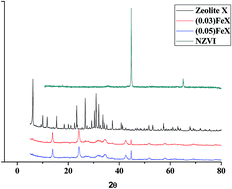
3.1.1 XRD patterns. Fig. 1 showed the XRD patterns of zeolite X and (n)FeX. The obvious characteristic peaks of zeolite X indicated that the zeolite X had a good crystalline and was synthesized successfully. From Fig. 1, the reflection at 45° is characteristic peak of NZVI. As the weight percentage of NZVI increased from 3% to 5%, the intensity of the reflection at 45° was increased. It illustrated that some of the crystalline NZVI did not change in the impregnation process and the amount of crystalline NZVI increased as the weight percentage of NZVI increased. It suggested that some of the NZVI might be coated on the surface of zeolite X because the size of the NZVI was much larger than the pore size of the zeolite X. As the NZVI were impregnated into the zeolite X, the characteristic peaks of (n)FeX were different from those of the original zeolite X. This indicates that the framework structure of zeolite X was modified by the impregnation of NZVI. The silicon–oxygen tetrahedron and aluminum–oxygen tetrahedron structures were modified into different structures. This suggested that irons might be chemically bonded into the framework of zeolite X. The following characterization methods were used to further study the structure of (n)FeX.
 |
| | Fig. 1 XRD patterns of the samples. | |
3.1.2 Specific surface area and pore diameter. As shown in Table 1, the impregnation of 5% weight NZVI did not have an obvious influence on the specific surface area of (0.05)FeX. This might be because most of the NZVI were incorporated into the framework of zeolite X. The average pore diameter of zeolite X and (0.05)FeX were 0.782 nm and 0.796 nm, respectively. It suggested some of NZVI were immobilized on the surface of zeolite X and this result was consistent with XRD result. The pore volume of zeolite X was decreased from 0.279 to 0.265 cm3 g−1 after 5% weight NZVI impregnation. It illustrated that the structure of zeolite X might be modified.
Table 1 Specific surface area, pore diameters and pore volumes of NZVI, zeolite X and (0.05)FeX
| Samples |
SBET (m2 g−1) |
Pore diameter (nm) |
Pore volume (cm3 g−1) |
| NZVI |
10.1 |
0.822 |
0.003 |
| Zeolite X |
853.2 |
0.782 |
0.279 |
| (0.05)FeX |
874.4 |
0.796 |
0.265 |
3.1.3 FESEM images. The FESEM images of zeolite X and (0.05)FeX are shown in Fig. 2. The particle size was uniform and about 4 μm. The morphology of (0.05)FeX was different from zeolite X and the particle size of (0.05)FeX was smaller than zeolite X. It suggested that the crystal structure of (0.05)FeX was different from zeolite X. In addition, the small particles were coated on the surface of (0.05)FeX and it indicated that some of NZVI were immobilized on the surface.
 |
| | Fig. 2 FESEM images of (A) zeolite X and (B) (0.05)FeX. | |
3.1.4 Magnetization. The magnetic properties of the samples were tested to study the distribution of NZVI. As shown in Fig. 3, the magnetization of (n)FeX was increased as the weight percentage of NZVI impregnation increased. It indicated the amount of NZVI coated on the surface of zeolite X increased as the weight percentage of NZVI impregnation was increased.
 |
| | Fig. 3 Hysteresis loops of (n)FeX. Insert: a picture of the (0.05)FeX sample separation in water by a magnet in 5 s. | |
3.2 Adsorption performance
3.2.1 Adsorption kinetics. The relationship between TC adsorption efficiency and the reaction time was described by the adsorption kinetics models. The adsorption kinetics models contain pseudo-first order, pseudo-second order and intra-particle diffusion models. Based on the pseudo-first order equation, the result did not show any linear relationship between ln(qe − qt) and adsorption time t. It verified that the TC adsorption kinetics of (0.05)FeX did not follow the pseudo-first order equation. The pseudo-second order kinetics model was applied to analyze the experimental data at five initial TC concentrations. As shown in Table 2, all of the correlation coefficients R2 of the linear form of pseudo-second order model were much closer to 1. The qe was also consisted with the experimental result. It suggested that the pseudo-second order model was more suitable for describing the adsorption process of TC on (0.05)FeX compared with the pseudo-first order model. The chemical adsorption was the rate-controlling step in the adsorption process.11
Table 2 The kinetics model and intra-particle diffusion information of TC adsorption onto (0.05)FeX
| Kinetic models |
Parameters |
C0 (mg L−1) |
| 100 |
200 |
300 |
400 |
500 |
| Pseudo-second-order parameters |
qe (mg g−1) |
133.66 |
275.51 |
355.26 |
385.71 |
435.48 |
| k2 (min−1) |
0.018 |
0.0011 |
0.00034 |
0.00021 |
0.00011 |
| R2 |
0.9999 |
0.9997 |
0.9957 |
0.9921 |
0.9899 |
| Intra-particle diffusion parameters |
k3 (mg g−1 min−1/2) |
0.95 |
3.36 |
7.28 |
10.61 |
16.40 |
| C (mg g−1) |
92.1 |
165.8 |
178.1 |
153.8 |
113.6 |
| R2 |
0.976 |
0.987 |
0.975 |
0.976 |
0.993 |
The intra-particle diffusion mode was applied to fit the experimental result for identifying the diffusion mechanism and the rate-controlling step of the adsorption process. The correlation coefficients R2 of the linear form of the intra-particle diffusion model reached above 0.9. And the fitting line did not pass through the origin. It indicated that the intra-particle diffusion was the rate-controlling step in the adsorption process of TC on (0.05)FeX. Although it was not the only element, it made an important effect on the adsorption rate of TC on (0.05)FeX. As shown in Table 2, the values of k3 obtained from the plot of qt versus t increased as the initial TC concentration increased. It illustrates that the adsorption rate of (0.05)FeX was enhanced as the initial TC concentration increased. As the initial TC concentration was 300 mg L−1, the value of C for TC adsorption on (0.05)FeX was the largest compared with other values of C. It suggested that the boundary layer has the greatest influence on the TC adsorption. The lowest value of C was obtained as TC concentration was 500 mg L−1. It indicated that the adsorption rate of TC was mainly controlled by intra-particle diffusion at the initial TC concentration of 500 mg L−1.
3.2.2 Adsorption isotherm. Adsorption isotherms models such as Langmuir and Freundlich models were used to determine the reactions between TC and (n)FeX. As shown in Tables 3 and 4, the parameters of isotherm models were obtained by plots of 1/qe versus 1/Ce and log
qe versus log
Ce. Compared with the Freundlich model, the regression coefficients R2 of the linear equations for Langmuir model at various temperature were much closer to 1. It suggested that the experimental data were described very well by the Langmuir isotherm. It indicated that the TC adsorption by (n)FeX is monolayer molecular adsorption.11 The impregnation of NZVI increased the TC adsorption capacity of zeolite X greatly, and the TC adsorption capacity increased with increased NZVI weight percentage. The TC maximum adsorption capacity of (0.05)FeX reached 476.2 mg g−1, which was higher than other samples. The TC adsorption capacity of (0.05)FeX was increased as the reaction temperature increased from 298 K to 318 K. It indicated that it was an exothermic process.
Table 3 The fitted parameters of adsorption isotherms for (n)FeX at 298 K
| Samples |
Langmuir |
Freundlich |
| qmax/mg g−1 |
KL/L mg−1 |
R2 |
kf |
n |
R2 |
| Zeolite X |
384.6 |
1.32 |
0.934 |
568.2 |
15.64 |
0.876 |
| (0.03)FeX |
402.4 |
3.43 |
0.951 |
486.4 |
14.42 |
0.856 |
| (0.04)FeX |
434.8 |
4.61 |
0.959 |
421.5 |
13.77 |
0.842 |
| (0.05)FeX |
476.2 |
5.83 |
0.953 |
342.2 |
13.12 |
0.834 |
| (0.06)FeX |
427.4 |
3.83 |
0.987 |
372.3 |
13.42 |
0.845 |
Table 4 The fitted parameters of adsorption isotherms for (0.05)FeX at various temperatures
| T/K |
Langmuir |
Freundlich |
| qmax/mg g−1 |
KL/L mg−1 |
R2 |
kf |
n |
R2 |
| 298 |
476.2 |
5.83 |
0.953 |
342.2 |
13.12 |
0.834 |
| 308 |
481.5 |
6.57 |
0.963 |
337.6 |
12.69 |
0.865 |
| 318 |
485.6 |
8.76 |
0.968 |
334.5 |
12.73 |
0.872 |
As shown in Table 5, TC maximum adsorption capacity of (0.05)FeX is higher than most of adsorbents in other studies from water. Although the TC maximum adsorption capacities of organo-montmorillonites and smectite are similar to that of (0.05)FeX, the preparation procedure of (0.05)FeX was more economical and much easier than other adsorbents. It suggests that (0.05)FeX is an effective adsorbent for TC removal compared to other adsorbents.
Table 5 Maximum adsorption capacity (qmax) of various adsorbents for tetracycline
| Adsorbent |
qmax (mg g−1) |
Refs. |
| Magnetic microspheres |
365 |
12 |
| Multi-walled carbon nanotubes |
269.54 |
13 |
| Organo-montmorillonites |
434 |
14 |
| Cryogels |
108 |
15 |
| Graphene oxide |
313 |
16 |
| Smectite |
462 |
17 |
| Montmorillonite |
283 |
18 |
| (0.05)FeX |
476.2 |
This study |
3.2.3 Adsorption thermodynamics. The Table 6 shows adsorption thermodynamics equilibrium constant K and thermodynamic parameters for the TC adsorption by (0.05)FeX. As the reaction temperature increased, the K values decreased and it suggested that the adsorption was an exothermic process. The result was consistent with the negative enthalpy change ΔH. The values of standard Gibbs free energy change ΔG were negative and it indicated that the TC adsorption process by (0.05)FeX was spontaneous. The negative entropy change ΔS illustrated that the freedom degree of the system was decreased as the TC was adsorbed on the surface of (0.05)FeX.
Table 6 Calculated thermodynamic parameters of TC adsorption by (0.05)FeX
| T/K |
K |
ΔG/kJ mol−1 |
ΔS/J mol−1 K−1 |
ΔH/kJ mol−1 |
| 298 |
103.9 |
−11.51 |
−290.1 |
−98.1 |
| 308 |
32.4 |
−8.62 |
| 318 |
8.6 |
−5.33 |
3.2.4 Effect of pH. The pH of the aqueous solution is one of the most important parameters affecting TC adsorption by (n)FeX. The TC adsorption efficiency of (0.05)FeX was more than other samples. Thus, the (0.05)FeX was applied to the pH studies. As shown in Fig. 4A, as the pH was between 3 and 7, the surface of (0.05)FeX was negatively charged and the negative charge increased as the pH increased. The surface of the adsorbent is negatively charged at pH 3. However, the surface of (0.05)FeX was positively charged at pH 2. Thus, the isoelectric point pHzpc of (0.05)FeX was between 2 and 3.
 |
| | Fig. 4 (A) The zeta potential of (0.05)FeX; (B) the TC adsorption percentage of (0.05)FeX at different pH values (the initial concentration of TC, 300 mg L−1; the dosage of the (0.05)FeX, 1 g L−1; the adsorption time, 2 h). | |
From Fig. 4B, as the pH of TC solution increased from 2 to 3, the TC removal efficiency was increased and achieved the maximum value (approximately 100%) at pH 3. From Fig. 4A, as pH is less than 5.5, the TCH3+ cation and TCH02 zwitterion are main species of TC in the water and the surface of the adsorbent is negatively charged. Thus, TCH3+ cation can be adsorbed on the adsorbent through electrostatic adsorption. It was beneficial for cation exchange reaction between cationic TCH3+ ions and the (0.05)FeX. Most of TCH02 with no charge can be adsorbed on negatively charged surface of the adsorbent. However, the TCH− anion cannot be adsorbed on the adsorbent due to the electrostatic repulsion. Therefore, the TC removal ratio was decreased as the pH increased. As shown in Fig. 4A, as the pH of TC solution is above the isoelectric point, the cationic TCH3+ ions and TCH02 can be adsorbed on the surface of (0.05)FeX due to electrostatic adsorption.
3.3 Adsorption mechanism
As shown in Fig. 5A, as pH was 3.5, the TCH3+ cation was main species of TC in the water. Thus, in acidic solution, most of TC molecules are positively charged and inclined to make cation exchange reaction with (n)FeX. From Fig. 5B, the TC adsorption capacity increased and the weight percentage of aluminums decreased as the weight percentage of NZVI increased from 3% to 6%. It indicates that some aluminums in the framework of zeolite X were substituted by irons. From Table 2, the adsorption capacity of (n)FeX was increased from 384.6 mg g−1 to 476.2 mg g−1 as the weight percentage of NZVI increased from 3% to 5%. It was because the number of sodium ions which could react with TCH3+ cations was increased as the weight percentage of NZVI increased. However, the TC adsorption capacity of (n)FeX was decreased as the weight percentage of NZVI increased from 5% to 6%. It was because there was no extra aluminums in the framework of zeolite X to be substituted by irons for making the number of sodium ions increased and the extra NZVI were coated on the surface of zeolite X.
 |
| | Fig. 5 (A) The fraction of cationic, neutral and anionic forms of TC at different pH values. (B) The weight percentage of aluminums and the TC adsorption capacity of (0.05)FeX as the weight percentage of NZVI increased (the dosage of (0.05)FeX, 1 g L−1; pH, 3.5). | |
As shown in Fig. 6A, there is a large decrease in the intensities of the Na 1s spectra. It was also verified that the TCH3+ could react with sodium ions at pH 3.5 and TC was removed by (n)FeX through cation exchange reaction. In addition, TCH3+ could be adsorbed on the negatively charged surface of the adsorbent through electrostatic adsorption. It was beneficial for cation exchange reaction between cationic TCH3+ ions and the (0.05)FeX.
 |
| | Fig. 6 (A) Na 1s core level photoelectron spectra of the (0.05)FeX before and after reaction with TC at pH 3.5. (B) The adsorption mechanism taking place between cationic TC and (n)FeX. | |
The moles of elements of zeolite X and (0.05)FeX before and after TC adsorption were determined by the XPS. From Table 7, the silicon and oxygen moles were not changed after NZVI impregnation. However, the aluminum mole was decreased and the sodium mole was increased after NZVI impregnation. In addition, the sodium mole increased after NZVI impregnation was as much as the iron mole increased. It indicated the aluminums in the framework of zeolite X were substituted by irons to make the sodium mole increased. And the cationic TC was removed by (0.05)FeX through cation exchange reaction. Thus, the TC adsorption capacity of (0.05)FeX was increased after NZVI impregnation. Fig. 6B presents the adsorption mechanism happening between cationic TC molecules and (n)FeX.
Table 7 The elements moles of zeolite X, the unreacted and reacted (0.05)FeX
| Samples (1 g) |
Fe (mmol) |
Na (mmol) |
Al (mmol) |
Si (mmol) |
O (mmol) |
| Zeolite X |
— |
2.2 |
2.5 |
3.7 |
13.5 |
| (0.05)FeX |
2.3 |
4.5 |
0.2 |
3.7 |
13.5 |
| (0.05)FeX after TC degradation |
2.3 |
0.7 |
0.2 |
3.7 |
15.3 |
4. Conclusions
A novel and simple method was developed to prepare a series of modified zeolite X for TC removal. The characterization results of produced (n)FeX showed some NZVI were coated on the surface and the aluminums in the framework of zeolite X were substituted by the irons. The (n)FeX samples were magnetic with a satisfactory saturation magnetization for magnetic separation. As the NZVI weight percentage was 5%, the TC removal efficiency of (0.05)FeX was maximum and reached 476.2 mg g−1. The TC removal by (n)FeX was chemical reaction through cation exchange reaction and electrostatic adsorption.
Acknowledgements
This work was supported by the Program of Shanghai Institute of Technology (No. (A06)-(10120K156075)YJ2015-33), the Program of Shanghai Institute of Technology ((A06)-(26220I120093)12120503700), National Natural Science Foundation of China (No. 21007048), Key Projects in the National Science & Technology Pillar Program during the Twelfth Five-year Plan Period (2012BAJ25B06) and Twelfth Five-year Plan Period of Major Science and Technology Program for Water Pollution Control and Treatment (2012ZX07403-001).
References
- X. Huang, C. Liu, K. Li, F. Liu, D. Liao, L. Liu, G. Zhu and J. Liao, Occurrence and distribution of veterinary antibiotics and tetracycline resistance genes in farmland soils around swine feedlots in Fujian Province, Environ. Sci. Pollut. Res., 2013, 20, 9066–9074 CrossRef CAS PubMed.
- S. P. Dubey, A. D. Dwivedi, C. Lee, Y.-N. Kwon, M. Sillanpaa and L. Q. Ma, Raspberry derived mesoporous carbon-tubules and fixed-bed adsorption of pharmaceutical drugs, J. Ind. Eng. Chem., 2014, 20, 1126–1132 CrossRef CAS.
- A. C. Martins, O. Pezoti, A. L. Cazetta, K. C. Bedin, D. A. S. Yamazaki, G. F. G. Bandoch, T. Asefa, J. V. Visentainer and V. C. Almeida, Removal of tetracycline by NaOH activated carbon produced from macadamia nut shells: kinetic and equilibrium studies, Chem. Eng. J., 2015, 260, 291–299 CrossRef CAS.
- X. Zhu, Y. Liu, C. Zhou, G. Luo, S. Zhang and J. Chen, A novel porous carbon derived from hydrothermal carbon for efficient adsorption of tetracycline, Carbon, 2014, 77, 627–636 CrossRef CAS.
- M. Liu, Li-an Hou, S. Yu, B. Xi, Y. Zhao and X. Xia, MCM-41 impregnated with A zeolite precursor: synthesis, characterization and tetracycline antibiotics removal from aqueous solution, Chem. Eng. J., 2013, 223, 678–687 CrossRef CAS PubMed.
- Y. Gao, Y. Li, L. Zhang, H. Huang, J. J. Hu, S. M. Shah and X. G. Su, Adsorption and removal of tetracycline antibiotics from aqueous solution by graphene oxide, J. Colloid Interface Sci., 2012, 368, 540–546 CrossRef CAS PubMed.
- M. Liu and B.-dou Xi, Li-an Hou, Shuili Yu. Magnetic multi-functional nano-flyash-derived zeolite composites for environmental applications, J. Mater. Chem. A, 2013, 1(40), 12617–12626 CAS.
- M. E. Parolo, M. J. Avena, M. C. Savini, M. T. Baschini and V. Nicotra, Adsorption and circular dichroism of tetracycline on sodium and calcium-montmorillonites, Colloids Surf., A, 2013, 417, 57–64 CrossRef CAS.
- Z. Li, L. Schulz, C. Ackley and N. Fenske, Adsorption of tetracycline on kaolinite with pH-dependent surface charges, J. Colloid Interface Sci., 2010, 351, 254–260 CrossRef CAS PubMed.
- D. Avisar, O. Primor, I. Gozlan and H. Mamane, Sorption of sulfonamides and tetracyclines to montmorillonite clay, Water, Air, Soil Pollut., 2010, 209, 439–450 CrossRef CAS.
- L. Ji, Y. Wan, S. Zheng and D. Zhu, Adsorption of tetracycline and sulfamethoxazole on crop residue-derived ashes: implication for the relative importance of black carbon to soil sorption, Environ. Sci. Technol., 2011, 45, 5580–5586 CrossRef CAS PubMed.
- Q. Zhou, Z. Q. Li and C. D. Shuang, Efficient removal of tetracycline by reusable magnetic microspheres with a high surface area, Chem. Eng. J., 2012, 210, 350–356 CrossRef CAS.
- L. Zhang, X. Yan and S. X. Yan, Studies on the removal of tetracycline by multi-walled carbon nanotubes, Chem. Eng. J., 2011, 178, 26–33 CrossRef CAS.
- N. Liu, M.-xia Wang and M.-ming Liu, Sorption of tetracycline on organo-montmorillonites, J. Hazard. Mater., 2012, 225, 28–35 CrossRef PubMed.
- M. Ersan, E. Bagda and E. Bagda, Investigation of kinetic and thermodynamic characteristics of removal of tetracycline with sponge like, tannin based cryogels, Colloids Surf., B, 2013, 104, 75–82 CrossRef CAS PubMed.
- Y. Gao, Y. Li, L. Zhang, H. Huang and J. H. Jie, et. al., Adsorption and removal of tetracycline antibiotics from aqueous solution by graphene oxide, J. Colloid Interface Sci., 2012, 368, 540–546 CrossRef CAS PubMed.
- Z. Li, P. H. Chang, J. S. Jean, W. T. Jiang and C. J. Wang, Interaction between tetracycline
and smectite in aqueous solution, J. Colloid Interface Sci., 2010, 341, 311 CrossRef CAS PubMed.
- Y. Zhao, X. Gu and S. Gao, Adsorption of tetracycline (TC) onto montmorillonite: cations and humic acid effects, Geoderma, 2012, 183, 12–18 CrossRef.
|
| This journal is © The Royal Society of Chemistry 2015 |
Click here to see how this site uses Cookies. View our privacy policy here.