DOI:
10.1039/C5RA21399A
(Paper)
RSC Adv., 2015,
5, 102560-102566
Terpolymer-based SIPN coating with excellent antifogging and frost-resisting properties†
Received
14th October 2015
, Accepted 23rd November 2015
First published on 25th November 2015
Abstract
We prepared an effective antifogging/frost-resisting coating by forming a semi-interpenetrating polymer network (SIPN) on the basis of a linear, random terpolymer poly(2-(dimethylamino)ethyl methacrylate-co-N-vinylpyrrolidone-co-methyl methacrylate), poly(DMAEMA-co-NVP-co-MMA), and a network of poly(ethylene glycol dimethacrylate). The excellent antifogging/frost-resisting property was mainly attributed to a balanced hydrophilicity/hydrophobicity of the terpolymer with the optimal DMAEMA/NVP/MMA molar ratio at 40/30/30. Compared to our previous work using poly(DMAEMA-co-MMA), the terpolymer-based coating demonstrated excellent antifogging property against both low- and high-temperature moist air, by eliminating the lower critical solution temperature related to the DMAEMA segments in the binary copolymer. By monitoring the coating thickness change during the fogging/frosting test, it appeared that water molecules could rapidly be absorbed into and desorbed from the terpolymer-based coating, implying long-term effectiveness of the antifogging/frost-resisting coating.
Introduction
Fogging and/or frosting can severely reduce visibility and transparency of a substrate because of the prism effect of small water droplets. Many coatings have recently been developed1–20 to mitigate fogging problems for various applications such as eyeglasses, cameras, mirrors, goggles, and display devices in analytical instrument. An extensively used strategy has been to apply a superhydrophilic coating, primarily due to its ability to significantly reduce light scattering by only allowing water to condensate like a thin film.8–19 However, it generally requires complicated procedures to fabricate textured surfaces8–16 or UV illumination17–19 for TiO2 based coatings to obtain superhydrophilicity. Moreover, these superhydrophilic surfaces may fail to resist frost formation since ice would still form from the thin water layer when conditions are right.
It has been recently demonstrated that antifogging behavior does not have to reply on superhydrophilicity and can be obtained by cleverly combining hydrophilic and hydrophobic segments in a coating.1,21–24 For instance, Youngblood et al. developed self-cleaning and antifogging coatings by combining both perfluoroalkyl groups and poly(ethylene glycol) (PEG) segments.21 Cohen and Rubner et al. designed and prepared zwitter-wettable coatings showing excellent antifogging/frost-resisting properties via layer-by-layer assembly involving PEG segments22 or a chitosan/cellulose complex.23 Compared to a superhydrophilic antifogging surface, the coatings with balanced hydrophilicity/hydrophobicity can imbibe rapidly water molecules from the surrounding vapor, thus preventing the formation of water droplets on the coating surface.
Recently, we developed an effective antifogging/frost-resisting coating on the basis of a semi-interpenetrating polymer network (SIPN) comprising a linear, binary acrylic copolymer poly(2-(dimethylamino)ethyl methacrylate-co-methyl methacrylate), poly(DMAEMA-co-MMA), and a cross-linked network due to ethylene glycol dimethacrylate (EGDMA).1 The SIPN coating showed excellent antifogging/frost-resisting properties against cold moist air; however, its antifogging performance became poor when exposed to hot moist air due to the lower critical solution temperature (LCST) associated with the DMAEMA segments.1 We envisage that partial replacement of the DMAEMA segments by another hydrophilic monomer may help eliminate the LCST effect in the binary copolymer poly(DMAEMA-co-MMA). Here we report the design and synthesis of a series of terpolymers, poly(2-(dimethylamino)ethyl methacrylate-co-N-vinylpyrrolidone-co-methyl methacrylate), poly(DMAEMA-co-NVP-co-MMA), and the subsequent preparation of antifogging/frost-resisting coatings on the basis of a SIPN from poly(DMAEMA-co-NVP-co-MMA) and PEGDMA against both cold and hot moist air.
Experimental section
Materials
Monomers including DMAEMA (98%), N-vinylpyrrolidone (NVP, 99%), and EGDMA (99%) were purchased from Aldrich, and MMA (99%) was obtained from Alfa Aesar. Free radical initiators, 2-hydroxy-4-(2-hydroxyethoxy)-2-methylpropiophenone (HHMP, 98%) and azobisisobutyronitrile (AIBN, 99%), were obtained from Aldrich. Solvents such as dimethylformamide (DMF), toluene, and chloroform were purchased from Fisher. All chemicals were used as received.
Synthesis of poly(DMAEMA-co-NVP-co-MMA) terpolymer
All terpolymers were synthesized by free radical polymerization. A typical procedure is described as follows. Three monomers, DMAEMA (4.8 g), NVP (4.5 g) and MMA (3.0 g) (molar percentage: 30% DMAEMA, 40% NVP, and 30% MMA) were added into DMF in a 100 mL flask to obtain 10 wt% solution; then, the thermal initiator AIBN (0.5 wt% with respect to the total monomer mass) was added. After being purged by argon for 20 min, the polymerization was carried out at 70 °C for 24 h under magnetic stirring (200 rpm). The final terpolymer, designated as T-30 according to the DMAEMA molar percentage, was purified by dissolution in chloroform and precipitation in cyclohexane (twice), and dried in a vacuum oven. Similarly, other terpolymers were synthesized with the MMA amount fixed at 30 mol%: T-40, 40% DMAEMA and 30% NVP; T-50: 50% DMAEMA and 20% NVP.
Preparation of SIPN coatings
Glass slides (1.5 × 1.5 cm2) were sonicated consecutively in acetone and ethanol for 30 min, followed by blow-drying with air. A terpolymer (2.0 g), EGDMA (0.5 wt% with respect to the terpolymer), and HHMP (2.0 wt% relative to EGDMA) were dissolved in toluene (20.0 mL) to obtain a homogeneous solution. The mixture was then spun-coated on clean glass slides at various rates (400, 800, 1500 and 3000 rpm) for 15 s. The spun-coated film was then cured under UV irradiation in a UVP CL-1000 ultraviolet cross-linker apparatus (365 nm, 15 W) for 45 min, and dried in a vacuum oven at 70 °C for 24 h. The smooth SIPN coatings (on glass) based on terpolymers T-30, T-40, and T-50 were labelled as SIPN-T-30, SIPN-T-40, and SIPN-T-50, respectively. The root-mean-square (RMS) surface roughness of SIPN coatings was typically 2–3 nm over an area of 2 × 2 μm2, as determined by atom force microscopy (AFM) on an NT-MDT NTEGRA Prima instrument in the semi-contact mode with a gold-coated cantilever NSG 10.
Fogging/frosting test
Antifogging tests against hot moist air were conducted by holding the samples 5 cm above a hot water bath (80 °C) for different periods of time (15, 30, 45 and 60 s) with a glass as the control. A more aggressive fogging/frosting test was performed by placing these samples in a freezer at −20 °C for 30 min and photographs were taken after the samples were exposed to ambient conditions (∼20 °C, 50% relative humidity) for 5 s. To evaluate the antifogging/frost-resisting performance more quantitatively, light transmission over the 400–700 nm range was collected on an Agilent 8453 UV-Vis spectrophotometer during fogging/frosting tests. To examine antifogging mechanism, time-dependent water contact angles on all SIPN coatings were collected on a Ramé-Hart 290 instrument (every 10 s over 600 s period).
Monitoring film thickness change during fogging/frosting tests
Light transmission data collected from UV-Vis measurements were also used to monitor the coating thickness change for the coatings that remained to be transparent during fogging/frosting tests. Refraction index and coating thickness were simultaneously determined by fitting the interference fringes in the transmission profile, T(λ), as a function of wavelength, λ,25| |
 | (1) |
where Tsa(λ) and Tafs(λ) are the interference upon transmissions through the substrate-air and air-film-substrate systems, respectively, and Rsfa(λ) and Rsa(λ) are the interference upon reflections from the substrate-film-air and substrate-air systems, respectively. Both Tafs and Rsfa are dependent on the refractive index and thickness of the test film.25 Transmission spectrum of the glass slide was also needed and measured before film coating, which was fitted to a two-coefficient Cauchy equation.26 Normal incidence on the test film was adopted for measurement configuration. By curve fitting the raw data, the coating thickness was determined according to eqn (1). This method provides a noninvasive and instantaneous measurement of thickness and refractive index of a transparent film. The coating thickness was verified by AFM on an NT-MDT NTEGRA Prima instrument in the semi-contact mode.
Other measurements
Glass transition temperature (Tg) was measured on a TA Instruments DSC Q100 instrument, over the range of −50 to 120 °C at a heating rate of 10 °C min−1. NMR spectra were collected on an Agilent 400 MHz instrument with CDCl3 as the solvent. Number-average molecular weight (Mn) and polydispersity index, PDI (Mw/Mn) of the terpolymers were determined by gel permeation chromatography (GPC) equipped with a Waters 515 HPLC pump and Water Styragel HT3/HT4 columns, using DAWN EOS 18-Angle Laser Light Scattering Instrument (Wyatt Technology) and OPTILAB DSP Interferometric Refractometer (Wyatt Technology) as detectors, with DMF as the elute (flow rate: 1 mL min−1, at room temperature); the molecular weights were calibrated with polystyrene standards.
Results and discussion
Preparation and properties of terpolymer poly(DMAEMA-co-NVP-co-MMA)
As mentioned earlier, we already developed SIPN coatings on the basis of a binary copolymer, poly(DMAEMA-co-MMA) with the optimal DMAEMA/MMA molar ratio at 70/30 and PEGDMA (0.5 wt% relative to the copolymer), which demonstrated excellent antifogging/frost-resisting properties against cold moist air.1 However, due to the LCST associated with the DMAEMA segments, the antifogging performance became poor when the coating was exposed to hot moist air (the temperature of the water bath was 80 °C). A logical solution to this issue appeared to be to replace some of the DMAEMA segments with another hydrophilic monomer that, when polymerized, would not lead to a LCST while maintaining the desired hydrophilic/hydrophobic balance in a new terpolymer.
We decided to incorporate a third, hydrophilic monomer, NVP, to partially replace DMAEMA to obtain the terpolymer (poly(DMAEMA-co-NVP-co-MMA), Scheme 1) and, subsequently, to form a SIPN coating comprising the terpolymer and a network of polymerized EGDMA (0.5 wt% relative to the copolymer1). We first synthesized terpolymers with balanced hydrophobicity and hydrophilicity from three monomers, DMAEMA, NVP, and MMA, by conventional free radical polymerization. The Mn of the terpolymers, measured from GPC, was about 30
000 (Table 1). The molar ratio of the three monomeric units in the final terpolymers, as determined via 1H-NMR, was in good agreement with the feed ratio (Table 1). It should be noted that a single glass transition temperature (Tg) was observed for each of three terpolymers (Table 1), clearly pointing to the random distribution of the three monomeric units in the final terpolymers. This is crucial for the terpolymers to be used in antifogging/frost-resisting coatings, since a random copolymer would not lead to (micro)phase separation in the coating, thus ensuring optical clarity of the coating. In addition, the Tg of the terpolymer could be easily tuned by varying its composition (Table 1): a higher NVP content, with the MMA content being fixed at about 30 mol%, led to a higher Tg for the terpolymer.
 |
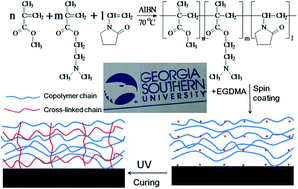
| | Scheme 1 Chemical structure of a random terpolymer poly(DMAEMA-co-NVP-co-MMA), and the subsequent preparation of a SIPN coating on the basis of the terpolymer. | |
Table 1 Properties of terpolymers synthesized by free radical polymerization
| Terpolymer |
DMAEMA : NVP : MMA |
Mn |
PDI |
Tg (°C) |
| Feed molar ratio |
Final molar ratio |
| T-30 |
30 : 40 : 30 |
27 : 39 : 34 |
33 000 |
2.5 |
72 |
| T-40 |
40 : 30 : 30 |
40 : 30 : 30 |
30 000 |
2.3 |
61 |
| T-50 |
50 : 20 : 30 |
48 : 20 : 32 |
31 000 |
2.4 |
43 |
Antifogging performance against hot moist air
We first examined the antifogging performance of terpolymer-based coatings against hot moist air. Compared to the completely fogged control glass, different antifogging performances were observed on the SIPN-T coating surfaces. After 15 s exposure to the hot water vapor, no fogging was observed for both SIPN-T-30 and SIPN-T-40 (Fig. 1a). However, some fogging was observed for SIPN-T-50 (photo not shown). Exposure to hot moist air for longer periods of time further revealed difference between SIPN-T-30 and SIPN-T-40 (Fig. 1c & d, and video clip in ESI†): while SIPN-T40 clearly maintained high transparency, SIPN-T-30 did show some compromise in optical clarity (the left part of the sample, in particular) despite that its surface remained to be free of fog. The observed slight whitening for SIPN-T-30 resembles the water-blushing effect of a water-borne polymer coating,27,28 which is due to water sorption into the coating and subsequent formation of water domain. Therefore, the slightly reduced transparency of SIPN-T-30 (more below) after exposure to hot moist air for more than 30 s may be attributed to the excessive water-absorbing capacity due to the larger amount of very hydrophilic NVP segments, which in turn might have led to the formation of free water domains in the coating.
 |
| | Fig. 1 Photos of different samples: (left) control glass, (middle) SIPN-T-40, and (right) SIPN-T-30: (a) 15 s, (b) 30 s, (c) 45 s and (d) 60 s after exposure to hot moist air (5 cm above a 80 °C water bath) under ambient lab conditions (∼20 °C, 50% relative humidity). | |
To evaluate the antifogging performance more quantitatively, light transmission over the 400–700 nm range was collected before and after all samples were exposed to hot moist air for 60 s. Prior to the fogging test, SIPN-T-40 and SIPN-T-50 showed comparable light transmission, about 92%, to the control glass, indicating that the SIPN coating based on the random terpolymer had a negligible effect on the glass transmission (Fig. 2a), while for SIPN-T-30, the coating with the highest NVP content, there appeared to be slight reduction in light transmission, especially in the short wavelength range. Upon exposure to hot moist air for 60 s, the light transmission decreased to below 40% for the control glass (Fig. 2b), obviously due to severe fogging. For the three SIPN coatings, the light transmission appeared to strongly depend on the NVP content in the terpolymer (Fig. 2b): the largest reduction in light transmission was observed for SIPN-T-50 (from 92% to ∼60%) and there was about 10% decrease for SIPN-T-30; in contrast, SIPN-T-40 maintained high light transmission (∼90%).
 |
| | Fig. 2 Light transmission at the normal incident angle for various samples (a) before and (b) after 60 s exposure to hot moist air (5 cm above a 80 °C water bath) under ambient lab conditions (∼20 °C, 50% relative humidity). | |
The poor antifogging performance for SIPN-T-50 was likely due to the relatively high DMAEMA content (∼50 mol%) in the terpolymer T-50, which might have failed in overcoming the LCST effect in the binary copolymer poly(DMAEMA-co-MMA). Therefore, it appeared to be critical to reduce the total DMAEMA content in the terpolymer below a threshold to eliminate LCST. On the other hand, if there was too much NVP segments in the terpolymer (T-30), the SIPN coating may become too hydrophilic, potentially allowing free water domain to form which would in turn lead to light scattering and reduced light transmission27,28 (water blushing, as discussed above). Therefore, the DMAEMA/NVP molar ratio (with the MMA amount being fixed) in the terpolymer played a vital role in designing effective antifogging coating, and the DMAEMA/NVP/MMA molar ratio of 40/30/30 has proven to the optimal ratio for excellent antifogging effect against hot moist air.
Frost-resisting performance
The frost-resisting performance was evaluated by visually examining the sample appearance 5 s after it was taken out of a freezer at −20 °C for 30 min. The control glass lost its transparency completely (Fig. 3a), due to severe frosting that later turned into fog under ambient condition. For SIPN-T-30, some haziness was clearly seen (Fig. 3b), likely due to the presence of the free water domain (which might crystallize into ice initially), as discussed above. In sharp contrast, neither frost nor fog formation was observed on SIPN-T-40 that retained high transparency throughout the test (Fig. 3c and video clip in ESI†).
 |
| | Fig. 3 Photos of different samples: (a) control glass, (b) SIPN-T-30, and (c) SIPN-T-40, which were first stored at −20 °C for 30 min and then exposed for 5 s to ambient lab conditions (∼20 °C, 50% relative humidity). | |
Light transmission data were also collected for the samples undergoing the frost test. Not surprisingly, the control glass suffered the biggest drop in light transmission due to frosting (Fig. 4), followed by SIPN-T-30 for which only 70% transmission remained after 5 s under ambient conditions. High transmission (∼90%) was observed for SIPN-T-40, indicating that frost formation was completely suppressed. SIPN-T-50 also demonstrated acceptable frost-resisting performance with the transmission value at ∼88% (the LCST effect due to the DMAEMA segments was not a factor for frost-resisting property). Once again, the DMAEMA/NVP molar ratio in the terpolymer (with the MMA content being fixed) had significant impact on the frost-resisting performance of the coatings. The sample SIPN-T-40 appeared to have the optimal hydrophilic/hydrophobic balance, allowing it to excel in both antifogging and frost-resisting performance.
 |
| | Fig. 4 Light transmission at the normal incident angle for various samples, exposed for 5 s to ambient conditions (∼20 °C, 50% relative humidity) after being stored at −20 °C for 30 min. | |
Since the antifogging/frost-resisting property of our SIPN coating is directly related to its water-absorbing capability, we examined the influence of coating thickness on the antifogging performance. A thicker coating, presumably with higher water-absorbing capacity, would likely lead to better antifogging behavior. By adjusting the spin-coating rate, we were able to tune the thickness of SIPN-T-40 from 390 ± 30 nm (3000 rpm), to 490 ± 20 nm (1500 rpm), 780 ± 50 nm (800 rpm), and 920 ± 60 (400 rpm), as determined by AFM. It turned out that only the thinnest coating of 390 nm developed some haziness during the frosting test and the rest all demonstrated excellent antifogging/frost-resisting behavior. To guarantee good antifogging/frost-resisting performance for our SIPN coatings, the coating has to be sufficiently thick to be capable of absorbing, rapidly and fully, water molecules from the surrounding into the coating.
It should be noted that we also prepared SIPN coatings on the basis of a binary random copolymer poly(NVP-co-MMA) with varying NVP/MMA molar ratios. However, these coatings did not show antifogging/frost-resisting performance as good as SIPN-T-40, probably due to the strong water-absorbing NVP segments in the copolymer that might have easily led to the formation of discrete free water domain, thus reducing light transmission.
Surface wettability of SIPN coating
To investigate the origin of the antifogging/frost-resisting property of the SIPN coatings, we collected time-dependent water contact angles (CA) on these samples under ambient conditions. The initial water CA on all SIPN coatings was greater than 60°, which significantly differs with the CA (approaching 0°) on a superhydrophilic antifogging coating and reinforces the recent findings from us1 and others21–24 that a coating does not have to be superhydrophilic to be effectively antifogging. During the 600 s time interval, the water CAs on all SIPN coatings showed a substantial decrease (Fig. 5a), much more than the decrease due to water evaporation (e.g., on the control glass). This clearly indicated that some water had been imbibed into the coating layer. The higher the NVP content in the terpolymer, the more significant the CA decrease was observed (SIPN-T-30 > SIPN-T-40 > SIPN-T-50), which is consistent with the high water-absorbing capability of the hydrophilic NVP segments.
 |
| | Fig. 5 (a) Water contact angle evolution on various samples as a function of time. (b) Diameter change of the water droplet on various samples over the 600 s period as expressed as ΔD/D0, where ΔD = D − D0, and D0 and D (shown in the inset) are the initial diameter (time zero) and the diameter at different times, respectively, of the wetted area by the water droplet. | |
The changes in the diameter of the water contact area on the sample surface were also simultaneously monitored (Fig. 5b). No change (even slight decrease) in the diameter was observed on the control glass, while the water contact diameter increased by about 9% for SIPN-T-50 over the 600 s period, similar to the increase we observed previously for the antifogging coating1 based on the binary copolymer poly(DMAEMA-co-MMA) (DMAEMA/MMA molar ratio: 70/30). On the other hand, the water contact diameter dramatically increased by ∼40% and 53% (Fig. 5b) for SIPN-T-40 and SIPN-T-30, respectively. Obviously, water molecules had diffused into these terpolymer-based SIPN coatings and led to significant expansion of the droplet contact area with the coating surface. The much greater increase of the water contact diameter in these two coatings further indicated that the NVP segments in the terpolymer were indeed more “water-loving” than the DMAEMA segments. However, too many NVP units in the terpolymer would lead to too much water being imbibed into the coating and the formation of discrete free domain, thus compromising its antifogging performance (as in the case of SIPN-T-30). Therefore, the ability we render to a coating to allow rapid diffusion of water molecules into the coating, while not forming discrete water domain in the coating, appears to be the key in obtaining highly effective antifogging/frost-resisting coating, such as SIPN-T-40.
Long-term effectiveness of SIPN coating
To evaluate long-term effectiveness of our SIPN coatings, SIPN-T-40 was subject to multiple cycles of fogging/frosting tests and a more practical, bathroom test. The optical transparency of the SIPN-T-40 coating maintained throughout the fogging/frosting test allowed us to monitor the variation of the coating thickness, as derived from the light transmission data.25 After the 920 nm thick SIPN-T-40 was stored at −20 °C for 30 min, it was exposed to ambient conditions (∼20 °C, 50% relative humidity). The coating thickness increased by 36% after 30 s (Fig. 6a) relative to the initial thickness, suggesting the coating had taken up a substantial amount of water. Water molecules should exist as bound water (non-freezing water) to the hydrophilic segments of the terpolymer.1,22 In addition, since SIPN-T-40 remained completely transparent over the test period, there should be no discrete free water domain in the coating; otherwise, reduced light transmission would have been observed.27,28 After 60 s, the coating thickness decreased significantly (Fig. 6a) to about 17% above its initial thickness, revealing that some water molecules had somehow “left” the coating. It was interesting to notice that, after about 150 s, the coating had almost recovered to its original thickness; in other words, most of the absorbed water had been released from the coating, despite that the exact mechanism of water departure remained unclear.
 |
| | Fig. 6 (a) Thickness change for SIPN-T-40, relative to the original coating thickness, following a frosting test: 30–150 s at room temperature after the coating was stored at −20 °C for 30 min. (b) Zoomed-in transmission raw data (in dots) and fitting solid lines by eqn (1) for SIPN-T-40: (i) the original coating; (ii) 30 s at room temperature after first freezing (stored at −20 °C for 30 min); (iii) 30 s at room temperature after 5th freezing; and (iv) 200 s at room temperature after 5th freezing. | |
The rapid recovery of the thickness for the antifogging/frost-resisting coating is an obvious advantage: the coating is ready for the next antifogging action. SIPN-T-40 was subject to four more frosting tests and, indeed, during each test the variation of the coating thickness followed the similar trend to Fig. 6a. The original coating thickness was restored in a short period of time (2.5–3 min) under ambient conditions. The variation in the coating thickness at room temperature was also directly reflected in the transmission profile (Fig. 6b). The coating after 30 s at room temperature following the first freezing (30 min at −20 °C), Fig. 6b-ii, appeared to have very similar transmission spectrum with the same coating after 30 s at room temperature following the fifth freezing (Fig. 6b-iii), indicating there was a similar amount of bound water in the coating during the first and fifth frosting test. Furthermore, the transmission spectrum (Fig. 6b-iv) for the coating after 200 s at room temperature following the fifth freezing resembled closely to the original coating (Fig. 6b-i), revealing that the coating thickness had restored to its original thickness. The reversible change of the coating thickness implied that the antifogging property of our coating would be long-term effective.
SIPN-T-40, together with a control glass, was mounted on a bathroom mirror and visually examined for possible fogging immediately after a shower for 6 months (with typically one shower a day being taken). As clearly shown in Fig. 7, SIPN-T-40 remained to be perfectly antifogging after about 180 showers, while the control glass as well as the mirror completely fogged up. Indeed, the terpolymer-based SIPN coating has remained antifogging after at least 6 months.
 |
| | Fig. 7 Photo of two samples (a) SIPN-T-40 and (b) control glass on a bathroom mirror, immediately after a shower on day 181. | |
Conclusions
In summary, we prepared antifogging/frost-resisting coatings on the basis of a SIPN comprising random, linear terpolymer poly(DMAEMA-co-NVP-co-MMA) and cross-linked PEGDMA. By carefully balancing the hydrophilic DMAEMA and NVP segments and hydrophobic MMA segments in the terpolymer, the LCST effect in a binary poly(DMAEMA-co-MMA)-based coating was completely eliminated, leading to excellent antifogging/frost-resisting properties against both hot and cold moist air for a terpolymer coating (SIPN-T-40) with the optimal DMAEMA/NVP/MMA molar ratio of 40/30/30. The antifogging/frost-resisting property of the SIPN-based coating can be attributed to its capability of absorbing rapidly water vapour from the surrounding, yet not allowing the formation of discrete water domain in the coating, thus ensuring optical transparency for the coating during fogging/frosting tests. The fact that water molecules can quickly depart from the coating renders this type of antifogging/frost-resisting coating long-term effective.
Acknowledgements
Financial support of this research from USDA/NIFA (Award No. 2011-67022-30229) is gratefully acknowledged.
Notes and references
- J. Zhao, A. Meyer, L. Ma and W. Ming, Chem. Commun., 2013, 49, 11764 RSC.
- A. Tricoli, M. Righettoni and S. Pratsinis, Langmuir, 2009, 25, 12578 CrossRef CAS PubMed.
- P. Chevallier, S. Turgeon, C. Sarra-Bournet, R. Turcotte and G. Laroche, ACS Appl. Mater. Interfaces, 2011, 3, 750 CAS.
- L. Introzzi, J. M. Fuentes-Alventosa, C. A. Cozzolino, S. Trabattoni, S. Tavazzi, C. L. Bianchi, A. Schiraldi, L. Piergiovanni and S. Farris, ACS Appl. Mater. Interfaces, 2012, 4, 3692 CAS.
- L. Zhang, Z. Qiao, M. Zheng, Q. Huo and J. Sun, J. Mater. Chem., 2010, 20, 6125 RSC.
- J. A. Howarter and J. P. Youngblood, Adv. Mater., 2007, 19, 3838 CrossRef CAS.
- X. Zhang and J. He, Chem. Commun., 2015, 51, 12661 RSC.
- J. Xiong, S. N. Das, J. P. Kar, J. H. Choi and J. M. Myoung, J. Mater. Chem., 2010, 20, 10246 RSC.
- H. Dong, P. Ye, M. Zhong, J. Pietrasik, R. Drumright and K. Matyjaszewski, Langmuir, 2010, 26, 15567 CrossRef CAS PubMed.
- D. Lee, M. F. Rubner and R. E. Cohen, Nano Lett., 2006, 6, 2305 CrossRef CAS PubMed.
- F. C. Cebeci, Z. Wu, L. Zhai, R. E. Cohen and M. F. Rubner, Langmuir, 2006, 22, 2856 CrossRef CAS PubMed.
- N. Nuraje, R. Asmatulu, R. E. Cohen and M. F. Rubner, Langmuir, 2010, 27, 782 CrossRef PubMed.
- Y. Li, J. Zhang, S. Zhu, H. Dong, F. Jia, Z. Wang, Z. Sun, L. Zhang, Y. Li, H. Li, W. Xu and B. Yang, Adv. Mater., 2009, 21, 4731 CAS.
- X. Liu, X. Du and J. He, ChemPhysChem, 2008, 9, 305 CrossRef CAS PubMed.
- L. Xu and J. He, ACS Appl. Mater. Interfaces, 2012, 4, 3293 CAS.
- L. Zhang, Y. Li, J. Sun and J. Shen, Langmuir, 2008, 24, 10851 CrossRef CAS PubMed.
- R. Wang, K. Hashimoto, A. Fujishima, M. Chikuni, E. Kojima, A. Kitamura, M. Shimohigoshi and T. Watanabe, Nature, 1997, 388, 431 CrossRef CAS.
- M. Miyauchi, A. Nakajima, K. Hashimoto and T. Watanable, Adv. Mater., 2000, 12, 1923 CrossRef CAS.
- Y. Lai, Y. Tang, J. Gong, D. Gong, L. Chi, C. Lin and Z. Chen, J. Mater. Chem., 2012, 22, 7420 RSC.
- X. F. Gao, X. Yan, X. Yao, L. Xu, K. Zhang, J. Zhang, B. Yang and L. Jiang, Adv. Mater., 2007, 19, 2213 CrossRef CAS.
- J. A. Howarter and J. P. Youngblood, Macromol. Rapid Commun., 2008, 29, 455 CrossRef CAS.
- H. Lee, M. L. Alcaraz, M. F. Rubner and R. E. Cohen, ACS Nano, 2013, 7, 2172 CrossRef CAS PubMed.
- H. Lee, J. B. Gilbert, F. E. Angile, R. Yang, D. Lee, M. F. Rubner and R. E. Cohen, ACS Appl. Mater. Interfaces, 2015, 7, 1004 CAS.
- X. Zhang and J. He, Sci. Rep., 2015, 5, 9227 CrossRef CAS PubMed.
- K. C. Jena and D. K. Horea, Am. J. Phys., 2011, 79, 256 CrossRef.
- D. J. Griffiths, Introduction to Electrodynamics, Prentice-Hall, Upper Saddle River, NJ 07458, 1999, p. 404 Search PubMed.
- N. Starostin, S. Harvey and G. Carlson, Scanning, 2008, 30, 78 CrossRef CAS PubMed.
- Z. Aguirreurreta, J. Dimmer, I. Willerich, J. de la Cal and J. R. Leiza, Macromol. Mater. Eng., 2015, 9, 925 CrossRef.
Footnote |
| † Electronic supplementary information (ESI) available: Video chips showing the SIPN-T-40 coating's antifogging behaviour (against hot moist air, above 80 °C water bath) and antifogging/frost-resisting behaviour (exposure to ambient conditions after being stored at −20 °C for 30 min), with a control glass as the reference. See DOI: 10.1039/c5ra21399a |
|
| This journal is © The Royal Society of Chemistry 2015 |
Click here to see how this site uses Cookies. View our privacy policy here.