
DOI:
10.1039/C5RA20772J
(Paper)
RSC Adv., 2015,
5, 96305-96312
Light-modulated aggregation behavior of some unsubstituted cinnamate-based ionic liquids in aqueous solutions†
Received
7th October 2015
, Accepted 30th October 2015
First published on 4th November 2015
Abstract
Light modulation of the self-assembly behavior of ionic liquids in aqueous solution is of great importance from the viewpoint of fundamentals and technology. In this work, a new class of light-responsive ionic liquids composed of 1-alkyl-3-methylimidazolium cations, [Cnmim]+ (n = 4, 6, 8, 10, 12), and the trans-cinnamic acid ([CA]) anion was synthesized and characterized. These compounds were used to study the modulation action of UV light on the aggregation behavior of ionic liquids in aqueous solution. For this purpose, the critical aggregation concentration (CAC), ionization degree of the aggregates (α), standard Gibbs energy of aggregation (ΔG°m) and aggregate size of the ionic liquids were determined before and after UV light irradiation by conductivity and dynamic light scattering techniques. The percentage of cis-isomer of these ionic liquids was also reported at the photoisomerism equilibrium from HPLC measurements. It was found that the aggregation behavior of [Cnmim][CA] (n = 8, 10, 12) could be efficiently modulated by UV light in aqueous solution. After UV light irradiation, the values of CAC, α and ΔG°m increased, while the size of the aggregates decreased. These results have been rationalized from the photo-isomerization of the [CA] anion, hydrophilicity and structural features of the cis-isomer of the [CA] anion.
Introduction
In the past two decades, ionic liquids have been developed rapidly due to their attractive properties such as negligible volatility, low melting point, high thermal stability, and strong solubility capacity for many materials.1–4 These liquid materials have drawn increasing interest as alternative media in a variety of chemical synthesis, separation, electrochemical and catalytic processes.5–14 Because of the amphiphilic property, ionic liquids are able to form aggregates in solutions.15–19 In fact, many applications of ionic liquids, such as environmental pollution control, chromatographic application, material preparation, and separation, are often closely dependent on their aggregation behavior. Therefore, the study of aggregation behavior in solutions is highly necessary for understanding the role of ionic liquids playing in practical applications.
At present, many investigations have been focused on the modulation of aggregation behavior of ionic liquids in aqueous solutions by altering the length of alkyl chain in cation,20,21 the structure of cation, the type of anions,21,22 pH value23,24 and temperature25 of the system, and by adding inorganic or organic additive in solutions as well.26–28 As an external stimuli, light trigger is of great importance and superiority, since no “invasion” can be introduced into the system during the stimuli-responsive process, and the optical signal is easy to obtain with stability and reliability. Furthermore, light can be directed at a precise spot with a resolution of a few micrometers, which is of particularly value in nanoscience and nanotechnology applications. Thus photo-responsive ionic liquids have been created in recent years. To this end, Asaka and co-workers29 synthesized a photo-responsive ionic liquid, 3-butyl-1-methyl-2-phenylazoimidazolium bis(trifluoro-methanesulfonyl) amide, and investigated its isomerization mechanism and solvent viscosity effect in E–Z photoisomerization. Branco et al.30 prepared some methyl orange based photochromic ionic liquids and determined rate constants of their thermal recovery. Tamura et al.31 reported some photo-responsive stilbene ionic liquids and their emissive properties and melting points. Some azobenzene-based photo-responsive ionic liquids were prepared by Zhang et al.,32 and reversible modulation of ionic conductivity in some organic solvents was examined under UV/visible light irradiation. In a previous work,33 we reported another series of cinnamate-based ionic liquids composed of 1-alkyl-3-methylimidazolium cations [Cnmim]+ and trans-ortho-methoxycinnamic acid anion ([OMCA]). Highly efficient conductivity modulation of these light-responsive ionic liquids was studied in aqueous solutions. However, to the best of our knowledge, there was only one report34 concerning with light modulation of the self-assembly behavior of ionic liquids in aqueous solution up to now. In that work, Shen et al.,34 synthesized a new surface active ionic liquid 4-butylazobenzene-4′-hexyloxy-trimethyl-ammoniumtrifluoroacetate. It was shown that reversible micelle-vesicle transformation was achieved in aqueous solution by alternative UV/vis light irradiation.
Considering the fact that physical and chemical properties of ionic liquids can be finely tuned by a judicious design of the cations and anions structures, we are interested in the creation of novel ionic liquids whose aggregation behavior in solution can be modulated by light irradiation. In this report, we designed and synthesized five kinds of light responsive ionic liquids composed of 1-alkyl-3-methylimidazolium cations, [Cnmim]+ (n = 4, 6, 8, 10, 12), and trans-cinnamic acid ([CA]) anion which can be photoisomerized from trans- to cis-isomer upon exposure to UV light. Because its photoisomerization is not reversible,35 the irradiated samples will not undergo any changes when stored under ambient conditions for a long time, and it is easy to conduct subsequent tests using appropriate methods. The modulation of aggregation behavior of these ionic liquids in water by UV light irradiation has been investigated by conductivity and dynamic light scattering techniques. The results have been used to understand the effect of light-induced transformation of [CA] anion from trans- to cis-isomers on the self-assembly of [Cnmim][CA] ionic liquids in aqueous solutions.
Materials and methods
Chemicals
1-Methylimidazole (99%), 1,1,1-trichloroethane (AR), ethyl acetate (AR) and petroleum ether (bp 60–90 °C) was acquired from Shanghai Chem. Co.; 1-bromobutane (99%), 1-bromohexane (99%), 1-bromooctane (99%), 1-bromodecane (99%), 1-bromododecane (99%), trans-cinnamic acid (98%) and Ambersep 900(OH) anion exchange resin were purchased from Alfa Aesar. These chemicals were used without further purification.
Synthesis of the ionic liquids
[Cnmim]Br was prepared and purified by using the procedures described in literature.36 Briefly, the reaction of 1-methylimidazole (0.10 mol) with an excess of 1-brominated alkanes (0.13 mol) was performed in 1,1,1-trichloroethane (100 mL) at 70 °C for 48 h to obtain [Cnmim]Br. Among the products prepared, [C4mim]Br, [C6mim]Br, [C8mim]Br and [C10mim]Br were washed with 1,1,1-trichloroethane, and the residual solvents were removed by heating at 70 °C under vacuum, while [C12mim]Br was recrystallized three times from ethyl acetate and ethyl acetate/acetonitrile (3
:
2 by volume), respectively.
An aqueous solution of [Cnmim]Br was allowed to pass through a column filled with Ambersep 900(OH) anion exchange resin to obtain [Cnmim][OH]. The aqueous [Cnmim][OH] solution was then neutralized with equal molar trans-cinnamic acid (H[CA]). After removing water by evaporation under reduced pressure, [C4mim][CA] was thoroughly washed with diethyl ether or petroleum ether, and the product was obtained as slightly brown viscous liquid. The other ionic liquids were recrystallized three times from ethyl acetate, and finally dried under vacuum for 72 h at 60 °C to obtain products as white solids (faint yellow solid for [C6mim][CA]).
The chemical structures of these ionic liquids were confirmed by 1H NMR, 13C NMR (Bruker Avance-400 spectroscopy) and HR-mass spectroscopy (Bruker MicroTOF II spectrometer). The detailed data were given in ESI.† Their glass transition temperature (Tg), melting temperature (Tm) and thermal decomposition temperature (Td) were determined by differential scanning calorimetry (Mettler Toledo 822e) and thermogravimetric analysis (NETZSCH STA 449 C), respectively. Bromide content in these ionic liquids was determined by means of a Br− selective electrode (Shanghai Precision & Scientific Instrument Co. Ltd) coupled with a saturated calomel electrode (Shanghai Precision & Scientific Instrument Co. Ltd).
UV-light irradiation and UV-vis spectroscopy measurements
Aqueous [Cnmim][CA] solutions were irradiated with UV light from a 300 W mercury pressure short arc lamp with a filter (<400 nm). Each sample (30 mL) was placed in a quartz tube with a cover and then irradiated for specific duration under stirring. In order to avoid overheating from the UV irradiation, the lamp was put in a cell with a water circulating jacket, and the temperature was kept to be 298.2 ± 0.5 K.
UV-vis spectra for the solutions of ionic liquids were determined before and after UV-irradiation by a UV-4100 spectrophotometer at room temperature. Deionized water was utilized as blank in the experiments.
Conductivity measurements
Conductivity measurements were performed with a Shanghai DJS-1 electrode at 298.15 K by using a Wayne-Kerr 6430B Auto Balance Bridge with a resolution of 1 × 10⁻⁵ μS cm−1. The conductance cell was equipped with a water circulating jacket, and the temperature was controlled within ±0.01 °C with a HAAKE V26 thermostat (Thermo Electron, Germany). The cell was calibrated with aqueous KCl solutions at different concentrations, and a cell constant of 1.0127 cm−1 was determined.
Dynamic light scattering (DLS) measurements
Dynamic light scattering (DLS) measurements were carried out at 298.2 K by using a laser light scattering photometer (Nano-ZS90, Malvern, U.K.). Light of λ = 633 nm from a solid-state He–Ne laser (4.0 mW) was used as the incident beam. All sample solutions were filtered through a 0.22 μm hydrophilic PVDF membrane filter. All measurements were made at 90° scattering angle. At least three measurements were taken for each solution, and the reproducibility of aggregate sizes from DLS data was found to be within ±3%.
High performance liquid chromatography (HPLC) measurements
To determine the percentage of the cis-isomer of [Cnmim][CA], the irradiated solutions were analyzed by using HPLC (Agilent Eclipse XDB-C18 column, 5 μm, 4.6 mm × 150 mm) at a flow rate of 0.8 mL min−1. The eluting solvent was an aqueous methanol solution (45
:
55 by volume) containing 1.0% acetic acid, and the column temperature was at 30 °C. The peaks were detected using UV absorption at 254 nm, and the cis–trans ratio was estimated by their integrated peak area.
Results and discussion
Table 1 shows the melting temperature (Tm), glass transition temperature (Tg), and thermal decomposition temperature (Td) for the investigated ionic liquids. It can be seen that [C4mim][CA] showed only glass transition temperature at about −30 °C, and the other compounds possess a melting point below 51 °C. This suggests that all these compounds are ionic liquids. In addition, all these ionic liquids have good thermal stability (234–248 °C) under an inert atmosphere as estimated from their Td values.
Table 1 Thermal properties of [Cnmim][CA] (n = 4, 6, 8, 10, 12)
| IL |
Tm/°C |
Tg/°C |
Td/°C |
| [C4mim][CA] |
— |
−30 |
248 |
| [C6mim][CA] |
50 |
— |
242 |
| [C8mim][CA] |
46 |
— |
246 |
| [C10mim][CA] |
37 |
— |
243 |
| [C12mim][CA] |
39 |
— |
234 |
It has been reported that impurity in ionic liquids has an important effect on their physico-chemical properties.37 Considering the fact that in the synthesis process of our ionic liquids, the main impurity was bromide, therefore, the bromide content in these ionic liquids was determined by a Br− selective electrode, and the data were given in Table S1 (ESI†). It can be seen that the bromide content was less than 0.0079 mol kg−1. These results suggest that the quality of the ionic liquids prepared in this work is reliable to investigate the aggregation behavior of ionic liquids in aqueous solutions.
Photo-isomerization of [Cnmim][CA] ionic liquids in aqueous solution
As a typical example, UV-vis spectra for [C12mim][CA] and trans-cinnamic acid (H[CA]) at the concentration of 1 mM were shown in Fig. 1 and S1,† respectively, where a slightly excess of base was added to aqueous solutions to increase solubility of trans-cinnamic acid in water. It can be seen that the maximal absorption wavelength of [Cnmim][CA] was at around 267 nm before irradiation and at 254 nm after irradiation (at photostationary state) in aqueous solutions, and the absorbance peak heights were also significantly reduced after irradiation. This blue shift of the maximal absorption wavelength is an indicative of trans to cis photo-isomerization,35 which is exactly similar to what has been observed for trans-cinnamic acid (see Fig. S1†). This indicates that the spectral features of these ionic liquids were surely originated from their [CA] anion, and almost have nothing to do with their cations and alkyl chain length. Thus the photoisomerization of [Cnmim][CA] ionic liquids can be represented by the reaction shown in Fig. 2. By HPLC measurements, it was confirmed that percentage of cis-isomer of [Cnmim][CA] (n = 8, 10, 12) corresponding to photoisomerism equilibrium was ca. 83% at 298.2 K.
 |
| | Fig. 1 UV-vis spectra of aqueous [C12mim][CA] solution at the concentration of 1 mM before and after irradiation. | |
 |
| | Fig. 2 Photoisomerism of [Cnmim][CA] ionic liquids. | |
Aggregation parameters for the ionic liquids in water before irradiation
The experimental conductivities for aqueous solutions of [Cnmim][CA] (n = 4, 6, 8, 10, 12) before irradiation were shown in Fig. 3 as a function of ionic liquid concentration at 298.15 K. It can be seen that a characteristic shape of the curves was observed in these [Cnmim][CA] (n = 8, 10, 12) solutions, except for [C4mim][CA] and [C6mim][CA]. These curves exhibited typical behavior with two linear fragments, and the concentration at which the two linear fragments intersect was assigned to the critical aggregate concentration (CAC). The degree of ionization (α) of the aggregates was taken to be the ratio of the values of dκ/dC above and below the CAC, and can be calculated from the slope of the two straight lines in these regions. Actually, α value indicates the ability of anion bound on the aggregates. An increase of α value suggests a decrease in the ability of the anions bound to the aggregates.38 The CAC and α values of [Cnmim][CA] ionic liquids calculated from a linear least-squares analysis were presented in Table 2.
 |
| | Fig. 3 Plots of the conductivity of aqueous [Cnmim][CA] solutions before irradiation as a function of the ILs concentration at 298.15 K. | |
Table 2 CAC, α and ΔG°m values of aqueous [Cnmim][CA] (n = 8, 10, 12) before and after irradiation (at photostationary equilibrium) at 298.15 K
| IL |
Before irradiation |
Photostationary equilibrium |
| CAC/mol kg−1 |
α |
ΔG°m/kJ mol−1 |
CAC/mol kg−1 |
α |
ΔG°m/kJ mol−1 |
| [C12mim][CA] |
0.00320 |
0.0462 |
−47.3 |
0.00545 |
0.154 |
−42.2 |
| [C10mim][CA] |
0.0118 |
0.0570 |
−40.7 |
0.0194 |
0.175 |
−36.0 |
| [C8mim][CA] |
0.0454 |
0.0625 |
−34.2 |
0.0767 |
0.180 |
−29.7 |
Obviously, the CAC values decreased with the increase of carbon atom number in alkyl chain (Nc) of cations of the ionic liquids, just similar to what have been observed for conventional ionic surfactants. Interestingly, a linear correlation exists between log(CAC) and Nc as shown in Fig. 4. This linear correlation can be described by eqn (1) with a correlation coefficient of 0.9998.
| | |
log(CAC) = 0.957 − 0.288Nc
| (1) |
 |
| | Fig. 4 Logarithmic plot of CAC at 298.15 K against carbon atom number in alkyl chain, Nc, of [Cnmim][CA] (n = 8, 10, 12). | |
The slope of the straight line was −0.29, which is close to −0.28 obtained from [Cnmim]Br (n = 10, 12, 14, 16) ionic liquids,39 and is in the range reported for conventional ionic surfactants (−0.27 to −0.33).40 This result is consistent with the findings that the effect of alkyl chain length of the cation on the CAC does not depend markedly on the structure of the cations and the type of counterions.22
It is worth to note that the CAC values of [Cnmim][CA] are far lower than that of other imidazolium-based ionic liquids with the same carbon atom number (see Table 3). This means that the surface activity of [Cnmim][CA] is advantageous to other imidazolium-based ionic liquids with the same carbon atom number, and these ionic liquids are more easier to form aggregates. Furthermore, it can be seen that the α values of [Cnmim][CA] was decreased with the increase of alkyl chain length of the cations. Similar phenomenon was reported for some surfactants in aqueous solutions.41 On the other hand, it was found that the α values of [Cnmim][CA] (n = 8, 10, 12) were much less than those of other [Cnmim]X (n = 8, 10, 12) ionic liquids with different anions such as [CH3COO], Cl, Br, [NO3] and [CF3COO] (see Table 3 for example). This indicates that the interactions between imidazolium head group and [CA] anion is much stronger than those between imidazolium head group and [CH3COO]−, Cl−, Br−, [NO3]− or [CF3COO]−. This stronger association was resulted from the stronger hydrophobicity of [CA] anion.
Table 3 Comparison of CAC, α and ΔG°m values of [C8mim][X] ionic liquids at 298.15 K
| IL |
CAC/mol kg−1 |
α |
ΔG°m/kJ mol−1 |
| Reported in ref. 22. |
| [C8mim][CH3COO]a |
0.22 |
0.42 |
−21.5 |
| [C8mim]Cla |
0.21 |
0.37 |
−22.4 |
| [C8mim]Bra |
0.16 |
0.34 |
−23.6 |
| [C8mim][NO3]a |
0.15 |
0.29 |
−25.1 |
| [C8mim][CF3COO]a |
0.12 |
0.19 |
−27.2 |
| [C8mim][CA] |
0.045 |
0.063 |
−34.2 |
On the basis of the pseudophase model of micellization, the standard Gibbs energy of aggregation can be calculated from the following equation:42
| |
ΔG°m = (2 − α)RT ln xCAC
| (2) |
where
xCAC is the critical aggregation concentration expressed in mole fraction scale. The values of Δ
G°m calculated for [C
nmim][CA] before irradiation were also included in
Table 2. It was found from
Table 2 that the standard Gibbs energy values for [C
nmim][CA] aggregation became more negative with increasing alkyl chain length of the ionic liquids. This is similar to the case of other types of ionic liquids, indicating that the aggregation was driven mainly by hydrocarbon–hydrocarbon interactions.
22 In addition, the values of standard Gibbs energy for the aggregation of [C
8mim][CA] was unusually more negative than those of the other [C
8mim]X (X = [CH
3COO], Cl, Br, [NO
3], [CF
3COO]) ionic liquids, which suggests that the aggregation of [C
8mim][CA] was more favorable than the ionic liquids mentioned. In general, aggregate formation was determined by a balance between the repulsive headgroup interactions and the attractive forces arising from a need to minimize the exposure of the hydrophobic core to water. The anion acts by altering such a balance. As shown in
Table 3, the more negative values of Δ
G°m for [C
8mim][CA] was resulted from the stronger absorption of [CA] anion on the aggregates (
i.e., lower
α), which decreased the electrostatic repulsion between the imidazolium headgroups, and facilitated the formation of aggregates in aqueous solutions.
Photo-induced modulation of aggregation behavior of the ionic liquids
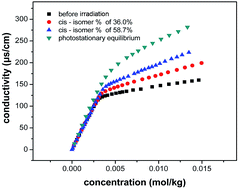
Fig. 5 shows the variation of conductivity for [Cnmim][CA] (n = 8, 10, 12) in aqueous solutions as a function of the ionic liquids concentration before and after irradiation. By using the same procedure described before, we calculated the values of CAC, α and ΔG°m at 298.15 K for [Cnmim][CA] (n = 8, 10, 12) ionic liquids after irradiation (at photostationary equilibrium). For the sake of comparison, these values were also included in Table 2.
 |
| | Fig. 5 Plots of the conductivity of [Cnmim][CA] in aqueous solutions as a function of the ionic liquids concentration before irradiation and after irradiation. (a) [C8mim][CA]; (b) [C10mim][CA]; (c) [C12mim][CA]; and (d) [C12mim][CA] at different photoisomerism percentage. | |
It is clear from Fig. 5 and Table 2 that UV irradiation significantly increased the conductivity, CAC, α and ΔG°m values of these aqueous ionic liquids solutions. The increase in α value means that the association of cis-CA anion with imidazolium head groups became weak after UV irradiation, which was not beneficial to the formation of cationic aggregates and resulted in the increase of CAC and ΔG°m values and the reduction of aggregation ability of the ionic liquids. Actually, the CAC values of aqueous [Cnmim][CA] solution at photostationary equilibrium were roughly doubled. In addition, it is evident from Fig. 5d that the extent of photo-induced isomerization of the anion from trans- to cis-isomers had an important affect on both α and CAC values. The higher the percentage of cis-isomers of the anion is, the higher the α and CAC values are. Therefore, UV irradiation can be conveniently used to modulate aggregation behavior of ionic liquids in aqueous solutions.
From the above discussion, it is clear that the difference in the interaction between counter ion and headgroup before and after light irradiation is responsible for light-induced aggregation behavior modulation of the ionic liquids in water. Before irradiation, trans-CA anions are the major existing form of the counter ion, and their hydrophobic part (aromatic ring) is relatively “distant” from the hydrophilic part (carboxylate group). This structure feature makes it convenient for the counter ions to intercalate its hydrophobic part into the micelle interior and remain its hydrophilic part outside water. That is to say, trans-CA anions can tightly associate with cationic aggregates, thus promoting the growth of the aggregates. Under these circumstance, CAC, α and ΔG°m values of [Cnmim][CA] were particularly small. On the other hand, when trans-CA anions were transformed into cis-CA anions upon UV light irradiation, molecular skeleton of the anion was curved, and the distance (D) between the hydrophobic benzene ring and the hydrophilic carboxylate group was greatly shortened (see Fig. 6). Thus, benzene ring was located close to carboxylate group, resulting in the difficulty for the benzene ring to orient inward to the [Cnmim]+ aggregates interface and the carboxylate group outward. Furthermore, the difference in the relative hydrophobicity of trans- and cis-CA also led to the difference in the interactions of two isomers with [Cnmim]+ aggregates. It has been noted for a variety of compounds that the trans isomer is more hydrophobic than its cis isomer, this difference in hydrophobicity has been ascribed to the lower net dipole moment of the trans isomer compared to the cis isomer.35 This implies that trans-CA would readily bind to [Cnmim]+ aggregates, whereas the more hydrophilic cis-CA could be more likely to remain in solution and this is not desirable for the growth of aggregates. As a result, CAC, α and ΔG°m values of [Cnmim][CA] significantly increased after light irradiation.
 |
| | Fig. 6 Alteration of distance (D) between hydrophobic benzene ring and hydrophilic carboxylate group after irradiation. | |
Photo-induced modulation of the aggregates size of [Cnmim][CA] ionic liquids
In order to further investigate the influence of UV light irradiation on the aggregates size, DLS measurement was employed to detect the changes of aggregates size of [Cnmim][CA] (n = 8, 10, 12) before and after UV irradiation in aqueous solution. Fig. 7 shows the size distribution for the aggregates from DLS measurements at 0.1 mol kg−1 of [Cnmim][CA] before and after light irradiation for 3 h at 298.2 K. It can be seen that at the same concentration, the aggregate size increased with increasing alkyl chain length of the ILs before irradiation. For example, the aggregate size grew from 5.2 to 6.4 nm when the alkyl chain length increased from C8 to C10. In the meantime, size distribution for [C12mim][CA] aggregate showed obvious polydispersity with two peaks at 3.56 and 77.5 nm, indicating the formation of larger sized aggregates. It can also be seen from Fig. 7 that after irradiation for 3 h, the aggregate size was changed from 5.2, 6.4, and 3.6 nm to 3.5, 3.4 and 2.5 nm for [C8mim][CA], [C10mim][CA] and [C12mim][CA], respectively, and the aggregate with a diameter of 77.5 nm disappeared for [C12mim][CA]. These results indicate that the aggregate size of the ionic liquids became small upon UV irradiation, proving that UV irradiation is not conducive to the growth of the aggregates. This is highly consistent with the conclusion deduced from conductivity measurements.
 |
| | Fig. 7 The size distribution for the aggregates from DLS measurements at 0.1 mol kg−1 of [Cnmim][CA] (n = 8, 10, 12) before and after UV irradiation for 3 h at 298.2 K. | |
Conclusions
In summary, a new class of light-responsive ionic liquids [Cnmim][CA] (n = 4, 6, 8, 10, 12) was synthesized and characterized for the first time, and their aggregation behavior was investigated before and after UV light irradiation. It was found that after UV irradiation, the critical aggregation concentration, ionization degree of the aggregates, and standard Gibbs energy of aggregation of the ionic liquids increased, while the size of aggregates decreased. This could be attributed to the photoisomerization of anion of [Cnmin][CA] from trans- to cis-isomers upon exposure to UV light. The cis-[CA] has unfavorable geometry and weaker hydrophobicity, which makes the association interactions of the counter ions with [Cnmim]+ aggregates to weaken. These findings are expected to be useful in light controlled drug delivery, microscale photo-control devices and sensors.
Acknowledgements
This work was supported by the National Natural Science Foundation of China (No. 21133009, 21273062 and 21203057).
References
- A. W. T. King, J. Asikkala, I. Mutikainen, P. Jarvi and I. Kilpelainen, Angew. Chem., Int. Ed., 2011, 50, 6301 CrossRef CAS PubMed.
- X. Han and D. W. Armstrong, Acc. Chem. Res., 2007, 40, 1079 CrossRef CAS PubMed.
- D. Xiong, G. Cui, J. Wang, H. Wang, Z. Li, K. Yao and S. Zhang, Angew. Chem., 2015, 127, 7373–7377 CrossRef.
- Y. Lu, K. Korf, Y. Kambe, Z. Tu and L. A. Archer, Angew. Chem., 2014, 126, 498 CrossRef.
- S. Zhang, J. Sun, X. Zhang, J. Xin, Q. Miao and J. Wang, Chem. Soc. Rev., 2014, 43, 7838 RSC.
- T. Erdmenger, C. Guerrero-Sanchez, J. Vitz, R. Hoogenboomab and U. S. Schubert, Chem. Soc. Rev., 2010, 39, 3317 RSC.
- S. N. Riduan and Y. Zhang, Chem. Soc. Rev., 2013, 42, 9055 RSC.
- X. Zhang, X. Zhang, H. Dong, Z. Zhao, S. Zhang and Y. Huang, Energy Environ. Sci., 2012, 5, 6668 CAS.
- J. Chen, X. Chen, M. Su, J. Ye, J. Hong and Z. Yang, Chem. Eng. J., 2015, 279, 136 CrossRef CAS.
- F. J. Hernández-Fernández, A. P. de los Ríos, F. Mateo-Ramirez, C. Godinez, L. J. Lozano-Blanco, J. I. Moreno and F. Tomas-Alonso, Chem. Eng. J., 2015, 279, 115 CrossRef.
- N. Liu and Z. Ma, Biosens. Bioelectron., 2014, 51, 184 CrossRef CAS PubMed.
- A. F. Cláudio, M. Neves, K. Shimizu, J. N. C. Lopes, M. G. Freire and J. A. P. Coutinho, Green Chem., 2015, 17, 3948 RSC.
- J. P. Hallett and T. Welton, Chem. Rev., 2011, 111, 3508 CrossRef CAS PubMed.
- A. W. T. King, J. Asikkala, I. Mutikainen and P. J. Distillable, Angew. Chem., 2011, 123, 6425 CrossRef.
- J. Bowers, C. P. Butts, P. J. Martin and M. C. Vergara-Gutierrez, Langmuir, 2004, 20, 2191 CrossRef CAS PubMed.
- T. L. Greaves and C. J. Drummond, Chem. Soc. Rev., 2013, 42, 1096 RSC.
- K. Shimizu and C. E. S. Bernardes, J. Phys. Chem. B, 2014, 118, 567 CrossRef CAS PubMed.
- H. Wang, L. Zhang, J. Wang, Z. Li and S. Zhang, Chem. Commun., 2013, 49, 5222 RSC.
- W. Xu, T. Wang, N. Cheng, Q. Hu, Y. Bi, Y. Gong and L. Yu, Langmuir, 2015, 31, 1272 CrossRef CAS PubMed.
- J. Wang, H. Wang, S. Zhang, H. Zhang and Y. Zhao, J. Phys. Chem. B, 2007, 111, 6181 CrossRef CAS PubMed.
- T. Singh and A. Kumar, J. Phys. Chem. B, 2007, 111, 7843 CrossRef CAS PubMed.
- H. Wang, J. Wang, S. Zhang and X. Xuan, J. Phys. Chem. B, 2008, 112, 16682 CrossRef CAS PubMed.
- H. Wang, B. Tan, H. Zhang and J. Wang, RSC Adv., 2015, 5, 65583 RSC.
- H. Wang, B. Tan, J. Wang, Z. Li and S. Zhang, Langmuir, 2014, 30, 3971 CrossRef CAS PubMed.
- B. Dong, X. Xing, R. Wang, B. Wang, X. Zhou, C. Wang, L. Yu, Z. Wu and Y. Gao, Chem. Commun., 2015, 51, 11119 RSC.
- J. Wang, L. Zhang, H. Wang and C. Wu, J. Phys. Chem. B, 2011, 115, 4955 CrossRef CAS PubMed.
- V. Pino, C. Yao and J. L. Anderson, J. Colloid Interface Sci., 2009, 333, 548 CrossRef CAS PubMed.
- H. Wang, Q. Feng, J. Wang and H. Zhang, J. Phys. Chem. B, 2010, 114, 1380 CrossRef CAS PubMed.
- T. Asaka, N. Akai, A. Kawai and K. Shibuya, J. Photochem. Photobiol., A, 2010, 209, 12 CrossRef CAS.
- L. C. Branco and F. Pina, Chem. Commun., 2009, 6204 RSC.
- H. Tamura, Y. Shinohara and T. Arai, Chem. Lett., 2010, 39, 240 CrossRef CAS.
- S. G. Zhang, S. M. Liu, Q. H. Zhang and Y. Q. Deng, Chem. Commun., 2011, 47, 6641 RSC.
- J. Yang, H. Wang, J. Wang, Y. Zhang and Z. Guo, Chem. Commun., 2014, 50, 14979–14982 RSC.
- S. Shi, T. Yin, X. Tao and W. Shen, RSC Adv., 2015, 5, 75806 RSC.
- A. M. Ketner, R. Kumar, T. S. Davies, P. W. Elder and S. R. Raghavan, J. Am. Chem. Soc., 2007, 129, 1553–1559 CrossRef CAS PubMed.
- P. D. María, Angew. Chem., Int. Ed., 2008, 47, 6960 CrossRef PubMed.
- K. R. Seddon, A. Stark and M. Torres, Pure Appl. Chem., 2000, 72, 2275 CrossRef CAS.
- A. González-Pérez, J. L. del Castillo, J. Czapkiewicz and J. R. Rodríguez, J. Phys. Chem. B, 2001, 105, 1720 CrossRef.
- T. Inoue, H. Ebina, B. Dong and L. Zheng, J. Colloid Interface Sci., 2007, 314, 236 CrossRef CAS PubMed.
- M. J. Rosen, Surfactants and Interfacial Phenomena, Wiley, New York, 2nd edn, 1989 Search PubMed.
- T. Asakawa, H. Kubode, T. Ozawa, A. Ohta and S. Miyagishi, J. Oleo Sci., 2005, 54, 545 CrossRef CAS.
- S. K. Metha, K. K. Bhasin, A. Kamar and S. Dham, Colloids Surf., A, 2006, 278, 17 CrossRef.
Footnote |
| † Electronic supplementary information (ESI) available: Synthesis and characterization of the ionic liquids, bromide content in the ionic liquids and UV-vis spectra of trans-cinnamic acid before and after UV light irradiation. See DOI: 10.1039/c5ra20772j |
|
| This journal is © The Royal Society of Chemistry 2015 |
Click here to see how this site uses Cookies. View our privacy policy here.