

Chiral electrochemical recognition of tryptophan enantiomers at a multi-walled carbon nanotube–chitosan composite modified glassy carbon electrode
Lin-Yan Yua,
Qi Liua,
Xiong-Wei Wub,
Xin-Yu Jianga,
Jin-Gang Yu*a and
Xiao-Qing Chen*ac
aCollege of Chemistry and Chemical Engineering, Central South University, Changsha, Hunan 410083, China. E-mail: yujg@csu.edu.cn; xqchen@csu.edu.cn; Fax: +86-731-88879616; Tel: +86-731-88879616
bCollege of Science, Hunan Agricultural University, Changsha, Hunan 410128, China
cCollaborative Innovation Center of Resource-conserving & Environment-friendly Society and Ecological Civilization, Changsha, Hunan 410083, China
First published on 5th November 2015
Abstract
A multi-walled carbon nanotube–chitosan composite modified glassy carbon electrode (MWCNT–CS/GCE) was prepared and used for the chiral recognition of tryptophan (Trp) enantiomers. Cyclic voltammetry (CV) was employed to characterize the electrical conductivity of the modified electrode. Differential-pulse voltammetry (DPV) was employed to observe the oxidation peak potentials (Ep) of L- and D-Trp at the modified electrode. Different Ep of L- and D-Trp at the modified GCE were observed in the solutions containing only L- or D-Trp enantiomers. As for a mixed aqueous solution containing both L- and D-Trp, only one Ep peak would appear. However, the Ep of the peak was found to shift positively and linearly with an increasing percentage of L-isomer in the racemic Trp mixture solution, making it possible to determine the percentage of L- and D-Trp enantiomers in a racemic Trp mixture.
1. Introduction
Chirality is one of the most common properties in natural systems. More than half of the medicines that are clinically applied,1 about 30% of pesticides in use2 and almost all amino acids3 are chiral. Meanwhile, different enantiomers of a chiral compound generally behave identically in human beings and other creatures. Therefore, forensic illegal chiral substances and chiral pollutants in environmental science need to be monitored. The content of amino acid enantiomers in food, and enantiomeric excess in the drugs should also be determined and quantified to ensure their safe use.It is difficult to detect chiral compounds that lack aromatic chromophores by UV spectroscopy, not to mention the identification and quantification of their enantiomers. The determination of the enantiomers of various chiral compounds has been a really big challenge up to now. What is unexpected, however, is that electrochemical analysis can achieve this goal.4 Normally, a conventional electrode cannot be used in the analysis of chiral compounds. In order to identify a couple of enantiomers, chiral recognition materials need to be modified on the electrode first.5,6 Various functional groups of the recognition materials including amino, hydroxyl, carbonyl, phenyl, carboxyl groups and even hydrophobic cavities are important for the chiral recognition performance of the modified electrode.7,8 Noncovalent interactions between a chiral selector and enantiomers such as electrostatic interactions, π–π stacking, and hydrogen bonding make necessary contributions to chiral recognition.9,10 Due to the advantages of ease of use, low-energy consumption, continuous operation mode, sensitivity and high selectivity, electrochemical analysis is becoming increasingly important for the rapid identification of chiral molecules in modern society. Chiral electrochemical recognition has increasingly attracted attention throughout the world over the last two decades. In recent years, the utilization of enantioselective electrodes in enantiomer discrimination has proven to be an effective and successful alternative for enantioselective analysis.11
To increase the sensitivity of electrochemical measurement, some useful nanomaterials with high surface area, high intrinsic mobility and good electrical conductivity such as Au nanoparticles (AuNPs),12 carbon nanotubes (CNTs),12,13 graphene14 and so on have been introduced onto the electrodes. The homogeneous dispersion of such nanomaterials has contributed to the sensitivity and lowest detection limit (LOD) of the modified electrodes.
L-Tryptophan (L-Trp) (Fig. 1), one of the 22 standard amino acids, acts as a useful building block in protein biosynthesis. However, L-Trp cannot be synthesized by humans. Therefore, L-Trp is called an “essential” amino acid and must be acquired from human diet. It is still difficult to make a distinction between the L- and D-isomers of Trp due to their very similar physical/chemical properties. It’s necessary to develop an effective method for the identification of the two optical enantiomers of Trp. Recently, L-cysteine was electrochemically polymerized onto the surface of multi-walled CNTs (PLC/MWCNTs), and the obtained porous cluster-like nanocomposite films showed an obvious change of oxidation peak currents between D- and L-Trp.15 A thionine–graphene (positively charged) nanocomposite covered GCE was further modified by ds-DNA (negatively charged), and an obvious difference of oxidation peak currents for D- and L-Trp was observed with the assistance of Cu(II).16,17 However, the preparation of such chiral biosensors was time-consuming, complex and costly.
 | ||
| Fig. 1 Chemical structure of L-Trp. | ||
To achieve an efficient chiral electrochemical recognition, the development of novel materials for electrode surface modification is a challenge and always essential. Researchers from all over the world have been devoted to developing chiral composite materials with cheaper and more stable properties through more facile procedures. For example, cysteic acid (CyA) was selected as a chiral selector to directly modify GCEs, and the obtained electrode (CyA-GCE) exhibited chiral recognition capacity for tyrosine (Tyr) enantiomers by electrochemical impedance spectroscopy (EIS).18 The enantioselective recognition of Tyr enantiomers based on different oxidation potential signals provided a helpful reference for developing a better electrochemical sensing system for chiral recognition.
Chitosan (CS) (Fig. 2), a linear polysaccharide, is composed of randomly distributed β-(1-4)-linked D-glucosamine and N-acetyl-D-glucosamine. CS and its derivatives have shown high chiral recognition abilities for metal acetylacetonate complexes,19 glutamic acid,20 phenylglycine, catechin, tryptophan21 and so on.22 Due to their low-price, easy preparation and biological degradability, CS and its derivatives have been widely used as chiral resolving agents. Most recently, Ou et al. developed a graphene quantum dot (GQD)–CS composite film for the chiral electrochemical recognition of Trp enantiomers.23 However, the preparation of the GQD–CS composite film by such an electrochemical deposition method is time consuming, complex and costly although it combines both the advantages of GQDs and CS. Meanwhile, such a composite modified GCE couldn’t recognize D- or L-Trp enantiomers through appreciable differences in the peak potentials (Ep).
 | ||
| Fig. 2 Chemical structure of CS. | ||
Herein, we hope to develop a novel electrochemical sensor for the chiral electrochemical recognition of Trp enantiomers based on CS functionalized MWCNT (MWCNT–CS) composite modified GCEs. The tiny difference between the two Trp enantiomers and the chiral sensor could be identified directly, and an obvious difference of oxidation potential signals for D- and L-Trp could be observed. To the best of our knowledge, this is the first report describing an electrochemical sensor which could exhibit different Ep differences between D- and L-Trp enantiomers through enantioselective interactions.
2. Experiments
2.1 Reagents and apparatus
L-Trp (98%) was purchased from Shanghai Chemical Co., Ltd. D-Trp (98%) was obtained from Sinopharm Chemical Reagent Co., Ltd. Multi-walled carbon nanotubes (MWCNTs; 95% purity) were provided by Shenzhen Nanotech Port Co. Ltd. CS (B.R.; 80.0–95.0% deacetylation degree) was bought from Sinopharm Chemical Reagent Co., Ltd. CS modified MWCNT (MWCNT–CS) composites were prepared according to microwave-assisted methods reported by our group:24 a mixture of oxidized MWCNTs (100 mg) and CS–CH3COOH solution (0.1 g of CS in 5 mL of 2% CH3COOH and 5 mL of N,N-dimethylformamide) was reacted in a microwave oven for 20 min, then the mixture was cooled to room temperature, filtered, purified and dried to obtain MWCNT–CS (53 mg). All other chemicals were of analytical grade and used without any further purification. The aqueous solutions were freshly prepared using double distilled water.Electrochemical measurements were performed with a CHI650D Electrochemical Workstation (Shanghai Chenhua Instrument Co., Ltd.). A conventional three-electrode system contained a bare glassy carbon electrode (GCE) or the modified electrode as the working electrode, Ag/AgCl (in saturated KCl solution) as the reference electrode, and a platinum wire as the auxiliary electrode. Transmission electron microscope (SEM) measurements were taken on a JEM-2100 high-resolution transmission electron microscope (HT-TEM) at an acceleration voltage of 200 kV. All the experiments were performed at room temperature.
2.2 The preparation of working electrode
Prior to modification, the bare GCE (4 mm of diameter) was polished with 0.05 μm alumina slurry to a mirror finish, and then ultrasonically cleaned in nitric acid (HNO3), ethanol and distilled water for 2 minutes, separately. After the electrode was allowed to dry under N2 gas, it was then immersed in 5 mM of K3Fe(CN)6 and scanned in the potential range of −0.1 to +0.6 V (vs. the silver chloride electrode, AgCl) until the peak potential separation (Ep) of CV profiles was less than 80 mV.Modification of the GCE was performed according to the following steps. Firstly, the black suspension of MWCNT–CS (8 μL, 2 mg mL−1) was dropped onto the surface of the processed GCE; secondly, the electrode was dried with an infrared lamp and then stored at 4 °C before use.
3. Results and discussion
3.1 TEM measurements of MWCNT–CS
The morphologies of pristine MWCNTs and MWCNT–CS have been investigated by HR-TEM. As shown in Fig. 3, the surface of pristine MWCNTs is smooth (Fig. 3(A)), while the surface of MWCNT–CS is obviously rough (Fig. 3(B)), indicating that CS had been grafted onto the MWCNT surface. Due to the covalently grafted CS on the surface of MWCNTs, the diameters of the MWCNT–CS increase a little. | ||
| Fig. 3 TEM images of MWCNT samples: (A) pristine MWCNTs; (B) MWCT–CS. | ||
3.2 Characterization of the MWCNT–CS modified electrode
As shown in Fig. 4, the cyclic voltammograms of different electrodes including a bare GCE, MWCNT/GCE and MWCNT–CS/GCE were obtained in 1 mM K3Fe(CN)6 containing 0.1 M KCl with a scan rate of 50 mV s−1. A couple of redox peaks could be observed at the MWCNT–CS/GCE with the ΔEp = 117 mV, while the oxidation peak current at the MWCNT/GCE was improved a lot, and the ΔEp became relatively small (50 mV) in contrast with those of the bare GCE or MWCNT/GCE. The result indicated that the introduction of CS would hinder the electron transfer of the electrode. | ||
| Fig. 4 Cyclic voltammograms of the electrodes in 1 mM K3Fe(CN)6 (containing 0.1 M KCl, pH = 7.0): (a) bare GCE; (b) MWCNTs/GCE; (c) MWCNT–CS/GCE. | ||
3.3 Chiral selective recognition of Trp enantiomers
In order to obtain the electrochemical behaviors of L-/D-Trp (2.5 mM) enantiomers at the modified electrode, the response of Trp enantiomers was investigated by DPV in solution containing only L-Trp or D-Trp. As shown in Fig. 5(a) and (b), almost overlapped differential pulse voltammograms (DPV) of D-Trp and L-Trp could be found at the bare GCE, indicating there was almost no difference of Ep between D-Trp and L-Trp, and no stereoselective recognition would occur at the bare GCE. However, the voltammetric responses including the Ep and peak current of the MWCNT–CS/GCE to Trp enantiomers (Fig. 5(c) and (d)) were changed a lot. Compared to the Ep and peak current of D-Trp (Fig. 5(d)), the Ep of L-Trp (Fig. 5(c)) shifted positively, and the peak current of L-Trp increased accordingly. The differences of peak potential and peak current implied that the CS grafted onto the MWCNTs interact with L-Trp and D-Trp in different ways, and therefore the MWCNT–CS/GCE displayed chiral recognition ability for L-Trp. | ||
| Fig. 5 Potential voltammograms of the D- and L-Trp enantiomers at electrodes: (a) D-Trp at the GCE; (b) L-Trp at the GCE; (c) L-Trp at the MWCNT–CS/GCE; (d) D-Trp at the MWCNT–CS/GCE. | ||
The selective capability of the MWCNT–CS/GCE can be attributed to the chirality of CS grafted onto the surface of MWCNT–CS. Additionally, because the DPV signal was greatly amplified by the MWCNT substrate of MWCNT–CS, the recognition of L- or D-Trp enantiomers could be monitored and qualitatively analyzed. Therefore, the MWCNT–CS/GCE would have a different binding affinity towards D- or L-Trp enantiomers, leading to a difference in the free energy and different potential shifts.
3.4 A proposed recognition mechanism
It has been proposed that the electrochemical oxidation of amine-containing compounds occurs through one-electron oxidation of the amine functional group to its corresponding cation radical, which removes a hydrogen cation to form a carbon–nitrogen linkage on the surface of an inert solid such as a GCE.25,26 As shown in Fig. 6(a), there might be a carbon–nitrogen linkage formed by the amine functional group of Trp and the MWCNT–CS composites. As for the MWCNT–CS composites, the grafted CS was used as a probe molecule for the chiral electrochemical recognition due to the chirality of CS which could provide chiral detection sensitivity for D- or L-Trp enantiomers (Fig. 6(b)). The –OH groups of CS are in the double helixes and show chirality properties. The –NH2 groups of Trp are also in a chiral position. The formation of hydrogen bonds between the –OH groups of CS and the –NH2 groups of D- or L-Trp, leads to different affinities of MWCNT–CS for these two optical isomers of Trp that occur due to the difference in steric hindrance. Therefore chiral recognition would be found.26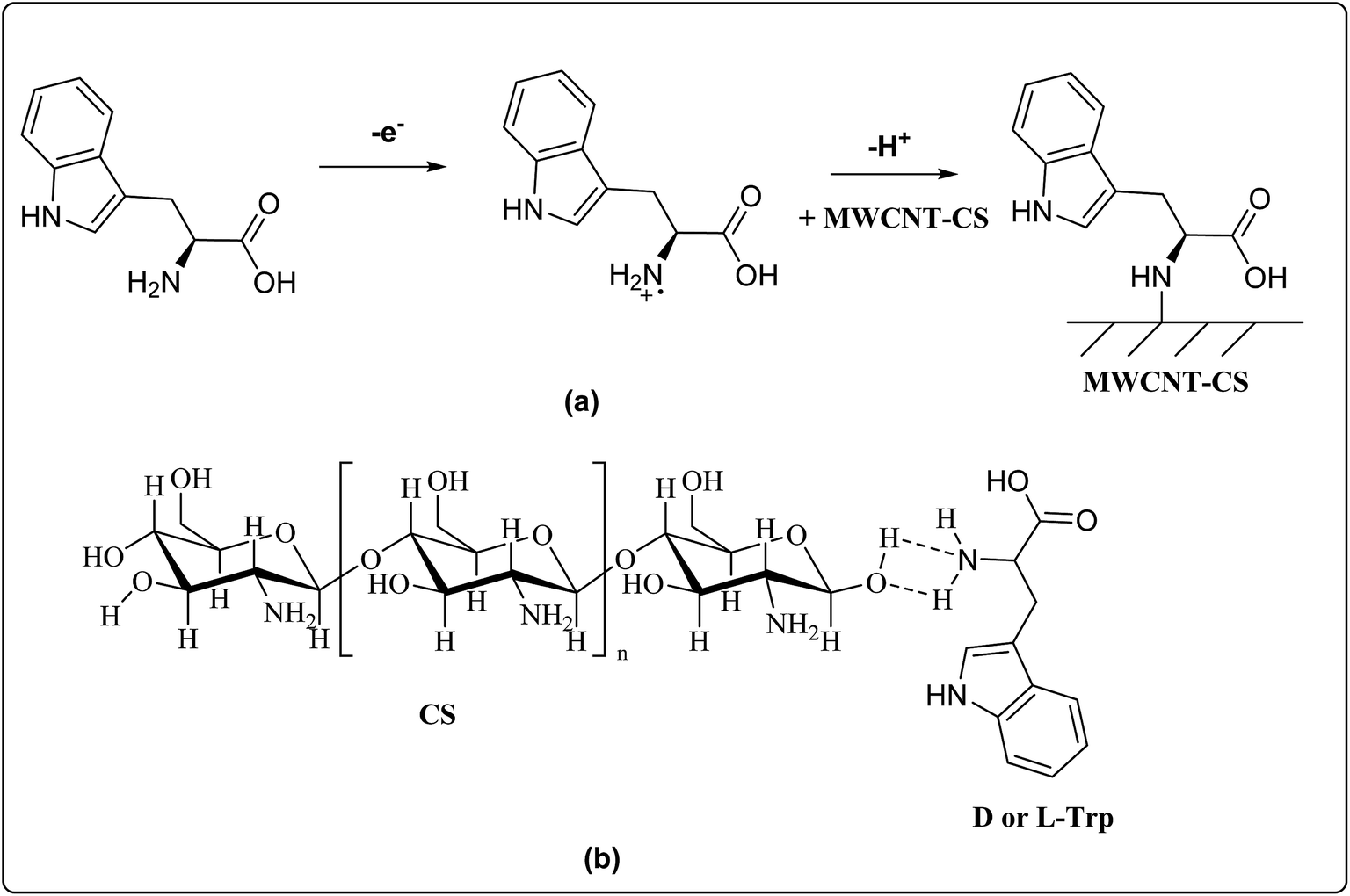 | ||
| Fig. 6 The proposed mechanism for the chiral electrochemical recognition of Trp enantiomers at a MWCNT–CS modified GCE: (a) the electrochemical oxidation of Trp; (b) the possible interactions of MWCNT–CS and D- or L-Trp. | ||
3.5 Application of an enantioselective sensor in racemic solutions
In this experiment, the application of a chiral surface in practical research was also investigated, thus a series of proportions of L-Trp from 0% to 100% was investigated by measuring the change of peak potential (Ep). As shown in Fig. 7, the enantiomeric ratios of L- or D-Trp mixtures could be determined from a calibration curve. The chiral sensor could be used to recognize the percentages of D-/L-enantiomers of Trp in the enantiomer mixtures because the calibration curve exhibited good linearity. | ||
| Fig. 7 The relationship between Ep and different percentages of L-Trp (%) of 2.5 mM Trp racemic mixtures on the MWCNT–CS/GCE. | ||
4. Conclusions
Herein, we have prepared a chiral electrode by depositing MWCNT–CS onto the surface of a GCE. The chiral selective recognition of Trp enantiomers was successfully found at the surface of the MWCNT–CS/GCE. A significant peak potential difference could be observed for D- and L-Trp enantiomer solutions. Meanwhile, a progressively positive shift could be observed for the racemic solutions containing an increasing percentage of the L-Trp enantiomer. The developed method was simple and sensitive, providing a novel way to quickly detect the chirality of racemic Trp enantiomers via the electrochemical response at the modified GCE. The results could provide some useful guidance for researchers to develop novel composite materials for chiral electrochemical analysis.Conflict of interest
None.Acknowledgements
We are particularly grateful for the financial support from National Natural Science Foundation of China (No. 21471163, 21201181, 21276282), Hunan Provincial Natural Science Foundation of China (No. 14JJ2006) and Key Project of Philosophy and Social Sciences Research, Ministry of Education, PRC (No. 13JZD0016, Research on Institutional Building of Ecological Civilization).References
- Q. Shen, L. Wang, H. Zhou, H.-D. Jiang, L.-S. Yu and S. Zeng, Stereoselective binding of chiral drugs to plasma proteins, Acta Pharmacol. Sin., 2013, 34, 998–1006 CrossRef CAS PubMed.
- E. Ulrich, C. Morrison, M. Goldsmith and W. Foreman, Chiral pesticides: identification, description, and environmental implications, in Reviews of Environmental Contamination and Toxicology, ed. D. M. Whitacre, Springer, US, 2012, vol. 217, ch. 1, pp. 1–74 Search PubMed.
- A. C. Evans, C. Meinert, C. Giri, F. Goesmann and U. J. Meierhenrich, Chirality, photochemistry and the detection of amino acids in interstellar ice analogues and comets, Chem. Soc. Rev., 2012, 41, 5447–5458 RSC.
- A. B. F. Vitoreti, O. Abrahao, R. A. D. Gomes, G. R. Salazar-Banda and R. T. S. Oliveira, Electroanalytical determination of captopril in pharmaceutical formulations using boron-doped diamond electrodes, Int. J. Electrochem. Sci., 2014, 9, 1044–1054 Search PubMed.
- B. L. Chen, H. W. Zhu, Y. Xiao, Q. L. Sun, H. Wang and J. X. Lu, Asymmetric electrocarboxylation of 1-phenylethyl chloride catalyzed by electrogenerated chiral COI(salen)(−) complex, Electrochem. Commun., 2014, 42, 55–59 CrossRef CAS.
- Y. F. Bu, S. Wang, Q. Chen, H. L. Jin, J. J. Lin and J. C. Wang, Self-assembly of osmium complexes on reduced graphene oxide: a case study toward electrochemical chiral sensing, Electrochem. Commun., 2012, 16, 80–83 CrossRef CAS.
- F. Y. Tu, L. Y. Yu, J. G. Yu, X. Q. Chen, Q. Fu, F. P. Jiao, Z. G. Peng and T. Zhang, Graphene as tunable stationary phase additive for enantioseparation, Nano, 2013, 8, 1350069 CrossRef.
- Y. Kong, X. L. Shan, J. F. Ma, M. L. Chen and Z. D. Chen, A novel voltammetric sensor for ascorbic acid based on molecularly imprinted poly(o-phenylenediamine-co-o-aminophenol), Anal. Chim. Acta, 2014, 809, 54–60 CrossRef CAS PubMed.
- X. Q. Chen, X. Y. Liao, J. G. Yu, F. P. Jiao and X. Y. Jiang, Chiral carbon nanotubes and carbon nanotube chiral composites: preparation and applications, Nano, 2013, 8, 13300028 Search PubMed.
- A. R. Mladenovic, D. Z. Mijin, S. Z. Drmanic, V. E. Vajs, V. M. Jovanovic, S. D. Petrovic and M. L. A. Ivic, Electrochemical oxidation of donepezil and its voltammetric determination at gold electrode, Electroanalysis, 2014, 26, 893–897 CrossRef CAS.
- M. Trojanowicz, Enantioselective electrochemical sensors and biosensors: a mini-review, Electrochem. Commun., 2014, 38, 47–52 CrossRef CAS.
- B. Rezaei, O. Rahmanian and A. A. Ensafi, An electrochemical sensor based on multiwall carbon nanotubes and molecular imprinting strategy for warfarin recognition and determination, Sens. Actuators, B, 2014, 196, 539–545 CrossRef CAS.
- D. M. Peng, L. Y. Yu, J. G. Yu, F. P. Jiao, Z. G. Peng and T. Zhang, Preparation of D-tartaric acid modified multi-walled carbon nanotubes for resolution of propranolol enantiomers, Curr. Nanosci., 2013, 9, 631–634 CrossRef CAS.
- W. L. Feng, C. Liu, S. Y. Lu, C. Y. Zhang, X. H. Zhu, Y. Liang and J. M. Nan, Electrochemical chiral recognition of tryptophan using a glassy carbon electrode modified with β-cyclodextrin and graphene, Microchim. Acta, 2014, 181, 501–509 CrossRef CAS.
- D. Guo, Y. Huang, C. Chen, Y. Chen and Y. Fu, A sensing interface for recognition of tryptophan enantiomers based on porous cluster-like nanocomposite films, New J. Chem., 2014, 38, 5880–5885 RSC.
- L. J. Guo, Q. Zhang, Y. H. Huang, Q. Han, Y. H. Wang and Y. Z. Fu, The application of thionine-graphene nanocomposite in chiral sensingfor Tryptophan enantiomers, Bioelectrochemistry, 2013, 94, 87–93 CrossRef CAS PubMed.
- Q. Chen, J. Zhou, Q. Han, Y. Wang and Y. Fu, Electrochemical enantioselective recognition of tryptophane enantiomers based on chiral ligand exchange, Colloids Surf., B, 2012, 92, 130–135 CrossRef CAS PubMed.
- R. Q. Nie, X. J. Bo, H. Wang, L. J. Zeng and L. P. Guo, Chiral electrochemical sensing for tyrosine enantiomers on glassy carbon electrode modified with cysteic acid, Electrochem. Commun., 2013, 27, 112–115 CrossRef CAS.
- C. Yamamoto, M. Fujisawa, M. Kamigaito and Y. Okamoto, Enantioseparation using urea- and imide-bearing chitosan phenylcarbamate derivatives as chiral stationary phases for high-performance liquid chromatography, Chirality, 2008, 20, 288–294 CrossRef CAS PubMed.
- Y. Nakai and M. Yoshikawa, Cellulose as a membrane material for optical resolution, Polym. J., 2015, 47, 334–339 CrossRef CAS.
- J. L. Chen and H. J. Syu, Immobilization of chitosan in sol–gel phases for chiral open-tubular capillary electrochromatography, Anal. Chim. Acta, 2012, 718, 130–137 CrossRef CAS PubMed.
- J. L. Chen, Molecularly bonded chitosan prepared as chiral stationary phases in open-tubular capillary electrochromatography: comparison with chitosan nanoparticles bonded to the polyacrylamide phase, Talanta, 2011, 85, 2330–2338 CrossRef CAS PubMed.
- J. Ou, Y. Tao, J. Xue, Y. Kong, J. Dai and L. Deng, Electrochemical enantiorecognition of tryptophan enantiomers based on graphene quantum dots–chitosan composite film, Electrochem. Commun., 2015, 57, 5–9 CrossRef CAS.
- J. G. Yu, K. L. Huang, J. C. Tang, Q. Yang and D.-S. Huang, Rapid microwave synthesis of chitosan modified carbon nanotube composites, Int. J. Biol. Macromol., 2009, 44, 316–319 CrossRef CAS PubMed.
- A. Adenier, M. M. Chehimi, I. Gallardo, J. Pinson and N. Vilà, Electrochemical oxidation of aliphatic amines and their attachment to carbon and metal surfaces, Langmuir, 2004, 20, 8243–8253 CrossRef CAS PubMed.
- X. Gu, Y. Tao, Y. Pan, L. Deng, L. Bao and Y. Kong, DNA-inspired electrochemical recognition of tryptophan isomers by electrodeposited chitosan and sulfonated chitosan, Anal. Chem., 2015, 87, 9481–9486 CrossRef CAS PubMed.
| This journal is © The Royal Society of Chemistry 2015 |