
DOI:
10.1039/C5RA19348F
(Paper)
RSC Adv., 2015,
5, 94479-94485
A polypyrrole-supported carbon paper acting as a polysulfide trap for lithium–sulfur batteries
Received
19th September 2015
, Accepted 26th October 2015
First published on 26th October 2015
Abstract
Lithium–sulfur (Li–S) batteries with high theoretical capacities and low cost are a strong candidate for future energy storage, but their development is hindered by many shortcomings, such as high-rate capacity decay due to the “shuttle effect”. Herein, we increase the capacity retention and cycle life of the Li–S battery through the addition of an interlayer made of polypyrrole (PPy)-treated carbon paper (CP) in a Li–S battery. We first quantitatively investigate the effect of the thickness of the carbon paper and then optimize a novel interlayer prepared by using PPy adhered to the carbon paper. The results show that 300 μm CP is the best choice among the three thicknesses. The CP-300 samples deliver a reversible capacity of 490 mAh g−1 after 200 cycles with a 0.5 C rate and show the best rate performance. Because of the porous structure and conductivity of the as-prepared PPy interlayer, the battery incorporating the PPy interlayer exhibits more excellent cycle performance and better rate performance than the CP batteries. Surprisingly, the PPy-coated CP-200 battery displays a reversible capacity of 555 mAh g−1 after 200 cycles with a 0.5 C rate. This feasible way to modify a carbon paper interlayer may have promising prospects in the Li–S battery field.
1. Introduction
Because of their advantages, such as high theoretical capacity, extremely low cost, and non-toxicity, lithium–sulfur (Li–S) batteries have received much attention in recent years.1–4 However, Li–S batteries also present great challenges because of their typically low sulphur use, low rate capacity and poor cycle life, which hinder their practical application.3–8 In previous studies, researchers have taken many measures to address the above issues to improve the performance of Li–S systems. On the one hand, attention has been given to sulfur cathodes,9–11 separators,12,13 and electrolytes,14–16 such as sulfur–TiO2 yolk–shell nanoarchitecture,17 Nafion-based separators,18 and solvent-in-salt electrolytes.19 On the other hand, some researchers have investigated the structural components of the batteries, such as adding interlayers20–23 and altering anode structures.24–27 However, the inhibition of the “shuttle effect” is not yet sufficient. During the charge and discharge process, the high-order polysulfide species (Li2Sx, 2 < x < 8) either dissolve into electrolytes or reach the Li metal anode and then are reduced into insoluble solid precipitates on the surface of the Li anode, leading to the loss of active materials or the “shuttle effect’’.28 Among these measures, using an interlayer has promising prospects in the future for Li–S batteries because the insertion of the interlayer can localize the soluble polysulfide species between the interlayer and S cathode.20 Only by improving the use of the active materials, can the performances of the cell be improved.
In recent years, using an interlayer in Li–S batteries has been widely applied. Initially, researchers have modified the S cathode by layers, such as the layer-by-layer approach29 and using a bifunctional Nafion/γ-Al2O3 membrane.30 Then, some of them modified the separator with layers, such as a PVDF-C layer,13 polypropylene layer,31 or ultra-lightweight MWCNT layer.12 More recently, the direct insertion of an interlayer was investigated. This novel cell configuration modification is a relatively facile approach for realizing high-performance Li–S cells because it can physically impede the polysulfide shuttle. Most studies have concentrated on the materials of the interlayer, such as nickel foam,23 MWCNT paper,32 treated carbon paper,21 micro carbon paper,22 and carbonized paper.20 Studies of the carbon paper interlayer prove that the interlayer can act both as an electron pathway and as a trap for dissolved polysulfide species. Except for the previous studies of the carbon paper interlayer, the details such as the thickness of the carbon paper and the conductive polymer adhesion to it have not been studied quantitatively yet.
Herein, we propose two systematic studies of the carbon paper interlayer in Li–S batteries. The thickness of the carbon paper is first optimized. Then, we modify the optimal carbon paper by coating it with electronically conductive polypyrrole. The polypyrrole has been widely used in cathode for Li–S batteries due to its advantages.33,34 The conductive polypyrrole coating on the carbon paper facilitates efficient charge transmission, traps the polysulfide species, suppresses the loss of active materials, and maintains excellent cyclability.35,36 This novel optimized configuration presented here is potentially suitable for application in future Li–S batteries.
2. Experimental section
2.1. Preparation of CP and PPy interlayer
The synthesis steps were shown as follows. Three types of PCPs (pristine carbon papers) were purchased from Hesen in Shanghai, China. Their thicknesses were 100, 200, and 300 μm. First, the papers were cut into discs of 16 mm diameter, as large as the separator. The carbon papers were cleaned with deionized water and then soaked in ethanol for 24 h at room temperature, followed by heat treatment under vacuum at 80 °C for 12 h. Then, the discs were soaked in a mixture of aqueous alkaline solution (0.3 M NaOH) and alcohol for 24 h, cleaned with deionized water, and dried under vacuum. After the primary treatment, the carbon papers were labeled CP-100, CP-200, and CP-300, respectively. Their weights were 15.6 mg, 38.2 mg, and 54.4 mg, respectively. Next, 0.2 M pyrrole (Py) and 0.5 M CH3COOH were dispersed into 90 mL of deionized water and 10 mL of alcohol, denoted solution A, and 0.2 M (NH4)2S2O8 was dissolved in 100 mL of deionized water, denoted solution B. The CPs were put in the battery positive shell and 0.5 mL of A and 0.5 mL of B were added to the shell one by one. After 2 min, the papers were washed completely with deionized water and dried under vacuum at 80 °C for 12 h. After drying, they were denoted PPy-100, PPy-200, and PPy-300 according to the thickness of CP, respectively. Their weights were 15.8 mg, 38.4 mg, and 54.6 mg, respectively.
2.2. Preparation of S cathode and cell assembly
The cathode material consisted of 70 wt% sulfur with 30 wt% multi-walled carbon nanotubes (MWCNTs). A cathode electrode containing 70 wt% of the above cathode material, 20 wt% super P carbon, and 10 wt% polyvinylidene fluoride binder was fabricated by casting the slurry onto an aluminum foil current collector. After drying at 60 °C under vacuum for 24 h, the cathode film was cut into sheets with a diameter of 11 mm. The electrolyte was composed of 1 M Lithium bis(trifluoromethanesulfonyl)imide (LITFSI) and 0.2 M LiNO3 in a mixture of DOL/DME (1
:
1 by volume). CR2025-type coin cells were assembled in an Ar-filled glove box with Li metal foil as the anode. The battery was assembled with CP and PPy interlayers that were placed between the S cathode and separator (Scheme 1).
 |
| | Scheme 1 Schematic configuration of a Li–S cell with the PPy interlayer inserted between the S cathode and separator (inserting the SEM images of PPy-100 in the rectangular region and polypyrrole aggregates in the ellipse region). | |
2.3. Material characterization
The morphologies of the CP and PPy were examined by scanning electron microscopy (SEM, HITACHI S-4800) and their corresponding elemental mapping analysis (EDS) was also carried out on this instrument. Determination of the sulfur content in the composites and thermal stability measurements were carried out using a thermal analyzer (6200 EXSTAR) at a heating rate of 10 °C min−1 under an air atmosphere. X-ray photoelectron spectroscopy (XPS) measurements were conducted on a PE Scientific PHI-1600 ESCA system using a monochromatized Mg Kα radiation source. A Raman spectroscope (Renishaw RM 2000) excited by a 632.8 nm He–Ne laser was also employed.
2.4. Electrochemical measurements
Galvanostatic experiments were carried out between 1.7 V and 3.0 V. Electrochemical impedance spectroscopy (EIS) measurement was performed at a frequency range from 0.01 Hz to 1 MHz with perturbation amplitude of 5 mV. Both CV (1.7–3 V, 0.1 mV s−1) and EIS measurements were conducted on a CHI 660D electrochemical workstation. The potentials mentioned in this study are referenced to the Li/Li+ redox couple.
3. Results and discussion
3.1. The CP system
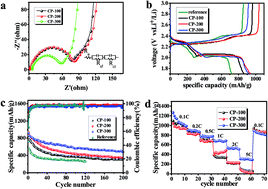
To analyze the conductivity of the different CPs in Li–S batteries, impedance analysis is performed to understand the mechanism of the cells with and without interlayers (Fig. 1a). The line in the high-frequency region corresponds to interface impedance Rsf, which reflects the resistance over Li ion diffusion through the contacting interface and Li2S/Li2S2 solid film. The semicircle in the low-frequency region corresponds to charge-transfer resistance Rct against the interfacial electrochemical reaction involved in charge transfer.23 The results are fitted with the equivalent circuit shown in the inset of Fig. 1a. The Rct of CP-100 and CP-200 were 75 ohm and 80 ohm, respectively, while that of the CP-300 was only 56 ohm. To investigate how the different thicknesses affect Li ion diffusion, we estimate the Li ion diffusion coefficient using the following (1) and (2) equations.37,38 The specific data are shown in Table 1. It seems that the thickness only has a small effect on the Li ion diffusion. We will discuss the details of the PPy system later.| | |
Z′ = Rsf + Rct + σω−0.5
| (1) |
| |
 | (2) |
where T is the absolute temperature, R is the gas constant, n is the number of electrons per molecule during oxidization, S is the surface area, F is Faraday's constant, C is the concentration of Li ions in the electrolyte, and ω is the angular frequency.
 |
| | Fig. 1 EIS plots of the cells with different CPs ((a) inserting the equivalent circuit); (b) the discharge/charge voltage profiles between 1.7 and 3.0 V at 0.5 C rate of different CPs; cycle performance (c) and rate capability (d) of the three different CP cells. | |
Table 1 Battery parameters of cells with different CP interlayers at a 0.5 C rate
| Cell types |
Without interlayer |
CP-100 |
CP-200 |
CP-300 |
| Initial discharge capacity (mAh g−1) |
722.4 |
863.2 |
943.6 |
923.9 |
| Cycle number |
50 |
200 |
200 |
200 |
| Reversible capacity (mAh g−1) |
316.7 |
306.2 |
352.9 |
488.9 |
| Capacity fade rate (% per cycle) |
1.12 |
0.32 |
0.31 |
0.23 |
| Rct (ohm) |
— |
82.8 |
86.3 |
56.1 |
| DLi+ (cm2 S−1) |
— |
6.9 × 10⁻¹² |
8.8 × 10⁻¹¹ |
5.0 × 10⁻¹² |
Typical charge/discharge voltage profiles of the CPs at 0.5 C are presented in Fig. 1b. The capacities are calculated based on the mass of S. The three types all show two reduction plateaus at approximately 2.3 V and 2.0 V in the first cycle. However, CP-200 shows the highest discharge capacity of 943.6 mAh g−1, which is higher than the other two, corresponding to the higher Li+ diffusion coefficient data shown in Table 1. Accordingly, we can suggest that the rate capability of CP-300 is better than the other two cells from the charge/discharge profiles, which may contribute to higher conductivity and more successful inhibition of the polysulfide species by CPs.
The cycle performance of the Li–S cell with different CP interlayers at 0.5 C is displayed in Fig. 1c. The cyclabilities of CP-100, CP-200, and CP-300 at 0.5 C are 306 mAh g−1, 353 mAh g−1, and 489 mAh g−1 after 200 cycles, converting to retention rates of 39%, 40%, and 57%, respectively. That is to say, the cycle performance of the battery improves significantly with increasing CP thickness. It is well known that the porosity of CP can not only offer abundant channels for liquid electrolyte diffusion but also serve as a polysulfide species adsorption medium during the discharge/charge of Li–S cells.21 The results also imply that the addition of the CP interlayer can effectively prevent the diffusion of the polysulfide anions, thereby inhibiting them spreading over the Li anode, as a reference, decreasing the loss of the active materials. The capacity of the battery without an interlayer decreases sharply in the first few cycles. The data shows the capacity fade rate of the reference battery is 1.12% per cycle, which is greater than the others. This phenomenon may support the point that the interlayer can suppress the shuttle effect and also improve the conductivity of batteries. In addition, the NaOH activation process in the first cleaning step made the CPs surface more hydrophilic, which is more beneficial for the adsorption of polysulfide ions.
Fig. 1d presents the rate performance of the cells with the three CP interlayers. The cycle performance of the batteries at various current densities ranging from 0.1 C to 2 C is shown. At the beginning, the three cells present generally similar characteristics in discharging and charging at current densities from 0.1 C to 0.5 C, that is, specific capacity gradually decreased with increasing current density. However, at higher current density, differences appeared. The battery with CP-300 shows a smaller capacity decrease than the batteries with CP-100 and CP-200. For example, the discharge specific capacities of the CP-300 battery at 2 C and 5 C are approximately 530 mAh g−1 and 310 mAh g−1, respectively, whereas the batteries with CP-100 and CP-200 interlayers at 5 C yield discharge specific capacities of approximately 30 mAh g−1 and 60 mAh g−1, respectively.
The electrochemical data for the CP cells are displayed in Table 1. The capacity fade rate is calculated using the following eqn (3)
| |
 | (3) |
where
R is the capacity fade rate,
C1 is the initial capacity,
C2 is the reversible capacity, and
n is the cycle number.
3.2. The PPy system
The carbon papers coated with conductive polypyrrole are denoted PPy-100, PPy-200, and PPy-300. The inserting SEM image in Scheme 1 shows the surface of the PPy-100, in which the carbon fibers are covered by PPy aggregates. The aggregates in the red circle are magnified to 5 μm, as shown in the ellipse region in Scheme 1. It should be emphasized that the aggregates are directly related to electrochemical performance, the details of which will be discussed later.
To confirm that the aggregates are particles of polypyrrole, the sample is also characterized by XPS (X-ray photoelectron spectroscopy). Fig. 2a shows the N 1s (398.8 eV) peak, which is attributed to the nitrogen on polypyrrole, of which the chemical structure is inserted in Fig. 2a,39 and the strong C 1s (284.8 eV) peak is attributed to the carbon on PPy and carbon paper. In the C 1s peak (Fig. 2b), the intensity of the 284.5 eV peak corresponds to sp2 hybridized carbon, which proves the presence of C–C and C
C in carbon paper.1 The presence of polypyrrole can be confirmed by the peak at 285.8 eV for the C–N bond in the primary amine.40
 |
| | Fig. 2 XPS of PPy-100 ((a) inserting the chemical structure of polypyrrole); (b) C 1s characteristic peaks in the XPS spectra; SEM images of cross section of PPy-200 (c) and upside refer to the side with polypyrrole; (d) elemental mapping of PPy-200 after 100 cycles. | |
The cross section of PPy-200 is shown in Fig. 2c. The immersion depth of polypyrrole in the carbon paper is approximately ∼70 μm, as marked with green strings, while most of the polypyrrole adhered to the surface (displayed in Scheme 1). After 100 cycles, the appearance of N element in Fig. 2d confirms the existence of polypyrrole again. The S content indicates that the polypyrrole can trap dissolved polysulfide species in the electrolyte.
Impedance analysis is also performed to compare the cells with different PPy interlayers (Fig. 3a). The Rct resistances of the PPys are obviously lower than the CPs of the same thickness, especially the PPy-200. After fitting the equivalent circuit shown in the inset of Fig. 3a, the Rct of PPy-200 decrease to 44 ohm, compared to the 61 ohm of PPy-100 and 72 ohm of PPy-300. Here, the PPy interlayer works as an upper current collector for the low-conductivity sulfur cathode, decreasing the resistance of the cells. The PPy-300 battery is thicker than the CP-300 battery due to the additional thickness of PPy layer, so that the electrolyte may have been hindered by the interlayer, leading to the decreased performance of the battery. It seems that the PPy-200 is the optimal thickness in our study. However, in the first cycle, the Li ion diffusion coefficient is also estimated by the (1) and (2) equations. The data are shown in Table 2. It is obvious that the diffusion coefficient of PPy is much larger than that of the CP counterparts. Therefore, it may be that the introduction of a PPy interlayer can lead to much easier migration of Li+ as a result of the hydrophilic property of PPy,41 the improved conductivity of the interlayer, and the decrease of the cell resistance. Typical charge/discharge voltage profiles of the PPys at 0.5 C are presented in Fig. 3b. Interestingly, compared with the profiles of CPs in Fig. 1b, we find that the first cycle coulomb efficiency is obviously improved without any alteration of the reduction plateaus at approximately 2.0 V and 2.3 V. This result is attributed to the trapping of polysulfide species by polypyrrole, suppressing the loss of active materials during the discharge process.39,42 The reduction plateaus can also be verified by the CV curves in Fig. 3c. In the CV curves, there were only slightly changes in peak intensity and potential during the first two CV scans, which confirmed the high reversibility facilitated by the PPy interlayers in the battery. Two cathodic peaks occur at approximately 2.3 V (upper plateau) and 2.0 V (lower plateau), which corresponded to the reduction of sulfur to soluble polysulfides and the further reduction of polysulfides to Li2S2/Li2S, respectively. The two overlapping anodic peaks at approximately 2.4 V are the typical peaks of Li–S cells.22,43
 |
| | Fig. 3 EIS plots of cells with different PPys ((a) inserting the equivalent circuit); (b) the discharge/charge voltage profiles between 1.7 and 3.0 V at 0.5 C rate of different PPys; (c) CV curves of battery with PPy-200 in the first two cycles; (d) cycle performance and rate capability (e) of the three different PPy cells. | |
Table 2 Battery parameters of cells with different PPy interlayers at a 0.5 C rate
| Cell types |
PPy-100 |
PPy-200 |
PPy-300 |
| Initial discharge capacity (mAh g−1) |
972.6 |
938.8 |
1012.4 |
| Cycle number |
200 |
200 |
200 |
| Reversible capacity (mAh g−1) |
450.2 |
554.1 |
364.8 |
| Capacity fade rate (% per cycle) |
0.27 |
0.20 |
0.32 |
| Rct (ohm) |
60.61 |
43.89 |
71.78 |
| DLi+ (cm2 S−1) |
2.8 × 10⁻¹⁰ |
1.5 × 10⁻¹¹ |
6.0 × 10⁻¹¹ |
The cycle performance and rate performance of the cells with PPy are also investigated. Fig. 3d shows that the cycle performance of the cells with PPy is different from that of the CP cells. In the first few cycles, the decrease rates of the three PPy cells are smaller than the CP cells. The PPy-200 shows the best cycle performance, which remains at 555 mAh g−1 after 200 cycles with a retention rate of 65%. This result may be caused by the changes in the conductivity of the carbon paper and the thickness, which can affect the shuttle of the electrolyte and polysulfide species. As seen in Fig. 3e, the cells with the PPy interlayer all deliver a reversible initial capacity of ∼1200 mAh g−1. The C rates specified in this study are based on the mass and theoretical capacity of sulfur (1 C = 1675 mA g−1). Even at 5 C, the cell with PPy-200 still delivers a reversible capacity of ∼310 mAh g−1, which is higher than the other two. The discharge capacity of PPy-200 returns to 885 mAh g−1 when the rate decreased from 5 C to 0.1 C. The PPy-100 and PPy-300 reached 708 mAh g−1 and 815 mAh g−1, respectively, demonstrating excellent rate stability. The cells with the PPy interlayer show high rate stability, even at high current density, primarily because of the addition of polypyrrole.
To enable readers to have a direct understanding and comparison with the CP system, we include Table 2 with the electrochemical data of the PPy cells.
4. Conclusion
In summary, we demonstrated the improvement in the capacity retention and cycle performance of Li–S cells through the addition of a CP interlayer and an optimized PPy interlayer. We conclude that the optimal thickness of the carbon paper interlayer in a Li–S battery is 300 μm, better than 100 μm or 200 μm. Furthermore, using the novel optimized PPy interlayer, the PPy-200 battery shows a high specific capacity of up to 555 mAh g−1 after 200 cycles at a 0.5 C rate. The excellent cycle and rate capabilities are because the soluble polysulfide intermediates can be effectively hindered by the novel interlayer, which can also improve the conductivity of the whole battery. We believe that our method may potentially help Li–S batteries advance close to their real applications in the future as a major energy storage device.
Acknowledgements
This work was supported by State Key Laboratory of Catalytic Materials and Reaction Engineering (RIPP, SINOPEC), the National Science Foundation of China (21373028), Major achievements Transformation Project for Central University in Beijing, Beijing Science and Technology Project and the Ford University Research Program (URP) project.
References
- J. Zhang, Z. Dong, X. Wang, X. Zhao, J. Tu, Q. Su and G. Du, J. Power Sources, 2014, 270, 1–8 CrossRef CAS.
- G. Zhou, S. Pei, L. Li, D. W. Wang, S. Wang, K. Huang, L. C. Yin, F. Li and H. M. Cheng, Adv. Mater., 2014, 26, 625–631 CrossRef CAS PubMed , 664.
- H. Xu, Y. Deng, Z. Shi, Y. Qian, Y. Meng and G. Chen, J. Mater. Chem. A, 2013, 1, 15142 CAS.
- Z. Jin, K. Xie, X. Hong and Z. Hu, J. Power Sources, 2013, 242, 478–485 CrossRef CAS.
- S. Lu, Y. Chen, X. Wu, Z. Wang and Y. Li, Sci. Rep., 2014, 4, 4629 Search PubMed.
- X. Feng, M. K. Song, W. C. Stolte, D. Gardenghi, D. Zhang, X. Sun, J. Zhu, E. J. Cairns and J. Guo, Phys. Chem. Chem. Phys., 2014, 16, 16931–16940 RSC.
- S. Li, M. Xie, J. Liu, H. Wang and H. Yan, Electrochem. Solid-State Lett., 2011, 14, A105 CrossRef CAS.
- J. Guo, Y. Xu and C. Wang, Nano Lett., 2011, 11, 4288–4294 CrossRef CAS PubMed.
- S. Evers and L. F. Nazar, Chem. Commun., 2012, 48, 1233–1235 RSC.
- X. Liang, Z. Wen, Y. Liu, H. Zhang, L. Huang and J. Jin, J. Power Sources, 2011, 196, 3655–3658 CrossRef CAS.
- Y. Wu, C. Xu, J. Guo, Q. Su, G. Du and J. Zhang, Mater. Lett., 2014, 137, 277–280 CrossRef CAS.
- S.-H. Chung and A. Manthiram, J. Phys. Chem. Lett., 2014, 5, 1978–1983 CrossRef CAS PubMed.
- H. Wei, J. Ma, B. Li, Y. Zuo and D. Xia, ACS Appl. Mater. Interfaces, 2014, 6, 20276–20281 CAS.
- S. Xiong, X. Kai, X. Hong and Y. Diao, Ionics, 2011, 18, 249–254 CrossRef.
- F. Wu, J. Qian, R. Chen, J. Lu, L. Li, H. Wu, J. Chen, T. Zhao, Y. Ye and K. Amine, ACS Appl. Mater. Interfaces, 2014, 6, 15542–15549 CAS.
- S. S. Zhang, Electrochim. Acta, 2012, 70, 344–348 CrossRef CAS.
- Z. Wei Seh, W. Li, J. J. Cha, G. Zheng, Y. Yang, M. T. McDowell, P. C. Hsu and Y. Cui, Nat. Commun., 2013, 4, 1331 CrossRef PubMed.
- I. Bauer, S. Thieme, J. Brückner, H. Althues and S. Kaskel, J. Power Sources, 2014, 251, 417–422 CrossRef CAS.
- L. Suo, Y. S. Hu, H. Li, M. Armand and L. Chen, Nat. Commun., 2013, 4, 1481 CrossRef PubMed.
- S. H. Chung and A. Manthiram, Chem. Commun., 2014, 50, 4184–4187 RSC.
- C. Zu, Y. S. Su, Y. Fu and A. Manthiram, Phys. Chem. Chem. Phys., 2013, 15, 2291–2297 RSC.
- Y. S. Su and A. Manthiram, Nat. Commun., 2012, 3, 1166 CrossRef PubMed.
- K. Zhang, F. Qin, J. Fang, Q. Li, M. Jia, Y. Lai, Z. Zhang and J. Li, J. Solid State Electrochem., 2013, 18, 1025–1029 CrossRef.
- C. Huang, J. Xiao, Y. Shao, J. Zheng, W. D. Bennett, D. Lu, L. V. Saraf, M. Engelhard, L. Ji, J. Zhang, X. Li, G. L. Graff and J. Liu, Nat. Commun., 2014, 5, 3015 Search PubMed.
- B. Duan, W. Wang, H. Zhao, A. Wang, M. Wang, K. Yuan, Z. Yu and Y. Yang, ECS Electrochem. Lett., 2013, 2, A47–A51 CrossRef CAS.
- H. Kim, J. T. Lee, D.-C. Lee, M. Oschatz, W. I. Cho, S. Kaskel and G. Yushin, Electrochem. Commun., 2013, 36, 38–41 CrossRef CAS.
- X. Zhang, W. Wang and A. Wang, J. Mater. Chem. A, 2014, 2, 11660–11665 CAS.
- G. Wang, Y. Lai, Z. Zhang, J. Li and Z. Zhang, J. Mater. Chem. A, 2015, 3, 7139–7144 CAS.
- L. Qie and A. Manthiram, Adv. Mater., 2015, 27, 1694–1700 CrossRef CAS PubMed.
- X. Liu, Z. Shan, K. Zhu, J. Du, Q. Tang and J. Tian, J. Power Sources, 2015, 274, 85–93 CrossRef CAS.
- G. Zhou, L. Li, D. W. Wang, X. Y. Shan, S. Pei, F. Li and H. M. Cheng, Adv. Mater., 2015, 27, 641–647 CrossRef CAS PubMed.
- Y. S. Su and A. Manthiram, Chem. Commun., 2012, 48, 8817–8819 RSC.
- Z. Wang, S. Zhang, L. Zhang, R. Lin, X. Wu, H. Fang and Y. Ren, J. Power Sources, 2014, 248, 337–342 CrossRef CAS.
- X. Zhou, F. Chen and J. Yang, J. Energy Chem., 2015, 24, 448–455 CrossRef.
- N. Nakamura, T. Yokoshima, H. Nara, T. Momma and T. Osaka, J. Power Sources, 2015, 274, 1263–1266 CrossRef CAS.
- X.-W. Gao, Y.-F. Deng, D. Wexler, G.-H. Chen, S.-L. Chou, H.-K. Liu, Z.-C. Shi and J.-Z. Wang, J. Mater. Chem. A, 2015, 3, 404–411 CAS.
- T.-F. Yi, H. Liu, Y.-R. Zhu, L.-J. Jiang, Y. Xie and R.-S. Zhu, J. Power Sources, 2012, 215, 258–265 CrossRef CAS.
- C. Tan, J. Cao, A. M. Khattak, F. Cai, B. Jiang, G. Yang and S. Hu, J. Power Sources, 2014, 270, 28–33 CrossRef CAS.
- F. Wu, J. Chen, L. Li, T. Zhao, Z. Liu and R. Chen, ChemSusChem, 2013, 6, 1438–1444 CrossRef CAS PubMed.
- Z. Wang, Y. Dong, H. Li, Z. Zhao, H. Bin Wu, C. Hao, S. Liu, J. Qiu and X. W. Lou, Nat. Commun., 2014, 5, 5002 CrossRef CAS PubMed.
- G. Ma, Z. Wen, Q. Wang, C. Shen, P. Peng, J. Jin and X. Wu, J. Power Sources, 2015, 273, 511–516 CrossRef CAS.
- G. Ma, Z. Wen, J. Jin, M. Wu, X. Wu and J. Zhang, J. Power Sources, 2014, 267, 542–546 CrossRef CAS.
- B. Wang, Y. Wen, D. Ye, H. Yu, B. Sun, G. Wang, D. Hulicova-Jurcakova and L. Wang, Chemistry, 2014, 20, 5224–5230 CrossRef CAS PubMed.
|
| This journal is © The Royal Society of Chemistry 2015 |
Click here to see how this site uses Cookies. View our privacy policy here.