
Effect of graphene modified by a long alkyl chain ionic liquid on crystallization kinetics behavior of poly(vinylidene fluoride)

Yadong Hu, Pei Xu*, Haoguan Gui, Shanzhong Yang and Yunsheng Ding*
Key Laboratory of Advanced Functional Materials and Devices, Department of Polymer Material and Engineering, School of Chemistry and Chemical Engineering, Hefei University of Technology, Hefei 230009, Anhui Province, P. R. China. E-mail: chxuper@hfut.edu.cn; dingys@hfut.edu.cn; Tel: +86 551 62901545

Received 25th August 2015 , Accepted 3rd October 2015

First published on 8th October 2015


Abstract

To investigate the effects of graphene (Gra) modified by a long alkyl chain ionic liquid (1-hexadecyl-3-methylimidazolium bromide, IL) on the crystallization kinetics behavior of poly(vinylidene fluoride) (PVDF), a series of PVDF/IL blend, PVDF/Gra and PVDF/IL/Gra nanocomposites have been prepared using a solution-cast method. The crystallization kinetics and corresponding crystal structure have been investigated using differential scanning calorimetry (DSC), polarized optical microscopy (POM) and X-ray diffraction spectroscopy (XRD). The crystallization kinetic parameters, such as relative crystallinity (Xt), crystallization half time (t1/2), crystallization rate constant (Z), Avrami exponents (n) and activation energy (Ea), have been determined by both isothermal and non-isothermal techniques. In the isothermal and non-isothermal crystallization process, for PVDF/0.5IL/0.5Gra, IL and Gra can facilitate nucleation to decrease Ea; moreover, the synergistic efforts of IL and Gra can maintain appropriate crystallization rate to form the β phase extruded form the α phase. The positive effect on the crystallization of PVDF may be ascribed not only to the existence of Gra–cation interaction between the imidazolium cation and the aromatic carbon ring structure, but also to the electrostatic interaction between the [double bond splayed left]CF2 group of the polymer backbone and imidazolium cation.

1. Introduction

Poly(vinylidene fluoride) (PVDF) has attracted more and more attention as one of the most important semi-crystalline polymers because of its good thermal stability, chemical resistance, and mechanical and electrical properties.1–3 There are several types of crystal phase types (α, β, γ and δ) of PVDF, and the unique piezoelectric and pyroelectric performances of PVDF are closely related to the polar crystal phase.4–9 Among these phases, the α phase, which can be easily obtained from melt crystallization, showing non-polar with TGTG chain conformation, whereas the rest of the crystal phases have polarity. The β and γ phases have an orthorhombic unit cell with TTTT and TTTG chain conformation, respectively, and the structure of the β phase results in the most polar PVDF.10 Thus, the appearance of a β phase can expand the application field of PVDF as capacitors, actuators, piezoelectric and pyroelectric sensors, and power cable terminations. The oriented or un-oriented β-crystal can be obtained from melt under specific conditions such as an external electric field, ultra-fast cooling from solution crystallization at temperatures below 70 °C, by mechanical stretching of the α-PVDF and the addition of nucleating fillers (such as clay, BaTiO3, TiO2, and hydrated ionic salt).10,11 The physical processes of promoting the β-PVDF content are rigorous, such as high pressure and high temperature, and the nanofillers majorly influence the mechanical properties when they are present in a high content in the matrix as an inducer. Therefore, the ionic liquid (IL) with ions and graphene (Gra) with a rigid structure is selected to enhance the polar phase content and perfect the crystallization behavior.

IL is a room temperature molten salt with a bulky organic cation and inorganic anion, exhibiting apparent non-flammability, low viscosity, good electrical conductivity, high thermal and air stability and low vapor pressure.12,13 Thus, it is deemed as a “green” additive in a variety of research fields such as crystallization,14 flame retardant system,15 toughened system, and high dielectric constant system.16 He et al. found a facile and effective method to enhance the content of β phase in PVDF via incorporating with different types of ILs because of “ion-dipole” interaction.17 Liang et al. investigated the effect of content of cetyl trimethyl ammonium bromide and isothermal crystallization temperature on the content of the polar phase.18 Xing et al. combined the different contents of [BMIm]PF6 and PVDF, successfully inducing the γ phase.19,20 There is an electrostatic interaction between imidazolium ions and [double bond splayed left]CF2 groups of PVDF, which was characterized by FTIR. Okada found that PVDF particles were partly transformed into β phase PVDF by adding [BMIm]NO3 and subsequent thermal annealing just below the melting point of the PVDF/IL blends.21

Gra consists of a monolayer of sp2 bonded carbon atoms, which has a large aspect ratio, leading to strong interaction between polymer matrix and Gra.22,23 Some investigations have pointed out the excellent mechanical and electrical properties of a polymer/Gra system. Gra was used as a nucleating agent during the crystallization of semicrystalline polymers by many researchers. Layek and An et al. prepared PVDF/Gra composites and found that Gra can result in phase transformation from α to β PVDF.24–26 Han found that the reflection strengths of the polar phase in XRD results were generally influenced by the reduced graphene (RG) content in the PVDF/RG nanocomposite.27 Huang added that only 0.05 wt% of GO can partially transform the α phase to β phase in a PVDF/rGO system.28 Based on the abovementioned conclusions, Gra may have a good effect in improving the content of polar crystals in PVDF systems.

Compared with other methods of modified Gra, the use of IL has the following advantages: first, the cation–π physical interactions between IL and Gra are strong, which can maintain the excellent physical properties of Gra;29–31 second, this method is simple, environmentally friendly, and has a relatively high efficiency.32,33 Inspired by the abovementioned benefits, the imidazolium ionic liquid was used as a coupling agent between Gra and poly(methyl methacrylate) (PMMA) by a solution formation and in situ polymerization method to promote the dispersibility of Gra and increase the conductivity of the composites.34

There are two successive events: the primary nucleation of a new phase from the melt polymer and then the three-dimensional growth.6,35 Most recently, the use of the imidazolium ionic liquids with a long alkyl chain ([C16MIm]Br) and Gra as the fillers for modifying PVDF has focused primarily on the crystal structure and crystallization behavior. This article introduces the preparation of PVDF/IL, PVDF/Gra and PVDF/IL/Gra composite films and the crystal structure, which is characterized by XRD, POM and the melting/cooling curves of DSC. Moreover, the nucleation and growth mechanism will be changed because of the presence of a new crystal. Therefore, the Avrami equation is proposed to study the isothermal crystallization kinetics, and its other form is used to calculate the energy contrast. The Avrami equation and Flynn–Wall–Ozawa methods were used for investigating the non-isothermal crystallization kinetics. The Flynn–Wall–Ozawa method is an isoconversional method without considering the process. The differences of crystals will have largely decreased crystallization parameters and kinetics.

The key point of this study is to investigate the effects of IL with long alkyl chain and Gra with its rigid sheet structure on the crystal form and crystallization kinetics, which are worked as template agents. The relationship between crystal form and kinetic parameters can be established, the interaction between nanoparticle, imidazolium salt and PVDF chain can be understood, and finally, a proper method to characterize and control PVDF crystals can be provided.

2. Experimental

2.1 Materials

In this study, the PVDF utilized was purchased from Shanghai 3F New Material Co., China with a weight average molecular mass (Mw) of 2.2 × 10⁵ g mol−1 and a polydispersity index of 2. The IL, 1-hexadecyl-3-methylimidazolium bromide, i.e. [C16mim]Br, was obtained from Lanzhou Greenchem ILs, China and used as received. Gra (0.5–2 μm in diameter, 0.8–1.2 nm thickness) was obtained from Nanjing XFNANO Materials Tech Co., Ltd.

2.2 Sample preparation

To avoid the effects of other matter, such as monomers, catalyst and other additives, during its polymerization, the obtained PVDF was dissolved in N,N′-dimethyl formamide (DMF) as the solvent and then precipitated with methanol (MeOH). Then, it was dried in an air drying oven at 60 °C for 4 h and a vacuum drying oven at 60 °C for 24 h.

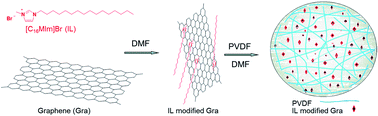
The PVDF/1IL (99 wt%/1 wt%) blend, PVDF/1Gra (99 wt%/1 wt%) and PVDF/0.5IL/0.5Gra (99 wt%/0.5 wt%/0.5 wt%) composites were prepared as follows. Gra was dispersed in DMF by sonication. Then, IL was added into the suspension under vigorous mechanical stirring at 80 °C for 1 h to form uniform slurry. At the same time, the washed PVDF was also dissolved in DMF. Then, the suspension of Gra or modified Gra in DMF was added to the PVDF solution, and the mixture was subjected to ultrasonic treatment for 10 min. Afterwards, the mixture was heated to 70 °C for 8 h to completely remove the solvent and was subsequently molded by hot-pressing at 175 °C and 10 MPa. Voids can be removed by the hot-pressing process. Traces of water were removed by vacuum evaporation at room temperature for 24 h. The sample names and ratio of components are listed in Table 1. Structures of IL and schematic of the preparation of PVDF/IL/Gra composite are shown in Fig. 1.

Table 1 Composition of the PVDF, PVDF/IL, PVDF/Gra and PVDF/IL/Gra samples
Samples PVDF/g IL/g Gra/g Ratio
PVDF 2 0 0 100/0/0
PVDF/1IL 1.98 0.02 0 99/1/0
PVDF/1Gra 1.98 0 0.02 99/0/1
PVDF/0.5IL/0.5Gra 1.98 0.01 0.01 99/0.5/0.5


image file: c5ra17169e-f1.tif
Fig. 1 Structures of IL and schematic of the preparation of PVDF/IL/Gra composite.

2.3 Differential scanning calorimetry (DSC)

Isothermal and non-isothermal crystallization kinetics measurements were obtained by differential scanning calorimetry (DSC, 821e, Mettler Toledo). All the DSC samples were dried in a vacuum drying oven at 40 °C for 12 h and measurements were carried out in a nitrogen atmosphere. The sample weight was around 6 mg.

The isothermal run was carried out by heating from 25 °C to 200 °C at 50 °C min−1 and maintained for 5 min to eliminate the thermal history, then cooled quickly at 50 °C min−1 to the predetermined crystallization temperature (Tc) and maintained for 30 min.

The non-isothermal crystallization kinetics were performed by first heating from 25 °C to 200 °C and maintained for 5 min to remove the thermal history, then cooled to 0 °C at different rates of 2, 3, 5, 10 °C min−1. Then, the samples were again heated to 200 °C at 10 °C min−1 and cooled to 0 °C at 50 °C min−1. These curves are used to analyze crystallization kinetics and melting behaviors.

2.4 Polarized optical microscopy (POM)

Samples were dissolved in DMF with the ratio of 1/10 g mL−1, and drops of the turbid solutions were placed on coverglasses. The PVDF films were dried in a vacuum drying oven at 60 °C for 12 h. Samples were heated to 200 °C for 5 min on a hot stage to remove the thermal history and transferred quickly to another hot stage at crystallization temperature, which was set in advance under POM. This method was used to observe the crystal morphology of PVDF and PVDF/1IL by POM.

2.5 X-ray diffraction (XRD)

The crystal forms of samples were characterized by an X'Port, PRO MPD, Holland. The machine was operated at a voltage of 40 kV and a current of 40 mA. The data were recorded from 2θ = 5° to 30° at a scanning speed of 2° min−1 with a step interval of 0.02°.

3. Result and discussion

3.1 Isothermal crystallization kinetics

Fig. 2 demonstrates the POM images of neat PVDF and PVDF/IL crystallized at 147 °C after removing the thermal history. The spherulites with their typical Maltese cross pattern have been observed in PVDF at 9 min and 30 min. With the addition of IL, the sample has crystallized completely at 9 min. It is quite clear that the number of spherulites with high birefringence in PVDF/IL is higher than in neat PVDF, and the nucleating effect of IL is observable. The movement of PVDF chain was limited during the molten stage because of the interaction between imidazole cations of IL and [double bond splayed left]CF2 groups of PVDF chain. The bottom right bright field image can provide evidence of complete crystallization. The polar phase co-exists with the α-phase in the lower left image, which has darker and less birefringent spherulites. The α-crystal of PVDF/IL is small and irregular in size. The nucleus density and growth speed of the polar phase are higher than the α-crystal, and the space of crystal growth is finite; therefore, the α-crystal PVDF/IL has been extruded by many small polar phases during the growth process.36
image file: c5ra17169e-f2.tif
Fig. 2 POM images of samples with scale bars of 200 μm.

Fig. S1 shows the morphology of PVDF/1Gra and PVDF/1IL/1Gra. Fig. S2 records the process of isothermal crystallization of PVDF/1IL blend, PVDF/1Gra and PVDF/0.5IL/0.5Gra composites at the different predetermined crystallization temperatures (Tc). Fig. S3 displays the relative crystallinity (Xt) versus time during isothermal crystallization of samples at different Tc.

At present, the well-known Avrami equation as follows was widely used to describe the nucleation and growth process in the study of overall crystallization kinetics.37,38

 
Xt = 1 − exp(−Ztn) (1)
where Xt is the relative degree of crystallinity at any time, Z is a rate constant related to nucleation and growth rate parameters, and n is called the “Avrami exponent”, which depends on the type of nucleation and the growth mechanism during the crystallization.39 One logarithmic form was given by eqn (2)
 
log[−ln(1 − Xt)] = log[thin space (1/6-em)]Z + n[thin space (1/6-em)]log[thin space (1/6-em)]t (2)

In general, the plot of (log[−ln(1 − Xt)]) versus (log[thin space (1/6-em)]t) can be present in straight lines and are represented in Fig. 3. We can calculate the slope of the line, i.e., n and the intercept with the ordinate yields (log[thin space (1/6-em)]Z). The half-time of crystallization (t1/2) expresses the time needed to achieve 50% crystallinity in this study to compare the overall crystallization rate, which could be calculated by eqn (3) as follows:

 
t1/2 = (ln[thin space (1/6-em)]2/Z)1/n (3)


image file: c5ra17169e-f3.tif
Fig. 3 Plot of (log[−ln(1 − Xt)]) versus (log[thin space (1/6-em)]t) for isothermal crystallization of samples.

The reciprocal of t1/2 is the crystallization rate, G, in eqn (4) as follows:

 
G = τ1/2 = 1/t1/2 (4)

The values of (log[thin space (1/6-em)]Z), n, and t1/2 are represented in Table 2. The value of n, at different crystallization temperatures, reflects a 2D/3D crystal growth mechanism, which is commonly observed in a case of macromolecules. For neat PVDF, the Avrami exponent n is around 2.8, whereas in PVDF/IL blends and PVDF nanocomposites, it is about 2.5, indicating that the presence of IL and Gra affected the crystallization mechanism of PVDF. For the same crystallization temperature, the n value decreases with increasing Gra and IL filler concentrations, indicating that the filler acts as nucleation agent during the primary crystallization process.40 The POM images show several crystal types of PVDF/IL, including the α phase and others. Therefore, the mechanism of nucleation was changed.

Table 2 Parameters of isothermal crystallization from the Avrami equation
Samples Tc (°C) n log[thin space (1/6-em)]Z t1/2 (min) τ1/2 (min−1)
PVDF 144 2.77 0.69 0.49 2.04
146 2.95 −0.12 0.96 1.04
148 2.75 −1.97 2.23 0.45
150 2.65 −1.84 4.50 0.22
PVDF/1IL 144 2.56 0.60 0.50 2.00
146 2.46 −0.16 1.02 0.98
148 2.18 −0.62 1.73 0.58
150 2.28 −1.10 2.76 0.36
PVDF/1Gra 144 2.44 1.13 0.29 3.45
146 2.66 0.85 0.41 2.44
148 2.63 0.25 0.65 1.54
150 2.56 −0.32 1.12 0.89
PVDF/0.5IL/0.5Gra 144 2.40 0.82 0.40 2.50
146 2.51 0.31 0.64 1.56
148 2.52 −0.11 0.94 1.06
150 2.62 −0.84 1.78 0.56


For all samples, the values of G show that the crystallization rate decreases with the increase of Tc, indicating a decrease of the overall isothermal crystallization rate at higher crystallization temperatures. Nucleation becomes more difficult at higher crystallization temperatures, which reduce the overall crystallization rate.39 It is observed that the crystallization rates of PVDF/1Gra and PVDF/0.5IL/0.5Gra were faster than that of PVDF at the same Tc, indicating that Gra can greatly accelerate the isothermal crystallization process of the PVDF matrix.41 Compared with PVDF, the value of G in PVDF/1IL first decreases and then increases with the increase of Tc because the interaction between the [double bond splayed left]CF2 group of the PVDF chain and the imidazolium cation of IL is stronger than the effect of plastification of IL to form the β phase conformation first, and then the interaction between the [double bond splayed left]CF2 group and imidazolium cation is weaker than the effect of plastification of IL with the increase of Tc. Compared with PVDF/1Gra, the value of G in PVDF/0.5IL/0.5Gra decreases at the same Tc because nucleation of Gra restrained the effect of plastification of IL, and β phase conformation can be formed because the cationic imidazolium ring wrapped on the surface of Gra can induce PVDF to form the full zigzag conformations.42

The activation energy, Ea, can be calculated according to the Avrami equation as follows:43

 
image file: c5ra17169e-t1.tif(5)
where Z0 is a temperature-independent pre-exponential factor, Ea is the activation energy, R is the gas constant and Tc is the crystallization temperature. The plot of (1/n)(ln[thin space (1/6-em)]Z) versus (1/Tc) of samples for the Avrami parameter Z deduced from isothermal crystallization is shown in Fig. 4. It provides a straight line with the slope (−Ea/R), then the Ea is calculated. The Ea are −592 kJ mol−1, −400 kJ mol−1, −336 kJ mol−1 and −364 kJ mol−1 for PVDF, PVDF/1IL, PVDF/1Gra, and PVDF/0.5IL/0.5Gra, the negative sign means that the process of crystallization is exothermal. In the isothermal crystallization process, IL and Gra can significantly support as a nucleating agent at Tc to obviously decrease Ea for PVDF composites, and IL and Gra can slightly restrain spherulitic growth at Tc to slightly decrease the crystallization rate for PVDF composites. An increase of the nucleation and a reduction of the spherulite growth rate result from a reduction of the crystallization time of the composites. The value of Ea for PVDF/1Gra is the smallest because nucleating of Gra is stronger than that of IL. For PVDF/0.5IL/0.5Gra, IL and Gra can facilitate nucleation to decrease Ea, and combined efforts of the IL and Gra can keep a specific value of G to form the β phase extruded from α phase.


image file: c5ra17169e-f4.tif
Fig. 4 Plot of ((1/n)ln[thin space (1/6-em)]Z) versus (1/Tc) of samples for the Avrami parameter Z deduced from isothermal crystallization.

3.2 Non-isothermal crystallization kinetics

Fig. 5 shows DSC curves of all the samples for the cooling process from 200 °C to 0 °C at 10 °C min−1 and 2 °C min−1; the crystallization peak temperatures (Tp) of PVDF/IL blends are 1.3 °C lower than that of neat PVDF at the high cooling temperature rate and 1 °C higher than that of neat PVDF at the low cooling temperature rate. This indicates that a high cooling temperature rate and the existence of IL impede the motion of polymer chains at the melting state.44 The whole process of crystallization is associated with cooling temperate rate and the additive. The values of Tp shift to low temperature at the high cooling temperature rate; the reason is considered to be that the cooling rate is faster than the motion of polymer segments and the nucleation rate. When the cooling temperature rate is low, the IL acts as the nuclei of the polymer crystal. The molecular chains of PVDF have enough time to move, and the target of arrangement must be completed quickly due to the high nucleation density according to the POM image.45 When Gra was dispersed into the matrix alone (PVDF/1Gra), the value of Tp shifted slightly up. With the Gra and IL (PVDF/0.5IL/0.5Gra) added, the value of Tp shifted intensely up, and the value of Tp is stronger than that of PVDF.
image file: c5ra17169e-f5.tif
Fig. 5 First cooling DSC curves of all samples at 2 °C min−1 and 10 °C min−1.

Gregorio and Cestari pointed out that the different melting peak temperature, Tm, matched the different phase of PVDF, and the α-phase of PVDF melted at 167 °C.46 According to Liang, the temperature range of 172–180 °C corresponds to β-PVDF or γ-PVDF. Furthermore, γ-PVDF can be obtained from α–γ transition by melting at 189–190 °C.18 Fig. 6 expresses the second heating DSC curves of all samples after cooling at 10 °C min−1. The different Tm values are listed in Table 3. Tm of neat PVDF and PVDF/Gra is around 167 °C. This indicates that there is one type of crystal form in PVDF. However, two melting peaks occur in samples that contain IL. The values of Tm of PVDF/1IL are 6 °C and 11 °C higher than that of PVDF. This means the different phase has been induced by 1 percentage of IL. In PVDF/0.5IL/0.5Gra, two peaks show α-PVDF co-exists with β-PVDF. Compared with PVDF/1IL, the two Tm values in PVDF/0.5IL/0.5Gra decrease with the IL loading.


image file: c5ra17169e-f6.tif
Fig. 6 Second heating DSC curves of all samples after cooling at 10 °C min−1 (heating rate is 10 °C min−1).
Table 3 Thermodynamic parameters extracted from the curves
Samples Tm/°C
PVDF   167.0  
PVDF/1IL 173.7   177.0
PVDF/1Gra   167.7  
PVDF/0.5IL/0.5Gra 167.0   172.3


Fig. 7 displays the XRD profiles of the samples. The different diffraction peaks are used to symbolize the crystal phase. The α-phase of PVDF is located at 2θ = 17.4°, 18.2°, 20.0° and 26.2°. β-phase presents a peak at 2θ = 20.2°, and γ-phase presents peaks at 2θ = 18.5°, 19.2° and 20.04°.10 When IL was incorporated into the matrix alone (PVDF/1IL), the peak of the β-phase increased slightly. With the addition of Gra and IL (PVDF/0.5IL/0.5Gra), the peak of the β-phase increased intensely, and the peak of the α-phase is weaker than that of PVDF. In PVDF/1Gra, a faint shoulder peak of the β-phase appears. As shown in this figure, the degree of crystallinity (χ) of the samples was evaluated by the intensity area ratio of the XRD peaks. Each diffraction peak is separated into α-phase (red), β-phase (green) and amorphous phase (blue).10,21 According to the integrated intensity ratio of the diffraction peaks, χ of neat PVDF is estimated as 37%, which corresponds well with that evaluated from the endothermic peak area in the DSC trace of neat PVDF. The enthalpy of fusion of PVDF is 35.9 J g−1 and its perfect melting enthalpy is 104.6 J g−1. Judging from the diffraction area ratio of each peak, the mole fraction of the β-phase crystal form was calculated as 9.2% for PVDF/IL, 1.3% for PVDF/Gra, and 12.5% for PVDF/IL/Gra. The inductive effect of 1% of IL is stronger than Gra, but the modified system is the strongest among them. Thus, the XRD result indicates that the interaction between the [double bond splayed left]CF2 group with the cation part in the IL can induce the polar phase in samples and that the interaction between the [double bond splayed left]CF2 group with IL wrapped on the Gra surface can strengthen the effect of induction,47 but the interaction between the PVDF chain and the aromatic carbon ring is weak, which results in the bad inductive effect. Concluding from the abovementioned discussion, the IL is considered as a type of inducer and Gra is regarded as a nucleation agent for crystallization of composites.


image file: c5ra17169e-f7.tif
Fig. 7 XRD profiles of all samples after hot pressing. The four lower curves are peak fittings of XRD profiles of all samples. The curves are the simulated diffractions of α-phase (red), β-phase (green) and amorphous phase (blue).

Fig. S4–S6 show heat flow versus temperature, Xt versus temperature, and Xt versus time in the process of non-isothermal crystallization for samples, respectively. There are several methods to describe the process of non-isothermal crystallization; the Avrami equation also can analyze the process of isothermal crystallization. Jeziorny presented a modified Avrami equation as follows:48

 
Xt = 1 − exp(−Zttn) or log[−ln(1 − Xt)] = log[thin space (1/6-em)]Zt + n[thin space (1/6-em)]log[thin space (1/6-em)]t (6)
where Zt is the crystallization rate constant related to the nucleation and growth mechanism. The values of Zt and n were calculated from the slope and intercept of the straight region of the plot. Fig. 8 displays the plot of (log[−ln(1 − Xt)]) versus (log[thin space (1/6-em)]t) for non-isothermal crystallization of samples. The range of Xt is 0.05–0.85. Considering the influence of cooling rate, Jeziorny suggested the value of Zt should be modified using cooling rate, and the final form of the equation was given as follows:48
 
image file: c5ra17169e-t2.tif(7)


image file: c5ra17169e-f8.tif
Fig. 8 Plot of (log[−ln(1 − Xt)]) versus (log[thin space (1/6-em)]t) for non-isothermal crystallization of samples.

The values of n and Zc were obtained from Fig. 8, and t1/2 is listed in Table 4. For neat PVDF, n is around 2.6, and for other samples, n is around 2.2. This change means that the nucleation and growth mechanisms are different.39 Neat PVDF may have dimensional spherulites during the process of crystallization, but the incomplete crystal existed in the others. It is observed that the values of Zc for PVDF/1Gra and PVDF/0.5IL/0.5Gra are smaller than those of PVDF at the same cooling rate, indicating a much lower crystallization rate for PVDF in the composites. The growth rate decreases on increasing the content of IL or Gra for PVDF composites, but the IL or Gra, acting as nucleating sites, improve the nucleation ability for PVDF composites compared with PVDF. In the non-isothermal crystallization process, IL and Gra can act as support nucleating agents at higher temperature, but IL and Gra can restrain spherulitic growth at lower temperature, decreasing the crystallization rate for PVDF composites. The negative effect on growth rate is stronger than the positive effect on nucleation for the crystallization rate. The spherulitic growth rate dominates the crystallization process, and the overall crystallization rates of PVDF composites are slower than that of PVDF. The value of Zc for PVDF/IL is the smallest because the interaction between the [double bond splayed left]CF2 group and IL restrain segmental motion at low temperature and is helpful for the formation of the all-trans conformation. Therefore, the PVDF/0.5IL/0.5Gra can use the effect of nucleation of IL and Gra and restrain segmental motion to form β phase at different cooling rates.

Table 4 Parameters of non-isothermal crystallization from the Avrami equation
Samples Φ (°C min−1) 2 3 5 10
PVDF t1/2 (min) 1.61 1.15 0.99 0.49
n 2.02 2.42 3.12 2.99
Zc 0.532 0.801 0.940 1.20
PVDF/1IL t1/2 (min) 2.90 2.77 1.51 0.80
n 1.78 2.20 2.30 2.15
Zc 0.336 0.428 0.778 1.017
PVDF/1Gra t1/2 (min) 2.06 1.31 0.92 0.51
n 2.34 1.91 2.18 2.32
Zc 0.351 0.744 0.962 1.12
PVDF/0.5IL/0.5Gra t1/2 (min) 2.70 2.09 1.20 0.68
n 2.41 1.66 2.66 2.06
Zc 0.347 0.605 0.849 1.05


Vyazovkin suggested the cooling process should be studied by the isoconversional method.49 Doyle provided an easy form of the equation according to the isoconversional method, which was put forward by Flynn, Wall and Ozawa.50–52

 
image file: c5ra17169e-t3.tif(8)
where G(α) is the integral form of the crystallization mechanism function, A is a pre-exponential factor, and (log(AEa/RG(α))) is a constant.

Fig. 9 shows the FWO plots for all samples at various conversions. Tp corresponds to the temperature of current relative crystallinity. The activation energy can be calculated by the slope of the fitted line. Fig. 10 shows plots of the activation energy, Ea, as a function of Xt at different conversions. All values are negative, and activation energy is reduced with increasing relative crystallinity. The slope of the curves expresses the change rate of activation energy with relative crystallinity. The value of Ea for PVDF is the highest, and the value of Ea for PVDF/1IL is the lowest at the same relative crystallinity. When the relative crystallinity is between 20% and 60%, the activation energy is around the same value of the sample with IL; this appearance indicates that the β crystal is very small. After finishing the nucleation task, β crystal takes up a little energy in the process of growth. However, the growth of α crystal took more time, and negatively affected the extrusion from β crystal; therefore, the energy curves become much steeper at secondary crystallization. In the non-isothermal crystallization process, IL and Gra can act as support nucleating agents at higher temperature to decrease Ea for PVDF composites, but IL and Gra can restrain spherulitic growth at lower temperatures to decrease the crystallization rate for PVDF composites. For PVDF/0.5IL/0.5Gra, IL and Gra can facilitate nucleation to decrease Ea, and combined efforts of the IL and Gra can maintain an appropriate crystallization rate to form the β phase extruded form α phase.


image file: c5ra17169e-f9.tif
Fig. 9 FWO plots for samples at various conversions.

image file: c5ra17169e-f10.tif
Fig. 10 Non-isothermal crystallization activation energy for PVDF and other samples.

4. Conclusion

In our study, IL, Gra and Gra modified by IL were incorporated in PVDF by solution mixing. The IL and Gra have different roles in this system, a type of inducer and a nucleation agent, respectively. The positive effect on the crystallization of PVDF may be ascribed to Gra–imidazolium cation and [double bond splayed left]CF2–imidazolium cation interactions during isothermal crystallization. In the non-isothermal crystallization process, the PVDF/0.5IL/0.5Gra can use the effect of nucleation of IL and Gra, and restrain segmental motion to form the β phase at different cooling rates and to decrease the Ea for PVDF composites, but IL and Gra can restrain spherulitic growth at lower temperatures to decrease the crystallization rate for PVDF composites. Energy curves show that the β crystal is smaller and grows faster, whereas the growth of α crystal takes more time, and negatively affected the extrusion from β crystal. In the isothermal and non-isothermal crystallization processes, for PVDF/0.5IL/0.5Gra, IL and Gra can facilitate nucleation to decrease Ea, and combined efforts of the IL and Gra can maintain an appropriate crystallization rate to form the β phase extruded form α phase.

Acknowledgements

This research was supported by the National Science Foundation of China (51373045) and the Anhui Provincial Natural Science Foundation (1308085QB40).

References

  1. Y. Chen, Q. Deng, J. Mao, H. Nie, L. Wu, W. Zhou and B. Huang, Polymer, 2007, 48, 7604–7613 CrossRef CAS.
  2. Y. C. Chiang, Y. Chang, A. Higuchi, W.-Y. Chen and R.-C. Ruaan, J. Membr. Sci., 2009, 339, 151–159 CrossRef CAS.
  3. Y. Yang, G. Wu, S. Ramalingam, S. L. Hsu, L. Kleiner and F. W. Tang, Macromolecules, 2007, 40, 9658–9663 CrossRef CAS.
  4. B. Ameduri, Chem. Rev., 2009, 109, 6632–6686 CrossRef CAS PubMed.
  5. J. C. Wang, P. Chen, L. Chen, K. Wang, H. Deng, F. Chen, Q. Zhang and Q. Fu, eXPRESS Polym. Lett., 2012, 6, 299–307 CrossRef CAS.
  6. A. Kelarakis, S. Hayrapetyan, S. Ansari, J. Fang, L. Estevez and E. P. Giannelis, Polymer, 2010, 51, 469–474 CrossRef CAS.
  7. K. P. Pramoda, A. Mohamed, I. Y. Phang and L. Tianxi, Polym. Int., 2005, 54, 226–232 CrossRef CAS.
  8. Z. Cui, E. Drioli and Y. M. Lee, Prog. Polym. Sci., 2014, 39, 164–198 CrossRef CAS.
  9. B. P. Tripathi and V. K. Shahi, Prog. Polym. Sci., 2011, 36, 945–979 CrossRef CAS.
  10. P. Martins, A. C. Lopes and S. Lanceros-Mendez, Prog. Polym. Sci., 2014, 39, 683–706 CrossRef CAS.
  11. F. Liu, N. A. Hashim, Y. T. Liu, M. R. M. Abed and K. Li, J. Membr. Sci., 2011, 375, 1–27 CrossRef CAS.
  12. A. Rehman and X. Q. Zeng, Acc. Chem. Res., 2012, 45, 1667–1677 CrossRef CAS PubMed.
  13. J.-C. Plaquevent, J. Levillain, F. Guillen, C. Malhiac and A.-C. Gaumont, Chem. Rev., 2008, 108, 5035–5060 CrossRef CAS PubMed.
  14. E. Ahmed, J. Breternitz, M. F. Groh and M. Ruck, CrystEngComm, 2012, 14, 4874–4885 RSC.
  15. X. F. Yang, N. L. Ge, L. Y. Hu, H. G. Gui, Z. G. Wang and Y. S. Ding, Polym. Adv. Technol., 2013, 24, 568–575 CrossRef CAS.
  16. P. Xu, H. G. Gui, S. Z. Yang, Y. S. Ding and Q. Hao, Macromol. Res., 2014, 22, 304–309 CrossRef CAS.
  17. L. H. He, J. Sun, X. X. Wang, C. D. Wang, R. Song and Y. M. Hao, Polym. Int., 2013, 62, 638–646 CrossRef CAS.
  18. C. L. Liang, Q. Xie, R. Y. Bao, W. Yang, B. H. Xie and M. B. Yang, J. Mater. Sci., 2014, 49, 4171–4179 CrossRef CAS.
  19. C. Y. Xing, L. P. Zhao, J. C. You, W. Y. Dong, X. J. Cao and Y. J. Li, J. Phys. Chem. B, 2012, 116, 8312–8320 CrossRef CAS PubMed.
  20. C. Y. Xing, M. M. Zhao, L. P. Zhao, J. C. You, X. J. Cao and Y. J. Li, Polym. Chem., 2013, 4, 5726–5734 RSC.
  21. D. Okada, H. Kaneko, K. Kato, S. Furumi, M. Takeguchi and Y. Yamamoto, Macromolecules, 2015, 48, 2570–2575 CrossRef CAS.
  22. M. S. Xu, T. Liang, M. M. Shi and H. Z. Chen, Chem. Rev., 2013, 113, 3766–3798 CrossRef CAS PubMed.
  23. V. Georgakilas, M. Otyepka, A. B. Bourlinos, V. Chandra, N. Kim, K. C. Kemp, P. Hobza, R. Zboril and K. S. Kim, Chem. Rev., 2012, 112, 6156–6214 CrossRef CAS PubMed.
  24. P. Martins, C. Caparros, R. Goncalves, P. M. Martins, M. Benelmekki, G. Botelho and S. Lanceros-Mendez, J. Phys. Chem. C, 2012, 116, 15790–15794 CAS.
  25. R. K. Layek, S. Samanta, D. P. Chatterjee and A. K. Nandi, Polymer, 2010, 51, 5846–5856 CrossRef CAS.
  26. N. L. An, S. L. Liu, C. Q. Fang, R. E. Yu, X. Zhou and Y. L. Cheng, J. Appl. Polym. Sci., 2015, 132, 41577 CrossRef.
  27. P. Han, J. B. Fan, M. X. Jing, L. Zhu, X. Q. Shen and T. Z. Pan, J. Compos. Mater., 2014, 48, 659–666 CrossRef CAS.
  28. L. Y. Huang, C. X. Lu, F. Wang and L. Wang, RSC Adv., 2014, 4, 45220–45229 RSC.
  29. A. P. Saxena, M. Deepa, A. G. Joshi, S. Bhandari and A. K. Srivastava, ACS Appl. Mater. Interfaces, 2011, 3, 1115–1126 CAS.
  30. Z. Tang, L. Zhang, C. Zeng, T. Lin and B. Guo, Soft Matter, 2012, 8, 9214–9220 RSC.
  31. C. Zeng, Z. Tang, B. Guo and L. Zhang, Phys. Chem. Chem. Phys., 2012, 14, 9838–9845 RSC.
  32. J. Lu, J.-x. Yang, J. Wang, A. Lim, S. Wang and K. P. Loh, ACS Nano, 2009, 3, 2367–2375 CrossRef CAS PubMed.
  33. Y. Liang, D. Wu, X. Feng and K. Muellen, Adv. Mater., 2009, 21, 1679–1683 CrossRef CAS.
  34. Y. K. Yang, C. E. He, R. G. Peng, A. Baji, X. S. Du, Y. L. Huang, X. L. Xie and Y. W. Mai, J. Mater. Chem., 2012, 22, 5666–5675 RSC.
  35. B. Mohammadi, A. A. Yousefi and S. M. Bellah, Polym. Test., 2007, 26, 42–50 CrossRef CAS.
  36. M. Sharma, G. Madras and S. Bose, Macromolecules, 2014, 47, 1392–1402 CrossRef CAS.
  37. M. Avrami, J. Chem. Phys., 1939, 7, 1103–1112 CrossRef CAS.
  38. M. Avrami, J. Chem. Phys., 1941, 9, 177–184 CrossRef CAS.
  39. S. K. Chaurasia, R. K. Singh and S. Chandra, CrystEngComm, 2013, 15, 6022–6034 RSC.
  40. X. Wang, X. Y. Zhang and L. Zhang, J. Appl. Polym. Sci., 2013, 128, 400–406 CrossRef CAS.
  41. H. M. Chen, X. C. Du, A. S. Yang, J. H. Yang, T. Huang, N. Zhang, W. Yang, Y. Wang and C. L. Zhang, RSC Adv., 2014, 4, 3443–3456 RSC.
  42. H. L. Guo, Y. Zhang, F. F. Xue, Z. W. Cai, Y. R. Shang, J. Q. Li, Y. Chen, Z. H. Wu and S. C. Jiang, CrystEngComm, 2013, 15, 1597–1606 RSC.
  43. P. Cebe and S. D. Hong, Polymer, 1986, 27, 1183–1192 CrossRef CAS.
  44. J. Bai, H. G. Fang, Y. Q. Zhang and Z. G. Wang, CrystEngComm, 2014, 16, 2452–2461 RSC.
  45. H. M. Chen, W. B. Zhang, X. C. Du, J. H. Yang, N. Zhang, T. Huang and Y. Wang, Thermochim. Acta, 2013, 566, 57–70 CrossRef CAS.
  46. J. R. Gregorio and M. Cestari, J. Polym. Sci., Part B: Polym. Phys., 1994, 32, 859–870 CrossRef.
  47. P. Martins, C. M. Costa, M. Benelmekki, G. Botelho and S. Lanceros-Mendez, CrystEngComm, 2012, 14, 2807–2811 RSC.
  48. A. Jeziorny, Polymer, 1978, 19, 1142–1144 CrossRef CAS.
  49. S. Vyazovkin and N. Sbirrazzuoli, J. Phys. Chem. B, 2003, 107, 882–888 CrossRef CAS.
  50. C. D. Doyle, Anal. Chem., 1961, 33, 77–79 CrossRef CAS.
  51. J. H. Flynn and L. A. Wall, J. Polym. Sci., Part B: Polym. Lett., 1967, 5, 191–196 CrossRef CAS.
  52. T. Ozawa, Bull. Chem. Soc. Jpn., 1965, 38, 1881–1886 CrossRef CAS.

Footnote

Electronic supplementary information (ESI) available. See DOI: 10.1039/c5ra17169e

This journal is © The Royal Society of Chemistry 2015
Click here to see how this site uses Cookies. View our privacy policy here.