DOI:
10.1039/C5RA16277G
(Paper)
RSC Adv., 2015,
5, 96945-96952
Oxidative desulfurization of a model fuel using ozone oxidation generated by dielectric barrier discharge plasma combined with Co3O4/γ-Al2O3 catalysis
Received
12th August 2015
, Accepted 4th November 2015
First published on 5th November 2015
Abstract
The oxidative desulfurization (ODS) method is a highly promising method for deep desulfurization. However, the oxidant used most often in ODS is hydrogen peroxide, which can decompose into water and form an oil–water biphasic system, which affects fuel quality and confers difficulty in recovering the oil phase. If a gas is used as an oxidizing agent in ODS, oil–water biphasic problems would not exist. In this study, we synthesized the metal oxide Co3O4/γ-Al2O3 as a catalyst by a two-solvent, impregnation, and adsorption method, producing ozone as an oxidant by the dielectric barrier discharge (DBD) plasma technology, and prepared a model fuel by dissolving representative sulfur compounds such as thiophene (T), benzothiophene (BT), dibenzothiophene (DBT) and 4,6-dimethyldibenzothiophene (4,6-DMDBT) in n-octane. Then, a novel room temperature catalytic oxidative desulfurization method through ozone oxidation combined with Co3O4/γ-Al2O3 catalysis was developed. The method was suitable for the deep removal of sulfur-containing compounds from the model fuel. This desulfurization technology efficiently removed T, BT, DBT, and 4,6-DMDBT, and the sulfur removal of all sulfur compounds exceeded 99%.
1. Introduction
Desulfurization from fuel oil is very important industrially. Fuel oil contains various kinds of sulfur compounds, such as thiol, sulfide, thiophene, benzothiophene, and its derivatives. Oil consumption accounts for more than 93% of total final energy consumed in the transportation sector.1 Transportation fuels emit SOx when they are burned. SOx is a major source of air pollution and could damage human health,2,3 SOx in the air can create acid rain, which corrodes buildings and destroys forests and crops.4–7 As pollution worsens, people are becoming increasingly environmentally conscious and are paying an increasing amount of attention to the sulfur content in oil in recent years. Governments worldwide are legislating stringent regulations to restrict sulfur concentration in transportation fuels to improve emission standards and reduce SOx emissions.8–14 Europe and America have been regulating the use of “sulfur-free” diesel and gasoline fuels (≤10 ppm S) since 2009 and 2010, respectively.15,16 China had some disparities with the international convention and regulated that sulfur content in both gasoline and diesel was less than 50 ppm since 2010.17,18 Thus, lowering sulfur content and producing ultra-low sulfur fuels in China have been a difficult and challenging subject for researchers worldwide for quite some time.
Recently, compared to the conventional hydrodesulfurization (HDS), different types of non-hydrodesulfurization technologies, such as adsorptive desulfurization, extractive desulfurization, and ODS, have been significantly developed.19–21 Although traditional HDS could effectively remove the majority of sulfur-containing compounds, this technique has several challenges, such as removing BT and its derivative, giving their larger steric hindrance. This difficult problem could be solved using the ODS method.22 ODS technology is a process that converts organic sulfur into their related sulfone BTO and/or sulfoxide BTO2 with stronger polarity than that of initial sulfur compounds and then removing it by extraction through strongly polar extractant according to the theory of “similarity and intermiscibility”.23 Some different types of oxidizers were used in ODS process, including hydrogen peroxide, ozone, molecular oxygen, and organic peroxide. The DBD plasma has been often used to produce fresh ozone in the presence of air or oxygen. Ozone is a very strong oxidant and easily oxidized the organic sulfur compounds.24,25 ILs are a series of strong polar compounds solely consisted of organic cations and organic or inorganic anions, so they can easier solvate and dissociate stronger polarity sulfone BTO and/or sulfoxide BTO2. Because of low vapor pressure, high thermal stability, easy to recycle, ILs received significant attraction in green chemistry as a new green solvent, and have been applied in desulfurization of fuel recently.26–28
Co3O4 has a normal spinel structure, and is by far the most frequently used in a wide range of catalytic applications because it can be easily synthesized, as well as being chemically stable over a wide range of temperatures and highly reactive at room temperature.29,30 Many factors significantly affect catalytic activity and selectivity31 of a supported catalyst in terms of dispersion of active components, the interaction between the carrier and active components, and so on. These include chemical nature, texture, and surface acidity of the support,32 the composition of the metal precursor,33 the preparation method34–36 and the metal loading,37 etc. Activated aluminum oxide γ-Al2O3 is a porous and highly dispersed solid material with a large surface area, and its porous structure takes on an excellent adsorptive property, catalytic activity, and thermal stability. Therefore, γ-Al2O3 can be widely used as catalyst carrier for preparing metal/metal oxide nanoparticles.38–41 Several synthetic methods for supported metal oxide catalysts are reported in the literature. The conventional procedures are based on impregnation and adsorption. Recently a novel method called a “two-solvent” technique for preparing metal oxide catalysts has attracted considerable attention.42 This method is reported to allow the preparation of highly dispersed metal oxide nanoparticles.
In the present study, activated aluminum oxide γ-Al2O3 supported cobalt oxide Co3O4 using Co(NO3)2·6H2O as the precursor with various Co-content, which were prepared by the impregnation, adsorption, and “two-solvent” technique. Then, the structures of prepared catalysts were characterized using XRD, TEM and BET. The representative sulfur compounds such as T, BT, DBT, and 4,6-DMDBT were chosen to prepare the model fuel. Moreover, catalytic ODS performance of prepared catalysts were investigated using O3 as oxidant combined with [BMIM]CH3COO ([BMIM]Ac) as the extractant at room temperature and pressure. A new desulfurization technology was established by O3 oxidation–catalysts catalysis–IL extraction.
2. Experimental
2.1 Material and methods
T, BT, DBT, 4,6-DMDBT, γ-Al2O3 and Co(NO3)2·6H2O were purchased from Aldrich/J&K Chemical Ltd. IL, [BMIM]Ac were purchased from Lanzhou Zhongke Kaite Chemical New-tech Co., Ltd. They were used without any further treatment. Model fuel was prepared by dissolving T (500 ppm sulfur content), BT (500 ppm sulfur content), DBT (100 or 500 ppm sulfur content) and 4,6-DMDBT (100 or 200 ppm sulfur content) in n-octane to provide model fuel.
2.2 Co3O4/γ-Al2O3 catalysts preparation and characterization
Supported cobalt oxide catalysts Co3O4/γ-Al2O3 were prepared using the two-solvent method (TS), impregnation method (IM), and adsorption method (AD). The samples are recorded as Y-X-A, where Y represents TS or IM or AD, X represents the nominal Co-loading percentage, and A represents support γ-Al2O3. In all cases, Co(NO3)2·6H2O was used as the Co precursor. Detailed preparation methods have been reported elsewhere.39,43,44 All samples were dried at 100 °C overnight, then calcined by heating in air at 2 °C min−1 and holding at 500 °C for 6 h.
The structural properties of the prepared catalysts were characterized using various characterization methods. The Co3O4 content was measured by inductively coupled plasma-atomic emission spectrometry (ICP-AES) after digestion in HF/HNO3, prior to measurement all catalysts were digested with nitric acid and hydrofluoric acid. Wide-angle X-ray diffraction patterns were obtained using a Bruker D8 Advance powder diffractometer (Bruker Company in Germany) in the scan range of 2θ between 10 and 80° with a monochromatic Cu Kα source radiation at 40 kV and 40 mA. The data was collected with a step size of 0.02°. N2-adsorption/desorption isotherms were determined using liquid nitrogen adsorption at approximately −196 °C by an ASAP 2020C surface area and porosity analyzer (Micromeritics Instrument Corporation, USA). The samples were outgassed at approximately 150 °C for 6 h before analysis. Pore volume, specific areas, and the pore size distribution (PSD) (BJH method) were calculated using the BET equation. Transmission electron microscopy (TEM) was used to obtain detailed information on the micro-morphology of the Co3O4.
2.3 Experimental apparatus of O3 preparation and ODS process
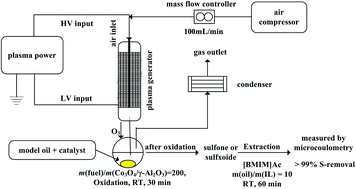
The schematic diagram of the experimental apparatus of O3 preparation is shown in Fig. 1. The whole setup consisted of a plasma power (CTP-2000K, Nanjing Suman electronic Co., Ltd), a DBD reactor, a mass flow controller, a variable-voltage transformer, and an oscilloscope (RIGOL DS1102E). And O3 was prepared used a wire-cylinder reactor through self-assembly.
 |
| | Fig. 1 The schematic of the experimental apparatus of O3 preparation and ODS process. | |
The wire-cylinder reactor is a quartz glass tube 2 mm thick. A 3 mm thick steel rod attached to the AC high voltage (HV) electrode of plasma power is fixed in the axial center of reactor, and a layer of steel net 70 mm in length attached to the AC low electrode (LV) of plasma power is covered outside the reactor. The two electrodes are 4, 6 and 8 mm apart, respectively. Air is generated using an air compressor, and then introduced into the DBD reactor with a mass flow controller at a 100 mL min−1 flow rate. When the voltage applied to the two electrodes was 19.5 kV (with a frequency value of 14.3 kHz) and is higher than the breakdown voltage of air, the air is discharged by gas breakdown. Meanwhile, high-energy electrons and highly reactive oxygen-free radicals are generated in the reactor. Then, excess oxygen reacts rapidly with oxygen-free radicals to form fresh O3. As an oxidant, the O3 product from the bottom of reactor was introduced into model oil to perform a desulfurization study. Ozone concentration was determined using CJ/T3028.2-94 (the Chinese standard). The process was conducted under normal atmospheric pressure and temperature.
2.4 Catalytic oxidative desulfurization procedure
Fig. 1 shows that the catalytic oxidative desulfurization experiment was conducted in a 10 mL two-necked flask. At room temperature, a certain amount of model oil and Co3O4/γ-Al2O3 catalyst was added into flask, and then the prepared O3 was fed into the mixture to oxidize sulfur compounds with a reflux condenser under magnetic stirring. After oxidation for a definite time, a certain quantity of IL [BMIM]Ac was used for an extraction experiment under a magnetic stirrer at room temperature. According to the desired extraction time, the supernatant oil phase was periodically taken after thorough standing, and the sulfur content was analyzed by microcoulometry (WK-2D, Jiangsu Jiangfen Electroanalytical Instrument Co., Ltd., China).
3. Results and discussion
3.1 Characterization of Co3O4/γ-Al2O3 catalysts
The Co3O4 content of the prepared catalysts are summarized in Table 1. The Co3O4 content differed from preparation methods to preparation methods. The actual Co3O4 contents of IM-5%-A and TS-5%-A were closer to the nominal loading. However, the catalyst AD-5%-A showed lower Co3O4 content due to weak interactions between the γ-Al2O3 support and the cobalt precursor. The actual loading amount of Co3O4 in catalyst IM-5%-A before and after ODS had almost equal weight, demonstrating the superior stability of the Co3O4/γ-Al2O3 catalyst.
Table 1 The actual content of Co3O4 in Co3O4/γ-Al2O3
| Samples |
Nominal Co3O4 content (wt%) |
Actual Co3O4 content (wt%) |
| AD-5%-A |
5 |
2.03 |
| TS-5%-A |
5 |
4.03 |
| IM-5%-A |
5 |
4.26 |
| IM-5%-A (after ODS) |
5 |
4.11 |
Fig. 2 shows the wide-angle XRD patterns of γ-Al2O3 supporter, Co3O4 and Co3O4/γ-Al2O3 catalysts prepared through equal volume impregnation at various Co-loadings. The results showed that all Co-loading materials had the same crystal structures, and the main diffraction peaks matched exactly with the standard card of Co3O4 (JCPDS 78-1970) with almost the same peak resolution. Thus, the prepared samples exhibited a pure Co3O4 crystalline phase. When the loading amount of Co3O4 was 2.5% (mass percentage), the spinel structure of Co3O4 was obvious. The intensity of the diffraction peak of γ-Al2O3 decreased and the peak width broadened after Co-loading, which could be attributed to superposition of the characteristic peak of γ-Al2O3 and Co3O4, such as 2θ = 66°. Moreover, the intensity of the diffraction peak of Co3O4 sharpened, which could be attributed to reduction in the extent of the γ-Al2O3, such as 2θ = 36.978°. Co3O4 had a highly preferred orientation to the (311) face.
 |
| | Fig. 2 XRD patterns of Co3O4/γ-Al2O3 catalysts by IM. | |
Fig. 3 gives the XRD patterns of Co3O4/γ-Al2O3 catalysts prepared through different methods at 5 wt% Co-loading. Some characteristic peaks of Co3O4 in the TS-5%-A and AD-5%-A catalysts were not obvious compared with Co3O4 in IM-5%-A; both catalysts had two weak peaks at 2θ = 31.38° and 2θ = 59.58°. Moreover, some essential characteristic peaks were not detected. Which could be attributed to the following reasons: (1) based on the TEM image, the active components Co3O4 prepared using TS was dispersed in the channels of the mesoporous γ-Al2O3; and (2) the actual loading amount of active components Co3O4 prepared by AD was less than that by TS and IM according to Table 1.
 |
| | Fig. 3 XRD patterns of Co3O4/γ-Al2O3 catalysts by IM, TS and AD. | |
The textural parameters of γ-Al2O3 and all the Co-composites synthesized by IM, including BET surface area, total pore volume and average pore size, are summarized in Table 1. Compared with pure γ-Al2O3, the surface area of all the Co-composites showed a significant decreasing trend as Co3O4 loading increased. When Co3O4 loading was only 2.5 wt%, the surface area declined very slightly (from 182.0 m2 g−1 to 178.4 m2 g−1); but when Co3O4 loading increased to 15 wt%, the surface area dropped to 106.24 m2 g−1 rapidly. The active ingredient Co3O4 deposited on the surface of the supporter is the major reason for the falling surface. The average pore size of all the Co-composites slightly decreased as Co3O4 loading increased, which indicates that the active components of Co3O4 were well dispersed in the channels and on the surfaces of the carrier.
Fig. 4 shows the N2 adsorption–desorption isotherms of the γ-Al2O3 and all the Co-composites prepared using different methods. All the samples showed type IV isotherms with H3-type hysteresis loops according to the IUPAC classification, which is typical for mesoporous materials. Fig. 4 shows that all the samples presented isotherms with identical shapes to that of γ-Al2O3 after Co3O4 was loaded, which is indicative of the preservation of the mesoporous structure for relatively low Co-loadings. However, the volume of adsorbed N2 decreased as Co-loading increased. Moreover the capillary condensation region shifted to a lower relative pressure compared to pure γ-Al2O3. These changes, together with reduction in the surface areas and pore volume of the Co-composites, were ascribed to the blockage of channel by cobalt species (Table 1).
 |
| | Fig. 4 N2 adsorption–desorption isotherms of γ-Al2O3 and Co-composites. | |
The pore size distribution of γ-Al2O3, Co3O4 and Co-composites are shown in Fig. 5. The results show that Co3O4 can be regarded as a solid with little pore. The pore structure of AD-5%-A had no significant differences compared to pure γ-Al2O3, but the center of the peak slightly shifted to a lower pore width for TS-5%-A and IM-5%-A. Thus, the average pore size decreased after the formation of Co3O4 inside the pores of the carrier. This result demonstrated that Co3O4 was easier to deposit on the surface of the support prepared by TS and IM. From the pore volume and surface area, Co3O4 was easier to enter into the pores of the support prepared using TS. In comparison to IM-5%-A, the centre of the peak of the sample IM-15%-A shifted to a lower pore width, illustrated that more Co3O4 particles blocked the pores of the support.
 |
| | Fig. 5 Pore size distribution of γ-Al2O3, Co3O4 and Co-composites. | |
Fig. 6 provides the TEM images of the catalysts IM-5%-A, TS-5%-A and the support γ-Al2O3. For the catalysts IM-5%-A and TS-5%-A, the ordered hexagonal channels in the mesoporous Al2O3 were preserved after cobalt loading. This result was consistent with that obtained by XRD. Large patches were clearly observed on IM-5%-A catalyst, showing that Co3O4 aggregation occurred. The patches diameter was larger than channels diameter of the support γ-Al2O3. No aggregated particles were found on TS-5%-A, showing that Co3O4 was highly dispersed in the channels of the mesoporous γ-Al2O3.
 |
| | Fig. 6 The TEM images of samples: (A) IM-5%-A; (B) TS-5%-A; (C) Al2O3. | |
3.2 Effect of the electrode distance between the two electrodes on ozone concentration
When discharge voltage is 19.5 kV, and the air flow rate is 100 mL min−1, the ozone generation rate histogram is shown in Fig. 7, in which the electrode distance between the two electrodes is 4 mm, 6 mm and 8 mm apart, respectively. It can be seen from Fig. 7 that the electrode distance had a tremendous influence on ozone concentration. When the electrode distance between the two electrodes was shortened twice, the ozone concentration increased approximately 5 times. When the electrode distance was 8 mm, the ozone concentration was 1.31 mg L−1. When the electrode distance was 4 mm, the ozone concentration was 5.48 mg L−1. With the decreasing discharge distance, the amount of ozone increased because the probability of efficient collision was enhanced between the high-energy electrons generated by DBD and oxygen in a more narrow discharge space for the formation of more ozone. Later research found that the mount of ozone met the requirements of oxidative desulfurization experiments with a discharge distance of 8 mm. Thus, an electrode distance of 8 mm was selected for use in the late-stage ODS study.
 |
| | Fig. 7 Effect of the electrode distance between the two electrodes on O3 concentration. | |
3.3 Catalytic ODS test of Co3O4/γ-Al2O3
3.3.1 Desulfurization comparisons at different desulfurization system of Co3O4/γ-Al2O3. In the hydrodesulfurization process, generally DBT was chosen as the representative sulfur compound in fuels. Therefore, model fuel with a sulfur content of 100 ppm that contains DBT were conducted to study the following catalytic ODS experiments. To evaluate the catalytic activities of Co3O4/γ-Al2O3 catalyst in different desulfurization systems (Table 2), we selected 0.05 g IM-10%-A as a catalyst and reacted for 30 min to investigate the desulfurization of different catalytic systems. Furthermore, the result was compared with the desulfurization activity of pure O3 or pure γ-Al2O3. The results are listed in Table 2.
Table 2 Surface area, average pore size and pore volume of samples
| Samples |
Surface area (m2 g−1) |
Pore volume (cm3 g−1) |
Average pore size (nm) |
| Al2O3 |
182.0 |
0.432 |
9.503 |
| IM-2.5%-A |
178.4 |
0.376 |
9.302 |
| IM-5%-A |
168.3 |
0.366 |
9.674 |
| TS-5%-A |
175.4 |
0.385 |
9.629 |
| AD-5%-A |
178.9 |
0.410 |
9.417 |
| IM-10%-A |
156.71 |
0.361 |
9.218 |
| IM-12.5%-A |
144.21 |
0.331 |
9.194 |
| IM-15%-A |
106.24 |
0.255 |
9.105 |
From the data listed in Table 2, it can be seen that IM-10%-A catalyst removed DBT with a sulfur content of 100 ppm from the model fuel entirely when O3 was used as oxidant. However, sulfur removal was only 43.3% when O2 was used as an oxidant. This result revealed that the oxidizability of O2 on DBT was far less than that of O3 used the same catalyst under identical experimental conditions. In addition, if IM-10%-A or γ-Al2O3 was directly used for desulfurization without any oxidizing agent added, the DBT removal could reach approximately 35%. At this point, desulfurization method was turned into adsorption desulfurization. Compared to the ODS by O2, DBT removal had no significant differences, which further illustrated the weak oxidizing capacity of O2 on DBT. Table 3 also shows that DBT was hardly oxidized by O3 without Co3O4/γ-Al2O3 existences.
Table 3 Desulfurization comparisons at different desulfurization system of Co3O4/γ-Al2O3
| |
Co3O4/Al2O3 |
Sulfur-removal (%) |
| (1) |
IM-10%-A + O3 |
99.9 |
| (2) |
IM-10%-A + O2 |
43.3 |
| (3) |
IM-10%-A |
36.14 |
| (4) |
O3 |
2.0 |
| (5) |
Al2O3 |
35.13 |
3.3.2 Effect of the catalyst loading amount on DBT removal. The effect of the catalyst loading amount on DBT removal was investigated. The result is indicated in Fig. 8. As shown in Fig. 8, the desulfurization rate obviously increased with increasing amount of Co-loading. When DBT was oxidized for approximately 5 min, the DBT removal of IM-15-A exceeded 60%. When increased oxidative time was 20 min, the DBT removal of four different Co-loading catalysts reached over 95%, and IM-12.5-A and IM-15-A were 99.9%. When O3 used to oxidize DBT for 30 min, the desulfurization rate of all Co3O4/γ-Al2O3 catalysts with different supported Co3O4 content reached 99.9%. From Fig. 8, the amount of Co-loading had a remarkable effect on DBT removal when oxidation time was less than 10 min. However, the amount of Co-loading had no obvious difference on DBT removal when oxidation time was more than 20 min.
 |
| | Fig. 8 Effect of Co3O4 loading on γ-Al2O3 on DBT removal. | |
3.3.3 Desulfurization comparisons of Co3O4/γ-Al2O3 prepared by different methods on DBT removal. At the same ODS condition, the catalytic activity of Co3O4/γ-Al2O3 at 5% loading prepared by IM, TS, and AD was researched. The results are shown in Fig. 9. The catalytic performance of three Co3O4/γ-Al2O3 catalysts rapidly increased with the extension of oxidation time and the sulfur removal all reached 99.9% at 30 min oxidization with O3. Moreover, TS-5%-A had excellent catalytic activity and a desulfurization efficiency of 95% was obtained after oxidizing for 5 min, illustrated Co3O4 particles diffused into the holes of γ-Al2O3. The result agrees with the discussion regarding pore-size distribution (Fig. 5) and TEM (Fig. 6).
 |
| | Fig. 9 Effect of preparation method of Co3O4/γ-Al2O3 catalyst on DBT removal. | |
3.3.4 The influence of O3 concentration on DBT removal. The influence of O3 concentration on DBT removal was investigated, and the result is indicated in Fig. 10. In the preceding work of our project group,45 the consistence of O3 could be adjusted by adjusting air flow rate, and increased with the decrease of the air flow rate. As shown in Fig. 10, the O3 concentration had remarkable effects on DBT removal. Only 93.8% DBT removal was reached when 0.71 mg L−1 O3 was bubbled into the oxidation system. However, the desulfurization rate of DBT increased to 99.5% as the O3 concentration increased to 1.19 mg L−1. As the O3 concentration was set to 1.31 mg L−1 [air flow rate = 100 mL min−1], approximately 99.9% DBT removal was reached.
 |
| | Fig. 10 Effect of O3 concentration of DBT removal. | |
3.3.5 Desulfurization comparisons of different sulfur compounds by Co3O4/γ-Al2O3. In terms of its advantageous catalytic reaction performance, IM-15-A was selected as the most ideal for studying the effect of different substrates such as TS, BT, DBT, and 4,6-DMDBT on ODS in the O3–Co3O4/γ-Al2O3–[BMIM]Ac system under the same experimental conditions. Table 4 exhibits that IM-15-A had excellent catalytic activity to four sulfur-containing compounds. For 500 ppm T and BT, 100 DBT ppm and 4,6-DMDBT, and 200 ppm 4,6-DMDBT, the desulfurizing ratio reached to above 99.6%. However, for 500 ppm DBT, the desulfurizing ratio decreased to 93.1%.
Table 4 T, BT, DBT and DMDBT removal by Co3O4/γ-Al2O3
| Model fuel |
Initial S-concentration (ppm) |
Sulfur removal (%) |
| T |
500 |
99.9 |
| BT |
500 |
99.6 |
| DBT |
100 |
99.9 |
| 500 |
93.1 |
| 4,6-DMDBT |
100 |
99.9 |
| 200 |
99.7 |
3.3.6 Reusability of the catalyst Co3O4/γ-Al2O3. The recyclability of the IM-15%-A catalyst was evaluated and the results are shown in Fig. 11. After the catalyst was oxidized, recovered by decantation, washed several times with methanol, and subsequently dried at 100 °C. Then the fresh model oil and O3 were introduced for the next recycle under the same conditions. The data in Fig. 11 indicate that the catalyst was used up to five times without significant change in its catalytic activity.
 |
| | Fig. 11 Reusability of IM-15%-A for DBT removal. | |
4. Conclusions
In this study, we synthesized metal oxide catalysts Co3O4/γ-Al2O3, and the Co3O4 was accommodated inside the pores by the TS method. Moreover IL [BMIM]Ac was screened as an extracting agent and the model fuel was prepared using representative sulfur compounds such as T, BT, DBT, and 4,6-DMDBT in fuel oil. Then, the catalytic oxidation activities of prepared catalysts and extracting performance of screened IL for model fuel desulfurization were studied using ozone as an oxidant at room temperature and pressure. New desulfurization technology was established through O3 oxidation–catalysts catalysis–IL extraction. The results indicated that the oxidative desulfurization technology using O3 as oxidant in the presence of catalysts combined with IL extraction was very effective, and TS-5%-A had excellent catalytic activity. Moreover, the sulfur removal of T, BT, DBT, and 4,6-DMDBT all reached over 99% at ordinary temperatures and pressures, respectively. In addition, the oxidation step was the key step in the desulfurization process. Desulfurization was lower or ineffective if T, BT, DBT, or 4,6-DMDBT was not oxidized to the corresponding oxidization product. The IM-15%-A catalyst can be used repeatedly 5 times, and its catalytic activity was no significant change.
Acknowledgements
This work was financially supported by the Program for Changjiang Scholars and Innovative Research Team in University (Grant No. IRT1161), the National Natural Science Foundation of China (No. 21063012), the Doctor Foundation of Bingtuan (2013BB010), and the Foundation of young scientist in Shihezi University (2013ZRKXJQ03).
References
- M. Keshavarzian, S. Kamali Anaraki, M. Zamani and A. Erfanifard, Econ. Model., 2012, 29, 1979–1985 CrossRef.
- A. Aguiar, S. Ribeiro, A. Silva, L. Cunha-Silva, B. de Castro, A. M. Silva and S. S. Balula, Appl. Catal., A, 2014, 478, 267–274 CrossRef CAS.
- X. D. Qiang, F. Fu, D. J. Wang and L. Guo, Adv. Mater. Res., 2012, 518, 750–754 CrossRef.
- R. T. Yang, A. J. Hernandez-Maldonado and F. H. Yang, Science, 2003, 301, 79–81 CrossRef CAS PubMed.
- F. Al-Shahrani, T. Xiao, S. A. Llewellyn, S. Barri, Z. Jiang, H. Shi and M. L. Green, Appl. Catal., B, 2007, 73, 311–316 CrossRef CAS.
- G. Yu, J. Zhao, D. Song, C. Asumana, X. Zhang and X. Chen, Ind. Eng. Chem. Res., 2011, 50, 11690–11697 CrossRef CAS.
- C. Asumana, G. Yu, X. Li, J. Zhao, G. Liu and X. Chen, Green Chem., 2010, 12, 2030–2037 RSC.
- L. Ban, P. Liu, C. Ma and B. Dai, Catal. Today, 2013, 211, 78–83 CrossRef CAS.
- C. Sentorun-Shalaby, S. K. Saha, X. Ma and C. Song, Appl. Catal., B, 2011, 101, 718–726 CrossRef CAS.
- S. Xun, W. Zhu, D. Zheng, H. Li, W. Jiang, M. Zhang, Y. Qin, Z. Zhao and H. Li, RSC Adv., 2015, 5, 43528–43536 RSC.
- E. Lissner, W. F. de Souza, B. Ferrera and J. Dupont, ChemSusChem, 2009, 2, 962–964 CrossRef CAS PubMed.
- H. Gao, S. Zeng, X. Liu, Y. Nie, X. Zhang and S. Zhang, RSC Adv., 2015, 5, 30234–30238 RSC.
- P. S. Kulkarni and C. A. M. Afonso, Green Chem., 2010, 12, 1139–1149 RSC.
- W. Zhu, J. Zhang, H. Li, Y. Chao, W. Jiang, S. Yin and H. Liu, RSC Adv., 2012, 2, 658–664 RSC.
- O. Kröcher, M. Widmer, M. Elsener and D. Rothe, Ind. Eng. Chem. Res., 2009, 48, 9847–9857 CrossRef.
- L. Lu, S. Cheng, J. Gao, G. Gao and M. Y. He, Energy Fuels, 2007, 21, 383–384 CrossRef CAS.
- GB 19147-2013, Automobile diesel fuels (V) [S], China, 2013 Search PubMed.
- GB 17930-2011, Gasoline for motor vehicles [S], China, 2011 Search PubMed.
- V. C. Srivastava, RSC Adv., 2012, 2, 759–783 RSC.
- L. Ban, P. Liu, C. Ma and B. Dai, Chin. Chem. Lett., 2013, 24, 755–758 CrossRef CAS.
- R. Abro, A. A. Abdeltawab, S. S. Al-Deyab, G. Yu, A. B. Qazi, S. Gao and X. Chen, RSC Adv., 2014, 4, 35302–35317 RSC.
- H. Li, X. Jiang, W. Zhu, J. Lu, H. Shu and Y. Yan, Ind. Eng. Chem. Res., 2009, 48, 9034–9039 CrossRef CAS.
- C. Ma, B. Dai, C. Xu, P. Liu, L. Qi and L. Ban, Catal. Today, 2013, 211, 84–89 CrossRef CAS.
- N. Mastanaiah, P. Banerjee, J. A. Johnson and S. Roy, Plasma Processes Polym., 2013, 10, 1120–1133 CrossRef CAS.
- D. Kuvshinov, A. Siswanto, J. Lozano-Parada and W. B. Zimmerman, Proc. World Acad. Sci. Eng Tech., 2014, 8, 80–83 Search PubMed.
- B. Rodríguez-Cabo, H. Rodríguez, E. Rodil, A. Arce and A. Soto, Fuel, 2014, 117, 882–889 CrossRef.
- X. Chen, S. Yuan, A. A. Abdeltawab, S. S. Al-Deyab, J. Zhang, L. Yu and G. Yu, Sep. Purif. Technol., 2014, 133, 187–193 CrossRef CAS.
- S. A. Dharaskar, K. L. Wasewar, M. N. Varma, D. Z. Shende and C. K. Yoo, Ind. Eng. Chem. Res., 2014, 53, 19845–19854 CrossRef CAS.
- P. H. Shi, H. G. Zheng, W. F. Yao, Q. Wu, S. Y. Tan and H. J. Pang, Adv. Mater. Res., 2014, 955, 62–65 CrossRef.
- J. Taghavimoghaddam, G. P. Knowles and A. L. Chaffee, J. Mol. Catal. A: Chem., 2012, 358, 79–88 CrossRef CAS.
- D. Yin, W. Li, W. Yang, H. Xiang, Y. Sun, B. Zhong and S. Peng, Microporous Mesoporous Mater., 2001, 47, 15–24 CrossRef CAS.
- A. Y. Khodakov, R. Bechara and A. Griboval-Constant, Appl. Catal., A, 2003, 254, 273–288 CrossRef CAS.
- T. Vralstad, G. Øye, M. Rønning, W. R. Glomm, M. Stocker and J. Sjoblom, Microporous Mesoporous Mater., 2005, 80, 291–300 CrossRef CAS.
- G. Laugel, J. Arichi, M. Moliere, A. Kiennemann, F. Garin and B. Louis, Catal. Today, 2008, 138, 38–42 CrossRef CAS.
- L. Jiao and J. R. Regalbuto, J. Catal., 2008, 260, 342–350 CrossRef CAS.
- C. Wang, S. Lim, G. Du, C. Z. Loebicki, N. Li, S. Derrouiche and G. L. Haller, J. Phys. Chem. C, 2009, 113, 14863–14871 CAS.
- J. Panpranot, J. G. Goodwin and A. Sayari, Catal. Today, 2002, 77, 269–284 CrossRef CAS.
- J. H. Kwak, J. Hu, D. Mei, C. W. Yi, D. H. Kim, C. H. Peden and J. Szanyi, Science, 2009, 325, 1670–1673 CrossRef CAS PubMed.
- R. Zhang, B. Wang, H. Liu and L. Ling, J. Phys. Chem. C, 2011, 115, 19811–19818 CAS.
- C. Gu, J. Miao, Y. Liu and Y. Wang, J. Mater. Sci., 2010, 45, 5660–5668 CrossRef CAS.
- X. P. Auvray and L. Olsson, Catal. Lett., 2014, 144, 22–31 CrossRef CAS.
- M. Imperor-Clerc, D. Bazin, M. D. Appay, P. Beaunier and A. Davidson, Chem. Mater., 2004, 16, 1813–1821 CrossRef CAS.
- J. Taghavimoghaddam, G. P. Knowles and A. L. Chaffee, Top. Catal., 2012, 55, 571–579 CrossRef CAS.
- J. Taghavimoghaddam, G. P. Knowles and A. L. Chaffee, J. Mol. Catal. A: Chem., 2013, 377, 115–122 CrossRef CAS.
- C. Ma, B. Dai, P. Liu, N. Zhou, A. Shi, L. Ban and H. Chen, J. Ind. Eng. Chem., 2014, 20, 2769–2774 CrossRef CAS.
|
| This journal is © The Royal Society of Chemistry 2015 |
Click here to see how this site uses Cookies. View our privacy policy here.