Synthesis of fluorinated SnO2 3D hierarchical structures assembled from nanosheets and their enhanced photocatalytic activity

Youzhi Wang, Guoe Cheng*, Yu Zhang, Hanzhong Ke and Chunling Zhu
Faculty of Material & Chemistry, China University of Geosciences, Wuhan, 430074, P.R. China. E-mail: chengguoe68@aliyun.com; chengge@cug.edu.cn

Received 30th July 2015 , Accepted 8th October 2015

First published on 9th October 2015


Abstract

Fluorinated SnO2 3D hierarchical structures assembled from nanosheets were synthesized via hydrothermal treatment of stannous fluoride in the presence of an appropriate amount of adipic acid. The as-prepared products were characterized in detail by FESEM/TEM/XRD/BET/XPS/UV-vis DRS techniques. The SnO2 nanosheets with tetragonal rutile structure were single-crystalline in nature and the exposed planes should be {1[1 with combining macron]1} facets. A small amount of fluorine ions was observed to be adsorbed on the surface of SnO2 physically. It was found that both of F and adipic acid played important roles in the formation of SnO2 nanostructures. The as-prepared product presented excellent photocatalytic degradation of RhB which reached 100% within 20 min under UV light irradiation.

1. Introduction

As a type of important functional inorganic material, tin dioxide (SnO2), a wide band gap semiconductor (3.6 eV) with a rutile-type crystal structure, has aroused widespread interest because of its wide applications in chemical sensors, lithium-ion batteries, solar cells, etc.1–6 However, recent studies revealed that SnO2 nanostructures also showed reasonable photocatalytic activities.7–11 Because the properties of metal oxide materials strongly depend on their shapes and microstructures, efforts have been focused on the synthesis of novel nanostructures with tailored morphologies to improve the photocatalytic performance of SnO2. Hao et al.7 prepared SnO2 nanoparticles with small size through a hydrothermal route, which showed reasonable photocatalytic towards degradation of rhodamine B (RhB) dye. Li et al.9 reported that V-shaped SnO2 nanorods prepared by a solvothermal method showed unprecedented visible-light-driven photocatalytic activities. Wang et al.11 obtained hollow SnO2 microspheres by a carbon-template hydrothermal method which also showed remarkable photocatalytic activities for degradation of RhB dye. Recently, 2D non-layered semiconductor nanosheets with a large lateral size and a small thickness have recently attracted considerable attention owing to their unique electronic, optical and surface properties.12–16 In general, their nanoscale thickness could not only represent an ultrahigh surface atom percentage with great efficient active sites and specific facet exposed outside but also allow for prompt migration of the photogenerated charge carriers to the surface. Thus the photocatalytic activity could be greatly improved.12–14 Additionally, ultrathin nanosheets structure with high surface areas could adsorb more target molecules and incident light, thus benefited the photocatalysis happened on the surface of them.15 Furthermore, due to their low anisotropy, these 2D nanosheets could be easily grown or self-assembled into 3D hierarchical structures which could exhibit the advantages of the pristine 2D nanosheets building blocks, and more importantly, also possessed new physicochemical properties arising from their secondary architectures.6,16 Despite these advantages, few researches about the synthesis and application of 2D ultrathin SnO2 nanosheets were reported. Wang et al.2 reported the fabrication and excellent gas sensing properties of SnO2 flower-like hierarchical structures assembled by 2D nanosheets. Zhu et al.6 prepared 2D ultrathin SnO2 nanosheets through microwave-assisted solution-phase growth. These graphene-like nanosheets with a thickness of 2–3 nm delivered remarkably enhanced lithium storage performances over their counterparts. Recently, Liu's group8 synthesized a novel 3D hierarchical structures assembled by 2D nanosheets through a simple hydrothermal approach. It was found that this sample not only showed superior performance when applied in gas sensing and supercapacitor but also presented amazing photocatalytic activities towards degradation of organic dyes when used as photocatalyst. Hence, the fabrication of 2D ultrathin SnO2 nanostructure would be highly desirable for application as advanced photocatalyst.

On the other hand, it has been revealed that F ions can modified the TiO2 crystal growth with shape, exposed facets controlled.17–21 Yang et al.17 firstly revealed that the F-mediated crystal synthesis could lead to a growth of TiO2 crystals with shape controlled and 47% {001} facets exposed. Inspired by this pioneering work, many similar researches were aroused subsequently.18–21 Not limited to TiO2, it was recently found that the fluorine ions could also greatly influence the morphologies of SnO2 nanocrystals. Chen et al.22 found that the NH4F additive played an important role in determining the sheet-like morphology of the obtained product. Wang et al.2 also revealed that the growth orientation of their fabricated 2D SnO2 nanosheets could be controlled by adjusting the ratio of fluorine to tin precursor. Furthermore, it was also demonstrated that fluorination of semiconductor photocatalysts, involving either fluoride adsorption or lattice fluorine-doping, could significantly modify the bulk and surface characteristics and thus greatly benefit the photocatalysis.18,23–25 Hu and co-workers reported that the surface fluorinated ultrathin TiO2 nanosheet superstructures showed a much enhanced photocatalytic activity towards the degradation of RhB dye while compared with commercial P25 for the inhibited electron/hole (e/h+) recombination.23 Yang et al.18 prepared TiO2 nanosheets with the synthesis mediated by HF and found that the sample could achieve superior photoreactivity (more than 5 times) compared to P25 because of generation of more ˙OH free radicals on the surface of those surface fluorinated nanosheets. Note that the progress have been made in TiO2 photocatalysis, it can be expected that the introduction of fluorine ions into the synthesis system of SnO2 nanocrystal also brings some improvements of photocatalytic activities. Actually, our recent research had revealed that when introducing F ions into the synthesis system, the obtained SnO2 particles with surface fluorinated showed significantly enhanced photocatalytic activity for degradation of RhB dye.7

Herein, we report a facile hydrothermal method for synthesis of SnO2 hierarchical structure assembled from surface fluorinated ultrathin SnO2 nanosheets. The morphological, structural and compositional, as well as the formation mechanism of obtained samples were investigated. Moreover, the photocatalytic activity test shows that the obtained SnO2 hierarchical structure exhibits an excellent photocatalytic activity for degradation of RhB dye under a 300 W high-pressure mercury lamp irradiation at room temperature.

2. Experimental

2.1 Sample preparation

The SnO2 nanostructures were synthesized by a facile hydrothermal method. In a typical preparation procedure, 3 mmol of stannous fluoride (SnF2) and 6 mmol of adipic acid were dissolved into 50 mL of aqueous solution under vigorous stirring for 30 min. The obtained transparent clear solution was transferred to a Teflon-covered stainless steel autoclave and then heated in an electronic oven at 180 °C for 6 h. After the autoclave was cooled down to room temperature naturally, the precipitates were collected by centrifugation, washed several times with distilled water and absolute ethanol, and then dried at 60 °C for 24 h. The as-obtained product was denoted as SA-6.

2.2 Characterization

The microscopic nanostructures of the as-prepared samples were observed by transmission electron microscopy (TEM; FEI Tecnai G2 20 operated at 200 kV), field emission scanning electron microscopy (FESEM, quanta-200 operated at 25 kV) and high-resolution transmission electron microscopy (HRTEM; Tecnai G2 20 U-TWIN operated at 200 kV). Surface chemical analysis of the samples was conducted on an X-ray photoelectron spectroscope (XPS, Multilab 2000). All binding energies were referenced to the C 1s peak with a binding energy of 284.7 eV of the surface adventitious carbon. The crystallite structures of the materials were investigated by analyzing the X-ray powder diffraction (XRD, Bruker Axs D8-Focus, Cu Kα radiation with λ = 1.5406 Å). The specific surface area and pore size distribution were characterized by analyzing the N2 adsorption and desorption isotherms using Micrometrics ASAP 2000 equipment. The optical absorption properties of samples were detected by UV-vis diffuse reflectance spectra (UV-vis DRS, UV-2550) in the range of 240–850 nm. The existence of hydroxyl radicals was investigated by the photoluminescence-terephthalic acid (PL-TA) technique. The photoluminescence spectra of generated 2-hydroxyterephthalic acid were recorded on a Hitachi F-4500 fluorescence spectrophotometer.

2.3 Evaluation of photocatalytic activity

The photocatalytic activities were tested by photochemical reactions instrument (BL-GHX-IV) and UV-vis adsorption spectra (UV-1801). RhB was used as a probe molecule to research the photocatalytic activities of the hollow SnO2 nanospheres. Typically, 50 mg of catalysts were dispersed in 50 mL of 10 mg L−1 RhB aqueous solution in a quartz tube. Prior to irradiation, the suspension was magnetically stirred for one hour in the dark to favor the adsorption–desorption equilibration. Subsequently, the suspension was irradiated under a 300 W high-pressure mercury lamp. During illumination, about 5 mL of the above solution was taken out at an interval of 10 min and centrifuged for UV-vis analysis.

3. Results and discussion

The crystalline phase of the sample SA-6 was confirmed by XRD. As shown in Fig. 1, all the diffraction peaks can be indexed to the rutile phase SnO2 (cassiterite, JCPDS card No. 41-1445, space group: P42/mnm) with tetragonal lattice constant a = 4.738 Å and c = 3.187 Å. No other crystallographic phase can be detected. The relatively broader diffraction peaks are believed to result from the small crystallite size. The relative intensities of the peaks deviate from those of the bulk material, suggesting the anisotropic growth of the SnO2 crystals.
image file: c5ra15179a-f1.tif
Fig. 1 XRD pattern of SA-6.

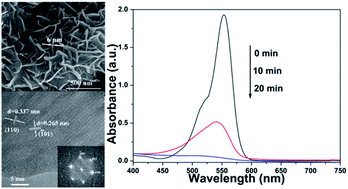
The morphology and microstructure of the sample SA-6 were further investigated by FESEM, TEM and HRTEM. The FESEM image (Fig. 2a and b) show that the sample SA-6 consists of many two-dimensional nanosheets which are connected to each other to build flowerlike hierarchical structures. The shape of a single hierarchical structure is irregular and its size varies from hundreds nanometers to several micrometers. Fascinatingly, it can be seen that the nanosheets with smooth and clean surfaces aren't entirely flat but slightly curly and arranged to point out from the center. This scrolled nature of this sort of structure can be ascribed to the minimization of surface energy. Further, the thickness of the nanosheets was measured to be only ∼6 nm from the FESEM image. A TEM image of a single flowerlike hierarchical structure is shown in Fig. 2c. The size and morphology are consistent with the observation from the FESEM images. The HRTEM image exhibits the well defined lattice fringes with the lattice spacing of 0.337 and 0.265 nm (Fig. 2d), which correspond to the (110) and ([1 with combining macron]01) lattice planes of SnO2, respectively. Many structural defects can be obviously observed in the SnO2 nanosheets. Inset in Fig. 2d exhibits its FFT pattern showing the observation is along the (1[1 with combining macron]1) projection. Considering the crystallographic structure of SnO2, it might be deduced that the nominal exposed top and bottom planes of these nanosheets should be {1[1 with combining macron]1} facets, which is in agreement with that observed in a previous report.16


image file: c5ra15179a-f2.tif
Fig. 2 (a) and (b) SEM, (c) TEM and (d) HRTEM images of SA-6.

To evaluate the pore structure and pore sizes of the sample SA-6, the N2 adsorption–desorption isotherms was investigated, as shown in Fig. 3. The isotherms of the samples is of classical type IV with a H3 hysteresis between the adsorption and desorption curves, indicating the presence of mesoporous in the materials, which are formed by the aggregation of sheet-like or plate-like particles. The pore size distribution curve determined by the Barrett–Joyner–Halenda (BJH) method from desorption branch of a nitrogen isotherm is shown in Fig. 3 (inset). It shows a narrow pore size distribution of ∼4 nm. The surface area is found to be 61.5 m2 g−1.


image file: c5ra15179a-f3.tif
Fig. 3 Nitrogen adsorption and desorption isotherms for SA-6. The inset showed the corresponding pore-size distribution.

XPS measurements were carried out to investigate the chemical compositions and the existence forms of elements in the sample. Fig. 4 presents the XPS spectrum of the as-prepared SnO2 sample. The spectrum clearly indicates the signature photo-electron peaks of Sn, O, C and F without the presence of any other impurities (Fig. 4a). The C element could be attributed to the adventitious carbon-based contaminant.26 The double spectral lines of Sn 3d are seen at the binding energy of 486.5 eV (Sn 3d5/2) and 494.9 eV (Sn 3d3/2) with a spin–orbit splitting of 8.4 eV (Fig. 4b), which is in agreement with the reported value in the literature.2,27 The Sn 3d5/2 region shows a single peak at a binding energy of 486.5 eV, indicating that the sample was composed of only the Sn(IV) state, and with no noticeable Sn(II), which is expected at 485.8 eV, nor Sn(0), which is at 484.5 eV.28 High resolution XPS spectra of O 1s are shown in Fig. 4c. As seen from the spectrum, the O 1s spectrum is decomposed into two Gaussian curves after removal of the background. The peaks appearing at 530.6 eV and 531.8 eV are attributed to crystal lattice oxygen (Sn–O) and hydroxyl.29 The F 1s binding energy peak at 684 eV is attributed to the fluorine ions physically adsorbed on the surface of SnO2 (Fig. 4d). The surface fluoride (Sn–F) could be formed by ligand exchange reaction between F surface hydroxyl groups.24,30 No signal of F in the lattice of SnO2 (688.5 eV)is found.31 Actually, it has been demonstrated that the surface fluorination of TiO2 readily takes place at an acidic hydrothermal environment, which prevents lattice substitution of F for O2−.24,32


image file: c5ra15179a-f4.tif
Fig. 4 High-resolution XPS spectra of SA-6: (a) XPS full spectrum; (b) Sn 3d; (c) O 1s; (d) F 1s.

Both of the F and adipic acid were proved to play an important role in the formation of SnO2 hierarchical nanostructures. Control experiments have shown that, without adipic acid or using SnCl2 instead of SnF2 (corresponding products were denote as Sn, SA-Cl respectively), some impure peaks (marked with*) are found to exist in SnO2 nanocrystals (Fig. S1a (ESI)). The morphologies of the products aren't SnO2 nanosheet hierarchical structure but nanospheres (Fig. S1b and c). Otherwise, various dosages (1 mmol, 3 mmol, 9 mmol) of adipic acid were introduced in the hydrothermal system (the corresponding products were denoted as SA-1, SA-3 and SA-9 respectively) to examine the effects on the as-prepared SnO2 structures. As can be seen from the FESEM images shown in Fig. 2S (ESI), the samples are all composed of SnO2 nanosheet hierarchical nanostructures (Fig. 2S (a–d)). With the dosage of adipic acid increased, the nanosheets slightly became thinner and the gaps among the nanosheets became larger. Furthermore, the XRD patterns of these samples reveal that the widths of the diffraction peaks became narrower steadily with the dosage of adipic acid increased (Fig. S2e), indicating that the introduction of adipic acid could improve crystallinity of SnO2 nanoparticles. However, with the dosage increased to 9 mmol, some impure peaks (marked with*) are found to exist in SnO2 nanocrystals.

Fig. 5 present the TEM images and XRD patterns of the sample SA-6 collected at different hydrothermal time during the formation of SnO2 nanosheet hierarchical structures. It can be seen that tiny SnO2 nanoparticles were formed within 10 min of hydrothermal process and self-assembly oriented to flake gatherings. After 30 min of reaction, numerous mini-nanosheets were formed and the gaps among these nanoparticles could be observed obviously, which characterized as localized dissolution and recrystallization. When the reaction time was 3 h, the oriented crystal growth of SnO2 nanosheets appeared more apparently. Many 2D SnO2 nanosheets extended fast and the small nanoparticle were further consumed. As the hydrothermal process was prolonged to 6 h, high yield and uniform hierarchical SnO2 nanostructures were produced. The XRD patterns showed that the rutile phase SnO2 formed within only 10 min of reaction and the crystallinities of these intermediates were gradually improved with the hydrothermal process prolonged.


image file: c5ra15179a-f5.tif
Fig. 5 TEM images and XRD patterns of SA-6 collected at different hydrothermal time.

The formation of SnO2 from SnF2 can be illustrated as follows33

 
2Sn2+ + O2 + 4H+ → 2Sn4+ + 2H2O (1)
 
Sn4+ + 4H2O → Sn(OH)4 + 4H+ (2)
 
Sn(OH)4 → SnO2 + 2H2O (3)

The introduction of adipic acid could adjust the pH of the solution to 4–5. In addition, as a chelating ligand with a strong coordinating ability, adipic acid can coordinate with tin ions (Sn4+) and the formation of the complexes can sharply reduce the availability of free tin ions in aqueous solution, resulting in a slow reaction rate. That is important for the formation of an oriented crystal growth. Generally, during the crystal growth processes under equilibrium conditions, the high-energy facets diminish quickly and the crystal spontaneously evolves into specific shape with exposed facets that minimize the total surface free energy.34 Wu et al.16 also synthesized the similar SnO2 nanostructures using tin(II) chloride dehydrate as the tin source. They found that the hydrolysis of tin(II) could result in some sheet-like intermediates, and the formation of SnO2 nanostructures were based on the oxidation of these sheet-like intermediates as structure-directing precursors. However, no obvious phase related to SnO was detected in our primary intermediates after 10 min of hydrothermal process. On the other hand, it has been demonstrated that selective adsorption of fluorine ions on the anatase TiO2 high energy facets could enhance its relative stability by modifying and reducing the surface energy during the crystal growth, and finally lead to high energy facets exposed.34 Recently, it was found that the fluorine ions could also be used as the morphology controlling agent which greatly influenced the morphologies of SnO2 nanocrystals.2,22 Wang et al. further revealed through first principles density functional theory (DFT) calculations, the fluoride capping lowered the surface energies of the facets significantly in different degree.2 They successfully synthesized hierarchical nanoflowers assembled from SnO2 nanosheets with high-index (11[3 with combining macron]) and (10[2 with combining macron]) facets exposed by adjusting the ratio of fluorine to tin precursor (RF/Sn) from 3.0 to 4.8. Here, we obtained ultrathin SnO2 nanosheets with {1[1 with combining macron]1} exposed by using SnF2 as both of the fluorine to tin precursor. So we take the idea that the formation of the as-obtained nanostructures should be mainly resulted from joint efforts the adipic acid and F.

The UV-vis DRS of SA-6 is presented in Fig. 3S (ESI) to detect its optical absorption properties and the information of its band gap. It can be seen that the sample SA-6 has a strong absorption in the UV region, which agrees with previous reports.7 Interestingly, the absorption of the sample is observed to extent to visible region. The band gap related to direct allowed transition was estimated to be ca. 2.9 eV based on the intercept of the tangent of the plots of (ahv)2 versus hν, which is much smaller than that of bulk SnO2, usually 3.6 eV. It is reported that the surface fluorination of photocatalyst could not enhance the visible light absorption of photocatalyst.24 So this result may be ascribed to the structure defects of SA-6.

Fig. 6a shows the adsorption spectra of RhB dye over the sample SA-6 measured at each 10 min time interval when exposed to UV illumination. As can be seen from the spectrum, the absorbance of RhB gradually decreases with increasing of the irradiation time. There is almost no adsorption after only 20 min photoreaction, indicating that the model dye has been completely decolorized. It has been widely accepted that hydroxyl radicals (OH˙) play a key role during the process of photocatalytic degradation of dye molecules. We hence studied the formation of OH˙ on the surface of the sample SA-6 under UV irradiation by the PL-TA technique.35 The formation of OH˙ on the surface of SA-6 was detected by the fluorescence technique using terephthalic acid (TA) as a probe molecule, which readily reacts with OH˙ to produce the highly fluorescent product, 2-hydroxyterephthalic acid (TAOH). Fig. 6b presents the fluorescence intensity of TAOH with an excitation source of 315 nm. It can be seen that the fluorescence intensity increases gradually with increasing irradiation time, indicating OH˙ is formed during this photocatalytic process under UV irradiation.


image file: c5ra15179a-f6.tif
Fig. 6 (a) Variations in adsorption spectra of RhB dye solution in the presence of SA-6 irradiated by a UV lamp for different time; (b) fluorescence spectral changes measured during UV illumination of SA-6 in a solution of terephthalic acid.

To compare the photocatalytic efficiency of different morphology and structure, we further performed photocatalytic experiments for the degradation of RhB in the presence of two previous reported fluorinated SnO2 samples with excellent photocatalytic activities, i.e., fluorinated SnO2 nanoparticles (sample NPs7) and hollow nanospheres (sample HSs36). Fig. 7a displays the comparable photodegradation efficiencies of RhB of these samples. C0 and C are the initial concentration after the equilibrium adsorption and the reaction concentration of the RhB, respectively. As can be seen, the degradation of RhB dye hardly occurs without the use of catalyst, while other solutions with SnO2 nanocrystals added show significant photocatalytic degradation. In particular, the SA-6 presents much superior photocatalytic activity than any others. The inset shows the corresponding kinetic behavior of photocatalytic degradation. It can be seen that the constant κ (apparent first-order rate constant, could be obtained from the slope of the linear regression) for SA-6 (0.1319 min−1) is about 1.34 and 2.05 times as much as that for HS (0.0981 min−1) and NP (0.0642 min−1) respectively. Further, the stability and durability of SA-6 was also tested. As can be seen from Fig. 7b, after four cycle uses for photodegradation of RhB under the same conditions, the photocatalytic activity of SA-6 only has a loss of about 15%, indicating the sample SA-6 has a relative good stability and durability when used as photocatalyst.


image file: c5ra15179a-f7.tif
Fig. 7 (a) Photocatalytic activities of prepared samples for degradation of RhB under UV irradiation (the inset shows ln(C/C0) of RhB versus time for these samples under UV irradiation.); (b) cycling runs in the photocatalytic degradation of RhB in the presence of SA-6 under UV irradiation.

It has been accepted that the practical performance of SnO2 depends on its particle size, morphology, crystallinity, specific surface area, exposed facets and so on. In this case, as the surface area of SA-6 (61.5 m2 g−1) is found to be much smaller than that of the reported HS (134.3 m2 g−1), the outstanding photocatalytic activity of SA-6 may be attributed to the fluorinated surface and the special hierarchical structure composed of ultrathin nanosheets. For one thing, the F ions on the surface of SnO2 nanosheets can reduce the recombination rate of photogenerated electrons and holes, and more important, promote the production of ˙OH free radicals (which play a key role during the process of photocatalytic degradation of dye molecules) due to the replacement of fluoride with surface hydroxyl groups.18,23–25 For another, the excellent structure of SA-6 greatly benefits the photocatalysis. Firstly, the ultrathin nanosheets with large lateral size can offer more active sites and also enhance the efficiency of the electron–hole separation.12–14 Second, according to the calculation results, the relative surface energies of SnO2 crystals shows the sequence of (110) < (100) < (101) < (321) < (211) < (111) < (001) < (212) < (221) < (112).37 The exposed {1[1 with combining macron]1} facets of the nanosheets have a higher relative surface energy, which can improve the photocatalytic activity. In addition, the 2D structure can adsorb more target molecules and incident light, and hence the photocatalysis efficiency can be enhanced.15,34

4. Conclusions

In this paper, fluorinated SnO2 hierarchical structures assembled from nanosheets were synthesized via a simple hydrothermal treatment of stannous fluoride in the presence of appropriate amount of adipic acid. The SnO2 nanosheets with typical thickness of ∼6 nm showed pure tetragonal rutile structure. HRTEM image indicated that the SnO2 nanosheets were single-crystalline nature and the exposed planes should be {1[1 with combining macron]1} facets. The surface area of the product was found to be 61.5 m2 g−1 and a small amount of fluorine ions were observed to be adsorbed on the surface of SnO2 physically. It was found that both of F and adipic acid played important roles in the formation of SnO2 hierarchical nanostructures. The as-prepared SnO2 nanosheets presented excellent photocatalytic degradation of RhB under UV light irradiation. When irradiated by a 300 W high-pressure mercury lamp, the degradation of RhB reached 100% within 20 min. It is expected that the SnO2 nanosheets will have potential commercial applications in the area of photocatalysis.

Acknowledgements

We gratefully acknowledge the financial support of the Key Program of Natural Science Foundation of Hubei Province (2015CFA129) and the National Natural Science Foundation of China (21477118).

References

  1. X. C. Ma, H. Y. Song and C. H. Guan, Sens. Actuators, B, 2013, 177, 196 CrossRef CAS PubMed.
  2. H. K. Wang, K. P. Dou, W. Y. Teoh, Y. W. Zhan, T. F. Hung, F. H. Zhang, J. Q. Xu, R. Q. Zhang and A. L. Rogach, Adv. Funct. Mater., 2013, 23, 4847 CAS.
  3. W. S. Kim, Y. Hwa, J. H. Jeun, H. J. Sohn and S. H. Hong, J. Power Sources, 2013, 225, 108 CrossRef CAS PubMed.
  4. P. Gurunathan, P. M. Ette and K. Ramesha, ACS Appl. Mater. Interfaces, 2014, 6, 16556 CAS.
  5. Y. Masuda, T. Ohji and K. Kato, ACS Appl. Mater. Interfaces, 2012, 4, 1666 CAS.
  6. Y. Q. Zhu, H. Z. Guo, H. Z. Zhai and C. B. Cao, ACS Appl. Mater. Interfaces, 2015, 7, 2745 CAS.
  7. T. T. Hao, G. Cheng, H. Z. Ke, Y. J. Zhu and Y. M. Fu, RSC Adv., 2014, 4, 21548 RSC.
  8. Y. Liu, Y. Jiao, Z. L. Zhang, F. Y. Qu, A. Umar and X. Wu, ACS Appl. Mater. Interfaces, 2014, 6, 2174 CAS.
  9. G. Wang, W. Lu, J. H. Li, J. Choi, Y. Jeong, S. Y. Choi, J. B. Park, M. K. Ryu and K. Lee, Small, 2006, 2, 1436 CrossRef CAS PubMed.
  10. J. T. Park, C. S. Lee and J. H. Kim, RSC Adv., 2014, 4, 31452 RSC.
  11. Y. Z. Wang, T. T. Su, H. Y. Chen, W. Liu, Y. G. Dong and S. L. Hu, Mater. Lett., 2014, 137, 241 CrossRef CAS PubMed.
  12. T. Oshima, D. Lu, O. Ishitani and K. Maeda, Angew. Chem., Int. Ed., 2015, 54, 2698 CrossRef CAS PubMed.
  13. B. Weng, X. Zhang, N. Zhang, Z. R. Tang and Y. J. Xu, Langmuir, 2015, 31, 4314 CrossRef CAS PubMed.
  14. A. K. Singh, K. Mathew, H. L. Zhuang and R. G. Hennig, J. Phys. Chem. Lett., 2015, 6, 1087 CrossRef CAS PubMed.
  15. S. Ida and T. Ishihara, J. Phys. Chem. Lett., 2014, 5, 2533 CrossRef CAS PubMed.
  16. H. B. Wu, J. S. Chen, X. W. Lou and H. H. Hng, J. Phys. Chem. C, 2011, 115, 24605 CAS.
  17. H. G. Yang, C. H. Sun, S. Z. Qiao, J. Zou, G. Liu, S. C. Smith, H. M. Cheng and G. Q. Lu, Nature, 2008, 453, 638 CrossRef CAS PubMed.
  18. H. G. Yang, G. Liu, S. Z. Qiao, C. H. Sun, Y. G. Jin, S. C. Smith, J. Zou, H. M. Cheng and G. Q. Lu, J. Am. Chem. Soc., 2009, 131, 4078 CrossRef CAS PubMed.
  19. J. Pan, G. Liu, G. Q. Lu and H. M. Cheng, Angew. Chem., Int. Ed., 2011, 50, 2133 CrossRef CAS PubMed.
  20. M. Liu, L. Y. Piao, L. Zhao, S. T. Ju, Z. J. Yan, T. He, C. L. Zhou and W. J. Wang, Chem. Commun., 2010, 46, 1664 RSC.
  21. J. G. Yu, J. X. Low, W. Xiao, P. Zhou and M. Jaroniec, J. Am. Chem. Soc., 2014, 136, 8839 CrossRef CAS PubMed.
  22. J. S. Chen, M. F. Ng, H. B. Wu, L. Zhang and X. W. Lou, CrystEngComm, 2012, 14, 5133 RSC.
  23. C. Hu, X. Zhang, W. T. Li, Y. Yan, G. C. Xi, H. F. Yang, J. F. Li and H. Bai, J. Mater. Chem. A, 2014, 2, 2040 CAS.
  24. S. W. Liu, J. G. Yu, B. Cheng and M. Jaroniec, Adv. Colloid Interface Sci., 2012, 173, 35 CrossRef CAS PubMed.
  25. Y. F. Wang, L. P. Li, X. S. Huang, Q. Lia and G. S. Li, RSC. Adv., 2015, 5, 34302 RSC.
  26. J. Fang, F. Wang, K. Qian, H. Z. Bao, Z. Q. Jiang and W. X. Huang, J. Phys. Chem. C, 2008, 112, 18150 CAS.
  27. J. G. Yu, S. W. Liu and M. H. Zhou, J. Phys. Chem. C, 2008, 112, 2050 CAS.
  28. Z. T. Deng, B. Peng, D. Chen, F. Q. Tang and A. J. Muscat, Langmuir, 2008, 24, 11089 CrossRef CAS PubMed.
  29. Z. Tebby, T. Uddin, Y. Nicolas, C. Olivier, T. Toupance, C. Labrugère and L. Hirsch, ACS Appl. Mater. Interfaces, 2011, 3, 1485 CAS.
  30. J. C. Yu, J. G. Yu, W. K. Ho, Z. T. Jiang and L. Z. Zhang, Chem. Mater., 2002, 14, 3808 CrossRef CAS.
  31. W. Jiao, L. Z. Wang, G. Liu, G. Q. Lu and H. M. Cheng, ACS Catal., 2012, 2, 1854 CrossRef CAS.
  32. X. Han, Q. Kuang, M. Jin, Z. X. Xie and L. S. Zheng, J. Am. Chem. Soc., 2009, 131, 3152 CrossRef CAS PubMed.
  33. H. Ohgi, T. Maeda, E. Hosono, S. Fujihara and H. Imai, Cryst. Growth Des., 2005, 3, 1079 Search PubMed.
  34. W. J. Ong, L. L. Tan, S. P. Chai, S. T. Yong and A. R. Mohamed, Nanoscale, 2014, 6, 1946 RSC.
  35. S. Khanchandani, S. Kundu, A. Patra and A. K. Ganguli, J. Phys. Chem. C, 2013, 117, 5558 CAS.
  36. S. W. Liu, G. C. Huang, J. G. Yu, T. W. Ng, H. Y. Yip and P. K. Wong, ACS Appl. Mater. Interfaces, 2014, 6, 2407 CAS.
  37. B. Slater, C. R. A. Catlow, D. H. Gay, D. E. Williams and V. Dusastre, J. Phys. Chem. B, 1999, 103, 10644 CrossRef CAS.

Footnote

Electronic supplementary information (ESI) available. See DOI: 10.1039/c5ra15179a

This journal is © The Royal Society of Chemistry 2015
Click here to see how this site uses Cookies. View our privacy policy here.