DOI:
10.1039/C5RA14149D
(Paper)
RSC Adv., 2015,
5, 83825-83836
Preparation and characterization of potential doxorubicin-loaded mixed micelles formed from vitamin E containing graft copolymers and PEG-b-PLA diblock copolymers
Received
17th July 2015
, Accepted 28th September 2015
First published on 28th September 2015
Abstract
In this study, mixed micelles formed from the biocompatible diblock copolymer methoxy poly(ethylene glycol)-b-poly(D,L-lactide) (mPEG-b-PLA) and the vitamin E containing graft copolymer poly(hydroxypropyl methacrylamide)-g-α-tocopheryl succinate (PHPMA-g-α-TOS) were investigated to encapsulate anticancer drug doxorubicin (Dox) for evaluating anticancer capacity. Various graft and diblock copolymers were synthesized and characterized. Mixed micelles with optimal size and size distribution were successfully obtained from a fixed chain length and composition of graft and diblock copolymers. Dox was then loaded in the mixed micelles and the micelles demonstrated an acid-induced rapidly drug release behavior. The mPEG-b-PLA in mixed micelles not only exhibited an excellent anti-protein adsorption ability, but also accelerated α-TOS cleaved from graft copolymers and released from mixed micelles. From the cytotoxicity test, mixed micelles presented low risk to L929 normal cells but high toxicity to HCT116 colon cancer cells. An internalization study indicated that mixed micelles were accumulated more in HCT116 cells than micelles prepared from graft copolymers alone because mixed micelles had better stability in a serum medium. An ex vivo study also showed that mixed micelles could largely accumulate in the tumor. Based on these results, this mixed micelle system has great potential as a Dox-loaded carrier for use in cancer chemotherapy.
1. Introduction
Polymeric micelles which are formed by the self-assembly of amphiphilic polymers could be used to improve drug solubility and increase circulation half-life.1,2 Among the different architectures of micelles, mixed micelles have recently attracted much interest because of their beneficial properties, such as improving the physical stability, and enhancing drug loading capacities of conventional polymeric micelles for drug delivery.3,4 Due to these advantages, several mixed micelle systems have been developed as drug carriers for cancer therapy. For example, multi-functional mixed micelles made by Lo et al. which are composed of poly(N-isopropylacrylamide-co-methacrylic acid)-graft-poly(D,L-lactide) (P(NIPAAm-co-MAAc)-g-PLA) and methoxy poly(ethylene glycol)-b-poly(D,L-lactide) (mPEG-b-PLA) demonstrated good pH- and thermo-sensitivities for controlling drug release and overcame the limitations of graft copolymers used in drug delivery.5 Additionally, Lo et al. also applied a critical micelle concentration (cmc) character's diblock copolymer, mPEG-b-PLA (methoxy poly-(ethylene glycol)-block-poly(D,L-lactide)), and temperature-sensitive character's diblock copolymer, mPEG-b-P(NnPAAm-co-VIm) (methoxy poly(ethylene glycol)-block-poly(N-n-propylacrylamide-co-vinylimidazole)), to form mixed micelles to improve markedly micellar stability and extend the range of applications of micelles in controlled drug delivery.6 Otherwise, Lee et al. investigated mixed micelles by blending PolyHis-b-PEG (poly(L-histidiene)-block-poly(ethylene glycol)) with PLLA-b-PEG-b-PolyHis-biotin (poly(L-lactic acid)-block-poly(ethylene glycol)-block-poly(L-histidiene)-biotin). They concluded that their mixed micelles could expose biotin to enhance tumor specificity targeting and rapidly release of drugs under slightly acidic environmental conditions of various solid tumors.7
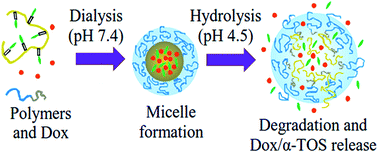
In this study, a mixed micelle structure composed of α-tocopheryl succinate (vitamin E analogue) containing graft copolymers, poly(hydroxypropyl methacrylamide-g-α-tocopheryl succinate) (PHPMA-g-α-TOS) and diblock copolymers, methoxy poly(ethylene glycol)-b-poly(D,L-lactide) (mPEG-b-PLA) was prepared to encapsulate doxorubicin (Dox) for anticancer drug delivery, as shown in Fig. 1A. The α-tocopheryl succinate (α-TOS) has been widely studied because of their anti-tumor properties.8,9 It has been demonstrated that α-TOS molecules could selectively kill cells with a malignant or transformed phenotype.10–12 Additionally, α-TOS and Dox could exhibit cooperated effect to increase the anti-cancer efficacy via enhancing cellular uptake level of Dox.13 In our previous study, α-TOS was conjugated onto mPEG-PHEMA (methoxy polyethylene glycol-block-poly(2-hydroxyethyl methacrylate)) by ester bonds and form polymeric micelles with Dox. The ester bonds between α-TOS and mPEG-PHEMA could be degraded at acidic surroundings. Our study demonstrated that micelles not only reduced normal cell cytotoxicity but also enhanced chemotherapy efficacy by co-delivery of α-TOS and Dox.14 Herein, poly(N-(2-hydroxypropyl)methacrylamide) (PHPMA) was instead of PHEMA because PHEMA has risk of thrombosis15,16 and was conjugated with α-TOS molecules by ester bonds to form amphiphilic graft copolymers. To prevent size enlargement of micelles induced by over-aggregation of graft copolymers, mPEG-b-PLA copolymers were co-micellized with graft copolymers to form mixed micelles and expose mPEG outside. The advantages of these mixed micelles includes (1) the ability of mixed micelles to prevent protein adsorption and thereby largely accumulate in tumor tissue and cancer cells; (2) the ability of mixed micelles to release α-TOS and Dox in acidic surroundings, such as endosomes and secondary lysosomes,17 to inhibit cancer cell growth; and (3) the probability of undegradable PEG and PHPMA polymers to be eliminate by kidney.
 |
| | Fig. 1 (A) Schematic representation the concept of mixed micelles self-assembled in physical environment and drug release triggered by acidic environment, (B) chemical synthesis route of mPEG-b-PLA, (C) chemical synthesis route of PHPMA-g-α-TOS. | |
To approach and demonstrate this study, the optimal composition of graft/diblock copolymers and Dox in mixed micelles was investigated. Additionally, Dox and α-TOS release behaviors from mixed micelles were studied to clarify whether Dox and α-TOS could be released in acidic surroundings. Serum protein adsorption on mixed micelles was also analysed by dynamic light scattering (DLS) and flow cytometry to understand how the size enlargement by protein adsorption influence cell uptake. Finally, the in vitro cytotoxicity study and ex vivo bio-distribution study were assessed to elucidate the anti-cancer efficacy of Dox and α-TOS.
2. Materials and methods
2.1. Materials
Methoxypolyethylene glycol (mPEG, ACS degree) with MW 5k, N,N′-dicyclohexylcarbodiimide (DCC, ACS degree), 4-dimethylaminopyridine (DMAP, ReagentPlus), p-toluenesulfonic acid (PTSA, ACS degree), α-tocopheryl succinate (α-TOS, ACS degree) and McCoy's 5A Medium were purchased from Sigma-Aldrich (MO, USA). Doxorubicin hydrochloride (Dox-HCl, ACS degree) was purchased from LC Laboratories (MA, USA). Tin(II)2-ethylhexanoate and D,L-lactide were purchased from Alfa Aesar (MA, USA). The D,L-lactide was purified by crystallization twice before use. N-(2-Hydroxypropyl)methacrylamide (HPMA, ACS degree) was purchased from Polysciences (PA, USA). 2,2′-Azobis(2-methylpropionitrile) (AIBN) was purchased from UniRegion Bio-Tech (Taiwan) and was purified by crystallization twice before use. Fetal bovine serum (FBS) and penicillin/streptomycin were purchased from Gibico (NY, USA).
2.2. Synthesis of mPEG-b-PLA diblock copolymers
mPEG-b-PLA diblock copolymers were synthesized by ring-opening polymerization (in Fig. 1B).18 mPEG (MW 5000) and D,L-lactide with different molar ratios were dissolved in toluene. Stannous octoate as a catalyst was then added for ring-opening polymerization. The reaction was conducted at 110 °C for 24 h under nitrogen and terminated by 0.1 N methanolic KOH. The product was precipitated from diethyl ether twice at 0 °C. The chemical structure and molecular weight of mPEG-b-PLA were verified by 1H-NMR (DMSO-d6), FT-IR (KBr) and GPC. The 1H-NMR spectrum (400 MHz) was recorded using Bruker Avance III400 spectrometer. Sample concentrations in DMSO-d6 were around 10 mg mL−1. The FT-IR spectrum was obtained on a SHIMADZU IRAffinity-1 in transmittance mode in the range 4500 cm−1–500 cm−1. The polymer sample for FT-IR was well mixed with KBr in a ratio of 1
:
10 (v/v) and pressed to form pellets. The molecular weight and polydispersity index of polymers was measured by gel permeation chromatography (GPC) using an organic solvent GPC system equipped with a model 501 solvent delivery system and a refractive index (RI) detector with Jordi Gel DVB 104 Å column and Shodex GPC KF-G column in series. The eluent was tetrahydrofuran at a flow rate of 1.0 mL min−1. Sample concentrations were 5 mg mL−1, and the injection volume was 20 μL. Polyacrylic acids with five molecular weights (MW = 1210, 6950, 15
100, 34
400 and 127
000 g mol−1) and a polydispersity of below 1.16 were used as standards.
2.3. Synthesis of PHPMA-g-α-TOS graft copolymers
The PHPMA-g-α-TOS was synthesized by free radical polymerization and DCC-mediated ester coupling reaction (in Fig. 1C). First, to synthesize PHPMA, HPMA monomer and initiator AIBN were dissolved in ethanol and purged with nitrogen for 30 min at room temperature. Polymerization was preceded at 70 °C for 24 h. The reacted solution was precipitated from diethyl ether twice to obtain PHPMA product. Then, PHPMA, α-TOS, DPTS, and DMAP were dissolved in DMF under nitrogen for coupling reaction. The reaction was conducted at 4 °C for 24 h. The final product was obtained by precipitation from diethyl ether twice and drying in vacuum. The chemical structure and compositions of PHPMA-g-α-TOS were also determined by 1H-NMR (DMSO-d6), FT-IR (KBr) and GPC with the same equipment mentioned above.
2.4. Preparation and characterization of grafted micelles and mixed micelles
Various composition ratios of PHPMA-g-α-TOS graft copolymers and mPEG-b-PLA diblock copolymers were dissolved, individually or together, in DMSO (2.5 mL). The polymer solution was then dialyzed though a cellulose membrane bag (MWCO 6000–8000, SpectrumLabs, Inc.) against distilled water at 25 °C for 72 h. The water was replaced every 3 h. After dialysis, micelles prepared from graft copolymers alone (grafted micelles) and mixed micelles were collected to obtain dried products by freeze drying.5,18,19 The distribution of particle sizes was determined using a zetasizer (Malvern 3000HSA) that was equipped with a 633 nm He–Ne laser and the corresponding dynamic light scattering (DLS) was detected using a detector that was set at 90° to the incident laser beam. The morphology of micelles were identified using a JEM-2000EXII transmission electron microscope (TEM) with an accelerating voltage of 100 keV. Micelles on a cooper grid were stained with 4 wt% uranyl acetate (UA).
2.5. Preparation and characterization of Dox-loaded grafted micelles and Dox-loaded mixed micelles
Doxorubicin hydrochloride, triethylamine and copolymers were dissolved in DMSO for 2 h to remove the hydrochloride. The mixture solutions were then dialyzed against water for 72 h. After dialysis, the solution of micelles was collected and removed water using a freeze dryer system. Then, the size distributions of Dox-loaded grafted micelles and Dox-loaded mixed micelles were determined by DLS.
To obtain drug content in micelles, weighted amounts of the Dox-loaded micelles were dissolved in DMSO and Dox was isolated by ultrafiltration (ultrafiltration membrane MWCO 10
000, Millipore) and analysed using a UV-vis spectrometer (Perkin-Elmer Lambda 35) at 485 nm. The drug content of micelles was calculated by the formula: drug content (% w/w) = (total mass of Dox in micelles)/(total mass of Dox in micelles + total mass of copolymer in micelles) × 100 (ref. 20 and 21).
2.6. pH sensitivity
To evaluate pH sensitivity of micelles, micelles were suspended in pH 7.4 and 4.5 PBS buffer solutions at 37 °C. At each predetermine time point, the particle size and size distribution were analysed by DLS and the morphology of micelles was observed by TEM with 4 wt% uranyl acetate (UA) staining.
2.7. Drug release assay
To determine the release behaviors of Dox and α-TOS from micelles, Dox-loaded micelles were suspended in PBS solution (1 mL) and placed in a dialysis bag (MWCO 6000–8000). The dialysis bags were then put into a fixed volume of pH 7.4 or 4.5 buffer solutions and incubated in an incubator shaker (TAITEC MBR-022UP) with vibration at 37 °C. At each time point, the isolated solution (1 mL) was measured by UV-vis spectrometer at 485 nm. After measurement, the bottled was refilled with the sample solution for continued accumulation of released drug. Otherwise, α-TOS was isolated from empty micelles under the same protocol and analysed by UV-vis spectrometer at 291 nm. The accumulative release was calculated as: cumulative release (wt%) = (Dox or α-TOS conc. in buffer solution)/(total Dox or α-TOS conc. in each sample) × 100. Simultaneously, particle distribution and morphological changes of micelles after drug release were observed by DLS and TEM, respectively.
2.8. Stability of micelles in bovine serum albumin (BSA) solution
Micelle solutions were mixed with an equal volume of 10 wt% BSA PBS solution and incubated at 37 °C with shaking. At time intervals, the size changes of micelles were determined by DLS.
2.9. Cell cytotoxicity
L929 mouse fibroblast cells and HCT116 human colon cancer cells were used to validate the cell cytotoxicities. HCT116 and L929 cells were seeded on 96-well microplates (1 × 10⁴ cells per well). After 24 h, free drug, empty micelles and Dox-loaded micelles were added separately and incubated for 24 and 96 h. The cytotoxicities were investigated by MTS assay (CellTiter 96 Aqueous One Solution cell proliferation assay; Promega).
2.10. Internalization
Micellar internalization in HCT116 cells was monitored by Olympus FV1000 confocal laser scanning microscope (CLSM). The cells were seeded on cover slides (1 × 10⁵ per slide) for 10 h. FITC-labelled Dox-loaded micelles (50 μg mL−1) were then added and co-incubated for 1 and 24 h. After that, HCT116 cells were washed with PBS twice and then fixed by 4 wt% paraformaldehyde for 30 min. The cells were then washed with PBS twice and covered by slides for CLSM observation. Dox and FITC were excited at 488 and 633 nm, respectively. The emission wavelength of Dox and FITC was detected at 590 nm and 693 nm.
To quantify the internalization behavior and investigate whether the serum protein influence endocytosis, FITC-labelled micelles were co-cultured with HCT116 cells in serum medium or serum free medium for 24 h. The cells were then washed by PBS and were dissociated using trypsin. The cells was analyzed by BD FACSCalibur flow cytometer (BD FACSCalibur; Becton Dickinson, San Jose, CA) using the 488 nm argon/krypton laser line and a 520 nm band pass FL1-H emission filter.
2.11. Noninvasive imaging and ex vivo florescence imaging
The HCT116 cells (1 × 10⁶ cells/0.1 mL) were transplanted subcutaneously to the female Balb-c/nude mice. Micelles were modified with florescence dye Cyanine 5.5 (Cy5.5) to prepare Cy5.5-labeled micelles. Cy5.5-labeled micelles were then injected into HCT116 tumor-bearing mice (tumor volume: approximately 1000 mm3) by tail vein injection. To observe the biodistribution of Cy5.5-labeled micelles, tumor-bearing mice were sacrificed after 24 h post-injection and the major organs were harvested immediately. The optical images of organs were obtained by IVIS 50 imaging system.
3. Results and discussions
3.1. Polymer characteristics
In this study, mPEG-b-PLA diblock copolymers were synthesized from mPEG (5000 MW) and D,L-lactide by ring-opening polymerization. The 1H-NMR and FT-IR data were showed in Fig. 2A and C. Three mPEG-b-PLA diblock copolymers with different molecular weights were prepared: the repeating units of D,L-lactide in mPEG-b-PLA copolymers were 11, 35 and 48 by 1H-NMR measurements. The polydispersity indexes for those copolymers were 1.08, 1.13 and 1.19 by GPC determination. Table 1 summarizes the characterization of each diblock copolymer. Otherwise, three compositions of P(HPMA)-g-α-TOS graft copolymers were synthesized from PHPMA linear polymers and α-TOS by DCC-mediated coupling reaction. The 1H-NMR and FT-IR data were showed in Fig. 2B and D. Table 2 shows the characterization of each graft copolymer. When the anticipative grafting level was less than 30 mol%, the repeating unit of α-TOS on graft copolymers was increased with feeding mole of α-TOS. The polydispersity indexes for those graft copolymers were between 1.5–1.8 by GPC measurement.
 |
| | Fig. 2 Characteristics of graft and diblock copolymers. 1H-NMR (A) and FT-IR (C) spectra of mPEG-b-PLA copolymers; 1H-NMR (B) and FT-IR (D) spectra of P(HPMA)-g-α-TOS copolymers. | |
Table 1 The characterization and compositions of mPEG-b-PLA diblock copolymers
| Code |
In feed (mole) |
In polymera (mole) |
Mnb |
PDIb |
| PEG |
PLA |
PEG |
PLA |
| Compositions of copolymers were determined by 1H-NMR. Molecular weights and polydispersity indexes of copolymers were determined by GPC. |
| L11 |
1 |
14 |
1 |
11 |
5788.6 |
1.08 |
| L35 |
1 |
28 |
1 |
35 |
7483.1 |
1.13 |
| L48 |
1 |
42 |
1 |
48 |
8452.2 |
1.19 |
Table 2 The characterization and compositions of P(HPMA)-g-α-TOS graft copolymers
| Code |
In feed (mole) |
In polymera (mole) |
Mnb |
PDIb |
| HPMA |
α-TOS |
HPMA |
α-TOS |
| Compositions of copolymers were determined by 1H-NMR. Molecular weights and polydispersity indexes of copolymers were determined by GPC. |
| E4 |
46 |
5 |
42 |
4 |
8754.94 |
1.58 |
| E10 |
46 |
9 |
36 |
10 |
11 939.62 |
1.60 |
| E16 |
46 |
14 |
30 |
16 |
15 124.3 |
1.75 |
3.2. Micelle preparation
A report from Chu et al. demonstrated that copolymers with lower critical micelle concentration (cmc) could induce self-assembly of mixed micelles. The copolymers with lower cmc were firstly associated into micelles, and then the copolymers with higher cmc could gradually participate into micellization.22 Our group has successfully prepared a multifunctional core–shell mixed micelle from graft and diblock copolymers.18 This graft-diblock mixed micelle also indicated that graft copolymers with lower cmc led co-micellization.
In order to determine the optimal composition of mixed micelles, several strategies were used: first, three different grafting levels of PHPMA-g-α-TOS copolymers (graft copolymers were abbreviated to E and repeating units of α-TOS were displayed in numbers) were co-micellized with a fixed mPEG-b-PLA diblock copolymers (35 repeating units of LA; L35) to find out which graft copolymer fitted co-micellization best; next, the optimal PHPMA-g-α-TOS copolymer were co-micellized with three mPEG-b-PLA diblock copolymers to clarify the optimal composition of mixed micelles. Fig. 3A shows the characterization of mixed micelles composed of a fixed diblock copolymer with different graft copolymers. The experimental results indicated that the higher grafting level of α-TOS in graft copolymers could make mixed micelles with smaller size and better polydispersity index, especially for mixed micelles composed of the graft copolymer with 16 repeating units of α-TOS. Additionally, under a fixed graft copolymer with different diblock copolymers as shown in Fig. 3B, the most appropriate size and PDI of mixed micelles formed from diblock copolymers (48 repeating units of LA) and graft copolymers at molar ratio of 4
:
1 were 44.8 nm and 0.28, respectively. Based on these results, mixed micelles with high α-TOS contents of graft copolymers and long PLA chain of diblock copolymers were chosen for the following experiments. Otherwise, grafted micelles formed from high α-TOS contents of graft copolymers were used for comparison. The particle size and PDI of grafted micelles were 127.4 nm and 0.521, respectively (data not show).
 |
| | Fig. 3 (A) Average size and polydispersity index of mixed micelles composed of L35 diblock copolymer with different graft copolymers. (B) Average size and polydispersity index of mixed micelles composed of E16 graft copolymer with different diblock copolymers. Average diameter and polydispersity index of micelles were determined by DLS. Average diameter and polydispersity index of micelles were determined by DLS. | |
3.3. Stabilities and pH-responsive behaviors
To evaluate the stability and pH-sensitivity of grafted and mixed micelles, micelles were treated in different pH levels and observed their sizes and structures by DLS and TEM. Fig. 4 shows that both micelles were stable in PBS; mixed micelles and grafted micelles maintained their particle sizes at least 48 h. Otherwise, mixed micelles were more sensitive to pH changes as compared to grafted micelles. At pH 4.5, mixed micelles significantly changed their particle sizes during 24 to 48 h owing to α-TOS released from micelles by hydrolysis. In contrast, size changes in grafted micelles were relatively insignificant until 48 h, perhaps because that graft copolymers aggregated together tightly enough to resist hydrolysis of ester bonds. The similar results were also found in the TEM images. Fig. 5 shows that grafted and mixed micelles remained their structures and sizes when they were suspended in neutral pH surroundings after 48 h. Additionally, the morphology of grafted micelles in low pH did not changed at 48 h. In contrast, the structure of mixed micelles significantly swelled and disrupted when they were in low pH over 48 h. These results all indicated that mixed micelles had better pH-responsibility than grafted micelles.
 |
| | Fig. 4 Evaluation of structural size of mixed-micelle (graft : diblock = 1 : 4 mole ratio) and grafted-micelle incubated in pH 7.4 and pH 4.5 PBS at 37 °C. Mean ± SD (n = 3). Asterisk indicate statistically differences (*p < 0.05). | |
 |
| | Fig. 5 TEM images of grafted-micelles and mixed-micelles (graft : diblock = 1 : 4 mole ratio) under pH 7.4 and pH 4.5 surroundings for 0, 24, 48, or 72 h. The scale bars in all images represented 50 nm. | |
Furthermore, Fig. 6 showed the GPC signal peak shift when mPEG-b-PLA incubated in acidic surrounding for 24 and 48 h. The loss of molecular weight demonstrated that poly ester bonds in mPEG-b-PLA were pH-sensitive and could efficiently hydrolysis in acid. This result could also prove that mPEG-b-PLA diblock copolymer was important in mixed micelle system to improve stability and pH-sensitive behavior.
 |
| | Fig. 6 Hydrolysis of mPEG-b-PLA diblock copolymer detected by GPC system. Signal peak was shifted when mPEG-b-PLA incubated in acidic environment after 24 and 48 hours. | |
3.4. Dox loading and drug releasing
To evaluate the loading efficiency of Dox in mixed micelles, different concentrations of Dox were mixed with graft and diblock copolymers (1
:
4 w/w) to form Dox-loaded mixed micelles. Table 3 summarize the particle sizes, polydispersity indexes, and drug content of Dox-loaded mixed micelles. According to the results, when the feeding concentration of Dox was at 1 mg mL−1, mixed micelles had the smallest particle sizes and PDI, which were approximately 108 nm and 0.213, respectively. Drug loading content in mixed micelles was around 1 wt%. In contrast, grafted micelles were also loaded with Dox with the particle size of ca. 195 nm, PDI of 1, and drug loading content of 2 wt%.
Table 3 Characterization and evaluation of Dox content in Dox encapsulated micelles
| Copolymer (mg mL−1) |
Dox conc. (mg mL−1) |
Size (nm) |
PDI |
Drug contents (wt%) |
| E16 |
L48 |
| 1 |
4 |
1 |
108.3 ± 22.4 |
0.214 ± 0.079 |
1.4 |
| 1 |
4 |
2 |
169.0 ± 22.0 |
0.145 ± 0.040 |
2 |
| 1 |
4 |
3 |
361.4 ± 45.6 |
0.259 ± 0.025 |
2.5 |
| 1 |
4 |
4 |
306.3 ± 201.5 |
0.260 ± 0.058 |
0.9 |
| 1 |
4 |
5 |
269.8 ± 81.9 |
0.209 ± 0.059 |
2.5 |
| 5 |
0 |
1 |
196.1 ± 4.6 |
1 |
2.0 |
The absorption wavelength of free α-TOS and Dox were at 284 nm and 485 nm, respectively. For Dox release measurements, wavelength scanning was set from 450 nm to 500 nm. For α-TOS release measurements, wavelength scanning was set from 250 nm to 350 nm. Fig. 7A and B displayed one sets of the wavelength scanning of released Dox and α-TOS from mixed micelles in acidic surroundings, respectively. The experimental results indicated that the release of Dox or α-TOS was increased with time. In order to evaluate the effect of pH-responsibility of micelles, micelles were treated with pH 7.4 and pH 4.5 PBS and the released Dox were monitored by UV/Vis spectrometer. At pH 7.4, grafted and mixed micelles exhibited initial burst release at first 6 h, losing about 16 and 17 wt% of Dox, respectively. The release rate slowed down and remained constant after 24 h. The cumulated release of Dox after 96 h was about 45 wt% for mixed micelle and 35 wt% for grafted micelle. At pH 4.5, Dox released from mixed micelles was over 50 wt% at first 24 h and exhibited sustained release behavior. After 96 h, cumulative release of Dox from mixed micelles was over 80 wt%, while the total release of Dox from grafted micelles was less than 70 wt%.
 |
| | Fig. 7 The absorption spectra of (A) free Dox at 450–500 nm and (B) α-TOS at 250–350 nm. (C) DOX release behaviors of mixed-micelles (graft : diblock = 1 : 4 mole ratio) and grafted-micelles in pH 7.4 and pH 5.0 buffer solutions at 37 °C. (D) α-TOS release behaviors of mixed-micelles (graft : diblock = 1 : 4 mole ratio) and grafted-micelles in pH 7.4 and pH 5.0 buffer solutions at 37 °C. Mean ± SD (n = 3). Asterisk indicate statistically differences (*p < 0.05). | |
To further understand the relationship between the α-TOS releasing rate by hydrolysis and structural changes of grafted and mixed micelles, micelles were incubated in pH 7.4 and pH 4.5 PBS buffer solutions at 37 °C. According to the results, at pH 7.4, the amount of released α-TOS were all less than 5 wt% in both grafted and mixed micelles after 96 h because that ester bonds were more stable in neutral environment. Otherwise, at pH 4.5, ester bonds were degraded and α-TOS molecules were rapidly released from mixed micelles. After 6 h, the cumulated release of α-TOS from mixed micelles was increased with time. Almost 20 wt% of α-TOS was released after 96 h. In contrast, the α-TOS release behavior for grafted micelles in acidic surroundings was remained constant and total release was less than 5 wt%. These experimental results emphasized that more α-TOS released from micelles led more size and structure changes. Mixed micelles had faster α-TOS release ability, accompanying obvious structural changes and large Dox release.
3.5. Stability in BSA solution and protein adsorption
The process of serum protein adhesion is one of the most important biological barriers to limit drug delivery.23,24 To understand whether a micelle system has promise of long blood circulation, the stability (size changes) of micelles in BSA solution was evaluated by DLS. Size and PDI change (%) were defined as the measured particle size or PDI divided by the particle size and PDI, respectively, which were measured at 0 h. In Fig. 8A, after 24 h incubation, size changes in grafted micelles increased significantly. Conversely, the particle sizes of mixed micelles were relatively stable under 96 h observations. It is known that surface hydrophobicity and surface charge of micelles played the dominant roles in the recognition by serum proteins.25,26 Serum proteins, such as albumin, apolipoprotein, IgG, and etc., are likely absorbed onto micelles with positive charges or hydrophobic surface, which could lead to micelles aggregation and accelerated clearance of micelles from blood circulation by mononuclear phagocyte system (MPS).23,27
 |
| | Fig. 8 The relationship between protein adsorption, size alteration, cell internalization and zeta potential of grafted and mixed micelles. (A) Evaluation of the size change of mixed-micelles (graft : diblock = 1 : 4 mole ratio) and grafted-micelles in PBS contained 10% of BSA at 37 °C by dynamic light scattering. Mean ± SD (n = 3). (B) Quantitative analysis of florescence intensity after HCT116 cells incubated in full serum medium or serum free medium treated with FITC-labeled micelles for 24 h (SF: serum free medium). Asterisk indicate statistically differences (*p < 0.05; **p < 0.001; ***p < 0.005). The zeta-potential of (C) grafted micelles and (D) mixed micelles. | |
To quantify the accumulation of micelles in cells before and after protein adsorption, FITC-labeled micelles were co-incubated with HCT116 cells for 24 h and the cells were harvested and detected the florescent intensity by flow cytometry. Fig. 8B shows that the amounts of grafted micelles and mixed micelles in HCT116 cells were equal in serum free medium. However, the cellular uptake of grafted micelles was significantly decreased when micelles were incubated in FBS-containing medium, indicating that protein adsorption on grafted micelles decreased cell internalization. In this study, the surface charges of grafted micelles and mixed micelles in pH7.4 PBS buffer solution were −5.03 ± 5.81 and −3.28 ± 1.98 mV, respectively (Fig. 8C and D). Although the zeta-potentials for both micelles were negative and closed zero, the protein adsorption behavior for grafted micelles was more obviously. The possible reason was because the hydrophobic segments (such as α-TOS) in grafted micelles were exposed on the surface when self-assembling without PEG layer covering.28 The exposed α-TOS in grafted micelles were thereby bounded by BSA to increase particle sizes. In contrast, when mPEG-b-PLA copolymers were incorporated into micelles, PEG layer could successfully prevent micelles from serum protein adhesion.
3.6. In vitro cytotoxicity
HCT116 colon cancer cells and L929 mouse fibroblast cells were treated with empty micelles and Dox-loaded micelles to estimate the cytotoxicity of micelles. Free α-TOS and free Dox were utilized as negative controls. Fig. 9 displayed the results of L929 cells incubated with empty micelles after 24 and 96 h. Although free α-TOS caused L929 cell death at high concentration (50 μg mL−1), neither grafted micelles nor mixed micelles were toxic to normal cells during 96 h observations. The experimental results indicated that both micelles were highly biocompatible to normal cells. Otherwise, free α-TOS also displayed anticancer ability at high concentration, as shown in Fig. 10A and B. After 96 h incubation, less than 20% of HCT116 cells were survival at a concentration of 25 μg mL−1. But, grafted micelles and mixed micelles also exhibited non-toxic to cancer cells in 24 or 96 h. In contrast, as shown in Fig. 10C and D, Dox-loaded micelles, especially for Dox-loaded mixed micelles, were highly sensitive and toxic to HCT116 cells at 24 and 96 h. The high cytotoxicity for Dox-loaded mixed micelles as compared with free Dox and Dox-loaded grafted micelles was because of cell accumulation (internalization) and the cooperative effect of Dox and released α-TOS.
 |
| | Fig. 9 The cytotoxicities of α-TOS molecules and empty micelles after incubation with L929 cells for (A) 24 h and (B) 96 h. | |
 |
| | Fig. 10 The cytotoxicities of α-TOS molecules and empty micelles after incubation with HCT116 cells for (A) 24 h and (B) 96 h. The cytotoxicities of free Dox and Dox-loaded micelles after incubation with HCT116 cells for (C) 24 h and (D) 96 h. | |
3.7. Internalization
Cellular uptake behaviors of grafted micelles and mixed micelles were observed by confocal laser scanning microscopy (CLSM). FITC dye was labelled on grafted and mixed micelles and the FITC-labelled micelles were incubated with HCT116 cells for 1 and 24 h. In Fig. 11, after 1 h incubation, free Dox rapidly diffused into HCT116 cells and accumulated in nucleus by simple diffusion. In contrast, micelles were internalized by endocytosis.29 Micelles were first accumulated in endosomes and then released Dox from endosomes to cytosol. Furthermore, Dox-loaded mixed micelles were internalized more by HCT116 cells and faster released Dox than Dox-loaded grafted micelles in either 1 or 24 h. The CLSM results emphasized again that (1) the reducing protein adsorption in mixed micelles increased cell internalization and (2) mixed micelles were more sensitive in acidified endosomal environment to release Dox.
 |
| | Fig. 11 Confocal images of HCT116 cells incubated with free Dox and Dox-loaded micelles for 1 and 24 h. FITC-labelled micelles represent in green fluorescence, and free Dox or released Dox represents in red fluorescence. | |
3.8. Ex vivo fluorescence observation
Fig. 12 shows the tumor and organ accumulation by passive targeting and EPR effect after 24 h post-injection of grafted micelles and mixed micelles. The experimental result indicated that either grafted micelles or mixed micelles accumulated in the tumor, liver and kidney. The fluorescent intensities of both micelles in the tumor were larger than those in the liver. The accumulation of both micelles in the tumor was due to the EPR effect,30 while the liver accumulation was because of the uptake of micelles by RES system.31 Serum albumin bound on nanoparticles is considered to prolong blood circulation time of nanoparticles.32 Although the distribution percentage of nanoparticles in tumor was size-dependent,33 reports also indicated that particles larger than 500 nm in diameter resulted in the rapid clearance from the circulation system.34,35 The tumor distribution percentage for nanoparticles with 150 nm in diameter was no different than that with 300 nm.35 Because the sizes of mixed micelles and grafted micelles after protein treatments were around 110 and 320 nm, respectively, the tumor accumulation behaviors for both micelles were similar. Although the ex vivo results seemed small difference between grafted micelles and mixed micelles, mixed micelles showed several advantages over grafted micelles to be a good candidate as a drug delivery system in cancer therapy, such as: relative uniform sizes, rapid pH-sensitivity in acidic surroundings, higher cytotoxicity to cancer cells, and higher internalization by cancer cells.
 |
| | Fig. 12 Ex vivo fluorescence images of tumor and major organs excised at 24 h post-injection of grafted micelle (A) and mixed micelle (B). | |
4. Conclusions
In this study, mixed micelles constructed from mPEG-b-PLA diblock copolymers and PHPMA-g-α-TOS graft copolymers were prepared to improve cancer cell uptake and enhance cancer cell cytotoxicity. Compared with grafted micelles, mixed micelles could prevent protein adsorption and therefore improve cell internalization. Additionally, mixed micelles could simultaneously release Dox and α-TOS at low pH, which could exhibit cooperative effect of cytotoxicity for HCT116 cancer cells in vitro. According to these experimental, we could conclude that mixed micelles composed of graft and diblock copolymers had better drug release behavior, protein adsorption resistance, cellular accumulation and toxicity, which could be recognized as a good candidate drug carrier rather than micelles composed of graft copolymers alone.
Acknowledgements
The authors would like to thank the Ministry of Science and Technology (Taiwan) (MOST 101-2221-E-010-002-MY2, 103-2221-E-010-016-MY2, and 103-2320-B-010-006) for financially supplementary this work. TEM images and CLSM were supported in part by the Electron Microscopy Facility in NYMU and Imaging Core Facility of Nanotechnology in UST-YMU. We would also like to acknowledge Flow cytometry Core Facility of NYMU for the excellent technical assistant in flow cytometry and Taiwan Mouse Clinic which is funded by the National Research Program for Biopharmaceuticals (NRPB) at the NSC of Taiwan for technical support in IVIS experiment.
References
- H. Koide, T. Asai, K. Hatanaka, T. Urakami, T. Ishii, E. Kenjo, M. Nishihara, M. Yokoyama, T. Ishida, H. Kiwada and N. Oku, Int. J. Pharm., 2008, 362, 197–200 CrossRef CAS PubMed.
- K. Cho, X. Wang, S. Nie, Z. G. Chen and D. M. Shin, Clin. Cancer Res., 2008, 14, 1310–1316 CrossRef CAS PubMed.
- Z. Y. Ong, A. B. E. Attia, J. L. Hedrick, P. P. Lee, P. L. Ee, Y. Y. Yang and P. T. Hammond, Curr. Opin. Colloid Interface Sci., 2011, 16, 182–194 CrossRef PubMed.
- Y. C. Chen, C. L. Lo and G. H. Hsiue, J. Biomed. Mater. Res., Part A, 2014, 102, 2024–2038 CrossRef PubMed.
- C. L. Lo, C. K. Huang, K. M. Lin and G. H. Hsiue, Biomaterials, 2007, 28, 1225–1235 CrossRef CAS PubMed.
- S. J. Lin, C. L. Lo, H. C. Tsai, W. H. Chan, C. H. Tsai, C. H. Cheng and G. H. Hsiue, Biomaterials, 2009, 30, 3961–3970 CrossRef PubMed.
- E. S. Lee, K. Na and Y. H. Bae, Nano Lett., 2005, 5, 325–329 CrossRef CAS PubMed.
- J. H. EyTina, M. Birringer, B. A. Salvatore and J. Neuzil, Br. J. Cancer, 2003, 88, 1948–1955 CrossRef PubMed.
- J. M. Turley, F. W. Ruscetti, S. J. Kim, T. Fu, F. V. Gou and M. C. Birchenall-Roberts, Cancer Res., 1997, 57, 2668–2675 CAS.
- J. Neuzil, T. Weber, N. Gellert and C. Weber, Br. J. Cancer, 2001, 84, 87–89 CrossRef CAS PubMed.
- J. Ni, M. Chen, Y. Zhang, R. Li, J. Huang and S. Yeh, Biochem. Biophys. Res. Commun., 2003, 300, 357–363 CrossRef CAS.
- J. Neuzil, M. Zhao, G. Ostermann, M. Sticha, N. Gellert, C. Weber, J. W. Eaton and U. T. Brunk, Biochem. J., 2002, 362, 709–715 CrossRef CAS.
- X. Zhang, X. Peng, W. Yu, S. Hou, Y. Zhao, Z. Zhang, X. Huang and K. Wu, Cancer Lett., 2011, 307, 174–181 CrossRef CAS PubMed.
- K. Y. Lee, Y. T. Chiang, N. Y. Hsu, C. Y. Yang, C. L. Lo and C. A. Ku, Acta Biomater., 2015, 24, 286–296 CrossRef CAS PubMed.
- T. Okano, T. Aoyagi, K. Kataoka, K. Abe, Y. Sakurai, M. Shimada and I. Shinohara, J. Biomed. Mater. Res., 1986, 20, 919–927 CrossRef CAS PubMed.
- H. Sato, J. Kojima, A. Nakajima, T. Morita, Y. Noishiki, Z. W. Gu, F. M. Li and X. D. Feng, J. Biomater. Sci., Polym. Ed., 1991, 2, 1–13 CrossRef CAS PubMed.
- R. J. Desnick and E. H. Schuchman, Nat. Rev. Genet., 2002, 3, 954–966 CrossRef CAS PubMed.
- K. M. Lin, C. L. Lo, C. K. Huang and G. H. Hsiue, Adv. Funct. Mater., 2006, 16, 2309–2316 CrossRef PubMed.
- C. K. Huang, C. L. Lo, H. H. Chen and G. H. Hsiue, Adv. Funct. Mater., 2007, 17, 2291–2297 CrossRef CAS PubMed.
- P. L. Lu, Y. C. Chen, T. W. Ou, H. H. Chen, H. C. Tsai, C. J. Wen, C. L. Lo, S. P. Wey, K. J. Lin, T. C. Yen and G. H. Hsiue, Biomaterials, 2011, 32, 2213–2221 CrossRef CAS PubMed.
- S. Song, G. Y. Li, L. Guo and S. M. Ma, J. Polym. Sci., Part A: Polym. Chem., 2008, 46 Search PubMed.
- V. M. Nace, T. Liu and B. Chu, Langmuir, 1999, 15, 3109–3117 CrossRef.
- K. R. Chaudhari, M. Ukawala, A. S. Manjappa, A. Kumar, P. K. Mundada, A. K. Mishra, R. Mathur, J. Monkkonen and R. S. Murthy, Pharm. Res., 2012, 29, 53–68 CrossRef CAS PubMed.
- S. C. Owen, D. P. Y. Chan and M. S. Shoichet, Nano Today, 2012, 7, 53–65 CrossRef CAS PubMed.
- P. P. Karmali and D. Simberg, Expert Opin. Drug Delivery, 2011, 8, 343–357 CrossRef CAS PubMed.
- A. Gessner, R. Waicz, A. Lieske, B. Paulke, K. Mader and R. H. Muller, Int. J. Pharm., 2000, 196, 245–249 CrossRef CAS.
- G. Gaucher, M. H. Dufresne, V. P. Sant, N. Kang, D. Maysinger and J. C. Leroux, J. Controlled Release, 2005, 109, 169–188 CrossRef CAS PubMed.
- J. E. Chung, M. Yokoyama, T. Aoyagi, Y. Sakurai and T. Okano, J. Controlled Release, 1998, 53, 119–130 CrossRef CAS.
- L. M. Bareford and P. W. Swaan, Adv. Drug Delivery Rev., 2007, 59, 748–758 CrossRef CAS PubMed.
- Y. Wen and W. S. Meng, J. Pharm. Sci. Innovation, 2014, 9, 158–173 CrossRef PubMed.
- A. Balducci, Y. Wen, Y. Zhang, B. M. Helfer, T. K. Hitchens, W. S. Meng, A. K. Wesa and J. M. Janjic, Oncoimmunology, 2013, 2, e23034 CrossRef PubMed.
- S. M. Moghimi, I. S. Muir, L. Illum, S. S. Davis and V. Kolb-Bachofen, Biochim. Biophys. Acta, 1993, 1179, 157–165 CrossRef CAS.
- S. D. Perrault, C. Walkey, T. Jennings, H. C. Fischer and W. C. Chan, Nano Lett., 2009, 9, 1909–1915 CrossRef CAS PubMed.
- F. Alexis, E. Pridgen, L. K. Molnar and O. C. Farokhzad, Mol. Pharm., 2008, 5, 505–515 CrossRef CAS PubMed.
- C. He, Y. Hu, L. Yin, C. Tang and C. Yin, Biomaterials, 2010, 31, 3657–3666 CrossRef CAS PubMed.
|
| This journal is © The Royal Society of Chemistry 2015 |
Click here to see how this site uses Cookies. View our privacy policy here.