DOI:
10.1039/C5RA13450A
(Paper)
RSC Adv., 2015,
5, 76424-76434
Dispersive graphene-based silica coated magnetic nanoparticles as a new adsorbent for preconcentration of chlorinated pesticides from environmental water
Received
9th July 2015
, Accepted 28th August 2015
First published on 28th August 2015
Abstract
The present study describes the synthesis, characterization and application of new graphene-based silica coated magnetic nanoparticles (Fe3O4@SiO2–G) for the simultaneous preconcentration of four chlorinated pesticides namely lindane, chlorpyrifos, hexaconazole and azaconazole from contaminated water. The newly synthesised adsorbent was characterized using FT-IR spectroscopy, field emission scanning electron microscopy (FESEM), energy dispersive spectroscopy (EDS) and X-ray diffraction (XRD). Chlorinated pesticide extraction efficiency of the Fe3O4@SiO2–G was evaluated through magnetic solid phase extraction (MSPE) using gas chromatography with a micro electron capture detector (GC-μECD). Experimental parameters, i.e., desorption solvent, solvent volume, extraction time, desorption time, sample volume, adsorbent dosage and solution pH were optimized. Compared to commercial C18 sorbent and Fe3O4@SiO2, the newly synthesized Fe3O4@SiO2–G adsorbent showed a linear response (1–100 pg mL−1), low limits of detection (0.12–0.28 pg mL−1) and high adsorption capacity (13.04–18.69 mg g−1) with a coefficient of determination (R2) of 0.999. Environmental water samples were used to assess the field applicability of the adsorbents. Excellent percent recovery (80.8–106.3%) was achieved for Fe3O4@SiO2–G at pH 6.5. The results showed that the newly synthesized Fe3O4@SiO2–G is an efficient adsorbent with good potential for the preconcentration of selected chlorinated pesticides from aqueous media.
1. Introduction
From the original discovery of pesticides to this day, a remarkable increase in the usage of pesticides has been observed. Recent literature surveys indicated that per annum worldwide consumption of pesticides has exceeded 2.5 million pounds.1 The approximately 28% contribution of chlorinated pesticide to the total pesticide consumption makes them the largest class of pesticides. Generally chlorinated pesticides are used as triazine herbicides, fungicides and insecticides for crop protection.2 The massive use of chlorinated pesticides is one of the most imperative issues of the modern era because due to their widespread usage these pesticides can be easily mixed with natural water.1,3 Particularly water contamination resulting from chlorinated pesticides is becoming a hot issue for environmental researchers. From an environmental point of view the mixing of chlorinated pesticides as well as their degraded products into natural water is of great concern.4 Pesticides can be easily transferred to drinking water and become harmful to human health.5 The toxicity of chlorinated pesticides has been comprehensively reviewed; a literature survey showed that constant exposure to chlorinated pesticides can cause several life-threatening ailments, such as cancer, disorders of the reproductive and endocrine system.6–8 The European Union has declared that the safe concentration levels for pesticides is 0.1 ng mL−1, while a very high concentration of pesticides (i.e., 0.43 mg L−1) has been reported.9 Consequently, due the exceeded limit as well as the well-known toxicity of chlorinated pesticides and their degraded products, precise determination and extraction is extremely necessary.10
Several techniques, including liquid–liquid extraction (LLE), liquid phase microextraction (LPME), stir bar sorptive extraction (SBSE), solid phase micro extraction (SPME), dispersive solid phase extraction (DSPE) and solid phase extraction (SPE), have been applied to remediate the pesticides and their degraded products from the aqueous environment.11,12 Comparatively, SPE due to its simplicity, significant recovery, short extraction time, high enrichment factor and low cost is renowned as an advantageous and authentic method.13 A variety of materials such as electrospun modified silica,14 inorganic oxide nanoparticles/polyethylene,15 C18,16 TEOS-MTMOS,12 multi wall carbon nanotubes,17 chitosan/polypyrrole18 and graphene have been used as extraction adsorbents.19 But due to the low adsorption efficiency and reusability, the use of conventional materials is limited. Consequently, exploitation of innovative highly selective pesticide sorbents which can be easily regenerated as well as effective use in aqueous media has currently become a focus of intensive research.20–22 In this regard graphene due to its honeycomb-like structure deserves particular attention. In particular, the high surface area, significant adsorption capacity, variety of benzene rings and especially rich π–π electron arrangement makes graphene a suitable extractant for the extraction of benzene based pesticides.23,24
A literature survey reveals that graphene-based materials are mostly used for pesticide decontamination.25–27 However, graphene-based extraction reagents suffer from some drawbacks such as hydrophobicity as well as dispersive nature in aqueous media which makes the extraction process tedious and time consuming. These drawbacks can be abridged through the functionalization of graphene with appropriate molecular frameworks. In this respect, magnetic Fe3O4 nanoparticles have provided important avenues to prepare new, stable and efficient extraction reagents28,29 as well as green sample preparation.30 SiO2 is cheap, environmentally friendly, chemically stable and highly dispersive in liquid due to it rich O–H groups. So, generally Fe3O4 nanoparticles are coated with different silane derivatives via the sol–gel method to increase the surface area porosity and effective binding sites.31,32 Thus, in this study we report the synthesis, characterization and application of graphene-based silica-coated magnetic nanoparticles (Fe3O4@SiO2–G) for the preconcentration of four chlorinated pesticides namely lindane, chlorpyrifos, hexaconazole and azaconazole from contaminated water. The chlorinated pesticide concentration was determined by GC-μECD.
2. Experimental
2.1 Materials
Lindane, chlorpyrifos, hexaconazole, azaconazole and propazine (internal standard) were from Riedel-de Haen (Hanover, Germany). Analytical grade reagents/chemicals were used. Graphite powder and tetraethoxysilane (TEOS) were purchased from Sigma Aldrich (St. Louis, MO, USA). Sulphuric acid (98%), nitric acid (65%), hydrochloric acid (37%), ethanol (97%) and HPLC grade methanol were from QReC (Selangor, Malaysia).
2.2 Instruments
FT-IR spectra (4000–400 cm−1) were recorded on a 1600 series Perkin-Elmer FTIR Spectrometer (MA, USA) as KBr pellets. A D8-Advance X-ray diffractometer from Bruker (GmbH. Karlsruhe, Germany) was used for crystal analysis with Cu Kα radiation (λ = 1.54060 Å), high quality mode and 40 kV voltage. The size, morphology, structure and composition of the new magnetic materials were observed using a Carl Zeiss Model Supra 35-VP FESEM (Oberkochen, Germany) operated at 10.0 kV, magnification 50
000× and a working distance (WD) of 6.0 mm. An Agilent A7600 gas chromatograph equipped with a micro electron capture detector (GC-μECD) (Santa Clara, CA, USA) was used for the selected chlorinated pesticide analysis.
2.3 Gas chromatography conditions
GC-μECD with an HP-5MS column (5% phenyl methyl siloxane 325 °C: 30 m × 250 μm × 0.25 μm) was used for the identification of the selected chlorinated pesticides in the water samples. The optimum GC-μECD conditions are as follows: helium was used as back inlet carrier gas at a flow rate of 2.5 mL min−1 and nitrogen was used a back detector make up gas at a flow rate of 5 mL min−1. The back inlet port and detector temperatures were set at 280 °C (pressure set at 25 psi) and 300 °C, respectively. The gas chromatography temperature profile was set at 70–280 °C, starting at 70 °C (held for 1 min) ramp at 50 °C min−1 to 190 °C (held for 1 min) and ramp at 30 °C min−1 to 280 °C (held for 2 min). 1 μL of the extracted analyte in methanol was injected manually into the injection port under splitless mode. Triplicate injections were performed for each extract and the average peak area ratio reading was taken.
2.4 Preparation of Fe3O4 nanoparticles
Fe3O4 magnetic nanoparticles (MNPs) (Fig. 1A) were prepared via a modification of a previously reported procedure.33 0.5 g of (NH4)2Fe(SO4)2·6H2O and 1 g FeCl3·6H2O were dissolved in 30 mL of deionized water and stirred vigorously for 5 min at 50 °C. Following the drop wise addition of 5 mL of ammonia solution (32%), the reaction mixture was further stirred at room temperature for 5 h. The resulting black Fe3O4 nanoparticles were collected using an external magnet and washed with excess deionized water and dried under vacuum at 80 °C for 24 h.
 |
| | Fig. 1 Schematic for the synthesis of (A) magnetic Fe3O4 nanoparticles and (B) silica-coated magnetic nanoparticles. | |
2.5 Synthesis of Fe3O4@SiO2
Tetraethyl orthosilicate (TEOS) coated magnetic nanoparticles (Fig. 1B) were prepared by a modification of the Stöber method.34 SiO2 coating of the Fe3O4 MNPs has been shown to enhance the lifetime as well as the binding sites of the MNPs.31,32 0.5 g of the freshly prepared Fe3O4 were dispersed in 100 mL of water–ethanol solution (1
:
1) then 0.5 mL TEOS was added into the solution. Following the addition of 5 mL ammonia solution (25%) the reaction mixture was stirred for 1 h and then left at room temperature for 20 h. Finally, the resultant slightly darker brown Fe3O4@SiO2 nanoparticles were collected and washed with deionized water and ethanol. The Fe3O4@SiO2 was then dried under vacuum at 80 °C for 20 h.
2.6 Preparation of graphene oxide
2 g of natural graphite was soaked in 10 mL of concentrated HCl for 48 h. The mixture was then filtered and the filtrate was washed with excess of deionized water and dried under vacuum at 80 °C for 24 h. The dried natural graphite was suspended in a mixture of 120 mL of concentrated H2SO4–HNO3 (2
:
1) and stirred at room temperature for 1 h. Potassium permanganate (3 g) was then added gradually into the reaction mixture and was further stirred at room temperature for 24 h. Finally, yellow-coloured graphene oxide (GO) was obtained by adding ice (500 g) and H2O2 (3 mL). The resultant product was washed with excess deionized water and then dried at 80 °C for 24 h under vacuum.
2.7 Synthesis of Fe3O4@SiO2–graphene
Fe3O4@SiO2–graphene MNPs (Fig. 2) were prepared as follows; 10 mg of freshly prepared Fe3O4@SiO2 were dispersed into 50 mL of graphene oxide (GO) solution (10 mg mL−1) followed by the addition of 2 mL of ammonia solution (32%) and 5 mL of hydrazine hydrate. The reaction mixture was stirred at room temperature for 48 h. The resulting Fe3O4@SiO2–graphene MNPs were separated by an external magnet and washed with excess deionized water; then dried at 80 °C for 24 h.
 |
| | Fig. 2 Schematic diagram of the preparation of graphene-based magnetic nanoparticles. | |
2.8 Water sample preparation
Four environmental water samples namely tap, river, lake and sea were used to assess the field application of the synthesized Fe3O4@SiO2–graphene. Tap water was obtained from the laboratory, while river and lake water samples were taken from the Melana River and UTM Lake, Skudai, respectively. The sea water sample was taken from Danga Bay, Johor Bahru. Tap water was used directly without further treatment. River, lake and sea water samples were filtered using Whatman cellulose filter paper (125 mm diameter, 11 μm pore size and 180 μm thickness) for the removal of debris.
2.9 Extraction procedures for selected chlorinated pesticides
2.9.1 Optimization of MSPE parameters. Different parameters i.e., types of desorption solvent, solvent volume, adsorption time, desorption time, sample volume, adsorbent dosage and solution pH were optimized during the MSPE. Initially, 10 mL of sample volume, 10 mg of adsorbent and 20 min extraction time were used for extraction of the selected chlorinated pesticides. The chlorinated pesticides were eluted using 1 mL of different types of solvents.
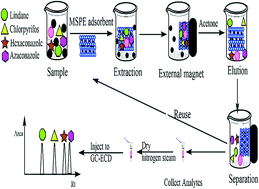
2.9.2 Magnetic solid phase extraction. Fig. 3 shows the schematic diagram of the MSPE process for the extraction of selected chlorinated pesticides using the synthesized Fe3O4@SiO2–G MNPs. The experiments were performed in Erlenmeyer flasks (100 mL) which contain 60 mg of the adsorbent and 50 mL of 1 ng mL−1 solution of each chlorinated pesticide or adsorbed solution. For equilibrium studies the flasks were shaken on an orbital shaker at a constant speed of 250 rpm at 25 °C for 5 min. The adsorbent was then separated using an external magnet and the trapped analytes were desorbed using 3 mL of acetone. The eluted solution was evaporated by blowing over a gentle stream of nitrogen gas and reconstituted with 50 μL of propazine (100 ng mL−1 in methanol) as an internal standard (IS). Finally, 1 μL of the reconstituted solution was injected into a GC-μECD to determine the extracted lindane, chlorpyrifos, hexaconazole and azaconazole. Triplicate injections were performed for each extract and an average peak area ratio reading was taken.
 |
| | Fig. 3 Schematic representation of graphene-based MSPE procedure. | |
2.9.3 C18-SPE procedure. A commercial C18-SPE cartridge was optimized with important extraction parameters such as type of solvent, volume of solvent, sample volume and flow rate. Acetone, acetonitrile, methanol, ethyl acetate and n-hexane were used to optimize the solvents effect on C18 SPE. Comparatively, a high extraction efficiency was achieved using acetonitrile (0.5 mL to 5 mL). On the basis of the results, 2 mL of acetonitrile was selected as the optimized solvent volume. In order to improve the preconcentration factor, the sample volume was also optimized (1 mL to 50 mL). The maximum extraction efficiency was obtained with 10 mL of sample volume and thus was selected as the optimized sample volume. The best result was achieved at 0.5 mL min−1 flow rate.
2.10 Adsorption capacity
Using the optimized conditions the adsorbent capacity (qe) was investigated for residual chlorinated pesticides in water samples. The residual concentration of chlorinated pesticides was analyzed using GC-μECD by reconstituting the analyte with 100 μL methanol as described previously.35 The adsorption capacity was calculated using eqn (1) as follows:| |
 | (1) |
where qe is the adsorption capacity (mg g−1), V is the initial volume of the sample (L) before pretreatment, m is the mass of applied adsorbent (g) for extraction, C0 is the initial concentration (mg L−1) and Ce is the residual concentration (mg L−1) of analytes in the solution produced after extraction.
3. Result and discussion
3.1 Characterization
3.1.1 FT-IR spectra. The synthesis of Fe3O4@SiO2, functionalization of graphene and immobilization of functionalized graphene onto the Fe3O4@SiO2 were confirmed by FT-IR spectral analysis (Fig. 4A–C). Natural graphite does not contain any functional groups. However, following the functionalization process the resultant GO (Fig. 4A) shows some additional bands at 3372, 1720, 1625, 1436, 1168 and 1050 cm−1 for of O–H, C
O, C
C, C–C, epoxy groups and C–O group stretching, respectively.21 The appearance of sharp bands (Fig. 4B) at 582 and 1100 cm−1 corresponds to Fe–O and Si–O symmetric stretching, respectively.35 The formation of Fe3O4@SiO2–G MNPs was confirmed by the appearance as well as disappearance of characteristic bands. The IR spectra of GO (Fig. 4A) does not show a Si–O stretching band, however, following the immobilization with Fe3O4@SiO2 the resultant material Fe3O4@SiO2–G MNPs shows a band at 1100 cm−1. Additionally, during the immobilization the Si–O group intensity also reduced and disappearance of characteristic bands at 1720 and 1168 cm−1 for C
O and epoxy groups (Fig. 4C) respectively also offer proof for the formation of Fe3O4@SiO2–G MNPs. Consequently appearance and disappearance of some characteristic peaks provide qualitative evidence which confirms the immobilization of GO onto Fe3O4@SiO2 as well as formation of Fe3O4@SiO2–G MNPs.
 |
| | Fig. 4 FT-IR spectra of (A) GO, (B) Fe3O4@SiO2 and (C) graphene-based magnetic nanocomposite. | |
3.1.2 Field emission scanning microscopy. The morphology of the newly synthesized magnetic graphene-based adsorbent (Fe3O4@SiO2–G) was analyzed using field emission scanning microscopy (FESEM). The white cloud-like appearance (Fig. 5A) clearly shows that nanosize visible graphene sheets have been successfully immobilized with silica coated MNPs of Fe3O4@SiO2. Furthermore, in order to examine the purity and elemental composition of the silica coated MNP immobilized material (Fe3O4@SiO2–G), FESEM was coupled with energy dispersive spectroscopy (EDS). The EDS results (Fig. 5B) showed 50%, 17.91% and 5.50% of C, Fe and Si respectively, in the Fe3O4@SiO2–G. As we know graphene oxide does not contain Si and Fe, and Fe3O4@SiO2 does not contain C. But after the immobilization of Fe3O4@SiO2 onto the modified graphene oxide, the presence of Si, Fe and C confirmed the successful immobilization.
 |
| | Fig. 5 (A) Micrograph image and (B) EDS spectra of the graphene-based silica MNPs. | |
3.1.3 XRD. Fig. 6 shows the XRD signals of Fe3O4, Fe3O4@SiO2, and Fe3O4@SiO2–G. The Fe3O4 signals appeared as 2θ values of 30.14° (220), 35.51° (311), 43.15° (400), 53.44° (422), 57.09° (334), 62.68° (400) and 74.16° (533). In Fig. 6B, the broad peak at 20.44° revealed that following the coating with SiO2 the intensity of Fe3O4 has decreased. The GO skeleton possesses significantly high diffraction signals at 2θ = 10.3° (001) and a weak one at 43.3° (101).28,36,37 The disappearance of the high diffraction signal for GO and the appearance of a broad band signal at 26.1° in XRD spectra (Fig. 6C) may be attributed to the successful conversion of GO into graphene sheet through a reduction process in basic solution i.e., hydrazine hydrate and ammonia solution. The XRD results of the synthesized Fe3O4 MNPs completely matched the library template pattern number 01-071-6336. Furthermore, the quite small size of Fe3O4 particles can be predicted by the wider signals in the XRD spectra.38
 |
| | Fig. 6 XRD patterns of (A) Fe3O4 (B) Fe3O4@SiO2 and (C) Fe3O4@SiO2–G magnetic nanocomposite. | |
3.2 Optimization of different parameters
A batch-wise MSPE study was carried out to evaluate the extraction efficiency of the synthesized Fe3O4@SiO2–G adsorbent for the selected chlorinated pesticides. Important parameters such as of desorption solvent, volume of solvent, extraction time, desorption time, sample volume and pH were optimized.
3.2.1 Types of desorption solvent. The effect of desorption solvent on MSPE performance has been investigated using seven organic solvents of different polarity. It is obvious from Fig. 7A that significant extraction efficiency was obtained with 3 mL acetone.
 |
| | Fig. 7 Effect of (A) desorption solvents, (B) sample volume, (C) adsorbent dosage and (D) solution pH on chlorinated pesticide extraction efficiency. | |
3.2.2 Extraction and desorption time. The extraction and desorption times are the key parameters for an effective MSPE process. To optimize extraction time trials ranging from 1 to 90 min were used. The highest peak area ratio was observed within 3 min. For desorption time, time settings from 1 to 5 min were studied. The peak area was significantly highest in 1 minute. Thus, 3 min and 1 min were selected as the extraction and desorption times, respectively.
3.2.3 Sample volume. In order to obtain a high enrichment factor the sample volume (5 to 80 mL) was investigated (Fig. 7B). By increasing the volume (5–50 mL), the enrichment factor increased as well as the peak area ratio and it attains a maximum at 50 mL of sample volume. Beyond the 50 mL of sample volume there is no significant change in the peak area, consequently 50 mL was chosen as the optimized sample volume for further analysis.
3.2.4 Adsorbent dosage. The effect of adsorbent dosage on the percent extraction of chlorinated pesticides was assessed by changing the mass of adsorbent in the range of 10 to 120 mg (Fig. 7C). Increasing the mass of adsorbent, increased the % extraction of the chlorinated pesticides. The dosage study clarified that chlorinated pesticide extraction efficiency remarkably increased up to 60 mg of adsorbent. There after increasing the mass of adsorbent did not produce a significant improvement in % extraction. Consequently, all the experiments were performed with a fixed mass of adsorbent i.e., 60 mg.
3.2.5 Solution pH study. pH is also one of the key parameters and plays an important role during the adsorption process. It affects the aqueous chemistry as well as the dissociation of functional groups on the active sites of the adsorbent. Consequently, the effect of solution pH on the pesticide adsorption using the graphene-based magnetic adsorbent was examined at different pHs (i.e., 3.5, 5.0, 6.5, 8.0 and 10.0). It can be seen from Fig. 7D that the peak area of the isolated chlorinated pesticides in acidic conditions was higher as compared to basic media. The high extraction of chlorinated pesticides in a slightly acidic medium i.e., pH 6–7 can be explained on the basis of point zero charge (PZC) of graphene-based material. In an acidic medium (pH 5.0 to 6.5) the graphene-based adsorbent had a net positive surface charge.39,40 Results showed that by decreasing the solution pH, extraction increases and it attains the maximum i.e., 88.5%, 92.9%, 100.9% and 96.9% for lindane, chlorpyrifos, hexaconazole and azaconazole pesticide, respectively at pH 6.5. In this case the probable mechanism is surface complexation by means of surface association between the acidic hydroxyl (+OH2) groups of the graphene-based adsorbent and anionic sites of the chlorinated pesticides. While at low pH, the decrease in extraction efficiency may be due to the repulsion between the positive surface of the adsorbent and positive ions on the chlorinated pesticides. On the other hand at higher pH the deprotonation of the phenolic hydroxyl groups of the graphene moiety in the graphene-based adsorbent converts them into negatively charged phenoxide ions. Following the deprotonation as well as due to the abundance of OH− ions, extraction of chlorinated pesticides decreases. The dramatic decrease in % extraction of chlorinated pesticides at higher pH (pH 8) is due to the fact that pesticides undergo hydrolysis rather than adsorption.41,42
3.3 Comparison of extraction performance
Comparative studies were performed in order to compare the extraction performance of the newly synthesized Fe3O4@SiO2–G adsorbent with Fe3O4@SiO2 and the commercially available C18-SPE cartridge (100 mg) for the preconcentration of chlorinated pesticides. Fig. 8 shows that the high sensitivity of C18 is only for the non-polar chlorpyrifos (log
KO/W 4.7) and hexaconazole (log
KO/W 3.6) since it only provides non-covalent hydrophobic interactions. Due to SiO2 porosity and polar hydroxide groups, Fe3O4@SiO2 shows slightly higher efficiency for the moderately polar azaconazole (log
KO/W 2.7). The newly synthesised Fe3O4@SiO2–G adsorbent showed a significantly higher extraction efficiency for both the non-polar as well as moderately polar chlorinated pesticides namely chlorpyrifos, hexaconazole and azaconazole. The higher extraction efficiency of the newly synthesized Fe3O4@SiO2–G for non-polar as well as moderately polar pesticides can be explained by the fact that the newly synthesized adsorbent contains a benzene moiety which can form a strong π–π interaction with the benzene ring of the selected chlorpyrifos, hexaconazole and azaconazole pesticides. An H-bonding interaction was also observed (Fig. 9) and lindane affinity can be explained by hydrophobic and electrostatic interaction.
 |
| | Fig. 8 Comparison of extraction performance (based on peak areas ratio) of three different sorbents for the chlorinated pesticides pre-concentration. Conditions for extractions: sample volume 10 mL, concentration of analytes 1 ng mL, EF 100, extraction time 5 min, desorption time 3 min and 3 mL acetonitrile as desorption solvent. | |
 |
| | Fig. 9 Proposed mechanism for the adsorption of the chlorinated pesticides by Fe3O4@SiO2–G. | |
3.4 Adsorption study
The adsorption capacity (qe) of the newly prepared Fe3O4@SiO2, Fe3O4@SiO2–G adsorbents and C18-SPE sorbent for chlorinated pesticides was calculated using eqn (1). A plot of qe versus Ce (residual concentration) as shown in (Fig. 10A) illustrates that the adsorption capacity of Fe3O4@SiO2–G was increased by increasing the residual concentration until the adsorbent sites were saturated.
 |
| | Fig. 10 (A) Experimental adsorption capacity of newly synthesized sorbent and (B) Langmuir linearity. Conditions: 50 mL sample in deionized water (0.1–7 μg mL−1), extraction time 3 min, and adsorbent 60 mg. | |
3.5 Adsorption isotherms
The correlation between the amounts of solute adsorbed per unit amount of the adsorbent and concentration of adsorbate in bulk solution at a given temperature under equilibrium conditions can be analyzed by using adsorption isotherms. The analysis of isotherm data plays a significant role in predicting the maximum adsorption capacity (qm) of the adsorbent. Consequently, three well known isotherm models namely Langmuir, Freundlich and Temkin isotherms were tested in the following way:43| |
 | (2) |
| |
 | (3) |
| |
Temkin: qe = B ln A + B ln Ce
| (4) |
where Ce is the residual concentration of pesticides in the solution (mg L−1), qe is the experimental adsorption capacity (mg g−1), qm is the maximum adsorption capacity (mg g−1), k is the Langmuir constant (L mg−1), KF [(mg g−1)/(mg g−1)1/n] and n are the Freundlich isotherm constants. A is Temkin equilibrium constant (L g−1) and B is the heat of sorption constant (J mol−1).
Good linearity was obtained with the Langmuir isotherm model (Fig. 10B). Thus, adsorption of the selected chlorinated pesticides was well fitted by the Langmuir isotherm model as compared to the Freundlich isotherm and Temkin model due to the high value of coefficient of determination (R2). The qm values (Table 1) showed that the newly synthesized Fe3O4@SiO2–G adsorbent possesses a high adsorption capacity (qm) for the selected chlorinated pesticides. However, the Fe3O4@SiO2–G provided 16× and 30× higher adsorption capacity as compared to the Fe3O4@SiO2 and C18-SPE, respectively.
Table 1 Maximum adsorption capacity (qm) for C18-SPE, Fe3O4@SiO2 NPs and Fe3O4@SiO2–G
| Model |
Maximum adsorption capacity (qm) |
| Lindane |
Chlorpyrifos |
Hexaconazole |
Azaconazole |
| C18 |
0.82 |
0.73 |
0.63 |
0.64 |
| Fe3O4@SiO2 |
1.58 |
1.82 |
2.1 |
1.18 |
| Fe3O4@SiO2–G |
13.04 |
16.58 |
18.69 |
15.35 |
3.6 Method validation
The analytical performance of the proposed magnetic graphene-based MSPE method was validated using different analytical parameters such as linearity, limit of detection (LOD), limit of quantification (LOQ), precision (RSD%), reusability and enrichment factor (EF). The linearity of the MSPE technique for chlorinated pesticide using Fe3O4@SiO2–G, Fe3O4@SiO2 and commercial SPE-C18 was examined at different concentration levels i.e., 0.001–0.1 ng mL−1, 0.1–1 ng mL−1 and 0.5–10 ng mL−1, respectively. Good linearity with a high value of coefficient of determination (R2) i.e., 0.9991–0.9998 were obtained for the selected chlorinated pesticides (Table 2). The final concentration was calculated using a calibration graph method i.e., (Ax/Ais) versus (C0/Cis), where Ax is the peak area after extraction, Ais is the peak area for the internal standard, C0 is the initial concentration (ng mL−1) and Cis is the internal standard concentration (ng mL−1). The LODs (S/N = 3) obtained for all pesticides were between 0.1 and 0.3 pg mL−1 (n = 3) with 1000 × EF. Table 2 shows that the LOD for Fe3O4@SiO2–G is appreciably lower as compared to the Fe3O4@SiO2 and commercial C18-SPE. The LOD obtained for Fe3O4@SiO2–G is below the MRL i.e. 100 pg mL−1 as set by US EPA or EU for each pesticide in drinking water.
Table 2 Statistical results of MSPE method, including limit of detection (LOD), limit of quantification (LOQ), linearity and enrichment factor (EF) using three different adsorbents
| Validation |
Sorbent |
Analyte |
| Lindane |
Chlorpyrifos |
Hexaconazole |
Azaconazole |
| Enrichment factor (EF) was calculated using (EF = Vaq/Vorg) equation. |
| Linearity (ng mL−1) |
C18 |
0.5–5 |
0.5–5 |
0.5–5 |
0.5–5 |
| Fe3O4@SiO2 |
0.1–1 |
0.1–1 |
0.1–1 |
0.1–1 |
| Fe3O4@SiO2–G |
0.001–0.1 |
0.001–0.1 |
0.001–0.1 |
0.001–0.1 |
| R2 |
C18 |
0.9996 |
0.9997 |
0.9999 |
0.9997 |
| Fe3O4@SiO2 |
0.9998 |
0.9993 |
0.9994 |
0.9996 |
| Fe3O4@SiO2–G |
0.9997 |
0.9995 |
0.9998 |
0.9994 |
| LOD (pg mL−1, n = 3) |
C18 |
214 |
206 |
70 |
217 |
| Fe3O4@SiO2 |
16 |
18 |
30 |
25 |
| Fe3O4@SiO2–G |
0.278 |
0.158 |
0.119 |
0.221 |
| LOQ (pg mL−1, n = 3) |
C18 |
712.62 |
685.98 |
233.1 |
722.61 |
| Fe3O4@SiO2 |
53 |
60 |
99 |
83 |
| Fe3O4@SiO2–G |
0.925 |
0.526 |
0.396 |
0.736 |
| EFa |
C18 |
80 |
80 |
80 |
80 |
| Fe3O4@SiO2 |
1000 |
1000 |
1000 |
1000 |
| Fe3O4@SiO2–G |
1000 |
1000 |
1000 |
1000 |
The repeatability and reproducibility of the proposed MSPE method were investigated using intraday and interday measurements. Relative standard deviation (%RSD) was assessed for extraction of 1 ng mL−1 chlorinated pesticides followed by preconcentration thrice in a day (intraday) for five consecutive days (interday) (Table 3). The interday value looks a little bit larger but ANOVA showed no significant difference between the whole analysis, since, p > 0.05 and Fexperimental < Ftable at 95% confidence level. Thus repeatability and reproducibility values for proposed MSPE method are acceptable.
Table 3 Repeatability and reproducibility of MSPE method for chlorinated pesticide extraction (50 mL sample include 0.1 ng mL−1 of each chlorinated pesticides)
| Intra-day (n = 3) |
MSPE (Fe3O4@SiO2–G) |
| Lindane |
Chlorpyrifos |
Hexaconazole |
Azaconazole |
| Day 1 |
4.34 |
7.21 |
4.69 |
6.95 |
| Day 2 |
8.25 |
5.30 |
6.33 |
3.32 |
| Day 3 |
5.52 |
1.38 |
1.57 |
6.26 |
| Day 4 |
3.58 |
4.13 |
2.16 |
7.08 |
| Day 5 |
4.60 |
1.25 |
1.01 |
1.37 |
| Inter-day (n = 15) |
8.47 |
9.72 |
4.94 |
8.06 |
Reusability of the newly synthesized adsorbent was studied for 40 continuous adsorption–desorption cycles. For regeneration, the adsorbent was washed sequentially with 2 mL acetone, 2 mL acetonitrile and 3 mL deionized water after each extraction process. The chlorpyrifos, hexaconazole, azaconazole and lindane were pre-concentrated at least 15–30 times without significant decrease in extraction efficiency.
3.7 Environmental water sample analysis
In order to assess the field application of the proposed MSPE method, chlorinated pesticides were isolated from environmental water samples i.e. tap, river, lake and sea water samples. Table 4 shows that tap water has a high percent recovery as compared to the sea water due to matrix interference. The results indicate that in spite of interference the graphene-based adsorbent was still capable of absorbing 0.50 pg mL−1 of chlorinated pesticide from environmental water samples with good recovery 80.8–106.3% and lower RSD% (2.1–7.9%).
Table 4 Percentage recovery and precision (±RSD%) of chlorinated pesticides from different water samples for C18, Fe3O4@SiO2 and Fe3O4@SiO2–G
| SPE sorbent |
Sample |
%Recoverya (±RSD%, n = 3) |
| Lindane |
Chlorpyrifos |
Hexaconazole |
Azaconazole |
| The numbers in the parenthesis shows the precision (%RSD, n = 3). |
| C18 |
Tap water |
86.6 (1.8) |
86.5 (3.6) |
92.4 (3.3) |
90.4 (1.7) |
| River water |
83.5 (4.1) |
83.4 (10.2) |
90.3 (2.4) |
88.1 (6.6) |
| Lake water |
87.4 (4.9) |
81.1 (5.2) |
83.9 (3.7) |
81.3 (2.9) |
| Sea water |
72.5 (2.9) |
73.6 (4.3) |
72.0 (13.3) |
71.4 (12.4) |
| Fe3O4@SiO2 |
Tap water |
95.2 (2.5) |
103.7 (7.6) |
102.1 (8.1) |
101.2 (9.4) |
| River water |
92.0 (7.3) |
98.6 (9.3) |
99.9 (3.1) |
98.0 (8.2) |
| Lake water |
97.4 (5.8) |
101.6 (4.8) |
97.2 (5.7) |
97.9 (3.6) |
| Sea water |
88.4 (8.6) |
87.9 (9.6) |
83.4 (3.9) |
94.7 (2.9) |
| Fe3O4@SiO2–G |
Tap water |
104.1 (2.1) |
106.3 (2.1) |
103.8 (3.7) |
105.9 (6.5) |
| River water |
104.3 (5.1) |
100.2 (2.5) |
104.5 (4.9) |
100.3 (2.9) |
| Lake water |
101.2 (2.0) |
100.5 (7.9) |
103.5 (5.3) |
101.1 (4.9) |
| Sea water |
92.2 (3.9) |
86.8 (7.1) |
80.8 (3.6) |
89.2 (7.7) |
3.8 Chromatograms of the extracted chlorinated pesticides
GC-μECD was used for the analysis of chlorinated pesticides from water samples. Fig. 11A shows the chromatogram of the tap water sample. It was found that the tap water analysed did not contain the chlorinated pesticides of interest since expected peaks were not observe at expected retention times (tR) of 5.9, 7.2, 7.9 and 8.2 min under similar GC-μECD conditions. Only a single sharp peak at 5.6 min, which belongs to internal standard (IS) propazine was observed. Fig. 11B shows the chromatogram of the spiked tap water sample for extracted chlorinated pesticides using the newly synthesised Fe3O4@SiO2–G. The data revealed that the proposed MSPE method was suitable to analyze the chlorinated pesticides in water samples since sharp peaks were observed at 5.6, 5.9, 7.2, 7.9 and 8.2 min for the propazine (IS), lindane, chlorpyrifos, hexaconazole and azaconazole, respectively.
 |
| | Fig. 11 GC-μECD chromatograms obtained using graphene-based MSPE from tap water samples for (A) unspiked, (B) spiked chlorinated pesticides (50 pg mL−1). Peaks: (1) lindane; (2) chlorpyrifos; (3) hexaconazole; (4) azaconazole and propazine as an internal standard (IS). | |
3.9. Comparison with other results
For the validation of the study, the results obtained were compared with previously reported adsorbents from the literature. Comparison of LOD (Table 5) reveals that Fe3O4@SiO2–G is 10–110× more sensitive compared to the previously reported adsorbents.
Table 5 Comparison of LOD of the current study with other recent MSPE sorbents
| SPE sorbent |
Analyte |
LOD (pg mL−1) |
Method |
Detector |
Ref. |
| Fe3O4@SiO2–G |
Lindane, chlorpyrifos, hexaconazole, azaconazole |
0.12 |
MSPE |
GC-μECD |
This study |
| Pillararene–Fe3O4 |
Fusilazole, cyprodinil, pyrimethanil, trifumizole |
500 |
MSPE |
HPLC-UV |
44 |
| Graphene–Fe3O4 |
Chloroacetanilide herbicides |
20.0 |
MSPE |
GC-ECD |
45 |
| Graphene–Fe3O4 |
Herbicides |
10.0 |
MSPE |
GC-FID |
46 |
| Fe3O4@dioctadecyl dimethyl ammonium chloride@silica |
Herbicides |
70.0 |
MSPE |
HPLC-UV |
47 |
4. Conclusion
A new graphene-based silica coated magnetic adsorbent (Fe3O4@SiO2–G) was successfully synthesized and characterized using FT-IR, FESEM, EDS and XRD. The newly synthesised Fe3O4@SiO2–G was successfully applied for the preconcentration of four selected chlorinated pesticides from aqueous media. Outstanding adsorption efficiencies of 88.5%, 92.9%, 100.9% and 96.9% were achieved at pH 6.5 for lindane, chlorpyrifos, hexaconazole and azaconazole, respectively. The significant adsorption capacity (13.04–18.35 mg g−1) and low LOD (0.12–0.28 pg mL−1) with 1000× EF confirmed that the newly synthesized Fe3O4@SiO2–G is a versatile adsorbent for the preconcentration of chlorinated pesticides as compared to Fe3O4@SiO2 and C18-SPE. The field studies also supported the effectiveness of this new magnetic nanocomposite adsorbent which could be useful and has good potential for the extraction of selected pesticides from real water samples.
Acknowledgements
The authors would like to thank Universiti Teknologi Malaysia for facilitations and the Ministry of Education Malaysia for financial support (Q.J130000.2626.10J43). H. R. Nodeh also would like to thank UTM for the International Doctoral Fellowship (IDF) received.
References
- U. S. McKnight, J. J. Rasmussen, B. Kronvang, P. J. Binning and P. L. Bjerg, Environ. Pollut., 2015, 200, 64–76 CrossRef CAS PubMed.
- Y. Gou, R. Eisert and J. Pawliszyn, J. Chromatogr. A, 2000, 873, 137–147 CrossRef CAS.
- W. Zhang, F. Jiang and J. Ou, Proc. Int. Acad. Ecol. Environ. Sci., 2011, 1, 125–144 CAS.
- F. P. Carvalho, Environ. Sci. Policy, 2006, 9, 685–692 CrossRef PubMed.
- J. M. Dabrowski, J. M. Shadung and V. Wepener, Environ. Int., 2014, 62, 31–40 CrossRef CAS PubMed.
- A. Bergman, J. J. Heindel, T. Kasten, K. A. Kidd, S. Jobling, M. Neira, R. T. Zoeller, G. Becher, P. Bjerregaard and R. Bornman, Environ. Health Perspect., 2013, 121, a104–106 CrossRef PubMed.
- P. K. Seth, in Water and Health, Springer, 2014, pp. 375–384 Search PubMed.
- J. S. Burns, P. L. Williams, S. A. Korrick, R. Hauser, O. Sergeyev, B. Revich, T. Lam and M. M. Lee, Am. J. Epidemiol., 2014, 180, 909–919 CrossRef PubMed.
- Rodal, ROADAL news, 2014, http://www.rodalenews.com/pesticides-apples.
- L. Cai, J. Xing, L. Dong and C. Wu, J. Chromatogr. A, 2003, 1015, 11–21 CrossRef CAS.
- M. A. Farajzadeh, S. M. Sorouraddin and M. R. A. Mogaddam, Microchim. Acta, 2014, 1–23 Search PubMed.
- W. A. Wan Ibrahim, K. V. Veloo and M. M. Sanagi, J. Chromatogr. A, 2012, 1229, 55–62 CrossRef CAS PubMed.
- Y. Cai, G. Jiang, J. Liu and Q. Zhou, Anal. Chem., 2003, 75, 2517–2521 CrossRef CAS.
- H. Bagheri and A. Roostaie, J. Chromatogr. A, 2014, 1324, 11–20 CrossRef CAS PubMed.
- H. Bagheri and A. Roostaie, J. Chromatogr. A, 2015, 1375, 8–16 CrossRef CAS PubMed.
- X. Zhu, F. Tang, J. Yang and Y. Gao, J. Chin. Chem. Soc., 2014, 61, 227–232 CrossRef CAS PubMed.
- E. Sahmetlioglu, E. Yilmaz, E. Aktas and M. Soylak, Talanta, 2014, 119, 447–451 CrossRef CAS PubMed.
- H. Bagheri, A. Roostaie and M. Y. Baktash, Anal. Chim. Acta, 2014, 816, 1–7 CrossRef CAS PubMed.
- X. Luo, F. Zhang, S. Ji, B. Yang and X. Liang, Talanta, 2014, 120, 71–75 CrossRef CAS PubMed.
- Z. Shi, J. Hu, Q. Li, S. Zhang, Y. Liang and H. Zhang, J. Chromatogr. A, 2014, 1355, 219–227 CrossRef CAS PubMed.
- W. Guan, Z. Li, H. Zhang, H. Hong, N. Rebeyev, Y. Ye and Y. Ma, J. Chromatogr. A, 2013, 1286, 1–8 CrossRef CAS PubMed.
- Y. Ke, F. Zhu, F. Zeng, T. Luan, C. Su and G. Ouyang, J. Chromatogr. A, 2013, 1300, 187–192 CrossRef CAS PubMed.
- X. Chen, F. Meng, Z. Zhou, X. Tian, L. Shan, S. Zhu, X. Xu, M. Jiang, L. Wang and D. Hui, Nanoscale, 2014, 6, 8140–8148 RSC.
- Z. Dong, D. Wang, X. Liu, X. Pei, L. Chen and J. Jin, J. Mater. Chem. A, 2014, 2, 5034–5040 CAS.
- R. Sitko, B. Zawisza and E. Malicka, TrAC, Trends Anal. Chem., 2013, 51, 33–43 CrossRef CAS PubMed.
- Q. Han, Z. Wang, J. Xia, X. Zhang, H. Wang and M. Ding, J. Sep. Sci., 2014, 37, 99–105 CrossRef CAS PubMed.
- Q. Han, Z. Wang, J. Xia, L. Xia, S. Chen, X. Zhang and M. Ding, J. Sep. Sci., 2013, 36, 3586–3591 CrossRef CAS PubMed.
- M. Alvand and F. Shemirani, Microchim. Acta, 2014, 181, 181–188 CrossRef CAS.
- L. Liu, T. Feng, C. Wang, Q. Wu and Z. Wang, Microchim. Acta, 2014, 181, 1249–1255 CrossRef CAS.
- L. Wang, X. Xu, Z. Zhang, D. Zhang, X. Liu and L. Zhang, RSC Adv., 2015, 5, 22022–22030 RSC.
- M. Sun, X. Ma, J. Wang, W. Wang, Q. Wu, C. Wang and Z. Wang, J. Sep. Sci., 2013, 36, 1478–1485 CrossRef CAS PubMed.
- N. Sun, C. Deng, Y. Li and X. Zhang, ACS Appl. Mater. Interfaces, 2014, 6, 11799–11804 CAS.
- A. Demir, A. Baykal, H. Sözeri and R. Topkaya, Synth. Met., 2014, 187, 75–80 CrossRef CAS PubMed.
- C. Wu, H. He, H. Gao, G. Liu, R. Ma, Y. An and L. Shi, Sci. China: Chem., 2010, 53, 514–518 CrossRef CAS.
- Q. Tang, X. Wang, F. Yu, X. Qiao and Z. Xu, J. Sep. Sci., 2014, 37, 820–827 CrossRef CAS PubMed.
- Y. Tang, F. Huang, W. Zhao, Z. Liu and D. Wan, J. Mater. Chem., 2012, 22, 11257–11260 RSC.
- S. Shubhda, J. Kiran, V. N. Singh, S. Sukhvir, N. Vijayan, D. Nita, G. Govind and T. D. Senguttuvan, Nanotechnology, 2012, 23, 205–501 Search PubMed.
- T. T. Baby and S. Ramaprabhu, Talanta, 2010, 80, 2016–2022 CrossRef CAS PubMed.
- J. Li, S. Zhang, C. Chen, G. Zhao, X. Yang, J. Li and X. Wang, ACS Appl. Mater. Interfaces, 2012, 4, 4991–5000 CAS.
- X. Yu, S. Tong, M. Ge, L. Wu, J. Zuo, C. Cao and W. Song, Carbohydr. Polym., 2013, 92, 380–387 CrossRef CAS PubMed.
- B. Maddah and J. Shamsi, J. Chromatogr. A, 2012, 1256, 40–45 CrossRef CAS PubMed.
- A. M. Filho, F. N. dos Santos and P. A. d. P. Pereira, Microchem. J., 2010, 96, 139–145 CrossRef PubMed.
- L. Li, L. Fan, H. Duan, X. Wang and C. Luo, RSC Adv., 2014, 4, 37114–37121 RSC.
- M. M. Tian, D. X. Chen, Y. L. Sun, Y. W. Yang and Q. Jia, RSC Adv., 2013, 3, 22111–22119 RSC.
- Z. Li, S. Bai, M. Hou, C. Wang and Z. Wang, Anal. Lett., 2013, 46, 1012–1024 CrossRef CAS PubMed.
- S. S. Bai, Z. Li, X. H. Zang, C. Wang and Z. Wang, Chin. J. Anal. Chem., 2013, 41, 1177–1182 CrossRef CAS.
- Z. He, D. Liu, R. Li, Z. Zhou and P. Wang, Anal. Chim. Acta, 2012, 747, 29–35 CrossRef CAS PubMed.
|
| This journal is © The Royal Society of Chemistry 2015 |
Click here to see how this site uses Cookies. View our privacy policy here.