Biological denitrification in high salinity wastewater using semen litchi as a carbon source

Hua Liab, Ziming Zhou ab, Qingsong Liua, Hongbiao Donga, Yafei Duana, Chunhou Lia, Jiasong Zhang*a and Hongxin Tanb
aKey Lab of South China Sea Fishery Resources Exploitation & Utilization, Ministry of Agriculture, South China Sea Fisheries Research Institute, Chinese Academy of Fishery Science, Guangzhou, 510300, China. E-mail: jiasongzhang@hotmail.com
bCollege of Fisheries and Life Science, Shanghai Ocean University, Shanghai, 201306, China

Received 1st July 2015 , Accepted 15th October 2015

First published on 15th October 2015


Abstract

A new agricultural waste semen litchi was used as the sole carbon source to remove nitrate from high salinity wastewater in laboratory reactors. The main nutrient components, the content of heavy metals and the morphology of semen litchi were first studied. The results showed that semen litchi contained about 60% organic carbon and low levels of heavy metals. The milled semen litchi had lots of gap structures and abundant starch granules. Then the release velocity of the carbon source and the denitrification rate in high salinity wastewater were investigated. It was found that semen litchi could supply continuous organic carbon for denitrification. And the maximum TOC concentration could reach 137.29 mg l−1 on the 46th day. The nitrate removal rate and denitrification rate could reach 98.8–99.5% and 192 mg N (l−1 d−1), respectively. During the whole denitrification reaction, the nitrite concentration was lower than 0.01 mg l−1. A microbial community profile by Polymerase Chain Reaction-Denaturing Gradient Gel Electrophoresis (PCR-DGGE) indicated that the denitrifying bacteria (Sphingomonas family and Rhodospirillum family) became enriched in the semen litchi sludge. Furthermore, salinity didn't have a negative effect on denitrification. Semen litchi could be used as an economical and effective carbon source for denitrification in high salinity wastewater.

1. Introduction

Increased nitrogen pollutants have caused serious eutrophication and algal blooms in most areas of china.1 Physical, chemical and biological methods have been used to remove nitrate from wastewater. However, among these various methods, heterotrophic denitrification seems to be an environment-friendly and economic process.2

In the biological denitrification processes, organic carbon source is need as the electron donor for the reduction of nitrate and nitrite transformation into nitrogen gas. Therefore, it is great important to add organics into denitrifying systems, especially in the wastewater with lower C/N ratio.3 External carbon sources have been widely used in laboratory and engineering applications, such as methanol,4 ethanol,5 acetic acid6 and biodegradable polymers (BDPs), such as polylactic acid (PLA),3 poly-β-hydroxybutyrate (PHB)7 and polycaprolactone (PCL).8 However, liquid carbon source has a risk of overdosing which would cause deterioration of effluent quality and the BDPs are too expensive to be used in engineering application.9

Natural, organic substances such as rice husk,9 wood chips,10 wheat straw11 and cotton12 have been developed as cheap and safe carbon source to remove nitrate from wastewater. Litchi is a tropical fruit of high commercial value in the international fruit market, with an established production rate of 2[thin space (1/6-em)]600[thin space (1/6-em)]000 ton a−1.13,14 As the agricultural waste of litchi, the output of semen litchi is also very large. It is reported15 that the main component of semen litchi is starch which can provide nutrition for microorganism. However, there are only a few applications of semen litchi in traditional chinese medicine. Little information is currently available to the behaviors in wastewater treatment by natural semen litchi, especially in the high salinity wastewater.

In this paper, we propose semen litchi as the sole carbon source for biological denitrification in high salinity wastewater. The main nutrient components, the content of heavy metals and the morphology of semen litchi was studied firstly. And then the release velocity of carbon source, denitrification rate in high salinity wastewater and the microbial community composition of sludge after denitrification reaction was systematically investigated, respectively.

2. Materials and methods

2.1 Pretreatment of semen litchi

Semen litchi was purchased from a pharmacy in Guangzhou city. The semen litchi was washed with tap water before air drying (85 °C). Then semen litchi was smashed into granules of 150–200 mesh. The material was preserved at room temperature (25 °C) and kept in a moisture-free container.

2.2 Total organic carbon (TOC) concentration in semen litchi lixivium

The carbon release process was determined in 15 ml centrifuge tubes, 10 ml distilled water and a certain amount of semen litchi were packed in each reactors. The centrifuge tubes were placed in a shaking incubator at 150 rpm (30 °C). After the 1st, 2nd, 3rd, 4th, 8th, 18th, 32nd and 46th day, the lixivium of semen litchi was filtered through 0.45 μm membrane, respectively. Then these samples were analyzed by dissolved organic carbon analyzer (Elementar Liqui-TOC, Germany).

2.3 Denitrification processes

The denitrification processes were carried out in 1000 ml Erlenmeyer flasks which were placed on a magnetic stirring apparatus with rotation speed of 200 rpm at room temperature. Eight grams of semen litchi and 1000 ml of synthetic salinity wastewater were mixed with denitrifying activated sludge (the final concentration was 1.5 g l−1 MLSS). The denitrifying activated sludge (feed sludge) was collected from a recirculating aquaculture system for marine fish. The pH of influent was kept at 7.0–7.5 and salinity was kept at 25‰. The DO level in reactor was less than 0.5 mg l−1.

The synthetic high salinity wastewater was prepared as follows:16 sodium chloride (NaCl, 23.93 g l−1), potassium chloride (KCl, 0.68 g l−1), calcium chloride (CaCl2, 0.99 g l−1), magnesium chloride (MgCl2, 6.09 g l−1), magnesium sulfate (MgSO4, 3.94 g l−1), sodium bicarbonate (NaHCO3, 0.19 g l−1), potassium bromide (KBr, 0.10 g l−1), sodium nitrate (NaNO3, 0.364 g l−1) and monopotassium phosphate (KH2PO4, 0.044 g l−1) in tap water. The concentrations of NO3–N and PO4–P were about 60 mg l−1 and 10 mg l−1, respectively. The wastewater was replaced every day. Samples were taken and filtered through 0.45 μm membrane before analysis. The concentrations of COD, NO3–N, NO2–N were measured according to standard methods17 every day. The pH was determined with a digital, portable pH meter (OHAUS, ST10, USA). The DO level was measured with a digital, portable DO meter (YSI, Model 55, USA). All the reagents used were analytical purity.

2.4 Characterization of semen litchi

The morphology of semen litchi was examined by scanning electron microscopy (SEM) (TM3000, Hitachi Ltd., Japan). Fourier transform infrared (FTIR) spectrum of semen litchi was recorded using a FTIR spectrometer (IRAffinity-1, Shimadzu, Japan.). The content of main nutrient components was determined by standard methods and heavy metals in semen litchi were determined by atomic absorption spectrometry.18,19

2.5 Polymerase chain reaction-denaturing gradient gel electrophoresis (PCR-DGGE) analysis

The samples of seed sludge and the sludge after denitrification were collected. DNA extractions were completed using ZR Soil Microbe DNA MiniPrep™ Kit, following the manufacturer's recommendations. PCR amplification of V3 16S rRNA genes and DGGE as described by ref. 20. The PCR mixture consisted of 25 μl of 2× KOD Fx buffer, 10 μl of 10 mM dNTP mixture, 1.5 μmol of each primer, 1.0 μl of KOD Fx, 2.0 μl of DNA extracted from the sludge sample and sterile ultrapure water to a final volume of 50 μl. Specifically, the PCR conditions were: a hot start of 2 min at 94 °C followed by 25 cycles of 98 °C for 10 s, 58 °C for 15 s and a final extension step of 1 min at 68 °C. Electrophoresis was then performed in 1× TAE buffer for 16 h at a constant voltage of 100 V at 60 °C. The gels were then stained for 30 min using GeneFinder (diluted by 10[thin space (1/6-em)]000×) and photographed.

Nucleotide sequences were then submitted to a BLAST search in GenBank (http://blast.ncbi.nlm.nih.gov/Blast.cgi) to retrieve the closest known alignment identities for the partial 16S rRNA sequences. Statistical comparison of the DGGE patterns on the same gel was completed with Quantity One 4.6.2 (Bio-Rad). Calculation of the similarity matrix was based on the Pearson product moment correlation coefficient. The clustering algorithm was used to calculate dendrograms.

3. Results and discussion

3.1 The constituents of semen litchi

In this paper, the main nutrient components and the content of heavy metals (Cu, Pb, As, Cd and Cr) in semen litchi were studied firstly. As shown in Table 1, high content of starch (48.8%) was determined in semen litchi, similar to the other report.15 The total organic source of semen litchi could reach to 60.07%, the large amounts of starch could be used more easily and quickly by denitrification bacteria. Furthermore, all heavy metals in semen litchi were in low levels and the concentration of Cu was 10.6 mg kg−1, Pb (0.013 mg kg−1), As (0.017 mg kg−1), Cd (0.020 mg kg−1) and Cr (0.73 mg kg−1), respectively. According to the standard method,18,19 the content of heavy metals were safe in semen litchi for animal feeding stuffs. These results indicated that compared with traditional liquid carbon sources, it was safer and possible to use semen litchi as a substrate in wastewater denitrification.
Table 1 The main nutrient components of semen litchi
Item Content (%) Methods
Starch 48.8 ISO 15914-2004 (ref. 21)
Crude protein 4.83 ISO 1871-1975 (ref. 22)
Crude fiber 3.3 ISO 5498-1981 (ref. 23)
Reducing sugar 2.5 ISO 5377-1981 (ref. 24)
Crude fat 0.64 ISO 6492-1999 (ref. 25)


3.2 FTIR spectra of semen litchi

FTIR spectra of semen litchi were presented in Fig. 1. The broad band at 3356 cm−1 was due to the stretching mode of the O–H groups. An intense band at 1648 cm−1 was assigned to the first overtone of the O–H bending vibration. Moreover, the bands at 1159 and 2932 cm−1 were assigned to C–O stretching and C–H stretching, respectively.26 Two strong bands at 1089 and 1014 cm−1 were attributed to CH2–O–CH2 stretching vibrations and the band at 860 cm−1 was assigned to C–O–C ring vibration.27 The FTIR spectra of semen litchi were very similar to the spectra of starch28 which was contributed to the large amounts of starch in semen litchi (Table 1). Furthermore, semen litchi had a variety of hydrophilic groups as shown in Fig. 1, which made it had better biocompatibility and could be used as an excellent carrier for denitrifying bacteria.
image file: c5ra12752a-f1.tif
Fig. 1 FTIR spectra of semen litchi.

3.3 SEM analysis of semen litchi

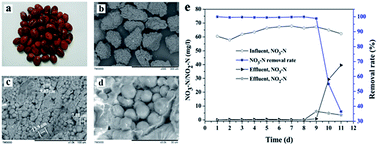
The photographs and SEM micrographs of semen litchi were presented in Fig. 2. As can be seen from the Fig. 2a, semen litchi had a regular kermesinus oval shape and a smooth surface, which made it harder for bacteria to latch onto. After milling process, the smooth surface was destroyed and the semen litchi granules become angular-shaped (Fig. 2b). In Fig. 2c, the internal structure of semen litchi was totally exposed and the surface of semen litchi granules become more rough, which made it easier for bacteria to adhere. From the magnified SEM images of semen litchi (Fig. 2d–f), a large number of starch granules with oval and regular shapes could be clearly observed29,30 (Fig. 2f), the gap structure between the starch granules could provide a lot of space for bacteria growth (Fig. 2d). Moreover, the major particle lengths of the starch granules were ranged from 7 to 14 μm (Fig. 2e), and such scale was in the range of cereal starch, but larger than that of rice starch from 2.4 to 5.4 μm,31 and smaller than most other cereal starch, such as corn starch and wheat starch with mean sizes as 10 μm and 18 μm, respectively.30 The SEM results indicated that after milling process, the rough surface, the abundant starch granules and plenty of gap structure of semen litchi could be benefit to accelerate the adhesion and growth of denitrifying bacteria.
image file: c5ra12752a-f2.tif
Fig. 2 Photographs (a and b) and SEM images (c–f) of semen litchi.

3.4 TOC concentration in lixivium of semen litchi

The TOC concentrations in lixivium of semen litchi at different solid–liquid ratios were shown in Fig. 3. For the first 4 days, TOC concentrations increased quickly, then the release velocity was slow down at 4–8th days, at last it become stable from the 18th to 46th day. During the initial days of operation, the easily dissolved part of semen litchi (for example reducing sugar) was released out, so the TOC increased quickly. As time went on, the starch and protein were gradually released out resulted in slowly increase of TOC. Finally, the TOC concentration reached to a stable level,32 the TOC concentration of different solid–liquid ratios was 131.23 mg l−1, 134.53 mg l−1, 135.23 mg l−1 and 137.29 mg l−1, respectively at 46th days. The results of carbon release showed that semen litchi could provide continuous organic carbon source and could be used as an economical and effective carbon source for denitrification.
image file: c5ra12752a-f3.tif
Fig. 3 TOC of lixivium of semen litchi.

3.5 Denitrification performances of semen litchi

The denitrification performance of semen litchi was investigated and the results were presented in Fig. 4. During the whole denitrification, the nitrate removal rate was between 98.8–99.5% and the nitrite concentration was lower than 0.01 mg l−1. It was interesting to note that a high denitrification performance was achieved at the first day with no nitrite accumulation. That was indicated that semen litchi had short acclimation time33 and the salinity did not had negatively effect on denitrification. Table 2 listed the comparison of denitrification rate of different solid carbon source, compared with the rice husk (90.6–97.8%),9 corncobs (90%)1 and starch–PCL (93.53–99.13%)33 in fresh water, the denitrification rate of semen litchi was much higher even in high salinity water, especially in the first day. The easily dissolved part of semen litchi caused rapid microbial growth so that high removal rate of nitrate was observed at the start-up. Then the starch and protein was gradually released out, and nitrate was readily removed from the salinity water for a long time.1 At last the nitrate concentrations started to increase after a certain time because of the exhaustion of carbon sources at which point the experiments were stopped.
image file: c5ra12752a-f4.tif
Fig. 4 Denitrification performance of semen litchi.
Table 2 Comparison of denitrification rate of different solid carbon source
Carbon source Nitrate removal rate Denitrification rate (mg N (l d−1)) Reference
Corncobs 90% 1
Rice husk 90.6–97.8% 96 9
Cotton 81 9
Wheat straw 53 11
Strach–PCL 93.5–99.1% 33
G. verrucosa 13 36
Liquorice 6.2 36
Giant reed 3.3 36
Semen litchi 98.8–99.5% 191 This study


The changes of COD and pH in effluent water were shown in Fig. 5. At the beginning of this investigation, significant amounts of COD in effluent water were observed because of the readily biodegradable organic matter in the semen litchi. Days later, the concentration of COD decreased rapidly because the number of microorganisms was increased and more carbon source was used. At last, the COD concentration was too low to maintain the denitrification, so the nitrate concentration increased.11 In Fig. 5, the pH of the effluent was changed from 7.1 to 7.4, although the denitrification induced an increase in pH, the degradation in the semen litchi lead to a decrease in pH.9 So the pH of the effluent was maintained steadily during the experiment.


image file: c5ra12752a-f5.tif
Fig. 5 The changes of pH and COD in effluent.

The concentrations of NO3–N, NO2–N and COD variation with time were shown in Fig. 6. It was shown that nitrate concentration decreased quickly and the nitrate can be removed completely after 6 h. Nitrite concentration was increased in the first 2 h and then decreased to 0.005 mg l−1 at 6 h. A high linear correlation between the concentration of NO3–N and time was found and the degrees of correlation r2 was 0.994, indicated that the denitrification process supported by semen litchi was a zero-order reaction.34,35 The denitrification rate of semen litchi was calculated to be 192 mg N (l−1 d−1), which was much higher than the liquorice (6.2 mg N (l−1 d−1)),36 wheat straw (53 mg N (l−1 d−1)) and cotton (81 mg N (l−1 d−1))9 (Table 2).


image file: c5ra12752a-f6.tif
Fig. 6 The changes of NO3–N, NO2–N and COD in effluent.

In Fig. 6, the concentration of COD in effluent water was remain stable at 10 mg l−1 (0–4 h) during the nitrate was removed completely stage. COD releasing was due to the biodegradation of semen litchi and the dissolved organics was served for microbes' growth and electron donor for denitrification. Once the releasing rate of COD exceeded the consuming COD in the denitrification process, COD was accumulated and increased for 6–12 h in the effluent.35

3.6 DGGE analysis of microbial community

The microbial community composition of the feed sludge and semen litchi sludge were investigated through PCR-DGGE analysis. A total of 9 different bands in the DGGE profile showed in Fig. 7 were excised from the gel and sequenced. However, only the c and e bands were present in both lanes, indicated great changes in microbial composition of semen litchi sludge. The GenBank closest relative matches were detailed in Table 3. It can be observed that when semen litchi was used as the carbon source, 16S rRNA gene sequences retrieved from DGGE were closely related to representative of the Sphingomonas family (band b, d and f) and Rhodospirillum family (band g). The species belonged or closely related to these microbial groups had been reported as denitrifying bacteria.37–39 In feed sludge, there were no excised DGGE bands belonged to denitrifying bacteria, which may imply that the genera were not the dominant members in feed sludge. Overall, results from DGGE analysis demonstrated that the bacterial community in semen litchi sludge were highly affected by using semen litchi as the carbon source. The increased biodiversity and denitrifying bacteria in semen litchi sludge resulted in high denitrification rate and rapid reaction rate in semen litchi reactor.
image file: c5ra12752a-f7.tif
Fig. 7 DGGE profiles of PCR-amplified 16S rRNA gene fragments from feed sludge and semen litchi sludge.
Table 3 BLAST search results of sequences from DGGE bands
Band no. Accession number Similarity (%) Closest relatives
a NR_044490.1 99.42 Butyricicoccus pullicaecorum
b NR_104893.1 94.07 Sphingomonas paucimobilis
c NR_104695.1 99.26 Clostridium cadaveris
d NR_116570.1 97.78 Sphingomonas hankookensis
e NR_074264.1 98.52 Caulobacter sp. K31
f NR_118263.1 99.26 Sphingomonas sp. THG B283
g NR_074105.1 91.91 Rhodospirillum centenum SW
h LN849621.1 100 Uncultured bacterium
i NR_074138.1 100 Methylobacterium extorquens AM1


4. Conclusions

In this paper, an agricultural waste semen litchi was used as the sole carbon source for biological denitrification in high salinity wastewater. The results showed that semen litchi had rough surface and gap structure, contained 48.8% starch and low levels of heavy metals. During the whole denitrification processes, the nitrate removal rate of semen litchi could reach 98.8–99.5% and the nitrite concentration was lower than 0.01 mg l−1. The denitrification rate of semen litchi was 192 mg N (l−1 d−1) which was much higher than other agricultural wastes. Furthermore, salinity didn't have negative effect on denitrification. The DGGE analysis verified the biodiversity and denitrifying bacteria was increased after semen litchi was used as the carbon source. All the results were suggested that semen litchi was effective as the carbon source for the denitrifying microorganism. It could be used as an economical and environment-friendly carbon source for denitrification in high salinity wastewater or other low C/N wastewater. Moreover, it offered an alternative way to reuse agricultural waste.

Acknowledgements

The research work was financially supported by the Guangdong Province marine economic development of regional innovation demonstration projects (GD2012-A02-011), Shenzhen ocean economic innovation and development of regional demonstration projects (SZHY2012-B02-001), Project on the Integration of Industry, Education and Research of Guangdong Province (2013B090600102) Central public welfare research institutes the fundamental research funds for the project (2014TS20, 2015TS11), and the Special fund for fishery science of Guangdong Province (A201301D02).

References

  1. Z. X. Xu, L. Shao, H. I. Yin, H. Q. Chu and Y. J. Yao, Biological denitrification using corncobs as a carbon source and biofilm carrier, Water Environ. Res., 2009, 81, 242–247 CrossRef CAS PubMed.
  2. Z. Shen, Y. Zhou, J. Liu, Y. Xiao, R. Cao and F. Wu, Enhanced removal of nitrate using starch/PCL blends as solid carbon source in a constructed wetland, Bioresour. Technol., 2015, 175, 239–244 CrossRef CAS PubMed.
  3. Z. Fan, J. Hu and J. Wang, Biological nitrate removal using wheat straw and PLA as substrate, Environ. Technol., 2012, 33, 2369–2374 CrossRef CAS PubMed.
  4. T. Tsukamoto and G. Miller, Methanol as a carbon source for microbiological treatment of acid mine drainage, Water Res., 1999, 33, 1365–1370 CrossRef CAS.
  5. M. Christensson, E. Lie and T. Welander, A comparison between ethanol and methanol as carbon sources for denitrification, Water Sci. Technol., 1994, 30, 83–90 CAS.
  6. K. Pochana and J. Keller, Study of factors affecting simultaneous nitrification and denitrification (SND), Water Sci. Technol., 1999, 39, 61–68 CrossRef CAS.
  7. A. Boley, W.-R. Müller and G. Haider, Biodegradable polymers as solid substrate and biofilm carrier for denitrification in recirculated aquaculture systems, Aquacult. Eng., 2000, 22, 75–85 CrossRef.
  8. L. Chu and J. Wang, Comparison of polyurethane foam and biodegradable polymer as carriers in moving bed biofilm reactor for treating wastewater with a low C/N ratio, Chemosphere, 2011, 83, 63–68 CrossRef CAS PubMed.
  9. L. Shao, Z. Xu, W. Jin and H. Yin, Rice husk as carbon source and biofilm carrier for water denitrification, Pol. J. Environ. Stud., 2009, 18, 693–699 CAS.
  10. W. J. B. Saliling, P. W. Westerman and T. M. Losordo, Wood chips and wheat straw as alternative biofilter media for denitrification reactors treating aquaculture and other wastewaters with high nitrate concentrations, Aquacult. Eng., 2007, 37, 222–233 CrossRef.
  11. M. I. M. Soares and A. Abeliovich, Wheat straw as substrate for water denitrification, Water Res., 1998, 32, 3790–3794 CrossRef CAS.
  12. C. Della Rocca, V. Belgiorno and S. Meriç, Cotton-supported heterotrophic denitrification of nitrate-rich drinking water with a sand filtration post-treatment, Water SA, 2007, 31, 229–236 Search PubMed.
  13. D. Zhang and P. C. Quantick, Effects of chitosan coating on enzymatic browning and decay during postharvest storage of litchi (Litchi chinensis Sonn.) fruit, Postharvest Biol. Technol., 1997, 12, 195–202 CrossRef CAS.
  14. S. Mitra and P. Pathak, Litchi production in the Asia-Pacific region, III International Symposium on Longan, Lychee, and other Fruit Trees in Sapindaceae Family, 2008, vol. 863, pp. 29–36 Search PubMed.
  15. B. Z. Li, M. M. Zhao, L. X. Huang and B. Yang, Study on the physicochemical properties of semen litchi starch, Food Sci. Technol., 2006, 3, 052 Search PubMed.
  16. ASTM, Standard Practice for the Preparation of Substitute Ocean Water, ASTM, 1998, vol. ASTM D 1141–1998 Search PubMed.
  17. E. W. Rice, L. Bridgewater and A. P. H. Association, Standard methods for the examination of water and wastewater, American Public Health Association, Washington, DC, 2012 Search PubMed.
  18. ISO, Animal feeding stuffs–Determination of the contents of calcium, copper, iron, magnesium, manganese, potassium, sodium and zinc-method using atomic absorption spectrometry, ISO, 2008, vol. ISO 6869–2008 Search PubMed.
  19. (a) GB, Determination of total arsenic in feeds, 2006 Vol. GB/T 13079–2006; (b) GB, Determination of chromium in feeds, 2006 Vol. GB/T 13088–2006; (c) GB, Method for determination of cadmium in feeds, 1991 Vol. GB/T 13082–1991.
  20. G. Luo, L. Li, Q. Liu, G. Xu and H. Tan, Effect of dissolved oxygen on heterotrophic denitrification using poly(butylene succinate) as the carbon source and biofilm carrier, Bioresour. Technol., 2014, 171, 152–158 CrossRef CAS PubMed.
  21. ISO/TC, Animal feeding stuffs – Enzymatic determination of total starch content, IX-ISO, 2004, vol. ISO 15914–2004 Search PubMed.
  22. ISO/TC, Agricultural food products; General directions for the determination of nitrogen by the Kjeldahl method, ISO, 1975, vol. ISO 1871–1975 Search PubMed.
  23. ISO/TC, Agricultural food products; Determination of crude fibre content; General method, ISO, 1981, vol. ISO 5498–1981 Search PubMed.
  24. ISO/TC, Determination of reducing power and dextrose equivalent; Lane and Eynon constant titre method, ISO, 1981, vol. ISO 5377–1981 Search PubMed.
  25. ISO/TC, Animal feeding stuffs – Determination of fat content, ISO, 1999, vol. ISO 6492–1999 Search PubMed.
  26. S. Pal, D. Mal and R. Singh, Cationic starch: an effective flocculating agent, Carbohydr. Polym., 2005, 59, 417–423 CrossRef CAS.
  27. Y. Xu, K. M. Kim, M. A. Hanna and D. Nag, Chitosan–starch composite film: preparation and characterization, Ind. Crops Prod., 2005, 21, 185–192 CrossRef CAS.
  28. X. Han, S. Chen and X. Hu, Controlled-release fertilizer encapsulated by starch/polyvinyl alcohol coating, Desalination, 2009, 240, 21–26 CrossRef CAS.
  29. M. Zhao, B. Yang, B. Li and Y. Liu, Study on properties of litchi seed starch, Nat. Prod. Res. Dev., 2004, 17, 415–417 Search PubMed.
  30. N. Singh, J. Singh, L. Kaur, N. S. Sodhi and B. S. Gill, Morphological, thermal and rheological properties of starches from different botanical sources, Food Chem., 2003, 81, 219–231 CrossRef CAS.
  31. N. S. Sodhi and N. Singh, Morphological, thermal and rheological properties of starches separated from rice cultivars grown in India, Food Chem., 2003, 80, 99–108 CrossRef.
  32. B. Ovez, S. Ozgen and M. Yuksel, Biological denitrification in drinking water using Glycyrrhiza glabra and Arunda donax as the carbon source, Process Biochem., 2006, 41, 1539–1544 CrossRef CAS.
  33. Z. Shen and J. Wang, Biological denitrification using cross-linked starch/PCL blends as solid carbon source and biofilm carrier, Bioresour. Technol., 2011, 102, 8835–8838 CrossRef CAS PubMed.
  34. L. Foglar and F. Briški, Wastewater denitrification process—the influence of methanol and kinetic analysis, Process Biochem., 2003, 39, 95–103 CrossRef CAS.
  35. W. Wu, F. Yang and L. Yang, Biological denitrification with a novel biodegradable polymer as carbon source and biofilm carrier, Bioresour. Technol., 2012, 118, 136–140 CrossRef CAS PubMed.
  36. B. Ovez, Batch biological denitrification using Arundo donax, Glycyrrhiza glabra, and Gracilaria verrucosa as carbon source, Process Biochem., 2006, 41, 1289–1295 CrossRef CAS.
  37. M. Calderer, V. Marti, J. de Pablo, M. Guivernau, F. X. Prenafeta-Boldu and M. Vinas, Effects of enhanced denitrification on hydrodynamics and microbial community structure in a soil column system, Chemosphere, 2014, 111, 112–119 CrossRef CAS PubMed.
  38. A. K. Sahu, T. Conneely, K. Nuesslein and S. J. Ergas, Hydrogenotrophic Denitrification and Perchlorate Reduction in Ion Exchange Brines Using Membrane Biofilm Reactors, Biotechnol. Bioeng., 2009, 104, 483–491 CrossRef CAS PubMed.
  39. C. Torrento, J. Urmeneta, N. Otero, A. Soler, M. Vinas and J. Cama, Enhanced denitrification in groundwater and sediments from a nitrate-contaminated aquifer after addition of pyrite, Chem. Geol., 2011, 287, 90–101 CrossRef CAS.

Footnote

These authors contributed to the work equally.

This journal is © The Royal Society of Chemistry 2015
Click here to see how this site uses Cookies. View our privacy policy here.