DOI:
10.1039/C5RA11563A
(Paper)
RSC Adv., 2015,
5, 80245-80253
Recovery of uranium, hafnium and zirconium from petroleum ash leach liquor
Received
21st June 2015
, Accepted 4th September 2015
First published on 4th September 2015
Abstract
We investigated the optimum adsorption conditions of uranium, hafnium and zirconium elements from petroleum fly ash leach liquor using Dowex 1×8 as a strong basic anion exchange. Uranium was precipitated from the acidic solution by adding either NaOH or H2O2 solutions at different pH. The remaining concentrate containing hafnium and zirconium was firstly precipitated by using NaOH solution followed by dissolution in HCl solution and individually separated from each other by a solvent extraction technique using Alamine 336 as the extractant. On the other hand, the loaded zirconium was stripped with HCl while hafnium was scrubbed by using H2SO4 acid.
1. Introduction
Coal and petroleum combustion by-product production in the USA and EU is estimated at around 115 million tons per year. A large portion of this production is accounted for by the fly ash. Fly ash is rich with inorganic compounds that have great economic value, such as uranium, zirconium and hafnium compounds.1 Uranium is one of the most used nuclear fuel materials. Hafnium and zirconium compounds have attracted a great deal of attention lately due to their numerous applications.2 Oxides, carbides and nitrides are well known as structural ceramics due to their high thermal and chemical stability.3 Elemental zirconium is transparent to thermal neutrons, making it an ideal candidate as a structural material in nuclear reactors.4 Hf has been found to be a good neutron absorbent, leading to its use as a moderator in control rods in nuclear reactors.5 Zirconium and hafnium alloys have high corrosion and creep resistance, and therefore they are widely used in extreme environments. Radioisotopes of hafnium have found varied applications in biomedical fields; they have been utilized for in vivo and in vitro studies with hafnium-binding to animal proteins.6
Separation of uranium from ore or from fly ash is a challenge. Also, separation of zirconium and hafnium is not a trivial task since they are always associated in nature. For nuclear applications, the two elements must be separated.7 In nuclear reactors, zirconium metal should contain less than 100 ppm hafnium.8 Many methods have been used to separate the two elements to prepare what is known as nuclear grade compounds. These methods include: fractional crystallization, fractional precipitation, ion exchange, solvent extraction, molten salt distillation and selective reduction. Amongst them, only solvent extraction and molten salt distillation can be used satisfactory in industrial scale.9 The present work demonstrates an eco-friendly and affordable hydrometallurgical technique to recover hafnium, zirconium, and uranium from petroleum leach liquor. The paper presents detailed separation studies of these elements by utilizing the petroleum ash of an Egyptian Electricity Power Station, called El Kriymat, as a case study.
2. Experimental work
All chemicals used in this study were of analytical reagent grade and used as received. The petroleum ash sample was obtained from the boilers of the El Kriymat Electric Power Plant. Before studying the recovery of Hf and Zr from the petroleum fly ash leach liquor,10 a leaching step using sulfate solution was firstly conducted.
The adsorption efficiency of the concerned elements at different pH values was determined in a basket system by equilibration techniques. Sets of leach liquor solutions (20 ml) were set up in bottles. The pH values of the solutions were adjusted in the range of 0.01–2 with 5% NaOH solution, then 0.5 g of the resin samples were individually added into each bottle and shaken for 2 min at room temperature. Since the precipitation occurs at a pH above 2, there was no need to complete the adsorption study beyond pH 2.
The analysis of hafnium, zirconium, uranium, vanadium, nickel and iron in both the dissolved petroleum ash sample in the acid solution as well as in the sample leach liquors, and in the solutions after the loading onto the ion exchange resin, and in the elution and precipitating ones, were performed by Inductively Coupled Plasma (Prism ICP) High Dispersion (Teledyne Leeman Labs. USA).
3. Results and discussion
The analysis of the dissolved elements in the obtained leach liquor solution is presented in Table 1, it should be noted that the sulphate content in the leach liquor reached about 3%, which seems to be high considering the pH of the solution was 0.01.
Table 1 Analysis of petroleum ash sample leach liquor solution
| Elements |
Conc. (ppm) |
Elements |
Conc. (ppm) |
| Hf |
171.8 |
V |
12 010 |
| Zr |
558.3 |
Ni |
8700 |
| U |
62.9 |
Fe |
7600 |
| Pb |
10.75 |
Zn |
2443.2 |
| Cr |
391.7 |
Cu |
113 |
| Co |
140.9 |
SO4−2 |
30 g l−1 |
3.1. Adsorption by the basket system
Conventionally there are two types of systems to perform U, Hf, Zr, V and Fe adsorption by strong ion exchange resins, namely the basket (batch) and column systems. In the first system the concerned elements are extracted from the petroleum ash leach liquor solutions by mixing a certain volume of the leach liquor with a certain weight of the ion exchange resin. While in the second system, the leach liquor solution was passed downwards through a certain volume of the ion exchange wet settled resin, backed in a column, which has certain dimensions.
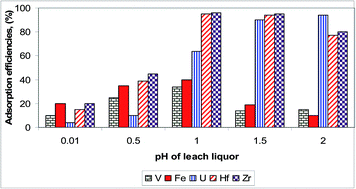
3.1.1. Effect of the leach liquor pH on the adsorption efficiency. From the obtained adsorption data (Fig. 1) one can notice that the uranium adsorption efficiency increased with the increase of the pH values while the best results were conducted at pH values from 1.5 to 2. In fact, uranium existed in the sulphate solutions as the uranyl ion UO22+, as an uncharged complex UO2(SO4), as well as the anionic complexes [UO2(SO4)2]2− and [UO2(SO4)3]4− depending on the amount of (SO4)2− ion in solution which could also be adsorbed. Hydrogen ion concentration plays an important role in uranium adsorption on the anion exchange resin since at pH values below 1.5 there are no sufficient SO42− ions to furnish the uranium sulfate complexes since HSO4− ions are predominant. Moreover, the uranium adsorption from the sulfate solution is a function of the SO42− concentration due to the influence of the uranium anion formed under equilibrium conditions. Actually, the amount of uranium adsorbed increases when the ratio of (SO4)2−/[U] is less than 2. Above this ratio, excess SO42− competes with the uranium sulfate complex for resin sites, resulting in decreasing uranium adsorption.11
 |
| | Fig. 1 Effect of pH on the adsorption efficiency of the hafnium, zirconium, uranium, vanadium and iron elements onto the Dowex anion resin at a 1/40 resin/leach liquor ratio with 2 min stirring time. | |
On the other hand, the data revealed that the adsorption of hafnium and zirconium gives the highest efficiency at pH values between 1 to 1.5. This is in agreement with the published data.9 The hafnium and zirconium exist in the sulfate media as [ZrOSO4]2− and [HfOSO4]2−.12 Accordingly, the adsorption of the hafnium and zirconium ions are inhibited at higher acidity values; this can be attributed to the presence of the H+ ions competing with the hafnium and zirconium ions at the adsorption sites. Interestingly, nickel was not adsorbed on the resin sites while iron and vanadium are adsorbed in values less than 20%, which is much lower than the uranium, hafnium and zirconium contents. Therefore, all of the following experiments were performed at a pH value of about 1.5 in the original feed leach liquor solutions.
3.1.2. Adsorption kinetics. The study of the kinetic models was performed by shaking 50 ml of each of the leach liquor feeds, containing about 109, 245 and 929 ppm of uranium, hafnium and zirconium respectively, with 2.0 g of the Dowex 1×8 resin for different times at room temperature. The total concentrations of hafnium, zirconium, and uranium in the filtered liquor were determined by using ICP-OES. The adsorption capacities of uranium, hafnium and zirconium were calculated according to the following equation:
where Co is the initial total metal concentration of hafnium, zirconium and uranium in solution (g l−1); Ce is the equilibrium concentration of hafnium, zirconium or uranium in solution (g l−1); V is the total volume of solution (ml); and m is the mass of the Dowex 1×8 anion exchange resin (g).From the obtained results (Fig. 2), it is clear that the adsorption rate of uranium onto the investigated resin is fast and reached equilibrium in about 7.5 min. While the adsorption rates of both hafnium and zirconium are also fast and the equilibrium time for them is about 15 min in this context, the Hf and U adsorption efficiencies were increased by increasing the contact time while the Zr adsorption efficiency was decreased by increasing the contact time. The equilibrium adsorption capacity of uranium, hafnium and zirconium reached 2.31, 4.2 and 3.77 mg g−1, respectively. Also from the obtained result, it is clear that zirconium was firstly adsorbed onto the resin, and then the adsorbed zirconium was displaced by uranium and hafnium. This means that the adsorption ability for hafnium onto the resin is stronger than the adsorption ability of zirconium and furthermore, the concentration of zirconium in the effluent solution increases with the increasing adsorption time.
 |
| | Fig. 2 Adsorption rate curves of hafnium, zirconium and uranium onto the Dowex anion resin. | |
In other words, the concentration of zirconium, which is much higher than that of uranium and hafnium, is adsorbed onto the resin prior to uranium and hafnium even before they can be in contact with the Dowex resin through diffusion. The predominating step of the zirconium adsorption process may be intraparticle diffusion while it is a film diffusion for uranium and hafnium. To determine which one (film diffusion or intraparticle diffusion) is the predominating step of the adsorption process and also to find the rate parameters, adsorption kinetic data were further processed. According to the Boyed method,13 the adsorption rate constant K could be calculated by
where
F (
F =
Qt/
Q∞) is the fractional attainment of the equilibrium,
Qt and
Q∞ are the adsorption amounts at a certain time while reaching adsorption equilibrium respectively, while
K is the adsorption rate constant. The obtained results (
Fig. 3) show straight lines by plotting −ln(1 −
F) against
t, where the adsorption rate constant was calculated as 1.542 × 10
−1 s
−1; this was actually calculated from the slope of the straight line. The correlation coefficient (
R2 = 0.9578) was obtained
via linear fitting. According to Boyd, from the linear relationship of −ln(1 −
F)
vs. t, it can be deduced that the film diffusion is the predominating step of the adsorption process for both uranium and hafnium. On the other hand, the kinetic study can be performed by employment of the Lagergren pseudo-first order and HO pseudo-second order kinetic models.
14
 |
| | Fig. 3 Experimental kinetic curves of the adsorption of hafnium, zirconium and uranium onto the Dowex anion resin. | |
The pseudo-first order model can be obtained from the following equation:
While the pseudo-second order model can be obtained from the following equation:
where
Qt and
Qe are the adsorption amounts at certain equilibrium times respectively, mg g
−1;
K1 is the pseudo-first order rate constant, min
−1; and
K2 is the rate constant of the pseudo-second order equation, g mg
−1 min
−1. Also, the obtained data revealed that the uranium, hafnium and zirconium extractions are not fitted with the pseudo-first order kinetic model but agree with the HO pseudo-second order kinetic model. Plotting
t/
Qt vs. t gives a straight line as shown in
Fig. 3. The pseudo-second order rate constant,
K2 and equilibrium capacity,
Qe were calculated from the values of the intercept (1/
K2Qe2) and the slope (1/
Qe) of the straight lines and are given in
Table 2. Obviously, a satisfactory agreement was obtained between calculated and experimental values of
Qe. This implies that the adsorption process proceeds according to the pseudo second order kinetic mechanisms and depends upon the metal ion concentrations and active site concentrations, and that the rate of each ion is controlled by the chemisorption process.
Table 2 Kinetic parameters for the adsorption of uranium, hafnium and zirconium onto the Dowex anion resin
| Metal ion |
Qe (mg g−1) |
K2 (g mg−1 min−1) |
R2 |
| Experimental |
Calculated |
| U |
2.31 |
2.33 |
0.312 |
0.9997 |
| Hf |
4.2 |
4.01 |
1.0096 |
0.99994 |
| Zr |
3.77 |
3.335 |
0.4954 |
0.9971 |
3.1.3. Adsorption isotherms. The adsorption isotherms were studied at different initial total concentrations of uranium, hafnium and zirconium onto the Dowex anion resins at pH 1.5. The obtained results (Fig. 4) show that the adsorption capacities of uranium, hafnium and zirconium increase with the increase of the total initial concentration of the metal ions until they reach the equilibrium adsorption capacity. The Qe values of uranium, hafnium and zirconium are 2.31, 4.2 and 3.77 mg g−1, respectively, these values reflect the higher uptake efficiency of the concerned resin toward the hafnium relative to the zirconium and uranium. The adsorption data are analyzed according to the Langmuir and Freundlich isotherm models, in this respect.
 |
| | Fig. 4 Adsorption isotherms of hafnium, zirconium and uranium onto the Dowex anion resin at pH 1.5. | |
The Langmuir isotherm model is represented by the following equation:
where
Qmax is the maximum adsorption capacity, (mg g
−1); and
KL is the Langmuir isotherm constant which relates to the adsorption energy, (l g
−1). Plotting
Ce/
Qe against
Ce gives straight lines for zirconium and uranium with the slope and intercept equaling 1/
Qmax and 1/
KLQmax respectively, (
Fig. 5). The obtained values of
Qmax were 5.556 and 10.053 mg g
−1 while, the values of
KL were −0.344 and 0.5258 l g
−1 for uranium and zirconium, respectively. The lower value of
KL for uranium refers to the lower binding affinity relative to zirconium. This indicates that the adsorption process is a monomer adsorption and proceeded according to an ideal Langmuir model. Hafnium, on the other hand showed significant deviation from the Langmuir isotherm model.
 |
| | Fig. 5 Langmuir adsorption isotherms of hafnium, zirconium and uranium onto the Dowex anion resin. | |
The essential features of the Langmuir adsorption isotherm can be expressed in terms of the dimensionless constant (RL), which is defined by the following relationship:15
where
Co is the initial total concentration of uranium, hafnium and zirconium, mol l
−1; and
KL is the Langmuir isotherm constant. The
RL calculated by the latter equation is 0.77 for zirconium, which indicates that the zirconium adsorption onto the Dowex resin is a favorable adsorption.
On the other hand, the Freundlich isotherm model is represented by the following equation:16
where
KF is the Freundlich isotherm constant, mg g
−1; and
n is the adsorption intensity. Plotting log
Qe against log
Ce of uranium, hafnium and zirconium gives straight lines for all metal ions, this indicates that all the metal ions are fitted perfectly with the Freundlich isotherm model (
Fig. 6). The
KF of uranium, hafnium and zirconium are calculated from the intercept of these lines and are 0.14, 0.20 and 0.17 mg g
−1, respectively. The slopes (1/
n) of the uranium, hafnium and zirconium lines reached 0.8253, 0.8142 and 0.7284 respectively. Thus, the adsorption process is favourable when the value of 1/
n lies between 0.1 and 1.
 |
| | Fig. 6 Freundlich adsorption isotherms of hafnium, zirconium and uranium. | |
3.1.4. Thermodynamic studies. The obtained results (Fig. 7) according to the study of the temperature effect on the distribution ratios of uranium, hafnium and zirconium showed that these ratios decrease with increasing temperature from 25 to 75 °C, which basically means that the adsorption of the three elements under consideration by the Dowex anion exchange resin is exothermic. The effect of temperature on the adsorption process of zirconium and uranium by the resin is relatively stronger than that of hafnium.
 |
| | Fig. 7 van’t Hoff plots for the adsorption of uranium, hafnium and zirconium onto the Dowex anion resin. | |
According to the van’t Hoff equation:17
where
D is the distribution ratio,
T is the absolute temperature,
R is the ideal gas constant and Δ
H is the enthalpy change, straight lines were obtained by plotting lg
D for uranium, hafnium and zirconium
vs. T−1, respectively. The slope line for hafnium (39.0961) is greater than for uranium (20.7857) and zirconium (8.0209). The enthalpy changes of adsorption for uranium, hafnium and zirconium onto the Dowex anion exchange resin as calculated from the slopes of the van’t Hoff equation are −398.005, −748.61, and −153.584 kJ mol
−1, respectively. The negative value of Δ
H indicates the exothermic nature of the adsorption process of the concerned elements. Furthermore, the values of Δ
H are in the order of Zr > U > Hf which indicates that the adsorption capacities are in the order of Hf > U > Zr. This is in agreement with the results of the adsorption rate constant study.
The free energy of adsorption can be calculated from the following equation:18
where Δ
G is the adsorption free energy and
n is the adsorption intensity of the Freundlich isotherm equation. The values of Δ
G for uranium, hafnium and zirconium are calculated by the latter equation and they were found to be −3.0036, −3.45 and −3.4033 kJ mol
−1 at 298.15 K, respectively, indicating that the adsorption of zirconium is slightly more thermodynamically favorable than hafnium and uranium. The negative values of Δ
G at 298.15 K indicate the feasibility of the adsorbent and the spontaneity of the adsorption process. Also, according to the Gibbs–Helmholtz equation:
where Δ
S is the entropy change, the values of Δ
S for uranium, hafnium and zirconium are calculated and found to be −1.33, −2.499, and −0.504 kJ mol
−1 K
−1 at 298.15 K, respectively. This confirmed that the adsorption capacities are in the order of Hf > U > Zr which also is in agreement with the results of the adsorption rate constant study.
3.2. Adsorption by the column system
3.2.1. Effect of the flow rate on the adsorption efficiency. The leach liquor flow rate is an important parameter in the column adsorption system to achieve favorable adsorption conditions. The flow rate was studied in the column tests in the range of 0.3 to 30 ml min−1. The obtained data (Fig. 8) show that the adsorption of uranium decreases after the flow rate is higher than 5 ml min−1 due to an insufficient contact between uranium and the Dowex resin. On the other hand, the adsorption efficiency of hafnium and zirconium increases with the increase of the flow rate. The flow rate of 5 ml min−1 was enough to remove all of the hafnium and zirconium content of the liquor within the studied time. Therefore, the value 5 ml min−1 was selected as the optimum flow rate. It should be noted that the adsorption of other contamination ions from the mineral liquor was avoided by an initial reduction step using sulfur dioxide or iron dust as the reducing agents.19
 |
| | Fig. 8 Effect of the flow rate on the hafnium, zirconium and uranium adsorption efficiency onto the Dowex anion resin from the initial leach liquor at pH 1.5. | |
3.2.2. Adsorption of uranium, hafnium and zirconium. About 20 liters of the feed leach liquor was passed downward through the previously prepared resin column twice. The downstream effluent was collected at different volume fractions (200 ml). After the adsorption of the total amount, the three metal concentrations, namely hafnium, zirconium and uranium, were determined in the collected fractions by ICP-OES. The loading capacity efficiencies of them were determined (Fig. 9), the results reveal that the column backed with the Dowex 1×8 anion exchange resin was completely saturated with the concerned elements after about 9 liters with a flow rate of 5 ml min−1. Also, the obtained results are in accordance with the results of the batch study experiments where zirconium was adsorbed firstly upon the anion exchange resin faster than hafnium. Then hafnium was adsorbed steadily and replaced zirconium upon the resin. The extraction mechanisms can be shown in the following equations:
where M = Hf and Zr.
 |
| | Fig. 9 Column adsorption curves for hafnium, zirconium and uranium onto the Dowex anion resin at 5 ml min−1 flow rate and pH 1.5. | |
3.3. Elution procedures
The elution trials of U, Hf and Zr were performed by using either an eluant mixture formed of 1 M acetic acid and 2 M HCl or a mixture of 2 M HCl and 0.01 HF at different flow rates. The acetic acid–HCl solution did not show a significant separation between hafnium, zirconium and uranium. On the other hand, the eluant that contains a mixture of 10 M HCl and 0.05 M HF acids at a flow rate of 10 ml min−1 seems promising. The obtained results (Fig. 10) show that this eluant can separate the three elements successfully. Hafnium and zirconium were firstly eluted together (fractions 1 to 10) then uranium was eluted completely (fractions 14 to 27). However, three fractions containing all the three metals were also obtained. These fractions could be directed to the loading step again upon the resin in the new adsorption cycle or else they could be separated by the precipitation technique. Thus, the elution mechanism of the extracted elements can be presented by the following equations:
where M = Hf and Zr.
 |
| | Fig. 10 Elution curves of the loaded elements upon the Dowex resin by 10 M HCl + 0.05 M HF. | |
3.4. Precipitation procedures
3.4.2. Uranium precipitation. The uranium rich eluant fractions (14 to 27), were mixed together and were used in the precipitation of uranium by NaOH solution at pH 7.2. The obtained yellow cake (sod. diuranate) was dried at 110 °C firstly then 0.1 g was dissolved in 100 ml of acidified water and completely specified by analyzing its impurities using ICP-OES (Table 4). The analysis by ICP-OES revealed that the precipitate contains 47.8% uranium oxide with a purity of 68.5%. The main impurities of the yellow cake are magnesium, aluminum and calcium. The dried precipitate was then analysed by the X-ray diffraction (XRD) technique (Fig. 13) as well as by an Environmental Scanning Electron Microscope model FEI Inspect S (ESEM-EDAX) (Fig. 12). The pattern obtained from XRD shows that at temperatures up to 400 °C, the precipitate is being completely amorphous. However, the crystals began to be built at 600 °C and were developed completely at 800 °C. The X-ray diffraction pattern was similar to the Clarkeite uranium mineral (ASTM card no. 50-0-1586), sodium uranyl oxide hydroxide hydrate, Na[(UO2)O]OH·H2O. In fact, the formed sodium urinate precipitate is crystallized in general at about 500 °C but the late crystallization of this precipitate at higher temperature may be due to the presence of magnesium in the obtained precipitate, as shown in the XRD pattern with the form of the magnesium silicate (forsterite Mg2SiO4) mineral (about 3.5%) (ASTM card no. 34-0-0189), which was confirmed by the ICP-OES to be about 4.5% (Tables 5 and 6).
Table 4 Complete analysis of the uranium precipitate using ICP-OES
| Elements |
Conc. (ppm) |
Elements |
Conc. (ppm) |
| Mn |
74 |
Th |
799.4 |
| V |
1981.5 |
Ti |
204.5 |
| Co |
288.7 |
Fe |
509.5 |
| Ni |
300.5 |
As |
17.8 |
| Cu |
600 |
Mg |
48 268.4 |
| Zn |
85.1 |
Al |
2057.5 |
| Ba |
163.4 |
Ca |
1909.2 |
| Cd |
33.5 |
K |
1280 |
 |
| | Fig. 12 Semi quantitative EDAX analysis pattern of the uranium precipitate. | |
 |
| | Fig. 13 X-ray diffraction pattern of the calcined uranium precipitate. | |
Table 5 Complete analysis of the hafnium precipitate using ICP-OES
| Elements |
Conc. (ppm) |
Elements |
Conc. (ppm) |
| Hf |
753 759.6 |
Zr |
5133.4 |
| V |
240 |
U |
Undetected |
| Co |
72 |
Fe |
979.8 |
| Ni |
323.4 |
As |
Undetected |
| Cu |
Undetected |
Mg |
2445.7 |
| Zn |
322 |
Al |
Undetected |
| Ba |
306.7 |
Ca |
2021.98 |
Table 6 Complete analysis of the zirconium precipitate using ICP-OES
| Elements |
Conc. (ppm) |
Elements |
Conc. (ppm) |
| Hf |
18 000.2 |
Zr |
659 742.5 |
| V |
173.4 |
U |
Undetected |
| Co |
100 |
Fe |
399.8 |
| Ni |
73.4 |
As |
Undetected |
| Cu |
793.4 |
Mg |
2433.4 |
| Zn |
779.8 |
Al |
Undetected |
| Ba |
133.4 |
Ca |
2153.34 |
Uranium was also precipitated as peroxide concentrate by adding hydrogen peroxide (28% in an amount more than needed for the stoichiometric amount)20 at a pH range from 1.5–3.5, the precipitate was formed after 4 h and was calcined at 500 °C then analyzed by EDAX (Fig. 14):
| UO22+ + O22− + 2H2O → UO4·2H2O |
 |
| | Fig. 14 Semi quantitative EDAX analysis pattern of the uranium peroxide precipitate. | |
The analytical data revealed that the precipitate is formed as uranium peroxide (78.73%) with a total purity of 94.7%.
3.5. Individual separation of hafnium and zirconium
Individual separation of hafnium and zirconium from their concentrate was conducted via a solvent extraction technique using the Alamine 336 extractant (N,N-dioctyloctan-1-amine of molecular weight 353.67 and 0.8 specific gravity), from chloride media, as suggested by Banda et al.21 Briefly, about one gram of concentrate was dissolved in 200 ml of 9 M HCl solution. The applied extraction conditions involve 0.1 M Alamine 336 diluted in kerosene as the diluent with an organic/aqueous ratio of 1/1 and shaking of the mixture for about 30 min at room temperature. Zr and Hf were loaded upon the Alamine 336 solvent. However, hafnium was scrubbed from the loaded solvent using 0.5 M H2SO4 with an aqueous/organic ratio of 5/1. Zirconium was finally stripped from the loaded organic phase by simple contact with dilute 1 M HCl. Batch simulation of counter-current extraction indicates that the extraction efficiencies of Zr and Hf reached 98.7% and 20.5% respectively and the stripping efficiency of the loaded zirconium on the solvent reached 95.2%. The concentration of zirconium in the raffinate was about 5133 ppm while the hafnium concentration in the strip solution was 18
000 ppm (1.8% of the zirconium precipitate). The strip solution and the raffinate were evaporated till dryness and the yields were analyzed by EDAX (Fig. 15 and 16). From the obtained data, it is clear that the concentration of hafnium in its precipitate is about 74.5% while zirconium does not appear in the area analysis pattern. On the other hand, the concentration of zirconium in its precipitate reached 62.3% however, and the concentration of hafnium reached 11.5%.
 |
| | Fig. 15 Semi quantitative EDAX analysis pattern of the hafnium precipitate from the raffinate solution. | |
 |
| | Fig. 16 Semi quantitative EDAX analysis pattern of the zirconium precipitate from the strip solution. | |
4. Conclusions
The obtained results showed that; the optimum adsorption conditions of the concerned elements (Hf, Zr and U), from the petroleum fly ash leach liquor by using Dowex 1×8 as a strong basic anion exchange resin are 5 ml min−1 flow rate at pH of 1.5 while using a reducing agent to eliminate the adsorption of iron and vanadium. The eluant containing a mixture of 10 M HCl and 0.05 M HF acids at a flow rate of 10 ml min−1 was applied to separate firstly the hafnium and zirconium elements, then uranium was eluted completely. Uranium was precipitated by using either NaOH or H2O2 solutions at different pH, while the concentrate containing hafnium and zirconium was firstly precipitated by using NaOH solution then it was dissolved in HCl to separate hafnium and zirconium individually from each other by a solvent extraction technique using the Alamine 336 extractant. When applying the extraction conditions of 0.1 M Alamine 336 diluted in kerosene as diluent with an organic/aqueous ratio of 1/1 and shaking for about 30 min at room temperature, the extraction efficiencies of Zr and Hf reached 98.7% and 20.5% respectively. The 20.5% hafnium was scrubbed from the loaded solvent by using 0.5 M H2SO4 with an aqueous/organic ratio of 5/1 and finally zirconium was stripped from the loaded organic phase by simple contact with dilute 1 M HCl while the stripping efficiency of zirconium from the loaded solvent was 95.2%. The other elements such as vanadium, nickel and iron were separated by direct precipitation.
Acknowledgements
The authors are grateful to Prof. Mohamed Mahdy for the financially helpful support during the course of this research. Also, the candidate is gratefully indebted to the members of the Pilot Plant Exp. Dept. as well as to the colleague of the Chemical Analysis Dep. especially the Inductively Coupled Plasma Lab. and Yellow Cake Purification Dept. for their kind assistance during the performance of the analytical control of the work, where valuable advice and sincere help were delivered.
Notes and references
- Ch. Amrhein, G. H. Haghnia, T. S. Kim, P. A. Mosher, R. C. Gagajena, T. Amanios and L. de la Torre, Environ. Sci. Technol., 1996, 30, 735–742 CrossRef CAS.
- A. M. Abdelkader and E. El-Kashif, ISIJ Int., 2007, 47(1), 25–31 CrossRef CAS.
- A. M. Abdelkader, A. Daher, R. A. Abdelkareem and E. El-Kashif, Metall. Mater. Trans. B, 2007, 38(1), 35–44 CrossRef.
- S. Shariati, Y. Yamini and M. K. Zanjani, J. Hazard. Mater., 2008, 156, 583–590 CrossRef CAS PubMed.
- A. M. Abdelkader and D. J. Fray, Electrochim. Acta, 2012, 64, 10–16 CrossRef CAS PubMed.
- S. Lahiri, K. banerjee, D. Nayak, A. Ramaswami and N. R. Das, Appl. Radiat. Isot., 2000, 52, 1399–1405 CrossRef CAS.
- R. Banda, H. Young Lee and M. Seung Lee, J. Radioanal. Nucl. Chem., 2013, 51, 9652–9660 Search PubMed.
- A. M. Abdelkader and J. Daher, J. Alloys Compd., 2008, 469, 571–575 CrossRef PubMed.
- X. Zhi-gao, W. Yan-ke, Z. Jan-dong, Z. Li and W. Li-jun, Trans. Nonferrous Met. Soc. China, 2010, 20, 1527–1533 CrossRef.
- A. M. Abd El-Hamid, M. A. Zahran, F. M. Khalid and A. H. Mahmoud, RSC Adv., 2014, 4(24), 12506–12513 RSC.
- Fathi Habashi, City, 1993.
- A. A. Emad and El Shehy, M.Sc. Thesis, Faculty of Science, 2007.
- V. C. Srivastavaa, I. D. Mallb and I. M. Mishra, Chem. Eng. J., 2007, 132(1/3), 267–268 CrossRef PubMed.
- Y. S. Ho, Water Res., 2006, 40, 119–125 CrossRef CAS PubMed.
- T. W. Weber and R. K. Chakravorti, Am. Inst. Chem. Eng., 1974, 20, 228–238 CrossRef CAS PubMed.
- M. S. Bilgili, J. Hazard. Mater., 2006, 137(1), 157–164 CrossRef CAS PubMed.
- Q. Jia, Z. H. Wang, D. Q. Li and C. J. Niu, J. Alloys Compd., 2004, 374, 434–437 CrossRef CAS PubMed.
- L. Jun-shen, L. Gui-hua, C. Hou and M. A. Song-mi, Chin. J. Rare Met., 2005, 29(4), 509–512 Search PubMed.
- C. K. Gupta and H. Singh, A textbook of Uranium Resource Processing (Secondary Resources), Bhabha Atomic Research Centre, 2003 Search PubMed.
- R. Gupta, V. M. Pandey, S. R. Pranesh and A. B. Chakravarty, Hydrometallurgy, 2004, 71, 429–434 CrossRef CAS.
- R. Banda, H. Young Lee and M. Seung Lee, Ind. Eng. Chem. Res., 2012, 51, 9652–9660 CrossRef CAS.
|
| This journal is © The Royal Society of Chemistry 2015 |
Click here to see how this site uses Cookies. View our privacy policy here.