Self-cleaning and antifouling nanofiltration membranes—superhydrophilic multilayered polyelectrolyte/CSH composite films towards rejection of dyes

Hongxia Guo*a, Yiwen Maa, Pengzhi Suna, Suping Cuia, Zhenping Qinb and Yucang Liang*c
aCollege of Materials Science and Engineering, Beijing University of Technology, Beijing 100124, China. E-mail: hxguo@bjut.edu.cn
bCollege of Environmental and Energy Engineering, Beijing University of Technology, Beijing 100124, China
cInstitut für Anorganische Chemie, Eberhard Karls Universität Tübingen, 72076 Tübingen, Germany. E-mail: yucang.liang@uni-tuebingen.de

Received 15th June 2015 , Accepted 17th July 2015

First published on 17th July 2015


Abstract

Superhydrophilic poly(ethyleneimine)/poly(sodium-4-styrenesulfonate) (PEI/PSS)–calcium silicate hydrate (CSH) multilayered membranes (PEI/PSS)2.0(PEI/PSS–CSH)n on polyacrylonitrile (PAN) substrate were prepared via layer-by-layer (LbL) assembly with in situ precipitation of consecutive Ca2+-integrated multilayered polyelectrolytes and sodium silicate. The surface structure and properties of these multilayered membranes (PEI/PSS)2.0(PEI/PSS–CSH)n were characterized by zeta potential, infrared resonance spectra, water contact angles, scanning electron microscopy, and atomic force microscopy, and the separation performances were evaluated by rejection of dyes, such as xylenol orange (XO) and rhodamine B (RB). The long term performance, self-cleaning and antifouling behaviors were investigated by retention of aqueous solutions of both dyes and bovine serum albumin (BSA) aqueous solution. The results indicated that the in situ incorporation of controlled CSH contents into PEI/PSS multilayers greatly improved the hydrophilicity of the multilayered membranes, resulting in the formation of a superhydrophilic (PEI/PSS–CSH)2.0 membrane with a water contact angle of 2.1° and the highest permeate fluxes of 191.5 and 183.5 L m−2 h−1 MPa−1 accompanied by the rejection of 94.0% and 91.2% for XO and RB aqueous solutions, respectively. When the number of assembled (PEI/PSS–CSH)n multilayers was higher than 2.0 bilayers, the rejection increased but the flux markedly decreased to XO and RB dyes, showing a characteristic trade-off phenomenon. Moreover, the superhydrophilic (PEI/PSS–CSH)2.0 membrane possessed a higher antifouling and self-cleaning behavior than the hydrophilic polyelectrolytes (PEI/PSS)2.0.

1. Introduction

Membrane-based water treatment technologies have been regarded as a highly competitive candidate for reclamation and reuse of water, trapping water directly from brackish water and some nontraditional sources.1–4 Nanofiltration (NF)—a promising membrane separation technique, can be effectively used for rejection of some salts, bacteria and other organic contaminants from groundwater, municipal and industrial wastewater effluents.5–7 However, when incorporating a semipermeable NF membrane into wastewater treatment systems, the deterioration of the separation performance caused by membrane fouling still remains one of the major challenges in membrane science. Owing to the adsorption and deposition of foulants (proteins, bacterial, and other organic molecules) on membrane surfaces and inside membrane pores, membrane fouling markedly hinders the efficient and broad application of NF technology.8–11 Therefore, many efforts have been devoted to design membrane processes which can prevent and inhibit the degree of membrane fouling and preserve a large flux and decrease the energy and operational cost.12–15 The present strategies to fabrication of an antifouling membrane are mainly focused on manipulating the physicochemical property and surface structure of the membrane and weakening the interactions between foulants and the membrane surface, and thereby inhibiting the adsorption of foulants or the settlement of foulants on the membrane surface.16–18 On the basis of above-mentioned considerations, surface structure and property of membrane such as roughness, hydrophilicity and charge, are very important for controlling the membrane fouling and improving high flux. Previous investigations have revealed that the membrane surface property can be manipulated and engineered via surface coating, surface grafting or segregation of hydrophilic polymers such as poly(ethyleneglycol) (PEG)-based,19,20 poly(N-vinyl-2-pyrrolidone) (polyNVP) and poly(2-hydroxyethyl methacrylate) (polyHEMA) polymers,21,22 zwitterionic,23,24 and peptidomimetic.25,26 Although such additional surface coating can improve membrane hydrophilicity accompanied with antifouling properties, the undesired reduction in water flux is usually observed.27 Moreover, it is difficult to control/manipulate/alter/modify the roughness and charges of the membrane surface.

The nano- and micro-scale assembly provides a powerful approach to fine-modulate the composition of nanostructured membrane. Layer-by-layer (LbL) assembly is a rich, versatile, and significantly inexpensive route to prepare thin membrane with adjustably charged layers28,29 and generate advanced coatings and novel surface structure with extreme wettability and self-cleaning properties.30–34 Some inorganic nanomaterials (amorphous SiO2 and mesoporous SiO2, TiO2, ZnO, and calcium silicate hydrates (CSH) etc.) have been introduced into the multilayered superhydrophilic films via LbL self-assembly method.33,35–40 However, most of these works were concentrated on self-cleaning effect of transparent films for antifogging and antireflection. Antifouling property of membrane and how to keep high antifouling performance in practical operation are almost neglected. In fact, membrane fouling or antifouling ability of membrane mainly depends on their surface structure and property, such as hydrophobicity/hydrophilicity, surface charge, roughness and morphology.41,42 The hydrophilic membranes often exhibit a strong suspending ability for the fouling due to weak surface interaction between the separate solute and membrane surfaces,43,44 for example, TiO2 self-assembled polymeric nanocomposite membranes can effectively mitigate membrane fouling during the filtration of membrane bioreactor (MBR) due to that addition of TiO2 composite induces the improvement of hydrophilicity of the membrane.45,46 LbL assembly of graphene oxide (GO) nanosheets on polyamide (PA) thin-film composite (TFC) membranes improved antifouling performance against hydrophobic bovine serum albumin (BSA) molecules and chlorine resistance in reverse-osmosis (RO) process due to the increased surface hydrophilicity and the reduced surface roughness.47 However, the investigation on the antifouling performance of superhydrophilic membrane is still very few. We have previously explored superior antifogging and antireflection characteristics of the superhydrophilic poly-(ethyleneimine)/poly(sodium-4-styrenesulfonate)–calcium silicate hydrates membrane (PEI/PSS–CSH)n on quartz or glass substrate.33 Here we further extend this work and assemble multilayered (PEI/PSS–CSH)n membrane on the microporous polyacrylonitrile (PAN) ultrafiltration membrane by a similar strategy to fabricate a superhydrophilic nanofiltration membrane. The nanofiltration performance was performed on rejection of membrane for dyes (xylenol orange and rhodamine B). The long term performance and anti-fouling effect of the superhydrophilic membrane were also investigated. Owing to very cheap and wide utilization of calcium silicate hydrates (CSH) in the construction industry, our strategy offers a facile and inexpensive pathway to promote the antifouling NF from fundamental research to industrial application.

2. Experimental section

2.1 Materials

Sodium hydroxide was obtained from Beijing chemical plant (Beijing China). Polyacrylonitrile (PAN-50) ultrafiltration membrane with molecular weight cutoffs of 100 kDa was purchased from Sepro. Membranes Inc. (USA), polyethylenimine (PEI, Mw = 750[thin space (1/6-em)]000), poly(sodium-4-styrene sulfonate) (PSS, Mw = 100[thin space (1/6-em)]000) was purchased from Sigma-Aldrich Chemical Company (USA). Sodium silicate and calcium acetate, as well as xylenol orange (XO) and rhodamine B (RB) were purchased from Tianjin Fu Chen Chemical Reagent Factory (Tianjin in China), deionized water (conductivity of 18.0 MΩ cm−1) was used in the experiments. All chemicals were analytical grade and all the aqueous polyelectrolyte solutions were used without pH adjustment or the addition of ionic salts.

2.2 Preparation of PEI/PSS–CSH composite membrane

The method for the preparation of PEI/PSS–CSH multilayer membrane on the PAN ultrafiltration membrane was much similar to our previous work,33 except for the pretreatment of the substrate and the cap layer. Specifically, the PAN substrate was hydrolyzed in a 2.0 M NaOH solution at room temperature for 1.0 h, followed by washing with deionized water thoroughly until the pH achieves neutral. And the (PEI/PSS)2.0 bilayers were first assembled onto the hydrolyzed PAN substrates as the cap layer. Then, the multilayer covered by (PEI/PSS)2.0 cap bilayer was immersed in uniform and stable solution of 2.0 g L−1 of PEI–calcium acetate (containing 0.05 mol L−1 calcium acetate) for 20 min, followed by rinsing with deionized water for 1 min to remove redundant polyelectrolytes. Next step, the membrane was then introduced into a solution of PSS–sodium silicate (containing 2.0 g L−1 of PSS and 0.05 M sodium silicate) for 20 min, followed by washing with deionized water for 1 min. Herein, the CSH cluster was formed by the reaction of cationic Ca2+ with anionic SiO32− during assembly of the bilayer. Subsequently, two steps were repeated until the desired number of deposition cycles was gained.

2.3 Characterizations

Zeta potentials of the films were determined using an Electrokinetic analyzer (Anton Paar, SurPASS, Germany) with 0.83 mM KCl aqueous solution as electrolyte operating at 0.03 MPa. ATR-FTIR spectra were collected on a Vertex-70 FTIR spectrophotometer (Bruker, Germany) in the range of 400–4000 cm−1 with a resolution of 4 cm−1 using an ATR accessory. The representative SEM images of as-prepared membranes were obtained on 8020 field emission scanning electron microscopy (SU8020, Hitachi, Japan) operated at 15 kV, and the energy dispersive X-ray (EDX) spectrum were obtained by the equipped Oxford EDX instrument and AZtec software. All samples were coated with gold by HITACHI E-1010 instrument before measurement. Film thickness was measured using a DekTak XT Stylus profilometer (Bruker Company, USA). A groove in the film was made using a razor blade, and the film thickness was estimated by the depth of the groove measured using a profilometer. The thickness was averaged at three different locations. Atomic force microscopy (AFM) images were taken with a Pico Scan TM 2500 Microscope System (Agilent Technologies, USA) in the tapping mode with 0.6 Å s−1 of tip velocity under ambient conditions. The water contact angle (WCA) of surfaces was measured by using the sessile drop method on a DSA100 instrument (Kruss Company, Germany) at ambient temperature. A droplet of water 3.0 μL was placed on the surface of the films using a syringe and the images were taken with a video system. The representative contact angle was the average value of no less than 5 different locations.

2.4 Nanofiltration performance of the membranes

The nanofiltraion performance of the membranes was carried out using a home-made cross-flow NF system as our previous works.6,7,48 The effective membrane area for filtration in the cell was 22.9 cm2. Prior to measurement, the system was pressurized to 0.4 MPa with a diaphragm pump for about 40 min to reach a stable state. The permeate flux, J, was calculated by: J = V/AhΔP, where V is the total volume of the permeate collected under transmembrane pressure P (MPa) on a time scale t (h) and A is the effective area of the membrane (m2). The solute rejection rate (R) was calculated by: R = (1 − Cp/Cf) × 100%, where Cp and Cf are concentrations of solutes in permeate and feed solution, respectively. The concentrations of XO and RB in the feed and permeate solutions were calculated according to Lamber–Beer law with absorbance at 554 nm and 432 nm, respectively, measured by UV-visible spectrophotometer (UV-3200, Mapada, Co. Shanghai in China).

2.5 Long-term stability and membrane fouling and cleaning experiments

The long-term performances of the (PEI/PSS–CSH)n membrane towards rejection of 1.0 ppm XO and RB solutions together with the pure water flux were investigated on the NF system for 60 hours. The fouling experiments were performed using 100 mg L−1 of bovine serum albumin (BSA) aqueous solution as feed liquid, and the flux decline was recorded during the same time of 60 hours. Following the fouling experiments, membrane cleaning was conducted to determine if the fluxes could be recovered. The membranes after fouling were rinsed for 4 hours at a pressure of 0.4 MPa using deionized water, and the cleanability of the multilayered (PEI/PSS)n and (PEI/PSS–CSH)n membranes was characterized by comparison of the flux change before and after rising. The flux recovery ratio (FRR) was calculated according to previously reported method.49,50

3. Results and discussion

3.1 Assembly feasibility and surface structure of PEI/PSS–CSH composite membranes

According to previously reported method with slight modification,33 Ca2+-integrated (PEI/PSS–PEI) and (PEI/PSS–CSH)n multilayered membranes were fabricated via layer-by-layer (LbL) assembly with in situ precipitation of consecutive Ca2+-integrated multilayered polyelectrolytes and sodium silicate. It has been confirmed that the surface charges played an important role in foulant adsorption.51 Fig. 1 clearly shows the variations of the surface zeta potentials with different bilayer during the assembly process. As expected, the zeta potential of the hydrolyzed PAN substrate was −72.9 mV. When deposited by (PEI/PSS)2.0 cap bilayer, the zeta potential slightly increased to −35.0 mV. Then, the zeta potential reversed to +45.2 mV with deposition of bilayer of PEI containing Ca2+ (n = 0.5), and decreased to −33.9 mV with formation of (PEI/PSS–CSH)1.0 bilayer. Furthermore, it is noted that a periodic variation between about +40.7 ± 5 mV to −32.7 ± 5 mV are observed with the alternate deposition of polyelectrolyte–CSH multilayers. It is note that with increase number of assembled multilayer, the zeta potentials of (PEI/PSS–CSH)n–PEI–Ca2+ (n = 1, 2, 3, 4) with positive charge layer as outer layer showed a little decrease, and absolute value of zeta potentials of membrane (PEI/PSS–CSH)n (n = 1, 2, 3, 4, 5) with negative charge as outer layer gradually increased (Fig. 1). This trend was probably caused by the alternate overcompensation of the surface charge after each deposition, and the formation of more CSH nanoparticles with negative charge.52 The variation of zeta potentials is similar to that PEI/PSS–CSH deposited on glass substrate,33 indicating the alternate deposition of the polyelectrolyte–CSH multilayer.
image file: c5ra11438a-f1.tif
Fig. 1 Variation of zeta potentials of substrate PAN, (PEI/PSS)2.0, the Ca2+-incorporated (PEI/PSS–PEI) and multilayered (PEI/PSS–CSH)n membranes.

ATR-FTIR spectra shown in Fig. 2 further verified the formation of the PEI/PSS–CSH bilayers on the PAN substrate. The partly hydrolyzed PAN substrate was corroborated by the appearance of broad absorption peak at 3324 cm−1, a tiny peak at 1650 cm−1 and a sharp peak at 1034 cm−1 ascribed to hydroxyl (–OH), carbonyl (C[double bond, length as m-dash]O) and C–O groups, respectively.53,54 The peaks at 1179, 1126, 1034 and 1011 cm−1 attributed to sulfonate moiety of PSS further provided an enough evidence to verify the presence of (PEI/PSS)2.0 cap bilayers (Fig. 2b).54,55 And the blue-shift of broad peak of hydroxyl group from 3324 to 3445 cm−1 indicated the interaction between the amine group of PEI and the carbonyl group of PAN. After consecutive assembly of PEI–calcium acetate and PSS–sodium silicate bilayer, a new broad peak at 1120 cm−1 (Fig. 2c) assigned to the stretching vibration of Si–O bond appeared, showing in situ formation of CSH aggregation during the self-assembly process. With deposition of another similar bilayer, the intensity of the peak at 1120 cm−1 became stronger (Fig. 2d), clearly demonstrating the formation of more CSH particles in the multilayer.56


image file: c5ra11438a-f2.tif
Fig. 2 FTIR spectra of membranes (a) the hydrolyzed PAN substrate, (b) (PEI/PSS)2.0 cap bilayer, (c) (PEI/PSS–CSH)1.0 multilayer and (d) (PEI/PSS–CSH)3.0 multilayer.

To further confirm the variation of such coatings with increasing the number of deposition cycles, the thickness of original PEI/PSS cap layer and the variation of thickness of the (PEI/PSS–CSH)n coatings with assembled numbers were gauged by a profilometer measurement. As shown in Fig. 3, the thickness of the (PEI/PSS)2.0 cap layer is 21 ± 2.5 nm, and the thickness of (PEI/PSS–CSH)1.0 was 35 ± 4.0 nm. This change of thickness displayed nonlinear growth with increase the number of deposition cycles when the number was less than 3. Then the thickness increased linearly with the number of deposited bilayers, it is similar to the other PEMs multilayer,6,57 revealing different growth behaviours of multilayer membrane on the microporous substrate and on the solid quartz or glass substrate.


image file: c5ra11438a-f3.tif
Fig. 3 The change of thickness with the number of assembled multilayer.

3.2 The morphology and wettability of (PEI/PSS–CSH)n multilayer membrane

The representative SEM images in Fig. 4 displayed the morphologies of (PEI/PSS)2.0 cap layer and (PEI/PSS–CSH)n multilayer on the PAN substrate. Owing to the alteration of substrate membrane, the surface structure of multilayered (PEI/PSS)2.0[(PEI/PSS–CSH]n membranes obtained displays different. It can be seen that the (PEI/PSS)2.0 precursor cap layer (Fig. 4b) on microporous PAN substrate (Fig. 4a) was not similar to compact and dense structure on the flat quartz substrate.33 After in situ LbL-assembly of (PEI/PSS–CSH)1.0 bilayer, the multilayer surface in Fig. 4c became bumpy, revealing the formation of the CSH aggregates, which was demonstrated by EDX spectrum in the inset of Fig. 4c. With increasing the number of deposition cycles, more CSH gel particles produced with average size of 35 nm (Fig. 4d), and the produced CSH gel particles covered the previous surface cavities and thereby led to the formation of a relatively less bumpy and rough surface in (PEI/PSS–CSH)3.0 (Fig. 4e). This coverage became more and more obvious with increase of the in situ deposition of (PEI/PSS–CSH)5.0 (Fig. 4f).
image file: c5ra11438a-f4.tif
Fig. 4 The representative SEM images of membranes under different stage (a) the microporous PAN substrate, (b) (PEI/PSS)2.0 cap bilayer on PAN substrate, and (c) (PEI/PSS–CSH)1.0, (d) (PEI/PSS–CSH)2.0, (e) (PEI/PSS–CSH)3.0 multilayer and (f) (PEI/PSS–CSH)5.0 multilayer on (PEI/PSS)2.0 cap bilayer.

The wetting behaviour of the multilayer surfaces can be reflected by the variation of water contact angles (WCAs) in Fig. 5. The WCA of (PEI/PSS)2.0 was 34.6°, indicating that the polyelectrolytes (PEs) multilayer on the microporous PAN substrate was more hydrophilic than that of on the glass substrate.33 After one cycle of PEI–PSS/CSH deposition, the WCAs decreased to 27.4° (Fig. 5b), showing further improvement of hydrophilicity of membrane. For the (PEI/PSS–CSH)2.0 multilayer membrane, the average WCA abruptly decreased to 2.1° (Fig. 5c), exhibiting a superhydrophilic property. However, for the (PEI/PSS–CSH)3.0 membrane, the average WCA of (PEI/PSS–CSH)3.0 slightly increased to 7.3°, and for (PEI/PSS–CSH)5.0 multilayer it markedly increased to 38.6°, implying that the exceeded deposition of CSH influences the hydrophilicity of final membrane. This tendency markedly differs from that (PEI/PSS–CSH)n multilayer membranes on the flat quartz and glass substrate.33


image file: c5ra11438a-f5.tif
Fig. 5 Water contact angles of membranes (a) (PEI/PSS)2.0 cap bilayer on PAN substrate, and (b) (PEI/PSS–CSH)1.0, (c) (PEI/PSS–CSH)2.0, (d) (PEI/PSS–CSH)3.0, (e) (PEI/PSS–CSH)4.0 and (f) (PEI/PSS–CSH)5.0 multilayer on (PEI/PSS)2.0 cap bilayer.

In order to elucidate the variation of the WCAs of the multilayers, the surface roughness was investigated by atomic force microscope (AFM). As shown in Fig. 6 and Table 1, the root mean-square average roughness (Rq) of (PEI/PSS)2.0 cap layer was 17.3 nm, and (PEI/PSS–CSH)2.0 multilayer showed a largest roughness of 63.0 nm. The prominent CSH particles led to the larger Z height of 210 nm. Then the roughness decreased to 46.1 nm for (PEI/PSS–CSH)3.0 multilayer. According to Wenzel's equation: cos[thin space (1/6-em)]θ = r[thin space (1/6-em)]cos[thin space (1/6-em)]θγ (where θ is the WCA of rough surface, θγ is the intrinsic contact angle of smooth surface, r is the average surface roughness),58 the multilayered (PEI/PSS–CSH)2.0 displayed a lowest WCA with superhydrophilic surface due to higher roughness, while the multilayered (PEI/PSS–CSH)3.0 had a decreased roughness of 46.1 nm, showing a slight increase of the corresponding WCA. This result and the relatively higher WCA of (PEI/PSS–CSH)4.0 and (PEI/PSS–CSH)5.0 membranes in Fig. 5e and f can be further manifested by the SEM images observed in Fig. 4e and f, where the CSH gel particles covered the previous surface cavities, resulting in a less bumpy surface.


image file: c5ra11438a-f6.tif
Fig. 6 AFM images of (a) (PEI/PSS)2.0 cap bilayer on PAN substrate, (b) (PEI/PSS–CSH)1.0, (c) (PEI/PSS–CSH)2.0 and (d) (PEI/PSS–CSH)3.0 multilayer on (PEI/PSS)2.0 cap bilayer.
Table 1 Surface structure parameters of multilayered (PEI/PSS)2.0 and (PEI/PSS–CSH)n membranesa
Membrane parameters (PEI/PSS)2.0 cap layer (PEI/PSS–CSH)1.0 (PEI/PSS–CSH)2.0 (PEI/PSS–CSH)3.0
a Rq, Ra and Z represent the root mean-square average of height deviations taken from the mean image data plane, arithmetic average of the absolute values of the surface height deviations measured from the mean plane, and the height of Z-axis, respectively.
Rq 17.3 29.7 63.9 46.1
Ra 13.1 22.6 48.5 37.1
Z 162 490 210 582


3.3 Nanofiltration performances of the membranes for dye retention

Nanofiltration (NF) membrane separation is regarded as one of the most promising technologies for textile dye wastewater treatment.59 Fig. 7 showed the NF separations of assembled multilayered membranes for 1.0 ppm XO and RB aqueous solution. We found that the (PEI/PSS)2.0 cap layer showed rejection of 86.4% and 57.3% for XO and RB aqueous solution (Fig. 7a), along with the permeate flux of 105.7 and 107.2 L m−2 h−1 MPa−1, respectively. The (PEI/PSS–CSH)n multilayer membrane exhibited a markedly improved rejection with increase of the assembled number of bilayers. The rejection of XO and RB increased from 90.5% and 83.4% of (PEI/PSS–CSH)1.0 to 97.2% and 96.6% of (PEI/PSS–CSH)3.0 multilayered membrane, respectively. And the rejection of XO and RB can be further increased to 99.3% and 98.6% with (PEI/PSS–CSH)5.0 multilayered membrane, respectively. Moreover, the rejection of membrane for XO is slightly higher than that for RB. According to the sieving mechanism of NF membrane,60 on the one hand, this cause can be contributed to larger molecular mass of XO molecule (760.60 g mol−1) than that of rhodamine B (479.02 g mol−1). On the other hand, the negatively charged (PEI/PSS–CSH)2.0 membrane (Fig. 1) showed an electrostatic repulsion to the anionic XO dye containing carboxylic acid and sulfonate groups due to Donnan effect.61 While the reduced Donnan exclusion effect between the cationic RB dye and the membrane led to the relatively low rejection to RB,62 but the rejection of (PEI/PSS–CSH)2.0 membrane is still higher than 90% for RB, indicating an effective NF performance of our superhydrophilic membrane.
image file: c5ra11438a-f7.tif
Fig. 7 Nanofiltration performance of (a) rejection and (b) flux for retention of XO and RB aqueous solution with different assembled multilayer (performed condition: 1.0 ppm dye solution, 0.4 MPa, ambient temperature).

To confirm the XO and RB contents in permeate solution, UV-visible spectra of feed and permeate dye solutions were collected and shown in Fig. 8, illustrating directly the effect of NF retention. The 1.0 ppm feed solutions containing XO and RB exhibited two strong absorption peaks centred at 430 and 580 nm for XO (Fig. 8a), and one weak and one strong peaks centred at 530 and 550 nm for RB (Fig. 8b), respectively. In contrast, for the permeate solution of XO, no any adsorption peaks attributed to XO were monitored. But for the permeate solution of RB, and a weak adsorption peak at 550 nm assigned to RB was observed. This finding further manifests that the rejection of (PEI/PSS–CSH)n multilayer membrane for RB is lower than that for XO. Moreover, as viewed in the inset of Fig. 8, the colour of both feed solutions of the dark yellow XO and the Africa violet RB faded after NF separation. Especially, the colour of the permeate solution of XO was almost completely similar to that of pure water. Interestingly, the permeable flux for (PEI/PSS–CSH)2.0 membrane showed a highest flux of 191.5 and 183.5 L m−2 h−1 MPa−1 for XO and RB aqueous solutions, respectively. This result markedly differs from the typical self-assembly PEs membrane, which displayed a generally increased rejections accompanied by a decreased flux due to that the increased number of the LbL assembled membrane led to the thicker skin outerlayer and thereby reduced flux.6,7,30,49 Moreover, the wetting property of membrane was much related to its surface structure or composite, for example, the hydrophilic membranes often exhibit higher flux than hydrophobic membranes.43 For our (PEI/PSS–CSH)n multilayer membranes, the higher roughness of the membrane (PEI/PSS–CSH)2.0 enhanced the effective membrane area accompanied by a higher superhydrophilicity and thereby increased the permeate flux compared to that of membrane (PEI/PSS–CSH)3.0. However, with further increasing the (PEI/PSS–CSH)n bilayers, the flux decreased gradually, for example, the flux of (PEI/PSS–CSH)5.0 membrane decreased markedly to 70.21 and 79.62 L m−2 h−1 MPa−1 for XO and RB aqueous solutions, respectively. When the further assembling process was performed to prepare (PEI/PSS–CSH)10.0 multilayer membrane, the rejection of XO and RB increased to 99.98% and 99.68%, while the fluxes decreased obviously to 52.72 and 56.46 L m−2 h−1 MPa−1, respectively, showing a typical trade-off phenomenon.


image file: c5ra11438a-f8.tif
Fig. 8 UV-vis spectra of (a) XO and (b) RB aqueous solution before (upper curve a) and after (bottom curve b) retention. The inset from left to right is the color of the original dye solution, after retention and pure water (performed condition: (PEI/PSS–CSH)2.0 multilayer membrane, 1.0 ppm of dye solution, 0.4 MPa, ambient temperature).

3.4 Long-term performance and anti-fouling effect of the superhydrophilic membrane

Long-term operation performances of the superhydrophilic (PEI/PSS–CSH)2.0 membrane was assessed with 1.0 ppm XO and RB aqueous solutions at pressure of 0.4 MPa. The pure water and permeate flux as well as dyes rejection during running for 60 hours were shown in Fig. 9. After a stable running time of 10 hours, the superhydrophilic membrane still showed a much high pure water flux of about 220.1 L m−2 h−1 MPa−1, and the permeate flux of RB and XO aqueous solutions were almost constant with 165.7 and 135.8 L m−2 h−1 MPa−1, respectively. After running for 60 hours, the flux for pure water, RB and XO aqueous solutions slightly decreased to 215.5, 153.5, and 126.1 L m−2 h−1 MPa−1, respectively. Meanwhile, the rejection of both dye solutions increased with extension of time within 10 hours, then kept on 100% until 60 hours. These findings confirmed that the superhydrophilic (PEI/PSS–CSH)2.0 membrane showed a relatively stable operation performance.
image file: c5ra11438a-f9.tif
Fig. 9 Long-term operation performance of the superhydrophilic (PEI/PSS–CSH)2.0 multilayer membrane for pure water, XO and RB aqueous solution, (a) permeate flux of pure water, XO and RB aqueous solution, (b) the rejection to dyes for running 60 hours (operation condition: 1.0 ppm of dye solution, 0.4 MPa, ambient temperature).

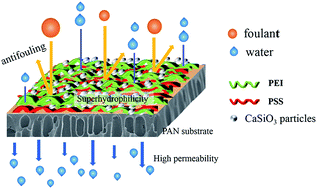
In order to detect the membrane fouling phenomenon, the membrane surface of the superhydrophilic (PEI/PSS–CSH)2.0 membrane was investigated by optical photos and SEM images compared to that of the hydrophilic multilayered (PEI/PSS)2.0 PEs membrane. As viewed the photographs in Fig. 10a1–d1, the surface of both hydrophilic and superhydrophilic membranes indicated an antifouling effect during running for 60 hours. There is a great contrast on SEM images of Fig. 10a2–d2 between hydrophilic (PEI/PSS)2.0 and superhydrophilic (PEI/PSS–CSH)2.0 membranes towards removal of XO and RB dyes, showing that (PEI/PSS–CSH)2.0 possessed a better antifouling property than that of (PEI/PSS)2.0 and higher antifouling effect on XO than RB. As a direct evidence of SEM observation, for retention of XO, the surface of hydrophilic (PEI/PSS)2.0 membrane (Fig. 10a2) clearly displayed a large area of foulant (bright area) than that of superhydrophilic (PEI/PSS–CSH)2.0 membrane (Fig. 10c2), while a greater amount of small foulant (Fig. 10b2 and d2) was found on the surface of both membrane for rejection of rhodamine B, revealing an enhanced antifouling effect of the superhydrophilic membrane compared to hydrophilic one. Also, the electrostatic interaction played a significant role on antifouling. Zeta potential in Fig. 1 confirmed that both (PEI/PSS)2.0 and (PEI/PSS–CSH)2.0 membranes showed negative charge, which favored suppressing the adsorption of negatively charged XO, leading to its fouling resistance, while such negative charge contributed to the adsorption of positively charged RB. Additionally, as illustrated in Fig. 11, the antifouling effect is relevant to the surface structure and composite. Owing to deposition of microstructured calcium silicate hydrates onto/into PEI/PSS membrane, surface area and hydrophilicity of membrane were much increased and thereby improved permeate flux. These features are beneficial to nanofiltration separation of dyes and other organics.


image file: c5ra11438a-f10.tif
Fig. 10 Photographs and the corresponding SEM image of the surface of (PEI/PSS)2.0 membrane after rejection of XO (a1 and a2) and RB (b1 and b2), the surface of the superhydrophilic (PEI/PSS–CSH)2.0 membrane after rejection of XO (c1 and c2) and RB (d1 and d2) for running time of 60 hours (operation condition: 1.0 ppm dye solution, 0.4 MPa, ambient temperature).

image file: c5ra11438a-f11.tif
Fig. 11 The schematic of the antifouling of the superhydrophilic multilayer membrane.

Moreover, the anti-fouling capacity depends on the recovery rate of water flux after deionized water hydraulic cleaning. To confirm the self-cleaning effect and antifouling ability of the superhydrophilic (PEI/PSS–CSH)2.0 membrane, the cyclic nanofiltration tests were performed with 100 mg L−1 bovine serum albumin (BSA) aqueous solution, in comparison with the hydrophilic (PEI/PSS)2.0 membrane. The results of time-dependent flux of membranes were shown in Fig. 12. The (PEI/PSS–CSH)2.0 membrane showed much higher permeate flux than that of (PEI/PSS)2.0 membrane during the running time. Within the first running time of 10 hours, the pure water flux of the (PEI/PSS–CSH)2.0 membrane slightly decreased from 225.3 to 220.1 L m−2 h−1 MPa−1. Then, the 100 mg L−1 bovine serum albumin (BSA) aqueous solution replaced pure water as a feed solution and the permeate flux obviously decreased from 178.4 to 155.6 L m−2 h−1 MPa−1 due to the protein fouling. However, the permeate flux of (PEI/PSS)2.0 membrane decreased from 63.0 to 48.1 L m−2 h−1 MPa−1. After rinsing the fouled membrane with pure water for 4 hours, for the (PEI/PSS–CSH)2.0 membrane, the water permeate flux recovered to 221.6 L m−2 h−1 MPa−1, while for the of (PEI/PSS)2.0 membrane it was 66.2 L m−2 h−1 MPa−1. The superhydrophilic (PEI/PSS–CSH)2.0 membrane showed flux recovery ratio (FRR) of 98.3%. It is more twice of the hydrophilic (PEI/PSS)2.0 membrane (48.0%), indicating an effective fouling resistance of superhydrophilic (PEI/PSS–CSH)2.0 membrane to BSA.


image file: c5ra11438a-f12.tif
Fig. 12 The results of time-dependent flux of membranes during cycle NF test (operation condition: 100 mg L−1 BSA aqueous solution, 0.4 MPa, 25 °C).

4. Conclusions

The negatively charged multilayered (PEI/PSS)2.0(PEI/PSS–CSH)n (n is integer, 1–10) composite membranes on the PAN ultrafiltration membrane were prepared by layer-by-layer (LbL) assembly with in situ precipitation of consecutive Ca2+-integrated multilayered polyelectrolytes and sodium silicate. The incorporation of CSH into PEI/PSS multilayers markedly changed surface structure and corresponding chemical and physical properties, such as surface composites, hydrophilicity, surface roughness and morphology etc. compared to multilayered polyelectrolytes [PEI/PSS]n. With increase the number of assembled multilayer, the membrane (PEI/PSS–CSH)2.0 showed a highest permeate flux of 191.5 and 183.5 L m−2 h−1 MPa−1 accompanied by the rejection of 94.0% and 91.2% for dyes XO and RB, respectively, as well as a long-time performance, due to its microstructure, specific surface area and the superhydrophilicity. And a typical trade-off phenomenon was found on the rejection and the flux for dyes XO and RB, if the number of assembled multilayer was higher than 2.0. Moreover the superhydrophilic (PEI/PSS–CSH)2.0 membrane possessed a stronger antifouling and self-cleaning stability in comparison with (PEI/PSS)2.0 PEs membrane. These potential advantages are beneficial to the applications of membranes in industry for the separation of organic contaminations and heavy metallic salts in water.

Acknowledgements

This work was supported by the National Natural Science Foundation of China (21176005, 21476005); and the Fund from CSC of National Education Ministry.

References

  1. M. Elimelech and W. A. Phillip, Science, 2011, 333, 712–717 CrossRef CAS PubMed.
  2. A. Tiraferri, Y. Kang, E. P. Giannelis and M. Elimelech, ACS Appl. Mater. Interfaces, 2012, 4, 5044–5053 CAS.
  3. M. Zhou, H. Liu, J. E. Kilduff, R. Langer, D. G. Anderson and G. Belfort, Environ. Sci. Technol., 2009, 43, 3865–3871 CrossRef CAS.
  4. X. F. Wang, X. M. Chen, K. Yoon, D. F. Fang, B. S. Hsiao and B. Chu, Environ. Sci. Technol., 2005, 39, 7684–7691 CrossRef CAS.
  5. Z. Tang, C. Qiu, J. R. McCutcheon, K. Yoon, H. Ma, D. Fang, E. Lee, C. Kopp, B. S. Hsiao and B. Chu, J. Polym. Sci., Part B: Polym. Phys., 2009, 47, 2288–2300 CrossRef CAS PubMed.
  6. Z. Qin, C. Geng, H. Guo, Z. Du, G. Zhang and S. Ji, J. Mater. Res., 2013, 28, 1449–1457 CrossRef CAS.
  7. L. Shan, H. Guo, Z. Qin, N. Wang, S. Ji, G. Zhang and Z. Zhang, RSC Adv., 2015, 5, 11515–11523 RSC.
  8. B. Van der Bruggen and C. Vandecasteele, Environ. Sci. Technol., 2001, 35, 3535–3540 CrossRef CAS.
  9. B. Van der Bruggen, L. Braeken and C. Vandecasteele, Sep. Purif. Technol., 2002, 29, 23–31 CrossRef CAS.
  10. G. M. Geise, H. S. Lee, D. J. Miller, B. D. Freeman, J. E. McGrath and D. R. Paul, J. Polym. Sci., Part B: Polym. Phys., 2010, 48, 1685–1718 CrossRef CAS PubMed.
  11. V. Vatanpour, S. S. Madaeni, R. Moradian, S. Zinadini and B. Astinchap, Sep. Purif. Technol., 2012, 90, 69–82 CrossRef CAS PubMed.
  12. L. Hu, S. Zhang, R. Han and X. Jian, Appl. Surf. Sci., 2012, 258, 9047–9053 CrossRef CAS PubMed.
  13. A. Rahimpour, M. Jahanshahi, N. Mortazavian, S. S. Madaeni and Y. Mansourpanah, Appl. Surf. Sci., 2010, 256, 1657–1663 CrossRef CAS PubMed.
  14. A. Rahimpour, S. S. Madaeni, S. Zereshki and Y. Mansourpanah, Appl. Surf. Sci., 2009, 255, 7455–7461 CrossRef CAS PubMed.
  15. H. Y. Yu, Y. Kang, Y. Liu and B. Mi, J. Membr. Sci., 2014, 449, 50–57 CrossRef CAS PubMed.
  16. D. Rana and T. Matsuura, Chem. Rev., 2010, 110, 2448–2471 CrossRef CAS PubMed.
  17. I. Banerjee, R. C. Pangule and R. S. Kane, Adv. Mater., 2011, 23, 690–718 CrossRef CAS PubMed.
  18. J. L. Dalsin and P. B. Messersmith, Mater. Today, 2005, 8, 38–46 CrossRef CAS.
  19. E. M. van Wagner, A. C. Sagle, M. M. Sharma, Y. H. La and B. D. Freeman, J. Membr. Sci., 2011, 367, 273–287 CrossRef CAS PubMed.
  20. B. P. Tripathi, N. C. Dubey, S. Choudhury and M. Stamm, J. Mater. Chem., 2012, 22, 19981–19992 RSC.
  21. M. Taniguchi and G. Belfort, J. Membr. Sci., 2004, 231, 147–157 CrossRef CAS PubMed.
  22. L. Li, G. Yan and J. Wu, J. Appl. Polym. Sci., 2009, 111, 1942–1946 CrossRef CAS PubMed.
  23. G. Z. Li, G. Cheng, H. Xue, S. Chen, F. Zhang and S. Jiang, Biomaterials, 2008, 29, 4592–4597 CrossRef CAS PubMed.
  24. S. Jiang and Z. Cao, Adv. Mater., 2010, 22, 920–932 CrossRef CAS PubMed.
  25. R. Chelmowski, S. D. Köster, A. Kerstan, A. Prekelt, C. Grunwald, T. Winkler, N. Metzler-Nolte, A. Terfort and C. Wöll, J. Am. Chem. Soc., 2008, 130, 14952–14953 CrossRef CAS PubMed.
  26. A. R. Statz, R. J. Meagher, A. E. Barron and P. B. Messersmith, J. Am. Chem. Soc., 2005, 127, 7972–7973 CrossRef CAS PubMed.
  27. X. Li, T. Cai and T. Chung, Environ. Sci. Technol., 2014, 48, 9898–9907 CrossRef CAS PubMed.
  28. G. Decher, Science, 1997, 277, 1232–1237 CrossRef CAS.
  29. N. Joseph, P. Ahmadiannamini, R. Hoogenboom and I. F. J. Vankelecom, Polym. Chem., 2014, 5, 1817–1831 RSC.
  30. P. T. Hammond, Adv. Mater., 2004, 16, 1271–1293 CrossRef CAS PubMed.
  31. S. Srivastava and N. A. Kotov, Acc. Chem. Res., 2008, 41, 1831–1841 CrossRef CAS PubMed.
  32. Y. Lvov, K. Ariga, M. Onda, I. Ichinose and T. Kunitake, Langmuir, 1997, 13, 6195–6203 CrossRef CAS.
  33. H. Guo, P. Sun, Y. Liang, Y. Ma, Z. Qin and S. Cui, Chem. Eng. J., 2014, 253, 198–206 CrossRef CAS PubMed.
  34. S. Anandan, T. N. Rao, M. Sathish, D. Rangappa, I. Honma and M. Miyauchi, ACS Appl. Mater. Interfaces, 2013, 5, 207–212 CAS.
  35. X. Liu, X. Du and J. He, ChemPhysChem, 2008, 9, 305–309 CrossRef CAS PubMed.
  36. B. Peng, L. Tan, D. Chen, X. Meng and F. Tang, ACS Appl. Mater. Interfaces, 2012, 4, 96–101 CAS.
  37. L. Zhang, Z. A. Qiao, M. Zheng, Q. Huo and J. Sun, J. Mater. Chem., 2010, 20, 6125–6130 RSC.
  38. P. Chen, Y. Hu and C. Wei, Appl. Surf. Sci., 2012, 258, 4334–4338 CrossRef CAS PubMed.
  39. X. Du, X. Li and J. He, ACS Appl. Mater. Interfaces, 2010, 2, 2365–2372 CAS.
  40. M. Eita, L. Wågberg and M. Muhammed, J. Phys. Chem. C, 2012, 116, 4621–4627 CAS.
  41. W. Sun, J. Liu, H. Chu and B. Dong, Membranes, 2013, 3, 226–241 CrossRef CAS PubMed.
  42. N. Lee, G. Amy and J. Lozier, Desalination, 2005, 178, 85–93 CrossRef CAS PubMed.
  43. S. Lee and C. H. Lee, Sep. Purif. Technol., 2007, 56, 1–8 CrossRef CAS PubMed.
  44. M. J. Han, G. N. B. Baroña and B. Jung, Desalination, 2011, 270, 76–83 CrossRef CAS PubMed.
  45. T. H. Bae and T. M. Tak, J. Membr. Sci., 2005, 266, 1–5 CrossRef CAS PubMed.
  46. T. H. Bae, I. C. Kim and T. M. Tak, J. Membr. Sci., 2006, 275, 1–5 CrossRef CAS PubMed.
  47. W. Choi, J. Choi, J. Bang and J. H. Lee, ACS Appl. Mater. Interfaces, 2013, 5, 12510–12519 CAS.
  48. H. Guo, M. Chen, Q. Liu, Z. Wang, S. Cui and G. Zhang, Desalination, 2015, 365, 108–116 CrossRef CAS PubMed.
  49. W. Chen, Y. Su, J. Peng, X. Zhao, Z. Jiang, Y. Dong, Y. Zhang, Y. Liang and J. Liu, Environ. Sci. Technol., 2011, 45, 6545–6552 CrossRef CAS PubMed.
  50. Y. Li, Y. Su, X. Zhao, X. He, R. Zhang, J. Zhao, X. Fan and Z. Jiang, ACS Appl. Mater. Interfaces, 2014, 6, 5548–5557 CAS.
  51. Y. Zhou, S. Yu, C. Gao and X. Feng, Sep. Purif. Technol., 2009, 66, 287–294 CrossRef CAS PubMed.
  52. C. Labbez, B. Jӧnsson, I. Pochard, A. Nonat and B. Cabane, J. Phys. Chem. B, 2006, 110, 9219–9230 CrossRef CAS PubMed.
  53. N. Wang, G. Zhang, S. Ji, Z. Qin and Z. Liu, J. Membr. Sci., 2010, 354, 14–22 CrossRef CAS PubMed.
  54. R. Malaisamy, A. Talla-Nwafo and K. L. Jones, Sep. Purif. Technol., 2011, 77, 367–374 CrossRef CAS PubMed.
  55. H. Y. Deng, Y. Y. Xu, B. K. Zhu, X. Z. Wei, F. Liu and Z. Y. Cui, J. Membr. Sci., 2008, 323, 125–133 CrossRef CAS PubMed.
  56. S. Cui, H. Guo, C. Wang and Z. Wang, Bull. Chin. Ceram. Soc., 2012, 31, 531–534 CAS.
  57. G. Ladam, P. Schaad, J. C. Voegel, P. Schaaf, G. Decher and F. Cuisinier, Langmuir, 2000, 16, 1249–1255 CrossRef CAS.
  58. R. N. Wenzel, Ind. Eng. Chem., 1936, 28, 988–994 CrossRef CAS.
  59. W. J. Lau and A. F. Ismail, Desalination, 2009, 245, 321–348 CrossRef CAS PubMed.
  60. L. Shao, X. Q. Cheng, Y. Liu, S. Quan, J. Ma, S. Z. Zhao and K. Y. Wang, J. Membr. Sci., 2013, 430, 96–105 CrossRef CAS PubMed.
  61. X. Chen, C. Cai, H. Luo and G. Zhang, Spectrochim. Acta, Part A, 2005, 61, 2215–2220 CrossRef PubMed.
  62. J. Zhao, T. Wu, K. Wu, K. Oikawa, H. Hidaka and N. Serpone, Environ. Sci. Technol., 1998, 32, 2394–2400 CrossRef CAS.

This journal is © The Royal Society of Chemistry 2015
Click here to see how this site uses Cookies. View our privacy policy here.