Quaternized poly(2-(dimethylamino)ethyl methacrylate)-grafted agarose copolymers for multipurpose antibacterial applications

Li Qun Xu*ab, Ning Ning Liab, Jiu Cun Chenab, Guo Dong Fuc and En-Tang Kangd
aInstitute for Clean Energy & Advanced Materials, Faculty of Materials & Energy, Southwest University, Chongqing, P. R. China 400715. E-mail: xulq@swu.edu.cn
bChongqing Key Laboratory for Advanced Materials and Technologies of Clean Energies, Southwest University, Chongqing, P. R. China 400715
cSchool of Chemistry and Chemical Engineering, Southeast University, Jiangning District, Nanjing, Jiangsu Province, P. R. China 211189
dDepartment of Chemical & Biomolecular Engineering, National University of Singapore, Kent Ridge, Singapore 117576

Received 12th June 2015 , Accepted 9th July 2015

First published on 10th July 2015


Abstract

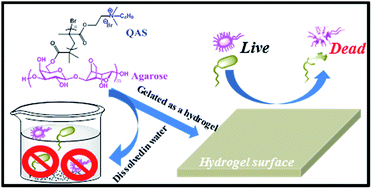
Polymeric quaternary ammonium salts (QAS) have been widely studied for their antimicrobial activities. However, most of them were evaluated and used in solution form, which may limit their other applications, in medical and wound care and surface biofouling prevention. The development of antibacterial agents for use both in solution and in surface biofouling prevention are highly interesting and desirable. In this work, quaternized poly(2-(dimethylamino)ethyl methacrylate)-grafted agarose (Agr-g-QPDMAEMA) copolymers were synthesized via a combination of atom transfer radical polymerization (ATRP) and quaternization of tertiary amine moieties. The resulting Agr-g-QPDMAEMA copolymers can be dissolved in aqueous media at low concentrations to evaluate their antibacterial activity in the solution form. They can also be gelated as hydrogels on substrate surfaces to inhibit bacterial adhesion, biofilm formation and bacterial colonization. The Agr-g-QPDMAEMA copolymer hydrogels can be further fabricated into antibacterial patches to inhibit the bacteria growth on the contaminated surfaces.

Introduction

Microbial infections caused by bacteria are a serious health problem to the human population.1,2 Fortunately, the discovery and development of antibiotics to treat infections caused by bacteria has been an important contribution of modern medicine. However, the misuse and overuse of antibiotics have created antibiotic resistance in certain bacteria, which require expensive treatments and increase the risk of complications and death for patients with infections.3,4 A 2013 report from the Centers for Disease Control and Prevention (CDC) has revealed that more than 2 million people in the US become ill annually due to the antibiotic-resistant infections, and 23[thin space (1/6-em)]000 die from such infections. Thus, the next-generation of antimicrobial agents are needed and a lot of effect has been devoted to discovering highly efficient compounds, such as antimicrobial peptides (AMPs)5–7 and cationic compounds.8–16 These compounds are less susceptible to the development of resistance by bacteria.17 The quaternary ammonium salts (QAS) are among the most commonly used cationic antimicrobial agents. It is generally accepted that the mechanism of the bactericidal action of the QAS involves: (i) penetration of the compound into the cell wall, (ii) reaction with the cytoplasmic membrane, followed by membrane disruption, (iii) leakage of intercellular matters and degradation of proteins and nucleic acids, and (iv) cell wall lysis.2,17 Among the QAS, the polymeric QAS provide the advantages of non-volatility, long-term chemical stability and activity, enhanced antimicrobial efficacy and reduced residual toxicity.18 Polymeric QAS based on poly(vinylpyridine), poly(acrylate), poly(acrylamide), poly(diallylammonium), poly(styrene), degradable polyester, conjugated polymers, poly(norbornene), branched poly(ethyleneimine) and modified natural polysaccharides2,14,17–19 have been reported to eradicate pathogens with impressive results.

The antibacterial activities of most QAS are evaluated in solution forms.14 For other medical applications, such as wound care and surface biofouling prevention, the antimicrobial moieties need to be physically embedded into or chemically bonded to polymeric matrixes.1,20 In this case, the antibacterial activities are evaluated mainly at the surfaces in contact with the bacterial suspensions or bacterial aerosols.21 It would be interesting to develop new antimicrobial agents, which are suitable for multipurpose biomedical applications in both solution and solid form.

Agarose (Agr), a natural polysaccharide extracted from seaweed, can forms a thermoresponsive hydrogel through physical cross-linking.22 Due to its biocompatibility, non-fouling and non-immunogenic attributes,23 Agr has been widely explored for applications in the biomedical field.24,25 Agr is not soluble in cold water, but it can dissolve in hot water and the aqueous Agr solution (minimum concentration of ∼5 mg mL−1) forms a hydrogel as it cools. Agr is soluble/dispersible in aqueous media at a lower concentration. The chemically modified Agr derivative can exhibit a better solubility in water, as the hydrogen bonding within the Agr becomes weaker.23,24,26,27 Thus, integration of Agr and QAS could lead to the formation of an antibacterial agent, which is soluble in aqueous media at low concentration and solidifies as a hydrogel at high concentration.

In this work, the integration of Agr and QAS was achieved by atom transfer radical polymerization (ATRP) using modified Agr as the macroinitiator and 2-(dimethylamino)ethyl methacrylate (DMAEMA) as the monomer, followed by the quaternization of the tertiary amine group in DMAEMA. The resulting quaternized poly(DMAEMA)-grafted Agr (Agr-g-QPDMAEMA) copolymers were characterized for their antibacterial and hemolytic activities in solution form. The Agr-g-QPDMAEMA copolymers were also gelated, and the bacterial adhesion, biofilm formation and bacterial colonization on their surfaces were assayed. The Agr-g-QPDMAEMA copolymer hydrogels were then fabricated into antibacterial patches. The inhibition of bacteria growth on the contaminated substrate surfaces by the hydrogel patches was investigated.

Experimental section

Materials

Agarose (Agr) for biochemistry, 2-bromoisobutyryl bromide (BiBB, 98%), copper(I) bromide (CuBr, 99.99%), 2,2′-bipyridine (bpy, 99%), 2-(dimethylamino)ethyl methacrylate (DMAEMA, 99%) and 1-bromobutane (99%) were purchased from Aladdin Industrial Corporation (Shanghai, China). CuBr was purified by stirring in glacial acetic acid overnight, followed by filtration and rinsing with ethanol. DMAEMA was purified by passing it through a basic alumina column. All other regents and solvents were purchased from Aladdin Industrial Corporation or Kelong Chemical Reagent Plant (Chengdu, China), and were used without further purification.

Synthesis of the alkyl bromide-functionalized Agr (Agr–Br) macroinitiator

The preparation of Agr-based macroinitiator was described as follows: Agr (6 g, ∼18.5 mmol of repeat units) was dissolved in 150 mL of N,N-dimethylacetamide (DMAc), and the mixture was stirred at 120 °C for 4 h until Agr was completely dissolved. After that, the temperature of reaction mixture was lowered to 0 °C in an ice bath. Triethylamine (3.87 mL, 27.7 mmol) in 10 mL of DMAc was added to this solution, followed by the drop-wise addition of BiBB (3.43 mL, 27.7 mmol) in 10 mL of DMAc. The reaction mixture was stirred at room temperature for 24 h, and poured into an excess amount of ethanol. The obtained precipitate was filtered and dried under reduced pressure at 50 °C for 12 h.

Synthesis of poly(DMAEMA)-grafted Agr (Agr-g-PDMAEMA) copolymers

A typical atom transfer radical polymerization (ATRP) of DMAEMA was carried out using CuBr/bpy as the catalyst system and Agr–Br as the macroinitiator. Agr–Br (2 g, ∼3.0 mmol of alkyl bromide moieties) was dissolved in 30 mL of N,N-dimethylformamide (DMF) and stirred at 60 °C until the complete dissolution. The obtained homogeneous solution was left to cool down to room temperature. Then, CuBr (0.3 g, 2.1 mmol) and DMAEMA (8.89 mL, 52.8 mmol) in 12 mL of DMF were sequentially introduced into the reaction mixture. The solution was degassed with argon for 20 min, and bpy (0.65 g, 4.2 mmol) was quickly added into the mixture. The reaction was then sealed, and the mixture was stirred at 60 °C until the dark brown solution became very viscous. The resulting solution was dialyzed against ethylenediamine tetraacetic acid (EDTA) aqueous solution for three days and against pure deionized water for another four days. The solid Agr-g-PDMAEMA1 copolymers were obtained after lyophilization. The resulting copolymer sample prepared from 13.33 mL of DMAEMA (79.1 mmol) is referred to as the Agr-g-PDMAEMA2 copolymer.

Quaternization of Agr-g-PDMAEMA copolymers

Agr-g-PDMAEMA1 copolymer (3 g) was added to 40 mL of DMF and suspended by stirring at 60 °C until the complete dissolution. 1-Bromobutane (0.55 mL) in 0.69 mL of DMF was added drop-wise to this solution, and the reaction was maintained at 60 °C for 5 h under stirring. The reaction mixture was then lowered to room temperature and precipitated into a large excess of ethanol. The precipitate was collected by centrifugation, washed with ethanol 3 times, and dried under reduced pressure. The copolymer obtained is referred to as the quaternized Agr-g-PDMAEMA1 (Agr-g-QPDMAEMA1) copolymer. The Agr-g-QPDMAEMA2 copolymer was prepared from the Agr-g-PDMAEMA2 copolymer using similar procedures.

Determination of antimicrobial property of Agr-g-QPDMAEMA copolymers

Minimum inhibitory concentration (MIC) of Agr-g-QPDMAEMA1 and Agr-g-QPDMAEMA2 copolymers against Staphylococcus aureus (S. aureus 25923) and Escherichia coli (E. coli DH5α) was determined by the broth microdilution method.28 S. aureus and E. coli were cultured in Mueller Hinton Broth (MHB) by incubation overnight at 37 °C in the dark. The bacterial suspensions were then dispersed in MHB to give rise to a final concentration of 3 × 10⁵ bacterial cells per mL. Stock solutions of the Agr-g-QPDMAEMA1 and Agr-g-QPDMAEMA2 copolymers were prepared in MHB, and then serially diluted by 2-fold each time using MHB. Each well of a 96-well plate was filled with 100 μL of medium containing the copolymer, to which 100 μL of bacterial suspension (3 × 10⁵ bacterial cells per mL) was added. The plate was incubated at 37 °C overnight, and MIC was recorded as the lowest concentration of the copolymer that inhibited bacteria growth detected by naked eye.

After the MIC assay, the bacterial suspensions (3 × 10⁵ bacterial cells per mL, 20 mL) in MHB were then introduced into respective 50 mL sterile tubes, each containing 20 mL of the Agr-g-QPDMAEMA1 and Agr-g-QPDMAEMA2 copolymers at different concentrations (1 × MIC or 2 × MIC) in MHB. The tubes was sealed and placed on an incubator at 37 °C. The viable cell numbers in the suspensions after 1, 2, 3, 4 and 5 h of incubation were determined using the spread plate method. Bacterial suspensions were spread onto plates in triplicate. Control experiments were carried out in the absence of the Agr-g-QPDMAEMA copolymers.

Characterization of hemotoxicity of the Agr-g-QPDMAEMA copolymers

Fresh blood collected from a healthy rabbit was immediately mixed with 3.8 wt% sodium citrate solution in a ratio of 9[thin space (1/6-em)]:[thin space (1/6-em)]1 (v/v). After that, the blood was diluted by 25-fold using phosphate buffered saline (PBS, pH = 7.4). The copolymers were dissolved in PBS at concentrations ranging from 0 to 2500 μg mL−1 by 2-fold serial dilutions using PBS. The hemolysis assay was carried out in a 24-well plate. One mL of the diluted fresh blood was added into each well, followed by the addition of equal volume of the copolymers at different concentrations. Positive control was treated with 1 mL of 0.1% (v/v) Triton-X, while the negative control was treated with 1 mL of PBS. The plate was incubated at 37 °C for 1 h to allow interactions between the rabbit red blood cells (RBCs) and the copolymer to taken place,19,29 before 1 mL of the mixture in each well was transferred into respective 1.5 mL PCR tube. The PCR tube was centrifuged at 1000 rpm for 5 min, and 100 μL of the supernatant was transferred into a 96-well plate. Four replicates were measured for each copolymer. The optical density (OD), arising from the released hemoglobin, was measured at 576 nm on a microplate reader. The hemolysis (%) was determined with the following equation:
Hemolysis = (ODsample − ODnegative control)/(ODpositive control − ODnegative control).

Bacterial adhesion and biofilm formation on the Agr-g-QPDMAEMA copolymer hydrogel surfaces immersed in bacterial suspensions

Agr-g-QPDMAEMA2 copolymer (150 mg) and unmodified Agr (30 mg) was suspended in 10 mL of deionized water and stirred at 90 °C until the complete dissolution. The addition of unmodified Agr was utilized to enhance the mechanical strength and stability of the copolymer hydrogel. The hot solution (0.25 mL) was added into each well of the 24-well plates. The gelation of the solution was achieved by placing the plate in a 4 °C fridge overnight. S. aureus and E. coli were cultured in tryptic soy broth (TSB) and nutrient broth (NB), respectively, by incubation overnight at 37 °C in the dark. The bacterial suspensions were centrifuged at 2700 rpm for 10 min. After removal of the supernatant and washing twice with sterile PBS, E. coli and S. aureus cakes were dispersed in PBS containing 5% (v/v) of TSB and NB, respectively, to give rise to a final concentration of 1 × 10⁵ cells per mL. One mL of the bacterial suspension was added into each well of the hydrogel-deposited 24-well plate, which was then incubated in a 37 °C incubator. After every 24 h, the culture medium in each well was removed, and 1 mL of freshly prepared PBS containing 5% (v/v) of TSB or NB was added into each well. After the predetermined incubation period, the culture medium in each well was discarded and the well was gently washed with PBS for two times to remove any non-adherent or loosely adhered bacteria on the surface. The well was then stained with 50 μL of the combination dye (LVE/DEAD BacLight Bacterial Viability Kit) for 30 min, washed with deionized water, and observed under a Nikon Eclipse Ti microscope equipped with excitation-emission filters of 470/525 and 540/605 nm for green and red fluorescence, respectively.

Bacterial colonization on the Agr-g-QPDMAEMA copolymer hydrogel surfaces exposed to bacterial aerosol

Agr-g-QPDMAEMA2 copolymer (150 mg) and unmodified Agr (30 mg) was suspended in 10 mL of TSB or NB and autoclaved at 100 °C for 10 min. When the medium was cool enough to handle, it was poured into the sterile Petri dishes, which was placed at room temperature for 1 h to allow the plates to set. Harvested bacterial cells (S. aureus and E. coli) were suspended in PBS at a concentration of 1 × 10⁵ cells per mL. The prepared bacterial suspension in PBS was sprayed onto the Agr-g-QPDMAEMA copolymer hydrogel surfaces using a commercial perfume atomizer. The Petri dishes were then inverted and incubated at 37 °C for 18 h to form visible bacterial colonies. Controlled experiments were carried out using unmodified Agr as the gel precursor.

Prevention of bacterial infection by the Agr-g-QPDMAEMA copolymer hydrogel patches

Agr-g-QPDMAEMA2 copolymer (150 mg) and unmodified Agr (30 mg) was suspended in 10 mL of TSB or NB and autoclaved at 100 °C for 10 min. The hydrogel patches were formed by casting the copolymer solution onto the hydrophilic silicon wafer. The hydrogel patches were allowed to stand at room temperature for 1 h, and were subsequently cut into circle shapes with a knife. The resulting hydrogel patches were gently peeled off from the silicon wafer using a ruler.

The contaminated titanium (Ti) surfaces by S. aureus and E. coli were built by immersing the pristine Ti substrates in bacterial suspensions (1 × 10⁷ cells per mL for both cells) in PBS for 4 h. The Ti substrates were washed with PBS three times to remove any non-adhered or loosely adhered bacteria. After that, the contaminated Ti substrates were gently placed on the top of the as-formed Agr-g-QPDMAEMA2 copolymer hydrogel patches in the sterile Petri dishes. The Petri dishes were then incubated at 37 °C for 24 h. The Ti substrates after incubation were taken out from the hydrogel patch surfaces, placed in the 24-well plate, and washed with PBS three times. The numbers of viable adherent cells on the Ti surfaces were quantified using the spread plate method, involving ultrasonic cell removal, serial dilution and plating for viable cell counts.21 Bacterial suspension of each dilution was spread onto plate in triplicate. Controlled experiments were carried out using unmodified Agr hydrogel patches with TSB or NB nutrients.

Characterization

The chemical structures of Agr copolymers were characterized by 1H NMR spectroscopy on a Varian 600 MHz spectrometer. X-ray photoelectron spectroscopy (XPS) measurements were carried out on a Kratos AXIS Ultra HSA spectrometer equipped with a monochromatized AlKα X-ray source (1468.71 eV photons). FT-IR spectroscopy analysis was carried out on a Bio-Rad FTS-135 spectrophotometer.

Results and discussion

To prepare the graft copolymers via atom transfer radical polymerization (ATRP) from the agarose (Agr), it is essential to introduce the alkyl bromide initiator onto the Agr. In this work, the bromoisobutyryl-functionalized Agr (Agr–Br) macroinitiator was prepared via the reaction of hydroxyl groups of Agr with 2-bromoisobutyryl bromide (BiBB) (Scheme 1).26,30 It has been reported that the hydroxyl groups at the C-6 positions of polysaccharides are apparently favorable for the substitution reactions.31 When Agr reacted directly with BiBB, the alkyl bromide initiator was probably introduced at the C-6 positions of Agr. The presence of alkyl bromide moieties in the structure of Agr–Br is evidenced by the appearance of methyl protons adjacent to the bromide atom at 1.92 ppm in the 1H NMR spectrum of Agr–Br (Fig. 1a and b). The degree of alkyl bromide substitution was estimated from 1H NMR spectrum of Agr–Br to be about 37.4%. The chemical structure of Agr–Br was also characterized by X-ray photoelectron spectroscopy (XPS). In comparison to that of Agr (Fig. 2a), the XPS C 1s core-level spectrum of Agr–Br (Fig. 2c) can be curve-fitted into four peak components with binding energies (BEs) at about 284.6, 286.2, 287.6 and 288.6 eV, attributable to the [C with combining low line]–H/C–C, [C with combining low line]–O/[C with combining low line]–Br, O–[C with combining low line]–O and O[double bond, length as m-dash][C with combining low line]–O species, respectively. The presence of O[double bond, length as m-dash][C with combining low line]–O peak component is associated with the formation of ester bonds from esterification between BiBB and Agr. The XPS Br 3d core-level spectrum of Agr–Br (Fig. 2d) at the BE of approximately 70.5 eV, attributable to the covalently C–Br species,32 indicates that the bromoisobutyrate has been successfully coupled to the hydroxyl groups of the Agr. The coupling of BiBB to Agr is further confirmed by the presence of C[double bond, length as m-dash]O stretch in the ester group at about 1730 cm−1 in the FT-IR spectrum (Fig. S1, ESI). Thus, the alkyl bromide initiators for ATRP have been successfully introduced on the Agr.
image file: c5ra11189g-s1.tif
Scheme 1 Synthesis routes of the Agr–Br macroinitiator, Agr-g-PDMAEMA and quaternized Agr-g-QPDMAEMA copolymers.

image file: c5ra11189g-f1.tif
Fig. 1 1H NMR spectra of the (a) Agr (b) Agr–Br (c) Agr-g-PDMAEMA1 and (d) Agr-g-PDMAEMA2 copolymers in DMSO-d6 at 50 °C.

image file: c5ra11189g-f2.tif
Fig. 2 XPS C 1s core-level spectra of the (a) Agr (c) Agr–Br (e) Agr-g-PDMAEMA2 and (g) Agr-g-QPDMAEMA2 copolymers, Br 3d core-level spectra of the (b) Agr and (d) Agr–Br, and N 1s core-level spectra of the (f) Agr-g-PDMAEMA2 and (h) Agr-g-QPDMAEMA2 copolymers.

ATRP of 2-(dimethylamino)ethyl methacrylate (DMAEMA) from Agr–Br macroinitiator was conducted in N,N-dimethylformamide (DMF) using CuBr/2,2′-bipyridine (bpy) as the catalyst system. The resulting poly(DMAEMA)-grafted Agr (Agr-g-PDMAEMA) copolymers with different PDMAEMA grafting contents were achieved by varying the macroinitiator to monomer ratios. Table 1 summarizes the characteristics of the Agr-g-PDMAEMA1 and Agr-g-PDMAEMA2 copolymers. With the increase in macroinitiator to monomer ratio from 1[thin space (1/6-em)]:[thin space (1/6-em)]17.4 to 1[thin space (1/6-em)]:[thin space (1/6-em)]26.1, the PDMAEMA graft content in the Agr-g-PDMAEMA copolymers increase from 64.9% to 68.9%. 1H NMR spectra of the Agr-g-PDMAEMA1 and Agr-g-PDMAEMA2 copolymers (Fig. 1c and d) show new chemical shifts at about 3.99, 2.20, 1.76 and 0.83 ppm, which are characteristic proton signals of methylene protons adjacent to ester group, methyl protons adjacent to tertiary amine, methylene protons in the main backbone, and methyl protons adjacent to the vinyl bond in DMAEMA repeat units, respectively. The XPS C 1s core-level spectrum of the Agr-g-PDMAEMA2 copolymer (Fig. 2e) can be curve-fitted into five peak components with BEs of about 284.6, 295.5, 286.1, 287.6 and 288.5 eV, attributable to the [C with combining low line]–H/[C with combining low line]–C, [C with combining low line]–N, [C with combining low line]–O, O–[C with combining low line]–O and O[double bond, length as m-dash][C with combining low line]–O species, respectively. The presence of C–N species and the decrease in [C with combining low line]–O and O–[C with combining low line]–O species are consistent with the grafting of PDMAEMA side chains.

Table 1 Characteristics of the Agr copolymers
  Degree of alkyl bromide substitutiona Polymerization conditionb [Agr][thin space (1/6-em)]:[thin space (1/6-em)][PDMAEMA] weight ratiosc Degree of quaternization in the grafted PDMAEMAd HC50e MICf (selectivityg)
E. coli S. aureus
a Determined by 1H NMR spectrum of Agr–Br: using the integrated area ratios of methyl protons adjacent to the bromide atom and C1′-H and C2-OH in Agr.b The molar ratio of macroinitiator[thin space (1/6-em)]:[thin space (1/6-em)]DMAEMA[thin space (1/6-em)]:[thin space (1/6-em)]CuBr[thin space (1/6-em)]:[thin space (1/6-em)]bpy.c Determined by 1H NMR spectra of Agr-g-PDMAEMA1 and Agr-g-PDMAEMA2 copolymers: using the integrated area ratios of methyl protons adjacent to the vinyl bond in DMAEMA and C1′-H and C2-OH in Agr.d Determined from the corresponding positively-charged nitrogen peak component and total nitrogen spectral area ratios in the XPS N 1s core-level spectra of Agr-g-PDMAEMA1 and Agr-g-PDMAEMA2 copolymers.e The capability of these copolymers to produce 50% of hemolysis of rabbit RBCs at a given concentration (μg mL−1).f The lowest concentration (μg mL−1) of these copolymers that inhibited bacteria growth.g The selectivity of these copolymers against bacteria versus rabbit RBCs (HC50/MIC).
Agr–Br 37.4%            
Agr-g-PDMAEMA1   1[thin space (1/6-em)]:[thin space (1/6-em)]17.4[thin space (1/6-em)]:[thin space (1/6-em)]0.7[thin space (1/6-em)]:[thin space (1/6-em)]1.4 35.1[thin space (1/6-em)]:[thin space (1/6-em)]64.9        
Agr-g-PDMAEMA2   1[thin space (1/6-em)]:[thin space (1/6-em)]26.1[thin space (1/6-em)]:[thin space (1/6-em)]0.7[thin space (1/6-em)]:[thin space (1/6-em)]1.4 31.1[thin space (1/6-em)]:[thin space (1/6-em)]68.9        
Agr-g-QPDMAEMA1       71.4% >2500 64 (>39) 128 (>19)
Agr-g-QPDMAEMA2       75.8% >2500 64 (>39) 64 (>39)


In the final step of synthesis, the tertiary amine moieties in the grafted PDMAEMA chains were converted to polymeric quaternary ammonium salts (QAS) through quaternization with 1-bromobutane.33,34 The ammonium ions can be easily verified by XPS N 1s core-level spectrum, as the positively-charged nitrogen is expected at a higher N 1s BE.35,36 In comparison to the XPS N 1s core-level spectrum of Agr-g-PDMAEMA2 copolymer (Fig. 2f), the XPS N 1s core-level spectrum of Agr-g-QPDMAEMA2 copolymer (Fig. 2h) can be curve-fitted into two peak components with BEs at about 399.1 and 402.0 eV,37 attributable to tertiary amine and positively-charged nitrogen, respectively. The degrees of quaternization in the grafted PDMAEMA chains are determined from the ratios of positively-charged nitrogen peak component and total nitrogen spectral area in the XPS N 1s core-level spectra of Agr-g-QPDMAEMA1 and Agr-g-QPDMAEMA2 copolymers to be about 71% and 76%, respectively.

Having successfully characterized the chemical structures and compositions of the Agr copolymers, the antimicrobial activities against Gram-negative (Staphylococcus aureus (S. aureus)) and Gram-positive (Escherichia coli (E. coli)) bacteria of the Agr-g-QPDMAEMA copolymers were investigated using the broth microdilution method.28 The Agr-g-PDMAEMA copolymers were not studied because they are not soluble in aqueous media. The minimum inhibitory concentration (MIC) values for the Agr-g-QPDMAEMA1 and Agr-g-QPDMAEMA2 copolymers are presented in Table 1. The respective MIC values of the Agr-g-QPDMAEMA1 and Agr-g-QPDMAEMA2 copolymers are 64 and 64 μg mL−1 against E. coli, and 128 and 64 μg mL−1 against S. aureus. The results suggest that these copolymers are bacteriostatic (or growth inhibiting) against both E. coli and S. aureus, and the MIC values of these copolymers against E. coli and S. aureus seem to approach a comparable level with other quaternized PDMAEMA copolymers.33,38 To further ascertain the bactericidal activities of these copolymers, their time-dependent killing efficiencies were assayed by co-culturing them at 1 × MIC and 2 × MIC concentrations with E. coli and S. aureus. As shown in Fig. 3a and b, significant loss of viable E. coli and S. aureus are observed. The killing efficiencies of the Agr-g-QPDMAEMA1 and Agr-g-QPDMAEMA2 copolymers reach more than 98.5% for both bacteria at 1 × MIC and 2 × MIC concentrations, after 5 h of contact. However, the Agr-g-QPDMAEMA copolymers exhibit a high antibacterial efficiency against E. coli, reaching more than 99.4% at both concentrations, even only after 3 h of contact. It is generally recognized that the double cellular membrane of E. coli may complicate the polymer permeation and the inner membrane disruption, resulting in a slower cell death than that of S. aureus.33,39 Interestingly, the higher antibacterial capability of cationic polymers against E. coli than against S. aureus has also been reported.40 This phenomenon presumably is due to the fact that S. aureus has a very thick (20–80 nm) and highly crosslinked peptidoglycan layer (polysaccharide with amino acid side chains) in the outer cell wall,41 which may interact with Agr polysaccharide via hydrogen bonding to retard the permeation of the Agr-based copolymers as well as the disruption of cellular membrane. The peptidoglycan layer between the outer and inner membrane of E. coli has a thickness of 6–8 nm,40 and may not be sufficient to hinder the polymer permeation.


image file: c5ra11189g-f3.tif
Fig. 3 Time-dependent killing efficiencies of the Agr-g-QPDMAEMA1 and Agr-g-QPDMAEMA2 copolymers at concentrations of 1 × and 2 × MIC against (a) E. coli and (b) S. aureus.

As a measure of biocompatibility, the hemolysis of rabbit red blood cells (RBCs) induced by the copolymers were investigated. Hemolytic activity is generally defined by the HC50, which represents the concentration required to lyse 50% of the RBCs. Due to the limited solubility of these copolymers in phosphate buffered saline (PBS, pH = 7.4), the maximum concentration used was 2500 μg mL−1 for the Agr-g-QPDMAEMA1 and Agr-g-QPDMAEMA2 copolymers. The hemolysis assay is shown in Fig. 4 and the HC50 values for these copolymers are present in Table 1. As shown in the hemolysis assay, the maximum hemolysis is still under 20% at all concentrations tested for both copolymers. This results indicate that these copolymers at the concentration up to 2500 μg mL−1 have negligible toxicity for rabbit erythrocyte. The selectivity, defined as HC50/MIC, can be used to describe the cell specificity towards bacteria versus RBCs. The selectivity values of the Agr-g-QPDMAEMA1 and Agr-g-QPDMAEMA2 copolymers are larger than 39 towards E. coli, and larger than 19 and 39, respectively, towards S. aureus. These values are comparable to other cationic polymer systems,42–44 indicating that these copolymers are potentially suitable for healthcare applications.


image file: c5ra11189g-f4.tif
Fig. 4 Relative hemolytic activity of the Agr-g-QPDMAEMA1 and Agr-g-QPDMAEMA2 copolymers after 1 h of culturing with rabbit RBCs.

Agr can form a thermoresponsive hydrogel through physical crosslinking.22 The intriguing gelation property of Agr can be used for solidifying the Agr-g-QPDMAEMA copolymers in aqueous media, resulting in an antibacterial hydrogel. Antimicrobial hydrogels are extremely attractive biomaterials for use as wound dressings and fillers.45 The antibacterial Agr-g-QPDMAEMA copolymer hydrogels were prepared by dissolving the copolymers in tryptic soy broth (TSB) and nutrient broth (NB), followed by pouring the hot mixture into Petri dishes to stand. Bacterial colonization on the surfaces of antibacterial hydrogels after exposure to bacterial aerosol was first examined to simulate bacterial contamination from air and droplets. Bacterial suspensions (containing 1 × 10⁵ cells per mL of E. coli or S. aureus) in PBS were sprayed onto the surfaces of unmodified Agr and Agr-g-QPDMAEMA2 copolymer hydrogels (Fig. 5a). The contaminated hydrogel surfaces in Petri dishes were then incubated at 37 °C for 18 h. Optical images of Petri dishes after the incubation period are shown in Fig. 5b–e. Numerous colonies of E. coli and S. aureus can be observed by naked eye on the unmodified Agr hydrogel surfaces in Fig. 5b and d, respectively. On the other hand, the respective colonies of E. coli and S. aureus on the Agr-g-QPDMAEMA2 copolymer hydrogel surfaces in Fig. 5c and e are barely discernible to the naked eye. These results indicate that the Agr-g-QPDMAEMA2 copolymer hydrogels exhibit bactericidal activity against aerosolized bacteria.


image file: c5ra11189g-f5.tif
Fig. 5 (a) Schematic diagram illustrating the assay for the inhibition of aerosolized bacterial colonization on the hydrogel surface; optical images of the (b and d) unmodified Agr and (c and e) Agr-g-QPDMAEMA2 copolymer hydrogel surfaces after exposure to bacterial aerosol of E. coli and S. aureus, respectively.

To investigate the effectiveness of the Agr-g-QPDMAEMA copolymer hydrogel surfaces against bacterial adhesion and biofilm formation, the Agr-g-QPDMAEMA2 copolymer was dissolved in PBS and the hot solution was added into the wells of 24-well plates. After gelation, bacterial suspension containing 1 × 10⁵ cells per mL of E. coli (or S. aureus) in NB (or TSB) and PBS mixed solution (5/95, v/v) was added into each well of the 24-well plates. Controlled experiments were carried out using blank well of the 24-well plates. Representative merged fluorescence microscopy images of the blank and hydrogel-deposited wells after incubation in E. coli (or S. aureus) suspension for 1 day are shown, respectively, in Fig. 6a and d (or Fig. 6g and j). There are many single live E. coli and S. aureus cells (stained green) adherent to the surface of blank wells, while only a few single live E. coli and S. aureus cells adhere to the hydrogel surfaces. Many researches have reported that the dead cells can accumulate on the cationic bactericidal surfaces, causing loss of antibacterial activity.14,21,46 However, the accumulation of dead bacteria (stained red) on the Agr-g-QPDMAEMA2 copolymer hydrogel surfaces is rare. This phenomenon may be due to the fact that highly hydrophilic Agr-based coatings can form a hydration layer at the water–hydrogel interface,24 serving as a physical and energy barrier to discourage the accumulation of dead bacteria on the surface.21,47 After incubation for 4 days in the NB (or TSB) and PBS mixed solutions, more uniformly distributed bacteria with small numbers of cell clusters are evident on the surfaces of blank wells (Fig. 6b and h). Much more bacteria clusters and thicker films are present on the surfaces of blank wells (Fig. 6c and i) after incubation in the NB (or TSB) and PBS mixed solutions for 7 days. In contrast, the wells deposited with the Agr-g-QPDMAEMA2 copolymer hydrogels still have few cells and are free of bacteria clusters on Day 4 (Fig. 6e and k), and even up to Day 7 (Fig. 6f and l). The results suggest that the Agr-g-QPDMAEMA2 copolymer hydrogel exhibits good performance in inhibiting bacterial adhesion and biofilm formation in aqueous media. The copolymer hydrogel also exhibits durable antibacterial activity.


image file: c5ra11189g-f6.tif
Fig. 6 Bacterial adhesion and biofilm formation on the blank and copolymer hydrogel-deposited wells of the 24-well plates after exposure to bacterial suspensions of E. coli and S. aureus for 1, 4 and 7 days (scale bar = 40 μm).

The above results have shown that the copolymer hydrogels can inhibit bacterial contamination from air and aerosol, as well as bacterial adhesion and biofilm formation in aqueous media. The inhibition of bacteria growth on the contaminated substrate surfaces by the copolymer hydrogel patches was also studied. Titanium (Ti) and its alloys have been widely used for biomedical implants due to their excellent mechanical properties, corrosion resistance and biocompatibility.48 However, the pristine Ti substrate surfaces are susceptible to bacterial infection which may lead to failure of implants.49 Thus, contaminated Ti substrates were chosen as the model surfaces to investigate the inhibiting efficiency of the copolymer hydrogel patches. Ti substrates were first immersed into the bacterial suspensions (containing 1 × 10⁷ cells per mL of E. coli or S. aureus) in PBS for 4 h. The Ti substrates were washed with PBS for three times to remove any non-adhered or loosely adhered bacteria. After that, the contaminated Ti substrates were gently placed on the top of the as-formed unmodified Agr and Agr-g-QPDMAEMA2 copolymer hydrogel patches. Quantitative determination of the viable cells on the respective Ti substrates was conducted using the spread plate method and the results are shown in Fig. 7. The numbers of viable E. coli and S. aureus cells on the Ti substrates after incubation with bacterial suspensions for 4 h are 5.5 × 10⁵ and 4.8 × 10⁵ cells per cm2, respectively. After contact with the unmodified Agr hydrogel patches with nutrients at 37 °C for 24 h, the contaminated Ti substrates reach cell densities of 1.2 × 10⁷ and 4.4 × 10⁶ cells per cm2, respectively, for E. coli and S. aureus. However, the numbers of viable E. coli and S. aureus cells on the contaminated Ti substrates after contact with the copolymer hydrogel patches with nutrients are only 5.4 × 10³ and 2.3 × 10⁴ cells per cm2, which correspond to 99% and 95% decrease from that of the original contaminated Ti substrates. The results indicate that the Agr-g-QPDMAEMA2 copolymer hydrogel patches can effectively inhibit the bacteria growth on the contaminated Ti surfaces.


image file: c5ra11189g-f7.tif
Fig. 7 The numbers of viable cells on the contaminated Ti substrate surfaces before and after contact with unmodified Agr and Agr-g-QPDMAEMA2 copolymer hydrogel patches. Inset shows the schematic diagram for the preparation of the hydrogel patch.

Conclusions

The quaternized poly(2-(dimethylamino)ethyl methacrylate)-grafted agarose (Agr-g-QPDMAEMA) copolymers were successfully synthesized via a combination of atom transfer radical polymerization (ATRP) and quaternization of tertiary amine moieties. The Agr-g-QPDMAEMA copolymers exhibit comparable minimum inhibitory concentration (MIC) values for Staphylococcus aureus (S. aureus) and Escherichia coli (E. coli) and hemotoxicity to rabbit red blood cells (RBCs). The Agr-g-QPDMAEMA copolymers can form hydrogels at a high concentration. The hydrogel surfaces can effectively inhibit the bacterial adhesion and biofilm formation in bacterial suspensions. The hydrogel surfaces can also prevent the bacterial colonization upon contact with the aerosolized bacteria. After fabrication the copolymer hydrogels into antibacterial patches, the bacteria growth on the contaminated substrate surfaces can be significantly reduced. This study provides a general approach for the preparation of Agr-based antibacterial agents with multipurpose biomedical applications. It can be readily extended to the modification of Agr with other quaternary ammonium salts (QAS). This study also broadens the antibacterial applications of polymeric QAS from solutions to substrate surfaces, without the usage of reactive chemistry or complicated treatment.

Acknowledgements

Financial support from the Program for the Fundamental Research Funds for the Central Universities (SWU 113075, XDJK2014B015 and XDJK2015B068) is gratefully acknowledged.

References

  1. M. C. Giano, Z. Ibrahim, S. H. Medina, K. A. Sarhane, J. M. Christensen, Y. Yamada, G. Brandacher and J. P. Schneider, Nat. Commun., 2014, 5, 4095 CrossRef CAS PubMed.
  2. A. Muñoz-Bonilla and M. Fernández-García, Prog. Polym. Sci., 2012, 37, 281–339 CrossRef PubMed.
  3. C. A. Arias and B. E. Murray, N. Engl. J. Med., 2015, 372, 1168–1170 CrossRef CAS PubMed.
  4. K. Bush, P. Courvalin, G. Dantas, J. Davies, B. Eisenstein, P. Huovinen, G. A. Jacoby, R. Kishony, B. N. Kreiswirth, E. Kutter, S. A. Lerner, S. Levy, K. Lewis, O. Lomovskaya, J. H. Miller, S. Mobashery, L. J. V. Piddock, S. Projan, C. M. Thomas, A. Tomasz, P. M. Tulkens, T. R. Walsh, J. D. Watson, J. Witkowski, W. Witte, G. Wright, P. Yeh and H. I. Zgurskaya, Nat. Rev. Microbiol., 2011, 9, 894–896 CrossRef CAS PubMed.
  5. K. Glinel, A. M. Jonas, T. Jouenne, J. Leprince, L. Galas and W. T. S. Huck, Bioconjugate Chem., 2009, 20, 71–77 CrossRef CAS PubMed.
  6. G. Z. Gao, D. Lange, K. Hilpert, J. Kindrachuk, Y. Q. Zou, J. T. J. Cheng, M. Kazemzadeh-Narbat, K. Yu, R. Z. Wang, S. K. Straus, D. E. Brooks, B. H. Chew, R. E. W. Hancock and J. N. Kizhakkedathu, Biomaterials, 2011, 32, 3899–3909 CrossRef CAS PubMed.
  7. D. Campoccia, L. Montanaro and C. R. Arciola, Biomaterials, 2013, 34, 8533–8554 CrossRef CAS PubMed.
  8. F. Nederberg, Y. Zhang, J. P. K. Tan, K. Xu, H. Wang, C. Yang, S. Gao, X. D. Guo, K. Fukushima, L. Li, J. L. Hedrick and Y. Y. Yang, Nat. Chem., 2011, 3, 409–414 CrossRef CAS PubMed.
  9. M. F. Ilker, K. Nüsslein, G. N. Tew and E. B. Coughlin, J. Am. Chem. Soc., 2004, 126, 15870–15875 CrossRef CAS PubMed.
  10. H. Murata, R. R. Koepsel, K. Matyjaszewski and A. J. Russell, Biomaterials, 2007, 28, 4870–4879 CrossRef CAS PubMed.
  11. K. Kuroda, G. A. Caputo and W. F. DeGrado, Chem.–Eur. J., 2009, 15, 1123–1133 CrossRef CAS PubMed.
  12. E. F. Palermo and K. Kuroda, Biomacromolecules, 2009, 10, 1416–1428 CrossRef CAS PubMed.
  13. Y. Oda, S. Kanaoka, T. Sato, S. Aoshima and K. Kuroda, Biomacromolecules, 2011, 12, 3581–3591 CrossRef CAS PubMed.
  14. P. Li, Y. F. Poon, W. Li, H. Y. Zhu, S. H. Yeap, Y. Cao, X. Qi, C. Zhou, M. Lamrani, R. W. Beuerman, E. T. Kang, Y. Mu, C. M. Li, M. W. Chang, S. S. Jan Leong and M. B. Chan-Park, Nat. Mater., 2011, 10, 149–156 CrossRef CAS PubMed.
  15. H. Dong, J. Huang, R. R. Koepsel, P. Ye, A. J. Russell and K. Matyjaszewski, Biomacromolecules, 2011, 12, 1305–1311 CrossRef CAS PubMed.
  16. G. J. Gabriel, A. Som, A. E. Madkour, T. Eren and G. N. Tew, Mater. Sci. Eng., R, 2007, 57, 28–64 CrossRef PubMed.
  17. A. Carmona-Ribeiro and L. de Melo Carrasco, Int. J. Mol. Sci., 2013, 14, 9906 CrossRef PubMed.
  18. Y. Xue, H. Xiao and Y. Zhang, Int. J. Mol. Sci., 2015, 16, 3626 CrossRef CAS PubMed.
  19. W. Chin, C. Yang, V. W. L. Ng, Y. Huang, J. Cheng, Y. W. Tong, D. J. Coady, W. Fan, J. L. Hedrick and Y. Y. Yang, Macromolecules, 2013, 46, 8797–8807 CrossRef CAS.
  20. M. M. Hassan, RSC Adv., 2015, 5, 35497–35505 RSC.
  21. R. Wang, K. G. Neoh and E. T. Kang, J. Colloid Interface Sci., 2015, 438, 138–148 CrossRef CAS PubMed.
  22. A. Forget, J. Christensen, S. Lüdeke, E. Kohler, S. Tobias, M. Matloubi, R. Thomann and V. P. Shastri, Proc. Natl. Acad. Sci. U. S. A., 2013, 110, 12887–12892 CrossRef CAS PubMed.
  23. A. Forget, R. A. Pique, V. Ahmadi, S. Lüdeke and V. P. Shastri, Macromol. Rapid Commun., 2015, 2, 196–203 CrossRef PubMed.
  24. M. Li, K. G. Neoh, E. T. Kang, T. Lau and E. Chiong, Adv. Funct. Mater., 2014, 24, 1631–1643 CrossRef CAS PubMed.
  25. L. G. Gómez-Mascaraque, J. A. Méndez, M. Fernández-Gutiérrez, B. Vázquez and J. San Román, Acta Biomater., 2014, 10, 798–811 CrossRef PubMed.
  26. M. Tian, J. Wang, E. Zhang, J. Li, C. Duan and F. Yao, Langmuir, 2013, 29, 8076–8085 CrossRef CAS PubMed.
  27. M. U. Chhatbar, C. B. Godiya and A. K. Siddhanta, Carbohydr. Polym., 2012, 88, 1118–1123 CrossRef CAS PubMed.
  28. CLSI, Methods for Dilution Antimicrobial Susceptibility Tests for Bacteria That Grow Aerobically; Approved Standard, 9th edn, 2012 Search PubMed.
  29. V. W. L. Ng, J. P. K. Tan, J. Leong, Z. X. Voo, J. L. Hedrick and Y. Y. Yang, Macromolecules, 2014, 47, 1285–1291 CrossRef CAS.
  30. R. Muppalla, S. K. Jewrajka and K. Prasad, J. Biomed. Mater. Res., Part A, 2013, 101, 1637–1650 CrossRef PubMed.
  31. P. H. Elchinger, P. A. Faugeras, B. Boëns, F. Brouillette, D. Montplaisir, R. Zerrouki and R. Lucas, Polymers, 2011, 3, 1607–1651 CrossRef CAS PubMed.
  32. W. Jia, Y. Wu, J. Huang, Q. An, D. Xu, Y. Wu, F. Li and G. Li, J. Mater. Chem., 2010, 20, 8617–8623 RSC.
  33. M. Álvarez-Paino, A. Muñoz-Bonilla, F. López-Fabal, J. L. Gómez-Garcés, J. P. A. Heuts and M. Fernández-García, Biomacromolecules, 2015, 16, 295–303 CrossRef PubMed.
  34. A. E. Ozcam, K. E. Roskov, R. J. Spontak and J. Genzer, J. Mater. Chem., 2012, 22, 5855–5864 RSC.
  35. P. Laurent, G. Souharce, J. Duchet-Rumeau, D. Portinha and A. Charlot, Soft Matter, 2012, 8, 715–725 RSC.
  36. Z. Zhou, P. Yu, H. M. Geller and C. K. Ober, Biomacromolecules, 2013, 14, 529–537 CrossRef CAS PubMed.
  37. F. J. Xu, Y. Ping, J. Ma, G. P. Tang, W. T. Yang, J. Li, E. T. Kang and K. G. Neoh, Bioconjugate Chem., 2009, 20, 1449–1458 CrossRef CAS PubMed.
  38. Y. Chen, P. A. Wilbon, Y. P. Chen, J. Zhou, M. Nagarkatti, C. Wang, F. Chu, A. W. Decho and C. Tang, RSC Adv., 2012, 2, 10275–10282 RSC.
  39. T. J. Silhavy, D. Kahne and S. Walker, Cold Spring Harbor Perspect. Biol., 2010, 2, a000414 CrossRef PubMed.
  40. A. Punia, A. Mancuso, P. Banerjee and N. L. Yang, ACS Macro Lett., 2015, 4, 426–430 CrossRef CAS.
  41. K. Lienkamp, K. N. Kumar, A. Som, K. Nüsslein and G. N. Tew, Chem.–Eur. J., 2009, 15, 11710–11714 CrossRef CAS PubMed.
  42. R. Tejero, D. López, F. López-Fabal, J. L. Gómez-Garcés and M. Fernández-García, Biomacromolecules, 2015, 16, 1844–1854 CrossRef CAS PubMed.
  43. T. Eren, A. Som, J. R. Rennie, C. F. Nelson, Y. Urgina, K. Nüsslein, E. B. Coughlin and G. N. Tew, Macromol. Chem. Phys., 2008, 209, 516–524 CrossRef CAS PubMed.
  44. D. S. S. M. Uppu, P. Akkapeddi, G. B. Manjunath, V. Yarlagadda, J. Hoque and J. Haldar, Chem. Commun., 2013, 49, 9389–9391 RSC.
  45. A. Salomé Veiga and J. P. Schneider, Pept. Sci., 2013, 100, 637–644 CrossRef PubMed.
  46. A. M. Klibanov, J. Mater. Chem., 2007, 17, 2479–2482 RSC.
  47. S. Chen, L. Li, C. Zhao and J. Zheng, Polymer, 2010, 51, 5283–5293 CrossRef CAS PubMed.
  48. M. Geetha, A. K. Singh, R. Asokamani and A. K. Gogia, Prog. Mater. Sci., 2009, 54, 397–425 CrossRef CAS PubMed.
  49. D. Campoccia, L. Montanaro and C. R. Arciola, Biomaterials, 2006, 27, 2331–2339 CrossRef CAS PubMed.

Footnote

Electronic supplementary information (ESI) available: Fig. S1, FT-IR spectra of the Agr, Agr–Br, Agr-g-PDMAEMA2 and Agr-g-QPDMAEMA2 copolymers. See DOI: 10.1039/c5ra11189g

This journal is © The Royal Society of Chemistry 2015
Click here to see how this site uses Cookies. View our privacy policy here.