

Microfluidic generation of uniform quantum dot-encoded microbeads by gelation of alginate
Huan Liuab,
Guohua Liab,
Xiangyu Sunab,
Yonghong Heab,
Shuqing Sun*ab and
Hui Maab
aInstitute of Optical Imaging and Sensing, Shenzhen Key Laboratory for Minimal Invasive Medical Technologies, Graduate School at Shenzhen, Tsinghua University, Shenzhen 518055, China. E-mail: sun.shuqing@sz.tsinghua.edu.cn
bDepartment of Physics, Tsinghua University, Beijing 100084, China
First published on 13th July 2015
Abstract
We report a very facile microfluidic strategy for the fabrication of monodispersed fluorescent quantum dot (QD) embedded alginate barcodes. In this work, nano-sized calcium carbonate (CaCO3) is added to the dispersed phase and used as the crosslinking agent for internal gelation of alginate. The as-prepared microspheres exhibit a uniform size distribution (CV = 2.7%). By tuning the quantity of the quantum dots with different emission wavelengths added to the dispersed phase, single color and multiple color barcode particles are successfully prepared in a flow focusing microfluidic device, which may be useful for various applications.
Introduction
Multiplex suspension array assays have been widely used in clinical diagnostics, drug discovery, bioimaging and so on,1 in which the technology needs to simultaneously analyze multiple species in a single assay. Compared with the conventional solid-phase biochips, barcode microbeads in suspension arrays have been emerging as an attractive approach for multiplexed detection of biomolecules. The advantages of using a microbead-encoding strategy include enhanced conjugation of analyte (more effective capture of analytes), shorter incubation time, more cost effective and higher sensitivity.1b,2 Especially, with the development of the flow cytometry technology, the detection speed of suspension arrays has achieved up to 10![[thin space (1/6-em)]](https://www.rsc.org/images/entities/char_2009.gif) 000 barcodes per second that makes multiplex analysis possible.3 Several coding schemes have been developed, mainly including spectroscopic barcodes, graphical barcodes and Raman spectral barcodes.4 Among the encoding strategies explored, spectroscopic encoding is the most well-established scheme. Fluorescent barcoded particles can be easily read by using a flow cytometry system.5
000 barcodes per second that makes multiplex analysis possible.3 Several coding schemes have been developed, mainly including spectroscopic barcodes, graphical barcodes and Raman spectral barcodes.4 Among the encoding strategies explored, spectroscopic encoding is the most well-established scheme. Fluorescent barcoded particles can be easily read by using a flow cytometry system.5
However, how to effectively prepare coding microspheres is still a bottleneck for suspension array technology. The monodispersed coding beads are used as the reaction carrier with the following requirements: a regular spherical structure, a narrow size-distribution region and containing steady and precise fluorescent coding signals. Polystyrene (PS) beads doped with organic fluorescent dyes are a commercial product, but the organic dyes easily suffer fluorescence quenching and need different excitation light sources for exciting various dyes. In order to meet the detection requirement of high-throughput and high-sensitivity, quantum dots (QDs) encoded microbeads have become an attractive option owing to the unique properties of QDs including narrow photoluminescence (PL) emission spectrum, high quantum yield and good photostability. In particular, a single wavelength can be used for simultaneous excitation of all different-sized QDs which allows the possibility for practical application,6 which greatly reduces the complexity and cost of instrumentation.
Strategies that are commonly used for the preparation of QD barcodes include the “swelling” technique,6a,7 QD entrapment inside layer-by-layer charged polymer coatings8 and polymerizable QD encapsulation.9 However, these approaches present many significant disadvantages, namely, QDs leak from the bead, the process is tedious and lengthy, and fluorescence intensity isn’t stable when exposed to various pH values.10 These problems have limited the applications of QD encoded particles. Microfluidics is an effective approach to overcome these problems and offers high flexibility, productivity, and good repeatability.11 Especially, it is easy to achieve any composition of QD in the microbeads by simply adding them into the dispersion phase prior to injection. In addition, microfluidic technology can generate monodisperse particles with precise control over the size, shape and composition by changing the flow rates of the two immiscible phases and the geometries of microfluidic devices.12
Alginate is a linear copolymer composed of β-D-mannuronic acid and α-L-guluronic acid,13 it can easily form hydrogels when it meets with multivalent cations such as Ca2+, Ba2+ and so on. Gelation strategies mainly involve external and internal sources of crosslinking agents to polymerize alginate droplets generated by microfluidics, which have an important influence on getting highly uniform barcodes. For external gelation, the droplets are first formed in a microfluidic device and then the alginate on the bead surface crosslinks upon meeting with divalent ions in solution. The resulting microbeads usually exhibit non-spherical morphology carrying a tail due to the rapid gelation rate.14 In the other alternative, internal gelation, an inactive crosslinking agent is added to the dispersed phase and upon injection into the continuous phase, an activation agent diffuses into the formed droplets to activate and release the crosslinking agent.15 The surface of an alginate microbead bears abundant carboxylic groups, which enables its hydrophilic character and allows easy conjugation with DNA or proteins. Alginate hydrogels are inherently nontoxic and biodegradable, and also have been used for cell encapsulation and drug delivery etc.16
In this study, we present the use of CaCO3 nanoparticles as the crosslinking agent to produce QD-tagged barcodes in a microfluidic device by internal gelation. The obtained barcodes show a very narrow size distribution and good spherical structure, and exhibit uniform spectral characteristics and excellent encoding capability. In addition, this synthesis method is extremely facile and avoids complicated gelation steps. These features make the barcode microbeads an ideal candidate for biomedical applications.
Experimental
Materials
Alginic acid sodium salt from brown algae, rabbit IgG (1 mg mL−1) and calcium chloride were purchased from Sigma-Aldrich. N-Hexadecane (99%) was purchased from Alfa. Acetic acid glacial and n-hexane were obtained from Tianjin Zhiyuan Chemical Reagent Co. Ltd (China), the surfactant EM 90 was obtained from ABIL. Calcium carbonate (CaCO3) (about 40 nm) was kindly provided by Nano-Materials Technology Pte Ltd (Singapore). Tween 20 was purchased from Tianjin Fuchen Chemical Reagents Factory (China). Aqueous CdSe/ZnS QDs (8.0 μM) modified by mercaptoacetic acid with emission peaks at 525, 580, 595 and 625 nm were obtained from Wuhan Jiayuan Quantum Dots Co. Ltd (China). Aqueous CdTe QDs (5.0 μM, 670 nm) with carboxyl were purchased from Beijing Beida Jubang Science & Technology Co. Ltd (China). FITC-labeled goat anti-rabbit IgG (0.5 mg mL−1) was purchased from Southern Biotech (USA). The deionized water was obtained from Millipore Milli-Q water purification with a specific resistance of 18 MΩ cm. All materials were used as received without further purification.Microfluidic devices
The microfluidic chip was fabricated by photolithography. Namely, a mold of the microfluidic network was made on a piece of silicon wafer by photolithography of SU8-2015 photoresists. Then the microfluidic network was replicated from the silicon wafer to polydimethylsiloxane (PDMS, RTV615, Momentive, USA). The resulting PDMS replica was bonded to a 25 mm by 75 mm glass substrate following oxygen plasma treatment of both surfaces.Preparation of the quantum dot embedded microbeads
The dispersed phase was the hydrophilic alginate aqueous solution containing various concentrations of the above QDs with different emission wavelengths. Dispersed and continuous fluids were introduced into the microfluidic device through polytetrafluoroethylene tubing, and the flow rates were controlled using two syringe pumps (Pump 11 Elite, Harvard Apparatus; LSP01-1A, Baoding Longer Precision Pump Co.) and gastight syringes (SGE). Under these optimal conditions, emulsion droplets can be fabricated by adjusting the flow rates, and monodispersed QDs-embedded microbeads can be produced by in situ internal gelation.QD-encoded beads-based immunoassays
First, about fifty thousand QD-encoded microspheres were employed to attach antigen rabbit IgG in 100 μL of PBS (0.01 M, pH 7.4) for 1 h and were washed with PBS three times. Next, the microspheres were suspended in 1 wt% BSA at room temperature for 2 h to reduce nonspecific interactions. For the immunofluorescence, both the experimental group and control group were carried out in the same manner with rabbit IgG and BSA. Finally, 50 μL FITC-labeled goat anti-rabbit IgG were added into the suspension and mixed for 1 h, the particles were washed with PBS three times. The resulting solution was stored in 200 μL PBS for flow cytometer detection.Characterization
The optical micrographs of the microbeads were captured by a CCD camera mounted on an inverted microscope (Olympus IX2-UCB). A fluorescence microscope (Olympus) was used to acquire images of the fluorescent beads. The fluorescence spectra of QD-encoded microbeads were analyzed by a spectrofluorophotometer (RF-5301PC, SHIMADZU). The structures of the QD-doped barcodes were examined by a laser scanning confocal microscope (LSCM, FV1000, Olympus) to characterize the distribution of QDs inside a microbead. The average droplet size and the coefficient of variation (CV) were determined by measuring the sizes of at least 160 particles in an image using software (Image-Pro Plus) and the coefficient of variation (CV) is defined by the following equation CV = δ/dav × 100%, where δ is the standard deviation, and dav is the average droplet diameter.A flow cytometer (FACS Calibur, BD) was used to analyze the suspension immunoassays. QD-encoded beads in PBS solution were injected into the flow cytometer. Signals from 10000 microspheres were collected for each sample and were excited by a 488 nm laser.
Results and discussion
A flow focusing microfluidic device was utilized to fabricate alginate microspheres. Compared to a T-junction design, the flow focusing system improves the stability of the fluid in the channel and prevents the dispersed phase contacting with channel walls to corrode the channel.17 The microfluidic microbead generation device consists of two parts: a nozzle zone for the breakup of barcode droplets and a snakelike zone used to solidify the microbeads by in situ gelation that can ensure the monodispersity of the microbeads. In the nozzle zone (Fig. 1a), the dispersed phase consisting of alginate solution, nano-sized CaCO3 and QDs, was connected to the microfluidic device from inlet A using a syringe pump, and biocompatible microparticles were constructed by shearing the dispersed phase alginate aqueous solution mixed with different QDs into microdroplets by two steady continuous phases (hexadecane and acetic acid) injected from inlet B. Because internal gelation requires plenty of residence time for sufficient crosslinking, an S-shaped channel with gradually increasing width was designed to provide abundant reaction time for gelation and to prevent coalescence. Fig. 1b shows the CAD design drawing of the microfluidic channel. Fig. 1c is the photograph of the microfluidic device. | ||
| Fig. 1 Schematic picture of the designed device and photograph of the fabricated microfluidic device. (a) Schematic diagram of the microfluidic generation of alginate microbeads by the internal on-line gelation. Nano-sized CaCO3 is added into the dispersed phase as a crosslinking agent and introduced in the center channel. Acetic acid in the continuous fluid, creating an acidic environment for releasing Ca2+, is supplied to the side channels. In the gelation process, H+ diffuses into the aqueous droplets to increase the dissolution of CaCO3 and subsequently Ca2+ ionically crosslinks alginate. The alginate droplets complete the crosslinking reaction in the snakelike channels. (b) CAD drawing of the schematic of the nozzle zone with a 40 × 100 μm nozzle in the center for ejecting alginate aqueous solution. Hexadecane is introduced through the cross channels with 70 × 100 μm (scale bar = 300 μm). (c) Photograph of the fabricated PDMS droplet device. | ||
Gelation of alginate droplets is of importance to obtain size-controlled and well-defined encoding microspheres. For external gelation, the droplets formed in the microfluidic device are transferred into an aqueous solution of a crosslinking agent such as CaCl2, this gelation process is always requiring a long time to ensure complete crosslinking. In the meantime, the off-line nature of external gelation may lead to the formation of polydisperse alginate microspheres.18,19 In this experiment, internal gelation was employed by adding nano-sized CaCO3 (about 40 nm) into the dispersed phase as the inactive crosslinking agent and mixing acetic acid with the continuous phase. The flow diagram of the experiments and the microfluidic device to generate QD-doped alginate microbeads are shown in Fig. 1a. Upon formation of the microspheres, the acetic acid diffuses into the droplets followed by the release of Ca2+ (eqn (1)). Subsequently Ca2+ ions coordinate to the residues of α-L-guluronic acid of alginate resulting in polymer gelation (eqn (2)). This approach allows the formation of monodispersed barcodes. Meanwhile, the presence of carboxyl groups on the surface of alginate microspheres enables them to be applied for suspension array detection.
| CaCO3 + 2H+ → CaHCO3+ + H+ → Ca2+ + H2O + CO2↑ | (1) |
| Ca2+ + 2Na+Alg− → Ca2+(Alg−)2 + 2Na+ | (2) |
As shown in Fig. 2, the as-prepared microbeads exhibit good sphericity and fine monodispersity under an optical microscope. Fig. 2c shows that the diameter of alginate microbeads is about 46 μm when the flow rates of the dispersed phase (Qd) and the continuous phase (Qc) are 1 μL min−1 and 30 μL min−1, respectively. The coefficient of variation is approximately 2.7%, indicating the narrow size distribution of the resulting microbeads. In addition, this strategy allows rapid production of barcode particles and about 2.22 × 10⁴ spheres are generated per minute. The above features indicate it is possible to precisely control the content of QDs in each particle and therefore every bead carries the same optical coding signals under the same preparation parameters.
 | ||
| Fig. 2 (a) Optical microscopy image of alginate microbeads when Qc = 30 μL min−1, Qd = 1 μL min−1. The scale bar is 250 μm. (b) A higher magnification optical image under the same conditions. The scale bar is 75 μm. (c) Size distribution of the microbeads shown in (a) and (b). The mean diameter is 46 μm and the CV is 2.7%. | ||
Fig. 3 shows that QDs are encapsulated in alginate microbeads and all particles show bright colors of green, yellow and red. To further investigate their optical properties, the normalized fluorescence spectra are shown in Fig. 3d, in which the solid lines and dotted lines represent fluorescence spectroscopy of QD-encoded microspheres and primary QDs dispersed in deionized water, respectively. Beads loaded with QD-580 nm and QD-625 nm show identical optical characteristics to the loading QDs. Although the emission maximum of QD-525 nm slightly red shifted in microspheres, it doesn’t show any adverse effect on subsequent multiple coding.
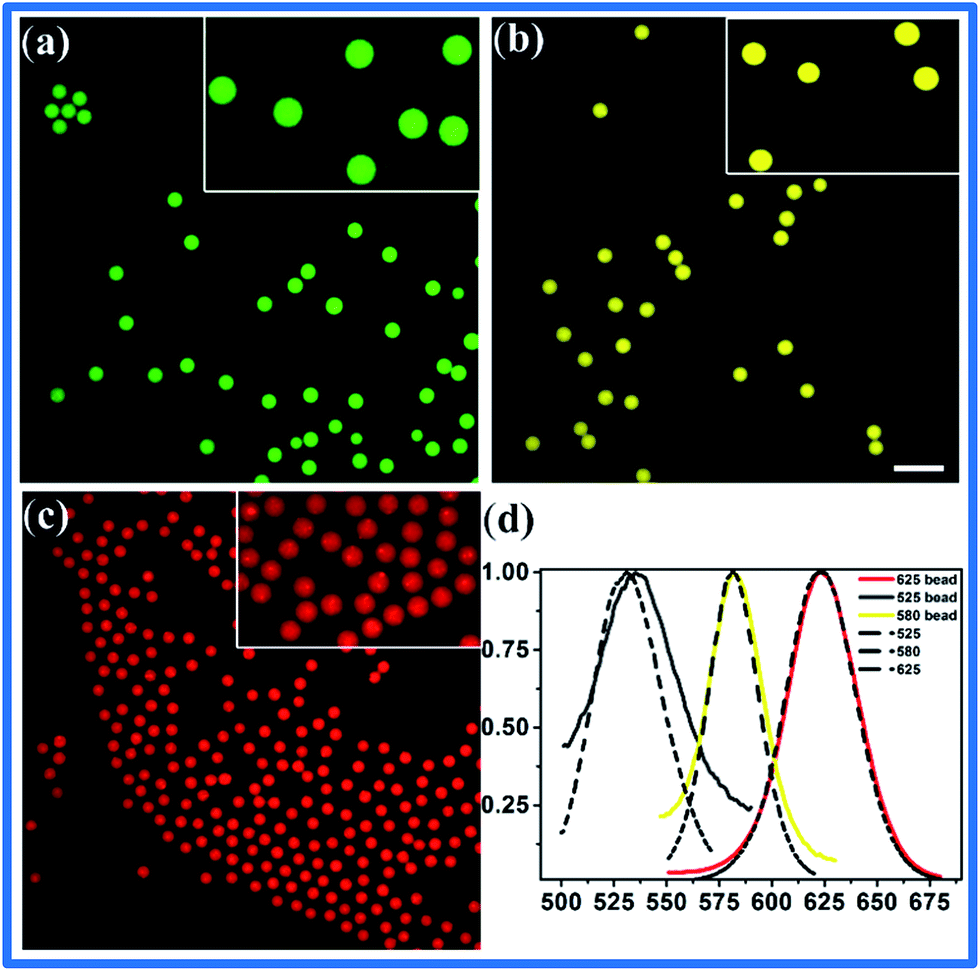 | ||
| Fig. 3 (a–c) Fluorescence microscope images of barcodes doped QD-525 nm, QD-580 nm and QD-625 nm; the insets show enlarged images. (d) The solid lines represent the spectra of the single color barcodes according to (a–c). The dotted lines show the spectra of original QDs diluted in water. The scale bar is 250 μm. | ||
As shown in Fig. 4, the LSCM images, recorded at ten focalized planes from the top to the bottom with steps of 4 μm, reveal that QDs are homogeneously distributed inside the entire sphere. It is evident that QDs have been trapped in the microspheres. We estimate the solid content of the QDs trapped in beads could reach 4.6 wt%, which shows the high QD loading and concentration-controlled ability in the microfluidic approach.
 | ||
| Fig. 4 Confocal fluorescence microscopy images of an alginate bead generated by doping QD-625 nm at different focalized planes from the top to the bottom of one bead, and the step size is 4 μm. | ||
For multicolor encoding, the fluorescence intensities of QD-doped barcodes are proportional to the molar concentration of QDs in the dispersed phase, namely the higher the concentration and the higher the fluorescence intensity. This principle offers the possibility to create a huge number of barcodes through simply mixing different concentration and wavelength QDs with alginate aqueous solution. To further demonstrate this approach, we employed two out of four colored QDs combined with three intensity levels to obtain ten unique barcodes. Considering the spectral overlap, two combinations were selected to get distinguished coding spectra, in which 525 nm and 625 nm QDs were combined in a group and the same for 595 nm and 670 nm QDs. As shown in Fig. 5, every color QD was set as three light intensities, namely 1, 2 and 4. By simply adjusting the QDs concentration in the dispersed phase, the barcodes of 1:4, 1:2, 1:1, 2:1 and 4:1 were successfully prepared by using the paired-QDs combinations of 595 nm:670 nm and 525 nm:625 nm. The resulting barcodes don’t exhibit spectral overlap and fluorescence resonance energy transfer phenomena, but carry a series of controlled encoded signals.
 | ||
| Fig. 5 Representative spectra of QDs-encoded beads containing two types of QDs 525:625 nm and 595:670 nm to create 1:4, 1:2, 1:1, 2:1 and 4:1 coding signals. | ||
In addition, three color QDs were selected for encoding, and coding signals of 1:2:4, 1:2:1, 1:1:1 and 2:1:1 were obtained, as shown in Fig. 6a–d, respectively. Simultaneously, in Fig. 6a, the spectra of the original QDs are compared with that of the encoded beads, in which the green, blue and red dotted lines correspond to the QD-525 nm, QD-580 nm and QD-625 nm emission lines, respectively. The 525 nm and 580 nm QDs are lightly red-shifted, but Förster resonance energy transfer (FRET) is not observed. In spite of the appearance of some spectral overlapping, the final barcodes still show unique and recognized signatures. Thus this strategy provides a facile way for the generation of high quality fluorescent barcoded microbeads for multiplexed sensing applications.
 | ||
| Fig. 6 Typical spectra of tricolor QD-tagged microbeads encoding by 525 nm, 580 nm and 625 nm. | ||
Flow cytometry is an effective technique for decoding the QD-encoded barcodes, which can detect both size and spectroscopic signals. In Fig. 7a, the two-dimensional scatter diagram indicates that the microspheres have a uniform size distribution. Another scatter plot was obtained (Fig. 7b) for barcodes carrying two color QDs, in which QD-525 nm and QD-625 nm were analyzed by detection channels of FL1 and FL3, respectively. And the four dots represented the signals from two QD-encoded microspheres and this stated that the resulting barcodes could be applied for multiplexed detection.
 | ||
| Fig. 7 Flow cytometer analysis diagrams of QD-encoded alginate beads. (a) The bead populations based on side light scatter (SS) vs. forward light scatter (FS). (b) Plot of FL3 versus FL1 for the QD-encoded fluorescent barcodes. | ||
In order to demonstrate the applicability of QD-encoded alginate beads in biological assays, a simple immunoassay was carried out using QD-625 nm-encoded beads. Rabbit IgG was immobilized on the surface of QD-encoded beads by a non-covalent adsorption method,20 and the antigen-immobilized particles were used to detect the FITC-labeled goat anti-rabbit IgG (shown in Fig. 8a). The fluorescence signals of FITC and QD-625 nm were measured using FL1 and FL3 channels, respectively. And the fluorescent intensities of all samples in the FL3 channel are constant. Fig. 8b shows that the fluorescence intensities in the FL1 channel between the BSA control group (b1 and b3) and FITC group (b2 and b4) are obviously different, in which the intensity of the FITC group is higher than the BSA group. So these fluorescent microspheres can offer much promise for multiplexed assays in the future.
 | ||
| Fig. 8 (a) Schematic diagram of the immunoreactions. (b) Flow cytometer analysis of QD-encoded bead-based immunoassays for BSA control group (b1 and b3) and FITC group (b2 and b4). Here the emission wavelength of QD-encoded microspheres is 625 nm which can be measured in the FL3 channel for decoding of encoded beads, and the fluorescent intensities of all samples on the FL3 channel are constant. The FITC fluorescence signal was measured in the FL1 channel for the decoding of FITC-labeled goat anti-rabbit IgG antibody. | ||
Conclusions
In conclusion, we designed a simple flow focusing PDMS microfluidic device for the generation of alginate microparticles, which features an S-shaped channel with gradually increasing width to guarantee sufficient reaction time for gelation and to avoid coalescence and clogging issues. The alginate droplets performed a crosslinking reaction by internal in situ gelation using nano-sized CaCO3, and the monodispersed microbeads with a diameter of 46 μm were generated on a large scale (CV = 2.7%). It is demonstrated that QDs were evenly distributed in an alginate bead, and the fluorescence performance of the QDs is well preserved without significant peak broadening or distortion, which makes those microspheres to be a promising candidate for optical encoding. The use of various QD combinations of two or three for multiple encoding processes were also performed, and it demonstrates that the microbeads can be encoded with different QDs as well as intensity ratio of fluorescence at different wavelengths. We envisage those fluorescent microspheres could find wide application in the field of multiplexed sensing systems.Acknowledgements
This work was supported by the National Science Foundation of China (grants no. 21273126) and Fundamental Research Program of Shenzhen (JCYJ20140509172959966). Part of this work was supported by the Open Research Fund Program of the State Key Laboratory of Low-Dimensional Quantum Physics (KF201311).References
- (a) K. Braeckmans, S. C. de Smedt, C. Roelant, M. Leblans, R. Pauwels and J. Demeester, Nat. Mater., 2003, 2, 169 CrossRef CAS PubMed; (b) R. Wilson, A. R. Cossins and D. G. Spiller, Angew. Chem., Int. Ed., 2006, 45, 6104 CrossRef CAS PubMed; (c) X. H. Gao, Y. Y. Cui, R. M. Levenson, L. W. K. Chung and S. M. Nie, Nat. Biotechnol., 2004, 22, 969 CrossRef CAS PubMed; (d) J. K. Jaiswal, H. Mattoussi, J. M. Mauro and S. M. Simon, Nat. Biotechnol., 2003, 21, 47 CrossRef CAS PubMed.
- T. R. Sathe, A. Agrawal and S. M. Nie, Anal. Chem., 2006, 78, 5627 CrossRef CAS PubMed.
- (a) G. Wang, Y. K. Leng, H. J. Dou, L. Wang, W. W. Li, X. B. Wang, K. Sun, L. S. Shen, X. L. Yuan, J. Y. Li, K. Sun, J. S. Han, H. S. Xiao and Y. Li, ACS Nano, 2012, 7, 471 CrossRef PubMed; (b) G. Wang, Y. K. Leng, H. Z. Guo, S. Song, Z. Q. Jiang, X. L. Yuan, X. B. Wang, K. Sun, K. Sun and H. G. Dou, J. Mater. Chem. B, 2014, 2, 8310 RSC.
- (a) N. H. Finkel, X. H. Lou, C. Y. Wang and L. He, Anal. Chem., 2004, 76, 353 CrossRef; (b) Y. J. Zhao, Y. Cheng, L. R. Shang, J. Wang, Z. Y. Xie and Z. Z. Gu, Small, 2015, 11, 151 CrossRef CAS PubMed; (c) Y. M. Lai, S. Q. Sun, T. He, S. Schlucker and Y. L. Wang, RSC Adv., 2015, 5, 13762 RSC.
- (a) S. R. Nicewarner-Pena, R. G. Freeman, B. D. Reiss, L. He, D. J. Pena, I. D. Walton, R. Cromer, C. D. Keating and M. J. Natan, Science, 2001, 294, 137 CrossRef CAS PubMed; (b) M. S. Gudiksen, L. J. Lauhon, J. Wang, D. C. Smith and C. M. Lieber, Nature, 2002, 415, 617 CrossRef CAS PubMed.
- (a) M. Y. Han, X. H. Gao, J. Z. Su and S. M. Nie, Nat. Biotechnol., 2001, 19, 631 CrossRef CAS PubMed; (b) U. Resch-Genger, M. Grabolle, S. Cavaliere-Jaricot, R. Nitschke and T. Nann, Nat. Methods, 2008, 5, 763 CrossRef CAS PubMed; (c) J. Wang, Y. X. Liu, F. Peng, C. Y. Chen, Y. H. He, H. Ma, L. X. Cao and S. Q. Sun, Small, 2012, 8, 2430 CrossRef CAS PubMed; (d) F. Li, J. Wang, S. Q. Sun, H. Wang, Z. Y. Tang and G. J. Nie, Small, 2015, 11, 1954 CrossRef CAS PubMed.
- T. Song, Q. Zhang, C. L. Lu, X. Q. Gong, Q. H. Yang, Y. H. Li, J. Q. Liu and J. Chang, J. Mater. Chem., 2011, 21, 2169 RSC.
- (a) S. Rauf, A. Glidle and J. M. Cooper, Adv. Mater., 2009, 21, 4020 CrossRef CAS PubMed; (b) J. Li, X. W. Zhao, Y. J. Zhao, J. Hu, M. Xu and Z. Z. Gu, J. Mater. Chem., 2009, 19, 6492 RSC.
- W. C. Sheng, S. Kim, J. Lee, S. W. Kim, K. Jensen and M. G. Bawendi, Langmuir, 2006, 22, 3782 CrossRef CAS PubMed.
- J. A. Lee, A. Hung, S. Mardyani, A. Rhee, J. Klostranec, Y. Mu, D. Li and W. C. W. Chan, Adv. Mater., 2007, 19, 3113 CrossRef CAS PubMed.
- (a) S.-K. Lee, J. Baek and K. F. Jensen, Langmuir, 2014, 30, 2216 CrossRef CAS PubMed; (b) K. Q. Jiang, C. Xue, C. D. Arya, C. R. Shao, E. O. George, D. L. DeVoe and S. R. Raghavan, Small, 2011, 7, 2470 CAS; (c) I. Lee, Y. Yoo, Z. D. Cheng and H. K. Jeong, Adv. Funct. Mater., 2008, 18, 4014 CrossRef CAS PubMed; (d) Y. J. Zhao, H. C. Shum, H. S. Chen, L. L. A. Adams, Z. Z. Gu and D. A. Weitz, J. Am. Chem. Soc., 2011, 133, 8790 CrossRef CAS PubMed.
- (a) S. Fournier-Bidoz, T. L. Jennings, J. M. Klostranec, W. Fung, A. Rhee, D. Li and W. C. W. Chan, Angew. Chem., Int. Ed., 2008, 47, 5577 CrossRef CAS PubMed; (b) Y. Chen, P. F. Dong, J. H. Xu and G. S. Luo, Langmuir, 2014, 30, 8538 CrossRef CAS PubMed; (c) C. H. Yang, K. S. Huang, Y. S. Lin, K. Lu, C. C. Tzeng, E. C. Wang, C. H. Lin, W. Y. Hsu and J. Y. Chang, Lab Chip, 2009, 9, 961 RSC; (d) K. Xu, X. H. Ge, J. P. Huang, Z. X. Dang, J. H. Xu and G. S. Luo, RSC Adv., 2015, 5, 46981 RSC; (e) T. Ono, M. Yamada, Y. Suzuki, T. Taniguchi and M. Seki, RSC Adv., 2014, 4, 13557 RSC.
- L. Capretto, S. Mazzitelli, C. Balestra, A. Tosi and C. Nastruzzi, Lab Chip, 2008, 8, 617 RSC.
- H. Zhang, E. Tumarkin, R. Peerani, Z. Nie, R. M. A. Sullan, G. C. Walker and E. Kumacheva, J. Am. Chem. Soc., 2006, 128, 12205 CrossRef CAS PubMed.
- W. H. Tan and S. Takeuchi, Adv. Mater., 2007, 19, 2696 CrossRef CAS PubMed.
- (a) C. H. Choi, J. H. Jung, Y. W. Rhee, D. P. Kim, S. E. Shim and C. S. Lee, Biomed. Microdevices, 2007, 9, 855 CrossRef CAS PubMed; (b) S. Akbari and T. Pirbodaghi, Microfluid. Nanofluid., 2014, 16, 773 CrossRef CAS; (c) H. Onoe, K. Inamori, M. Takinoue and S. Takeuchi, RSC Adv., 2014, 4, 30480 RSC.
- (a) J. H. Xu, S. W. Li, J. Tan and G. S. Luo, Microfluid. Nanofluid., 2008, 5, 711 CrossRef CAS; (b) K. S. Huang, Y. S. Lin, C. H. Yang, C. W. Tsai and M. Y. Hsu, Soft Matter, 2011, 7, 6713 RSC.
- A. Fang and B. Cathala, Colloids Surf., B, 2011, 82, 81 CrossRef CAS PubMed.
- X. H. Ji, W. Cheng, F. Guo, W. Liu, S. S. Guo, Z. K. He and X. Z. Zhao, Lab Chip, 2011, 11, 2561 RSC.
- W. Y. Yuan, H. Dong, C. M. Li, X. Q. Cui, L. Yu, Z. S. Lu and Q. Zhou, Langmuir, 2007, 23, 13046 CrossRef CAS PubMed.
| This journal is © The Royal Society of Chemistry 2015 |