

Pickering emulsion polymerized poly(3,4-ethylenedioxythiophene):poly(styrenesulfonate)/polystyrene composite particles and their electric stimuli-response
So Hee Kima,
Jung Hyun Kima,
Hyoung Jin Choi*a and
Jaehoon Parkb
aDepartment of Polymer Science and Engineering, Inha University, Incheon 402-751, Korea. E-mail: hjchoi@inha.ac.kr
bDepartment of Electronic Engineering, Hallym University, Chuncheon 200-702, Korea
First published on 18th August 2015
Abstract
We report a facile synthesis of Pickering emulsion polymerized poly(3,4-ethylenedioxythiophene):poly(styrenesulfonate)/polystyrene (PEDOT:PSS/PS) composite particles and their electro-responsive electrorheological (ER) characteristics when dispersed in silicone oil. The PEDOT:PSS particles act both as a solid surfactant for the Pickering emulsion polymerization and as an electro-responsive activator for PEDOT:PSS/PS composite particles. The morphology, chemical structure, and thermal properties of the synthesized PEDOT:PSS/PS composite particles were determined by scanning electron microscopy, Fourier transform infrared spectroscopy, and thermogravimetric analysis, respectively. Moreover, the formation of chain structures by the dispersed particles was confirmed directly by optical microscopy. The rheological response of PEDOT:PSS/PS-based ER fluid in the presence of an electric field, examined using a rotational rheometer, represented ER effects with typical Bingham fluid behavior.
1. Introduction
Electrorheological (ER) fluids composed of polarized particles dispersed in insulating liquids, such as silicone oil or mineral oil, are fascinating materials referred to as “smart” materials. Their structure and rheological properties are changed promptly and reversibly by the application of external electric fields,1 due to the formation of chain-like structures that align with the external electric fields.2 While polarizable particles in ER fluids are randomly dispersed without an external electric field, exhibiting Newtonian fluid-like behavior, the dispersed particles promptly arrange into chain-like structures that follow Bingham fluid behavior on applying the electric field.3,4 This tunable rheological response of ER fluids controlled by the electric field enables them to be “smart” materials,5 applicable for various applications in devices such as active shock absorbers, switches, clutches, actuators, engine mounts, and ER polishing.1,6,7Among the various materials used as ER fluids, conducting polymers, typically possessing a π-conjugated structure, have attracted the interest of many researchers.8–10 When used as ER materials, such polymers can provide various advantages such as better thermal stability, polarizability, and facile control of electrical conductivity for better ER performance.11–16 For example, Plachy et al.17 introduced carbonized aniline oligomers and their ER behavior. After the carbonization, the morphology of aniline oligomers was transformed from microspheres into two-dimensional plate and as a result, the carbonized aniline oligomers showed high ER efficiency. Concurrently, poly(3,4-ethylenedioxythiophene) (PEDOT) has stimulated much interest because of its excellent electrical conductivity, low band gap, great thermal stability, and high transparency in thin films,18–20 though, like other conjugated polymers, PEDOT is insoluble in common organic solvents and water. However, this was resolved using poly(styrenesulfonate) as a charge-balancing dopant in the polymerization of EDOT so that PEDOT/PSS dispersions can be stable with high conductivity.21–23
Concurrently, as a particular method for the synthesis of hybrid composites, Pickering emulsion polymerization has attracted much attention and has been applied in such fields as cosmetics, foods, and pharmaceuticals.24,25 One of the major drawbacks of conventional emulsion polymerization is the excess of organic surfactant that remains in the product, however, in Pickering emulsion polymerization, particle stabilizers can be substituted for surfactants.25–27 Pickering emulsions are usually stabilized by inorganic particles (e.g. clay28 and ZnO29). Liu et al.30 fabricated SiO2-coated polyaniline (PANI) by Pickering emulsion polymerization, specifically for testing its ER response. The SiO2 acted as a solid stabilizer so that the PANI surface was fully covered with SiO2, and PANI/SiO2 ER fluid exhibited ER performance in different electric fields. Furthermore, Kim et al.31 used Fe2O3 as a magnetic solid emulsifier instead of using a molecular emulsifier. They produced core–shell-structured PS/Fe2O3 magnetic particles and studied their magnetorheological characteristics under applied magnetic fields. Only a few studies have reported Pickering polymerization in which a conducting polymer was used as a stabilizer.21 Recently, Kim et al.32 reported the fabrication of core–shell-structured polystyrene (PS)/graphene oxide (GO) microspheres as ER materials by Pickering emulsion polymerization using GO as a stabilizer. The PS core was successfully wrapped with GO and the PS/GO-based ER fluid presented a typical ER response under applied electric fields, corresponding with the Cho-Choi-Jhon (CCJ) model of rheological equation of state.
In this study, we applied PEDOT:PSS, one of the most important conducting polymers, as a solid surfactant for Pickering emulsion polymerization to fabricate electro-responsive PEDOT:PSS/PS composite particles. The morphology, chemical structure, and thermal structure of these composite particles were determined. Furthermore, the synthesized PEDOT:PSS/PS composite particles were dispersed in silicone oil with a particle concentration of 10 vol%, and then their ER response was investigated in the presence of an external electric field. Because of the presence of PEDOT:PSS, which adhered to the surface of insulating PS spheres, the PEDOT:PSS/PS composite particles can be applied as an ER material.
2. Experimental
2.1 Materials
Styrene monomer (99.5%, Samchun Pure Chemical Co., Korea) was purified before use. Poly(3,4-ethylenedioxythiophene):poly(styrenesulfonate) (PEDOT:PSS) (1.3 wt% dispersion in H2O, Sigma-Aldrich) was used as received. Azobisisobutyronitrile (AIBN) (98% Junsei Chemical Co.) was recrystallized in acetone. Deionized (DI) water was used throughout the experiments.2.2 Synthesis of PEDOT:PSS/PS composite particles
First, 30 mL of dispersed PEDOT:PSS was added to 220 mL of DI water. Then, 0.054 g of AIBN in 3.6 g of styrene was added slowly to the above dispersion with magnetic stirring. This mixture was sonicated for 30 min in an ice bath and agitated vigorously for 15 min using a homogenizer. Subsequently, the emulsified solution was placed into a three-necked flask and Pickering emulsion polymerization was performed at 75 °C for 24 h under N2. After cooling to room temperature, the product was washed repeatedly with ethanol and DI water using a centrifuge, and then dried in an oven for 24 h.2.3 Preparation of ER fluid system
To test ER performance, PEDOT:PSS/PS-based ER fluid was prepared by dispersing a dry powder of PEDOT:PSS/PS composite particles in silicone oil (ShinEtsu, KF-96, dynamic viscosity: 50 cS, density: 0.960 g mL−1), at a volume fraction of 10%, by shaking and sonication.2.4 Characterization
The morphologies of both PEDOT:PSS and PEDOT:PSS/PS composite particles were observed using scanning electron microscopy (SEM) (SU8010, Hitachi), while their chemical structure was analyzed by Fourier transform infrared (FT-IR) spectroscopy (VERTEX 80V, Bruker). Particle size distribution was measured by a particle size analyzer (Mastersizer 2000, Malvern). The relative coating mass of PEDOT:PSS to the entire mass of particles was estimated by thermogravimetric analysis (TGA) (TG209F3, NETZSCH) at a heating rate of 20 °C min−1 in a N2 atmosphere throughout a temperature range of 25–900 °C. The ER phenomenon of PEDOT:PSS/PS particle-based silicone oil was confirmed using optical microscopy (OM) (BX51, Olympus) equipped with a high DC voltage source. The conductivity of the final product was tested using the four-pin probe method (OPP, Loresta-GP MCP-T610). ER performance of the prepared ER fluid was identified by a rotational rheometer (MCR300, Anton Paar) using a Couette flow geometry with a high-voltage generator (HCN 7E-125000, Fug), under various electric field strengths. The dielectric spectrum of the PEDOT:PSS/PS-particle-based ER fluid was further recorded using a precision LCR meter (4284A, Hewlett Packard) with a liquid test fixture (HP16452A) at room temperature.3. Results and discussion
The experimental process of Pickering emulsion polymerization of styrene, shown briefly in Scheme 1, used PEDOT:PSS as a solid stabilizer. PEDOT:PSS adhered to the interfaces between the aqueous and oil phases when the oil phase, AIBN in styrene monomer, was emulsified using a homogenizer. After the polymerization, PS particles coated with PEDOT:PSS were obtained.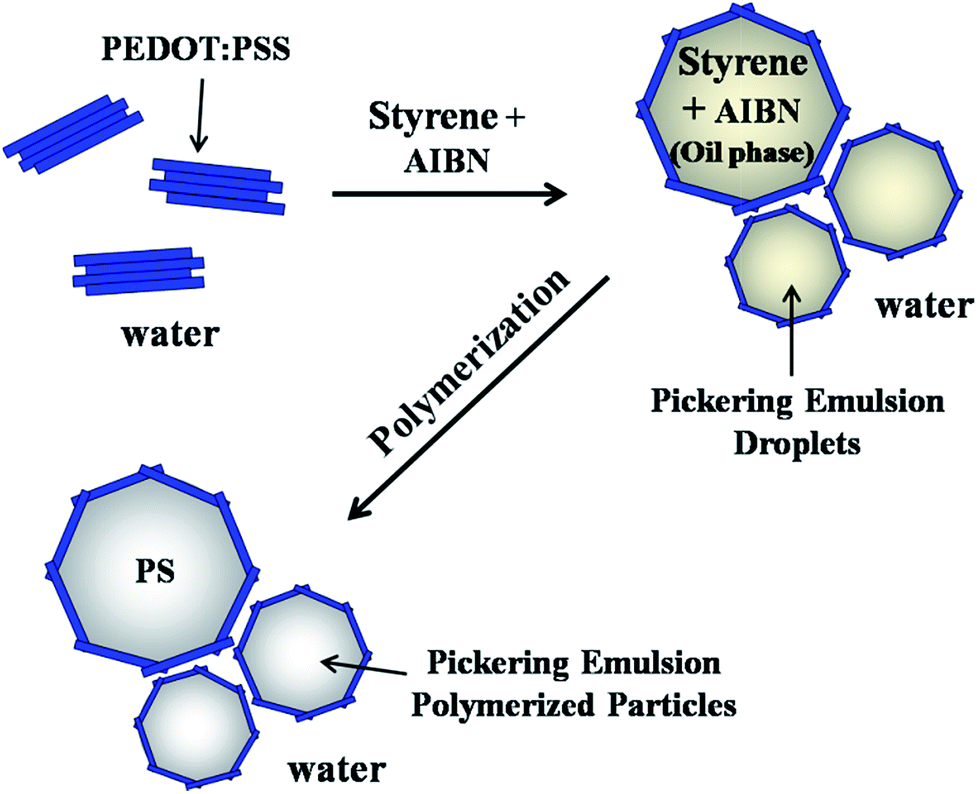 | ||
| Scheme 1 Schematic illustration of Pickering emulsion polymerization of PEDOT:PSS/PS composite particles. | ||
The SEM images of PEDOT:PSS and PEDOT:PSS/PS composite particles are shown in Fig. 1. Fig. 1(a) is the SEM images of PEDOT:PSS showing its lamellar structure. Fig. 1(b) and (c) are the SEM images of PEDOT:PSS/PS obtained after the Pickering emulsion polymerization using PEDOT:PSS as a solid surfactant. The surfaces of PEDOT:PSS/PS particles are clearly different from that of PS, i.e., because PEDOT:PSS adheres to the surface of PS, the PEDOT:PSS/PS surface becomes rough. Fig. 1(d) shows the particle size distribution of PEDOT:PSS/PS composite particles. This result yields the average diameter of 14.2 μm.
 | ||
| Fig. 1 SEM images of PEDOT:PSS (a), PEDOT:PSS/PS (b), (c) and size distribution of PEDOT:PSS/PS (d). | ||
The chemical structure and the presence of functional groups of PEDOT:PSS/PS (line a), PEDOT:PSS (line b), and PS (line c) are confirmed by FT-IR spectroscopy as in Fig. 2. The peaks in PEDOT:PSS/PS and PEDOT:PSS at 1530 and 1322 cm−1 originate from C![[double bond, length as m-dash]](https://www.rsc.org/images/entities/char_e001.gif) C and C–C stretching, respectively, from the thiophene ring of PEDOT. The symmetric stretching of SO, and OS–O, and the angular deformation of C–H of the aromatic ring in PSS can be seen at 1190, 1000, and 800 cm−1, respectively.33
C and C–C stretching, respectively, from the thiophene ring of PEDOT. The symmetric stretching of SO, and OS–O, and the angular deformation of C–H of the aromatic ring in PSS can be seen at 1190, 1000, and 800 cm−1, respectively.33
 | ||
| Fig. 2 FT-IR spectra of PEDOT:PSS/PS (a), PEDOT:PSS (b), and polystyrene (c). | ||
PEDOT:PSS/PS also exhibits characteristic peaks of PS. The peak at 3026 cm−1 confirms a group of aromatic C–H stretching vibrations. Benzene ring modes are observed at 1491 cm−1, and the out-of-plane C–H bending mode of the aromatic ring is found at 756 cm−1. The ring-bending vibrational band is shown at 698 cm−1.34 The FT-IR spectra of the PEDOT:PSS/PS indicate the typical chemical characteristics of both PEDOT:PSS and PS. Therefore, these data suggest that PEDOT:PSS/PS composite particles were synthesized successfully.
Fig. 3 shows the thermal properties of PEDOT:PSS, PS, and PEDOT:PSS/PS determined by TGA. In the range of 30–100 °C, the first weight loss of PEDOT:PSS and the slight weight loss of PEDOT:PSS/PS are attributed to moisture evaporation. The second weight losses of PEDOT:PSS and PEDOT:PSS/PS occur after about 210 °C, which corresponds to the thermal degradation temperature of the PSS.35 For the pure PS, the weight loss begins at 320 °C and the decomposition of PS ends at 500 °C with no residual material, while the mass fraction of PEDOT:PSS/PS beyond 320 °C is about 10 wt%. The weight percent of PEDOT:PSS in the PEDOT:PSS/PS product was therefore estimated to be 10%.
 | ||
| Fig. 3 TGA spectra of PEDOT:PSS (a), PEDOT:PSS/PS (b), and PS (c). | ||
To observe microstructural change of the chain formation directly by optical microscopy, 3 vol% PEDOT:PSS/PS particle-based ER fluid dispersed in silicone oil was separately prepared (the density and conductivity of the PEDOT:PSS/PS particles were measured to be 1.08 g cm−3 and 3.5 × 10⁻⁹ S cm−1, respectively). The images captured with and without the electric field are shown in Fig. 4. Prior to the application of the electric field, the PEDOT:PSS/PS particles are randomly dispersed between two parallel electrodes. As soon as the electric field is applied, however, the particles align and promptly transform into chain structures36 due to the PEDOT:PSS on the PS surface. This phenomenon indicates that PEDOT:PSS/PS exhibits stimulating electro-responsive characteristics.
 | ||
| Fig. 4 Optical microscopic images of 3 vol% PEDOT:PSS/PS particles based silicone oil captured when the electric field is off (a) and on (b). | ||
The rheological behavior of PEDOT:PSS/PS composite particles dispersed in silicone oil (ShinEtsu, KF-96-50 cS) with a particle concentration of 10 vol% was tested under different electric field strengths using a rotational rheometer with a high voltage generator. Fig. 5 shows the flow curves from the controlled shear rate (CSR) test mode. A relationship between shear stress and shear rate is shown in Fig. 5(a). Without an external electric field, the ER fluid behaves like a typical Newtonian fluid. By increasing the shear rate, the shear stress increases linearly. In contrast, under an external electric field the ER fluid exhibits non-Newtonian behavior with a wide plateau in the shear stress region and yield stress.37,38 This is referred to as Bingham-like behavior and is a result of the formation of chain structures.2,5 In particular, the wide plateau region is the result of the balance between breaking and reformation of the chain structures. In addition, the increase of shear stress with the increased electric field strength suggests that the increased electric field can induce stronger interactions between PEDOT:PSS/PS particles.
 | ||
| Fig. 5 Shear stress (a) and shear viscosity (b) curves of the 10 vol% PEDOT:PSS/PS based ER fluid as a function of the shear rate with increasing electric field strength. | ||
The solid curves in Fig. 5(a) are fitted using the Bingham model to describe the experimental flow curves. To represent the flow behavior of the ER fluid, the typical Bingham model was used as follows:2
 | (1) |
![[small gamma, Greek, dot above]](https://www.rsc.org/images/entities/i_char_e0a2.gif) is the shear rate. As shown in Fig. 5(a), the two parameter equations of the Bingham model cover each flow curve throughout the entire range, indicating that the PEDOT:PSS/PS-based ER fluid shows typical Bingham behavior. The optimum fitting parameters for this Bingham model are listed in Table 1.
is the shear rate. As shown in Fig. 5(a), the two parameter equations of the Bingham model cover each flow curve throughout the entire range, indicating that the PEDOT:PSS/PS-based ER fluid shows typical Bingham behavior. The optimum fitting parameters for this Bingham model are listed in Table 1.
| Model | Parameter | Electric field strength (kV mm−1) | ||||
|---|---|---|---|---|---|---|
| 0.5 | 0.8 | 1.0 | 1.3 | 1.5 | ||
| Bingham | τ0 | 5.5 | 6 | 7.15 | 10.8 | 13.8 |
| η0 | 0.096 | 0.1 | 0.101 | 0.098 | 0.09 | |
Fig. 5(b) shows shear viscosity of the PEDOT:PSS/PS-based ER fluid as a function of with various external electric fields. Without an external electric field, the ER fluid behaves as a Newtonian fluid with almost shear rate-independent shear viscosity. After external electric fields are applied, the ER fluid exhibits non-Newtonian characteristics with a shear thinning phenomenon.39
Fig. 6 shows dynamic yield stress of the PEDOT:PSS/PS-based ER fluid obtained from the flow curve of Fig. 5(a) as a function of the electric field strength (E).40,41 In general, the dependency of dynamic yield stress on E is described as a power law relationship as follows:
| τ0 ∝ Em | (2) |
 | ||
| Fig. 6 The dynamic yield stress versus electric field strength for the 10 vol% PEDOT:PSS/PS based ER fluid. | ||
By fitting the dynamic yield stress (τ0) to the applied E on a logarithmic scale, the exponent, m, is obtained. The exponent, m, is suggested to be 2.0 in the polarization model42 and 1.5 in the conduction model.43 However, since the ER properties are affected by a range of factors, such as conductivity mismatch, particle concentration and interaction between particles and medium, m can vary for different ER fluids.5 In this study, as shown in Fig. 6, the slope equals ∼1.5 following the conduction model. This suggests that τ0 depends on the conductivity mismatch between the polarizable particles and the liquid for the PEDOT:PSS/PS-based ER fluid.
Dynamic oscillation tests were also carried out to examine the viscoelastic behavior of PEDOT:PSS/PS-based ER fluid. The amplitude sweep experiment in Fig. 7 was initially executed with a fixed angular frequency of 6.28 rad s−1 to find a linear viscoelastic (LVE) region. As shown in Fig. 7, under the external electric field, the storage modulus (G′) is larger than the loss modulus (G′′), indicating that the ER fluid exhibits a solid-like behavior. Furthermore, the plateau regions of both G′ and G′′ are observed in the small strain amplitude range, which is called the LVE44 region, where structure deformation is reversible. Beyond the LVE region, G′ in particular decreases promptly because of the irreversible change in structure. A strain of 4.0 × 10⁻⁵ within the LVE range was chosen for operating the next frequency sweep test.
 | ||
| Fig. 7 Amplitude sweep of the 10 vol% PEDOT:PSS/PS based ER fluid under different electric field strengths (closed symbols for G′ and open symbols for G′′). | ||
Fig. 8 shows G′ as a function of angular frequency under the external electric fields at constant strain amplitude of 4.0 × 10⁻⁵, which was chosen from within the LVE region of Fig. 7. Without an external electric field, G′ increases approximately in proportion to the frequency, similar to liquid behavior. On the other hand, with an external electric field, G′ shows a different appearance. Over the broad frequency range, G′ presents an extensive plateau region under each electric-field-strength and increases with the increasing electric field strength. This indicates that the ER fluid possesses a higher elasticity and ER effect in the presence of an electric field, as discussed in the amplitude sweep test.45
 | ||
| Fig. 8 Frequency sweep of the 10 vol% PEDOT:PSS/PS based ER fluid under different electric field strengths with a fixed strain amplitude of 4.0 × 10⁻⁵. | ||
On the other hand, to examine the ER properties of PEDOT:PSS/PS-based ER fluid further, the dielectric spectra of the ER fluid were examined using an LCR meter. The results are plotted in Fig. 9(a) and (b) using the Cole–Cole model. The Cole–Cole model, which predicts the complex permittivity of a suspension, can be expressed in terms of complex parameters as follows:46
 | (3) |
 | ||
| Fig. 9 (a) Dielectric spectra (black square and solid line for dielectric constant ε′, red circle and solid line for dielectric loss factor ε′′) and (b) Cole–Cole plot of the 10 vol% PEDOT:PSS/PS based ER fluid. | ||
4. Conclusions
The electro-responsive PEDOT:PSS/PS smart composite particles were successfully synthesized via Pickering emulsion polymerization using PEDOT:PSS as the solid surfactant in this study. PEDOT:PSS was located at the interface between the aqueous and oil phases producing stable emulsions. SEM images showed that the PEDOT:PSS/PS surface was rough, which indicated that PEDOT:PSS covered the PS surface well. The chemical structure and thermal stability of the PEDOT:PSS/PS composites were confirmed by FT-IR and TGA. In addition, PEDOT:PSS/PS composites were compared with PEDOT:PSS using SEM, FT-IR, and TGA. The PEDOT:PSS/PS composite-based ER fluid exhibited typical ER performance corresponding with Bingham fluids under an external electric field, while the ER fluid showed Newtonian behavior without an electric field. Moreover, dielectric analysis revealed rapid but weak polarizability in PEDOT:PSS/PS-based ER fluid. These ER characteristics of the PEDOT:PSS/PS-based ER fluid result from PEDOT:PSS, the conducting polymer, which acts not only as a solid-surfactant for Pickering emulsion polymerization but as an ER activator as well.Acknowledgements
This work was supported by a research grant from National Research Foundation, Korea (NRF-2013R1A1A2057955).Notes and references
- H. Kawaguchi, Prog. Polym. Sci., 2000, 25, 1171 CrossRef CAS.
- Y. P. Seo and Y. Seo, Langmuir, 2012, 28, 3077 CrossRef CAS PubMed.
- B. X. Wang, Y. C. Yin, C. J. Liu, S. S. Yu and K. Z. Chen, Dalton Trans., 2013, 10042 RSC.
- M. Kontopoulou, M. Kaufman and A. Docoslis, Rheol. Acta, 2009, 48, 409 CrossRef CAS.
- Y. D. Liu and H. J. Choi, Soft Matter, 2012, 8, 11961 RSC.
- Q. H. Nguyen and S. B. Choi, Smart Mater. Struct., 2009, 18, 115020 CrossRef.
- L. Y. Liu, W. B. Cao, J. B. Wu, W. J. Wen, D. C. Chang and P. Sheng, Biomicrofluidics, 2008, 2, 034103 CrossRef PubMed.
- J. Lu and X. P. Zhao, J. Mater. Chem., 2002, 12, 2603 RSC.
- J. H. Sung, M. S. Cho, H. J. Choi and M. S. Jhon, J. Ind. Eng. Chem., 2004, 10, 1217 CAS.
- P. Hiamtup, A. Sirivat and A. M. Jamieson, J. Mater. Sci., 2010, 45, 1972 CrossRef CAS.
- J. Y. Hong and J. Jang, Soft Matter, 2010, 6, 4669 RSC.
- M. Stenicka, V. Pavlinek, P. Saha, N. V. Blinova, J. Stejskal and O. Quadrat, Colloid Polym. Sci., 2009, 287, 403 CAS.
- Q. L. Cheng, Y. He, V. Pavlinek, A. Lengalova, C. Z. Li and P. Saha, J. Mater. Sci., 2006, 41, 5047 CrossRef CAS.
- A. Krzton-Maziopa, H. Wycislik and J. Plocharski, J. Rheol., 2005, 49, 1177 CrossRef CAS.
- D. Chotpattananont, A. Sirivat and A. M. Jamieson, Polymer, 2006, 47, 3568 CrossRef CAS PubMed.
- J. H. Wu, T. Jin, F. H. Liu, J. J. Guo, P. Cui, Y. C. Cheng and G. J. Xu, J. Mater. Chem. C, 2014, 2, 5629 RSC.
- T. Plachy, M. Sedlacik, V. Pavlinek, M. Trchova, Z. Moravkova and J. Stejskal, Chem. Eng. J., 2014, 256, 398 CrossRef CAS PubMed.
- Y. J. Xia and J. Y. Ouyang, ACS Appl. Mater. Interfaces, 2010, 2, 474 CAS.
- R. Corradi and S. P. Armes, Synth. Met., 1997, 84, 453 CrossRef CAS.
- E. Cloutet, M. Mumtaz and H. Cramail, Mater. Sci. Eng., C, 2009, 29, 377 CrossRef CAS PubMed.
- C. H. Wu, W. Y. Chiu and T. M. Don, Polymer, 2012, 53, 1086 CrossRef CAS PubMed.
- B. L. Groenendaal, F. Jonas, D. Freitag, H. Pielartzik and J. R. Reynolds, Adv. Mater., 2000, 12, 481 CrossRef.
- Y. D. Liu, J. E. Kim and H. J. Choi, Macromol. Rapid Commun., 2011, 32, 881 CrossRef CAS PubMed.
- J. Frelichowska, M. A. Bolzinger, J. P. Valour, H. Mouaziz, J. Pelletier and Y. Chevalier, Int. J. Pharm., 2006, 368, 7 CrossRef PubMed.
- A. Schrade, K. Landfester and U. Ziener, Chem. Soc. Rev., 2013, 42, 6823 RSC.
- S. H. Piao, S. H. Kwon, W. L. Zhang and H. J. Choi, Soft Matter, 2015, 11, 646 RSC.
- R. Murakami, H. Moriyama, T. Noguchi, M. Yamamoto and B. P. Binks, Langmuir, 2014, 30, 496 CrossRef CAS.
- S. Cauvin, P. J. Colver and S. A. F. Bon, Macromolecules, 2005, 38, 7887 CrossRef CAS.
- J. H. Chen, C. Y. Cheng, W. Y. Chiu, C. F. Lee and N. Y. Liang, Eur. Polym. J., 2008, 44, 3271 CrossRef CAS PubMed.
- Y. D. Liu, W. L. Zhang and H. J. Choi, Colloid Polym. Sci., 2012, 290, 855 CAS.
- Y. J. Kim, Y. D. Liu, Y. Seo and H. J. Choi, Langmuir, 2013, 29, 4959 CrossRef CAS PubMed.
- S. D. Kim, W. L. Zhang and H. J. Choi, J. Mater. Chem. C, 2014, 2, 7541 RSC.
- J. Wang, B. S. Fang, K. Y. Chou, C. C. Chen and Y. S. Gu, Enzyme Microb. Technol., 2014, 54, 45 CrossRef CAS PubMed.
- I. S. Elashmawi, N. A. Hakeem and E. M. Abdelrazek, Phys. B, 2008, 403, 3547 CrossRef CAS PubMed.
- D. C. Sun and D. S. Sun, Mater. Chem. Phys., 2009, 118, 288 CrossRef CAS PubMed.
- S. G. Kim, J. W. Kim, W. H. Jang, H. J. Choi and M. S. Jhon, Polymer, 2001, 42, 5005 CrossRef CAS.
- H. Yilmaz, H. Zengin and H. I. Unal, J. Mater. Sci., 2012, 47, 5276 CrossRef CAS.
- J. B. Yin and X. P. Zhao, Nanoscale Res. Lett., 2011, 6, 256 CrossRef PubMed.
- J. H. Zhu, S. Y. Wei, J. Ryu, M. Budhathoki, G. Liang and Z. H. Guo, J. Mater. Chem., 2010, 20, 4937 RSC.
- S. G. Kim, J. Y. Lim, J. H. Sung, H. J. Choi and Y. Seo, Polymer, 2007, 48, 6622 CrossRef CAS PubMed.
- J. A. Marins, B. G. Soares, A. A. Silva and S. Livi, RSC Adv., 2014, 4, 50925 RSC.
- T. Plachy, M. Mrlik, Z. Kozakova, P. Suly, M. Sedlacik, V. Pavlinek and I. Kuritka, ACS Appl. Mater. Interfaces, 2015, 7, 3725 CAS.
- P. Atten, J. N. Foulc and N. Felici, Int. J. Mod. Phys. B, 1994, 8, 2731 CrossRef CAS.
- M. Kaushal and Y. M. Joshi, Soft Matter, 2011, 7, 9051 RSC.
- J. B. Yin, X. P. Zhao, L. Q. Xiang, X. Xia and Z. S. Zhang, Soft Matter, 2009, 5, 4687 RSC.
- W. Zhou and K. S. Zhao, Colloids Surf., A, 2008, 317, 10 CrossRef CAS PubMed.
- M. Sedlacik, M. Mrlik, V. Pavlinek, P. Saha and O. Quadrat, Colloid Polym. Sci., 2012, 290, 41 CAS.
- Y. H. Cho, M. S. Cho, H. J. Choi and M. S. Jhon, Colloid Polym. Sci., 2002, 280, 1062 CAS.
- Q. Cheng, V. Pavlinek, Y. He, Y. Yan, C. Li and P. Saha, Colloid Polym. Sci., 2011, 289, 799 CAS.
- J. Wu, T. Jin, F. Liu, J. Guo, P. Cui, Y. Cheng and G. Xu, J. Mater. Chem. C, 2014, 2, 5629 RSC.
- Y. D. Liu, F. F. Fang and H. J. Choi, Soft Matter, 2011, 7, 2782 RSC.
| This journal is © The Royal Society of Chemistry 2015 |