
Kirtikumar Chandulal Badgujar*a,
Takehiko Sasaki
b and
Bhalchandra Mahadeo Bhanage*a
aInstitute of Chemical Technology, Department of Chemistry, Matunga, Mumbai-400019, India. E-mail: bm.bhanage@ictmumbai.edu.in; bm.bhanage@gmail.com; bhalchandra_bhanage@yahoo.com; Fax: +91-22-2414-5614; Tel: +91-22-3361-2601/2222
bDepartment of Complexity Science and Engineering, Graduate School of Frontier Sciences, The University of Tokyo, Chiba 277-8561, Japan
First published on 18th June 2015
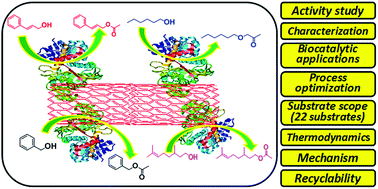
In the present study, we have synthesized lipase-nano-bio-conjugates via immobilization of various lipases on multiwall carbon nano-tubes (MCNT), in order to construct an efficient and recyclable biocatalytic system. In a screening study lipase Pseudomonas fluorescens (PFL) acted as an efficient biocatalyst (lipase-nano-bio-conjugates) which showed higher retention of lipase activity and protein loading. Consequently the immobilization support
:
lipase (MCNT
:
PFL) composition was screened in which MCNT
:
PFL (2
:
1) was calculated as a robust biocatalyst composition which showed higher activity retention and protein loading. This nano-bio-conjugate was then characterized in detail with physical and biochemical techniques using SEM, TEM, FTIR, Km, Vmax, catalytic efficiency and (%) water content analysis. This developed biocatalyst was further used for practical biocatalytic applications such as O-acylation reactions. Various reaction parameters were optimized in detail like reactant molar ratio (2
:
3.5), solvent, MCNT
:
PFL biocatalyst amount (36 mg), temperature (50 °C) etc. The developed biocatalytic protocol was then extended to synthesize several (twenty-two) industrially important acylated moieties with an excellent yield, these products are well characterized by 1HNMR, 13CNMR and GCMS analysis. Moreover in the present study, we have reviewed the potential industrial applications of various synthesized compounds. Also, we have studied the thermodynamic aspect which demonstrated more feasibility of use of immobilized MCNT
:
PFL lipase over free lipase. Interestingly, immobilized MCNT
:
PFL lipase showed 2.3 fold higher catalytic activity than free PFL. Besides this, the biocatalyst was efficiently recycled for up to five cycles. Thus the present protocol demonstrated, (i) synthesis of nano-bio-conjugates as a bio-catalyst, (ii) detailed physical-biochemical characterization of nano-bio-conjugates, (iii) optimization of the biocatalytic protocol (iv) practical biocatalytic applications along with a mechanistic study (v) a thermodynamic feasibility study and (vi) recyclability study.
The advance skilful immobilization technique is the only way to triumph over above proposed difficulties.2–8 Hence, various researchers are engaged to improve activity, stability and reuse of enzymes in non-aqueous media for effective biocatalytic applications.5–10 Immobilization of enzyme is the most fundamental aspect to improve the sufficient activity and stability of enzymes, moreover immobilization build up a heterogeneous reaction system which can shield the sensitive enzymes from the surrounding reaction media and also overcome the economic reusability issue.5–12 Furthermore, the use of immobilized biocatalytic system has various green-chemistry advantages such as higher activity, recyclability, higher chemo-, regio-, enantio-selectivity, mild reaction condition, sustainable E factor, easy handling, safe synthetic protocol and no environmental hazards/issues.2–12 Till time immobilization of lipases are reported on various types of carriers such as polymeric matrix, polymer beads, gels, sol–gels, fibres, meso-, micro-porous materials etc. via physical adsorption, entrapment, and cross-linking method.3–12 However, an ideal immobilisation of biocatalyst on carrier should retain or improve its catalytic activity, stability and recyclability.2–8
Nano-materials for immobilization and their practical synthetic applications (bio-nonmaterial and nano-biocatalysis) is a fast growing research area which involves the enzyme immobilization on nano-material and their biocatalytic applications.10–19 Different nano-structured materials like nano-particles, nano-fibres, nano-wires, and nano-composites have been engaged as a novel immobilisation support for enzymes.10,12,14,16,18,19 These nano-materials serves as an excellent immobilization material to synthesize various nano-bio-conjugates as compared to bulk solid materials. This is because of key properties such as higher surface area, low mass transfer resistance, effective enzyme loading, nano-scale dispersion and ease of surface functionalization/modification.10–19
Thus, discovery of nano-scale materials proved countless applications and scope based on their extraordinary properties owing to size of nano-materials.10–19 Among various said nano-materials, a special mention goes to carbon based nano-materials such as carbon nano-tubes (CNTs) which have attracted the significant attention in biomedical science and technology.9–19 Terminal-end and side-walls of CNTs can be modified by various chemical, physical and biological methods according to choice of application.11,12 Moreover, CNTs possess wide applications because of excellent properties such as structural, mechanical, thermal and biocompatibility.13,15 Due to these reasons, both single-walled carbon nano-tube (SCNTs) and multi-walled carbon nano-tubes (MCNTs) find great scope in biomedical, biosensor and biotechnological applications.11–13 MCNTs consist of several graphite layers surrounding a central tubule, while a SCNTs have a central tubule without a graphitic layer.13,15,16 MCNTs are 1-D-nano-particles having numerous features such as higher surface area, more dispersibility, more physico-chemical stability, lower cost and lesser cyto-toxicity compared to SCNTs.11–13,15,16 Till date, very few attempts have been made by various researcher to form enzyme nano-bio-conjugates with carbon-based nano-materials, however there potential biocatalytic applications are still unexplored, which invoke researchers to apply bio-nano-conjugates as a biocatalyst for potential biocatalytic applications to synthesize commercially important organic moieties.13,15,17
In present study, we have used these developed enzyme bio-nano-conjugates for synthesis of various acylated products (commercially important esters) which are extensively used in various fields.20–24 The survey of chemical reactions used in preparation of drug candidate molecule showed that 12% reaction involves the acylation steps.22 Thus acylation is one of the most important transformations, but chemical way of acylation is atom inefficient processes which have several disadvantages such as bi-product formation, use of higher temperature, lower yield-higher waste, higher activation energy and use of hazardous acids or bases.22 Hence, development of greener and waste minimizing biocatalytic methods of acylation will considerably improve the environmental performance for sustainability.22 Recently, the American Chemical Society Green Chemistry Institute (ACS-GCIPR) was established to promote innovations for synthesis of valuable organic moieties using greener chemistry and sustainable technology.23 Acylated moieties are the essential components of the flora, fruity, grasses, essential oils and vegetations etc. which having pleasant fruity smell and taste.24 Moreover, these compounds are widely used in various pharmaceuticals, decorative cosmetics, balm, body lotions, ointment, face cream, fragrance, flavours, shampoos, soaps, shower-shaving gels and other toiletries.24 Most of these acetates are produced in metric of tons per year; furthermore these acetate esters are listed as granted-A substances by the Council of Europe for their safe use in food-stuffs.25 According to BCC research survey, the worldwide market for fragrance compounds was estimated to US $ 11.2 bn in 2011 and projected to raise US $ 15.7 bn upto 2017; while global market for flavour was accounted to US $ 11.3 bn in 2012 and projected almost US $ 14.5 bn up to 2017.26
Thus, considering such a wide range of applications and scope; industries are looking to produce these flavour fragrance compounds by an eco-friendly way so that, they could labelled them as “Safe and Green” products.24,26 Hence in present study, we make an attempt to develop nano-bio-conjugates as an efficient immobilized biocatalyst which was employed for the greener synthesis of various twenty-two food flavour and fragrance compounds along with their commercial importance.
000 U g−1), lipase HPL (Horse pancreatic lipase, ≥10
000 U g−1) p-nitro phenyl butyrate (p-PNB), MCNTs were purchased from Sigma-Aldrich Pvt. Ltd India. Lipase MJL (Mucor javanicus, activity ≥10
000 U g−1) was kindly gifted by Amano Enzymes (Japan). All other solvents/chemicals were bought from the Sigma-Aldrich, Alfa Aesar and Hi-media Pvt. Ltd India.
:
PFL) were then washed two times with 50 mL of deionised water.
:
PFL lipase
:
lipase) in 1 mL of n-hexane. The reaction was initiated by addition of 1 mL of 12 mM, p-NPB substrate dissolved in iso-propanol solution and incubated at 37 °C for 10 minutes. Afterwards, 200 μL of reaction mixture was withdrawn and added to 600 μL of deionized water to extract p-nitro phenol (p-NP) in the aqueous phase. Finally, 1200 μL of potassium phosphate buffer solution of the pH 7.9–8.0 was added to above mixture in order to give a pale yellow colour for extracted p-NP. This pale yellow coloured sample was instantly used to determine the absorbance at 410 nm. The lipase activity was defined as micro-moles of p-NP released by per milligram of the lipase per minute under the given standard hydrolytic assay condition.The protein content or protein binding yield or adsorption efficiency for the MCNT immobilized lipase was determined by Bradford methodology at 595 nm.28 The amount of adsorbed protein (lipase) is the difference between amount of protein introduced for immobilization and the amount of protein found in the filtrate/decant after immobilization on the MCNT.
:
lipase and native lipase.
:
lipase and free lipase PFL.
:
lipase sample.
:
PFL lipase were determined by the Lineweaver–Burk plot using hydrolytic lipase activity assay of p-NPB in 3–24 mM substrate concentration. The procedure used for Km and Vmax determination is same as indicated in Section 2.3.1.
:
lipase. Soon after, the reaction vessel was placed in an orbital shaker at a specified temperature and rotation speed.
:
lipase (200 mg
:
120 mg) was screened to determine % lipase activity, % protein content, % activity retention and % conversion for the model cinnamyl acetate compound formation (Table 1). The % lipase activity is defined as the observed lipase activity ratio of MCNT
:
lipase to free lipase activity,29 while trend for the % lipase activity was found to be PFL (65.62%) > MJL (48.06%) > HPL (33.74%). Thus, the hydrolysis is prime function of the lipase which is found to be higher for the lipase PFL for given activity assay condition. Moreover, the % protein adsorption is defined as the amount of protein adsorbed to total amount of protein used for immobilization.29 It was observed that % protein adsorption efficiency was found to be higher for lipase PFL (73.57%) compared to the MJL (60.97%) and HPL (53.71%) lipase. The protein loading was found to be moderate because of the physical immobilization of lipase on MCNT support.30,31 The activity retention is the ratio of specific activity of immobilized lipase to free lipase.29 The lipase PFL showed highest % activity retention (89.10%) as compared to the MJL (78.71%) and HPL (62.81%) lipase. Thus, the lipase activity assay and protein content study indicated successful immobilization of various studied lipases (PFL, MJL and HPL) on MCNTs (Table 1). Among all three screened lipases, the lipase PFL showed the best results for immobilization on MCNT which was used for further characterization and biocatalytic application study.
| Lipase | MCNT : lipase |
Hydrolytic lipase activity | Lipase activity (%) | Total amount of protein content | Protein adsorbed (%) | Sp. activity MCNT : lipase |
Activity retention (%) | % Conversion | |||
|---|---|---|---|---|---|---|---|---|---|---|---|
| Free | MCNT : lipase |
Non-adsorbed | Adsorbed | Free | MCNT : lipase |
||||||
a Lipase activity: U mg−1; protein content: μg mg−1; specific activity: U μg−1; acinnamyl alcohol : vinyl acetate (2 : 3.5 mmol); immobilized biocatalyst MCNT : lipase (42 mg); temperature (50 °C); % lipase activity = immobilized MCNT : PFL lipase activity/free PFL lipase activity; % protein adsorbed = adsorbed amount of protein/(non-adsorbed + adsorbed amount of protein); specific activity = MCNT : PFL lipase activity/protein adsorbed; % activity retention = specific activity of immobilized lipase/specific activity of free lipase. |
|||||||||||
| PFL | 200 : 120 |
59.23 | 38.37 | 65.62 | 12.39 | 34.50 | 73.57 | 1.125 | 89.10 | 56 | 99 |
| MJL | 200 : 120 |
11.34 | 5.45 | 48.06 | 22.81 | 35.63 | 60.97 | 0.153 | 78.71 | 11 | 20 |
| HPL | 200 : 120 |
7.23 | 2.44 | 33.74 | 45.97 | 53.36 | 53.71 | 0.045 | 62.81 | 13 | 19 |
:
PFL) was tested to achieve higher protein adsorption and higher lipase activity. The % lipase activity, % protein adsorption and specific activity of immobilized lipase was increased with increase in lipase loading from 50 to 100 mg per 200 mg of MCNT. This increase in lipase activity might be attributed to availability of higher catalytic sites with higher lipase loading which leads to extend its fullest activity.16,31 However, further increase in lipase loading from 100 to 120 mg per 200 mg of MCNT showed decrease in the % lipase activity, % protein adsorption and specific activity. Since, higher lipase loading may causes increase in stacking of lipase bio-molecules on the support MCNT which restricts the possible mass transfer diffusion of substrates towards the active sites of lipase.30,31 Moreover, heavy loading of lipases resulted into junk adsorption of enzyme molecules on top of those previously immobilized lipases which tends to causes jamming of active sites.13,29 Thus, the optimized quantity of the lipase PFL loading was 100 mg per 200 mg of the MCNT, wherein we obtained highest lipase activity, protein adsorption and specific activity. Similar type of lower lipase activity at higher lipase loading was obtained to Pujari et al.29 for lipase immobilization on polypropylene biphasic membrane (Table 2).
| No. | MNCT : PFL (mg) |
Lipase activity MCNT : PFL |
% Lipase activity | Amount of protein adsorbed | % Protein adsorbed | Specific activity MCNT : PFL |
% Activity retention |
|---|---|---|---|---|---|---|---|
| 1 | 200 : 0 |
0 | 0 | 0 | 0 | 0 | 0 |
| 2 | 200 : 50 |
15.45 | 26.08 | 13.22 | 67.96 | 1.168 | 38.37 |
| 3 | 200 : 80 |
31.12 | 52.54 | 23.14 | 74.35 | 1.343 | 70.66 |
| 4 | 200 : 100 |
41.99 | 70.89 | 29.89 | 76.85 | 1.409 | 92.23 |
| 5 | 200 : 110 |
40.89 | 69.03 | 32.69 | 76.66 | 1.250 | 89.96 |
| 6 | 200 : 120 |
38.87 | 65.62 | 34.50 | 73.57 | 1.125 | 89.10 |
| 7 | 200 : 140 |
36.75 | 62.04 | 37.56 | 69.96 | 0.978 | 88.55 |
![]() | ||
| Fig. 1 Influence of the immobilization time on % protein content, % lipase activity and specific activity. | ||
:
PFL), amide I band at 1600–1700 cm−1 is attributed to C
O stretching vibrations, amide II band at 1450–1600 cm−1attribute to N–H bending and C–N stretching vibrations, while amide III band at 1300–1450 cm−1 is attributed to, C–C, C–N stretching and N–H bending vibrations.16,20,31 Similar types of bands are attributed in present study for the native/free PFL lipase and immobilized MCNT–PFL lipase. However, MCNT solely made up of carbon and did not provide any significant information except the C–C bond which is parent bond for the organic functionality compounds. Thus, the present FT-IR spectroscopy confirmed presence of the amide functionality and subsequent immobilization of the lipase on the MCNT.31 Similar type of amide bond functionality after lipase immobilization was confirmed by Gupta et al.,16 and Pavlidis et al.31
![]() | ||
Fig. 2 (A) SEM analysis of control MCNT (B) SEM analysis of immobilized MCNT : PFL (C) TEM analysis of control MCNT (D) TEM analysis of immobilized MCNT : PFL. | ||
| No. | Sample | Water content |
|---|---|---|
| 1 | MCNT only | 2.2% |
| 2 | Free PFL (lipase) | 1.23% |
| 3 | Immobilized lipase MCNT : PFL (2 : 1) |
7.8% |
| No. | Sample | % Water content | Vmax (μmol mg−1 min−1) | Km (mM) | Catalytic efficiency | % Catalytic efficiency | R2 |
|---|---|---|---|---|---|---|---|
| 1 | Free lipase PFL | 1.23 | 67.11 | 8.83 | 7.59 | 100 | 0.978 |
| 2 | Immobilized lipase MCNT : PFL (2 : 1) |
7.8 | 58.14 | 6.89 | 8.501 | 111.94 | 0.992 |
| 3 | CNT only | 2.2 | — | — | — | — |
:
PFL lipase was selected for further study. However, it is necessary to screen immobilization composition of MCNT
:
PFL lipase to find out the suitable robust biocatalyst composition.13,16,31 Hence, we have varied lipase PFL immobilization quantity by keeping constant amount of the immobilization support (200 mg). It was observed that, as the loading of lipase PFL increases (from 50 to 100) then % conversion also increased which may be attributed due to availability of extra active sites for catalytic transformations (Table 5, entries 1–4). Moreover, further increase in the lipase PFL loading from (100–120 mg) did not have significant effect on the catalytic transformation (Table 5, entries 4–6). Whereas, increase in the lipase loading from 120 to 150 mg causes slight decrease in the bio-catalytic activity because of the crowding or stacking of lipase bio-molecules which may causes blocking of the active catalytic sites of lipase PFL (Table 5, entries 6–8).13,16,31 Similar type of lower enzyme activity was noted by Pavlidis et al.,31 for higher enzyme loading on functionalized carbon-based nonmaterial. Thus, enzyme to nano-material composition is an essential parameter that could affect the catalytic behaviour of immobilized enzymes.
| No. | Immobilized MNCT : PFL (mg) |
Immobilized composition MNCT : PFL |
% Conversion | Improved catalytic activity in folds | |
|---|---|---|---|---|---|
Immobilized CNT : PFL |
Free lipase PFL | ||||
a Cinnamyl alcohol (2 mmol); vinyl acetate (3.5 mmol); orbital rotation speed (200 rpm); immobilized biocatalyst MCNT : PFL (42 mg); temperature (50 °C). |
|||||
| 1 | 200 : 0 |
0 | 0 | 0 | 0 |
| 2 | 200 : 50 |
2 : 0.5 |
48 | 22 | 2.18 |
| 3 | 200 : 80 |
2 : 0.8 |
79 | 38 | 2.07 |
| 4 | 200 : 100 |
2 : 1 |
99 | 52 | 1.92 |
| 5 | 200 : 110 |
2 : 1.1 |
99 | 54 | 1.83 |
| 6 | 200 : 120 |
2 : 1.2 |
99 | 56 | 1.76 |
| 7 | 200 : 140 |
2 : 1.4 |
97 | 58 | 1.67 |
| 8 | 200 : 150 |
2 : 1.5 |
96 | 61 | 1.58 |
:
0.5 to 2
:
4 (Table 6, entries 1–8). Experimentally, it was observed that increase of moles of vinyl acetate from 0.5 to 3.5 led to increase in the % conversion of the desired product when reaction catalyzed by immobilized lipase. However, further increase of moles of vinyl acetate from 3.5 to 4 did not offer any significant increment in the conversion of desired product. In context to this, % conversion was increased with increase in moles of vinyl acetate from 0.5 to 4 mmol when reaction is catalyzed by free lipase PFL (conversion showed in parentheses, Table 6, last column). When vinyl acetate used as an acyl donor then vinyl alcohol was formed as a by-product which is an unstable species, tautomerizes into acetaldehyde and did not take part in subsequent reaction.4 Thus, 2
:
3.5 was optimized mole ratio quantity providing 98% conversion of desired product and was chosen to carry out remaining all experiments.
| No. | Solvent | Alcohol : acyl donor (mmol) |
Rotation (rpm) | Biocatalyst (mg) | Temperature (°C) | Conversiona (%) |
|---|---|---|---|---|---|---|
a Conversion indicated in parenthesis is obtained by free lipase PFL, while % conversion indicated outside of parenthesis is obtained by immobilized MCNT : PFL lipase (nano-bio-conjugates). |
||||||
| Effect of mole ratio | ||||||
| 1 | Toluene | 2 : 0.5 |
200 | 36 | 50 | 9 (0) |
| 2 | Toluene | 2 : 1 |
200 | 36 | 50 | 24 (5) |
| 3 | Toluene | 2 : 1.5 |
200 | 36 | 50 | 40 (10) |
| 4 | Toluene | 2 : 2 |
200 | 36 | 50 | 53 (18) |
| 5 | Toluene | 2 : 2.5 |
200 | 36 | 50 | 72 (25) |
| 6 | Toluene | 2 : 3 |
200 | 36 | 50 | 85 (36) |
| 7 | Toluene | 2 : 3.5 |
200 | 36 | 50 | 98 (45) |
| 8 | Toluene | 2 : 4 |
200 | 36 | 50 | 98 (55) |
![]() |
||||||
| Effect of solvent | ||||||
| 9 | n-Heptane | 2 : 3.5 |
200 | 36 | 50 | 99 (46) |
| 10 | Toluene | 2 : 3.5 |
200 | 36 | 50 | 98 (45) |
| 11 | 1,4 dioxane | 2 : 3.5 |
200 | 36 | 50 | 82 (26) |
| 12 | Diethyl ether | 2 : 3.5 |
200 | 36 | 50 | 78 (22) |
| 13 | Acetone | 2 : 3.5 |
200 | 36 | 50 | 76 (20) |
| 14 | Acetonitrile | 2 : 3.5 |
200 | 36 | 50 | 28 (4) |
| 15 | Chloroform | 2 : 3.5 |
200 | 36 | 50 | 64 (7) |
![]() |
||||||
| Effect of rotation | ||||||
| 16 | n-Heptane | 2 : 3.5 |
0 | 36 | 50 | 21 (06) |
| 17 | n-Heptane | 2 : 3.5 |
50 | 36 | 50 | 48 (20) |
| 18 | n-Heptane | 2 : 3.5 |
100 | 36 | 50 | 68 (30) |
| 19 | n-Heptane | 2 : 3.5 |
150 | 36 | 50 | 93 (41) |
| 20 | n-Heptane | 2 : 3.5 |
175 | 36 | 50 | 99 (48) |
| 21 | n-Heptane | 2 : 3.5 |
200 | 36 | 50 | 99 (46) |
![]() |
||||||
| Effect of biocatalyst | ||||||
| 22 | n-Heptane | 2 : 3.5 |
175 | 0 | 50 | 0 (0) |
| 23 | n-Heptane | 2 : 3.5 |
175 | 10 | 50 | 40 (14) |
| 24 | n-Heptane | 2 : 3.5 |
175 | 20 | 50 | 68 (27) |
| 25 | n-Heptane | 2 : 3.5 |
175 | 30 | 50 | 90 (45) |
| 26 | n-Heptane | 2 : 3.5 |
175 | 36 | 50 | 99 (48) |
| 27 | n-Heptane | 2 : 3.5 |
175 | 40 | 50 | 99 (50) |
![]() |
||||||
| Effect of temperature | ||||||
| 28 | n-Heptane | 2 : 3.5 |
175 | 36 | 25 | 21 (5) |
| 29 | n-Heptane | 2 : 3.5 |
175 | 36 | 30 | 38 (11) |
| 30 | n-Heptane | 2 : 3.5 |
175 | 36 | 35 | 54 (22) |
| 31 | n-Heptane | 2 : 3.5 |
175 | 36 | 40 | 68 (35) |
| 32 | n-Heptane | 2 : 3.5 |
175 | 36 | 45 | 85 (47) |
| 33 | n-Heptane | 2 : 3.5 |
175 | 36 | 50 | 99 (48) |
| 34 | n-Heptane | 2 : 3.5 |
175 | 36 | 55 | 99 (48) |
To find out suitable reaction media, we have tested various polar and non-polar organic solvents having log
ρ value in the range of 0.4 to 4.0 for the given model reaction. In present study, the polar solvents such as 1,4 dioxane, diethyl ether, acetone and chlorinated solvent such as chloroform gave moderate to good conversion of corresponding product while, non-polar solvents like toluene and n-heptane were found to be promising solvent to offer excellent conversion of the desired product (Table 6, entries 9–15). This was anticipated due to better hold up of essential bound water from enzyme coat in presence of non-polar solvent which avoids distortion of lipase conformations and hence offered best catalytic efficiency.1–3 Since, polar solvent causes distortion of enzyme confirmation and subsequent catalytic activity due to stripping of essential bound water.23,32,33
Influence of the mass transfer is an important factor to achieve proper substrate and catalyst interaction.8,23 Hence mass transfer effect was studied in the range of the 0 to 200 rpm (Table 6, entries 16–21). It was seen that, % conversion was increased as the rotation speed increases from 0 to 175 rpm. Thus the mass transfer barrier was achieved at the 175 rpm which providing highest % conversion. Higher rotation (>230 rpm) speed leads to decrease in the % conversion, as immobilized MCNT
:
PFL biocatalyst was thrown outside of reaction media and did not take part in further reaction. Hence, 175 rpm was the optimized rotation speed for the given reaction system.
In order to maintain an economic feasibility, we studied effect of the biocatalyst amount to find out optimum concentration of biocatalyst.16,18 The immobilized lipases were loaded ranging from 0–40 mg while free/crude lipase were also loaded in w/w equivalent amount (Table 6, entries 22–27). It was observed that biocatalyst loading (free as well as immobilized lipase) showed positive relationship with % conversion which was attributed to active participation of the available catalytic sites to carry out reaction. The maximum conversion (99%) of cinnamyl acetate was obtained when reaction was catalyzed by 36 mg of immobilized MCNT
:
PFL lipase. In contrast to this equivalent quantity of free lipase PFL provided almost 2 fold lesser conversion. Further, increase in the biocatalyst amount to 40 mg did not afford significant improvement in the % conversion.
It is well known fact that, enzymes are usually active at optimum temperatures whereas their catalytic activity–stability goes on decreasing beyond the optimum temperature due to confirmation destabilization.3,6,9,18 Hence, in current study, the MCNT immobilized lipase was subjected for acetate synthesis at temperature ranging from 25–55 °C (Table 6, entries 28–34). The increase of temperature from 25–50 °C led to increase in % conversion of the desired product and thus 50 °C was observed to be optimum temperature for immobilized lipase, since 55 °C displayed similar % conversion at given reaction condition. The higher energy provided activation energy to the reacting molecules and speed up the reaction rate. These results were signifying that, 50 °C was chosen as optimized temperature and used for further all experiments. Thus the optimized reaction parameters are: reactant molar ratio (2
:
3.5), biocatalyst amount (36 mg), rotation speed (175 rpm) and temperature (50 °C).
:
PFL nano-bio-conjugates for syntheses of acylated moieties and their potential applications
:
PFL immobilized lipase for syntheses of various organic compounds and their potential applicationsa
| No. | Flavour–fragrance compound | Time (h) | % Conversion | Application in food flavour–fragrance | Natural occurrence in plants and fruits | |
|---|---|---|---|---|---|---|
Immobilized MCNT : PFL |
Free PFL | |||||
a Alcohol (2 mmol); vinyl acetate (3.5 mmol); orbital rotation speed (175 rpm); immobilized biocatalyst MCNT : PFL (36 mg); temperature (50 °C). |
||||||
| 1 | ![]() |
4 | 99 | 48 | Cinnamon, oriental, rose, apricot, guava | Psidium guajava, Laurus nobilis, Cinnamomum verum |
| 2 | ![]() |
4 | 99 | 42 | Pear, banana, lavender, melon, pineapple, peach | Cananga odorata |
| 3 | ![]() |
4.5 | 99 | 36 | Strawberry, tomato, cherry, melon, plum, | Averrhoa carambola, Theobroma cacao |
| 4 | ![]() |
5 | 99 | 38 | Apple, banana, pear, mulberry, papaya, mango, plum | Citrus bergamia, Michelia champaca, Fragaria vesca |
| 5 | ![]() |
5 | 99 | 37 | Tea green peach, apple, gardenia, | Boswellia carterii, Lavandula angustifolia |
| 6 | ![]() |
5 | 99 | 41 | Quince, orchid, fig, gooseberry, jackfruit, melon | Jasminum flexile, Vaccinium myrtillus, matricaria sp. |
| 7 | ![]() |
5.5 | 99 | 41 | Peach, lemon, blackberry, Papaya, lavender | Citrus bergamia, Elettaria cardamomum |
| 8 | ![]() |
4.5 | 99 | 38 | Pineapple, current, butter, raspberry | Theobroma cacao, Fragaria vesca |
| 9 | ![]() |
4 | 99 | 39 | Vanilla, plum, peach, date | Theobroma cacao, Musa sapientum |
| 10 | ![]() |
5 | 99 | 38 | Pea, bean, fungus mushroom, oriental | — |
| 11 | ![]() |
4 | 99 | 48 | Jasmine, green apple, strawberry, banana, orchid, | Acacia farnesiana, Hyacinthus sp. Jasminum |
| 12 | ![]() |
4 | 99 | 46 | Blackberry, cinnamon, lily, cranberry | Llaurus nobilis, Narcissus spp., Psidium guajava |
| 13 | ![]() |
4 | 99 | 47 | Apricot, peach vanilla, tutti-frutti | Freesia magnolia, Hyacinth reseda |
| 14 | ![]() |
5 | 99 | 30 | — | Cyclamen persicum, Cyclamen purpurescens |
| 15 | ![]() |
4.5 | 99 | 39 | Juniper berry, raspberry, vanilla, fig, coconut cherry | Cananga odorata, Clavija euerganea, Jacquinia keyensis |
| 16 | ![]() |
5.5 | 99 | 29 | Bayberry, fig, oriental, vanilla | — |
| 17 | ![]() |
4.5 | 99 | 39 | Apricot, peach, raspberry, woody, cherry strawberry | Cichorium endivia |
| 18 | ![]() |
12 | 46 | 17 | Sweet pea, pear, apple, grape, plum, berry | Barosma betulina, Eucalyptus globules, Mentha piperita |
| 19 | ![]() |
12 | 44 | 15 | Peppermint, mint, blueberry, citrus, lavender, peach | Barosma betulina, Eucalyptus globules, Mentha piperita |
| 20 | ![]() |
12 | 57 | 20 | Apple, pear, currant, fig, jackfruit | Sauerkraut (Sour cabbage) |
| 21 | ![]() |
12 | 63 | 23 | — | Silene italica, Silene vulgaris |
| 22 | ![]() |
12 | 69 | 29 | Apple blossom, cherry blossom | Prangos uechtritzii, Cananga odorata |
The allylic alcohols such as cinnamyl alcohol and prenol (possessing floral-rose soapy smell) (Table 7, entries 1 and 2) gave 99% conversion of corresponding product in 4 h. Acetates of the saturated, linear and branched primary alcohols (having sweet fruity olfaction) also offered excellent yield up to 99% of respective desired product (Table 7, entries 3–10) in 4–6 h. Aromatic side-chain alcohols as like benzyl alcohol, 2-phenyl ethanol and 3-phenyl propanol (possessing fruity-flavour and fragrance) gave excellent yield (99%) of the desired aromatic acetate product in 4 h (Table 7, entries 11–13). Various acetates of substituted benzyl alcohols (Table 7, entries 14–17) were synthesized efficiently with 99% yield within 4–5 h. α-Methyl benzyl acetate (Table 7, entry 18) gave 46% yield of desired product in 12 h while alicyclic secondary acetates of menthol as well as cyclohexanol (Table 7, entry 19 and 20) were synthesized with 44 and 57% yield in 12 h respectively. Phenol and p-cresol (Table 7, entry 21 and 22) were reacted slowly because of acidic nature to provide moderate yield (63 and 69% respectively) of desired acetates in 10 h.
Many of these above organic moieties are of great importance in day to day life compounds24,25 (Table 7, entries 1–22) which can be synthesized enzymatically and are recognized as safe compounds by Council of Europe25 and Flavour Manufacturers.35 In addition to this, these synthesized compounds are approved by the Food Drug Administration (FDA)36 and the Joint Expert Committee on Food Additives (JECFA)37 for safe use as an additives in foods. Thus, many of the above synthesized compounds were also used essentially as an ingredient for the various perfumery and fragrances compounds (Table 7, entries 1–22).36,37 The universal production and use of each flavour or fragrance compound is in the range of 1 to 1000 metric tons per annum.38 The environmental legislation, competitiveness and social responsibility always directing several industries towards development of more ecofriendly, safer and greener industrial commercial processes for the sustainable future.39 Thus looking to the above importance, aspects and wide substrate array, the present protocol demonstrated a promising alternative to synthesize commercially important organic moieties with greener outlook for sustainable future.
:
PFL and free PFL
:
PFL lipase with respect to reaction time progress. The profile of desired product formation with respect to time progress demonstrated improved biocatalytic activity of the immobilized MCNT
:
PFL lipase compared to the corresponding free lipase PFL. The highest conversion of cinnamyl acetate 99% was achieved in 240 minutes (4 h) when reaction was catalyzed by immobilized MCNT
:
PFL lipase, whereas free PFL provided almost 2 fold lesser conversion of the desired product. The continuous increase in the % conversion representing that, reaction was progressed towards forward direction only to offer desired stable product. The improved conversion of the immobilized MCNT
:
PFL lipase was attributed to (i) interfacial activation of lipase PFL after immobilization on hydrophobic MCNT7,9 (ii) more catalytic sites are easily accessible after immobilization of lipase PFL on MCNT, which facilities the easy substrate binding to lift-up reaction rate31 and (iii) lipases PFL are well scatters after immobilization on MCNT which favours easy mass transfer of the reactant/product.7,9,31
![]() | ||
Fig. 3 Product formation profile and comparison of immobilized MCNT : PFL with free PFL for biocatalytic application. | ||
:
PFL lipase catalyzed cinnamyl acetate synthesis
:
PFL forms an enzyme substrate complex along with the acyl donor vinyl acetate (Scheme 2). (ii) Afterwards, the serine group attacks on the electron deficient carbonyl part of the vinyl acetate and tend to form the acyl-lipase intermediate. This acyl enzyme intermediate causes elimination of the bi-product vinyl alcohol which tautomerized into a low boiling acetaldehyde compounds (21 °C). (iii) Soon after, cinnamyl alcohol incorporates in the reaction and attacks on the electron deficient carbonyl group and again forms a tetravalent intermediate with lipase. (iv) This tetravalent intermediate reorganized itself and breaks down into the corresponding desired acetate product and leads to free up lipase molecules (Scheme 2). During overall biocatalytic process, activation of the histidine residue was carried out by the aspartic acid which imparts in the abstraction of the proton. Whereas negative charge developed on the each tetravalent intermediate is significant for the formation of respective product and bi-product. Moreover, various amino-acid residues are responsible for the formation of H-bonding which induces the sufficient polarisation in a molecule so that electrophilic species can easily attacked by nucleophilic species.40
k = A exp(Ea/RT)
| (1) |
| ΔG*/T = (ΔH*/T) − ΔS | (2) |
kh = TkB exp(ΔS*/R)exp(−ΔH*/RT)
| (3) |
Various thermo kinetic parameters were calculated in the range of range of 303 to 323 K (Table 8). The Ea for free PFL and immobilized MCNT
:
PFL was found to be 74
149 and 58
671 J mol−1 respectively. The lower Ea value for the MCNT immobilized lipase PFL indicated the (i) higher reaction rate (ii) higher catalytic efficacy and (iii) lesser energy requirement as compared to free PFL.41 The lesser enthalpy of activation (ΔH* value) value for MCNT immobilized lipase PFL was attributed due to easy formation of acyl–enzyme complex; while ΔH* was found to be higher for free PFL lipase catalyzed reaction which point to complexity to tetrahedral acyl–enzyme complex formation.42,43 Since, free lipases PFL were agglomerated in organic solvents and created diffusion restrictions for substrate towards active catalytic sites.42–44 The ΔS* value stands for the difference in the extent of local disorder or randomness between ground state and transition state.42–45 The free lipase PFL showed higher disorder (−106.83 J mol−1 K−1), while immobilized MCNT
:
PFL lipase demonstrated lesser disorder (−146.65 J mol−1·K−1) of reaction. Thus, immobilized MCNT
:
PFL favoured the reaction with lesser extent of disorder compared to crude lipase PFL. The feasibility of reaction system is best accounted by ΔG* value, lesser is the Gibb's free energy change; higher is the feasibility of reaction and vice-a-versa. Thus immobilized MCNT
:
PFL offered smaller ΔG* value (101.97 J mol−1), which demonstrating the higher feasibility of reaction as compared to free PFL (105.18 J mol−1).42–46 Thus from above all thermodynamic parameters, the immobilized MCNT
:
PFL offered ease of reaction system compared to that of free PFL. These results indicating the lower thermodynamic energy assessment and improved catalytic activity of hydrophobic MCNT supported lipase PFL (nano-bio-conjugate).
| No. | Thermo-kinetic factor | MCNT–PFL | Free PFL |
|---|---|---|---|
| 1 | Ea (J mol−1) | 58 671.80 |
74 149.24 |
| 2 | ΔH* (J mol−1) | 56 072.11 |
71 549.45 |
| 3 | ΔS* (J mol−1 K−1) | −146.65 | −106.83 |
| 4 | ΔG* (J mol−1) | 101.97 | 105.18 |
:
PFL (2
:
1) showed highest % lipase activity, % protein binding yield and % activity retention. The immobilization of the lipase PFL on the MCNT was confirmed by physical and biochemical characterization such as SEM, TEM, FTIR, Km, Vmax, catalytic efficiency and (%) water content analysis. This immobilized biocatalyst MCNT
:
PFL (2
:
1) was successfully applied for O-acylation reactions as a practical biocatalytic applications. For O-acylation reaction, various five reaction parameters were optimized in details. Furthermore these developed biocatalytic protocol was then successfully extended to synthesize several (twenty-two) industrially important acylated moieties with excellent conversion. These products are well characterized by the available tools such as 1H NMR, 13C NMR and GC-MS analysis. Besides this, we have reviewed the potential commercial applications of the synthesized moieties. Moreover, the thermodynamic study indicating more feasibility of immobilized MCNT
:
PFL lipase (nano-bio-conjugate) over free lipase PFL. Also, immobilized MCNT
:
PFL lipase showed 2.2 folds higher catalytic activity and five times recyclability compared to free PFL. Thus present protocol is a robust, efficient and recyclable which carry out the (i) synthesis of nano-bio-conjugate as a bio-catalyst, (ii) detail physical–biochemical characterization of biocatalyst, (iii) optimization of biocatalytic protocol (iv) practical biocatalytic applications along with mechanistic study (v) thermodynamic feasibility study and (vi) recyclability study.
Footnote |
| † Electronic supplementary information (ESI) available: It involves images of 1H NMR and 13C NMR spectra. See DOI: 10.1039/c5ra10032a |
| This journal is © The Royal Society of Chemistry 2015 |