
Nanomolar Zn(II) sensing and subsequent PPi detection in physiological medium and live cells with a benzothiazole functionalized chemosensor

Abhijit Gogoia, Sandipan Mukherjeeb, Aiyagari Ramesh*b and Gopal Das*a
aDepartment of Chemistry, Indian Institute of Technology Guwahati, Guwahati 781039, India. E-mail: gdas@iitg.ernet.in; Fax: +91 361 2582349; Tel: +91 3612582313
bDepartment of Biosciences and Bioengineering, Indian Institute of Technology Guwahati, Guwahati, 781039, India. E-mail: aramesh@iitg.erent.in; Fax: +91 361 2582249; Tel: +91 3612582205

Received 16th May 2015 , Accepted 13th July 2015

First published on 14th July 2015


Abstract

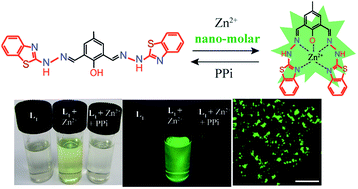
A new fluorescent chemosensor (L1) exhibits relay recognition of Zn2+ and pyrophosphate anion in a mixed buffer solution at a physiological pH. The probe exhibits excellent Zn2+ induced turn-on fluorescence, even as low as 1 nM (LOD = 71 ppb). Furthermore, addition of the pyrophosphate ion led to quenching of the fluorescence signal of the L1–Zn2+ ensemble. The sensitive fluorescence behavior of the L1 rendered a useful probe for in vitro assays of the intracellular Zn2+ and PPi ions in a model human cell line.

Introduction

The development of molecular fluorescence-based chemosensors for metal ions has emerged as an important field of research owing to the central role of the metal in biology, environmental and chemical processes.1 Fluorescent chemosensors are widely preferred over other optical sensors based on their high sensitivity, ease of handling, robustness and the possibility of real-time monitoring with fast response times.2,3 Amongst the metal ions, zinc ion sensing in aqueous environments is assuming considerable importance due to the fundamental role of the metal in a plethora of biological processes, such as gene transcription, regulation of metalloenzymes, neural signal transmission and apoptosis.4–9 Zinc is acknowledged as the second most abundant metal ion in human body after iron and is commonly associated with proteins where it bears structural and catalytic implications.10 Besides the fixed form of cellular zinc, pools of labile zinc is found in the pancreas,11 central nervous system,12 prostate,13,14 intestine15,16 and retina.17 Deficiency of zinc ion has been implicated in grave ailments such as acrodermatitis enteropathica, impaired cognition, immune dysfunction and diarrhea, while an excess concentration has been known to cause superficial skin diseases, prostate cancer, diabetes and brain diseases.18,19 The paucity of knowledge with regard to the physiological implications of cellular zinc homeostasis and the increasing need to unravel the role of Zn2+ in disease-related pathways has triggered the development of analytical tools for rapid and sensitive detection of the metal.20,21 However, the inherent traits of zinc such as absence of any spectroscopic signature as well as neutral magnetism are considered as bottlenecks to apply common analytical techniques for detection. Furthermore, the toxic cadmium ion, which is analogous to zinc in electronic configuration mostly interferes in the detection of zinc ion. Given this predicament, selective, sensitive and rapid detection of zinc ions in complex milieu and in biological samples is in great demand.

In recent times, zinc chemosensing ensembles have emerged as secondary sensors towards various anions,22–24 small molecule such as biothiols,25 nitro aromatic compounds,26,27 and amino acids.28 Amongst the anion, sensing of biologically important pyrophosphate (P2O74−, PPi) is desirable as it plays a germane role in various biological process.29,30 PPi is the product of ATP hydrolysis under cellular conditions and is a by-product of DNA replication and DNA sequencing.31,32 Most importantly, the detection of PPi has also been considered to be important in cancer research.33 Further, PPi detection has become an important issue for rheumatological disorder that originates due to the accumulation of crystals of calcium pyrophosphate dehydrates in the connective tissues.34–37 The high solvation energy of PPi in water (ΔG° = −584 KJ mol−1)38 and the presence of other competitive anions is a formidable challenge for detection of PPi in aqueous medium using receptors, which are based only on H-bonding interaction. Thus, certain transition metal chemosensor ensembles including Zn2+, Cd2+ and Cu2+, are being deployed to surmount this problem.39–42 It is envisaged that such ensembles can provide the geometry and suitable orientation of the binding site for the anions, which have an inherent proclivity for binding the positive centred metal ions. Apart from this colorimetric/fluorimetric type sensors, bioluminescence43 electrochemical44 and ISFET45 based sensors are also known in the literature.

Our research group has a longstanding interest in the design and development of chemosensors for the molecular recognition and sensing of various analytes.46–49 Based on the aforementioned premise, herein we report the synthesis and photophysical properties of a benzothiazole based dipodal Schiff base chemosensor L1 (2,6-bis((E)-(2-(benzothiazol-2-yl)hydrazono)methyl)-4-methylphenol).

The benzothiazole unit acts as chelating ligand46 and the dipodal Schiff base framework provide efficient binding for metal ion.48,50–53 The new chemosensor is highly selective towards Zn2+ ion with a detectable fluorescence response even with 1 nM Zn2+. Furthermore, the chemosensor L1 rendered Zn2+ sensing in the physiological milieu and the resultant L1–Zn2+ ensemble responded specifically to pyrophosphate (PPi) anion through fluorescence quenching.

Experimental section

General information and materials

All the materials used for synthesis were procured from commercial suppliers. The absorption spectra were recorded on a Perkin-Elmer Lamda-750 UV-Vis spectrophotometer using 10 mm path length quartz cuvettes in the range 250–700 nm wavelength, while fluorescence measurements were conducted on a Horiba Fluoromax-4 spectrofluorometer using 10 mm path length quartz cuvettes with a slit width of 3 nm at 298 K. Mass spectra of L1 was obtained using Waters Q-ToF Premier mass spectrometer. NMR spectra were recorded on a Varian FT-400 MHz instrument as well as on a BRUKER-600 MHz and the chemical shifts were presented in parts per million (ppm) on the scale. The following abbreviations are used to describe spin multiplicities in 1H NMR spectra: s = singlet; d = doublet; t = triplet; m = multiplet. IR spectra were recorded on a Perkin-Elmer-Spectrum One FT-IR spectrometer with KBr disks in the range 4000–450 cm−1.

Synthesis of L1

Condensation of freshly prepared 2,6-diformyl-4-methylphenol with 2-hydrazino benzothiazole for 4 hours yielded a yellowish precipitate, which was then filtered and washed with cold methanol to obtain pure L1 (Scheme 1). % yield = 85. 1H NMR of L1 (400 MHz, DMSO-d6): 12.267 (bs, 1H), 8.484 (s, 2H), 7.727–7.753 (d, 2H), 7.561 (s, 2H), 7.354–7.229 (m, 4H), 7.128–7.091 (t, 2H), 2.319 (s, 3H). 13C NMR (600 MHz): 166.58, 153.78, 133.41, 128.43, 126.28, 121.92, 121.66, 120.16, 20.12. ESI-MS (positive mode, m/z) calculated [L1 + H+] = 459.1062, found mass: 459.1042.
image file: c5ra09150k-s1.tif
Scheme 1 Synthetic scheme of the receptors with the binding sites for guest metals.

Similarly, condensation of 2,6-diformyl-benzene with 2-hydrazino benzothiazole for 4 hours gives gave a yellowish type precipitate of L2. % yield = 80. 1H NMR of L2 (400 MHz, DMSO-d6): 12.353 (bs, 1H), 8.181 (s, 2H), 7.981 (s, 1H), 7.801–7.603 (m, 4H), 7.528–7.454 (m, 3H), 7.310 (t, 2H), 7.125 (t, 2H). 13C NMR: 167.180, 134.94, 129.12, 127.386, 126.059, 124.125, 121.765, 120.94. ESI-MS (positive mode, m/z) calculated [L2 + H+] = 429.1004, found mass: 429.0948.

UV-Vis and fluorescence spectral studies

Stock solutions of various ions (1 × 10⁻³ M) were prepared in deionized water. Perchlorate or nitrate salts were used for metal ions while tetrabutyl/tetraethyl or sodium salts of the corresponding anions and nucleotides were used for the preparation of anion stock solutions. The stock solution of L1 and L2 (5 × 10⁻³ M) were prepared in DMSO. For the titration experiments, a 1 × 10⁻³ M solution of L1 taken in a quartz optical cell of 1 cm optical path length was titrated with incremental concentration of anion stock solutions in an ethanolic buffer medium (1[thin space (1/6-em)]:[thin space (1/6-em)]1 v/v EtOH[thin space (1/6-em)]:[thin space (1/6-em)]HEPES buffer at pH 7.2). For the competitive selectivity experiment, fluorescence emission of the L1–Zn2+ ensemble was collected in the absence and presence of the competitive metal ions in excess (10 equivalent).

Evaluation of the apparent binding constant

Probe L1 at a concentration of 10 μM in buffered ethanol was used for the titration studies with Zn2+ solution. The effective Zn2+ concentration was varied between 0 and 70 μM and the pH of the solution was adjusted to 7.2 using an aqueous HEPES buffer solution of effective concentration of 10 mM. The apparent binding constant for the formation of the respective zinc complex was evaluated using the Benesi–Hildebrand (B–H) plot (eqn (1)).54,55
 
1/(II0) = 1/{K(ImaxI0)C} + 1/(ImaxI0) (1)

I0 is the emission intensity of L1 at maximum (λ = 510 nm), I is the observed emission intensity at that particular wavelength in the presence of a certain concentration of the analyte (C), Imax is the maximum emission intensity value that was obtained at λ = 510 nm during titration with varying analyte concentration, K is the apparent binding constant (M−1) and was determined from the slope of the linear plot. Similarly, the PPi binding constant was also evaluated.

Detection limit

The detection limit was calculated on the basis of the fluorescence titration. The fluorescence emission spectrum of L1 was measured 10 times, and the standard deviation of blank measurement was determined. To gain the slope, the ratio of the fluorescence emission at 510 nm was plotted against the concentration of Zn2+ or PPi. The detection limit was calculated using the following equation:
 
Detection limit = 3σ/k (2)
where σ is the standard deviation of blank measurement, and k is the slope between the ratio of fluorescence emission versus respective analyte concentration.

Sensing of Zn(II) in physiological milieu

To investigate the potential of L1 as a probe for intracellular detection of Zn2+, the subsequent endeavour was to study its interaction in milieu replicating the conditions relevant in an in vivo system. To that end, two proteins were chosen, bovine serum albumin (BSA) and human serum albumin (HSA), and the interaction study between L1 and Zn2+ was studied. Stock solutions of the proteins were prepared at a final concentration of 4 mg mL−1. Proteins were then titrated from the stock solution in a cuvette with preformed L1–Zn2+ complex. To further validate the biological importance of L1, the interaction of L1 with Zn2+ was also studied in simulated body fluid (SBF), whose ionic composition is similar to that of human extracellular fluid. SBF was prepared as reported previously.56

Cytotoxic effect of L1, L1–Zn2+ and L1–Zn2+-PPi ensemble

The cytotoxic effect of L1 and L1–Zn2+ complex and L1–Zn2+-PPi ensemble on HeLa cells (human cervical carcinoma cells) were determined by an MTT assay as per the manufacturer instruction (Sigma-Aldrich, MO, USA). HeLa cells were initially cultured in a 25 cm2 tissue culture flask in DMEM medium supplemented with 10% (v/v) FBS, penicillin (100 μg mL−1) and streptomycin (100 μg mL−1) under a humidified atmosphere of 5% CO2 until the cells were approximately 90% confluent. Prior to MTT assay, cells were passaged and seeded into 96 well tissue culture plates at a cell density of 104 cells per well and incubated with varying concentrations of L1, L1–Zn2+ complex, L1–Zn2+-PPi ensemble, Zn2+ and PPi solution (15, 30, 60, 90 and 120 μM) and incubated for a period of 24 h under 5% CO2. Following incubation, the growth media was carefully aspirated, and fresh DMEM containing MTT solution was added to the wells. The plate was incubated for 4 h at 37 °C. Subsequently, the supernatant was collected and the insoluble colored formazan product was solubilized in DMSO and its absorbance was measured in a microtiter plate reader (Infinite M200, TECAN, Switzerland) at 550 nm. The assay was performed in six sets for each concentration of the test samples. Data analysis and determination of standard deviation was performed with Microsoft Excel 2013 (Microsoft Corporation). In the MTT assay, the absorbance for the control cells (solvent control) was considered as 100% cell viability and the absorbance for the treated cells was compared to determine % cell viability with respect to the solvent control.

Detection of intracellular Zn2+ and PPi by imaging

HeLa cells were initially cultured in a 25 cm2 tissue culture flask containing DMEM medium supplemented with 10% FBS, penicillin (100 μg mL−1) and streptomycin (100 μg mL−1) in a CO2 incubator. Prior to imaging studies, HeLa cells were seeded into a 6 well plate and grown in DMEM medium at 37 °C till 80% confluency. Subsequently, the cells were washed thrice with sterile phosphate buffered saline (PBS), incubated with 15 μM L1 in DMEM at 37 °C for 1 h in a CO2 incubator and their images were acquired using a fluorescence microscope (Eclipse Ti-U, Nikon, USA) with a filter that allowed green light emission. The cells were further washed with sterile PBS in order to remove excess L1 and then incubated for 1 h with 30 μM Zn(ClO4)2 prepared in sterile PBS. The images of the cells were acquired with a fluorescence microscope. The cells were subsequently washed with sterile PBS and then incubated further with 30 μM PPi for 1 h. Following incubation, the images of the cells were again acquired with a fluorescence microscope as mentioned earlier.

Result and discussion

Selective sensing of Zn(II) in aqueous medium by L1

The photophysical properties of the chemosensor (L1) was ascertained by UV-visible absorbance and fluorescence emission changes upon addition of various analytes. Absorption spectrum of L1 (10 μM) in buffered ethanol (1[thin space (1/6-em)]:[thin space (1/6-em)]1 EtOH[thin space (1/6-em)]:[thin space (1/6-em)]10 mM HEPES, pH ∼ 7.2) exhibited an intense band at 333 nm and a weak band around 386 nm, which may be ascribed to intramolecular π–π* transition (Fig. 1a). However, addition of Zn2+ ion resulted in the formation of new red shifted absorption peaks at 376 nm and 431 nm with a distinct change in the colour of the solution from colorless to yellowish (Inset, Fig. 1a). Incremental addition of Zn2+ ion (0–70 μM) to L1 resulted in a decrease in intensity at 333 nm accompanied by blue shifting of the 386 nm peak to 377 nm, which emerged with increasing intensity (Fig. 1b). Furthermore, higher Zn2+ concentration also lead to the manifestation of a broad peak at 431 nm. The isosbestic points at 297 nm, 355 nm and 414 nm indicated the formation of a new zinc complex with 1[thin space (1/6-em)]:[thin space (1/6-em)]1 stoichiometry (Fig. S9). Interestingly, none of the other tested cations, which included biologically relevant metal ions like Na+, Mg2+ and Ca2+, toxic heavy metal ions like Hg2+ and Cd2+ affected the absorption spectra of L1. It may also be mentioned that the absorption spectra of the chemosensor L1 remained unaffected even in presence of other cations such as K+, Cu2+, Mn2+, Fe2+, Co2+, Ni2+, Ag+, Pb2+ and Al3+ (Fig. 1a).
image file: c5ra09150k-f1.tif
Fig. 1 (a) Change in absorption spectra of L1 (10 μM) with different metal ions (50 μM) in ethanol buffer mixed buffered solution. Inset: change in the colour of L1 solution after the addition of Zn2+ and Cd2+. (b) UV-Vis titration spectra of L1 with increasing Zn2+ ion concentration.

To acquire a nuanced understanding of the binding mechanism, we have also performed fluorescence emission studies and 1H NMR titrations in presence of Zn2+ ion. The naked probe L1 (10 μM) was weakly fluorescent at 510 nm perhaps due to rapid rotation around single bond adjacent to azo methine group (λex = 430 nm, slit = 3/3 nm). Interaction with Zn2+ resulted in a significant Stokes shift of around 130 nm and a remarkable enhancement of the fluorescence emission peak at around 510 (Fig. 2a). Interaction of L1 with the other tested metal ions failed to impart any change in the fluorescence emission of the probe (Fig. 2a). Interestingly, under a UV lamp (λ = 365 nm) the solution displayed a strong yellowish green fluorescence (Inset, Fig. 2a) and thus rendered rapid naked eye detection of Zn2+. Collectively the results are encouraging as chemosensors, which exhibit large stokes shift and manifold enhancement in fluorescence upon binding of target analyte are envisaged as potential candidates for fabrication of sensing devices that minimize background interference.


image file: c5ra09150k-f2.tif
Fig. 2 (a) Emission intensities of L1 (10 μM) in presence of various metal ions in mixed buffered solution. Inset: change in colour of L1 solution observed under a UV lamp following addition of Zn2+. (b) Fluorescence titration of L1 with varying concentration of Zn2+ (0–20 nM) (λex = 430 nm, slit = 3/3 nm).

To explore the binding mechanism, we have titrated a fixed concentration of the probe (10 μM) with varying concentration of Zn2+ ion. With increasing concentration of Zn2+ there was a systematic enhancement in the fluorescence emission at 510 nm. Following addition of 0.1 equivalent of Zn2+ (1.0 μM of Zn2+), there was nearly 27 fold increase in the fluorescence intensity of the probe (Fig. S10). It may also be mentioned that a noticeable enhancement in the fluorescence intensity of L1 was even observed with 1.0 nM Zn2+, which indicated the excellent sensitivity of the probe (Fig. 2b). The binding constant for Zn2+ ion was 1.25 × 10⁵ M−1 as calculated by Benesi–Hildebrand equation using the fluorescence titration reading (Fig. S11a). The calculated lowest detection limit for Zn2+ was 71 ppb on the basis of signal[thin space (1/6-em)]:[thin space (1/6-em)]noise = 3[thin space (1/6-em)]:[thin space (1/6-em)]1 (Fig. S11b). In comparison with the reported examples of fluorescent sensors for Zn2+ (Table S1 and S2), we have achieved better detection limit. Again, such level of detection limit bears significant implications to sense Zn2+ in biological systems.

Subsequently, interference studies were conducted to ascertain the affinity of L1 for Zn2+ in presence of other competitive metal ions. For this, fluorescence emission spectra were recorded after the addition of different metal ion solution to a mixture of 1[thin space (1/6-em)]:[thin space (1/6-em)]1 L1 and Zn2+. Interestingly, the sensing capability of L1 for Zn2+ was not affected in presence of any of the competing species (Fig. S12).

Plausible mechanism of Zn2+ sensing

To gain an insight of the chelation mode of zinc ion to L1, 1H NMR titration were conducted. However, due to the poor solubility of the probe in CD3OD, titrations were performed in DMSO-d6 (Fig. 3). There are three possible binding sites in L1 viz. OH, Schiff base N and N of benzothiazole group; and Zn2+ coordination through this functionalities are expected to change the nearby electronic environment. Just Following addition of the first aliquot of Zn2+ ion, the OH peak was obliterated, which suggested the strong involvement of the OH functionality in the binding event (Fig. 3). Interaction with the Zn2+ ion also caused de-shielding of the Schiff base CH(Hb) and the aromatic CHs of the benzothiazole ring.
image file: c5ra09150k-f3.tif
Fig. 3 1H NMR stack plot of L1 with different concentration of Zn2+ in DMSO-d6 and the plausible Zn2+ binding on top.

A control receptor L2 which was devoid of OH group also revealed the importance of the same, as it failed to produce any selectivity under the same experimental condition (Fig. S13). Further, the 1[thin space (1/6-em)]:[thin space (1/6-em)]1 complex mass (L1 + Zn2+ + NO3 = 584.0234, Fig. S14) also suggested the involvement of OH as oxide.

Thus, guided by the phenolic OH, Schiff base N and benzothiazole N are also coordinated to Zn2+ ion, and thereby rigidify the molecular assembly by restricting the free rotation of the azomethine carbon, which resulted in significant fluorescent enhancement through the process of chelation-enhanced fluorescence (CHEF).

To test the sensing potential of the developed probe in biological system, it was important to ascertain the performance of the probe in presence of serum proteins such as albumin.57 Thus, the Zn2+ sensing by L1 was analyzed in presence of human serum albumin (HSA) and bovine serum albumin (BSA) in mixed solvent system as well as in simulated body fluid (SBF) by tracking the fluorescence emission at 510 nm (Fig. 4). Interestingly, even in presence of higher concentration of HSA, BSA and SBF the fluorescence emission intensity of L1–Zn2+ at 510 nm remained unaffected. These results reiterated the selectivity of the developed probe and demonstrated its application potential in a physiologically relevant milieu.


image file: c5ra09150k-f4.tif
Fig. 4 Histogram showing the fluorescence response of L1–Zn2+ ensemble towards various concentrations of BSA and HSA in (a) buffered ethanol (1[thin space (1/6-em)]:[thin space (1/6-em)]1 EtOH[thin space (1/6-em)]:[thin space (1/6-em)]10 mM HEPES, pH ∼ 7.2) and (b) simulated body fluid (SBF).

Given that chemosensors can exhibit proton-induced fluorescence, the zinc ion induced ‘turn-on’ fluorescence of L1 was also checked in a wide pH range. It was observed that L1 rendered Zn2+ sensing in the pH range 5.0 to 11 (Fig. S15). In the pH range <5.0, there was no fluorescence response to Zn2+ which may perhaps be attributed to the weak coordination capability of zinc ions due to the protonation of the co-ordination sites of L1.

For practical application of the chemosensor, paper test strips were used for facile and rapid qualitative detection of Zn2+ ion. The ligand coated test strips were prepared by immersing the filter papers into a DCM solution of L1 and then air dried. An intense ‘turn-on’ fluorescence could be observed under the UV lamp (λ = 365 nm) on spraying a Zn2+ solution over the test strips (Fig. S16).

Selective PPi sensing by L1–Zn2+ ensemble

The next endeavour was to ascertain the anion sensing aptitude of the L1–Zn2+ ensemble. To this end, the L1Zn2+ ensemble was treated with various anions such as F, Cl, Br, I, CN, CO32−, HCO3, CH3CO2 (OAc), NO3, PPi, SO42−, PO43−, H2PO4, AMP, ADP and ATP etc. Among the aforesaid anions, only PPi induced a conspicuous change in the emissive behaviour of the ensemble (Fig. 5a). Again, the addition of dNTP (N = A, G, C, T) also produce no change in the emissive behavior of the ensemble. Addition of 1.0 equivalent of PPi (10 μM) solution resulted in complete quenching of the initial fluorescence emission of the L1–Zn2+ ensemble. Titration of the metal ensemble with sequentially added PPi solution lead to a continuous decrease in emission intensity at 510 nm. The ‘turn-off’ fluorescence behaviour of the L1–Zn2+ ensemble could be explained by considering the strong binding affinity of PPi towards Zn2+. The sequestration of Zn2+ ions by PPi and formation of stable ZnPPi adduct releases the free probe in the solution, which renders the strong emission of the L1–Zn2+ ensemble.
image file: c5ra09150k-f5.tif
Fig. 5 Change in fluorescence emission upon addition of (a) different anions and (b) increasing concentration of PPi (0–10 μM) to the L1–Zn2+ ensemble ion in mixed buffered solution (λex = 430 nm, slit = 3/3 nm). Inset: change of fluorescence emission intensity of the L1–Zn2+ ensemble at 510 nm with increasing concentrations of PPi.

The UV-Vis spectral pattern further validated our conjecture, as absorption maximum at 380 nm for naked L1 was regained and the characteristic 431 nm peak for the zinc ensemble diminished after PPi addition (Fig. S17). Concurrently, the yellowish color solution was also transformed to the original colorless solution. However, neither any visual color change nor any development of new peak around 380 nm was observed in the UV-visible absorbance spectra after addition of any of the anions viz. F, Cl, Br, I, CO32−, HCO3, OAc, NO3, SO42−, PO43−, H2PO4 even at higher mole ratio. This indicated the high selectivity of the L1–Zn2+ ensemble for PPi ion in the physiological pH. It may also be mentioned that the aforementioned anions could not be detected by the free probe L1 (Fig. S18). Thus the L1–Zn2+ ensemble can be employed both as colorimetric as well as fluorometric sensor for PPi.

The Job's plot obtained from the titration experiment suggested a 1[thin space (1/6-em)]:[thin space (1/6-em)]1 binding of PPi with metal ensemble and the calculated binding constant was 1.4 × 10⁵ M−1 (B–S equation, Fig. S19). The LOD of the zinc ensemble for PPi anion was 480 pM (Fig. S20). To establish the practical applicability of the L1–Zn2+ ensemble as selective PPi sensor, competitive fluorescence experiment was carried out with the competing anions. Addition of PPi caused a prominent fluorescence quenching in every case (Fig. S21), which suggested excellent selectivity and sensitivity of L1–Zn2+ ensemble towards PPi in the buffer medium even in the presence of other interfering anions.

Detection of Zn2+ in live cells

The results obtained from the fluorescence experiments were encouraging and we sought to investigate the potential of L1 as a probe for detection of intracellular Zn2+. However, prior to ligand-mediated zinc detection in live cells, it was important to determine its cytotoxic potential. To that end, an MTT assay was performed. It was observed that that probe alone failed to impart any adverse effect on the viability of HeLa cells at a concentration of 60 μM (Fig. S22). Even at high concentrations of 90 μM and 120 μM, cell viability was around 80%. Akin to the results obtained with L1, HeLa cells treated with L1–Zn2+ and L1–Zn2+-PPi ensembles also displayed significant viability, which suggested high biocompatibility of the ensembles.

The non-toxic nature of the developed chemosensor L1 and its Zn2+-ensemble suggested that the probe could perhaps be deployed for fluorescence-based intracellular detection of Zn2+ in live cells. Therefore, to ascertain the potential of L1 in intracellular sensing of Zn2+, HeLa cells were incubated with 15 μM L1 followed by 30 μM of Zn(ClO4)2 to promote the formation of intracellular L1–Zn2+ complex. It was observed that L1 alone failed to elicit any fluorescence signals as evidenced by the absence of any intracellular fluorescence (Fig. 6). However, addition of zinc led to the manifestation of bright green fluorescence in HeLa cells (Fig. 6). The fluorescence microscopic analysis strongly suggested that compound L1 could readily cross the cell membrane, infuse into HeLa cells, and sense Zn2+ through the formation of intracellular L1–zinc complex. It must be also mentioned that bright field images suggested that HeLa cells retained their characteristic morphology, which reiterated the biocompatibility of L1 and L1–Zn2+ ensemble (Fig. 6). Interestingly, subsequent incubation of the cells with excess PPi resulted in a dramatic loss of fluorescence (Fig. 6), perhaps originating from fluorescence quenching behavior of PPi on L1–Zn2+ ensemble as evidenced from previous solution-based studies (Fig. 5).


image file: c5ra09150k-f6.tif
Fig. 6 Fluorescence microscopic images of HeLa cells after adding 15 μM of L1 (row A) and after subsequent treatment with 30 μM Zn2+ (row B) and 30 μM PPi (row C). Scale bar for the images is 100 μm.

Conclusions

A novel benzothiazole containing Schiff base was developed which rendered relay recognition of Zn2+ and PPi in physiological medium. The Zn2+ sensing was evidenced in mixed buffered medium and also in the physiological milieu in presence of HSA, BSA and SBF. In presence of Zn2+, the colorless chemosensor solution displayed a strong greenish fluorescence and thus enabled naked eye detection of the metal. The chemosensor exhibited a strong affinity (K = 1.25 × 10⁵ M−1) for Zn2+ even in the presence of the other interfering metal ions and was ultrasensitive as it could respond even to 1 nM Zn2+ (LOD for Zn2+ = 71 ppb). A facile application of the chemosensor could be demonstrated through successful detection of Zn2+ using the sensor-coated paper strips. The Zn2+-chemosensor ensemble also responded to PPi in the same experimental medium through fluorescence quenching. On the basis of the selectivity of L1 for Zn2+ in physiological medium and its biocompatible attribute, the probe could facilitate fluorescence-based sensing of intracellular Zn2+ in live HeLa cells. It is envisaged that the developed probe holds considerable potential as a Zn2+ sensor for future environmental and biomedical applications.

Acknowledgements

The authors thank CSIR (01/2727/13/EMR-II), Science & Engineering Research Board (SR/S1/OC-62/2011) and Department of Biotechnology (BT/01/NE/PS/08), India for financial support and CIF, IIT Guwahati for providing instrument facilities. AG and SM acknowledge IIT Guwahati for research fellowship.

Notes and references

  1. E. L. Que, D. W. Domaille and C. J. Chang, Chem. Rev., 2008, 108, 1517–1549 CrossRef CAS PubMed.
  2. R. M. Manez and F. Sancenon, Chem. Rev., 2003, 103, 4419–4476 CrossRef PubMed.
  3. J. S. Kim and D. T. Quang, Chem. Rev., 2007, 107, 3780–3799 CrossRef CAS PubMed.
  4. A. P. de Silva, D. B. Fox, A. J. M. Huxley and T. S. Moody, Coord. Chem. Rev., 2000, 205, 41–57 CrossRef CAS.
  5. M. M. Henary, Y. Wu and C. J. Fahrni, Chem.–Eur. J., 2004, 10, 3015–3025 CrossRef CAS PubMed.
  6. B. L. Vallee and K. H. Falchuk, Psychol. Rep., 1993, 73, 79 CrossRef CAS.
  7. A. Q. Truong-Tran, J. Carter, R. E. Ruffin and P. D. Zalewski, Biometals, 2001, 14, 315–330 CrossRef CAS.
  8. P. D. Zalewski, I. J. Forbes, R. F. Seamark, R. Borlinghaus, W. H. Betts, S. F. Lincoln and A. D. Ward, Chem. Biol., 1994, 1, 153–161 CrossRef CAS.
  9. E. Kimura, S. Aoki, E. Kikuta and T. Koike, Proc. Natl. Acad. Sci. U. S. A., 2003, 100, 3731–3736 CrossRef CAS PubMed.
  10. J. M. Berg and Y. Shi, Science, 1996, 271, 1081–1085 CAS.
  11. R. Sladek, G. Rocheleau, J. Rung, C. Dina, L. Shen, D. Serre, P. Boutin, D. Vincent, A. Belisle, S. Hadjadj, B. Balkau, B. Heude, G. Charpentier, T. J. Hudson, A. Montpetit, A. V. Pshezhetsky, M. Prentki, B. I. Posner, D. J. Balding, D. Meyre, C. Polychronakos and P. Froguel, Nature, 2007, 445, 881–885 CrossRef CAS PubMed.
  12. T. Nicolson, E. Bellomo and N. Wijesekara, Diabetes, 2009, 58, 881–885 CrossRef PubMed.
  13. M.-C. Franz, P. Anderle, M. Burzle, Y. Suzuki, M. R. Freeman, M. A. Hediger and G. Kovacs, Mol. Aspects Med., 2013, 34, 735–741 CrossRef CAS PubMed.
  14. L. C. Costello and R. B. Franklin, J. Biol. Inorg. Chem., 2011, 16, 3–8 CrossRef CAS PubMed.
  15. C. L. F. Walker, Z. A. Bhutta, N. Bhandari, T. Teka, F. Shahid, S. Taneja and R. E. Black, Am. J. Clin. Nutr., 2007, 85, 887–894 CAS.
  16. C. F. Walker and R. E. Black, Annu. Rev. Nutr., 2004, 24, 255–275 CrossRef CAS PubMed.
  17. I. Lengyel, J. M. Flinn, T. Peto, D. H. Linkous, K. Cano, A. C. Bird, A. Lanzirotti, C. J. Fredrickson and F. J. G. M. Van Kuijk, Exp. Eye Res., 2007, 84, 772–780 CrossRef CAS PubMed.
  18. S. K. Ghosh, P. Kim, X. Zhang, S.-H. Yun, A. Moore, S. J. Lippard and Z. Medarova, Cancer Res., 2010, 70, 6119–6127 CrossRef CAS PubMed.
  19. R. Sladek, G. Rocheleau, J. Rung, C. Dina, L. Shen, D. Serre, P. Boutin, D. Vincent, A. Belisle, S. Hadjadj, B. Balkau, B. Heude, G. Charpentier, T. J. Hudson, A. Montpetit, A. V. Pshezhetsky, M. Prentki, B. I. Posner, D. J. Balding, D. Meyre, C. Polychronakos and P. Froguel, Nature, 2007, 445, 881–885 CrossRef CAS PubMed.
  20. M. D. Pluth, E. Tomat and S. J. Lippard, Annu. Rev. Biochem., 2011, 80, 333–355 CrossRef CAS PubMed.
  21. K. M. Dean, Y. Qin and A. E. Palmer, Biochim. Biophys. Acta, 2012, 1823, 1406–1415 CrossRef CAS PubMed.
  22. D. Karak, S. Das, S. Lohar, A. Banerjee, A. Sahana, I. Hauli, S. K. Mukhopadhyay, D. A. Safin, M. G. Babashkina, M. Bolte, Y. Garcia and D. Das, Dalton Trans., 2013, 6708–6715 RSC.
  23. Z. Dong, X. Le, P. Zhou, C. Dong and J. Ma, New J. Chem., 2014, 38, 1802–1808 RSC.
  24. V. Luxami, K. Paul and I. H. Jeong, Dalton Trans., 2013, 3783–3786 RSC.
  25. S. Kaur, V. Bhalla and M. Kumar, Chem. Commun., 2014, 50, 9725–9728 RSC.
  26. M. E. Germain and M. J. Knapp, J. Am. Chem. Soc., 2008, 130, 5422–5423 CrossRef CAS PubMed.
  27. M. E. Germain, T. R. Vargo, P. G. Khalifah and M. J. Knapp, Inorg. Chem., 2007, 46, 4422–4429 CrossRef CAS PubMed.
  28. S. Kaur, V. Bhalla and M. Kumar, Chem. Commun., 2014, 50, 9725–9728 RSC.
  29. M. W. Bowler, M. J. Cliff, J. P. Waltho and G. M. Blackburn, New J. Chem., 2010, 34, 784–794 RSC.
  30. A. K. Hirsch, F. R. Fischer and F. Diederich, Angew. Chem., Int. Ed., 2007, 46, 338–352 CrossRef CAS PubMed.
  31. S. K. Kim, D. H. Lee, J.-I. Hong and J. Yoon, Acc. Chem. Res., 2009, 42, 23–31 CrossRef CAS PubMed.
  32. P. Nyren, Anal. Biochem., 1987, 167, 235–238 CrossRef CAS.
  33. S. Xu, M. He, H. Yu, X. Cai, X. Tan, B. Lu and B. Shu, Anal. Biochem., 2001, 299, 188–193 CrossRef CAS PubMed.
  34. M. Doherty, C. Becher, M. Regan, A. Jones and J. Ledingham, Ann. Rheum. Dis., 1996, 66, 432–436 CrossRef.
  35. A. E. Timms, Y. Zhang, R. G. G. Russell and M. A. Brown, Rheumatology, 2002, 41, 725–729 CrossRef CAS PubMed.
  36. L. Hessle, K. A. Johnson, H. C. Anderson, S. Narisawa, A. Sali, J. W. Goding, R. Terkeltaub and J. L. Millan, Proc. Natl. Acad. Sci. U. S. A., 2002, 99, 9445–9449 CrossRef CAS PubMed.
  37. C. Beck, H. Morbach, M. Stenzel, H. Collmann, P. Schneider and H. J. Girschick, Open Bone J., 2009, 1, 8–15 CrossRef CAS.
  38. P. Das, S. Bhattacharya, S. Mishra and A. Das, Chem. Commun., 2011, 47, 8118–8120 RSC.
  39. E. J. ONeil and B. D. Smith, Coord. Chem. Rev., 2006, 250, 3068–3080 CrossRef CAS PubMed.
  40. R. K. Pathak, K. Tabbasum, A. Rai, D. Panda and C. P. Rao, Anal. Chem., 2012, 84, 5117–5123 CrossRef CAS PubMed.
  41. B. Roy, A. S. Rao and K. H. Ahn, Org. Biomol. Chem., 2011, 9, 7774–7779 CAS.
  42. R. M. Manez and F. Sancenοn, Chem. Rev., 2003, 103, 4419–4476 CrossRef PubMed.
  43. M. Ronaghi, M. Uhlen and P. Nyren, Science, 1998, 281, 363–365 CrossRef CAS.
  44. I. S. Shin, S. W. Bae, H. Kim and J. I. Hong, Anal. Chem., 2010, 82, 8259–8265 CrossRef CAS PubMed.
  45. M. J. Rothberg, W. Hinz, L. K. Johnson, M. J. Bustillo, H. J. Leamon and J. Schultz, PCT Int. Appl., WO 2010008480 A2 20100121, 2010.
  46. A. Gogoi, S. Samanta and G. Das, Sens. Actuators, B, 2014, 202, 788–794 CrossRef CAS PubMed.
  47. B. K. Datta, D. Thiyagarajan, S. Samanta, A. Ramesh and G. Das, Org. Biomol. Chem., 2014, 12, 4975–4982 CAS.
  48. B. K. Datta, S. Mukherjee, C. Kar, A. Ramesh and G. Das, Anal. Chem., 2013, 85, 8369–8375 CrossRef CAS PubMed.
  49. A. Gogoi, S. Mukherjee, A. Ramesh and G. Das, Anal. Chem., 2015, 87, 6974–6979 Search PubMed.
  50. Z. Dong, X. Le, P. Zhou, C. Dong and J. Ma, RSC Adv., 2014, 4, 18270–18277 RSC.
  51. C. Kar, M. D. Adhikari, B. K. Datta, A. Ramesh and G. Das, Sens. Actuators, B, 2013, 188, 1132–1140 CrossRef CAS PubMed.
  52. S. Anbu, R. Ravishankaran, M. F. C. Guedes da Silva, A. A. Karande and A. J. L. Pombeiro, Inorg. Chem., 2014, 53, 6655–6664 CrossRef CAS PubMed.
  53. S. Anbu, S. Kamalraj, C. Jayabaskaran and P. S. Mukherjee, Inorg. Chem., 2013, 52, 8294–8296 CrossRef CAS PubMed.
  54. H. A. Benesi and J. H. Hildebrand, J. Am. Chem. Soc., 1949, 71, 2703–2707 CrossRef CAS.
  55. F. Han, Y. Bao, Z. Yang, T. M. Fyles, J. Zhao, X. Peng, J. Fan, Y. Wu and S. Sun, Chem.–Eur. J., 2007, 13, 2880–2892 CrossRef CAS PubMed.
  56. A. Oyane, H. M. Kim, T. Furuya, T. Kokubo, T. Miyazaki and T. Nakamura, J. Biomed. Mater. Res., 2003, 65, 188–195 CrossRef PubMed.
  57. R. K. Pathak, A. G. Dikundwar, T. N. G. Row and C. P. Rao, Chem. Commun., 2010, 46, 4345–4347 RSC.

Footnote

Electronic supplementary information (ESI) available: NMR, UV-Vis and fluorescence changes. See DOI: 10.1039/c5ra09150k

This journal is © The Royal Society of Chemistry 2015
Click here to see how this site uses Cookies. View our privacy policy here.