Enhancement of foamability and foam stability induced by interactions between a hyperbranched exopolysaccharide and a zwitterionic surfactant dodecyl sulfobetaine

Quanhua Denga, Haiping Lib, Chunxiu Lia, Weiqin Lva and Ying Li*a
aKey Laboratory for Colloid and Interface Chemistry of Education Ministry, Shandong University, Jinan 250100, P. R. China. E-mail: yingli@sdu.edu.cn; Fax: +86-531-88362078; Tel: +86-531-88362078
bNational Engineering Technology Research Center for Colloidal Materials, Shandong University, Jinan 250100, P. R. China

Received 15th May 2015 , Accepted 13th July 2015

First published on 13th July 2015


Abstract

An aqueous foam containing a zwitterionic surfactant dodecyl sulfobetaine (DSB) and an eco-friendly hyperbranched exopolysaccharide (EPS) secreted by a deep-sea mesophilic bacterium Wangia profunda SM-A87 was prepared for the first time. Compared with singular DSB solution, the EPS/DSB mixing solution exhibited better foamability and foam stability. The minimum DSB concentration (CDSB) needed to form a stable foam in the EPS/DSB solution was about one hundred times that in the DSB solution, and in a very large CDSB range, the EPS/DSB foam exhibited a better stability. The enhancement of foamability and foam stability of the complex solution arises from the hydrogen bonding and electrostatic interactions between the EPS and the DSB, and the hyperbranched structure of the EPS. The EPS/DSB foam shows great potential for application in enhanced oil recovery and health-care products.

1. Introduction

Aqueous foams have been applied in many fields, such as firefighting, pharmaceutical, mineral floatation, food processing, cosmetic and oil exploitation.1,2 Surfactants are the most extensively used foam stabilizers because of their ability of adsorbing at interfaces and lowering the interfacial energy of solutions. Nonetheless, the stability of surfactant foams is not always satisfactory. The coalescence and rupture of bubbles could not be avoided and were generally intensified along with the drainage of the foam film.3 Up to now, it's still a technical challenge to obtain aqueous foam exhibiting long-term stability and high foamability, especially with a little dosage of surfactants.

Polyelectrolytes (PE) are often associated with surfactants to control the rheological properties of foams and enhance the foam stability.4 According to the literature, oppositely charged PE and surfactant complex foams with suitable PE/surfactant concentration ratio could have high stability because of the co-adsorption of the PE and surfactants at air/water interfaces5 driven by strong interactions between them. Unfortunately, the strong interactions caused a bad foamability of the complex solutions.6,7 Recently, some studies about PE/surfactant complex foams with weak interactions between the PE and surfactants were reported, such as the poly(vinylamine)/C12TAB foam.6 The synergy between the PE and the surfactants led to a fast surfactant adsorption on the solution surface which facilitated foaming of solutions, and the formed surface-active PE/surfactant complex, especially stiff PE/surfactant complex caused a strong steric repulsion, favorable for the enhancement of foam stability.8

However, most of traditional PE9–12 are toxic or would bring about environmental contamination. Developing eco-friendly macromolecules such as polysaccharides and proteins satisfies the requirements of sustainable development. Compared with proteins, polysaccharides are of much lower cost and easier to be obtained,13–17 and some of them possess excellent rheological and interfacial adsorption properties, which renders them suitable for enhancing the foamability and foam stability.18,19

Lately, a low-cost hyperbranched exopolysaccharide (EPS) secreted from a deep-sea mesophilic bacterium Wangia profunda SM-A87 (ref. 20 and 21) has attracted much attention of researchers because of its strong thickening ability and excellent salt and pH resistance.22,23 EPS molecules contain hydroxyl, hemiacetal, and carboxyl groups, which brings about the possibility that the EPS interacts with surfactants to enhance their foamability and foam stability. Nonetheless, no research on EPS/surfactant foams has been reported.

In this study, an aqueous foam containing the EPS and a widely used zwitterionic surfactant24–28 dodecyl sulfobetaine (DSB) was firstly prepared. The EPS/DSB foam presented much better foamability and foam stability than the DSB foam. Related mechanisms were discussed thoroughly. This work provides a deep insight into the mechanism of performance enhancement of PE/surfactant complex foam with weak interactions, and a very useful approach to exploring eco-friendly high efficient foams. The EPS/DSB foam has great application potential in enhanced oil recovery and detergent areas.

2. Experimental

2.1. Materials

SM-A87 EPS was prepared by the method reported in the literature.21 Its weight-average molecular weight is ∼3.76 × 10⁶ g mol−1. The glycosyl composition and linkage analyses of EPS were reported previously.23 Dodecyl sulfobetaine (DSB, analytical pure) was synthesized and purified by Jin Ling Petrochemical Co., Ltd (P. R. China). Ultra-pure water obtained from a Hitech-Kflow water purification system (P. R. China) was used in this work.

2.2. Preparation of solutions

EPS stock solutions (3 g L−1) were prepared by dissolving 0.3 g of EPS in 100 mL of water. The concentration of DSB stock solution was 100 mM. Solutions with low concentrations were obtained via dilution of the stock solutions. EPS concentration (CEPS) is 1.5 g L−1 in all experiments unless special explanation.

2.3. Methods

2.3.1. Static foam properties. Foam properties of all the solutions were characterized using an IT Concept Foamscan instrument (Teclis Co., France). Foam was generated by blowing nitrogen through a porous glass filter with a blowing rate of 75 mL min−1. The initial solution and final foam volumes were 60 and 200 mL, respectively. The half-life time (t1/2) is the time that the foam takes to decrease 50% of the volume. This parameter was used to characterize the foam stability. The variation of foam volume with time displays the drainage process.
2.3.2. Rheological properties of foams and bulk solutions. The dynamic foam stability was measured using an external rotor disturbing method.29 The foam with total volume of 180 mL and gas volume percentage of ∼78% was in situ generated in a transparent glass bucket connected with a constant temperature water bath by blowing N2 gas bubbles at a constant flow rate of 0.01 L min−1 through a porous filter placed at the bottom of the solution with volume of 40 mL. Temperature was kept at 50 ± 0.1 °C. The dynamic t1/2 and viscosity of the foam were recorded by a Brookfield RS plus rheometer with a paddle rotor (Brookfield Engineering Laboratories, Middleboro, USA).

Dynamic viscoelastic measurements of the foams were performed on an Anton Paar MCR 302 rheometer (Austria) equipped with a paddle-shaped ST22-4V-40 rotor at 50 °C. The wet foam was obtained by stirring 100 mL solutions using waring blender (1500 mL) with a rate of 1000 rpm. The linear viscoelastic regions of the foams were determined through stress sweep (0.01–10 Pa) at frequency of 1 Hz. The variation of moduli with time was measured at frequency of 1 Hz and stress of 0.02 Pa until the rotor was exposed.

Rheological measurements of the bulk solutions were carried out on the MCR 302 rheometer with a CC27 coaxial cylinder measuring system at 50 °C. Steady shear measurements were performed with shear rate increasing from 0.01 to 100 s−1. For dynamic viscoelastic measurements, the linear viscoelastic regions of solutions were determined via stress sweep (0.01–10 Pa) at frequency of 0.5 Hz. The frequency sweep was carried out from 0.01 to 5 Hz at stress of 0.02 Pa (in the linear viscoelastic region).

2.3.3. Surface tension and interfacial dilational viscoelasticity. Dynamic surface tension and interfacial dilational modulus measurements were performed on a Tracker oscillating bubble rheometer (Teclis Co., France) using the pendant drop method. The surface tension relaxation kinetics after a pendant drop was formed rapidly on the capillary tip, was followed for 1800 s until the equilibrium surface tension was obtained. The drop was filmed by a CCD camera and the drop profile was obtained using the image analysis software Optimas 6.5. The dilational elasticity of the gas/water interfacial layer were determined at an oscillatory frequency of 0.1 Hz. This method allows us to obtain the surface tension (γ) as well as the area of the surface element (A) in the whole test process. Dilational surface moduli are defined as the differential ratio of the γ to ln[thin space (1/6-em)]A.
 
image file: c5ra09120a-t1.tif(1)

The surface area of the drop is oscillated periodically. The dilatational modulus is the summation of elastic component (εd) and loss modulus (ωηd). εd and ωηd account for recoverable energy stored in the interface and dissipation energy through relaxation process, respectively. ηd is the dilational viscosity.

 
ε = εd + iωηd (2)
 
εd = |ε|cos[thin space (1/6-em)]θ (3)
 
ηdω = |ε|sin[thin space (1/6-em)]θ (4)
where |ε| is the absolute modulus and θ is the phase angle.

2.3.4. Texture analyze. The microhardness and the viscoelastic feature of foams were investigated with a TMS-Pilot texture analyzer (TL-Pro testing system, FTC, USA).29 Initially, a cylindrical cell (150 mm inner diameter) was fulfilled with a known volume of wet foam and placed on the sample platform. The wet foam was obtained by stirring 100 mL solutions using waring blender (1500 mL) at 1000 rpm. Then, the extrusion disk with diameter of 100 mm was controlled by the computer workstation to depress the foam at a constant speed of 20 mm min−1. When the extrusion disk moves through the set distance, it went backward to its departure place. Over the whole process, pressures at the bottom and side of the disk were recorded. The maximum compressing force and viscoelastic force indicate the compressing and dragging peak pressures in the falling and pulling procedures which qualitatively correspond to the stiffness and the viscoelasticity of the foam, respectively.
2.3.5. Fourier transform infrared (FT-IR) spectrum and microscope observation. FT-IR spectrum of samples were obtained on a VERTEX-70/70 V FT-IR spectrometer (Bruker Optics, Germany) using KBr tablet method. Each spectrum was recorded in the range of 4000–400 cm−1 with resolution of 4 cm−1. EPS/DSB complex was obtained by drying their mixing solutions at 60 °C.

Images of foam bubbles were photographed by a BX53 microscope (Olympus, Japan). 50 mL of DSB and EPS/DSB solutions with CEPS of 0.75 g L−1 and CDSB of 2 mM were stirred by a waring blender (1500 mL) at 1000 rpm for 1 min to obtained wet foam. Then the wet foam was transferred immediately into a quartz sample cell with thickness of 1 mm and observed using the microscope.

2.3.6. Microthermal analysis. A micro-differential scanning calorimeter (DSC) (Rheometric Scientific Inc., USA) was used to determine thermal properties of solutions. The scanning rate was 2 °C min−1 during the thermal cycle of heating to cooling from −20–20 °C. The reference cell was filled with water.

3. Results and discussion

3.1. Foamability and foam stability of DSB and EPS/DSB solutions

Foaming time (tf), the time taken to form specific volume of foam, which is an important parameter reflecting the foaming capability of solutions. A shorter tf means a better foamability.30 Fig. 1a shows the variation of the tf of DSB and EPS/DSB solutions as a function of CDSB. For pure DSB solutions, foams were not formed at CDSB < 0.1 mM. At CDSB > 0.1 mM, the tf decreases with increasing CDSB, and keeps almost constant at CDSB > 2.0 mM in which range the DSB adsorption at the interface gets saturated.31 For EPS/DSB solutions, foams can be formed at much lower CDSB (0.001 mM), and the tf first decreases, followed by an increase, and then decreases with increasing CDSB. At CDSB < 2 mM, the tf of the EPS/DSB solutions are much less than that of the corresponding DSB solutions.
image file: c5ra09120a-f1.tif
Fig. 1 (a) Foaming time and (b) foam stability of DSB and EPS/DSB solutions with CEPS of 1.5 g L−1 and different CDSB.

According to the DSC results (Fig. S1, ESI), the freezing point of water decreases obviously after the addition of EPS, which probably stems from the EPS induced polarity increase of the water, just like the effect of ionic strength.4,32,33 The increase of water polarity can result in the increase of interfacial adsorption tendency of DSB molecules and thus the reduced tf at CDSB < 2 mM or >10 mM. At 2 mM < CDSB < 10 mM, the tf of the EPS/DSB solutions increases with increasing CDSB, and is even larger than that of the corresponding DSB solutions, which is probably related to the reduction of the DSB adsorption tendency at the interface because of the formation of EPS/DSB aggregates in the bulk solutions.6

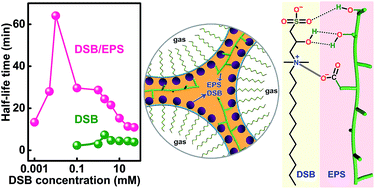
Foam stability, one of the most important characteristics of aqueous foam, depends on many factors, such as drainage of foam films, bulk viscosity of solutions, interfacial elasticity,34 diffusion of gas through foam film,35–37 and steric38 and electrostatic repulsion between the two sides of foam films.39 The t1/2 is usually used to evaluate the stability of foams.40 Fig. 1b shows the change of t1/2 of DSB and EPS/DSB foams with CDSB. For pure DSB solutions, the t1/2 increases gradually, reaches the maximum at CDSB = 2.0 mM, and then decreases slightly with increasing CDSB, which coincides with the normal trend of common surfactant foams.41 In the investigated CDSB range, the t1/2 of the EPS/DSB foams is much larger than that of the DSB foams. At CDSB = 0.1 mM, the t1/2 of the EPS/DSB foam is more than 12 times that of the DSB foam. At CDSB < 0.1 mM, no stable foam was formed from the DSB solution, but the t1/2 of the EPS/DSB foams can reach several hours. To find out how the foamability and foam stability of the EPS/DSB solutions are enhanced so markedly, the interfacial and bulk phase characteristics of the complex solutions were studied.

3.2. Bulk and interfacial rheology of EPS/DSB solutions

Intermolecular interactions considerably affect the rheological properties of their solutions.42,43 The FT-IR spectra of EPS, DSB and EPS/DSB composite were measured to characterize interactions between the EPS and the DSB. As shown in Fig. 2, the peaks of EPS at 3477 cm−1, DSB at 3375 cm−1 and EPS/DSB composite at 3501 cm−1 are ascribed to the stretching vibration of O–H.44 An obvious blue shift of the O–H absorption peak of the composite is observed, and it's probably induced by the hydrogen bonding interaction between the EPS and the DSB (Scheme 1) which destroys the intermolecular hydrogen bonds45 of the EPS. The peaks of EPS at 1642 cm−1 and DSB at 1466 cm−1 are ascribed to the asymmetric stretching vibration of –COO (ref. 46) and C–N+ stretching vibration,47 and they shift to 1648 and 1455 cm−1 in the EPS/DSB composite, respectively, probably due to the electrostatic attractive interaction between –COO and N+ (Scheme 1). Therefore, the EPS interacts with the DSB via the hydrogen bonds and the electrostatic attraction force.
image file: c5ra09120a-f2.tif
Fig. 2 FT-IR spectra of DSB, EPS and EPS/DSB composites with DSB mass percent of 80%.

image file: c5ra09120a-s1.tif
Scheme 1 Schematic illustrations for Plateau borders of EPS/DSB foam. Dotted lines in the scheme denote hydrogen bonds and electrostatic interaction between EPS and DSB molecules.

The equilibrium surface tension obtained from dynamic surface tension curves of DSB and EPS/DSB solutions with CEPS of 1.5 g L−1 at different CDSB (Fig. S2, ESI) are shown in Fig. 3a. The surface tensions of both the DSB and EPS/DSB solutions decrease with increasing CDSB until reaching an equilibrium. At CDSB < 0.1 mM, the equilibrium surface tension of the EPS/DSB solutions is obviously lower than that of the corresponding DSB solutions, which is ascribed to that the EPS strengthens the interfacial adsorption tendency of DSB (agreeing well with the results in Fig. 1a), and that the EPS/DSB complex was formed via the hydrogen bonds and electrostatic force at the interface. At CDSB > 2.0 mM, the surface tension of EPS/DSB solutions was higher than that of relative DSB solutions. This results from the coaggregation of EPS and DSB micelles in the bulk solutions which reduces the interfacial adsorption amount of DSB molecules.48


image file: c5ra09120a-f3.tif
Fig. 3 (a) Surface tension (γ) and (b) interfacial dilational viscoelasticity of DSB and EPS/DSB solutions as a function of CDSB with CEPS of 1.5 g L−1 at 25 °C. |ε|, absolute modulus; εd, dilational elasticity; ωηd, dilational viscous component.

As reported, the interfacial dilational elasticity of surfactant solutions was very sensitive to the variation of the interfacial composition. It's an important factor influencing the drainage, Ostwald ripening, coalescence processes, and then the stability of foams.49–51 As shown in Fig. 3b, the absolute modulus (|ε|) and dilational elasticity (εd) of the surface layer of pure DSB solution both initially increase with increasing CDSB at CDSB < 0.01 mM, which is ascribed to the increasing interfacial adsorption amount8 of DSB, and consequently decrease at CDSB > 0.01 because of the reduction of the CDSB difference between the interface and the bulk solutions, and the increasing diffusion rate of DSB molecules from the bulk solutions to the interface.

|ε| and εd of the EPS/DSB solutions are much larger at very low CDSB compared with corresponding DSB solutions, which, on one hand, demonstrates that the interfacial adsorption tendency of the DSB is strengthened by the EPS and, on the other hand, hints that the EPS molecules probably integrate with DSB molecules at the interface. The EPS molecules can interact with each other through hydrogen bonds to form gel-like networks in the bulk phase,23 and the hyperbranched structure of EPS molecules prohibits the molecular curling and thus ensures the relatively larger hydrodynamic radium and more interacting sites with the DSB molecules,20,21 so the EPS network would combine with the DSB molecules at the interface, substantially increasing the structural strength of foam films. At CDSB > 2.0 mM, the formation of the EPS/DSB aggregates induces the depletion of the DSB molecules at the interface, so the |ε| and εd of the complex solutions are lower than those of the relative DSB solutions.

In Fig. 3b, the εd is much greater than the corresponding ωηd, revealing a dominant elastic character of the DSB interfacial layer. The |ε|, εd and ωηd of the EPS/DSB complex solutions are much larger than those of the relative pure DSB solutions at CDSB < 2 mM, and the maximums of |ε| and εd appear at CDSB of ∼0.01 mM exactly when the EPS/DSB foam exhibits the best stability (Fig. 1b), which suggests that the EPS induced enhancement of the interfacial elasticity of the EPS/DSB foams is a probable reason for the increase of foam stability.

The viscoelastic and compressing forces of the foams generated from the DSB and EPS/DSB solutions with CDSB of 2 mM were detected by TA (Table S1, ESI). The viscoelastic forces of the DSB and EPS/DSB foams are approximately equal, while the compressing force of the EPS/DSB foam is larger than that of the DSB foam, which demonstrates that the micro stiffness of the foam films is enhanced29 in the presence of EPS. The hyperbranched EPS molecules in the foam film can prop up the foam films efficiently, which inspires an approach to achieving extra-high foam stability.

The bulk phase rheology of DSB and EPS/DSB solutions was also measured, which is favorable for understanding the interactions between the EPS and the DSB. The stress sweep curves indicates the existence of linear viscoelastic region for the EPS and EPS/DSB solutions (Fig. S3, ESI). With increasing CDSB, both the steady viscosity and dynamic moduli increase till reaching the equilibrium (Fig. 4). The DSB induced viscosity and dynamic modulus decreases of solutions are caused by the co-aggregation of EPS and DSB molecules driven by the interactions between them. On one hand, the DSB adsorbed on the EPS molecules acts as hydrogen breakers which considerably disrupt the hydrogen bonds between EPS molecules as shown in Fig. 2.52–54 On the other hand, the cluster or micelle of the DSB molecules formed on the EPS molecules can weaken the electric repulsion between each other. The bulk rheological results further conform the interactions between the EPS and the DSB.


image file: c5ra09120a-f4.tif
Fig. 4 (a) Steady viscosity and (b) dynamic moduli (G′ and G′′) of EPS/DSB solutions with CEPS of 1.5 g L−1 as a function of CDSB.

Comparing the results in Fig. 4 with the results of foam stability shown in Fig. 1, it is concluded that the steric repulsion caused by the association between the DSB and the EPS plays an important role on the stability enhancement of the EPS/DSB foam.55

3.3. Foam drainage and coalescence of bubbles

Fig. 5 shows the images of the foam bubbles generated in the DSB and EPS/DSB solutions. The transformation of the bubbles with time shows clearly that the bubble coalescence of the DSB foam was very quick, while that of the EPS/DSB foam was very slow. The bubbles in the complex foam could last for 3.5 h (Fig. S4, ESI), while that in the DSB foam disappeared in less than one hour, meaning that Ostwald effect was highly restrained in the EPS/DSB foam.
image file: c5ra09120a-f5.tif
Fig. 5 Microscope images of foam bubbles generated in (a–c) DSB and (d–f) EPS/DSB solutions with CDSB of 2 mM (a and d) at the beginning of drainage and after drainage for (b and e) 15 and (c and f) 30 min. CEPS is 0.75 g L−1.

The time evolution of liquid volume (Vd) in the DSB and EPS/DSB foams was monitored directly using Foamscan after the foam were generated. Fig. 6a shows the time-dependence of the Vd for DSB and EPS/DSB foams. The maximums of Vd for the EPS/DSB foam was ∼30 times larger than that of the relative DSB foam, and Fig. 5 also shows that the water content in the EPS/DSB foam films (Fig. 5d–f) is higher than that of pure DSB foams (Fig. 5a–c). Fig. 6b shows the liquid volumes in DSB and EPS/DSB foams with different CDSB after drainage for 100 s. The EPS/DSB foams have much stronger water-carrying capability than the pure DSB foams, which probably arises from the strong hydrophilicity and hyperbranched structure of EPS.22 These results suggest that the EPS molecules entrapped inside the foam film is capable of effectively inhibiting the coalescence of foam bubbles, and the increase of water content in the foam films highly benefits the foam stability.


image file: c5ra09120a-f6.tif
Fig. 6 (a) Variation of liquid volume in DSB and EPS/DSB foams with time at CDSB = 0.1 mM; (b) liquid volume in DSB and EPS/DSB foams with different CDSB after drainage for 100 s at 50 °C. CEPS is 1.5 g L−1.

3.4. Dynamic stability and rheological properties of DSB and EPS/DSB foams

The dynamic stability of the foams, that is the stability under disturbance, was also investigated. According to Fig. 7, at CDSB of 10−2 to 25 mM, the DSB foam can hardly maintain the stability under shearing, while the dynamic t1/2 of the EPS/DSB foams is much longer in a very large CDSB range, indicating that the EPS/DSB foam has a higher film strength under disturbance.56,57 Fig. 8a shows the change of viscosity (10 s−1) of EPS/DSB foams with time under shearing at 50 °C. The viscosity of the EPS/DSB foams increases then decreases with time. Dynamic moduli of the DSB and EPS/DSB foams with CDSB of 2 mM and CEPS of 1.5 g L−1 were measured, as shown in Fig. 8b. The pure DSB foam exhibits high storage and loss moduli (G′ and G′′) within initial several minutes, but decreases abruptly afterwards. The initial increase of viscosity and dynamic moduli of foams with time is attributed to the increase of the gas volume fraction of foams in the drainage process,58 while the subsequent decrease results mainly from bubble coalescence.59,60 The viscosity and dynamic moduli of the EPS/DSB foam increases persistently and remains high in a very long time (Fig. 8b), which indicates that the excellent water-carrying capacity is very important for the good dynamic stability of the EPS/DSB foam, and the high viscosity and elasticity of the liquid in the foam film caused by the EPS also contribute to the good stability.
image file: c5ra09120a-f7.tif
Fig. 7 Dynamic half-life time of DSB and EPS/DSB foams at 50 °C as a function of CDSB under shearing disturbance.

image file: c5ra09120a-f8.tif
Fig. 8 (a) Variations of apparent viscosity (10 s−1) and (b) dynamic moduli of EPS/DSB foams with time at CDSB = 2 mM, CEPS = 1.5 g L−1 and 50 °C.

3.5. Effect of EPS concentration on foam properties

Fig. 9a shows the tf and steady viscosity of EPS/DSB solutions at different CEPS and CDSB = 2 mM. The tf and steady viscosity changes slightly at CEPS < ∼1.0 g L−1 approaching to the overlapping concentration of the EPS (0.95 g L−1),23 and prominently increases at CEPS > ∼1.0 g L−1 with increasing CEPS. The increase of tf results from the increase of the steady viscosity because the increase of the viscosity is unfavorable for the adsorption of the surfactant molecules at gas/water interface and the development of gas bubbles.34,35
image file: c5ra09120a-f9.tif
Fig. 9 (a) Foaming times (tf), steady viscosity at 0.5 s−1 and (b) surface tension (γ) of EPS/DSB solutions and half-life times (t1/2) of EPS/DSB foams as a function of CEPS at CDSB = 2 mM.

As shown in Fig. 9b, the t1/2 of the EPS/DSB foams at CDSB = 2 mM increases at CEPS < 1 g L−1, and then decreases with increasing CEPS. The maximum t1/2 is observed at CEPS = 1 g L−1. According to the discussion in Section 3.1 and 3.2, the formation of the EPS/DSB complex enhances the foam stability. The variation of the surface tension obtained from the dynamic surface tension curves (Fig. S5, ESI) of the EPS/DSB solutions as a function of CEPS at CDSB = 2 mM is also shown in Fig. 9b. The adsorption of EPS and DSB complex at CEPS < 1 g L−1 benefits the decrease of the surface tension and brings positive effect on the foam stability. At CEPS larger than the overlapping concentration, EPS molecules are prone to form associations through hydrogen bonds in the bulk instead of forming EPS/DSB complex in the interfacial layer, which makes the amount of the EPS/DSB complex at the interface decrease, the surface tension increase, and the foam stability decrease. Thus, there is an optimal concentration for EPS to enhance the foamability and foam stability of surfactants. This optimal concentration should be lower than its overlapping concentration.

4. Conclusions

An eco-friendly complex solutions containing DSB and a hyperbranched polysaccharide EPS which have weak interactions was found to be an effective foaming system. The minimum CDSB in the EPS/DSB foams needed for the formation of foams decreased ∼100 times than that in the relative DSB foams, and the foam stability enhanced more than ten times in the presence of EPS. The enhanced foamability resulted from the increase of the interfacial adsorption tendency of DSB caused by the EPS induced change of water properties. The EPS/DSB foam stability is highly related to its interfacial elasticity and water-carrying ability enhanced by the formation of EPS/DSB molecular networks at the interface through hydrogen bonds and electrostatic attraction force between them. The hyper-branched structure and high hydrophilic character of EPS resist disturbance and deformation of the foam film, which benefits a lot on the enhancement of the complex foam stability. This work provides a deep insight into the mechanism of performance enhancement of PE/surfactant complex foam with weak interactions, which can be a very useful approach to exploring eco-friendly high efficient foam systems.

Acknowledgements

The authors thank Professor Yuzhong Zhang from State Key Laboratory of Microbial Technology of Shandong University for providing the EPS sample. The funding of National Municipal Science and Technology Project (No. 2008ZX05011-002) and National Science Fund of China (No. 21173134 and 21473103) are gratefully acknowledged.

References

  1. A. Aziz, H. C. Hailes, J. M. Ward and J. R. G. Evans, RSC Adv., 2014, 4(95), 53028–53036 RSC.
  2. O. Arjmandi-Tash, N. Kovalchuk, A. Trybala and V. Starov, Soft Matter, 2015, 11(18), 3643–3652 RSC.
  3. D. Y. C. Chan, E. Klaseboer and R. Manica, Soft Matter, 2011, 7(6), 2235–2264 RSC.
  4. C. Üzüm, N. Kristen and R. von Klitzing, Curr. Opin. Colloid Interface Sci., 2010, 15(5), 303–314 CrossRef PubMed.
  5. R. V. Klitzing, A. Espert, A. Asnacios, T. Hellweg, A. Colin and D. Langevin, Colloids Surf., A, 1999, 149(1–3), 131–140 CrossRef CAS.
  6. R. Petkova, S. Tcholakova and N. D. Denkov, Langmuir, 2012, 28(11), 4996–5009 CrossRef CAS PubMed.
  7. A. Bureiko, A. Trybala, N. Kovalchuk and V. Starov, Adv. Colloid Interface Sci., 2014 DOI:10.1016/j.cis.2014.10.001.
  8. L. Xu, G. Xu, H. Gong, M. Dong, Y. Li and Y. Zhou, Colloids Surf., A, 2014, 456, 176–183 CrossRef CAS PubMed.
  9. H. Ritacco, P.-A. Albouy, A. Bhattacharyya and D. Langevin, Phys. Chem. Chem. Phys., 2000, 2(22), 5243–5251 RSC.
  10. C. Monteux, G. G. Fuller and V. Bergeron, J. Phys. Chem. B, 2004, 108(42), 16473–16482 CrossRef CAS.
  11. B. Jean, L.-T. Lee, B. Cabane and V. Bergeron, Langmuir, 2008, 25(7), 3966–3971 CrossRef.
  12. W. Lv, Y. Li, Y. Li, S. Zhang, Q. Deng, Y. Yang, X. Cao and Q. Wang, Colloids Surf., A, 2014, 457, 189–195 CrossRef CAS PubMed.
  13. S. Xu, Z. Bai, B. Jin, R. Xiao and G. Zhuang, Sci. Rep., 2014, 4, 4131,  DOI:10.1038/srep04131.
  14. M. Ropers, B. Novales, F. Boué and M. A. Axelos, Langmuir, 2008, 24(22), 12849–12857 CrossRef CAS PubMed.
  15. T. Brenner, R. Tuvikene, A. Parker, S. Matsukawa and K. Nishinari, Food Hydrocolloids, 2014, 39, 272–279 CrossRef CAS PubMed.
  16. H. Li, H. Xu, S. Li, X. Feng, H. Xu and P. Ouyang, Process Biochem., 2011, 46(5), 1172–1178 CrossRef CAS PubMed.
  17. X. T. Le and S. L. Turgeon, Soft Matter, 2013, 9(11), 3063–3073 RSC.
  18. J. P. Osano, S. H. Hosseini-Parvar, L. Matia-Merino and M. Golding, Food Hydrocolloids, 2014, 37, 40–48 CrossRef CAS PubMed.
  19. F. L. Jara, C. Carrera Sánchez, J. M. Rodríguez Patino and A. M. R. Pilosof, Food Hydrocolloids, 2014, 35, 189–197 CrossRef CAS PubMed.
  20. Q.-L. Qin, D.-L. Zhao, J. Wang, X.-L. Chen, H.-Y. Dang, T.-G. Li, Y.-Z. Zhang and P.-J. Gao, FEMS Microbiol. Lett., 2007, 271(1), 53–58 CrossRef CAS PubMed.
  21. W. Zhou, J. Wang, B. Shen, W. Hou and Y. Zhang, Colloids Surf., B, 2009, 72(2), 295–302 CrossRef CAS PubMed.
  22. H. Li and W. Hou, Food Hydrocolloids, 2011, 25(6), 1547–1553 CrossRef CAS PubMed.
  23. H. Li, W. Hou and Y. Zhang, Carbohydr. Polym., 2011, 84(3), 1117–1125 CrossRef CAS PubMed.
  24. N. Kamenka, Y. Chevalier and R. Zana, Langmuir, 1995, 11(9), 3351–3355 CrossRef CAS.
  25. J. Zajac, C. Chorro, M. Lindheimer and S. Partyka, Langmuir, 1997, 13(6), 1486–1495 CrossRef CAS.
  26. V. Seredyuk, E. Alami, M. Nydén, K. Holmberg, A. V. Peresypkin and F. M. Menger, Langmuir, 2001, 17(17), 5160–5165 CrossRef CAS.
  27. L. Qi, Y. Fang, Z. Wang, N. Ma, L. Jiang and Y. Wang, J. Surfactants Deterg., 2008, 11(1), 55–59 CrossRef CAS.
  28. Z. Li, H. Yan, X. Song, S. Yuan, B. Pan and L. Wang, Acta Chimica Sinica, 2011, 69(8), 898–904 CAS.
  29. X. Y. Hu, Y. Li, X. J. He, C. X. Li, Z. Q. Li, X. L. Cao, X. Xin and P. Somasundaran, J. Phys. Chem. B, 2012, 116(1), 160–167 CrossRef CAS PubMed.
  30. R. Petkova, S. Tcholakova and N. D. Denkov, Colloids Surf., A, 2013, 438, 174–185 CrossRef CAS PubMed.
  31. E. Carey and C. Stubenrauch, J. Colloid Interface Sci., 2010, 346(2), 414–423 CrossRef CAS PubMed.
  32. N. Kristen, A. Vüllings, A. Laschewsky, R. Miller and R. von Klitzing, Langmuir, 2010, 26(12), 9321–9327 CrossRef CAS PubMed.
  33. V. Bergeron, D. Langevin and A. Asnacios, Langmuir, 1996, 12(6), 1550–1556 CrossRef CAS.
  34. B. M. Folmer and B. Kronberg, Langmuir, 2000, 16(14), 5987–5992 CrossRef CAS.
  35. R. Farajzadeh, R. Krastev and P. L. J. Zitha, Langmuir, 2009, 25(5), 2881–2886 CrossRef CAS PubMed.
  36. V. Carrier and A. Colin, Langmuir, 2003, 19(11), 4535–4538 CrossRef CAS.
  37. S. Tcholakova, Z. Mitrinova, K. Golemanov, N. D. Denkov, M. Vethamuthu and K. P. Ananthapadmanabhan, Langmuir, 2011, 27(24), 14807–14819 CrossRef CAS PubMed.
  38. M. M. Il'in, M. S. Anokhina, M. G. Semenova, L. E. Belyakova and Y. N. Polikarpov, Food Hydrocolloids, 2005, 19(3), 441–453 CrossRef PubMed.
  39. B. S. Murray, Curr. Opin. Colloid Interface Sci., 2007, 12(4), 232–241 CrossRef CAS PubMed.
  40. M. S. Anokhina, M. M. Il'In, M. G. Semenova, L. E. Belyakova and Y. N. Polikarpov, Food Hydrocolloids, 2005, 19(3), 455–466 CrossRef CAS PubMed.
  41. H. Fruhner, K. D. Wantke and K. Lunkenheimer, Colloids Surf., A, 1999, 162(1–3), 193–202 Search PubMed.
  42. P. Deo and P. Somasundaran, Langmuir, 2005, 21(9), 3950–3956 CrossRef CAS PubMed.
  43. G. Zhao, C. C. Khin, S. B. Chen and B.-H. Chen, J. Phys. Chem. B, 2005, 109(29), 14198–14204 CrossRef CAS PubMed.
  44. L. Gřundělová, A. Gregorova, A. Mráček, R. Vícha, P. Smolka and A. Minařík, Carbohydr. Polym., 2015, 119, 142–148 CrossRef PubMed.
  45. J. H. Kim, B. R. Min, K. B. Lee, J. Won and Y. S. Kang, Chem. Commun., 2002, 2732–2733 RSC.
  46. C. Zhong and P. Luo, J. Polym. Sci., Part B: Polym. Phys., 2007, 45(7), 826–839 CrossRef CAS PubMed.
  47. K. Saadati, K. Kabiri and G. B. Marandi, Int. J. Polym. Mater. Polym. Biomater., 2014, 63(8), 430–437 CrossRef CAS PubMed.
  48. D. J. F. Taylor, R. K. Thomas, J. D. Hines, K. Humphreys and J. Penfold, Langmuir, 2002, 18(25), 9783–9791 CrossRef CAS.
  49. A. Bhattacharyya, F. Monroy, D. Langevin and J.-F. Argillier, Langmuir, 2000, 16(23), 8727–8732 CrossRef CAS.
  50. D. P. Acharya, J. M. Gutiérrez, K. Aramaki, K.-i. Aratani and H. Kunieda, J. Colloid Interface Sci., 2005, 291(1), 236–243 CrossRef CAS PubMed.
  51. E. Manev, A. Scheludko and D. Exerowa, Colloid Polym. Sci., 1974, 252(7–8), 586–593 CAS.
  52. E. Kokufuta, H. Suzuki, R. Yoshida, K. Yamada, M. Hirata and F. Kaneko, Langmuir, 1998, 14(4), 788–795 CrossRef CAS.
  53. D. Corradini, J. Chromatogr. B: Biomed. Sci. Appl., 1997, 699(1–2), 221–256 CrossRef CAS.
  54. A. Jakubowska, J. Colloid Interface Sci., 2010, 346(2), 398–404 CrossRef CAS PubMed.
  55. A. Cervantes-Martínez and A. Maldonado, J. Phys.: Condens. Matter, 2007, 19(24), 246101–246108 CrossRef PubMed.
  56. A. Bureiko, A. Trybala, J. Huang, N. Kovalchuk and V. Starov, Colloids Surf., A, 2014, 460, 265–271 CrossRef CAS PubMed.
  57. K. D. Martínez, M. E. Farías and A. M. R. Pilosof, Food Hydrocolloids, 2011, 25(7), 1667–1676 CrossRef PubMed.
  58. C. A. Jimenez-Junca, J. C. Gumy, A. Sher and K. Niranjan, J. Food Sci., 2011, 76(9), E569–E575 CrossRef CAS PubMed.
  59. K. Bekkour and O. Scrivener, Mech. Time-Depend. Mater., 1998, 2(2), 171–193 CrossRef CAS.
  60. S. D. P. Eugénie, D. Fabrice, C. Gérard and M. Samir, Food Hydrocolloids, 2014, 34, 104–111 CrossRef PubMed.

Footnote

Electronic supplementary information (ESI) available. See DOI: 10.1039/c5ra09120a

This journal is © The Royal Society of Chemistry 2015
Click here to see how this site uses Cookies. View our privacy policy here.