Low temperature self-assembled synthesis of hexagonal plate-shape Mn3O4 3D hierarchical architectures and their application in electrochemical capacitors

Zhenxin Liuab, Yu Xing*b, Shaoming Fang*b, Xiongwei Qu*a, Depeng Wub, Aiqin Zhangb and Bei Xub
aSchool of Materials Science and Engineering, Hebei University of Technology, Tianjin, 300130, China. E-mail: xwqu@hebut.edu.cn
bHenan Provincial Key Laboratory of Surface and Interface Science, School of Materials and Chemical Engineering, Zhengzhou University of Light Industry, Zhengzhou, 450002, China. E-mail: smfang@zzuli.edu.cn; yuxing@zzuli.edu.cn

Received 10th May 2015 , Accepted 17th June 2015

First published on 17th June 2015


Abstract

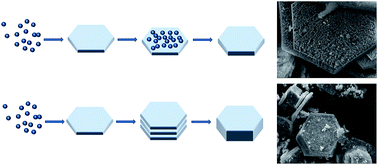
There is an intense need for development in the field of hierarchically structured functional materials owing to their outstanding and peculiar properties. Herein, we report the 3D Mn3O4 hierarchical architectures synthesized based on a self-assembly approach via a hydrothermal synthesis route at low temperature, which is sparse in literature. The synthesized Mn3O4 hierarchical architectures were characterized with XRD, FE-SEM, HRTEM/SAED, and FTIR. Electrochemical studies show that the Mn3O4 hierarchical architectures exhibit acceptable specific capacitance and excellent electrochemical stability, making them promising electrode materials in electrochemical capacitors.

1. Introduction

Nanostructured materials with hierarchical architectures have attracted a great deal of attention owing to their outstanding structural diversity, peculiar chemical or physical properties as well as unusual mechanical, electrical, and optical performances.1–4 Nevertheless, control over hierarchically structured materials still remains one of the most enormous challenges and an essential requirement for their fundamental understanding and practical applications.5,6 Self-assembly of materials has become a bottom-up approach to achieving a wide range of novel structured and functional materials.7

Manganese oxides have received intensive attention because of their high elemental abundance, low cost, non-toxicity, and environmentally friendly nature.8 Over the past few years, the interest in the supercapacitors has soared because they can provide higher power density than batteries and higher energy density than conventional capacitors, which makes them promising in next generation energy storage applications.9,10 Manganese oxides have been considered as one of the potential candidates due to their low cost, great environmental compatibility and good specific capacitance.11,12 However, among different manganese oxides, Mn3O4 undergoes relatively little research compared with MnO2 and MnO.

Mn3O4 is commonly prepared by high-temperature calcinations in air (>800 °C) of manganese powders or manganese oxides.13,14 Several attempts have been performed to obtain Mn3O4 at moderate and low temperatures.15–18 Recently, developing a simple, low-temperature solution chemical synthetic technique for shape-controlled Mn3O4 materials is of great importance.

Ahmed et al. prepared Mn3O4 hexagonal nanosheets via a precipitation route.16 Zhang et al. synthesized Mn3O4 single crystalline hexagonal nanoplates via a hydrothermal method.19 However, to the best of our knowledge, there is no self-assembled polycrystalline Mn3O4 hierarchical architectures with hexagonal plate-shape synthesized so far.

In this paper, we have achieved polycrystalline Mn3O4 3-dimensional hexagonal plate-shape hierarchical architectures via a simple, one-step, self-assembly approach at low temperature. Additionally, the as-prepared Mn3O4 hexagonal plates exhibit promising performance for the application as electrochemical capacitors.

2. Experimental section

2.1. Synthesis

In a typical synthesis, 8 mmol Mn(NO3)2 and 12 mmol hexamethylenetetramine (HMTA) were dissolved in 80 mL deionized water under vigorous stirring for 30 min. The resultant solution was then transferred into a Teflon-lined stainless steel autoclave and maintained at 120 °C for 2–6 hours. The resulting products were collected, washed with deionized water for several times by centrifugation, and then air-dried at 80 °C for subsequent characterizations. The samples autoclaved for 2 h, 4 h, and 6 h were named S2, S4, and S6, respectively.

2.2. Characterization

The structure of the as-prepared materials was analyzed with powder X-ray diffraction (XRD) using a Panalytical X'Pert Pro diffractometer with Cu Kα radiation. Morphologies of the materials were analyzed with scanning electron microscopy (SEM, JEOL, JSM-6490LV) and field emission scanning electron microscope (FESEM, JEOL, JSM-7001F, 10 kV). Transmission electron microscopy (TEM), high resolution transmission electron microscopy (HRTEM) and selected area electron diffraction studies (SAED) were carried out using a FEI, Tecnai G2 F20 instrument operating at an accelerating voltage of 200 KV. The Fourier transform infrared spectra (FTIR, Bruker, TENSOR 27) were taken at room temperature using the potassium bromide (KBr) pellet technique.

2.3. Electrochemical measurement

Electrochemical studies were carried out in a three-electrode system with 1 mol L−1 Na2SO4 electrolytes between −0.2 and 1.0 V (vs. SCE). The active materials on nickel foam, a platinum plate electrode (20 mm × 20 mm) with a thickness of 0.18 mm, and a saturated calomel electrode (SCE) were used as working, counter and reference electrodes, respectively. The working electrodes were fabricated by mixing the as-prepared Mn3O4 hexagonal plate powders (80 wt%), Super P black (15 wt%) and polytetrafluorene ethylene (PTFE, 5 wt%). The mixture was pressed onto nickel foam to make working electrodes with thicknesses around 0.24 mm. Cyclic voltammetry (CV) were conducted on a CHI 660C electrochemical workstation. Galvanostatic charge–discharge cycle tests were performed on a LAND-CT2001A cell test system.

3. Results and discussion

The scanning electron microscopy (SEM) images in Fig. 1(A–G) show the general morphology and size of sample S6. These images clearly demonstrate that this product exhibits a highly self-assembled hexagonal plate shape which is composed of nanocrystals. The edge length of the hexagonal plates is around several microns and the thickness is about 0.5–2 μm. Fig. 1(A–F) reveals the uneven surfaces of the hexagonal plates. Furthermore, many nanocrystals are attached onto the surfaces of obtained hexagonal plates.
image file: c5ra08697c-f1.tif
Fig. 1 (A–G) Scanning electron microscopy (SEM) images of Mn3O4 hexagonal plate-shape hierarchical architectures (sample S6); SEM images (A and B) and FE-SEM images (C–G) demonstrating the hexagonal plate morphology and self-assembled 3D hierarchical architectures; (H) XRD pattern of sample S6.

The highly self-assembled Mn3O4 hexagonal hierarchical architectures show three levels of hierarchy. The primary structure (1°) is the zero-dimensional Mn3O4 nanocrystals with an average size of about 50 nanometers, as shown in Fig. 1(G). The secondary structure (2°) is the two-dimensional Mn3O4 hexagonal plates which are made of randomly attached Mn3O4 nanocrystals [Fig. 1(A, B and D–F)]. Some Mn3O4 hexagonal plates inset to each other and/or overlay one by one to construct the three-dimensional tertiary structure (3°) [Fig. 1(C–E)].

The representative XRD pattern of the as-prepared sample S6 is shown in Fig. 1(H). All the diffraction peaks can be indexed to tetragonal Mn3O4 (hausmannite) structure (lattice constants: a = 5.76 Å and c = 9.47 Å; JCPDS card no. 24-734). No characteristic peaks of impurities or other forms of manganese oxides were detected, indicating the high purity of Mn3O4 hexagonal plates. The strong and sharp diffraction peaks suggest that the as-prepared sample S6 is well crystallized.

The morphologies and structures of Mn3O4 hexagonal plates (S6) were further investigated by transmission electron microscopy (TEM and HRTEM) images and SAED pattern (Fig. 2). The low magnification TEM images [Fig. 2(A–C)] confirm the formation of Mn3O4 hexagonal plates from aggregation of Mn3O4 nanoparticles. The high magnification images are shown in Fig. 2(D and E). The d-spacings of approximately 0.48, 0.24 and 0.28 nm correspond to the (101), (004) and (103) planes of hausmannite Mn3O4, respectively. These results indicate the high crystallinity of the nanoparticles and the polycrystalline feature of the Mn3O4 hexagonal plates. The SAED pattern (Fig. 2(F)) of the Mn3O4 hexagonal plates further confirms their polycrystalline structure. The seven most-distinct concentric diffraction rings from the center could be assigned to the (101), (112), (103), (211), (220), (105) and (224) planes of hausmannite Mn3O4, which agree well with the results obtained from the XRD pattern.


image file: c5ra08697c-f2.tif
Fig. 2 (A–C) TEM images, (D and E) HR-TEM images and (F) SAED pattern of Mn3O4 hexagonal plate-shape hierarchical architectures (sample S6).

FTIR spectroscopy was also used to confirm the phase of hausmannite Mn3O4. The FTIR spectra of the as-synthesized S2 and S6 Mn3O4 products exhibit a notable resemblance to those of Mn3O4 obtained in previous studies.14,20 As shown in Fig. 3, several significant absorption peaks are observed in the range of 400–650 cm−1. The FTIR spectra indicate two characteristic bands with maxima at 619 and 515 cm−1, which could be assigned to the coupling between Mn–O stretching modes of tetrahedral and octahedral sites respectively.21,22 In the region from 500 to 400 cm−1, the absorption peak at 422 cm−1 is attributed to the band stretching modes of the octahedral sites.23 Two broad absorption bands at 3425, and 1630 cm−1 can be ascribed to O–H stretching and H2O bending of physisorbed water, respectively.24 Band at 1050 cm−1 is associated with stretching vibrations of the C–OH.25 Bands at 2971 and 2925 cm−1 can be assigned to –CH3 antisymmetric stretch and –CH3 symmetric stretch, respectively.26 The weak bands of 2971, 2925 and 1050 cm−1 might be due to surface-adsorbed species which are the products of formaldehyde condensation. As aqueous HMTA is heated, it hydrolyzes and releases formaldehyde and ammonia in the solution.27 Therefore formaldehyde condensation reaction might occur under such conditions. FTIR results confirm that no secondary solid phase was formed, which further supports the XRD result.


image file: c5ra08697c-f3.tif
Fig. 3 FTIR spectra of Mn3O4 hexagonal plate-shape hierarchical architectures. (A) Sample S2; (B) sample S6.

In order to study the formation and growth mechanism of the Mn3O4 hierarchical architectures, experiments were carried out for different lengths of time. (A) 2 h at 120 °C (sample S2): XRD pattern shows that tetragonal hausmannite structure Mn3O4 can be produced with reacting for 2 h (ESI Fig. S1). The FESEM images in Fig. 4(A–C) show that some Mn3O4 nanoparticles were aggregated to form complete hexagonal plate shape or partial hexagonal plate shape. However, most nanoparticles were not aggregated yet. Fig. 4(B) shows that some hexagonal plates stacked up one by one to construct thicker hexagonal plates. When reaction time was 2 h, the thickness of hexagonal plates was around 0.3–0.5 μm. (B) 4 h at 120 °C (sample S4): with prolonging reaction time to 4 h, more Mn3O4 nanoparticles were aggregated and thus a larger amount of hexagonal plate-shape structures was formed [Fig. 4(D and E)]. Fig. 4(D and E) clearly shows that more layers of hexagonal plates than sample S2 stacked up together. When reaction time was 4 h, the thickness of the plates was around 0.7 μm, demonstrating that the thickness of the plates becomes thicker with longer reaction time. (C) 6 h at 120 °C (sample S6): as the synthesis time was increased to 6 h, the thickness of the plates could increase to more than 1 μm, as shown in Fig. 4(F) and 1(B, C and E). We also observed that for all S2, S4, and S6 samples, many nanocrystals adhered to the surfaces of hexagonal plates which gradually became thicker with longer synthesis time. Thus it is proposed that with longer duration of synthesis, the hexagonal plate structure becomes thicker by continual attachment of the primary nanocrystals and/or by stacking up of hexagonal plates.


image file: c5ra08697c-f4.tif
Fig. 4 FE-SEM images of Mn3O4 hexagonal plate-shape hierarchical architectures synthesized at 120 °C for different lengths of time. (A–C) 2 h, sample S2; (D and E) 4 h, sample S4; and (F) 6 h, sample S6.

The formation and growth of Mn3O4 hexagonal plates can be discussed as a collective process of self-assembly and oriented attachment/stacking up mechanism. Fig. 5 thus provides an illustration for the formation process of the Mn3O4 hexagonal plates. Firstly, HMTA serves as a weakly basic organic compound since it can slowly release OH anions in aqueous solution which provides a basic condition for nucleation.28 When aqueous HMTA is heated, it hydrolyzes and releases formaldehyde and ammonia in the solution. The reactions are as follows:27

 
(CH2)6N4 + 6H2O → 6HCHO + 4NH3 (1)
 
NH3 + H2O ↔ NH4+ + OH (2)
 
6Mn2+ + 12OH + O2 → 2Mn3O4 + 6H2O (3)


image file: c5ra08697c-f5.tif
Fig. 5 Schematic illustration showing the formation and growth mechanism of Mn3O4 hexagonal plates. (A) The collective process of self-assembly and oriented attachment mechanism; (B) the collective process of self-assembly and stacking up mechanism.

Subsequently, Mn3O4 nuclei form rapidly, and the reaction goes to crystal growth stage. Then, self-assembly takes place directly in solution media when attractive forces among the nanocrystals are sufficiently large to circumvent their random motions caused by thermal energy. In such cases, the attractive forces are of paramount importance.29 When sample S6 was sonicated for 4 minutes, some hexagonal plates were broken, as shown in ESI Fig. S2, indicating that the strength of attractive forces are moderate. Murray and co-workers30 showed that with suitable surface modifications, the interaction between nanocrystals can be manipulated in order to direct them to form complicated structures. In this situation, the smaller nanocrystallites attach onto each other to form bigger structures. At low temperature the presence of four symmetrically placed N atoms and the overall cubic symmetry of the HMTA molecule allow the formation of up to four hydrogen bonding interactions: N–H⋯O or O–H⋯N, O–H⋯O, C–H⋯O and N–H⋯N.31 In an aqueous medium the H-bonding network extends over the whole macroscopic clustering and offers a controllable means to produce and manipulate structural aggregation by simple long-range ordering of the primary nanocrystals.32 As we observed in Fig. 4, therefore, the longer the duration of synthesis, the thicker the hexagonal plates by continual attachment of the primary nanocrystals along with stacking up of hexagonal plates.

The electrochemical behavior of Mn3O4 hexagonal plates (sample S6) was evaluated by cyclic voltammetry (CV) and galvanostatic charge–discharge technique. The CV curves are close to rectangular without a redox peak within the potential range of −0.2–1 V, as shown in Fig. 6(A). There is no significant change in the rectangular shape with the increasing scan rates, indicating that the Faraday redox reactions are electrochemically reversible.33


image file: c5ra08697c-f6.tif
Fig. 6 (A) CV curves at different scan rates, the scan rates of traces, 1, 2, 3, 4, and 5 are 5, 10, 20, 50 and 100 mV s−1, respectively; (B) galvanostatic charge–discharge curves; (C) cycle performance at a galvanostatic charge and discharge current density of 0.5 A g−1.

Fig. 6(B) shows the charge and discharge curves of the pseudocapacitors made with Mn3O4 hexagonal plates (sample S6), measured at different discharge current densities within the potential window of −0.2–1 V in 1 mol L−1 Na2SO4 solution. The specific capacitances of the materials evaluated from the discharge curves in Fig. 6(B) were 229, 181, and 82 F g−1 at current densities of 0.1, 0.3, and 0.5 A g−1, respectively. The relationship between the specific capacitance and the current density is shown in ESI Fig. S3. The specific capacitance has a decreasing trend with elevated current density. The good specific capacitance may be attributed to the nanoparticle-stacked hexagonal plate architecture, which minimize ion diffusion path and is beneficial for intercalation/deintercalation of ions.

A long cycle life of supercapacitors is another crucial functionality of the devices, and can determine their practical applications. The electrochemical stability of Mn3O4 hexagonal plates was also investigated by the galvanostatic charge–discharge technique at a constant density of 0.5 A g−1 in the potential range of −0.2–1 V for 1000 cycles. The cycle performance results are shown in Fig. 6(C). It can be noted that the specific capacitance increased at the beginning (from the initial 46 F g−1 to 82 F g−1 of 25th cycle) and subsequently decreased. This indicates that the as-synthesized products used as the electrode material were activated gradually at the beginning stage. After 150 cycles, the specific capacitance increased successively and reach the maximum of 87 F g−1 ant the end of test (1000th cycle). These results demonstrate that Mn3O4 hexagonal plates are very stable in the repeated cycles as supercapacitor electrode material. Therefore, the as-synthesized Mn3O4 hexagonal plates are promising electrode materials for electrochemical capacitors. Compared to the other investigations, these electrochemical measurements show an excellent level for its application.17,34,35 Compared with 3D flower-like Mn3O4 microspheres of Qiao's work,18 the Mn3O4 hexagonal plates in this article exhibit lower specific capacitance but higher cycle stability. These facts indicate that morphology and particle size might affect the specific capacitance and cycle stability of synthesized Mn3O4 materials.

4. Conclusions

In summary, a low temperature (120 °C) hydrothermal synthesis technique is developed to synthesize 3-dimensional Mn3O4 hexagonal plate-shape hierarchical architectures from a simple aqueous solution containing Mn(NO3)2 and HMTA. The 3-dimensional Mn3O4 hierarchical architectures are constructed from 2-dimensional Mn3O4 hexagonal plates which are composed of zero-dimensional Mn3O4 nanocrystals. This facile chemical reaction route may provide us a novel strategy to facilitate future design of other complex hierarchical architectures with different characteristics, and, as a result, the merits of both fine building block nanostructures and large-size aggregations could be combined. The formation mechanism of Mn3O4 hierarchical architectures is discussed. The Mn3O4 hexagonal plate-shape hierarchical architectures show acceptable specific capacitance and possess excellent electrochemical stability, making them promising electrode materials in electrochemical capacitors.

Acknowledgements

We thank the National Natural Science Foundation of China (NSFC no. U1404204) for the financial support.

References

  1. X. Y. Yu, L. Yu, L. Shen, X. Song, H. Chen and X. W. Lou, Adv. Funct. Mater., 2014, 24, 7440–7446 CrossRef CAS PubMed.
  2. G. Xiao, C. Zhu, Y. Ma, B. Liu, G. Zou and B. Zou, Angew. Chem., Int. Ed., 2014, 53, 729–733 CrossRef CAS PubMed.
  3. X. Guo, L. Fang and Y. Tan, Phys. Chem. Chem. Phys., 2015, 17, 2794–2803 RSC.
  4. J. Zhou, X. Zhang, W. Mu, Y. Deng, T. Lin, W. Song and L. Yu, Microporous Mesoporous Mater., 2015, 204, 115–122 CrossRef CAS PubMed.
  5. Y. Yin and A. P. Alivisatos, Nature, 2005, 437, 664–670 CrossRef CAS PubMed.
  6. Y. Jiang, S. Zhang, Q. Ji, J. Zhang, Z. Zhang and Z. Wang, J. Mater. Chem. A, 2014, 2, 4574–4579 CAS.
  7. Y. Nakagawa, H. Kageyama, Y. Oaki and H. Imai, J. Am. Chem. Soc., 2014, 136, 3716–3719 CrossRef CAS PubMed.
  8. S. K. Bikkarolla, F. Yu, W. Zhou, P. Joseph, P. Cumpson and P. Papakonstantinou, J. Mater. Chem. A, 2014, 2, 14493–14501 CAS.
  9. K. Qiu, Y. Lu, J. Cheng, H. Yan, X. Hou, D. Zhang, M. Lu, X. Liu and Y. Luo, Electrochim. Acta, 2015, 157, 62–68 CrossRef CAS PubMed.
  10. L. Liu, M. Min, F. Liu, H. Yin, Y. Zhang and G. Qiu, J. Power Sources, 2015, 277, 26–35 CrossRef CAS PubMed.
  11. B. G. S. Raj, R. N. R. Ramprasad, A. M. Asiri, J. J. Wu and S. Anandan, Electrochim. Acta, 2015, 156, 127–137 CrossRef CAS PubMed.
  12. X. Y. Lang, A. Hirata, T. Fujita and M. W. Chen, Nat. Nanotechnol., 2011, 6, 232–236 CrossRef CAS PubMed.
  13. Y. Q. Chang, X. Y. Xu, X. H. Luo, C. P. Chen and D. P. Yu, J. Cryst. Growth, 2004, 264, 232–236 CrossRef CAS PubMed.
  14. J. Du, Y. Q. Gao, L. L. Chai, G. F. Zou, Y. Li and Y. T. Qian, Nanotechnology, 2006, 17, 4923–4928 CrossRef CAS.
  15. V. Iablokov, K. Frey, O. Geszti and N. Kruse, Catal. Lett., 2010, 134, 210–216 CrossRef CAS PubMed.
  16. K. A. M. Ahmed, Q. Zeng, K. Wu and K. Huang, J. Solid State Chem., 2010, 183, 744–751 CrossRef CAS PubMed.
  17. M. Fang, X. Tan, M. Liu, S. Kang, X. Hua and L. Zhang, CrystEngComm, 2011, 13, 4915–4920 RSC.
  18. Y. Qiao, Q. Sun, H. Cui, D. Wang, F. Yang and X. Wang, RSC Adv., 2015, 5, 31942–31946 RSC.
  19. L. Zhang, Q. Zhou, Z. Liu, X. Hou, Y. Li and Y. Lv, Chem. Mater., 2009, 21, 5066–5071 CrossRef CAS.
  20. M. Wang, L. Cheng, Q. Li, Z. Chen and S. Wang, Phys. Chem. Chem. Phys., 2014, 16, 21742–21746 RSC.
  21. A. Askarinejad and A. Morsali, Ultrason. Sonochem., 2009, 16, 124–131 CrossRef CAS PubMed.
  22. Z. Y. Tian, P. M. Kouotou, N. Bahlawane and P. H. T. Ngamou, J. Phys. Chem. C, 2013, 117, 6218–6224 CAS.
  23. M. Ishii, M. Nakahira and T. Yamanaka, Solid State Commun., 1972, 11, 209–212 CrossRef CAS.
  24. Y. Xing, G. P. Khare and S. L. Suib, Appl. Catal., A, 2011, 399, 179–183 CrossRef CAS PubMed.
  25. T. Holopainen, L. Alvila, J. Rainio and T. T. Pakkanen, J. Appl. Polym. Sci., 1998, 69, 2175–2185 CrossRef CAS.
  26. J. R. Durig, Y. E. Nashed, Y. Jin and G. A. Guirgis, J. Mol. Struct., 1998, 449, 1–22 CrossRef CAS.
  27. L. X. Yang, Y. J. Zhu, H. Tong, W. W. Wang and G. F. Cheng, J. Solid State Chem., 2006, 179, 1225–1229 CrossRef CAS PubMed.
  28. P. Li, D. S. Wang, Z. Wei, Q. Peng and Y. D. Li, Chem.–Eur. J., 2013, 19, 3735–3740 CrossRef CAS PubMed.
  29. M. Liu and H. C. Zeng, Cryst. Growth Des., 2012, 12, 5561–5570 CAS.
  30. E. V. Shevchenko, D. V. Talapin, N. A. Kotov, S. O'Brien and C. B. Murray, Nature, 2006, 439, 55–59 CrossRef CAS PubMed.
  31. E. J. Maclean, C. Glidewell, G. Ferguson, R. M. Gregson and A. J. Lough, Acta Crystallogr., Sect. C: Cryst. Struct. Commun., 1999, 55, 1867–1870 Search PubMed.
  32. L. Han, J. Luo, N. N. Kariuki, M. M. Maye, V. W. Jones and C. J. Zhong, Chem. Mater., 2003, 15, 29–37 CrossRef CAS.
  33. T. Xue, C. L. Xu, D. D. Zhao, X. H. Li and H. L. Li, J. Power Sources, 2007, 164, 953–958 CrossRef CAS PubMed.
  34. Y. Dai, K. Wang and J. Y. Xie, Appl. Phys. Lett., 2007, 90, 104102–104104 CrossRef PubMed.
  35. D. P. Dubal, D. S. Dhawale, R. R. Salnkhe, V. J. Fulari and C. D. Lokhande, J. Alloys Compd., 2010, 497, 166–170 CrossRef CAS PubMed.

Footnote

Electronic supplementary information (ESI) available. See DOI: 10.1039/c5ra08697c

This journal is © The Royal Society of Chemistry 2015
Click here to see how this site uses Cookies. View our privacy policy here.