

Preparation of imatinib base loaded human serum albumin for application in the treatment of glioblastoma
Morteza Kamalia,
Rassoul Dinarvandb,
Hassan Malekia,
Hossein Arzania,
Parvin Mahdavianic,
Houra Nekounama,
Mahdi Adabia and
Masood Khosravani*a
aDepartment of Medical Nanotechnology, School of Advanced Technologies in Medicine, Tehran University of Medical Sciences, Tehran, Iran. E-mail: drkhosravani@tums.ac.ir; Fax: +98 21 8899 1117; Tel: +98 21 88991118
bDepartment of Pharmaceutics, Faculty of Pharmacy, Tehran University of Medical Sciences, Tehran, Iran
cNanomedicine and Biomaterial Lab, Department of Pharmaceutics, Faculty of Pharmacy, Tehran University of Medical Sciences, Tehran, Iran
First published on 3rd July 2015
Abstract
Imatinib is a useful drug for inhibiting some receptors such as c-Kit and PDGFRs which are overexpressed in glioblastoma. However, imatinib is easily effluxed by the proteins of endothelial cells. The aim of this work was to synthesize an imatinib base (IMTb) in the nanoscale and also investigate the amount of its loading into human serum albumin (HSA) nanoparticles. A desolvation method was used to synthesize IMTb loaded HSA with a mean size about 80–90 nm. Fourier transform infrared spectroscopy (FT-IR) demonstrated that the non-covalent interactions between IMTb and HSA could not affect the chemical structure of IMTb. Differential scanning calorimetry (DSC) analysis indicated the amorphous form of IMTb in the HSA nanoparticles. Moreover, the encapsulation efficiency and drug loading capacity were found to be 98% and 6.9%, respectively. The obtained results also exhibited that IMTb loaded HSA and free IMTb at a concentration of 40 μg ml−1 had an approximately 90% and 55% cytotoxicity effect on U87MG glioblastoma cells, respectively. Therefore, IMTb loaded HSA nanoparticles can be introduced as a potential candidate for drug delivery in the treatment of glioblastoma.
Introduction
Glioblastoma multiforme (GBM) is the most common malignant brain tumor with an incidence of 2–3 cases per one-hundred people, and leads to death in most patients approximately one year from the time of diagnosis in early stages.1–3 The current treatments including surgery, chemotherapy and radiation therapy are limited owing to the tumor’s biology and its location in the brain.2 Unfortunately, the recent advancement in the chemotherapy of brain tumors has not been efficient enough and has only extended life by several months instead of several years.1 With the advancements of nanotechnology, chemotherapy is being translated into a new generation of signal transduction and cell cycle control methods. These drugs can selectively act and may enhance chemotherapy efficiency as they can access brain cancers.Protein kinases play an essential role in the intracellular signal-transduction pathways by controlling the cell functions such as proliferation, invasion, migration, adhesion, and apoptosis.4 Platelet-derived growth factor (PDGF) is a ligand for receptor tyrosine kinases and controls cell growth and division, playing important roles in brain tumor development. In glioblastoma (GBL), the distortions of the PDGF/PDGFR signal-transduction pathway such as stimulation of autocrine and paracrine ligands and protein overexpression can occur. Hence, PDGFR signalling pathways can be used as a potential target for anticancer therapy.5–10
Imatinib mesylate (STI571, Gleevec) is considered as a powerful drug that inhibits Bcr-Abl, PDGFRα, PDGFRβ, c-Fms, and c-Kit tyrosine kinases11,12 and is used for the treatment of chronic myelogenous leukemia (CML) and gastrointestinal stromal tumors (GIST) due to its inhibition effect on Bcr-AblIt and c-Kit, respectively.13,14 Imatinib hinders phosphate transfer of ATP to protein kinases, resulting in a lack of phosphorylation and signal transduction.15 However, there are various efflux transporters in the blood–brain barrier and blood–cerebrospinal fluid barrier which efflux anticancer drugs, leading to a decrease in the therapeutic effects. In order to overcome this problem, nanoparticles can be used as effective delivery tools to enhance the tumoricidal activities of anti-cancer drugs. Such delivery systems are suggested due to their tumor-targeting abilities, internalization efficiencies and dominant multidrug resistance.16,17
HSA due to its non-toxic and non-immunogenic advantages is considered as an efficient nanoparticle carrier.18 Albumin binds to the 60 kDa glycoprotein (gp60) receptor and enters into cells via transcytosis and accumulates in tumors.19 Likewise, the uptake of albumin-based nanoparticles increases in solid tumors owing to the enhanced permeability and retention effect which results from the pathophysiology of tumor tissue, angiogenesis, hypervasculature, deficient vascular and insufficient lymphatic drainage.20,21 For example, Yadav et al. prepared paclitaxel nanoparticles via nanoemulsification using human serum albumin as a polymer.22 They reported that paclitaxel loaded albumin nanoparticles enhance the targeted drug therapy and act efficiently in removing the side effects of cremophor EL. Dreis et al. also evaluated the effect of doxorubicin-loaded HSA nanoparticles on cell viability UKF-NB3, IMR 32. Their results exhibited that the inhibition of cell growth by doxorubicin-loaded HSA is better when compared with a doxorubicin control solution.23
In this study, IMTb loaded HSA nanoparticles were prepared using a desolvation method at different pH and the encapsulation efficiency and drug loading capacity were tested. Besides, the cytotoxic effects of IMTb loaded HSA nanoparticles were evaluated on U87MG cells.
Experimental section
Materials and reagents
IMTb (purity >99%) was purchased from Tufigh daru pharmaceutical Co. Ltd, IRAN-Karaj. Albumin (albumin 20% and purity 96%) and glutaraldehyde (8%) were bought from Merck (Germany). Fetal bovine serum (FBS), trypsin, phosphate-buffered saline (PBS) and penicillin/streptomycin were bought from Sigma-Aldrich (Germany). The U87MG cell line was purchased from the Pasteur Institute (Iran) and the cell-line was cultured according to the supplier’s instructions. All other reagents were bought from Sigma-Aldrich (Germany). HSA was obtained from Biotest Company (Germany).Preparation of the IMTb–HAS NPs
IMTb–HSA nanoparticles were prepared using a desolvation method.24,25 First, the injectable albumin was dialyzed against double distilled water (DDW) for 2 hours (dialysis bag with cut-off = 12![[thin space (1/6-em)]](https://www.rsc.org/images/entities/char_2009.gif) 000) to remove preservatives and stabilizers. Then, the dialyzed albumin solution containing 200 mg of HSA was dissolved in 2 ml of DDW and the pH was adjusted to 10 by adding 0.1 M NaOH.
000) to remove preservatives and stabilizers. Then, the dialyzed albumin solution containing 200 mg of HSA was dissolved in 2 ml of DDW and the pH was adjusted to 10 by adding 0.1 M NaOH.
Second, 15 mg of IMTb was dissolved in acetone (8 ml) and added dropwise with a constant rate of 1 ml min−1 to the albumin solution which was under constant magnetic stirring (rpm = 500). The nanoparticles were hardened with 25% glutaraldehyde (1.56 μg mg−1 of protein) for 16 hours under constant magnetic stirring at room temperature. The organic solvents were then removed under reduced pressure by rotary vacuum evaporation and the albumin nanoparticles were purified using ultra-centrifugation (20000g, 10 min) and redispersed in DDW. Each redispersion step was performed in an ultrasonication bath for 10 minutes. The sample was finally lyophilized at −70 °C for 24 hours (Freeze Dry Telstar-Spain). Albumin nanoparticles without the drug loaded were prepared using the same approach.
Characterization of the IMTb–HSA nanoparticles
 | ||
| Fig. 1 Standard curve of imatinib base. | ||
Determination of drug encapsulation efficiency and drug loading capacity
1 mg of IMTb loaded HSA nanoparticles was dissolved in 10 ml of acetonitrile and PBS and sonicated for 30 min for extraction of IMTb. The amount of IMTb in the solution was measured using UV-visible spectroscopy (Optizeri 2120 UV plus). The results were compared with the standard curve and extended to 10 ml supernatant and calculated using the following equations:

Encapsulation efficiency is defined as the ratio of the weight of drug encapsulated into a carrier system to the total drug added whereas drug loading capacity is defined as the ratio of the drug to the weight of the total carrier system.26
Drug release profile of the IMTb loaded HSA nanoparticles
For determining the IMTb release from HSA, 10 mg of the IMTb loaded HSA nanoparticles was dispersed in 10 ml of phosphate-buffered saline (PBS; pH 7.4). This solution was then enclosed in a dialysis bag and submerged in 100 ml of PBS at 37 °C under a steady shaking rate of 100 rpm min−1. In various time intervals, 2 ml of medium was withdrawn and the same volume of fresh medium was added. Each sample was mixed with 1.5 ml of acetonitrile, vortexed for 3 min and centrifuged at 1500 rpm for 5 min. The obtained supernatant was characterized three times for each sample using UV-vis spectroscopy (Optizeri 2120 UV plus).In vitro cytotoxicity
Results and discussion
Characterization of the IMTb loaded HSA nanoparticles using DLS
IMTb–HSA nanoparticles were prepared at a pH of 8, 9 and 10 with the other parameters constant. DLS analysis demonstrated that the mean sizes of the nanoparticles prepared at a pH of 8, 9, and 10 were 574, 228 and 82 nm, respectively, which indicated a decrease in nanoparticle size when increased the pH from 8 to 10. Besides, the zeta potential of the nanoparticles prepared at a pH of 8, 9, and 10 was −0.05, +1.25 and −31.00 mV, respectively. The results indicated that the zeta potential at pH of 10 was good enough to stabilize the nanoparticles against agglomeration. Therefore, the preparation of the nanoparticles was optimized at pH = 10 due to the smaller size of the nanoparticles (Fig. 2a) and moderate zeta potential (from ±30 to ± 40 mV) as shown in Fig. 2b and repeated three times which indicated the same sizes. Likewise, the polydispersity index of nanoparticles in pH = 10 was 0.2. | ||
| Fig. 2 Analysis of the size and stability of the synthesized IMTb–HSA nanoparticle in pH = 10 by (a) DLS and (b) zeta potential. | ||
Characterization of the IMTb loaded HSA nanoparticles using FT-IR
FT-IR analysis was used to detect the interactions between IMTb and HSA. As shown in Fig. 3, the spectrum of the IMTb powders (curve 1) exhibits peaks at 1659, 3050 and 3435 cm−1 which are attributed to the C![[double bond, length as m-dash]](https://www.rsc.org/images/entities/char_e001.gif) O, C–H and N–H groups, respectively. Curve 2 is the spectrum of the HSA nanoparticles with amide bonds (amide I) at 1600–1700 cm−1 and 1548 cm−1 (amide II). Curve 3 is the spectrum of the physical mixture of HSA and IMTb which shows no interaction between the two components in comparison with the spectra of alone IMTb and HSA. Curve 4 is the spectrum of the IMTb loaded HSA nanoparticles and the stretching band of CO is shifted from 1657 to 1650 cm−1 which could be due to the interactions between IMTb and HSA in the IMTb loaded HSA nanoparticles. Besides, the N–H bond was not observed in the spectrum of the IMTb loaded HSA nanoparticles.
O, C–H and N–H groups, respectively. Curve 2 is the spectrum of the HSA nanoparticles with amide bonds (amide I) at 1600–1700 cm−1 and 1548 cm−1 (amide II). Curve 3 is the spectrum of the physical mixture of HSA and IMTb which shows no interaction between the two components in comparison with the spectra of alone IMTb and HSA. Curve 4 is the spectrum of the IMTb loaded HSA nanoparticles and the stretching band of CO is shifted from 1657 to 1650 cm−1 which could be due to the interactions between IMTb and HSA in the IMTb loaded HSA nanoparticles. Besides, the N–H bond was not observed in the spectrum of the IMTb loaded HSA nanoparticles.
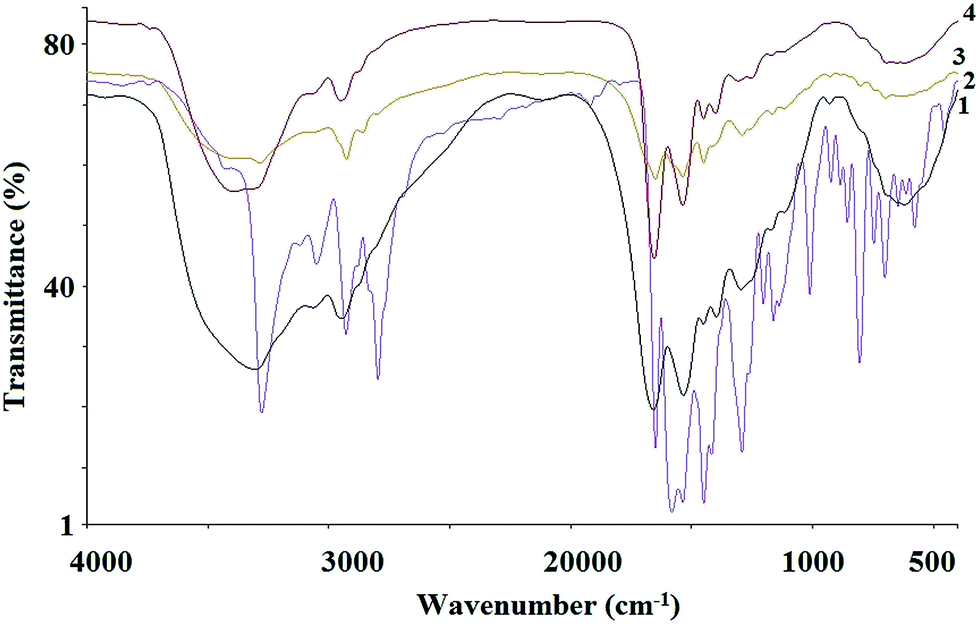 | ||
| Fig. 3 FT-IR spectra of (1) IMTb (black), (2) HSA (mauve), (3) physical mixture of HSA/IMTb (yellow) and (4) IMTb–HSA NPs (red). | ||
Investigation of the pH effect on encapsulation efficiency and drug loading capacity
Drug loading capacity and encapsulation efficiency are considered as important parameters to investigate the properties of nanoparticles. The results indicated that the pH did not have a significant effect on the encapsulation efficiency and drug loading capacity when increasing the pH from 8 to 10 (as shown in Table 1). This may be attributed to the three dimensional structure of HSA which remains unchanged when increasing the pH from 8 to 10.| pH 8 | pH 9 | pH 10 | |
|---|---|---|---|
| Encapsulation efficiency | 98 | 98 | 98 |
| Drug loading capacity | 6.8 | 6.9 | 6.9 |
Characterization of the IMTb loaded HSA nanoparticles using DSC
As seen in Fig. 4a, the melting endothermal peaks of bulk IMTb were recorded at 100 °C and 215 °C and the endothermal and exothermal peaks of the HSA nanoparticles were recorded at 100 °C and 300 °C respectively (Fig. 4b). Three peaks at 100 °C, 215 °C and 300 °C are obtained when IMTb and HSA are mixed (Fig. 4c). However, for the IMTb loaded HSA nanoparticles, the endothermal peak of IMTb at 215 °C was not detected and the two peaks at 100 °C and 300 °C can be attributed to HSA (Fig. 4d). Therefore, it could be concluded that the IMTb loaded in HSA nanoparticles changes from the crystal to amorphous or molecular state.27 | ||
| Fig. 4 DSC of (a) IMTb, (b) HSA, (c) physical mixture of HSA/IMTb and (d) IMTb–HSA nanoparticles. | ||
IMTb-loaded HSA release profiles in different incubation times
As shown in Fig. 5, the release profile of the IMTb loaded HSA nanoparticles was tested in vitro at 37 °C in PBS at pH 7.4 and compared with free IMTb (without HSA). The results exhibited that more than 80% of free IMTb was released in the first three hours of cumulative release (from 7 to 80%) as seen in Fig. 5a, whereas the release from the HSA nanoparticles was 15, 37, 51, 58, 65 and 68% after 1, 6, 24, 48, 72 and 96 hours, respectively (Fig. 5b) which indicated a fairly slow release profile and a sustained release of IMTb from the HSA nanoparticles. The release results were similar to aspirin loaded HSA nanoparticles which were investigated by Das et al.28 | ||
| Fig. 5 Release profile of (a) free IMTb (without HSA) and (b) IMTb–HSA nanoparticles. | ||
Effect of IMTb loaded HSA on cell proliferation
The effects of IMTb and the IMTb loaded HSA nanoparticles at concentrations of 5, 10, 15, 20, 30 and 40 μg ml−1 on the cell proliferation and survival of U87MG GBL cells were tested using MTT assay after incubating for 24, 48, and 72 h. Fig. 6a shows the toxicity effect of free IMTb (without HSA) and the IMTb loaded HSA nanoparticles on the cell proliferations and survival in different concentrations after 24 hours. Cell death due to the toxicity of free IMTb for U87MG cells increased from 2 to 30% as the concentration of IMTb increased from 5 to 40% whereas cell death because of the toxicity of released IMTb from the HSA nanoparticles increased from 6 to 39% at the same concentrations for U87MG cells. Besides, cell death due to the toxicity of the released IMTb from HSA nanoparticles for U87MG cells is more after 48 and 72 hours. As shown in Fig. 5b and c, cell death owing to the toxicity of free IMTb for U87MG cells increased from 0 and 17% to 47 and 55%, respectively as the concentration of IMTb increased from 5 to 40% whereas cell death due to the toxicity of released IMTb from the HSA nanoparticles increased from 19 and 34% to 60 and 87% respectively, at the same concentrations for U87MG cells. The results also indicated that there are no significant differences between free IMTb and IMTb–HSA in terms of the toxicity rate when U87MG cells are exposed to free IMTb and IMTb loaded HSA for 24 hours whereas the toxicity rates of IMTb loaded HSA after exposing U87MG cells for 48 and 72 hours were 10% and 35% more than free IMTb, respectively. This exhibits better efficiency of IMTb loaded HSA than free IMTb. | ||
| Fig. 6 The cytotoxic effect of free drug and IMTb–HSA nanoparticles on U87MG cell lines after (a) 24, (b) 48 and (c) 72 hours. | ||
Conclusion
Imatinib is introduced as a useful drug for inhibiting some receptors which are overexpressed in glioblastoma. However, imatinib is easily effluxed by the proteins of the endothelial cells, leading to a decrease in the therapeutic effects of anticancer drugs. Nanoparticles are suggested due to their tumor-targeting abilities and internalization efficiencies. Our experiments indicated that albumin can play an effective role in the fairly slow release profile of the IMTb loaded HSA nanoparticles. The encapsulation efficiency and drug loading capacity were found to be 98% and 6.9%, respectively. Moreover, the cytotoxic effect of the IMTb loaded HSA nanoparticles on U87MG cell lines depends on the concentration and time. In other words, the cytotoxic effect is enhanced as the concentration and incubation time of the IMTb loaded HSA nanoparticles increases and this cytotoxic effect of the IMTb loaded HSA nanoparticles is higher than that of free IMTb for glioblastoma.Acknowledgements
This work was supported by Tehran University of Medical Sciences, grant no. 92-02-87-23355. Authors would also like to thank Dr Hossein Attar (manager of Tufigh daru co. Karaj, Iran) for providing the imatinib base.References
- T. Kilic, J. A. Alberta, P. R. Zdunek, M. Acar, P. Iannarelli, T. O’Reilly, E. Buchdunger, P. M. Black and C. D. Stiles, Cancer Res., 2000, 60, 5143 CAS.
- M. L. Salgaller and L. M. Liau, Rev. Recent Clin. Trials, 2006, 3, 265 CrossRef.
- G. Kolata and L. K. Altman, Kennedy Case Shows Progress and Obstacles in Cancer Fight, New York Times, 2009 Search PubMed.
- L. N. Johnson, Q. Rev. Biophys., 2009, 19, 1 CrossRef PubMed.
- D. Hanahan and R. A. Weinberg, Cell, 2000, 100, 57 CrossRef CAS.
- F. A. Al-Obeidi and K. S. Lam, Oncogene, 2000, 19, 5548 CrossRef PubMed.
- A. H. Shih and E. C. Holland, Cancer Lett., 2006, 232, 139 CrossRef CAS PubMed.
- A. Guha, K. Dashner, P. L. M. Black, J. A. Wagner and C. D. Stiles, Int. J. Cancer, 1995, 60, 68 CrossRef PubMed.
- S. F. Johansson, Upsala J. Med. Sci., 2008, 113, 1 CrossRef.
- L. M. Strawn, E. Mann, S. S. Elliger, L. M. Chu, L. L. Germain, G. Niederfellner, A. Ullrich and L. K. Shawver, J. Biol. Chem., 1994, 33, 21215 Search PubMed.
- E. Buchdunger, C. L. Cioffi, N. Law, D. Stover, S. Ohno-Jones, B. J. Druker and N. B. Lydon, J. Pharmacol. Exp. Ther., 2000, 295, 139 CAS.
- R. Capdeville, E. Buchdunger, J. Zimmerman and A. Matter, Nat. Rev. Drug Discovery, 2002, 1, 493 CrossRef CAS PubMed.
- B. J. Druker, M. Talpaz, D. J. Resta, R. N. Bin Peng, E. Buchdunger, J. M Ford, N. B. Lydon, H. Kantarjian, R. Capdeville, S. Ohno-Jones and C. L. Sawyers, N. Engl. J. Med., 2001, 344, 1031 CrossRef CAS PubMed.
- G. D. Demetri, M. von Mehren, C. D. Blanke, A. D. Van den Abbeele, B. Eisenberg, P. J. S. L. Silberman, R. Capdeville, B. Kiese, B. Peng, S. Dimitrijevic, B. J. Druker, C. Corless, C. D. M. Fletcher and H. Joensuu, N. Engl. J. Med., 2002, 347, 472 CrossRef CAS PubMed.
- E. Buchdunger, T. O’Reilly and J. Wood, Eur. J. Cancer, 2002, 38, 28 CrossRef.
- J. D. Byrne, T. Betancourt and L. Brannon-Peppas, Adv. Drug Delivery Rev., 2008, 60, 1615 CrossRef CAS PubMed.
- J. Williams, R. Lansdown, R. Sweitzer, M. Romanowski, R. LaBell, R. Ramaswami and E. Unger, J. Controlled Release, 2003, 91, 167 CrossRef CAS.
- W. Chen, B. Gu, H. Wang, J. Pan, W. Lu and H. Hou, Int. J. Pharm., 2008, 362, 133 CrossRef CAS PubMed.
- N. Desai, V. Trieu, Z. Yao, L. Louie, S. Ci, A. Yang, C. Tao, T. De, B. Beals, D. Dykes, P. Noker, R. Yao, E. Labao, M. Hawkins and P. Soon-Shiong, Clin. Cancer Res., 2006, 12, 1317 CrossRef CAS PubMed.
- T. A. John, S. M. Vogel, C. Tiruppathi, A. B. Malik and R. D. Minshall, Am. J. Physiol.: Lung Cell. Mol. Physiol., 2003, 284, L187 CrossRef CAS PubMed.
- R. D. Minshall, C. Tiruppathi, S. M. Vogel and A. B. Malik, Histochem. Cell Biol., 2002, 117, 105 CrossRef CAS PubMed.
- A. A. Yadav and S. Vadali, Curr. Bioact. Compd., 2008, 4, 51 CrossRef CAS.
- S. Dreis, F. Rothweiler, M. Michaelis, J. Cinatl Jr, J. Kreuter and K. Langer, Int. J. Pharm., 2007, 341, 207 CrossRef CAS PubMed.
- S. Ko and S. Gunasekaran, J. Microencapsulation, 2006, 23, 887 CrossRef CAS PubMed.
- K. Langer, S. Balthasar, V. Vogel, N. Dinauer, H. von Briesen and D. Schubert, Int. J. Pharm., 2003, 257, 169 CrossRef CAS.
- Nanotechnology in Drug Delivery (Biotechnology: Pharmaceutical Aspects), ed. M. M. de Villiers, P. Aramwit and G. S. Kwon, Springer, New York, NY, 2009 Search PubMed.
- Thermal Analysis of Pharmaceuticals, ed. D. Q. M. Craig and M. Reading, CRC press, 2007 Search PubMed.
- S. Das, R. Banerjee and J. Bellare, Trends Biomater. Artif. Organs, 2005, 18, 203 Search PubMed.
| This journal is © The Royal Society of Chemistry 2015 |