Palladium encapsulated within magnetic hollow mesoporous TiO2 spheres (Pd/Fe3O4@hTiO2) as a highly efficient and recyclable catalysts for hydrodechlorination of chlorophenols

Le Zhangab, Xingchun Zhoub, Hongfei Huob, Wenzhu lib, Feng Lib and Rong Li*b
aDepartment of Chemical Engineering, Jiuquan College of Vocational Technology, Jiuquan, 735000, Gansu, China
bCollege of Chemistry and Chemical Engineering Lanzhou University, The Key Laboratory of Catalytic engineering of Gansu Province, Lanzhou, 730000, Gansu, China

Received 28th April 2015 , Accepted 16th June 2015

First published on 16th June 2015


Abstract

Herein, we introduced a method to encapsulate Pd(0) within TiO2 hollow mesoporous nanostructures. TiO2 hollow spheres offer a number of advantageous characteristics, including low cost, low toxicity, relatively high photocatalytic activity and high chemical stability. In addition, it can also effectively avoid the agglomeration and precipitation of noble metal nanoparticles in the catalytic reaction. The catalyst was characterized by TEM, XRD, XPS, ICP and VSM. We found that the catalyst presented a high activity for HDC of 4-CP under mild reaction conditions. Beyond that, the catalyst could be easily regained by an external magnet from the reaction mixture and recycled seven times without any significant loss in activity.

1. Introduction

Developing high-performance and stable catalysts has become a hot area of research recently.1–3 Noble metal nanoparticles (NMNPs), especially Pd and Au, have been researched widely in recent years on account of their excellent catalytic performance in many chemical reactions, such as hydrogenation reactions,4 coupling reactions5 and oxidation reactions.6 It is generally believed that their shape, size, crystallinity and the surface state have large influence on the catalytic activity of NMNPs.7 Unhappily, NMNPs are easy to aggregate during the process of catalytic reaction, issuing in rapid decay of catalytic activity and stability.8,9 Therefore, to develop varieties of strategies to effectively synthesize and utilize NMNPs catalysts with satisfying dimensions and improved catalytic performance is a technologically significant and challenging issue.10–12

Many evidences represented that hollow space have attracted considerable interest due to their high surface area, large void volume and low density.13–15 Core–shell structured materials with hollow space show a special type of complicated hybrids, which affords an efficient solution to prevent the undesirable aggregation, sintering, coalescence or corrosion/dissolution of entrapped catalytic species, for example, we can use shell to protect NMNPs. Meantime, diffusion and mass transfer of reactants could be speeded by the porous voids endowed by hollow space.16–19 In addition, nanostructured TiO2 has attracted significant attention because of its beneficial properties for actual catalytic applications. TiO2 hollow nanostructures consisting of nanoscale porous shells are highly satisfying because they possess high active surface area, reduced diffusion resistance and improved accessibility, which offer many new chances to the design of highly active nanostructured catalysts.20

Except for good catalytic activity and high stability, recycling is another important property for catalysts. As is well-known that the traditional separation techniques, such as filtration and centrifugation, are usually low efficiency and time-consuming, which is not adopted for recycling of catalysts.21,22 To solve this problem, magnetic nanoparticles, such as Fe3O4 nanoparticles, are utilized as this support materials because of their distinct physical properties and easy separation from reaction mixture by using an external magnet.23–25

Based on above considerations, in this article, we described a mild route to synthesize Pd/Fe3O4@hTiO2 catalyst with Pd/Fe3O4 nanoparticles resided inside the mesoporous spheres by using the colloidal SiO2 spheres as the templates. The designed catalysts possess large magnetization, highly open and ordered mesopores, which shown excellent activity for HDC of 4-CP and could be easily recycled multiple times without visible decrease in the catalytic performance.

2. Experimental

2.1 Materials and reagents

Ammonia (NH3·H2O) solution (28 wt%), tetraethoxysilane (TEOS), ethanol, triethylene glycol (TEG), tetrabutyl orthotitanate (TBOT), hydrochloric acid (HCl) (38 wt%), N,N-dimethylformamide (DMF), triethylamine ((C2H5)3N), ethyl acetate (CH3COOC2H5) were purchased from Tianjing Chemical Reagent Co. Ferric acetylacetonate (Fe(acac)3), SnCl2, palladium chloride (PdCl2), sodium formate (HCOONa), sodium acetate (CH3COONa), sodium carbonate (Na2CO3), sodium hydroxide (NaOH) were bought from Aladdin Chemical Co., Ltd. 4-Chlorophenol (4-CP), 2-chlorophenol (2-CP), 3-chlorophenol (3-CP), and 2,4-dichlorophenol (2,4-DCP) are purchased from Lanzhou Aihua Chemical Company. All chemicals were of analytical grade and were used as received without further purification.

2.2 Preparation of catalysts

The fabrication procedure involved six steps as shown in Scheme 1. Firstly, SiO2 was prepared. Secondly, load Fe3O4 nanoparticles on surface of SiO2. Thirdly, deposit Sn2+ onto the surface of SiO2 nanospheres with Fe3O4 nanoparticles. Fourthly, load highly dispersed Pd nanoparticles onto the surface of SiO2 nanospheres with Fe3O4 nanoparticles. Fifth, the Pd/Fe3O4/SiO2@TiO2 core–shell structures were prepared. Finally, the as-prepared nanocomposites were etched by Na2CO3 to remove the template. The amount of Pd in the obtained catalyst was found to be 2.26 wt% based on ICP analysis.
image file: c5ra07765f-s1.tif
Scheme 1 Scheme of the synthetic procedure for the preparation of Pd/Fe3O4@hTiO2.
2.2.1 Synthesis of SiO2 nanospheres26. In a typical synthesis, 4.5 mL of TEOS was rapidly added into a mixture solution of 62 mL ethanol, 25 mL H2O and 1.5 mL NH3·H2O. After stirring for 2 h, the SiO2 particles were collected by centrifugation and washed with ethanol and deionized water. This process was repeated three times before drying the SiO2 particles at 50 °C.
2.2.2 Preparation of Fe3O4/SiO2 composite27. Firstly, 250 mg SiO2 particles and 60 mL TEG were added into a three-necked flask (100 mL), and then the three-necked flask was treated under ultrasonic to disperse uniformly. Secondly, 300 mg Fe(acac)3 was still added into the three-necked flask with magnetic stirring under the protection of N2 at the same time. The system was warmed till boiling and kept for 30 min, after cooling down to room temperature. Fe3O4 nanoparticles attached on the surface of SiO2 nanospheres, were separated from the solution by an external magnet and washed several times with ethanol and distilled water until the pH value of the solution became approximately 7 before oven-dried at 50 °C for further use.
2.2.3 Preparation of Pd/Fe3O4/SiO2 composite28. 200 mg Fe3O4/SiO2 sphere powders was added to 35 mL distilled water and ultraphonic for 10 min as part A. 200 mg SnCl2 was dissolved in 40 mL 0.02 M HCl solution as part B. Parts A and B were mixed together under ultraphonic condition. 2 h later, the precipitate was collected by centrifugation, followed by washing with distilled water five times, and dispersed into 50 mL distilled water. Then 50 mL 16 mg PdCl2 was added into it. 30 min later, 20 mL of 0.15 M HCOONa solution was added, followed by stirring for 8 h. The suspension was separated from the solution by centrifugation, after washing with distilled water and ethanol for several times, the product dried in vacuum at 50 °C for further use.
2.2.4 Synthesis of Pd/Fe3O4@hTiO2 catalysts29. Typically, 70 mg Pd/Fe3O4/SiO2 particles were dispersed in 100 mL ethanol and ultraphonic for 30 min. Then, 0.35 mL NH3·H2O was added to the suspension and continue to ultrasonic for 30 min, afterward, 0.75 mL of TBOT was added dropwise in 5 min, and the reaction was allowed to proceed for 24 h at 45 °C under vigorous magnetic stirring. After that, the products separated by centrifugation and washed with distilled water and ethanol, respectively. The final product was dried in vacuum at 50 °C. Next, the Pd/Fe3O4@hTiO2 was obtained by etching Pd/Fe3O4/SiO2@TiO2 spheres in 2 M Na2CO3 aqueous solution for 8 h and washed five times with distilled water and dried.

2.3 Characterization of catalysts

The synthesized catalyst of Pd/Fe3O4@hTiO2 was confirmed by corresponding characterization means. The morphology and microstructure of Pd/Fe3O4@hTiO2 were characterized by transmission electron microscopy (TEM). The TEM images were obtained through Tecnai G2 F30 electron microscope operating at 300 kV. X-ray powder diffraction (XRD) measurements were carried out at room temperature and performed on a Rigaku D/max-2400 diffractometer using Cu-Kα radiation as the X-ray source in the 2θ range of 10–90°. X-ray photoelectron spectroscopy (XPS) was recorded on a PHI-5702 and the C1S line at 291.4 eV was used as the binding energy reference. Specific surface areas were calculated by the Brunauer–Emmett–Teller (BET) method and pore sizes by the Barrett–Joyner–Halenda (BJH) methods using Brunauer–Emmett–Teller (Tristar II 3020). Inductive coupled plasma atomic emission spectrometer (ICP-AES) analysis was conducted with Perkin Elmer (Optima- 4300DV). Magnetic measurement of Pd/Fe3O4/SiO2 nanoreactor and Pd/Fe3O4@hTiO2 were investigated with a Quantum Design vibrating sample magnetometer (VSM) at room temperature in an applied magnetic field sweeping from 15 to 15 kOe. The conversions of the HDC reactions were estimated by gas chromatography-mass spectrometry GC-MS (P.E. AutoSystem XL).

2.4 Catalytic activity and recyclability

The HDC of 4-CP reaction was carried out in a 50 mL two-necked flask. In general, the catalyst (10 mL, 2 mg mL−1), NaOH solution (10 mL, 0.05 M) and CP (10 mL, 0.05 M) were mixed in a 50 mL two-necked flask. The sample was collected at an interval of 10 min. The filtrate was extracted by CH3COOC2H5, and then the reaction conversion of the HDC reaction was estimated by GC-MS. To evaluate the reusability of the Pd/Fe3O4@hTiO2 nanocatalyst in the HDC reaction, the nanocatalyst was recovered by a magnet, washed with water, and dried in vacuum at room temperature. In general, the catalyst was redispersed in a new reaction system for subsequent catalytic experiments under the same reaction conditions. Moreover, the catalytic procedure was repeated seven times.

3. Results and discussion

3.1 Characterizations of the catalyst Pd/Fe3O4@hTiO2

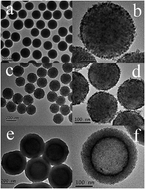
The morphologies and structures of the products at different synthetic steps were observed by TEM. Fig. 1a shows the TEM image of SiO2 nanospheres, in which well dispersed particles with average diameter about 200 nm could be observed clearly. Both Fig. 1b and c show the TEM images of the Fe3O4/SiO2 composite, and the Fe3O4 particles with an average size of about 10 nm are uniformly distributed on the surface of the SiO2 nanospheres. Fig. 1d displays the TEM image of Pd/Fe3O4/SiO2 nanospheres with Pd and Fe3O4 nanoparticles well dispersed on the outer surfaces of SiO2 nanospheres. The sizes of Pd nanoparticles are estimated to be 5 nm. Fig. 1e shows the TEM images of Pd/Fe3O4/SiO2@TiO2 nanospheres. The Pd/Fe3O4/SiO2@TiO2 nanospheres with the diameter of ∼320 nm have relatively smooth surfaces and better dispersion. The SiO2 core was removed using concentrated Na2CO3 aqueous solution, leaving only Pd and Fe3O4 nanoparticles inside the hollow TiO2, resulting in the formation of Pd/Fe3O4/SiO2@hTiO2 hollow spheres. The TEM images of Pd/Fe3O4@hTiO2 shown in Fig. 1f. It clearly displays the hollow mesoporous structures of TiO2 with a shell thickness of ∼40 nm.
image file: c5ra07765f-f1.tif
Fig. 1 TEM images of (a) SiO2, (b) and (c) Fe3O4/SiO2, (d) Pd/Fe3O4/SiO2 (inset pictures: size distribution histograms image of the Pd nanoparticles crystal structure in detail on Pd/Fe3O4/SiO2), (e) Pd/Fe3O4/SiO2@TiO2, (f) Pd/Fe3O4@hTiO2.

The elemental composition of the Pd/Fe3O4@hTiO2 samples was determined by EDX analysis. The result shown in Fig. 2 revealed that the as-prepared products contain Pd, Fe, Cu, Ti, C, Si, Sn and O. Among these elements, Cu and C are generally influenced by the copper network support films and their degree of oxidation, Pd, Fe and Ti signals result from the Pd/Fe3O4@hTiO2. And from the EDX result, the signal of Si element has not been found, revealed that the SiO2 was totally removed.


image file: c5ra07765f-f2.tif
Fig. 2 EDX spectrum of Pd/Fe3O4@hTiO2.

Fig. 3 shows the XRD patterns between 10 and 90° of the samples. Fig. 3a shows the wide angle XRD pattern of Pd/Fe3O4/SiO2 composites. Five diffraction peaks appear at 2θ = 30.6°, 35.8°, 43.4°, 57.5° and 63.2°, corresponding to the reflections of (220), (311), (400), (511) and (440) crystal planes of Fe3O4, respectively. Fig. 3b shows the wide angle XRD pattern of Pd/Fe3O4@hTiO2 composites. Four diffraction peaks appear at 2θ = 40.1°, 46.5°, 68.0° and 82.6°, corresponding to the reflections of (111), (200), (220) and (311) crystal planes of Pd, respectively. Meanwhile, the result indicating the crystalline structure of the support was well maintained in the Pd samples. The average crystallite size of Pd nanoparticles in Pd/Fe3O4@hTiO2 were calculated using Scherrer's equation, is about 5 nm.


image file: c5ra07765f-f3.tif
Fig. 3 XRD patterns of (a) Pd/Fe3O4/SiO2, (b) Pd/Fe3O4@hTiO2 (● represents Pd nanoparticles; ■ represents Fe3O4 nanoparticles).

Fig. 4 shows the XPS spectrum of the synthesized Pd/Fe3O4@hTiO2 nanoreactor. Peaks corresponding to O, C, Fe, Pd, Ti and Sn are observed. However, typical peaks of Sn, Fe and Pd elements are not obviously detected, which indicates that Sn, Fe and Pd particles have been coated by TiO2, since the analysis depth of XPS is only several nanometers. To ascertain the oxidation state of the Pd, XPS studies are carried out. The XPS signature of Pd 3d doublet for the Pd nanoparticles is given in the Fig. 4B. The Pd 3d3/2 and Pd 3d5/2 peaks appeared at 342.6 and 337.2 eV respectively are the characteristic peaks for the metallic Pd(0). We can see that there is no oxidation state of Pd species in the catalyst. In the experiment, the reducing agent is excessive so that the Pd(II) could be reduced into Pd(0) completely, which is beneficial for the reaction.


image file: c5ra07765f-f4.tif
Fig. 4 (A) XPS spectrum of the elemental survey scan of Pd/Fe3O4@hTiO2 and (B) high-resolution spectrum of Pd 3d.

Fig. 5 shows nitrogen adsorption/desorption isotherms and the corresponding pore size distribution of the Pd/Fe3O4@hTiO2. The BET surface area and single point total pore volume is 180 m2 g−1 and 0.13 cm3 g−1, respectively, which are considerably large values because the solid core and Pd nanoparticles have been included in the calculations. The average BJH (Barrette Joynere Halenda) pore diameter calculated from the adsorption branch of the isotherm and the desorption branch of the isotherm are 4.5 nm. On the basis of above analysis, it can be concluded that these data further identified the hollow mesoporous structure of the synthesized Pd/Fe3O4@hTiO2 catalyst.


image file: c5ra07765f-f5.tif
Fig. 5 (A) N2 adsorption/desorption isotherms of the Pd/Fe3O4@hTiO2 (B) the corresponding pore diameter distribution.

Magnetic measurements were carried out by employing VSM at room temperature. The magnetization curves measured for Pd/Fe3O4/SiO2 and Pd/Fe3O4@hTiO2 are compared in Fig. 6. There is no hysteresis in the magnetization for the two tested nanoparticles. It can be seen that the values of the saturation magnetization are 3.22 emu g−1 for Pd/Fe3O4/SiO2 and 1.68 emu g−1 for Pd/Fe3O4@hTiO2 respectively. The decrease of the saturation magnetization suggests the presence of some Pd particles inside the uniformly pore of hollow mesoporous spheres. Even with this reduction in the saturation magnetization, the catalyst still can be efficiently separated easily from the solution with the help of an external magnetic force.


image file: c5ra07765f-f6.tif
Fig. 6 Room temperature magnetization curves of (a) Pd/Fe3O4/SiO2, (b) Pd/Fe3O4@hTiO2.

3.2 Catalytic activity for HDC of 4-CP

The catalytic activity of the Pd/Fe3O4@hTiO2 catalyst was established by the HDC of 4-CP under a mild condition. The HDC of 4-CP was negligible without catalyst or in the presence of pure hollow magnetic mesoporous TiO2 spheres at the same conditions, which shows that the presence of NMNPs are indispensable for high catalytic activity. As Díaz et al.30 explained in a previous work the route of 4-CP HDC proceeded through a set of series-parallel reactions where 4-CP gives rise to phenol and cyclohexanone (CYC) being this last also produced from phenol hydrogenation. Compared with the reactant 4-CP, the two products detected are low toxic and useful as intermediates in production of high value-added chemicals. In this work, the high selectivity product phenol was observed. The low selectivity of HDC of 4-CP performed in fixed bed reactor31 or under a high H2 pressure condition,30 such as: Pd/C catalyzed HDC of 4-CP with the conversion of 93% and the selectivity of 85% were reported by J. Rodríguez, which formic acid as hydrogen source in continuous stirred-tank reactor.32 Pd/Al2O3 as HDC catalyst was also studied by E. Díaz,31 in fixed bed reactor with the conversion was 87% and the selectivity 62%, respectively. Compared with reports above mentioned, in our reaction, a batch stirred tank reactor was used and only H2 was flowing phase. The main production was phenol and less than 0.1% CYC was detected after 2 h reaction time. These differences may be caused by the using of different reaction systems. This result was agreed with the study using same reaction system which phenol as major product was detected.

The HDC reaction mechanism was described below: H2 adsorbed on the active site of the Pd/Fe3O4@hTiO2 catalyst was activated into two hydrogen atoms which combined with 4-CP also adsorbed on the surface of the catalyst. The C–Cl bond of 4-CP was attacked by the active hydrogen atoms to from phenol.33

The above mentioned results clearly indicated that the Pd/Fe3O4@hTiO2 nanocatalysts exhibited the favorable catalytic performance toward HDC of 4-CP. The catalytic properties and recyclability were evaluated by performing HDC of 4-CP. Pd/Fe3O4@hTiO2 was used as a probe catalyst to optimize the reaction conditions and to catch the best reaction conditions. Therefore, a series of reactions was performed using several bases and solvents to obtain the best possible combination (Table 1). In order to prevent the poisoning of the catalysts, hydrochloric acid (HCl) produced during the HDC process was neutralized by the bases added to the reaction system.34 Therefore, NaOH was first used as a neutralizer to test different solvents (Table 1, entries 1–4). The yields of phenol in C2H5OH, CH3COOC2H5, DMF, and H2O were 12.2, 22.8, 4.1, and 99.9%, respectively. These low yields of phenol obtained in the above mentioned organic solvents were mainly ascribed to the low solubility of NaOH that leads to the poisoning of the nanocatalyst. As a result, based on the above-mentioned results, H2O was considered to be the best solvent for the HDC of 4-CP. To further optimize the reaction conditions, different bases were tested in the aqueous solution (Table 1, entries 4–7). The results indicated that the yield of phenol in the HDC reaction was significantly affected by the basicity of the neutralizer for HCl as reported by Zahara M. de Pedro.35,36 The highest reaction rate and phenol yield were achieved when the process was carried out in strong base (NaOH) solution. In comparison, when a weak base (Na2CO3, CH3COONa, NH3·H2O, or (C2H5)3N) was employed, a low yield of phenol was obtained under the same reaction conditions (Table 1). Hence, NaOH was considered as the optimized base for HDC reaction. Thus, the catalytic properties of Pd/Fe3O4@hTiO2 in the HDC of 4-CP were investigated using NaOH and H2O as the optimized base and solvent, respectively.

Table 1 Effect of different solvents and different basesa

image file: c5ra07765f-u1.tif

Entry Base Solvent Yield
a Conditions: 4-CP (0.5 mmol, 64.3 mg), base (0.5 mmol), solvent (30 mL), catalyst (20 mg), H2 balloon (30 mL min−1), 25 °C, 2 h.
1 NaOH C2H5OH 12.2%
2 NaOH CH3COOC2H5 22.8%
3 NaOH DMF 4.1%
4 NaOH H2O 99.9%
5 Na2CO3 H2O 72.9%
6 CH3COONa H2O 97.2%
7 (C2H5)3N H2O 93.9%


In order to investigated the application of the Pd/Fe3O4@hTiO2 nanocatalyst for HDC of chlorophenols, we also studied the HDC of 2-CP, 3-CP and 2,4-dichlorophenol (2,4-DCP) catalyzed by the Pd/Fe3O4@hTiO2 nanocatalyst and the corresponding results were listed in Table 2. The values listed in Table 2 revealed that 3-CP and 2-CP were also almost completely transformed into phenol within 2 h. Except, the low yields of phenol obtained from 2,4-DCP.37,38 The reason was ascribed probably to the electronic and steric hindrance of 2,4-DCP. Compared with the literature,33,39 this synthesized catalyst Pd/Fe3O4@hTiO2 exhibited comparable or much better catalytic activity for HDC.

Table 2 Catalytic HDC of different substrates over the Pd/Fe3O4@hTiO2 nanocatalysta
Entry Reactants Main products Yield
a Conditions: chlorophenol (0.5 mmol), base (1 equiv.), solvent (30 mL), catalyst (20 mg), H2 (30 mL min −1), 25 °C, 2 h.b 2 equiv. of NaOH.
1 image file: c5ra07765f-u2.tif image file: c5ra07765f-u3.tif 99.9%
2 image file: c5ra07765f-u4.tif image file: c5ra07765f-u5.tif 99.9%
3b image file: c5ra07765f-u6.tif image file: c5ra07765f-u7.tif 68.6%


The recyclability of Pd/Fe3O4@hTiO2 catalyst was further investigated. After completion of the reaction, the catalyst was recovered from the reaction mixture by using an external magnet. The recovered catalyst was washed with ethanol for several times, and dried at room temperature. As illustrated in Fig. 7, the catalyst was reused for at least seven times without a significant loss of activity.


image file: c5ra07765f-f7.tif
Fig. 7 The recycling experiments of the catalyst Pd/Fe3O4@hTiO2.

4. Conclusions

In conclusion, we describe a method to encapsulate Pd(0) within TiO2 hollow mesoporous nanostructures. The designed Pd/Fe3O4@hTiO2 nanoreactors possess hollow core/mesoporous shell structures, high catalytic activity and magnetic recyclability properties. The designed catalyst exhibits high activity for HDC of 4-CP under mild conditions and could be recovered in a facile manner from the reaction mixture and recycled seven times without any loss in activity. Furthermore, the method is also extended to introduce other NMNPs including Au, Ag, Pt, and their bimetallic nanoparticles inside TiO2 hollow mesoporous nanostructures to prepare other new catalysts.

Acknowledgements

The authors are grateful to Projects in Gansu Province Science and Technology Pillar Program.

Notes and references

  1. D. R. Rolison, Science, 2003, 299, 1698–1701 CrossRef CAS PubMed.
  2. A. T. Bell, Science, 2003, 299, 1688–1691 CrossRef CAS PubMed.
  3. N. Zhang and Y.-J. Xu, Chem. Mater., 2013, 25, 1979–1988 CrossRef CAS.
  4. M. Crespo-Quesada, F. Cárdenas-Lizana, A.-L. Dessimoz and L. Kiwi-Minsker, ACS Catal., 2012, 2, 1773–1786 CrossRef CAS.
  5. A. Fihri, M. Bouhrara, B. Nekoueishahraki, J.-M. Basset and V. Polshettiwar, Chem. Soc. Rev., 2011, 40, 5181–5203 RSC.
  6. L. Kesavan, R. Tiruvalam, M. H. A. Rahim, M. I. Bin Saiman, D. I. Enache, R. L. Jenkins, N. Dimitratos, J. A. Lopez-Sanchez, S. H. Taylor, D. W. Knight, C. J. Kiely and G. J. Hutchings, Science, 2011, 331, 195–199 CrossRef CAS PubMed.
  7. R. Güttel, M. Paul, C. Galeano and F. Schüth, J. Catal., 2012, 289, 100–104 CrossRef PubMed.
  8. R. Narayanan and M. A. El-Sayed, J. Am. Chem. Soc., 2003, 125, 8340–8347 CrossRef CAS PubMed.
  9. A. Corma and H. Garcia, Chem. Soc. Rev., 2008, 37, 2096–2126 RSC.
  10. J. Lee, J. C. Park and H. Song, Adv. Mater., 2008, 20, 1523–1528 CrossRef CAS PubMed.
  11. K. Yoon, Y. Yang, P. Lu, D. Wan, H.-C. Peng, K. Stamm Masias, P. T. Fanson, C. T. Campbell and Y. Xia, Angew. Chem., Int. Ed., 2012, 51, 9543–9546 CrossRef CAS PubMed.
  12. J. Ge, Q. Zhang, T. Zhang and Y. Yin, Angew. Chem., Int. Ed., 2008, 47, 8924–8928 CrossRef CAS PubMed.
  13. J. Tian, L. Yuan, M. Zhang, F. Zheng, Q. Xiong and H. Zhao, Langmuir, 2012, 28, 9365–9371 CrossRef CAS PubMed.
  14. T. Yao, T. Cui, X. Fang, J. Yu, F. Cui and J. Wu, Chem. Eng. J., 2013, 225, 230–236 CrossRef CAS PubMed.
  15. Y. Li, X. Li, Y. Li, H. Liu, S. Wang, H. Gan, J. Li, N. Wang, X. He and D. Zhu, Angew. Chem., Int. Ed., 2006, 45, 3639–3643 CrossRef CAS PubMed.
  16. C.-H. Lin, X. Liu, S.-H. Wu, K.-H. Liu and C.-Y. Mou, J. Phys. Chem. Lett., 2011, 2, 2984–2988 CrossRef CAS.
  17. S. Ikeda, S. Ishino, T. Harada, N. Okamoto, T. Sakata, H. Mori, S. Kuwabata, T. Torimoto and M. Matsumura, Angew. Chem., Int. Ed., 2006, 45, 7063–7066 CrossRef CAS PubMed.
  18. J. Liu, S. Z. Qiao, S. Budi Hartono and G. Q. Lu, Angew. Chem., Int. Ed., 2010, 49, 4981–4985 CrossRef CAS PubMed.
  19. Z. Liang, A. Susha and F. Caruso, Chem. Mater., 2003, 15, 3176–3183 CrossRef CAS.
  20. J. B. Joo, M. Dahl, N. Li, F. Zaera and Y. Yin, Energy Environ. Sci., 2013, 6, 2082–2092 CAS.
  21. V. Polshettiwar, R. Luque, A. Fihri, H. Zhu, M. Bouhrara and J.-M. Basset, Chem. Rev., 2011, 111, 3036–3075 CrossRef CAS PubMed.
  22. T. Yao, T. Cui, H. Wang, L. Xu, F. Cui and J. Wu, Nanoscale, 2014, 6, 7666–7674 RSC.
  23. S. Shylesh, V. Schünemann and W. R. Thiel, Angew. Chem., Int. Ed., 2010, 49, 3428–3459 CrossRef CAS PubMed.
  24. K. Mori, N. Yoshioka, Y. Kondo, T. Takeuchi and H. Yamashita, Green Chem., 2009, 11, 1337–1342 RSC.
  25. Y. Zhu, L. P. Stubbs, F. Ho, R. Liu, C. P. Ship, J. A. Maguire and N. S. Hosmane, ChemCatChem, 2010, 2, 365–374 CrossRef CAS PubMed.
  26. T. Zhang, Q. Zhang, J. Ge, J. Goebl, M. Sun, Y. Yan, Y.-s. Liu, C. Chang, J. Guo and Y. Yin, J. Phys. Chem. C, 2009, 113, 3168–3175 CAS.
  27. L. Y. Xia, M. Q. Zhang, C. E. Yuan and M. Z. Rong, J. Mater. Chem., 2011, 21, 9020–9026 RSC.
  28. L.-S. Zhong, J.-S. Hu, Z.-M. Cui, L.-J. Wan and W.-G. Song, Chem. Mater., 2007, 19, 4557–4562 CrossRef CAS.
  29. H. Liu, S. Ji, Y. Zheng, M. Li and H. Yang, Chin. J. Chem. Eng., 2013, 21, 569–576 CrossRef CAS.
  30. E. Díaz, J. A. Casas, Á. F. Mohedano, L. Calvo, M. A. Gilarranz and J. J. Rodríguez, Ind. Eng. Chem. Res., 2008, 47, 3840–3846 CrossRef.
  31. E. Díaz, J. A. Casas, Á. F. Mohedano, L. Calvo, M. A. Gilarranz and J. J. Rodríguez, Ind. Eng. Chem. Res., 2009, 48, 3351–3358 CrossRef.
  32. L. Calvo, M. A. Gilarranz, J. A. Casas, A. F. Mohedano and J. J. Rodríguez, J. Hazard. Mater., 2009, 161, 842–847 CrossRef CAS PubMed.
  33. Z. Dong, X. Le, C. Dong, W. Zhang, X. Li and J. Ma, Appl. Catal., B, 2015, 162, 372–380 CrossRef CAS PubMed.
  34. C. Sun, Z. Wu, Y. Mao, X. Yin, L. Ma, D. Wang and M. Zhang, Catal. Lett., 2011, 141, 792–798 CrossRef CAS.
  35. Z. M. de Pedro, E. Diaz, A. F. Mohedano, J. A. Casas and J. J. Rodriguez, Appl. Catal., B, 2011, 103, 128–135 CrossRef CAS PubMed.
  36. C. Xia, Y. Liu, J. Xu, J. Yu, W. Qin and X. Liang, Catal. Commun., 2009, 10, 456–458 CrossRef CAS PubMed.
  37. J. Zhou, K. Wu, W. Wang, Z. Xu, H. Wan and S. Zheng, Appl. Catal., A, 2014, 470, 336–343 CrossRef CAS PubMed.
  38. S. Gómez-Quero, F. Cárdenas-Lizana and M. A. Keane, J. Catal., 2013, 303, 41–49 CrossRef PubMed.
  39. Y. Liu, X. Li, X. Le, W. Zhang, H. Gu, R. Xue and J. Ma, New J. Chem., 2015, 39, 4519–4525 RSC.

This journal is © The Royal Society of Chemistry 2015
Click here to see how this site uses Cookies. View our privacy policy here.