Kinetic study and peak purity determination of bupropion hydrochloride using RRLC/DAD and HPLC/MWD methods: stability study and application in pharmaceutical preparation and in synthetic mixtures with nicotine

Amira M. El-Kosasya, Lobna A. Husseina, Nahla N. Salamab and Nehal G. Sedki*b
aAnalytical Pharmaceutical Chemistry Department, Faculty of Pharmacy, Ain Shams University, Cairo, Egypt
bAnalytical Pharmaceutical Chemistry Department, National Organization for Drug Control and Research NODCAR, Giza, Egypt. E-mail: nehalsedki82@gmail.com

Received 28th April 2015 , Accepted 24th June 2015

First published on 24th June 2015


Abstract

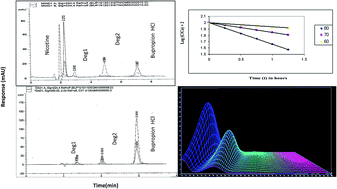
Two simple, specific, and precise stability indicating chromatographic methods have been developed, optimized, and validated for the purity determination of bupropion HCl (BUP) in bulk powders, pharmaceutical preparations as well as in the presence of its hydrolytic and oxidative degradation products and its co-administered drug nicotine (NIC). The first method was based on the determination of the cited drug using High Performance Liquid Chromatography (HPLC). The adequate separation of BUP from its degradation products and NIC was obtained using an Intertsil ODS3 (250 × 4.6 mm i.d., 5 μm particle size) column. The method was used to investigate the kinetics of the alkaline and oxidative degradation processes of BUP where the order rate constants, half lives, and activation energies were calculated. The second method was based on using Rapid Resolution Liquid Chromatography (RRLC) to separate BUP from its degradation products on a XDB C18 (50 × 4.6 mm i.d., 1.8 μm particle size) column. The linear ranges were 5–100 and 2–20 μg mL−1 with LOD of 1.33 and 0.2 μg mL−1 for the HPLC and RRLC methods, respectively. The quantification in both methods was based on coupling the separation with dual wavelength detection at 250 nm for BUP and NIC and at 224 nm for the degradation products. The peak purity of BUP in its pharmaceutical preparation spiked with its degradates revealed symmetry factors (999.935 & 999.963) within the calculated thresholds (>999.841 & >999.901) for HPLC and RRLC, respectively. The suggested methods were validated in compliance with the ICH and USP guidelines. The assay methods were successfully used to estimate BUP in Wellbutrin® 150 SR tablets and good percentage recoveries were obtained. The developed methods were statistically compared with the official USP methods and compared favourably with no significant difference in terms of accuracy and precision.

1. Introduction

Bupropion hydrochloride (BUP) (±)-2-(tert-butylamino)-1-(3-chloropropiophenyl) propan-1-one hydrochloride1 is an approved atypical antidepressant that acts as a weak dopamine and norepinephrine reuptake inhibitor to alleviate the symptoms of depression. BUP has other therapeutic indications including sexual dysfunction, obesity, attention deficit hyperactivity disorder, and seasonal affective disorder.2 It has recently been shown to have anti-inflammatory properties.2 It also assists in decreasing the craving for nicotine (NIC) and attenuating the withdrawal symptoms in tobacco users trying to quit smoking and is approved as an effective nicotine replacement therapy (NRT).3 In Australia and the United Kingdom smoking cessation is the only licensed indication of BUP. Treatment with oral sustained-release BUP combined with a NIC patch resulted in a higher rate of long-term smoking cessation compared with a placebo, and also with a single treatment of either NIC or BUP.4 This synergistic effect has evoked trials for the construction of transdermal patches containing both drugs.5

A literature survey revealed that BUP is official in the United States Pharmacopeia (USP)6 and that several methods were reported for the analysis of BUP in bulk powder, pharmaceutical preparations, with co-administered drugs, and in biological fluids including: titration,7,8 polarography,9 conductometry,10 potentiometry,10,11 spectrophotometry,11–15 spectroflourimetry,16 gas chromatography (GC),17 thin layer chromatography (TLC),18 HPLC19–30 and UPLC (ultra performance liquid chromatography).31,32 The enantiomeric separation of BUP enantiomers was also performed by electrokinetic chromatography for the quantitative analysis in pharmaceutical formulations.33 However, BUP was never determined in the presence of a mixture of its degradation products and co-administered drug NIC (Fig. 1a–d), also there is no single stability indicating RRLC method reported for the determination of BUP in pharmaceutical dosage forms or in active pharmaceutical ingredients (APIs) with its acid, alkaline, and oxidative degradation products.


image file: c5ra07716h-f1.tif
Fig. 1 Chemical structures of bupropion HCl, its degradation products and co-administered drug nicotine: (a) bupropion HCl, (b) m-chlorobenzoic acid, Deg1 (c) 1-(3-chlorophenyl)-1-hydroxy-2 propanone, Deg2 and (d) nicotine.

Therefore the objective of this manuscript is to establish and validate chromatographic methods with a stability indicating nature to determine BUP in its bulk powder and its commercial tablets as well as in the presence of its different degradation products and co-administered drug NIC in laboratory prepared mixtures as well as to use one of the chromatographic methods to investigate the kinetics of alkaline and oxidative degradation processes of BUP. It also aims to reveal the spurious advantage of the RRLC approach in achieving high throughput and improved sensitivity without affecting the selectivity using short sub 2 μm particle size columns.

2. Experimental

2.1. Instruments

The HPLC system (Agilent, USA) 1200 series, consisted of a quaternary pump (G1311A) equipped with an autosampler (G1329A) and a multiple wave detector (G1365B). Separation and quantification were performed on an Intertsil ODS3 (250 mm × 4.6 mm i.d., 5 μm particle size) analytical column (Japan).

The RRLC system (Agilent, Germany) 1200 SL, consisted of a binary pump (G1312B) equipped with an autosampler (G1329B) and a diode array detector (G1315C). The stationary phase was an Agilent XDB C18 (50 mm × 4.6 mm i.d., 1.8 μm particle size) RRLC column (USA).

The mobile phases were filtered through 0.45 μm Millipore membrane filters (Sartorius, Germany) and degassed before use. Dual UV detection was conducted at 250 and 224 nm. The samples were filtered through 0.45 μm Millipore PTFE syringe filters prior to injection and all measurements were held at room temperature (25 °C ± 2).

The ChemStation module for both instruments was used in data processing and acquisition. Additional instruments were used including: a Mettler Toledo analytical balance (AB265-S, Switzerland), a thermostatic water bath (Memmert, Germany), a Rotavapor (Büchi, Switzerland), precoated TLC plates, the silica gel F254 (20 × 20 cm2, 0.2 mm), aluminum plates (Macherey Nagel, Germany), Hamilton syringe with a 50 μL capacity, a UV lamp with a short wavelength of 254 nm (Desaga, Germany), a sonicator (Crest, New York) and a digital pH meter (HANNA pH 211, Romania).

2.2. Samples

2.2.1. Pure standard. BUP (99.66%) was kindly supplied by GlaxoSmithKline (Cairo, Egypt); its purity was assessed using the official HPLC method.6 NIC was kindly supplied by Novartis Company; its purity was certified to be 100.10%.
2.2.2. Pharmaceutical dosage form. Wellbutrin® 150 mg SR tablets were kindly supplied by GlaxoSmithKline (Cairo, Egypt). Each tablet was labeled to contain 150 mg of BUP batch number 0ZM9982.

2.3. Chemicals and solvents

All chemicals used in the preparation of mobile phases were of HPLC grade while all solvents used throughout this work were of analytical grade. These included hydrochloric acid 36%, triethylamine (Fischer scientific, UK), sodium hydroxide (Qualikens, India), hydrogen peroxide 30% (Panreac, Spain), acetonitrile and methanol (Scharlau, Spain), o-phosphoric acid, glacial acetic acid, and ammonium acetate (Adwic Co., Egypt), octane sodium sulphonate, heptane sodium sulphonate, and dichloromethane (Fine Chemical, Mumbai). Purified water was obtained by double distillation and filtration through 0.45 μm membrane filters, was used throughout the whole work and is indicated by “water”.

2.4. Solutions

Stock standard solutions of BUP and NIC (1 mg mL−1) were prepared by accurately weighing 100 ± 0.10 mg of each in separate 100 mL volumetric flasks and dissolving in water.

A 0.075 M ammonium acetate solution was prepared by dissolving 5.79 g in 1000 mL water.

The working standard solutions of BUP and NIC (100 μg mL−1) for HPLC and BUP (20 μg mL−1) for RRLC were separately prepared by convenient dilution of their stock standard solutions with the corresponding mobile phases for each method as described below.

3. Methods

3.1. Chromatographic conditions

HPLC was performed on an Intertsil ODS3 analytical column (250 mm × 4.6 mm i.d., 5 μm particle size). The mobile phase consisted of 0.075 M ammonium acetate buffer solution–methanol–acetonitrile–triethylamine (44[thin space (1/6-em)]:[thin space (1/6-em)]44[thin space (1/6-em)]:[thin space (1/6-em)]15[thin space (1/6-em)]:[thin space (1/6-em)]0.15, v/v/v/v), and 2.5 g of sodium octane sulphonate added to 1 L of the mobile phase with pH adjusted to 6 ± 0.2 with o-phosphoric acid.

RRLC was conducted on a XDB C18 RRLC column (50 mm × 4.6 mm i.d., 1.8 μm particle size). The mobile phase was 0.075 M ammonium acetate buffer solution–methanol–acetonitrile–triethylamine (44[thin space (1/6-em)]:[thin space (1/6-em)]44[thin space (1/6-em)]:[thin space (1/6-em)]10[thin space (1/6-em)]:[thin space (1/6-em)]0.15 v/v/v/v), and 2.5 g of sodium heptane sulphonate added to 1 L of the mobile phase with pH adjusted to 5 ± 0.2 with o-phosphoric acid. The flow rates were isocratically adjusted at 1.5 mL min−1 for HPLC and 0.5 mL min−1 for RRLC. Dual UV detection was conducted at 250 and 224 nm for both methods. The autosampler injectors adjusted to deliver 20 and 2 μL for the HPLC & RRLC methods, respectively. All measurements were held at ambient temperature (25 °C ± 2) for both methods. To reach a good equilibrium, the analysis was usually performed after conditioning of the columns for about 1 hour.

3.2. Linearity and construction of calibration curves

Aliquots of BUP were transferred from the working standard solutions into separate series of 10 mL volumetric flasks to obtain concentration ranges of 5–100 and 2–20 μg mL−1 for HPLC and RRLC, respectively, in the corresponding mobile phases. Triplicate 20 μL and 2 μL injections were performed for each concentration and chromatographed using the HPLC and RRLC systems, respectively. The calibration curves relating the average integrated peak areas to the corresponding concentrations were constructed and the regression equations were then computed.

3.3. Stability study of bupropion hydrochloride

BUP was stressed for acid, alkaline and oxidative degradation. The solutions were prepared by dissolving separately about 10 mg of pure BUP in 10 mL of 5 M HCl, 10 mL of 1 M NaOH and 20 mL of 3% methanolic hydrogen peroxide. The solutions were tightly closed away from light and placed in a thermostatically controlled water bath set at 90 °C for 24 hours for the acid degradation reaction and kept aside at room temperature (25 °C ± 2) for 48 hours for the alkaline and oxidative degradation reactions or heated in a thermostatically controlled water bath at 70 °C for 2 hours and 80 °C for 3 1/2 hours for the alkaline and oxidative degradation reactions, respectively.

The acid and alkaline degradation products solutions were then neutralized with 5 M sodium hydroxide or 1 M HCl to pH 7 and evaporated until dryness in a Rotavapor water bath at 70 °C while the oxidative degradation product solution was evaporated to dryness at 40 °C in a Rotavapor water bath to stop the reaction. The residues of the hydrolytic degradation products were separately dissolved in 50 mL of methanol and filtered to get rid of the sodium chloride formed during the neutralization process. The solution was further re-evaporated in a Rotavapor water bath at 40 °C until dryness. The residues of the hydrolytic and oxidative degradation products were separately dissolved in 100 mL of water to obtain stock solutions of 100 μg mL−1 for each.

The degradation processes were monitored by TLC using acetonitrile, dichloromethane, and 20% glacial acetic acid (5[thin space (1/6-em)]:[thin space (1/6-em)]5[thin space (1/6-em)]:[thin space (1/6-em)]0.25, v/v/v) as the developing system and the developed plates were visualized under a UV lamp at 254 nm.

3.4. Analysis of laboratory prepared mixtures

For the HPLC laboratory prepared mixtures of BUP, its degradation products (hydrolytic and oxidative) and co-administered drug NIC were prepared in the range of 10–50% w/w. Mixtures of the same range were prepared for RRLC without NIC then procedures were undertaken as described under each method where the concentration of the intact drug in each mixture was calculated from the corresponding regression equations.

3.5. Assay of the pharmaceutical formulation (Wellbutrin SR tablets)

Ten tablets of Wellbutrin® 150 mg SR (150 mg BUP per tablet) were weighed and ground. An accurately weighed amount of the ground powder equivalent to 50 mg of BUP was transferred to a 100 mL volumetric flask, 50 mL methanol was added and the solution was sonicated for 45 min and left to cool to room temperature. The volume was completed with water to obtain a concentration of 500 μg mL−1. The solution was diluted with the mobile phase to reach concentrations of 10 μg mL−1 for HPLC and 2 μg mL−1 for RRLC. The recommended procedures were undertaken as described under each method.

The accuracy of the developed chromatographic methods was evaluated by spiking the pre-analyzed BUP solutions with extra 10, 50, and 70 μg of pure BUP when using HPLC and 2, 10 and 14 μg when using RRLC, and then the mean recovery % of the pure drug was calculated.

3.6. Kinetic investigation of the alkaline and oxidative degradations of BUP by HPLC

An accurately weighed amount of about 50 mg of BUP was dissolved in 50 mL of distilled water or 50 mL of methanol for the alkaline and oxidative degradation reactions, respectively (1 mg mL−1). One mL of each solution was transferred to a separate series of test tubes followed by the addition of 1 mL of 1 M NaOH solution or 2 mL of 3% methanolic hydrogen peroxide solution. The test tubes were stoppered and placed in a thermostatic water bath at different temperatures, 50, 60, 70 °C & 60, 70, 80 °C for the alkaline and oxidative degradation reactions, respectively. Every 15 min starting at zero time until 1.25 hours, the content of each tube was neutralized to pH 7 by using 1 mL of 1 M HCl or adding 1 mL of cold water. The content of each tube was immediately transferred to 10 mL volumetric flasks, filtered and chromatographed as described under linearity after completing the volume with the mobile phase.

The concentrations of the remaining BUP were calculated at each time interval and temperature. The logarithm of the percentage of the remaining BUP concentration was plotted against the corresponding time interval in hours for each temperature, and the regression equations were computed.

4. Results and discussion

4.1. Method development and optimization

BUP was subjected to alkali, acid hydrolysis, and oxidation in an attempt to develop stability indicating chromatographic methods, as according to ICH guidelines: “an ideal stability indicating method is one that quantifies the standard drug alone and also resolves its degradation products”.

BUP was left with 1 M sodium hydroxide at room temperature (25 ± 2 °C) for 48 hours. The complete degradation giving two degradation products was analyzed and separated by HPLC at retention times of 2.4 and 3.9 min for 1-(3-chlorophenyl)-1-hydroxy-2-propanone (Deg1) and 3-chlorobenzoic acid (Deg2), respectively, with the disappearance of the peak of the intact drug at a retention time of 6.9 min. The same degradation profile was also obtained when heating the drug with 1 M sodium hydroxide at 70 °C for 2 hours (Fig. 2A and B).


image file: c5ra07716h-f2.tif
Fig. 2 HPLC chromatograms of (A) bupropion HCl, (B) complete alkaline degradation, (C) complete oxidative degradation, and (D) incomplete acid degradation.

The complete oxidation of BUP to 3-chlorobenzoic acid using 3% hydrogen peroxide in methanol at room temperature (25 ± 2 °C) for 48 hours or for 3 1/2 hours in a thermostatically controlled water bath set at 80 °C was emphasized by HPLC, where the peak of the intact BUP at 6.9 min was gradually replaced with time with the peak of 3-chlorobenzoic acid at 3.9 min (Fig. 2C).

The more prominent BUP degradation pathway involved hydroxide ion catalysis of the free base form, where degradation involved the loss of the t-butyl amino group.2 At pH greater than 6, BUP (pKa 7.9) is available as a free base and is consequently liable to hydroxide ion catalysis by alkali or peroxide. Heating BUP with 5 M HCl led to the protonation of the N–H part of the t-butyl amino group and avoided the formation of the free base, thus protecting the drug against the hydroxide ion attack. Accordingly, the incomplete acid degradation of BUP to 3-chlorobenzoic acid and 1-(3-chlorophenyl)-1-hydroxy-2-propanone was obtained (Fig. 2D).

Mobile phase/stationary phase matching trials were performed to determine the best system that provided the best separation of BUP from its degradation products and NIC, and the optimum system suitability parameters according to USP.6 For HPLC, The results of these trials showed the best results when using 0.075 M ammonium acetate buffer solution–methanol–acetonitrile–triethylamine (44[thin space (1/6-em)]:[thin space (1/6-em)]44[thin space (1/6-em)]:[thin space (1/6-em)]15[thin space (1/6-em)]:[thin space (1/6-em)]0.15, v/v/v/v), containing 0.25% w/v sodium octane sulphonate with pH adjusted to 6 as shown in Fig. 3. The same composition was used for the RRLC method with a ratio of 44[thin space (1/6-em)]:[thin space (1/6-em)]44[thin space (1/6-em)]:[thin space (1/6-em)]10[thin space (1/6-em)]:[thin space (1/6-em)]0.15, v/v/v/v, containing 0.25% w/v sodium heptane sulphonate and adjusted to pH 5. The pH of the mobile phases were adjusted with o-phosphoric acid. The flow rates were isocratically adjusted at 1.5 mL min−1 for HPLC and 0.5 mL min−1 for RRLC. The retention time of BUP was about 6.9 min using HPLC and was reduced by nearly 60% to about 3.0 min using RRLC (Fig. 4A and B).


image file: c5ra07716h-f3.tif
Fig. 3 HPLC chromatogram of the laboratory prepared mixtures of bupropion HCl and nicotine in the presence of bupropion degradation products and co-administered drug nicotine at 250 nm (—) and 224 nm ([dash dash, graph caption]).

image file: c5ra07716h-f4.tif
Fig. 4 Chromatograms of bupropion HCl and its degradation products from (A) HPLC and (B) RRLC methods using dual wavelength detection at 250 and 224 nm, showing the increased throughput of RRLC due to a 60% reduction in the time of analysis.

The quantification of the drug in both methods was performed using dual wavelength detection at the λmax of the drug at 250 nm and at 224 nm for the BUP degradation products, which showed poor absorbtivity at 250 nm. Consequently, dual wavelengths were used to preserve both the sensitivity of the method, by quantifying the drug at its λmax, and the stability indicating power of the method by detecting the drug degradation products at their optimum wavelength.

The effect of pH on some system suitability parameters, including retention time, and resolution, was carefully studied using the HPLC system as shown in Fig. 5A and B.


image file: c5ra07716h-f5.tif
Fig. 5 Effect of the pH on the retention time (A) and resolution (B) of bupropion HCl and its degradation products using the proposed HPLC method.

The retention time of the basic drug BUP (pKa 7.9)34 decreased with decreasing pH until it became nearly constant at pH 6 probably due to the effect of ion pairing with the ionized drug, while the retention times of its degradation products increased with low pH due to the suppressed ionization of the carboxylic and hydroxyl groups in these compounds resulting in an increased retention on the nonpolar ODS column. The separation of BUP from its degradation products was thereby based on the use of a combination of ion pairing and ion suppression chromatography to obtain the optimum resolution between the studied drug and its degradation products.

4.2. System suitability tests

System suitability testing parameters were calculated according to the USP6 to ensure that the chromatographic systems were working correctly during the analysis after optimization of the chromatographic conditions using different mobile phases, pH, and flow rates. The capacity factor (K), selectivity factor (α), resolution (R), column efficiency, tailing factor (T) and relative standard deviation peak area of five replicate injections were the parameters to be checked during the analysis as represented in Table 1. The validation of the two chromatographic methods was performed in accordance with the ICH guidelines.35
Table 1 System suitability test results of the proposed HPLC and RRLC methods for the determination of bupropion HCl
Chromatographic parameters HPLC method RRLC method Reference values
Retention time (min) Bupropion HCl 7.22 2.95
Deg1 2.9 1.36
Deg2 4.9 2.02
Nicotine 2.4
Capacity factor (K) Bupropion HCl 3.8 2.27 K > 2
Deg1 0.9 0.51
Deg2 2.3 1.24
Nicotine 0.6
Selectivity (α) Bupropion HCl α > 1
Deg1 4.2 4.45
Deg2 1.7 1.8
Nicotine 6.3
Resolution (R) Bupropion HCl R > 1.5
Deg1 16.9 21.23
Deg2 8.5 12.04
Nicotine 22
Tailing factor (T) Bupropion HCl 1.03 1.18 T ≤ 2
Deg1 0.83 1.41
Deg2 0.94 1.16
Nicotine 1.1
RSD% of peak areas Bupropion HCl 0.014 0.70 <1, n = 5
Deg1 0.036 0.75
Deg2 0.084 0.29
Nicotine 0.052
Theoretical plates (N) Bupropion HCl 3699 6587 >2000
Deg1 3971 4977
Deg2 3384 2482
Nicotine 2130


4.3. Method validation

4.3.1. Linearity and range. The calibration curves were constructed representing the relationship between the integrated peak areas and the corresponding concentrations in the range of 10–100 μg mL−1 for the HPLC method and 2–20 μg mL−1 for the RRLC method.

The characteristic parameters for the regression equations were computed as illustrated in Table 2.

Table 2 Characteristic parameters of assay validation of the HPLC and RRLC methods for the determination of bupropion HCl
Parameters HPLC RRLC
a Mean of five determinations ± SD.b n = 9.
Linearity range, μg mL−1 5–100 2–20
LOD, μg mL−1 1.33 0.2
LOQ, μg mL−1 4.02 0.62
Accuracya 99.61 ± 0.51 99.30 ± 1.09
Precision RSD%
Repeatabilityb 0.01–0.04% 0.15–1.52%
Intermediate precisionb 0.77–1.22% 0.64–1.29%
Regression equation A = 30.18C − 6.164 A = 14.957C + 1.5438
Slope 30.18 14.957
SE of slope 0.125 0.063
Confidence limit of the slope 29.872–30.487 14.79643–15.11854
Intercept −6.16 1.54
SE of intercept 7.28 0.71
Confidence limit of intercept −23.9 to 11.73 −0.28130 to 3.3690
Correlation coefficient (r) 0.9999 0.9999
SE of estimation 12.13 0.93


4.3.2. Precision. The repeatability and intermediate precisions of the proposed methods were evaluated using three different concentrations assayed three times in the same day and in triplicate on three successive days using the developed methods. The results in Table 2 indicate the satisfactory precision of the proposed methods.
4.3.3. Selectivity. The selectivity of the proposed methods was emphasized when analyzing laboratory prepared mixtures containing different percentages of the studied drug and its different degradation products. By applying the proposed HPLC and RRLC methods, BUP could be determined without any interference from up to 50% w/w of its degradation products and co-administered drug NIC (Table 3).
Table 3 Selectivity of the proposed HPLC and RRLC methods for the determination of bupropion HCl in laboratory prepared mixtures with its degradation products and co-administered drug nicotine
RRLC HPLC
Degradation products % (w/w) Recoverya % Degradation products % (w/w) Recoverya % Nicotine and degradation products % (w/w) Recoverya %
a Mean of three determinations.
5 100.96 5 98.89 10 101.29
10 100.23 10 99.67 20 98.95
20 100.14 20 100.59 30 100.51
30 99.06 30 99.08 40 99.89
40 99.58 40 99.01 50 99.06
50 100.14 50 99.01
Mean ± RSD 100.02 ± 0.64 Mean ± RSD 99.38 ± 0.66 Mean ± RSD 99.94 ± 0.99


4.3.4. Peak purity. The selectivity of the proposed methods was further demonstrated by testing the peak purity of the cited drug in the pharmaceutical preparation matrix spiked with its different degradation products using DAD as illustrated in Fig. 6A and B.
image file: c5ra07716h-f6.tif
Fig. 6 Peak purity of bupropion HCl in the drug product matrix spiked with its degradation products using the (A) HPLC and (B) RRLC systems. The symmetry factors were 999.935 & 999.963 and were within the calculated thresholds >999.841 & >999.901 for HPLC & RRLC, respectively.

The main feature of DAD is the possible collection of spectra across a range of wavelengths at each data point collected across a peak, and through software manipulations each spectrum can be compared to determine the peak purity.36 Comparing peak spectra is probably the most popular method to discover an impurity. If a peak is pure all UV-visible spectra acquired during the peak’s elution or migration should be very close to a perfect 100% match.37 Similarity factors and similarity/threshold ratios are used to express this match.

The similarity factors of the BUP peak were 999.791 & 999.721 for the HPLC and RRLC methods, respectively, indicating that the spectra are very similar (similarity factor > 995) and were within the calculated thresholds of >999.841 for HPLC and >996.651 for RRLC where the similarity/threshold ratios were lower than 1 (0.41 for HPLC and 0.37 for RRLC) indicating that the peaks of the investigated drug had passed the peak purity test.37

The suggested methods were successfully applied for the analysis of the pharmaceutical formulation of the drug under study Wellbutrin SR without interference from the present excipients. Also, the standard addition technique was applied to evaluate the matrix effect on the recovery, and satisfactory results were obtained as presented in Table 4.

Table 4 Statistical comparisons between results obtained by applying the proposed HPLC, RRLC and the official USP methods for the determination of bupropion HCl in drug substances and drug products
Parameters Drug substances Pharmaceutical product (Wellbutrin® SR 150 mg B. N. 0ZM9982)
HPLC RRLC USP methoda HPLC RRLC USP methoda
a Official HPLC method (USP).b The values between parentheses are the theoretical values of t and F at (P = 0.05).c For standard addition of three different concentrations of bupropion hydrochloride.
Mean 99.61% 99.30% 99.66% 103.85% 103.13% 104.46%
SD 0.512 1.087 0.888 1.537 1.910 1.047
N 5 5 5 5 5 5
Variance 0.262 1.182 0.789 2.362 3.648 1.096
SE 0.229 0.486 0.397 0.687 0.854 0.468
t-value (2.306)b 0.109 0.574 0.734 1.366
F-value (6.400)b 3.011 1.498 2.155 3.328
Recoveryc ± RSD% 100.35 ± 0.846 100.25 ± 1.623


The results obtained by applying the proposed methods for the analysis of the studied compound in bulk powder and pharmaceutical preparations were statistically compared to the official USP methods.6

The values of the calculated t and F were lower than the tabulated ones which revealed that there was no significant difference with respect to accuracy and precision38 as illustrated in Table 4.

4.4. Kinetic study

The kinetics of the alkaline and oxidative degradation reactions of BUP was investigated using 1 M NaOH and 3% methanolic hydrogen peroxide, since the decomposition rates were convenient to obtain reliable kinetic data. When the degradation processes were induced and monitored using the proposed HPLC method, a regular decrease in the concentration of the drug with increasing time intervals was observed. The influence of temperature on the degradation processes are shown in Fig. 7A and B. The logarithm of the percentage of the remaining concentration for the drug in every degradation process was plotted against the corresponding time interval in hours for each temperature where straight lines were obtained, and the regression equations were computed. Accordingly, at the selected temperatures (50, 60, 70 °C) for the BUP alkaline degradation and (60, 70, 80 °C) for the BUP oxidative degradation, and since sodium hydroxide (1 N) and hydrogen peroxide (3%) were found in excess, the alkaline and oxidative degradation reactions of BUP followed pseudo first order kinetics where the degradation rates depended on the remaining concentration of BUP and the temperature at which the degradation was conducted.
image file: c5ra07716h-f7.tif
Fig. 7 Kinetic plots for the bupropion HCl degradation reaction with (A) 1 M NaOH, and (B) 3% methanolic hydrogen peroxide at various temperatures and Arrhenius plots of the (C) alkaline and (D) oxidative degradation processes.

From the slopes of the regression lines, it was possible to calculate the apparent first order degradation rate constant (Kobs) and the half-life at each temperature in Table 5 according to the following equations:

log(Ct/C0) + 2 = −Kobst, t1/2 = 0.693/Kobs
where Ct = concentration remaining at time t, C0 = initial concentration, Kobs = apparent rate constant, t1/2 = half life.

Table 5 Degradation rate constants Kobs and half lives (t1/2) for bupropion HCl in 1 M NaOH for the proposed HPLC method
Temperature (°C) Kobs (h−1) Half life (t1/2)
50 0.5595 1.23832
60 1.29 0.537151
70 2.7708 0.25579


According to the above equation, the half lives of BUP are constant at each temperature and do not depend on the drug’s concentration.

By plotting the log[thin space (1/6-em)]Kobs values versus 1/T (inverse absolute temperature), the Arrhenius plots were obtained (Fig. 7C and D), which were found to be linear over the selected temperature ranges. The activation energies were calculated by applying the following equation:

log[thin space (1/6-em)]Kobs = log[thin space (1/6-em)]AEa/2.303RT
where R is the universal gas constant and T is the absolute temperature in Kelvin, A is the frequency factor and Ea is the activation energy which was found to be 17.36 kcal mol−1 with frequency factor (A) = 1.377 × 10¹¹ s−1 and 19.23 kcal mol−1 with frequency factor (A) = 2.786 × 10¹¹ s−1, for the BUP alkaline and oxidative degradation reactions, respectively. These values suggested the intermediate instability of the drug towards oxidation and alkaline degradation.

5. Conclusions

The proposed methods are accurate, precise, and highly selective and could be used for purity testing, stability studies, quality control and routine analysis of bulk powders and pharmaceutical preparations.

The use of dual wavelength detection gave this work a great advantage of maintaining the sensitivity of the developed methods for the quantification of the drug at its λmax with simultaneous detection of the degradation products, being of poor absorbtivity at the same wavelength, which is an important demand according to the FDA definition for a stability indicating method. This work has revealed the great advantage of the RRLC approach in achieving a high throughput by reducing the retention time by about 60% and improving the sensitivity about 5 times without affecting the selectivity. Another advantage of RRLC is reducing the cost by minimizing the amount of solvent and samples used. The kinetic study of the BUP alkaline and oxidative degradation processes has revealed that BUP is highly susceptible to alkaline and oxidative degradation, thus a careful buffering, choice of solvents and protection against oxidation are strongly recommended during processing and formulation as well as during packaging and storage to obtain BUP containing products of high stability.

References

  1. S. C. Sweetman and P. S. Blake, Martindale – the complete drug reference, The Pharmaceutical Press, London, 36th edn, 2009 Search PubMed.
  2. P. M. O’Byrne, R. Williams, J. J. Walsh and J. F. Gilmer, The aqueous stability of bupropion, J. Pharm. Biomed. Anal., 2010, 53, 376–381 CrossRef PubMed.
  3. M. A. Clark, R. Finkel, J. A. Rey, K. Whalen and R. A. Harvey, Lippincott’s illustrated reviews: pharmacology, Lippincott’s Williams & Wilkins, USA, 5th edn, 2012 Search PubMed.
  4. C. Warner and M. Shoaib, How does bupropion work as a smoking cessation aid?, Addict. Biol., 2005, 10, 219–231 CrossRef CAS PubMed.
  5. Through website, http://www.pharmtech.com/pharmtech/Formulation/Transdermal-film-containing-nicotine-and-bupropion, accessed February 2014.
  6. United States (US) pharmacopeia, 34th edn and the National Formulary (NF), 29th edn, USA, U.S. Pharmacopeial Convention, Rockville, MD, 2014.
  7. M. A. S. Abdulaziz, K. Basavaiah and K. B. Vinay, Titrimetric and spectrophotometric assay of bupropion hydrochloride in pharmaceuticals using mercury(II) nitrate, Ecletica Quim., 2010, 35, 9–16 Search PubMed.
  8. K. Basavaiah and S. A. M. Abdulrahman, Application of ion-association titration for the assay of bupropion hydrochloride in pharmaceuticals, Chem. Ind. Chem. Eng. Q., 2011, 17, 299–306 CrossRef.
  9. S. Samota, A. Garg and R. Pandey, The polarographic reduction and electrode kinetics of antidepressant drug bupropion hydrochloride, Port. Electrochim. Acta, 2010, 28, 87–94 CAS.
  10. M. R. Ganjali, F. Mizani and P. Norouzi, MWCNTs based carbon paste and PVC membrane potentiometric electrodes for monitoring of bupropion hydrochloride, Int. J. Electrochem. Sci., 2012, 7, 7631–7642 CAS.
  11. D. Yeniceli and A. K. D. Dogrukal, The determination of bupropion hydrochloride in pharmaceutical dosage forms by original UV and second derivative UV spectrophotometry, potentiometric and conductometric methods, Turk. J. Pharm. Sci., 2010, 7, 99–110 CAS.
  12. K. Basavaiah and S. A. M. Abdulrahman, Use of charge transfer complexation reaction for the spectrophotometric determination of bupropion in pharmaceuticals and spiked human urine, Thai J. Pharm. Sci., 2010, 34, 134–145 CAS.
  13. P. P. Iche, Stress degradation studies of bupropion HCl and development of a validated UV spectrophotometric method in bulk and pharmaceutical dosage form, Int. J. Pharm. Pharm. Sci., 2013, 3, 103–107 Search PubMed.
  14. K. N. Patel, J. K. Patel and I. S. Rathod, Derivative spectrophotometric method for simultaneous estimation of nicotine and bupropion hydrochloride in synthetic mixture by derivative spectrophotometric method, J. Pharm. Res., 2009, 2, 1525–1527 CAS.
  15. W. Misiuk and E. Jasiuk, Study of the inclusion interaction of HP-γ-cyclodextrin with bupropion and its analytical application, J. Mol. Struct., 2014, 1060, 272–279 CrossRef CAS PubMed.
  16. M. A. Omar, O. H. Abdel mageed, S. M. Derayea and T. Z. Attia, Spectrofluorimetric protocol for antidepressant drugs in dosage forms and human plasma through derivatization with dansyl chloride, Arabian J. Chem., 2013 DOI:10.1016/j.arabjc.2013.12.015.
  17. R. T. Sane, M. Francis, S. Khedkar, A. Menezrs, A. Moghe and P. Patil, Gas chromatographic determination of bupropion hydrochloride from its pharmaceutical formulations, Indian Drugs, 2003, 40, 231–233 Search PubMed.
  18. D. Yeniceli and A. K. D. Dogrukal, A validated thin-layer chromatographic method for the analysis of bupropion hydrochloride in a pharmaceutical dosage form, J. Planar Chromatogr.--Mod. TLC, 2010, 23, 212–218 CrossRef CAS.
  19. K. I. Al-khamis, Rapid determination of bupropion in human plasma by high-performance liquid chromatography, J. Liq. Chromatogr., 1989, 12, 645–655 CrossRef CAS PubMed.
  20. Q. Meiling, W. Peng, G. Yingshu, G. Junling and F. Ruonong, Development and validation of an HPLC method for the determination of bupropion hydrochloride in tablets, J. Chin. Pharm. Sci., 2002, 11, 16–18 Search PubMed.
  21. S. Sinha, V. Parashar, K. S. Reddy, M. A. Khan and S. K. Manirul Haque, Liquid chromatographic determinations of meta-chlorobenzoic acid in bupropion hydrochloride, J. Nat. Sci., Biol. Med., 2013, 4, 435–439 CrossRef PubMed.
  22. I. Bhattacharyya, S. P. Bhattacharyya and S. Sen, Reverse phase high performance liquid chromatographic method for the analysis of bupropion hydrochloride in pharmaceutical dosage form, Int. J. Pharm. Technol., 2010, 2, 224–232 CAS.
  23. M. A. Saracino, C. Marcheselli, L. Somaini, G. Gerra, F. Stefano, M. C. Pieri and M. A. Raggi, Simultaneous determination of disulfiram and bupropion in human plasma of alcohol and nicotine abusers, Anal. Bioanal. Chem., 2010, 398, 2155–2161 CrossRef CAS PubMed.
  24. D. S. Thakar and A. Varghese, Bioanalytical method development and validation of bupropion hydrochloride in rat plasma by RP, HPLC, Int. J. Pharma Biosci. Technol., 2013, 1, 20–26 Search PubMed.
  25. J. M. Parekh, D. K. Sutariya, R. N. Vaghela, M. Sanyal, M. Yadav and P. S. Shrivastav, Sensitive selective and rapid determination of bupropion and its major active metabolite, hydroxybupropion, in human plasma by LC-MS/MS: application to a bioequivalence study in healthy Indian subjects, Biomed. Chromatogr., 2012, 26, 314–326 CAS.
  26. K. K. Loboz, A. S. Gross, J. Ray and A. J. McLachlan, HPLC assay for bupropion and its major metabolites in human plasma, J. Chromatogr. B: Anal. Technol. Biomed. Life Sci., 2005, 823, 115–121 CrossRef CAS PubMed.
  27. D. Yeniceli, E. Şener, O. T. Korkmaz, D. Dogrukol-Ak and N. Tuncel, A simple and sensitive LC–ESI-MS (ion trap) method for the determination of bupropion and its major metabolite, hydroxybupropion in rat plasma and brain microdialysates, Talanta, 2011, 84, 19–26 CrossRef CAS PubMed.
  28. E. Choong, S. Rudaz, A. Kottelat, S. Haldemann, D. Guillarme, J. Veuthey and C. B. Eap, Quantification of 4 antidepressants and a metabolite by LC-MS for therapeutic drug monitoring, J. Chromatogr. B: Anal. Technol. Biomed. Life Sci., 2011, 879, 1544–1550 CrossRef CAS PubMed.
  29. H. Xu, K. K. Loboz, A. S. Gross and A. J. McLachlan, Stereo selective analysis of hydroxybupropion and application to drug interaction studies, Chirality, 2007, 19, 163–170 CrossRef CAS PubMed.
  30. D. Yeniceli and D. Dogrukol-Ak, An LC method for the determination of bupropion and its main metabolite, hydroxybupropion in human plasma, Chromatographia, 2009, 70, 1703–1708 CAS.
  31. R. Denooz, M. Mercerolle, G. Lachâtre and C. Charlier, Ultra-Performance Liquid Chromatography-Tandem Mass Spectrometry method for the determination of bupropion and its main metabolites in human whole blood, J. Anal. Toxicol., 2010, 34, 280–286 CrossRef CAS PubMed.
  32. L. Sheng, H. Chen, Y. Huo, J. Wang, Y. Zhang, M. Yang and H. Zhang, Simultaneous determination of 24 antidepressant drugs and their metabolites in wastewater by Ultra-High Performance Liquid Chromatography–Tandem Mass Spectrometry, Molecules, 2014, 19, 1212–1222 CrossRef PubMed.
  33. M. C. Puyana, M. A. Garcia and M. L. Marina, Enantiomeric separation of bupropion enantiomers by electrokinetic chromatography: quantitative analysis in pharmaceutical formulations, J. Chromatogr. B: Anal. Technol. Biomed. Life Sci., 2008, 875, 260–265 CrossRef PubMed.
  34. A. C. Moffat, M. D. Osselton, B. Widdop and J. Watts, Clarke’s analysis of drugs and poisons, Pharmaceutical Press, London, Chicago, 2011 Search PubMed.
  35. International Conference on Harmonization (ICH) guidelines, Validation of Analytical Procedures Q2 (R1): Text and Methodology, London, 2005.
  36. J. A. Gilliard and C. Ritter, Use of simulated liquid chromatography–diode array detection data for the definition of a guide curve in peak purity assessment by spectral comparison, J. Chromatogr. A, 1997, 786, 1–11 CrossRef CAS.
  37. Through website, http://www.chem.agilent.com/Library/applications/59888647EN.pdf, 29 January 2014, accessed February 2014.
  38. M. Spiegel and L. Stephens, Schaum’s outline of theory and problems of statistics, McGraw-Hill, New York, NY, 1999 Search PubMed.

Footnote

Electronic supplementary information (ESI) available. See DOI: 10.1039/c5ra07716h

This journal is © The Royal Society of Chemistry 2015
Click here to see how this site uses Cookies. View our privacy policy here.