Biodiesel synthesis from oleic acid by nano-catalyst (ZrO2/Al2O3) under high voltage conditions

Mohmmad Mahdavi*, Ebrahim Abedini and Amir hosein Darabi
Department of Chemistry, Malek-ashtar University of Technology, P.O. Box 83145/115, Shahin-shahr, Islamic Republic of Iran. E-mail: mahdavi.mut@gmail.com; Fax: +98-314-522-0420; Tel: +98-314-522-0520

Received 19th April 2015 , Accepted 10th June 2015

First published on 10th June 2015


Abstract

This paper describes the synthesis and catalytic activity of ZrO2/Al2O3 nano-catalyst as a highly effective heterogeneous and active catalyst that converts oleic acid and methanol into fatty acid esters under high voltage conditions in a low temperature and atmospheric pressure process. Using an inexpensive and reusable catalyst, producing excellent yields in a short time and its environmental benignity are some of the important features of this protocol. The results were confirmed by GC, FTIR, FESEM and XRD.

1 Introduction

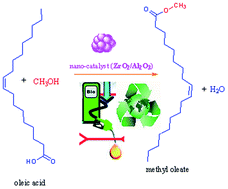
Due to the potential shortage of non-renewable resources with their high cost and impact on global pollution, the investigations for finding alternative resources of energy have created much attention. Therefore, seeking efficient and simple methods for the synthesis of high quality biodiesel is an attractive scientific challenge. Biodiesel has emerged as a non-toxic and biodegradable fuel to replace traditional diesel fuel.1–5 Biodiesel is a clean burning fuel when derived from plant or algae oils or animal fats.6–8 Each biodiesel product has a different composition and purity, and may require a different engine setting for optimum performance. Biodiesel is currently synthesized via esterification reaction of long-chain fatty acids with alcohols. The synthesis of biodiesel has been reported in the presence of various catalysts and conditions.9–15 The synthesis of biodiesel should be flexible, facile, rapid and useful from cost-effectiveness and industrial points of view. Since the lower catalytic activity of liquid or solid acids compared with base catalysts, most of the acid-catalyzed esterification reactions are generally accomplished under high temperature and high pressure conditions. In the other hand, the use of base catalysts are limited, to use of refined vegetable oils, leading to impracticable and uneconomical methods, due to high cost feed stocks. The free fatty acids (FFA) present in the feed stock react with the base catalyst and form soap and consequently decrease the ester yields. Solid acid catalysts have attracted considerable attention in recent years owing to being less sensitive to FFA contamination.16–18 Heterogeneous solid acids and especially those based on Al2O3 and ZrO2 have been used as powerful catalysts for various organic transformations. In comparison to conventional catalysts, nano-catalyst matrixes have higher activities because of their very extensive surface areas.19–22 We wish to report herein a highly efficient procedure for the esterification of oleic acid using a solid acid nano-catalyst (ZrO2/Al2O3) as an efficient and robust catalyst under high voltage conditions (Scheme 1).
image file: c5ra07081c-s1.tif
Scheme 1 Esterification of oleic acid using ZrO2/Al2O3 nano-catalyst.

2 Results and discussion

The catalyst was prepared by a sol–gel procedure using aluminium nitrate and zirconium oxychloride. The morphology and particle size of ZrO2/Al2O3 nano-powder was investigated by FESEM as shown in Fig. 1. The particle size and surface area of the white powder were estimated by FESEM and BET measurements to be 20.59–29.86 nm and 253–283 m2 g−1, respectively. The XRD pattern for ZrO2/Al2O3 nano-powder is shown in Fig. 2. The XRD pattern for the catalyst exhibited two sharp diffraction peaks at 2θ angles of 29–32° and 49–52°, which were attributed to the tetragonal phase ZrO2. Two broad and weak diffraction peaks at 44–49° and 66–68°, were attributed to α-Al2O3 phase. Fig. 3 shows an FTIR spectrum of ZrO2/Al2O3 nano-catalyst. The bands at 872 and 618 cm−1 were assigned to Al–O and Zr–O stretching and bending modes. Based on XRF analysis the weight ratio of ZrO2 to Al2O3 was 20[thin space (1/6-em)]:[thin space (1/6-em)]80.
image file: c5ra07081c-f1.tif
Fig. 1 FESEM image of ZrO2/Al2O3 nano-catalyst.

image file: c5ra07081c-f2.tif
Fig. 2 XRD pattern of ZrO2/Al2O3 nano-catalyst.

image file: c5ra07081c-f3.tif
Fig. 3 FTIR spectrum of ZrO2/Al2O3 nano-catalyst.

Table 1 shows the results for the esterification of oleic acid and methanol at 340 K by ZrO2/Al2O3 nano-catalyst using various conditions. The oleic acid raw material has a 79/56% purity. The oleic acid raw material has 84.72% purity. During the esterification process under high voltage condition, 76.65% of raw material was converted to biodiesel, thus, the process yield was 90.47%. When the reactions were carried out in the absence of high voltage power, the product could be obtained in low to moderate yields from 19 to 73% using various reaction times (2–12 h).

Table 1 Esterification of oleic acid by ZrO2/Al2O3 nano-catalysta
No. Catalyst Catalyst wt% Time (h) Yield of methyl oleate (%)
a Molar ratio of methanol to oleic acid: 8[thin space (1/6-em)]:[thin space (1/6-em)]1 at 340 K.b Reflux without high voltage power.c High voltage power: 1.3 kV, electric current: 15–23 mA.
1 Nano ZrO2/Al2O3b 1 2 19.23
2 Nano ZrO2/Al2O3b 1 4 35.11
3 Nano ZrO2/Al2O3b 1 6 46.18
4 Nano ZrO2/Al2O3b 1 8 62.34
5 Nano ZrO2/Al2O3b 1 10 67.32
6 Nano ZrO2/Al2O3b 1 12 73.31
7 Nano ZrO2/Al2O3c 1 2 90.47


The reusability and recycling of the nano-catalyst was also investigated in four runs. The results showed that the nano-catalyst can be reused several times without noticeable loss of catalytic activity (Table 2). After each reaction, the nano-catalyst was separated, washed, and dried at 80 °C for subsequent reaction.

Table 2 Reusability of ZrO2/Al2O3 nano-catalyst in methyl oleate synthesisa
Run Yield of methyl oleate (%) (time: 2 h)
a Molar ratio of methanol to oleic acid: 8[thin space (1/6-em)]:[thin space (1/6-em)]1, catalyst: 0.2 g, temperature: 340 K, reaction time: 2 h, voltage: 1.3 kV, electric current: 15–23 mA, pressure: 1 atm.
Fresh 90.47
1 90.27
2 90.22
3 90.11


Different reaction parameters such as reagents molar ratios, reaction times, voltage and catalyst wt%, were explored and optimized for esterification of oleic acid by methanol at 340 K and high voltage conditions (Table 3). The resulting product of the high voltage process can be purified to more than 96.5% from the reaction mixture with weak alkali material such as Na2CO3, to eliminate unreacted free fatty acids. In 8[thin space (1/6-em)]:[thin space (1/6-em)]1 molar ratio of methanol to oleic acid and 1.3 kV power, the yield was 90%. At voltages lower than 1.3 kV, the reaction yields decreased substantially, and at higher voltages the reaction progress was prevented due to short circuit. In the absence of catalyst, the reaction yields decreased substantially, and the catalyst had a promotional effect on the esterification of rapeseed oil in 1.3 kV.

Table 3 Esterification of oleic acid by ZrO2/Al2O3 catalyst at 340 K and electric current: 15–23 mA
Catalyst (wt%) Molar ratio of methanol to oleic acid Voltage: (kV) Time: (h) Methyl oleate (wt%)
0 30[thin space (1/6-em)]:[thin space (1/6-em)]1 1.3 1 24.5
0 30[thin space (1/6-em)]:[thin space (1/6-em)]1 1.3 2 67.33
0 30[thin space (1/6-em)]:[thin space (1/6-em)]1 1.3 3 68.4
0 30[thin space (1/6-em)]:[thin space (1/6-em)]1 1.3 4 67.8
0.75 5[thin space (1/6-em)]:[thin space (1/6-em)]1 1.3 1.5 62.66
0.75 5[thin space (1/6-em)]:[thin space (1/6-em)]1 1.3 2 67.00
0.75 5[thin space (1/6-em)]:[thin space (1/6-em)]1 1.3 2.5 68.93
0.75 5[thin space (1/6-em)]:[thin space (1/6-em)]1 1.3 3 69.33
1 5[thin space (1/6-em)]:[thin space (1/6-em)]1 1.3 1.5 72.00
1 5[thin space (1/6-em)]:[thin space (1/6-em)]1 1.3 2 73.66
1 5[thin space (1/6-em)]:[thin space (1/6-em)]1 1.3 2.5 66.66
1.5 5[thin space (1/6-em)]:[thin space (1/6-em)]1 1.3 2 56.33
1 8[thin space (1/6-em)]:[thin space (1/6-em)]1 1.3 2 90.47
1 10[thin space (1/6-em)]:[thin space (1/6-em)]1 1.3 2 89.33
1 12[thin space (1/6-em)]:[thin space (1/6-em)]1 1.3 2 81.33


It is noticeable that the esterification reaction under high voltage conditions is not an electrochemical reaction, since for electrochemical reactions for each equivalent of reactants, one Farad electrical charge (96[thin space (1/6-em)]500 coulomb charges) is required. The observed electric currents (15–23 mA) in these reactions are caused by the movement of ions between counter electrodes and are not related to electrochemical reactions. The energy consumption for 2 h reaction time was about 0.039–0.0598 kW h, (VIt = W h) so the exchanged electric charge was in the range of 0.0195–0.023 coulomb (Q = W V−1). Therefore, the exchanged electric charge is a certain reason suggesting a non-electrochemical reaction. Such low energy consumption for a reaction is very economic and cost effective for biodiesel mass production.

In fact this reaction is a catalysed reaction under sharp polarization. The electrically charged atoms of methanol and oleic acid carboxyl group, under the influence of a high voltage field, promote the nucleophilic reaction in the presence of ZrO2/Al2O3 nano-catalyst (Scheme 2).


image file: c5ra07081c-s2.tif
Scheme 2 Electrically charged atoms in methanol and oleic acid for nucleophilic reaction.

The water produced during the esterification, did not affect the efficiency of the process. It seems that, under the high voltage conditions, water has a promotional effect by hydrolysis to H+ and OH ions. So there is no need to use dry methanol for the high voltage esterification.

In this new reaction, there is not any direct relationship between the voltage and yield of biodiesel (Fig. 4). In fact, the high voltage conditions impose polarization or ionization phenomena on the reagent molecules, which speeds up the esterification reaction rate and reduces the reaction time.


image file: c5ra07081c-f4.tif
Fig. 4 The yield of biodiesel synthesis versus the applied voltage.

Performing the reactions under high voltage using a nano-catalytic procedure, which is considered environmentally benign, are some of the important features of this protocol. The increase in temperature increases the mobility of the ions. These factors promote the accessibility of substrate molecules on the catalyst surface. Moreover the water of the esterification process has no considerable effect on the reaction yield and this by-product disperses in methanol media. So it is not necessary to use dry methanol in the reaction. It seems that the water by-product has no effect on the catalyst.

3 Experimental

3.1 Chemicals and apparatus

For elemental analysis, an X-ray fluorescence analyzer, Bruker, S4 PIONEER was used. For phase analysis, an X-ray diffraction study of the precursor powder was carried out in a Philips Xpert pro diffractometer over 2θ range from 10 to 80°. The Brunauer–Emmett–Teller (BET) surface areas measured using the Quantachrome Nova 4200e. The morphology and particle size were observed using field emission scanning electron microscopy (FESEM JEOL J XA A-840). Fourier transform infrared spectroscopy (FTIR JASCO 680) was done using the KBr pellet method. Gas chromatography analysis was done using a GC-clarus 580, Perkin Elmer USA. Rapeseed oil and methanol were purchased from industrial sources. The purity of rapeseed oil was verified by random checks using gas chromatography. The quality parameters of rapeseed oil (oleic acid) are presented in the Table 4.
Table 4 The quality parameters of rapeseed oil (oleic acid)
Features Test result Standard
FFA (%) 2.58 Max 0.1
Peroxide (PV) 1.71 Max 1 meq. kg−1
Moisture (%) 0.02 0.1%
Insoluble impurities 0.6 Max 0.05%
Iodine number 106 105–126
Refract index 1.4657 1.465–1.467
Color 1.6–16 1.5 red–15 yellow


The fatty acids weight percent in rapeseed oil (oleic acid) and conversion percent of oleic acid to methyl ester (FAME) were calculated by eqn (1), according to the GC chromatograms data.

 
C (%) = (∑(A) − (Ais)/Ais) × (Wis/m) × 100 (1)

C (%) = conversion percent.

∑ (A) = the surface area for all couriers.

Ais = surface area of the internal standard.

Wis (mg) = weight of the internal standard (methyl ester).

m (mg) = weight of rapeseed oil or fatty acid to methyl ester.

3.2 Preparation of ZrO2/Al2O3 nano-catalyst by sol–gel method

Analytical grade Al(NO3)·9H2O, ZrOCl2·8H2O and citric acid C6H8O7 (Sigma-Aldrich, USA) were used as raw material to prepare the nano-catalyst. The starting solution was prepared by dissolving 16.71 g aluminum nitrate in distilled water. 1.45 g of zirconium oxychloride was added to aluminum nitrate such that the final composition contained 20 wt% zirconia. 15.07 g citric acid was dissolved in deionised water and then was added to the mixed solution. The solution was continuously stirred for 5 h and kept at 85 °C until it turned into a transparent gel. Then the stabilized nitrate–citrate gel was heated to 85 °C. Then the gel was placed into a furnace at 1100 °C for in time 120 minute. After cooling the catalyst was crushed by a mortar into fine particles.23

3.3 Esterification of oleic acid by ZrO2/Al2O3 nano-catalyst under high voltage conditions

Esterification of oleic acid was carried out in a three necked round bottom containing the catalyst, methanol and oleic acid at 340 K included condenser and two graphite electrodes connected to high voltage DC device (Fig. 5). The resulting product of the high voltage process was purified with 10% Na2CO3 solution, to eliminate unreacted free fatty acids. After the reaction, the solution was analyzed by high performance gas chromatography and Fourier transform infrared spectroscopy.
image file: c5ra07081c-f5.tif
Fig. 5 The High voltage esterification apparatus.

The total weight percent of fatty acids in rapeseed oil was 84.72% (Fig. 6).


image file: c5ra07081c-f6.tif
Fig. 6 The gas chromatogram of rapeseed oil (oleic acid) [C (%) = (4714 − 47 − 206.91/206.91) × (4.06/104.4) × 100 = 84.72%].

The conversion percent of fatty acids to methyl esters (FAME) in biodiesel was 76.65% (Fig. 7). So, the total conversion was 90.47% (76.65/84.72 × 100 = 90.47).


image file: c5ra07081c-f7.tif
Fig. 7 The gas chromatogram of biodiesel (FAME) [C (%) = (12[thin space (1/6-em)]762.41 − 611.02/611.02) × (4.02/104.3) × 100 = 76.65%].

4 Conclusions

In conclusion, we described the synthesis and catalytic activity of ZrO2/Al2O3 nano-catalyst as a highly effective heterogeneous and active catalyst that converts oleic acid and methanol into fatty acid esters under high voltage conditions. The procedure offers several advantages including clean reaction profiles, being environmentally benign, simple, cheap, economical, using easily available raw materials, giving high yields, using short reaction times, the reusability of the catalyst and low catalyst loading. This green nano-catalyst could be used for other significant organic reactions and transformations. Further explorations of similar protocols are underway in our laboratory.

Acknowledgements

The authors acknowledge a reviewer who provided helpful insights.

References

  1. A. F. Lee, J. A. Bennett, J. C. Manayil and K. Wilson, Chem. Soc. Rev., 2014, 43, 7887 RSC.
  2. I. N. Martyanov and A. Sayari, Appl. Catal., A, 2008, 339, 45 CrossRef CAS PubMed.
  3. M. H. Zong, Z. Q. Duan, W. Y. Lou, T. J. Smith and H. Wu, Green Chem., 2007, 9, 434 RSC.
  4. G. Antolín, F. V. Tinaut, Y. Briceno, V. Castano, C. Pérez and A. I. Ramírez, Bioresour. Technol., 2002, 83, 111 CrossRef.
  5. D. Madhu, B. Singh and Y. C. Sharma, RSC Adv., 2014, 4, 31462 RSC.
  6. N. Azcan and A. Danisman, Fuel, 2008, 87, 1781 CrossRef CAS PubMed.
  7. N. Kapilan, T. P. A. Babu and R. P. Reddy, Eur. J. Lipid Sci. Technol., 2010, 112, 180 CrossRef CAS PubMed.
  8. X. Liang, S. Gao, H. Wu and J. Yang, Fuel Process. Technol., 2009, 90, 701 CrossRef CAS PubMed.
  9. N. Kondamudi, S. K. Mohapatra and M. Misra, Appl. Catal., A, 2011, 393, 36 CrossRef CAS PubMed.
  10. L. Zhang, M. Xian, Y. He, L. Li, J. Yang, S. Yu and X. Xu, Bioresour. Technol., 2009, 100, 4368 CrossRef CAS PubMed.
  11. A. E. Barrón Cruz, J. A. Melo Banda, H. Mendoza, C. E. Ramos-Galvan, M. A. M. Melo and D. Esquivel, Catal. Today, 2011, 166, 111 CrossRef PubMed.
  12. Y. Li, S. Hu, J. Cheng and W. Lou, Chin. J. Catal., 2014, 35, 396 CrossRef CAS.
  13. Y. Chang, C. Lee and C. Bae, RSC Adv., 2014, 4, 47448 RSC.
  14. S. M. Hingu, P. R. Gogate and V. K. Rathod, Ultrason. Sonochem., 2010, 17, 827 CrossRef CAS PubMed.
  15. F. F. P. Santos, J. Q. Malveira, M. G. A. Cruz and F. A. N. Fernandes, Fuel, 2010, 89, 275 CrossRef CAS PubMed.
  16. E. Lotero, Y. Liu, D. E. Lopez, K. Suwannakarn, D. A. Bruce and J. G. Goodwin, Ind. Eng. Chem. Res., 2005, 44, 5353 CrossRef CAS.
  17. A. Patel and N. Narkhede, Energy Fuels, 2012, 26, 6025 CrossRef CAS.
  18. W. Liu, P. Yin, X. Liu and R. Qu, Bioresour. Technol., 2014, 173, 266 CrossRef CAS PubMed.
  19. J. Chandradass, J. H. Yoon and D. S. Bae, Mater. Sci. Eng., A, 2008, 473, 360 CrossRef PubMed.
  20. B. T. Lee, J. K. Han and F. Saito, Mater. Lett., 2005, 59, 355 CrossRef CAS PubMed.
  21. M. J. Climent, A. Corma and S. Iborra, RSC Adv., 2012, 2, 16 RSC.
  22. D. Y. C. Leung, X. Wu and M. K. H. Leung, Appl. Energy, 2010, 87, 1083 CrossRef CAS PubMed.
  23. J. Chandradass, J. H. Yoon and D. S. Bae, Mater. Sci. Eng., A, 2008, 473, 360 CrossRef PubMed.

This journal is © The Royal Society of Chemistry 2015
Click here to see how this site uses Cookies. View our privacy policy here.