Águeda Sonseca*a,
Oscar Sahuquilloa,
E. Johan Fosterb and
Enrique Giméneza
aInstituto de Tecnología de Materiales, Universitat Politècnica de València (UPV), Camino de Vera s/n, 46022 Valencia, Spain. E-mail: agsonol@posgrado.upv.es; Tel: +34 963879625
bVirginia Tech, Department of Materials Science & Engineering, 445 Old Turner Street, 213 Holden Hall, Blacksburg, VA 24061, USA
First published on 19th June 2015
Polyesters based on polyols and sebacic acid, known as poly(polyol sebacate)s (PPS) are good candidates to develop degradable materials, due to their combination of flexibility and degradability, which are both useful properties in the context of soft-tissue engineering (Z. Sun, C. Chen, M. Sun, C. Ai, X. Lu, Y. Zheng, B. Yang and D. Dong, Biomaterials, 2009, 30, 5209, C. Sundback, J. Shyu, Y. Wang, W. Faquin, R. Langer, J. Vacanti and T. Hadlock, Biomaterials, 2005, 26, 5454, D. Motlagh, J. Yang, K. Lui, A. Webb and G. Ameer, Biomaterials, 2006, 27, 4315, A. Mahdavi, L. Ferreira, C. Sundback, J. W. Nichol, E. P. Chan, D. J. D. Carter, C. J. Bettinger, S. Patanavanich, L. Chignozha, E. Ben-Joseph, A. Galakatos, H. Pryor, I. Pomerantseva, P. T. Masiakos, W. Faquin, A. Zumbuehl, S. Hong, J. Borenstein, J. Vacanti, R. Langer and J. M. Karp, Proc. Natl. Acad. Sci. U. S. A., 2008, 105, 2307). However, PPS generally display poor mechanical properties, in particular a low modulus, that limit the true potential of these materials in the biomedical field. Here, we introduce an approach to obtain nanocomposites based on poly(mannitol sebacate) (PMS) matrices reinforced with cellulose nanocrystals (CNCs) in order to improve the application range of these materials. Different strategies were used based on varying the feed ratios between mannitol
:
sebacic acid (1
:
1 and 1
:
2), crosslinking conditions and CNCs content, resulting in different degrees of crosslinking and, therefore, mechanical and degradation behavior. All of the developed nanocomposites displayed the expected mass loss during the degradation studies in simulated body fluid (SBF) similar to the neat matrix, however, doubling the sebacic acid feed ratio or extending the curing temperature and time, resulted in higher mechanical properties, structural integrity, and shape stability during a degradation time lessening mass loss rate. Changing mannitol
:
sebacic acid reaction ratios from 1
:
1 to 1
:
2 and for low crosslinking degree neat samples, the Young's modulus increases four-fold, while mass loss after 150 days of incubation is reduced by half. The Young's modulus range obtained with this process covers the range of human elastic soft tissues to tough tissues (0.7–200 MPa).
:
sebacic acid ratio 1
:
1, is an effective approach to increase the strength and stiffness without compromising the elongation at break due to a strong affinity between matrix and filler, and the superior specific properties of the CNC (specific Young's modulus ∼ 100 GPa cm−3 g−1)39,40 compared with other nanofillers such as clays or bioceramics (Bioglass®). In that work, we developed 1
:
1 PMS nanocomposites with 1, 5 and 10 wt% of CNCs using the solution casting method followed by two different thermal crosslinking profiles, under low and high temperature-time conditions, to achieve samples with high and low degree of crosslinking. Mechanical, thermal, thermomechanical, and shape-memory properties of the samples were then evaluated, and the results indicated that at least in a certain extent CNCs interact with the matrix either, physically and chemically.41,42 However, as was mentioned above, different ratio of mannitol and sebacic acid in PMS will hardly influence the properties of the matrix as well as the interactions with the filler. Therefore, to complete our previous study,38 the aim of the present work is to develop PMS/CNC nanocomposites with mannitol
:
sebacic acid 1
:
2 stoichiometry, using the same CNCs loading and crosslinking profiles than for previously reported 1
:
1 PMS stoichiometry, to compare how mechanical, thermal and degradation properties are affected. For PMS matrix with mannitol
:
sebacic acid 1
:
2 stoichiometry, we have also demonstrated that the residual alcohol groups of PMS matrix serve as ideal scaffolds for covalent tethering of chromophores with potential applications as bio-based up-converting rubbery systems for drug-delivery, bio-imaging, solar harvesting or displays.43 This previous experience demonstrates the possibility to covalently attach chromophores to a PMS matrix. In this regard, PMS/CNC nanocomposites with 1
:
2 ratio were developed and final properties were tuned and evaluated taking into account the possibility to be influenced either by physical and chemical CNC/PMS interactions, but in a different way than for 1
:
1 PMS system, due to the stark differences of the matrices. Here we reported an approach build upon previous work, showing a study of PMS/CNC nanocomposites from mannitol
:
sebacic acid 1
:
1 and 1
:
2 reaction ratios with low and high crosslinking degrees that were able to cover a wide range of mechanical properties and degradation rates for potential biomedical applications.
:
1 and 1
:
2 mannitol
:
sebacic acid ratios. Poly(mannitol sebacate) pre-polymer with a mannitol
:
sebacic acid 1
:
1 ratio was prepared following a previously described procedure.38 To obtain the pre-polymer with a mannitol
:
sebacic acid 1
:
2 ratio,43 appropriated molar amounts (0.034
:
0.069) of MA (6.21 g) and SA (13.79 g) were charged into a 250 mL three-necked round-bottom flask equipped with a stirrer and a condenser, which was placed in an oil heating bath and purged for 0.5 h with nitrogen. The temperature was slowly increased to 150 °C under continuous stirring and nitrogen flow to produce approximately 20 g of pre-polymer (Scheme 1). The reaction was stopped after 5 h (1 h before gelation occurs), and the pre-polymer was dissolved in DMF (150 mg mL−1), filtered and purified by dropwise precipitation into a four-fold excess of cold ultrapure water under continuous stirring. The precipitated pre-polymer was collected and dried under vacuum until no more solvent was detected in the infrared spectra. The yield of the reaction for 1
:
1 ratio was ∼82%, while for 1
:
2 ratio was ∼88%, as calculated from the weight of the monomers before reaction and the weight of each obtained pre-polymer after reaction.
:
1 and 1
:
2 MA
:
SA ratio PMS pre-polymers were acquired in DMSO-d6 on a Varian Mercury VX-300 MHz NMR spectrometer (ESI Fig. S1†). The compositions were determined from the ratio of the integrals of the signals associated with the mannitol and sebacic acid peaks16 which reveal an incorporation of stoichiometric ratios mannitol
:
sebacic acid approximately of 1
:
1 and 1
:
2 (ESI Table S1†).
:
1 and 1
:
2 MA
:
SA ratio) were first dissolved in DMF (100 mg mL−1) by stirring at room temperature for 4 h. Suspensions of CNCs at concentration of 10 mg mL−1 were prepared at appropriate ratio in DMF (designed to combine with 1.5 g of dry pre-polymers and form 1 wt%, 5 wt% and 10 wt% of PMS/CNC nanocomposites) by 40 min of ultrasonic treatment in a horn sonicator (Q500 sonicator, QSonica) with 1 s on/off pulse conditions at a 20% amplitude. CNCs suspensions were stirred with a PMS pre-polymer/DMF solution for 30 min and cast into aluminium Petri dishes (93 × 7 mm) and allowed to dry in an oven at 70 °C. Films consisting of the neat pre-polymers were prepared for reference purposes under the same conditions. The resulting pre-polymer/nanocomposites and the neat pre-polymer films were placed in a vacuum oven for further reaction. Two different curing profiles were applied to both pre-polymer/nanocomposites series (1
:
1 and 1
:
2 MA
:
SA reaction ratios), in which temperature and duration of the thermal treatment were varied to obtain samples with low and high degree of crosslinking and reaction ratios 1
:
1 and 1
:
2. Samples with low degree of crosslinking were maintained at 120 °C for 72 hours under vacuum (60 cm Hg). Samples with high degree of crosslinking were obtained by using the same protocol and subsequently increasing the temperature to 170 °C while maintaining the vacuum (60 cm Hg) for a further 24 hours. Both procedures afforded films of ∼150–200 μm of thickness.
:
1 and 1
:
2 PMS and their CNC nanocomposites was studied in a Mettler-Toledo DSC 800. Samples were heated from −60 to 180 °C, cooled down to −60 °C and heated again to 180 °C at a heating/cooling rate of 10 °C min−1 under an N2 atmosphere. The glass transition temperatures (Tg) were calculated as the midpoint of the transition in the second heating run for all samples.
![]() | (1) |
The degradation behaviour was determined by monitoring the weight loss at different times. Samples were weighed, immersed in 15 mL of SBF and incubated at 37 °C in an oven for various periods of time. Polymer samples were removed from SBF at different time intervals (14 days, 28 days, 42 days, 56 days and 150 days), thoroughly washed with distilled H2O and dried under vacuum at 37 °C until constant weight was reached. The degradation degree of the polymers in SBF was calculated averaging the values of three samples by comparing the mass at each time interval (Mt) with the initial mass (Mo) using eqn (2),
![]() | (2) |
:
1 and 1
:
2 PMS and their CNC nanocomposites, using a Thermo Nicolet 5700 spectrometer, between 500–4500 cm−1 with a 4 cm−1 resolution and an Attenuated Total Reflectance (ATR) cell. Backgrounds were acquired before every 3rd sample. All samples were vacuum-dried before measurement. FTIR spectra of neat 1
:
1 and 1
:
2 PMS with low and high crosslinking degree samples after 150 days of immersion in SBF were also recorded.
:
1 and 1
:
2 MA
:
SA reaction ratios) were achieved in a two-step process. Soluble poly(mannitol sebacate) pre-polymers with stoichiometric ratios of mannitol
:
sebacic acid 1
:
1 and 1
:
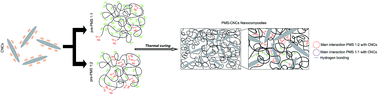
2 were formed via the polycondensation reaction between the appropriated molar amounts of sebacic acid and D-mannitol (Scheme 1). In this first stage, the esterification is preferentially dominated by the reaction of the primary hydroxyl groups from D-mannitol (situated at both ends) with the carboxylic acid groups from sebacic acid.47,48 The reactions were stopped before gelation occurred, thus affording two polyesters with approximately the initial molar amounts incorporated during synthesis as was revealed by 1H NMR spectra (ESI Fig. S1†). Nanocomposites with 1 wt%, 5 wt%, and 10 wt% CNC were subsequently prepared by solution-casting mixtures of the PMS1
:
1 and PMS1
:
2 pre-polymers and the CNCs were cured in a second step under vacuum using two different curing profiles designed to prepare materials with low and high degree of crosslinking of each stoichiometric ratio, referred to in this paper as L and H, respectively. Fig. 1 and ESI Table S2† show TEM micrographs and the key properties of isolated CNCs used to develop the nanocomposites.
:
1 and 1
:
2 stoichiometric ratios prepared under a low and high degree of crosslinking conditions were recorded. Fig. 2 shows the most relevance bands for the neat PMS and PMS/CNC nanocomposite stoichiometric ratio 1
:
1 and 1
:
2, respectively. The neat PMS samples show the characteristic absorption bands for hydrogen-bonded hydroxyl groups (3500–3200 cm−1) and for carbonyl-stretching vibrations of the ester groups (1800–1600 cm−1) in the polymer backbone, thus confirming the formation of polyesters. The bands around 2924 cm−1 and 2852 cm−1 are assigned to methylene (–CH2–) groups for the diacid residue and are observed in all spectra. A peak close to 1150 cm−1 is assigned to the –CO stretch associated with the ester groups (ESI Fig. S2†).49 Samples prepared under a low degree of crosslinking conditions (L-crosslinked) for both stoichiometric ratios showed a broad and intense –OH stretch peak at 3350 cm−1, an acid peak at 1705 cm−1, and an ester peak at 1740 cm−1, thus revealing a substantial fraction of unreacted hydroxyl and acid groups. The –OH band intensity was lower for the 1
:
2 stoichiometric ratio while the acid peak (1705 cm−1) was more evident in accordance with the higher sebacic acid content and lower mannitol presence compared with the 1
:
1 ratio. All samples prepared under a high degree of crosslinking conditions (H-crosslinked) showed a reduction absorption spectra related to the hydroxyls groups at 3350 cm−1 a more distinct 1
:
2 ratio, and a more pronounced –CO stretch associated with the ester groups, thus indicating a higher degree of esterification between acid and hydroxyl groups. The FTIR spectra of the nanocomposites revealed a similar pattern; it was able to discerned peaks associated with the CNC–OH close to 3338 cm−1 in the samples with 5 and 10 wt% CNCs.
:
1 with a low degree of crosslinking had average UTS of 1.2 ± 0.7 MPa and a Young's modulus of 1.8 ± 0.3 MPa, while for the high crosslinking degree these values increase to 7.0 ± 0.6 MPa and 54.4 ± 3.3 MPa, respectively. While doubling the feed ratio of the sebacic acid monomer, the crosslink density increased30 and for low degree of crosslinking samples a four-fold enhancement in UTS (4.5 ± 0.7 MPa) and Young's modulus (7.2 ± 0.1 MPa) values were obtained compared with 1
:
1 stoichiometry. Elongation at break of these samples (low crosslinking degree) is also hardly affected by changing stoichiometry to 1
:
2 ratio being reduced by half. In contrast, high degree of crosslinking 1
:
2 PMS samples are the stiffer and stronger showing a higher Young's modulus for a comparable elongation to their 1
:
1 PMS counterpart, however, the enhancement in the mechanical properties comparing neat matrices with this crosslinking profile for both stoichiometric ratios, is not as marked as occurs for low degree of crosslinking samples. Thus altering monomer-feed ratio of sebacic acid (increasing it) in PMS elastomers resulted in a wide range of mechanical properties, whilst for high degree of crosslinking samples similar elongation at break is maintained with a slightly increase in the mechanical properties.
| Curing conditions, physical and mechanical properties of PMS and nanocomposites with low degree of crosslinking (L); 120 °C, 60 cm Hg, 3 days | ||||||||
|---|---|---|---|---|---|---|---|---|
| Sample | Mannitol : sebacic acid ratio |
Young's modulusa (MPa) | Ultimate tensile strengtha (MPa) | Elongation at breaka (%) | Tg by DSCb (°C) | Degradation onset temperaturec (°C) | Toughnessa (MJ m−3) | Hydration by mass (%) |
| a Young's modulus was calculated from the initial slope between 0–10% of strain for low crosslinked samples and between 0–5% strain for high crosslinked samples. All the values are an average of 2–5 specimens and are determined from stress strain curves.b DSC glass transition temperatures were calculated as the midpoint of the transition in the 2nd heating run from differential scanning calorimetry traces (see ESI, Fig. S3).c Determined from thermogravimetric analysis derivative peak.d These samples break in the clamp due to the high stiffness. | ||||||||
| Neat PMS | Ratio 1 : 1 |
1.8 ± 0.3 | 1.2 ± 0.7 | 80.0 ± 29.0 | 18 | 227 | 63.6 ± 50.0 | 19.6 ± 1.5 |
| PMS/1% CNC | 2.1 ± 0.5 | 2.3 ± 0.02 | 147.0 ± 31.1 | 18 | 237 | 187.4 ± 46.3 | 20.2 ± 0.2 | |
| PMS/5% CNC | 3.0 ± 0.3 | 4.6 ± 0.6 | 166.0 ± 20.5 | 18 | 230 | 393.5 ± 5.2 | 19.3 ± 1.1 | |
| PMS/10% CNC | 6.0 ± 0.7 | 5.6 ± 0.4 | 119.5 ± 18.3 | 17 | 217 | 389.0 ± 86.4 | 21.5 ± 0.3 | |
| Neat PMS | Ratio 1 : 2 |
7.2 ± 0.1 | 4.5 ± 0.7 | 35.8 ± 3.5 | 16 | 238 | 81.8 ± 5.4 | 14.4 ± 1.0 |
| PMS/1% CNC | 11.1 ± 0.6 | 4.6 ± 1.2 | 25.6 ± 2.5 | 16 | 239 | 72.5 ± 22.6 | 12.0 ± 0.3 | |
| PMS/5% CNC | 14.8 ± 1.2 | 6.2 ± 1.3 | 25.4 ± 2.4 | 10 | 234 | 94.6 ± 23.5 | 11.4 ± 0.3 | |
| PMS/10% CNC | 32.3 ± 2.6 | 8.5 ± 2.0 | 23.4 ± 0.04 | 8 | 233 | 89.3 ± 39.1 | 10.4 ± 0.8 | |
| Curing conditions, physical and mechanical properties of PMS and nanocomposites with high degree of crosslinking (H); L + 170 °C, 60 cm Hg, 1 day | ||||||||
|---|---|---|---|---|---|---|---|---|
| Sample | Mannitol : sebacic acid ratio |
Young's modulusa (MPa) | Ultimate tensile strengtha (MPa) | Elongation at breaka (%) | Tg by DSCb (°C) | Degradation onset temperaturec (°C) | Toughnessa (MJ m−3) | Hydration by mass (%) |
| Neat PMS | Ratio 1 : 1 |
54.4 ± 3.3 | 7.0 ± 0.6 | 40.5 ± 7.0 | 26 | 263 | 204.4 ± 6.3 | 9.0 ± 0.2 |
| PMS/1% CNC | 54.5 ± 1.6 | 13.2 ± 2.2 | 94.1 ± 14.0 | 24 | 280 | 757.4 ± 238.0 | 8.7 ± 0.1 | |
| PMS/5% CNC | 132.5 ± 20.6 | 20.1 ± 3.4 | 77.0 ± 12.6 | 21 | 274 | 1047.0 ± 310.0 | 8.0 ± 0.3 | |
| PMS/10% CNC | 103.0 ± 12.2 | 19.4 ± 2.4 | 37.4 ± 6.0 | 20 | 268 | 470.0 ± 102.2 | 11.2 ± 0.5 | |
| Neat PMS | Ratio 1 : 2 |
69.8 ± 0.6 | 13.3 ± 1.6 | 55.1 ± 4.9 | 32 | 271 | 482.0 ± 13.3 | 5.1 ± 0.8 |
| PMS/1% CNC | 146.4 ± 5.5 | 14.8 ± 3.3 | 35.4 ± 9.4 | 30 | 272 | 325.3 ± 9.9 | 4.7 ± 0.4 | |
| dPMS/5% CNC | 166.5 ± 4.0 | — | — | 23 | 277 | — | 2.2 ± 1.0 | |
| dPMS/10% CNC | 167.5 ± 5.0 | — | — | 21 | 278 | — | 2.1 ± 0.5 | |
Regarding nanocomposites, the improvement of the Young's modulus and tensile strength by increasing the CNCs content (Table 1) was appreciated for both stoichiometric ratios and crosslinking profiles. As was happened in previously reported 1
:
1 PMS nanocomposites system, by applying the high crosslinking degree profile to 1
:
2 PMS (Fig. 3) nanocomposites results in much stiffer and stronger samples than their low crosslinking degree counterparts, reaching the highest Young's modulus close to 170 MPa for 5 and 10 wt% of CNC loads. Same CNCs content, produce in all 1
:
2 PMS nanocomposites a five-fold and nearly two-fold increase in Young's modulus, for low and high degree of crosslinking nanocomposites respectively, compared with the analogous samples of 1
:
1 PMS nanocomposites. Thus, at equal CNCs load, the PMS 1
:
2 nanocomposites showed higher enhancement in mechanical properties than the PMS 1
:
1 nanocomposites due to a higher crosslink density from the matrix. Surprisingly, for this stoichiometric ratio (1
:
2), the addition of a small amount of CNCs (only 1 wt%) results in a noticeable increase in the Young's modulus of 54% and 109% for low and high crosslinking degree samples, respectively, over the neat matrix. However, the addition of 1 wt% of CNCs in the 1
:
1 ratio does not produce as high reinforcement as in the 1
:
2 PMS matrix, thus having similar Young's modulus to the neat polymer.
Another remarkable effect reported in the previous work,38 and in what differs the behaviour of nanocomposites with different stoichiometry, was that increasing the CNCs content in the PMS 1
:
1 samples provided higher stiffness without significantly compromising the elongation at break of the composites for both crosslinking profiles. This was related to a molecular level reinforcement induced by reactions between the nanoparticles with high hydroxyl functionality and the matrix during the second polycondensation step, which also occur for previously reported clays and CNC-reinforced polyurethane nanocomposites.50–52 In contrast increasing the CNCs content in PMS 1
:
2 matrix for both crosslinking profiles, results in higher stiffness whereas the elongation at break decreases, but not significantly. Therefore, the increase in mechanical properties without compromising the elongation at break in the 1
:
1 system are due to the presence of CNC nanoparticles in the matrix and from polymer molecules interacting physically and chemically with CNC surfaces; however, for the 1
:
2 system, the higher improvement in the mechanical properties, even for lower CNC contents, and the slight decrease in elongation at break, seem to be influenced by the higher crosslink density, together with the presence of well-dispersed stiff nanoparticles and CNC/CNC interactions, more than from polymer/CNC interactions.
The different behaviors observed in terms of stiffness, strength, and elongation at break between the 1
:
2 and 1
:
1 neat matrices with the CNCs presence can be associated to the differences in the OH
:
COOH ratio. One must consider that CNC is highly –OH functional and capable to interact with the residual hydroxyl or acid groups from PMS. As was already reported, as the value of average functionality (fav) increases, the degree of polymerization also increases.47,53 For the 1
:
1 PMS, and 1
:
2 PMS, the fav calculated using Pinner's equation53,54 was 1.3 and 2.6, respectively. This implies that for the 1
:
2 pre-polymer, the free reactive sites available after the first polycondensation step are probably lower than in the 1
:
1 pre-polymer due to the higher density of crosslinking that results in fewer possibilities to form PMS/CNC interactions during the extent of the second polycondensation step. In the same way, the high offset in stoichiometry between available carboxylic acid and hydroxyl groups, is also responsible of losing the positive effect in the mechanical properties and elongation at break (tends to decrease) for the PMS 1
:
1 and 10 wt% of CNC nanocomposite with a high degree of crosslinking, as produce a loss of the polymer–filler synergistic effect.38,55
:
1 and 1
:
2 reaction ratios. Samples with a higher sebacic acid ratio have a lower swelling degree that reveals an increase of the crosslink density of the networks for the same curing conditions in agreement with the mechanical property results.30 For example, the neat PMS 1
:
1 obtained with low crosslinking curing conditions, swells to 17.7 ± 1.0% and to 8.7 ± 0.5% cured with high crosslinking conditions, whereas changing the reaction ratio to 1
:
2 reduces the swelling degree to 14.4 ± 1.0% and to 5.1 ± 0.8 for the low and high crosslinking degree of the neat PMS, respectively. Moreover, it seems that there are two clearly differentiated effects with the addition of CNCs to the 1
:
1 and 1
:
2 neat PMS networks. In the case of the 1
:
1 ratio, the addition of CNCs does not seem to significantly modify the swelling behavior of the neat matrix for low crosslinking degree nanocomposites, while it tends to slightly decrease for 1 and 5 wt% of CNC for high crosslinking degree samples. High crosslinking degree samples with 10 wt% of CNCs have the highest swelling degree; this fact is in concordance with the observed mechanical behavior and could be ascribed to the loss of polymer–filler interactions due to the high offset in the stoichiometry. For 1
:
2 stoichiometric, it is more evident that the addition of CNCs results in a lower swelling degree for both curing conditions. The addition of 10 wt% of CNCs reduces the swelling degree to 10.4 ± 0.8 and 2.1 ± 0.5 for low and high crosslinking degree samples respectively. These results indicate that for the 1
:
1 ratio samples, the crosslinking degree of 1 and 5 wt% CNC content nanocomposites, is mainly governed by the PMS matrix and CNC interactions, probably due to the excess of hydroxyl groups in the polymer backbone and the new introduction by the fillers, while higher CNC contents (10 wt%) offer an excess of hydroxyl groups that would favour the CNC/CNC interactions, thus reducing the polymer/polymer interactions and, hence, the crosslinking degree. In the case of samples with a higher sebacic acid feed ratio, the excess acid groups, instead of hydroxyl groups in the polymer backbone, are expected to provide additional esterification sites that, together with the hydroxyl groups available in the CNCs, seem to be the responsible for the reduction in the swelling degree with the increase of the CNCs content; that is, at least in a certain extent, CNC can act as a chemical crosslinker to enhance the crosslinking between CNC and PMS chains.56
:
1 and 1
:
2 PMS and PMS/CNC samples. In the case of thermal stability, the neat PMS and nanocomposites with a high degree of crosslinking revealed an increase of thermal stability for these curing conditions compared with their low crosslinking counterparts. Yet no marked differences in the thermal stability behavior were evidenced by comparing both reaction ratios (1
:
1 and 1
:
2). Some of the nanocomposites containing 5–10 wt% of CNCs showed a slightly lower degradation onset temperature than the neat PMS or 1 wt% CNC samples, most likely due to the lower onset degradation temperature associated with the CNC glycosyl units degradation starting at 220 °C.57 Regarding the DSC results, there are two factors in the nanocomposites that could influence Tg in opposite directions. First, for the same curing profile, all the high crosslinking degree samples had a Tg higher than the low crosslinking degree samples; that is, longer curing times and higher temperature result in a higher degree of crosslinking, probably due to that hydrogen bonding and/or chemical crosslink was gradually intensified during thermal curing, which hinders the mobility of polymeric chains and increases the Tg. Moreover, Tg tends to decrease by slightly increasing the CNCs content for the 1
:
1 low crosslinking degree samples, thus becoming more prominent for high crosslinking and 1
:
2 ratio samples due to the disruption of polymeric network.49,58 This second phenomenon could be explained as follows: in the first step of the condensation there occurs an esterification dominated by the reaction of the primary hydroxyl groups founded at both ends of mannitol with carboxylic acid groups from sebacic acid, thus leaving a large amount of secondary –OH groups in the pre-polymer backbone and also an excess of free carboxylic acid groups for 1
:
2 ratio. For both systems, CNCs were added into the PMS pre-polymers at this point and were subject to low and high crosslinking conditions, which considerably changed the OH/COOH ratio. These variations in the initial stoichiometry reaction of the 1
:
1 and 1
:
2 ratios not only seemed to be responsible for CNCs not increasing the Tg as was expected, but also shifting it to lower temperatures for nanocomposites.57 Similar behavior was observed for polyurethanes reinforced with CNCs and poly(glycerol sebacate) bioglass nanocomposites due to strong associations between the filler and matrix.50,58 The new interactions between polymer chains and CNCs which seem to be favoured by higher sebacic acid feed ratios, higher crosslinking conditions, and raising the filler contents, all of which could reduce the polymer/polymer interactions and, therefore, be responsible for lowering the Tg.Fig. 4 shows the obtained degradation rates that seem to be loosely correlated to the swelling and mechanical properties. Taking these results into account, roughly, the highest degradation rates correspond to samples with the lowest mechanical properties and highest swelling degrees; thus, to the 1
:
1 low crosslinking degree samples and nanocomposites. Continuing with the observed trend, the 1
:
1 reaction ratio samples with a high crosslinking degree have slightly slower degradation behavior than the 1
:
2 low crosslinking degree samples, while the slowest degradation rate was obtained for the high crosslinking degree 1
:
2 samples. Comparing both reaction ratios, an increase in sebacic acid content increases the time required for degradation due to an extent in the crosslink density that can effectively reduce the degradation rate for the same curing profile. Interestingly, the presence of CNCs does not seem to have a great influence on the degradation rate of the neat polymer matrices. As was observed in previously reported systems,60 the differences in mass loss between the two studied systems (1
:
1 and 1
:
2) could also be related to the higher presence of mannitol, which is more noticeable in the 1
:
1 low crosslinking degree samples, that increases the hydrolytic degradation rate and enhances water penetration into the polymer matrix. An increase in the crosslink density achieved by changing the mannitol
:
sebacic acid ratio from 1
:
1 to 1
:
2 (corresponding to more equal numbers of alcohol and carboxylic groups) was also reported to be an important factor to significantly decrease the mass loss.61 The results indicate considerable impact of the network structure on the degradation rates, which can be tuned or slowed by changing the stoichiometric ratio or crosslinking conditions without being affected by CNCs presence. To confirm the degradation of the samples, Fig. 5 shows FTIR spectra's main bands of films immersed in SBF after 150 days. All the samples developed a new peak centred around 1560 cm−1, which is not present in the spectra of dry samples. This peak is characteristic of the stretch of carboxylate groups, indicating that some salts of carboxylic acid have been formed due to the hydrolysed ester bonds.62,63
:
1 low crosslinking degree samples still mostly retained their shape but had completely lost their mechanical compliance and their testing and manipulation became impractical. The mechanical behavior under hydrated conditions of biomaterials is an important factor in determining their possible biomedical and biological applications59 since a drastic reduction in the mechanical properties of conventional polyesters between dry and wet conditions, may induce an inflammatory response that enhances fibrous capsule formation.49 Regarding to the developed materials, it was observed that all the samples had a similar Young's modulus after one day hydration under physiological conditions that demonstrated low differences between dry and wet conditions. As expected, for the low and high crosslinking degree of neat PMS 1
:
1 and its CNC nanocomposites, a prolonged incubation time of up to 30 days produced a significant drop in the Young's modulus compared with the 1
:
2 ratio samples due to the higher presence of the hydrophilic nature mannitol unit.59 In contrast, Young's modulus for the low and high crosslinking degree of 1
:
2 PMS samples and CNC nanocomposites is less deteriorated over time in culture media. Similar behaviors have been reported for the poly(xylitol sebacate) 1
:
1 and 1
:
2 ratios elastomers.34 The dependence of Young's modulus on the immersion time in culture medium revealed marked differences between 1
:
1 and 1
:
2 ratios without a clear dependence with CNC content, except for the high crosslinking degree of 1
:
2 PMS and nanocomposites. These samples are able to retain the initial stiffness by increasing the CNC content over the degradation time, probably due to less deterioration of the network and motivated by a higher crosslink density.
In general, mechanical properties are expected to decrease with time for these systems; however, after long periods of incubation (150 days), the 1
:
2 neat PMS and nanocomposites with a high degree of crosslinking had an increased Young's modulus, yet the other samples tended to decrease or remain unchanged after 30 days of incubation. Similar phenomena was observed in poly(propylene fumarate) composites and were initially ascribed to the complexation of the carboxylic groups formed during degradation.64,65 In our case, it could probably be related to the generation of new crosslinking/interaction points in the network due to the scission of ester linkages that increase free carboxylic acid salts (Fig. 5). The fact that it is only occurring for these samples poses the question of whether these new crosslinking/interaction points can be favoured for the higher network density, and within that, whether all the new available functional groups are closer and can easily interact.
There are a couple of important features that can be concluded from this degradation study: on the one hand, the synthesized materials cover a wide range of mechanical properties and, hence, may be used for biomedical and tissue engineering. For example, tough living tissues such as tendon (E = 143–2310 MPa), human ligament (E = 65–541 MPa), or cancellous bone (E = 20–500 MPa)66 have a Young's modulus comparable to the high crosslinking degree samples. In applications where the involved tissue is softer and more elastic, the low crosslinking degree samples could be offered similar mechanical compliance for some human elastic soft tissues such as knee articular cartilage (2.1–11.8 MPa),67,68 cerebral vein (6.85 MPa) and artery (15.6 MPa), aortic valve leaflet (15 ± 6 MPa)59 or pericardium (20.4 ± 1.9 MPa).69 On the other hand, in the context of biomaterials applications, the design of mechanically stable materials over an extended period is of importance for tissue remodelling at the wound site.70,71 Regarding this highly desirable mechanical stability following implantation, the 1
:
2 reaction ratio nanocomposites have the highest mechanical stability over a one month period, and could be good candidates for mechanical support to damaged tissues during the lag phase of the healing process. Finally, it should be pointed out that for long-term biomedical applications, one major requirement of any material is that must be biocompatible. Thus, it has to be able to stay in contact with living tissues without causing any cytotoxic or other derived side effects. Previous studies have investigated approaches to create PPS composites based on the introduction of inorganic components such as halloysite nanotubes (clays) or multi-walled carbon nanotubes (MWCNTs) with improved mechanical properties.70,72,73 However, the main drawback derived from the use of these inorganic nanoparticles in vivo is their potential toxicity as well as the uncertain (or non-existent) mechanism of removal from the body.74 By using organic based fillers these drawbacks could be lessen. In this regards, although CNC is known as non-biodegradable material for a long time, it has recently gained attention because exhibit low cytotoxicity with a range of animal and human cell types and no cytotoxicity at concentration ranges of ∼50 μg mL−1 of CNC.74–79 Mahmoud et al.80 reported that any noticeable cytotoxic effect on two different cell lines occurred during in vitro cellular studies of two differently charged CNCs (positively and negatively) suggesting possible applications in both drug delivery and bioimaging. Jia et al.81 reported potential application of microcrystal cellulose (MCC) and CNC as a filler of electrospun cellulose acetate vascular tissue scaffolds to improve biocompatibility. Thus, although the present work should be biocompatible, given that both components have been previously tested separately, future investigations are needed to characterize the toxicology of these cellulose nanocomposites materials thorough in vitro and in vivo testing, to confirm the potential biomedical application. The in vitro studies reported until now highlight that CNCs hold great promise in a wide variety of biotechnological and biomedical applications especially in tissue engineering.82
Footnote |
| † Electronic supplementary information (ESI) available: CNC properties, 1H-NMR, IR and DSC complementary studies. See DOI: 10.1039/c5ra06768e |
| This journal is © The Royal Society of Chemistry 2015 |