
DOI:
10.1039/C5RA06441D
(Paper)
RSC Adv., 2015,
5, 49295-49300
Retracted Article: Pt NPs@GO as a highly efficient and reusable catalyst for one-pot synthesis of acridinedione derivatives†
Received
10th April 2015
, Accepted 12th May 2015
First published on 12th May 2015
Abstract
Graphene oxide decorated with platinum nanoparticles (Pt NPs@GO) has been used for the first time as a highly stable, exceptionally reusable, isolable, bottleable, long-lived and highly efficient catalyst for the synthesis of acridinedione derivatives from dimedone, aromatic aldehydes and various amines with great catalytic performance. All the acridinedione compounds were synthesized in DMF in a single process through two successive reactions (aldol condensation and Michael addition) in the presence of highly efficient Pt NPs@GO. The synthesized catalyst was characterized by transmission electron microscopy (TEM), high resolution electron microscopy (HRTEM), X-ray diffraction (XRD), atomic force microscopy (AFM) and X-ray photoelectron spectroscopy (XPS). All products obtained using Pt NPs@GO were characterized by FT-IR, 1H-NMR, 13C-NMR and HRMS techniques.
Introduction
Acridinedione molecules were discovered in the 19th century and new derivatives of acridinedione still continue to be discovered today. Acridinedione derivatives of 1,4-dihydropyridine are compounds with interesting biological features which are similar to the structure of nicotinamide adenine dinucleotide (NADH), an important co-enzyme found in cells.1 Moreover, acridinedione derivatives are medicinally important compounds2 and are used in laser dyes due to their high fluorescence efficiency.3,4 Furthermore, since acridinedione derivatives have a wide range of biological activities, for example antimicrobial,5,6 antibacterial,7 fungicidal,8 antitumor9 and anticancer,10–12 and are also used for glaucoma treatment as carbonic anhydrase inhibitors,13–15 there are lots of reported methods for the synthesis of acridinedione, including multi component condensation (MCR) of aromatic aldehydes, cyclic diketones, and various aromatic amines in the presence of different catalysts such as Amberlyst-15,16,17 CTAB,18 DBSA,13,19 FSG-Hf(Npf2)4,20 H2SO4,15 melamine–formaldehyde resin supported H+,21 proline22 and SiO2–Pr–SO3H.23 However, the use of these homogeneous catalysts poses difficulties associated with their reusability, recovery, separation and the synthesis procedure. For this reason, heterogeneous alternatives have already captivated much attention. Due to the ability to recover and reuse heterogeneous catalysts, recently several heterogeneous catalytic systems were reported using, for example, CdO,24 Fe2O3@SiO2-PW,25 Fe3O4,26 Fe3O4@SiO2,27 NiFe2O4@SiO2-FHS28 and ZnFe2O4 (ref. 29) as catalysts. However, the problem in most of those catalytic systems is the unsatisfactory yield, long reaction times, laborious work-up procedures and the requirement of special apparatus and harsh reaction conditions. To avoid these limitations and to improve the reaction conditions available for the synthesis of acridinedione, the discovery of new methodologies using new heterogeneous and reusable catalysts is still in demand. Herein we wish to report an efficient and novel method for the synthesis of acridinedione derivatives, via one-pot MCRs of aromatic aldehydes, cyclic diketones, and various aromatic amines, in high yields and short reaction times by using Pt NPs@GO as a highly efficient, robust, reusable and easily recoverable catalyst.
The current Pt NPs@GO has been used for the first time for these types of synthesis reactions.
Results and discussion
Pt NPs@GO has been prepared by a sonochemical reduction method as given in the experimental section and the preliminary characterization was performed using TEM, HRTEM, XRD, AFM and XPS methods.
The high resolution electron micrograph (HRTEM) images and particle size histograms of the prepared catalyst are shown in Fig. 1. This also shows the information regarding the particle size and morphology of the Pt NPs@GO. A uniform distribution of the catalyst particles with a relatively narrow size range was detected on the graphene oxide support and most of the particles were found to be approximately spherical in shape with an average diameter of around 3.25 nm. No agglomerations were observed in the prepared catalyst. Moreover, the chosen area of the HRTEM image of Pt NPs@GO displays the highly crystalline feature with a spacing of 0.229 nm, which is very close to nominal Pt (111) spacing of 0.228 nm.30–35
 |
| | Fig. 1 High resolution transition electron micrograph and particle size histogram of Pt NPs@GO. | |
X-Ray diffraction (XRD) measurements indicate that Pt NPs@GO exhibits distinct diffraction patterns, as illustrated in Fig. S1.† The diffraction peaks at 2θ = 39.74, 46.32, 67.63, 81.58 and 85.79 are due to the Pt (111), (200), (220), (311), and (320) planes, respectively, of the face-centered cubic (fcc) crystal lattice of platinum (JCPDS-ICDD, card no. 04-802). The peak at 10.8° is attributed to the graphite (002) plane of GO. The Pt (220) diffraction peaks of the prepared catalyst are used to calculate the lattice parameters (αPt) and average crystallite sizes of the metal particles. The lattice constant was found to be 3.921 Å, which is in good agreement with 3.923 Å for pure Pt, by using the following equation.33
The average crystallite particle size of Pt NPs@GO was found to be about 3.49 ± 0.53, using the following equation:36–38
where
k = a coefficient (0.9);
λ = the wavelength of X-ray used (1.54056 Å);
β = the full width half-maximum of the respective diffraction peak (rad);
θ = the angle at the position of peak maximum (rad). Moreover, the chemical surface area (CSA) of the Pt NPs@GO was found to be 88.17 m
2 g
−1 using the following equation, assuming homogeneously distributed and spherical particles:
39where
d is the mean Pt crystallite size in Å (from the XRD results) and
ρ is the density of Pt metal (21.4 g cm
−2).
40,41
Atomic force microscopy (AFM) was also used to observe the height diameter distributions shown in Fig. S2a and b.† The AFM height diameter of the Pt NPs@GO was found to be 3.27 nm which is in good agreement with the dimensions measured using XRD and TEM.
X-Ray photoelectron spectroscopy (XPS) was used for the determination of the surface composition and chemical oxidation states of Pt in the prepared nanocatalyst. The Pt 4f region of the spectrum was analysed, and the fitting of the XPS peak was performed using the Gaussian–Lorentzian method. In the XPS spectrum, accurate binding energies (±0.3 eV) were determined by using the C 1s peak as a reference at 284.6 eV. The Pt 4f photoelectron spectrum, consisting of two pairs of doublets, is shown in Fig. S3† for the prepared catalyst. The most intense doublet at about 71.2 and 74.0 eV is a signature of metallic platinum (23–30) and the other doublet at about 74.0 and 77.0 eV is most likely caused by a very small fraction of oxidized Pt4+ species possibly due to PtOx species formed during catalyst exposure to the atmosphere. The ratio of Pt(0) to Pt(IV) for the prepared catalyst was calculated from the relative peak area of the Pt 4f spectrum. The relative intensities of the Pt(0) and Pt(IV) species were estimated by calculating the integral of each peak after smoothing and subtracting the Shirley-shaped background and the Pt(0)/Pt(IV) ratio was found to be 6.81 for the Pt NPs@GO.
It is worth mentioning that Pt NPs@GO is often used as a catalyst in batteries, hydrogen storage, sensors and super-capacitors42–46 but its use as a catalyst for synthesizing acridinedione derivatives from different aromatic aldehydes and various amines has not been reported before.
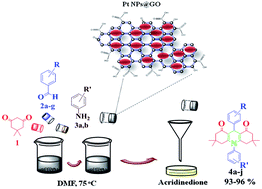
For the synthesis of acridinedione derivatives, a new, facile and effective method involving the use of Pt NPs@GO has been designed. The syntheses of acridinedione compounds were realized in DMF from dimedone 1, different aromatic aldehydes 2a–g and various amines 3a,b in a single process through three successive reactions (aldol condensation, Michael addition and cyclization) by using Pt NPs@GO as the catalyst. These acridinedione derivatives have been synthesized using compounds 1, 2f and 3a in the presence of Pt NPs@GO as a model reaction (Scheme 1).
 |
| | Scheme 1 Synthesis of acridinedione derivatives in the presence of Pt NPs@GO. | |
In this line of work, we compared the results obtained using Pt NPs@GO in the synthesis of acridinedione derivatives with those obtained using other catalysts such as DBSA, hydrochloric acid, glacial acetic acid,47 sulfuric acid and ionic liquid.48 As shown in Fig. 2, Pt NPs@GO is the most efficient catalyst and gives the highest yields of products in the shortest time.
 |
| | Fig. 2 Comparison of Pt NPs@GO with other catalysts. | |
We also optimized our model reactions using different solvents, amounts of catalyst and reaction conditions on the basis of different temperatures.
Firstly, the effect of using different solvents such as chloroform, no solvent, water, acetonitrile, methanol, tetrahydrofuran, dioxane, ethanol and dimethylformamide on the reaction rate was evaluated under the same reaction conditions (Fig. 3). Since the reaction in the presence of DMF resulted in the highest yield and shorter reaction time compared to the other used solvents, we have chosen DMF as an optimal solvent for the model reaction.
 |
| | Fig. 3 A comparison of the efficiency of various solvents employed in the synthesis of acridinedione derivatives. | |
We carried out seven sets of model reaction by varying the amount of catalyst to determine the exact catalyst concentration necessary for the best possible yield. The first set where no catalyst was used led to no formation of product. However, when the amount of catalyst increased gradually from 3 to 8 mg a steady increase was observed in the product yield (Fig. 4). Further increase in catalyst concentration gave rise to a decrease in the product yield possibly due to the protonation of amine groups in the aromatic ring by carboxylic acid groups of the graphene oxide.
 |
| | Fig. 4 The optimization of Pt NPs@GO concentration for preparation of acridinedione derivatives in DMF. | |
After standardizing the solvent and catalyst concentration, we turned our attention toward examining the effect of temperature on the model reaction. It was observed that at room temperature no desired product was formed even after 48 h of stirring. The yield of desired product gradually increased with the increase in temperature from room temperature to 75 °C, as shown in Fig. 5.
 |
| | Fig. 5 The optimization of temperature for the preparation of acridinedione derivatives using Pt NPs@GO as the catalyst in DMF. | |
In summary, the highest efficiency and fastest reaction time on the model reaction was observed at 75 °C using 8 mg of Pt NPs@GO in DMF. The results of all reactions performed under these conditions are shown in Table 1.
Table 1 Synthesis of acridinedione derivatives 4a–j in the presence of 8 mg Pt NPs@GOa
| Entry |
R |
R′ |
Time (min) |
Yieldb (%) |
Mp. (°C) |
| Found |
Reported |
Reactions were carried out with dimedone, aromatic benzaldehyde and various amines, in a 2 : 1 : 1 molar ratio. Yields refer to isolated pure products. |
| 4a |
–H |
4-Cl |
50 |
94 |
300–302 |
309–311 (ref. 49) |
| 4b |
4-NO2 |
4-Cl |
75 |
93 |
315–317 |
>300 (ref. 50) |
| 4c |
3-NO2 |
4-Cl |
90 |
94 |
285–287 |
285–286 (ref. 51) |
| 4d |
4-Br |
4-Cl |
60 |
95 |
304–305 |
>300 (ref. 50) |
| 4e |
4-F |
4-Cl |
60 |
93 |
280–282 |
>300 (ref. 52) |
| 4f |
4-CH3 |
4-Cl |
60 |
93 |
262–265 |
268–269 (ref. 51) |
| 4g |
4-OCH3 |
4-Cl |
75 |
96 |
255–257 |
269–270 (ref. 53) |
| 4h |
–H |
4-Br |
60 |
95 |
303–305 |
269–272 (ref. 54) |
| 4i |
3-NO2 |
4-Br |
75 |
96 |
295–296 |
— |
| 4j |
4-Br |
4-Br |
120 |
94 |
318–320 |
— |
All the products were characterized by melting point, FT-IR, NMR, and HRMS analyses (Fig. S4–13†).
The efficiency of the catalyst was also checked by investigation of its reusability. After completion of the reaction, Pt NPs@GO was separated, washed with acetone, dried and reused in another set of reactions. It was observed that the catalyst can be reused six times with very high yields (Fig. 6). It should be pointed out that no extra care should be taken in order to store or handle the catalyst as it is not air or moisture sensitive. To the best of our knowledge Pt NPs@GO shows the best reusability performance reported in literature.24–29
 |
| | Fig. 6 Reusability performance of Pt NPs@GO in the model reaction. | |
Experimental
The preparation of Pt NPs@GO
Pt NPs were synthesized by a sonochemical reduction method. Summarizing this method, ethanol and super hydride were used to reduce a mixture of 0.25 mmol of PtCl4 dissolved in a small amount of dehydrated tetrahydrofuran and 0.25 mmol of octylamine ligand with the help of an ultrasonicator. The observation of a brown-black colour in the solution indicated the formation of amine-stabilized Pt NPs. Lastly, at room temperature, the solid Pt NPs were dried under vacuum. Graphene oxide (GO) was synthesized from graphite powder using modified Hummer’s method [ESI section†]. The prepared platinum nanoparticles where mixed in a 1
:
10 ratio with GO which was used as a support.
General procedure for preparation of acridinedione derivatives (4a–j) using Pt NPs@GO as the catalyst
A mixture of 2 mmol dimedone 1, 1 mmol 4-methyl benzaldehyde 2f, 1 mmol 4-chloroaniline 3a and Pt NPs@GO (8 mg) in 3 ml DMF was heated to 75 °C continuously for 60 min. The reaction progress was monitored using TLC. The solid product was filtered, washed with 500 ml water, and recrystallized from ethanol (93–96%).
10-(4-Bromophenyl)-3,3,6,6-tetramethyl-9-(3-nitrophenyl)-3,4,6,7,9,10-hexahydroacridine-1,8-(2H,5H)-dione (4i). As yellow crystals, (0.571 g, 96%), mp. (295–296 °C) (ethanol). 1H-NMR (300 MHz, DMSO-d6) δ (ppm): 0.70 (s, 6H, 2 × –CH3), 0.90 (s, 6H, 2 × –CH3), 1.82 (d, 2H, J = 17.47 Hz, –CH2), 2.02 (d, 2H, J = 16.10 Hz, –CH2), 2.19–2.26 (m, 4H, –CH2), 5.10 (s, 1H, –CH), 7.35–7.40 (m, 2H, Ar-H), 7.56–7.61 (m, 1H, Ar-H), 7.76–7.86 (m, 3H, Ar-H), 8.00–8.02 (m, 1H, Ar-H), 8.11–8.16 (m, 1H, Ar-H), 7.82 (d, 2H, J = 8.68 Hz, Ar-H); 13C-NMR (75 MHz, DMSO-d6) δ (ppm): 26.56, 29.65, 32.26, 32.45, 41.35, 49.95, 113.07, 119.25, 123.09, 130.33, 131.26, 132.56, 133.53, 138.10, 145.95, 150.74, 195.54; IR (cm−1): 3052 w (Ar-H), 2959 s (–CH), 1635 s (C
O), 1574 s (C
C); HRMS (QTOF-ESI): m/z calcd. For C29H29BrN2O2: 548.1311; found: 549.1382 ([M + H]+).
9,10-Bis(4-bromophenyl)-3,3,6,6-tetramethyl-3,4,6,7,9,10-hexahydro-acridine-1,8-(2H,5H)-dione (4j). As yellow crystals, (0.549 g, 94%), mp. (318–320 °C) (ethanol). 1H-NMR (300 MHz, DMSO-d6) δ (ppm): 0.70 (s, 6H, 2 × –CH3), 0.90 (s, 6H, 2 × –CH3), 1.78 (d, 2H, J = 17.13 Hz, –CH2), 2.01 (d, 2H, J = 16.01 Hz, –CH2), 2.16–2.22 (m, 4H, –CH2), 5.00 (s, 1H, –CH), 7.24–7.44 (m, 6H, Ar-H); 13C-NMR (75 MHz, DMSO-d6) δ (ppm): 26.47, 29.61, 32.53, 32.92, 41.34, 49.84, 112.71, 121.50, 122.56, 123.23, 130.21, 133.60, 134.75, 137.95, 147.88, 148.59, 151.32, 195.62; IR (cm−1): 3051 w (Ar-H), 2954 s (–CH), 1634 s (C
O), 1575 s (C
C); HRMS (QTOF-ESI): m/z calcd. For C29H29Br2NO2: 581.0565; found: 582.0484 ([M + H]+).
Conclusions
An easy, effective and practical synthetic method has been developed for the synthesis of acridinedione derivatives employing cycloaddition reactions of various amine, aromatic aldehyde compounds and dimedone in the presence of highly stable, exceptionally reusable, isolable, bottleable, long-lived and highly efficient Pt NPs@GO as the catalyst. Pt NPs@GO is the most efficient catalyst which gives the highest yields of products in the shortest time. Further, Pt NPs@GO shows the best reusability performance possible due the fact that it is not air or moisture sensitive. This reusability performance offers advantages like simple work-up and high yields.
Acknowledgements
This research was financed by the Dumlupınar University Research Fund (Grant no. 2014-62 and 2014-05) as well as by the Dumlupınar University ILTEM research laboratory. The partial supports by the Science Academy are gratefully acknowledged.
Notes and references
- S. Singh, S. Chhina, V. K. Sharma and S. S. Sachev, J. Chem. Soc., Chem. Commun., 1982, 8, 453–454 RSC.
- S. Tu, C. Miao, Y. Gao, F. Fang, Q. Zhuang, Y. Feng and D. Shia, Synlett, 2004, 2, 255–258 CrossRef.
- S. J. Tu, Z. Lu, D. Shi, C. Yao, Y. Gao and C. Guo, Synth. Commun., 2002, 32, 2181–2185 CrossRef CAS.
- M. Kaya, Y. Yıldırır and L. Türker, J. Heterocycl. Chem., 2009, 46, 294–297 CrossRef CAS PubMed.
- L. Ngadi, A. M. Galy, J. P. Galy, J. Barbe, A. Cremieux and D. Sharples, Eur. J. Med. Chem., 1990, 25, 67–70 CrossRef CAS.
- M. J. Wainwright, J. Antimicrob. Chemother., 2001, 47, 1–13 CrossRef CAS.
- K. Palani, D. Thirumalai, P. Ambalavanan, M. N. Ponnuswamy and V. T. Ramakrishnan, J. Chem. Crystallogr., 2005, 35, 751–760 CrossRef CAS PubMed.
- A. Srivastava and C. Nizamuddin, Indian J. Heterocycl. Chem., 2004, 13, 261–264 CAS.
- Y. Mikata, M. Yokoyama, K. Mogami, M. Kato, I. Okura, M. Chikira and S. Yano, Inorg. Chim. Acta, 1998, 279, 51–57 CrossRef CAS.
- S. A. Gamage, J. A. Spicer, G. J. Atwell, G. J. Finlay, B. C. Baguley and W. A. Denny, J. Med. Chem., 1999, 42, 2383–2393 CrossRef CAS PubMed.
- M. G. R. Pitta, E. S. Souza, F. W. A. Barros, M. O. M. Filho, O. Pessoa, M. Z. Hernandes, M. D. C. A. D. Lima, S. L. Galdino and I. D. R. Pitta, Med. Chem. Res., 2013, 22, 2421–2429 CrossRef CAS.
- K. Venkatesan, S. S. Pujari and K. V. Srinivasan, Synth. Commun., 2008, 39, 228–241 CrossRef PubMed.
- M. Kaya, E. Basar, E. Çakir, E. Tunca and M. Bulbul, J. Enzyme Inhib. Med. Chem., 2012, 27, 509–514 CrossRef CAS PubMed.
- R. Ulus, İ. Yeşildağ, M. Tanc, M. Bülbül, M. Kaya and C. T. Supuran, Bioorg. Med. Chem., 2013, 21, 5799–5805 CrossRef CAS PubMed.
- İ. Yeşildağ, R. Ulus, E. Basar, M. Aslan, M. Kaya and M. Bülbül, Monatsh. Chem., 2014, 145, 1027–1034 CrossRef.
- B. Das, P. Thirupathi, I. Mahender, V. S. Reddy and Y. K. Rao, J. Mol. Catal. A: Chem., 2006, 247, 233–239 CrossRef CAS PubMed.
- M. Kaya, Y. Yıldırır and G. Y. Çelik, Med. Chem. Res., 2011, 20, 293–299 CrossRef CAS.
- J. J. Xia and K. H. Zhang, Molecules, 2012, 17, 5339–5345 CrossRef CAS PubMed.
- T. S. Jin, J. S. Zhang, T. T. Guo, A. Q. Wang and T. S. Li, Synlett, 2004, 12, 1425–1427 Search PubMed.
- M. Hong and G. Xiao, J. Fluorine Chem., 2012, 144, 7–9 CrossRef CAS PubMed.
- R. Rezaei, R. Khalifeh, M. Rajabzadeh, L. Dorosty and M. M. Doroodmand, Heterocycl. Commun., 2013, 19, 57–63 CrossRef CAS.
- K. Venkatesan, S. S. Pujari and K. V. Srinivasan, Synth. Commun., 2009, 39, 228–241 CrossRef CAS PubMed.
- G. M. Ziarani, A. Badiei, M. Hassanzadeh and S. Mousavi, Arab. J. of Chem., 2014, 7, 335–339 CrossRef CAS PubMed.
- V. B. Ashok, U. K. Bhagwat and G. G. Anil, Res. Chem. Intermed., 2015, 41, 1447–1458 CrossRef.
- R. Ezzat, E. Sara and K. Maryam, Chin. J. Catal., 2013, 34, 1513–1518 CrossRef.
- A. G. Mohammad, S. G. Javad and M. Halimeh, C. R. Chim., 2012, 15, 969–974 CrossRef PubMed.
- D. Binoyargha, N. Sibaji and K. P. Amarta, Tetrahedron Lett., 2014, 55, 5236–5240 CrossRef PubMed.
- K. Amir, R. Mohammad, E. Hossein, M. Farid and B. Mehdi, Chin. J. Catal., 2014, 35, 376–382 CrossRef.
- D. Pamarida, D. Arghya, B. Asim and M. Chhanda, Green Chem., 2014, 16, 1426–1435 RSC.
- F. Sen and G. Gökağaç, J. Phys. Chem., 2007, 111, 5715–5720 CAS.
- P. T. A. Sumodjo, E. J. Silva and T. Rabochai, Electroanal. Chem., 1989, 271, 305–317 CrossRef CAS.
- S. Ertan, F. Sen, S. Sen and G. Gökağaç, J. Nanopart. Res., 2012, 14, 922–926 CrossRef.
- H. Klug and L. Alexander, X-ray diffraction procedures for polycrystalline and amorphous materials, Wiley, New York, 1954 Search PubMed.
- T. C. Deivaraj, W. X. Chen and J. Y. Lee, J. Mater. Chem., 2003, 13, 2555–2560 RSC.
- J. Zhao, P. Wang, W. Chen, R. Liu, X. Li and Q. Nie, J. Power Sources, 2005, 160, 563–569 CrossRef PubMed.
- Y. T. Kim and T. Mitani, J. Catal., 2006, 238, 394–401 CrossRef CAS PubMed.
- S. Ertan, F. Sen, G. Gökağaç and S. Sen, J. Nanopart. Res., 2013, 15, 1979–1985 CrossRef.
- F. Sen and G. Gökağaç, J. Phys. Chem. C, 2007, 11, 1467–1473 Search PubMed.
- S. Sen, F. Sen and G. Gökağaç, Phys. Chem. Chem. Phys., 2011, 13, 6784–6792 RSC.
- F. Sen, S. Sen and G. Gökağaç, Phys. Chem. Chem. Phys., 2011, 13, 1676–1684 RSC.
- F. Sen and G. Gökağaç, J. Appl. Electrochem., 2014, 44, 199–207 CrossRef CAS.
- Y. Li, W. Gao, L. Ci, C. Wang and P. M. Ajayan, Carbon, 2010, 48, 1124–1130 CrossRef CAS PubMed.
- E. Yoo, T. Okata, T. Akita, K. Kohyama, J. Nakamura and I. Honma, Nano Lett., 2009, 9, 2255–2259 CrossRef CAS PubMed.
- C. Xu, X. Wang and J. Zhu, J. Phys. Chem. C, 2008, 112, 19841–19845 CAS.
- R. Kou, Y. Shao, D. Wang, M. H. Engelhard, J. H. Kwak, J. Wang, V. V. Viswanathan, C. Wang, Y. Lin, Y. Wang, I. A. Aksay and J. Liu, Electrochem. Commun., 2009, 11, 954–957 CrossRef CAS PubMed.
- S. Hrapovic, Y. Liu and K. B. Erkek, Anal. Chem., 2004, 76, 1083–1088 CrossRef CAS PubMed.
- I. E. S. Osama, A. S. Mohamed, H. K. Hanan and S. A. D. Ehab, Arch. Pharm., 2010, 9, 519–527 Search PubMed.
- D. Shi, S. Ni and G. Dou, Youji Huaxue, 2009, 29(5), 788–793 CAS.
- R. Rezaei, R. Khalifeh, M. Rajabzadeh, L. Dorosty and M. M. Doroodmand, Heterocycl. Commun., 2013, 19, 57–63 CrossRef CAS.
- Z. Q. Tang, Y. Chen, C. C. Liu, K. Y. Cai and S. J. Tu, J. Heterocycl. Chem., 2010, 47, 363–367 CAS.
- O. I. El-Sabbagh, M. A. Shabaan, H. H. Kadry and E. S. Al-Din, Arch. Pharm., 2010, 9, 519–527 CrossRef PubMed.
- L. L. Zhao and D. Teng, Acta Crystallogr., Sect. E: Struct. Rep. Online, 2008, 64, 1772–1773 Search PubMed.
- Y. Chen, W. J. Hao, Z. Q. Tang, B. Jiang and C. M. Li, Acta Crystallogr., Sect. E: Struct. Rep. Online, 2007, 63, 3934–3940 Search PubMed.
- M. Kidwai and D. Bhatnagar, Tetrahedron Lett., 2010, 50, 2700–2703 CrossRef PubMed.
Footnotes |
| † Electronic supplementary information (ESI) available. See DOI: 10.1039/c5ra06441d |
| ‡ These authors contributed equally to this work. |
|
| This journal is © The Royal Society of Chemistry 2015 |
Click here to see how this site uses Cookies. View our privacy policy here.