DOI:
10.1039/C5RA06347G
(Paper)
RSC Adv., 2015,
5, 46517-46524
Color tuning and energy transfer in Eu2+/Mn2+-doped Ba3Y(PO4)3 eulytite-type orthophosphate phosphors†
Received
9th April 2015
, Accepted 8th May 2015
First published on 11th May 2015
Abstract
Eulytite-type orthophosphate phosphors Ba3Y(PO4)3:Eu2+, Mn2+ and Ba3Ln(PO4)3:Eu2+ (Ln = Lu, Y and Gd) were synthesized by high-temperature solid state reactions under reductive atmospheres. Their photoluminescence showed a surprising red-shift in the emission spectrum with the increase in the ionic radius of Ln in the Ba3Ln(PO4)3:Eu2+ (Ln = Lu, Y and Gd) phosphors system, which arises from the splitting of the 5d energy level. The phase formation, luminescence properties, and energy-transfer mechanism from the Eu2+ to the Mn2+ ions, and the CIE coordinates in the Ba3Y(PO4)3:Eu2+, Mn2+ phosphors were investigated. From powder X-ray diffraction (XRD) analysis, the formation of the single-phased Ba3Y(PO4)3 in a cubic crystal system with the space group I
3d (no. 220) was confirmed. With the doping of Mn2+, the spectral overlap between the emission spectrum of Eu2+ and the excitation spectrum of Mn2+ allows resonance-type energy transfer to occur from Eu2+ to Mn2+ with the mechanism carefully studied by luminescence spectra, energy transfer efficiency and decay times. By increasing the Mn2+ doping concentration in the Ba3Y(PO4)3:Eu2+, Mn2+ phosphors, the emission colors can be tuned from yellowish-green through yellow and ultimately to orange. Such color tuning emissions originate from the change in intensity between the 4f–5d transitions of the Eu2+ ions and the 4T1–6A1 transitions of the Mn2+ ions through the energy transfer from the Eu2+ to the Mn2+ ions. In particular, compared with the commercial YAG:Ce phosphor, our developed phosphor contains a larger amount of red-emitting component; thus, it possesses favorable properties for application in warm white LEDs.
1. Introduction
White light-emitting diodes (LEDs) have attracted tremendous attention due to their broad application prospects in full-color flat-panel displays, back-lighting sources for liquid-crystal displays and general solid-state lighting sources.1–6 Currently, the most common approach to realizing white LEDs is to combine an InGaN-based blue diode with yellow-emitting Y3Al5O12:Ce3+ (YAG:Ce) phosphor. However, white LEDs based on YAG:Ce phosphor exhibit an unsatisfactory high correlated color temperature (Tc > 4500 K) and low color rendering indexes (Ra < 80) for general illumination due to the weak emission in the red spectral region.7–9 In this regard, it is essential to develop orange-yellow-emitting phosphors, which have more emission saturation in the red than YAG:Ce. Although many attempts have been made to develop orange-yellow-emitting phosphors based on nitride and oxynitride, and despite their superior properties, almost all the nitride- and oxynitride-type phosphors require critical preparation conditions, such as high temperature, high pressure, and carbothermal reactions,10–12 which limit their application. Therefore, it is important to develop oxide-type orange-yellow-emitting phosphors using comparatively mild synthesis routes for white LEDs.
Recently, eulytite-type orthophosphate compounds with the general composition M3Ln(PO4)3 (M = alkaline earth; Ln = trivalent rare earth) have been extensively reported as a suitable phosphor host due to their excellent thermal stability, simple synthesis conditions, and good optical properties when doped with rare-earth activators.13–15 In the compound M3Ln(PO4)3, the Ln3+/M2+ pairs of cations are disordered on a single crystallographic site (C3 point group symmetry), while the oxygen atoms of the phosphate groups are distributed over several partially occupied sites. This type of compound was found to show not only disorder in the cation but also an oxygen sub-lattice disorder.16–18 Thus, this disordered structure provides a family of sites for the doping ions to occupy. Therefore, it is worth studying new efficient oxide-type orange-yellow-emitting luminescent materials with structures derived from eulytite-type compounds. These facts prompted us to study the luminescence properties of Ba3Y(PO4)3 activated by Eu2+ and Mn2+ ions. In addition, to the best of our knowledge, the effect of Eu2+- and Mn2+-doping in the Ba3Y(PO4)3 host has not been reported to date.
In this study, a series of orange-yellow-emitting eulytite-type orthophosphate phosphors, Ba3Y(PO4)3:Eu2+, Mn2+ (BYP:Eu2+, Mn2+), were prepared by a conventional solid-state reaction. The photoluminescence excitation and emission spectra, energy transfer mechanism, and color tuning properties were investigated in detail. In particular, the luminescent properties of the Ba3Ln(PO4)3:Eu2+ (Ln = Lu, Y and Gd) phosphor system are discussed in terms of crystal field strength and the Eu–O bond.
2. Experimental section
2.1. Materials and synthesis
The powder samples Ba3(1−x−y)Y(PO4)3:xEu2+, yMn2+ (BYP:xEu2+, yMn2+) and Ba3Ln(PO4)3:Eu2+ (Ln = Lu, Y and Gd) were synthesized by a solid-state reaction method. The reactants BaCO3 (A.R. (Analytical Reagent)), Ln2O3 (Ln = Lu, Y and Gd; 99.99%), NH4H2PO4 (A.R.), Eu2O3 (99.99%) and MnCO3 (A.R.) were weighed according to stoichiometric ratio. After mixing and grinding, the mixtures were heated at 1300 °C for 4 h under a 10% H2–90% N2 gas mixture. Finally, the as-synthesized samples were slowly cooled to room temperature.
2.2. Measurements and characterization
The phase purity of the obtained phosphors were carefully checked using powder X-ray diffraction (XRD) analysis (Bruker AXS D8) in the 2θ range from 10° to 80° with graphite monochromatized Cu Kα radiation (λ = 0.15405 nm) operating at 40 kV and 40 mA. A step size of 0.02° (2θ) was used with a scanning speed of 10° min−1 in the 2θ range. The photoluminescence emission (PL) and photoluminescence excitation (PLE) spectra of the obtained powders were recorded with a Hitachi F-4500 spectrophotometer equipped with a 150 W xenon lamp as the excitation source. The luminescence decay curve was obtained from a Lecroy Wave Runner 6100 digital oscilloscope (1 GHz) using a tunable laser (pulse width = 4 ns, gate = 50 ns) as the excitation source (Continuum Sunlite OPO). The quantum efficiency (QE) was analyzed with a PL quantum efficiency measurement system (C9920-02, Hamamatsu Photonics, Shizuoka) containing a 150 W xenon lamp. All the measurements mentioned above were performed at room temperature.
3. Results and discussion
3.1. Phase identification
Fig. 1 shows the powder X-ray diffraction (XRD) patterns of the as-synthesized BYP:0.005Eu2+, yMn2+ (y = 0–0.10) samples in contrast to the standard card of Ba3Y(PO4)3 (JCPDS 44-0318) for comparison. It was found that all the diffraction peaks of the obtained samples can be indexed to the standard card of Ba3Y(PO4)3 and no detectable impurity phase appeared. The results indicate that the introduction of the dopants Eu2+/Mn2+ did not cause any significant change in the host structure in our experimental doping-content ranges and the doping ions Eu2+/Mn2+ completely entered the host lattice. In addition, one can see that the marked diffraction peak at the 2-theta value of 47.5° was right-shifted to a higher angle with an increase in the Mn2+ concentration, which can be ascribed to the successful substitution of the larger Ba2+ by the smaller Mn2+ ions. The unit cell constants a and V of the BYP:0.005Eu2+, yMn2+ (y = 0–0.10) samples were calculated by refining the powder XRD data according to the Rietveld method. From Fig. 2, one can see that the unit cell constants a and V for the BYP:0.005Eu2+, yMn2+ samples decreases linearly with an increase in Mn2+ concentration, which is consistent with the Vegard's law. The XRD analysis and change in the unit cell constants confirm that the dopants Eu2+ and Mn2+ have been homogeneously incorporated into the BYP host lattice. In consideration of the effective ionic radii of the cations and the electric charge balances, it was predicted that Eu2+ and Mn2+ prefer to randomly occupy the Ba2+ sites in the BYP host structure.
 |
| | Fig. 1 XRD patterns of the BYP:0.005Eu2+, yMn2+ samples. The standard data for Ba3Y(PO4)3 (JCPDS card no. 44-0318) is shown as a reference. | |
 |
| | Fig. 2 The relationship between the unit cell constants (a and V) and Mn2+ content (y). | |
3.2. Photoluminescence properties
Fig. 3a displays the PLE and PL spectra of the BYP:0.005Eu2+ phosphor. The PLE spectra showed a broad absorption between 250 and 420 nm, which was assigned to the 4f7 → 4f65d1 transition of the Eu2+ ions. The broad excitation band matches well with the UV LED chips for application in white LEDs. Upon excitation at 350 nm, the PL spectrum comprises several broad bands from 400 to 700 nm, which are attributed to the 4f65d1 → 4f7 transition of the Eu2+ ions. The shape of the PL spectrum appears to be asymmetric and broad, indicating that the present host lattice has a family of sites for the Eu2+ ions to occupy. The crystal structure of Ba3Y(PO4)3 and the coordination environment of the Ba/Y and P are depicted in the ESI.† The Ba3Y(PO4)3 host contains two possible different orientations of the [PO4] tetrahedron, corresponding to the two sets of partially occupied oxygen positions. The Ba2+/Y3+ pairs of cations are disordered on a single crystallographic site (C3 point group symmetry), while the oxygen atoms of the phosphate groups are distributed over two partially occupied sites. To distinguish the different luminescence sites of the Eu2+ ions, the emission curve has been decomposed into four well-separated Gaussian components with peaks at 2.95 eV, 2.40 eV, 2.26 eV, and 2.05 eV (corresponding to 420 nm, 516 nm, 548 nm, and 606 nm, respectively) on an energy scale, as depicted in Fig. 4. These results indicate that there are four luminescence Eu2+ centers in the BYP host lattice with different local coordination environments, which is consistent with the fact that the composition of Ba3Y(PO4)3 was found to show not only a disorder in the cation but also an oxygen sublattice disorder.17,18 As shown in Fig. 4, the Eu(B) centered at 2.40 eV (516 nm) may act as the main luminescence center due to its relatively high intensity.
 |
| | Fig. 3 PLE and PL spectra of (a) the BYP:0.005Eu2+ phosphor, (b) the BYP:0.06Mn2+ phosphor, and (c) the BYP:0.005Eu2+, 0.06Mn2+ phosphor. | |
 |
| | Fig. 4 The emission spectrum of BYP:0.005Eu2+ and its corresponding Gaussian components on an energy scale. | |
According to the increase in unit cell volume from Ba3Lu(PO4)3:Eu2+ to Ba3Y(PO4)3:Eu2+ to Ba3Gd(PO4)3:Eu2+, we would expect the crystal field splitting to decrease in the same order, resulting in a blue-shift of the emission wavelength. Instead, as shown in Fig. 5, the Ba3Gd(PO4)3:Eu2+ compound has the most red-shifted optical properties. The increase in lattice parameters and unit cell volume do not facilitate the prediction of the observed optical properties. Fig. 5 depicts the normalized PL spectra of the Ba3Ln(PO4)3:Eu2+ (Ln = Lu, Y and Gd) phosphors. The position of the emission peaks is observed to be slightly shifted to a longer wavelength with the successive increase in the radius of the rare-earth metal ions Lu3+, Y3+, and Gd3+. The crystal field strength increases with a decrease in the bond length; the correlation between the crystal field strength and the bond length is Dq ∝ 1/R5, where Dq is the crystal field strength and R is the bond length between the central ion and its ligands.19–21 Accordingly, the increase in the crystal field could lower the 5d excited state energy level and red-shift the emission peaks for the 5d → 4f transition of Eu2+.22 That is to say, the shorter the Eu–O bond is, the longer the emission wavelength can be observed. As mentioned above, the bond length of Eu–O could be greatly influenced by the surrounding ions due to the disorder of the Eu2+/Ba2+/Ln3+ ions at a single C3 site.23 In the Ba3Ln(PO4)3:Eu2+ (Ln = Lu, Y and Gd) phosphor system, the large ionic radii of the Gd3+ ions leads to a stressful compression of the neighboring Eu–O bonds when Ln = Gd, while in the Ba3Lu(PO4)3:Eu2+ phosphor, some stress is released owing to the smaller ionic radius of Lu3+ than that of Gd3+, and thus the bond length of Eu–O becomes longer. This result indicates the highest degree of distortion in Ba3Gd(PO4)3:Eu2+, confirming that this compound has the most red-shifted optical properties. The increased degree of distortion causes a larger crystal field splitting. As shown in the inset of Fig. 5, as the ionic radii of Lu, Y and Gd are successively increased, the crystal field splitting becomes larger with a decrease in the Eu–O bond length, leading to a different decrease between the 4f and 5d energy levels of the Eu2+ ions. As a result, a red shift of the emission peak is caused with an increase in the ionic radius of Ln in the Ba3Ln(PO4)3:Eu2+ (Ln = Lu, Y and Gd) phosphor system. Furthermore, the Eu2+ ions that occupy different sites may also contribute to this red shift. Table S1 (See ESI†) displays the integral area of the four Gaussian components (A, B, C, and D) for Ba3Ln(PO4)3:Eu2+ (Ln = Lu, Y and Gd) phosphors. One can see that the integral area of the PL spectrum for the A and B sites decrease, while the integral area for the D site increases from Lu to Y and eventually to Gd. The change in the integral area of the four Gaussian components (A, B, C, and D) is consistent with this red shift.
 |
| | Fig. 5 The normalized PL spectra of the Ba3Ln(PO4)3:Eu2+ (Ln = Lu, Y and Gd) phosphors. The inset shows the schematic energy level diagram of Eu2+ ions in the Ba3Ln(PO4)3 host lattice. | |
Fig. 3b depicts the PLE and PL spectra of BYP:0.06Mn2+. The PLE spectrum shows several distinct peaks centered at 365, 405, 500, and 535 nm, which were assigned to the d–d transition of the Mn2+ ion from the ground level 6A1(6S) to the 4T2(4D), [4A1(4G), 4E(4G)], 4T2(4G), and 4T1(4G) excited levels, respectively.24,25 Upon excitation at 365 nm, the PL spectrum exhibits a broad emission band centered at 600 nm, which can be ascribed to the spin-forbidden d–d transition from 4T1(4G) to the ground state 6A1(6S) of Mn2+ ions. Mn2+-doped phosphors typically exhibit a broad emission band, and the emission wavelength depends strongly on the crystal-field strength of the host lattice. The stronger the crystal field is, the longer emission wavelength is expected to be observed. At the same time, the coordination number also has a great effect on the emission color.24 Thus, the appearance of the reddish-orange emission band of the Mn2+ ions indicates that the Mn2+ ions substitute the Ba2+ sites. Because the d–d transition in Mn2+ centers is at parity and spin-forbidden, its excitation intensity is not sufficiently high in the UV wavelength regions.25 Therefore, co-dopants such as Eu2+ or Ce3+ are often added to increase the sensitizing action of the crystal lattice.
To enhance the absorption of the samples in the UV region, the dopant Eu2+ is expected to act as a sensitizer to transfer energy to the Mn2+ ions. As shown in Fig. 3a and b, by comparing the PL spectrum of the BYP:0.005Eu2+ and the PLE spectrum of BYP:0.06Mn2+, an apparent spectral overlap can be observed. On the basis of the Dexter's theory,26 an effective resonance type energy transfer is expected to take place from the Eu2+ to the Mn2+ ions. This can be further confirmed by the PL and PLE spectra of BYP:0.005Eu2+, 0.06Mn2+, as shown in Fig. 3c. For the Eu2+ and Mn2+ codoped sample, upon excitation into the PLE band of the Eu2+ ions, the PL spectrum consists of a yellowish-green band, assigned to the f–d transitions of the Eu2+ ions, and a reddish-orange band, attributed to the 4T1–6A1 transitions of the Mn2+ ions. In addition, one can see that the PLE spectrum monitoring the emission of the Mn2+ is similar to that monitoring the emission of the Eu2+ ions, demonstrating the existence of energy transfer from the Eu2+ to the Mn2+ ions.27,28 Based on the discussion above, it can be concluded that Eu2+ ions can be excited by UV irradiation and that they strongly absorb the energy and then transfer the energy to Mn2+. Therefore, the emission from both Eu2+ and Mn2+ can be observed in a single host.
Fig. 6 depicts the PL spectra of the BYP:0.005Eu2+, yMn2+ samples with a fixed Eu2+ content of 0.005 and a varying Mn2+ content y in the range of 0–0.10. Upon excitation at 350 nm, the PL spectra exhibit several broad emission bands, which can be ascribed to the emission of Eu2+ and Mn2+. Thus, we can adjust the relative intensity of the emission bands by tuning the amounts of the activator, and a multicolor emission can be obtained in a single host through the principle of energy transfer. From Fig. 6, one can see that the PL intensity for Eu2+ decreases monotonically with an increase in the Mn2+ doping content. Moreover, the reddish-orange emission of the Mn2+ ions increases initially until it reaches a maximum at y = 0.06, beyond which it decreases, which is ascribed to the Mn2+–Mn2+ internal concentration quenching. The observed variations in the emission intensity of the Eu2+ and Mn2+ ions strongly indicate the energy transfer from Eu2+ to Mn2+. Moreover, as shown in the inset of Fig. 6, one can see that the emission peak of the Mn2+ ions shifts toward long-wavelength from 576 to 611 nm with an increase of the Mn2+ content y from 0.005 to 0.10, which could be assigned to the change of the crystal field strength. Because the radius of the Mn2+ ions is smaller than that of Ba2+ ions, the crystal lattice of BYP shrinks after doping Mn2+ ions into the BYP host lattice to replace Ba2+ ions, as confirmed by the shift of XRD pattern to higher angles, and then the unit cell constants for the BYP:0.005Eu2+, yMn2+ samples decrease linearly with the increase in Mn2+ content (Fig. 1 and 2). This leads to the enhancement of the crystal field strength surrounding the Mn2+ ions and further results in a larger crystal field splitting of the Mn2+ 3d energy levels, which brings the lowest 3d state of Mn2+ closer to its ground state, and finally gives a red shift to the PL emission peak of the Mn2+ ion.24,25
 |
| | Fig. 6 PL spectra for the BYP:0.005Eu2+, yMn2+ phosphors with varying Mn2+ doping content (y). The inset shows the dependence of the emission peak of the Mn2+ on Mn2+ content (y). | |
To further explore the energy transfer processes and energy transfer efficiency from the Eu2+ to the Mn2+ ion, the fluorescence decay curves of Eu2+ in the BYP:0.005Eu2+, yMn2+ samples, monitoring the emission of Eu2+ at 516 nm, were measured and investigated, as depicted in Fig. 7. It should be noted that the decay curves in the single Eu2+-doped BYP:0.005Eu2+ sample deviate from a single exponential, indicating that there is more than one luminescent Eu2+ center in the host lattice, which is also consistent with the crystal structure of the host lattice. From Fig. 7, one can see that all the decay curves of Eu2+ in the BYP:0.005Eu2+, yMn2+ (y = 0–0.10) samples deviate from a single exponential rule, and this deviation is more evident with an increase in the Mn2+ doping concentration. Because of the non-exponential decay of Eu2+ in all the samples, the average fluorescence lifetime of Eu2+ has been defined as follows:29,30
| |
 | (1) |
where
I(
t) is the fluorescence intensity at time
t. Based on
eqn (1), the average fluorescence lifetimes of Eu
2+ were calculated and are depicted on the left axis in
Fig. 8. It can be observed that the lifetime of the Eu
2+ in the BYP:0.005Eu
2+,
yMn
2+ (
y = 0–0.10) samples decrease monotonically with an increase in the Mn
2+ doping concentration, further confirming the energy transfer from Eu
2+ to Mn
2+ in the BYP:0.005Eu
2+,
yMn
2+ samples. Assuming that all the excited Mn
2+ ions decay radioactively, the energy transfer efficiency (
ηT) from Eu
2+ to Mn
2+ can be obtained according to the data of the average lifetimes by the following equation:
31where
τ and
τ0 are the decay times of the sensitizer Eu
2+ in the presence and absence of the activator Mn
2+, respectively. Accordingly, the energy transfer efficiencies (
ηT) were calculated as a function of the Mn
2+ content, and are also illustrated in
Fig. 8. As shown on the right axis in
Fig. 8, one can see that the energy transfer efficiency from Eu
2+ to Mn
2+ increases gradually as the content of Mn
2+ increases from 0 to 0.10. At
y = 0.10 in the BYP:0.005Eu
2+,
yMn
2+ samples, the energy transfer efficiency can reach 55.8%. This suggests that the energy transfer efficiency from Eu
2+ to Mn
2+ is partial and depends strongly on the Mn
2+ doping content. Compared with Ce
3+–Tb
3+ and Ce
3+–Mn
2+ codoped eulytite-type phosphors,
32,33 the energy transfer efficiency from Eu
2+ to Mn
2+ in the BYP:0.005Eu
2+,
yMn
2+ samples is relatively low. The main reason for this may be attributed to the small spectral overlap between the emission band of Eu
2+ and the excitation band of Mn
2+ in the BYP:Eu
2+, Mn
2+ phosphors.
 |
| | Fig. 7 Photoluminescence decay curves of Eu2+ in the BYP:0.005Eu2+, yMn2+ phosphors displayed on a logarithmic intensity scale (excited at 355 nm, monitored at 516 nm). | |
 |
| | Fig. 8 Dependence of the energy transfer efficiency ηT and the fluorescence lifetime of Eu2+ on the Mn2+ content (y). | |
In general, the energy transfer between the Eu2+ and Mn2+ ions mainly takes place via an exchange interaction and electric multipolar interaction. According to the Dexter's energy transfer formula for exchange and multipolar interactions, the following relation can be given:34–36
| |
 | (4) |
where
I and
I0 are the integrated emission intensities of the PL spectrum for the sensitizer Eu
2+ in the presence and absence of the activator Mn
2+, respectively, and
C is the sum doping concentration of Eu
2+ and Mn
2+. The linear relationship ln(
I0/
I) −
C corresponds to the exchange interaction, and (
I0/
I) −
Cn/3 with
n = 6, 8, and 10 corresponds to the dipole–dipole, dipole–quadrupole, and quadrupole–quadrupole interactions, respectively. The relationships of ln(
I0/
I) −
C and (
I0/
I) −
Cn/3 are illustrated in
Fig. 9. A liner relation is observed when
n = 8. This clearly indicates that the dominant interaction mechanism for the Eu–Mn energy transfer in the BYP host is based on the dipole–quadrupole interaction, which is similar to that previously investigated and observed for Sr
3Lu(PO
4)
3:Eu
2+, Mn
2+,
14 Sr
3La(PO
4)
3:Eu
2+, Mn
2+ (
ref. 37) and Ba
3Lu(PO
4)
3:Eu
2+, Mn
2+.
38
 |
| | Fig. 9 (a) Dependence of ln(I0/I) of Eu2+ on C; and I0/I of Eu2+ on (b) C6/3, (c) C8/3, and (d) C10/3. | |
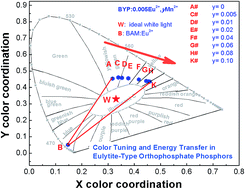
The Commission Internationale de L'Eclairage (CIE) chromaticity coordinates of the BYP:0.005Eu2+, yMn2+ phosphors with varying Mn2+ concentration were determined based on their relevant PL spectrum, and are depicted in Fig. 10 and Table 1. The Eu2+ doping content was fixed at 0.005 as the concentration of Mn2+ was increased from 0 to 0.10; through the energy transfer of Eu2+ → Mn2+, the corresponding color tone of the BYP:0.005Eu2+, yMn2+ phosphor shifts from yellowish-green through yellow and ultimately to orange. Accordingly, UV-pumped white LEDs with improved chromaticity quality can be fabricated using a UV-LED chip with our developed BYP:0.005Eu2+, yMn2+ phosphor system and the blue-emitting BAM:Eu2+ (BaMgAl10O17:Eu2+) phosphor. Consequently, it is clear that white LEDs with tunable correlated color temperature (CCT) in the triangle ABK region (Fig. 10) can be produced to meet the needs of different illumination applications by simply varying the Mn2+ doping concentration (y) in the BYP:0.005Eu2+, yMn2+ phosphor system. In particular, compared with the commercial YAG-based white LED system, these UV-pumped white LEDs can produce warm white light with low CCT, which is more suitable for room lighting. This is mainly due to the as-developed phosphor, which contains more red-emitting component than YAG:Ce. In addition, it should be noted that the experimental conditions and reactants composition should be optimized to improve the quantum efficiency.
 |
| | Fig. 10 CIE chromaticity diagram for the BYP:0.005Eu2+, yMn2+ phosphors excited at 350 nm. | |
Table 1 Comparison of the CIE chromaticity coordinates (x, y), emissive colors, and quantum efficiency (QE) for the BYP:0.005Eu2+, yMn2+ phosphors excited at 350 nm
| Sample no. |
Sample composition (y) |
CIE coordinates (x, y) |
Emissive colors |
Quantum efficiency (QE) |
| A |
0 |
(0.321, 0.456) |
Yellowish-green |
17% |
| C |
0.005 |
(0.342, 0.461) |
Yellowish-green |
19% |
| D |
0.01 |
(0.356, 0.459) |
Yellow |
15% |
| E |
0.02 |
(0.381, 0.456) |
Yellow |
20% |
| F |
0.04 |
(0.413, 0.449) |
Yellow |
15% |
| G |
0.06 |
(0.439, 0.441) |
Orange |
23% |
| H |
0.08 |
(0.450, 0.437) |
Orange |
14% |
| K |
0.10 |
(0.457, 0.436) |
Orange |
12% |
4. Conclusion
In summary, a series of eulytite-type orthophosphate phosphors Ba3Y(PO4)3:Eu2+, Mn2+ and Ba3Ln(PO4)3:Eu2+ (Ln = Lu, Y and Gd) were synthesized via a high-temperature solid-state reaction process. In the order of Lu, Y, and Gd for the Ba3Ln(PO4)3:Eu2+ (Ln = Lu, Y and Gd) phosphor system, a red shift of the emission peak is caused with increases in the ionic radius owing to the increase in the crystal field strength. The energy transfer from the Eu2+ to the Mn2+ ions in the BYP:Eu2+, Mn2+ phosphors was confirmed to occur via a dipole–quadrupole mechanism by the Dexter theoretical model. Upon the excitation of UV light, the emissive colors of the obtained phosphors could be tuned from yellowish-green through yellow and ultimately to orange through energy transfer by adjusting the doping content ratio between Eu2+ and Mn2+. In particular, an orange emission with CIE coordinates of (0.439, 0.441) and a QE of 23% could be achieved in the BYP:0.005Eu2+, 0.06Mn2+ phosphor. A red-shift emission of the Mn2+ ions toward long-wavelength from 576 to 611 nm was observed in the BYP:0.005Eu2+, yMn2+ phosphor system with the increase of Mn2+ content y from 0.005 to 0.10, which could be assigned to the change of the crystal field strength. The energy transfer efficiency increases gradually as the content of Mn2+ increases; at y = 0.10, the energy transfer efficiency can reach 55.8%. This suggests that the energy transfer efficiency from Eu2+ to Mn2+ is partial and depends strongly on the Mn2+ doping content.
Acknowledgements
This work is financially supported by the National Natural Science Foundation of China (Grant no. 21401130), the Opening Research Fund of the State Key Laboratory of Rare Earth Resource Utilization, Changchun Institute of Applied Chemistry, Chinese Academy of Sciences (RERU2014005).
References
- X. Bai, G. Caputo, Z. D. Hao, V. T. Freitas, J. H. Zhang, R. L. Longo, O. L. Malta, R. A. S. Ferreira and N. Pinna, Nat. Commun., 2014, 5, 5702 CrossRef CAS PubMed.
- D. Zhang, L. Duan, Y. Zhang, M. Cai, D. Zhang and Y. Qiu, Light: Sci. Appl., 2015, 4, e232 CrossRef CAS PubMed.
- A. Marchuk and W. Schnick, Angew. Chem., Int. Ed., 2015, 54, 2383–2387 CrossRef CAS PubMed.
- Y. Sato, H. Kato, M. Kobayashi, T. Masaki, D.-H. Yoon and M. Kakihana, Angew. Chem., Int. Ed., 2014, 53, 7756–7759 CrossRef CAS PubMed.
- X. Li, J. D. Budai, F. Liu, J. Y. Howe, J. Zhang, X.-J. Wang, Z. Gu, C. Sun, R. S. Meltzer and Z. Pan, Light: Sci. Appl., 2013, 2, e50 CrossRef PubMed.
- J. H. Oh, S. J. Yang and Y. R. Do, Light: Sci. Appl., 2014, 3, e141 CrossRef CAS PubMed.
- P. Li, Z. Wang, Q. Guo and Z. Yang, RSC Adv., 2015, 5, 4448–4453 RSC.
- N. Chouhan, C. C. Lin, S.-F. Hu and R.-S. Liu, J. Mater. Chem. C, 2015, 3, 1473–1479 RSC.
- A. A. Setlur, E. V. Radkov, C. S. Henderson, J. H. Her, A. M. Srivastava, N. Karkada, M. S. Kishore, N. P. Kumar, D. Aesram, A. Deshpande, B. Kolodin, L. S. Grigorov and U. Happek, Chem. Mater., 2010, 22, 4076–4082 CrossRef CAS.
- P. Pust, V. Weiler, C. Hecht, A. Tucks, A. S. Wochnik, A. K. Henss, D. Wiechert, C. Scheu, P. J. Schmidt and W. Schnick, Nat. Mater., 2014, 13, 891–896 CrossRef CAS PubMed.
- C. Hecht, F. Stadler, P. J. Schmidt, J. S. A. der Guenne, V. Baumann and W. Schnick, Chem. Mater., 2009, 21, 1595–1601 CrossRef CAS.
- R.-J. Xie and N. Hirosaki, Sci. Technol. Adv. Mater., 2007, 8, 588–600 CrossRef CAS PubMed.
- P. L. Li, Z. J. Wang, Z. P. Yang and Q. L. Guo, J. Electrochem. Soc., 2012, 159, H307–H311 CrossRef CAS PubMed.
- N. Guo, Y. Zheng, Y. Jia, H. Qiao and H. You, J. Phys. Chem. C, 2012, 116, 1329–1334 CAS.
- Y. C. Jia, W. Lu, N. Guo, W. Z. Lu, Q. Zhao and H. P. You, Chem. Commun., 2013, 49, 2664–2666 RSC.
- J. Barbier, J. E. Greedan, T. Asaro and G. J. McCarthy, Eur. J. Solid State Inorg. Chem., 1990, 27, 855–867 CAS.
- J. Barbier, J. Solid State Chem., 1992, 101, 249–256 CrossRef CAS.
- E. Arbib, B. Elouadi, J. P. Chaminade and J. Darriet, Mater. Res. Bull., 2000, 35, 761–773 CrossRef CAS.
- P. Dorenbos, J. Lumin., 2003, 104, 239–260 CrossRef CAS.
- P. Dorenbos, J. Alloys Compd., 2002, 341, 156–159 CrossRef CAS.
- J. S. Kim, P. E. Jeon, J. C. Choi and H. L. Park, Solid State Commun., 2005, 133, 187–190 CrossRef CAS PubMed.
- Z. Xia, Y. Zhang, M. S. Molokeev, V. V. Atuchin and Y. Luo, Sci. Rep., 2013, 3, 3310 Search PubMed.
- Z. Wang, Z. Xia, M. S. Molokeev, V. V. Atuchin and Q. Liu, Dalton Trans., 2014, 16800–16804 RSC.
- G. Q. Yao, J. H. Lin, L. Zhang, G. X. Lu, M. L. Gong and M. Z. Su, J. Mater. Chem., 1998, 8, 585–588 RSC.
- L. A. Shi, Y. L. Huang and H. J. Seo, J. Phys. Chem. A, 2010, 114, 6927–6934 CrossRef CAS PubMed.
- D. L. Dexter, J. Chem. Phys., 1953, 21, 836–850 CrossRef CAS PubMed.
- Y. Liu, X. Zhang, Z. Hao, X. Wang and J. Zhang, Chem. Commun., 2011, 47, 10677–10679 RSC.
- D. W. Wen, J. J. Feng, J. H. Li, J. X. Shi, M. M. Wu and Q. Su, J. Mater. Chem. C, 2015, 3, 2107–2114 RSC.
- N. Guo, Y. Huang, H. You, M. Yang, Y. Song, K. Liu and Y. Zheng, Inorg. Chem., 2010, 49, 10907–10913 CrossRef CAS PubMed.
- N. Guo, H. P. You, C. Z. Jia, R. Z. Ouyang and D. H. Wu, Dalton Trans., 2014, 12373–12379 RSC.
- P. I. Paulose, G. Jose, V. Thomas, N. V. Unnikrishnan and M. K. R. Warrier, J. Phys. Chem. Solids, 2003, 64, 841–846 CrossRef CAS.
- T. W. Kuo and T. M. Chen, J. Electrochem. Soc., 2010, 157, J216–J220 CrossRef CAS PubMed.
- Z. Wang, S. Lou and P. Li, J. Lumin., 2014, 156, 87–90 CrossRef CAS PubMed.
- D. L. Dexter and J. H. Schulman, J. Chem. Phys., 1954, 22, 1063–1070 CrossRef CAS PubMed.
- G. Blasse, Philips Res. Rep., 1969, 24, 131–144 CAS.
- R. Reisfeld and N. Lieblich-Soffer, J. Solid State Chem., 1979, 28, 391–395 CrossRef CAS.
- X. G. Zhang, P. He, L. Y. Zhou, Q. Pang, J. X. Shi and M. L. Gong, J. Lumin., 2015, 157, 352–356 CrossRef CAS PubMed.
- N. Guo, Y. J. Huang, Y. C. Jia, W. Z. Lv, Q. Zhao, W. Lu, Z. G. Xia and H. P. You, Dalton Trans., 2013, 941–947 RSC.
Footnote |
| † Electronic supplementary information (ESI) available: The crystal structure of Ba3Y(PO4)3 viewed along [100] direction (Fig. S1). The coordination environment of Ba/Y viewed along [111] direction (Fig. S2). The coordination environment of P viewed along [100] direction (Fig. S3). Comparison of the integral area of the four Gaussian components for Ba3Ln(PO4)3:Eu2+ (Table S1). See DOI: 10.1039/c5ra06347g |
|
| This journal is © The Royal Society of Chemistry 2015 |
Click here to see how this site uses Cookies. View our privacy policy here.