
DOI:
10.1039/C5RA06050H
(Paper)
RSC Adv., 2015,
5, 41721-41728
Advanced asymmetric supercapacitors based on Ni3(PO4)2@GO and Fe2O3@GO electrodes with high specific capacitance and high energy density†
Received
5th April 2015
, Accepted 24th April 2015
First published on 24th April 2015
Abstract
Ni3(PO4)2@GO composites were fabricated via a facile chemical precipitation method. More importantly, it was observed from electrochemical measurements that the obtained Ni3(PO4)2@GO electrode showed a good specific capacitance (1392.59 F g−1 at 0.5 A g−1) and cycling stability (1302 F g−1 retained after 1000 cycles at 1 A g−1). In addition, a high-voltage asymmetric supercapacitor was successfully fabricated using Ni3(PO4)2@GO and Fe2O3@GO as the positive and negative electrodes, respectively. The asymmetric supercapacitor could be cycled reversibly in the high-voltage region of 0–1.6 V and displayed intriguing performances with a maximum specific capacitance of 189 F g−1 at a current density of 0.25 A g−1. Furthermore, the Fe2O3@GO//Ni3(PO4)2@GO asymmetric supercapacitor exhibited a high energy density of 67.2 W h kg−1 and an excellent long cycle-life along with 88% specific capacitance retention after 1000 cycles. The impressive results presented here may pave the way for promising applications in high energy density storage systems.
Introduction
Some key features of supercapacitors are their fast charge/discharge capacity, long life cycle, wide range of operating temperatures and safety, which have been widely applied in the fields of digital cameras, mobile phones, electrical tools and pulse laser systems.1–4 However, their low-energy density limits their development in the area of wearable high-energy density devices.5–7 How to enhance their energy densities while retaining their high-power densities is a critical challenge for supercapacitor development. To improve supercapacitor functionality, considerable amount of studies have been conducted on electrode materials because the capacitance and energy density of supercapacitors are highly dependent on the electrode materials used.8,9 Among various supercapacitor electrode materials, pseudocapacitive transition-metal compounds or inorganic salts based on faradaic redox charge storage have exhibited a much higher energy density than that of electrochemical double-layer capacitive carbon materials.10–12 However, single metal oxides or inorganic salts usually have some limitations such as poor electrical conduction, insufficient electrochemical cycling stability, and low specific capacitance.13 To date, three methods have been usually adopted to solve these problems: (i) designing and fabricating a hierarchical structure,14,15 (ii) synthesizing materials directly on current collectors,16 (iii) preparing carbon-based composites.17,18 Compared with the first two approaches, the last approach has more advantages, including use of a simple method, wide availability of materials, and low cost. In recent studies, carbon-based materials, especially graphene, have been frequently employed in electrochemical capacitors for enhancing electrical conductivity and also for constructing particular structures of the electrodes because of their large surface area, good mechanical flexibility, and strong thermal/chemical stability.19–22 For instance, nanostructured graphene-based composites, such as Ni(OH)2/graphene,23 graphene/MnO2,24 and NiCo2S4/NCF,25 have been applied as materials for supercapacitors, and they exhibit a much better electrochemical performance in comparison with their bare counterparts.
In the past few years, a small number of studies have attempted to use Ni3(PO4)2 as a pseudocapacitive material for high-performance supercapacitors because of its better electrical conductivity and high specific capacitance.26 However, its poor rate performance has hindered the development of its practical applications. To solve this problem, Ni3(PO4)2@GO composite has been synthesized by a simple chemical precipitation method. This composite shows an improved specific capacitance and rate capability without sacrificing the discharge capacity and excellent cycle-life. On the other hand, though carbon-based materials are commonly used as anodes in asymmetrical supercapacitors because of their high specific surface area, excellent electrical conductivity, and large power density, their lower theoretical capacitance (100–300 F g−1), low density and narrow potential window in aqueous electrolytes still make it difficult for them to fulfill the high-energy requirements.27–30 Therefore, significant effort has been made to search for alternative materials. Recent studies have shown that BiPO4,31 Fe3O4,32 and graphene/Fe2O3 (ref. 5) can be used as negative materials; however, of all these materials, only graphene/Fe2O3 has shown a high specific capacity (908 F g−1 at 2 A g−1) and good rate performance (69% capacity retention from 2 A g−1 to 50 A g−1); in addition, graphene/Fe2O3 has a large potential window (−1.05 to −0.3 V), which is important for effectively improving the energy density. Therefore, Fe2O3@GO was selected as the negative material in this study.
Finally, an asymmetric supercapacitor was assembled using Fe2O3@GO as the negative electrode and Ni3(PO4)2@GO as the positive electrode, and the electrochemical performance of the Fe2O3@GO//Ni3(PO4)2@GO asymmetric supercapacitor was extensively investigated. A high specific capacitance of 189 F g−1 was achieved at a current density of 0.25 A g−1. Furthermore, a large energy density of 67.2 W h kg−1 was delivered at a power density of 200.4 W kg−1. It was thus inferred that Ni3(PO4)2@GO composite could serve as a promising candidate for supercapacitor materials because of its high specific capacitance and low cost as well as environmental friendliness.
Experimental section
Synthesis of Ni3(PO4)2@GO and Fe2O3@GO
Nickel chloride hexahydrate (NiCl2·6H2O), ammonium dihydrogen phosphate (NH4H2PO4), polyvinylidene fluoride (PVDF), and iron chloride hexahydrate (FeCl3·6H2O) were purchased from Sinopharm, whereas graphene oxide (GO) was purchased from Nanjing Ji Chang nanotechnology company, and they were used as received without further purification. For the typical synthesis of Ni3(PO4)2@GO, 10 mg of the obtained graphene oxide was dispersed into 75 mL deionized water with ultrasonication for 2 hours to obtain a homogeneous graphene oxide (GO) suspension. Subsequently, a certain amount of NiCl2·6H2O was gradually added into the abovementioned solution with vigorous stirring. After stirring for 1 h, 2 mmol of NH4H2PO4 was introduced and the stirring was continued for 1 h at room temperature. Subsequently, the resulting solution was filtered and washed three times with deionized water and ethanol, and then dried in a vacuum oven at 80 °C for 12 h. For the synthesis of the Fe2O3@GO composite, 35 mL of FeCl3·6H2O dispersion was mixed with GO (10 mg) with ultrasonication for 2 h. Then, the resulting mixture was sealed in a stainless steel vessel and hydrothermally reacted at 180 °C for 12 h; then, the stainless steel vessel was allowed to cool to room temperature naturally, and the resulting solution was washed with deionized water and ethanol several times, and dried in a vacuum oven at 80 °C for 12 h.
Structure characterization
The morphology of the samples was studied using scanning electron microscopy (SEM, JEOL, JSM-6701F, Japan) and transmission electron microscopy (TEM, JEOL, JEM-2010, Japan). Crystallite structures were determined by X-ray diffraction (XRD) using a Rigaku D/MAX 2400 diffractometer (Japan) with Cu Kα radiation (λ = 0.15444 nm) operating at 40 kV and 60 mA. The elemental surface composition of Ni3(PO4)2@GO was analyzed by X-ray photoelectron spectroscopy (XPS, PHI 5700, ESCA).
Electrode preparation and characterization
For electrochemical measurements, 80 wt% of the active material was mixed with 7.5 wt% of acetylene black and 7.5 wt% of conducting graphite in an agate mortar until a homogeneous black powder was obtained. 5 wt% of polytetrafluoroethylene (PTFE) was added together with a few drops of ethanol. The resulting paste was pressed at 10 MPa into a nickel foam (ChangSha Lyrun New Material Co. Ltd, grade 90 PPI, 2 mm thick) and then dried at 80 °C for 6 h in a vacuum drying oven. Each electrode contained 4 mg of the electroactive material and had a geometric surface area of 1 cm2. The electrochemical behaviors of the phosphate were investigated using three-electrode cells with 2 M KOH solution as an electrolyte. A platinum sheet electrode with a surface area of 2.25 cm2 was used as the counter electrode and a saturated calomel electrode (SCE) served as the reference electrode. Cyclic voltammetry (CV) and charge/discharge tests were carried out using an electrochemical workstation (CHI660D, Shanghai, China) at room temperature. Cycling performance was tested using a CT2001A battery program controlling test system (China-Land Com. Ltd). The specific capacitance (SC) of the electrodes was calculated from the following equation:| |
 | (1) |
The energy density (E) was calculated from the following equation:
| |
 | (2) |
The power density (P) was calculated from the following equation:
| |
 | (3) |
where
C (F) is the total capacitance,
I (A) is the discharge current, Δ
t (s) is the discharge time, Δ
V (V) represents the potential window,
Cm (F g
−1) is the specific capacitance,
m (g) is the mass of the composite,
E (W h kg
−1) is the energy density, and
P (W kg
−1) is the power density. The asymmetric supercapacitor consisted of two electrically isolated electrodes: Ni
3(PO
4)
2@GO composite as the positive electrode and Fe
2O
3@GO composite as the negative electrode, the electrode preparation processes are similar to that for a single electrode.
Results and discussion
Structural analysis
The powder XRD patterns of Ni3(PO4)2@GO and Fe2O3@GO are shown in Fig. 1. It can be seen in Fig. 1a that there is a broad peak at about 21° without any other observable crystalline diffraction peaks; this is because the fabricated Ni3(PO4)2@GO has a short-range order, but no long-range order, which thus leads to a certain widening of the diffraction peak. The results indicate that the Ni3(PO4)2@GO is in a fully amorphous structure, which is favorable for improving the capacitance because a material with poor crystallinity may bring about more transportation channels than a highly crystalline one. The XRD pattern of Fe2O3@GO is in good agreement with the standard monoclinic Fe2O3@GO (JCPDS card no. 33-0664); six strong diffraction peaks are observed at 2θ values of 23.851°, 35.079°, 39.075°, 40.320°, 48.822°, and 53.509°, which are ascribed to the (012), (110), (006), (113), (024), and (116) crystal planes. Moreover, no conventional stacking peak (002) of graphene sheets at 2θ = 23.2° is detected, suggesting that the residual graphene sheets may be individual monolayers that are homogeneously dispersed in the resultant 2D framework. Furthermore, a slight shift of the peaks can be observed between the XRD pattern of Fe2O3@GO and the standard monoclinic Fe2O3@GO (JCPDS card no. 33-0664), which is attributed to lattice distortion. This lattice distortion is being driven by the sample surface that out of the true of the standard plane.
 |
| | Fig. 1 XRD patterns of (a) Ni3(PO4)2@GO and (b) Fe2O3@GO. | |
The composition and surface information of amorphous Ni3(PO4)2@GO was further determined by X-ray photoelectron spectroscopy (XPS), and the results are shown in Fig. 2. The overall XPS spectrum (Fig. 2a) shows that the surface of Ni3(PO4)2@GO consists of Ni, P, O, and C elements. The P 2p XPS spectra of the P element displays one peak at 133.5 eV, which agrees well with P
O and P–O in Ni3(PO4)2@GO (Fig. 2b). In addition, another peak of O 1s at 531.2 eV is assigned to the OH groups (Fig. 2c). The Ni 2p XPS spectra show one peak at 856.1 eV, corresponding to the Ni 2p3/2 (Fig. 2d). Regarding the metal, the high binding energy indicates that there is no metallic Ni or its oxide. Combining the result of XPS with that of XRD, the component of the amorphous sample was determined to be amorphous Ni3(PO4)2@GO.
 |
| | Fig. 2 (a) Overall XPS, (b) P 2p, (c) O 1s, and (d) Ni 2p XPS spectra of Ni3(PO4)2@GO. | |
Fig. 3a–d present the SEM images of Ni3(PO4)2@GO and Fe2O3@GO materials at two different magnifications. Not only Ni3(PO4)2@GO, but also Fe2O3@GO shows a clear graphene structure. As can be seen, the Ni3(PO4)2 nanoparticles and Fe2O3 nanoparticles can be uniformly grown on the surface of GO to form a large-scale conformal coating. Because the graphene skeleton layer for the electrical conduction in the composite material provides a conductive network, the surface particles of Ni3(PO4)2 and Fe2O3 can quickly obtain electrons from the graphene substrate to initiate a faradaic reaction. Thus, this type of composite material has excellent artifact capacitor performance. Fig. 3e shows the TEM image of GO; it can be clearly seen that the graphene has a lamella structure with numerous wrinkles on it. This structure serves as a template for the adhesion of Ni3(PO4)2 nanoparticles. By the incorporation of graphene, the Ni3(PO4)2 nanoparticles are well decorated homogeneously on the graphene and no obvious aggregation of nanoparticles is observed. Furthermore, the irregular surfaces of GO offer large surface areas compared with smooth nanospheres, which increases the contact between the electrolytes and electrode materials. In addition, energy dispersive spectroscopy (EDS) microanalysis reveals that the atomic ratio of Ni and P is 3 to 2, which suggests that the composites include Ni3(PO4)2, which is consistent with the XPS analysis.
 |
| | Fig. 3 SEM images of Ni3(PO4)2@GO (a and b) and Fe2O3@GO (c and d). TEM images of GO (e) and EDS images of Ni3(PO4)2@GO (f). | |
Electrochemical measurements
Electrochemical properties of Ni3(PO4)2@GO. Fig. 4a shows the CV curves of Ni3(PO4)2@GO electrode at different scan rates of 5, 10, 15, 20, and 25 mV s−1. From the curves, it can be seen that the anodic peaks shift towards positive potential, while the cathodic peaks shift towards negative potential with increasing scan rates. Well-defined redox peaks are visible in all the CV curves, which is mainly attributed to the faradaic redox; moreover, the anodic and the cathodic peaks locate at about 0.5 V and 0 V, associated with the surface redox reactions of Ni2+ to Ni3+ and Ni3+ to Ni2+, respectively.4 To evaluate the electrochemical performance in detail, galvanostatic charge/discharge tests were conducted. Fig. 4b shows the galvanostatic charge/discharge curves of the Ni3(PO4)2@GO electrode at various current densities. The discharge plateau of Ni3(PO4)2@GO electrode is located at 0.15–0.25 V, which is in good agreement with the CV results. The calculated specific capacitance as a function of the discharge current density is plotted in Fig. 4c; it can be clearly seen that Ni3(PO4)2@GO electrode exhibits excellent pseudocapacitance values of 1392.5, 1315, 1295, and 1200 F g−1 at the current densities of 0.5, 1, 2, and 4 A g−1, respectively. It can be seen that 86% of the specific capacitance is retained even when the current density is increased eight-fold, and 98% of the specific capacitance is retained after cycling for 1000 cycles at a current density of 1 A g−1, as shown in Fig. 4d. To compare the electrochemical performance between Ni3(PO4)2@GO and bare Ni3(PO4)2, bare Ni3(PO4)2 was studied and the result is shown in Fig. S1.† The results indicate that Ni3(PO4)2 exhibits a relatively low specific capacitance of 1167 F g−1 at a current density of 0.5 A g−1 and 943 F g−1 at a current density of 4 A g−1. The electrochemical measurement indicates that Ni3(PO4)2@GO delivers remarkable specific capacitance with excellent cycling stability. The superior electrochemical capability of Ni3(PO4)2@GO electrode can be attributed to the reduced short diffusion path of the ions, highly activated surface and increased electrical conductivity. GO in the composites acts as not only the support for the deposition of Ni3(PO4)2 particles but also supports the electronic conductive channels, and the excellent interfacial contact between Ni3(PO4)2 and GO is of great benefit to the fast transfer of electrons throughout the whole electrode matrix.
 |
| | Fig. 4 (a) CV curves of Ni3(PO4)2@GO electrode at different current densities. (b) Galvanostatic charge/discharge curves of Ni3(PO4)2@GO. (c) Specific capacitance of Ni3(PO4)2@GO electrode at different scan rates. (d) Cycle-life of Ni3(PO4)2@GO at a current density of 1 A g−1. | |
Electrochemical properties of Fe2O3@GO. The electrochemical measurements of Fe2O3@GO are shown in Fig. 5. First, the cyclic voltammetry (CV) was tested within the potential range of −1.30 to 0 V at various scan rates. The typical CV curves of Fe2O3@GO under various scan rates are shown in Fig. 5a. Each CV curve consists of strong redox peaks, which confirm that the capacitance characteristics were governed by faradaic reactions. Furthermore, the increase in the scan rates widens the separation between the anodic and cathodic peaks in the CV curves of Fe2O3@GO, revealing the higher power character and the better electrochemical reversibility of Fe2O3@GO electrode, which result from the kinetics of the interfacial faradaic redox reactions and the rapid rates of electronic and ionic transport. The charging/discharging curves of Fe2O3@GO at different current densities are shown in Fig. 5b, where the specific capacitances are 472, 456, 448, and 436 F g−1 at a current density of 0.5, 1, 2, and 4 A g−1, respectively. These results suggest that Fe2O3@GO exhibits a higher capacitance and better rate capability. Capacitance as a function of current density is plotted in Fig. 5c. It is worth noting that the capacitance is considerably higher than for the other reported negative electrode materials; 92.3% of the specific capacitance is retained even when the current density is increased eight-fold. In addition, the cycle stability of Fe2O3@GO was also investigated by repeating the charge/discharge tests at a current density of 0.5 A g−1 for 1000 cycles. As shown in Fig. 5d, 66% of the specific capacitance is retained after 1000 cycles cycling. From the above discussion, it can be inferred that Fe2O3@GO shows a high specific capacitance and good rate capability, and therefore it has potential to be a negative electrode material with excellent electrochemical properties.
 |
| | Fig. 5 Electrochemical characterizations of Fe2O3@GO. (a) CV curves at different scan rates, (b) charge/discharge curves at different current densities, (c) specific capacitance at controlled current densities, (d) cycle-life of Fe2O3@GO electrode at a current density of 1 A g−1. | |
Pseudocapacitance properties of an asymmetric capacitor
Considering the high specific capacitance and good rate capability of Ni3(PO4)2@GO, an asymmetric supercapacitor was fabricated using Ni3(PO4)2@GO as the positive electrode and Fe2O3@GO as the negative electrode. The appropriate operation voltage window of CV curves is shown in Fig. S2.† Here, it can be seen that the appropriate operation voltage window of the CV curves is from 0 to 1.8 V. When the asymmetric supercapacitor working in the appropriate potential range, it can reach a better performance during long cycling. Because the two electrodes have different specific capacitances, there must be a perfect balance between the mass of the positive and negative electrode. The mass balancing is done using the following relationship: where Q+ and Q− represent the charge stored in the positive electrode and negative electrode, respectively. The Q of each electrode depends on the SC (Cm), the potential range of the charge/discharge tests (ΔE), and the mass of the electrode (m), according to the following equation:When Q+ = Q−, the ratio of the masses of the positive electrode (m+) and negative electrode (m−) follows the equation:| |
 | (6) |
The SC values of Fe2O3@GO and Ni3(PO4)2@GO are 472 F g−1 and 1392.59 F g−1. On the basis of the SC values and the potential windows found for the Fe2O3@GO and Ni3(PO4)2@GO electrodes, the optimal mass ratio should be m+/m− = 1.02 in the asymmetric supercapacitor. After the masses were balanced, an asymmetric supercapacitor was fabricated and its performance was studied using CV and GCD analysis. CV curves were used to confirm the storage mechanism of the electrochemical reaction. As shown in Fig. 6a, the two strong redox peaks in each curve indicate the pseudocapacitive property of the supercapacitor due to faradaic redox reactions. Moreover, the cell voltage of the asymmetric capacitor increases to 1.8 V relative to the symmetric capacitor of AC//AC (1 V). Fig. 6b presents the charge/discharge curves of Fe2O3@GO//Ni3(PO4)2@GO asymmetric supercapacitor at various current densities. It can be observed that the discharge time decreases with the increase of current density from 0.25 to 1.6 A g−1. The specific capacitance values for the asymmetric supercapacitor at the current densities of 0.25, 0.5, 0.8, 1.0, 1.2, and 1.6 A g−1 are 189, 175, 161, 153.75, 147.75, and 138.6 F g−1, respectively. The calculated specific capacitance values of Fe2O3@GO//Ni3(PO4)2@GO asymmetric supercapacitor as a function of current density are shown in Fig. 6c; it can be observed that 73% of the specific capacitance of Fe2O3@GO//Ni3(PO4)2@GO asymmetric supercapacitor is retained at the current densities from 0.25 A g−1 to 1.6 A g−1. The cycling behavior of the Fe2O3@GO//Ni3(PO4)2@GO asymmetric supercapacitor was also recorded, as shown in Fig. 6d, at a current density of 1.2 A g−1. It can be clearly observed that the cell exhibits a good cycling behavior; even after 1000 cycles, its specific capacitance of about 110 F g−1 is maintained, which is more than 85% of the initial capacity (125 F g−1). This result strongly indicates that the integration of Fe2O3 particles or Ni3(PO4)2 particles in the 3D graphene hydrogels can: (1) bind with Fe2O3 particles or Ni3(PO4)2 particles, thus serving dual functions as both conductive channels and active interface centers, and (2) serve as a matrix to maintain the iron oxide or nickel phosphate microstructure.
 |
| | Fig. 6 Electrochemical characterizations of Fe2O3@GO//Ni3(PO4)2@GO asymmetric supercapacitor. (a) CV curves at different scan rates. (b) Charge/discharge curves. (c) Specific capacitance at controlled current densities. (d) Cycle-life of Fe2O3@GO//Ni3(PO4)2@GO asymmetric supercapacitor at a current density of 1.2 A g−1. | |
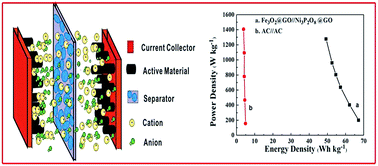
To prove the advantages of Fe2O3@GO//Ni3(PO4)2@GO asymmetric supercapacitor, an AC-based EDLC was also assembled. Fig. 7 presents the Ragone plots of the EDLC and Fe2O3@GO//Ni3(PO4)2@GO asymmetric supercapacitor. It clearly demonstrates that the Fe2O3@GO//Ni3(PO4)2@GO asymmetric supercapacitor has a better energy density than the AC//AC symmetric supercapacitor: a maximum energy density of 67.2 W h kg−1 was obtained at a power density of 200.43 W kg−1, and it retained specific capacitance of 52 W h kg−1 at a power density of 1276.3 W kg−1, while the highest energy density of the AC//AC symmetric supercapacitor is only 4.9 W h kg−1 at a power density of 156 W kg−1. Moreover, it can be observed that the energy density increased more than tenfold when the power density changed little, indicating the excellent pseudocapacitance properties of Fe2O3@GO//Ni3(PO4)2@GO asymmetric supercapacitor. Furthermore, the energy density of Fe2O3@GO//Ni3(PO4)2@GO asymmetric supercapacitor is considerably higher than those of previously reported other supercapacitors such as MnO2 nanotubes//AG,33 APDC//Ni–Co oxide,34 SiC–N–MnO2//AC,35 PPy@Ni//PPy@Ni symmetric supercapacitor,36 Ni@PPy@MnO2//Ni@MnO2@PPy asymmetric supercapacitor,37 Co(OH)2//VN hybrid supercapacitor,38 and Fe2O3/FGS//MnO2/FGS asymmetric supercapacitor.39 The high energy density of the Fe2O3@GO//Ni3(PO4)2@GO asymmetric supercapacitor is contributed by a high specific capacitance and wide potential window, which considerably boosts its potential application in the replacement of traditional EDLCs in advanced energy storage devices, and it may also find applications in the fields where Li-ion batteries are dominant.
 |
| | Fig. 7 Ragone plots of the assembled asymmetric supercapacitor and AC//AC symmetric supercapacitor. | |
Conclusions
In summary, amorphous Ni3(PO4)2@GO was successfully prepared by a simple chemical precipitation method. The electrochemical properties of the nanostructure were evaluated as electrode materials for supercapacitors. A high specific capacitance of 1392.5 F g−1 was obtained for Ni3(PO4)2@GO sample at a current density of 0.5 A g−1. A novel and durable asymmetric supercapacitor based on Ni3(PO4)2@GO positive electrode and Fe2O3@GO negative electrode was developed in an aqueous KOH electrolyte solution. After optimization, the assembled asymmetric supercapacitor could be cycled reversibly in the voltage region of 0–1.6 V, and it exhibited a maximum specific capacitance of 189 F g−1 at a current density of 0.25 A g−1. The energy density (67.2 W h kg−1) of the Fe2O3@GO//Ni3(PO4)2@GO asymmetric supercapacitor can surpass the energy densities of most of the other previously reported asymmetric supercapacitors. Moreover, the supercapacitor device exhibits excellent long cycle-life along with 88% specific capacitance retention after 1000 cycles. Such an asymmetric supercapacitor is expected to be a highly promising candidate for application in high-performance energy storage systems.
Acknowledgements
This work was supported by the National Natural Science Foundation of China (no. 21403099), the Natural Science Foundation of Gansu Province (no. 145RJZA193), and the fund of the State Key Laboratory of Advanced Processing and Recycling of Non-ferrous Metals, Lanzhou University of Technology (no. SKLAB02014005).
References
- S. N. Yang, K. Cheng, K. Ye, Y. J. Li, J. Qu, J. L. Yin, G. L. Wang and D. X. Cao, J. Electroanal. Chem., 2015, 741, 93–99 CrossRef CAS PubMed.
- M. C. Liu, L. B. Kong, L. Kang, X. H. Li, F. C. Walsh, M. Xing, C. Lu, X. J. Ma and Y. C. Luo, J. Mater. Chem. A, 2014, 2, 4919–4928 CAS.
- J. P. Wang, S. L. Wang, Z. C. Huang and Y. M. Yu, J. Mater. Chem. A, 2014, 2, 17595–17602 CAS.
- C. H. An, Y. J. Wang, Y. N. Huang, Y. N. Xu, L. F. Jiao and H. T. Yuan, Nano Energy, 2014, 10, 125–134 CrossRef CAS PubMed.
- H. W. Wang, Z. J. Xu, H. Yi, H. G. Wei, Z. H. Guo and X. F. Wang, Nano Energy, 2014, 7, 86–96 CrossRef CAS PubMed.
- L. Li, F. He, S. L. Gai, S. H. Zhang, P. Gao and M. L. Zhang, CrystEngComm, 2014, 16, 9873–9882 RSC.
- L. Yu, G. Q. Zhang, C. Z. Yuan and X. W. (David) Lou, Chem. Commun., 2013, 49, 137–139 RSC.
- C. Q. Dong, Y. Wang, J. L. Xu, G. H. Cheng, W. F. Yang, T. Y. Kou, Z. H. Zhang and Y. Ding, J. Mater. Chem. A, 2014, 2, 18229–18236 CAS.
- J. Yan, Z. J. Fan, W. Sun, G. Q. Ning, T. Wei, Q. Zhang, R. F. Zhang, L. J. Zhi and F. Wei, Adv. Funct. Mater., 2012, 22, 2632–2641 CrossRef CAS PubMed.
- C. Guan, X. Li, Z. Wang, X. Cao, C. Soci, H. Zhang and H. J. Fan, Adv. Mater., 2012, 24, 4186–4190 CrossRef CAS PubMed.
- M. C. Liu, L. B. Kong, C. Lu, X. J. Ma, X. M. Li, Y. C. Luo and L. Kang, J. Mater. Chem. A, 2013, 1, 1380–1387 CAS.
- Y. Zhai, Y. Dou, D. Zhao, P. F. Fulvio, R. T. Mayes and S. Dai, Adv. Mater., 2011, 23, 4828–4850 CrossRef CAS PubMed.
- L. L. Zhang and X. S. Zhao, Chem. Soc. Rev., 2009, 38, 2520–2531 RSC.
- T. Zhu, Z. Wang, S. Ding, J. S. Chen and X. W. Lou, RSC Adv., 2011, 1, 397–400 RSC.
- J. Yang, X. Duan, Q. Qin and W. Zheng, J. Mater. Chem. A, 2013, 1, 7880–7884 CAS.
- S. W. Chou and J. Y. Lin, J. Electrochem. Soc., 2013, 160, D178–D182 CrossRef CAS PubMed.
- Y. Bai, M. Du, J. Chang, J. Sun and L. Gao, J. Mater. Chem. A, 2014, 2, 3834–3840 CAS.
- Y. R. Zhu, Z. B. Wu, M. J. Jing, H. S. Hou, Y. C. Yang, Y. Zhang, X. M. Yang, W. X. Song, X. N. Jia and X. B. Ji, J. Mater. Chem. A, 2015, 3, 866–877 CAS.
- S. Patil, A. Harle, S. Sathaye and K. Patil, CrystEngComm, 2014, 16, 10845–10855 RSC.
- L. Zhu, W. Y. Wu, X. W. Wang, X. W. Wu, W. P. Tang and Y. P. Wu, RSC Adv., 2014, 4, 59088–59093 RSC.
- S. Guo and S. Dong, Chem. Soc. Rev., 2011, 40, 2644–2672 RSC.
- A. K. Geim and K. S. Novoselov, Nat. Mater., 2007, 6, 183–191 CrossRef CAS PubMed.
- H. B. Li, M. H. Yu, F. X. Wang, P. Liu, Y. Liang, J. Xiao, C. X. Wang, Y. X. Tong and G. W. Yang, Nat. Commun., 2013, 4, 1894–1901 CrossRef CAS PubMed.
- Z. J. Fan, J. Yan, T. Wei, L. J. Zhi, G. Q. Ning, T. Y. Li and F. Wei, Adv. Funct. Mater., 2011, 21, 2366–2375 CrossRef CAS PubMed.
- L. F. Shen, J. Wang, G. Y. Xu, H. S. Li, H. Dou and X. G. Zhang, Adv. Energy Mater., 2014, 20, 1400977–1400984 Search PubMed.
- J. C. Zhang, Y. Yang, Z. C. Zhang, X. B. Xu and X. Wang, J. Mater. Chem. A, 2014, 2, 20182–20188 CAS.
- A. Du Pasquier, I. Plitz, J. Gural, S. Menocal and G. Amatucci, J. Power Sources, 2003, 113, 62–71 CrossRef CAS.
- L. Wang, H. M. Ji, S. S. Wang, L. J. Kong, X. F. Jiang and G. Yang, Nanoscale, 2013, 5, 3793–3799 RSC.
- Z. H. Gao, H. Zhang, G. P. Cao, M. F. Han and Y. S. Yang, Electrochim. Acta, 2013, 87, 375–380 CrossRef CAS PubMed.
- X. Lu, M. Yu, T. Zhai, G. Wang, S. Xie, T. Liu, C. Liang, Y. Tong and Y. Li, Nano Lett., 2013, 13, 2628–2633 CrossRef CAS PubMed.
- V. D. Nithy, L. Vasylechkob and R. Kalai Selvan, RSC Adv., 2014, 4, 65184–65194 RSC.
- L. Wang, H. M. Ji, S. S. Wang, L. J. Kong, X. F. Jiang and G. Yang, Nanoscale, 2013, 5, 3793–3799 RSC.
- M. Huang, Y. X. Zhang, F. Li, L. L. Zhang, R. S. Ruoff, Z. Y. Wen and Q. Liu, Sci. Rep., 2014, 4, 3878–3886 Search PubMed.
- R. T. Wang and X. B. Yan, Sci. Rep., 2014, 4, 3712–3721 Search PubMed.
- M. Kim and J. Kim, Phys. Chem. Chem. Phys., 2014, 16, 11323–11336 RSC.
- G. F. Chen, Y. Z. Su, P. Y. Kuang, Z. Q. Liu, D. Y. Chen, X. Wu, N. Li and S. Z. Qiao, Chem.–Eur. J., 2015, 21, 4614–4621 CrossRef CAS PubMed.
- G. F. Chen, Z. Q. Liu, J. M. Lin, N. Li and Y. Z. Su, J. Power Sources, 2015, 283, 484–493 CrossRef CAS PubMed.
- R. T. Wang, X. B. Yan, J. W. Lang, Z. M. Zheng and P. Zhang, J. Mater. Chem. A, 2014, 2, 12724–12732 CAS.
- H. Xia, C. Y. Hong, B. Li, B. Zhao, Z. X. Lin, M. B. Zheng, S. V. Savilov and S. M. Aldoshin, Adv. Funct. Mater., 2015, 25, 627–635 CrossRef CAS PubMed.
Footnote |
| † Electronic supplementary information (ESI) available. See DOI: 10.1039/c5ra06050h |
|
| This journal is © The Royal Society of Chemistry 2015 |
Click here to see how this site uses Cookies. View our privacy policy here.