DOI:
10.1039/C5RA05920H
(Paper)
RSC Adv., 2015,
5, 46534-46539
Tuning the optoelectronic properties of core-substituted naphthalene diimides by the selective conversion of imides to monothioimides†
Received
2nd April 2015
, Accepted 19th May 2015
First published on 19th May 2015
Abstract
Selective sulfur substitution of the distal carbonyls of a core-substituted naphthalene diimide was obtained when a combination of core and imide substituents were used. The substituents appear to inhibit thionation of the proximal carbonyl by steric hindrance. Each thionation caused a 50 nm bathochromic shift of the visible absorption band and an anodic shift of the reduction potentials. The dithionated compound has a λmax in the near-IR at 733 nm and an optical gap of 1.59 eV, which is unusually low for this type of molecule. Thionation of carbonyls offers a useful avenue for tuning optoelectronic properties of NDI-based materials.
Introduction
Naphthalene diimides (NDI) have attracted attention due to their synthetic versatility, tunable optical properties, high electron affinity, π-acidic aromatic properties and good electron transport properties.1–3 NDI is the smallest member of the arylene diimide family, with a planar naphthalene aromatic core and two imide groups. Colorful NDI dyes can be made via core substitution with electron donating groups such as alkylamino to create push–pull systems, or with conjugated moieties such as thiophene to extend the conjugation system.1–3
The use of thionating reagents to replace the oxygen atom of carbonyls with sulfur, thus changing them into their thiocarbonyl derivatives, is common for biological applications.4 Thionation of carbonyls in aromatic molecules is known to cause a bathochromic shift of the absorption spectrum. For example, thionation of guanine results in a red-shift of the absorption spectra by ∼40 nm.5 Thionation of carbonyls in conjugated molecules for use as liquid crystals or organic semiconductors have been reported, including for phthalimides,6 diketopyrrolopyrroles and thienopyrroledione,7 and arylene diimides.8–10 While thiocarbonyl compounds tend to be unstable, thioimide compounds are stable.6
Thionation of NDI was reported in a patent by Facchetti and coworkers.8,9 NDI with cyclohexyl imide substituents gave a mixture of cis and trans isomers of dithionated NDIs, whereas NDI with 2-ethylhexyl imide substituents gave a mixture of monothionated, cis and trans isomers of the dithionated NDI and a small amount of trithionated NDI. Orzeszko and co-workers investigated the thionation reaction of various cyclic imides using the Lawesson's reagent.11 They reported that steric hindrance near the carbonyl inhibits the replacement of the oxygen atom by sulfur. It follows that selective synthesis of thioimides should be possible by selecting the right substituents.
2,6-Dialkylamino core-substituted NDI derivatives (Fig. 1) offer a promising substrate to further examine thionation chemistry of NDI-based molecules. These molecules have strong absorption in the visible range (610 nm), strong emission (630 nm) and reversible reductions and oxidations. We have previously synthesized 2,6-dialkylamino core substituted NDI derivatives with various core alkylamino and imide substituents and studied their structure-property studies in organic solar cells.12,13 The alkylamino core substituents not only tune the optoelectronic properties of NDI due to their electron donating character, but they also offer a way to add alkyl chains to increase solubility in organic solvents. The hydrogen on the secondary amine group also hydrogen bonds with the nearby carbonyl, which could prevent thionation of the proximal carbonyl, potentially offering selective thionation of the distal carbonyls.
 |
| | Fig. 1 2,6-Dialkylamino core-substituted NDI. | |
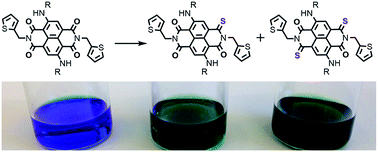
Here, we show the selective thionation of N,N′-di((thiophene-2-yl)methyl)-2,6-bis(N-2-ethylhexyl)-amino-1,4,5,8-naphthalenetetracarboxydiimide (RF2, Scheme 1) to the monothioimide derivatives. This selective thionation allowed us to tune the optical and electrochemical properties of RF2 systematically, and obtain new NDI-based molecules that combine absorption in the near-IR with high electron affinity.
 |
| | Scheme 1 Synthesis of thionated RF2 derivatives using Lawesson's reagent. | |
Results and discussion
Thionation of RF2 was performed using 4 equivalents of Lawesson's reagent in refluxing xylenes (Scheme 1). The main products were RF2-1S and RF2-2S, with very small amounts of trithionated RF2. This result held true even when higher concentrations of Lawesson's reagent or longer reaction times were used. Due to difficulties in separating the trithionated RF2 from RF2-2S, we limited the reaction time to 2 h to avoid trithionated products and ease the purification process. The products were separated by column chromatography to give RF2-2S as a dark green solid (30% isolated yield) and RF2-1S as a light green solid (22% isolated yield). To obtain analytically pure RF2-2S, an additional column was required.
It is worth noting that compounds RF2-1S and RF2-2S were air and light stable as solids and solutions during the time scale of our synthesis, purification, and analysis. This is in contrast to thionated diketopyrrolopyrroles and thienopyrroledione, which degraded within hours under ambient light and required handling in the dark.7 This is consistent with thioimides being more stable than other types of thiocarbonyl compounds.6 However, solutions of RF2-1S and RF2-2S exposed to ambient light visually degraded over several months, changing from clear green to cloudy yellow/blue with a yellow film on the vial. Such changes were not observed if the vials were kept in the dark. Long term quantitative stability tests were not performed.
Fig. 2 compares the 1H NMR spectrum of RF2, RF2-1S and RF2-2S between 4.5 and 10.5 ppm. The spectrum of RF2 shows a triplet at 9.4 ppm (i) due to the amine protons, a singlet at 8.1 ppm (ii) due to the NDI core protons and a singlet at 5.5 ppm (iii) due to the methylene protons of the imide substituents. The RF2-1S spectrum shows a second set of proton signals shifted downfield, corresponding to the amine (i), core (ii) and methylene (iii) protons, due to the loss of symmetry. This unique NMR pattern suggests that we have only one isomer of RF2-1S, meaning that one of the two carbonyls is preferentially thionated. The RF2-2S spectrum shows only one set of proton signals, which are shifted downfield compared to those of RF2. This indicates that RF2-2S is a symmetrical molecule, and that we have only one isomer.
 |
| | Fig. 2 1H NMR (400 MHz) spectra of RF2, RF2-1S and RF2-2S in CDCl3. | |
To determine which carbonyl was thionated, we looked at the gHMBC NMR of RF2 and RF2-2S (Fig. 3, and S7, S8†). For RF2 (Fig. 3a), the carbon signal from the distal carbonyl (v) at 163 ppm strongly couples with the core H(II) at 8.1 ppm. The carbon from the proximal carbonyl (iv) at 166 ppm also weakly couples with the core H(II), indicating strong long-range W-coupling in these planar conjugated molecules. For RF2-2S (Fig. 3b), the carbon signal from the thiocarbonyl is shifted downfield to 191 ppm and more strongly couples with the core H(II) than the other carbon signal upfield at 163 ppm, consistent with the distal carbonyl being thionated. To further confirm the location of the thiocarbonyls, we attempted to crystallize RF2, RF2-1S and RF2-2S. We were able to obtain small single crystals of RF2-1S suitable for X-ray crystallography. The crystal structure (Fig. 4) indicates that the distal carbonyl is thionated. Based on this information, we surmise that RF2-2S is a trans isomer with the sulfurs at the distal positions, as drawn in Scheme 1. This result is consistent with thionation occurring at the least sterically hindered carbonyls of the RF2 molecule. This is reasonable considering that the most probable thionation mechanism utilizes an oxaphosphetane-like intermediate found in Wittig mechanisms.11,14
 |
| | Fig. 3 (a) Zoomed in gHMBC of RF2; (b) zoomed in gHMBC of RF2-2S; R = 2-ethylhexyl. | |
 |
| | Fig. 4 ORTEP drawing with ellipsoids drawn at 50% level for RF2-1S. For clarity only half of the atoms were labelled; second half of the molecule is generated by symmetry. Sulfur S2 and oxygen O2 atoms were found to occupy similar positions at 50% occupancy. | |
To better understand which substituent guides the thionation to the distal carbonyl, we analyzed the thionation products for a series of NDI molecules with different core and imide substitution combinations (Scheme 2, Table 1). The reactions were performed under similar conditions and the product mixtures were analyzed by MALDI-TOF MS. The NDI with no core substituents, 1, gave a mixture of di-, with some mono- and trithionated products. NMR of the product mixture showed that several isomers were present (cis and trans), consistent with lack of selectivity and similar to the literature for this molecule (Fig. S12†).8 The NDI with alkylamino core substituents and no imide substituents, 4, gave mainly tri and quad substitutions. The high amounts of tri and quad substitutions suggest the loss of selectivity because to get more than two substitutions, you need to thionate proximal carbonyls. We therefore concluded that a combination of imide and core substituents is required to obtain selectivity, most likely due to steric hindrance of the substituents near the proximal carbonyl. Replacing the alkylamino core substituent with Br or replacing the imide thienylmethyl substituent with 2-ethylhexyl also resulted in only mono or dithionated products, with no tri or quad substituted products. These results are consistent with thionation selectivity. However, selectivity could not be confirmed by NMR. Products from 2 had limited solubility in organic solvents and therefore could not be separated and analyzed. The thionated products of 3 were soluble but could not be easily separated by column chromatography, in contrast to the thionated products of RF2, which could be separated by column chromatography, pointing to a synthetic advantage of using the thienylmethyl imide substituent.
 |
| | Scheme 2 Synthesis of NDI substrates with various core and imide substituents. R = 2-ethylhexyl (i) dibromoisocyanuric acid (DBI), sulphuric acid, 140 °C, 16 h; yield: 33%; (ii) ammonium acetate, acetic acid, 135 °C, 1.25 h; yield: 84%; (iii) 2-ethylhexylamine, 140 °C, 2 h, N2 atmosphere; yield: 60%; (iv) 2-ethylhexylamine, 150 °C, 18 h, N2 atmosphere; yield: 88%; (v) 2-ethylhexylamine, acetic acid, 130 °C, 1.5 h, N2 atmosphere; yield: 55%; (vi) 2-ethylhexylamine, 140 °C, 2 h, N2 atmosphere; yield: 56%. | |
Table 1 Thionation reaction products monitored by MALDI-TOF MSa
| Reactant |
Core |
Imide |
Major product |
Minor products |
| NHR: 2-ethylhexylamino; R: 2-ethylhexyl; TM: thienylmethyl. |
| RF2 |
NHR |
TM |
Di, mono |
Tri |
| 1 |
H |
R |
Di |
Mono, tri |
| 2 |
Br |
R |
Di |
Mono |
| 3 |
NHR |
R |
Mono, di |
Starting |
| 4 |
NHR |
H |
Tri, quad |
Di |
Fig. 5 compares the solution absorption spectra for RF2, RF2-1S and RF2-2S and the optical properties are summarized in Table 2. Each thionation caused a 50 nm shift of the λmax, consistent with other thionated arylene diimides.8–10 A small increase in molar absorptivity is also observed with thionation. The characteristic absorption of the core naphthalene unit at about 380 nm undergoes changes in energy and structure, with the appearance of a peak at 406 nm for RF2-1S and at 461 nm for RF2-2S. The new compounds had strong absorption in the red to near-IR region of the spectra, with λmax of 683 nm and 733 nm for RF2-1S and RF2-2S, respectively. The optical gaps of the three molecules were estimated at 1.87 eV, 1.71 eV and 1.59 eV for RF2, RF2-1S and RF2-2S, respectively (Table 2). Emission could not be detected from RF2-1S and RF2-2S. The absence of fluorescence could be due to efficient intersystem crossing to the triplet state, which has been observed for thionated perylene diimides.10 To fully understand the cause, transient absorption spectroscopy and quantum chemical calculations are required and are beyond the scope of this paper.15,16
 |
| | Fig. 5 Molar absorptivity plots of RF2 (solid-blue), RF2-1S (dashed-black) and RF2-2S (dotted-green) in chloroform. | |
Table 2 Optical and electrochemical properties
| |
λmax (nm) (ε (M−1 cm−1)) |
λonset (nm) |
ΔEopt (eV) |
E1/2,oxa (V) |
E1/2,reda (V) |
| V vs. Fc/Fc+. Ep,a values. |
| RF2 |
628 (22.4) |
663 |
1.87 |
0.61, 1.11 |
−1.39, −1.76 |
| RF2-1S |
683 (23.0) |
725 |
1.71 |
0.66b |
−1.17, −1.52 |
| RF2-2S |
733 (28.3) |
780 |
1.59 |
0.67,b 1.04b |
−1.03, −1.34 |
Fig. 6 compares the cyclic voltammograms of the three compounds in solution, with Fc/Fc+ as the internal standard. All compounds have two reversible reductions and two oxidations. The oxidations of RF2 were reversible while those of RF2-1S and RF2-2S were not. Table 2 summarizes the electrochemical results. The first reduction potential shifts anodically from −1.39 V for RF2 to −1.17 V and −1.03 V for RF2-1S, and RF2-2S, respectively. The second reduction potential also shifts anodically from −1.76 V for RF2 to −1.52 V and −1.34 V for RF2-S1 and RF2-S2, respectively. Thionation had a much smaller effect on the oxidation potentials, with a similar small cathodic shift from RF2 to RF2-1S or to RF2-2S. Thionation therefore stabilizes the anions and improves the electron accepting properties of NDI but does not significantly affect cations or electron donating properties of NDI. DFT calculations (see ESI†) show that the LUMO energy levels decrease with thionation, while the HOMO energy levels only slightly decrease with thionation, consistent with the electrochemistry results and the observed red-shift in optical absorption.
 |
| | Fig. 6 Cyclic voltammetry of RF2 (solid-blue), RF2-1S (dashed-black) and RF2-2S (dotted-green) in DCM. | |
Conclusions
In conclusion we have demonstrated selective thionation of distal carbonyls by using a combination of core and imide substituents. The thienylmethyl imide substituents allowed us to separate the monothionated and dithionated products by column chromatography. NMR and X-ray confirmed that only the distal carbonyls were thionated, yielding only the monothioimide isomer. Experiments with different core and imide substituents suggest that the substituents inhibit thionation of the proximal carbonyl by steric hindrance. Each thionation caused a 50 nm bathochromic shift of the visible absorption band and an anodic shift of the reduction potentials. RF2-2S has a λmax in the near-IR at 733 nm and an optical gap of 1.59 eV, which is very low for this type of molecule. Thionation of carbonyls offers a useful avenue for tuning NDI-based materials for opto-electronic applications.
Experimental
Materials
1,4,5,8-Naphthalenetetracarboxylic dianhydride (NDA) (Aldrich), 2-ethylhexylamine (Aldrich), Lawesson's reagent (Aldrich), sulphuric acid (Fisher), acetic acid (Fisher), ammonium acetate (Fisher), dibromoisocyanuric acid (DBI) (TCI America) were used as received. All other reagents and solvents were used as received unless otherwise specified. RF2 was synthesized and purified according to the literature procedure.12 Thionation was performed similarly to literature procedures with slight modifications.11 Compounds 1, 2, 3, 4, b, and c were synthesized according to literature procedures with slight modifications.12,17–20
Methods
1H and 13C were recorded using a Varian 400 mHz spectrometer. A 600 MHz Varian instrument was used for HMQC and gHMBC and probed at 8 Hz for HMBC. MALDI-TOF MS spectra were acquired in reflective negative ion mode and were sampled from various regions. Samples were prepared from chloroform solutions in a terthiophene matrix excluding 1, where an isovanillin matrix was used because of signal overlap. UV/visible absorption and emission spectra were collected in HPLC grade chloroform on a UV-Cary 50 spectrometer and a Cary Eclipse fluorescence spectrometer, respectively. Elemental analyses (C, H, N and S) were performed under optimum combustion conditions by Robertson Microlit Laboratories.
Cyclic voltammetry was performed at room temperature using an Auto-Lab-PGSTAT 302N, Exo Chemie potentiostat. Dichloromethane (DCM) was dried over calcium hydride and stored in a nitrogen glove box prior to use. The samples were prepared in a degassed 0.1 M solution of tetra-n-butylammonium hexafluorophosphate (TBAPF6) in DCM. Ferrocene/ferrocenium was used as an internal standard and was purified prior to use by sublimation. A typical three-electrode configuration was used, with a glassy carbon electrode as the working electrode and two platinum wires as the counter and pseudoreference electrodes.
Density functional theory (DFT) calculations were done in the gas phase using Gaussian 09 software package and visualized using Gaussview software.21,22 The B3LYP hybrid DFT level and 6-31G(d,p) basis set were used for the entire study.23,24 Optimized geometries were recognized as local minima by frequency calculations.
Crystallography
Crystals of RF2-1S suitable for X-ray diffraction analysis were obtained by slow diffusion of hexanes into a dichloromethane solution. A thin blue crystal of RF2-1S was mounted on a Cryoloop with Paratone-N oil and data was collected at 100 K with a Bruker APEX II CCD using Cu Kα radiation generated from a rotating anode (60 s/frame). Data were corrected for absorption with SADABS and structure solved by direct methods. Carbon chains C14–20 and C33–C40 were disordered over two positions (46.72/53.38 and 39.66/60.34) and were refined isotropically with C–C distance restraints of 1.54(0.001) angstroms and EADP constraints. All other non-hydrogen atoms were refined anisotropically by full matrix least squares on F2. Sulfur atoms S2 and S4 were found to occupy identical position with oxygen atoms O2′ and O4 and were refined anisotropically at half occupancy using EXYZ and EADP constraints. All hydrogen atoms were placed in calculated positions with appropriate riding parameters. Integration of data showed that data intensity dropping off rapidly around 1.2 angstroms. Finally refinement required the use of large number of least squares and a damping factor. We believe that the lack of intensity and multiple types of disorder to be the reasons for large thermal parameters and weight factors.
Synthesis
Synthesis of RF2-1S and RF2-2S. A solution of RF2 (0.150 g, 0.2 mmol, 1 eq.) in xylenes (40 mL) was added to a dry flask equipped with a condenser. The Lawesson's reagent (340 mg, 0.8 mmol, 4 eq.) was added in one shot to the flask and placed in a preheated oil bath. The reaction mixture was refluxed for 2 h at 150 °C, removed from heat, cooled under running tap water and poured into 100 mL of methanol and concentrated under reduced pressure to dryness. Methanol was added to the dried product mixture and the solid filtered, and washed with methanol until the filtrate was colorless. The solid was dissolved in DCM and passed through a basic alumina plug in a Pasteur pipet until the green solution was recovered. The products were concentrated under reduced pressure and purified by column chromatography (silica gel, 50% hexanes in dichloromethane). The first fraction was RF2-2S (0.046 g, 30% (10% yield for analytically pure RF2-2S by way of an additional column) and the second fraction was RF2-1S (0.034 g, 22%).
N,N′-di((thiophene-2-yl)methyl)-2,6-bis(N-2-ethylhexyl)-amino-1,4,5,8-naphthalenetetracarboxydiimide (RF2) 1H NMR (600 MHz, CDCl3, δ, ppm). 9.37 (t, 2H), 8.08 (s, 2H), 7.22 (d, 4H), 6.93 (t, 2H), 5.48 (s, 4H), 3.42 (t, 4H), 1.78 (m, 2H), 1.59–1.53 (m, 4H), 1.51–1.48 (m, 4H), 1.41–1.34 (m, 8H), 1.01 (t, 6H), 0.94 (t, 6H). 13C NMR (150 MHz, CDCl3, δ, ppm): 11.19, 14.28, 23.26, 24.79, 29.06, 31.83, 37.98, 39.40, 46.50, 101.95, 118.76, 121.34, 125.95, 126.64, 128.56, 138.83, 149.70, 162.96, 165.81.
N,N′-di((thiophene-2-yl)methyl)-2,6-bis(N-2-ethylhexyl)-amino-1,5,8-naphthalenetricarboxy-4-thiocarboxydiimide (RF2-1S) 1H NMR (400 MHz, CDCl3). 9.58 (t, 1H), 9.25 (t, 1H), 8.46 (s, 1H), 8.02 (s, 1H), 7.31 (dd, 2H), 7.19 (dd, 2H), 6.94 (m, 2H), 6.11 (bs, 2H), 5.49 (bs, 2H), 3.41 (q, 4H),1.79 (m, 2H), 1.61–1.32 (m, 16H), 1.02 (td, 6H), 0.95 (t, 6H). 13C NMR (100 MHz, CDCl3, δ, ppm): 11.41, 11.55, 14.40, 14.48, 14.52, 14.60, 38.21, 45.15, 46.66, 46.87, 47.91, 102.07, 102.76, 118.35, 118.38, 120.14, 121.73, 124.39, 125.95, 126.05, 138.78, 138.96, 149.79, 150.32, 163.14, 163.37, 166.00, 191.63, 216.94. MALDI-TOF-MS: m/z calcd for C40H48N4O3S3 728.29, found 727.31. Elem. anal. calcd: C, 65.90; H, 6.64; N, 7.69; S, 13.19. Found: C, 66.15; H, 6.66; N, 7.45; S, 13.19%.
N,N′-di((thiophene-2-yl)methyl)-2,6-bis(N-2-ethylhexyl)-amino-1,5-naphthalenedicarboxy-4,8-dithiocarboxydiimide (RF2-2S) 1H NMR (400 MHz, CDCl3). 9.50 (t, 2H), 8.50 (s, 2H), 7.34 (dd, 2H), 7.17 (dd, 2H), 6.93 (dd, 2H), 6.12 (bs, 4H), 3.43 (t, 4H), 1.76 (m, 2H), 1.57–1.30 (m, 16H), 1.01 (t, 6H), 0.94 (t, 6H). 13C NMR (150 MHz, CDCl3, δ, ppm): 11.38, 14.33, 23.30, 24.96, 29.25, 31.63, 45.03, 46.66, 102.49, 120.21, 123.70, 125.89, 126.16, 129.47, 137.90, 149.50, 163.18, 191.35. MALDI-TOF-MS: m/z calcd for C40H48N4O2S4 744.27, found 743.26. Elem. anal. calcd: C, 64.48; H, 6.49; N, 7.52; S, 17.21. Found: C, 64.23; H, 6.55; N, 7.30; S, 16.57%.
Thionation of compound 1. A solution of compound 1 (0.050 g, 0.1 mmol, 1 eq.) in xylenes (40 mL) was added to a dry flask equipped with a condenser. The Lawesson's reagent (165 mg, 0.4 mmol, 4 eq.) was added in one shot to the flask and placed in a preheated oil bath. The reaction mixture was refluxed for 3 h at 150 °C, removed from heat, cooled under running tap water and poured into 100 mL of methanol and concentrated under reduced pressure to dryness. Methanol was added to the dried product mixture and the solid filtered, and washed with methanol until the filtrate was colorless. The solid was collected and used for analysis directly. MALDI-TOF-MS: m/z of starting material: 490.28; found 505.37, 521.37 and 537.35.
Thionation of compound 2. The same procedure was used as that for the thionation of compound 1. The solid was collected and used for analysis directly. MALDI-TOF-MS: m/z of starting material: 648.10; found 663.01, and 678.99.
Thionation of compound 3. The same procedure was used as that for the thionation of compound 1. The solid was collected and used for analysis directly. MALDI-TOF-MS: m/z of starting material: 744.56; found 743.38, 759.35, and 775.32.
Thionation of compound 4. The same procedure was used as that for the thionation of compound 1. The solid was collected and used for analysis directly. MALDI-TOF-MS: m/z of starting material: 520.30; found 567.20, and 583.17.
Acknowledgements
We thank the American Chemical Society Petroleum Research Fund (SPN00045) for financial support, Prof. John Protasiewicz for facilitating cyclic voltammetry, Dr Dale Ray and Prof. Michael Zagorski for help with NMR, and the Case High Performance Computing Cluster for computing time. This material is based upon work supported by the National Science Foundation under Grant MRI-0821515 (for the purchase of the MALDITOF/TOF).
Notes and references
- N. Sakai, J. Mareda, E. Vauthey and S. Matile, Chem. Commun., 2010, 46, 4225–4237 RSC.
- X. Zhan, F. Antonio, S. Barlow, T. J. Marks, M. A. Ratner, M. R. Wasielewski and S. R. Marder, Adv. Mater., 2010, 23, 268–284 CrossRef PubMed.
- S. V. Bhosale, S. V. Bhosale and S. K. Bhargava, Org. Biomol. Chem., 2012, 10, 6455–6468 CAS.
- R. J. Cremlyn, An Introduction to Organosulfur Chemistry, John Wiley & Sons, Chichester, 1996 Search PubMed.
- P. Karran and N. Attard, Nat. Rev. Cancer, 2008, 8, 24–36 CrossRef CAS PubMed.
- D. Melon-Ksyta, A. Orzeszko, W. Borys and K. Czuprynski, J. Mater. Chem. A, 2002, 12, 1311–1315 RSC.
- S. Levesque, D. Gendron, N. Berube, F. Grenier, M. Leclerc and M. Cote, J. Phys. Chem. C, 2014, 118, 3953–3959 CAS.
- J. Quinn, Y. Zheng, Z. Chen, H. Usta, C. Newman, H. Yan and A. Facchetti, US Pat., 0 155 247, 2011.
- J. Quinn, Y. Zheng, Z. Chen, H. Usta, C. Newman, H. Yan and A. Facchetti, US Pat., 062 365, 2010.
- A. J. Tilley, R. D. Pensack, T. S. Lee, B. Djukic, G. D. Scholes and D. S. Seferos, J. Phys. Chem. C, 2014, 118, 9996–10004 CAS.
- A. Orzeszko, J. K. Maurin and D. Melon-Ksyta, Z. Naturforsch., B: J. Chem. Sci., 2001, 56, 1035–1040 CAS.
- R. Fernando, Z. Mao, E. Muller, F. Ruan and G. Sauvé, J. Phys. Chem. C, 2014, 118, 3433–3442 CAS.
- R. Fernando, Z. Mao and G. Sauve, Org. Electron., 2013, 14, 1683–1692 CrossRef CAS PubMed.
- M. P. Cava and M. I. Levinson, Tetrahedron, 1985, 41, 5061–5087 CrossRef CAS.
- A. J. Tilley, C. Guo, M. B. Miltenburg, T. B. Schon, H. Yan, Y. Li and D. S. Seferos, Adv. Funct. Mater., 2015 DOI:10.1002/adfm.201500837 , Ahead of Print.
- M. Pollum, S. Jockusch and C. E. Crespo-Hernandez, J. Am. Chem. Soc., 2014, 136, 17930–17933 CrossRef CAS PubMed.
- F. Chaignon, M. Falkenstrom, S. Karlsson, E. Blart, F. Odobel and L. Hammarstrom, Chem. Commun., 2007, 64–66 RSC.
- R. E. Dawson, A. Hennig, D. P. Weimann, D. Emery, V. Ravikumar, J. Montenegro, T. Takeuchi, S. Gabutti, M. Mayor, J. Mareda, C. A. Schalley and S. Matile, Nat. Chem., 2010, 2, 533–538 CrossRef CAS PubMed.
- C. Thalacker, C. Roeger and F. Wuerthner, J. Org. Chem., 2006, 71, 8098–8105 CrossRef CAS PubMed.
- R. Fernando, F. Etheridge, E. Muller and G. Sauvé, New J. Chem., 2015, 39, 2506–2514 RSC.
- M. J. Frisch, G. W. Trucks, H. B. Schlegel, G. E. Scuseria, M. A. Robb, J. R. Cheeseman, G. Scalmani, V. Barone, B. Mennucci, G. A. Petersson, H. Nakatsuji, M. Caricato, X. Li, H. P. Hratchian, A. F. Izmaylov, J. Bloino, G. Zheng, J. L. Sonnenberg, M. Hada, M. Ehara, K. Toyota, R. Fukuda, J. Hasegawa, M. Ishida, T. Nakajima, Y. Honda, O. Kitao, H. Nakai, T. Vreven, J. A. Montgomery Jr, J. E. Peralta, F. Ogliaro, M. Bearpark, J. J. Heyd, E. Brothers, K. N. Kudin, V. N. Staroverov, R. Kobayashi, J. Normand, K. Raghavachari, A. Rendell, J. C. Burant, S. S. Iyengar, J. Tomasi, M. Cossi, N. Rega, J. M. Millam, M. Klene, J. E. Knox, J. B. Cross, V. Bakken, C. Adamo, J. Jaramillo, R. Gomperts, R. E. Stratmann, O. Yazyev, A. J. Austin, R. Cammi, C. Pomelli, J. W. Ochterski, R. L. Martin, K. Morokuma, V. G. Zakrzewski, G. A. Voth, P. Salvador, J. J. Dannenberg, S. Dapprich, A. D. Daniels, Ö. Farkas, J. B. Foresman, J. V. Ortiz, J. Cioslowski and D. J. Fox, Gaussian 09, Revision A.02, Wallingford, CT Search PubMed.
- R. Dennington, T. Keith and J. Millam, GaussView, Semichem Inc., Shawnee Mission, KS, 2009 Search PubMed.
- A. D. Becke, J. Chem. Phys., 1993, 98, 5648–5652 CrossRef CAS PubMed.
- P. J. Stephens, F. J. Devlin, C. F. Chabalowski and M. J. Frisch, J. Phys. Chem., 1994, 98, 11623–11627 CrossRef CAS.
Footnote |
| † Electronic supplementary information (ESI) available: Experimental details, NMR spectra, MALDI-TOF MS spectra, XRD of RF2-1S, and computational data. CCDC 1056142. For ESI and crystallographic data in CIF or other electronic format see DOI: 10.1039/c5ra05920h |
|
| This journal is © The Royal Society of Chemistry 2015 |
Click here to see how this site uses Cookies. View our privacy policy here.