
Constrained formation of 2-(1-(arylimino)ethyl)-7-arylimino-6,6-dimethylcyclopentapyridines and their cobalt(II) chloride complexes: synthesis, characterization and ethylene polymerization

Junjun Baab, Shizhen Dub, Erlin Yueb, Xinquan Hua, Zygmunt Flisakbc and Wen-Hua Sun*b
aCollege of Chemical Engineering, Zhejiang University of Technology, Hangzhou 310014, China
bKey laboratory of Engineering Plastics and Beijing National Laboratory for Molecular Science, Institute of Chemistry, Chinese Academy of Sciences, Beijing 100190, China. E-mail: whsun@iccas.ac.cn
cFaculty of Chemistry, Opole University, Oleska 48, 45-052 Opole, Poland

Received 17th March 2015 , Accepted 31st March 2015

First published on 31st March 2015


Abstract

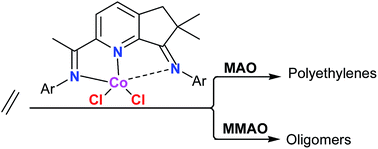
A series of 2-(1-(arylimino)ethyl)-7-arylimino-6,6-dimethylcyclopentapyridine derivatives (L1–L5) was synthesized, and individually reacted with cobalt(II) chloride to form the corresponding cobalt chloride complexes (C1–C4). These compounds were characterized, and the single crystal X-ray diffraction for two representative cobalt complexes was carried out. The molecular structures indicate that 2,7-bis(arylimino)cyclopentapyridines act as tridentate ligands; however, one of the Co–N coordinative bonds is weak due to the spatial separation of nitrogen atoms. Upon activation with either MAO or MMAO, all cobalt complexes exhibit catalytic activities toward ethylene. Polymerization takes place in the presence of MAO with activities of approximately 104 g of PE per (mol of Co) per h, but oligomerization occurs in the presence of MMAO with the activities higher by one order of magnitude. The resultant products, either polyethylenes or oligomers, display high linearity. Relatively low activities observed for cobalt complexes discussed reflect the importance of the appropriate spatial arrangement of the three donor nitrogen atoms.

Introduction

Late-transition-metal complex pre-catalysts have attracted much attention1,2 since the results of the pioneering research on α-diiminometal (Ni2+ or Pd2+)3 and bis(imino)pyridylmetal (Fe2+ or Co2+) halide complexes in ethylene activation were reported.4 Regarding the iron or cobalt pre-catalysts, the common characteristic of the polymerization or oligomerization products is their high linearity.1 The modification of existing pre-catalysts by introduction of various substituents improves the catalytic performance of the corresponding metal complexes.1,2 For example, the modifications of 2-imino-1,10-phenanthrolines,5 were extensively investigated6 and successfully implemented in a pilot process with the scale of 500 tons annually. Moreover, the newly developed ligand models with finely tuned framework backbones, distinctively improved the catalytic performance of their metal complexes. For the derivatives of 2,6-bis(imino)pyridines (A, Scheme 1), the innovations resulted in 2-imino-1,10-phenanthrolines,5,6 2-N-hetereocyclic-6-iminopyridines,7 2,8-bis(imino)quinol-ines,8 2-methyl-2,4-bis(6-iminopyridin-2-yl)-1,5-benzo-diazepines,9 and 1,8-diimino-2,3,4,5,6,7-hexahydroacridines (B, Scheme 1);10 however, most of these complex pre-catalysts were active in ethylene oligomerization, while some of them polymerized ethylene to polyethylenes with low molecular weights. The idea of iminopyridine derivatives with fused rings materialized in the design of 2-imino-1,10-phenanthrolines,5,6 and 1,8-diimino-2,3,4,5,6,7-hexahydroacridines.10 Moreover, new promising catalytic systems toward ethylene polymerization have been recently developed through the application of new 2-(1-(arylimino)ethyl)-8-arylimino-5,6,7-trihydroquinolines (C, Scheme 1)11 and 2-(1-aryliminoethyl)-9-arylimino-5,6,7,8-tetrahydrocycloheptapyridines (D, Scheme 1).12 The success of C and D models inspired us to attempt the synthesis of 2-(1-(arylimino)ethyl)-7-aryliminocyclopentapyridine derivatives (E, Scheme 1). However, neither the desired organic compounds were observed in the condensation reaction of 2-acetyl-cyclopentapyridin-7-one with anilines, nor the corresponding metal complexes were formed in the one-pot reaction with metal halides. We suspect that one of the possible reactions leading to the decomposition of model E (or preventing its formation) might be the imine–enamine or keto–enol tautomerization.
image file: c5ra04722f-s1.tif
Scheme 1 Ligands derived from bis(imino)pyridines.

The molecule of 7-aryliminocyclopentapyridine is not reported in the literature; besides the tautomerization, another contributing factor for its instability might be the ring tension. To overcome the first problem, two methyl substituents are added at the C-6 position within cyclopentapyridine. 2-Acetyl-6,6-dimethylcyclopentapyridin-7-one is prepared and used to form the title compound (Scheme 1). The series of 2-(1-(arylimino)ethyl)-7-arylimino-6,6-dimethylcyclopentapyridine derivatives and the corresponding cobalt complexes is synthesized and characterized. The molecular structures of representative cobalt complexes show relatively long distance between the cobalt and the nitrogen attached to the fused cyclopentyl ring, indicating the tension due to the size of this ring. Moreover, upon activation with either MAO or MMAO, all cobalt complexes exhibited catalytic activities toward ethylene, but lower activities are achieved comparing with the analogue complex pre-catalysts.11,12 Herein the synthesis and characterization of the title compounds and the catalytic performance of the cobalt complexes are reported and discussed in detail.

Results and discussion

Metal–ligand interactions

To understand certain aspects of metal–ligand interactions in the complexes discussed within this work, we decided to compare the Co1 complex with its analogue containing the six-membered cycloalkane ring fused with the pyridine moiety – see the structure of the corresponding Co1 complex in ref. 11(b). In order to facilitate our calculations on the latter, we assumed that R1 = H; herein this model will be referred to as Co0. The energies of two spin states of Co0, namely the doublet and the quartet, were compared and it turned out that the quartet is the ground state with the relatively large separation energy of 10.4 kcal mol−1 with respect to the doublet. Therefore the same spin state was adopted for the simplified model of the Co1 complex taken from the current work (herein referred to as Co1′), in which two methyl groups corresponding to the R1 substituent were also replaced by the hydrogen atoms.

X-ray analysis performed on selected complexes (Co1 and Co2) indicates three Co–N coordinative bonds of unequal length, where the imine nitrogen atom attached to the cycloaliphatic ring is only weakly bound to the transition metal atom due to spatial constraints caused by the five-membered ring (vide infra). Our DFT calculations for the Co1′ model confirm this finding, since the Co1–N2 bond is the longest of all three Co–N bonds. For the comparison of the Co–N bond lengths in Co1 and its model Co1′ see Table 1.

Table 1 Co–N bond lengthsa in Co1 and Co1′, Å
  Co1, experimental Co1′, theoretical
a Atom numbering corresponds to the X-ray structure below.
Co(1)–N(1) 2.018(3) 2.08
Co(1)–N(2) 2.69 2.59
Co(1)–N(3) 2.188(3) 2.27


To estimate the degree of weakening of the Co–N bond in Co1′ comparing with Co0, we calculated the formation energies of both species from cobalt(II) chloride (where the quartet is the ground state) and the corresponding ligand L (in the conformation identical to this occurring in the complex) according to the following equation:

 
CoCl2 + L → LCoCl2 (1)

Our results indicate that the formation energies for Co0 and Co1′ are equal −62.2 and −58.1 kcal mol−1, respectively. This suggests weaker interactions between the ligand and the CoCl2 moiety in Co1′ comparing with Co0, which confirms our hypothesis that the geometry of the five-membered ring in Co1′ (and also Co1) places one of the imine nitrogen atoms farther away from the metal atom, which weakens the corresponding Co–N bond.

2-(1-Aryliminoethyl)-7-arylimino-6,6-dimethylcyclopenta pyridine derivatives and their cobalt chloride complexes

2-Chloro-cyclopentapyridin-7-one13 was prepared using our procedure. It was reacted with the excessive amount of methyl iodide in the tetrahydrofuran solution containing sodium hydride according to the literature procedure14 to form 2-chloro-6,6-dimethyl-cyclopentapyridin-7-one. In the next step, 2-acetyl-6,6-dimethylcyclopentapyridin-7-one was obtained in the Stille reaction (Scheme 2).15 The condensation reaction of 2-acetyl-6,6-dimethylcyclopentapyridin-7-one with 2,6-dimethylaniline was performed using a catalytic amount of p-toluenesulfonic acid in either ethanol or toluene; however, the corresponding compound, 2-(1-(2,6-dimethylphenylimino)ethyl)-7-(2,6-dimethylphenylimino)-6,6-dimethylcyclopenta-pyridine (L1) was obtained in the yield less than 10%. Using n-butanol as the solvent,16 the condensation reaction was enhanced to form the product (L1) in the isolated yield of 62.9%. Therefore the 2-(1-(arylimino)ethyl)-7-arylimino-6,6-dimethylcyclopentapyridine derivatives (L2–L5, Scheme 2) were individually synthesized in n-butanol with reasonable yields.
image file: c5ra04722f-s2.tif
Scheme 2 Synthetic procedure for L1–L5 and Co1–Co4.

The 2-(1-(arylimino)ethyl)-7-arylimino-6,6-dimethylcyclo-pentapyridine derivatives (L1–L5) reacted with CoCl2 in anhydrous ethanol, and the corresponding cobalt complexes (Co1–Co4) were obtained. For the reaction of 2-(1-(2,6-diisopropylphenylimino)ethyl)-7-(2,6-diisopropylphenylimino)-6,6-dimethylcyclopentapyridine with CoCl2, the oily brown product was obtained and its composition could not be confirmed by reliable data from elemental analysis. Elemental analyses for the other cobalt complexes (Co1–Co4) were consistent with their formula LCoCl2. Moreover, the single crystals of complexes Co1 and Co2 were also obtained, and their molecular structures were further confirmed by the single crystal X-ray diffraction.

X-ray crystallographic studies

Single crystals of complex Co1 were obtained by slow diffusion of diethyl ether into its DMF solution at ambient temperature, whilst single crystals of complex Co2 were obtained by slow diffusion of diethyl ether into its methanol solution at room temperature. According to the molecular structures of the complexes Co1 (Fig. 1) and Co2 (Fig. 2), the 2-(1-aryliminoethyl)-7-arylimino-6,6-dimethylcyclopentapyridines act as tridentate ligands, coordinating to the cobalt atom to form the distorted trigonal-bipyramidal geometry. This result is consistent with the structural data obtained for the majority of bis(imino)pyridylmetal (iron or cobalt) dihalides.1 However, large variations in the Co–N bond lengths were observed because of the weak bonding between cobalt and the imino-nitrogen linked to the pyridyl-fused cyclopentane.
image file: c5ra04722f-f1.tif
Fig. 1 Molecular structure of complex Co1 with thermal ellipsoids at 30% probability. Hydrogen atoms have been omitted for clarity. Selected bond lengths (Å) and angles (°): Co(1)–N(1) = 2.018(3), Co(1)⋯N(2) = 2.690, Co(1)–N(3) = 2.188(3), Co(1)–Cl(1) = 2.2365(12), Co(1)–Cl(2) = 2.2454(12); N(1)–Co(1)–N(3) = 76.53(13), N(1)–Co(1)–Cl(1) = 125.03(11), N(3)–Co(1)–Cl(1) = 107.43(9), N(1)–Co(1)–Cl(2) = 112.89(11), N(3)–Co(1)–Cl(2) = 102.17(10), Cl(1)–Co1–Cl(2) = 119.14(5).

image file: c5ra04722f-f2.tif
Fig. 2 (A) Molecular structure of complex Co2 with thermal ellipsoids at 30% probability. Hydrogen atoms have been omitted for clarity. Selected bond lengths (Å) and angles (°): Co(1)–N(1) = 2.014(2), Co(1)–N(2) = 2.423(2), Co(1)–N(3) = 2.314(2), Co(1)–Cl(1) = 2.2450(10), Co(1)–Cl(2) = 2.2307(9); N(1)–Co(1)–N(3) = 73.54(8), N(1)–Co(1)–Cl(1) = 123.11(7), N(3)–Co(1)–Cl(1) = 95.11(6), N(1)–Co(1)–Cl(2) = 115.93(7), N(3)–Co(1)–Cl(2) = 98.26(6), Cl(1)–Co1–Cl(2) = 120.88(3). (B) Molecular structure of complex Co2 with thermal ellipsoids at 30% probability. Hydrogen atoms have been omitted for clarity. Selected bond lengths (Å) and angles (°): Co(2)–N(4) = 2.042(2), Co(2)–N(5) = 2.145(2), Co(2)⋯N(6) = 2.785, Co(2)–Cl(3) = 2.2360(8), Co(2)–Cl(4) = 2.2513(8); N(4)–Co(2)–N(5) = 76.69(7), N(4)–Co(2)–Cl(3) = 119.84(6), N(5)–Co(2)–Cl(3) = 103.61(6), N(4)–Co(2)–Cl(4) = 121.69(6), N(5)–Co(2)–Cl(4) = 107.72(6), Cl(3)–Co(2)–Cl(4) = 115.31(3).

Shown in Fig. 1, there are three Co–N bonds of significantly different lengths. Two of them, Co(1)–N(1) and Co(1)–N(3), are comparable with the corresponding bond lengths in the cobalt complexes bearing unsymmetrical bis(imino)pyridines17 and 2-(1-arylimino-ethyl)-9-arylimino-5,6,7,8-tetrahydrocycloheptapyridines;12 however, the distance of 2.690 Å between Co(1) and N(2) is larger than the sum of the corresponding ionic radii, which is equal 2.43 Å; such weak bond is caused by the N(1)–C(7)–C(6) angle of 122.3(3)° in cyclopentapyridine being much wider than N(1)–C(1)–C(11) of 112.9(3)°.

The existence of the bond between Co(1) and N(2) (imino-nitrogen linked to the cyclopentane ring) within the complex Co1 may be disputed (Fig. 1), however, the direct evidence could be found from the analysis of the molecular structure of complex Co2, which provides further information on different Co–N bonds. There are three independent molecules in the solid state. One of them (Fig. 2A) indicates the distance of 2.314(2) Å between Co(1) and N(3), which is slightly shorter than the sum of ionic radii (2.43 Å), confirming the existence of the Co–N bond; however, the distance between the cobalt and the nitrogen of the other imino group is elongated. Meanwhile, the remaining two molecules have weak bonds between the cobalt and the nitrogen of the imino group linked to the cyclopentyl moiety, with the longest one equal 2.785 Å for Co(2)–N(6) (shown in Fig. 2B). Again, the weak bond between the cobalt and the nitrogen of the imino group linked to the cyclopentyl moiety is ascribed to the ring stress caused by the dimethyl-substituted fused-cyclopentapyridine frame and ethyl-substituted phenyl group. For the L5 ligand containing the bulkiest substituents, the elemental analysis indicates that the cobalt complex was not formed.

The existence of one weak coordinative bond between the cobalt atom and the nitrogen of the imino group in the Co1–Co4 cobalt complexes can affect their catalytic performance. Studying the activity would be helpful to understand the correlation between the ligand framework and the catalytic properties of the complexes.

Ethylene polymerization

The co-catalysts of methylaluminoxane (MAO) and modified methylaluminoxane (MMAO) were routinely used to screen the catalytic performance of the cobalt complexes toward ethylene polymerization. The moderate activities in ethylene polymerization were observed in the presence of MAO; meanwhile the catalytic systems with MMAO showed good activities towards ethylene oligomerization.

Ethylene polymerization by the Co1–Co4/MAO

All the cobalt pre-catalysts were investigated by using MAO as the co-catalyst and the results are listed in Table 2. The Co3 complex was examined to find the optimum reaction conditions. Firstly, the influence of reaction temperature was investigated by elevating the temperature from 30 °C to 70 °C (entries 1–5 in Table 2). The highest activity was achieved at 50 °C, and with the further increase of temperature beyond that point, the activity decreased substantially, which could be caused by the partial decomposition of the active centres and lower concentration of ethylene in toluene at higher temperature.18 Usually, polyethylenes with low molecular weights are obtained under elevated reaction temperature, which is due to increased rate of chain transfers at higher temperature. But in this catalytic system, there is no such tendency in the molecular weights of the resultant polyethylenes (entries 1–5 in Table 2). The polyethylenes obtained exhibit higher Mw (246[thin space (1/6-em)]000 to 681[thin space (1/6-em)]900) as well as higher PDI comparing with the analogue cobalt-based catalytic systems.11 As indicated by the GPC curves of the resultant polyethylenes (Fig. 3), all the cobalt pre-catalysts investigated display the multiple-site nature of the active species.
Table 2 Polymerization results for Co1–Co4/MAO at 10 atm ethylene pressurea
Entry Precat. T (°C) Al/Co Polymer (mg) Activityb Tmc (°C) Mwd/kg mol−1 Mw/Mnd
a Conditions: 10 μmol Co, 30 min, 100 mL of toluene.b 104 g PE per mol (Co) per h.c Determined by DSC.d Determined by GPC.
1 Co3 30 3000 23.4 0.47 128.2 681.9 34.4
2 Co3 40 3000 28.6 0.57 137.8 561.3 5.9
3 Co3 50 3000 144.5 2.89 138.4 372.7 4.9
4 Co3 60 3000 21.3 0.43 137.0 510.7 5.5
5 Co3 70 3000 11.2 0.22 133.6 430.5 7.5
6 Co3 50 2500 84.1 1.68 138.0 360.7 6.1
7 Co3 50 3500 97.4 1.95 138.6 257.0 6.4
8 Co3 50 4000 73.6 1.47 138.5 246.0 3.3
9 Co1 50 3000 98.0 1.96 139.9 397.4 4.2
10 Co2 50 3000 54.9 1.10 139.1 267.6 4.6
11 Co4 50 3000 86.6 1.73 137.0 325.2 5.2


image file: c5ra04722f-f3.tif
Fig. 3 GPC traces of PEs produced at different reaction temperatures (entries 1–5, Table 1).

The Al/Co molar ratio also affected the catalytic behavior of the pre-catalysts (entries 3, 6–8 in Table 2). On increasing it from 2500 to 4000 at 50 °C, the best activity was obtained for the value of 3000 (entry 3 in Table 2). With the Al/Co ratio increased, the polyethylenes of low molecular weights were obtained (entries 6–8 in Table 2), which is attributed to higher probability of chain transfer from cobalt to aluminum for higher concentration of the co-catalyst in the system. From the view of GPC curves (Fig. 4), it was found that only single-site active centres exist at the Al/Co ratio of 3500 and 4000, but multiple-site active centres appear at the Al/Co ratio of 2500 and 3000.


image file: c5ra04722f-f4.tif
Fig. 4 GPC traces of PEs produced with different Al/Co ratios (entries 3, 9–11, Table 1).

Employing the optimum reaction conditions (Al/Co equal 3000, temperature of 50 °C and polymerization time of 30 min), all cobalt pre-catalysts were evaluated for their ethylene polymerization activity (entries 3, 10–12 in Table 2). Though these complexes just show low catalytic activity for ethylene polymerization, some trends still could be found. For example, better activities are obtained when using less bulky substituents within the ligand, which is illustrated by the following order of activities: 2,4,6-tri(Me) > 2,6-di(Me) > 2,6-di(Et)-4-Me > 2,6-di(Et); this finding is consistent with observations reported in the literature,11 stating that less bulky substituents in the ortho position and the methyl substituent in the para position within the ligand are beneficial to the catalytic activity of pre-catalysts toward ethylene polymerization.

Ethylene polymerization by Co1–Co4/MMAO systems

The polymerization results for the Co1–Co4/MMAO systems are collected in Table 3 with the optimum conditions selected earlier for complex Co2. When changing the Al/Co molar ratio from 1000 to 3000 (entries 1–5 in Table 3), the highest activity was reached for the value of 2000, and further increase in MMAO concentration led to the evident decrease in activity, which is caused by the increased amount of isobutyl groups from MMAO.7
Table 3 Oligomerization results for Co1–Co4/MMAO at 10 atm ethylene pressurea
Oligomer distribution/%b
Entry Precat. T (°C) Al/Co Activityb α-Oc C4/∑C C6/∑C C8/∑C C10–22/∑C K
a Conditions: 4 μmol Co, 30 min, 100 mL toluene.b 105 g per mol (Co) per h, determined by GC; ∑C signifies the total amount of oligomers.c α-olefin percentage content determined by GC.
1 Co2 30 1000 1.48 89.2 36.9 13.6 15.3 34.2 0.67
2 Co2 30 1500 2.08 87.6 57.2 13.2 13.2 16.4 0.51
3 Co2 30 2000 3.20 89.0 56.8 13.4 11.7 18.1 0.55
4 Co2 30 2500 2.91 85.4 46.5 15.6 14.6 23.3 0.53
5 Co2 30 3000 2.75 86.2 69.3 8.8 9.2 12.7 0.57
6 Co2 20 2000 2.89 84.6 37.9 19.3 16.9 25.9 0.51
7 Co2 40 2000 1.32 89.7 62.2 10.8 14.6 12.4 0.60
8 Co2 50 2000 Trace 38.2 100
9 Co1 30 2000 2.49 82.2 63.8 14.5 11.6 10.1 0.44
10 Co3 30 2000 3.27 81.6 60.1 15.4 11.8 12.7 0.48
11 Co4 30 2000 3.68 75.1 59.8 12.0 12.8 15.4 0.53


With the Al/Co molar ratio fixed at 2000, the influence of the reaction temperature was also investigated (entries 3, 6–8 in Table 3). With elevating the temperature from 20 °C to 50 °C, the activity reached the maximum at 30 °C, and an obvious deactivation was observed as a result of the unstable active species at 50 °C.

All cobalt pre-catalysts Co1–Co4 were evaluated for ethylene oligomerization under the optimum reaction conditions of Al/Co equal 2000 at the temperature of 30 °C (entries 3, 9–11 in Table 3). As shown in Table 2, the Co3 and Co4 precatalysts, bearing methyl groups at the para position of the aromatic ring, exhibited slightly higher activities than the Co1 and Co2 pre-catalysts, indicating the positive effect of an additional methyl group within the ligand for the activity; the same applies to the MAO cocatalyst. Unlike the Co1–Co4/MAO system, the pre-catalysts Co2 and Co4, with ethyl groups at the ortho position of the aromatic ring, show higher activity than Co1 and Co3, respectively.

As shown in Table 3, the oligomerization process shows high selectivity toward α-olefins and the oligomers obtained fulfill the Schulz–Flory rule characterized by K, where K is determined by the molar ratio of C14 and C12 fractions.19

Conclusions

A series of 2-(1-(arylimino)ethyl)-7-arylimino-6,6-dimethyl-cyclopentapyridylcobalt dichloride complexes was synthesized and characterized. Due to the nature of the ligands, namely the spatial separation of the aryl-substituted imino-group attached to the five-membered ring fused to the pyridine ring, all the Co(II) complexes obtained in this work did not show equally high activity toward ethylene polymerization as the analogous systems.11,12 Though the cobalt complexes developed within this study are not useful for ethylene polymerization, this work sheds some light on the differences between the 2-(1-aryliminoethyl)-7-arylimino-6,6-dimethylcyclopentapyridines and analogous 2-(1-(arylimino)ethyl)-8-arylimino-5,6,7-tri-hydroquinoline11 and 2-(1-aryliminoethyl)-9-arylimino-5,6,7,8-tetrahydrocyclohepta pyridine,12 and provides new concepts for further research.

Experimental section

General procedures

All works involving air- and/or moisture-sensitive compounds were performed in an atmosphere of nitrogen using standard Schlenk techniques. Before being used, toluene was refluxed over sodium-benzophenone and distilled under nitrogen. Methylaluminoxane (MAO, 1.46 M solution in toluene) and modified methylaluminoxane (MMAO, 1.93 M in n-heptane 3A) were purchased from Akzo Nobel Corp. High-purity ethylene was purchased from Beijing Yanshan Petrochemical Co. and used as received. Other reagents were purchased from Aldrich, Acros, or local suppliers. NMR spectra were recorded on a Bruker DMX 400/500 MHz instrument at ambient temperature using TMS as an internal standard. IR spectra were recorded on a Perkin-Elmer System 2000 FT-IR spectrometer. Elemental analysis was carried out using a Flash EA 1112 microanalyzer.

Synthesis and characterization of substrates

Synthesis of 2-chloro-cyclopentapyridin-7-one. A 1000 mL four-necked flask was charged with 350 mL of CH2Cl2, 42.4 g 2-chloro-cyclopentapyridin-7-ol, 63.0 g NaHCO3, 2.98 g KBr and 0.39 g TEMPO. Then 400 mL water solution of NaClO (5%) was added slowly under 0 °C water bath. The start of the reaction was detected by GC; after the substrate was totally consumed, the reaction was quenched. The reaction mixture was extracted with CH2Cl2 (75 mL × 2), and the afforded organic layer was washed with water, dried over MgSO4, and filtered. The filtrate was evaporated in vacuo to afford 38.8 g brown solid, which was purified by column chromatography on silica gel to give 37.6 g 2-chloro-cyclopentapyridin-7-one as yellow solid. FT-IR (KBr, cm−1): 3110.2, 3041.8, 2957.6, 2930.7, 1714.3, 1582.9, 1427.4, 1305.4, 1243.7, 1207.3, 1173.3, 1123.3, 1082.8, 974.0, 864.4, 841.0, 749.8, 716.4, 670.1. Anal. Calcd for C8H6ClNO: C, 57.33; H, 3.61; N, 8.36. Found: C, 56.92; H, 3.27; N, 8.12. 1H NMR (CDCl3, 500 MHz, TMS): δ 7.86 (d, J = 8.5 Hz, 1H), 7.49 (d, J = 8.0 Hz, 1H), 3.16 (t, J = 5.0 Hz, 2H), 2.80 (t, J = 5.0 Hz, 2H). 13C NMR (CDCl3, 125 MHz, TMS): δ 201.2, 153.7, 146.2, 139.1, 135.4, 124.9, 34.3, 25.6.
Synthesis of 2-acetyl-cyclopentapyridin-7-one. 2-Chloro-cyclopentapyridin-7-one (16.7 g, 0.10 mol), tributyl (1-ethoxyvinyl)tin (39.8 g, 0.11 mol), Pd(dppf)Cl2 (2.2 g, 3.0 mmol), and 250 mL of 1,4-dioxane were added to a 500 mL three-necked jacketed flask. The mixture was refluxed for 12 h under N2, and cooled to room temperature. The mixture was treated with aqueous HCl (1.2 M, 150 mL). Then the resulting mixture was neutralized by NaOH solution and extracted with CH2Cl2. The organic layer was dried over anhydrous Na2SO4 and concentrated in vacuo to afford the crude product. The residue was purified by silica gel chromatography to afford 10.3 g 2-acetyl-cyclopentapyridin-7-one of as yellow solid. FT-IR (KBr, cm−1): 3045.0, 2927.9, 1700.9, 1584.4, 1457.6, 1397.0, 1361.0, 1292.6, 1270.8, 1161.5, 1110.1, 1025.2, 981.3, 956.7, 875.2, 857.2, 764.0. Anal. Calcd for C10H9NO2: C, 68.56; H, 5.18; N, 8.00. Found: C, 68.84; H, 5.41; N, 7.86. 1H NMR (CDCl3, 500 MHz, TMS): δ 8.22 (d, J = 8.5, 1H), 8.02 (d, J = 8.0, 1H), 3.25 (t, J = 5.8, 2H), 2.86 (t, J = 5.8, 2H), 2.82 (s, 3H). 13C NMR (CDCl3, 125 MHz, TMS): δ 204.8, 199.9, 154.7, 153.8, 153.0, 136.4, 125.5, 35.5, 26.0, 23.9.
Synthesis of 2-chloro-6,6-dimethylcyclopentapyridin-7-one. 2-Chloro-cyclopentapyridin-7-one (37.6 g, 0.224 mol) was added to the suspension of NaH (27.0 g, 60%, 0.675 mol) in 500 mL of dry THF at 0 °C under N2. After being stirred for one hour, methyl iodide (37.0 mL, 0.561 mol) was slowly added by a syringe; then the mixture was stirred at ambient temperature for ten hours. The reaction mixture was cooled to 0 °C, quenched with water slowly, and extracted with ethyl acetate. The organic layer was washed with brine, water, dried over MgSO4, and filtered. The filtrate was evaporated in vacuo to afford a crude product, which was purified by column chromatography on silica gel to give 2-chloro-6,6-dimethylcyclopentapyridin-7-one of 11.6 g as white solid. FT-IR (KBr, cm−1): 3082.5, 3047.0, 2972.8, 2932.2, 2866.7, 1719.8, 1578.9, 1465.6, 1430.4, 1375.6, 1310.5, 1176.3, 1126.0, 1085.1, 1025.2, 1000.5, 915.1, 872.5, 846.7, 820.4, 730.2, 657.4. Anal. Calcd for C10H10ClNO: C, 61.39; H, 5.15; N, 7.16. Found: C, 61.02; H, 5.29; N, 6.82. 1H NMR (CDCl3, 500 MHz, TMS): δ 7.81 (d, J = 8.5 Hz, 1H), 7.51 (d, J = 8.0 Hz, 1H), 2.98 (s, 2H), 1.30 (s, 6H). 13C NMR (CDCl3, 125 MHz, TMS): δ 201.3, 154.7, 143.6, 140.5, 135.1, 126.7, 42.6, 41.2, 25.3.
Synthesis of 2-acetyl-6,6-dimethylcyclopentapyridin-7-one. 2-Chloro-6,6-dimethylcyclopentapyridin-7-one (9.50 g, 0.049 mol), tributyl(1-ethoxyvinyl)tin (19.3 g, 0.053 mol), Pd(dppf)Cl2 (1.07 g, 1.47 mmol), and 100 mL of 1,4-dioxane were added to a 250 mL three-necked jacketed flask. The mixture was refluxed for 12 h under N2, and cooled to room temperature. Then the mixture was washed with KF solution (0.3 M, 50 mL × 3) and treated with aqueous HCl (1.2 M, 100 mL). The resulting mixture was neutralized by NaOH solution and extracted with CH2Cl2. The organic layer was dried over anhydrous Na2SO4 and concentrated in vacuo to afford the crude product. The residue was purified by silica gel chromatography to afford 8.1 g 2-acetyl-6,6-dimethylcyclopentapyridin-7-one of as pale yellow solid. FT-IR (KBr, cm−1): 2968.8, 2870.3, 1724.3, 1692.4, 1580.2, 1458.8, 1424.3, 1383.6, 1362.7, 1296.6, 1272.3, 1158.5, 1106.7, 1025.0, 1004.3, 955.3, 905.7, 879.4, 854.5, 822.5, 743.7, 678.0. Anal. Calcd for C12H13NO2: C, 70.92; H, 6.45; N, 6.89. Found: C, 70.58; H, 6.13; N, 6.72. 1H NMR (CDCl3, 500 MHz, TMS): δ 8.24 (d, J = 8.0 Hz, 1H), 7.98 (d, J = 8.0 Hz, 1H), 3.08 (s, 2H), 2.83 (s, 3H), 1.33 (s, 6H). 13C NMR (CDCl3, 125 MHz, TMS): δ 201.7, 198.2, 153.4, 151.5, 138.1, 137.6, 123.2, 42.7, 41.5, 27.3, 25.2.

Synthesis and characterization of organic compounds (L1–L5)

2-(1-(2,6-Dimethylphenylimino)ethyl)-7-(2,6-dimethylphenyl-imino)-6,6-dimethylcyclopentapyridine (L1). 2,6-Dimethylaniline (0.31 g, 2.5 mmol) was added to a solution of 2-acetyl-6,6-dimethylcyclopentapyridin-7-one (0.20 g, 1.0 mmol) with a catalytic amount of p-toluenesulfonic acid (20.0 mg, 0.1 mmol) in 30 mL of n-butanol. The mixture was stirred for 8 h at refluxing temperature. Under reduced pressure, the solvent was evaporated and the residue was subsequently purified by silica gel chromatography to afford 0.28 g (yield: 62.9%) of yellow oil. FT-IR (KBr, cm−1): 2919.6, 2854.7, 1669.7, 1645.5, 1591.6, 1462.5, 1434.3, 1363.0, 1295.9, 1259.2, 1207.2, 1185.5, 1159.1, 1110.7, 1085.8, 1040.8, 918.8, 888.6, 845.5, 817.1, 748.1, 732.1, 685.4. Anal. Calcd for C28H31N3: C, 82.11; H, 7.63; N, 10.26. Found: C, 81.92; H, 7.94; N, 10.16. 1H NMR (CDCl3, 400 MHz, TMS): δ 8.30 (d, J = 8.0 Hz, 1H), 7.76 (d, J = 8.0 Hz, 1H), 7.00 (d, J = 7.6 Hz, 2H), 6.94–6.86 (m, 3H), 6.73 (t, J = 7.6 Hz, 1H), 3.04 (s, 2H), 2.00 (s, 6H), 1.92 (s, 6H), 1.52 (s, 6H), 1.41 (s, 3H). 13C NMR (CDCl3,100 MHz, TMS): δ 175.0, 167.8, 156.3, 151.5, 149.7, 148.8, 143.6, 134.7, 127.9, 127.4, 125.5, 125.0, 123.0, 122.6, 122.0, 43.1, 42.5, 29.9, 28.0, 18.1, 18.0, 15.9.
2-(1-(2,6-Diethylphenylimino)ethyl)-7-(2,6-diethylphenyl imino)-6,6-dimethyl cyclopentapyridine (L2). Using the same procedure as for the synthesis of L1, L2 was obtained as yellow oil (0.25 g, 49.9%). FT-IR (KBr, cm−1): 2962.1, 2927.8, 2867.7, 1666.5, 1644.7, 1454.2, 1365.5, 1261.1, 1161.6, 1110.1, 1041.6, 844.5, 772.6, 737.2, 701.9. Anal. Calcd for C32H39N3: C, 82.53; H, 8.44; N, 9.02. Found: C, 82.24; H, 8.63; N, 9.15. 1H NMR (CDCl3, 400 MHz, TMS): δ 8.25 (d, J = 8.0 Hz, 1H), 7.76 (d, J = 8.0 Hz, 1H), 7.06 (d, J = 7.2 Hz, 2H), 7.00–6.97 (m, 3H), 6.84 (t, J = 7.6 Hz, 1H), 3.06 (s, 2H), 2.50–2.41 (m, 2H), 2.38–2.18 (m, 6H), 1.54 (s, 6H), 1.42 (s, 3H), 1.09–1.05 (m, 12H). 13C NMR (CDCl3,100 MHz, TMS): δ 174.7, 167.7, 156.2, 151.4, 148.8, 147.8, 143.5, 134.6, 131.2, 130.6, 125.9, 125.5, 123.2, 122.3, 122.2, 42.9, 42.3, 27.7, 24.7, 24.5, 16.2, 13.9, 13.7.
2-(1-(2,4,6-Trimethylphenylimino)ethyl)-7-(2,4,6-trimethyl phenylimino)-6,6-dimethylcyclopentapyridine (L3). Using the same procedure as for the synthesis of L1, L3 was obtained as yellow oil (0.23 g, 48.6%). FT-IR (KBr, cm−1): 2917.3, 2857.3, 1666.9, 1642.6, 1474.7, 1455.8, 1365.9, 1267.0, 1214.1, 1165.2, 1146.4, 1112.1, 1042.0, 1011.3, 849.7, 743.2, 706.0. Anal. Calcd for C30H35N3: C, 82.34; H, 8.06; N, 9.60. Found: C, 82.13; H, 8.25; N, 9.30. 1H NMR (CDCl3, 400 MHz, TMS): δ 8.28 (d, J = 8.0 Hz, 1H), 7.73 (d, J = 8.0 Hz, 1H), 6.84 (s, 2H), 6.74 (s, 2H), 3.02 (s, 2H), 2.27 (s, 3H), 2.15 (s, 3H), 1.95 (s, 6H), 1.89 (s, 6H), 1.95 (s, 6H), 1.51 (s, 6H), 1.43 (s, 3H). 13C NMR (CDCl3,100 MHz, TMS): δ 175.2, 167.9, 156.1, 151.4, 147.0, 146.2, 143.3, 134.4, 132.1, 130.8, 128.4, 127.9, 125.2, 124.7, 122.4, 42.9, 42.3, 27.8, 20.7, 20.6, 17.9, 17.8, 15.4.
2-(1-(2,6-Diethyl-4-methylphenylimino)ethyl)-7-(2,6-diethyl-4-methylphenylimino)-6,6-dimethylcyclopentapyridine (L4). Using the same procedure as for the synthesis of L1, L4 was obtained as yellow oil (0.22 g, 42.0%). FT-IR (KBr, cm−1): 2962.3, 2927.5, 2866.6, 1665.5, 1644.1, 1458.1, 1365.8, 1263.0, 1211.9, 1165.3, 1112.1, 1041.6, 856.2, 805.5, 736.8, 702.0. Anal. Calcd for C34H43N3: C, 82.71; H, 8.78; N, 8.51. Found: C, 82.36; H, 8.64; N, 8.32. 1H NMR (CDCl3, 400 MHz, TMS): δ 8.21 (d, J = 8.0 Hz, 1H), 7.74 (d, J = 8.0 Hz, 1H), 6.89 (s, 2H), 6.78 (s, 2H), 3.03 (s, 2H), 2.44–2.35 (m, 4H), 2.32 (s, 3H), 2.31–2.17 (m, 4H), 2.15 (s, 3H), 1.52 (s, 6H), 1.43 (s, 3H), 1.07 (t, J = 6.4 Hz, 6H), 1.05 (t, J = 6.4 Hz, 6H). 13C NMR (CDCl3, 100 MHz, TMS): δ 175.0, 167.9, 156.1, 151.4, 146.3, 145.2, 143.3, 134.5, 132.3, 131.1, 131.0, 130.5, 126.7, 126.1, 122.2, 42.9, 42.3, 27.7, 24.6, 24.5, 21.0, 20.9, 15.9, 14.0, 13.8.
2-(1-(2,6-Diisopropylphenylimino)ethyl)-7-(2,6-diisopropyl-phenylimino)-6,6-dimethylcyclopentapyridine (L5). Using the same procedure as for the synthesis of L1, L5 was obtained as yellow oil (0.28 g, 50.3%). FT-IR (KBr, cm−1): 2961.1, 2927.5, 2866.6, 1666.2, 1638.5, 1586.3, 1457.2, 1433.5, 1378.4, 1375.5, 1361.5, 1302.8, 1108.9, 1043.4, 843.1, 801.5, 773.3, 739.4. Anal. Calcd for C36H47N3: C, 82.87; H, 9.08; N, 8.05. Found: C, 82.49; H, 9.32; N, 8.21. 1H NMR (CDCl3, 400 MHz, TMS): δ 8.16 (d, J = 8.0 Hz, 1H), 7.76 (d, J = 8.0 Hz, 1H), 7.10 (d, J = 6.8 Hz, 2H), 7.04 (t, J = 7.6 Hz, 3H), 6.88 (t, J = 7.6 Hz, 1H), 3.06 (s, 2H), 2.87–2.80 (m, 2H), 2.61–2.54 (m, 2H), 1.53 (s, 6H), 1.39 (s, 3H), 1.18 (d, J = 6.8 Hz, 6H), 1.08 (d, J = 6.8 Hz, 6H), 1.05 (d, J = 6.8 Hz, 6H), 0.85 (d, J = 6.8 Hz, 6H). 13C NMR (CDCl3,100 MHz, TMS): δ 174.8, 168.0, 156.2, 151.3, 147.7, 146.4, 143.5, 135.8, 134.9, 134.7, 123.5, 122.9, 122.4, 122.3, 122.2, 42.8, 42.3, 28.1, 28.0, 27,7, 23.2, 23.1, 22.9, 16.7.

Syntheses and characterization of complexes

2-(1-(2,6-Dimethylphenylimino)ethyl)-7-(2,6-dimethylphenyl imino)-6,6-dimethylcyclopentapyridylcobalt dichloride (Co1). The ligand L1 (0.16 g, 0.40 mmol) and CoCl2(0.047 g, 0.36 mmol) were added to a Schlenk tube, 5 mL of anhydrous ethanol was injected into this tube, and the mixture was rapidly stirred at room temperature overnight. The Et2O was added to the reaction to precipitate the complex Co1. After filtering, the precipitate was washed with Et2O and dried under vacuum to give the product as deep green powder (0.15 g, 77.1%). FT-IR (KBr, cm−1): 2984.9, 2964.1, 2921.5, 2874.9, 1651.9, 1608.6, 1575.3, 1465.5, 1425.8, 1368.8, 1303.1, 1225.5, 1193.3, 1092.8, 1044.7, 983.7, 896.5, 841.6, 774.7. Anal. Calcd for C28H31Cl2CoN3: C, 62.35; H, 5.79; N, 7.79. Found: C, 62.17; H, 5.68; N, 7.52.
2-(1-(2,6-Diethylphenylimino)ethyl)-7-(2,6-diethylphenyl imino)-6,6-dimethylcyclopentapyridylcobalt dichloride (Co2). By the above procedure, Co2 was isolated as deep green powder in 63.9% yield. FT-IR (KBr, cm−1): 2964.0, 2932.1, 2873.1, 1649.1, 1607.5, 1580.1, 1445.6, 1368.3, 1331.9, 1289.8, 1239.7, 1220.3, 1186.2, 1134.5, 1106.6, 1046.9, 899.2, 862.4, 847.1, 809.8, 777.3. Anal. Calcd for C32H39Cl2CoN3: C, 64.54; H, 6.60; N, 7.06. Found: C, 64.21; H, 6.34; N, 6.62.
2-(1-(2,4,6-Trimethylphenylimino)ethyl)-7-(2,4,6-trimethyl phenylimino)-6,6-dimethylcyclopentapyridylcobalt dichloride (Co3). By the above procedure, Co4 was isolated as light green powder in 37.5% yield. FT-IR (KBr, cm−1): 2965.4, 2921.2, 2865.1, 2361.5, 2336.2, 1653.4, 1631.5, 1609.4, 1574.8, 1478.4, 1427.6, 1378.3, 1302.6, 1232.0, 1194.1, 1143.4, 1116.8, 1045.0, 898.8, 849.5, 819.5, 715.5. Anal. Calcd for C30H35Cl2CoN3: C, 63.50; H, 6.22; N, 7.40. Found: C, 63.37; H, 6.11; N, 7.26.
2-(1-(2,6-Diethyl-4-methylphenylimino)ethyl)-7-(2,6-diethyl-4-methylphenylimino)-6,6-dimethylcyclopentapyridylcobalt dichloride (Co4). By the above procedure, Co4 was isolated as deep green powder in 73.9% yield. FT-IR (KBr, cm−1): 2965.6, 2930.9, 2913.6, 2873.4, 1653.0, 1609.9, 1575.5, 1456.4, 1425.2, 1369.9, 1337.5, 1302.5, 1280.8, 1228.6, 1192.3, 1136.6, 1041.4, 986.7, 892.4, 856.0. Anal. Calcd for C34H43Cl2CoN3: C, 65.49; H, 6.95; N, 6.74. Found: C, 65.37; H, 6.90; N, 6.63.

X-ray crystallographic studies

Single crystals of complexes Co1 and Co2 suitable for X-ray diffraction were grown by slow diffusion of diethyl ether into the solutions of Co1 in DMF and Co2 in methanol at room temperature, respectively. X-ray studies were carried out on a Rigaku Saturn724 + CCD with graphite-monochromatic Mo Kα radiation (λ = 0.71073 Å) at 173(2) K; cell parameters were obtained by global refinement of the positions of all collected reflections. Intensities were corrected for Lorentz and polarization effects and empirical absorption. The structures were solved by direct methods and refined by full-matrix least squares on F2. All hydrogen atoms were placed in calculated positions. Structure solution and refinement were performed by using the SHELXL-97 package.20 During structure refinement of Co1 and Co2, there were free solvent molecules which had no influence on the geometry of the main compounds. Therefore, the SQUEEZE option of the crystallographic program PLATON21 was used to remove these free solvents from the structure. Details of the X-ray structure determinations and refinements are provided in Table 4.
Table 4 Crystal data and structure refinement for complexes Co1 and Co2
  Co1 Co2
CCDC 1054234 1054235
Empirical formula C28H31Cl2CoN3 C32H39Cl2CoN3
Formula weight 539.39 595.49
Temperature (K) 173(2) 173(2)
Wavelength (Å) 0.71073 0.71073
Crystal system Orthorhombic Triclinic
Space group P2(1)2(1)2(1) P[1 with combining macron]
a (Å) 11.693(2) 15.556(4)
b (Å) 14.583(3) 16.925(4)
c (Å) 17.761(4) 20.273(6)
α (°) 90 99.470(3)
β (°) 90 110.249(2)
γ (°) 90 98.841(3)
V3) 3028.8(10) 4810(2)
Z 4 6
Dcalc (g cm−3) 1.183 1.233
μ (mm−1) 0.762 0.726
F(000) 1124 1878
Crystal size (mm) 0.38 × 0.26 × 0.13 0.37 × 0.36 × 0.15
θ Range (°) 1.81–27.47 1.10–27.49
Limiting indices −14 ≤ h ≤ 15 −18 ≤ h ≤ 20
−18 ≤ k ≤ 18 −21 ≤ k ≤ 21
−23 ≤ l ≤ 22 −26 ≤ l ≤ 26
No. rflns collected 19[thin space (1/6-em)]692 43[thin space (1/6-em)]098
No. unique rflns [R (int)] 6890 (0.0252) 21[thin space (1/6-em)]832 (0.0141)
Completeness to θ (%) 99.7% 99.0%
Data/restraints/parameters 6890/1/314 21[thin space (1/6-em)]832/0/1027
Goodness of fit on F2 1.105 1.041
Final R indices [I > 2σ(I)] R1 = 0.0682 R1 = 0.0593
wR2 = 0.1863 wR2 = 0.1502
R Indices (all data) R1 = 0.0710 R1 = 0.0686
wR2 = 0.1890 wR2 = 0.1537
Largest diff peak and hole (e Å−3) 1.044 and −0.557 0.566 and −0.495


Computational details

The calculations were carried out at the DFT level of theory, using the B3LYP hybrid density functional.22 The 6-31G(d,p) basis set23 was applied for the H, C, N and the Cl atoms, whereas the LANL2DZ basis set24 was used for the Co atom. The calculations were carried out by means of the Gaussian 09 software25 at the default SCF and geometry convergence criteria. The identities of all optimized structures as the true minima were confirmed by the lack of imaginary frequencies.

Acknowledgements

This work is supported by National Natural Science Foundation of China (NSFC nos 21374123 and U1362204). ZF thanks the Chinese Academy of Sciences for the Visiting Scientist Fellowship. The computational study was supported in part by the PL-Grid Infrastructure at the Academic Computer Centre CYFRONET AGH and the Wroclaw Supercomputing and Networking Centre.

Notes and references

  1. (a) J. Ma, C. Feng, S. Wang, K.-Q. Zhao, W.-H. Sun, C. Redshaw and G. A. Solan, Inorg. Chem. Front., 2014, 1, 4–34 RSC; (b) A. Boudier, P.-A. R. Breuil, L. Magna, H. Olivier-Bourbigou and P. Braunstein, Chem. Commun., 2014, 50, 1398–1407 RSC; (c) W. Zhang, W.-H. Sun and C. Redshaw, Dalton Trans., 2013, 42, 8988–8997 RSC; (d) T. Xiao, W. Zhang, J. Lai and W.-H. Sun, C. R. Chim., 2011, 14, 851–855 CrossRef CAS PubMed; (e) C. Bianchini, G. Giambastiani, L. Luconi and A. Meli, Coord. Chem. Rev., 2010, 254, 431–455 CrossRef CAS PubMed; (f) W.-H. Sun, Adv. Polym. Sci., 2013, 258, 163–178 CrossRef CAS.
  2. (a) R. Gao, W.-H. Sun and C. Redshaw, Catal. Sci. Technol., 2013, 3, 1172–1179 RSC; (b) S. Wang, W.-H. Sun and C. Redshaw, J. Organomet. Chem., 2014, 751, 717–741 CrossRef CAS PubMed.
  3. (a) L. K. Johnson, C. M. Killian and M. Brookhart, J. Am. Chem. Soc., 1995, 117, 6414–6415 CrossRef CAS; (b) C. M. Killian, D. J. Tempel, L. K. Johnson and M. Brookhart, J. Am. Chem. Soc., 1996, 118, 11664–11665 CrossRef CAS.
  4. (a) B. L. Small, M. Brookhart and A. M. A. Bennett, J. Am. Chem. Soc., 1998, 120, 4049–4050 CrossRef CAS; (b) G. J. P. Britovsek, V. C. Gibson, B. S. Kimberley, P. J. Maddox, S. J. McTavish, G. A. Solan, A. J. P. White and D. J. Williams, Chem. Commun., 1998, 849–850 RSC.
  5. (a) W.-H. Sun, S. Jie, S. Zhang, W. Zhang, Y. Song and H. Ma, Organometallics, 2006, 25, 666–677 CrossRef CAS; (b) S. Jie, S. Zhang, W.-H. Sun, X. Kuang, T. Liu and J. Guo, J. Mol. Catal. A: Chem., 2007, 269, 85–96 CrossRef CAS PubMed; (c) S. Jie, S. Zhang, K. Wedeking, W. Zhang, H. Ma, X. Lu, Y. Deng and W.-H. Sun, C. R. Chim., 2006, 9, 1500–1509 CrossRef CAS PubMed; (d) S. Jie, S. Zhang and W.-H. Sun, Eur. J. Inorg. Chem., 2007, 35, 5584–5598 CrossRef; (e) L. Wang, W.-H. Sun, L. Han, H. Yang, Y. Hu and X. Jin, J. Organomet. Chem., 2002, 658, 62–70 CrossRef CAS.
  6. (a) M. Zhang, P. Hao, W. Zuo, S. Jie and W.-H. Sun, J. Organomet. Chem., 2008, 693, 483–491 CrossRef CAS PubMed; (b) A. Boudier, P.-A. R. Breuil, L. Magna, C. Rangheard, J. Ponthus, H. Olivier-Bourbigou and P. Braunstein, Organometallics, 2011, 30, 2640–2642 CrossRef CAS.
  7. (a) G. J. P. Britovsek, S. P. D. Baugh, O. Hoarau, V. C. Gibson, D. F. Wass, A. J. P. White and D. J. Williams, Inorg. Chim. Acta, 2003, 345, 279–291 CrossRef CAS; (b) W.-H. Sun, P. Hao, S. Zhang, Q. Shi, W. Zuo, X. Tang and X. Lu, Organometallics, 2007, 26, 2720–2734 CrossRef CAS; (c) Y. Chen, P. Hao, W. Zuo, K. Gao and W.-H. Sun, J. Organomet. Chem., 2008, 693, 1829–1840 CrossRef CAS PubMed; (d) L. Xiao, R. Gao, M. Zhang, Y. Li, X. Cao and W.-H. Sun, Organometallics, 2009, 28, 2225–2233 CrossRef CAS; (e) R. Gao, K. Wang, Y. Li, F. Wang, W.-H. Sun, C. Redshaw and M. Bochmann, J. Mol. Catal. A: Chem., 2009, 309, 166–171 CrossRef CAS PubMed; (f) R. Gao, Y. Li, F. Wang, W.-H. Sun and M. Bochmann, Eur. J. Inorg. Chem., 2009, 27, 4149–4156 CrossRef; (g) W.-H. Sun, P. Hao, G. Li, S. Zhang, W. Wang, J. Yi, M. Asma and N. Tang, J. Organomet. Chem., 2007, 692, 4506–4518 CrossRef CAS PubMed; (h) S. Song, R. Gao, M. Zhang, Y. Li, F. Wang and W.-H. Sun, Inorg. Chim. Acta, 2011, 376, 373–380 CrossRef CAS PubMed; (i) T. Xiao, S. Zhang, B. Li, X. Hao, C. Redshaw, Y.-S. Li and W.-H. Sun, Polymer, 2011, 52, 5803–5810 CrossRef CAS PubMed.
  8. S. Zhang, W.-H. Sun, T. Xiao and X. Hao, Organometallics, 2010, 29, 1168–1173 CrossRef CAS.
  9. (a) S. Zhang, I. Vystorop, Z. Tang and W.-H. Sun, Organometallics, 2007, 26, 2456–2460 CrossRef CAS; (b) S. Zhang, W.-H. Sun, X. Kuang, I. Vystorop and J. Yi, J. Organomet. Chem., 2007, 692, 5307–5316 CrossRef CAS PubMed.
  10. V. K. Appukuttan, Y. Liu, B. C. Son, C.-S. Ha, H. Suh and I. Kim, Organometallics, 2011, 30, 2285–2294 CrossRef CAS.
  11. (a) W. Zhang, W. Chai, W.-H. Sun, X. Hu, C. Redshaw and X. Hao, Organometallics, 2012, 31, 5039–5048 CrossRef CAS; (b) W.-H. Sun, S. Kong, W. Chai, T. Shiono, C. Redshaw, X. Hu, C. Guo and X. Hao, Appl. Catal., A, 2012, 447–448, 67–73 CrossRef CAS PubMed.
  12. F. Huang, Q. Xing, T. Liang, Z. Flisak, B. Ye, X. Hu, W. Yang and W.-H. Sun, Dalton Trans., 2014, 43, 16818–16829 RSC.
  13. Y. Xie, H. Huang, W. Mo, X. Fan, Z. Shen, N. Sun, B. Hu and X. Hu, Tetrahedron: Asymmetry, 2009, 20, 1425–1432 CrossRef CAS PubMed.
  14. (a) N. Yoshimitsu, T. Satoru, U. Akiharu, K. Masunori, G. Satoru, O. Takashi, S. Shigeki and S. Motoo, Org. Lett., 2004, 6, 2133–2136 CrossRef PubMed; (b) J. Yu, Y. Zeng, W. Huang, X. Hao and W.-H. Sun, Dalton Trans., 2011, 40, 8436–8443 RSC.
  15. D. Milstein and J. K. Stille, J. Am. Chem. Soc., 1978, 100, 3636–3638 CrossRef CAS.
  16. G. J. P. Britovsek, V. C. Gibson, B. S. Kimberley, P. J. Maddox, S. J. McTavish, G. A. Solan, A. J. P. White and D. J. Williams, Chem. Commun., 1998, 849–850 RSC.
  17. (a) J. Yu, W. Huang, L. Wang, C. Redshaw and W.-H. Sun, Dalton Trans., 2011, 40, 10209–10214 RSC; (b) J. Lai, W. Zhao, W. Yang, C. Redshaw, T. Liang and W.-H. Sun, Polym. Chem., 2012, 3, 787–793 RSC; (c) S. Wang, B. Li, T. Liang, C. Redshaw, Y. Li and W.-H. Sun, Dalton Trans., 2013, 9188–9197 RSC; (d) Q. Xing, T. Zhao, S. Du, W. Yang, T. Liang, C. Redshaw and W.-H. Sun, Organometallics, 2014, 33, 1382–1388 CrossRef CAS; (e) W. Zhang, S. Wang, S. Du, C.-Y. Guo, X. Hao and W.-H. Sun, Macromol. Chem. Phys., 2014, 215, 1797–1809 CrossRef CAS; (f) W.-H. Sun, Q. Xing, J. Yu, E. Novikova, W. Zhao, X. Tang, T. Liang and C. Redshaw, Organometallics, 2013, 32(8), 2309–2318 CrossRef CAS; (g) S. Wang, W. Zhao, X. Hao, B. Li, C. Redshaw, Y. Li and W.-H. Sun, J. Organomet. Chem., 2013, 731, 78–84 CrossRef CAS PubMed; (h) F. He, W. Zhao, X.-P. Cao, T. Liang, C. Redshaw and W.-H. Sun, J. Organomet. Chem., 2012, 713, 209–216 CrossRef CAS PubMed.
  18. W. Krauss and W. Gestrich, Chem. Tech., 1977, 6, 513–516 CAS.
  19. (a) G. V. Z. Schulz, Z. Phys. Chem., Abt. B, 1935, 30, 379–398 Search PubMed; (b) G. V. Z. Schulz, Z. Phys. Chem., Abt. B, 1939, 43, 25–46 Search PubMed; (c) P. J. J. Flory, J. Am. Chem. Soc., 1940, 62, 1561–1565 CrossRef CAS.
  20. G. M. Sheldrick, SHELXTL-97, Program for the Refinement of Crystal Structures, University of Göttingen, Germany, 1997 Search PubMed.
  21. L. Spek, Acta Crystallogr., Sect. D: Biol. Crystallogr., 2009, 65, 148–155 CrossRef PubMed.
  22. (a) A. D. Becke, J. Chem. Phys., 1993, 98, 5648–5652 CrossRef CAS PubMed; (b) C. Lee, W. Yang and R. G. Parr, Phys. Rev. B: Condens. Matter Mater. Phys. Phys. Rev. B: Condens. Matter Mater. Phys., 1988, 37, 785–789 CrossRef CAS.
  23. (a) R. Ditchfield, W. J. Hehre and J. A. Pople, J. Chem. Phys., 1971, 54, 724–728 CrossRef CAS PubMed; (b) W. J. Hehre, R. Ditchfield and J. A. Pople, J. Chem. Phys., 1972, 56, 2257–2261 CrossRef CAS PubMed; (c) M. M. Francl, W. J. Pietro, W. J. Hehre, J. S. Binkley, D. J. DeFrees, J. A. Pople and M. S. Gordon, J. Chem. Phys., 1982, 77, 3654–3665 CrossRef CAS PubMed; (d) V. A. Rassolov, M. A. Ratner, J. A. Pople, P. C. Redfern and L. A. Curtiss, J. Comput. Chem., 2001, 22, 976–984 CrossRef CAS.
  24. (a) T. H. Dunning Jr and P. J. Hay, in Modern Theoretical Chemistry, ed. H. F. Schaefer III, Plenum, New York, 1977, vol. 3, pp. 1–28 Search PubMed; (b) P. J. Hay and W. R. Wadt, J. Chem. Phys., 1985, 82, 270–283 CrossRef CAS PubMed; (c) W. R. Wadt and P. J. Hay, J. Chem. Phys., 1985, 82, 284–298 CrossRef CAS PubMed; (d) P. J. Hay and W. R. Wadt, J. Chem. Phys., 1985, 82, 299–310 CrossRef CAS PubMed.
  25. M. J. Frisch, G. W. Trucks, H. B. Schlegel, G. E. Scuseria, M. A. Robb, J. R. Cheeseman, G. Scalmani, V. Barone, B. Mennucci, G. A. Petersson, H. Nakatsuji, M. Caricato, X. Li, H. P. Hratchian, A. F. Izmaylov, J. Bloino, G. Zheng, J. L. Sonnenberg, M. Hada, M. Ehara, K. Toyota, R. Fukuda, J. Hasegawa, M. Ishida, T. Nakajima, Y. Honda, O. Kitao, H. Nakai, T. Vreven, J. A. Montgomery Jr, J. E. Peralta, F. Ogliaro, M. Bearpark, J. J. Heyd, E. Brothers, K. N. Kudin, V. N. Staroverov, R. Kobayashi, J. Normand, K. Raghavachari, A. Rendell, J. C. Burant, S. S. Iyengar, J. Tomasi, M. Cossi, N. Rega, M. J. Millam, M. Klene, J. E. Knox, J. B. Cross, V. Bakken, C. Adamo, J. Jaramillo, R. Gomperts, R. E. Stratmann, O. Yazyev, A. J. Austin, R. Cammi, C. Pomelli, J. W. Ochterski, R. L. Martin, K. Morokuma, V. G. Zakrzewski, G. A. Voth, P. Salvador, J. J. Dannenberg, S. Dapprich, A. D. Daniels, Ö. Farkas, J. B. Foresman, J. V. Ortiz, J. Cioslowski and D. J. Fox, Gaussian 09, Revision D.01, Gaussian, Inc., Wallingford CT, 2009 Search PubMed.

Footnote

Electronic supplementary information (ESI) available. CCDC 1054234–1054235. For ESI and crystallographic data in CIF or other electronic format see DOI: 10.1039/c5ra04722f

This journal is © The Royal Society of Chemistry 2015
Click here to see how this site uses Cookies. View our privacy policy here.