
Spin–orbit coupling analyses of phosphorescent processes in Ir(Zppy)3 (Z = NH2, NO2 and CN)

Shiro Koseki*ab, Harunobu Yoshinagaa, Toshio Asadaab and Takeshi Matsushitabc
aDepartment of Chemistry, Graduate School of Science, Osaka Prefecture University, 1-1 Gakuen-cho, Sakai, Osaka 599-8531, Japan. E-mail: shiro@c.s.osakafu-u.ac.jp
bThe Research Institute for Molecular Electronic Devices (RIMED), Osaka Prefecture University, 1-1 Gakuen-cho, Naka-ku, Sakai 599-8531, Japan
cJNC Petrochemical Corporation, 5-1 Goikaigan, Ichihara, Chiba 290-8551, Japan

Received 14th March 2015 , Accepted 13th April 2015

First published on 13th April 2015


Abstract

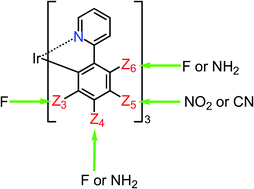
Substituent effects of NH2, NO2 and CN groups on phosphorescence in fac-tris(2-phenylpyridinato)iridium(III) [fac-Ir(ppy)3] were examined theoretically by using the multiconfiguration self-consistent field (MCSCF) method together with the SBKJC basis sets augmented by a set of polarization functions, followed by second-order configuration interaction (SOCI) and spin–orbit coupling (SOC) calculations, while time-dependent density functional theory (TD DFT) calculations provided too long wavelengths for phosphorescent peaks at the geometries optimized for triplet states even though the TD DFT predictions were qualitatively good with respect to relative spectral shifts. The strongest electron-donating substituent NH2 and the strongest electron-withdrawing substituents, NO2 and CN, were chosen for investigation of the substituent effects in the present investigation. It was found that when these electron-withdrawing substituents are introduced into the Z5 sites, the largest blue shift is obtained for the emission spectra, while the introduction of the electron-donating NH2 substituent causes a red shift of the emission spectra. This is because the Z5 site has non-negligible coefficients in the highest occupied molecular orbital (HOMO) and can interact with the π* orbitals of the substituents. This interaction makes the HOMO lower in energy. This is the reason why a large blue shift of the emission peak is obtained when one of these substituents is introduced to the Z5 sites. Based on the results of the calculation, it can be said that the best material for blue-color emission is tris(5-nitro-2-phenylpyridinato) iridium(III) [fac-Ir(5-NO2ppy)3] or tris(5-nitro-4,6-difluoro-2-phenylpyridinato)iridium(III) [fac-Ir(5-NO2-4,6-dfppy)3]. If the reactivity of the NO2 substituent in the lowest triplet state becomes troublesome in the synthesis processes and/or if it is difficult to choose host molecules for an emissive layer, tris(5-cyano-3,4,6-trifluoro-2-phenylpyridinato)iridium(III) [fac-Ir(5-CN-3,4,6-tfppy)3] would be the most appropriate for blue-color emission.

1 Introduction

After highly luminescent organic molecules were proposed by Tang et al. in 1989,1 the research interest of theoretical chemists was focused especially on the elucidation of the electronic and photophysical features of phosphorescent organo-platinum and organo-iridium compounds. It is known that phosphorescence can be used, instead of fluorescence, to design more efficient organic light-emitting diodes (OLEDs). There are many theoretical reports, as well as experimental reports, on such OLEDs.2–40 In most of the theoretical investigations, density functional theory (DFT) was used and the energies of the highest occupied molecular orbital (HOMO) and the lowest unoccupied molecular orbital (LUMO) in organo-metallic complexes were examined to estimate the emission energies or the wavelengths of fluorescence and phosphorescence. For a more reliable investigation based on theoretical calculations, Minaev et al.29–40 used quadratic response (QR) approximation together with time-dependent (TD) DFT methods for estimating the lifetimes of phosphorescent states in various iridium complexes.29–40 They reported excellent results for the lifetimes of phosphorescence in various iridium complexes.

In our research group,41–57 multi-configuration self-consistent field (MCSCF) wave functions58 followed by second-order configuration interaction (SOCI) calculations59 were used for explicitly calculating spin–orbit coupling (SOC) integrals, in which the Breit–Pauli (BP) Hamiltonian is employed, in order to describe low-lying electronic states in molecules including heavy atoms, while we found that TD DFT calculations provided too long wavelengths for phosphorescent peaks at the geometries optimized for triplet states, even though the TD DFT predictions were qualitatively good with respect to relative spectral shifts. In order to avoid computational difficulties and/or time-consuming calculations in such investigations, relativistic effective-core potentials (RECPs) or model-core potentials (MCPs) and their associated basis sets need to be employed. Although MCPs have correct orbital-nodes, they are not so popular unfortunately and have less variety of selections. On the other hand, RECPs have become very popular, especially in the research fields of heavy-metal complexes, and the use of RECPs provides many merits for theoretical investigation.

When RECPs are employed for SOC calculations, the full BP Hamiltonian provides very small SOC integrals because of node-less RECP orbitals. Therefore, it is necessary to introduce effective nuclear charges (Zeff)41–47 for reasonable prediction of SOC effects. This is usually referred to as one-electron approximation, effective nuclear charge approximation, or Zeff approximation. Our research group determined Zeff's for all transition elements and reported that this approximation works very well for estimation of SOC effects in mono-hydrides of transition elements in the third through seventh groups.48–50 The di-hydrides and tetra-hydrides of rhenium atoms were also examined in our laboratory.51–54 After such successes, this method was applied to theoretical investigations of the phosphorescent processes in OLED molecules.55–57 The results of our investigations could explain the emission spectra in the parent molecules, bis[2-(2′-thienyl) pyridinato]platinum [Pt(thpy)2]55 and tris(2-phenylpyridinato)iridium(III) [Ir(ppy)3].56 We also analyzed the geometrical effects of ligands in Ir(ppy)3 and its derivatives.57 In this latest paper, we discussed the effects of introducing an auxiliary ligand, picolinate (pic) or 2,4-pentanedionate (acac) ligand, to spectral shifts of phosphorescence. When such an auxiliary ligand is introduced, an iridium complex has not only facial (fac) and meridional (mer) isomers but also additional geometrical isomers. For example, the introduction of a pic ligand provides bis[2-(4′,6′-difluorophenyl) pyridinato-N,C2′] [picolinato-N,O]iridium(III) [Ir(4,6-dfppy)2(pic)], so-called FIrpic, and this complex has four geometrical isomers, homo-N-trans (HNT), homo-C-trans (HCT), homo-cis,hetero-N-cis (HC), and homo-cis,hetero-N-trans (HT) (see the details in ref. 57). The alignment of the heaviest atoms in each ligand of HC is the same as fac-Ir(ppy)3, but the most stable isomer is not HC but HNT among these four isomers. The calculated peak of the phosphorescence appears at the wavelength of 450 nm in HNT. Although this wavelength is shorter than the corresponding observed wavelengths (468–469 nm) by about 20 nm, this series of calculations indicate that a systematic underestimation is obtained for the peak wavelengths of emission because of inadequate consideration of electron correlation effects and that the magnitudes of spectral shifts are reliable for quantitative prediction of emission peaks. The next most stable isomer, HC, is only 0.8 (DFT) or 0.9 (MCSCF + SOCI + SOC) kcal mol−1 higher than HNT and is calculated to have a phosphorescent peak at the wavelength of 412 nm. Therefore, if only the HC isomer of FIrpic can be doped into an emissive layer of OLEDs, more blue-shifted phosphorescence is expected to be observed. In this investigation, we also discussed the phosphorescent processes in bis[2-(4′,6′-difluorophenyl) pyridinato-N,C2′] [2,4-pentanedionato-O,O]iridium(III) [Ir(4,6-dfppy)2(acac)], so-called FIracac and the related complexes.57

Although large amount of investigations have been reported so far on OLED materials, it is still expected that better materials need to be developed for brighter blue phosphorescence. Therefore, we think it is valuable to theoretically examine the effects of strongest electro-donating substituent NH2 and strongest electro-withdrawing substituents, CN and NO2, since we could not find any information on the substituent effects of NH2 and NO2 groups. The methods of theoretical calculation are described in detail in the next section. In the third section, the effects of NH2, NO2, and CN substituents on the phenyl rings of ppy ligands are compared and discussed, where NH2 group should be considered to be a representative for some bulky NX2 groups (X could be alkyl, aryl or any other functional group). Finally, better phosphorescent complexes for brighter blue-color emission are suggested on the basis of the present discussion on iridium complexes.

2 Methods of calculation

The same methods as those described in our previous paper57 were employed. The geometrical structures of the lowest triplet state (T1) were optimized using the unrestricted DFT method, in which the B3LYP functionals60 together with the SBKJC effective core potentials and associated basis sets61,62 were used. In order to obtain more flexibility for theoretical description, the basis sets were augmented by a set of polarization functions63 and referred to as SBKJC + p in this series of our investigations. The optimized structures were examined by normal-mode analyses and confirmed to be energy minima on their lowest triplet potential energy surfaces. Note that the expectation value of electron spin operator 〈Ŝ2〉 has been found to be very close to two (2.011 < 〈Ŝ2〉 < 2.041) except for the cases of introduction of NO2 substituents (〈Ŝ2〉 = 2.065).

At these stationary geometries, the molecular orbitals were optimized using the MCSCF method58 together with the state-averaging technique. The MCSCF active space includes six electrons and six orbitals, three of the orbitals mainly having an Ir d character and the remaining three orbitals having ligands' π character (principally anti-bonding) [MCSCF(6e,6)]. The electronic density was averaged among the lowest ten singlet and nine triplet states during MCSCF iterations. In order to describe electronically excited states and estimate the SOC effects among those states, SOCI wave functions59 were constructed using the MCSCF optimized orbitals, in which the external space could include only 30 orbitals that have the lowest eigenvalues of the standard MCSCF Fock operator, due to our computer resource limitations. All calculations were achieved using the GAMESS suite of program codes.64

Note that the words “HOMO” and “LUMO” are inappropriate since a set of natural orbitals optimized by the MCSCF method was used in the present investigation.65 However, for simplicity, these words will be used as our current definitions in the following discussion: HOMO means the natural orbital for which the occupation number is larger than one and the smallest among them in the ground state, and LUMO means the natural orbital for which the occupation number is smaller than one and the largest among them in the ground state.66 Additionally, it should be described that the energies of natural orbitals can be considered to be reversely proportional to their occupation numbers.

3 Results and discussion

Before starting discussion on the results of calculation for various iridium complexes, it should be noted that the dependency of lowest triplet geometries on the type of density functionals was examined. Typical functionals, B3LYP, M06 (ref. 67) and PBE0,68 were examined in the present investigation. The MCSCF + SOCI results of phosphorescent peak wavelengths suggest that B3LYP geometries optimized for the lowest triplet states provide moderately good predictions in comparison with the M06 and PBE0 geometries, even though this functional is not corrected with respect to long-range interaction. Thereby, the following MCSCF-based calculations were performed for the B3LYP geometries optimized for the lowest triplet state in target complexes. Additionally, the present calculations were performed only for fac isomers of all Ir(C^N)3, where C^N represents a ligand coordinating to iridium atom by carbon and nitrogen atoms such as a ppy ligand. This is because the fac isomer of the parent molecule Ir(ppy)3 is more stable than the corresponding mer isomer (Table 1) and is known to have better phosphorescent efficiency than that for the corresponding mer isomer.69–77
Table 1 Energy differences (kcal mol−1) among geometrical isomers
Complex Isomer DFT MCSCF +SOCI +SOC Ref.
Ir(ppy)3 fac 0 0 0 0  
Ir(ppy)3 mer 6.4 6.1 6.0 5.7 57
Ir(3-Fppy)3 fac 6.5 9.2 10.4 10.0 57
Ir(4-Fppy)3 fac 0 0 0 0 57
Ir(5-Fppy)3 fac 4.9 6.6 6.6 6.5 57
Ir(6-Fppy)3 fac 4.6 5.7 5.9 5.7 57
Ir(3-NH2ppy)3 fac 9.9 18.5 19.8 18.9  
Ir(4-NH2ppy)3 fac 0 0 0 0  
Ir(5-NH2ppy)3 fac 10.8 11.7 12.3 12.1  
Ir(6-NH2ppy)3 fac 16.3 18.7 19.0 18.8  
Ir(3-NO2ppy)3 fac 33.1 40.9 40.6 40.2  
Ir(4-NO2ppy)3 fac 6.5 15.6 11.7 11.8  
Ir(5-NO2ppy)3 fac 0 0 0 0  
Ir(6-NO2ppy)3 fac 31.7 44.6 41.5 41.7  
Ir(3-CNppy)3 fac 13.8 18.0 16.3 15.7  
Ir(4-CNppy)3 fac 3.1 7.1 5.7 5.5  
Ir(5-CNppy)3 fac 0 0 0 0  
Ir(6-CNppy)3 fac 8.4 19.4 16.9 16.9  
Ir(4,6-dfppy)3 fac 0 0 0 0  
Ir(4,6-dfppy)3 mer 6.1 5.5 5.5 5.4  
Ir(3,4,6-tfppy)3 fac 0 0 0 0  
Ir(3,4,6-tfppy)3 mer 1.7 0.9 0.7 0.5  


As described in our previous paper,76 in order to reproduce experimental emission spectra, it is necessary to consider spectral broadening and anharmonicity caused by the interaction with its circumstances and the geometrical displacement between the energy minima of electronic states. However, it is too time-consuming to calculate the potential energy curves (PECs) of low-lying spin-mixed (SM) states in many complexes and it becomes difficult to obtain the wavefunctions for energetically high vibrational states in each SM state. Therefore, we decided that the peak positions of emission spectra can be assumed to be provided by the superposition of Lorentz functions centered at the electronic transition energies from excited SM states to the ground state (SM0). In these calculations, the thermal population distribution for low-lying SM states was assumed to be given at an appropriate temperature and a Lorentz function for each electronic transition was assumed to have an appropriate half-value width.77

3.1 Brief review on the effects of an F substituent and theoretical explanation

Introduction of F substituents to the Z4 and Z6 sites of phenyl rings (Fig. 1) is known to be effective for a blue shift of the phosphorescent peaks in Ir(ppy)3.72–75 In our previous paper, the effects of F substituents were examined for the phosphorescence in several kinds of iridium complexes.57 As reported in that paper,57 Ir(4-Fppy)3 (Z4 = F, Z3 = Z5 = Z6 = H) was calculated to have a phosphorescent peak at the wavelength of 456 nm, and Ir(6-Fppy)3 (Z6 = F, Z3 = Z4 = Z5 = H) was also calculated to have a peak at the wavelength of 475 nm. As reported in our previous paper, the main contribution to the spectral peak in Ir(4-Fppy)3 are the transition from SM4 to the ground state (455 nm) and that from SM3 to the ground state provides a small shoulder near the wavelength of 462 nm, where the principal components of SM3 and SM4 are S1 and T1, respectively, as shown in Table 2, together with popular TD DFT results. It should be noted here that, even though the principal component of SM3 is S1, the weight of T1 is relatively large and the total weight of triplet states is larger than those of singlet states in SM3. Similarly, the main contribution in Ir(6-Fppy)3 is the transition from SM4 to the ground state (474 nm) and the secondary contribution is that from SM3 to the ground state (483 nm) (Table 2 and Fig. 2). On the other hand, Ir(5-Fppy)3 (Z5 = F, Z3 = Z4 = Z6 = H) was calculated to have peaks at the wavelengths of 504 and 517 nm. Since Ir(3-Fppy)3 (Z3 = F, Z4 = Z5 = Z6 = H) was predicted to have phosphorescent peaks at the wavelengths of 477 and 486 nm (the main contributions are the transitions from SM3 to the ground state (487 nm) and from SM4 to the ground state (477 nm)), the most effective position is proved to be the Z4 site for a blue shift of the phosphorescence. It should be noted that similar results were obtained for the introduction of Cl (chlorine) substituents in the present investigation, although the magnitudes of the spectral shifts were smaller than those for the introduction of F substituents and those results are not included in the present paper.
image file: c5ra04487a-f1.tif
Fig. 1 Substitution sites in fac-Ir(ppy)3.
Table 2 Spectral peak wavelengths (nm) and transition dipole moments (TDM) (e bohr) of phosphorescence in iridium complexes
Complex Isomer Peak wavelengtha (nm) Principal contributionb Wavelengthc (nm) TDM (e bohr) TD DFTd (nm) Expt.c (nm) Ref. ΔQS0−T1e (Å)
a The values in parentheses are the magnitudes of spectral shifts in comparison with that in the corresponding parent complex. The positive or negative value indicates “red shift” or “blue shift”.b The main adiabatic component is shown in parenthesis. Note that, even when the main component is singlet, the sum of triplet weights is the largest.c RT = room temperature.d TD DFT wavelengths were calculated at the uDFT geometries optimized for the lowest triplet states, where we picked up the wavelengths of the transition from the lowest triplet (d,π*) state to the ground state and no spin–orbit couplings were considered.e ΔQS0−T1 is the averaged geometrical displacement of each atom caused by the transition from the lowest triplet state to the ground state (see ref. 83).
Ir(ppy)3 fac 491 (0) SM3 (S1) 501 0.299 615   57 0.0557
  SM4 (T1) 491 0.890   510 (298 K) 71  
          515 (RT) 72  
          517 (298 K) 73  
          494 (77 K) 74  
          509 (RT) 75  
mer 530 (+39) SM3 (T1) 530 0.255 698   57 0.1611
511 (+20) SM4 (S1) 512 1.156   512 (298 K) 71  
Ir(3-Fppy)3 fac 486 (−5) SM3 (S1) 487 0.352 611   57 0.0619
477 (−14) SM4 (T1) 476 0.811        
Ir(4-Fppy)3 fac 456 (−35) SM3 (S1) 462 0.233 603   57 0.0413
  SM4 (T1) 455 0.853        
Ir(5-Fppy)3 fac 517 (+26) SM3 (T1) 517 0.328 648   57 0.0520
504 (+13) SM4 (T1) 504 0.888        
Ir(6-Fppy)3 fac 475 (−16) SM3 (S1) 483 0.248 594   57 0.0542
  SM4 (T1) 474 0.874        
Ir(3-NH2ppy)3 fac 510 (+19) SM3 (S1) 510 0.316 790     0.0711
495 (+4) SM4 (T1) 495 0.978        
Ir(4-NH2ppy)3 fac 442 (−49) SM4 (T1) 442 0.934 610     0.0318
Ir(5-NH2ppy)3 fac 546 (+55) SM3 (T1) 546 0.393 791     0.0704
526 (+35) SM4 (T2) 525 0.962        
Ir(6-NH2ppy)3 fac 482 (−9) SM4 (T1) 482 0.974 598     0.0618
Ir(4-NO2ppy)3 fac 587 (+96) SM3 (T1) 587 0.304 747     0.0419
561 (+70) SM4 (T2) 561 0.937        
Ir(5-NO2ppy)3 fac 404 (−87) SM3 (S1) 404 0.335 550     0.0425
396 (−95) SM4 (T1) 395 0.972        
Ir(6-NO2ppy)3 fac 650 (+159) SM3 (T1) 652 0.280 798     0.0572
644 (+153) SM4 (S1) 643 0.471        
Ir(3-CNppy)3 fac 445 (−46) SM3 (S1) 449 0.356 636     0.0500
  SM4 (T1) 442 0.681        
Ir(4-CNppy)3 fac 539 (+48) SM3 (T1) 539 0.302 676     0.0533
522 (+31) SM4 (T1) 522 0.925        
Ir(5-CNppy)3 fac 459 (−32) SM4 (T1) 459 0.863 603     0.0403
Ir(6-CNppy)3 fac 534 (+43) SM3 (S1) 535 0.331 634     0.0621
521 (+30) SM4 (T1) 521 0.869        
Ir(4,6-dfppy)3 fac 440 (−51) SM4 (T1) 440 0.864 587   57 0.0602
          468 (298 K) 71  
          469 (RT) 75  
Ir(5-NO2-4,6-dfppy)3 fac 374 (−117) SM2 (T1) 379 0.158 600     0.0581
  SM3 (S1) 377 0.349        
  SM4 (T1) 373 0.735        
Ir(5-CN-4,6-dfppy)3 fac 409 (−82) SM3 (S1) 414 0.260 585 442 (77 K) 85 0.0453
  SM4 (T1) 409 0.789        
Ir(4,6-dappy)3 fac 440 (−51) SM4 (T1) 440 1.022 592     0.0776
Ir(5-CN-4,6-dappy)3 fac 409 (−82) SM3 (S1) 417 0.126 585     0.0882
  SM4 (T1) 409 0.942        
Ir(3,4,6-tfppy)3 fac 435 (−56) SM4 (T1) 435 0.808 594 456 (298 K) 86 0.0480
          486 (298 K) 86  
Ir(5-NO2-3,4,6-tfppy)3 fac 418 (−73) SM4 (S1) 418 0.095 592     0.0573
Ir(5-CN-3,4,6-tfppy)3 fac 406 (−85) SM3 (S1) 409 0.278 595     0.0460
  SM4 (T1) 405 0.755        


image file: c5ra04487a-f2.tif
Fig. 2 Emission spectra calculated by the MCSCF + SOCI + SOC method. Each spectral line was calculated as the superposition of Lorentz functions centered at the electronic transition energies from excited spin-mixed (SM) states to the ground state, where a temperature of 400 K was assumed for the thermal distribution of excited SM states, because of overestimating the transition energies, and a half-value width of 6 cm−1 was used for all Lorentz functions. (a) Ir(Fppy)3, (b) Ir(NH2ppy)3, (c) Ir(NO2ppy)3, and (d) Ir(CNppy)3.

The results57 for the introduction of F substituents can be crudely explained as follows. The main component of the phosphorescence in such heavy-metal complexes is d–π* transition or metal-to-ligand charge-transfer (MLCT). As illustrated in Fig. 3, the LUMO (see the last paragraph in Section 2) consists mainly of the lowest π* orbital of the ligands66 and has larger linear-combination-of-atomic-orbitals (LCAO) coefficients at the Z4 and Z6 sites of the phenyl rings of the ppy ligands, while negligible coefficients appear at the Z3 and Z5 sites. The blue shift of the phosphorescence is explained by energetically lifting the LUMO caused by introduction of F substituents to the Z4 and Z6 sites (Fig. 4(a)). On the other hand, introduction to the Z3 and Z5 sites rarely affects the LUMO because of small coefficients (Fig. 3). The steric effects might explain the blue shift in Ir(3-Fppy)3, but it is apparent that Ir(5-Fppy)3 has weak steric effects in the vicinity of the Z5 sites. When the HOMO was examined carefully in the parent molecule Ir(ppy)3, it was found to have non-zero coefficients at the Z5 site (Fig. 3). This orbital can interact with the occupied 2pπ orbitals of F substituents, and this interaction lifts the HOMO energetically (Fig. 4(a)). This is the reason why a red shift is predicted in Ir(5-Fppy)3.


image file: c5ra04487a-f3.tif
Fig. 3 HOMO and LUMO in the parent molecule, fac-Ir(ppy)3, where the value of equi-surface is 0.02 e bohr−3.

image file: c5ra04487a-f4.tif
Fig. 4 Orbital interaction between a ppy ligand and a substituent in facial (fac) isomers. (a) Z = F or NH2. (b) Z = NO2 or CN.

3.2 NH2 substituent

In the present investigation, the similar tendency of spectral shifts was obtained when an electron-donating substituent NH2 was introduced into phenyl rings of the ppy ligands (Table 2 and Fig. 2). In the present investigation, NH2 substituent is a model of NX2 groups, where X is assumed to be an appropriate bulky functional group but to rarely have the ability of π conjugation. When NH2 substituents were introduced to the Z4 or Z6 site of the ppy ligands, the blue shifts of 49 and 9 nm was obtained respectively. On the other hand, a red shift (35 and 55 nm) was obtained for the introduction to the Z5 site, where two spectral peaks appear at the wavelengths of 526 and 546 nm and those correspond to the transitions from SM4 and SM3 to the ground state, respectively (Table 2). These magnitudes of spectral shifts are apparently larger than those for the introduction of F substituents. These results can be explained as follows: the sum of two C–N–H angles and one H–N–H angle for each NH2 substituent at the DFT structures optimized for the lowest triplet states is apparently larger than the corresponding sum for an NH3 molecule (107.3 × 3 = 322 degree): especially, one of NH2 substituents in Ir(3-NH2ppy)3 has an angle close to 360 degree (planar) and is located on the π plane provided by the adjacent ppy ligand (Table 3 and Fig. 5). Accordingly, effective π interaction must occur between π orbitals of the ppy ligands and the lone-pair orbital at the NH2 substituents. Under such circumstances, since the lone-pair orbital can play a role of occupied π orbital in these complexes and is higher in energy than the F's 2pπ occupied orbital, the energetic shift of HOMO shown in Fig. 3(a) must be larger than that in the isomers of Ir(Fppy)3. Thus, the same tendency was obtained for the introduction of electron-withdrawing F and electron-donating NH2 substituents and it can be understood that large magnitudes of the spectral shifts were obtained by such strong π interactions in the isomers of Ir(NH2ppy)3.
Table 3 Bond angles (degree) and their sums in NH2 and NO2 substituents and the dihedral angles (degree) between the substituents and the phenyl rings of ppy ligands at the geometries optimized for the lowest triplet statesa
Complex C–N–H C–N–H H–N–H Sum Dihedral angle  
a See Fig. 5.
Ir(3-NH2ppy)3 118.6 120.5 120.7 359.8 C2–C3–N–H 4.8
C2–C3–N–H′ 179.8
115.3 115.7 114.2 345.2 C2–C3–N–H 17.1
C2–C3–N–H′ 154.0
112.2 113.3 111.4 337.0 C2–C3–N–H 27.2
C2–C3–N–H′ 154.5
Ir(4-NH2ppy)3 115.5 116.4 113.4 345.4 C3–C4–N–H 21.1
C3–C4–N–H′ 157.9
113.9 114.5 111.7 340.0 C3–C4–N–H 24.1
C3–C4–N–H′ 154.3
113.7 114.2 111.4 339.3 C3–C4–N–H 25.2
C3–C4–N–H′ 154.6
Ir(5-NH2ppy)3 118.4 118.4 116.4 353.3 C4–C5–N–H 32.8
C4–C5–N–H′ 156.4
112.3 112.5 109.3 334.2 C4–C5–N–H 30.4
C4–C5–N–H′ 154.3
112.1 112.5 109.2 333.8 C4–C5–N–H 17.0
C4–C5–N–H′ 167.2
Ir(6-NH2ppy)3 110.2 112.1 108.1 330.4 C5–C6–N–H 11.9
C5–C6–N–H′ 132.3
110.3 111.6 108.2 330.1 C5–C6–N–H 12.3
C5–C6–N–H′ 132.6
110.1 112.0 108.0 330.1 C5–C6–N–H 10.0
C5–C6–N–H′ 130.1

Complex C–N–O C–N–O O–N–O Sum Dihedral angle  
Ir(4-NO2ppy)3 117.7 118.0 124.3 360.0 C3–C4–N–O 0.5
C3–C4–N–O′ 179.9
117.7 118.0 124.2 360.0 C3–C4–N–O 1.9
C3–C4–N–O′ 178.5
117.7 118.7 123.6 360.0 C3–C4–N–O 0.1
C3–C4–N–O′ 179.6
Ir(5-NO2ppy)3 117.0 118.8 124.2 360.0 C4–C5–N–O 0.7
C4–C5–N–O′ 179.4
117.9 118.0 124.1 360.0 C4–C5–N–O 0.5
C4–C5–N–O′ 179.6
118.0 118.0 124.0 360.0 C4–C5–N–O 0.2
C4–C5–N–O′ 179.6
Ir(6-NO2ppy)3 117.7 118.0 124.3 360.0 C5–C6–N–O 50.2
C5–C6–N–O′ 127.6
117.6 117.7 124.6 359.9 C5–C6–N–O 64.8
C5–C6–N–O′ 113.4
120.4 121.2 105.0 346.6 C5–C6–N–O 19.1
C5–C6–N–O′ 115.8


image file: c5ra04487a-f5.tif
Fig. 5 Numbering of atoms. X and X′ indicate H or O (see Table 3).

Experimental reports have been published on the effects of introducing diphenyl-amino (NPh2) groups to the Z4 sites.78–80 The introduction of NPh2 groups corresponds to forming parts of starburst materials for OLEDs. If a bridged bond between two phenyl rings, it becomes a popular carbazole substituent. The peak of emission spectra in Ir(4-NPh2ppy)3 is reported to be observed at the wavelength of 526–534 nm,78–80 so that the magnitude of red-shift is about 20 nm. This could be interpreted as the strong π–π interaction between the terminal phenyl groups of NPh2 and ppy ligands. As described above, we assumed to exclude such situation of strong π conjugation. Thus, it should be understood that the effects of phenyl groups are so important as those of nitrogen atoms of NPh2. Unfortunately, NPh2 groups are too large for us to carry out theoretical calculations at the present levels of theory because of our computer resources.

3.3 NO2 and CN substituents

NO2 and CN substituents are known to be strong electron-withdrawing substituents. The present investigation selected these substituents for the purpose of examining the magnitudes of spectral shifts of the phosphorescence. Although the most stable isomer is Ir(4-Zppy)3 when Z = F or NH2, Ir(5-Zppy)3 is more stable than the other isomers, Ir(3-Zppy)3, Ir(4-Zppy)3 and Ir(6-Zppy)3 in the cases of Z = NO2 and CN. The relative stabilities of these isomers can be explained by the energetic shifts of HOMO shown in Fig. 4. As described the details in the following discussion, the energy of HOMO is almost unchanged in Ir(4-Zppy)3 and Ir(6-Zppy)3 in the case of Z = F or NH2, but it is lifted in Ir(5-Zppy)3.66 On the other hand, the HOMO is also unchanged approximately in Ir(4-Zppy)3 and Ir(6-Zppy)3 in the case of Z = NO2 or CN, while it is lowered in Ir(5-Zppy)3 (Z = NO2 or CN).

Likewise, the effects of NO2 and CN substituents to spectral peak shifts are completely different from those of F and NH2 substituent as shown in Table 2 (and Fig. 2). When one of these substituents is introduced to each Z4 site (Ir(4-Zppy)3), the phosphorescent peaks are split into two and shifted to the red region by 96 and 70 nm (Z = NO2) or 48 and 31 nm (Z = CN). These peaks are assigned to the transitions from SM3 and SM4 to the ground state. In the same manner, when it is introduced to the Z6 site (Ir(6-Zppy)3), the phosphorescent peak is calculated to be considerably shifted to the red region. These peaks are also split into two, respectively; the magnitudes of red shift are 159 and 153 nm for Z = NO2, and 43 and 30 nm for Z = CN. These peaks are also assigned to the transitions from SM3 and SM4 to the ground state, respectively, where the principal components of SM3 and SM4 are S1 and T1, respectively (see Table 2) and, even though the principal component of SM3 is S1, the weight of T1 is relatively large and the total weight of triplet states is larger than those of singlet states in SM3. The key difference among these substituents is the existence of low-lying π* orbitals. Only the 3p orbital can play a role of a π* orbital in F substituent and is apparently high in energy. An orbital in NH2 substituent, which is expected to play a role of π* orbital at a structure close to a planar one, must be high in energy than the π* orbitals of electron-withdrawing NO2 and CN substituents. As mentioned above, the LUMO in the parent molecule Ir(ppy)3 has large coefficients at the Z4 and Z6 sites and can strongly interact with the π* orbitals of these substituents (Fig. 3). Additionally, when the NO2 substituent is introduced to the Z4 site, attractive interaction81 can occur between the oxygen atoms of the NO2 substituent and the adjacent hydrogen atoms of the phenyl rings. These bonds must enhance the π conjugation between the ligands and the substituents and make the magnitude of the red shift larger (Fig. 4(b)). In fact, all three atoms of the NO2 substituent are located on the π plane provided by the ppy ligands in Ir(4-NO2ppy)3 (Fig. 6). This geometrical feature must be the reason why such large red shifts are obtained in these complexes. The magnitude of the red shift in Ir(4-CNppy)3 is smaller than that in Ir(4-NO2ppy)3, since attractive interaction is negligible between the terminal nitrogen atoms of CN substituent and the adjacent hydrogen atoms of the phenyl rings in Ir(4-CNppy)3.


image file: c5ra04487a-f6.tif
Fig. 6 Geometrical structures of fac-Ir(NO2ppy)3. An unexpected bond is formed as indicated by a dotted circle in (a). All NO2 substituents are located on the π plane of ppy ligands in (b) and (c), while they are displaced from the π plane of ppy ligands as indicated by a dotted circle in (d).

With respect to π interaction between ligands and substituents and to attractive interaction between hydrogen atoms and adjacent oxygen or nitrogen atoms, the situation in Ir(6-Zppy)3 is similar to that in Ir(4-Zppy)3 (Z = NO2 or CN). Additionally, the Z6 sites are geometrically close to the adjacent pyridine rings or geometrically crowded, so that the NO2 substituents are somewhat displaced from the π planes of the ligands in order to minimize nuclear repulsion (Fig. 6). Nevertheless, attractive interaction81 still exists between the oxygen atoms of the NO2 substituent and the adjacent hydrogen atoms of the ligands, and π conjugation occurs in the larger space including pyridine rings. The large red shift (153/159 nm) in Ir(6-NO2ppy)3 must be attributed to this large space of π conjugation including both phenyl and pyridine rings. Thus, the introduction of these substituents to the Z4 and Z6 sites makes the LUMO explicitly lower in energy than that in the parent molecule Ir(ppy)3 (Fig. 4(b))66 and, as a result, it causes a relatively large red shift of the phosphorescent peaks in Ir(6-Zppy)3 as well as Ir(4-Zppy)3 (Z = NO2 or CN).

On the other hand, when one of these electron-withdrawing substituents is introduced to the Z5 site [Ir(5-Zppy)3], the phosphorescent peak is split into two and shifted to the blue region by 87 and 95 nm for Z = NO2, while it is shifted to the blue region by 32 nm for Z = CN (Table 2). As mentioned above, the Z5 site in the parent molecule Ir(ppy)3 has negligible coefficients in LUMO but has non-negligible coefficients in HOMO (Fig. 3), so that introduction of the substituents to the Z5 sites causes a meaningful interaction between the HOMO of the parent molecule Ir(ppy)3 and the π* orbitals of the substituents (Fig. 4(b)).82 Since the main components of the HOMO in these complexes are Ir's d orbitals, the coefficients at the Z5 sites of the ppy ligands in HOMO are explicitly smaller than those at the Z4 and Z6 sites in LUMO of the parent molecule Ir(ppy)3. This might be the reason why the magnitudes of the blue shifts are smaller than those of the red shift in Ir(4-Zppy)3 and Ir(6-Zppy)3. This interaction is also enhanced by the attractive interaction between the oxygen atoms of NO2 substituents and the adjacent hydrogen atoms of the ligands,81 since such an attractive interaction makes the NO2 substituents located on the π plane of the ligands (Fig. 6(c)). Thus, it can be understood that, in addition to the electron-withdrawing effects of these substituents, the interaction between the HOMO of the parent molecule Ir(ppy)3 and the π* orbitals of the substituents makes HOMO lower in energy66 in the target molecule (Fig. 4(b) (ref. 82)) and, as a result, a blue shift of the phosphorescence was obtained by the introduction of these substituents to the Z5 sites. Since the π* orbitals in the NO2 substituent lower HOMO in energy than that in the CN substituent,66 the magnitude of the blue shift in Ir(5-NO2ppy)3 is calculated to be large in comparison with that in the Ir(5-CNppy)3.

In order to examine the rates of non-radiative transitions in these complexes, geometrical displacements between the ground state and the lowest triplet state83 were also calculated. In most of the present complexes, the geometrical displacements were calculated to be 0.04–0.08 Å per atom. Since these displacements are comparable with that in the fac isomer of the parent molecule Ir(ppy)3 and is apparently smaller than that in the mer isomer, fast non-radiative transition is not expected to occur in these complexes. When NO2 substituents were introduced to the Z3 sites, an unexpected bond was formed between the terminal oxygen atoms of NO2 substituents and the closest carbon atoms of the adjacent ligand during geometry optimization for the lowest triplet state (indicated by a dotted circle in Fig. 6(a)). As a result, the ring of the ligand becomes pyramidal (non-planar sp3 structure). This is the reason why Ir(3-NO2ppy)3 was excluded from the present investigation.84 Such behavior of NO2 substituent may be the reason why it has not been used in experiments so far.

Unfortunately, no experimental reports could be found for Ir(5-Zppy)3 (Z = NO2 or CN). As described in the next section, experimental observation suggests that introduction of CN substituents to the Z5 sites in tris(4,6-difluoro-2-phenylpyridinato)iridium(III) [fac-Ir(4,6-dfppy)3] causes a blue shift of 27 nm (from 469 to 442).85 This is in good agreement with the present results of calculation for Ir(5-CNppy)3 with respect to the magnitude of spectral shift (from 491 to 459). It is therefore said that Ir(5-NO2ppy)3 must be the best doping material for blue color emission. When the observation at room temperature72 is taken as a reference (see Table 2), the present computational method underestimates the peak wavelength by 24 nm in the parent molecule Ir(ppy)3. If this difference is applicable to the other computational results, the phosphorescent peaks in Ir(5-NO2ppy)3 are predicted to be observed near the wavelengths of 420 and 428 nm. Thus, we would conclude that Ir(5-NO2ppy)3 is the best phosphorescent complex, but, if NO2 substituent is troublesome to use for a dopant, the secondary selection must be Ir(5-CNppy)3. However, the predicted wavelength is 483 nm after correction of the present computational underestimation. These wavelengths are too long to employ it as a blue-color emissive material. Therefore, better combinations of substituents will be examined in the next section. At the end of this section, we should emphasize that the most important point of the substituent effects is not electron-withdrawing strength but the existence of low-lying π* orbitals in substituents, though this comment may be same meaning when substituents have a π plane.

3.4 Combination effects of substituents

Based on the results and discussion in the previous section, better combinations of substituents for blue phosphorescence will be examined in this section. We have two groups of substituents: (i) Z = F or NH2 and (ii) Z = NO2 or CN. For the purpose of obtaining blue-color emission, group (i) should be introduced to the Z4 and/or Z6 sites, while group (ii) should be done to the Z5 site. Then, we take tris(4,6-difluoro-2-phenylpyridinato)iridium(III) [Ir(4,6-dfppy)3] and tris(4,6-diamino-2-phenylpyridinato)iridium(III) [Ir(4,6-dappy)3] as parent molecules in the present section and discuss spectral shifts when NO2 or CN is introduced to the Z5 site. As mentioned in the previous section, only the fac isomers of all complexes are considered in the following sections.
3.4.1 Substituent effects in Ir(4,6-dfppy)3. As already reported in our previous paper, the spectral peaks are calculated to appear at the wavelengths of 440 and 446 nm in Ir(4,6-dfppy)3 (see Fig. 7(a)).57 When a thermal distribution is considered among the low-lying excited spin-mixed states, the main peak appears at the wavelength of 440 nm and, in other words, it is shifted to the blue region by 51 nm when all three ppy ligands are replaced by 4,6-dfppy ligands. Experimental observation71,73–77 indicates that the spectral peak appears at the wavelength of 468–469 nm, so that the magnitude of the blue shift is 46–47 nm. Accordingly, the magnitude of the blue shift caused by the replacement of three ppy ligands by 4,6-dfppy ligands is overestimated only by 4–5 nm in the present calculations. In consideration of underestimating the peak wavelength for Ir(ppy)3 by 24 nm described at the end of the previous section, we assume that the present method underestimates peak wavelengths by 24–29 nm for iridium complexes in the following discussion.
image file: c5ra04487a-f7.tif
Fig. 7 Emission spectra in calculated by the MCSCF + SOCI + SOC method (see the caption of Fig. 2). NO2 or CN substituent is introduced to (a) Ir(4,6-dfppy)3 and its derivatives, (b) Ir(3,4,6-tfppy)3 and its derivatives, and (c) Ir(4,6-dappy)3 and its derivatives, where Ir(5-NO2-4,6-dappy)3 has very small intensity.

Table 2 shows the results of calculation for Ir(5-Z-4,6-dfppy)3 (Z5 = NO2 or CN). The magnitudes of the blue shift caused by introduction of the substituents are calculated to be 66 nm for Z5 = NO2 and 31 nm for Z5 = CN, where these peaks are obtained as the overlaps of the transitions from two or three SM states to the ground state, where all these SM states has largest weights of triplet states, even though the principal component is S1 in SM3 (see Table 2). As already mentioned in the previous section, the magnitude of the blue shift is in good agreement with the experimental observation85 for Ir(5-CN-4,6-dfppy)3 after considering the present computational underestimation. Only when NO2 substituents are introduced to the Z5 site, is the magnitude reduced by 29 nm, even though the magnitude of the blue shift itself is still largest. This result can be easily understood: since no attractive interaction can occur between this substituent and the adjacent F substituents, in contrast to the case of Ir(ppy)3, NO2 substituents rotate around the C–N bonds and their oxygen atoms are displaced from the π plane provided by each ppy ligand (Fig. 8). Such geometrical rotation weakens the π interaction between the substituents and the 4,6-dfppy ligands. This must be the reason why the magnitude of the blue shift is reduced by 29 nm in Ir(5-NO2-4,6-dfppy)3. Nevertheless, the introduction of these substituents can cause effective blue shifts, and the spectral peak in Ir(5-NO2-4,6-dfppy)3 appears in the region of shorter wavelength (374 nm). This wavelength may be too short for blue-color emission, where correction of the present computational underestimation suggests that the spectral peak appears at the wavelengths of 398–403 nm. If NO2 substituent could be troublesome to use for a dopant, a better candidate would be Ir(5-CN-4,6-dfppy)3 rather than Ir(5-NO2-4,6-dfppy)3. This conclusion is consistent with the fact that the experimental observation (442 nm)85 has been reported for Ir(5-CN-4,6-dfppy)3.


image file: c5ra04487a-f8.tif
Fig. 8 Geometrical structures of fac-Ir(5-NO2-4,6-dfppy)3. All NO2 substituents are displaced from the π plane of ppy ligands.

Before finishing this subsection, it would be noteworthy to describe the effects of the third F substituent. When the third F substituent is introduced to the Z3 site in Ir(6-NO2-4,6-dfppy)3, strong π conjugation occurs between NO2 substituent and the adjacent pyridine ring and makes the spectral peak shift to red region in Ir(6-NO2-4,6-dfppy)3 unfortunately. On the other hand, when the third F substituent86 is introduced to the Z3 sites in Ir(5-CN-4,6-dfppy)3, the spectral peak is calculated to appear at the wavelength of 406 nm (Fig. 7(b)). Namely, the third F substituent provides a small magnitude of blue shift (3 nm) and helps to obtain brighter blue-color emission. After correction of the present computational underestimation, the spectral peak is estimated to appear at the wavelength of 430–435 nm for Ir(5-CN-3,4,6-tfppy)3. Note that since the geometrical displacements caused by electronic transitions are calculated to be 0.03–0.06 Å per atom for these complexes, fast non-radiative transition can be considered to rarely occur in these complexes.

3.4.2 Substituent effects in Ir(4,6-dappy)3. Based on the discussion in Sections 3.1–3.3, NH2 substituent is the more effective than F substituent for a blue shift of spectral (phosphorescent) peaks, when it is introduced to the Z4 site. Additionally, a small blue shift was also obtained when NH2 substituent is introduced to the Z6 site. Therefore, we discuss the combination effects of NH2 substituents with NO2 or CN substituent in this section.

When two NH2 substituents are introduced to the Z4 and Z6 sites (Ir(4,6-dappy)3), the spectral peaks are calculated to appear at the wavelength of 440 nm (Table 2 and Fig. 7(c)). As mentioned in Section 3.2, since Ir(4-NH2ppy)3 has a peak at the wavelength of 442 nm and the introduction of NH2 substituent to the Z6 site causes a small blue shift (9 nm), it is understandable that the peak in Ir(4,6-dappy)3 appears at the wavelength of 440 nm.

As mentioned above, when an NH2 substituent is introduced to the Z4 and Z6 sites, the LUMO is lifted by the interaction between the lone-pair orbitals of NH2 substituents and the LUMO of the parent molecule Ir(ppy)3. At the same time, the lone-pair orbitals of NH2 substituents interact with ligands' π orbitals, and such interaction between occupied π orbitals makes ligands' π orbitals higher in energy and closer in energy to the HOMO (principally occupied Ir's d orbitals). Under such circumstances, the introduction of an NO2 or CN substituent to the Z5 site makes the HOMO lower in energy as shown in Fig. 4(b).82 As a result, though we finally succeed in obtaining a large blue shift for Ir(5-CN-4,6-dappy)3 as shown in Table 2, the HOMO (Ir's d orbitals) were largely lowered by these interactions and it becomes closer in energy to occupied π orbitals of the ligands. As a result, their energetic order has been changed during MCSCF iterations in Ir(5-NO2-4,6-dappy)3. We recalculated several times in order to maintain Ir's d-orbital character in MCSCF active space for Ir(5-NO2-4,6-dappy)3, but the MCSCF active orbitals always lose Ir's d-orbital components and become pure π orbitals of the ligands in Ir(5-NO2-4,6-dappy)3. This fact suggests that some (π–π*) excited states are explicitly lower in energy than MLCT (d–π*) excited states in this complex and that SOC mixing between low-lying singlet and triplet states rarely occurs and only very weak or almost no phosphorescence can be observed in Ir(5-NO2-4,6-dappy)3 (see Fig. 7(c)). Thus, we unfortunately have to conclude that Ir(5-NO2-4,6-dappy)3 is inappropriate but Ir(5-CN-4,6-dappy)3 could be used as phosphorescent materials.

4 Summary

The substituent effects on emission in fac-Ir(ppy)3 and its derivatives were examined theoretically by using the MCSCF + SOCI/SBKJC + p method followed by SOC calculations. The strongest electron-donating substituent NH2 and the strongest electron-withdrawing substituents, NO2 and CN, were chosen for investigating the substituent effects. It was found that when NO2 or CN substituent is introduced to the Z5 sites, the largest blue shift is obtained for the emission spectra, while F and NH2 substituent provide a red shift. This is because the Z5 site has negligible coefficients in LUMO but has small coefficients in HOMO in fac-Ir(ppy)3. Although F and NH2 substituent do not have low-lying π* orbitals, NO2 and CN substituents have low-lying π* orbitals and, therefore, the HOMO is energetically lowered by the introduction of these substituents to the Z5 sites (Fig. 4(b))82 and a large blue shift of the emission peak is expected to be obtained, especially when NO2 substituent is introduced. Therefore, it can be said that the best material for blue-color emission is fac-Ir(5-NO2ppy)3 or fac-Ir(5-NO2-4,6-dfppy)3. Since geometry optimization for the lowest triplet state in fac-Ir(3-NO2ppy)3 provided an unexpected bond between a terminal oxygen atom of one of NO2 substituents and its adjacent ppy ligand, the introduction of NO2 substituents could be troublesome in synthetic processes and/or in emissive layers of OLEDs. If this is the reason why NO2 substituents have never been used for OLED, we suggest that fac-Ir(5-CN-3,4,6-tfppy)3 is the most appropriate for blue-color emission. The present investigation focused on the electronic transitions in molecules doped into emissive layers, but it is necessary to consider interactions between the molecules and host molecules in emissive layers of OLEDs. Such interactions are the targets in another series of our investigations.87–92 On the basis of these successes, the substituent effects in bis[2-(phenyl)pyridinato-N,C2′] [picolinato-N,O] iridium(III) [Ir(ppy)2(pic)] and bis[2-(phenyl)pyridinato-N,C2′] [2,4-pentanedionato-O,O] iridium(III) [Ir(ppy)2(acac)] are under investigation in our laboratory in order to find better complexes for solution-processed OLEDs.

References

  1. C. W. Tang, S. W. Van Slyke and C. H. Chen, J. Appl. Phys., 1989, 65, 3610–3616 CrossRef CAS PubMed.
  2. K. Pierloot, A. Ceulemans, M. Merchán and L. Serrano-Andrés, J. Phys. Chem. A, 2000, 104, 4374–4382 CrossRef CAS.
  3. J. Brooks, Y. Babayan, S. Lamansky, P. I. Djurovich, I. Tsybam, R. Bau and M. E. Thompson, Inorg. Chem., 2002, 41, 3055–3066 CrossRef CAS PubMed.
  4. X. Gu, T. Fei, H. Zhang, H. Xu, B. Yang, Y. Ma and X. Liu, J. Phys. Chem., 2008, 112, 8387–8393 CrossRef CAS PubMed.
  5. X. Li, Z. Wu, X. Li, H. Zhang and X. Liu, J. Comput. Chem., 2011, 32, 1033–1042 CrossRef CAS PubMed.
  6. J. Wang, B. Xia, F. Bai, L. Sun and H. Zhang, Int. J. Quantum Chem., 2011, 111, 4080–4090 CrossRef CAS PubMed.
  7. A. Kadari, A. Moncomble, I. Ciofini, M. Brahimi and C. Adamo, J. Phys. Chem. A, 2011, 115, 11861–11865 CrossRef CAS PubMed.
  8. E. Baranoff, B. F. E. Curchod, J. Frey, R. Scopelliti, F. Kessler, I. Tavernelli, U. Rothlisberger, M. Grätzel and M. K. Nazeeruddin, Inorg. Chem., 2012, 51, 215–224 CrossRef CAS PubMed.
  9. Y. Su and L. Kang, Int. J. Quantum Chem., 2012, 112, 2422–2428 CrossRef CAS PubMed.
  10. J. Su, X. Sun, G. Gahungu, X. Qu, Y. Liu and Z. Wu, Synth. Met., 2012, 162, 1392–1399 CrossRef CAS PubMed.
  11. Q. Cao, J. Wang, Z. Tian, Z. Wie and F. Bai, J. Comput. Chem., 2012, 33, 1038–1046 CrossRef CAS PubMed.
  12. H. Li, P. Winget, C. Risko, J. S. Sears and J. Bredas, Phys. Chem. Chem. Phys., 2013, 15, 6293–6302 RSC.
  13. D. Han, G. Zhang, H. Cai, X. Zhang and L. Zhao, J. Lumin., 2013, 138, 223–228 CrossRef CAS PubMed.
  14. X. Shang, D. Han, D. Li and Z. Wu, Chem. Phys. Lett., 2013, 565, 12–17 CrossRef CAS PubMed.
  15. X. Shang, Y. Liu, X. Qui and Z. Wu, J. Lumin., 2013, 143, 402–408 CrossRef CAS PubMed.
  16. X. Shang, D. Han, D. Li, S. Guan and Z. Wu, Chem. Phys. Lett., 2013, 588, 68–75 CrossRef CAS PubMed.
  17. X. Shang, Y. Liu, J. Su, G. Gahungu, X. Qu and Z. Wu, Int. J. Quantum Chem., 2014, 114, 183–191 CrossRef CAS PubMed.
  18. Y. Si, X. Sun, Y. Liu, X. Qu, Y. Wang and Z. Wu, Dalton Trans., 2014, 43, 714–721 RSC.
  19. Y. Si, Y. Liu, X. Qu, Y. Wang and Z. Wu, Dalton Trans., 2013, 42, 14149–14157 RSC.
  20. J. M. Younker and K. D. Dobbs, J. Phys. Chem. C, 2013, 117, 25714–25723 CAS.
  21. R. Srivastava, Y. Kada and B. Kotamarthi, Comput. Theor. Chem., 2013, 1009, 35–42 CrossRef CAS PubMed.
  22. X. Qu, Y. Liu, G. Godefroid, Y. Si, X. Shang, X. Wu and Z. Wu, Eur. J. Inorg. Chem., 2013, 3370–3383 CrossRef CAS PubMed.
  23. X. Qu, Y. Liu, Y. Si, X. Wu and Z. Wu, Dalton Trans., 2014, 43, 1246–1260 RSC.
  24. M. Song, Z. Hao, Z. Wu, S. Song, I. Zhou, R. Deng and H. Zhang, J. Phys. Org. Chem., 2013, 26, 840–848 CrossRef CAS PubMed.
  25. Y. Li, L. Zou, A. Ren, M. Ma and J. Fan, Chem.–Eur. J., 2014, 20, 4671–4680 CrossRef CAS PubMed.
  26. D. Han, C. Li, L. Zhao, X. Sun and G. Zhang, Chem. Phys. Lett., 2014, 595–596, 260–265 CrossRef CAS PubMed.
  27. K. Mori, T. P. M. Goumans, E. Lenthe and E. Wang, Phys. Chem. Chem. Phys., 2014, 16, 14523–14530 RSC.
  28. L. Wang, Y. Wu, G. Shan, Y. Geng, J. Zhang, D. Wang, G. Yang and Z. Su, J. Mater. Chem. C, 2014, 2, 2859–2868 RSC.
  29. B. F. Minaev, S. Knuts, H. Agren and O. Vahtras, Chem. Phys., 1993, 175, 245–254 CrossRef CAS.
  30. H. Agren, O. Vahtras and B. F. Minaev, Adv. Quantum Chem., 1996, 27, 71–162 CrossRef.
  31. B. F. Minaev, Opt. Spectrosc., 2005, 98(3), 336–340 CrossRef CAS.
  32. B. F. Minaev, E. Jansson, H. Ågrena and S. Schrader, J. Chem. Phys., 2006, 125, 234704 CrossRef PubMed.
  33. E. Jansson, B. Minaev, S. Schrader and H. Ågren, Chem. Phys., 2007, 333, 157–167 CrossRef CAS PubMed.
  34. B. Minaev, V. Minaeva and H. Ågren, J. Phys. Chem. A, 2009, 113, 726–735 CrossRef CAS PubMed.
  35. B. Minaev, H. Ågren and F. de Angelis, Chem. Phys., 2009, 358, 245–257 CrossRef CAS PubMed.
  36. X. Li, B. Minaev, H. Ågren and H. Tian, J. Phys. Chem. C, 2011, 115, 20724–20731 CAS.
  37. X. Li, B. Minaev, H. Ågren and H. Tian, Eur. J. Inorg. Chem., 2011, 2517–2524 CrossRef CAS PubMed.
  38. D. Volyniuk, V. Cherpak, P. Stakhira, B. F. Minaev, G. V. Baryshnikov, M. Chapran, A. Tomkeviciene, J. Keruckas and J. V. Grazulevicius, J. Phys. Chem. C, 2013, 117, 22538–22544 CAS.
  39. B. F. Minaev, G. Baryshnikov and H. Agren, Phys. Chem. Chem. Phys., 2013, 16, 1719–1758 RSC.
  40. V. Cherpak, P. Stakhira, B. Minaev, G. Baryshnikov, E. Stromylo, I. Helzhynskyy, M. Chapran, D. Volyniuk, D. Tomkuté-Lukšiené, T. Malinauskas, V. Getautis, A. Tomkeviciene, J. Simokaitiene and J. V. Grazulevicius, J. Phys. Chem. C, 2014, 118, 11271–11278 CAS.
  41. S. Koseki, M. W. Schmidt and M. S. Gordon, J. Phys. Chem., 1992, 96, 10768–10772 CrossRef CAS.
  42. S. Koseki, M. S. Gordon, M. W. Schmidt and N. Matsunaga, J. Phys. Chem., 1995, 99, 12764–12772 CrossRef CAS.
  43. N. Matsunaga, S. Koseki and M. S. Gordon, J. Chem. Phys., 1996, 104, 7988–7996 CrossRef CAS PubMed.
  44. S. Koseki, M. W. Schmidt and M. S. Gordon, J. Phys. Chem. A, 1998, 102, 10430–10435 CrossRef CAS.
  45. S. Koseki, D. G. Fedorov, M. W. Schmidt and M. S. Gordon, J. Phys. Chem. A, 2001, 105, 8262–8268 CrossRef.
  46. D. G. Fedorov, S. Koseki, M. W. Schmidt and M. S. Gordon, Int. Rev. Phys. Chem., 2003, 22, 551–592 CrossRef CAS.
  47. D. G. Fedorov, M. W. Schmidt, S. Koseki and M. S. Gordon, Recent Advances in Relativistic Molecular Theory, World Scientific, Singapore, 2004, vol. 5, pp. 107–136 Search PubMed.
  48. S. Koseki, Y. Ishihara, U. Umeda, D. G. Fedorov and M. S. Gordon, J. Phys. Chem. A, 2002, 106, 785–794 CrossRef CAS.
  49. S. Koseki, Y. Ishihara, H. Umeda, D. G. Fedorov, M. W. Schmidt and M. S. Gordon, J. Phys. Chem. A, 2004, 108, 4707–4719 CrossRef.
  50. S. Koseki, T. Matsushita and M. S. Gordon, J. Phys. Chem. A, 2006, 110, 2560–2570 CrossRef CAS PubMed.
  51. S. Koseki, Computational Methods in Sciences and Engineering, Theory and Computation: Old Problems and New Challenges, ed. G. Maroulis and T. Simos, AIP, New York, 2008, CP963, vol. 1, pp. 257–267 Search PubMed.
  52. S. Koseki, N. Shimakura, Y. Fujimura, T. Asada and H. Kono, J. Chem. Phys., 2009, 131, 044122 CrossRef PubMed.
  53. T. Hisashima, T. Matsushita, T. Asada and S. Koseki, Theor. Chem. Acc., 2008, 120, 85–94 CrossRef CAS PubMed.
  54. S. Koseki, T. Hisashima, T. Asada, A. Toyota and N. Matsunaga, J. Chem. Phys., 2010, 133, 174112 CrossRef PubMed.
  55. T. Matsushita, T. Asada and S. Koseki, J. Phys. Chem. A, 2006, 110, 13295–13302 CrossRef CAS PubMed.
  56. T. Matsushita, T. Asada and S. Koseki, J. Phys. Chem. C, 2007, 111, 6897–6903 CAS.
  57. S. Koseki, N. Kamata, T. Asada, S. Yagi, H. Nakazumi and T. Matsushita, J. Phys. Chem. C, 2013, 117, 5314–5327 CAS.
  58. M. W. Schmidt and M. S. Gordon, Annu. Rev. Phys. Chem., 1998, 49, 233–266 CrossRef CAS PubMed.
  59. B. H. Lengsfield III, J. A. Jafri, D. H. Phillips and C. W. Bauschlicher Jr, J. Chem. Phys., 1981, 74, 6849–6856 CrossRef PubMed.
  60. A. D. Becke, J. Chem. Phys., 1993, 98, 5648–5652 CrossRef CAS PubMed.
  61. W. J. Stevens, H. Basch, M. Krauss and P. Jasien, Can. J. Chem., 1992, 70, 612–630 CrossRef CAS.
  62. T. R. Cundari and W. J. Stevens, J. Chem. Phys., 1993, 98, 5555–5565 CrossRef CAS PubMed.
  63. Exponents of 0.938 are used for f functions on Ir. The d exponents are 0.650 (S) and 0.800 (C and N). The p exponents are 1.100 (H). This basis set is referred to as SBKJC + p.
  64. M. W. Schmidt, K. K. Baldridge, J. A. Boatz, S. T. Elbert, M. S. Gordon, J. H. Jensen, S. Koseki, N. Matsunaga, K. A. Nguyen, S. Su, T. L. Windus, M. Dupuis and J. A. Montgomery, J. Comput. Chem., 1993, 14, 1347–1363 CrossRef CAS PubMed.
  65. “HONO” (highest occupied natural orbital) and “LUNO” (lowest unoccupied natural orbital) are sometimes used (for example, J. Hachmann, J. J. Dorando, M. Avilés, G. Kin-Lic Chan, J. Chem. Phys. 2007, 127, 134309). However, we used HOMO and LUMO for simplicity.
  66. Exactly speaking, the occupation number of HOMO is almost unchanged in Ir(4-Zppy)3 and Ir(6-Zppy)3 in the case of Z = F or NH2, while the occupation number of HOMO decreases in Ir(5-Zppy)3. The fact that the occupation number increases (decreases) indicates that the orbital energy is lowered (lifted) in MCSCF calculations.
  67. Y. Zhao and D. G. Truhlar, Theor. Chem. Acc., 2008, 120, 215–241 CrossRef CAS.
  68. J. P. Perdew, K. Burke and M. Ernzerhof, Phys. Rev. Lett., 1996, 77, 3865–3868 CrossRef CAS . Err. 1997, 78, 1396.
  69. M. A. Baldo, S. Lamansky, P. E. Burrows, M. E. Thompson and S. R. Forrest, Appl. Phys. Lett., 1999, 75, 4–6 CrossRef CAS PubMed.
  70. C. Adachi, M. A. Baldo and S. R. Forrest, Appl. Phys. Lett., 2000, 77, 904–906 CrossRef CAS PubMed.
  71. A. B. Tamayo, B. D. Alleyne, P. I. Djurovich, S. Lamansky, I. Tsyba, N. N. Ho, R. Bau and M. E. Thompson, J. Am. Chem. Soc., 2003, 125, 7377–7387 CrossRef CAS PubMed.
  72. H. Wang, Q. Liao, H. Fu, Y. Zeng, Z. Jiang, J. Ma and J. Yao, J. Mater. Chem., 2009, 19, 89–96 RSC.
  73. A. Beeby, S. Bettington, I. D. Samuel and Z. Wang, J. Mater. Chem., 2003, 13, 80–83 RSC.
  74. J. Frey, B. F. E. Curchod, R. Scopelliti, I. Tavernelli, U. Rothlisberger, M. K. Nazeeruddin and E. Baranoff, Dalton Trans., 2014, 43, 5667–5679 RSC.
  75. K. Dedeian, J. Shi, N. Shepherd, E. Forsythe and D. C. Morton, Inorg. Chem., 2005, 44, 4445–4447 CrossRef CAS PubMed.
  76. S. Koseki, Y. Kagita, S. Matsumoto, T. Asada, S. Yagi, H. Nakazumi and T. Matsushita, J. Phys. Chem. C, 2014, 118, 15412–15421 CAS.
  77. The temperature and the spectral half-value width were assumed to be 400 K and 6 cm−1 for the purpose of reproducing the observed spectral shapes for fac-Ir(ppy)3 and FIrpic, where all transitions from the excited states to the ground state were included when their emission energy smaller than 30[thin space (1/6-em)]000 cm−1. The temperature is set to be relatively high, since the MCSCF + SOCI calculations tend to overestimate emission energies because of relatively small active space.
  78. K. Ono, M. Joho, K. Saito, M. Tomura, Y. Matsushita, S. Naka, H. Okada and H. Onnagawa, Eur. J. Inorg. Chem., 2006, 3676–3683 CrossRef CAS PubMed.
  79. G. Zhou, Q. Wang, C.-L. Ho, W.-Y. Wong, D. Ma, L. Wang and Z. Lin, Chem.–Asian J., 2008, 3, 1830–1841 CrossRef CAS PubMed.
  80. Y. Li, L.-Y. Zou, A.-M. Ren, M.-S. Ma and J.-X. Fan, Chem.–Eur. J., 2014, 20, 4671–4680 CrossRef CAS PubMed.
  81. At the DFT(B3LYP)/SBKJC + p level of calculation, the bond distances and bond orders between these two atoms are calculated to be 2.382–2.419 Å and 0.037–0.056 in Ir(4-NO2ppy)3, 2.341–2.446 Å and 0.033–0.041 in Ir(5-NO2ppy)3, and 2.214–2.597 Å and 0.001–0.039 in Ir(6-NO2ppy)3.
  82. The π orbitals of the substituent Z (=NO2 or CN) can also interact with the HOMO of the parent molecule Ir(ppy)3 shown in Fig. 3, when Z is introduced to the Z5 site. However, in these π orbitals, the LCAO coefficients for N of NO2 or those for C of CN are smaller than those for the terminal Os of NO2 or the terminal N of CN. The magnitudes of LCAO coefficients are completely opposite in the π* orbitals of the substituent Z. Therefore, the interaction between the Z's π* orbital and the HOMO of the parent molecule must be more effective than those between the Z's π orbital and the HOMO of the parent molecule, if their energy differences are not included into the present consideration.
  83. After the mass centers of the geometries optimized for the ground state and the lowest triplet state are moved to the coordinate origin and the orientation of the complexes is aligned under the condition that rotational angular momentum should not be generated by geometrical displacement between the optimized geometries of the two states, the geometrical displacement is defined as image file: c5ra04487a-t1.tif (N being the number of atoms). Note that the equation in our previous paper (ref. 57) is wrong.
  84. We also succeeded in obtaining a reasonable structure for Ir(3-NO2ppy)3 without forming extra-bonds, but this structure was higher in energy than the structure shown in Fig. 6(a).
  85. S. H. Kim, J. Jang, S. J. Lee and J. Y. Lee, Thin Solid Films, 2008, 517, 722–726 CrossRef CAS PubMed.
  86. R. Ragni, E. A. Plummer, K. Brunner, J. W. Hofstraat, F. Babudri, G. M. Farinola, F. Naso and L. de Cola, J. Mater. Chem., 2006, 16, 1161–1170 RSC.
  87. T. Asada, T. Takahashi and S. Koseki, Theor. Chem. Acc., 2008, 120, 263–271 CrossRef CAS.
  88. T. Asada, S. Nagase, K. Nishimoto and S. Koseki, J. Phys. Chem. B, 2008, 112, 5718–5727 CrossRef CAS PubMed.
  89. T. Asada, S. Nagase, K. Nishimoto and S. Koseki, J. Mol. Liq., 2009, 147, 139–144 CrossRef CAS PubMed.
  90. T. Asada, S. Hamamura, T. Matsushita and S. Koseki, Res. Chem. Intermed., 2009, 35, 851–863 CrossRef CAS.
  91. S. Koseki, T. Asada and T. Matsushita, J. Comput. Theor. Nanosci., 2009, 6, 1352–1360 CrossRef CAS PubMed.
  92. T. Asada, K. Ohta, T. Matsushita and S. Koseki, Theor. Chem. Acc., 2011, 130, 439–448 CrossRef CAS.

Footnote

Electronic supplementary information (ESI) available. See DOI: 10.1039/c5ra04487a

This journal is © The Royal Society of Chemistry 2015
Click here to see how this site uses Cookies. View our privacy policy here.