

Low cost carbon fiber aerogel derived from bamboo for the adsorption of oils and organic solvents with excellent performances†
Sudong Yang,
Lin Chen,
Lei Mu,
Bin Hao and
Peng-Cheng Ma*
Laboratory of Environmental Science and Technology, The Xinjiang Technical Institute of Physics and Chemistry, Key Laboratory of Functional Materials and Devices for Special Environments, Chinese Academy of Sciences, Urumqi 830011, China. E-mail: mapc@ms.xjb.ac.cn; Tel: +86-991-6992225
First published on 22nd April 2015
Abstract
This paper reports the preparation of multi-functional carbon fiber (MCF) aerogel by a simple hydrothermal and carbonization process using disposable bamboo chopsticks. The developed material manifested dramatic multi-functionalities, including excellent flexibility under the mechanical compression, efficient capability to separate oily droplets from water, and high adsorption capacity for a variety of oils and organic solvents by up to 129 times of its own weight. Moreover, the MCF aerogel can be recycled for many times by distillation, combustion or squeezing, making the material satisfy the requirements for oil–water separation in practice. Coupled with economical, environmentally benign manufacturing process, sustainability of precursor and versatility of material, the MCF aerogel developed in this study will be a promising candidate to address the problems arising from the spills of oily compounds.
Introduction
With ever-increasing production and usage of organic materials, oil spillage and chemical leakage occur frequently worldwide every year. Water pollution arising from these accidents has led to severe environmental and ecological problems.1–3 Therefore, materials that can effectively adsorb and transfer spilled oils and organic solvents from water are in urgently needed. Different techniques have been employed to collect hydrophobic organic liquids from water surface with varying degree of success.4–10 Among them, physical adsorption by porous materials is considered to be the most effective and promising technique. Generally, an excellent adsorbent material should exhibit high adsorption capacity, high selectivity, low density, good recyclability and environmental friendliness. These requirements also acted as driving forces in developing novel materials with multi-functional properties to separate oil–water mixture effectively and efficiently.Three-dimensional (3-D) carbon-based aerogel has been applied for oil adsorption in recent years due to its low apparent density, high porosity and specific surface area.11–14 Particularly, the inherently hydrophobic nature of carbon in aerogel makes it suitable to separate oily compounds mixed with water.11,15–20 Various carbon-based aerogels, such as carbon nanotube (CNT) sponge,5,21 graphene sponge,15,22 graphene/CNT hybrid foam23,24 and carbon nanofiber (CNF) sponge,11,25 have been developed and showed very high adsorption capacities for oil and petroleum products. Nevertheless, the relatively high cost of starting materials (CNTs or graphene), expensive equipments and complicated multi-steps consisting of dispersing nanomaterials in solvent, formation of aerogel using sol–gel method and following thermal treatment, hamper the large-scale production of carbon-based aerogel for practical applications.
As an alternative, there is a trend to use sustainable and low cost materials to produce carbon-based aerogels.10,11 In this regard, the employment of inexpensive biomass precursors provides the opportunity to achieve this goal and has recently gained lots of interest both academically and commercially because of the economic/process/chemistry advantages offered by either the starting materials or the preparation approaches. For example, bacterial cellulose11 and raw cotton16 were employed to prepare carbon-based 3-D frameworks, and the products showed high capacity for oil adsorption and excellent fire-resistant properties.
In addition, there is a continuous effort to optimize the way to recycle/reuse the aerogels with saturated oil adsorption. It is known that the oily compounds with low boiling points can be recovered by distillation easily, and the adsorbed liquids with high boiling points undergo a direct combustion for the reuse of adsorbents. In this context, the thermal stability of aerogel is important during the practical operation. For precious or non-flammable compounds with high boiling points, the strategy of utilizing compressible materials under the adsorption–squeeze is an attractive method to recycle both the absorbed liquids and adsorbents. Unfortunately, some adsorbents face the challenges in this simple process due to their structural instability under the mechanical compression. Ideal materials for the recovery of spilled oil would be of multi-functionality integrating porous structure, hydrophobility, fire resistance and flexibility, possessing material regeneration by simple distillation, combustion, squeezing or combination of them.
Herein, a novel technique was developed to prepare multi-functional carbon fiber (MCF) aerogel using bamboo chopsticks as a carbon source. The morphology, thermal stability and surface properties of MCF aerogel were studied. The feasibility of using this material for the separation of oil–water mixture was investigated, and its advantages were demonstrated as well.
Experimental section
Materials
Disposable bamboo chopsticks were used as raw material and collected from the local restaurant. Commercial available oil products (gasoline, diesel, pump oil, colza oil) and crude oil (Karamay Oilfield, China) were used as probing liquids for oil-sorption-capacity studies. All other chemicals were analytical grade and used as received without further purification. De-ionized water (by a Millipore Water Purification System) was used in all experiments.Preparation of MCF aerogel
1.0 g of shavings made from bamboo chopstick waste was put into a Teflon-lined stainless steel autoclave wherein a 70 mL of potassium hydroxide solution (KOH, 3 mol L−1) was contained. The autoclave was sealed and placed in an oven at 150 °C for 6 h. The solid in the mixture was separated using a filter paper and then poured into water and stirred vigorously to form a uniform dispersion. The mixture was subjected to freeze-drying to form bamboo fiber aerogel. MCF aerogel was achieved by processing the fiber aerogel in a tubular furnace at 400 °C for 2 h in nitrogen atmosphere.Adsorption behavior MCF aerogel and its regeneration
In a typical adsorption experiment, MCF aerogel was put into a specific liquid. Spontaneous adsorption occurred within a relatively short time, resulting in the immersion of sample in the liquid in a few seconds. The sample was suspended in the liquid for another 10 minutes to reach the adsorption equilibrium. The weight gain of aerogel was calculated using the weight change of material before and after adsorption. During the weight measurement, the sample was collected from the liquid using a tweezers and finely led on the edge of liquid container to remove the excessive oil droplet. In order to avoid the evaporation of absorbed organic liquids, especially for those with low boiling points, the measurement was done as quickly as possible. All adsorption experiments were conducted three times and an average value of adsorption capacity was reported here. Various methods, including adsorption–distillation, adsorption–combustion, adsorption–squeezing, were applied to regenerate the aerogel after oil adsorption. In the adsorption–distillation way, the oil-adsorbed aerogel was heated at a temperature around the boiling point of adsorbate, and the dried aerogel was used for further cyclic operation. The adsorption–combustion method was accomplished by the direct combustion of aerogel in air. In the adsorption–squeezing operation, the oil-adsorbed aerogel was squeezed to recover the oil, and the material was used for next cycle.Characterization
The morphology of aerogel was observed using a scanning electron microscopy (SEM, Zeiss Supra55VP). Functional groups in aerogel were determined using a Fourier-transform infrared spectrometer (FT-IR, FTS-165, BIO-RAD). Thermal stability of bamboo fiber aerogel were characterized on a thermogravimetric analyzer (TGA, STA 449F3, Netzsch) with a heating rate of 5 °C min−1 from 30 to 1000 °C in nitrogen atmosphere. Static contact angle of aerogel was measured on a goniometer (XG-CAMA, Shanghai Xuanyichuangxi) at ambient temperature. At least three measurements were made within 10 s of water droplet formation on the sample, and the average value was reported here. The nitrogen adsorption–desorption isotherm was obtained using a volumetric adsorption analyzer (SSA-4300). Raman spectra were conducted on a confocal laser micro Raman spectrometer (LABRAM-HR800, Horiba Jobin-Yvon). The X-ray photoelectron spectroscopy (XPS, Thermo Escalab 250xi, Perkin Elmer) was tested by using a Al Kα radiation exciting source. The optical images and movies were obtained by digital camera (600D, Canon). The compressive properties of aerogel were determined on a universal testing machine (C43-104, MTS) with a constant cross-head speed of 0.5 mm min−1.Results and discussion
Morphology and properties of aerogel
The fabrication process for MCF aerogel and the morphological changes of materials at different steps are illustrated in Fig. 1. Typically, shavings made from recycled bamboo chopsticks (Fig. 1a) were processed in an autoclave under the alkaline condition. During this process, the lignin parts between the neighboring fibers were gradually dissolved into KOH solution, producing cotton-like cellulose fibers (Fig. 1b). After these fibers were re-dispersed in water and subjected to a following freeze-drying process, bamboo fiber aerogels were produced (Fig. 1c). The white aerogel was converted to black MCF ones at the elevated temperature with the protection of nitrogen gas (Fig. 1d). The macroscopic dimension of as-synthesized MCF aerogel can be controlled by using various shapes of containers. For example, a cylindrical piece of fiber sample with a diameter of 3.1 cm was converted to MCF aerogel with a shrunken diameter of 2.4 cm after thermal treatment. The calculated density of aerogel (based on the weight and dimension of sample) was 8.3 mg cm−3, belonged to the range of ultra-low density material.26 The result is comparable to that of spongy graphene (∼12 mg cm−3)15 and un-densified vertically aligned CNT arrays (10 mg cm−3),27 and much less than those of traditional carbon aerogels (100–800 mg cm−3)28 and hydrophobic cellulose aerogels (20–30 mg cm−3).29 As a result, a piece of MCF aerogel could effortlessly stand on the top of grass without deforming the supporter at all (Fig. 1d). | ||
| Fig. 1 Preparation of MCF aerogel ((a–d) I: hydrothermal treatment; II: freeze-drying process; III: pyrolysis), the morphologies of aerogel before and after thermal treatment ((e and f) bamboo fiber aerogel; (g and h) MCF aerogel), and nitrogen adsorption–desorption isotherm of MCF aerogel (i). | ||
The morphology of aerogel at different steps was characterized using SEM. The results showed that the bamboo fiber aerogel exhibits 3-D frameworks in microscale. The length of individual fibers was up to hundreds of micron or even longer, and porous structure can be observed among the neighboring fibers (Fig. 1e). High-magnification SEM image indicated that the diameter of fibers ranged from 8 to 10 μm, and some fragments were attached on fiber surface (Fig. 1f). After the pyrolysis, the porous structure of aerogel was remained (Fig. 1g), and the fibers exhibited a smooth surface with a smaller diameter of 4–6 μm (Fig. 1h). This was due to the thermal treatment of sample: under the high temperature in inert atmosphere, the organic compounds in bamboo fibers were removed, leading to the volumetric contraction of fibers. Type III nitrogen adsorption–desorption isotherm is observed in the MCF aerogel (Fig. 1i), suggesting the formation of multilayer adsorption of nitrogen in the sample. Kindly note that by employing this isotherm, the surface area and pore size distribution of sample can be obtained using Brunauer–Emmett–Teller (BET) method. However, this theory is applicable for the monolayer adsorption, and favorable for the material with micropore (<2 nm) and mesopore (2–50 nm). Whereas the whole aerogel shows macroporous structure in micron scale (Fig. 1g). Under such circumstances, the surface area and pore size distribution obtained from BET method are not reliable to be reported here.
The thermal stability of bamboo fiber aerogel was studied to provide reference on selecting suitable pyrolysis temperature with an effort to reduce the energy cost for the production of MCF aerogel. Fig. 2 presents the TGA and corresponding derivative results (DTG) of fibers tested from room temperature to 1000 °C in nitrogen atmosphere. An obvious weight change was observed in the range of 300–400 °C, and the peak from DTG curve suggested that the maximum decomposition of material occurred at 340 °C. The significant weight loss of sample should be attributed to the pyrolysis of cellulose in the fibers with byproducts of water vapor, CO2, CO, H2 and trace amounts of organic gases.30 Suitable temperature for the treatment of the precursor for MCF aerogel should be above 340 °C in an inert gas. Increasing the temperature can enhance the degree of carbonization for the bamboo fiber, however, it will bring negative effect on maintaining the structural stability of aerogel, especially when the material was subject to a mechanical load. For example, the bamboo fibers pyrolyzed at 800 °C became powders after they were compressed and released for two cycles. In addition, marginal decrease on the weight of fiber from 400 to 1000 °C was observed. Therefore, 400 °C was adopted as the optimized temperature to prepare MCF aerogel.
 | ||
| Fig. 2 Thermal stability of bamboo fiber aerogel. | ||
Besides the ultra-light and excellent thermal stability, the MCF aerogel exhibited outstanding hydrophobic property. Fig. 3 shows the wettability of two aerogels probed by water and oil. A few drops of water stained with methylene blue (MB) were adsorbed quickly by the bamboo fiber aerogel, leaving a blue stain in the material (Fig. 3a). In sharp contrast, the penetration of water into the MCF aerogel was inhibited greatly, and spherical droplets were formed on the surface of aerogel (Fig. 3b), suggesting the conversion of fiber aerogel from the hydrophilic to the hydrophobic after thermal treatment. The hydrophobility of MCF aerogel was further confirmed by immersing the material into water. A uniform mirror-reflection was observed on the surface of material (Fig. 3c) due to the formation of an interface between the entrapped air in the aerogel and surrounding water. The measured contact angle between the MCF aerogel and water was 145 ± 2° (Fig. 3d), whereas a drop of lubricating oil penetrated into the aerogel completely in one second, making it impossible to determine the static contact angle (Fig. 3e). These results suggested that the as-prepared MCF aerogel exhibited good adsorption selectivity for oil thanks to the hydrophobic nature of carbon-based materials and porous networks in the structure.
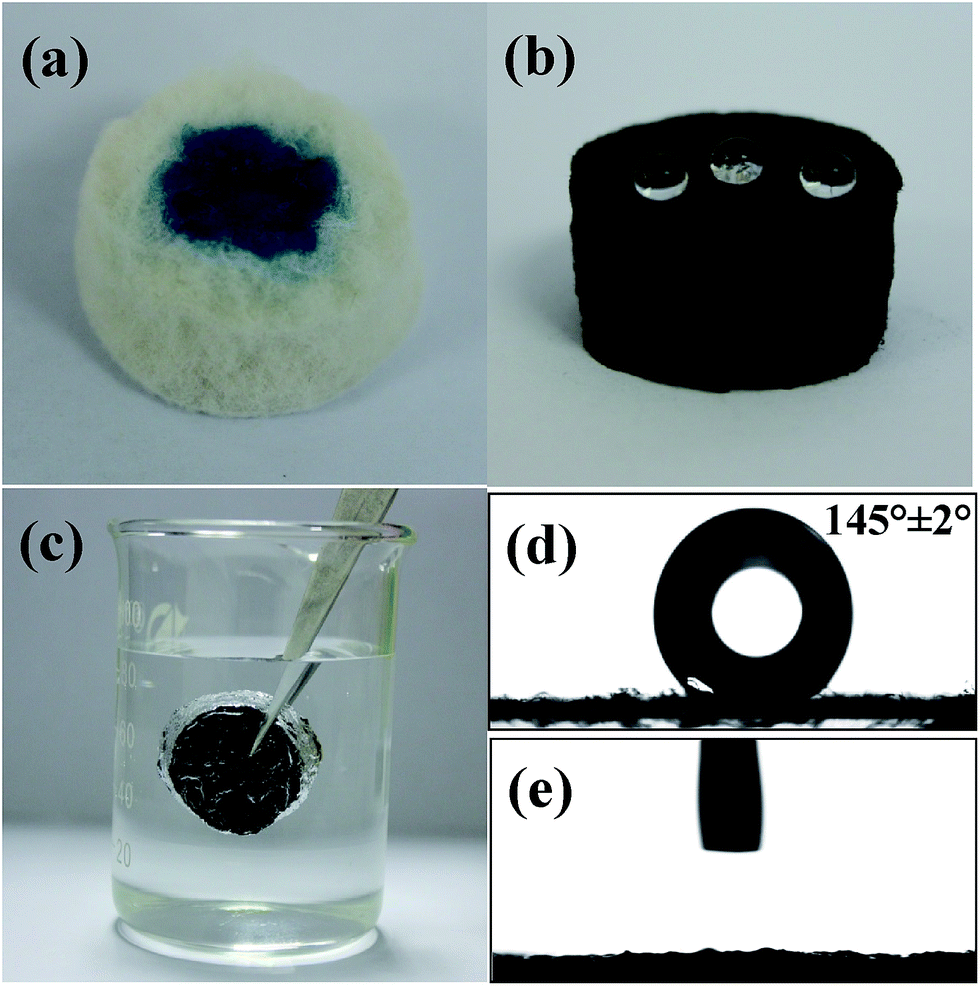 | ||
| Fig. 3 Surface wettability of aerogels to different probe liquids ((a) adsorption of water stained with MB by fiber aerogel; (b) water droplets on a MCF aerogel; (c) interaction between MCF aerogel and liquid after immersing into water; (d and e) behavior of water and oil droplets on MCF aerogel). | ||
The mechanism behind the differences on the wettability of fiber and MCF aerogels was further justified by FT-IR (Fig. 4a). Specifically, several peaks representing oxygen-contained groups, such as C![[double bond, length as m-dash]](https://www.rsc.org/images/entities/char_e001.gif) O (1642, 2922 cm−1), C–O (1062 cm−1) and –OH (3424 cm−1), were observed in the fiber aerogel (Curve (1) in Fig. 4a). However, these peaks became weak or disappeared once the bamboo fibers were processed to MCF aerogel (Curve (2) in Fig. 4a), suggesting the removal of hydrophilic moieties in the sample during the thermal treatment. This assumption was partly confirmed by studying the Raman spectrum of samples. As shown in Fig. 4b, the fiber aerogel exhibits a smooth line in the range of 500–2000 cm−1. In contrast, the MCF aerogel shows a strong peak at 1590 cm−1 along with a weak hump at around 1378 cm−1, representing the vibration of hexagonal graphite and disorder-induced carbon structure in the sample, respectively.
O (1642, 2922 cm−1), C–O (1062 cm−1) and –OH (3424 cm−1), were observed in the fiber aerogel (Curve (1) in Fig. 4a). However, these peaks became weak or disappeared once the bamboo fibers were processed to MCF aerogel (Curve (2) in Fig. 4a), suggesting the removal of hydrophilic moieties in the sample during the thermal treatment. This assumption was partly confirmed by studying the Raman spectrum of samples. As shown in Fig. 4b, the fiber aerogel exhibits a smooth line in the range of 500–2000 cm−1. In contrast, the MCF aerogel shows a strong peak at 1590 cm−1 along with a weak hump at around 1378 cm−1, representing the vibration of hexagonal graphite and disorder-induced carbon structure in the sample, respectively.
 | ||
| Fig. 4 Surface information of fiber (1) and MCF aerogel (2) ((a) FT-IR spectra; (b) Raman spectra; (c) XPS spectra; (d) deconvoluted C1s spectra of samples). | ||
These results indicate the conversion of cellulose fibers in bamboo to graphitic carbon after pyrolysis treatment. It can be expected that the carbon structure in MCF aerogel is hydrophobic and oleophilic. The C1s XPS spectra of fiber and MCF aerogels were also used to confirm the deoxygenation process,31 as shown in Fig. 4c. The atomic percentages of C and O in bamboo fiber aerogel are 44.8% and 55.2%, respectively. The content of C increases to 83.9% with a simultaneous decrease on O to 16.1% in MCF aerogel. The higher C/O ratio (5.2 for MCF aerogel, 0.8 for bamboo fiber aerogel) provides direct evidence showing the enhanced carbonization in MCF aerogel. Furthermore, the removal of oxygen-contained groups in the sample was verified by a significant improvement on the intensity of sp2 C–C bond at 284.6 eV and decreasing oxygen-contained carbon (C–O at 286.6 eV, –CO at 287.6 eV, and –O–CO at 289.0 eV), as shown in the deconvoluted C1s spectra of aerogels in Fig. 4d. The results were in good agreement with the hydrophobic nature of MCF aerogel, as observed in Fig. 3.
Interestingly, the MCF aerogel developed in this study displayed excellent flexibility, and it can bear a large volume reduction under the compression and excellent recovery once the mechanical load was released. Fig. 5 shows the compressive stress–strain curves for the set strain (ε) maxima of 70% and 90%. Two distinct stages were observed when the material was subjected to the mechanical load, including a linear region with ε < 70%, and a following densification region. In the first region, the compressive stress increased linearly with increasing strain, representing the elastic deformation of aerogel. In the densification region (ε > 70%), the stress increased steeply with strain because the fibers in the aerogel were impinged upon each other. The curves under release gave a stress near zero until ε = 0%, suggesting the aerogel can be completely recovered to its original dimension. These robust mechanical properties were attributed to the constitute and structure of aerogel: (i) the excellent mechanical properties of carbon fibers in aerogel offer the elasticity of material, and (ii) the porous and 3-D networks make the material flexible, even with an extreme compressive strain of 90%.
 | ||
| Fig. 5 Compressive stress–strain curves of MCF aerogel at different set strains. | ||
Adsorption behavior of MCF aerogel for oils and organic solvents
The low density, flexible and hydrophobic properties of MCF aerogel make it a promising material to remove oils and organic solvents from water. This feasibility was demonstrated by studying the oil-spill cleanup capacity of aerogel, as shown in Fig. 6a. Crude oil was suspended on water surface, forming a thin layer due to its low density and immiscibility with water. Once a piece of MCF aerogel contacted with the layer, the oil was adsorbed completely, leaving a transparent region on water surface (Movie S1 in the ESI†). The aerogel saturated with oil can float on water surface due to its low density and hydrophobicity, offering convenience in collecting and recycling the aerogel in practical applications. | ||
| Fig. 6 Snapshots showing the removal of crude oil on water surface (a) and chloroform (dyed by Sudan-Red) in water (b) using MCF aerogel; (c) adsorption capacity of MCF aerogel for various organic compounds; (d) comparison of the adsorption capacity of various 3-D carbon-based materials. | ||
Furthermore, MCF aerogel can adsorb solvents with a higher density than water. For example, when the material was immersed into water and put in contact with chloroform (1.48 g mL−1, stained with oil red), the water-immiscible droplet was sucked into the aerogel within a few seconds (Fig. 6b, Movie S2 in the ESI†). No detectable water was found in the saturated aerogel, showing the excellent adsorption selectivity of material for oily liquids.
The versatility of MCF aerogel for the adsorption of organic compounds was also studied by employing a series of commonly used liquids, such as petroleum products (gasoline, diesel, pump oil, etc.), water-immiscible solvents (hexane, decane, toluene, etc.). The results showed that the MCF aerogel exhibited a very high adsorption capacity for these organic liquids ranging from 30 to 129 times of its original weight (Fig. 6c). The adsorption capacity and estimated cost (with considerations on the availability of precursors, fabrication process, convenience and applicability of materials, and so on) of MCF aerogel were compared with other 3-D carbon-based materials (Fig. 6d).32,34–40 It was obvious that the aerogel reported here exhibited much higher adsorption capacity than activated carbon and graphite-based materials, and comparable to the sponge/foam consisting of carbon nanotubes (CNTs) and graphene. While its adsorption performance was lower than some newly-developed ultra-flyweight aerogels, the method for the fabrication of MCF aerogel was much simpler and its precursor, i.e., bamboo chopsticks, is a low-cost and sustainable biomass. Therefore, the aerogel developed in our work was effective with low cost and high performance, environment-friendly and had a high scalability for the practical separation of oil–water mixture.
Besides the adsorption capability, the recyclability of adsorbent and recoverability of adsorbed liquids were key considerations when selecting suitable material for water–oil separation. Fig. 7 shows the recyclability of MCF aerogel by studying the weight change of material after saturated adsorption of organic liquids with different boiling points. Various methods, including distillation, combustion and squeezing, were employed to recover the aerogel. For instance, for the removal of valuable pollutants or those with low boiling points (n-hexane as an example), distillation is a commonly used method. MCF aerogel was recovered by heating the sample at 70 °C (boiling point of n-hexane). The results showed that negligible changes on the adsorption capacity were found after six adsorption/distillation cycles (Fig. 7a). The morphology of aerogel (Fig. 7b) was pretty similar to those of original one, suggesting marginal damage to the MCF aerogel during the cyclic runs.
 | ||
| Fig. 7 Recyclability of MCF aerogel using different methods and corresponding morphologies after cyclic operation for 6 times ((a and b) hexane-adsorbed MCF aerogel recycled by distillation; (c and d) hexadecane-adsorbed MCF aerogel recycled by combustion; (e and f) gasoline-adsorbed MCF aerogel recycled by squeezing). | ||
For the adsorption of oils with high boiling point, combustion was applied to recover the MCF aerogel. In such case, hexadecane (boiling point: 287 °C) was used as an adsorbate. The results showed that the material maintained 62.1% for its initial adsorption capacity under the second cyclic run, and this capability was nearly unaltered under the further cycles (Fig. 7c). The decrease on the adsorption capacity was likely due to the deposition of combustion residues on fiber surface. This assumption was partly confirmed by examining the surface of individual fibers, as amorphous materials were observed on fiber and its diameter increased to 8–10 μm (Fig. 7d). During the combustion, the aerogel adsorbed with hexadecane was burned quietly and stably, leaving an unchangeable shape of material after the burnt-out of oil (Fig. 8a). This capability was attributed to: (i) the excellent thermal stability and fire resistance of aerogel, and (ii) the porous structure of material facilitated the transfer of heat generated during the combustion.19,24
 | ||
| Fig. 8 Photographs showing the regeneration of MCF aerogel via combustion (a) and squeezing (b). | ||
As an alternative for aforementioned methods, squeezing was a simple and easy-applied one. The recycling of MCF aerogel by this method was also studied using gasoline as a probe liquid. The sorption capacity of MCF aerogel possessed 61.4% of the original value after six cycles (Fig. 7e), and about 25.3% of adsorbed gasoline was left in the second cycle due to the incomplete compression of MCF aerogel. The porous structure of aerogel and the carbon fibers remained unchanged during the whole process (Fig. 7f and 8b). While the squeezing was less effective as compared with other two, the energy consumption and operation convenience of this method make it very competitive in practice.
Polymer foams/aerogels with novel structures/composition have been applied in recent years for oil–water separation, thanks to their large surface area, controllable porosity and hydrophobic properties.41,42 The materials showed relatively low cost and high absorption ability for oil contaminants. However, polymers are limited for wide applications possibly due to their unclear impact to the environmental and ecological systems.15,33 In addition, there is a concern that most polymers can be dissolved/swelled by the organic liquids, resulting in a negative effect on the structural stability of materials. In this context, sustainable materials originated from natural resources with excellent stability and recyclability, eco-friendliness, like the aerogel developed in this study, are a good candidate for practical applications. This field is in need of more participation from the material communities to achieve the high impact it deserves.
Conclusions
In conclusion, MCF aerogel was developed by a facile method using sustainable bamboo chopsticks as starting material. Compared with some newly-developed ultra-flyweight aerogels, the MCF aerogel possessed a moderate adsorption capacity for oils and organic liquids, however, the material can be recycled easily using distillation, combustion and squeezing, mainly thanks to its porous structure and inherently hydrophobic nature, high thermal stability and excellent mechanical properties. The multi-functionality of aerogel integrated by the super hydrophobicity, mild adsorption capacity, stable recyclability and low-cost for production endowed the aerogel an ideal adsorbent for collecting oily compounds on water surface.Acknowledgements
This project was supported by the National Natural Science Foundation of China (51302308, 51203180), the Western Light (Project no. XBBS201215) and Western Action Program (Project no. KGZD-EW-502) of Chinese Academy of Sciences, as well as the Research Fund for Distinguished Young Scientist in Xinjiang (Project no. 2013711005). Yang and Ma acknowledged the support from the Program for Attracting High-level Talents in Xinjiang Uyghur Autonomous Region.References
- H. M. Choi and R. M. Cloud, Environ. Sci. Technol., 1992, 26, 772 CrossRef CAS.
- J. K. Yuan, X. G. Liu, O. Akbulut, J. Q. Hu, S. L. Suib, J. Kong and F. Stellacci, Nat. Nanotechnol., 2008, 3, 332 CrossRef CAS PubMed.
- M. A. Shannon, P. W. Bohn, M. Elimelech, J. G. Georgiadis, B. J. Marinas and A. M. Mayes, Nature, 2008, 452, 301 CrossRef CAS PubMed.
- D. D. Nguyen, N. H. Tai, S. B. Lee and W. S. Kuo, Energy Environ. Sci., 2012, 5, 7908 CAS.
- X. C. Gui, Z. P. Zeng, Z. Q. Lin, Q. M. Gan, R. Xiang, Y. Zhu, A. Y. Cao and Z. K. Tang, ACS Appl. Mater. Interfaces, 2013, 5, 5845 CAS.
- D. X. Wu, Z. Y. Yu, W. J. Wu, L. L. Fang and H. T. Zhu, RSC Adv., 2014, 4, 53514 RSC.
- Q. Zhu, Y. Chu, Z. K. Wang, N. Chen, L. Lin, F. T. Liu and Q. M. Pan, J. Mater. Chem. A, 2013, 1, 5386 CAS.
- G. Hayase, K. Kanamori, M. Fukuchi, H. Kaji and K. Nakanishi, Angew. Chem., Int. Ed., 2013, 52, 1986 CrossRef CAS PubMed.
- S. Y. Huang and J. F. Shi, Ind. Eng. Chem. Res., 2014, 53, 4888 CrossRef CAS.
- N. Chen and Q. M. Pan, ACS Nano, 2013, 7, 6875 CrossRef CAS PubMed.
- Z. Y. Wu, C. Li, H. W. Liang, J. F. Chen and S. H. Yu, Angew. Chem., Int. Ed., 2013, 52, 2925 CrossRef CAS PubMed.
- A. M. ElKhatat and S. A. Al-Muhtaseb, Adv. Mater., 2011, 23, 2887 CrossRef CAS PubMed.
- N. Xiao, Y. Zhou, Z. Ling and J. S. Qiu, Carbon, 2013, 59, 530 CrossRef CAS PubMed.
- A. C. Pierre and G. M. Pajonk, Chem. Rev., 2002, 102, 4243 CrossRef CAS PubMed.
- H. C. Bi, X. Xie, K. B. Yin, Y. L. Zhou, S. Wan, L. B. He, F. Xu, F. Banhart, L. T. Sun and R. S. Ruoff, Adv. Funct. Mater., 2012, 22, 4421 CrossRef CAS PubMed.
- H. C. Bi, Z. Y. Yin, X. H. Cao, X. Xie, C. L. Tan, X. Huang, B. Chen, F. T. Chen, Q. L. Yang, X. Y. Bu, X. H. Lu, L. T. Sun and H. Zhang, Adv. Mater., 2013, 25, 5916 CrossRef CAS PubMed.
- C. Wu, X. Y. Huang, X. F. Wu, R. Qian and P. K. Jiang, Adv. Mater., 2013, 25, 5658 CrossRef CAS PubMed.
- Y. Gao, Y. S. Zhou, W. Xiong, M. M. Wang, L. S. Fan, H. Rabiee-Golgir, L. J. Jiang, W. J. Hou, X. Huang, L. Jiang, J. F. Silvain and Y. F. Lu, ACS Appl. Mater. Interfaces, 2014, 6, 5924 CAS.
- Y. Zhao, C. G. Hu, Y. Hu, H. H. Cheng, G. Q. Shi and L. T. Qu, Angew. Chem., 2012, 124, 11533 CrossRef PubMed.
- H. P. Cong, X. C. Ren, P. Wang and S. H. Yu, ACS Nano, 2012, 6, 2693 CrossRef CAS PubMed.
- X. C. Gui, H. B. Li, K. L. Wang, J. Q. Wei, Y. Jia, Z. Li, L. L. Fan, A. Y. Cao, H. W. Zhu and D. H. Wu, Acta Mater., 2011, 59, 4798 CrossRef CAS PubMed.
- J. P. Zhao, W. C. Ren and H. M. Cheng, J. Mater. Chem., 2012, 22, 20197 RSC.
- S. Kabiri, D. N. H. Tran, T. Altalhi and D. Losic, Carbon, 2014, 80, 523 CrossRef CAS PubMed.
- H. Y. Sun, Z. Xu and C. Gao, Adv. Mater., 2013, 25, 2554 CrossRef CAS PubMed.
- Z. Y. Wu, C. Li, H. W. Liang, Y. N. Zhang, X. Wang, J. F. Chen and S. H. Yu, Sci. Rep., 2014, 4, 4079 Search PubMed.
- T. A. Schaedler, A. J. Jacobsen, A. Torrents, A. E. Sorensen, J. Lian, J. R. Greer, L. Valdevit and W. B. Carter, Science, 2011, 334, 962 CrossRef CAS PubMed.
- M. Yu, H. H. Funke, J. L. Falconer and R. D. Noble, High density, Nano Lett., 2008, 9, 225 CrossRef PubMed.
- R. W. Fu, B. Zheng, J. Liu, M. S. Dresselhaus, G. Dresselhaus, J. H. Satcher and T. E. Baumann, Adv. Funct. Mater., 2003, 13, 558 CrossRef CAS PubMed.
- J. T. Korhonen, M. Kettunen, R. H. A. Ras and O. Ikkala, ACS Appl. Mater. Interfaces, 2011, 3, 1813 CAS.
- H. Yang, R. Yan, H. Chen, D. H. Lee and C. Zheng, Fuel, 2007, 86, 1781 CrossRef CAS PubMed.
- X. B. Li, S. W. Yang, J. Sun, P. He, X. G. Xu and G. Q. Ding, Carbon, 2014, 78, 38 CrossRef CAS PubMed.
- Z. Q. Niu, J. Chen, H. H. Hng, J. Ma and X. D. Chen, Adv. Mater., 2012, 24, 4144 CrossRef CAS PubMed.
- S. D. Yang, L. Chen, L. Mu and P. C. Ma, J. Colloid Interface Sci., 2014, 430, 337 CrossRef CAS PubMed.
- G. Wang, Q. Sun, Y. Zhang, J. Fan and L. Ma, Desalination, 2010, 263, 183 CrossRef CAS PubMed.
- M. Toyoda and M. Inagaki, Carbon, 2000, 38, 199 CrossRef CAS.
- M. A. Lillo-Rodenas, D. Cazorla-Amoros and A. Linares-Solano, Carbon, 2005, 43, 1758 CrossRef CAS PubMed.
- H. W. Liang, Q. F. Guan, L. F. Chen, Z. Zhu, W. J. Zhang and S. H. Yu, Angew. Chem., Int. Ed., 2012, 51, 5101 CrossRef CAS PubMed.
- X. C. Gui, J. Q. Wei, K. L. Wang, A. Y. Cao, H. W. Zhu, Y. Jia, Q. K. Shu and D. H. Wu, Adv. Mater., 2010, 22, 617 CrossRef CAS PubMed.
- X. C. Dong, J. Chen, Y. W. Ma, J. Wang, M. B. Chan-Park, X. M. Liu, L. H. Wang, W. Huang and P. Chen, Chem. Commun., 2012, 48, 10660 RSC.
- D. P. Hashim, N. T. Narayanan, J. M. Romo-Herrera, D. A. Cullen, M. G. Hahm, P. Lezzi, J. R. Suttle, D. Kelkhoff, E. Muñoz-Sandoval, S. Ganguli, A. K. Roy, D. J. Smith, R. Vajtai, B. G. Sumpter, V. Meunier, H. Terrones, M. Terrones and P. M. Ajayan, Sci. Rep., 2012, 2, 363 Search PubMed.
- E. U. Kulawardana and D. C. Neckers, J. Polym. Sci., Part A: Polym. Chem., 2010, 48, 55 CrossRef CAS PubMed.
- X. Song, S. Yang, L. He, S. Yan and F. Liao, RSC Adv., 2014, 4, 49000 RSC.
Footnote |
| † Electronic supplementary information (ESI) available: Movie S1: the movie shows that the removal of crude oil on water surface using MCF aerogel. Movie S2: the movie shows that the removal of chloroform (dyed by Sudan-Red) in water using MCF aerogel. See DOI: 10.1039/c5ra03701h |
| This journal is © The Royal Society of Chemistry 2015 |