DOI:
10.1039/C5RA02262B
(Paper)
RSC Adv., 2015,
5, 40094-40102
Reverse-phase high performance liquid chromatography separation of positional isomers on a MIL-53(Fe) packed column†
Received
5th February 2015
, Accepted 10th April 2015
First published on 13th April 2015
Abstract
The application of the metal–organic framework (MOF) MIL-53(Fe) as a novel stationary phase for reverse-phase high performance liquid chromatography (HPLC) separation of positional isomers is described for the first time. Under the optimized conditions, baseline separation of xylene, dichlorobenzene, chlorotoluene and nitroaniline isomers was achieved on the MIL-53(Fe) packed column within a short time. The retention mechanisms of these isomers on the MIL-53(Fe) packed column were discussed in detail, and a typical reverse-phase behavior can describe the results. The thermodynamic characteristics of the HPLC separation of positional isomers were also evaluated. It was confirmed that the HPLC separation of positional isomers was controlled by the Gibbs free energy change (ΔG). In addition, reverse-phase HPLC separation of the tested isomers was also carried on MIL-53(Al, Cr) packed columns to investigate the influence of the metal centre of the MIL-53 framework on their chromatographic behaviors. The results showed that the MIL-53(Fe) packed column exhibited better separation performance than the MIL-53(Al, Cr) packed columns. Moreover, the MIL-53(Fe) packed column also gave efficient HPLC separation of alkylbenzene and naphthalene, aniline compounds and polycyclic aromatic hydrocarbons (PAHs). These successful applications suggest the potential of MIL-53(Fe) as a novel stationary phase for efficient reverse-phase HPLC separation.
1 Introduction
Substituted aromatic positional isomers are widely used in the fields of organic intermediates, pesticides, medicines and dyestuff. However, many substituted aromatic positional isomers are poisonous compounds, which are harmful to human health and the environment. Therefore, the separation and analysis of substituted aromatic positional isomers is of vital importance for monitoring manufacturing processes and for environmental analysis. Since the chemical and physical properties of positional isomers are very similar, the efficient separation of positional isomers remains a big challenge. The commonly used C8 or C18 columns are not very suitable for the separation of positional isomers based on hydrophobic interactions.1 To date, considerable efforts have been devoted to developing novel stationary phases. Some types of stationary phases are available for the separation of positional isomers, including modified zirconia and calixarene-bonded silica stationary phases.2–7 Although these stationary phases have achieved some success, the development of additional stationary phases for the separation of positional isomers is still required.
Metal–organic frameworks (MOFs), a new class of nanoporous crystalline material, are constructed from clusters or chains of metal ions connected by organic ligands to create one-, two-, and three-dimensional porous structures.8 The fascinating properties of MOFs, such as high surface area, the ability to modify their pore surface, active metal sites, and good thermal and chemical stability9–11 make them a suitable stationary phase for gas chromatography (GC) and high performance liquid chromatography (HPLC) separation.12–33 Because of their functional internal surface, MOFs used as a stationary phase can have various retention mechanisms, including π–π stacking, hydrogen bonding and coordination with open metal sites,34 which are suitable for the separation of positional isomers. Recently, several MOFs and MOF composites have been explored as stationary phases for the HPLC separation of positional isomers.19,20,24,29,35–39 However, most of the MOF packed HPLC columns used for the separation of positional isomers were used in normal-phase HPLC, even though reverse-phase HPLC is the most popular analysis technique used in the field of biochemistry and chemistry. To the best of our knowledge, only MIL-53(Al), MIL-100(Fe) and UiO-66 have been explored as stationary phases for reverse-phase separation of positional isomers.32,38–40 Therefore, the development of novel MOF packed columns for the separation of positional isomers in reverse-phase HPLC is highly desirable.
MIL-53(Fe) is one of the most well known of the group of MIL-53 MOFs, which are built up from corner-sharing metal (Al, Cr, Fe, Ga, In, V) clusters interconnected with benzenedicarboxylate organic ligands to form a one-dimensional lozenge-shaped pore channel system.41 A property of the MIL-53 framework is structural flexibility, or ‘breathing’; they can adapt their pore size according to the guest species without a loss of crystallinity or bond breaking. This extraordinary property of MIL-53 materials makes them suitable for use in the field of liquid phase separation and adsorption. Previous studies have shown that MIL-53(Al) can be used as a stationary phase for both normal-phase and reverse-phase HPLC separation of positional isomers.19,20,40 In normal-phase HPLC, the MIL-53(Al) packed column showed high separation ability for substituted aromatic positional isomers. In reverse-phase HPLC, the MIL-53(Al) packed column gave a long separation time for benzenediol isomers. MIL-53(Fe) has also been explored in the liquid separation of a mixture of BTEX (benzene, toluene, ethylbenzene and the three xylene isomers),42 but a systematic study of its application in reverse-phase HPLC has yet not been carried out as far as we know. Additionally, it has been found that the metal center of MOFs greatly affects their performance in chromatographic separation. For example, Fan and Yan observed that capillary columns coated with MIL-100(Fe) or MIL-100(Cr) exhibited different GC separation performances for alkane isomers.43 Based on the aforementioned points, it is still worthwhile to investigate the reverse-phase HPLC performance of MIL-53(Fe), with the possibility to develop a highly selective stationary phase that may outperform existing materials.
Herein, we report the use of MIL-53(Fe) as a novel stationary phase, which can give high-resolution separation for positional isomers in reverse-phase HPLC. Four types of positional isomers (xylene, nitroaniline, chlorotoluene and dichlorobenzene isomers) were used to investigate the reverse-phase HPLC separation of positional isomers on the MIL-53(Fe) packed column using acetonitrile (ACN)/H2O as the mobile phase. The performance of the MIL-53(Fe) packed column for the separation of positional isomers was also compared to that of MIL-53(Al, Cr) packed columns and commercial C8 and C18 columns. In addition, alkylbenzenes, aniline compounds and polycyclic aromatic hydrocarbons (PAHs) were also separated using the MIL-53(Fe) packed column to evaluate the potential of MIL-53(Fe) for reverse-phase HPLC applications besides the separation of positional isomers.
2 Experimental
2.1 Materials
All chemicals and reagents used were of analytical grade or better. Xylene, ethylbenzene (EB), toluene, ACN, dichlorobenzene, chlorotoluene, nitroaniline, iron(III) chloride hexahydrate, aluminum nitrate nonahydrate, chromium(III) nitrate nonahydrate and hydrofluoric acid were purchased from Sinoparm Chemical Reagent Co. Ltd. (Shanghai, China). Methanol and N,N-dimethylformamide (DMF) were obtained from Fuchen Chemical Reagents Factory (Tianjin, China). Terephthalic acid was obtained from Aladdin Chemistry Co. Ltd. (Shanghai, China). Ultrapure water was deionized in a Milli-Q SP reagent water system (Millipore, Bedford, MA, USA).
2.2 Apparatus
All chromatographic experiments were performed on an Agilent 1100 HPLC system equipped with a 20 μL sample loop, a G1379 degasser, a G1311 quaternary solvent delivery system and a G1314 variable wavelength detector. The C8 column (25 cm × 4.0 mm i.d., 5 μm) was obtained from Agilent Technologies Inc. (ZORBAX SB-C8, Agilent, USA). The C18 column used was the product of Bischoff Chromatography (25 cm × 4.0 mm i.d., 5 μm) (ProntoSIL Eurobond, Germany). Scanning electron microscopy (SEM) images were carried out on an XL30E scanning electron microscope (Philips, The Netherlands). Thermogravimetric analysis (TGA) over the temperature range from room temperature to 600 °C (at a heating rate of 10 °C) was performed in a STA449C thermogravimetric analyzer (Netzsch, Germany) under an inert atmosphere (Ar). An X’Pert Pro MPD diffractometer (Philips, The Netherlands) was used to record X-ray diffraction (XRD) patterns using Co Kα radiation (λ = 1.789 Å). Surface areas were determined on an ASAP 2020 (Micromeritics, USA) at 77 K using nitrogen adsorption.
2.3 Synthesis of MIL-53
MIL-53(Fe) was hydrothermally synthesized according to the method of Millange et al. with some modifications.44 In brief, hexahydrated iron chloride (10 mmol) and terephthalic acid (10 mmol) were mixed with N,N′-dimethylformamide (DMF, 50 mL). The reactants were stirred for a few minutes before introducing the resulting suspension into a Teflon-lined steel autoclave, and the temperature was set at 423 K for three days. After cooling, the light orange MIL-53(Fe) solid was washed thoroughly with deionized water and dried in air.
MIL-53(Al) was hydrothermally synthesized according to the method of Loiseau et al.45 Typically, 6500 mg of aluminum nitrate nonahydrate and 1440 mg of terephthalic acid were mixed with 25 mL of ultrapure water in a Teflon-lined stainless steel autoclave, which was heated at 493 K for 3 days. After cooling, the white powder obtained was washed with ultrapure water. The product obtained was reheated at 553 K to remove terephthalic acid residues.
MIL-53(Cr) was hydrothermally synthesized according to the method of Férey et al.46 Typically, a mixture of chromium(III) nitrate, terephthalic acid, hydrofluoric acid and H2O in the molar ratio 1![[thin space (1/6-em)]](https://www.rsc.org/images/entities/char_2009.gif) :1:1:280 was heated at 493 K for 3 days. The solid obtained was washed four times with 200 mL of ethanol at 343 K to remove terephthalic acid residues.
:1:1:280 was heated at 493 K for 3 days. The solid obtained was washed four times with 200 mL of ethanol at 343 K to remove terephthalic acid residues.
2.4 Preparation of the MIL-53(Fe) packed column for HPLC
1.5 g MIL-53(Fe) was dispersed in MeOH (10 mL) under ultrasonication for 10 min. The suspension was then packed into a stainless steel column (200 mm × 2.1 mm i.d.) under 35 MPa using the slurry technique. The MIL-53(Fe) packed column was washed with methyl alcohol for 2 h before use. The MIL-53(Al) and MIL-53(Cr) packed columns were prepared using the same procedure as for the MIL-53(Fe) packed column.
2.5 Calculation of thermodynamic parameters
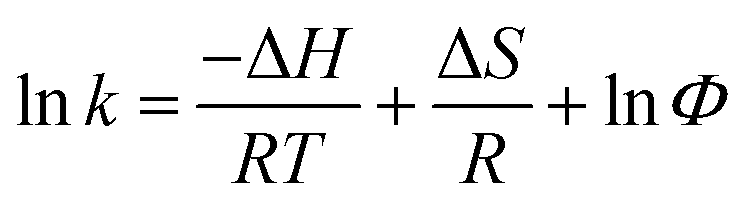
The enthalpy change (ΔH), entropy change (ΔS) and Gibbs free energy change (ΔG) for the transfer of solutes from the mobile phase to the stationary phase MIL-53(Fe) were calculated using the Van ’t Hoff equation:21| |
 | (1) |
where k is the retention factor, R is the gas constant, T is the absolute temperature and Φ is the phase ratio. The k value was calculated according to eqn (3):where t is the retention time, and t0 is the column void time, which was determined by injecting a small plug of acetonitrile and recording the perturbation signal.
3 Results and discussion
3.1 Characterization
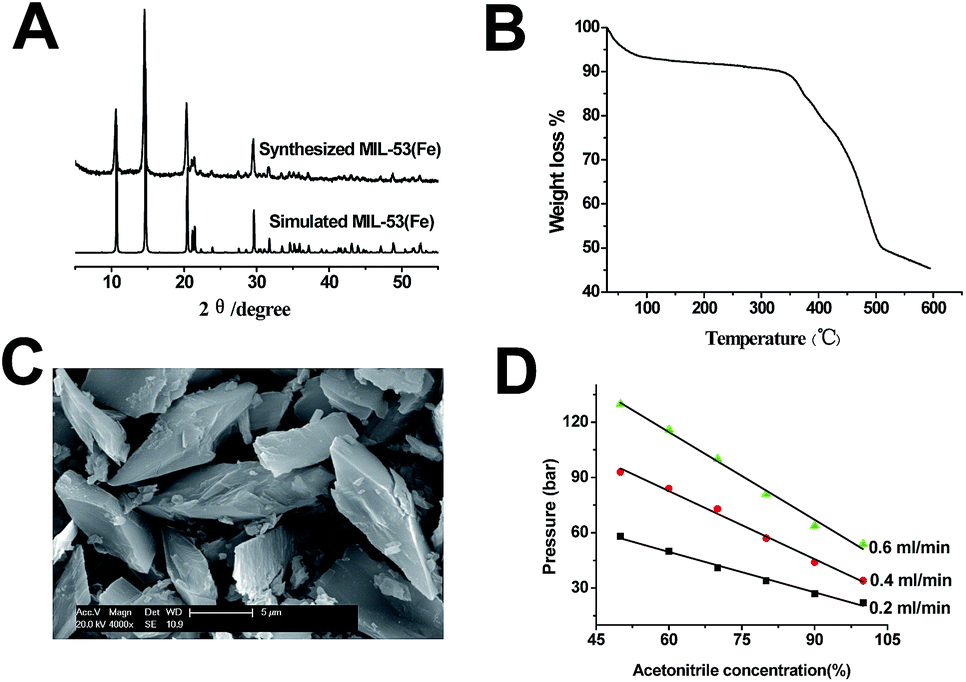
The synthesized MIL-53(Fe) was characterized by XRD, SEM and TGA. The XRD pattern showed that the diffraction peaks of the synthesized MIL-53(Fe) were in good agreement with the simulated pattern, and no impurity peaks were detected in the synthesized MIL-53(Fe), indicating the successful preparation of MIL-53(Fe) (Fig. 1A). The TGA data showed that the MIL-53(Fe) was stable up to 350 °C, and shows two weight losses (Fig. 1B) which can be attributed to surface water evaporation (<100 °C) and the collapse of the structure of MIL-53(Fe) (350–500 °C). The synthesized MIL-53(Fe) crystals show a cubic shape with a broad size distribution (Fig. 1C). The Brunauer–Emmett–Teller (BET) surface area and pore volume of MIL-53(Fe) were calculated to be 19 m2 g−1 and 0.013 m3 g−1, respectively. The very low surface area of MIL-53(Fe) was attributed to the fact that the anhydrous form of MIL-53(Fe) exhibits closed pores with no accessible porosity to most gases.47
 |
| | Fig. 1 (A) XRD patterns of synthesized MIL-53(Fe) and simulated MIL-53(Fe); (B) TGA of MIL-53(Fe); (C) SEM of MIL-53(Fe); (D) dependence of the back pressure of the MIL-53(Fe) packed column on the flow rate and mobile phase. | |
The stability of MOFs plays an important role in the application of MOFs as HPLC stationary phases. In order to investigate the mechanical stability of the MIL-53(Fe) packed column, the pressure drop across the column was measured at different flow-rates and in different mobile phases. Fig. 1D shows the effect of flow rate and mobile phase on the back pressure. The excellent linear dependence of the column pressure on the flow rate and mobile phase was indicated by a goodness of fit (R2) better than 0.99 for the measured curve. In addition, no significant change in the particle size distribution was observed after chromatographic experiments (Fig. S1† in the ESI). The above results indicate that MIL-53(Fe) exhibits good stability for HPLC analysis. It can also be observed that the MIL-53(Fe) packed column gave relatively low back pressure. The maximum back pressure was only 130 bar at a flow rate of 0.6 mL min−1 using 50% ACN as the mobile phase, which is attractive for practical HPLC applications.
3.2. HPLC separation of positional isomers on the MIL-53(Fe) packed column
3.2.1 HPLC separation of xylene isomers. The separation of xylene isomers remains a challenge because of their close chemical and physical properties. To date, several MOFs have been reported to show good selectivity for these positional isomers in normal-phase HPLC. For comparison, xylene isomers were used to test the characteristics of reverse-phase HPLC separation of positional isomers on the MIL-53(Fe) packed column. It can be seen from Fig. 2A that xylene isomers can be separated within 4 minutes using 100% ACN as the mobile phase at a flow rate of 0.6 mL min−1. The retention sequence of xylene isomers followed the increasing order p-xylene < o-xylene < m-xylene, due to molecular stacking effects and hydrophobic interactions between the xylene isomers and MIL-53(Fe). Both m-xylene and o-xylene have been reported to stack pairwise in the pores of MIL-53(Fe) and show a close distance and strong π–π stacking interactions with the inside pore walls.42 p-Xylene molecules on the other hand are arranged in a zig-zag manner rather than in pairs, resulting in ineffective interactions with the terephthalate linkers of the adjacent wall and fast elution from the MIL-53(Fe) packed column. In addition, the elution of m-xylene after o-xylene on the MIL-53(Fe) packed column was mainly caused by the greater hydrophobic interactions resulting from the higher hydrophobicity of m-xylene than o-xylene, showing the reverse-shape characteristic of the MIL-53(Fe) packed column.
 |
| | Fig. 2 Chromatograms for HPLC on the MIL-53(Fe) packed column: (A) xylene isomers using ACN/H2O (100:0) as the mobile phase; (B) dichlorobenzene isomers using ACN/H2O (80:20) as the mobile phase; (C) chlorotoluene isomers using ACN/H2O (100:0) as the mobile phase; (D) nitroaniline isomers using ACN/H2O (70:30) as the mobile phase at a flow rate of 0.6 mL min−1. All the separations were performed at room temperature and monitored with a UV detector at 254 nm. | |
3.2.2 HPLC separation of chlorotoluene and dichlorobenzene isomers. Normal-phase HPLC separation of chlorotoluene and dichlorobenzene isomers has been explored on Cu3(BTC)2, MIL-53(Al) and MIL-101(Cr) packed columns, which showed poor separation efficiency or long separation time.19,29,48 In this work, dichlorobenzene isomers could be baseline separated on the MIL-53(Fe) packed column using ACN/H2O (80:20) as the mobile phase at a flow rate of 0.6 mL min−1 (Fig. 2B). The RS values for o-/p-dichlorobenzene and m-/p-dichlorobenzene were 1.86 and 2.04, respectively. The MIL-53(Fe) packed column also gave fast separation of chlorotoluene (Fig. 2C) using 100% ACN as the mobile phase at a flow rate of 0.6 mL min−1. The RS values for o-/p-chlorotoluene and m-/p-chlorotoluene were 2.45 and 1.4, respectively. The elution of the chlorotoluene and dichlorobenzene isomers followed the increasing order of para-isomers < ortho-isomers < meta-isomers, the same as the order of xylene isomers, suggesting that the retention mechanisms of the chlorotoluene and dichlorobenzene isomers on the MIL-53(Fe) packed column can be explained similarly to those of the xylene isomers. In addition, it was found that the retention times of the chlorotoluene and dichlorobenzene isomers were very high in comparison to those of the xylene isomers (Fig. S2† in the ESI), which was attributed to π-electron transfer interactions resulting from the electron-withdrawing effect of the chloride group of the solutes and the electron-releasing effect of the hydroxyl groups of MIL-53(Fe).
3.2.3 HPLC separation of nitroaniline isomers. Nitroaniline isomers are strongly toxic and widely considered to be potential carcinogenic substances; nitroaniline isomers have been included on the list of priority pollutants in some countries. Therefore, the separation and determination of nitroaniline isomers are important for environmental analysis. As shown in Fig. 2D, nitroaniline isomers can be baseline separated on the MIL-53(Fe) packed column using ACN/H2O (70:30) as the mobile phase at a flow rate of 0.6 mL min−1. The RS values for p-/m-nitroaniline and o-/p-nitroaniline were 2.26 and 1.8, respectively. The elution order of the nitroaniline isomers followed the increasing order of m- < p- < o-nitroaniline. The affinity of MIL-53(Fe) for o-nitroaniline may be ascribed to the greater hydrophobic interactions resulting from intramolecular hydrogen bonding of o-nitroaniline, and its lowest dipole moment (4.38 D) among the three isomers, which showed the reverse-phase properties of the MIL-53(Fe) packed column. In addition, the elution order of the nitroaniline isomers was in accordance with the order of their pKb values (the pKb values of m-nitroaniline, p-nitroaniline and o-nitroaniline are 11.4, 12.9 and 14.2, respectively), suggesting that the retention of nitroaniline isomers may be also controlled by the nature of the nitro group. The electronic cloud density of the nitro group for m-, p- and o-nitroaniline increases as the pKb increases, thus the hydrogen bonding interaction between the nitro group of nitroaniline and the hydroxyl group of MIL-53(Fe) increases in the order m-, p-, o-nitroaniline.
3.2.4 Effect of mobile phase on HPLC separation. To demonstrate the reverse-phase separation mechanism on the MIL-53(Fe) packed column, the effect of mobile phase on HPLC separation of positional isomers was investigated by changing the proportions of ACN in the mobile phases (Fig. S2† in the ESI). The relationship between logk of the solutes and the ACN content of the mobile phase in the MIL-53(Fe) packed column was studied and is shown in Fig. 3. It is obvious that the logk of xylene, chlorotoluene and dichlorobenzene isomers decreased with increasing ACN content, which illustrates that the hydrophobic interactions between the solutes and MIL-53(Fe) was the main factor in the retention of xylene, chlorotoluene and dichlorobenzene isomers on the MIL-53(Fe) packed column. A similar phenomenon was also found for the nitroaniline isomers as the content of ACN decreased from 90% to 70%, indicating that hydrophobic interactions played an important role in the separation of nitroaniline isomers. However, the mobile phase has a different influence on the retention factors of p-, m- and o-nitroaniline as the content of ACN decreased from 100% to 90% (Fig. 3D), which implies that there are strong secondary interactions between nitroaniline isomers and MIL-53(Fe) besides hydrophobic interactions when the ACN content is higher than 90%.
 |
| | Fig. 3 Effect of the ACN content of the mobile phase on the retention factors of positional isomers on the MIL-53(Fe) packed column at a flow rate of 0.6 mL min−1: (A) xylene isomers; (B) dichlorobenzene isomers; (C) chlorotoluene isomers; (D) nitroaniline isomers. All the separations were performed at room temperature and monitored with a UV detector at 254 nm. | |
It was also observed that the mobile phase significantly affected the resolution of the solutes on the MIL-53(Fe) packed column (Table S1† in the ESI). Taking the xylene isomers as an example, the HPLC resolution of the xylene isomers decreased as the ACN content in the mobile phase decreased from 100% to 90%, and then increased gradually as the content of ACN decreased from 90% to 60%. The above results reveal that the mobile phase plays a significant role in the HPLC separation of substituted aromatic positional isomers on the MIL-53(Fe) packed column.
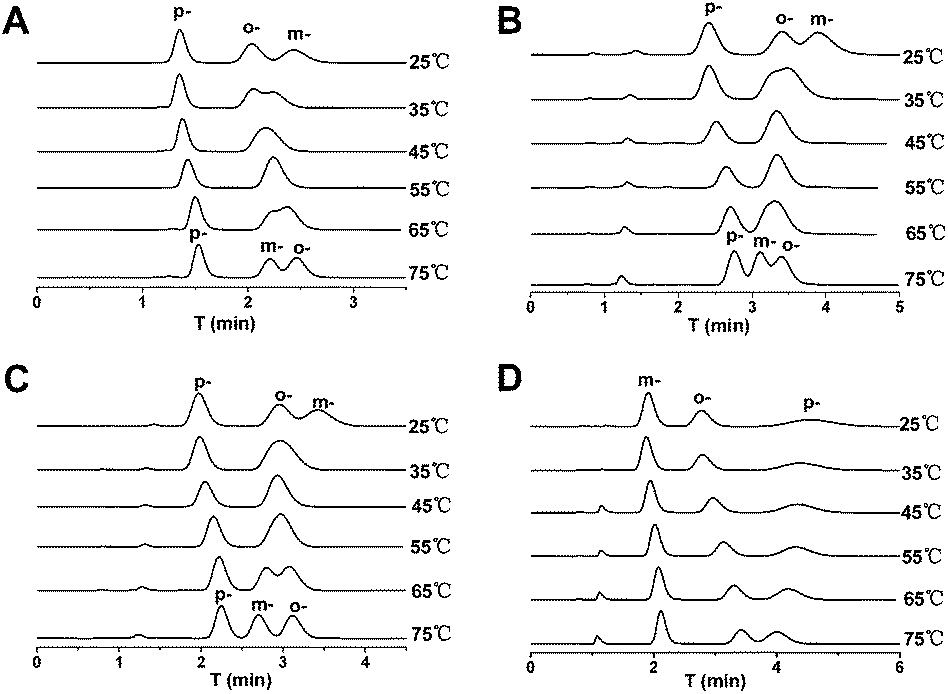
3.2.5 Effect of temperature on HPLC separation. To investigate the thermodynamic properties of the HPLC separations on the MIL-53(Fe) column, six temperatures (25, 35, 45, 55, 65 and 75 °C) were selected to investigate the separation performances of xylene, dichlorobenzene, chlorotoluene and nitroaniline isomers. It was found that as the temperature increased, changes in the retention times showed different trends for different aromatic isomers (Fig. 4). The retention of m-xylene decreased as the temperature increased from 25 to 35 °C and then remained unchanged with further increase in temperature, whereas the retention of m-dichlorobenzene, m-chlorotoluene and p-nitroaniline decreased gradually as the temperature increased. On the other hand, the retention of other isomers gradually increased as the temperature increased. Accordingly, it is found that the MIL-53(Fe) packed column showed high selectivity for the m-isomers of xylene, dichlorobenzene and chlorotoluene at 25 °C, but showed high selectivity for the o-isomers of xylene, dichlorobenzene and chlorotoluene at 75 °C. Also, the selectivity of the aromatic isomers changed significantly as the temperature increased, indicating the feasibility of realizing separation on the MIL-53(Fe) packed column via controlling temperature (Table S2† in the ESI).
 |
| | Fig. 4 Effect of temperature on the HPLC chromatograms on the MIL-53(Fe) packed column for the separation of: (A) xylene isomers, (B) dichlorobenzene isomers, (C) chlorotoluene isomers and (D) nitroaniline isomers at temperatures from 25 to 75 °C using 100% ACN as the mobile phase at a flow rate of 0.6 mL min−1. All the signals were monitored with a UV detector at 254 nm. | |
The Van ’t Hoff equation was used to demonstrate the relationship between retention factor and column temperature. As shown in Fig. 5, lnk was linearly related to 1/T, indicating that no changes occurred in the interaction mechanisms for the separation of xylene, dichlorobenzene, chlorotoluene and nitroaniline isomers by reverse-phase HPLC over the temperature range 25–75 °C . The values of ΔH and ΔS obtained from the Van ’t Hoff plot are summarized in Table 1, and the values of ΔG at different temperatures are summarized in Table 2. The transfer of m-dichlorobenzene, m-chlorotoluene and p-nitroaniline from the mobile phase to MIL-53(Fe) was controlled by negative ΔH and positive ΔS, whereas that of the other isomers was controlled by positive ΔH and ΔS. The results also implied that the separation of these isomers was not controlled by ΔH or ΔS individually, but by both of them simultaneously. The values of ΔG were also used to evaluate the transfer of analytes from the mobile phase to MIL-53(Fe). The negative value of ΔG indicated that the transfer of these isomers from the mobile phase to MIL-53(Fe) was thermodynamically spontaneous. Additionally, it can be clearly found that the more negative ΔG values correlate with more favorable transfer of the solute from the mobile phase to MIL-53(Fe), thus stronger retention of the solute on MIL-53(Fe).
 |
| | Fig. 5 Van ’t Hoff plots for: (A) xylene isomers, (B) dichlorobenzene isomers, (C) chlorotoluene isomers and (D) nitroaniline isomers on the MIL-53(Fe) packed column. The separation conditions were as shown in Fig. 4. | |
Table 1 Values of ΔH, ΔS and R2 for xylene, dichlorobenzene, chlorotoluene and nitroaniline isomers
| Analytes |
ΔH (kJ mol−1) |
ΔS (J mol−1 K−1) |
R2 |
| p-Xylene |
8.87 |
33.64 |
0.97783 |
| o-Xylene |
8.03 |
37.80 |
0.98718 |
| p-Chlorotoluene |
6.29 |
31.81 |
0.99799 |
| o-Chlorotoluene |
4.07 |
29.19 |
0.97485 |
| m-Chlorotoluene |
−2.56 |
8.48 |
0.93483 |
| p-Dichlorobenzene |
5.84 |
32.99 |
0.99553 |
| o-Dichlorobenzene |
2.44 |
25.40 |
0.92853 |
| m-Dichlorobenzene |
−2.44 |
10.41 |
0.90128 |
| m-Nitroaniline |
6.15 |
30.60 |
0.99708 |
| o-Nitroaniline |
7.5 |
40.09 |
0.9992 |
| p-Nitroaniline |
−1.12 |
17.06 |
0.91210 |
Table 2 Values of ΔG for xylene, dichlorobenzene, chlorotoluene and nitroaniline isomers
| Analytes |
ΔG |
| 25 °C |
35 °C |
45 °C |
55 °C |
65 °C |
75 °C |
| p-Xylene |
−1.15 |
−1.49 |
−1.82 |
−2.16 |
−2.5 |
−2.83 |
| o-Xylene |
−3.23 |
−3.61 |
−3.99 |
−4.37 |
−4.75 |
−5.12 |
| p-Chlorotoluene |
−3.19 |
−3.51 |
−3.82 |
−4.14 |
−4.46 |
−4.78 |
| o-Chlorotoluene |
−4.63 |
−4.92 |
−5.21 |
−5.5 |
−5.8 |
−6.09 |
| m-Chlorotoluene |
−5.09 |
−5.17 |
−5.26 |
−5.34 |
−5.43 |
−5.51 |
| p-Dichlorobenzene |
−3.99 |
−4.32 |
−4.65 |
−4.98 |
−5.31 |
−5.64 |
| o-Dichlorobenzene |
−5.13 |
−5.39 |
−5.64 |
−5.9 |
−6.15 |
−6.4 |
| m-Dichlorobenzene |
−5.54 |
−5.65 |
−5.75 |
−5.86 |
−5.96 |
−6.07 |
| m-Nitroaniline |
−2.97 |
−3.27 |
−3.58 |
−3.88 |
−4.19 |
−4.5 |
| o-Nitroaniline |
−4.45 |
−4.85 |
−5.25 |
−5.65 |
−6.05 |
−6.45 |
| p-Nitroaniline |
−6.21 |
−6.38 |
−6.55 |
−6.72 |
−6.89 |
−7.06 |
3.3. Advantages of MIL-53(Fe) packed columns over MIL-53(Al, Cr) packed columns and commercial columns for the separation of positional isomers
The separation performance of the MIL-53(Fe) packed column was compared with that of MIL-53(Al, Cr) packed columns. The MIL-53(Al) packed column offered good separation of p-, m- and o-xylene within 3 min using pure ACN as the mobile phase (Fig. S3† in the ESI). However, the MIL-53(Al) packed column was unable to discriminate between ortho and para isomers for the separation of chlorotoluene, dichlorobenzene and nitroaniline isomers using pure ACN as the mobile phase. The MIL-53(Cr) packed column also showed a poor separation performance, as the elution time of the tested isomers was very long, caused by peak broadening and tailing peaks (Fig. S4† in the ESI). The above results show the obvious advantages of the MIL-53(Fe) packed column over MIL-53(Al, Cr) packed columns. In addition, it was also found that the elution order of the tested isomers was different on the different MIL-53 packed columns. For example, the retention sequence of xylene isomers on the MIL-53(Al, Cr) packed columns in reverse-phase HPLC followed an increasing order of p-xylene < m-xylene < o-xylene, which was not the same as the order on the MIL-53(Fe) packed column. The above results demonstrate that the metal center of MIL-53 plays an important role in the HPLC separation of xylene, dichlorobenzene, chlorotoluene and nitroaniline isomers.
Commercial C8 and C18 columns were also employed for comparison to highlight the outstanding separation performance of the MIL-53(Fe) packed column. C8 and C18 columns are the most commonly used silica bonded columns for reverse-phase HPLC separation. However, both C8 and C18 columns exhibited poor selectivity for the separation of xylene, chlorotoluene and dichlorobenzene isomers (Fig. S5, S6 and Table S3† in the ESI). In contrast, the MIL-53(Fe) packed column exhibited good selectivity for the separation of these isomers (Table S2† in the ESI), revealing the advantages of the MIL-53(Fe) packed column over commercial C8 and C18 columns for the separation of xylene, chlorotoluene and dichlorobenzene isomers. Nevertheless, the MIL-53(Fe) packed column faces the problem of low column efficiency when comparing the separation of nitroaniline isomers on the MIL-53(Fe) packed column and the C18 column (Table S4† in the ESI). Further research should pay more attention to improving the column efficiency of the MIL-53(Fe) packed column.
3.4. Performance of the MIL-53(Fe) packed column for the HPLC separation of positional isomers
The MIL-53(Fe) packed column showed good reproducibility (Fig. S7† in the ESI) for reverse-phase HPLC separation of xylene, chlorotoluene, dichlorobenzene and nitroaniline isomers. The relative standard deviation (RSD) values of the retention time, peak area, peak height and half peak width for five replicate separations of the tested isomers were 0.09–0.18%, 0.07–0.21%, 0.06–0.17%, and 0.05–0.18%, respectively (Table 3). The column-to-column reproducibility for the preparation of MIL-53(Fe) packed columns was also evaluated (Fig. S8† in the ESI). The low column-to-column RSD values indicate the reliability of MIL-53(Fe) as a stationary phase (Table S5† in the ESI). Additionally, an increase in analyte mass resulted in a linear increase of the chromatographic peak area (Fig. S9†). These features of the MIL-53(Fe) packed column make it a promising candidate as the stationary phase for reverse-phase HPLC separation of positional isomers.
Table 3 Precision for five replicate separations on the MIL-53(Fe) packed column
| Analytes |
RSD (%) (n = 5) |
| Retention time |
Peak area |
Peak height |
Half peak width |
| p-Xylene |
0.11 |
0.14 |
0.1 |
0.05 |
| m-Xylene |
0.13 |
0.09 |
0.11 |
0.12 |
| o-Xylene |
0.09 |
0.14 |
0.13 |
0.08 |
| p-Dichlorobenzene |
0.09 |
0.12 |
0.14 |
0.10 |
| m-Dichlorobenzene |
1.15 |
0.13 |
0.09 |
0.08 |
| o-Dichlorobenzene |
0.13 |
0.10 |
0.08 |
0.09 |
| p-Chlorotoluene |
0.10 |
0.07 |
0.06 |
0.12 |
| m-Chlorotoluene |
0.12 |
0.16 |
0.10 |
0.08 |
| o-Chlorotoluene |
0.18 |
0.20 |
0.12 |
0.09 |
| p-Nitroaniline |
0.16 |
0.14 |
0.11 |
0.10 |
| m-Nitroaniline |
0.12 |
0.21 |
0.13 |
0.13 |
| o-Nitroaniline |
0.15 |
0.2 |
0.17 |
0.18 |
3.5. Applications of the MIL-53(Fe) packed column
In order to extend the potential of MIL-53(Fe) in reverse-phase HPLC applications beyond the separation of positional isomers, three groups of analytes, alkylbenzene and naphthalene, aniline compounds and polycyclic aromatic hydrocarbons (PAHs), were also separated on the MIL-53(Fe) packed column. Effective separation of neutral alkylbenzene and naphthalene could be achieved on the MIL-53(Fe) packed column (Fig. 6A). As can be seen from the results, the retention time of benzene, toluene, ethylbenzene and naphthalene decreased with the increase of ACN content, confirming again that the hydrophobic interactions played a dominant role in the separation of alkylbenzene and naphthalene. In addition, the hydrophobicity of the analytes follows the order benzene < toluene < ethylbenzene < naphthalene, while ethylbenzene was eluted earlier than toluene on the MIL-53(Fe) packed column. The column showed stronger retention of toluene than ethylbenzene, which may be attributed to the fact that the ethyl group has weaker interactions with carboxylate moieties in the obtuse pore corners than the methyl group due to steric effects.20
 |
| | Fig. 6 HPLC chromatograms on the MIL-53(Fe) packed column for the separation of: (A) benzene (1), ethylbenzene (2), toluene (3), naphthalene (4); (B) diphenylamine (5), aniline (6), 1,2-diaminobenzene (7), 1-naphthylamine (8) using different ratios of ACN/H2O at a flow rate of 0.4 mL min−1. All the separations were performed at room temperature and monitored with a UV detector at 254 nm. | |
Four kinds of basic aniline compounds were also well separated on the MIL-53(Fe) packed column (Fig. 6B). The retention time of the basic anilines followed an increasing order of diphenylamine < aniline < 1,2-diaminobenzene < 1-naphthylamine. Diphenylamine has the largest kinetic diameter among the four compounds and it was eluted first on the MIL-53(Fe) packed column regardless of the composition of the mobile phase as a result of size exclusion. The MIL-53(Fe) packed column showed the highest affinity for 1-naphthylamine, which was attributed to the hydrogen bond interactions and the strong π–π stacking interactions between 1-naphthylamine and MIL-53(Fe). Compared with aniline, 1,2-diaminobenzene was strongly retained on the MIL-53(Fe) packed column, suggesting an additional interaction between the amino group of 1,2-diaminobenzene and the hydroxyl group of MIL-53(Fe).
The MIL-53(Fe) packed column also showed satisfactory separation performance for PAHs (Fig. 7). The six PAHs were eluted in the order naphthalene < acenaphthylene < benzo(k)fluoranthene < anthracene < fluorene < phenanthrene, which is not in accordance with either the hydrophobic interactions or the π–π stacking interactions between the PAHs and MIL-53(Fe), indicating that the retention of PAHs on the column may be a composite result from various retention interactions.
 |
| | Fig. 7 HPLC chromatograms on the MIL-53(Fe) packed column for the separation of: (1) naphthalene; (2) acenaphthylene; (3) benzo(k)fluoranthene; (4) anthracene; (5) fluorene; (6) phenanthrene, using 100% ACN as the mobile phase at a flow rate of 0.4 mL min−1. All the separations were performed at room temperature and monitored with a UV detector at 254 nm. | |
4 Conclusions
In conclusion, we have demonstrated MIL-53(Fe) to be a promising stationary phase for reverse-phase HPLC separation of positional isomers. The MIL-53(Fe) packed column showed a diverse range of host–guest interactions, including hydrogen bond interactions, hydrophobic interactions, the π–π stacking effect and size exclusion. Based on various retention mechanisms, xylene, dichlorobenzene, chlorotoluene and nitroaniline isomers can be separated on the MIL-53(Fe) packed column in reverse-phase HPLC with good selectivity and reproducibility. In addition, the MIL-53(Fe) packed column exhibited better separation performance for these positional isomers than MIL-53(Al, Cr), C8 and C18 packed columns. Furthermore, the MIL-53(Fe) packed column also showed efficient HPLC separation of alkylbenzene and naphthalene, aniline compounds and PAHs.
Acknowledgements
The authors are grateful to the National Nature Sciences Foundation of China (21375018, 21275029), the “Five-twelfth” National Science and Technology Support Program (2012BAD29B06) and the Natural Science Foundation of Fujian Province (2014J01402, 2010J05021).
References
- T. Chasse, R. Wenslow and Y. Bereznitski, J. Chromatogr. A, 2007, 1156, 25–34 CrossRef CAS PubMed.
- T. P. Weber, P. T. Jackson and P. W. Carr, Anal. Chem., 1995, 67, 3042–3050 CrossRef CAS.
- M. Gray, G. R. Dennis, P. Wormell, R. Andrew Shalliker and P. Slonecker, J. Chromatogr. A, 2002, 975, 285–297 CrossRef CAS.
- L. F. Yao, H. B. He, Y. Q. Feng and S. L. Da, Talanta, 2004, 64, 244–251 CrossRef CAS PubMed.
- L. S. Li, S. L. Da, Y. Q. Feng and M. Liu, J. Chromatogr. A, 2004, 1040, 53–61 CrossRef CAS PubMed.
- L. S. Li, M. Liu, S. L. Da and Y. Q. Feng, Talanta, 2004, 62, 643–648 CrossRef CAS PubMed.
- Y. Lee, Y. Ryu, J. Ryu, B. Kim and J. Park, Chromatographia, 1997, 46, 507–510 CAS.
- T. H. Bae, J. S. Lee, W. Qiu, W. J. Koros, C. W. Jones and S. Nair, Angew. Chem., Int. Ed., 2010, 49, 9863–9866 CrossRef CAS PubMed.
- N. Chang, Z. Y. Gu, H. F. Wang and X. P. Yan, Anal. Chem., 2011, 83, 7094–7101 CrossRef CAS PubMed.
- Z. Ni, J. P. Jerrell, K. R. Cadwallader and R. I. Masel, Anal. Chem., 2007, 79, 1290–1293 CrossRef CAS PubMed.
- P. Llewellyn, P. Horcajada, G. Maurin, T. Devic, N. Rosenbach, S. Bourrelly, C. Serre, D. Vincent, S. Loera-Serna and Y. Filinchuk, J. Am. Chem. Soc., 2009, 131, 13002–13008 CrossRef CAS PubMed.
- S. M. Xie, Z. J. Zhang, Z. Y. Wang and L. M. Yuan, J. Am. Chem. Soc., 2011, 133, 11892–11895 CrossRef CAS PubMed.
- M. Padmanaban, P. Müller, C. Lieder, K. Gedrich, R. Grünker, V. Bon, I. Senkovska, S. Baumgärtner, S. Opelt and S. Paasch, Chem. Commun., 2011, 47, 12089–12091 RSC.
- Z. Y. Gu, C. X. Yang, N. Chang and X. P. Yan, Acc. Chem. Res., 2012, 45, 734–745 CrossRef CAS PubMed.
- C. X. Yang, Y. J. Chen, H. F. Wang and X. P. Yan, Chem. - Eur. J., 2011, 17, 11734–11737 CrossRef CAS PubMed.
- N. Chang, Z. Y. Gu and X. P. Yan, J. Am. Chem. Soc., 2010, 132, 13645–13647 CrossRef CAS PubMed.
- Z. Y. Gu and X. P. Yan, Angew. Chem., Int. Ed., 2010, 49, 1477–1480 CrossRef CAS PubMed.
- Z. Y. Gu, J. Q. Jiang and X. P. Yan, Anal. Chem., 2011, 83, 5093–5100 CrossRef CAS PubMed.
- C. X. Yang, S. S. Liu, H. F. Wang, S. W. Wang and X. P. Yan, Analyst, 2012, 137, 133–139 RSC.
- L. Alaerts, M. Maes, L. Giebeler, P. A. Jacobs, J. A. Martens, J. F. Denayer, C. E. Kirschhock and D. E. De Vos, J. Am. Chem. Soc., 2008, 130, 14170–14178 CrossRef CAS PubMed.
- M. Maes, F. Vermoortele, L. Alaerts, S. Couck, C. E. Kirschhock, J. F. Denayer and D. E. De Vos, J. Am. Chem. Soc., 2010, 132, 15277–15285 CrossRef CAS PubMed.
- Z. L. Fang, S. R. Zheng, J. B. Tan, S. L. Cai, J. Fan, X. Yan and W. G. Zhang, J. Chromatogr. A, 2013, 1285, 132–138 CrossRef CAS PubMed.
- Y. Y. Fu, C. X. Yang and X. P. Yan, Chem. - Eur. J., 2013, 19, 13484–13491 CrossRef CAS PubMed.
- A. Ahmed, M. Forster, R. Clowes, D. Bradshaw, P. Myers and H. Zhang, J. Mater. Chem. A, 2013, 1, 3276–3286 CAS.
- M. Zhang, Z. J. Pu, X. L. Chen, X. L. Gong, A. X. Zhu and L. M. Yuan, Chem. Commun., 2013, 49, 5201–5203 RSC.
- M. A. Moreira, J. o. C. Santos, A. F. Ferreira, J. M. Loureiro, F. Ragon, P. Horcajada, K. E. Shim, Y. K. Hwang, U. H. Lee and J. S. Chang, Langmuir, 2012, 28, 5715–5723 CrossRef CAS PubMed.
- M. A. Moreira, J. o. C. Santos, A. F. Ferreira, J. M. Loureiro, F. Ragon, P. Horcajada, P. G. Yot, C. Serre and A. E. Rodrigues, Langmuir, 2012, 28, 3494–3502 CrossRef CAS PubMed.
- K. Tanaka, T. Muraoka, D. Hirayama and A. Ohnish, Chem. Commun., 2012, 48, 8577–8579 RSC.
- C. X. Yang and X. P. Yan, Anal. Chem., 2011, 83, 7144–7150 CrossRef CAS PubMed.
- Y. Y. Fu, C. X. Yang and X. P. Yan, Langmuir, 2012, 28, 6794–6802 CrossRef CAS PubMed.
- Y. Y. Fu, C. X. Yang and X. P. Yan, Chem. Commun., 2013, 49, 7162–7164 RSC.
- Y. Y. Fu, C. X. Yang and X. P. Yan, J. Chromatogr. A, 2013, 1274, 137–144 CrossRef CAS PubMed.
- N. Chang and X. P. Yan, J. Chromatogr. A, 2012, 1257, 116–124 CrossRef CAS PubMed.
- J. R. Li, J. Sculley and H. C. Zhou, Chem. Rev., 2011, 112, 869–932 CrossRef PubMed.
- M. Maes, F. Vermoortele, M. Boulhout, T. Boudewijns, C. Kirschhock, R. Ameloot, I. Beurroies, R. Denoyel and D. E. De Vos, Microporous Mesoporous Mater., 2012, 157, 82–88 CrossRef CAS PubMed.
- M. Zhang, J. H. Zhang, Y. Zhang, B. J. Wang, S. M. Xie and L. M. Yuan, J. Chromatogr. A, 2014, 1325, 163–170 CrossRef CAS PubMed.
- Z. Yan, J. Zheng, J. Chen, P. Tong, M. Lu, Z. Lin and L. Zhang, J. Chromatogr. A, 2014, 1366, 45–53 CrossRef CAS PubMed.
- W. W. Zhao, C. Y. Zhang, Z. G. Yan, L. P. Bai, X. Wang, H. Huang, Y. Y. Zhou, Y. Xie, F. S. Li and J. R. Li, J. Chromatogr. A, 2014, 1370, 121–128 CrossRef CAS PubMed.
- X. Zhang, Q. Han and M. Ding, RSC Adv., 2015, 5, 1043–1050 RSC.
- S. S. Liu, C. X. Yang, S. W. Wang and X. P. Yan, Analyst, 2012, 137, 816–818 RSC.
- P. Horcajada, C. Serre, G. Maurin, N. A. Ramsahye, F. Balas, M. Vallet-Regí, M. Sebban, F. Taulelle and G. Férey, J. Am. Chem. Soc., 2008, 130, 6774–6780 CrossRef CAS PubMed.
- R. El Osta, A. Carlin-Sinclair, N. Guillou, R. I. Walton, F. Vermoortele, M. l. Maes, D. de Vos and F. Millange, Chem. Mater., 2012, 24, 2781–2791 CrossRef CAS.
- L. Fan and X. P. Yan, Talanta, 2012, 99, 944–950 CrossRef CAS PubMed.
- F. Millange, N. Guillou, M. E. Medina, G. Férey, A. Carlin-Sinclair, K. M. Golden and R. I. Walton, Chem. Mater., 2010, 22, 4237–4245 CrossRef CAS.
- T. Loiseau, C. Serre, C. Huguenard, G. Fink, F. Taulelle, M. Henry, T. Bataille and G. Férey, Chem. - Eur. J., 2004, 10, 1373–1382 CrossRef CAS PubMed.
- C. Serre, F. Millange, C. Thouvenot, M. Noguès, G. Marsolier, D. Louër and G. Férey, J. Am. Chem. Soc., 2002, 124, 13519–13526 CrossRef CAS PubMed.
- F. Millange, N. Guillou, R. I. Walton, J. M. Grenèche, I. Margiolaki and G. Férey, Chem. Commun., 2008, 39, 4732–4734 RSC.
- L. Alaerts, M. Maes, M. A. van der Veen, P. A. Jacobs and D. E. De Vos, Phys. Chem. Chem. Phys., 2009, 11, 2903–2911 RSC.
Footnote |
| † Electronic supplementary information (ESI) available: Experimental details and additional figures. See DOI: 10.1039/c5ra02262b |
|
| This journal is © The Royal Society of Chemistry 2015 |
Click here to see how this site uses Cookies. View our privacy policy here.