DOI:
10.1039/C5RA01934F
(Paper)
RSC Adv., 2015,
5, 33212-33220
Anchoring of Pd(II) complex in functionalized MCM-41 as an efficient and recoverable novel nano catalyst in C–C, C–O and C–N coupling reactions using Ph3SnCl
Received
31st January 2015
, Accepted 2nd April 2015
First published on 2nd April 2015
Abstract
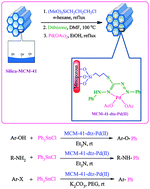
Anchored palladium(II) in functionalized MCM-41 mesoporous silica was prepared and used as an efficient, recoverable and thermally stable heterogeneous nano catalyst for C–C, C–O and C–N bond formation in cross-coupling reactions in the presence of Ph3SnCl. MCM-41 was prepared trough hydrothermal synthesis using tetraethyl orthosilicate (Si(OC2H5)4) as silica source and cetyltrimethylammonium bromide (CTAB) as a template. The structure of functionalized MCM-41 was studied by FT-IR, XRD, SEM, TEM, TGA, EDS, ICP and BET techniques.
1 Introduction
Since the discovery of ordered mesoporous silica materials,1,2 different synthetic routes have been reported for their preparation using cationic surfactants as a template.3–5 Generally, the preparation process consists of the formation of micelles in aqueous solution followed by the polymerization of an inorganic source and the removal of surfactants from the pores.5 MCM-41 has a hexagonal arrangement of one-dimensional mesopores with diameters ranging from 2 to 10 nm.2 Due to its unique properties such as high surface area, homogeneity of the pores, good thermal stability, tunable and accessible pores, MCM-41 has been a focus for several research areas like nanoscience,6 catalysis,7,8 environmental purification,9 adsorption10 and drug delivery.11 The nature of MCM-41 pore structure can be used to functionalize via reaction with alkoxysilyl compounds and then incorporation of metal complexes into the channel walls.12 Stepnicka13,14 and Karimi15 modified mesoporous silica with various N-groups and loaded this support with palladium; the resulting material was applied as a catalyst for organic synthesis. C–C and C-heteroatom coupling reactions catalyzed by transition-metals are among the most important reactions in organic synthesis.16–19 Palladium has been the most used transition metal catalyst for the various coupling reactions.20,21 In general, the activity of homogeneous palladium catalysts such as Pd(OAc)2 and PdCl2 is sufficiently high, However, they suffer from the drawbacks of difficult separation and recovering from the reaction mixture as well as serious environmental pollution which have limited their applications. Development of heterogeneous palladium catalysts to overcome the above drawbacks has important theoretical and practical significance and also is one of the main objectives of green chemistry. Thus, solid materials such as polymer materials, carbon, zeolite and different types of silica (amorphous silica, mesoporous molecular sieves, solids obtained by co-condensation of silicate precursors and many others) have been used to immobilize the palladium catalysts.22–25
In this paper, we report the synthesis and characterization of Pd(II) complex supported on dithizone-functionalized nanostructured MCM-41 (MCM-41-dtz-Pd(II)) as novel and efficient catalyst for the C–C, C–O and C–N bond formation in coupling reactions in the presence of triphenyltin chloride under mild reaction conditions.
2 Results and discussion
In continuation of our recent success in the introduction of new catalysts,7,26 herein we report the synthesis of Pd(II) complex supported on dithizone-functionalized nanostructured MCM-41 (MCM-41-dtz-Pd(II)) as novel and efficient catalyst for the C–C, C–O and C–N bond formation in coupling reactions in the presence of triphenyltin chloride under mild reaction conditions (Scheme 1).
 |
| | Scheme 1 Synthesis of MCM-41-dtz-Pd(II). | |
2.1 Catalyst characterization
The synthesis of the MCM-41-dtz-Pd(II) schematically shown in Scheme 1. FT-IR spectra were recorded separately at different stages of the preparation (Fig. 1). Curve a in Fig. 1 is the spectrum of the MCM-41 and curve b is the spectrum of the MCM-41-nPr-Cl. The absorption band presented at 962 cm−1 is attributable to Si–O vibrations.27 Absorption bands at 1235, 1080, 799 and 461 cm−1 are assignable to the asymmetric and symmetric stretching vibrations of the mesoporous framework (Si–O–Si). The O–H stretching vibration bands appeared at 3478 cm−1. The presence of the anchored CPTMS group is confirmed by C–H stretching vibrations at 2959 and 2853 cm−1 in MCM-41-nPr-Cl spectra. The curve c shows stretching vibrations at 1640 cm−1 (C
N), 1430 cm−1 (C
C) and broad band at about 3447 cm−1 (O–H and N–H) for MCM-41-dtz. Curve d shows the FT-IR spectrum after adsorption of Pd(II) onto MCM-41-dtz and the curve e, which is the spectrum of the recovered MCM-41-dtz-Pd(II), shows that the catalyst is stable during the coupling reactions.
 |
| | Fig. 1 FT-IR spectra of (a) MCM-41 (b) MCM-41-nPr-Cl, (c) MCM-41-dtz, (d) MCM-41-dtz-Pd(II) and (e) recovered MCM-41-dtz-Pd(II). | |
The small angle powder X-ray diffraction patterns for MCM-41, MCM-41-nPr-Cl, MCM-41-dtz and MCM-41-dtz-Pd(II) are shown in Fig. 2. The pattern of the MCM-41 shows the presence of the three reflection peaks corresponding to 100, 110 and 200, typically, confirming the presence of ordered hexagonal mesoporous structure of MCM-41.28 The values of d-spacing (100) for XRD pattern of MCM-41, MCM-41-nPr-Cl, MCM-41-dtz and MCM-41-dtz-Pd(II) were 39.38, 35.82, 35.07 and 35.43 A°, respectively. A unit cell parameter, a0 was obtained using the following equation:
 |
| | Fig. 2 Low angle XRD patterns of MCM-41, MCM-41-nPr-Cl, MCM-41-dtz and MCM-41-dtz-Pd(II). | |
All the samples showed one intense peak (100) and the patterns were similar to that of pure silica MCM-41, indicating that the functionalized MCM-41 materials contain ordered hexagonal arrays of one-dimensional channel structure. However, the peak intensity decreased and the higher order (110 and 200) diffractions became less resolved and disappeared at last, showing that the mesopore ordering decreased as more substance were anchored on the surface of MCM-41. The XRD patterns were essentially the same as that of the calcined MCM-41, signifying the conservation of the mesoporous texture during the post grafting process. These changes might be due to a partial loss of the space correlation of the pores were commonly observed in studies of silylation of mesoporous silica. The intensity of the Bragg-reflections originates from the difference in the scattering power between the silica walls and the empty pores. Due to the presence of the complex inside the pores, the amount of scattering power within the pores is increased, resulting in overall loss of intensity due to phase cancellation between pore walls and the guest complex.29 Therefore, it can be concluded that the formation of the catalyst has taken place preferentially inside the pore system of the MCM-41.
The thermogravimetric analysis (TGA) curves of MCM-41, MCM-41-nPr-Cl, MCM-41-dtz and MCM-41-dtz-Pd(II) show the mass loss of the organic materials as they decompose upon heating (Fig. 3). According to these curves, two weight loss steps were observed. The first mass loss occurs at a temperature range of 25–300 °C that is related to the loss of physically and chemically adsorbed water and organic solvents. The second mass loss occurs at a temperature range of 300–780 °C, which is related to the thermal decomposition of organochloropropyl fragments and organic ligands in the complex.
 |
| | Fig. 3 TGA curves of MCM-41 (a), MCM-41-nPr-Cl (b), MCM-41-dtz (c) and MCM-41-dtz-Pd(II) (d). | |
The metal content of MCM-41-dtz-Pd(II) was investigated using EDS. A typical EDS spectrum taken from the MCM-41-dtz-Pd(II) was shown in Fig. 4a, where peaks associated with Si, C, O, N, S and Pd can be distinguished. The EDS spectra at different points of the image (Fig. 4a) confirm the presence of Pd in the mesoporous silica matrix. The amount of Pd incorporated into the mesoporous silica found 13.88%, determined by inductively coupled plasma optical emission spectrometry (ICP-OES) (Fig. 4b).
 |
| | Fig. 4 (a) EDS pattern of MCM-41-dtz-Pd(II); (b) ICP-OES pattern of MCM-41-dtz-Pd(II). | |
In order to determine the textural properties, the nitrogen adsorption–desorption isotherms were measured using a BEL sorp-mini II volumetric adsorption analyzer in order to determine the textural properties. All of the samples were degassed at 100 °C under an argon gas flow for 3 h before analysis.
The N2 adsorption and desorption isotherms of MCM-41, MCM-41-dtz-Pd(II) are shown in Fig. 5 indicating the functionalized MCM-41 have narrower pore diameter and lower absorption volume which are identical with the result obtained by XRD. The information derived from the isotherms is in agreement with the XRD patterns (Fig. 2). The BET (Brunauer–Emmett–Teller) surface area and the pore diameter were also determined for MCM-41 and MCM-41-dtz-Pd(II). BET analysis of MCM-41 shows a surface area of 986 m2 g−1 and a pore volume of 0.71 cm3 g−1. Functionalization of CPTMS with Pd(II) complex lead to a decrease in the surface area (507 m2 g−1) and pore volume (0.26 cm3 g−1). The specific pore volume, BET surface area and average BJH (Barrett–Joyner–Halenda) pore diameter of functionalized MCM-41 decreased with increasing substance anchored on the surface of MCM-41, as shown in Table 1. The wall thickness of MCM-41 and MCM-41-dtz-Pd(II) where calculated by the following equation:
 |
| | Fig. 5 Nitrogen adsorption/desorption isotherms MCM-41, MCM-41-dtz-Pd(II). | |
Table 1 Textural parameters deduced from nitrogen sorption isotherms
| Sample |
SBET (m2 g−1) |
Pore diameter by BJH method (nm) |
Pore volume (cm3 g−1) |
Wall diameter (nm) |
| MCM-41 |
986 |
3.6 |
0.71 |
0.9 |
| MCM-41-dtz-Pd(II) |
507 |
1.2 |
0.26 |
2.9 |
These results are attributed to the occupation of large organic molecules on the inner surface of the pores. Although the ordering of MCM-41-dtz-Pd(II) decreased, they still have high surface area.
Morphological changes were investigated by scanning electron microscopy (SEM) of MCM-41 and MCM-41-dtz-Pd(II) (Fig. 6a and b). Fig. 6c and d show transmission electron micrographs of representative regions of MCM-41. Highly ordered long-range hexagonal arrangement of the pores can be clearly observed. The TEM results are in good agreement with the XRD.
 |
| | Fig. 6 SEM image of calcined MCM-41/MCM-41-dtz-Pd (a and b), TEM image of calcined MCM-41 (c and d). | |
2.2 Catalytic studies
After preparation and characterization of MCM-41-dtz-Pd, its catalytic activities were investigated in some of the coupling reactions such as C–C and C-heteroatom bond formation by triphenyltin chloride (as a phenylating agent). Initially, we examined the reaction of phenol with Ph3SnCl in different solvents, bases and various amounts of MCM-41-dtz-Pd(II) (Table 2). Applying 5 mg of MCM-41-dtz-Pd(II) and 10 eq. of Et3N as base and solvent at room temperature, is the best conditions for cross-coupling of Ph3SnCl (0.5 mmol) with phenol (1 mmol) (Table 2, entry 9). Other bases such as K2CO3 and nPr3N and different solvents including CH2Cl2, PEG, EtOAc and THF were tested and the obtained results were unsatisfactory.
Table 2 Optimization of different parameters for the reaction of phenol with Ph3SnCla

|
| Entry |
Cat. (mg) |
Solvent |
Base (eq.) |
Temp (°C) |
Time (h) |
Yieldb (%) |
| Reaction conditions: phenol (1 mmol), Ph3SnCl (0.5 mmol). Isolated yield. |
| 1 |
0 |
— |
Et3N (10) |
rt |
72 |
0 |
| 2 |
0 |
PEG |
Et3N (10) |
80 |
72 |
0 |
| 3 |
4 |
PEG |
Et3N (5) |
80 |
29 |
75 |
| 4 |
5 |
PEG |
Et3N (5) |
80 |
27 |
84 |
| 5 |
5 |
PEG |
Et3N (5) |
rt |
30 |
88 |
| 6 |
7 |
PEG |
Et3N (5) |
80 |
27 |
80 |
| 7 |
10 |
PEG |
Et3N (5) |
80 |
28 |
78 |
| 8 |
4 |
— |
Et3N (10) |
rt |
26 |
85 |
| 9 |
5 |
— |
Et3N (10) |
rt |
24 |
95 |
| 10 |
7 |
— |
Et3N (10) |
rt |
24 |
90 |
| 11 |
10 |
CH2Cl2 |
Et3N (5) |
rt |
36 |
72 |
| 12 |
10 |
EtOAc |
Et3N (5) |
60 |
34 |
60 |
| 13 |
5 |
PEG |
K2CO3 (2) |
80 |
26 |
70 |
| 14 |
5 |
— |
nPr3N (10) |
rt |
35 |
65 |
| 15 |
5 |
THF |
Et3N (5) |
50 |
40 |
50 |
Results of coupling reaction of various phenols with Ph3SnCl have been summarized in Table 3.
Table 3 The reaction of phenol derivatives with Ph3SnCl at room temperature

|
| Entry |
Ar |
Time (h) |
Yield 3ab (%) |
Mp (°C) [ref.] |
| All the products were identified and characterized by comparison of their physical and spectral data with those of authentic samples. Isolated yield. |
| 1 |
Ph |
24 |
95 |
Yellowish oil30 |
| 2 |
4-MePh |
22 |
92 |
Yellowish oil31 |
| 3 |
3-MePh |
25 |
89 |
Yellowish oil32 |
| 4 |
4-MeOPh |
23 |
94 |
Yellowish oil32 |
| 5 |
3-MeOPh |
25 |
90 |
Yellowish oil33 |
| 6 |
4-BrPh |
20 |
92 |
Yellowish oil33 |
| 7 |
3-BrPh |
22 |
85 |
Yellowish oil17 |
| 8 |
4-ClPh |
21 |
85 |
Yellowish oil33 |
| 9 |
4-NO2Ph |
18 |
90 |
54–56 (ref. 17) |
| 10 |
1-Naph |
27 |
85 |
Colorless oil33 |
| 11 |
2-Naph |
24 |
87 |
46–48 (ref. 33) |
Optimizing the cross-coupling reaction conditions of aniline (1 mmol) with Ph3SnCl (0.5 mmol) as a model reaction showed the effective mixture of MCM-41-dtz-Pd(II) (5 mg) and Et3N (10 eq., 1.4 mL) as base and solvent at room temperature (Table 4, entry 4). Table 5 shows the reaction of Ph3SnCl with a variety of amines. The results indicate that aliphatic amines (entries 9–13) and heterocyclic amines (entries 7 and 8) produce the coupled product in good yields. Steric effect is also observed in the case of 2-methylaniline which proceeds in relatively lower yield (entry 3). In addition to amines, the reaction of benzamide as a model reaction for amides is performed successfully (entry 14).
Table 4 Optimization of different parameters for the reaction of aniline with Ph3SnCla

|
| Entry |
Cat. (mg) |
Solvent |
Base (eq.) |
Temp (°C) |
Time (h) |
Yieldb (%) |
| Reaction conditions: 1 mmol of aniline, 0.5 mmol of Ph3SnCl. Isolated yield. |
| 1 |
0 |
— |
Et3N(10) |
rt |
40 |
0 |
| 2 |
0 |
PEG |
Et3N (10) |
80 |
40 |
0 |
| 3 |
4 |
— |
Et3N (10) |
rt |
16 |
87 |
| 4 |
5 |
— |
Et3N (10) |
rt |
15 |
95 |
| 5 |
7 |
— |
Et3N (10) |
rt |
16 |
91 |
| 6 |
5 |
— |
Et3N (10) |
80 |
13 |
80 |
| 7 |
5 |
PEG |
Et3N (5) |
80 |
17 |
80 |
| 8 |
5 |
EtOAc |
Et3N (5) |
60 |
22 |
70 |
| 9 |
5 |
CH2Cl2 |
Et3N (5) |
rt |
25 |
60 |
Table 5 The reaction of amines with Ph3SnCl at room temperature
Results of Table 3 (entries 6–8) and Table 5 (entries 4, 5) show the chemoselectivity of the reactions, in which, C-heteroatom bond formation is preferred to C–C bond formation.
The reactivity of MCM-41-dtz-Pd(II) as catalyst was also examined in the Stille cross-coupling reaction of aryl halides with Ph3SnCl. The preliminary investigation was to screen the solvent, base and different amounts of catalyst on the reaction of iodobenzene with Ph3SnCl (Table 6).
Table 6 Coupling of iodobenzene with Ph3SnCl catalyzed by MCM-41-dtz-Pd(II) in the presence of different solvents and basesa

|
| Entry |
Ph3SnCl (mmol) |
Cat. (mg) |
Solvent |
Base |
Temp (°C) |
Time (h) |
Yieldb (%) |
| Reaction conditions: PhI (1.0 mmol), base (1.5 mmol). Isolated yield. |
| 1 |
0.5 |
0 |
PEG |
K2CO3 |
80 |
24 |
0 |
| 2 |
0.5 |
4 |
PEG |
K2CO3 |
rt |
5 |
87 |
| 3 |
0.5 |
5 |
PEG |
K2CO3 |
rt |
3 |
97 |
| 4 |
0.5 |
7 |
PEG |
K2CO3 |
rt |
3.5 |
90 |
| 5 |
0.5 |
5 |
PEG |
Et3N |
rt |
9 |
75 |
| 6 |
0.5 |
5 |
PEG |
nPr3N |
rt |
13 |
68 |
| 7 |
0.5 |
5 |
PEG |
K2CO3 |
80 |
2.5 |
94 |
| 8 |
0.5 |
5 |
PEG |
Et3N |
80 |
7 |
82 |
| 9 |
0.5 |
5 |
PEG |
nPr3N |
80 |
9 |
72 |
| 10 |
0.5 |
5 |
EtOH |
K2CO3 |
70 |
9 |
80 |
| 11 |
0.5 |
10 |
EtOH |
K2CO3 |
70 |
9.5 |
81 |
| 12 |
0.5 |
5 |
EtOH |
Et3N |
70 |
11 |
60 |
| 13 |
0.5 |
5 |
EtOAc |
K2CO3 |
60 |
10 |
80 |
| 14 |
0.5 |
5 |
EtOAc |
Et3N |
60 |
12 |
75 |
| 15 |
0.5 |
5 |
CH2Cl2 |
K2CO3 |
60 |
11 |
70 |
| 16 |
0.33 |
5 |
PEG |
K2CO3 |
rt |
6 |
75 |
| 17 |
1 |
5 |
PEG |
K2CO3 |
rt |
4 |
88 |
The model reaction was carried out in the presence of different solvents, bases and different amounts of reactants and catalyst. The best results were obtained with PhI (1.0 mmol) and Ph3SnCl (0.5 mmol) in the presence of MCM-41-dtz-Pd(II) (5 mg), K2CO3 (1.5 mmol) as base and PEG-400 as solvent at room temperature (Table 6, entry 3). After optimizing the reaction conditions, the C–C coupling reaction of various aryl halides with Ph3SnCl were tested. Results have been summarized in Table 7.
Table 7 Coupling reaction of aryl halides with Ph3SnCl catalyzed by MCM-41-dtz-Pd(II) in PEG-400 at room temperature

|
| Entry |
ArX 6 |
Time (h) |
Yield 7a,b (%) |
Mp (°C) [ref.] |
| All the products were identified and characterized by comparison of their physical and spectral data with those of authentic samples. Isolated yield. |
| 1 |
PhI |
3 |
97 |
69 (ref. 38) |
| 2 |
4-MeOPhI |
4 |
80 |
87–89 (ref. 39) |
| 3 |
4-MePhI |
3.5 |
94 |
46–47 (ref. 40) |
| 4 |
PhBr |
3 |
95 |
69 (ref. 38) |
| 5 |
4-MePhBr |
3.3 |
85 |
46–47 (ref. 41) |
| 6 |
2-MePhBr |
5 |
78 |
Colorless oil40 |
| 7 |
4-NCPhBr |
2 |
94 |
86–87 (ref. 38) |
| 8 |
4-NO2PhBr |
2 |
92 |
112–114 (ref. 41) |
| 9 |
PhCl |
8 |
80 |
69 (ref. 38) |
| 10 |
4-NO2PhCl |
5 |
90 |
112–114 (ref. 41) |
| 11 |
1-NaPhI |
6 |
90 |
44–46 (ref. 17) |
| 12 |
1-NaPhBr |
7 |
88 |
44–46 (ref. 17) |
Finally, the reusability of the MCM-41-dtz-Pd(II) was investigated. Fig. 7 shows the yield of five consecutive cycles for the preparation of 1,1′-biphenyl (a), diphenyl ether (b) and diphenylamine (c). After the reaction reached the completion, the catalyst was recovered, washed with ethanol and water then reused in the next run. The catalyst has been observed to be reusable for at least five times without a detectable catalytic leaching or an appreciable change in activity (Fig. 7). High and reproducible catalytic activity and significantly low leaching of Pd (during catalytic reactions) from MCM-41 functionalised with dithizone (dtz) group was observed (about 3%), the amount of Pd in the five recovery determined by EDS spectrum (based on EDS measurement W% of Pd has been determined for unreacted catalyst: 33.89%; after first run: 29.89% and after fifth run: 26.19%). Also, the nature of the recovered catalyst was investigated by IR (Fig. 1e).
 |
| | Fig. 7 Reusability of MCM-41-dtz-Pd(II) in the Stille cross-coupling reaction (columns a), C–O bond formation (columns b) and C–N bond formation (columns c). | |
3 Conclusions
In conclusion, a novel mesoporous silica supported Pd(II) complex (MCM-41-dtz-Pd(II)) has been prepared through sequential grafting of several organic molecules. FT-IR, XRD, SEM, TGA, ICP-OES, EDS and BET surface area analysis studies suggested the functionalization of Pd(II) in the surface of the mesopores silica. MCM-41-dtz-Pd(II) has high thermal and chemical stability and is an efficient and recyclable catalyst for the coupling of a wide variety of aryl halides, phenols and amines with Ph3SnCl. The ease of preparation, long shelf life, simple separation from the reaction mixture, stability toward air and compatibility with a wide variety of coupling reactions make it an ideal green heterogeneous catalyst. Moreover, the catalyst could be reused for several cycles without significant loss of stability and activity. These advantages make the process valuable from the synthetic and environmental points of view.
4 Experimental
4.1 Material and physical measurements
The cationic surfactant cetyltrimethylammonium bromide (CTAB, 98%), tetraethyl orthosilicate (TEOS, 98%), sodium hydroxide, aryl halide, triphenyltin chloride, phenols, amines and solvents were purchased from Merck and Aldrich and used without further purification. Catalyst was characterized by XRD patterns, which were collected on a Scintag PAD V X-ray diffractometer using a Co radiation source with a wavelength λ = 1.78897 Å, 40 kV. The particle morphology was examined by measuring SEM using FESEM-TESCAN MIRA3, TEM analysis of the catalyst was recorded using a Zeiss-EM10C TEM. IR spectra were recorded as KBr pellets on a VRTEX 70 model BRUKER FT-IR spectrophotometer. NMR spectra were recorded on a Bruker AVANCE DPX-250 (250 MHz for 1H). Chemical shifts are given in ppm (δ) relative to internal TMS and coupling constants J are reported in Hz. Mass spectra were recorded on an Agilent-5975C inert XL MSD mass spectrometer operating at an ionization potential of 70 eV. Nitrogen adsorption isotherms were determined using a standard gas manifold at 77 K to characterize material properties such as catalyst surface area, pore volume, and average pore diameter. Moreover, adsorption data are presented in both the method of Brunauer and Emmett. Thermogravimetric analysis (TGA) was carried out on Shimadzu DTG-60 instrument. The content of Pd was measured by inductively coupled plasma-optical emission spectrometry (ICP-OES). Melting points were measured with an Electrothermal 9100 apparatus.
4.2 Preparation of mesoporous silica-anchored MCM-41-dtz-Pd(II)
Mesoporous Si-MCM-41 was synthesized according to the literature method.42 To a mixture of NaOH (1.2 g) and cetyltrimethylammonium bromide (CTAB) (3.64 g), deionized water (108 mL) was added and followed by slowly and continuously adding tetraethyl orthosilicate (TEOS, 20.41 g). After 1 h stirring, the obtained synthetic solution with molar composition 1/0.1/0.3/60 TEOS/CTAB/NaOH/H2O was poured into a teflon bottle and placed in the autoclave at 100 °C for 96 h. After cooling to room temperature, the resulting solid was gathered by filtration, washed with deionized water and dried at 70 °C followed by calcination at 550 °C for 5 h with rate of 2 °C min−1 to remove the residual surfactants. This mesoporous material is designated as Si-MCM-41. Functionalization of MCM-41 was performed by refluxing 4.8 g of Si-MCM-41 with 5 g of 3-chloropropyltrimethoxysilane (CPTMS) in n-hexane (96 mL) under nitrogen atmosphere for 24 h. The resulting solid MCM-41-(CH2)3-Cl was filtered and washed with n-hexane for several times and dried under vacuum. Then, MCM-41-(CH2)3-Cl (3 g) and dithizone (7.0 mmol) were added to a 250 mL round-bottomed flask containing DMF (20 mL) equipped with a magnetic stirrer bar. The reaction mixture was stirred for 30 h at 100 °C, filtered, washed thoroughly with ethanol and dried in vacuum for 12 h. The dithizone-functionalized MCM-41 (MCM-41-dtz) (3.0 g) was treated with ethanol (50 mL) for 30 min. An ethanolic solution of Pd(OAc)2 (1.2 g) was added and the resulting mixture was refluxed for 15 h. The resulting black solid impregnated with the metal complex was filtered and washed with ethanol to obtain MCM-41-dtz-Pd(II).
4.3 General procedure for O-phenylation of phenols and N-phenylation of amines with Ph3SnCl catalyzed by MCM-41-dtz-Pd(II)
The prepared catalyst (5 mg) was added to a mixture of phenol or amine derivative (1.0 mmol), triphenyltin chloride (0.5 mmol) and triethylamine (10 eq., 1.4 mL) at room temperature. The progress of the reaction was monitored by TLC. The reaction mixture was stirred within 24 h for O-phenylation and 15 h for N-phenylation. The catalyst was then filtered, washed with acetonitrile and water, vacuum dried and stored for subsequent runs. The aqueous solution was extracted with ethyl acetate and dried over MgSO4. After evaporation of the solvent under reduced pressure, the product was crystallized from ethanol to afford arylphenyl ether or N-phenyl amine. The products may be purified by column chromatography on silica gel using n-hexane/EtOAc (3/1) if needed. Reaction products were characterized by IR, 1H NMR and MS spectra. Spectroscopy data for compounds 3 and 5 are in good agreement with those previously reported.
1-Methoxy-4-phenoxybenzene (Table 3, entry 4): yellowish oil.32 1H NMR (250 MHz, CDCl3): δ (ppm) 3.80 (s, 3H), 6.68 (d, J = 9.0 Hz, 2H), 7.21–7.58 (m, 7H); EI-MS (70 eV): m/z (%) = 200 (M+, 100).
Diphenylamine (Table 5, entry 1): white crystals, mp. 54–55 °C.34 1H NMR (250 MHz, CDCl3): δ (ppm) 5.73 (s, br, 1H), 6.95 (t, J = 7.2 Hz, 2H), 7.10 (d, J = 8.0 Hz, 4H), 7.26–7.32 (m, 4H); EI-MS (70 eV): m/z (%) = 169 (M+, 100).
4-Nitro-N-phenylaniline (Table 5, entry 6): yellow solid, mp. 134–136 °C.35 1H NMR (250 MHz, CDCl3): δ (ppm) 6.50 (s, br, 1H), 6.94 (d, J = 9.0 Hz, 2H), 7.25–7.37 (m, 3H), 7.55 (t, J = 7.2 Hz, 2H), 8.19 (d, J = 9.0 Hz, 2H); EI-MS (70 eV): m/z (%) = 214 (M+, 100).
4.4 General procedure for Stille-coupling of aryl halides with Ph3SnCl catalyzed by MCM-41-dtz-Pd(II)
Aryl halide (1.0 mmol) was added to a stirring mixture of catalyst (5 mg) in PEG-400. Then, Ph3SnCl (0.5 mmol) and K2CO3 (1.5 mmol) were added and stirred at room temperature. Monitoring of the reaction with TLC analysis shown the reaction was completed within 3 h. After the completion of the reaction, the catalyst was separated by filtration and the reaction mixture was extracted with H2O and EtOAc. The organic layer was dried over MgSO4 and then evaporated under reduced pressure. The residue was purified by column chromatography on silica gel using n-hexane/EtOAc (7/3), afforded the desired products in good to excellent yields. Reaction products were characterized by IR, 1H NMR and MS spectrometry. Spectroscopy data for compounds 7 are in good agreement with those previously reported.
Biphenyl (Table 7, entries 1, 4 and 9): white solid, mp. 69 °C.38 1H NMR (250 MHz, CDCl3): δ (ppm) 7.36–7.39 (m, 2H), 7.46–7.52 (m, 4H), 7.64 (d, J = 7.5 Hz, 4H); EI-MS (70 eV): m/z (%) = 154 (M+, 100).
2-Methylbiphenyl (Table 7, entry 6): colourless oil.40 1H NMR (250 MHz, CDCl3): δ (ppm) 2.46 (s, 3H), 7.25–7.57 (m, 9H); MS (EI+): m/z: 168 (M +, 100).
Acknowledgements
We are thankful to the University of Kurdistan Research Council for partial support of this work.
References
- J. S. Beck, J. C. Vartuli, W. J. Roth, M. E. Leonowicz, C. T. Kresge, K. D. Schmitt, C. T. W. Chu, D. H. Olson, E. W. Sheppard, S. B. McCullen, J. B. Higgins and J. L. Schlenker, J. Am. Chem. Soc., 1992, 114, 10834 CrossRef CAS.
- C. T. Kresge, M. E. Leonowicz, W. J. Roth, J. C. Vartuli and J. S. Beck, Nature, 1992, 359, 710 CrossRef CAS.
- Y. Wu, Y. Zhang, J. Cheng, Z. Li, H. Wang, Q. Sun, B. Han and Y. Kong, Microporous Mesoporous Mater., 2012, 162, 51 CrossRef CAS PubMed.
- S. Han, W. Hou and Z. Li, Colloid Polym. Sci., 2004, 282, 1286 CAS.
- Y. Chen, X. Shi, B. Han, H. Qin, Z. Li, Y. Lu, J. Wang and Y. Kong, J. Nanosci. Nanotechnol., 2012, 12, 7239 CrossRef CAS PubMed.
- F. Torney, B. G. Trewyn, V. S. Y. Lin and K. Wang, Nat. Nanotechnol., 2007, 2, 295 CrossRef CAS PubMed.
- M. Hajjami, F. Ghorbani and F. Bakhti, Appl. Catal., A, 2014, 470, 303 CrossRef CAS PubMed.
- R. M. Martin-Aranda and J. Cejka, Top. Catal., 2010, 53, 141 CrossRef CAS.
- L. Lv, K. Wang and X. S. Zhao, J. Colloid Interface Sci., 2007, 305, 218 CrossRef CAS PubMed.
- M. Yoshikazu, Y. Masanori, A. Eiichi, A. Sadao and T. Shunsuke, Ind. Eng. Chem. Res., 2009, 48, 938 CrossRef.
- I. I. Slowing, J. L. Vivero-Escoto, C. W. Wu and V. S. Y. Lin, Adv. Drug Delivery Rev., 2008, 60, 1278 CrossRef CAS PubMed.
- J. Y. Ying, C. P. Mehnert and M. S. Wong, Angew. Chem., Int. Ed., 1999, 38, 56 CrossRef CAS.
- J. Demel, Sujandi, S.-E. Park, J. Čejka and P. Štěpnička, J. Mol. Catal. A: Chem., 2009, 302(1–2), 28–35 CrossRef CAS PubMed.
- J. Demel, M. Lamac, J. Cejka and P. Stepnicka, ChemSusChem, 2009, 2, 442 CrossRef CAS PubMed.
- B. Karimi, S. Abedi, J. H. Clark and V. Budarin, Angew. Chem., Int. Ed., 2006, 45, 4776 CrossRef CAS PubMed.
- M. Bakherad, A. Keivanloo, B. Bahramian and S. Jajarmi, J. Organomet. Chem., 2013, 724, 206 CrossRef CAS PubMed.
- N. Iranpoor, H. Firouzabadi, E. EtemadiDavan, A. Rostami and A. Nematollahi, J. Organomet. Chem., 2013, 740, 123 CrossRef CAS PubMed.
- H. J. Xu, Y. F. Liang, Z. Y. Cia, H. X. Qi, C. Y. Yang and Y. S. Feng, J. Org. Chem., 2011, 76, 2296 CrossRef CAS PubMed.
- S. Varghese, C. Anand, D. Dhawale, A. Mano, V. V. Balasubramanian, G. Allen Gnana Raj, S. Nagarajan, M. A. Wahab and A. Vinu, Tetrahedron Lett., 2012, 53, 5656 CrossRef CAS PubMed.
- L. Zhong, A. Chokkalingama, W. S. Chaa, K. S. Lakhia, X. Su, G. Lawrence and A. Vinu, Catal. Today, 2015, 243, 195 CrossRef CAS PubMed.
- M. Semler and P. Stepnicka, Catal. Today, 2015, 243, 128 CrossRef CAS PubMed.
- K. Köhler, R. G. Heidenreich and J. Pietsch, Chem.–Eur. J., 2002, 8, 622 CrossRef.
- D. E. Bergbreiter, P. L. Osburn and J. D. Frels, J. Am. Chem. Soc., 2001, 123, 11105 CrossRef CAS.
- J. M. Zhou, R. X. Zhou, L. Y. Mo, S. F. Zhao and X. M. Zheng, J. Mol. Catal., 2002, 178, 289 CrossRef CAS.
- M. Opanasenko, P. Stepnicka and J. Cejka, RSC Adv., 2014, 4, 65137 RSC.
- M. Nikoorazm, A. Ghorbani-Choghamarani, F. Ghorbani, H. Mahdavi and Z. Karamshahi, J. Porous Mater., 2015, 22, 261 CrossRef CAS.
- M. Abrantes, A. Sakthivela, C. C. Romão and F. E. Kühn, J. Organomet. Chem., 2006, 691, 3137 CrossRef CAS PubMed.
- Y. D. Xia, W. X. Wang and R. Mokaya, J. Am. Chem. Soc., 2005, 127, 790 CrossRef CAS PubMed.
- F. J. Brieler, P. Grundmann, M. Fröba, L. Chen, P. J. Klar, W. Heimbrodt, H. A. Krug von Nidda, T. Kurz and A. Loidl, J. Am. Chem. Soc., 2004, 126, 797 CrossRef CAS PubMed.
- H. J. Cristau, P. P. Cellier, S. Hamada, J. F. Spindler and M. Taillefer, Org. Lett., 2004, 6, 913 CrossRef CAS PubMed.
- A. B. Naidu, E. A. Jaseer and G. Sekar, J. Org. Chem., 2009, 74, 3675 CrossRef CAS PubMed.
- D. Ma and Q. Cai, Org. Lett., 2003, 5, 3799 CrossRef CAS PubMed.
- V. Avudoddi, V. K. G. Palle and V. R. Pallapothula, Eur. J. Chem., 2012, 3, 298 CrossRef CAS.
- L. Rout, P. Saha, S. Jammi and T. Punniyamurthy, Adv. Synth. Catal., 2008, 350, 395 CrossRef CAS.
- X. Zhu, L. Su, L. Huang, G. Chen, J. Wang, H. Song and Y. Wan, Eur. J. Org. Chem., 2009, 635 CAS.
- K. W. Anderson, M. Mendez-Perez, J. Priego and S. L. Buchwald, J. Org. Chem., 2003, 68, 9563 CrossRef CAS PubMed.
- H. Xu and C. Wolf, Chem. Commun., 2009, 1715 RSC.
- J. Yang and L. Wang, Dalton Trans., 2012, 12031 RSC.
- M. Cao, Y. Wei, S. Gao and R. Cao, Catal. Sci. Technol., 2012, 2, 156 CAS.
- K. Tanimoro, M. Ueno, K. Takeda, M. Kirihata and S. Tanimori, J. Org. Chem., 2012, 77, 7844 CrossRef CAS PubMed.
- P. R. Verma, S. Mandal, P. Gupta and B. Mukhopadhyay, Tetrahedron Lett., 2013, 54, 4914 CrossRef CAS PubMed.
- H. Chen and Y. Wang, Ceram. Int., 2002, 28, 541 CrossRef CAS.
|
| This journal is © The Royal Society of Chemistry 2015 |
Click here to see how this site uses Cookies. View our privacy policy here.