Magnetic-EpCAM nanoprobe as a new platform for efficient targeting, isolating and imaging hepatocellular carcinoma

C. Pilapong*a, C. Raiputtaa, J. Chaisupaa, S. Sittichaib, S. Thongtemb and T. Thongtemc
aCenter of Excellence for Molecular Imaging (CEMI), Department of Radiologic Technology, Faculty of Associated Medical Sciences, Chiang Mai University, Chiang Mai 50200, Thailand. E-mail: chalermchai.pilapong@cmu.ac.th; Fax: +66 53 21 3218; Tel: +66 53 94 9306
bDepartment of Physics and Material Science, Faculty of Science, Chiang Mai University, Chiang Mai 50200, Thailand
cDepartment of Chemistry, Faculty of Science, Chiang Mai University, Chiang Mai 50200, Thailand

Received 26th January 2015 , Accepted 19th March 2015

First published on 19th March 2015


Abstract

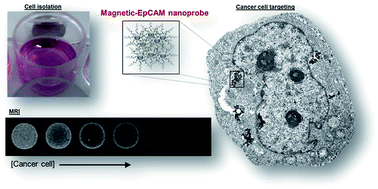
Herein, magnetic-EpCAM nanoparticle (EpCAM-MNP) was developed and exploited as nanoprobe for targeting, isolating and imaging hepatocellular carcinoma. The nanoprobe was composed of two major components including aminosilane-coated iron oxide nanoparticles and DNA-based EpCAM aptamers. Extensive studies were carried out to investigate its physico-chemical properties, magnetic relaxivity, as well as biocompatibility. The results indicated that the small size of the nanoprobe (HD < 100 nm) had high R2 relaxivity with good biocompatibility. Study on cellular accumulation and cellular uptake demonstrated high accumulation of EpCAM-MNP that was internalized via receptor-mediated endocytosis, as evidenced by TEM analysis. By using a magnetic-activated cell sorting (MACS) approach, the majority (∼96%) of the HepG2 cells were isolated, indicating the feasibility of our nanoprobe for isolating EpCAM-positive cells in clinical application. Because of the high intracellular accumulation and the high R2 relaxivity of EpCAM-MNP, it can be used for quantitative MRI detection of cancer cells with high sensitivity.

1. Introduction

Liver cancer (hepatocellular carcinoma, HCC) is one of the most common causes of death with a high mortality/incidence. HCC is the 5th most common cause of death in men and the 7th common cause in women. Most of the burden of the disease (85%) is borne in developing countries. The major risk factors for HCC include infection with hepatitis B virus (HBV) or hepatitis C virus (HCV), alcoholic liver disease, cirrhosis, etc.1,2 HCC is an aggressive cancer in which, usually, the majority of patients die within a year of diagnosis. This is because HCC is often diagnosed in an advanced stage.3 Moreover, HCC cells also exhibit all the characters of cancer stem cells (CSCs), which are responsible for tumor relapse, metastasis, and chemoresistance.4,5 So far, detecting HCC in its early stages is difficult, and even when detected, the ability to identify early metastatic spread including micrometastases and potential “metastases-initiating” circulating tumor cells (CTCs), is limited. Even though several serum-based tests have been used in clinics, those tests have proved to be insufficient for very early detection of HCC, CSC, and early metastatic spread.6–8 Generally, CTCs circulate in peripheral blood at an extremely low frequency of ∼1–10 CTCs per 10 mL. Currently, CellSearch® technology is the only commercially available technology that can identify CTCs as low as 2 CTCs in 7.5 mL of whole blood.9 However, this technology is limited by its inapplicability for detecting early metastatic spread in vivo. For CSCs imaging, there is no suitable imaging modality for detecting them. This may be due to the lack of an efficient imaging agent for CSCs. Thus, the high accuracy and sensitive methods that are needed for early stage detection of HCC, CTCs, and CSCs of HCC need to be developed to address these problems.

Recently, various medical imaging modalities have been used to diagnose HCC, including ultrasonography (US), computed tomography (CT), magnetic resonance imaging (MRI), and positron emission tomography (PET scan) and combined PET/CT scanning.10 Among them, MRI is a non-invasive technique for disease diagnosis and biomedical research.11,12 Its advantages include the use of non-ionizing radiation with high spatial resolution, however, the major limitation of MRI is its low sensitivity. The use of this technique for imaging HCC with high sensitivity and specificity still remains a challenge. For the molecular and cellular imaging applications of MRI, high sensitivity and specificity imaging agents are required. One of the MRI agents that have high relaxivity is superparamagnetic iron oxide nanoparticles (SPIONs).13 As for HCC image agents, unfortunately, the commercially available SPION used to diagnose HCC is not an HCC-specific agent but rather a reticuloendothelial agent.14,15 Moreover, this agent cannot be applied to detect the early-stage of HCC, small tumor, CSC, and CTC.

In the past decade, several biomarkers for CSCs and CTCs of HCC have also been reported, including CD133, CD90, CD44, epithelial cell-adhesion molecule (EpCAM), CD13, OV6, and aldehyde dehydrogenase (ALDH).16–19 Among them, EpCAM was reported as an ideal antigen for clinical applications in cancer diagnosis, prognosis, imaging, and therapy in various tumor types, especially for adenocarcinomas e.g. human colon carcinoma.20,21 For HCC, EpCAM was also reported as the best immuno-histochemical marker for HCC prognosis, CSCs and CTCs.22,23 Currently, most of the EpCAM-based diagnostic and therapeutic strategies rely on the anti-EpCAM antibody. However, there are several limitations to using an antibody, including large size, instability, in vivo production, immunogenicity, laboriousness, and expensive production.24 According to the results obtained in our previous work, DNA-based EpCAM aptamer showed a potential candidate as targeting ligand in hepatitis B virus infected hepatocellular carcinoma cells (HepG2.2.15 cells). The aptamer demonstrated specific capability toward the cancer cells, but not normal cells.25 In this study, we aimed to develop a magnetic nanoprobe with high magnetic relaxation property as well as HCC-specific capability. The nanoprobe is composed of aminosilane-coated iron oxide nanoparticles and DNA-based EpCAM aptamer. This nanoprobe can be utilized for targeting, isolating, and/or imaging EpCAM+-cancer cells, which may lead to enhance the efficacy of cancer diagnosis and treatment in the future, especially for CSC or CTC.

2. Experimental

Materials

Iron(III) chloride hexahydrate (FeCl3·6H2O) and iron(II) chloride tetrahydrate (FeCl2·4H2O) were purchased from Fisher Scientific and Merck, respectively. Dulbecco’s Modified Eagle’s Medium (DMEM) was purchased from Caisson Laboratories. Ammonia solution (30%) was purchased from Mallinckrodt Baker. (3-Aminopropyl) triethoxysilane (APTES), dimethyl sulfoxide (DMSO) and 4-maleimidobutyric acid-NHS ester were purchased from Sigma-Aldrich. Agarose was purchased from Promega. 3-[4,5-Dimethylthiazol-2-yl]-2,5 diphenyl tetrazolium bromide (MTT) and DNA used in this research were purchased from BIO BASIC INC. Trypsin-EDTA was purchased from GIBCO™ Invitrogen. Ribonuclease A (Rnase A), Triton X and propidium iodide (PI) were purchased from US Biological. Sodium azide (NaN3) was purchased from BDH Laboratory Supplies. All the chemicals were used without further purification.

Preparation of citrate-modified Fe3O4 NP (Cit-MNP)

5 mmol of FeCl2·4H2O and 10 mmol of FeCl3·6H2O were dissolved in 100 mL deoxygenated water with mechanical stirring. Then, 5 mL of 30% NH3 solution was added dropwise into the above solution with N2 gas bubbling. The mixture was heated at 80 °C for 30 min in an oil bath under vigorous stirring. The Fe3O4 dispersion was then stirred for 2 h at 90 °C with the addition of 10 mL of 1 M trisodium citrate. The obtained black precipitate of Fe3O4 NP was separated by centrifugation and washed several times with deionized water. Finally, the MNP was dispersed in deionized water and used as seeds in the next step.

Preparation of NH2-fuctionalized MNP (NH2-MNP)

1 mL of Cit-MNP was dispersed in 4 mL of deionized water and 20 mL of absolute ethanol under sonication. Then, 1 mL of 30% NH3 solution and 1 mL of APTES were consecutively added to the solution under stirring and N2 gas bubbling for 3 h. After that, the NH2-MNP was separated, washed and the redispersed in deionized water for further use.

Preparation of EpCAM aptamer conjugated NH2-MNP (EpCAM-MNP)

NH2-MNP was first reacted with 4-maleimidobutyric acid-NHS ester (2 mM), a hetero-bifunctional cross linker, to introduce free maleimide groups, which finally reacted with a thiolated EpCAM aptamer (5′-HS-TTTTTTCAC TAC AGA GGT TGC GTC TGT CCC ACG TTG TCA TGG GGG GTT GGC CTG-3′) to make the EpCAM-MNP. The amount of EpCAM aptamer bound on the MNP was determined by comparing the amount measured in the original solution and the supernatant.

Sample characterization

Phase purity of the sample was confirmed by X-ray diffraction (XRD, Phillip X’PERT MPD) operated at 20 kV, 15 mA, and using the Kα line from a Cu target. The size and morphology were observed by using transmission electron microscope (TEM, JEOL JEM-2010) operated at 200 kV. The hydrodynamic size of the samples was determined by the dynamic light scattering (DLS) technique (Malvern Instrument). The surface chemistry of the samples was studied using a Fourier transform infrared spectrometer (FTIR, Bruker Tensor 27), with KBr as a diluting agent, and operated in the range of 450–4000 cm−1. The coupling efficiency of EpCAM aptamer on NH2-MNP was determined by using a UV-visible spectrometer (Agilent 8453).

MRI relaxivity

Different concentrations of Cit-MNP were prepared in 3% agarose gel phantom. The relaxivity of the nanoparticles was measured by using a Philips Achieva 1.5T MRI scanner. The measurement parameters were TR = 4000 ms, TE = 45–200 ms for the T2 measurement. The T2 value was determined by non-linear curve fitting in the Origin Pro8 software with an equation of S = S0*e(−t/T2).

Determination of intracellular Fe content

The human hepatocellular carcinoma (HepG2) cells were seeded at a density of 3 × 10⁵ cells per well and incubated in Dulbecco’s Modified Eagle’s Medium (DMEM) with 10% fetal bovine serum (FBS) and 1% penicillin/streptomycin at 37 °C under 5% CO2 atmosphere. After 24 h of incubation, the cells were washed twice with PBS buffer and further incubated in the culture medium containing Cit-MNP, NH2-MNP or EpCAM-MNP for 24 h. The cells were washed twice with PBS buffer and detached by trypsinization. The measurement of intracellular iron content can be made through UV spectrophotometry after complete dissolution of the sample in acid media. Ferrous ions presented in the solution can be oxidized to ferric ions by HNO3 prior to reacting with thiocyanate salt to form the iron–thiocyanate complex ([Fe(SCN)6]3−(aq.)). In a typical experiment, MNPs were completely dissolved in 1[thin space (1/6-em)]:[thin space (1/6-em)]1 v/v HCl 6 M–HNO3 (65%) for 2 h at elevated temperatures (50–60 °C). Potassium thiocyanate is added to the Fe3+ solution and then the iron concentration is determined by spectrophotometric measurements at 478 nm using an Agilent 8453 UV-visible spectrophotometer.

Transmission electron microscopy (TEM) analysis

The cells were seeded into a 6-well plate (3 × 10⁵ cells per well) and further incubated overnight at 37 °C under 5% CO2 atmosphere. After washing, the cells were further incubated with appropriate amounts of EpCAM-MNPs. After washing, the treated cells were fixed with 2.5% glutaraldehyde in phosphate buffer (pH 7.3) at 4 °C for 24 h. After fixation, the sample was washed 3 times with phosphate buffer, post fixed with 1% OsO4 for 90 min, rinsed with distilled water and finally stained with 1% uranyl acetate at 4 °C for 1 h. After rinsing, the sample was dehydrated in ethanol solution (50%, 70%, 90%, 95%, and 100% for dehydration series).

The resulting cells were embedded in epoxy resin which was polymerized at 60 °C for 2 days. A thin section with a thickness of 70–80 nm was sliced for TEM analysis using ultramicrotome (Leica, Reichert Ultracut S). The thin section was placed on a TEM grid and stained with 2% uranyl acetate and Reynolds lead citrate before taking the image. The TEM images were taken using a transmission electron microscope (TEM, JEM-2200FS) with an accelerating voltage of 200 kV.

MTT assay

The HepG2 cells were seeded in a 24-well plate at a density of 5 × 10⁴ cells per mL and incubated overnight at 37 °C under 5% CO2 atmosphere. The EpCAM-MNP was then loaded in each well with a final concentration of 0, 0.075, 0.15, 0.375, 0.525 and 0.75 mM. After 48 h of incubation, the medium was discarded and the cells were washed and further incubated with 300 μL of solution containing 5 mg MTT per mL phosphate-buffered saline (PBS) at 37 °C for 4 h. Then, the MTT solution was carefully removed and the cells were washed again. The intracellular formazan crystals were dissolved with 500 μL DMSO for 10 min at 37 °C. The absorbance was measured using a spectrometer at 570 nm with DMSO as the blank. The cytotoxicity was expressed as the percentage of the cell viability compared to the control.

Cell cycle distribution

The cells were seeded into a 6-well plate (3 × 10⁵ cells per well) and further incubated overnight at 37 °C under 5% CO2 atmosphere. After washing, the cells were further incubated with EpCAM-MNP ([EpCAM-MNP] = 0.75 mM). After 48 h of incubation, the cells were detached by trypsinization and centrifuged at 7000 rpm for 1 min. Then, the cells were fixed with 70% precooled ethanol at 4 °C overnight. The fixed cells were washed and further incubated with 5 μL of 10% Triton X, 50 μL of 2 mg per mL RNase A and 5 μL of 1 mg per mL PI for 20 min at 37 °C. The DNA content was measured with a flow cytometer (Becton Dickinson, Zürich, Switzerland) and the cell cycle distribution was analyzed by using Flowing Software 2.5.0.

Isolation of EpCAM+-HepG2 cells and in vitro MR imaging

The cells were seeded at a density of 3 × 10⁵ cells per well and incubated in DMEM with 10% fetal bovine serum (FBS) and 1% penicillin/streptomycin overnight at 37 °C under 5% CO2 atmosphere. The cells were washed twice with PBS buffer and further incubated with EpCAM-MNP ([EpCAM-MNP] = 0.75 mM). After 24 h of incubation, the cells were washed twice with PBS buffer and detached by trypsinization. The detached cells were redispersed in DMEM and subsequently subjected to magnetic field separation. The captured cells were counted and compared to the uncaptured cells in the remaining cell suspension. A similar procedure was applied to peripheral blood mononuclear cells (PBMCs) for specificity test. For in vitro MR imaging, a different number of the obtained EpCAM-MNP loaded cells was redispersed in 3% agarose gel phantom. Finally, the T2-weighted MRI image of the phantom was taken using a Philips Achieva 1.5T MRI with the measurement parameters of TR = 3000 ms, and TE = 45–200 ms.

3. Results and discussion

Characterization of Cit-, NH2- and EpCAM-MNP

First, citrate-modified magnetic nanoparticles (Cit-MNPs) were prepared by a co-precipitation method and used as seeds for further surface modifications. Actually, the preparation of magnetic seeds is an important step because their properties, especially, water-dispersibility, might affect the efficiency of surface modification of the nanoparticle. Herein, the Cit-MNPs were stable in aqueous solution for more than 6 months. The magnetite phase with a diameter of ∼10 nm of Cit-MNPs was confirmed using X-ray diffraction and TEM, respectively (Fig. 1a and c). The FTIR spectrum of Cit-MNPs (Fig. 1b) exhibits strong absorption at 550 cm−1, corresponding to the Fe–O vibration of magnetite, and moderate absorption bands at 1700 cm−1 and 3400 cm−1, corresponding to the C[double bond, length as m-dash]O and O–H vibrations. In addition to the physico-chemical properties, the magnetic relaxation property of Cit-MNPs was also investigated. Generally, an iron oxide nanoparticle exhibits a dominant effect on the transverse relaxation (R2) property or T2-weighted image by generating strong inhomogeneous local magnetic fields, leading to inducing of proton dephasing and short T2 shortening.26,27 To verify the MRI characteristics of Cit-MNPs as a T2-based MRI contrast agent, MRI images of 3% agarose gel phantom containing different amounts of Cit-MNPs were taken using different measurement parameters and the R2 value was determined from those images. A typical MRI image of the phantom (Fig. 1d, inset) shows that Cit-MNPs induce signal reduction in T2-weighted image (appearing as a darker image) with an R2 value of approximately 1200 mM−1 s−1, which is much higher than that of commercially available Ferridex.14,15 The very high relaxivity allows them to be utilized in ultrasensitive MRI detection.
image file: c5ra01566a-f1.tif
Fig. 1 (a) XRD spectrum of Cit-MNPs, (b) FTIR spectrum of Cit-MNPs, (c) TEM image of Cit-MNPs (d) MRI relaxivity and T2-weighted image of Cit-MNPs.

Second, surface modification of Cit-MNPs was carried out by coating aminosilane via a hydrolysis/condensation reaction of APTES. The success of such modification was confirmed by TEM, DLS and FTIR analysis. As shown in Fig. 2, the TEM image of aminosilane-coated magnetic nanoparticles (NH2-MNPs) shows the MNP core surrounded by a thin layer of amorphous silica (Fig. 2a, inset). The FTIR spectrum of NH2-MNPs (Fig. 2b) exhibits all the characteristic peaks for Cit-MNPs (Fig. 1b) with additional noticeable peaks of Si–O vibration (1100 cm−1), indicating the success of the aminosilane coating. The hydrodynamic sizes (HDs) of Cit-MNPs and NH2-MNPs were measured using the DLS technique and the results are shown in Fig. 2c. An increase in the HDs after the modification confirmed the presence of a thin layer of aminosilane on the MNPs. An element analysis of NH2-MNPs by EDS also demonstrated the presence of Fe, O, Si, and C (Fig. S1). For EpCAM aptamer conjugation, the aptamers were immobilized on NH2-MNPs according to the process illustrated in Fig. 2d. The amount of EpCAM aptamer bound on the NH2-MNPs was determined to be 0.9 nmol mg−1.


image file: c5ra01566a-f2.tif
Fig. 2 (a) TEM images of NH2-MNPs, (b) FTIR spectrum of NH2-MNPs, (c) hydrodynamic size of Cit-MNPs and NH2-MNPs (d) schematic illustration for the conjugation of EpCAM aptamer on NH2-MNP.

Intracellular accumulation and cellular uptake

Intracellular accumulation of the different nanoparticles was determined by measuring intracellular iron content and the results are shown in Fig. 3a. It was found that the iron content of NH2-MNPs treated cells was higher than those of the EpCAM-MNPs and Cit-MNPs treated cells. Not surprisingly, a higher iron content in the cells treated with NH2-MNPs was observed because the positive charge on NH2-MNPs (mainly from amino groups) preferentially interacts with negative charge of various biomolecules on the cell surface. This result is in accordance with a previous report.28 However, such interaction is non-specific interaction and positively charged nanoparticles might cause cell damage, leading to negative consequences on their biocompatibility and medical applications.29
image file: c5ra01566a-f3.tif
Fig. 3 (a) Intracellular cellular iron content of different samples, (b) optical microscope image of the cells treated with EpCAM-MNPs for 24 h.

For EpCAM-MNPs, even though the intracellular accumulation of EpCAM-MNPs was found to be a little lower than that of NH2-MNPs, a large number of EpCAM-MNPs accumulated within the cells were still observed after 24 h of incubation (Fig. 3b). This is very important for high-sensitive MRI detection. However, the mechanism of cellular internalization of EpCAM-MNPs was different. As we know, the cellular internalization of multifunctional nanoparticles or theranostic nanoparticles is crucial for targeted imaging and therapy, in which imaging and therapeutic agents can be delivered into the cells. Several reports claimed that the nanoparticles were mainly internalized via a receptor-mediated endocytosis pathway.30–32 However, only a few reports provided the evidence to confirm the internalization of the nanoparticles into the cells.33 To verify this pathway of our EpCAM-MNPs, TEM analysis of EpCAM-MNPs treated cells was carried out and the results are presented in Fig. 4. It can be clearly seen that EpCAM-MNPs can be observed in several areas of the cells for example, in the gap between the cells, cellular membrane, endosome and cytoplasm. Fortunately, this TEM analysis strongly supports the internalizing mechanism by receptor-mediated endocytosis of EpCAM-MNPs in which four fundamental steps of such mechanism were observed including (i) specific binding at the cell surface, (ii) plasma membrane budding, (iii) trafficking vesicle (endosome) and (iv) trafficking of the vesicle to cytoplasm.34 From these results, we can confirm that EpCAM conjugated magnetic nanoparticles increase the cellular uptake and internalization into the HepG2 cells. This efficient cellular uptake may be due to nanoscale interaction between the polyvalent EpCAM-MNP and the cancer cells. To validate this mechanism, inhibition study of endocytosis pathway was also carried out by using sodium azide (NaN3) as endocytosis inhibitor (see ESI for experiment of inhibition study). We know that sodium azide can inhibit oxidative respiration of cell, leading to restriction of cellular ATP production.35 From this study, we found that, after pretreating the cell with NaN3, the intracellular accumulation of EpCAM-MNPs was reduced by 20% as compared to the EpCAM-MNPs treated cells without inhibitor. This strongly confirmed that the internalization of EpCAM-MNP occured by an endocytosis pathway.


image file: c5ra01566a-f4.tif
Fig. 4 TEM images of HepG2 cells incubated with EpCAM-MNPs.

MTT assay and cell cycle distribution

To test the biocompatibility of EpCAM-MNPs, we first investigated the effect of EpCAM-MNPs on cell proliferation by MTT assay. As shown in Fig. 5a, the EpCAM-MNPs did not show significant cytotoxicity toward the cells and the cellular viability still remained approximately 85% at high concentration (0.75 mM). This MTT assay indicates that EpCAM-MNP has low cytotoxicity. In addition to cell proliferation, inhibition of the cell cycle progression is an important factor in evaluating the toxicity of the nanoparticle. Thus, the effect of EpCAM-MNPs on cell cycle distribution was assessed and compared with untreated cells. As demonstrated in Fig. 5b and c, it was found that the DNA content in the sub G0, G0/G1, S, and G2/M phases of the cells treated with EpCAM-MNPs was not significantly different from that observed in the untreated cells. This confirms that EpCAM-MNPs do not disturb cell cycle progression. This result was consistent with TEM images of the EpCAM-MNP treated cells (Fig. 4) where no nanoparticle was observed in the nucleus. Furthermore, there were no morphological changes after 48 h of incubation between the treated and the untreated cells (Fig. S2).
image file: c5ra01566a-f5.tif
Fig. 5 (a) Cell viability of HepG2 cells after incubation with EpCAM-MNPs, (b and c) cell cycle distribution histograms of unloaded cells and EpCAM-MNPs loaded cells.

Isolation of HepG2 cell and in vitro MR imaging

The next experiment was designed to isolate EpCAM+-cells from the HepG2 cell line by using the magnetic-activated cell sorting (MACS) approach. This method was used to isolate the cells by incubating with EpCAM-MNPs. This causes cells expressing EpCAM to be separated via a magnetic separation route. As demonstrated in Fig. 6, the majority of cells (∼96%) were magnetically isolated, indicating a lead target candidate for EpCAM in the HepG2 cell line, which is in good accordance with the previous report.36 Additionally, it may also be inferred that a HepG2 cell also exhibits the character of a cancer stem cell. To demonstrate that the EpCAM-MNP is not specific toward normal cells, the same procedure was applied to PBMCs for specificity testing. It was found that almost all PBMCs remained in the uncaptured cell suspension. This indicates a reduced specificity of EpCAM-MNP towards normal cells (PBMC). This result is in accordance with our previous work.25
image file: c5ra01566a-f6.tif
Fig. 6 (a) Schematic illustration of the magnetic isolation of EpCAM+-HepG2 cells using EpCAM-MNPs, (b) optical microscope images of isolated cells and cells in the remaining suspension (non-isolated cells).

Because of the high R2 relaxivity with high intracellular accumulation of EpCAM-MNPs, our next goal was to quantitatively detect HepG2 cells via MR imaging. To investigate this feasibility, the cells were loaded with EpCAM-MNPs for MR imaging. Fig. 7a shows the MRI image of 3% agarose gel phantom containing different numbers of EpCAM-MNPs loaded cells. As expected, a darker MRI image (Fig. 7a), lower signal intensity (Fig. 7b), and shorter T2 time (Fig. 7c), were observed as the number of the loaded cells increased. Obviously, we can distinguish the image contrast between 5000 cells per mL of the EpCAM-MNPs loaded cells and the unloaded cells (10[thin space (1/6-em)]000 cells per mL). In addition, the linear plot between signal intensity and the concentration of EpCAM-MNPs loaded cells was also observed (Fig. 7b, inset). As a result, it can be concluded that the EpCAM-MNP might be utilized for quantitative MRI detection of cancer cells.


image file: c5ra01566a-f7.tif
Fig. 7 (a) T2-weighted MRI image of 3% agarose gel phantom containing different amounts of EpCAM-MNPs loaded cells (TR = 3000 ms, TE = 45 ms), (b) the signal intensity vs. the number of cells relationship, (c) the T2 values of EpCAM-MNPs loaded cells.

4. Conclusions

We have successfully developed a magnetic-EpCAM nanoprobe that can be applied for targeting, isolating and imaging of EpCAM-positive cancer cells. The magnetic-EpCAM nanoprobe was internalized via a receptor-mediated endocytosis pathway and subsequently accumulated within the cells without noticeable cytotoxicy. By using a magnetic-activated cell sorting (MACS) method, we can isolate almost 100% of the HepG2 cells indicating that the HepG2 cell has the character of CSC and CTC. Based on the excellent R2 relaxivity with efficient cellular uptake, quantitative analysis of the cancer cells was achieved via MR imaging. From this research, it can be clearly seen that the magnetic-EpCAM nanoprobe has a great potential for multipurpose applications including isolation and diagnosis of CSC and CTC. However, the feasibility of using our nanoprobe in preclinical/clinical research needs to be investigated before advancing its use in disease treatment in the near future.

Acknowledgements

We thank the Thailand’s Office of the Higher Education Commission for providing financial support through the National Research University (NRU) Project for Chiang Mai University (CMU).

Notes and references

  1. H. B. El-Serag, N. Engl. J. Med., 2011, 365, 1118–1127 CrossRef CAS PubMed.
  2. M. Maluccio and A. Covey, Ca-Cancer J. Clin., 2012, 62, 394–399 CrossRef PubMed.
  3. K. Hao, J. M. Luk, N. P. Lee, M. Mao, C. Zhang, M. D. Ferguson, J. Lamb, H. Dai, I. O. Ng, P. C. Sham and R. T. Poon, BMC Cancer, 2009, 9, 389 CrossRef PubMed.
  4. S. Vinogradov and X. Wei, Nanomedicine, 2012, 7, 597–615 CrossRef CAS PubMed.
  5. S. Colak and J. P. Medema, FEBS J., 2014, 281, 4779–4791 CrossRef CAS PubMed.
  6. Y. Mao, H. Yang, H. Xu, X. Lu, X. Sang, S. Du, H. Zhao, W. Chen, Y. Xu, T. Chi, Z. Yang, J. Cai, H. Li, J. Chen, S. Zhong, S. R. Mohanti, R. Lopez-Soler, J. M. Millis, J. Huang and H. Zhang, Gut, 2010, 59, 1687–1693 CrossRef CAS PubMed.
  7. N. Miura, Y. Osaki, M. Nagashima, M. Kohno, K. Yorozu, K. Shomori, T. Kanbe, K. Oyama, Y. Kishimoto, S. Maruyama, E. Noma, Y. Horie, M. Kudo, S. Sakaguchi, Y. Hirooka, H. Ito, H. Kawasaki, J. Hasegawa and G. Shiota, BMC Gastroenterol., 2010, 10, 46 CrossRef PubMed.
  8. L. Chen, D. W. Ho, N. P. Lee, S. Sun, B. Lam, K. F. Wong, X. Yi, G. K. Lau, E. W. Ng, T. C. Poon, P. B. Lai, Z. Cai, J. Peng, X. Leng, R. T. Poon and J. M. Luk, Ann. Surg. Oncol., 2010, 17, 2518–2525 CrossRef PubMed.
  9. B. Hong and Y. Zu, Theranostics, 2013, 3, 377–394 CrossRef CAS PubMed.
  10. B. Ariff, C. R. Lloyd, S. Khan, M. Shariff, A. V. Thillainayagam, D. S. Bansi, S. A. Khan, S. D. Taylor-Robinson and A. K. P. Lim, World J. Gastroenterol., 2009, 15, 1289–1300 CrossRef.
  11. D. Kokuryo, Y. Anraku, A. Kishimura, S. Tanaka, M. R. Kano, J. Kershaw, N. Nishiyama, T. Saga, I. Aoki and K. Kataoka, J. Controlled Release, 2013, 169, 220–227 CrossRef CAS PubMed.
  12. Z. Li, S. X. Wang, Q. Sun, H. L. Zhao, H. Lei, M. B. Lan, Z. X. Cheng, X. L. Wang, S. X. Dou and G. Q. Lu, Adv. Healthcare Mater., 2013, 2, 958–964 CrossRef CAS PubMed.
  13. Y. W. Jun, J. H. Lee and J. Cheon, Angew. Chem., Int. Ed., 2008, 47, 5122–5135 CrossRef CAS PubMed.
  14. Y. K. Kim, H. S. Kwak, C. S. Kim, G. H. Chung, Y. M. Han and J. M. Lee, Radiology, 2006, 238, 531–541 CrossRef PubMed.
  15. T. Araki, J. Gastroenterol., 2000, 35, 874–876 CrossRef CAS.
  16. D. W. Ho, Z. F. Yang, K. Yi, C. T. Lam, M. N. Ng, W. C. Yu, J. Lau, T. Wan, X. Wang, Z. Yan, H. Liu, Y. Zhang and S. T. Fan, PLoS One, 2012, 7, e37159 CAS.
  17. Z. F. Yang, P. Ngai, D. W. Ho, W. C. Yu, M. N. P. Ng, C. K. Lau, M. I. Y. Li, K. H. Tam, C. T. Lam, R. T. P. Poon and S. T. Fan, Hepatology, 2008, 47, 919–928 CrossRef CAS PubMed.
  18. L. L. Liu, D. Fu, Y. Ma and X. Z. Shen, Stem Cells Dev., 2011, 20, 2023–2030 CrossRef CAS PubMed.
  19. Z. Zhu, X. Hao, M. Yan, M. Yao, C. Ge, J. Gu and J. Li, Int. J. Cancer, 2010, 126, 2067–2078 CrossRef CAS PubMed.
  20. N. H. Stoecklein, A. Siegmund, P. Scheunemann, A. M. Luebke, A. Erbersdobler, P. E. Verde, C. F. Eisenberger, M. Peiper, A. Rehders and J. S. Esch, BMC Cancer, 2006, 6, 165 CrossRef PubMed.
  21. M. Munz, P. A. Baeuerle and O. Gires, Cancer Res., 2009, 69, 5627–5629 CrossRef CAS PubMed.
  22. T. Yamashita, J. Ji, A. Budhu, M. Forgues, W. Yang and H. Y. Wang, Gastroenterology, 2009, 136, 1012–1024 CrossRef CAS PubMed.
  23. K. Schulze, C. Gasch, K. Staufer, B. Nashan, A. W. Lohse, K. Pantel, S. Riethdorf and H. Wege, Int. J. Cancer, 2013, 133, 2165–2171 CrossRef CAS PubMed.
  24. A. D. Keefe, S. Pai and A. Ellington, Nat. Rev. Drug Discovery, 2010, 9, 537–550 CrossRef CAS PubMed.
  25. C. Pilapong, S. Sitthichai, S. Thongtem and T. Thongtem, Int. J. Pharm., 2014, 473, 469–474 CrossRef CAS PubMed.
  26. S. Tong, S. Hou, Z. Zheng, J. Zhou and G. Bao, Nano Lett., 2010, 10, 4607–4613 CrossRef CAS PubMed.
  27. Q. L. Vuong, J. F. Berret, J. Fresnais, Y. Gossuin and O. Sandre, Adv. Healthcare Mater., 2012, 1, 502–512 CrossRef CAS PubMed.
  28. X. M. Zhu, Y. X. Wang, K. C. Leung, S. F. Lee, F. Zhao, D. W. Wang, J. M. Lai, C. Wan, C. H. Cheng and A. T. Ahuja, Int. J. Nanomed., 2012, 7, 953–964 CrossRef CAS PubMed.
  29. A. Blanazs, M. Massignani, G. Battaglia, S. P. Armes and A. J. Ryan, Adv. Funct. Mater., 2009, 19, 2906–2914 CrossRef CAS.
  30. C. H. Choi, L. Hao, S. P. Narayan, E. Auyeung and C. A. Mirkin, Proc. Natl. Acad. Sci. U. S. A., 2013, 110, 7625–7630 CrossRef CAS PubMed.
  31. P. C. Patel, D. A. Giljohann, W. L. Daniel, D. Zheng, A. E. Prigodich and C. A. Mirkin, Bioconjugate Chem., 2010, 21, 2250–2256 CrossRef CAS PubMed.
  32. R. Vacha, F. J. Martinez-Veracoechea and D. Frenkel, Nano Lett., 2011, 11, 5391–5395 CrossRef CAS PubMed.
  33. W. Lu, C. Xiong, G. Zhang, Q. Huang, R. Zhang, J. Z. Zhang and C. Li, Clin. Cancer Res., 2009, 15, 876–886 CrossRef CAS PubMed.
  34. I. Canton and G. Battaglia, Chem. Soc. Rev., 2012, 41, 2718–2739 RSC.
  35. L. X. Yang, L. Shang and G. U. Nienhaus, Nanoscale, 2013, 5, 1537–1543 RSC.
  36. K. Ogawa, S. Tanaka, S. Matsumura, A. Murakata, D. Ban, T. Ochiai, T. Irie, A. Kudo, N. Nakamura, M. Tanabe and S. Arii, Ann. Surg. Oncol., 2014, 21, 1314–1322 CrossRef PubMed.

Footnote

Electronic supplementary information (ESI) available: EDS spectrum of NH2MNP and optical microscope image of the cells treated with EpCAM-MNP for 48 h. See DOI: 10.1039/c5ra01566a

This journal is © The Royal Society of Chemistry 2015
Click here to see how this site uses Cookies. View our privacy policy here.